
Full disclaimer: this post should not be considered anything other than pure geeky historian fun.
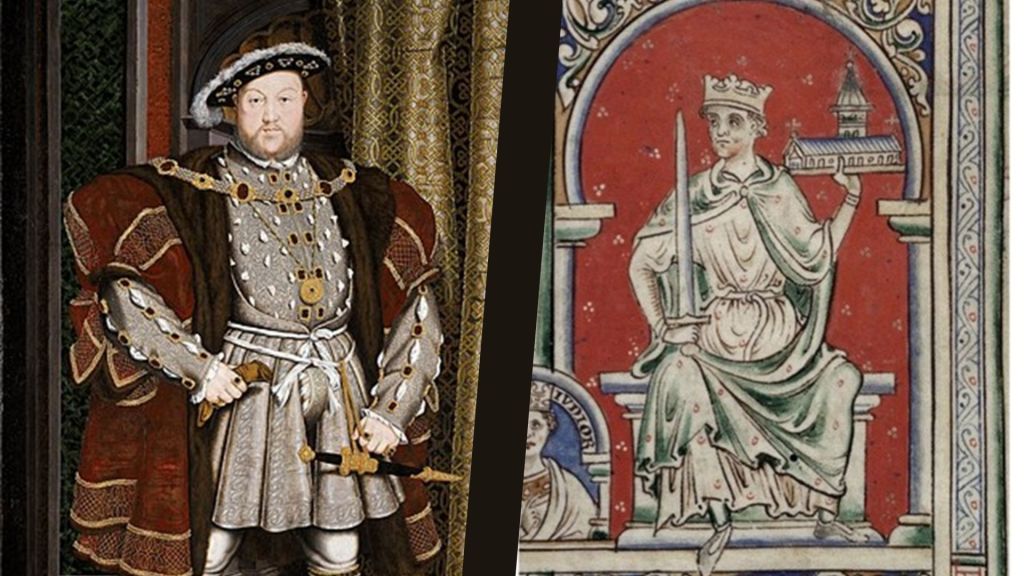
I was trained in Medieval History at St Andrews, where for the most part, the dividing line between Medieval and Modern History was about 1500; in the British Isles, this can be marked by the Battle of Bosworth Field in 1485 and the accession of Henry Tudor as King Henry VII. The actual division is relatively trivial, except in one aspect in which I take it personally: the Tudors, particularly Henry VIII and his wives, are not medieval.
Why does this matter? Because at about 90% of pub quizzes, any history section will include a question about Henry and his wives. Then the team will turn to me: you must know this, you studied medieval history.
Well, yes, I did and do – but not the Tudors. Annoyingly enough I tend to know the answer anyway, but when I studied my Late Medieval History module, it ended with Richard III. On the continent, ‘medieval’ tended to fizzle away with the end of the Hundred Years’ War and the peasant rebellions. Much of this really depends upon the definition of the word ‘medieval’, and there is plenty of scholarly debate on whether it is accurate or in any way useful to define eras like this.
But that’s not the point of this post. What it really comes down to is the attention the Tudors get – books, TV shows, movies, all obsessed with Henry and his inability to sire a son, his insane relationships with women, the politics around his reign and those of his daughters. While I loved Cate Blanchett as Elizabeth, this is well past my time of interest and, more importantly, there is an equally – if not more – fascinating and dysfunctional historical English royal family waiting in the wings. And by this of course I mean the Angevins – Henry II and his sons, Richard I and John.
Richard the Lionheart, the evil Prince/King John – the basis of the Robin Hood myth: most people have heard of these characters, and their mother Eleanor of Aquitaine, one of the most famous of medieval queens.
As is evident to anyone who has seen the play or movie of The Lion in Winter, the Angevin royal family was properly dramatic, and I have always thought deserved an equally angsty and historically dubious drama. There are elder sons who are annoyed at their lack of power, younger sons who are their parents’ favourites, daughters married off but somehow still involved, affairs and heartbreak, illegitimate children, and of course, best of all, a family-led rebellion. I could see one season on Henry and Eleanor in their early years, starting with a furtive meeting in Paris and her flight across France after the end of her marriage to Louis VII, when she was pursued, quite literally, by lords and younger sons intent upon capturing and ‘marrying’ her. Then there are the early years of their reign, the Becket controversy and his death, and so much more. The side-characters are enticing, too: William Marshall, Louis VII and Philip II of France, Henry the Lion of Saxony, and Henry’s three daughters, all married off when young but still active in their parents’ lives and living fascinating lives of their own. There are even ‘spin-off’ opportunities if you want to go as far forward as King Richard’s reign and his crusade.
One of my favourite facts of all time about Henry II is that he was rebelled against in 1173-4 by an alliance including: his eldest sons, the King of France, the King of Scotland, most of the nobles in England, Normandy and Aquitaine, and his wife – but he won. Now of course historians might argue as to how much this was due to his skill and how much to the incompetence of the rebels, but either way, it’s a great story.
The possibilities are endless!
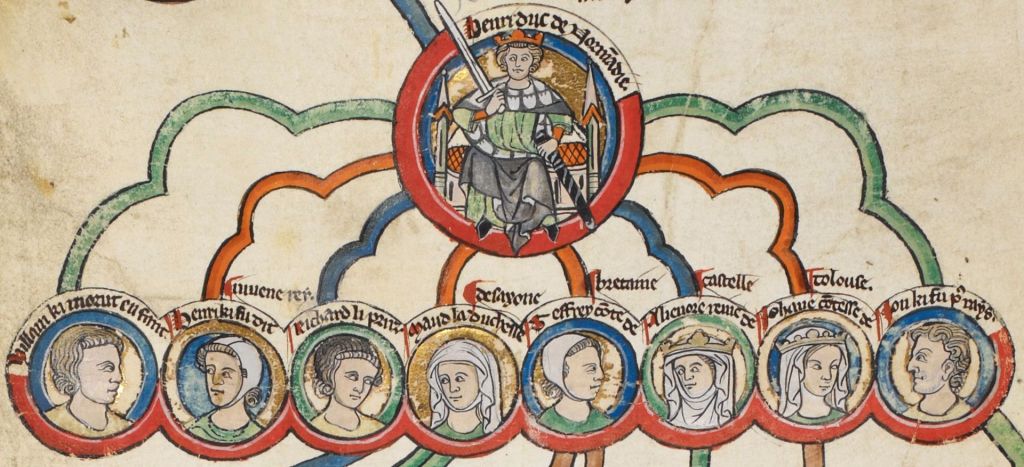
But there is more to it than just I like the Angevins better. The time of Henry VIII is infamous for the schism with the Pope and the naming of the king as the head of the Church of England, but it is worth observing that plenty of kings before Henry would have welcomed such a move, and Henry II during his arguments with Becket was hinting in that direction. Also, the marriage of Henry II and Eleanor of Aquitaine was without hyperbole one of the most significant royal marriages of the Middle Ages. Not only did it combine two powerful inheritances into an empire that stretched from Scotland to the Mediterranean, it also brought the Kings of England well and truly into the continental sphere. For a time, Henry II was – almost without argument – the most powerful man in Europe, commanding considerably more of France than the king of France himself. As I argued in my PhD thesis, the significance of these continental connections are mirrored in the many marriage arrangements made by Henry for his children – suddenly the English royal house was making regular alliances with the kingdoms of Spain, the realms of southern France like Toulouse and Savoy, even the Kings of Sicily. Spanish connections in particular were a significant part of English royal marriage policy from this point onwards, due to the throne’s interest in Aquitaine – and they would of course continue through to the time of the Tudors: Henry VIII’s first wife of course was Catherine of Aragon. Henry II’s reign transformed royal marriage policies and, arguably, English royal policies overall to have a much stronger continental interest, so much so that his son Richard would spend only six months of a ten-year reign actually in England. The next century’s Hundred Years’ War can arguably be traced back – at least partially – to the connections made by Henry’s marriage and those of his children.
So, rant over. But my belief in the supremacy of the Angevins over the Tudors will return, I am sure. And don’t believe me that the family was dramatic and fascinating? Watch the 1968 version of The Lion in Winter, starring, amongst others, Peter O’Toole, Katherine Hepburn, Timothy Dalton and Anthony Hopkins. I rest my case.
 The Wandering Medievalist