
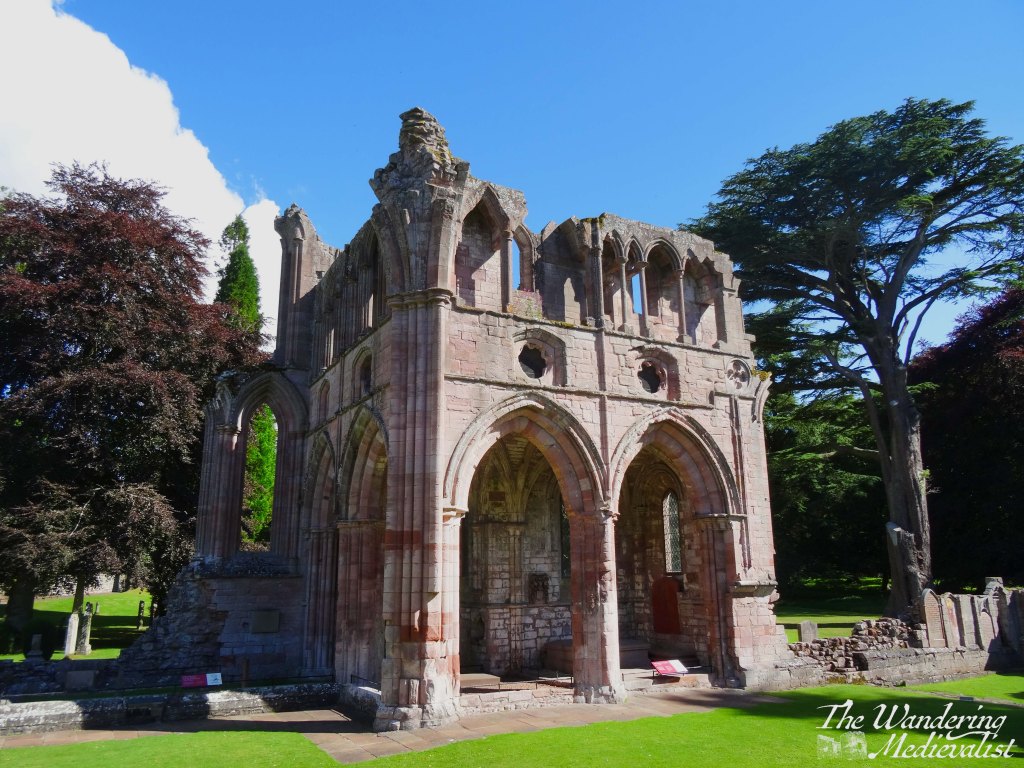
When it comes to border abbeys, Scotland is spoiled for choice. Many of the names echo in my head from years studying history but also reading excerpts of my roommate’s PhD thesis, but until a few years back I had never visited any of them, usually preferring castles. Then in 2017 we were looking for a new place to go for a short weekend away, and eventually settled on Jedburgh, a small but comfortable border town within easy driving distance of most of the major abbey ruins. It was a glorious sunny weekend, and I chose for our daily outing to visit Dryburgh Abbey, for no particular reason other than it was a bit closer than Melrose. I am so pleased I did!
Less well-known and probably less photographed than Melrose, and certainly less complete than nearby Jedburgh, Dryburgh Abbey is situated in a woodland, in a loop of the River Tweed. The trees provide a tranquil surrounding that allows visitors to appreciate the solitude of a monastic life.
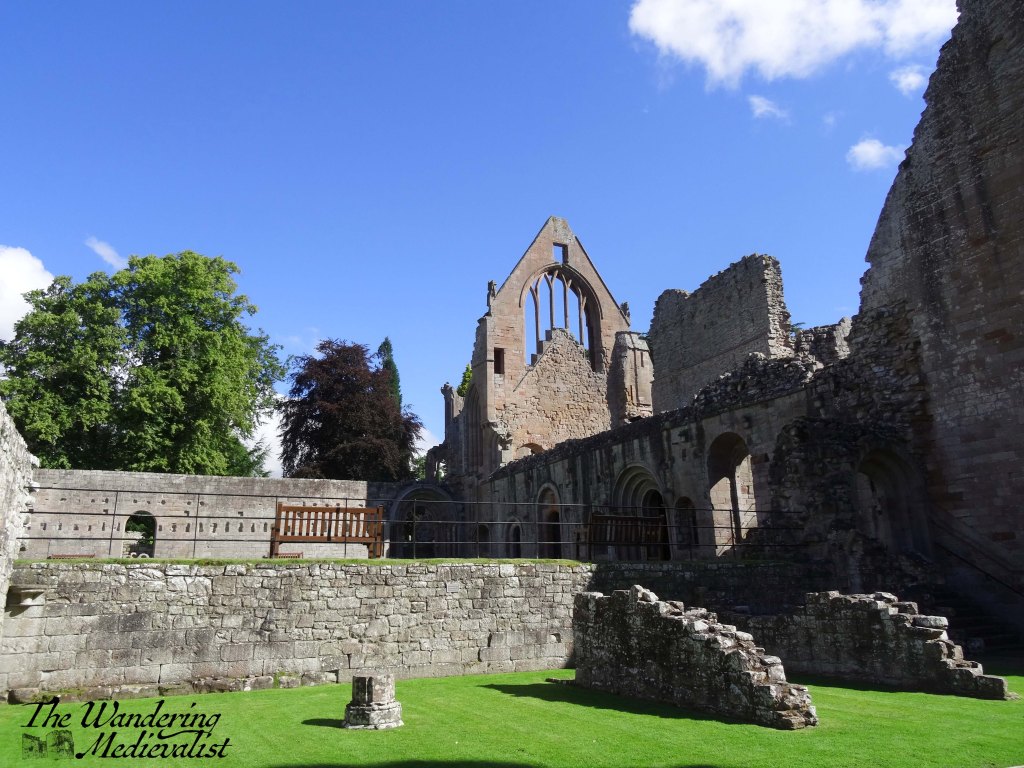
Dryburgh was founded in 1150, with the first abbot arriving in 1152, and suffered several attacks over the years, particularly in 1322 by the retreating English army under King Edward II and again by the armies of Richard II in 1385. Several times it rallied, supported by various nobles and bishops of Glasgow and St Andrews, but was finally destroyed in the 1540s.
What is left allows for a good sense of the scale of the abbey. The pinkish-red stones are stunning in the sunlight, the shapes of the windows and arches still eye-catching.

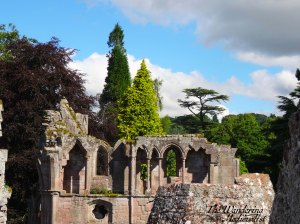
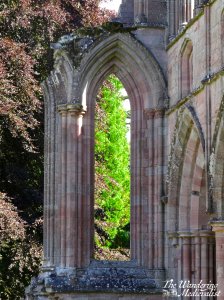
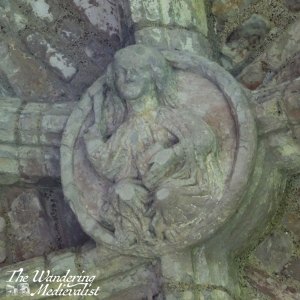
There is plenty to be explored and learned, and there is something about the ruins of the perfectly geometrical architecture that is quite moving. If you are making a tour of border abbeys, definitely make sure this one is not forgotten!
 The Wandering Medievalist
One response to “Dryburgh Abbey”
[…] attacks. Jedburgh is perhaps less majestic than the more out-of-the-way abbeys like Melrose or Dryburgh, but it is no less […]
LikeLike