
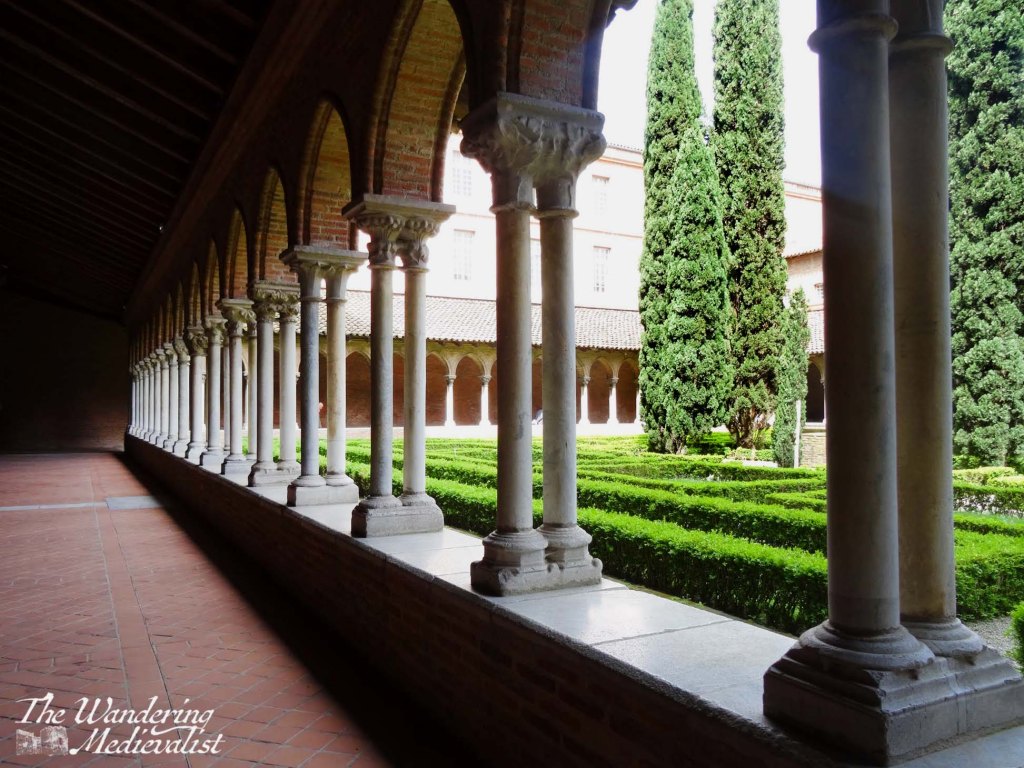
Toulouse, the fourth-largest city in France, was never somewhere I had a particular desire to visit. But, it was the perfect place for me to meet Mum on one of our more spectacular adventures, the ultimate destination of which was the medieval city of Carcassonne – another post or two soon to come. I was able to fly directly to Toulouse and so it seemed a natural spot to meet and stay for a night or two before heading on our way, and I was pleasantly surprised when we found more than a few sufficiently medieval spots to explore – the Couvent des Jacobins was one of the best.1
Located just a short walk from the Place du Capitole and our (almost) adjacent hotel, the Couvent des Jacobins was the perfect place to start our adventures, which included a bus tour.
The city itself is far older than medieval, having been founded by the Romans, and the university is one of the oldest in Europe, chartered in 1229. Like many French cities, Toulouse is a complex combination of historic and modern – stunning architecture contrasts with industry – and is in fact the headquarters of Airbus. Side note, it was while landing in Toulouse that I recall first seeing the incredibly odd Airbus Beluga plane and thought it must be a prototype.
Those of you who have knowledge of medieval history and particularly of my favourite Angevin period may wonder at why I had so little interest in visiting Toulouse when the Counts of Toulouse played such an important role in the history of France and particularly Aquitaine. I don’t really have a good answer other than to say cities aren’t really my thing, normally.
And indeed, it was once we got out of Toulouse that I was happiest; but this convent, built of red Roman brick in the heart of the city, gave me pause.
Ecclesiastical history had never been at the forefront of my interests, but I have to admit that the carvings and architectural symmetry of medieval churches, monasteries and convents has fascinated me from an early age.
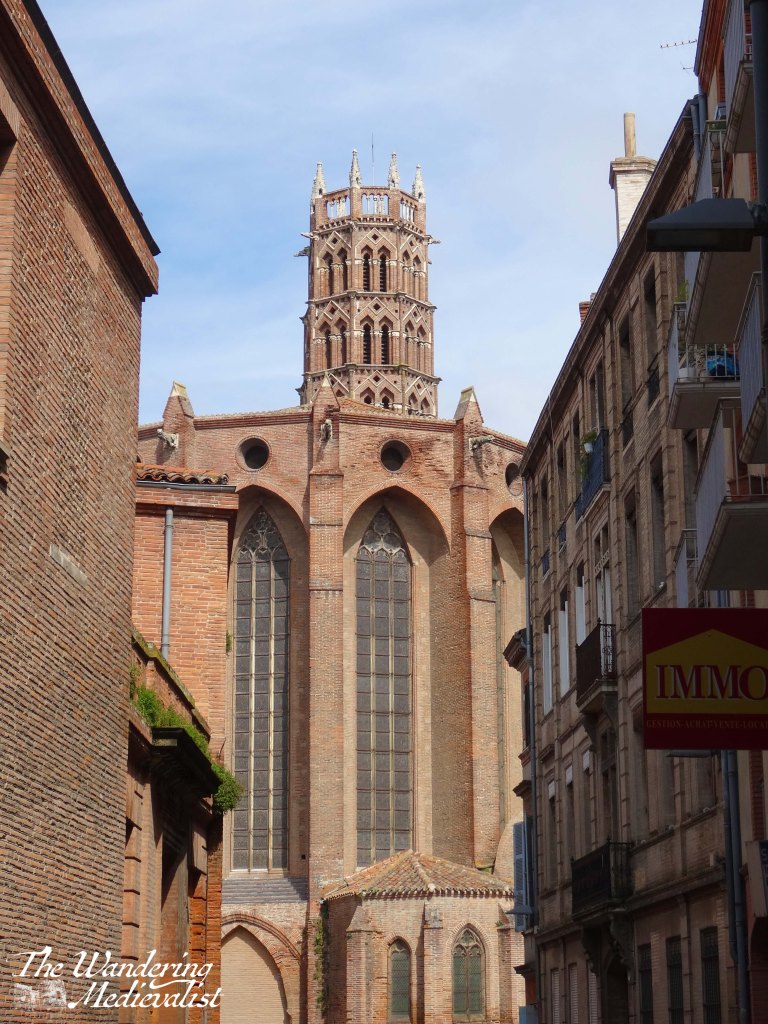
Used to the grey stone of northern France and much of the UK, I found the red (or pink) Roman brick to be really stunning, and while I was unable to get a picture of the whole church, I was drawn instead to the details of its decoration. Everywhere I looked there were carvings, restored paintings, and architectural styles that I had to capture.
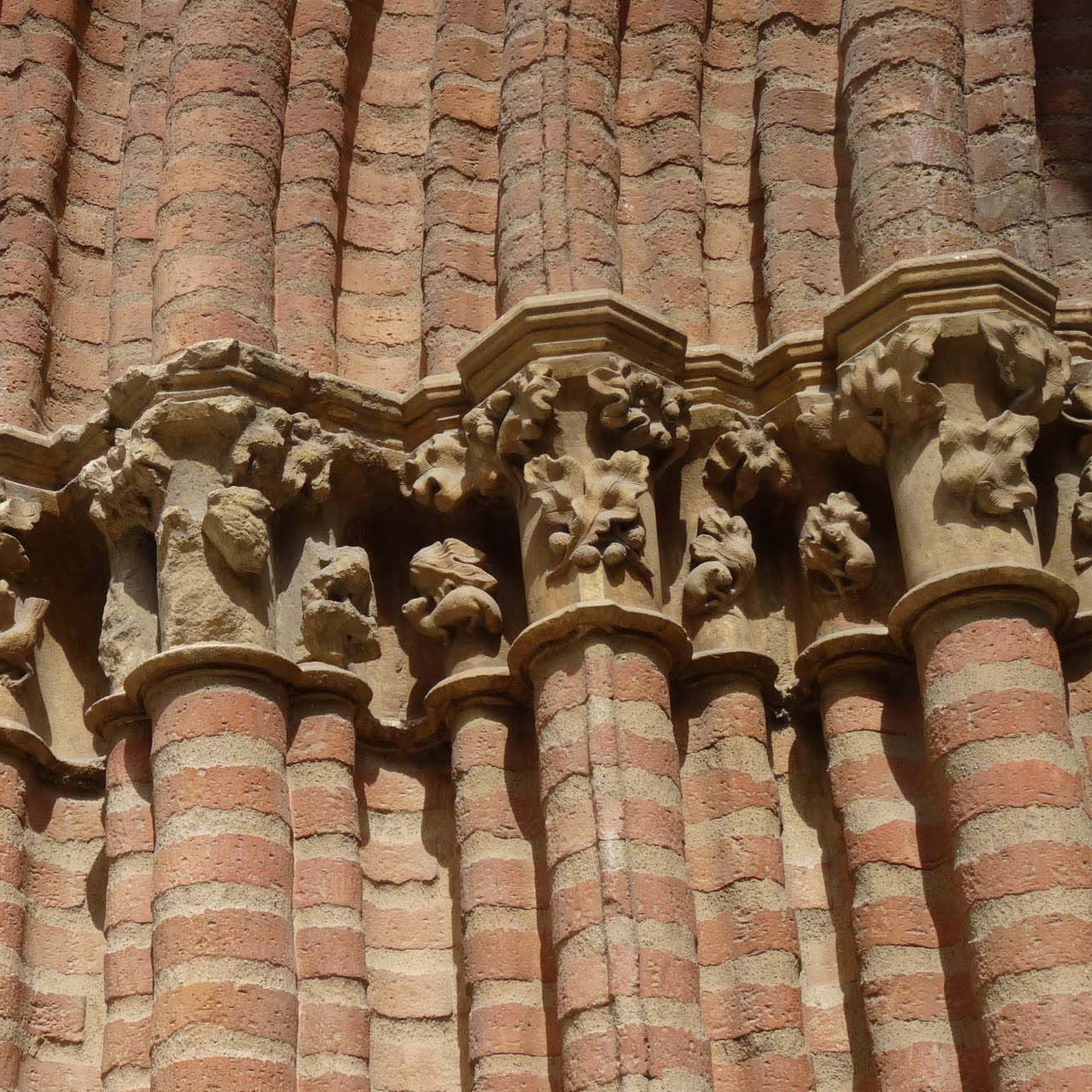
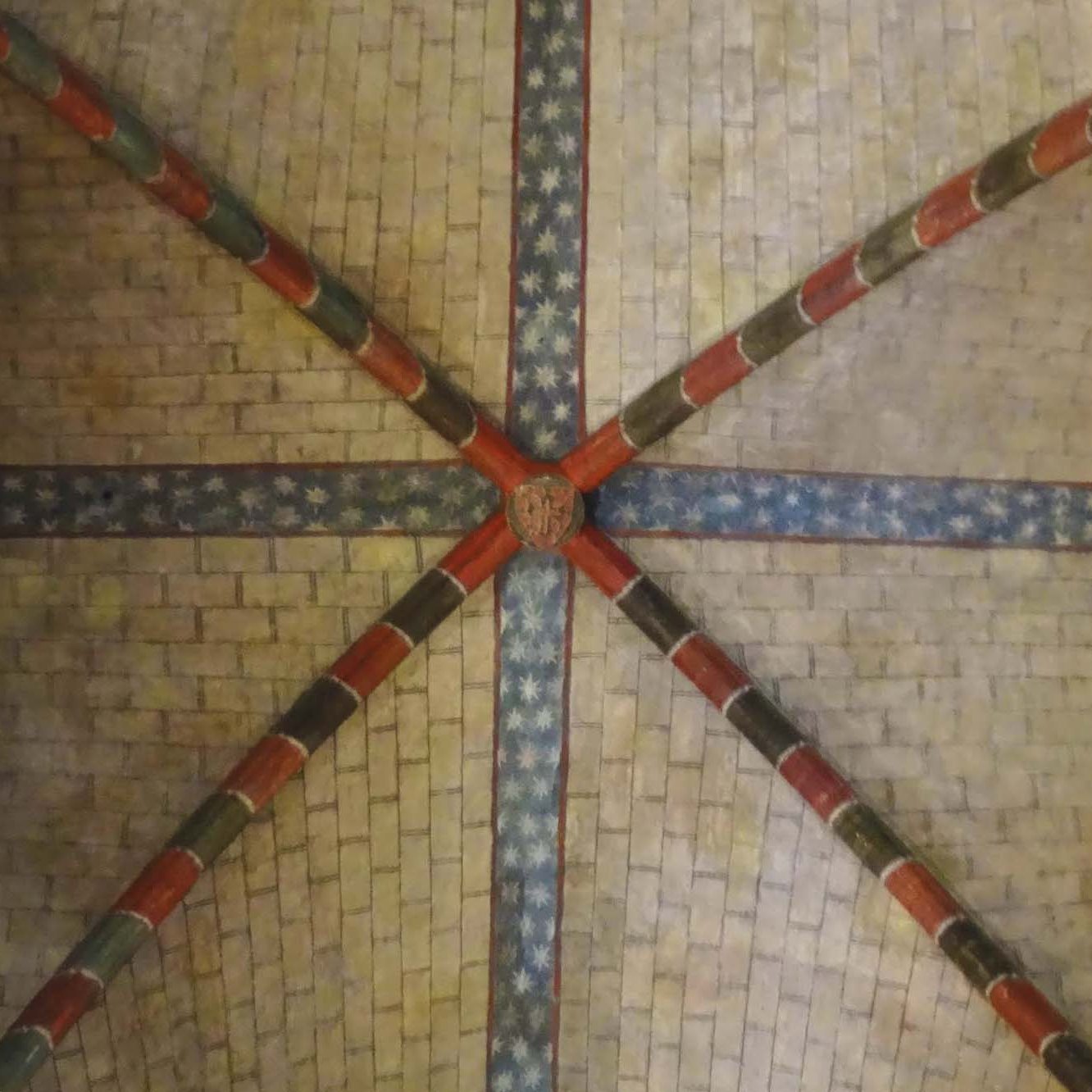
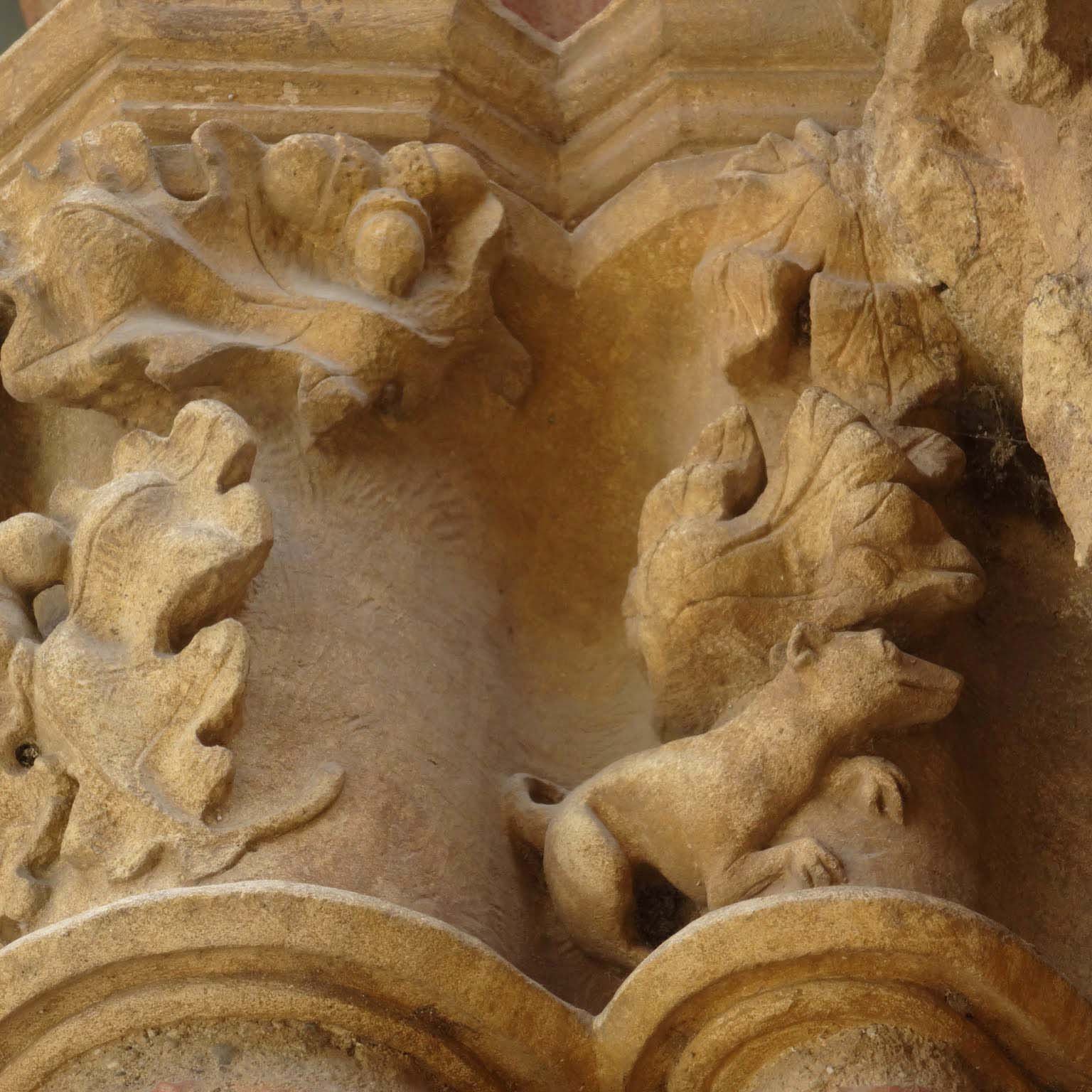
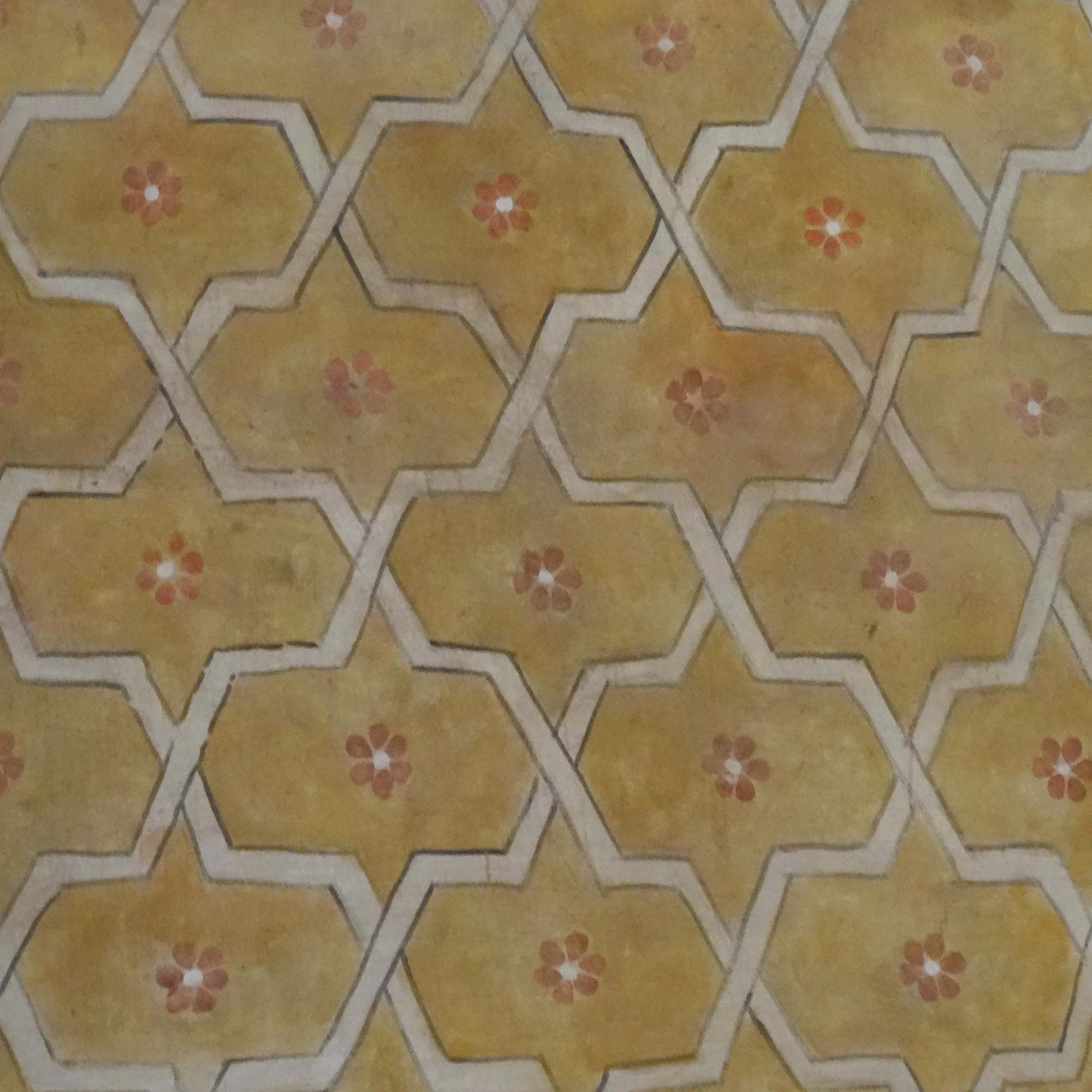
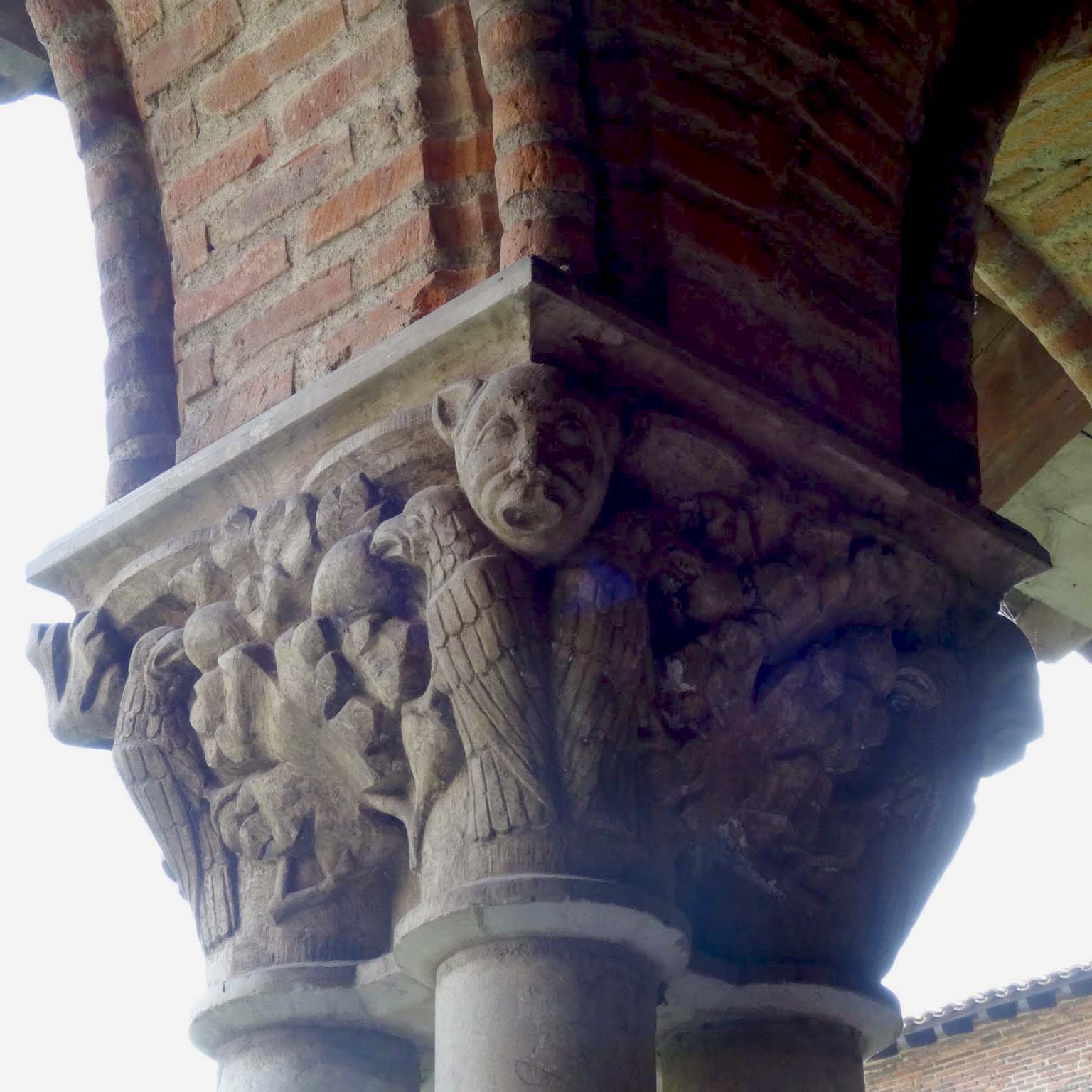
I would be remiss of course not to discuss the history of this church. Construction began in 1229 by the newly-founded Dominican order, who were heavily involved with the founding of the university.2 Over the subsequent hundred years, the church was expanded upon, and one of its most stunning features is the vault, with an oversized column from which ribs radiate in all directions – a style that became known as Le Palmier des Jacobins, the palm tree of the Jacobins – just visible at the top of the nave in these pictures.3
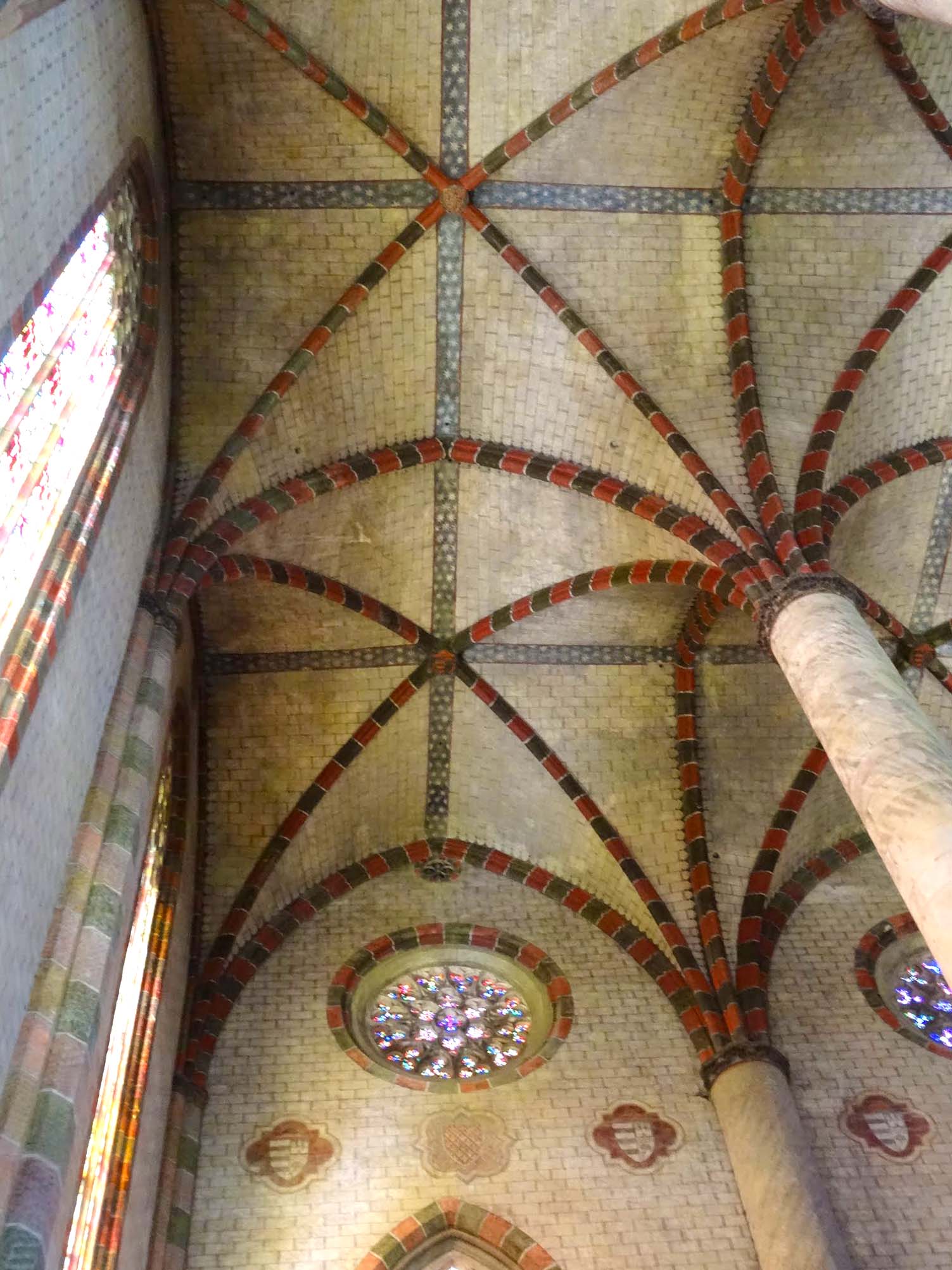
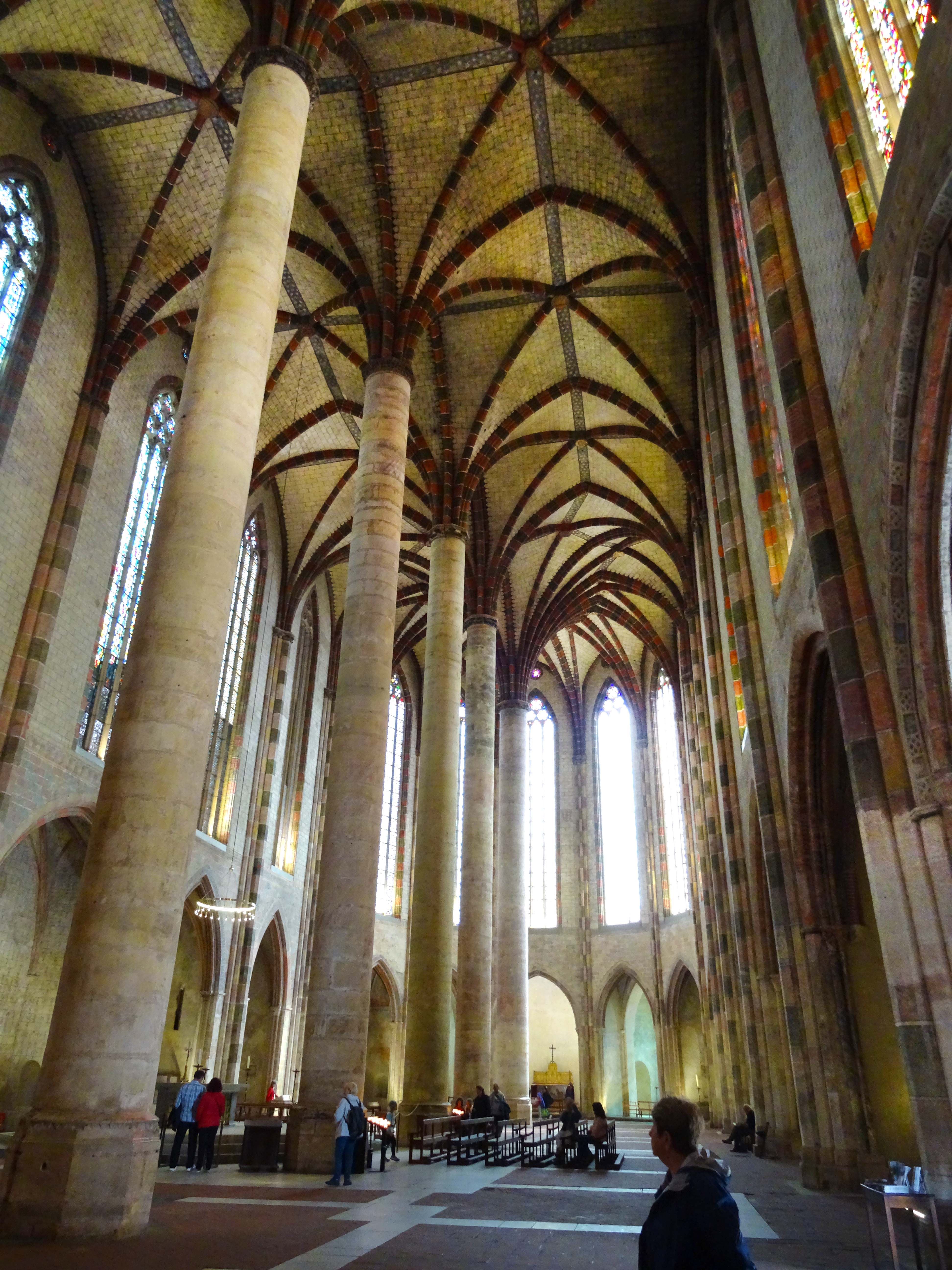
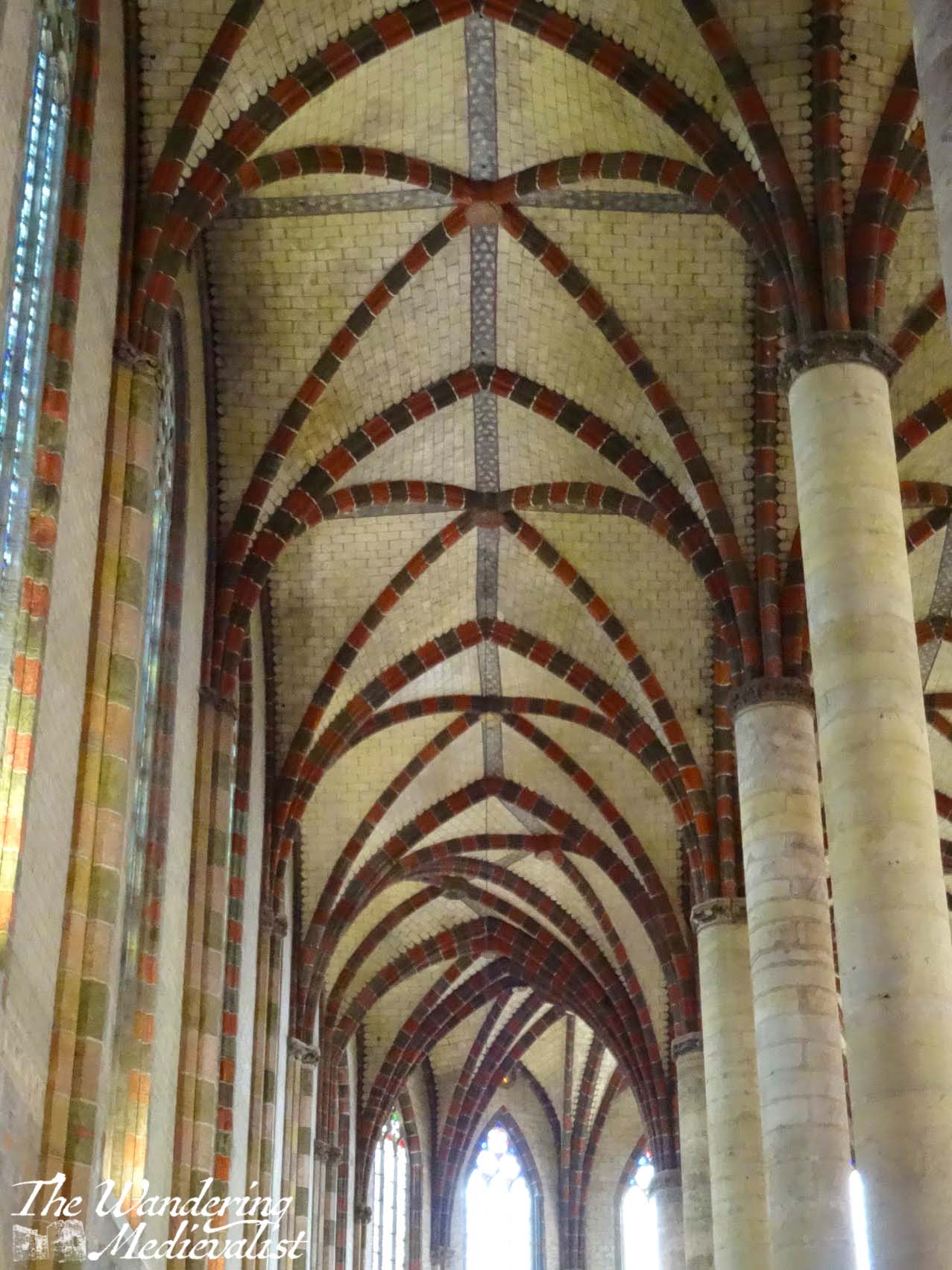
Equally impressive were the cloisters, complete with carefully-tended hedges and views up towards the octagonal bell tower.
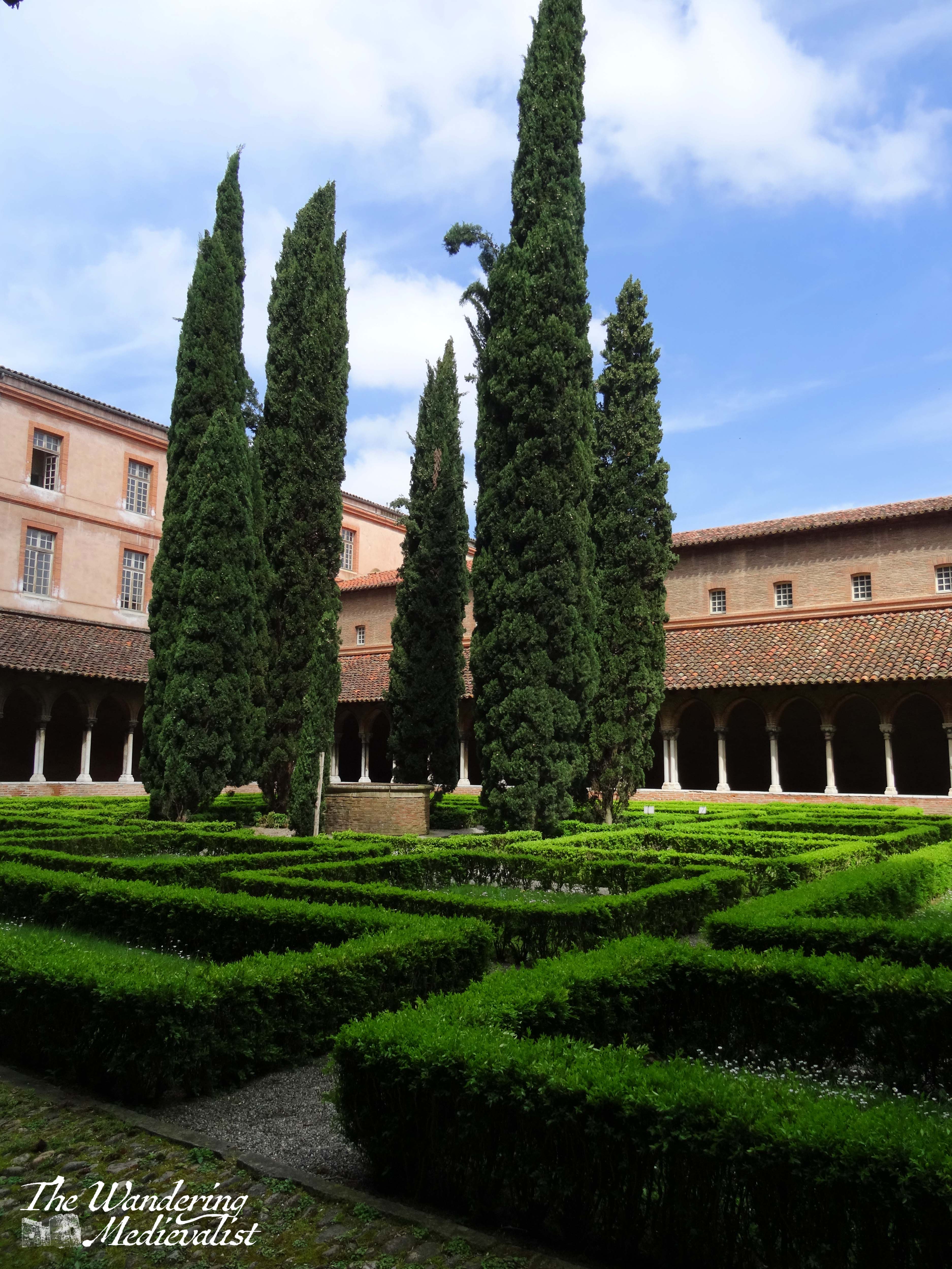

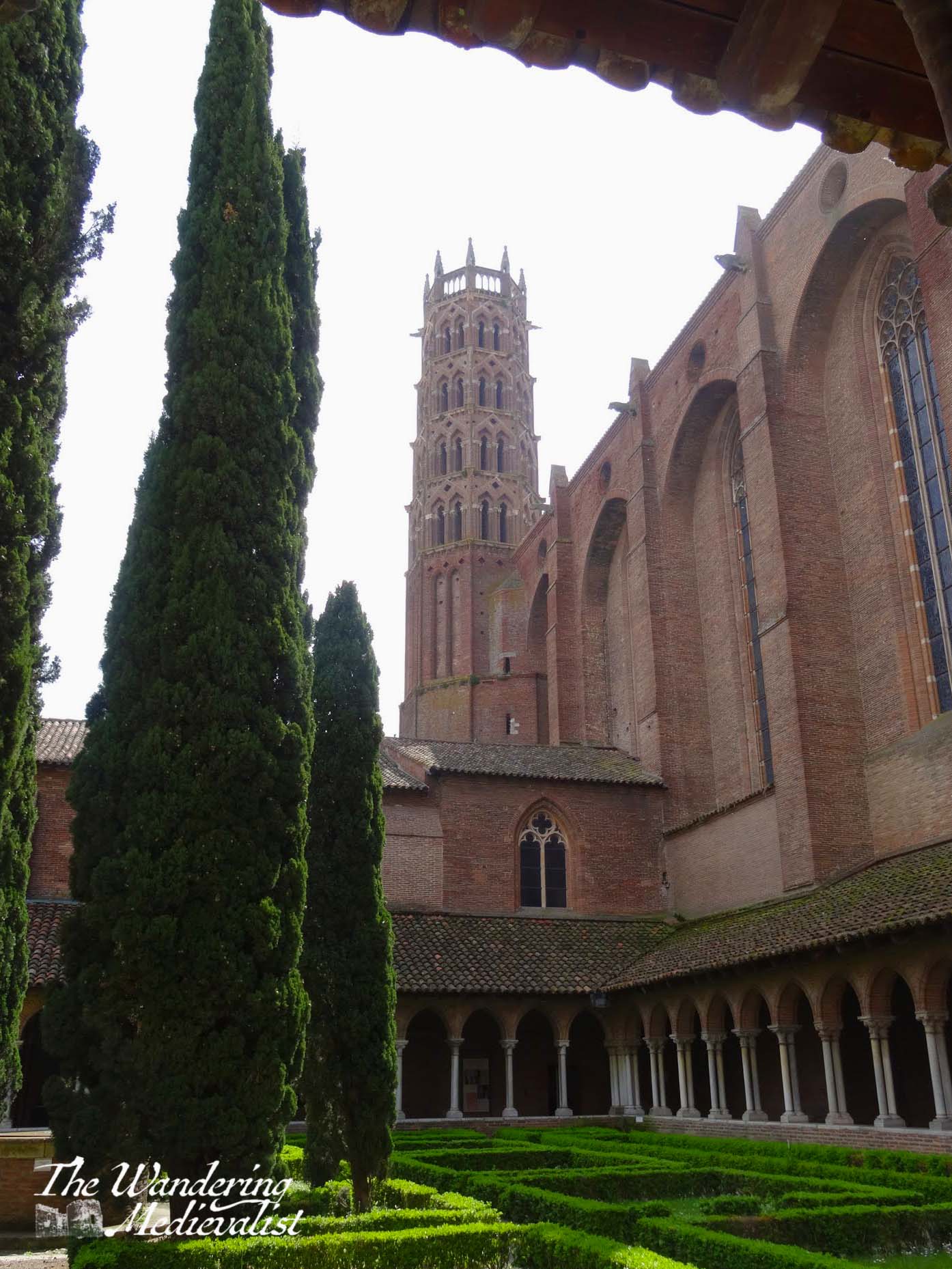

Off the cloisters are the restored chapter house and chapel of Saint Anthoninus,4 both of which offer yet more stunning decoration.
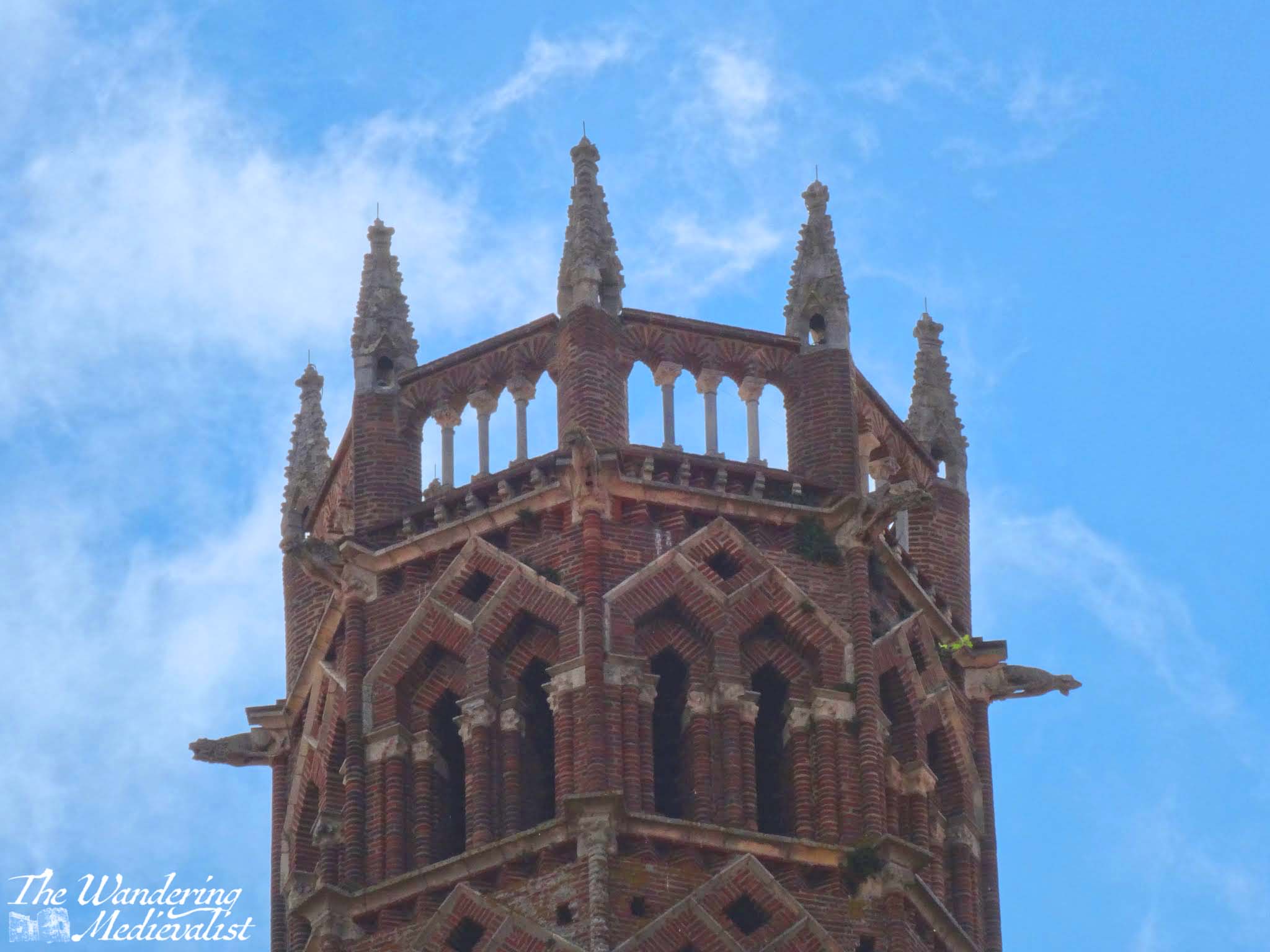
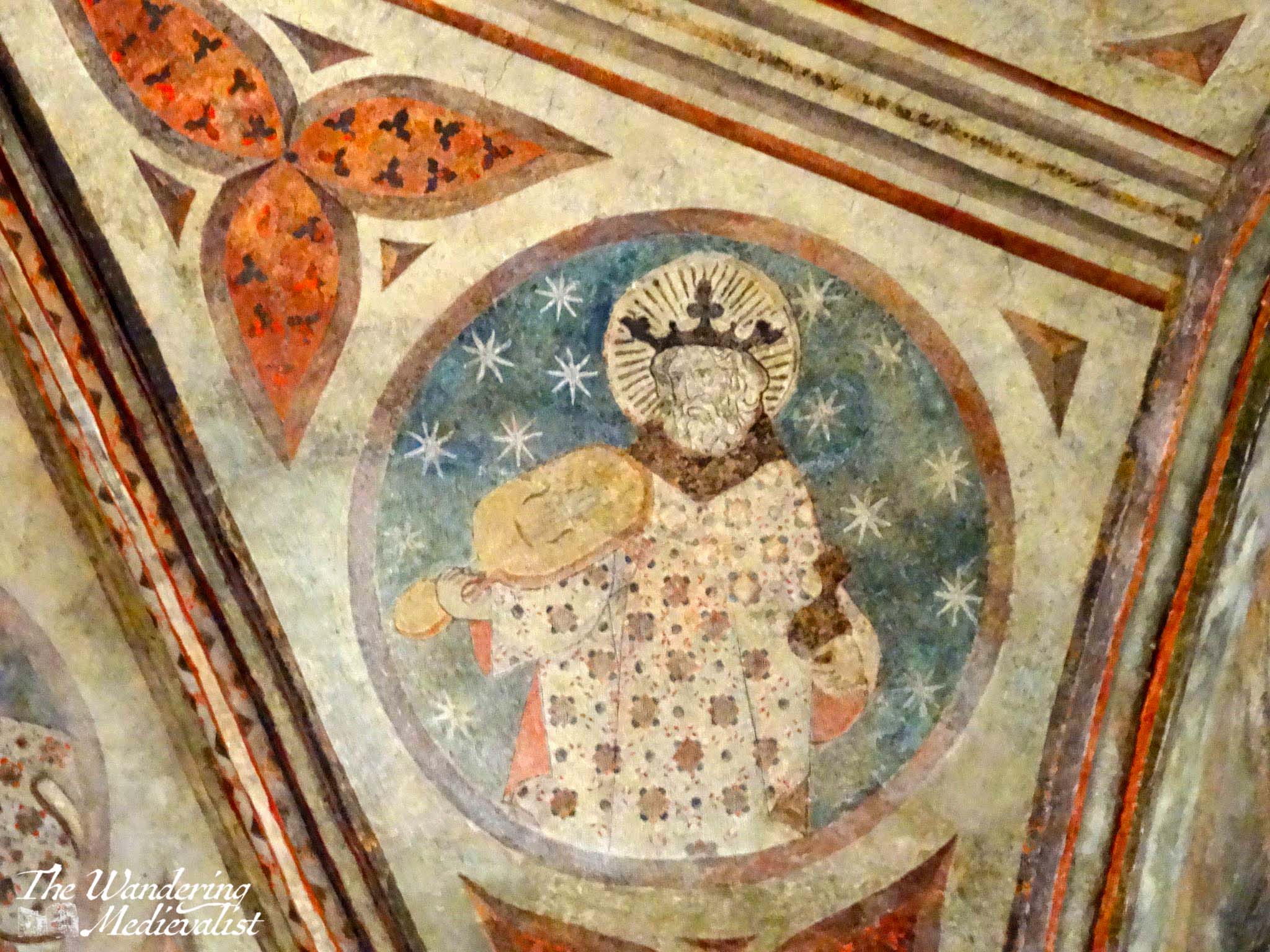
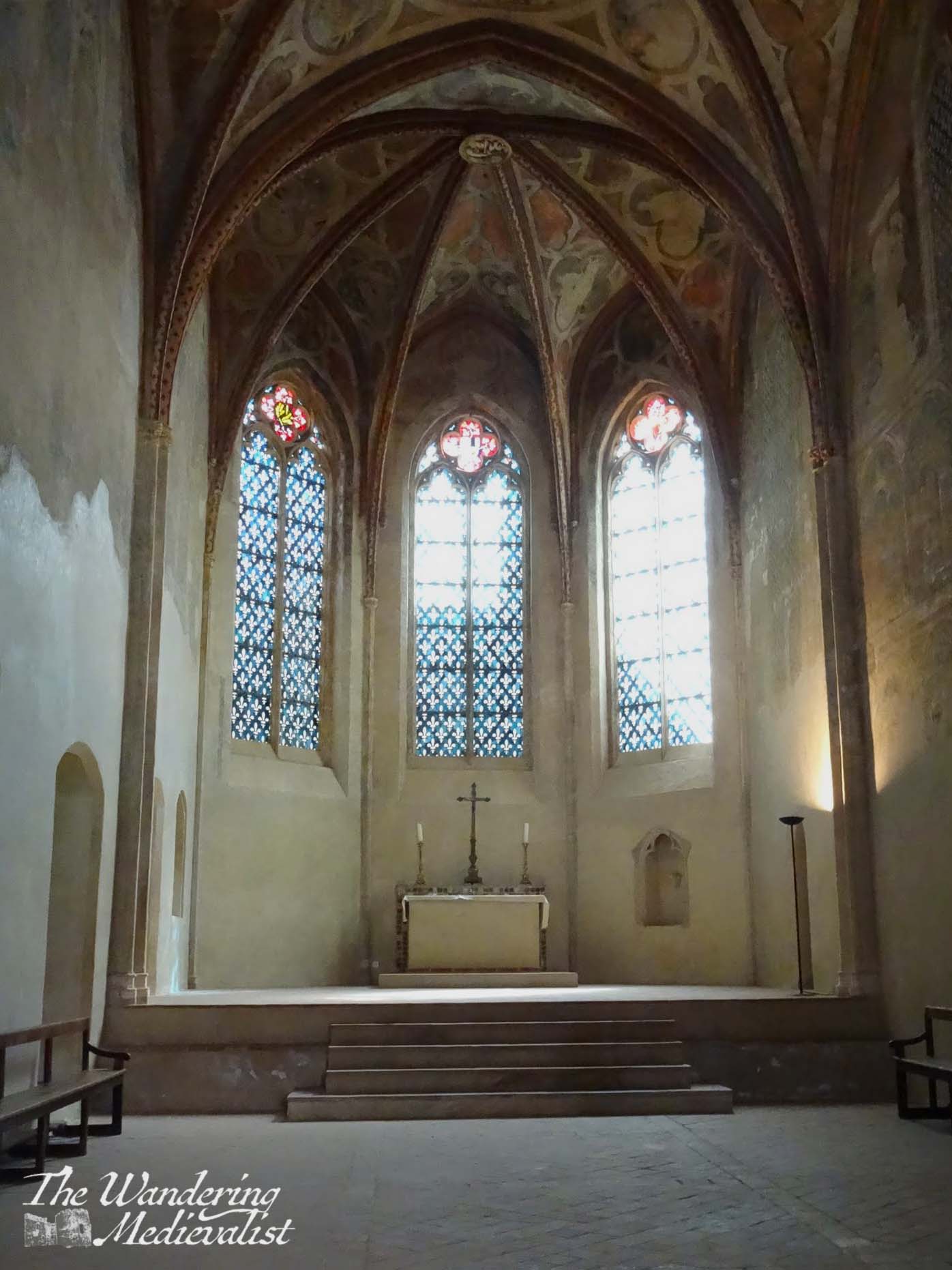
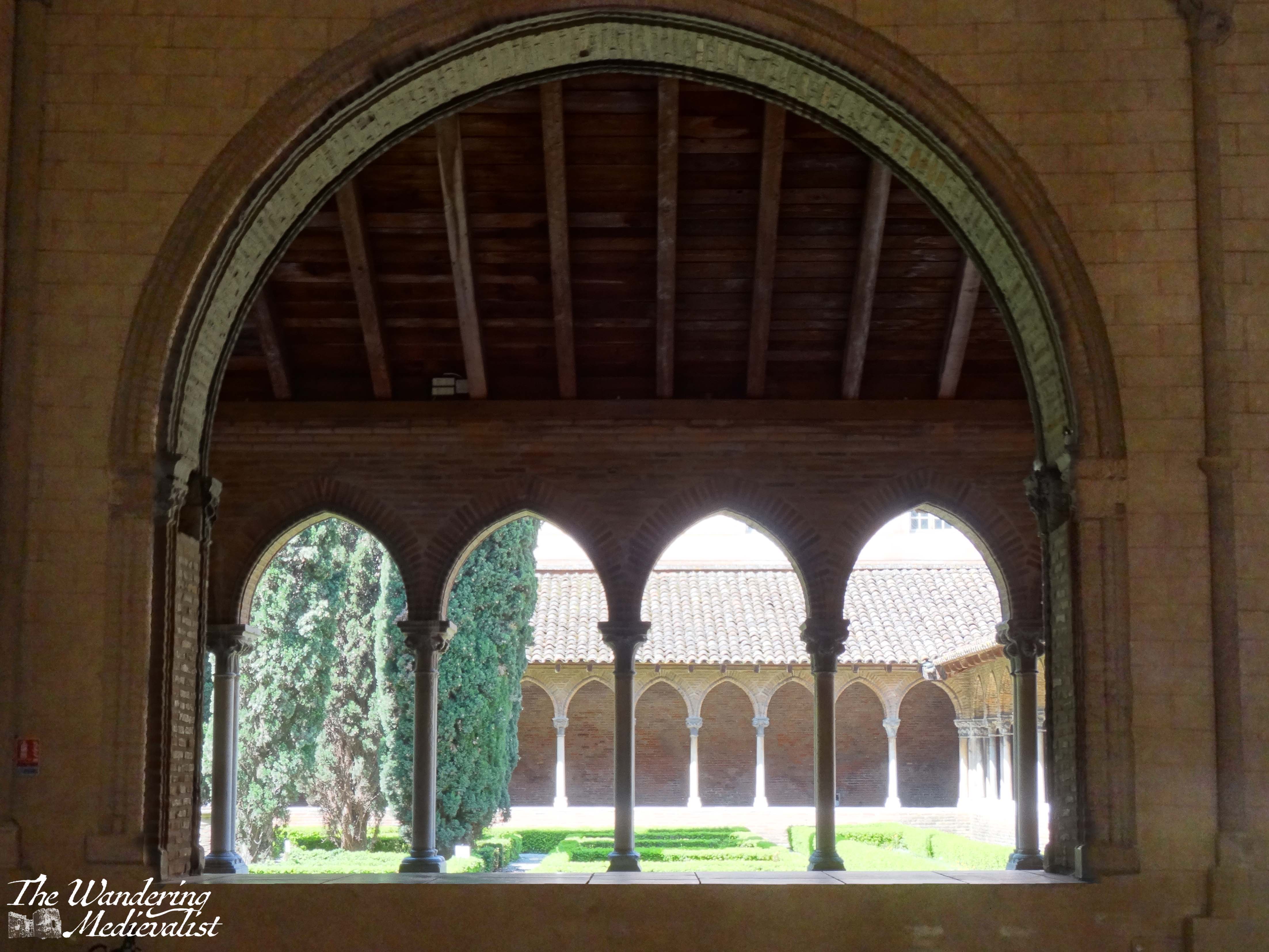
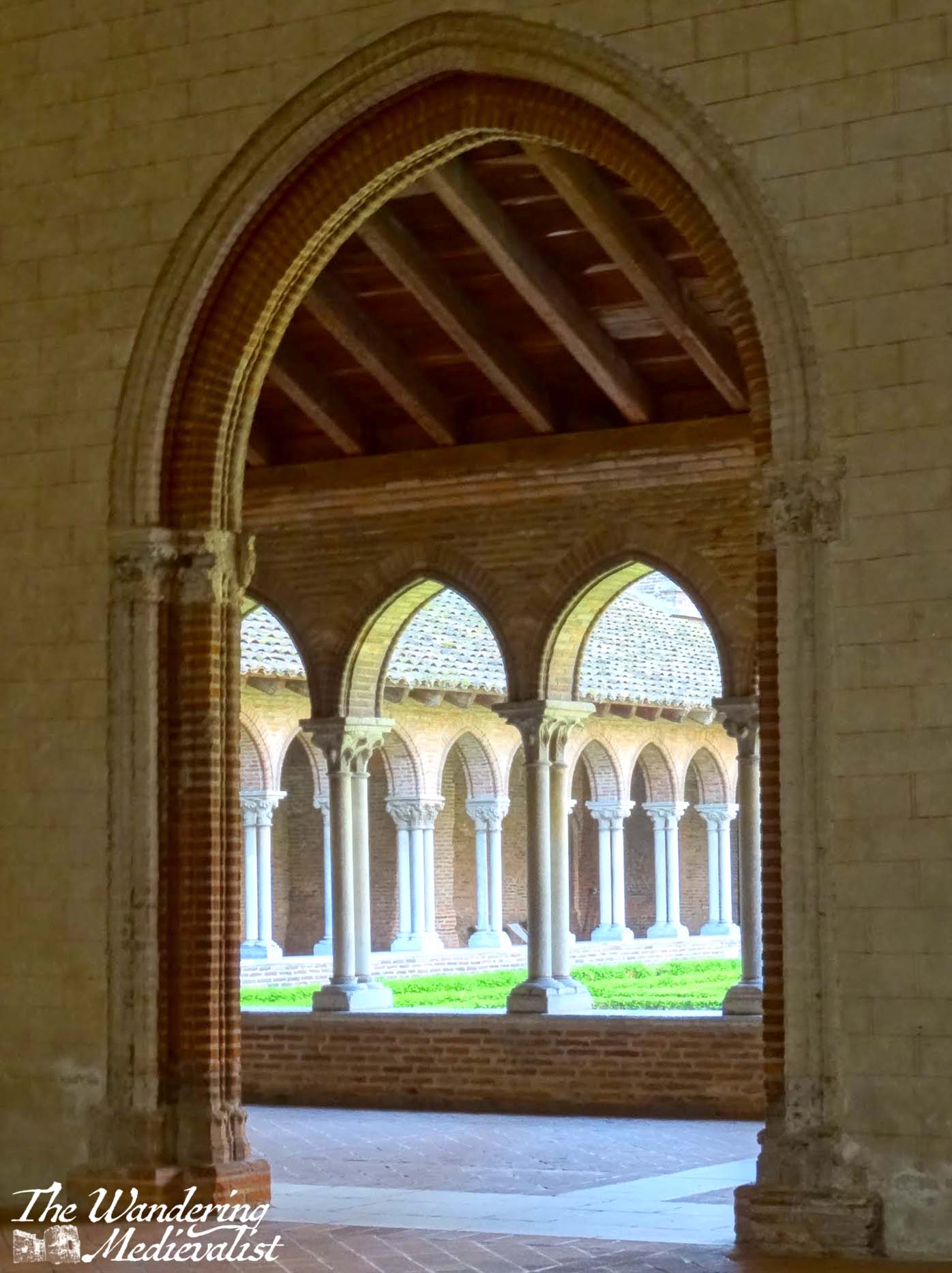
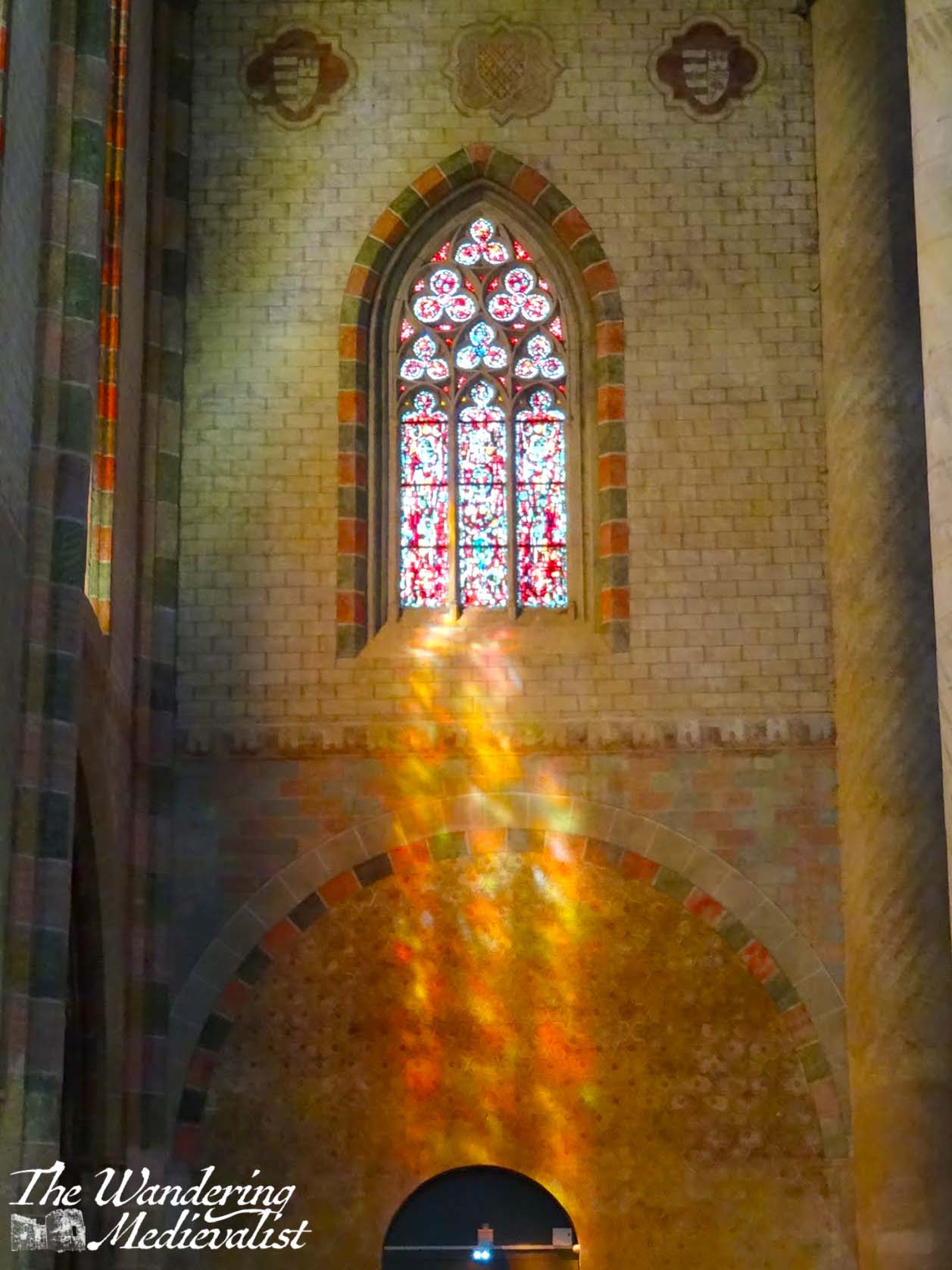
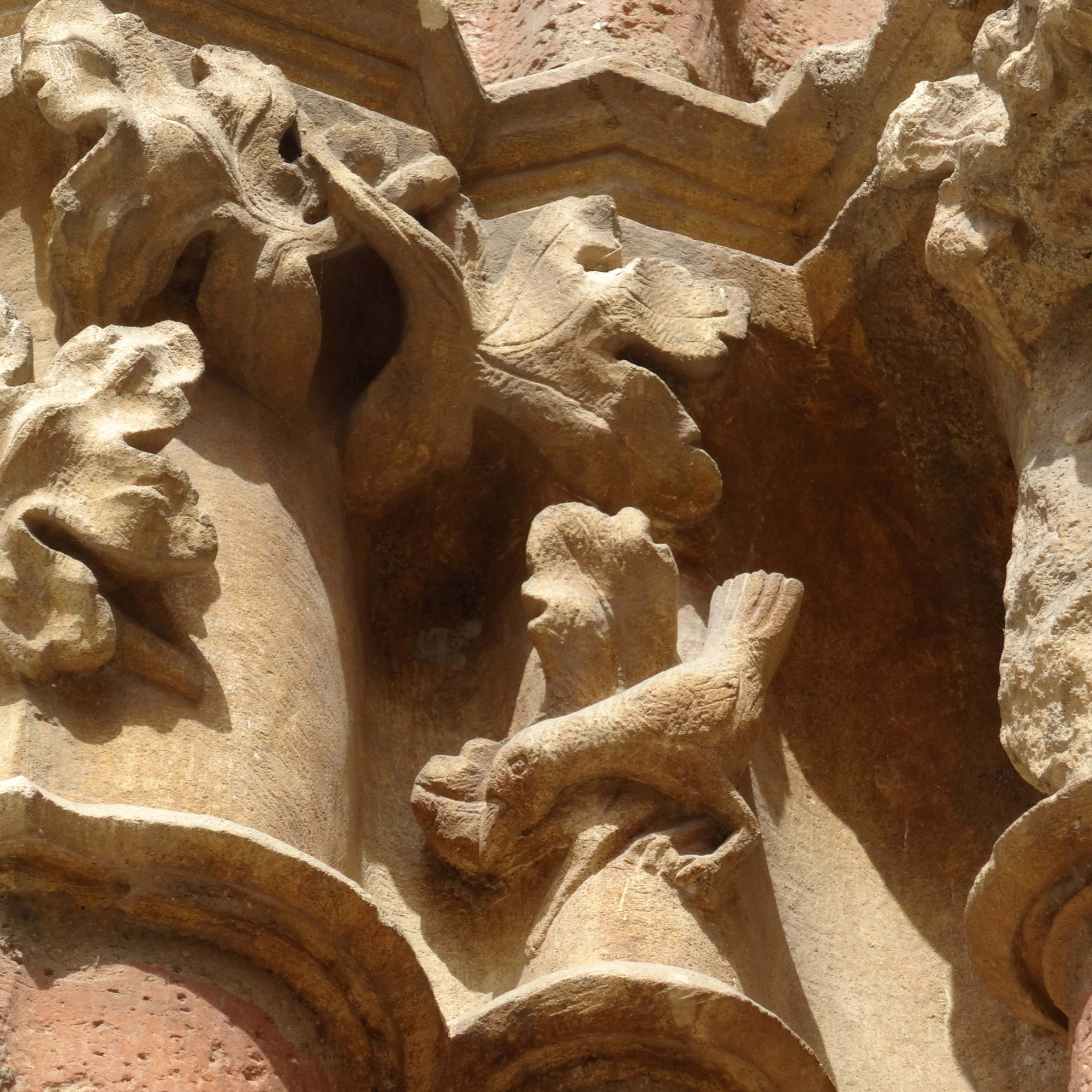
Perhaps my favourite photo is one I felt I had to pull out and present separately, and reminds me of one I know I took years earlier at Mont-Saint-Michel but can no longer find.
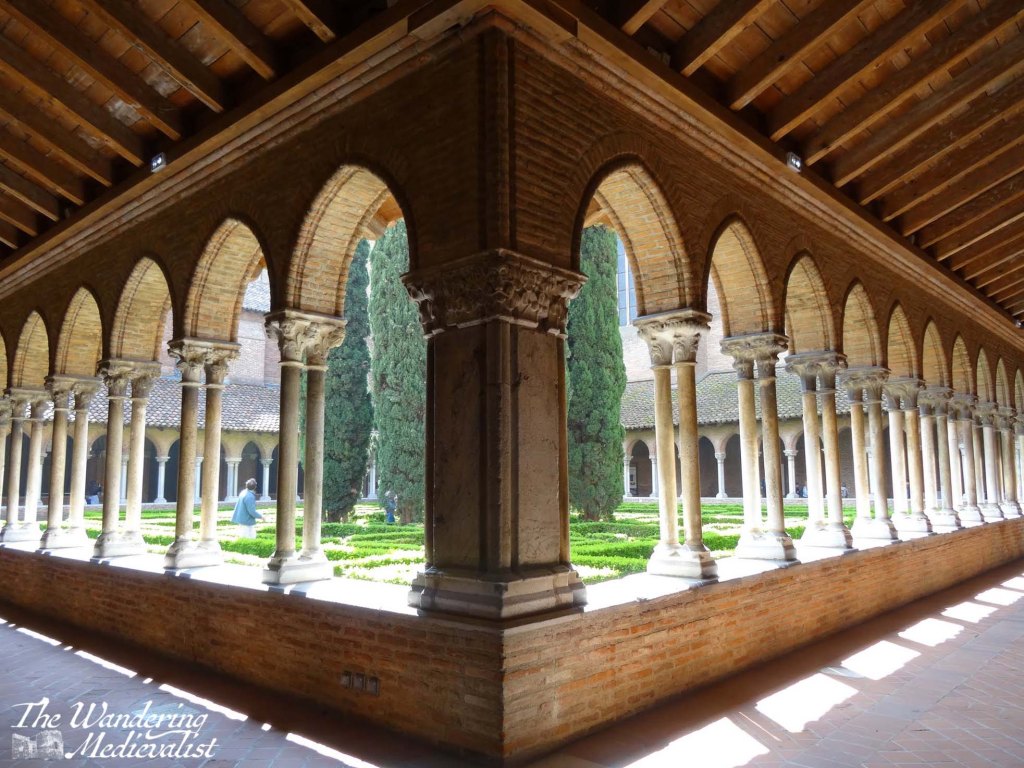
This was only the start of our visit, and I would soon have memories of this church overshadowed by the splendour of Carcassonne. Nonetheless, it is clear that a great deal of time and effort has gone into restoring the church after it was abused and used as a barracks by the Emperor Napoleon in the early 1800s, and I would certainly recommend a visit, particularly if you have even the slightest affection for ecclesiastical architecture.
- Yes, of course I will visit non-medieval spots, but Mum is always kind enough to humour me when I aim for medieval options first. ↩︎
- The university was founded shortly after the Treaty of Paris stopped the persecution of the Cathar order, and the Dominicans had played a role in encouraging dialogue and discussion. It makes sense then to learn that this church along with others in the city acted as some of the earliest classroom space for the university. ↩︎
- For those of you who may be curious, the term Jacobin arose as a nickname for the Dominican order, as their first convent was on Rue Saint-Jacques (Latin = Jacobus) in Paris. ↩︎
- It is so easy to find the wrong saint when doing a quick search, as often the names are similar or repetitive – there are several Saint Catherines, for example – so to clarify, this is Saint Antoninus of Pamiers, an early Christian missionary and martyr. ↩︎
 The Wandering Medievalist
3 responses to “Couvent des Jacobins, Toulouse”
So beautiful and I do remember wandering around this magnificent church! And, I do not humor you, but it was true we only visited medieval churches on another trip through the Loire Valley.
LikeLike
[…] truly stunning places in August, including Loch Linnhe, Dean Village and Leith Walk, Carcassonne, Toulouse, and the Glenfinnan Viaduct. What a busy bee I […]
LikeLike
[…] Couvent des Jacobins, Toulouse […]
LikeLike