

This year started strong with the reading, but as it crept on and work got in the way, I found it increasingly more challenging to make the time to read. And yes, of course, if it is important enough you make time, but this year was a lot.
I also found that most of my books were big and heavy, meaning it was often not possible to take them with me on my travels (I am not a Kindle person, I like the physical book – I am a medieval historian after all). Stubbornness prevailed though and as I adjusted to my new lifestyle, time for books returned. I wasn’t able to tackle some of the more serious tomes I had in the pile this year, but they are not forgotten!

1. Never, Ken Follett.
The premise of this book is a modern scenario in which the world is on the brink of nuclear war, and there are elements that are frighteningly real. Follett is a master of telling a tale across multiple interwoven storylines, and this book follows that pattern.
I read Never over the winter break and found it to be fascinating and quite eerie. It’s not one of Follett’s best in terms of writing quality, as it seems evident that his editor is just letting him do what he wants. One or two of the storylines don’t seem to really matter as much as others but they are all compelling and intriguing. Certainly I was on the edge of my seat by the end, trying to work out if the world could be saved.

2. Elske, Cynthia Voigt.
The fourth in the loosely-connected Kingdom series that started with Jackaroo (see last year’s reading list), Elske is a really interesting tale that is clearly designed for young adults and yet covers some violently mature topics. Elsie is an independent young woman who escaped a potentially violent end and finds herself frequently standing out from society by her unique nature of self-assurance and self-preservation. I’ve written more about Elske and the Kingdom series before.

3. The Daughter of Time, Josephine Tey.
I was not really sure what to expect from this book but had been told at times that I should read it. What I found was a really fascinating and quite speedy read that is not medieval in timing but is all about the Middle Ages. The main character is an injured policeman of Scotland Yard, who in his convalescence stumbles across the story of Richard III and the fate of the Princes in the Tower. He is immediately intrigued, and through his exploration of the subject, the historical facts behind the case are slowly revealed. I found this story not only fascinating for its quite anti-establishment assertion of Richard’s innocence but also for the way in which it embodies good historical practice. It could in fact be used as a first-year historian’s guide to how to examine a story – look at the sources, assess those sources, discover their bias and their purpose, and determine their relevancy and potential accuracy. Fascinating both as a mystery and an example of how examination of history should be attempted.

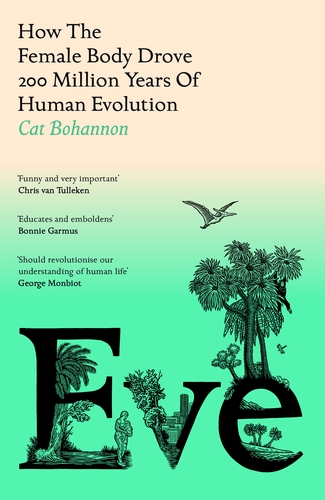
4. Eve, Cat Bohannon.
A fascinating read that to some extent many if not all women should read. Strike that, all people. Bohannon answered a lot of questions I have always had about why childbirth is so dangerous – seemingly a biological nonsense – and more. The sections about giving money to women are fascinating, and the matriarchal vs patriarchal societies amongst animals.
The writing style is a bit odd at times, as Bohannan seems to make an effort to shock or surprise, though possibly in an effort to familiarise or normalise certain ideas or terms.
Overall though a phenomenal read, that demonstrates above all why women and men should be studied separately in medicine and science.
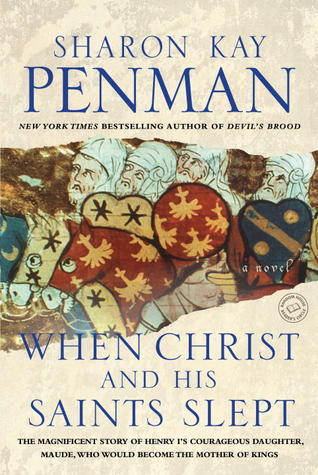
5. When Christ and His Saints Slept, Sharon Penman.
The civil war between Stephen and Matilda in the 12th century is far less well known than the much later English Civil War, but was no less destructive. Penman starts off with the history-altering wreck of the White Ship in 1120 and carries on through the many battles and tide changes of the war, before resolution in the accession of Henry II.
This is my comfort read, and holds a special place in my life as the book that introduced me to Sharon Penman, an author who would quickly become one of my favourites – as I have written. I also consider this book to be the pinnacle of her writing style: well researched, enthralling, and able to create sympathy for both sides of a brutal war. Even the heroes and heroines are flawed, make decisions you wish you could yell at them for, and often pay the price. Most significantly, this book introduces the characters of Henry FitzEmpress and Eleanor of Aquitaine, about whom so many of Penman’s books are written. For anyone tempted to take Penman’s books into their library, this is a good place to start.
6. Stay With Me, Ayobami Adebayo.
Beautifully written and heartbreaking, this book is a testament to a mother’s love, its power and depth. It is fascinating how well she can move back and forth between viewpoints, and yet there is never any questions as to who she is writing in that particular section, her style is so clear.
The book also demonstrates how key communication and trust can be in a marriage or relationship, and the destruction that can rain down when they are missing.
I read this book as part of a concerted effort to read more black authors, and would highly recommend, though it may be triggering to some in its discussions of the struggles around conception.

7. Hearth and Eagle, Anya Seton
I have loved Anya Seton ever since reading Katherine and falling in love with her style. This book is even more special as it is based in my home town and is very much a love story to Marblehead, describing in detail its evolution from a fishing village to the wealth-infused sailing mecca it is today. The story follows a young woman as she experiences love, tragedy, and the growth that comes with maturity and experience. Not necessarily a new story in terms of originality, Hesper’s tale means more to me as it takes place in Marblehead where the true love of her life is her house. In the end, she recognises the importance and value of coming home.

8. Ghost Ship and The Burning Chambers, Kate Mosse.
I’m classifying this as one as really these are two books of a series, the second of which I have started but not yet managed to finish.
Mosse is an author I can go back and forth over, but I really enjoyed The Ghost Ship and it made me want to go back and read the whole series about these women. I loved the historical take on what is often considered the more modern concept of gender fluidity, and her take on love crossing boundaries. The main character, Louise, felt very real and authentic, struggling against the gender norms of her time; there are so many powerful women in this story.
I am not sure that the publisher’s official synopsis pays enough credit to the first 200 or so pages of the book, about women finding their way in a world not meant for them to succeed on their own – but I look forward to reading more.

9. The Paleontologist, Luke Dumas
Whatever I expected this book to be about, it really was not. The writing starts of a bit clunky, I’d say, but eventually settles into a better rhythm. The story is a satisfying if a bit weird mystery, and Dumas seems to be uncertain at times if he is writing a fantasy or a mystery – the main character’s descent into madness is quite abrupt. An interesting attempt to explore the morality behind the practice of palaeontology and what the field owes to its subjects.

10. Hood, Stephen Lawhead.
I have always half intended to do a bit of work on the story of Robin Hood, but it is such a massive topic it can be intimidating. This book is one of many attempting to re-imagine the story, this time moving the tale from the standard Midlands Nottingham to medieval Wales. It’s an interesting take, though slow in places and at times a bit distracting – as any reimagining of a well-known story can be – as you try to work out which characters are which from the classic tale.
I did find it a powerful view into early medieval Wales and its fight to remain independent, a fight that would continue for 100s of years; certainly placing a young outlaw in this world makes as much sense as the time of Prince John.
I am not sure if I will read the rest of the trilogy at this point, but if so will most definitely report.

Honourable mention for this year goes to:
The first three books of Diana Gabaldon’s Outlander series. The fact that I have watched the TV show has made it harder to read the later books, as I can see why large portions were shortened or cut out. The books contain a lot more detail and their pace is much slower, but the story is of course richer for that detail. There are times when I quite actively dislike Claire, and like on screen the story can be brutal. I may try to skip ahead a few books so that I can read the story before watching the final season.
The Goodwife of Bath, by Karen Brooks, which I have almost finished and am thoroughly enjoying. I look forward to writing about it.
The Mistletoe and Sword, by Anya Seton – I tried to re-read as much Seton as I could this year after really enjoying a few of her books, and this one has always been quite low on my list. It includes a relatively standard view of the Roman occupation of Britain – Romans are brutal and lack appreciation for the locals, a good parallel to most of the history of the British empire – and of the Druids as mysterious and maligned. Takes place against the background of Boudicca’s revolt.
And finally, a sneak peak into next year – here is the pile of books I received for Christmas/birthday gifts! It is a bit less intense than last year’s collection, yet equally appreciated!
(I have started reading The 1619 Project and am fascinated – I cannot wait to dive back in after the holidays)

 The Wandering Medievalist