
For the last two years I have been consistent in recommending 10 books each year, but this year I am a touch short, and for several reasons.
Firstly, this year I tried to read my way through more of Diana Gabaldon but found it increasingly hard. The length of the books grew and grew, and I found myself getting frustrated at what I viewed as her editor allowing her to just write whatever she wanted. A few dozen pages could probably have been culled…
I also went through a real lull over the summer where I tried to read several books and found them un-compelling. Despite loving the first two Crescent City books by Sarah Maas, I struggled to dive into the third.
Furthermore, my ‘to read’ collection includes plenty of hard-backs, which are difficult to travel with, though I still stubbornly refuse to use an e-reader. I travelled quite a bit this year, and I tend not to read as much when I’m away.
Finally, several of the books I read were not ones I feel like recommending – I do not want to put them on the list simply to have 10 books. So there you have it.

1. The Good Wife of Bath, Karen Brooks.
I enjoyed this book almost from the first word – funny and real, the main character is generally likeable and yet inherently flawed. You frequently find yourself shouting at her not to make ridiculous mistakes, yet it is clear why she does.
The story itself is loosely based on Chaucer’s character of the same name – an imagining of what her life might have been. It is authentically and pleasantly medieval, but with the females in the story in particular always pushing back against the inevitable patriarchy.

The fight feels authentic – this is the kind of life a woman could really have lived, not a fantasy romance or filth-smeared peasant story. The agency she struggles for and the vulnerability of her position as a woman are felt equally, while the Chaucer character – yes he is in the story – keeps us grounded with the history taking place around her. In the end, all the main character wants is respect, making her eminently relatable. Possibly one of the best medieval fiction books I’ve read.
2. The Vanishing Half, Brit Bennett.
A compelling story about twin sisters who separate and lead two very different lives. Brought up in a town for light-skinned black people, the girls each choose to wear that identity differently, and in fact I saw this as very much a story exploring identity. How much is it what you make or what yourself to be, and how much is it the people and places around you? Can you reconnect with your old life once changing, and how does that impact you? It is also an exploration of lies, of denying who you are and whether this makes you happy.
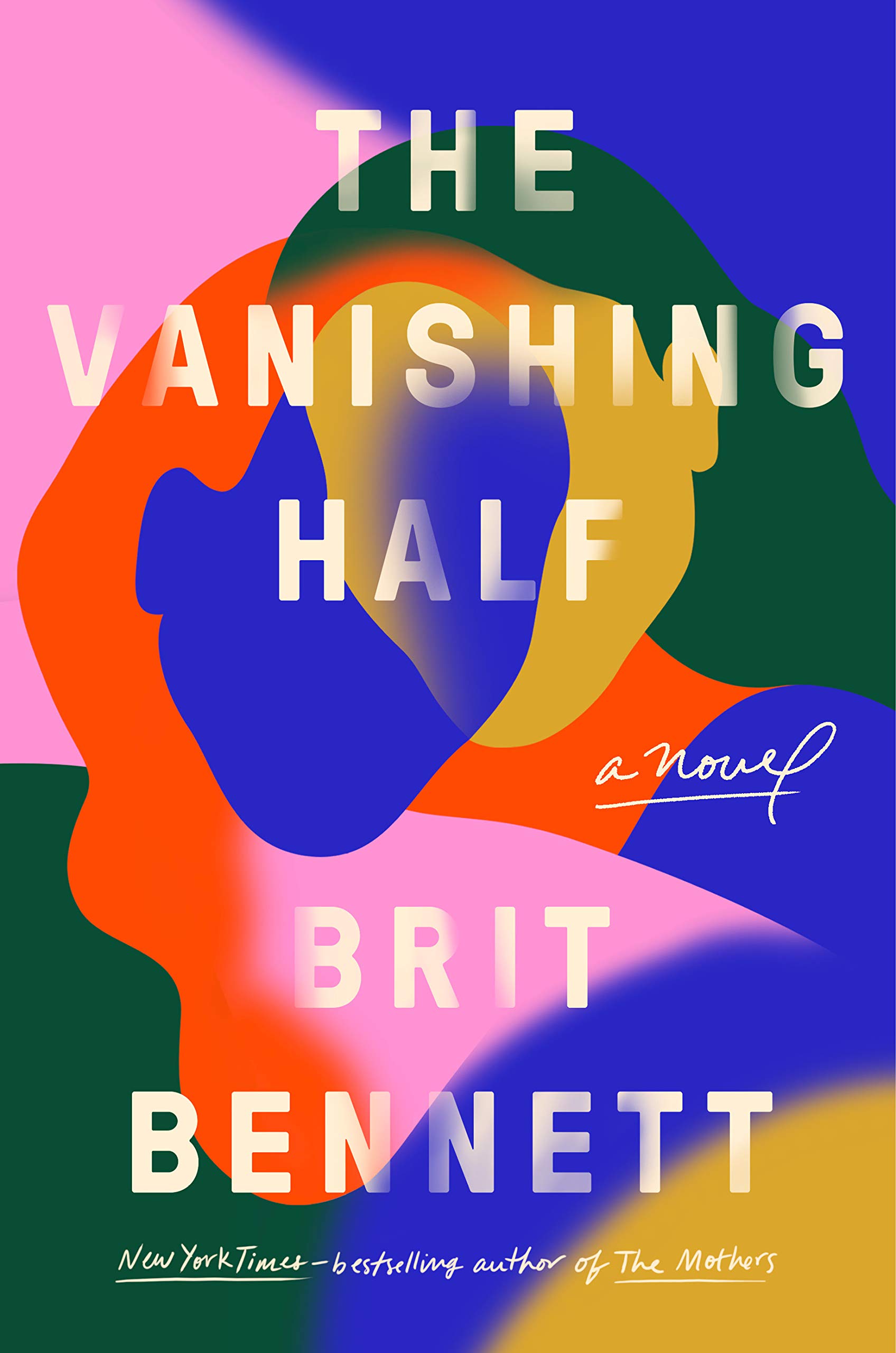
Generally, the characters who cannot or do no hide their identity are more content. This is also of course a story of race and racism in America, and how it has shifted over the generations – not necessarily lessened, but shifted. I will definitely be looking out for Brit Bennett’s other book!
3. The Historian, Elizabeth Kostova.
I chose to re-read this book as I had so enjoyed it in the past as a beautifully-written mix of mystery and history. I found it a bit harder to get through this time, as I knew the outcome of the story and so some of the middle bits seemed to take a long time, but the quality of this book is unmistakable. For one, while the narration moves between two to three people without clear separation, it is always evident who is speaking through the style of the writing.

Perhaps more impressively, Kostova takes a topic that could easily be looked at as cheesy or over-done – there are so many vampire stories about – and makes it authentic and believable. Her love of not just history but the academia behind the study of history is evident. Overall, a compelling book about the search for Dracula, with beautifully written characters and relationships.
4. The Women, Kristin Hannah.
I had seen this book recommended on numerous ‘historical fiction’ reading lists, and decided to give it a go. The tale of a privileged young woman from California in the mid-1960s who joins the army as a nurse to help the Vietnam war effort, this book is a fast and fascinating read. The character development as Frankie grows into her confidence as a nurse is believable and compelling, and it echoes the ‘war is hell’ message of the later seasons of M*A*S*H, one of my favourite TV shows.

A different war, but in many ways, very similar.
The story is of quite normal people doing extraordinary things during wartime, in the midst of tragedy and despair. The second half of the book is quite a bit darker, as Frankie faces the mental anguish of PTSD and how to adjust to a society that is ashamed of the war – an adjustment which so many Vietnam vets battled with, often to their own detriment. It is hard to see a character spiraling down, making poor choices, wishing you could help them make better ones, but it is chillingly realistic. And rewarding to see how hope can return with the catharsis of support, time, and talking.
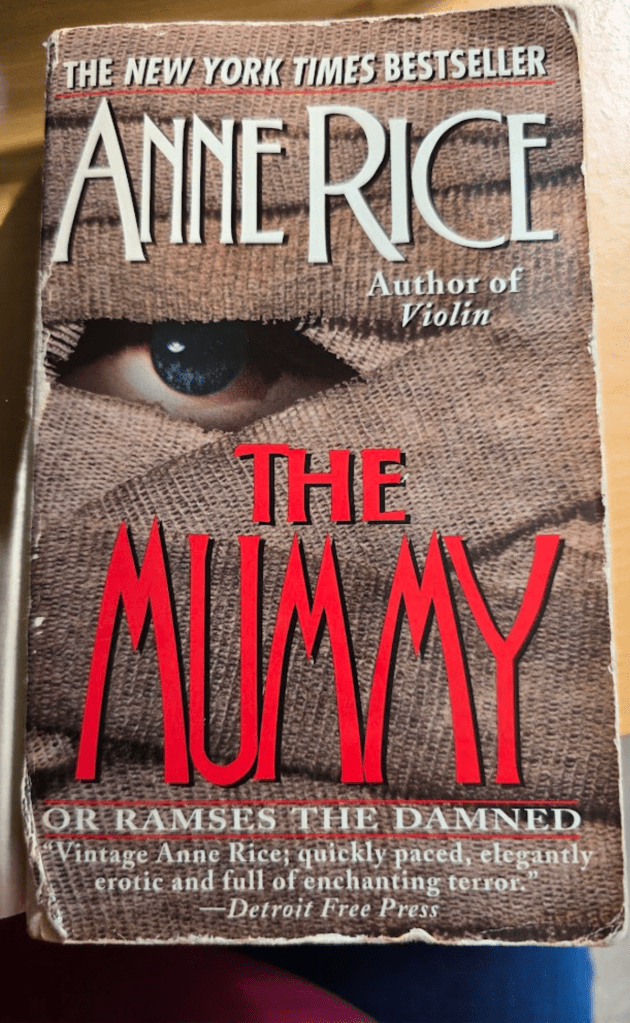
5. The Mummy, or Rameses the Damned, Anne Rice.
My affection for this book is perhaps most obvious by the well-read state of the cover; I have been an Anne Rice fan since receiving the first four books of the Vampire Chronicles upon graduation from 8th grade and positively devouring them, though some of the more adult nuances were lost upon me I am sure. The Mummy is one of Rice’s few stand-alone books, and touches on some of the same themes of immortality and love, but from a different angle.
Firstly, those made immortal usually have more of a choice in the matter than in the vampire stories, and do not need to kill to survive. Further, there is I would say a more detailed exploration of the idea of time passing, of waking up after 2000 years and having to adjust to an entirely new society. There has always been, I feel, an element of a historian’s fascination in Rice’s work of the wish to the impact of time passing on society over a great many generations, what changes and what stays the same. In this tale, the mummy of Rameses the Great is awakened almost accidentally after having been asleep since the time of Cleopatra, into the world of early 20th century London, during the height of colonial Britain’s obsession with ancient Egypt. There is consideration of morality and the soul – do the resurrected have the same soul as the deceased person they were? How might an immortal view mortal death? And always, the many potential horrors of immortality are explored.
This is also a satisfactory love story, with a satisfactorily vague ending that could point to several potential outcomes, allowing the reader to imagine the rest. An excellent book for someone who might be curious about Rice but unwilling to dive into the seemingly endless Vampire Chronicles or the massive tomes of the Mayfair Chronicles, with some great ancient Egyptian lore to boot. I have re-read this book many times and always find something new.
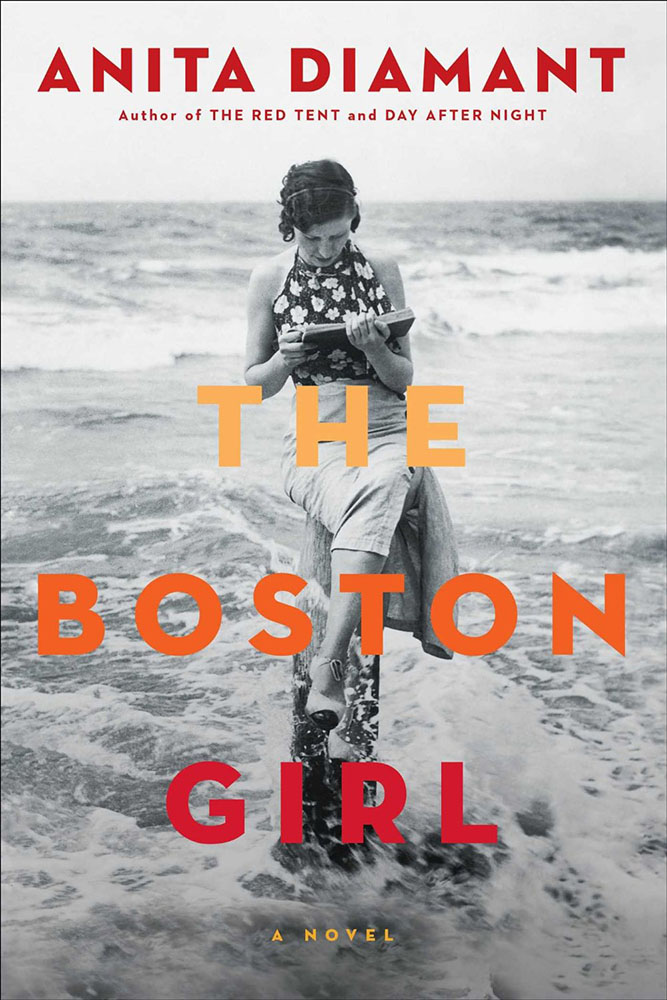
6. The Boston Girl, Anita Diamant.
This book is narrated by a grandmother, telling her granddaughter about her life, with the implication that the younger girl has asked questions. I was naturally drawn to it by the title, and was not disappointed to find the Boston and Massachusetts of two generations ago brought to life. As I have written before, I am a big fan of Anita Diamant and her writing style, particularly the realistic and consuming way in which she describes the complexity of female relationships, especially mother-daughter.
These relationships are not idealised but brutal, honest, sometimes heartbreaking and ugly.
This story, of a relatively normal girl finding her way through life, is beautiful in just how ordinary it is. The kind of story that just makes you feel good, with some heartache and some humour, but nothing intensely dramatic. Just everyday life, brought to the page. The characters are so real, they are people you wish you could meet and be friends with. This story is not as earth-shattering as the Red Tent, but it is imminently relatable.
7. The Queen of the Damned, Anne Rice.
Another Anne Rice, you ask? Sure, why not!? Anyone questioning this choice has never actually read her, or they would be aware of her skill. As I mentioned above, I was given the Vampire Chronicles as a gift, and I was hooked almost at once. I recall very clearly finishing The Vampire Lestat and immediately picking up The Queen of the Damned, as I could not wait to continue the story.
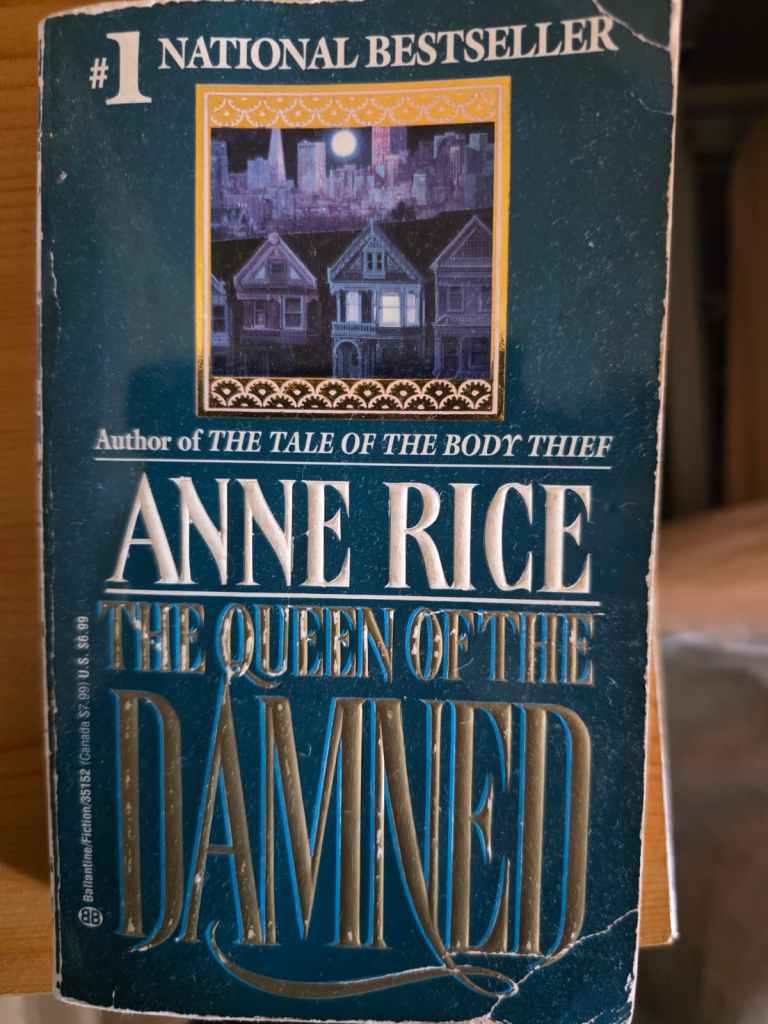
This has remained my favourite of the series even as I have explored some of her newer vampire stories. For one, I love a book told from multiple points of view, with many threads that tie themselves together over the course of the story. What’s more, I love a good origin story, which really is what this book is – it includes some fascinating ideas, such as the origin of vampires and why they have the traits they do, why they crave blood. There is also continued exploration of the idea that immortality is a burden as much as a gift, that a vampire could not possibly survive eternity without hiding, or hibernating, for several centuries or even millennia. Rice creates the concept that someone recently awakened in this world might see men as the root of evil – controversial naturally, and the brutality of the reaction to this conclusion makes it absurd. Furthermore, we see the root of the Talamasca, and the Great Family. This in particular intrigued me, that tracing a family back 6000 years, you would discover that family includes people from every country and race in the world – a beautiful idea.
I certainly did not catch all of the erotic undertones at the age of fourteen, but I could identify the omnipresence of wealth and love – the fact that you could love anyone, whoever they are. Gender was not really important any longer – a relatively forward-thinking idea for when this book was published. If you pick up no other Anne Rice, pick up this one – I am sure it will intrigue.
(note: yes, I have seen the movie. I am not a fan.)
8.The Plot Against America, Philip Roth.
This is not the first alternative history of World War II I have read – Man in the High Castle was in fact the first – but it is probably the most authentic-feeling and also the one that more closely mirrors some of what is happening in the US today.
The story is told mostly from the point of view of a young Jewish boy living in a primarily Jewish working-class neighbourhood in New Jersey.

His daily life is quite normal, and as the story progresses he wrestles with understanding his older relatives (a cousin and brother who handle WW II in very different ways) and his parents process the politics of the time. One of the most fascinating and chilling aspects of the story is where he chooses to change history – Frankin Roosevelt loses the 1940 election, and Charles Lindbergh the famous aviator is elected in his place. He proves to a friend to Hitler and the German cause, and there is great concern in the US as to how this will unfold.
Roth’s writing style is easy to follow yet clear and evocative as he moves between relating the story as if a news article, and then switching back to narrative to see how the bigger events impact the young boy. A fascinating example of alternate history – though in this case, history is really almost just delayed a few years – and a real exploration of how everyday people in America manage when those in charge think very differently or are hostile to who they are. It was not without parallel in the modern era.
There are a few books I read this year that I considered including in my list, but decided in the end I did not wish to recommend. The most prominent was Promising Young Women, a very thought-provoking story and one about which I’m still not sure how I felt. Another was the Jodi Taylor history-adventure-fantasy Doing Time, which had been recommended to be and I enjoyed. I think. Still not sure if I want to read the sequels or related St Mary’s series.
I did have quite a pile of books gifted to me at the start of the year which I had every intention of reading, but as I mentioned above, were not travel-friendly and serious enough that I struggled to read them in an already stressful autumn. I hope to make a dent one of these days. I also, as mentioned above, spent FAR too long trying to read my way through the Outlander series. I still have two books to go, and I’m not sure when I’ll have the will to pick them back up. While Ken Follett is often as long and weighty in his writing, in my opinion he earns it in a way Gabaldon’s later books just don’t. Which isn’t to say I am not excited about season 8.
Happy reading!
 The Wandering Medievalist
One response to “My top books of 2025”
If I can download it, I might have a go atPhilip Roth. I resisted ebooks for ages. I have quite a library of physical books and an elibrary that I carry easily wherever I go. I don’t have have to dust the latter.
LikeLike