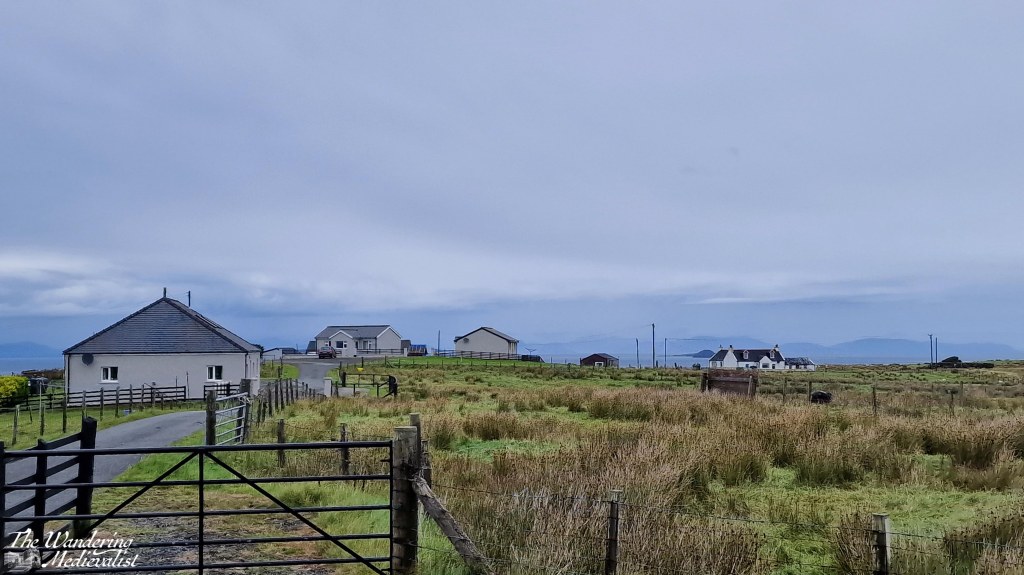
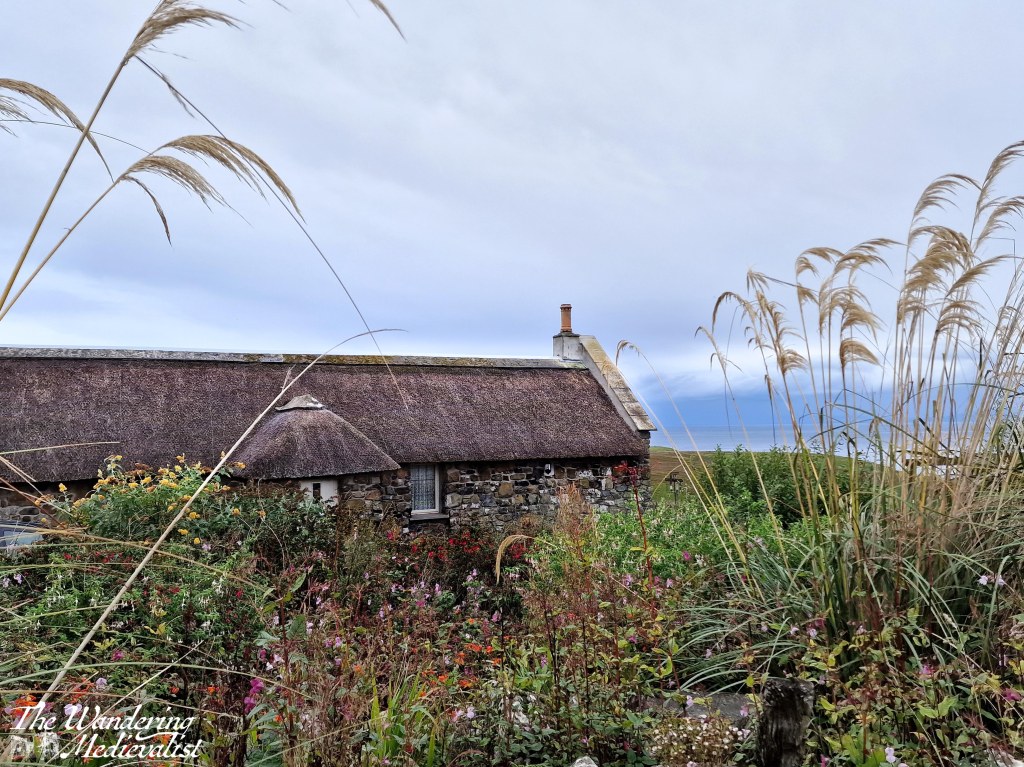
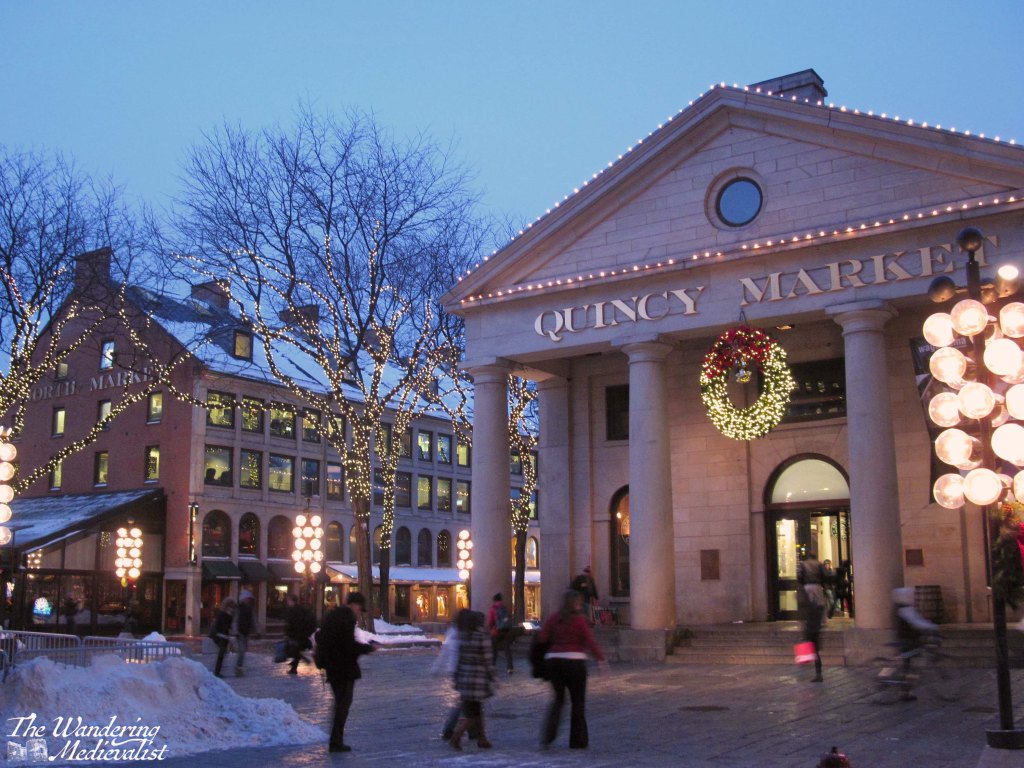
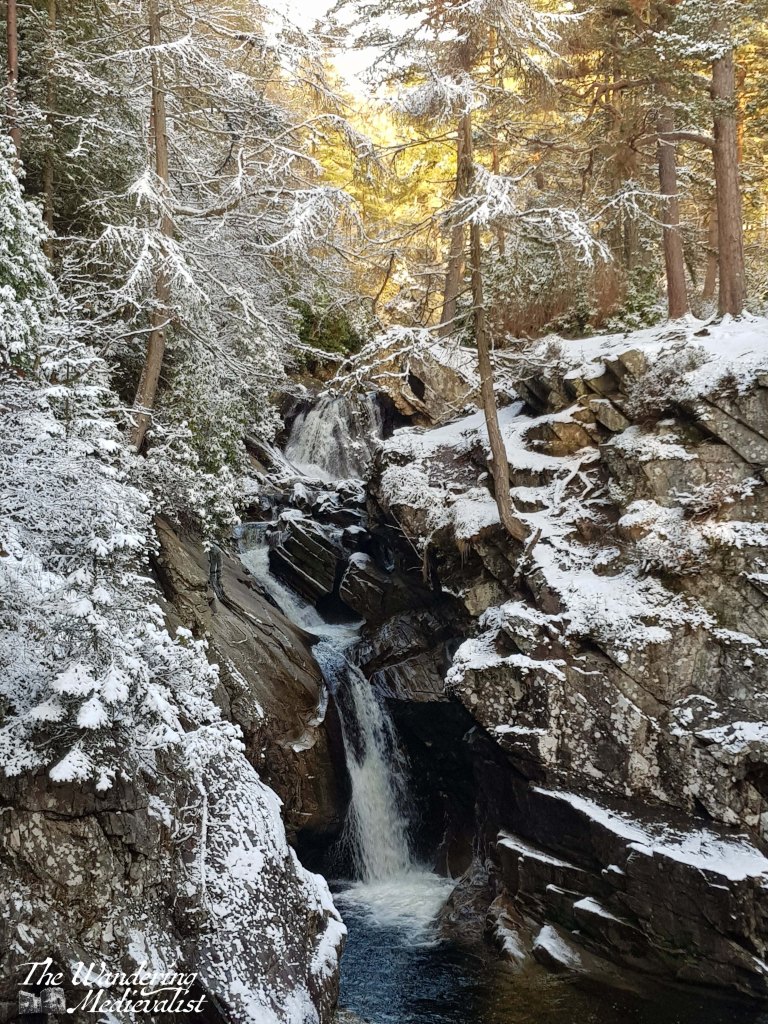
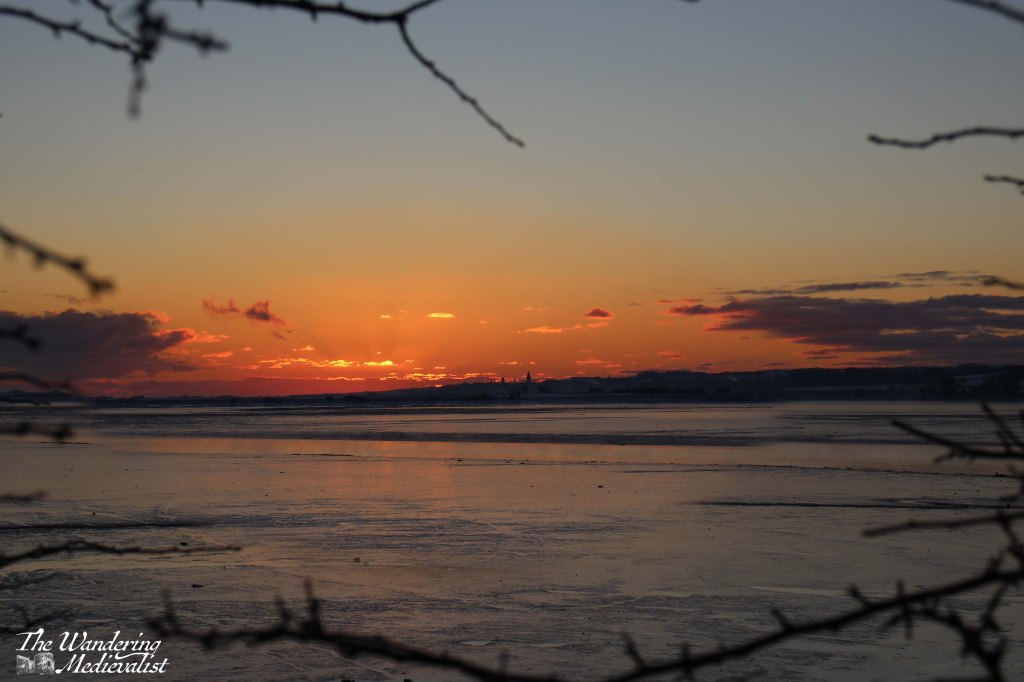
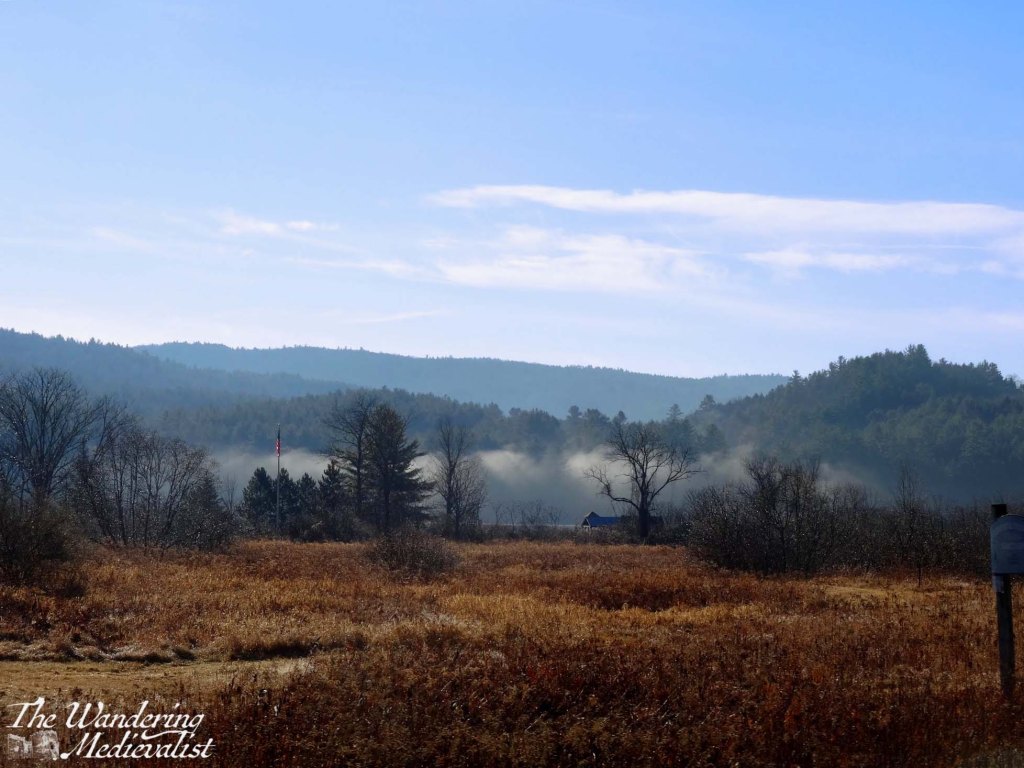
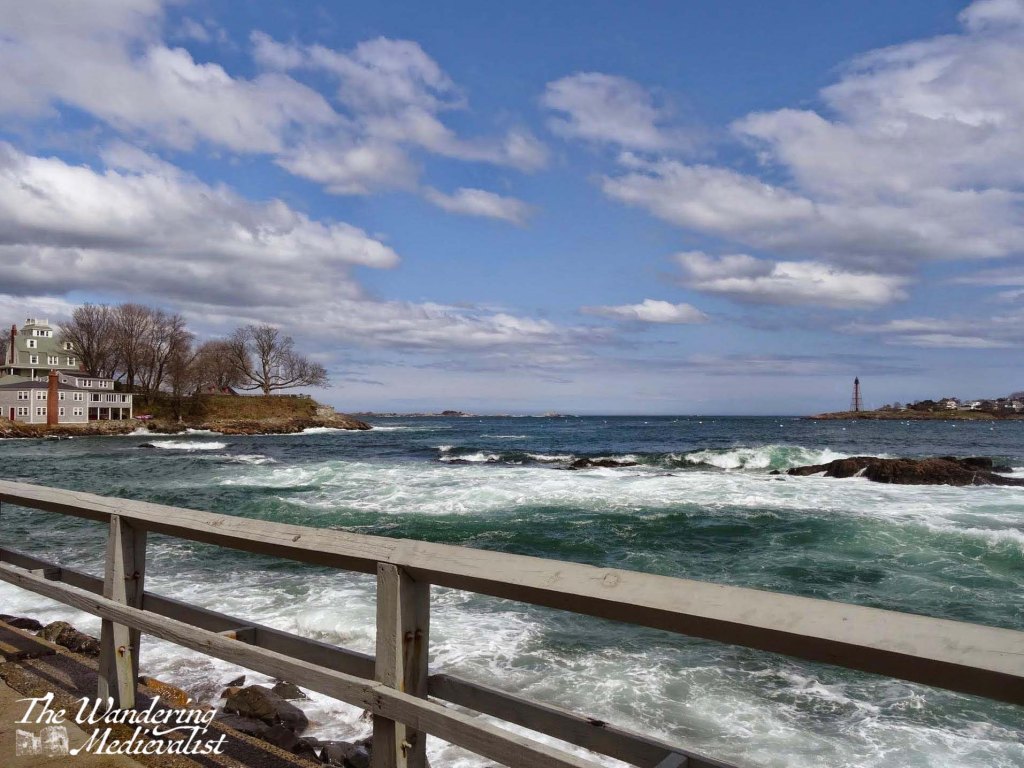
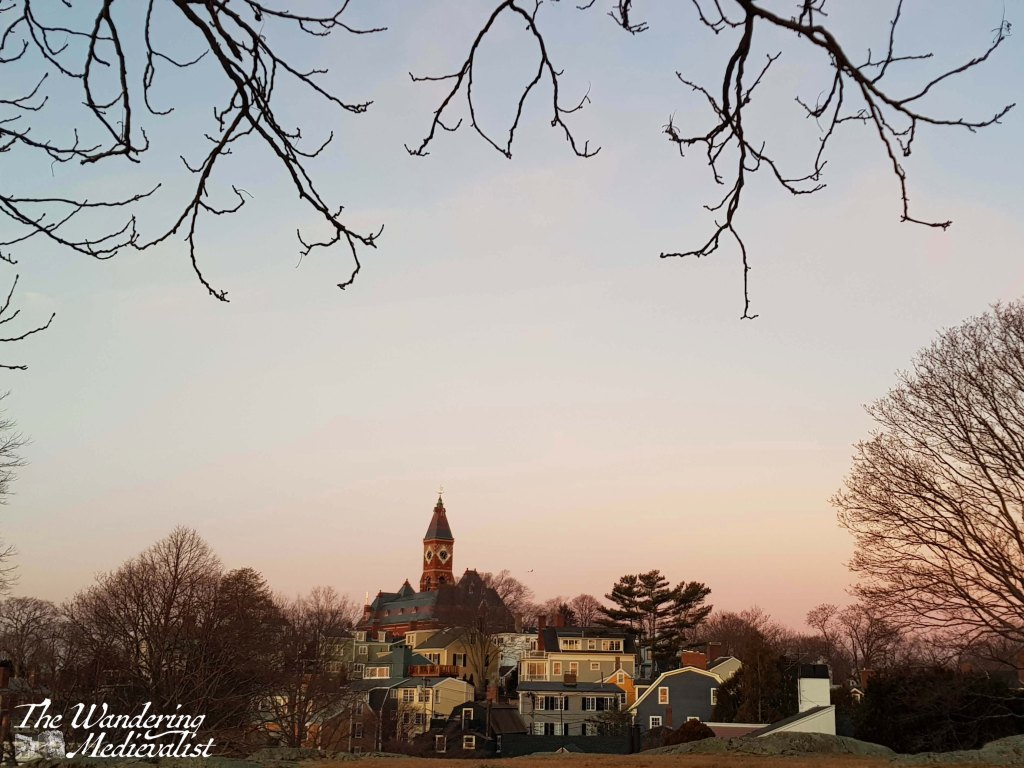
There are so many beautiful views in the world, many I have seen and many I have on my list of wishes. This list, then, is of a few that I love more than others – some of these please I have visited and photographed over and over in different seasons and lights. Some of them I have visited only once, but remain in my memory as special, unique. These are views that make me smile, take a deep breath, and feel at peace.
Unsurprisingly, quite a few of these now grace the walls of our house, as canvas prints or collages.
I hope that they bring you the same smile and peace of mind.
Boston, Massachusetts – Quincy Market
Bruar, Scotland – lower Falls of Bruar
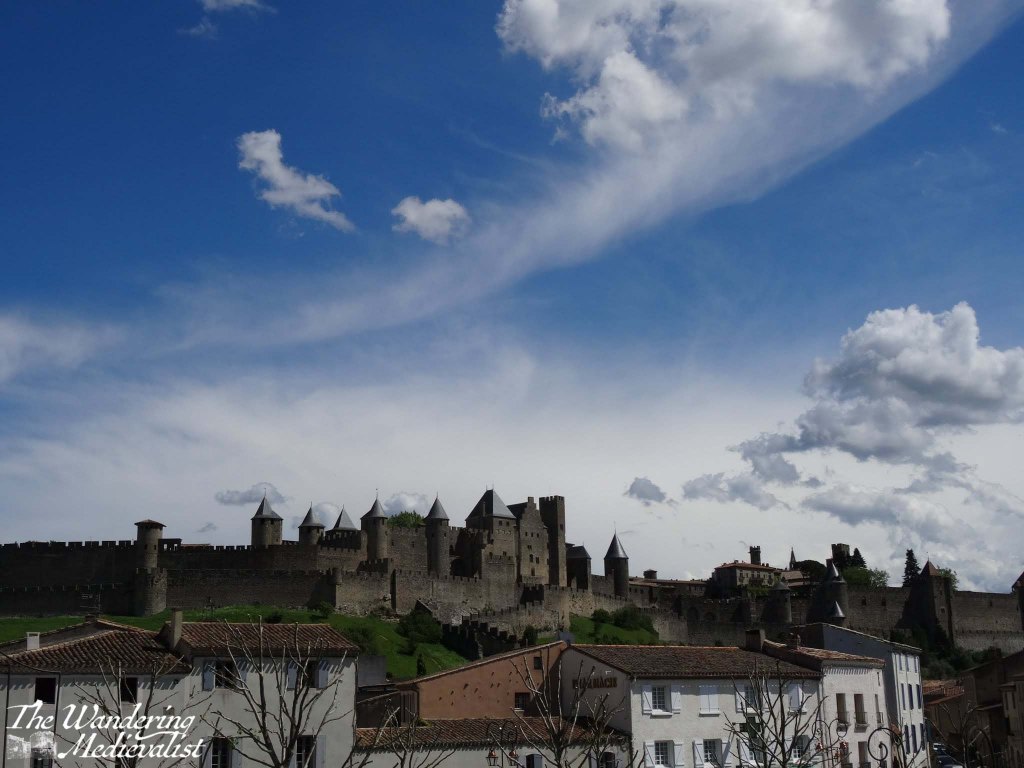
Carcassonne, France – the medieval city of Carcassonne from the Pont Vieux
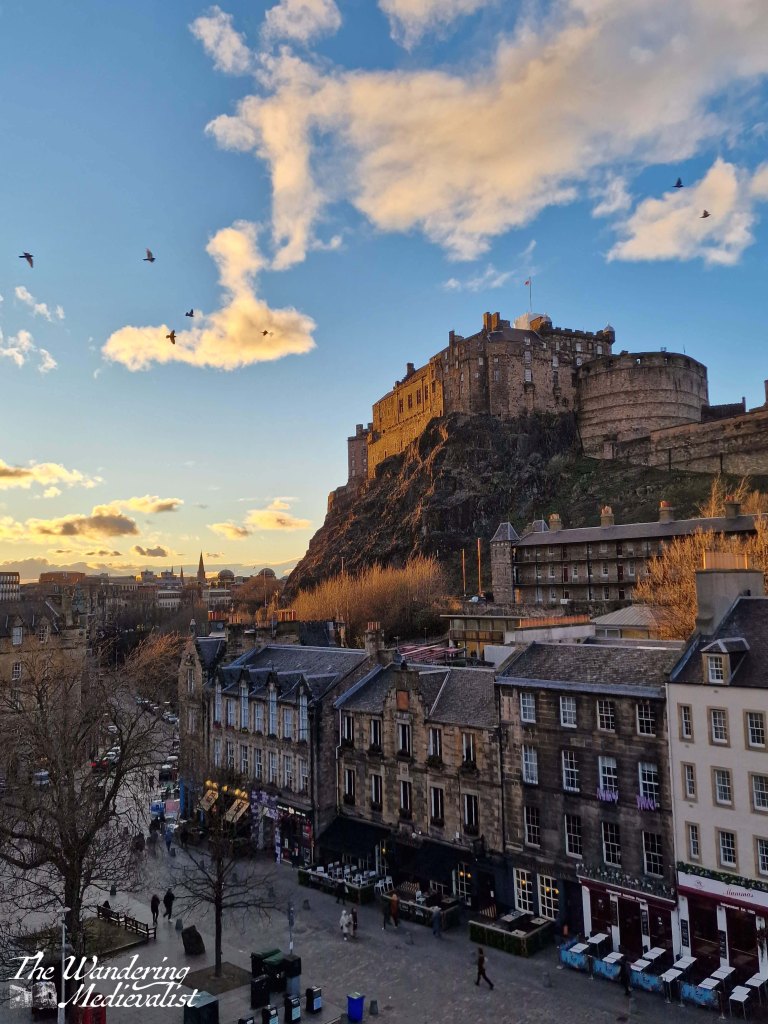
Edinburgh, Scotland – the castle from the Grassmarket
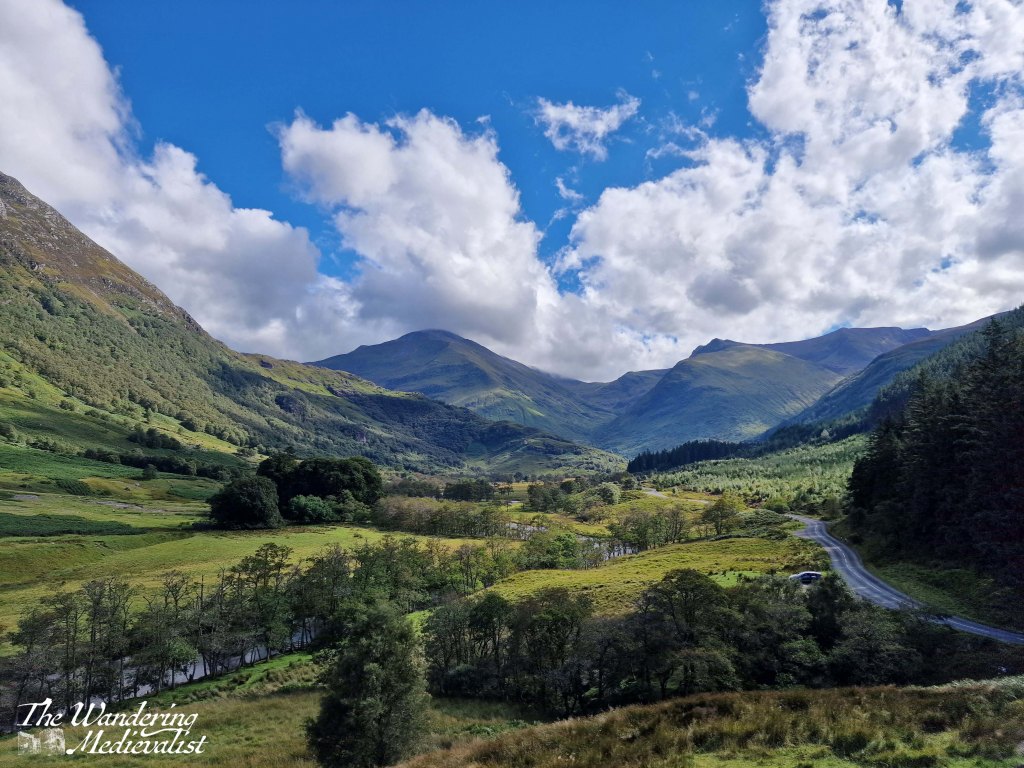
Fort William, Scotland – Glen Nevis
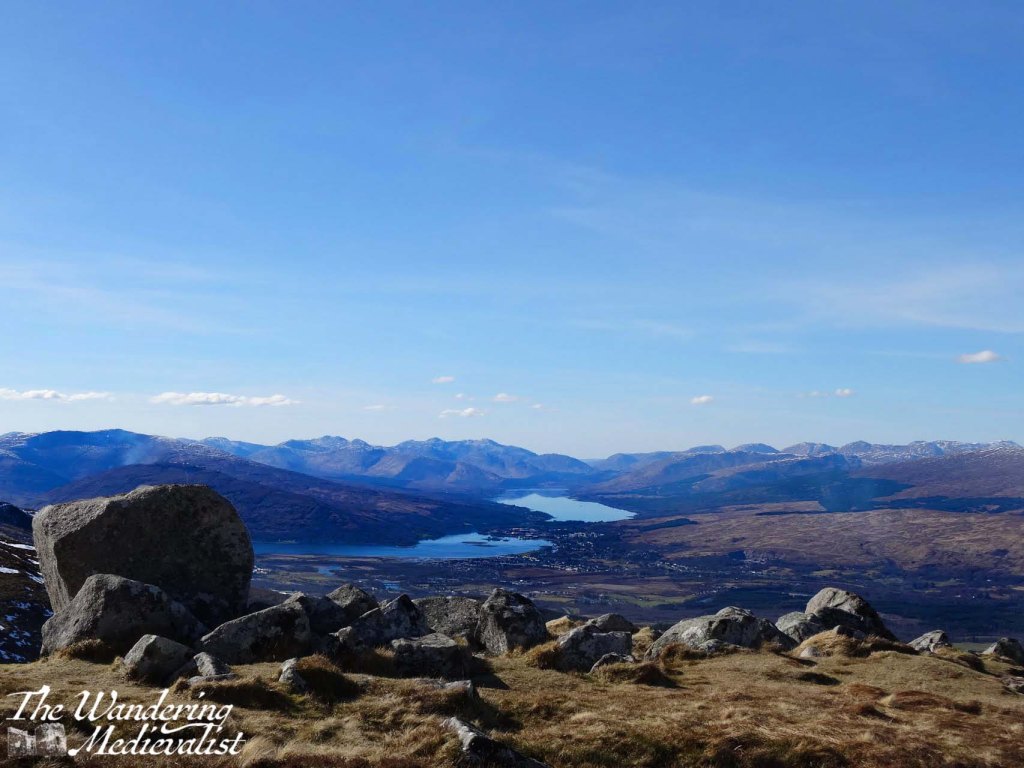
Fort William, Scotland – view of Loch Linnhe and Loch Eil from Meall Beag viewpoint
Glenrothes, Scotland – view from East Lomond looking west
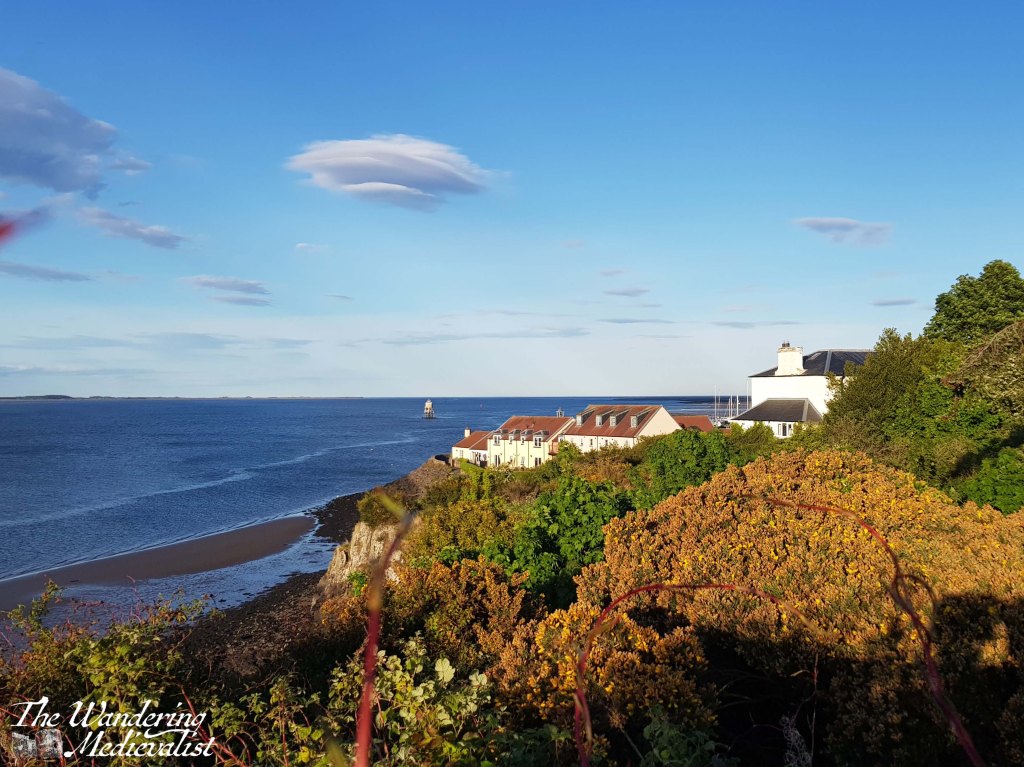
Guardbridge, Scotland – looking across the Eden Estuary to St Andrews
Lyme, New Hampshire – Post Pond
Marblehead, Massachusetts – Fort Sewall and the harbor from Fort Sewall beach
Marblehead, Massachusetts – view of Abbot Hall and Old Town from Crocker Park
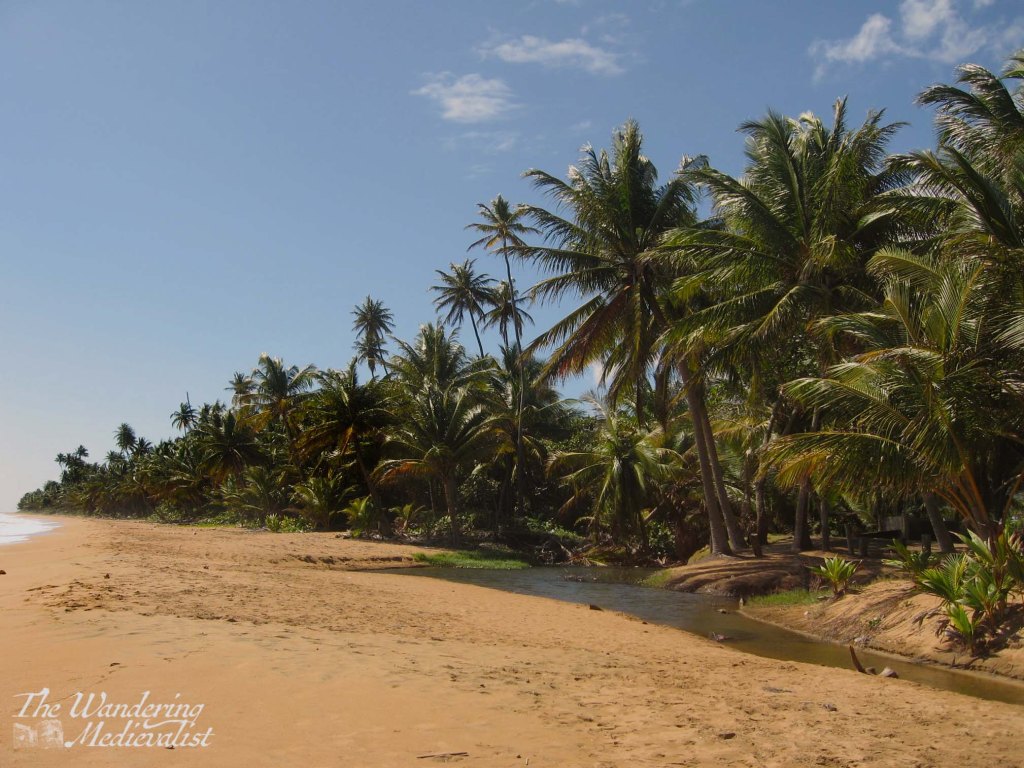
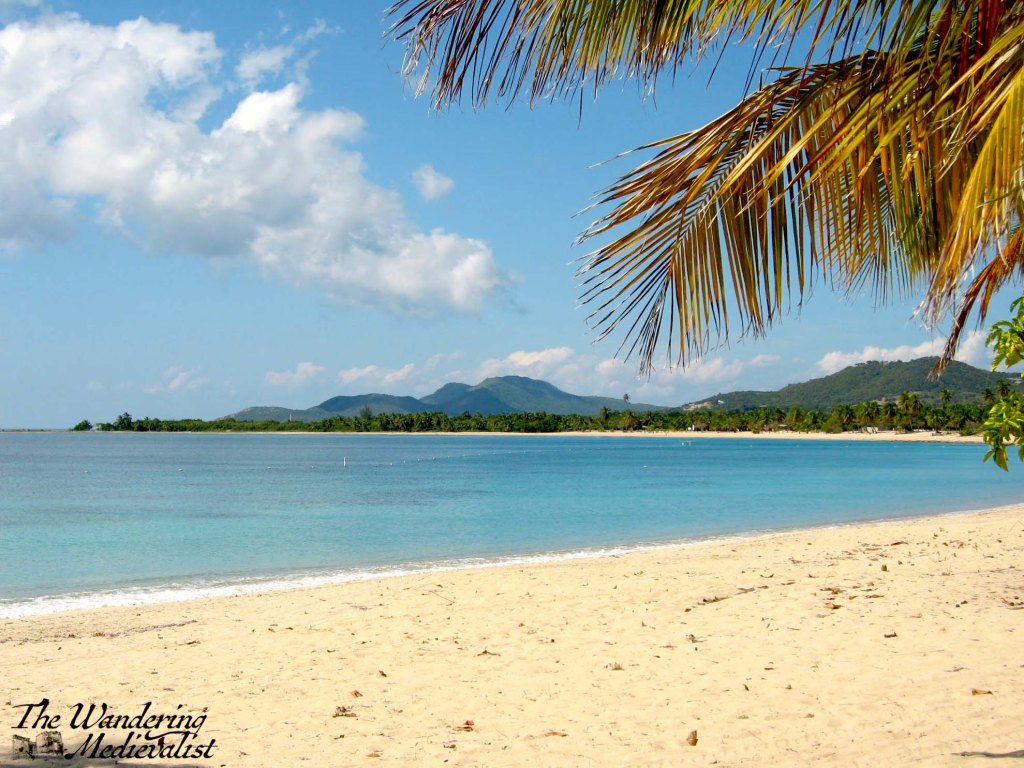
Maunabo, Puerto Rico – Punta Tuna Beach
St Andrews, Scotland – view of the castle from the Scores
I have often found it curious that in the years since completing my PhD, my historical interests have veered away from the topic I studied for so long and towards completely different areas – though actually this may be more standard than not. One of the interests I developed is in diseases and their impact on human history. This began a number of years back when I picked up a book on a history of disease, namely Kinsey Dart’s Yesterday’s Plague, Tomorrow’s Pandemic? A history of disease throughout the ages, in which the author argues that the infamous Black Death, the plague that struck Europe in the 14th century, was not bubonic plague. This astounded, baffled and annoyed me, because while the argument was strong, at no point did he propose an alternative hypothesis. And of course, as science has now shown, he was in fact incorrect – numerous pieces of evidence now exist proving that 14th-century plague was in fact caused by Yersinia pestis. But the discussion got me hooked, particularly when I discovered that bubonic plague still exists in the modern world and, in fact, in the United States – though mostly west of the Mississippi.
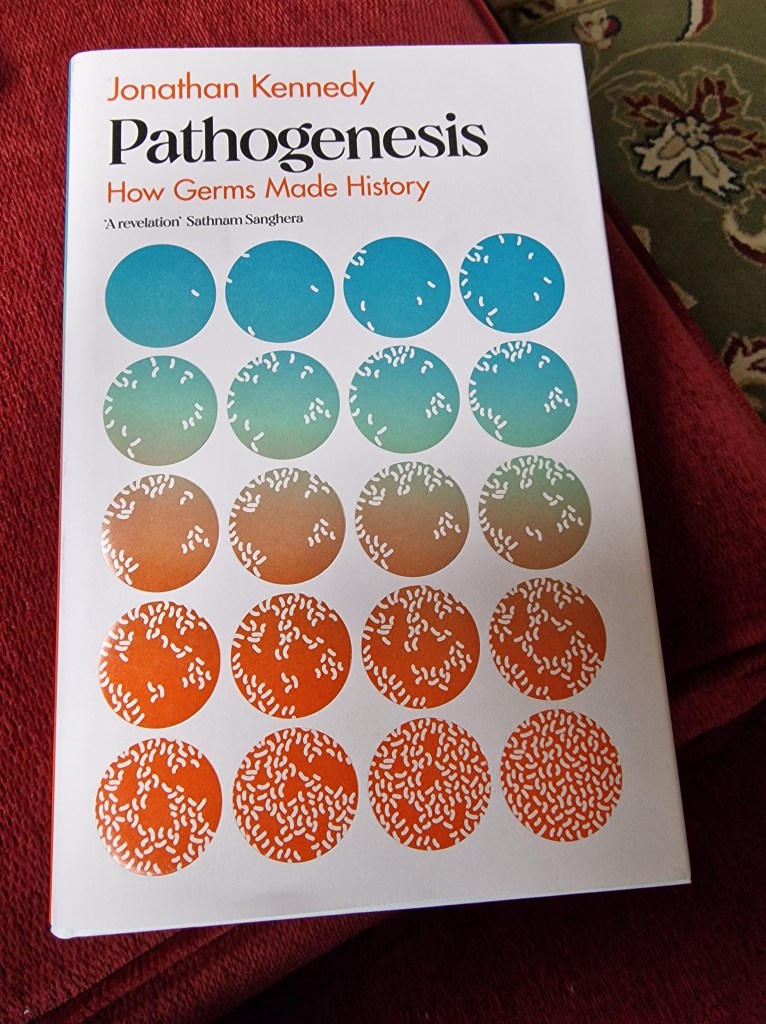
This book by Jonathan Kennedy was a going on holiday gift from my other half, and I positively devoured it. Kennedy writes in an academic fashion, describing things in scientific terms as well as historical, yet makes them accessible to those without a Biology degree. The frontispiece is a map of the spread of various diseases throughout history, from Neolithic Plague to Covid-19 – there is nothing I love more than a good map! (take a look at the end of this post)
The introduction is subtitled ‘Primordial plagues’, utilizing a word that for me stirs up memories of things X-Files and of course Darwinian. Perhaps most appealing to me is Kennedy’s writing style, a mix of intellectual and tongue-in-cheek, providing facts in an intriguing fashion. One of the first that struck me was the description, on page 10, of how species’ adaption to retroviruses led to the evolution of gestational pregnancy rather than the laying of eggs.
To give you a feel for his style:
“Freud’s suggestion that psychoanalysis is more sigificant than the Copernican or Darwinian revolutuions seems a little, well, egotistic.”
Pathogenesis, p.2.
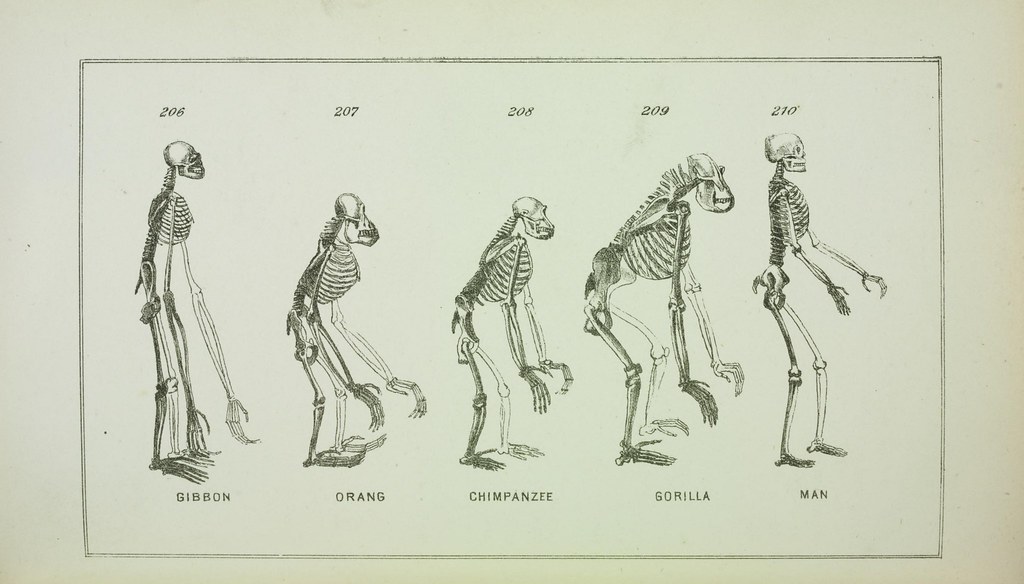
As the book moves through time, Kennedy does an excellent job of outlining the more traditional views, and then either upending or updating them with the data gathered more recently as our biological technology improves. He shows how history is anything but static or stagnant – rather it is constantly changing as we learn more. A key example of this is his discussion of the pre-eminence of Homo sapiens and slow disappearance of other human species such as Homo neanderthalensis and the more regionally-specific species Homo florensiensis and Homo luzonensis. It was not, as I was taught in grade school, a single line of evolution but instead a branched tree that overlaps and commingles – we know many modern humans carry Neanderthal DNA, for example – and just because a group of people migrated into an area at a particular time does not mean they stayed there.
As a student of the bubonic plague, I devoured a section on the ‘Neolithic Black Death’, during which Kennedy describes evidence of the Yersinia pestis bacterium in the traces of skeletons from Sweden, around 5,000 years old.
The key difference, Kennedy, explains, between this ancient plague and the one that devastated 14th-century Europe, was that it was non flea-borne until early in the first millennium BCE. The implications of this change are evidence in the study of both the Justinian plague and the Black Death.
“By comparing the genomes of these different strains of bacteria it’s possible to calculate how long ago they diverged…[from] a common ancestor that was circulating about 5,700 years ago.”
Pathogenesis, p. 67.
Moving onward, Kennedy spends a healthy amount of time discussing the diseases that wreaked havoc during the Columbian era, but also in flipping the coin to examine the impact of tropical diseases on colonial Europeans. For those of us living in Scotland, there is a key case study of how a disastrous seventeenth-century attempt to settle in Central America caused financial disaster and, not indirectly, to the union of the crowns of England and Scotland in 1707, with political ramifications still felt today.
While one might read some of these sections as more focussed upon the European settlers than the destruction of the native population, the purpose is not, I feel, to devalue that genocide, but instead to demonstrate how Mother Nature fought back, in some cases quite effectively. Kennedy also addresses how the resilience of the native Africans kidnapped and brought to the Americas was to some extent their downfall – they were more prepared for the illnesses of the tropical region yet also had immunity to Old World diseases like smallpox, and so were heartier than both Europeans and the native population of the Americas. This heartiness led to inconceivable suffering.
As Kennedy moves into the 20th century, he begins to look at the influence of politics on disease prevention and vaccination. He also spends a great deal of time examining the links between poverty and disease.
“One link between deprivation and non-communicable disease is unhealthy eating. A recent study found that the poorest 10 per cent of households in the UK would have to spend over 70 per cent of their income in order to follow healthy eating guidelines. As a result, we see higher levels of obesity in low-income areas.”
Pathogenesis, p. 280.
For those of us living in modern Britain, it is chilling to read about the impact of post-Thatcher cuts to the NHS on modern life and health. Kennedy cites a British Medical Journal study estimating that more than 10,000 extra deaths each year may have been caused by cuts in UK government spending on health (Pathogenesis, p. 282.).
This kind of observation, combined with his earlier discussions of the evolution of man and its relationship with disease, make this book absolutely fascinating and a must-read for anyone interested in the development of the human race over thousands of years.
My only criticism lies in the perhaps inevitable tendency that Kennedy, like many other academics, has in arguing that his study is the most significant in history – that the world changed because of these little-considered forces, more sigificant than any other. One of my favourite moments of study as an undergraduate was during my Fall of the Roman Empire class when we were all asked to write a paper on why we felt the empire collapsed – and every one was different. One hypothesis was to blame women (not in a misogynist fashion so much as political), another Christians, another, beards. We all did well, we all had good arguments, and in a way, we were all right.
Which makes clear that there is never one answer as to why anything happened in history, never only one catalyst – you can easily argue that your hypothesis is correct, but really there is always a multitude of factors in any historical shift. Nonetheless, Kennedy’s argument that disease is often missed, is a good one. It is also one that has, until recently, been very hard to research, as much of the evidence we would like to have is gone. In many cases, the eyewitnesses of a disease or epidemic did not have the language to describe symptoms scientifically. There will always be a debate, for instance, as to whether certain deaths in the 16th century were caused by leprosy or syphilis, as without biological evidence, the two look incredibly similar. This, then, is where this book can be seen as the start of an exciting new period of historical research and knowledge – as our scientific methods reach new depths of inquiry, new evidence will be found and examined to help answer questions. In many cases it may even change the course of what we thought we knew. And that, in my humble opinion, is what the study of history is all about.
Map of the spread of pathogens throughout history, from Pathogenesis.
Full disclaimer: this post should not be considered anything other than pure geeky historian fun.
I was trained in Medieval History at St Andrews, where for the most part, the dividing line between Medieval and Modern History was about 1500; in the British Isles, this can be marked by the Battle of Bosworth Field in 1485 and the accession of Henry Tudor as King Henry VII. The actual division is relatively trivial, except in one aspect in which I take it personally: the Tudors, particularly Henry VIII and his wives, are not medieval.
Why does this matter? Because at about 90% of pub quizzes, any history section will include a question about Henry and his wives. Then the team will turn to me: you must know this, you studied medieval history.
Well, yes, I did and do – but not the Tudors. Annoyingly enough I tend to know the answer anyway, but when I studied my Late Medieval History module, it ended with Richard III. On the continent, ‘medieval’ tended to fizzle away with the end of the Hundred Years’ War and the peasant rebellions. Much of this really depends upon the definition of the word ‘medieval’, and there is plenty of scholarly debate on whether it is accurate or in any way useful to define eras like this.
But that’s not the point of this post. What it really comes down to is the attention the Tudors get – books, TV shows, movies, all obsessed with Henry and his inability to sire a son, his insane relationships with women, the politics around his reign and those of his daughters. While I loved Cate Blanchett as Elizabeth, this is well past my time of interest and, more importantly, there is an equally – if not more – fascinating and dysfunctional historical English royal family waiting in the wings. And by this of course I mean the Angevins – Henry II and his sons, Richard I and John.
Richard the Lionheart, the evil Prince/King John – the basis of the Robin Hood myth: most people have heard of these characters, and their mother Eleanor of Aquitaine, one of the most famous of medieval queens.
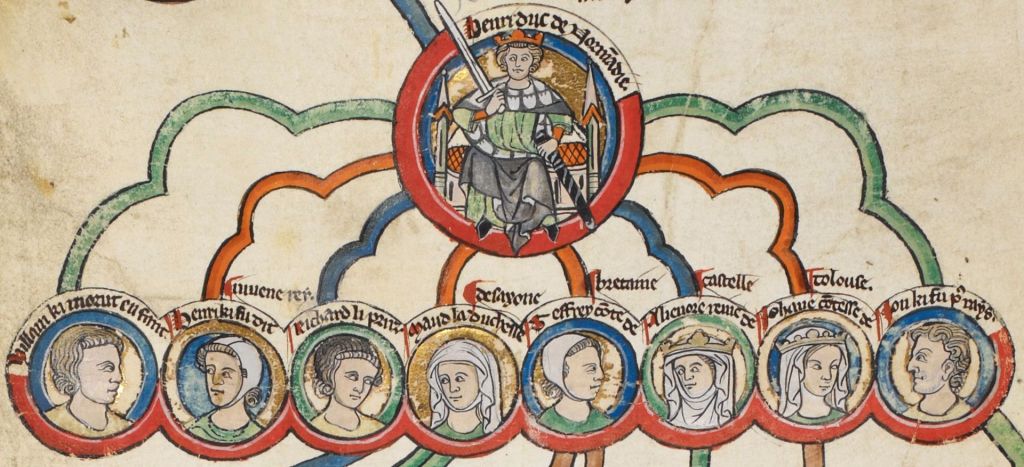
As is evident to anyone who has seen the play or movie of The Lion in Winter, the Angevin royal family was properly dramatic, and I have always thought deserved an equally angsty and historically dubious drama. There are elder sons who are annoyed at their lack of power, younger sons who are their parents’ favourites, daughters married off but somehow still involved, affairs and heartbreak, illegitimate children, and of course, best of all, a family-led rebellion. I could see one season on Henry and Eleanor in their early years, starting with a furtive meeting in Paris and her flight across France after the end of her marriage to Louis VII, when she was pursued, quite literally, by lords and younger sons intent upon capturing and ‘marrying’ her. Then there are the early years of their reign, the Becket controversy and his death, and so much more. The side-characters are enticing, too: William Marshall, Louis VII and Philip II of France, Henry the Lion of Saxony, and Henry’s three daughters, all married off when young but still active in their parents’ lives and living fascinating lives of their own. There are even ‘spin-off’ opportunities if you want to go as far forward as King Richard’s reign and his crusade.
One of my favourite facts of all time about Henry II is that he was rebelled against in 1173-4 by an alliance including: his eldest sons, the King of France, the King of Scotland, most of the nobles in England, Normandy and Aquitaine, and his wife – but he won. Now of course historians might argue as to how much this was due to his skill and how much to the incompetence of the rebels, but either way, it’s a great story.
But there is more to it than just I like the Angevins better. The time of Henry VIII is infamous for the schism with the Pope and the naming of the king as the head of the Church of England, but it is worth observing that plenty of kings before Henry would have welcomed such a move, and Henry II during his arguments with Becket was hinting in that direction. Also, the marriage of Henry II and Eleanor of Aquitaine was without hyperbole one of the most significant royal marriages of the Middle Ages. Not only did it combine two powerful inheritances into an empire that stretched from Scotland to the Mediterranean, it also brought the Kings of England well and truly into the continental sphere. For a time, Henry II was – almost without argument – the most powerful man in Europe, commanding considerably more of France than the king of France himself. As I argued in my PhD thesis, the significance of these continental connections are mirrored in the many marriage arrangements made by Henry for his children – suddenly the English royal house was making regular alliances with the kingdoms of Spain, the realms of southern France like Toulouse and Savoy, even the Kings of Sicily. Spanish connections in particular were a significant part of English royal marriage policy from this point onwards, due to the throne’s interest in Aquitaine – and they would of course continue through to the time of the Tudors: Henry VIII’s first wife of course was Catherine of Aragon. Henry II’s reign transformed royal marriage policies and, arguably, English royal policies overall to have a much stronger continental interest, so much so that his son Richard would spend only six months of a ten-year reign actually in England. The next century’s Hundred Years’ War can arguably be traced back – at least partially – to the connections made by Henry’s marriage and those of his children.
So, rant over. But my belief in the supremacy of the Angevins over the Tudors will return, I am sure. And don’t believe me that the family was dramatic and fascinating? Watch the 1968 version of The Lion in Winter, starring, amongst others, Peter O’Toole, Katherine Hepburn, Timothy Dalton and Anthony Hopkins. I rest my case.
While there are plenty of writers out there who have tackled the Middle Ages and indeed my favourite period of the Angevin kings of England, not one has done it as well as Sharon Kay Penman. I was first given one of her books when I was 16, and while it was seriously weighty – more than 750 pages – I was immediately hooked by the thrilling tale of the Empress Maude and her efforts to take the English throne from her cousin Stephen. The opening pages include a devastatingly emotional account of the White Ship disaster of 1120, and I was utterly fascinated by her ability to make you sympathise with both sides of a battle.
It didn’t hurt that Maude’s war with Stephen also happened to be the ‘prequel’ so to speak to the Angevin era, and towards the end of the book you meet a young Henry Plantagenet, cheeky and confident and full of energy. One can understand why Eleanor, widely acclaimed as one of the most beautiful women in Christendom, would fall in love with his charisma.
I can fully appreciate that not everyone might find her writing as comfortable as I do – the nuances of medieval politics, characters, and the family trees can be intimidating. Her final book, The Land Beyond the Sea, covering the life of Balian of Ibelin and the relatively short period of the Christian Kingdom of Jerusalem, was inspired I imagine by the research she did for her book on Richard the Lionheart on Crusade. While this era isn’t my specialty, I was able to follow the story, understanding many of the names and families. I did provide the book as a gift to another Penman-lover who did not know the history as well, and that reader struggled I think to keep all the history straight. Here are some of my many reasons why Penman remains one of my favourite writers:
Character development. I find her writing of people to be powerful, particularly her ability to show both sides of an argument or even a war. Villains are never outright villains, and even the most unlikeable characters are sympathetic at points, and often she makes an effort to explain the reasoning behind unpopular decisions or actions, even if the action is still not justified. Likewise, even the favourite characters, the heroes and heroines, are flawed – much as people are in real life.
Historical authenticity. Note I do not say accuracy – these are fiction books not textbooks and of course there is creative licence taken. Nonetheless, the in-depth research behind each book is evident in the care taken to have the right people at the right place at the right time, as much as possible. Furthermore, Penman will go into detail in the writer’s note at the end of each book, detailing where her chosen changes were, why she made them, and what the background of the history was. She also admits mistakes in some later re-publications of earlier works. I suppose the only criticism here could be that at times the story is so complex, with many historical characters sharing the same first name, that it can be difficult to follow for someone unfamiliar with the history.
Historical characters. I happen to agree with Penman’s ‘take’ on many of the historical characters she deals with. She has real sympathy for John, even through his most heinous acts, and her portrayal of Henry and Eleanor is spot-on. I confess that for me, Henry will always be Peter O’Toole in The Lion in Winter (which I am sure I will write about at another point). Penman is perhaps a bit kinder to Richard I than I would have been, but I have very strong opinions on the Lionheart…
Emotion. I have never managed to finish one of her books without, at least once, being reduced to tears. Her writing can be incredibly poignant, whether it is the defeat of an enemy, true love overcoming all odds, or the end of an independent Wales in the late thirteenth century, the death of Simon de Montfort and the heartbreak of his family, or the chilling helplessness of a woman struggling in childbirth, knowing her battle is for her own life and that of her baby. Her death scenes overall tend to be moving and often heartbreaking, her accounts of famous battles enthralling.
Despite their length, I have read and re-read most of Penman’s books multiple times, and it is incredibly difficult for me to rank them in terms of most or least favourite, though oddly it may be easiest to choose my least. Here is a quick run-down:
While enjoyable, I was less of a fan of her Justin de Quincy mysteries – but really only because I have such a devotion to two of her others series. I found Time and Chance, which focusses largely on the relationship between Henry II and Thomas Beckett, to be hard to follow due to the in-depth sections on the religious controversies, and my general distaste for Becket as a historical character.
The Welsh Princes series is phenomenal and covers most of the thirteenth century, but is also so phenomenally sad in places that I have to prepare myself for what I know is coming.
I’ve already mentioned her final book, The Land Beyond the Sea, which both stands on its own but also serves as a prequel in a way to Lionheart.
The Sunne in Splendour was her first book and covers the life of King Richard III, painting him in a much more sympathetic light than most historians would agree with. It includes, as most of her books do, wonderfully written depictions of medieval battles and a touching love story, a few solid villains and plenty of misunderstood relatives, and as usual, powerful women.
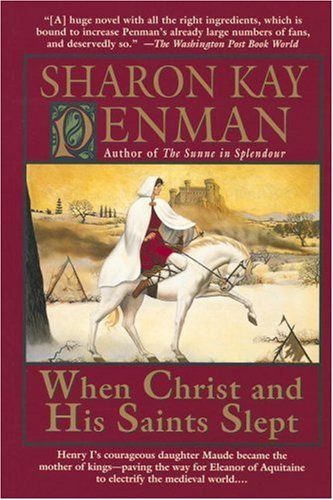
But finally, there is her Plantagenet series, which begins with When Christ and His Saints Slept, above, and ends with A King’s Ransom, the story of Richard I’s imprisonment and the end of his life. This series dovetails nicely into the Welsh Princes story, ending with the start John’s reign. It is also, essentially, my PhD thesis in fictional form, covering the ins and outs of the dramatic Plantagenets with aplomb. All of the people I spent years researching came to life in her pages and for that reason, this series of books are my favourite.
If I had to recommend an introduction to Sharon Kay Penman’s work, I think I would have to start where I did, with When Christ and His Saints Slept. If that does not draw you in, then nothing will!
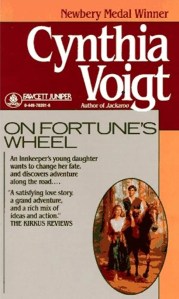
Whenever anyone asks, ‘so, why the Middle Ages?’ I tell the story of a book I read when I was about 12. I’d gotten it as a Christmas present (as I often did get books in those days) and wasn’t entirely certain I would enjoy it.
Then on the plane to go visit my grandmother, I finally gave in and began to read…and I was hooked. It remains one of my favourite books to this day: a perfect mix of not-quite-fantasy, a touch of romance, a female character who finds her strength, discovers what will make her happy and has the courage to pursue that happiness. This book inspired not just my love of history but my love of writing, and I will forever enjoy going back it. It also inspired me to veer away from pure historical fiction, and to explore creating my own medieval world for my writing.
And here it is! On Fortune’s Wheel by Cynthia Voigt, though my understanding is that recently it has been re-published under a different name that ties it into the loose trilogy – or possibly quadrilogy – around her kingdoms. These include Jackaroo and The Wings of a Falcon, both worth a read especially if you fall in love with the kingdoms.
Medieval historical fiction remains one of my favourite things to read – when done well that is – and so here is a list of some of the books I have enjoyed the most. I do also enjoy a bit of a love story along the way.
Katherine, by Anya Seton. A beautifully written imagining of the life of Katherine de Roet, John of Gaunt’s third wife and long-time mistress. Seton perfectly details the brutality of arranged marriage and medieval life including the first wave of the Black Death, all against a passionate love story.
Avalon, by Anya Seton. A winding tale of Anglo-Saxon England and the Viking expansion. To be fair, I’ll read almost anything by Anya Seton.
World Without End, by Ken Follett (and the whole Kingsbridge series though this was my favourite). Sequel to The Pillars of the Earth, includes the start of the Hundred Years’ War and first outbreak of the Black Death.
The House on the Strand, by Daphne du Maurier. Haunting, the main character takes a drug to transport him back in time to the 14th century. Another of my favourite authors, and I have read almost everything she has written.
Lion Let Loose, by Nigel Tranter. The story of King James I and his return to Scotland after long incarceration in England.
MacBeth the King, by Nigel Tranter. The historical MacBeth made fictional, my paper critiquing this book earned me my highest mark ever at University. Very far from Shakespeare.
The Wind from Hastings, by Morgan Llywelyn. A moving and romantic account of the life of Edyth, wife of King Harold Godwinson of England, and her life before the Battle of Hastings. I also enjoy many of Llywelyn’s other books including The Horse Goddess, On Raven’s Wing and Druids.
There are many more including a host of trashy romance.
I have never had overwhelming affection for Arthurian myths or the stories within, but there are two arguably more ‘realistic’ versions that I have enjoyed:
The Mists of Avalon, by Marion Zimmer Bradley. Pure fantasy, but a female-centric take on the myths that I quite enjoyed.
Skystone, by Jack Whyte, and the whole Camulod chronicles. An at-times touching on tediously detailed imagination of a purely historical and non-fantasy version of the Arthurian myth, beginning in Roman Britain and carrying on through the early days of the Anglo-Saxon invasion and departure of Rome.
BUT above all, my absolute favourite medieval author of all time is Sharon Kay Penman, who devastatingly passed away in January 2021, less than a year after the publication of her final novel. But I will need a separate post to write about her.
Easter may be the most important holiday in the Christian religious calendar, but my experience has involved mostly flowers (and flowery dresses as a child), jelly beans, chocolate, and family. I must admit also to a weakness for Handel’s Messiah, which I find to be supremely beautiful music, especially when echoing in a church.
This year, Easter quickly became the one weekend this spring during which we and some of our closest friends could all manage a few days off, and it was our turn to make the journey from Scotland to southern England – about 8 1/2 driving hours total. Granted, this is nothing in the US, but is substantial nonetheless, and required since the mid-pandemic collapse of FlyBe means flights are astronomical. We had never done a drive this long together before – the Midlands was as far as we had managed – but this time I was able to drive as well. So we packed far more than needed (the joy/danger of not having to squeeze things into a carry-on bag) created a new 7-hour driving playlist on Spotify, and reserved a hotel for just north of Birmingham, around 3 hours north – we hoped – of our final destination.
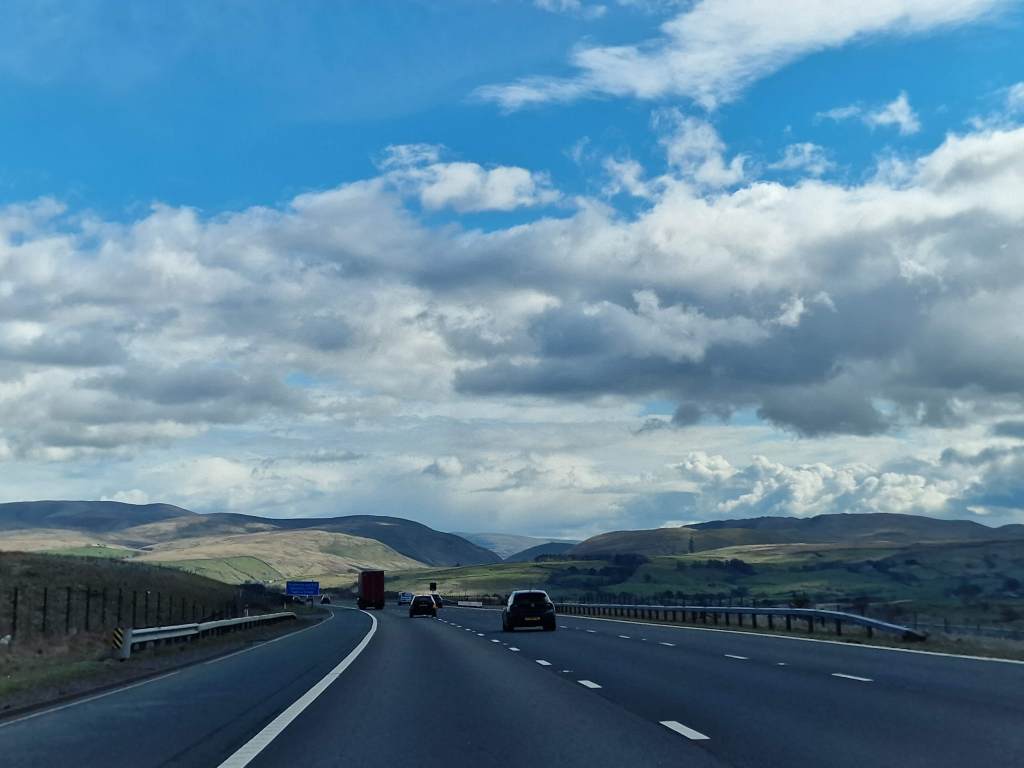
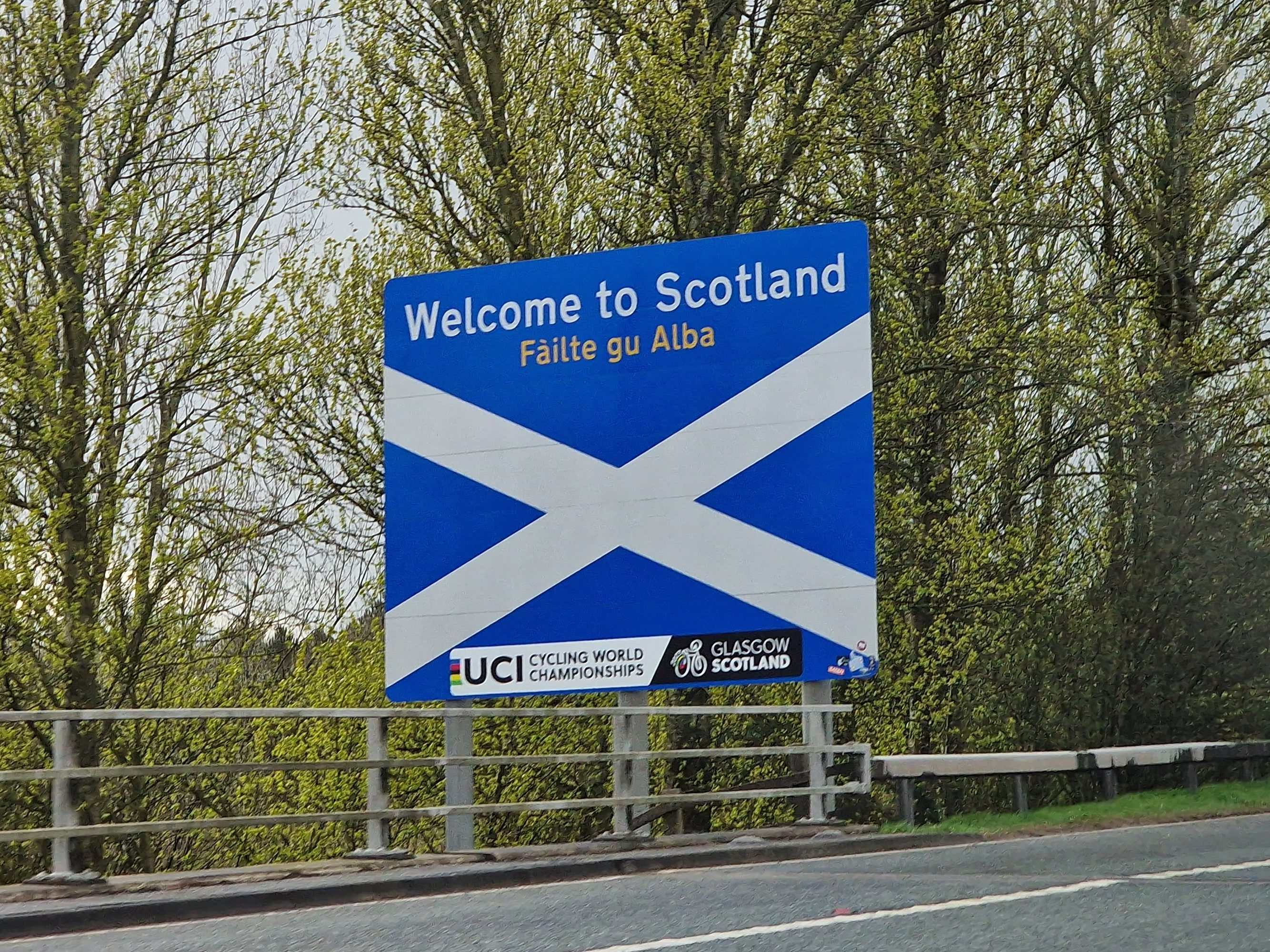
I started off, more confident driving in Scotland, and we made it almost all the way to the border before swapping over. I think my other half was antsy to get some motorway driving in, and our speed definitely picked up a bit as we headed south. At the border, our route turned from the A74 into the M6, one of the largest roads in the UK.
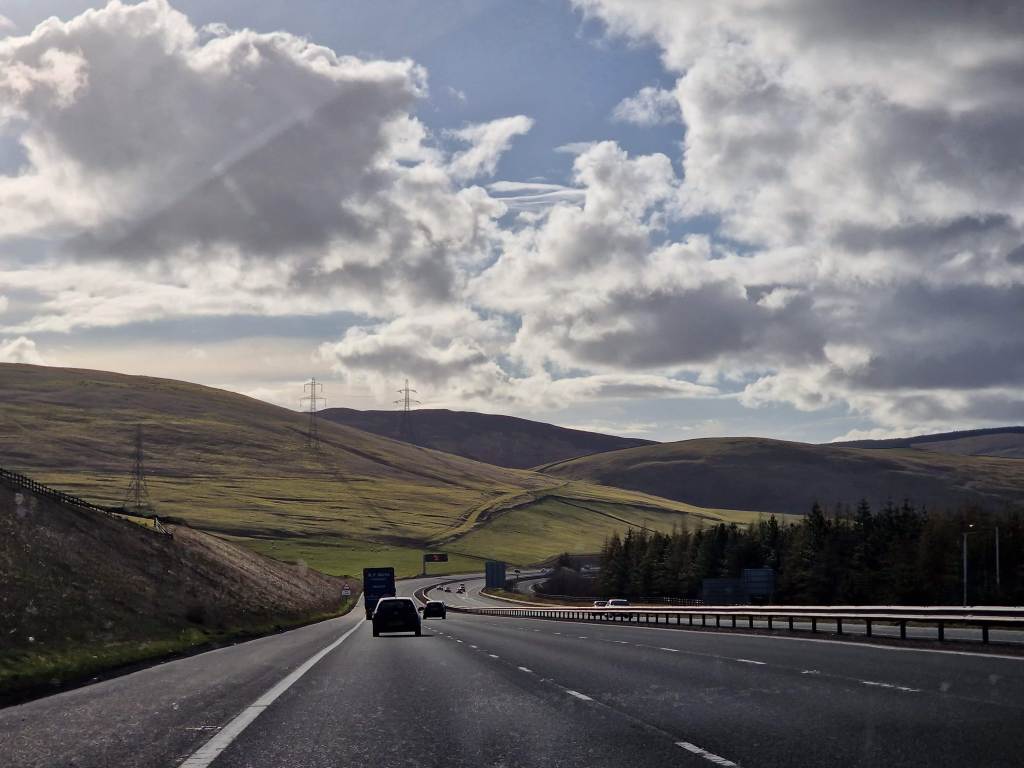
It had been a number of years since our last venture down the M6, but I quickly remembered how stunning the northern part is – after the Scottish borders the hills become those of the Peak District, perhaps less dramatic than the Highlands but still lovely.
As the M6 winds south, though, the differences between England and Scotland quickly became clear. The fields were flatter and greener, and the housing areas along the side of the road were red brick. The sun shone in a way that reminded me of the American midwest.
We had plenty of opportunity to enjoy the view, too – traffic quickly backed up and it took us almost two hours longer than we expected to reach Stafford. On wise advice from our friends, the next day we took the toll road around Birmingham – gloriously empty – but ran into issues again as we re-joined the main road and turned south towards Oxford. By this point I really felt the Englishness of the countryside – there were great estates and castles at every exit (though my interest in stopping was overruled by a wish to see our friends) and the houses on the estates were larger and, generally, a bit better kept than the ones we tend to see in Scotland. England is just so clearly designed for more people, and that change in population is almost palpable.
Another thing that of course abounds in southern England is stunning, quaint villages with meandering rivers, thatched rooves, and dramatic gardens. Some of the stunning summer flowers of a previous visit will, I am sure, make for another post at some point in the near future.
Advice of both friends and the Google maps lady meant that we managed to bypass Winchester and Southampton traffic, and enabled us to stop in Stockbridge for a short snack before completing our trek to Romsey.
Romsey and the surrounding area will more than complete another post; it is an absolutely gorgeous area and we had a fantastic weekend with our friends. But instead of going into detail, I will fast-forward a few days to our eventual trip home, a drive we decided we would do all in one day. Almost immediately, the change was obvious. As soon as we passed Birmingham we found the roads much clearer and had almost no hold-ups (which cannot be said for M6 south, a parking lot). I cannot decide if it was the speed we were able to travel – normal speed that is – or the fact that we did the trip in one day, or that we were heading home, but for whatever reason we both enjoyed the drive north considerably more. I especially found myself feeling almost relieved as the hills started to rise around us. We were able to stop at the famous Tebay services – missed on the way down – and I have to admit, it is a magical spot with everything that you would hope to find in a high-quality farm shop plus a lot more.
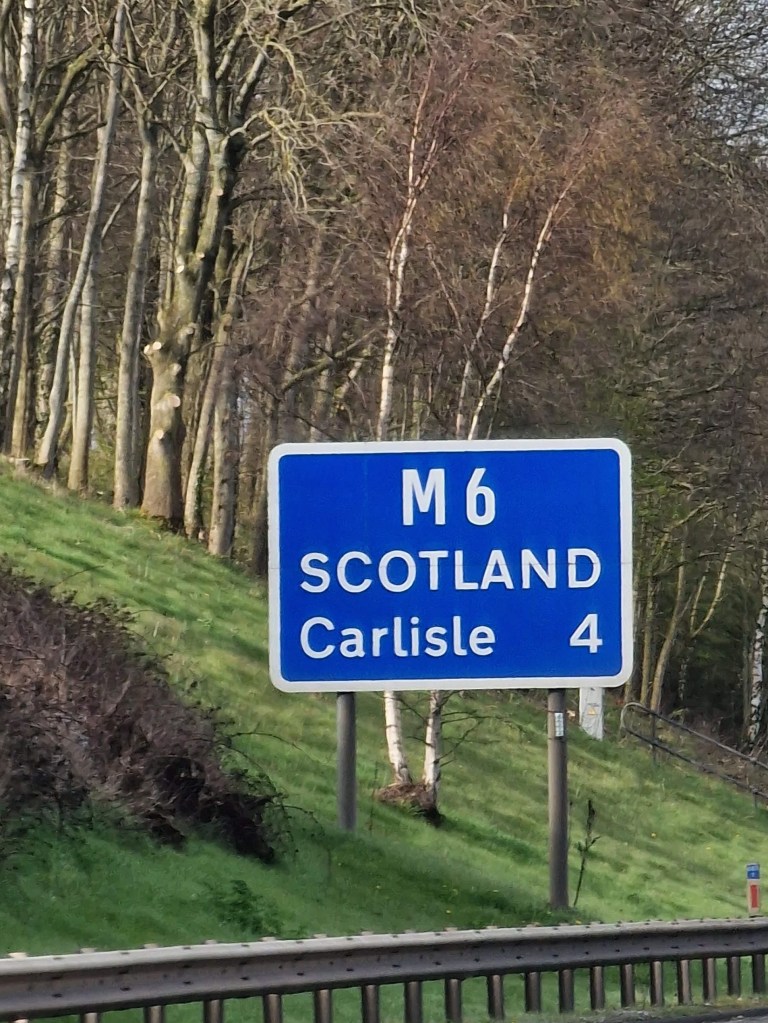
Not too long after Tebay, we started to see signs like this. An aside here as an American who finds British road signs hilarious; depending on where you are, you will often find that they list towns and then, ‘the SOUTH’ or ‘the NORTH’, and one on this trip, ‘the MIDLANDS’. It says so much about how the country defines itself, really – but makes me chuckle.
As for this sign, it and along with a number of others felt to me as though they were almost warning us – you DO know what lies ahead? SCOTLAND? Are you SURE? (I jest of course)
The road through the borders was positively stunning – the sun came out after a series of incredibly hard rainstorms in England, and I found myself smiling as we sped north. We almost could not believe our luck; I was following Google closely, looking for signs of hold-ups, but all the orange and red spots cleared and by the time we reached the borders of Fife, the last of the evening sun was glinting off the Ochil hills as if welcoming us home.
What did I learn from this trip? A number of things:
driving in England is terrifying (but I know I’d manage if I had to)
driving south is just busier, or at least it is for a holiday weekend
the UK is a gorgeous country, even in the rain – fields, villages, rivers, castles, even tower blocks can be lovely in the right light
I enjoy visiting England, but my heart is definitely north of the border
and finally, having adventures and visiting friends is one of the best ways to spend a weekend, especially when you are then welcomed home with a view.
Many years ago, my mother and I met in Paris, picked up a rental car, and drove around Normandy and the Loire Valley visiting various medieval sites I had chosen. It was a spectacular trip and one I wish I could repeat; we saw the Bayeux Tapestry (where I got in a touch of trouble for objecting to the subjective historical display), Mont-St-Michel, Angers, Loches, Chinon, Fontevraud and a number of other Plantagenet-era sites.
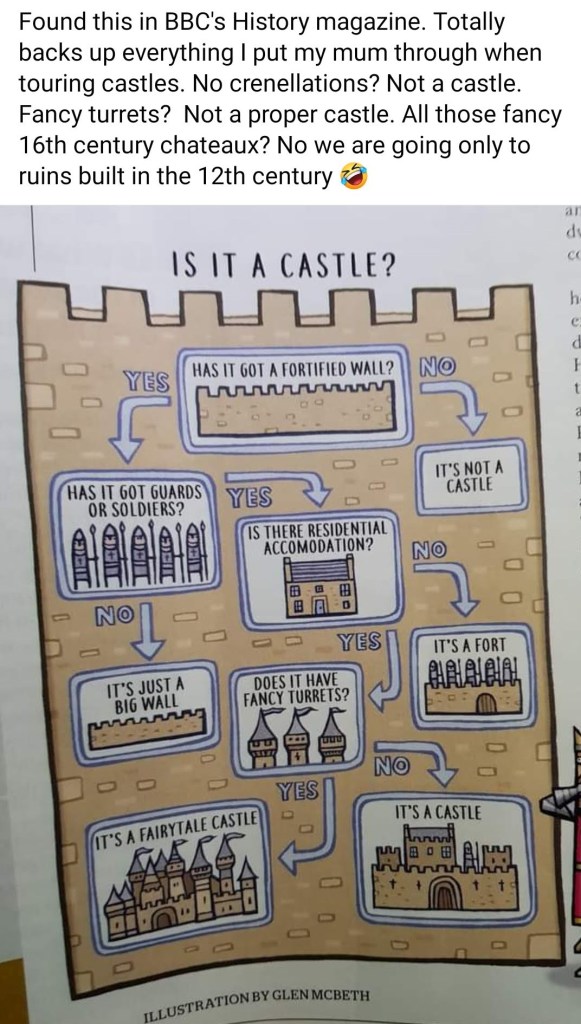
What did we not see? Almost all of the famous chateaux of the Loire Valley – Chenonceau, Usse, Amboise, Blois. Anything I considered to be ‘too new’ or, at least, updated ‘too recently’. I was happy to see castles that had a medieval base or still had some medieval aspects, but I refused to visit a palace.
And believe it or not, my mother put up with this vague, completely nonsensical selection of places to visit. Loches, Chinon, Langeais all ok, but not Amboise. One might have thought that she would tell me that she had flown across the Atlantic and she was driving in a foreign country and we would see what she wanted too, but she indulged me, as long as I was able to spout some history about the place. It was my own version of ‘Mary Queen of Scots slept here’ – ‘Henry II was here’.
Then, a few years later, I saw this brilliant illustration by Glen McBeth in BBC History Magazine that completely validated my ideas, in cartoon format. I include, for reference, my comment from when I first posted it to Facebook in defence of my actions.