
The slightly random visit we had to Brougham Castle earlier in the year seems to have inspired a (likely) short-lived castle fever in the other half, and so he spent a bit of time while he was off this summer looking for options close by that we could visit. Did I already have a comprehensive list? Yes. But I was not going to stifle this excitement, and was delighted when he selected Edzell Castle, only about 80 minutes by car for a mini-adventure with a picnic.
Ezell Castle
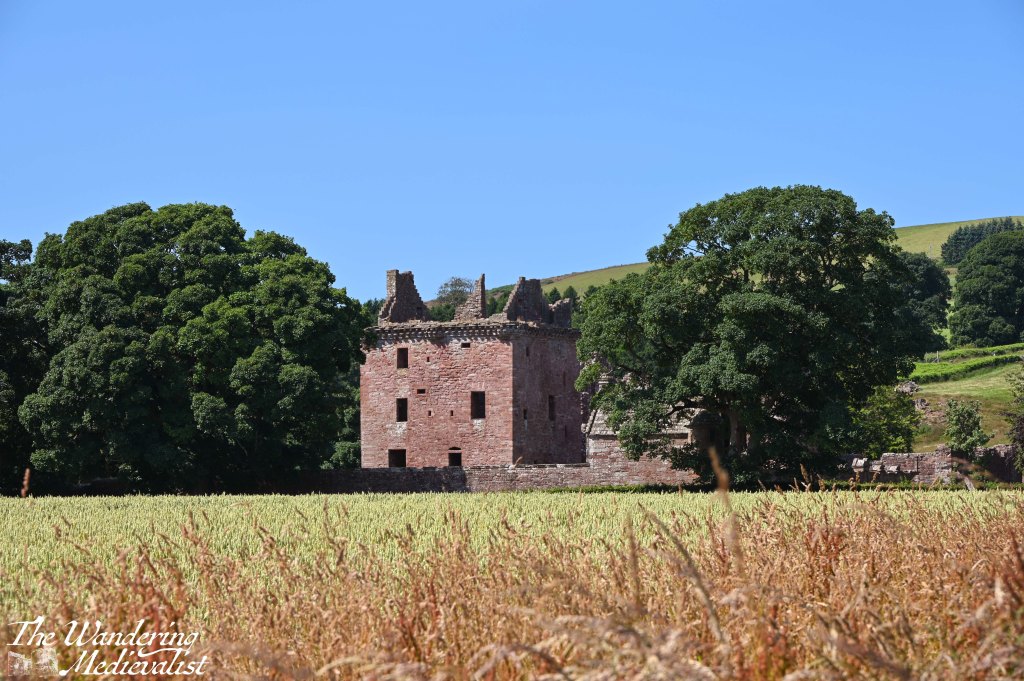
And so, on a Friday in July when I had the afternoon off, we packed up a picnic and headed north. We ran into a bit of traffic on the A90 but managed to reach Edzell just in time for a late lunch. This view of the castle as we drove down the access road made me very excited:
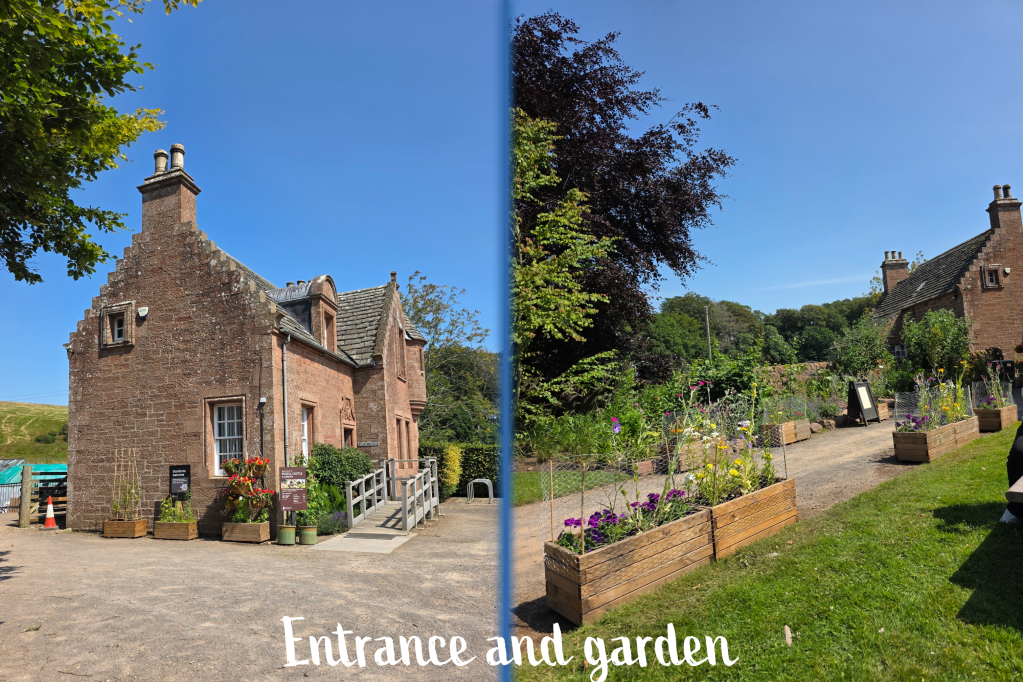
The ticket office is located in an estate house at the edge of the grounds, and while the shop is quite basic – only a few souvenirs to be had – it did have water and a clean rest room, as well as a display about the castle’s history.
Outside is a small but lovely garden, and two picnic tables where we were able to enjoy our sandwiches and fruit in the sunshine. It was a warm day but not hot, towards the end of the long dry spell we had in Scotland this summer.
There is something so peaceful about not having a time limit – we had all afternoon to do whatever we wished, and nothing to rush home for. We planned to pick up dinner on the way back, so we took it easy as we headed toward the castle. We had been directed by the caretaker to go around to the front entrance (which was on the opposite side from the ticket office), and we had the place almost entirely to ourselves except for one fellow photographer.
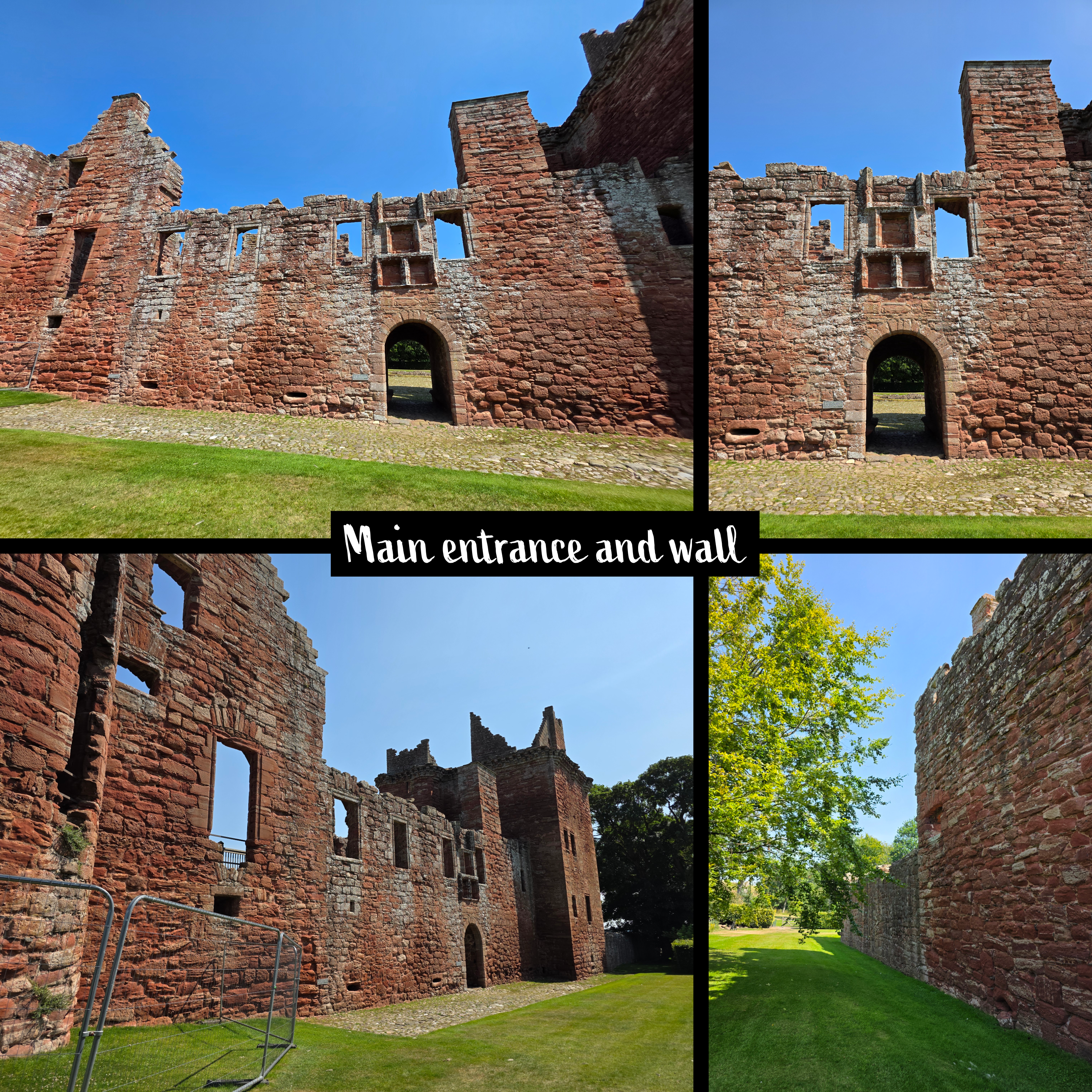
Like nearby Arbroath Abbey, the castle is built of red standstone so regularly seen in Aberdeenshire, where ancient tectonic and river activity led to a concentration of iron-dyed sand grains. The main entrance is reminiscent – to me at least – of St Andrews Castle, in that it is an arched door with windows above and now-worn carvings – or in the case of Edzell, frames where carvings would have been.
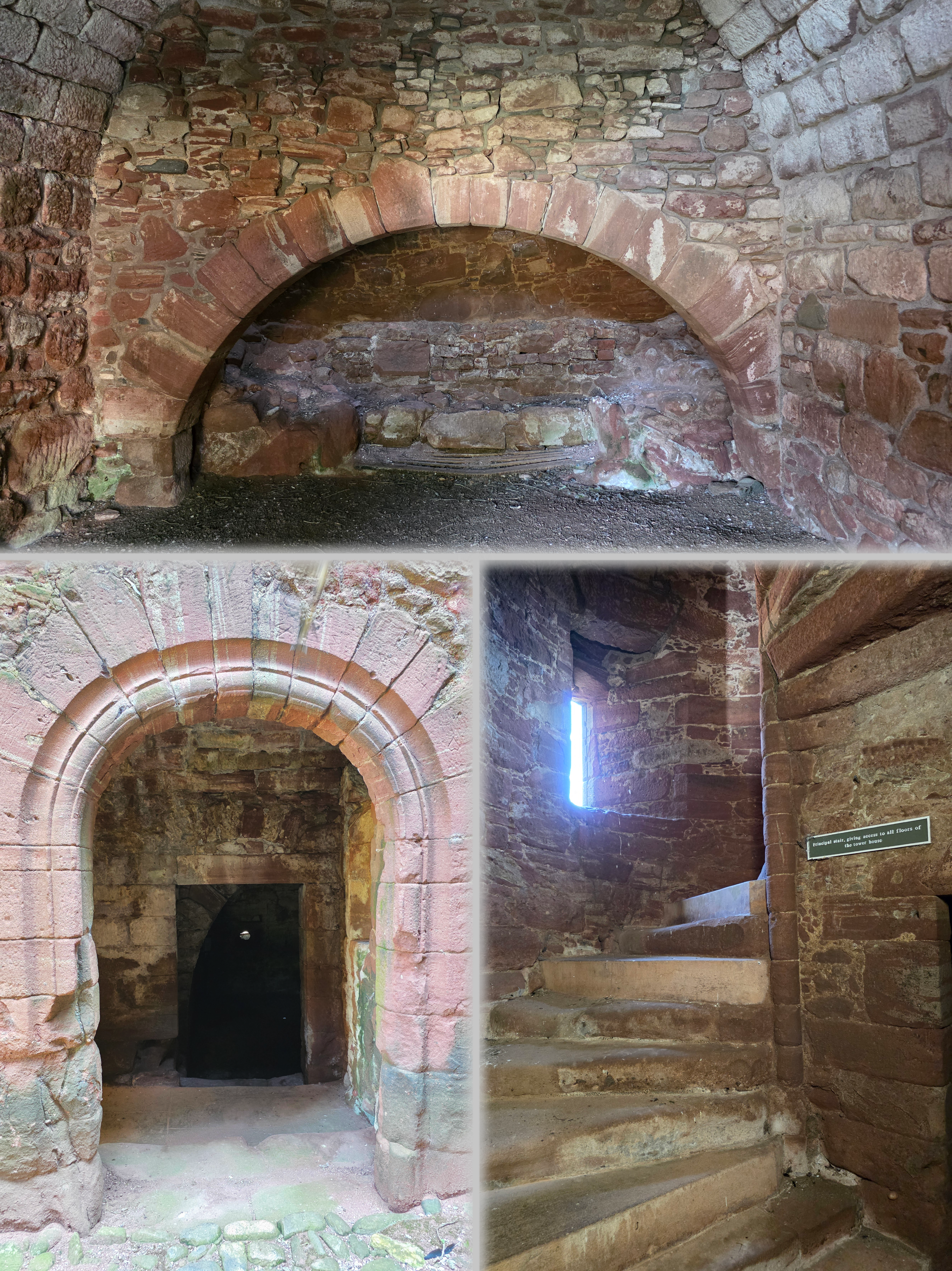
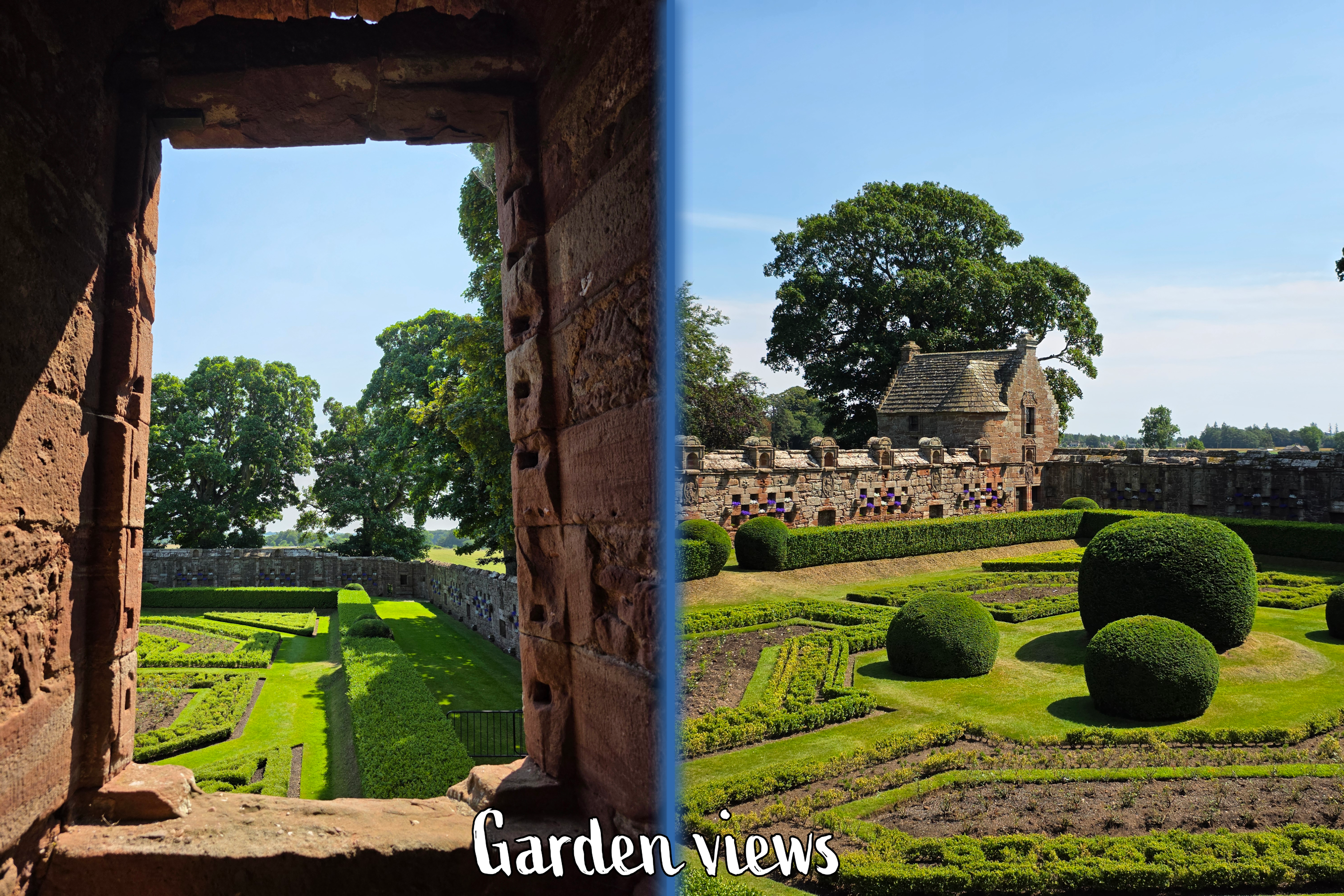
Passing through to the courtyard, I found myself spoiled for choice in which set of buildings to explore first. There is the outline left of the North and East ranges of the castle, but the primary draw is the keep or tower house, which has all the standard markings of a late medieval Scottish castle. This includes, of course, staircases and passages to explore, arched windows with seating set into the thickness of the wall, and in this case, large openings from which you can look over the garden.
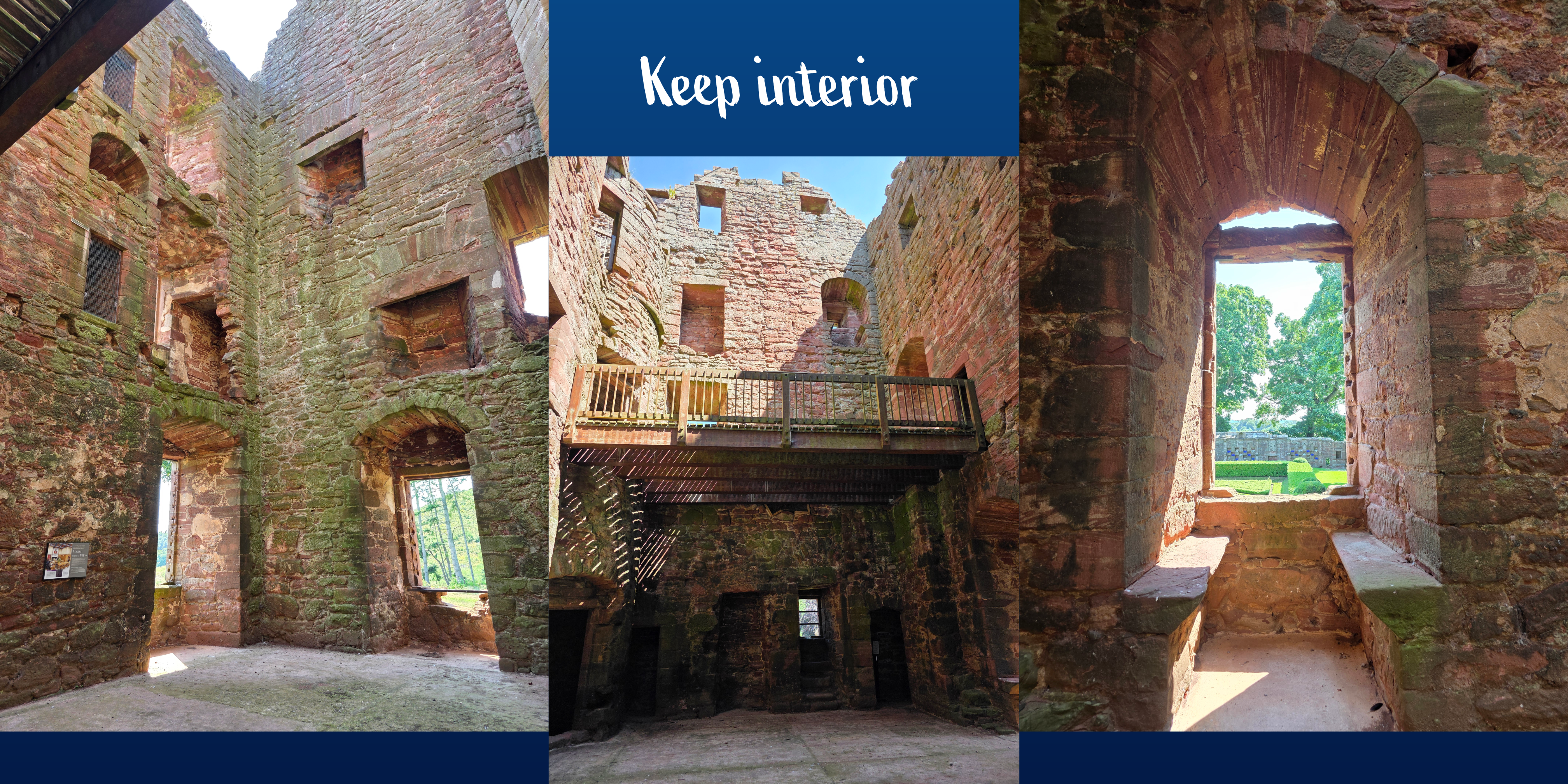
There were also, I should point out, several families of swallows living in the keep who took our presence as an afront, and spent a great deal of time swooping around as if to scare us. They moved too quickly for me to get a picture, and stains on the walls showed that they had long been nesting in the area. These were the swallows we had been warned about upon arrival, and while they were in no way dangerous, of course, they did come close to swiping a hat or clipping my hair.
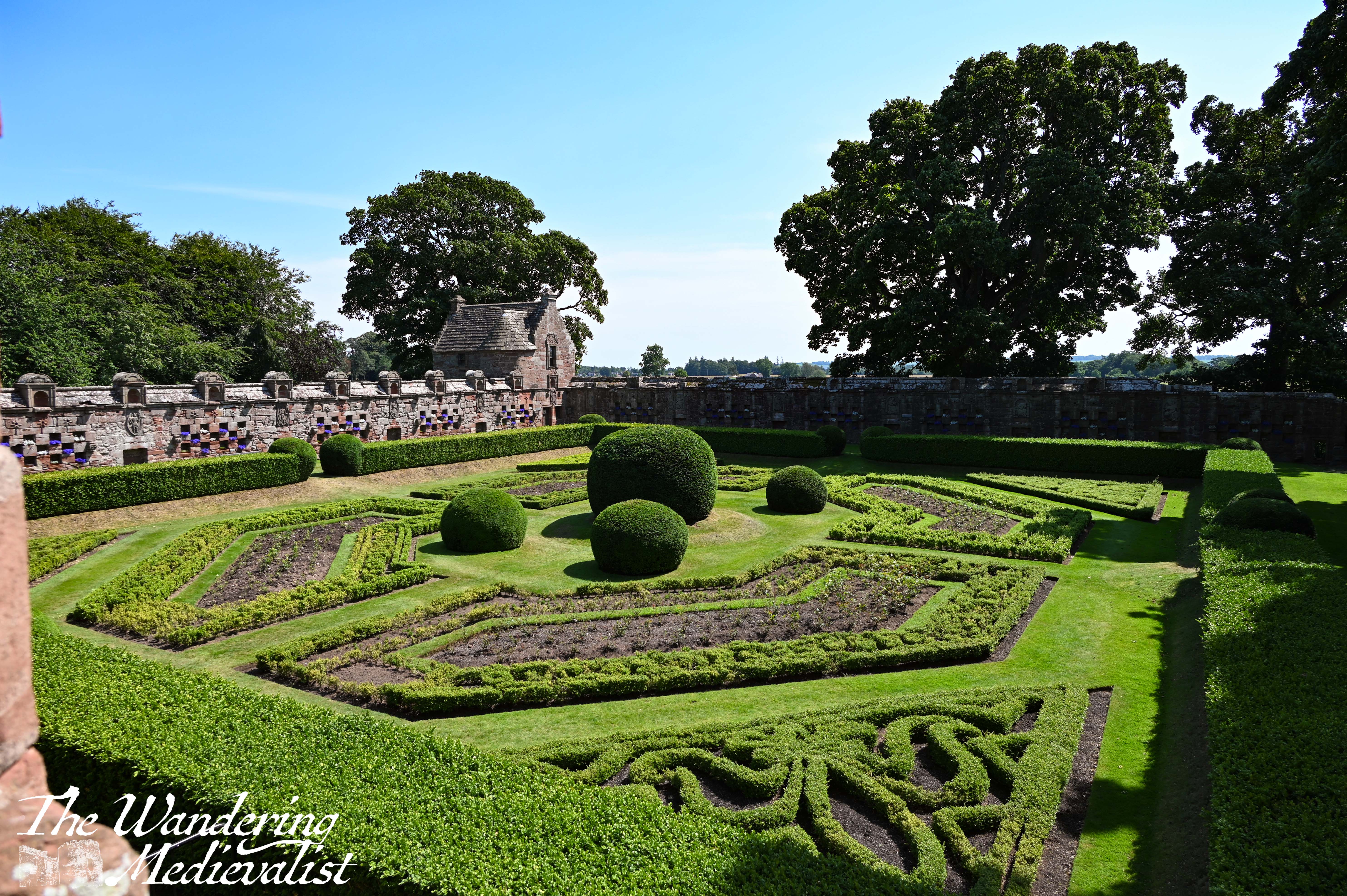
But the highlight of Edzell is, in my opinion, the garden – in particular, its close ties to the heraldic history of the family. First are the coats of arms, at each entrance, of the garden’s builders. Carved in relief regularly along hte walls are seven-rayed stars, which were the signs of the Lindsay family’s predecessors at Edzell, the Stirlings of Glenesk. Most lovely, the ‘fess chequy’ of the Lindsay arms set into the outer walls. While much of the formal garden itself had, when we visited, been torn up, the walls were still planted with alternating patches of white and bright violet blue lobelias, to represent the Lindsay colours in a way that mirrored their coat of arms (these arms, if you search for them, include a red field with a line across of checked white and blue).
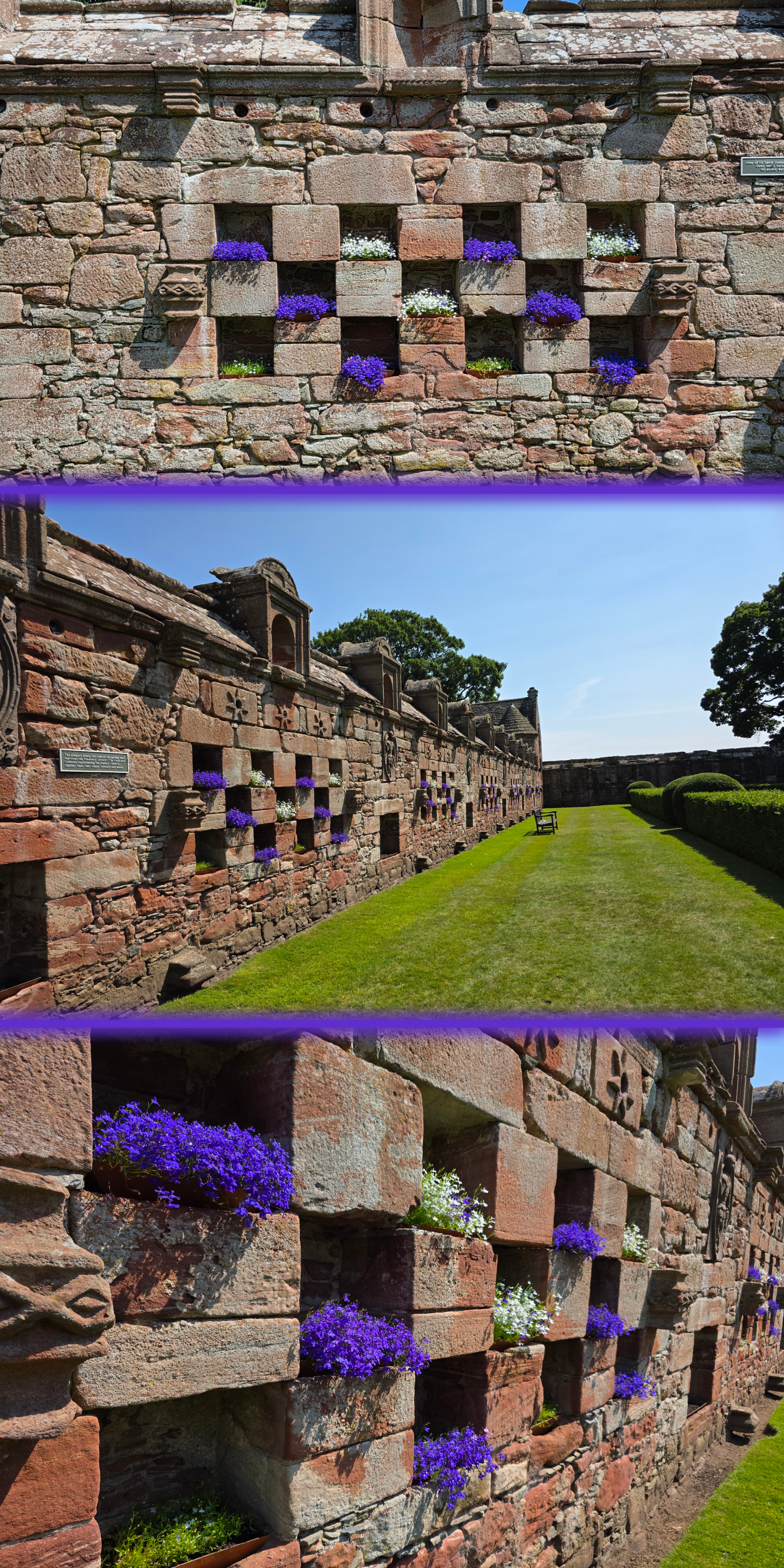
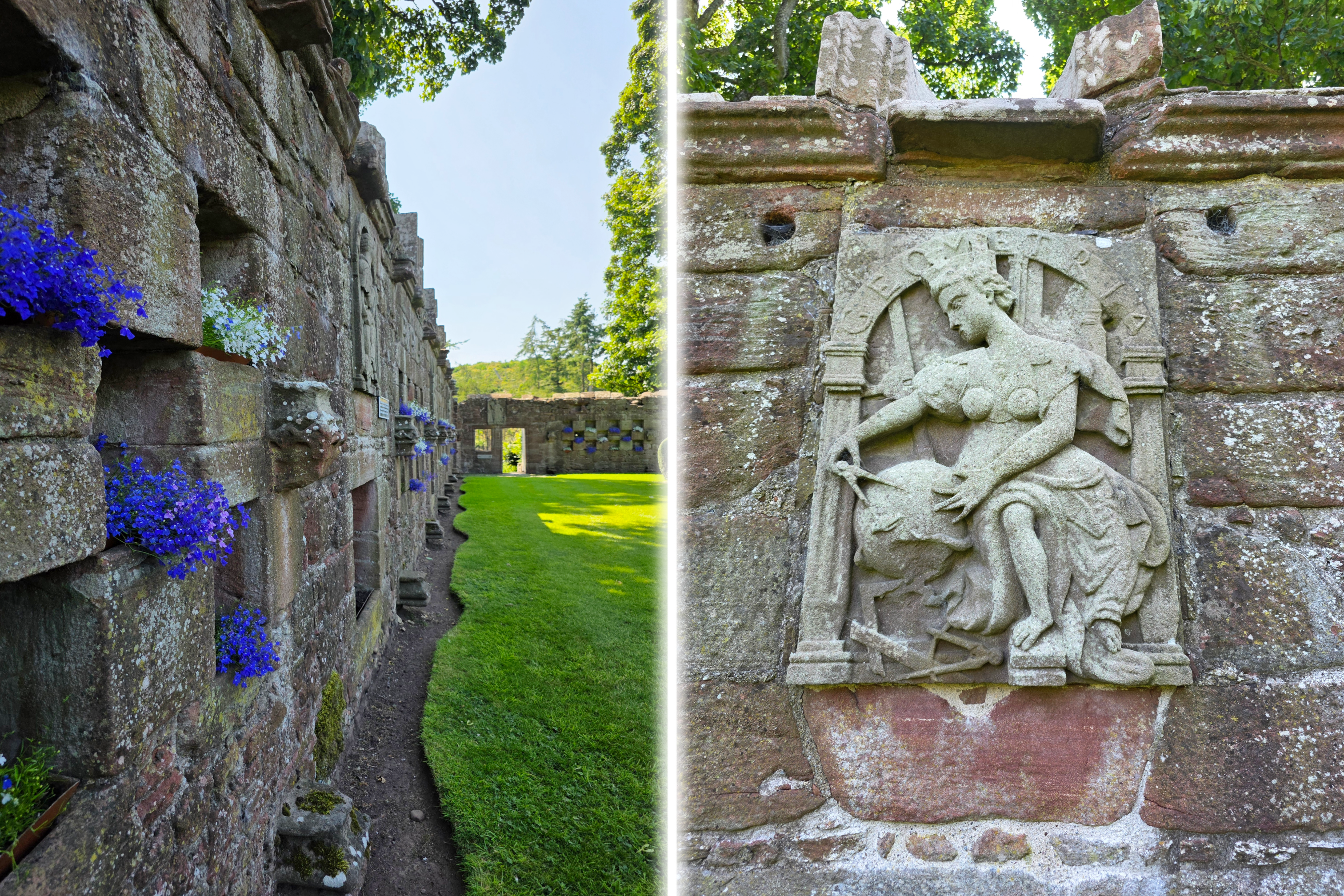
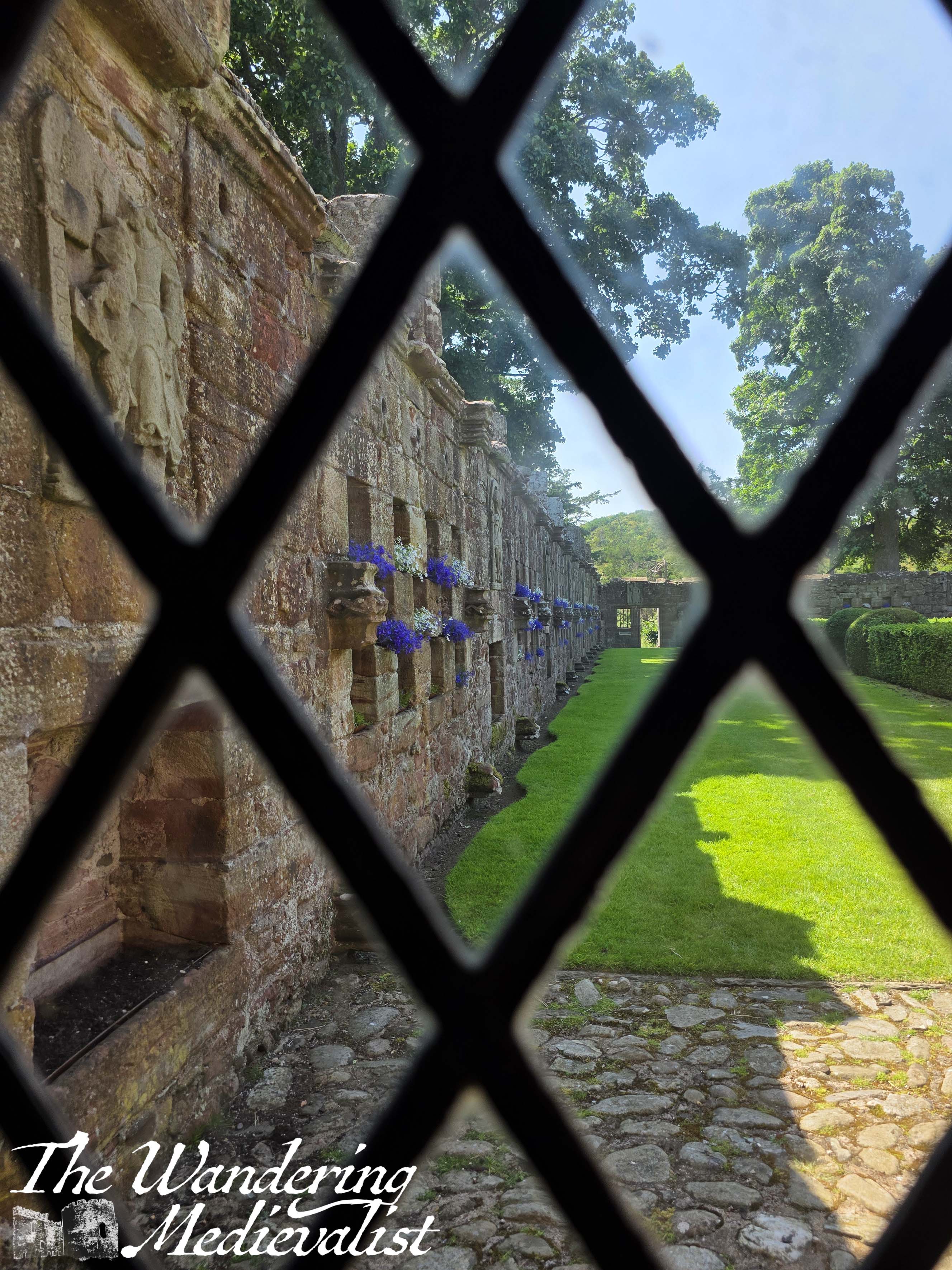
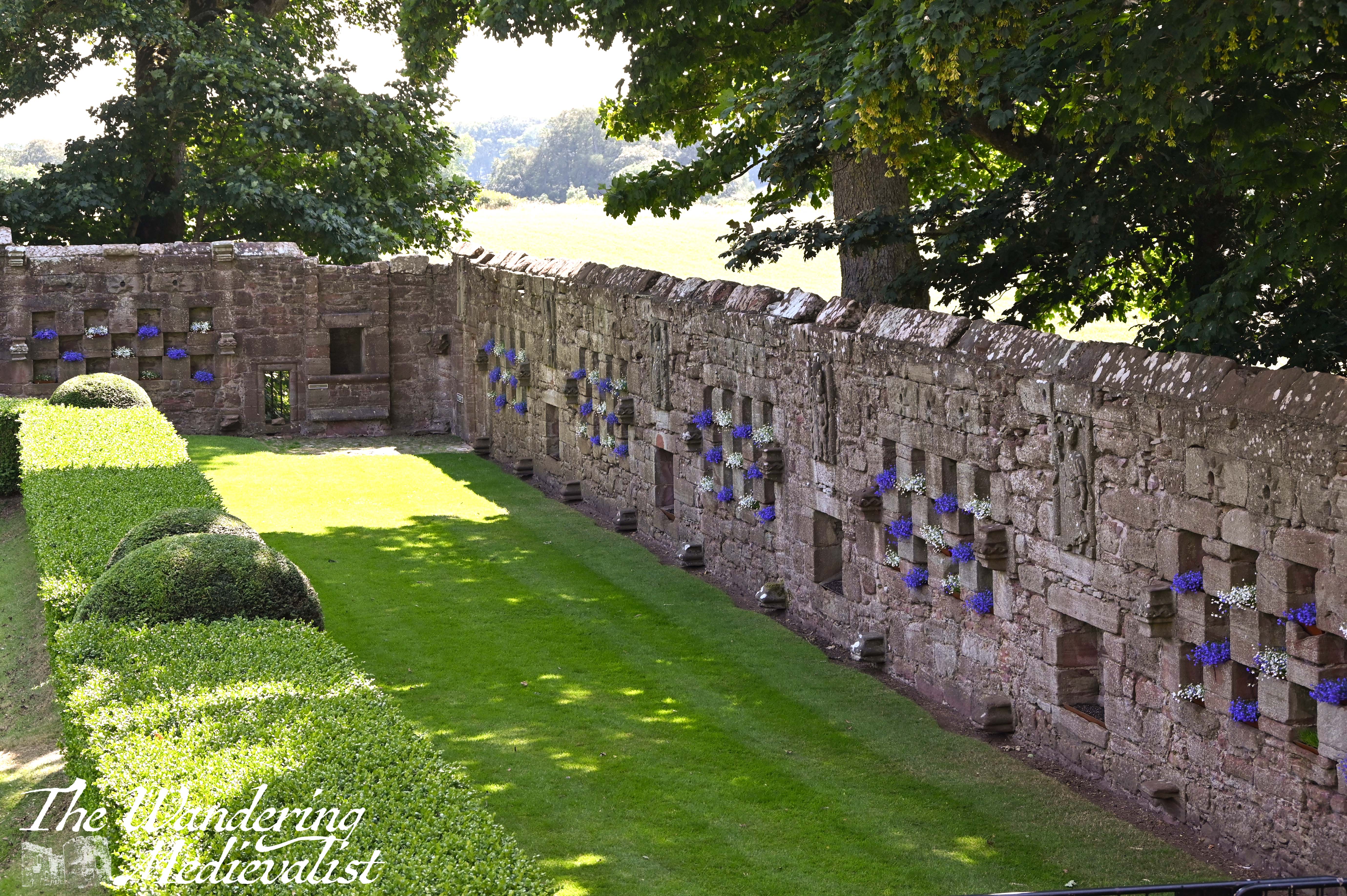
Interspersed with the flowers were intricately carved panels of the planetary deities (Venus, Mercury, Saturn, Luna, Sol, Mars, Jupiter), as well as the Liberal Arts (Grammatica, Rhetorica, Musica, Geometria, Dialectica, Arithmetica) and Cardinal Virtues (Fides, Caritas, Prudentia, Spes, Temperantia, Foritudo, Justitia). I did not photograph each one, but according to the guide, these carvings were the values and standards upon which the continued prosperity of the family relied, and so were given prominent place in the garden.
In the far corner of the garden from the tower house is a small summer house, which provided a bit of an escape from the castle proper. Walking out of the keep, along the castle wall in a rough square allows for some excellent views back towards the tower house, as you can see.
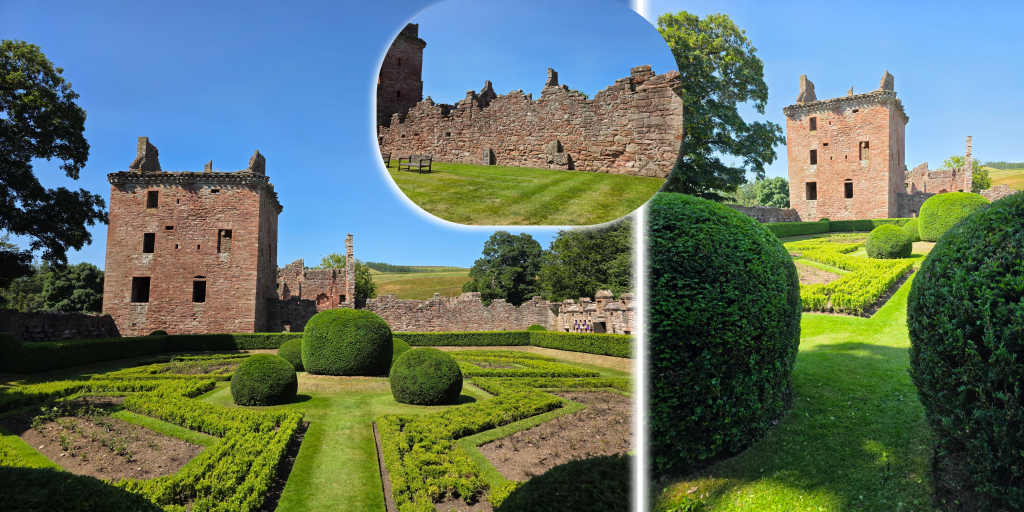
We passed through the summer house and out the other side, which leads outside the main castle wall. A path here took us naturally back towards the ticket office, though I stopped briefly for a view back.
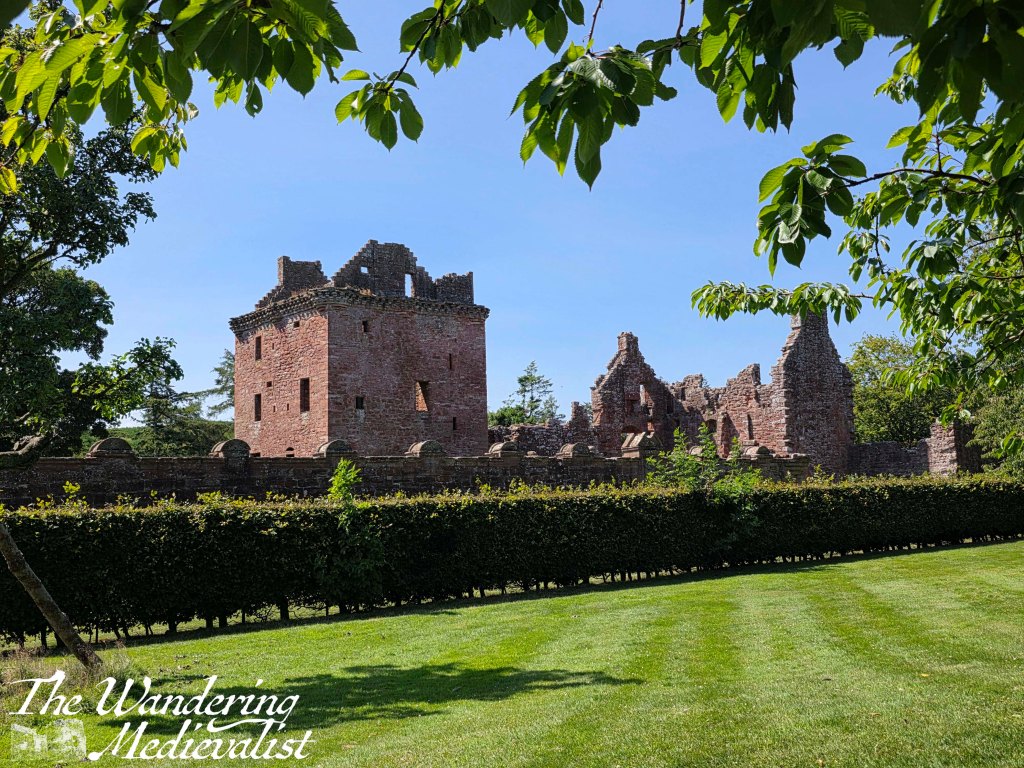
We were able to explore the castle in about an hour, including some long pauses for photography (as the other half grumbled), and enjoy our lunch, but we decided we had not experienced enough of an adventure yet for the day. So, we took a quick look online and discovered that there was a popular forest walk not far away, the Rocks of Solitude.
Forest walk
According to my later research, there is in fact a car park appropriate for this walk, but we managed to find a spot quite close to the blue door, between two other vehicles (so we deemed it safe).
We weren’t looking for a serious hike as it was a warm day, but I am a big fan of meandering rivers and leafy forests, so we were delighted to find the walk quite gentle. It is mostly flat, though there are several jaunts down toward the water which require some scrambling – as you can see I took advantage of several of these.
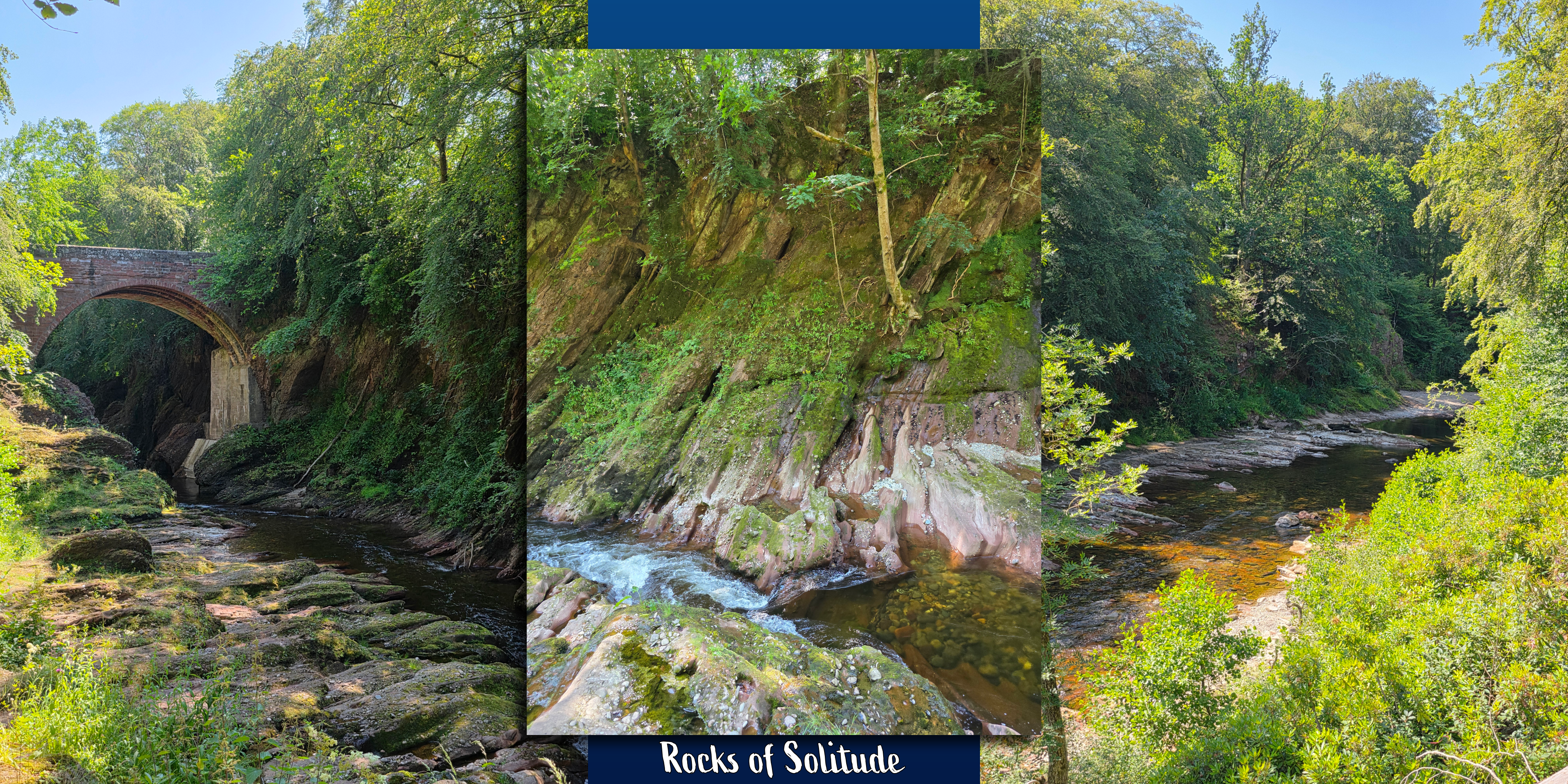
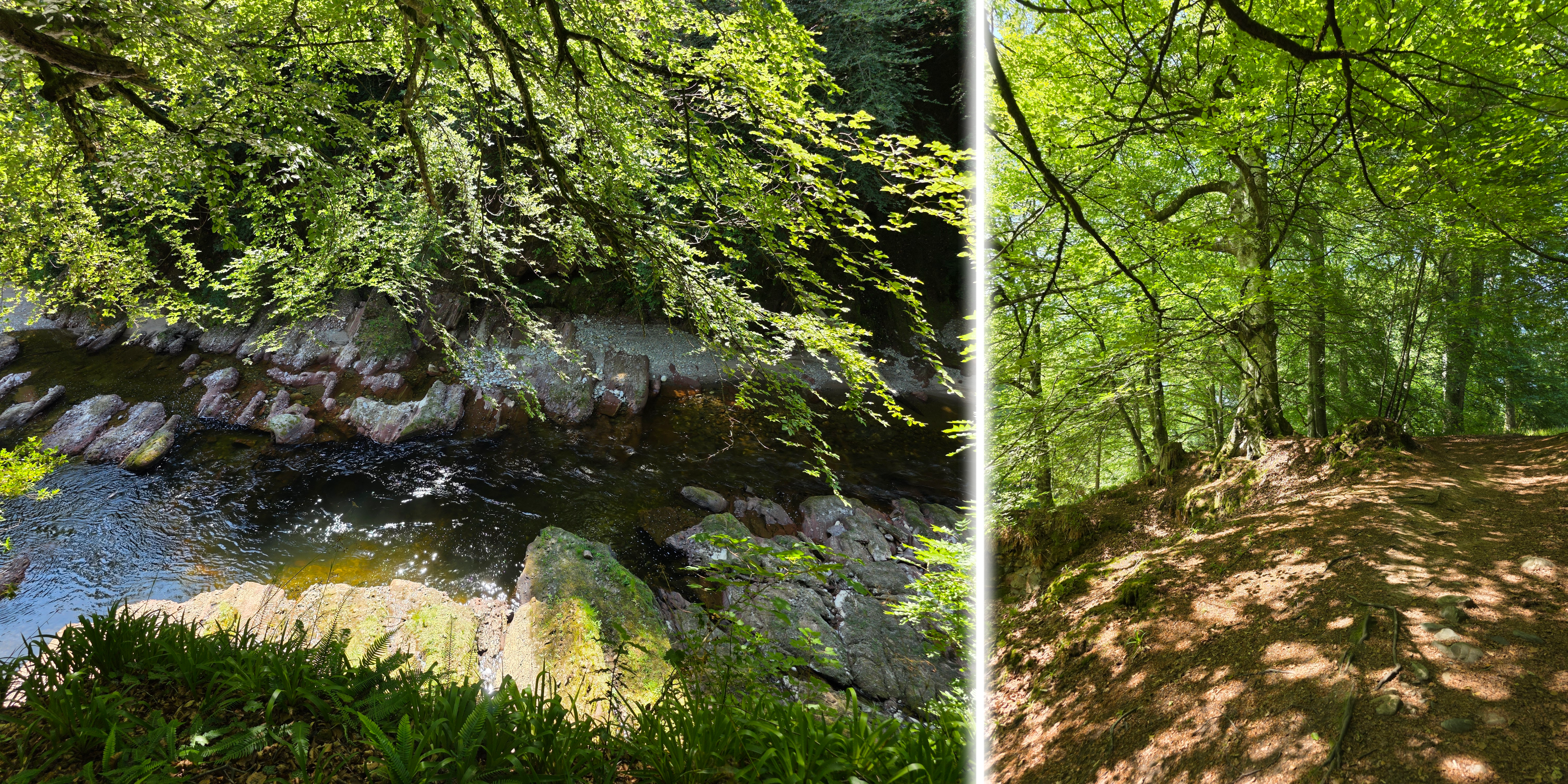
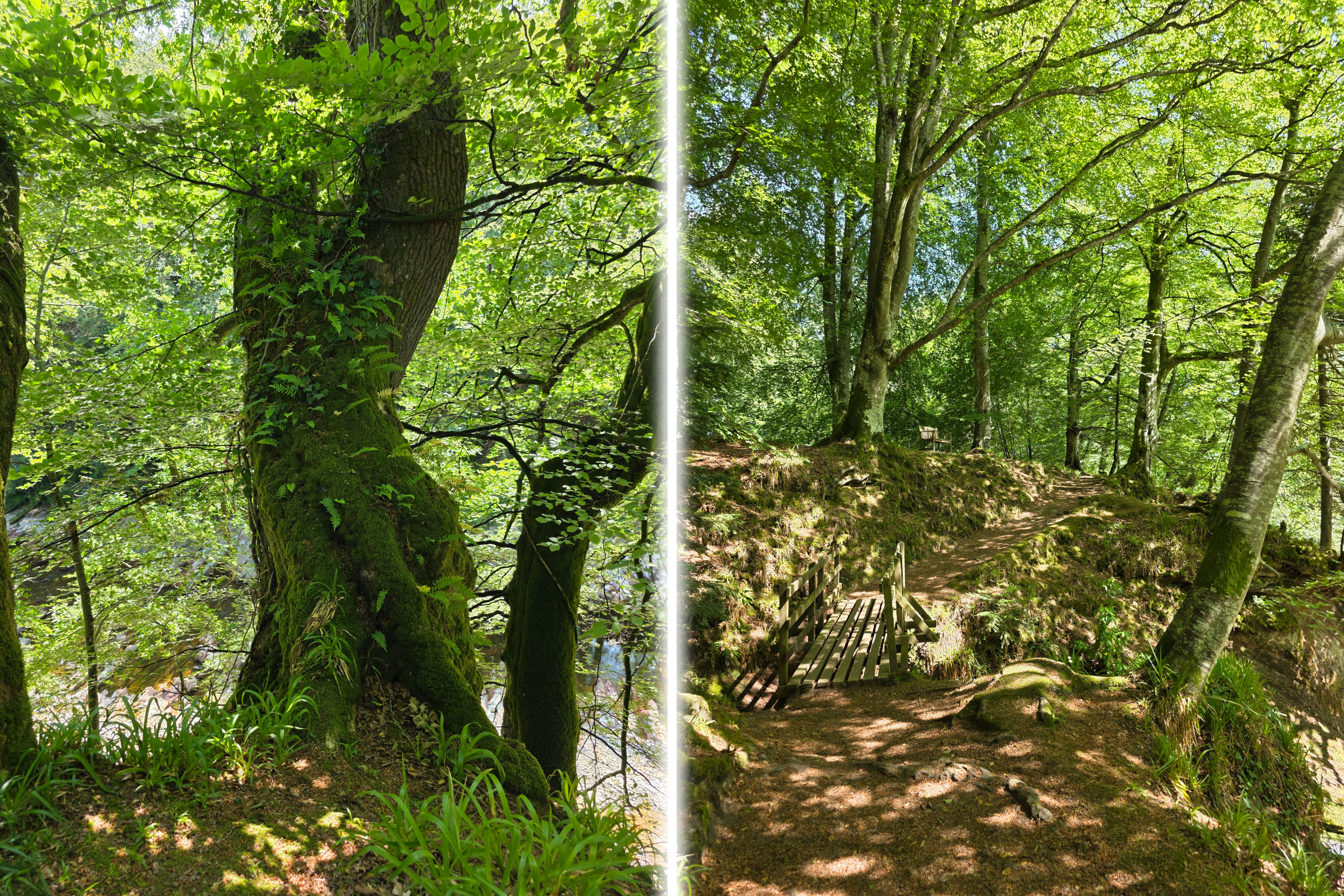
The River North Esk is the one running below this trail, and it varies between deep and still, and shallow and turbulent, providing both some great moving water opportunities as well as bottomless pools of brown. Brown, I should say, due to peat in the water, which is the case in most Scottish rivers. I recall once staying at a hotel near a mountain where the bath water was tinged brown, but it was in fact just very fresh and of course is part of why Scottish whisky is so flavourful.
We had a very pleasant wander through the trees for about half an hour before returning to the car, as we did not wish to be caught up in the traffic around Dundee at the end of the day – we failed on that, which meant we ended up with an easy dinner of takeaway pizza. Just about earned, we decided, after our adventure.
There is not a massive amount to see at Edzell Castle but it should absolutely be part of any itinerary nearby, as it is easy to visit quickly and offers a great amount in a short time – particularly if you enjoy bird-watching and charming gardens.

