
I have been racking my brain for some time as to where to start with my first post about Marblehead, and finally I decided to start with one of my favourite places in town, one where I spent many hours as a child. Not, I feel I should clarify, because I was obsessed with death or darkness, but because it was the closest area to my house that could be classed as something resembling a park. It also boasted the best sledding hill in walking distance.
Old Burial Hill (or Old Bury-old as I thought it was called for years) always makes me think of the Madonna lyrics, ‘this used to be my playgound’. My friend who lived across the street and I spent exploring the hill and grave stones, sledding, skating on the pond, and generally running about.
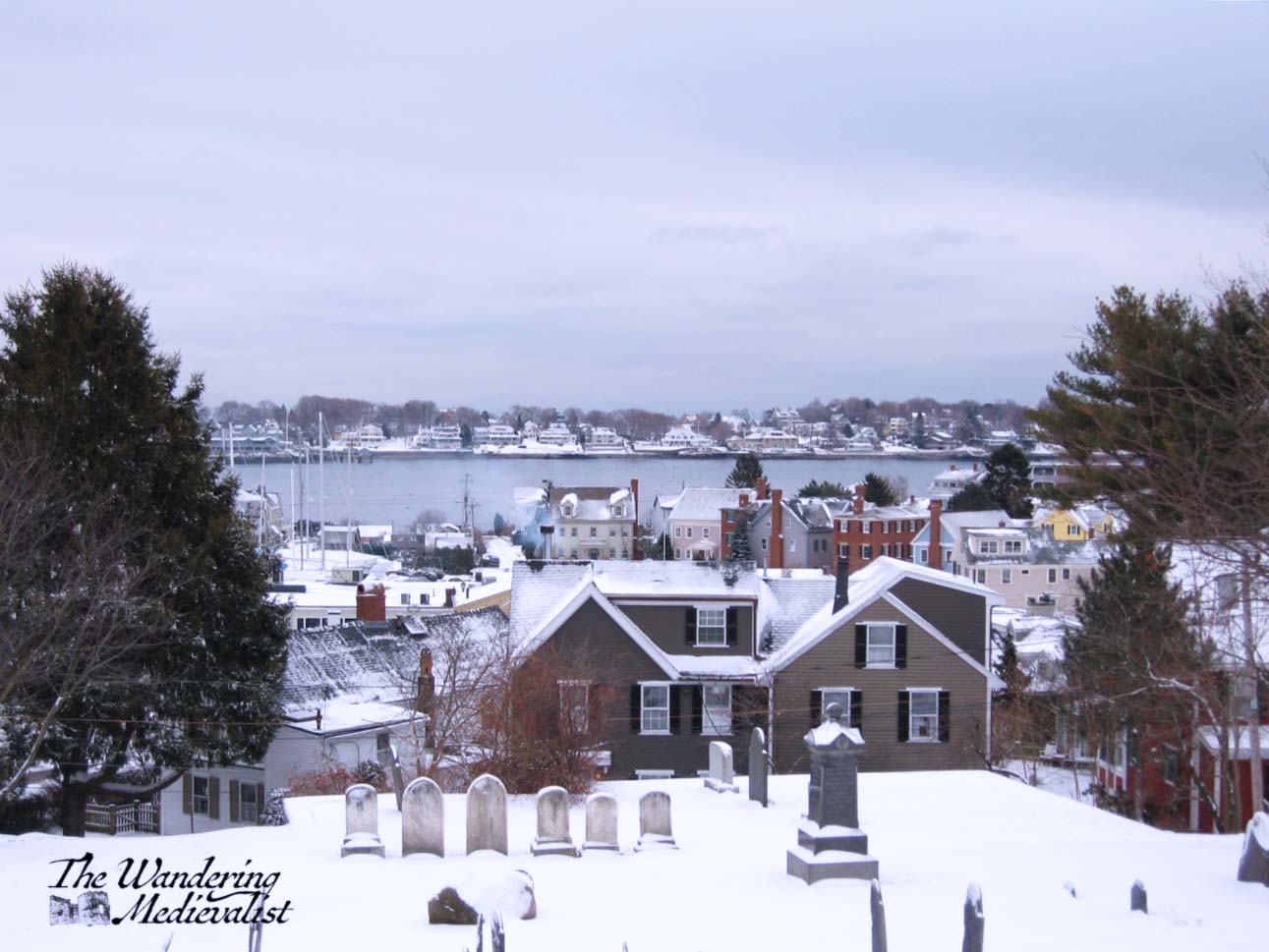
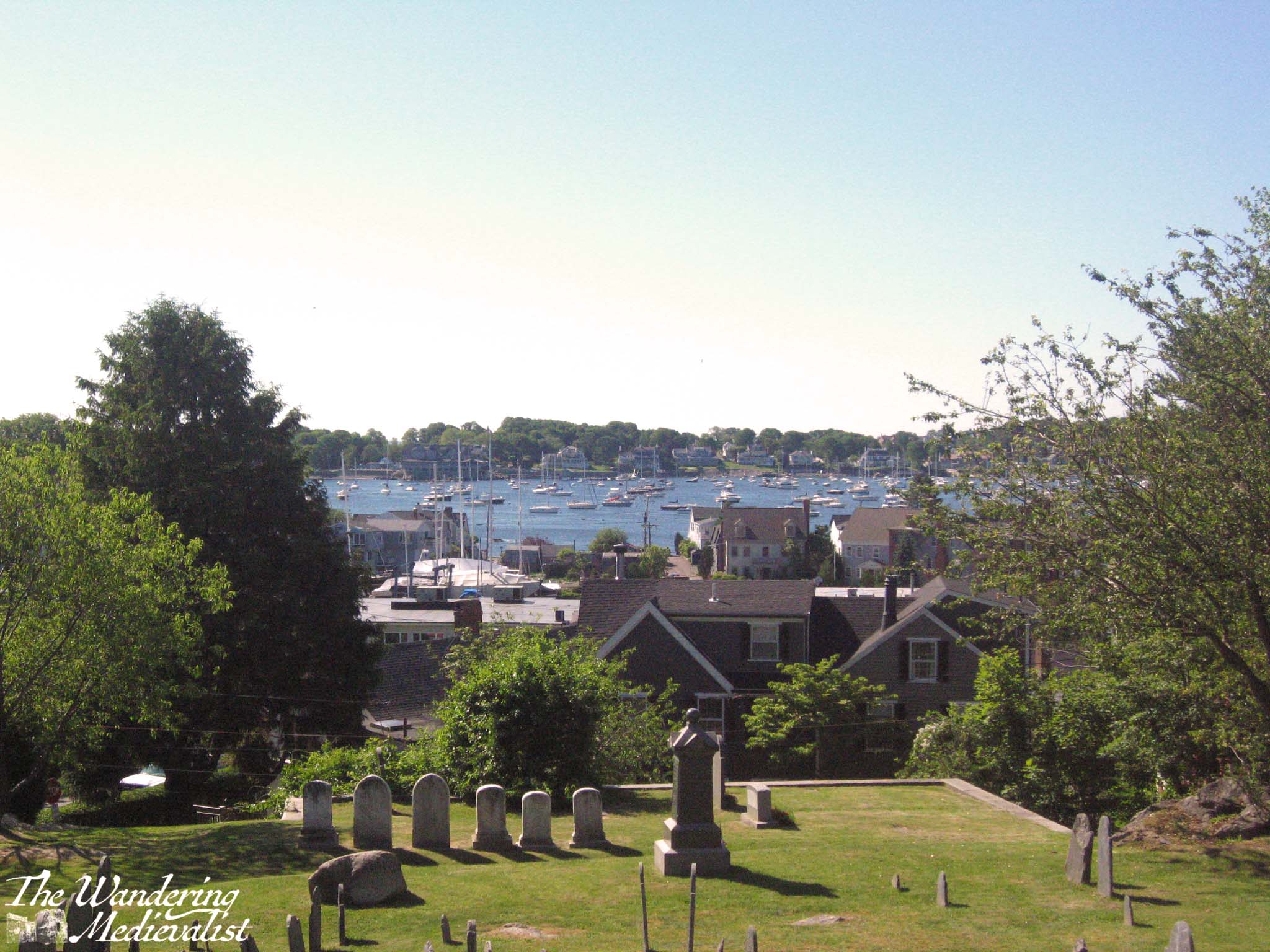
I feel I should observe that just because it was our playground did not mean that we did not respect the sanctity of the spot; rather, we also used to spend long minutes staring at the headstones, remembering the names, admiring the artwork, and making up tales about the people resting there. One of the first stories I ever wrote was a ghost story about the Wizard of Orne Hill – a Marblehead legend. Most of the information I gleaned from a slightly ragged book I became obsessed with, The Wizard of Orne Hill and other stories, by Dorothy Miles.
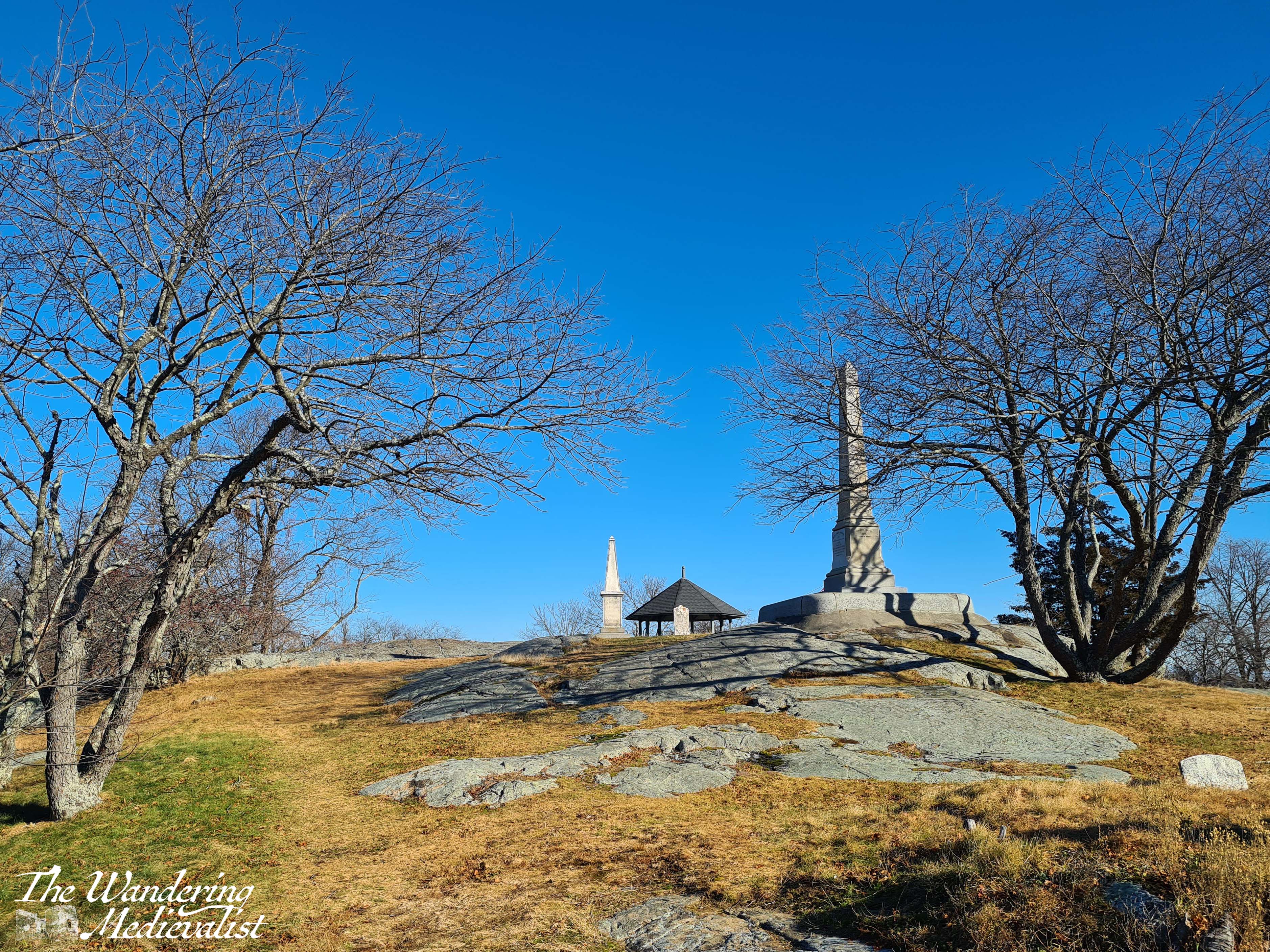
The top of the hill is a breath-taking spot, with the highest point at a gazebo where the local Old North Church used to hold sunrise services in the spring, around Easter (though now they are held at the lighthouse on the Neck). There are also two monuments, which I will discuss shortly.

Along with our respect for the land as a place of rest for many local people, my friend and I were awed by the history of the hill. I am not certain when the last soul was buried there, but it must be at least 100 years ago. Most of the graves are considerably older, some so worn that they are no longer legible – the oldest is from 1681. It was a delight to see, on my last visit, that some of the stones are being restored, particularly those of two of the most famous inhabitants: Mammy Redd and Black Joe. But more on that later.

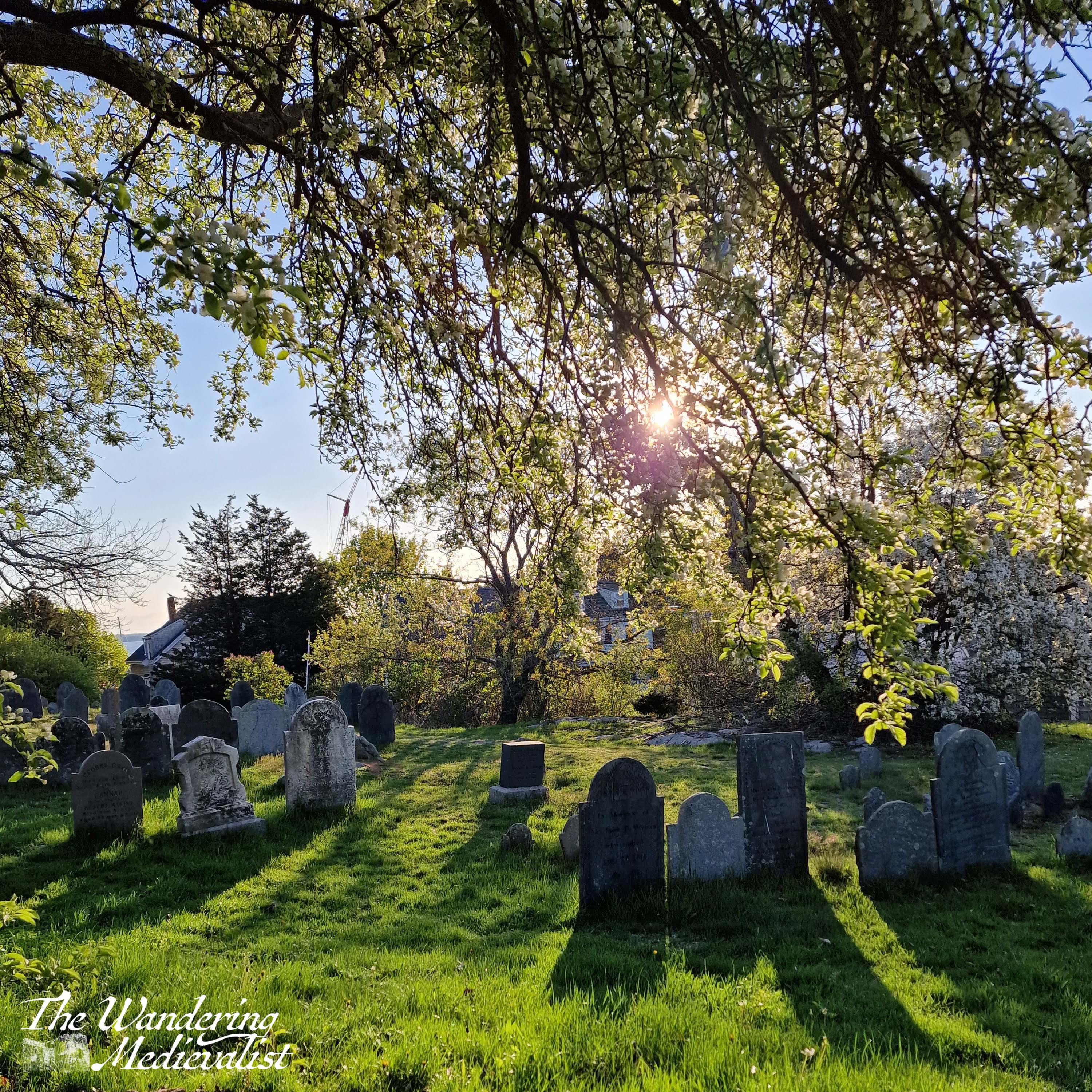
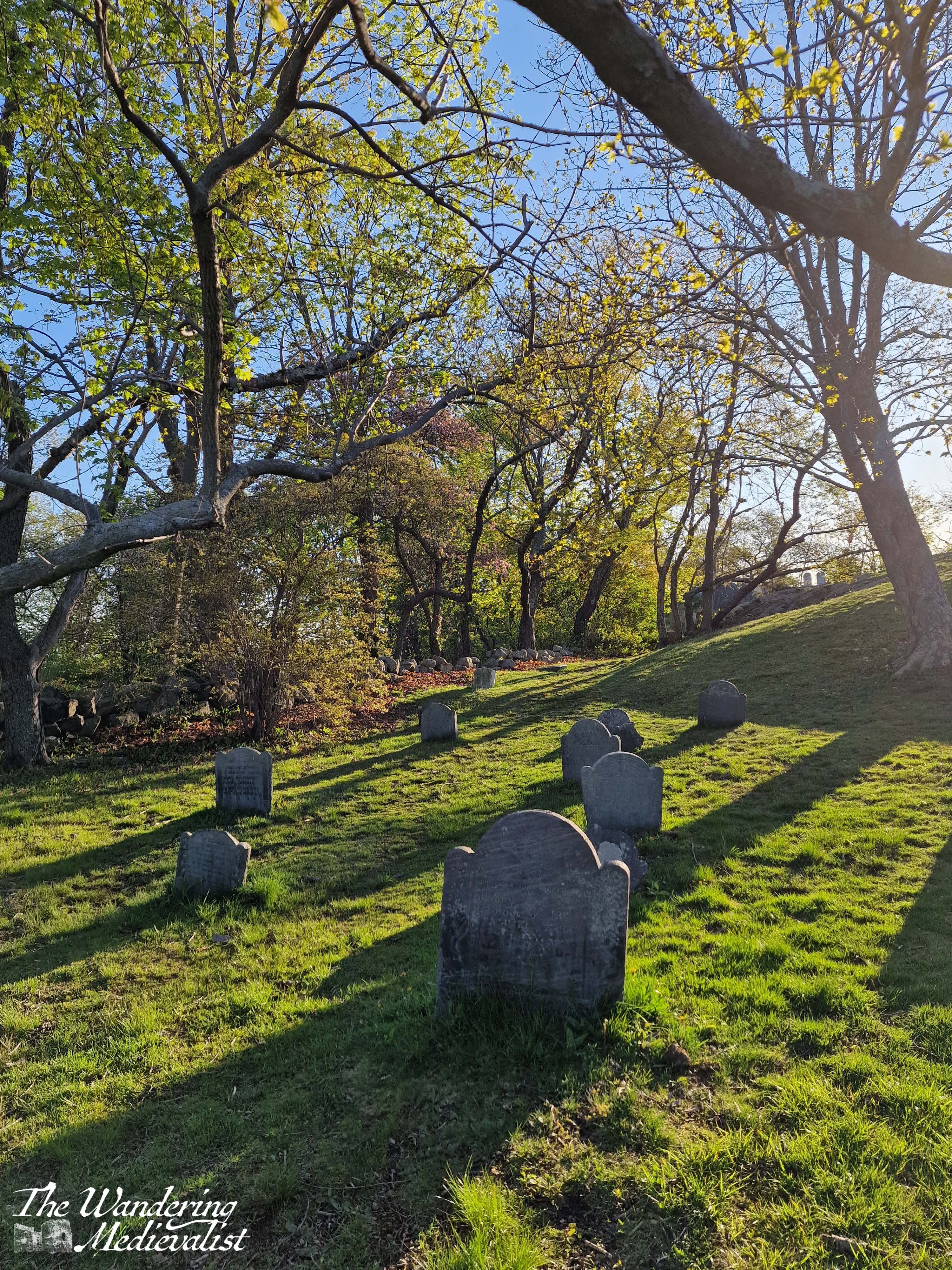
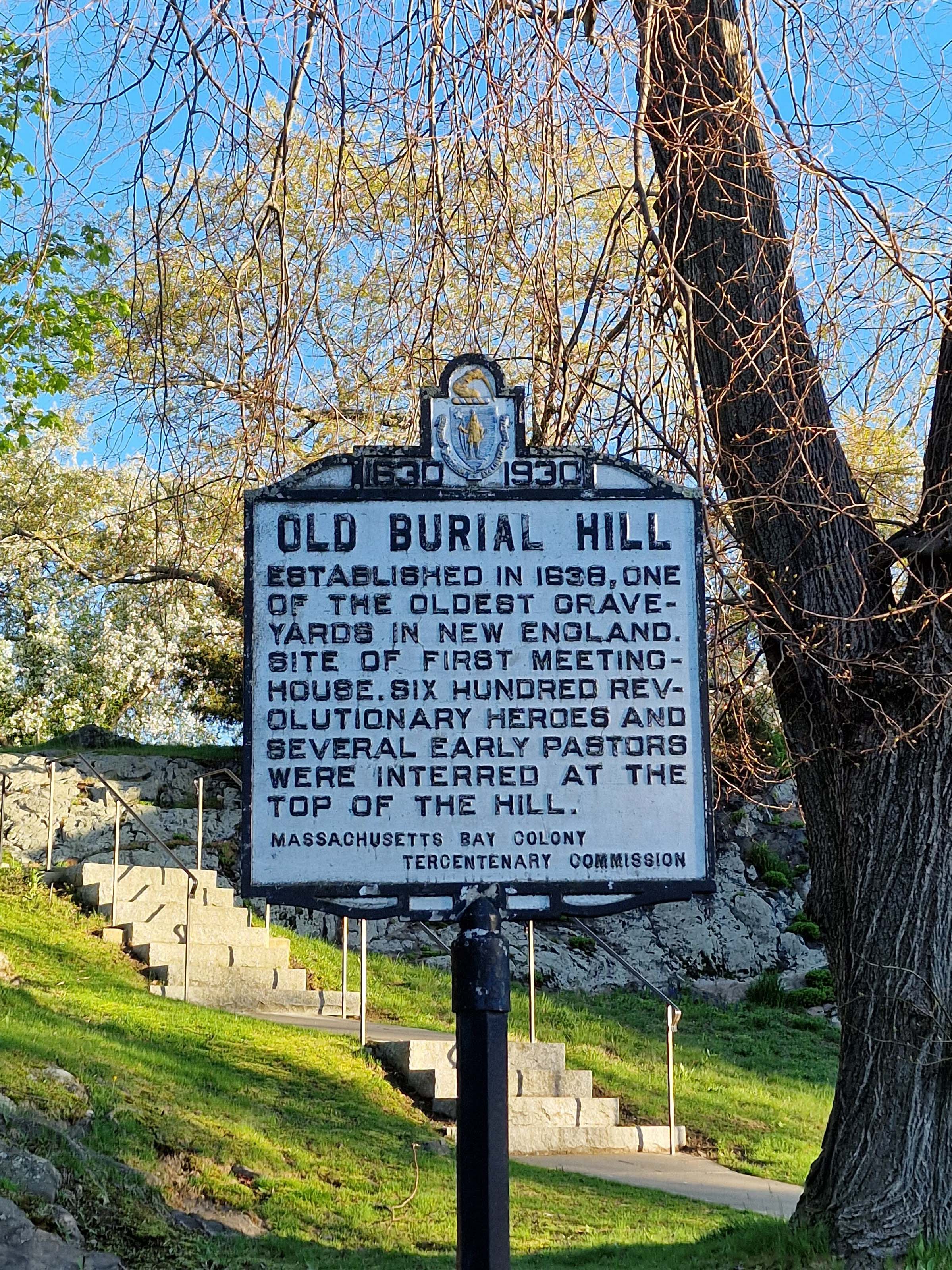
The burial ground was first established in 1638, at the site of one of the earliest meeting houses – history buffs among you will recall this is less than twenty years after the founding of New Plymouth (modern spelling) by those who arrived on the Mayflower.
The hill can be easily accessed from two directions: either by following the path that runs beside Redd’s Pond, or by a slightly rickety stone staircase from the top of Orne Street Hill. The former provides a more gentle route and involves either meandering around the back of the hill, or just climbing straight up our former sledding hill (the goal was of course to stop before you went into the pond).
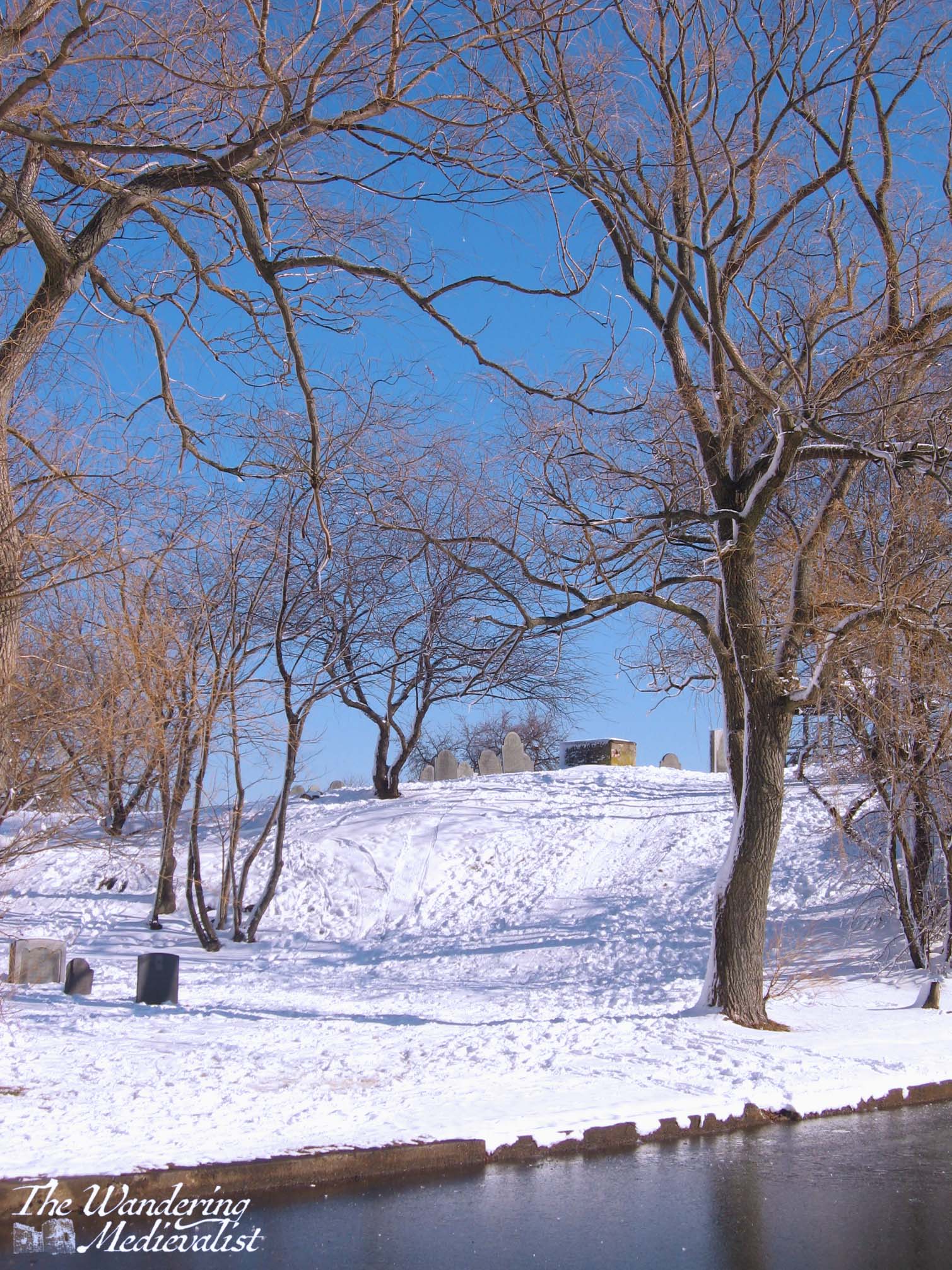
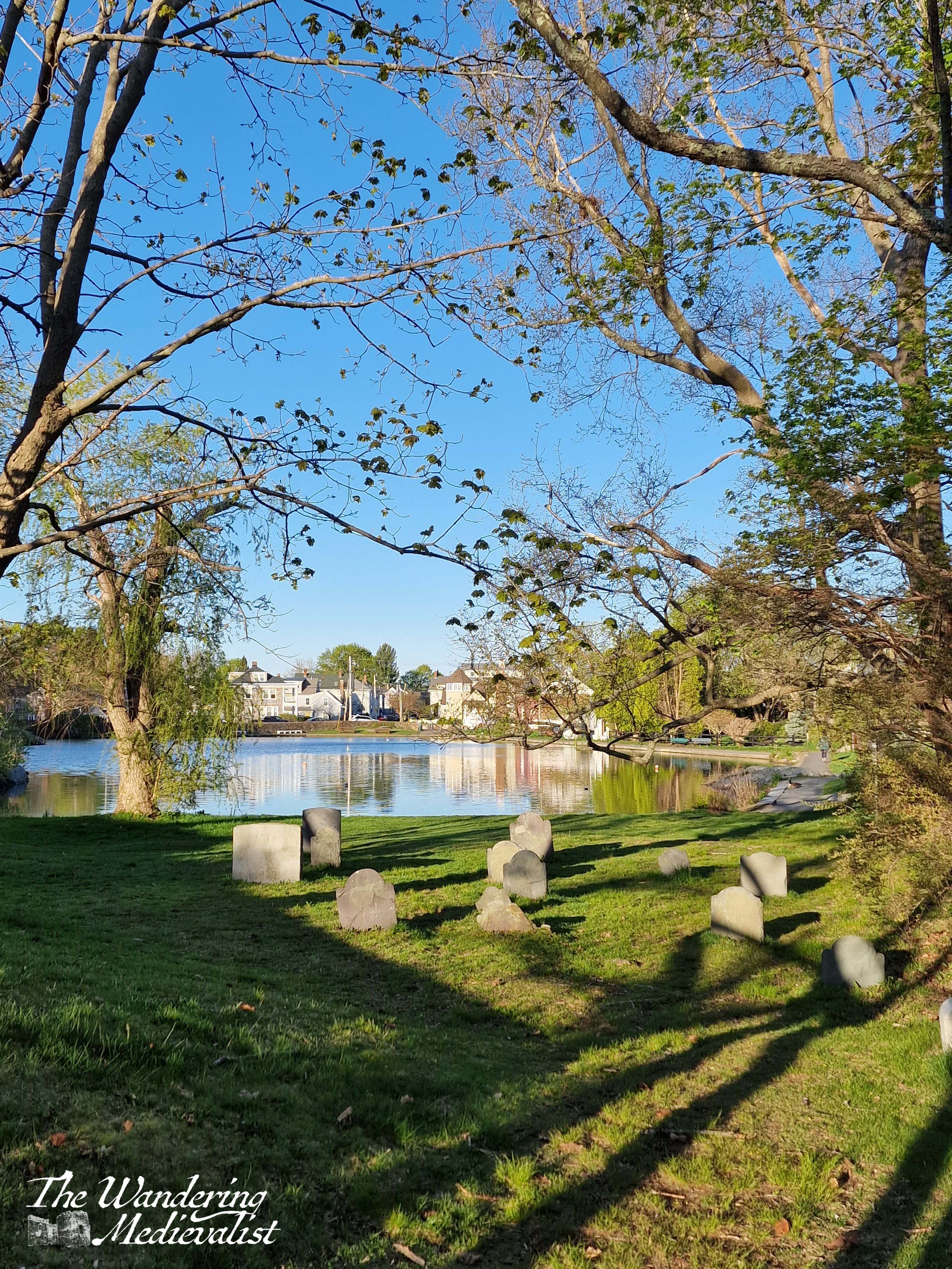
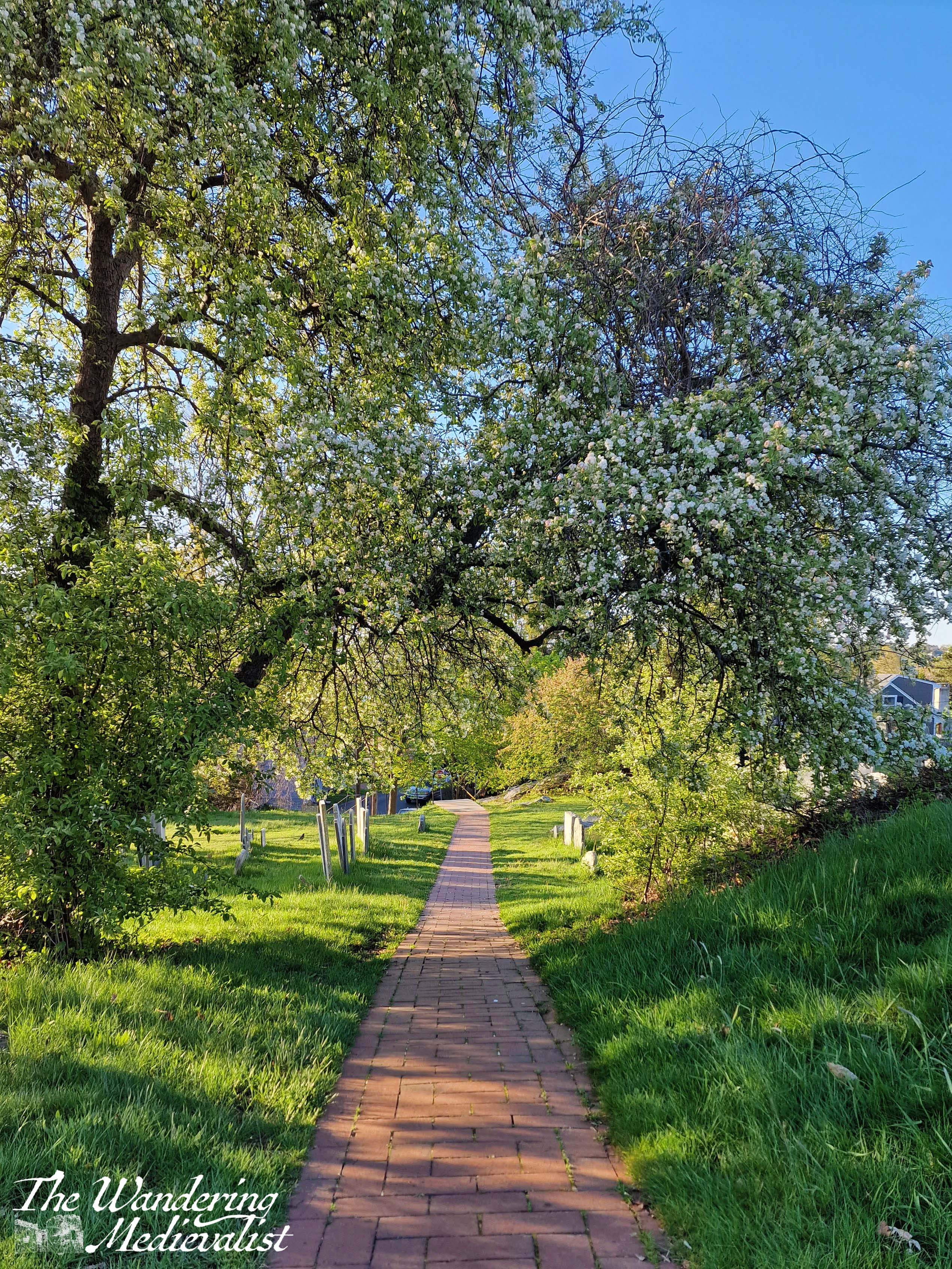
The stairs are probably the more official entrance, with a formal sign and information about the burial ground, and leading directly onto a brick path that takes you through the heart of some of the oldest headstones. For those of you who may be more interested in the actual graves and who was buried here, I discovered this excellent tour of the Burial Hill online, created by a local historian. He also details the meaning of some of the more intricate carvings on the headstones.
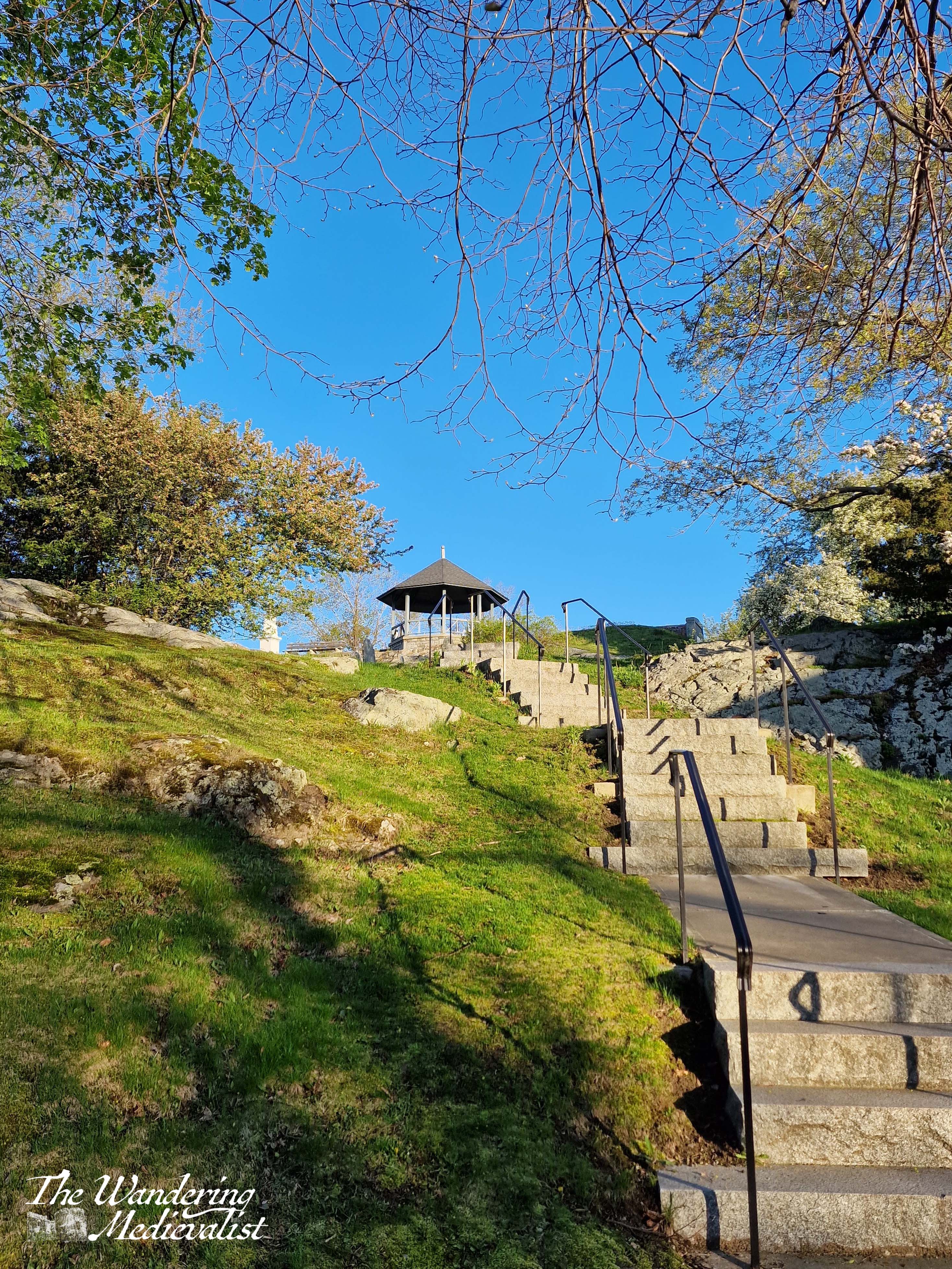
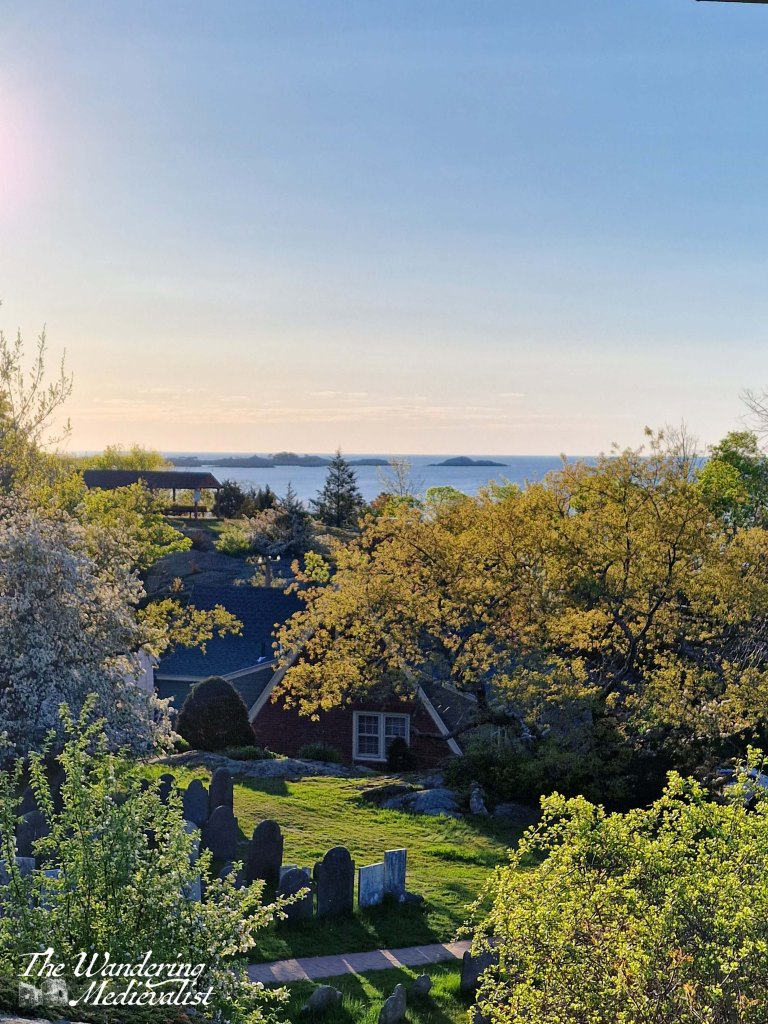
Other than exploring headstones, the main goal of any visit is almost certainly the gazebo at the top, where one finds the best views across the graveyard and the town (see above winter and summer view), including out to sea. Just visible in this picture is Children’s Island, where children attend a camp in the summer, leaving and returning each day from a local wharf. Attending this camp is a right of passage for Marblehead children, and most – myself not included – love it.
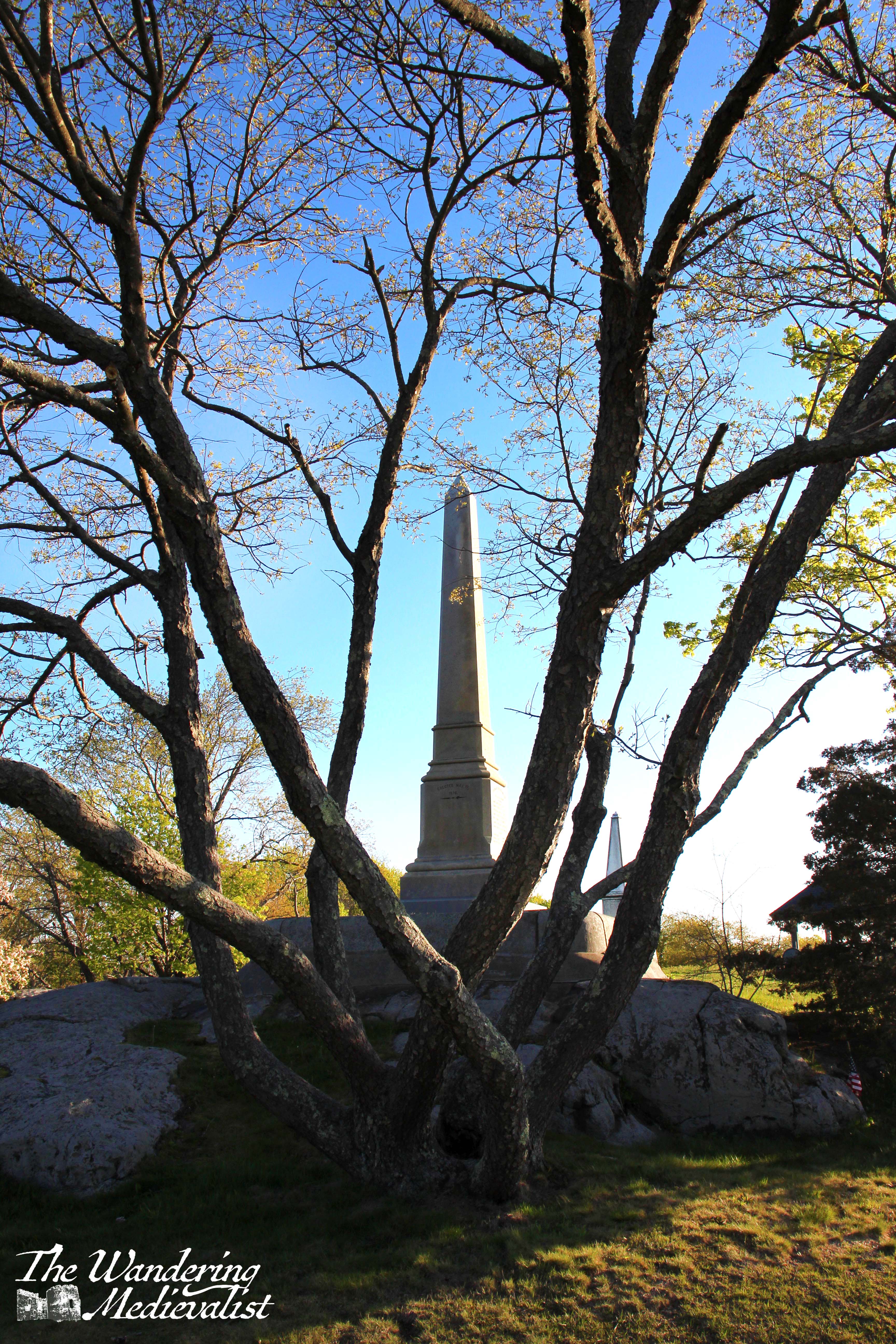
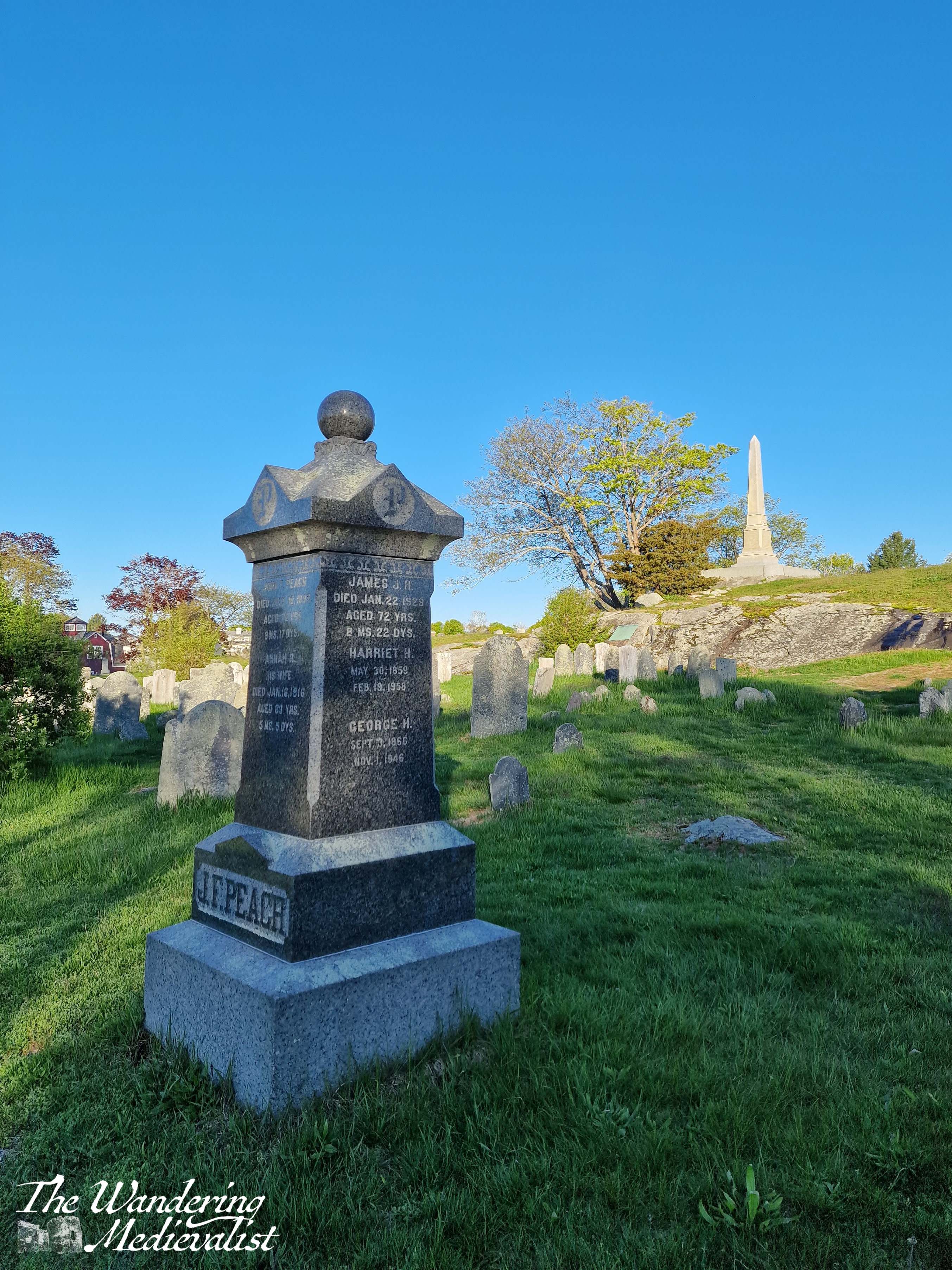
The hilltop is a fitting place also for several memorials to the many ships worth of men who were lost at sea over the centuries; Marblehead is, first and foremost, a fishing village. The Fishermen’s Monument was erected specifically to recall the loss of most of Marblehead’s fishing fleet during a hurricane on George’s Banks in September 1846. The second obselisk commemorates Captain James Mugford, who with his crew captured a British vessel carrying 1500 tons gunpowder, during the Revolutionary War.
While it doesn’t seem a huge area, the graveyard can be explored in both directions, and runs up against houses in one direction, the edge of the rocky hill in the other. The area is beautifully manicured with flowering trees and relatively frequently-cut grass.
Historians will also appreciate some of the more ancient grave stones (well, ancient for New England). One of the most famous belongs to a victim of the 1692 Salem Witch trials, after whom the nearby pond is named – Wilmont ‘Mammy’ Redd. When I was young, her stone was crumbling and difficult to read, but in recent years it has been renewed.
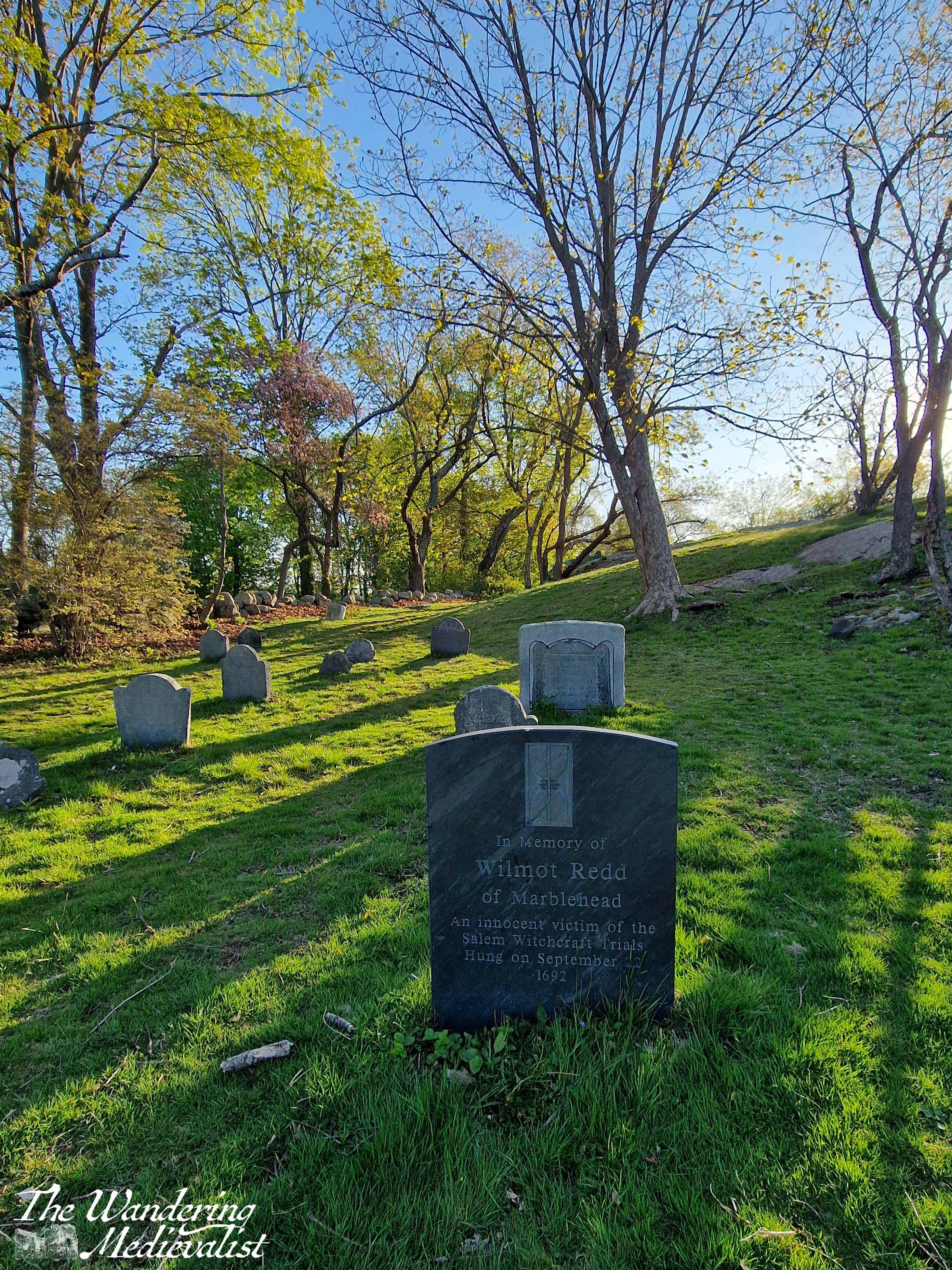
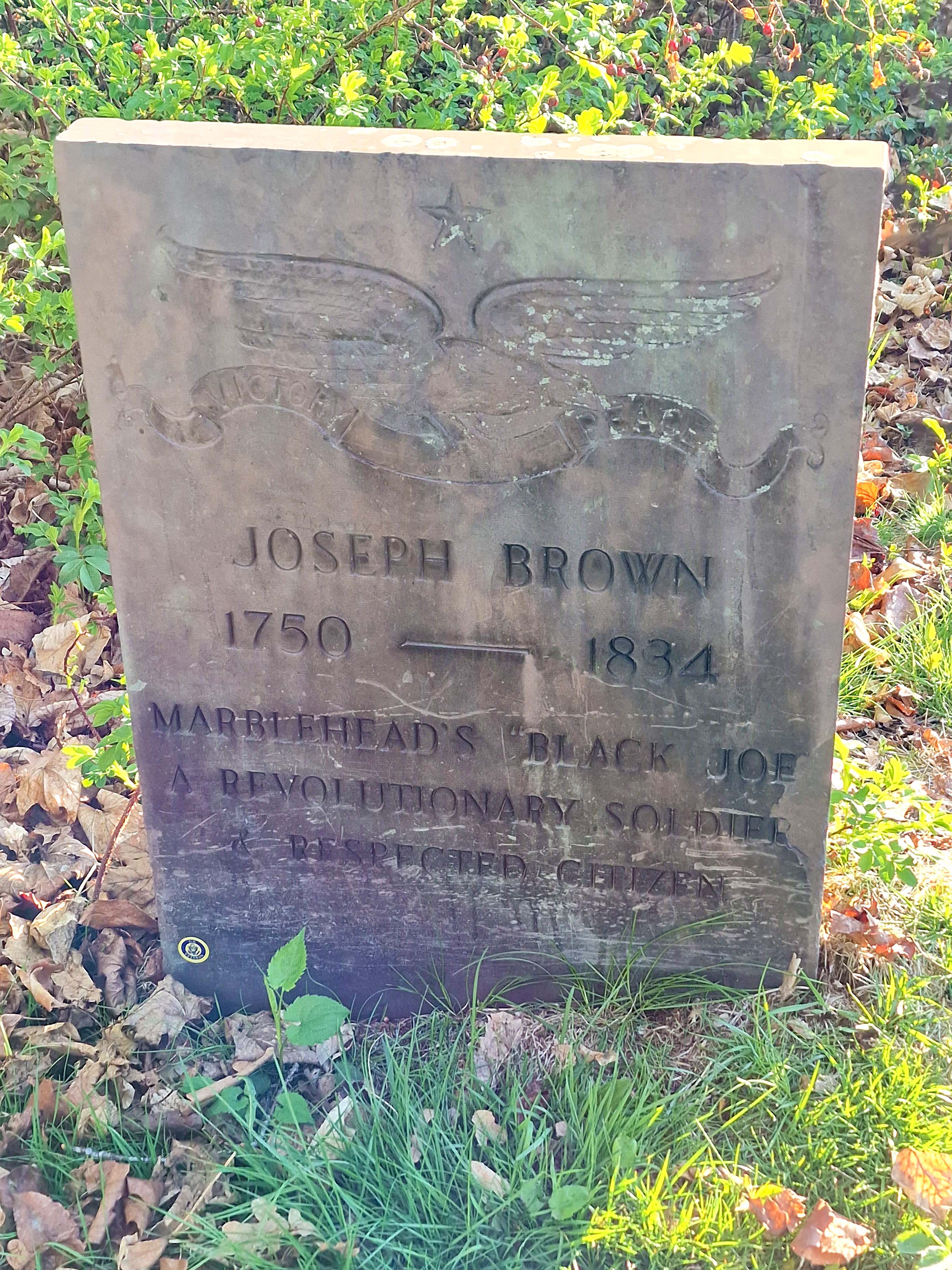
Also recently restored is the headstone for Joseph ‘Black Joe’ Brown, a freed slave who had fought in the Revolution and ran a tavern nearby, next to the eponymous Black Joe’s Pond.
Both of these headstones are close to the pond, and if you follow the line of stones in the left-land picture above and move up the hill, you reach the brick memorial for General John Glover, another of Marblehead’s Revolutionary War heroes. Many other old Marblehead families have representatives – or generations – buried here including the Orne and Peach families.
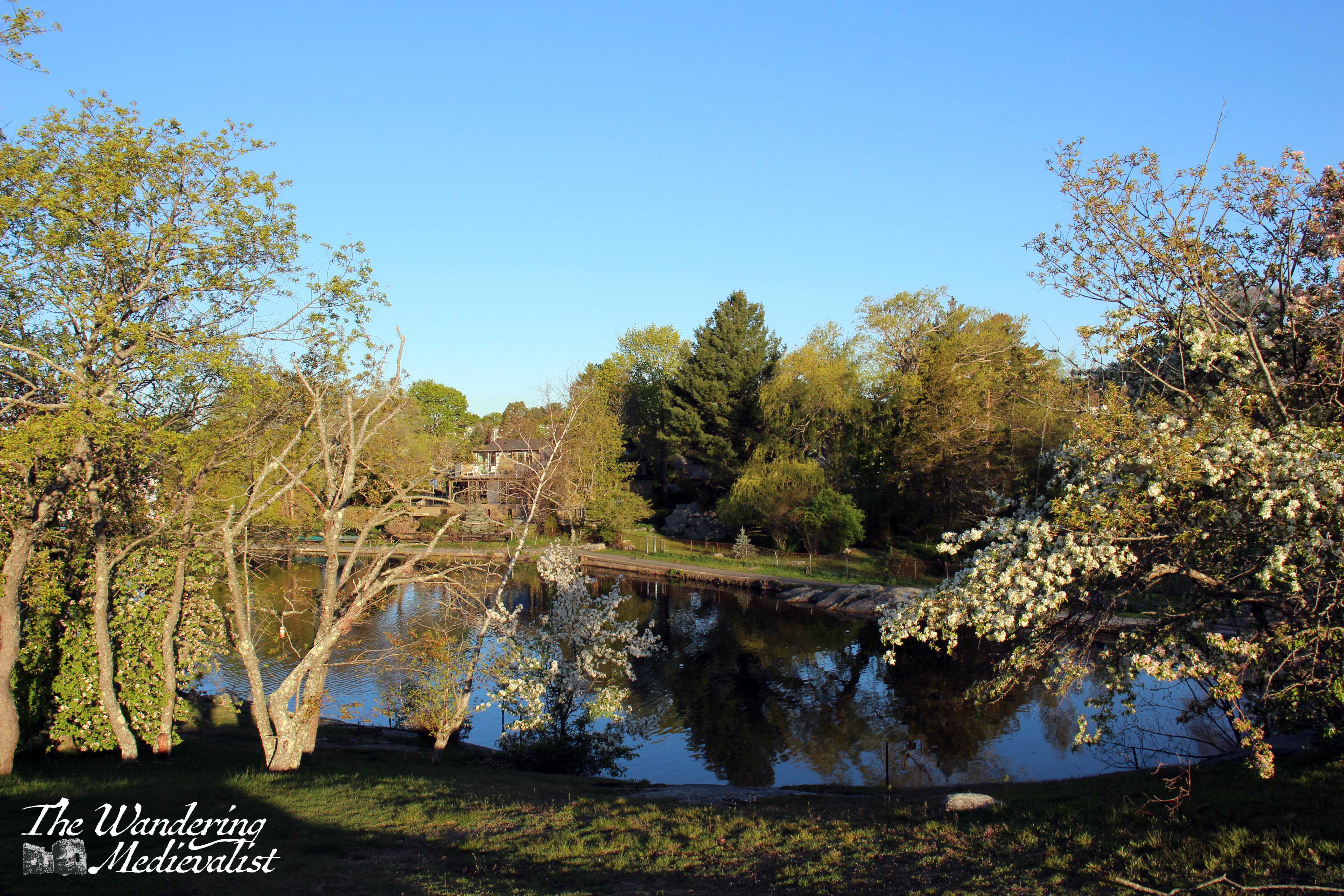
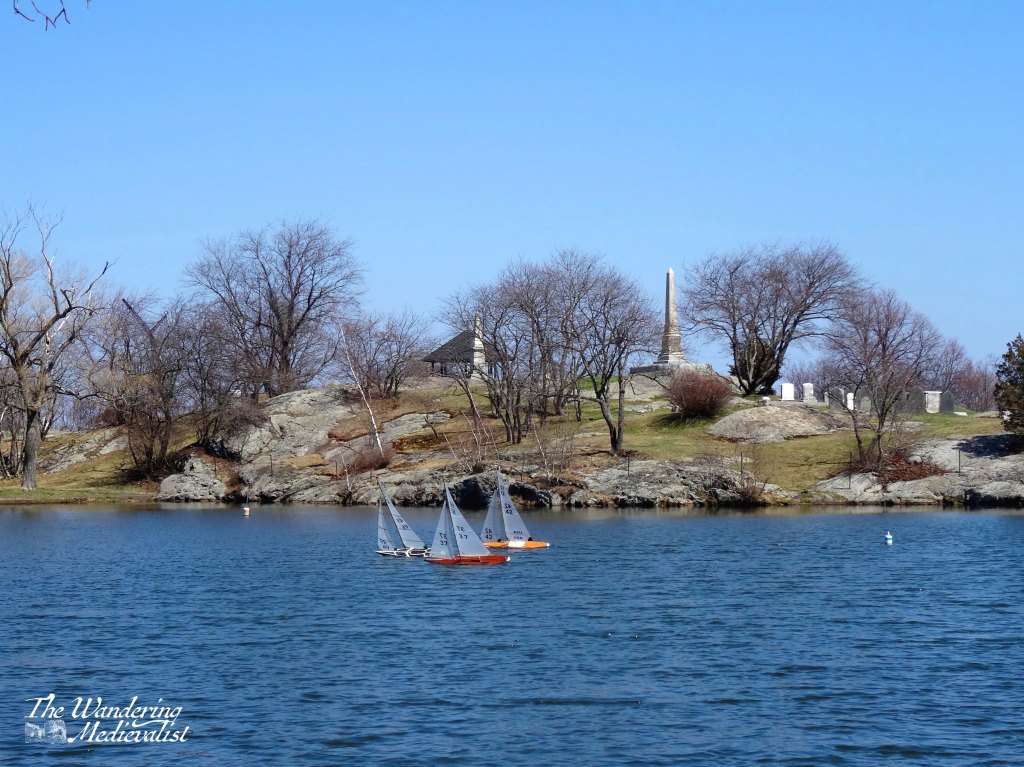
Finally, a bit about the pond, where we used to skate in the winter and feed ducks in the summer. I’m not sure it gets properly cold for long enough to skate on these days – or perhaps I’m visiting at the wrong times of winter. I do know that it is still the location of the local Tower School fifth-grade regatta, wherein students craft their own wooden sailboats in Woodworking class, and race them on the pond in the spring. I have fond memories of doing so myself, and still have the boat I made, though I am not certain that it would still sail.
Old Burial Hill and Redd’s Pond are firmly in my memory as ‘proper’ Marblehead of my childhood, and no visit home would be complete without a wander here. Just whatever you do, don’t fall in the pond, and don’t visit at night – or the ghosts may get you (or so I believed).
 The Wandering Medievalist