It’s been a while since I posted about something purely medieval, and so today seemed a good opportunity to do so, talking about one of my favourite English towns.
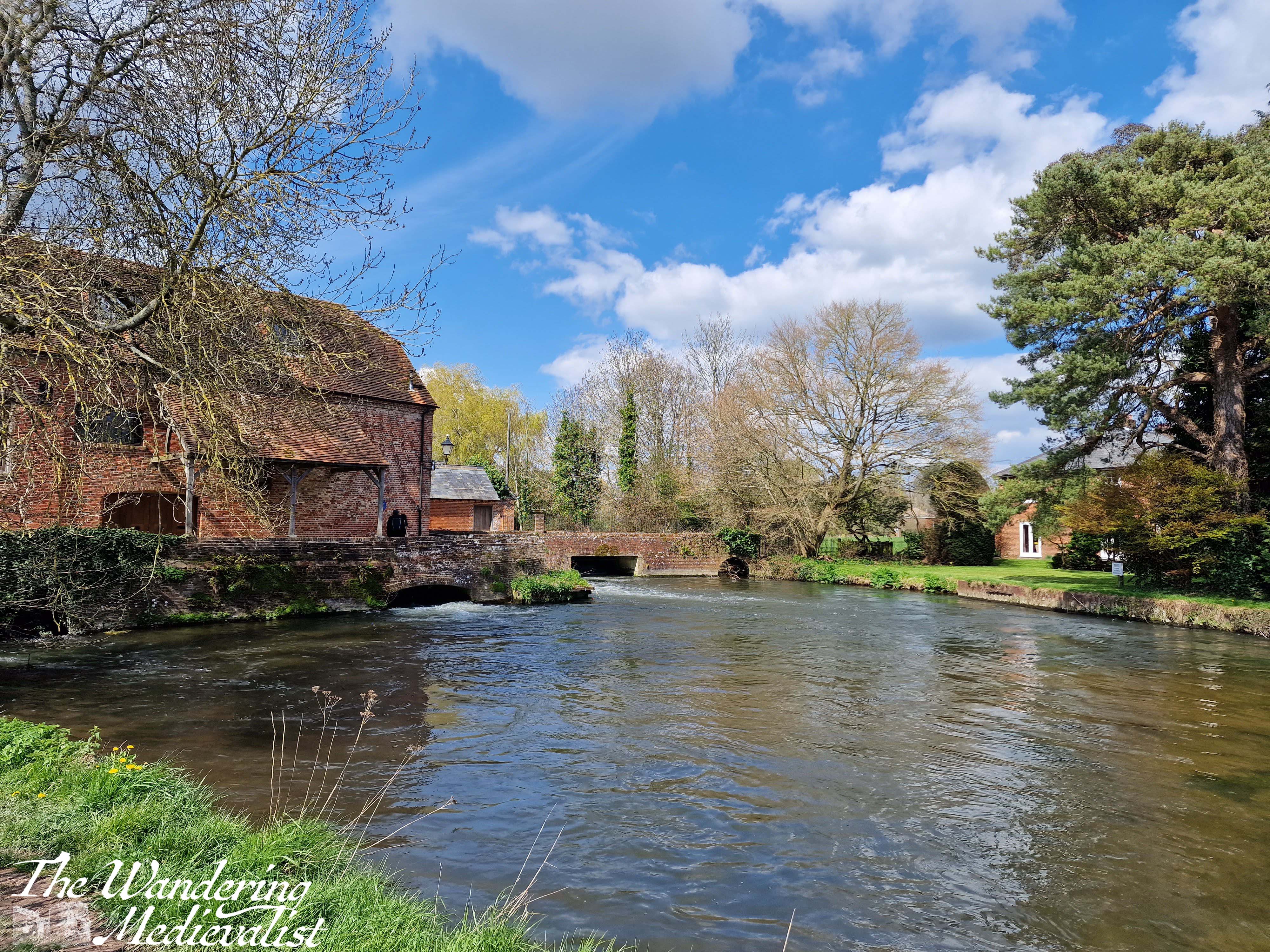
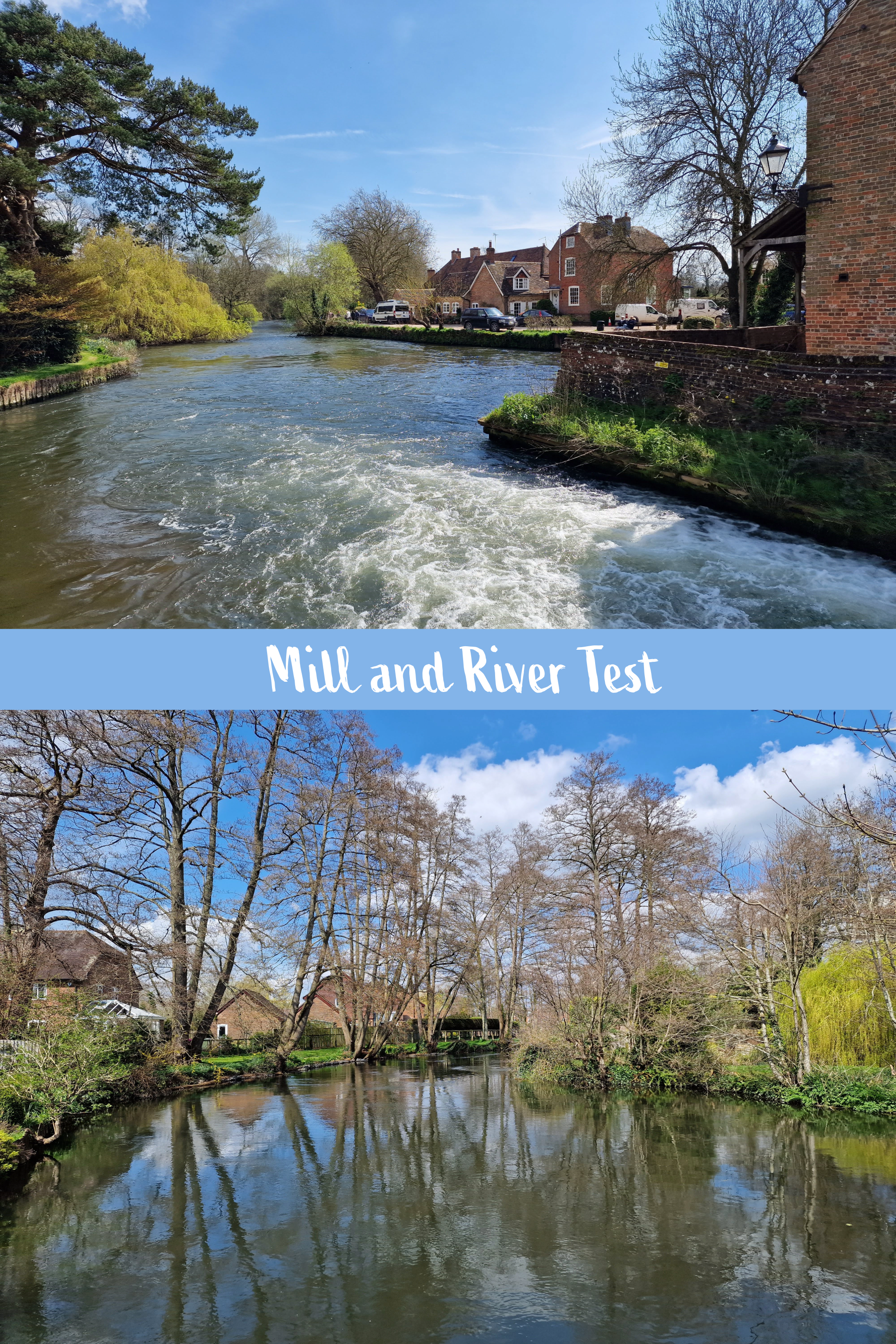
Romsey is a charming, well-to-do town about 7 miles from Southampton Airport, in the south of England. The town centre offers a mix of lovely shops, restaurants and pubs on winding streets and lined with Tudor-style frontages. The River Test flows through the community and some stunning parks, and past a picturesque old mill. The history in the town is more than evident; founded as far back as the 8th century, Romsey was a medieval market town that grew around the founding of the first church by King Edward the Elder in 907 CE.
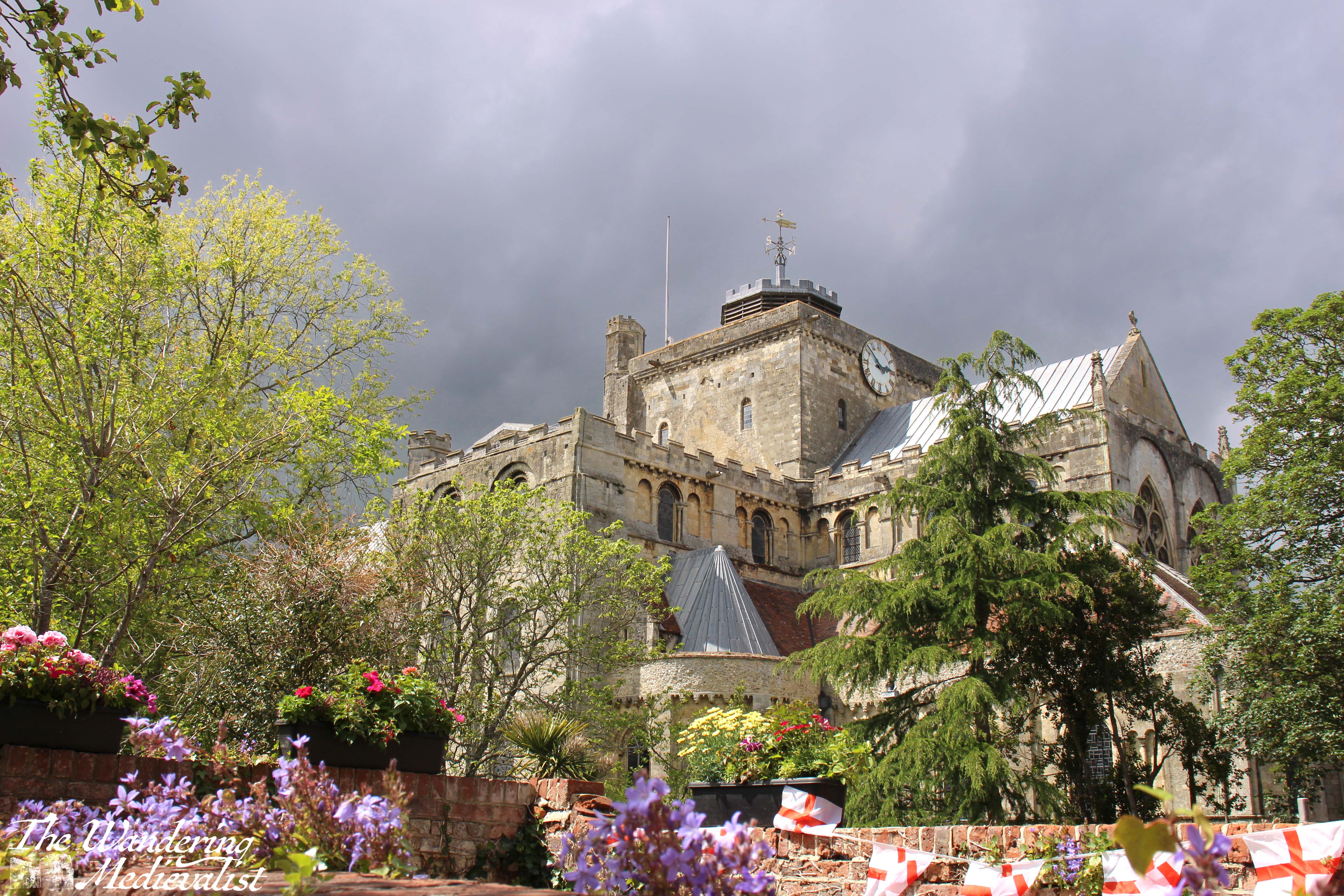
Our connection to Romsey comes through some close friends who settled there some time ago, and who we try to visit at least once a year. The abbey is a required detour on our walks through the town, and I recall one relaxing morning in particular sitting under the trees with a cinnamon bun and coffee, enjoying the view.
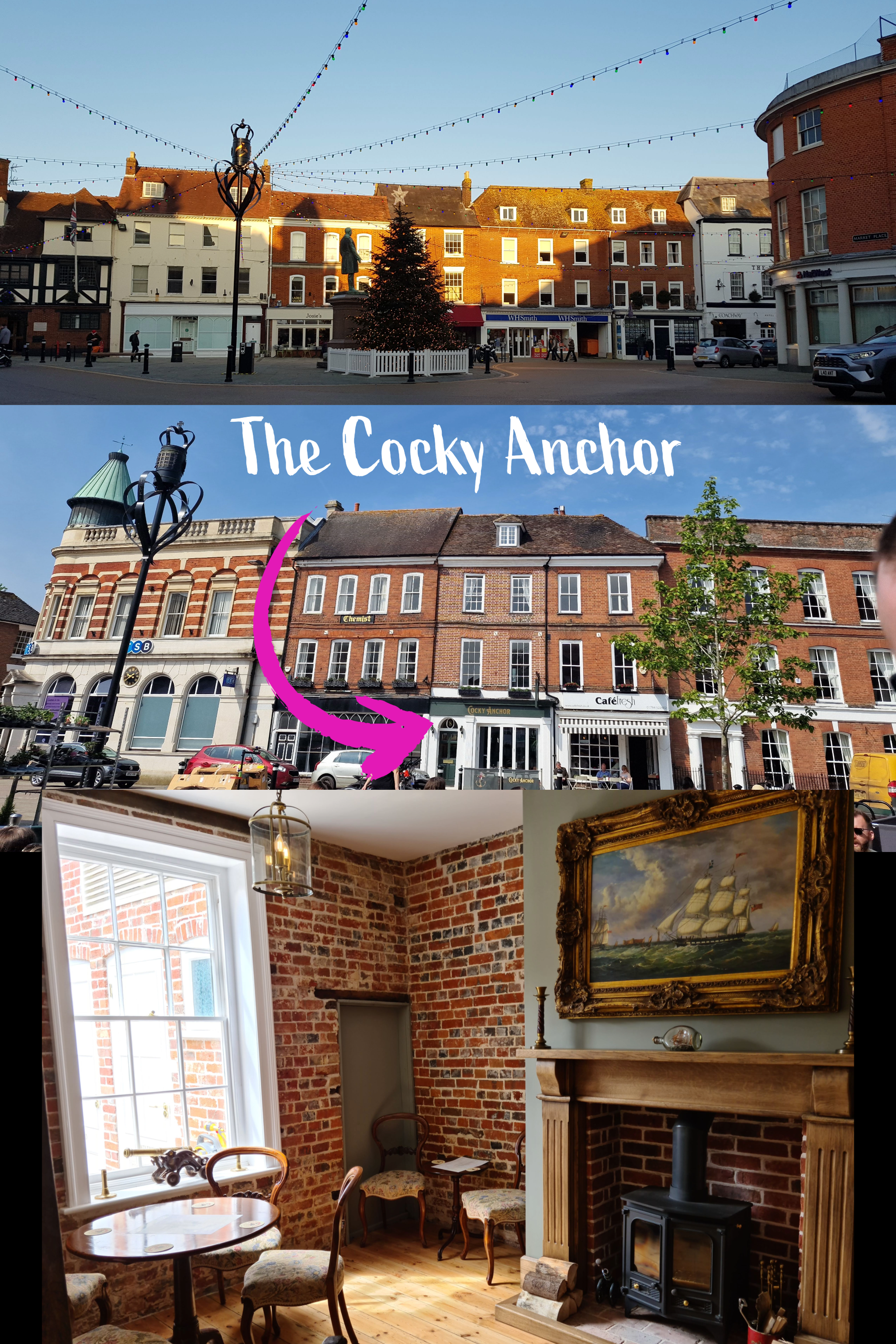
I also have fond memories of visiting the nearby pub the Cocky Anchor in summer 2021 – my first holiday after the end of lockdown – where the back beer garden offered great views of the abbey church.
The pub is just off the nearby market square, from which you have easy access to the abbey, along Church Street and down Church place.
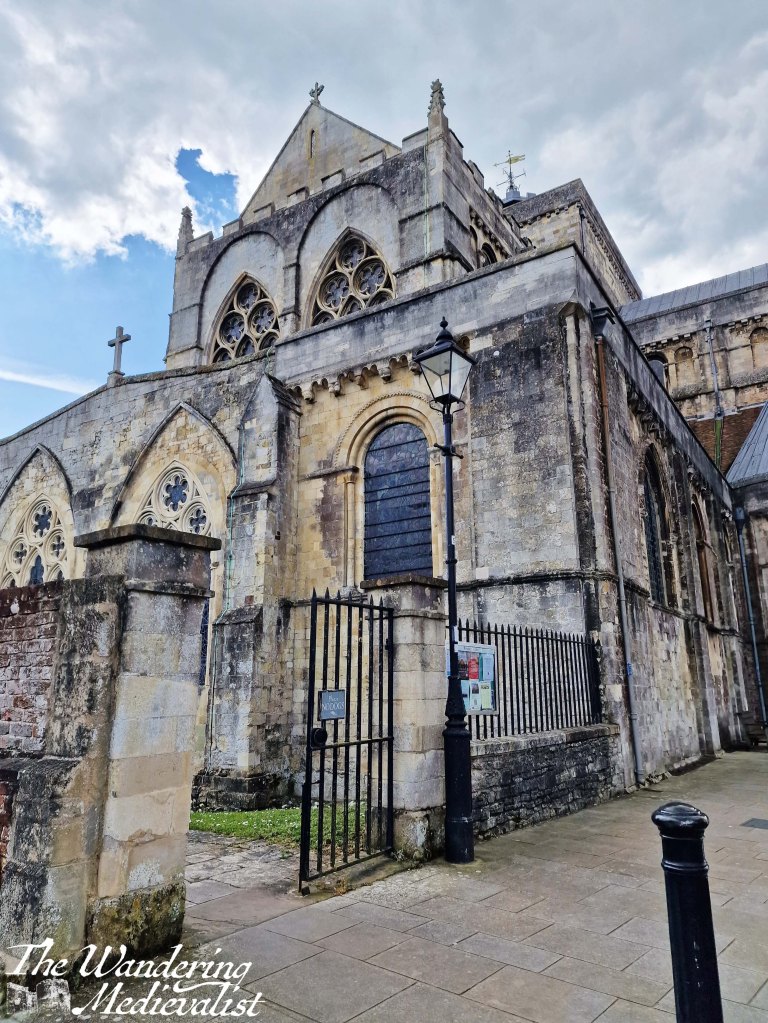
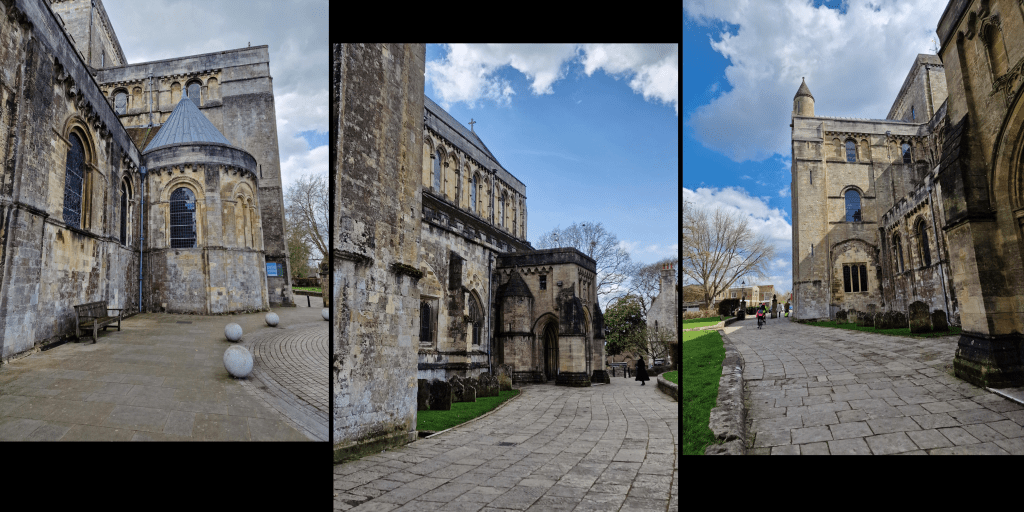
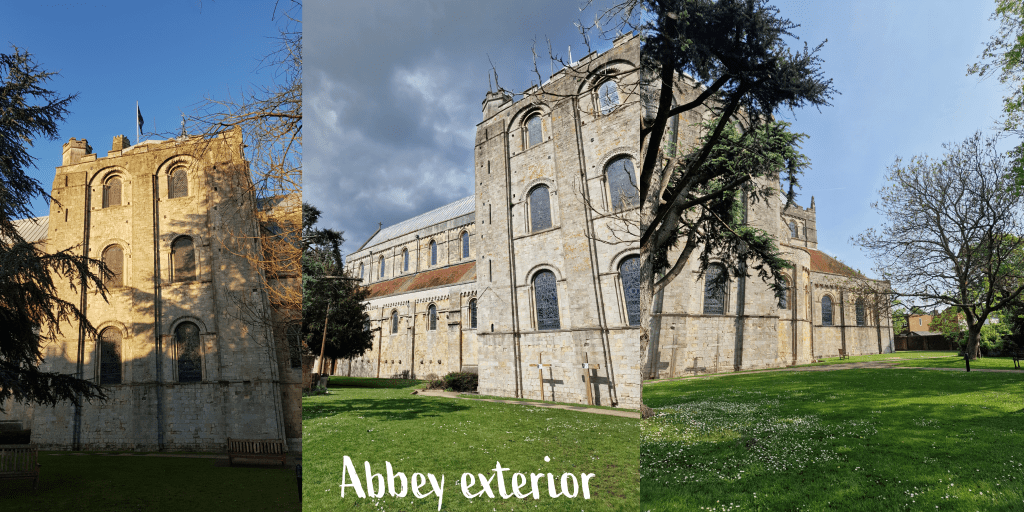
A visit to the abbey does not take particularly long, as you can walk around the outside in less than 5 minutes, unless like me you enjoy a much slower wander to take in the view. We always start off heading down Church Place, where the first view you see is this one, the east end of the church.
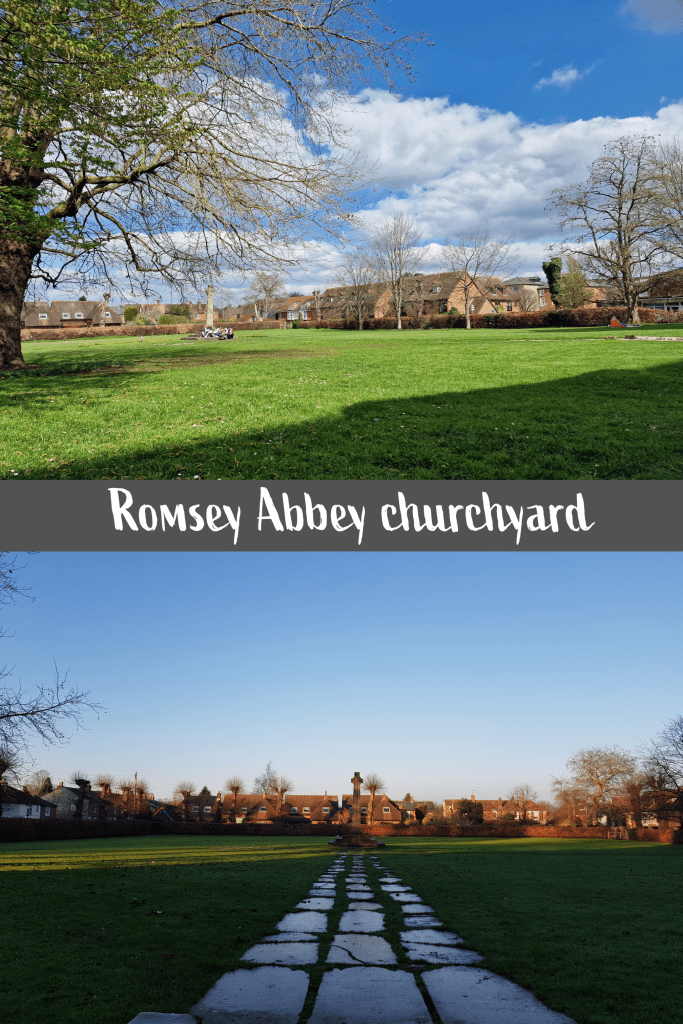
To the right of the path is the churchyard, which was the burial ground attached to the abbey. There are several memorials including a large cross and a Waterloo memorial, though the majority of the monuments were removed when the yard was cleared and levelled in the 1940s. The reasons for this appears to be safety-related, as the area had become very uneven and dangerous to traverse, and many of the stones were re-purposed to create a path.
North side of the abbey church
Ahead at the edge of the churchyard is Folly House, the former vicarage, now a beautiful residence. From here you could go in either direction down Church Lane or a street creatively called ‘the Abbey’ to enjoy more of the stunning houses and gardens of Romsey’s town centre.
Folly House, former vicarage
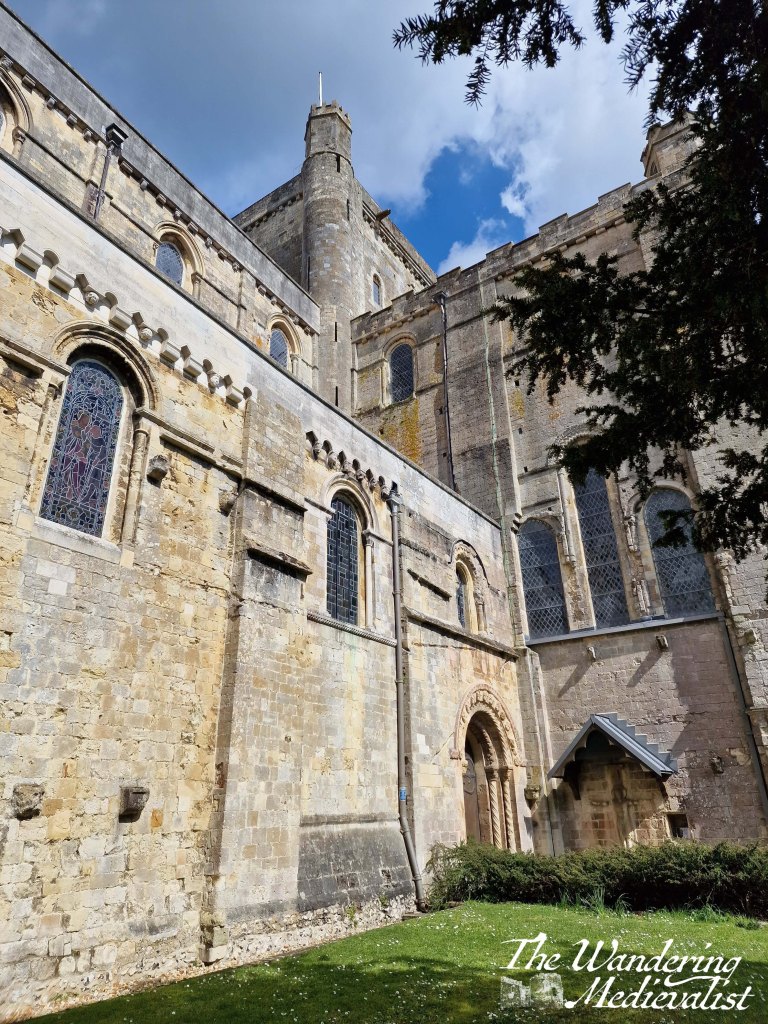
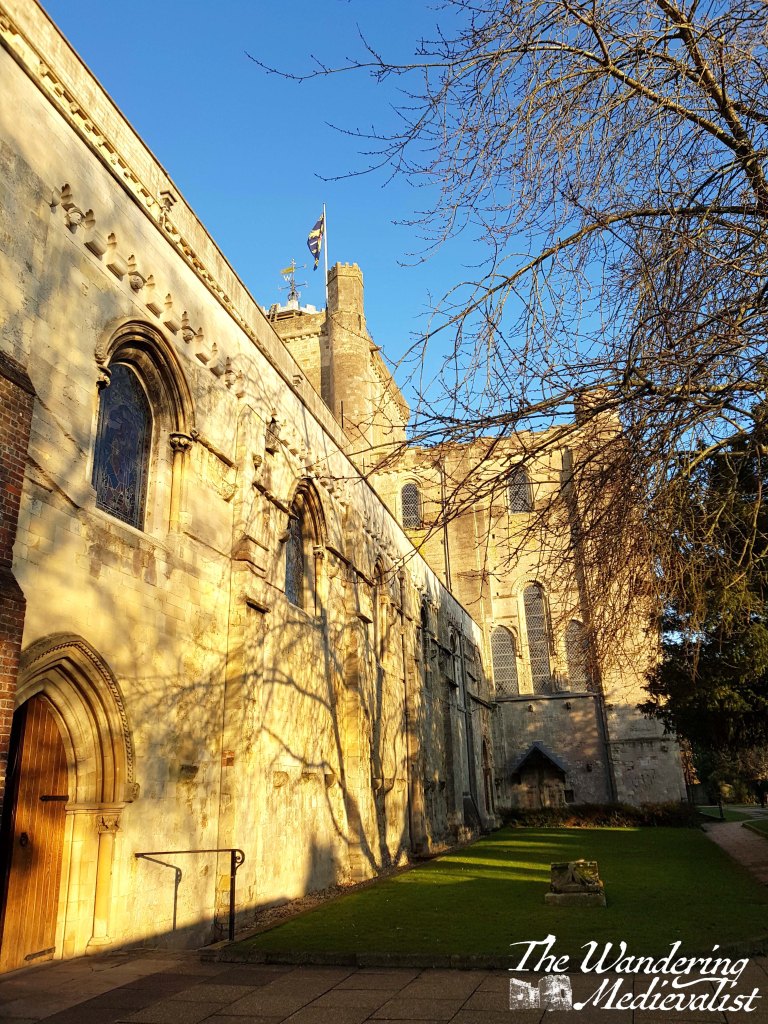
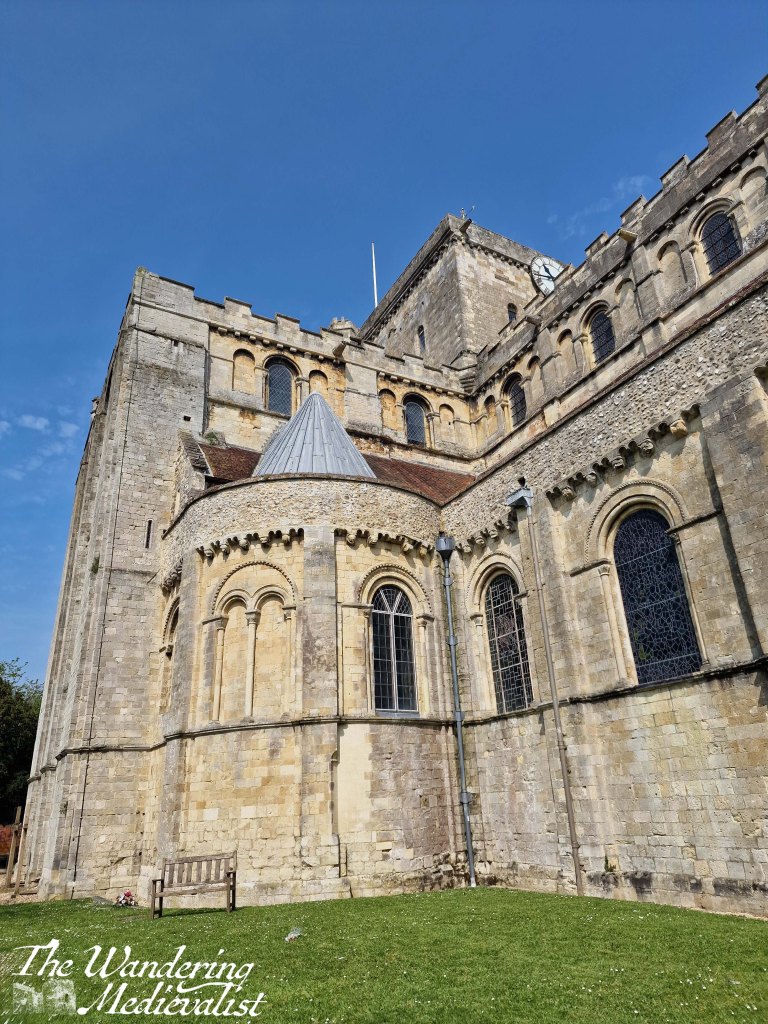
Continuing counter-clockwise around the church takes you to one of my favourite views, looking along the outside wall and up to the central tower – in all fairness, this diagonal view looking from the base of a church up to the tower is my favourite view of any ecclesiastical building. We come this way almost every time we visit Romsey, yet I find it impossible not to get another version, in different light of course…
On this south side of the church is a small park with shady trees, where we enjoyed the breakfast mentioned above.
This seems a good time to go into a bit more detail about the history of the abbey. As mentioned above, it was founded in 907 and Elflaeda, the daughter of the king, was put in charge of the community, beginning a long line of royal abbesses and nuns. In 967, the abbey was re-founded in the Benedictine order by King Edgar, also known as Edgar the Peacemaker or Peaceable. The first stone nunnery and church were built around the turn of the millennium, and the abbey flourished as a place of education and safety particularly for noble and royal daughters.
The abbey was sacked in 1003 by the Danes, likely in retaliation for the St Brice’s Day Massacre. This massacre had taken place on 13 November 1002, when King Æthelred (often referred to as the Unready) had ordered the killing of all the Danes living in England at the time. The chronicles of the time indicate that it was retaliation for an assassination attempt, though it may also have been retaliation for the years of raids by Danish forces.
Following the sacking of the abbey, in the 1120s work began on the current building. This was during the reign of King Henry I and work continued under the supervision of Henry of Blois. Blois was the brother of Henry I’s successor, Stephen, whose daughter Marie was elected abbess in 1155.
Marie’s story is one of those tragic female tales of the Middle Ages that make one realise that royal women had it just as hard – if not sometimes harder – than others.
Her father King Stephen died in 1154 and then her last living brother, William, passed in 1159. On his death, she became suo jure Countess of Boulogne (essentially, countess in her own right, meaning the title was hers by birth and not marriage). Despite her position as abbess, Marie was abducted by the son of the Count of Flanders and forced into marriage. Eventually, after giving birth to several daughters, she found her marriage annulled and was permitted to return to the cloister for the last years of her life – though not to Romsey. I wish this was an unusual tale to find in the Middle Ages, but it goes without saying that it was a difficult time to be a woman, at any level of society.
Back to the abbey. The last three arches of the church, designed in an early English style, were added in the 1230s, by which time over 100 nuns were part of the community. The abbey would continue to prosper until the decimation of the population by the Black Death in the late 1340s; 80% of the nuns are reported to have died, including the Abbess, and from this point on the number of nuns remained much smaller – less than 30. Nevertheless, the abbey remained an important part of local life, functioning as a center of prayer and charity.
Unlike some less fortunate establishments, the abbey survived the dissolution of the monasteries under Henry VIII due to the petition of four Guardians, who purchased the abbey for £100. The nuns were dispersed, but the community continued to worship in the surviving buildings.
It is still a working church to this day, with Sunday services.
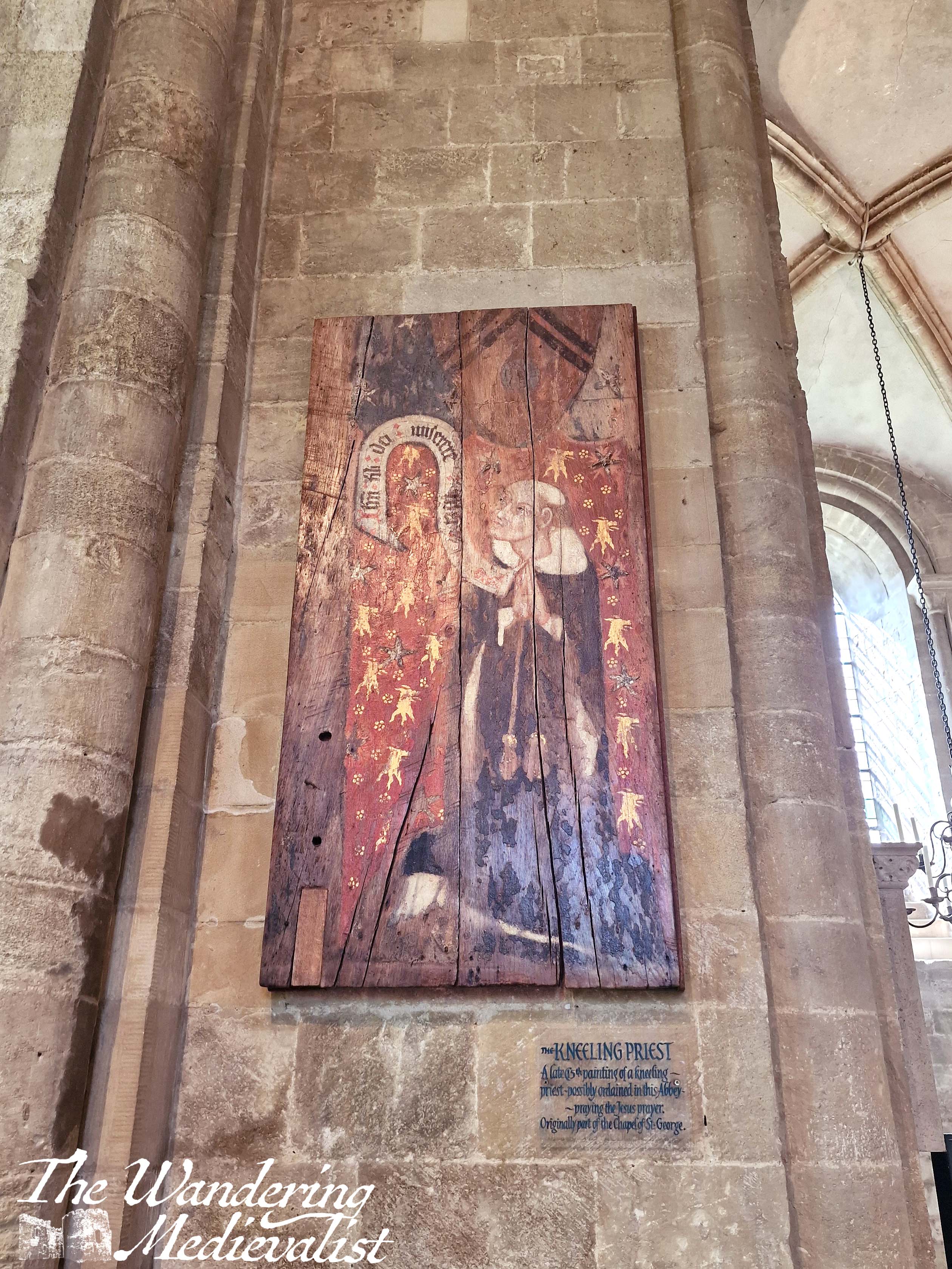
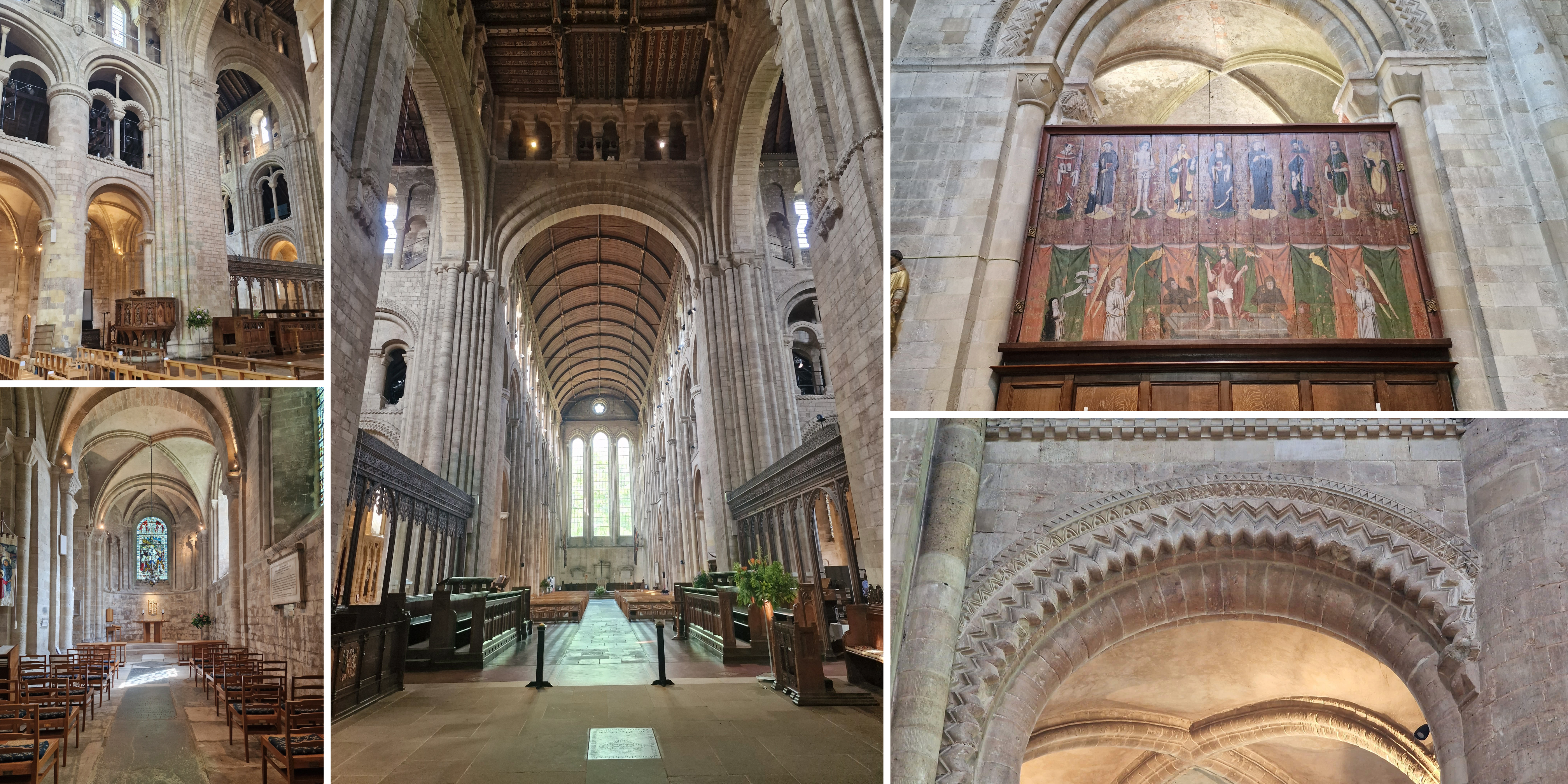
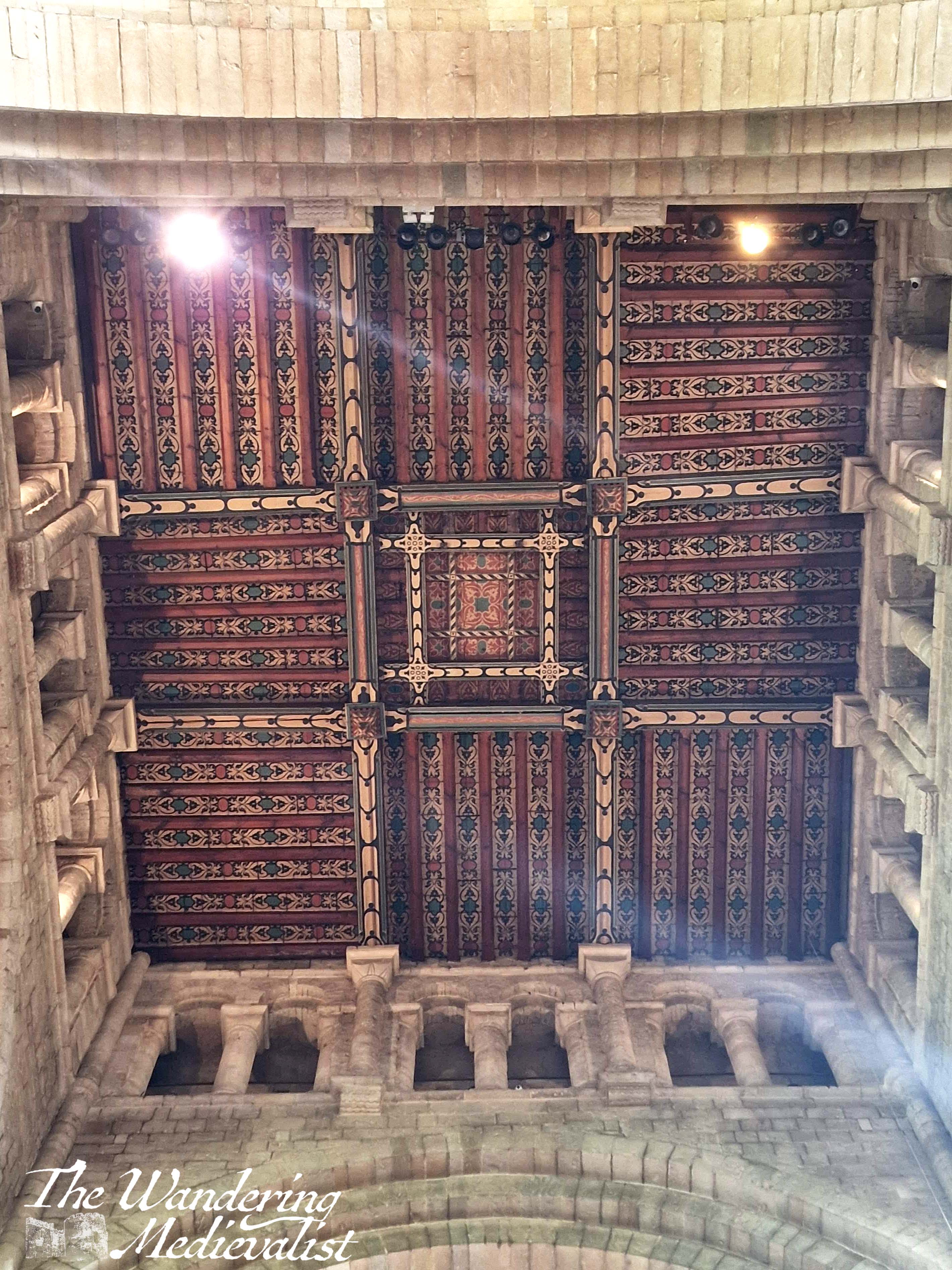
On our last visit, we were finally able to get inside of the church, which has several fine examples of medieval art as well as Norman carving that echoes that seen in Durham Cathedral.
Visiting an abbey like that at Romsey is a unique opportunity to experience an ecclesiastic community that has existed for hundreds of years, both changing and evolving with the times as well as maintaining its medieval roots. The protection Romsey enjoyed after the creation of the Church of England means that it allows the full immersive experience that you cannot get at ruined abbeys like those at Jedburgh, Dryburgh, and so many more that did not survive the dissolution of monasteries in the sixteenth century. It’s also just a beautiful building, set in a lovely English town that provides the best of what the countryside has to offer. I highly recommend a journey!
As I have written about before about my affection for the area around Aberfeldy and Kenmore, and so it will come as no surprise that, during an unexpected long weekend, we decided to book two nights at Moness Resort just above Aberfeldy. We didn’t plan much, but discovered the Dùn Hill walk as an option that looked ideal for our purposes – not too long, and in walking distance from our accommodation. Though the weather was a bit disappointing – overcast for the whole day – it was not actually wet, and so after a full Scottish breakfast (well almost full, I skipped the black pudding, but still a requirement when eating breakfast away from home), we headed out.
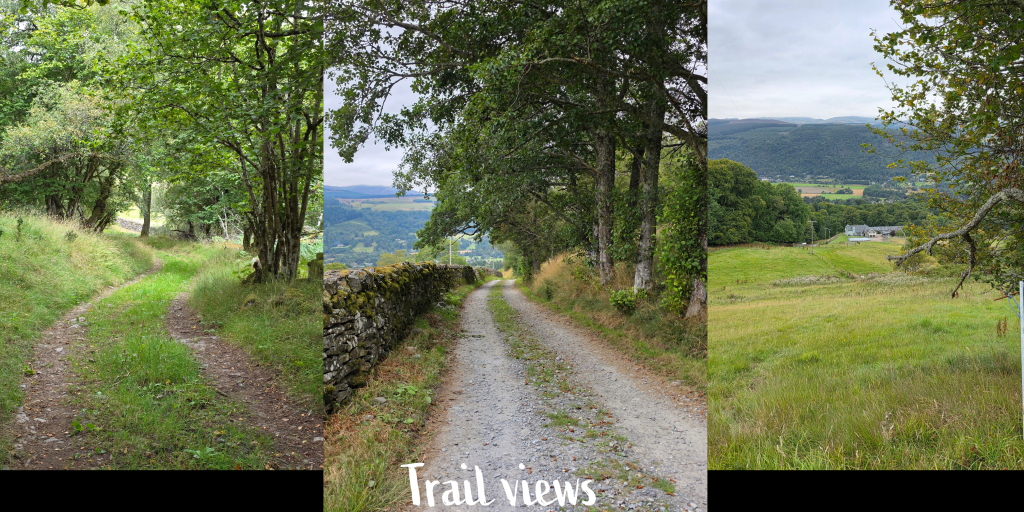
For those familiar with Aberfeldy, the Dùn Hill is above the Birks walk, and starts by heading up a farm track between some trees and a field full of sheep. ‘Up’ is a good word to use, as ‘up’ was very much the theme of the walk; while not particularly long – 3 miles round trip – this path is a pretty constant uphill, and at times quite steep. We had not intended on vigorous exercise (as the other half reminded me several times), but we pushed on in any case.
As with many walks we do in Scotland, we were using a page from Walkhighlands to guide us on the way, and while I generally find their route maps to be very useful, the instructions are on occasion a bit vague. Fortunately, there is really only one option for this walk.
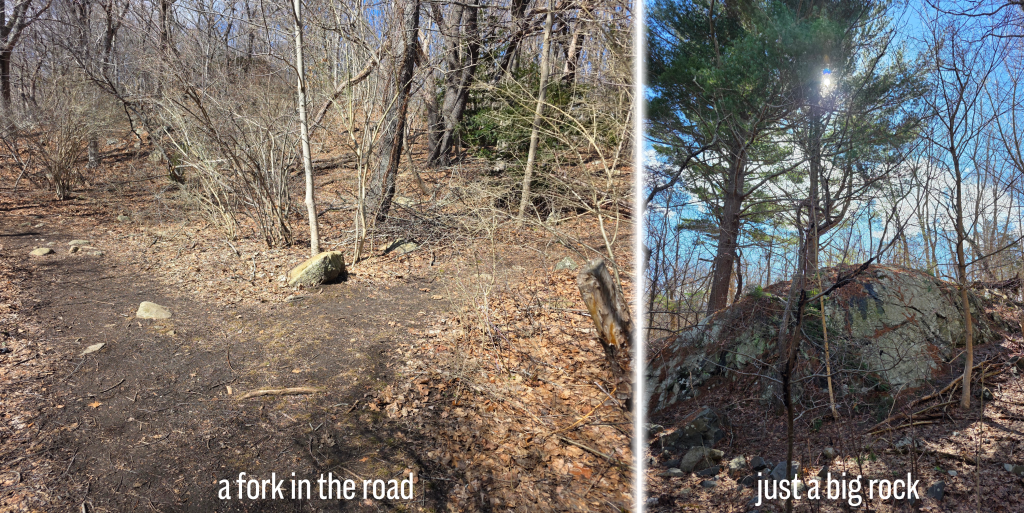
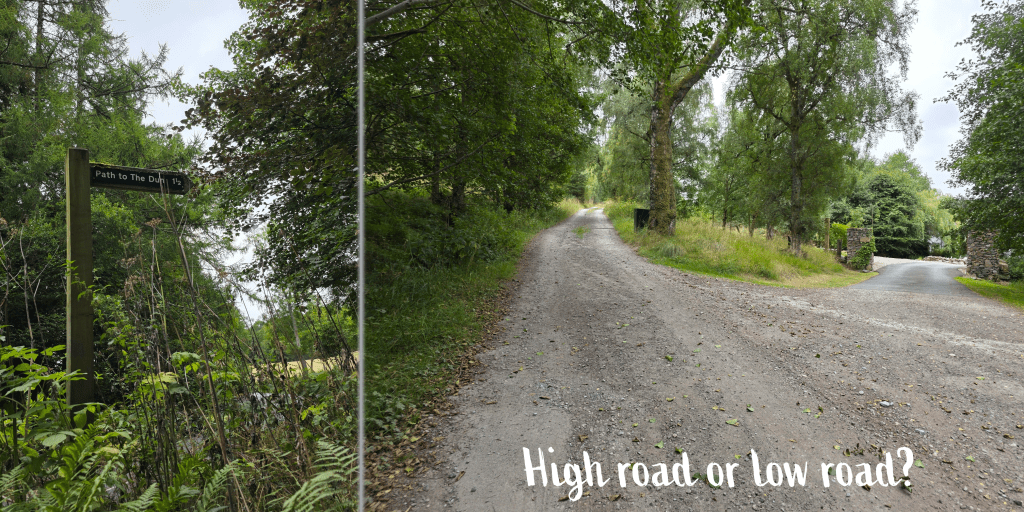
The road climbs steadily and winds around to the right in time, offering what appears to be a choice to be made between a higher and lower road. In fact, the low road is a private drive, leading to an impressive large house and outbuildings.
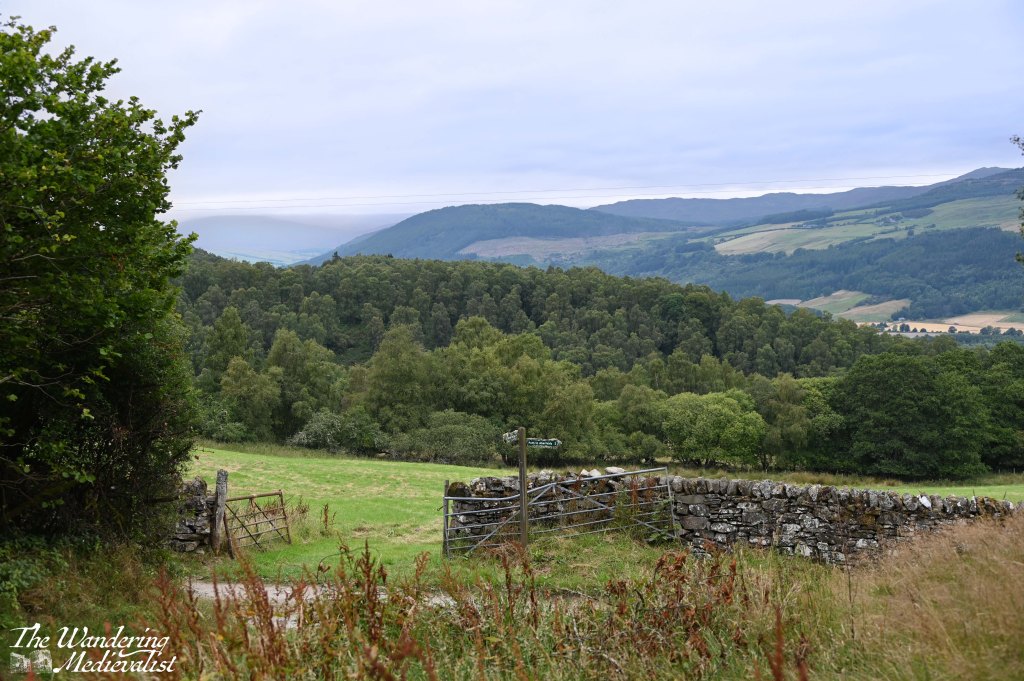
Passing this fork, the trail opens up so that the views over the fields and hills are visible – at least climbing quickly means the vistas are also fast to appear! Unfortunately our view was marred slightly by the weather, meaning that pictures do not tend to show the glory of the area.
Perhaps five minutes beyond the fork, walkers tired of a dirt road and having to look out for the infrequent traffic will be delighted to notice a sign pointing up the hill. This is roughly the half-way point of the walk.
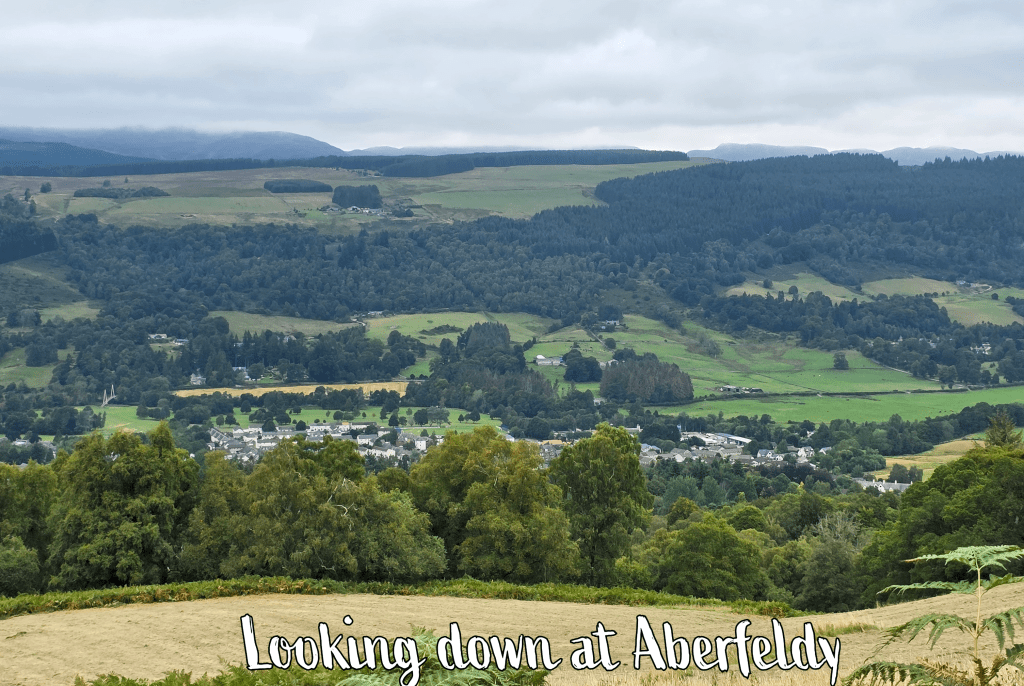
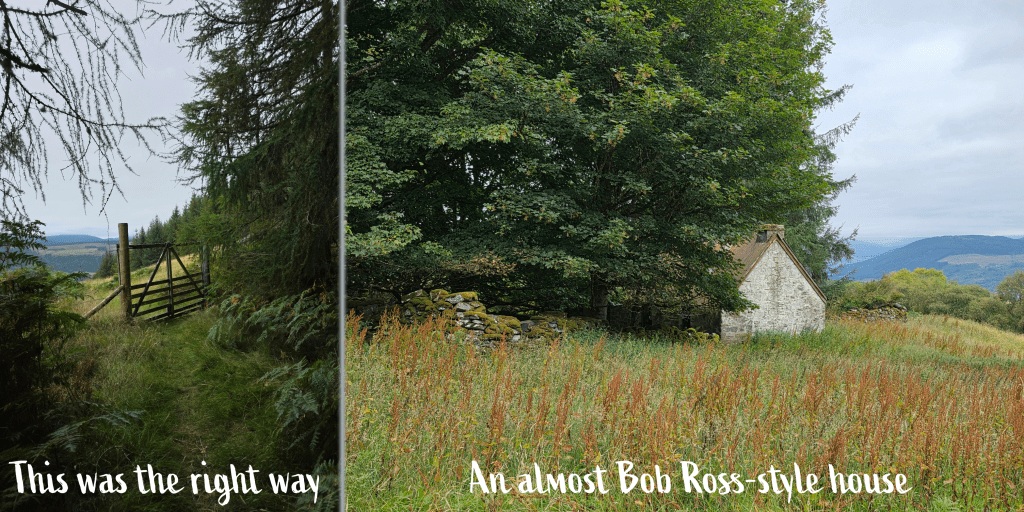
From here, the path becomes a bit more typical for mountain walking – alternately rocky, grassy, and climbing through fields and trees. In relatively little time, the shape of an abandoned white cottage appears, nestled amongst some trees and with a walled yard. Almost covered by the foliage, this house reminded me a touch of something Bob Ross would paint – an abandoned spot in the woods, mostly overgrown (see below). But with a great view over the town.
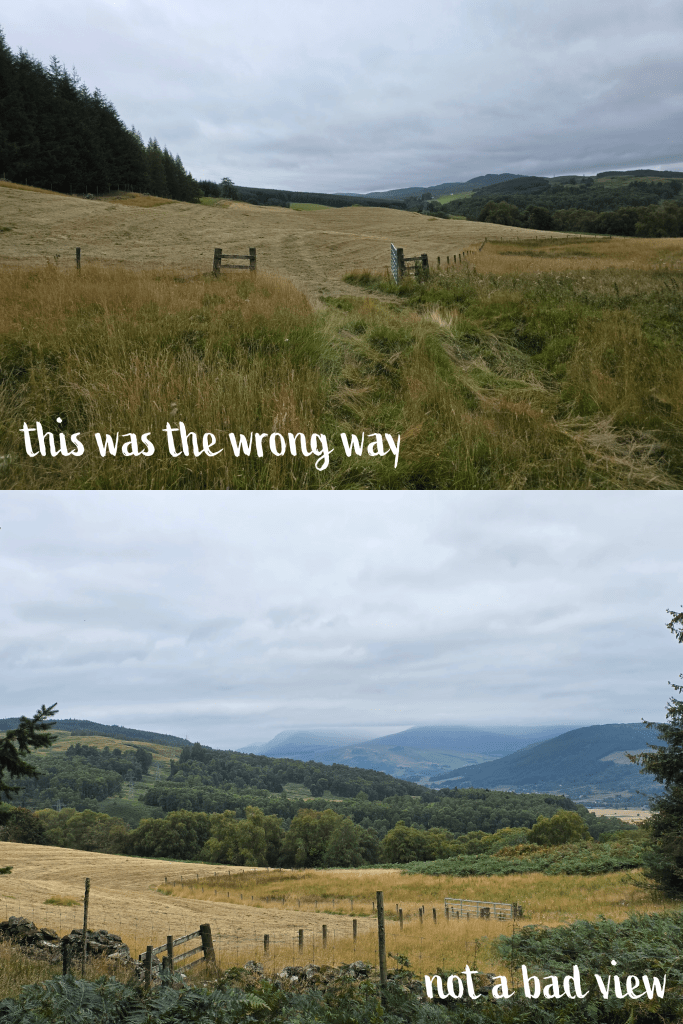
This was where we got a bit lost, as while our instructions said ‘go through a forest gate’, we could not immediately see the way to the gate. So, we thought perhaps it was a bit further along the meadow, and that is the way we headed.
It was uneven, with deep grass and rough to walk on, no markings or discernible gates in the distance. After a few minutes of trudging along, we realised that there was a dog walker behind us who could only have come through the gate we had seen. Clearly, we had gone the wrong way. While the view from the meadow was pleasant, it was not going to take us where we wanted to go.
So, we retraced our steps and discovered, mostly covered by high weeds, a sign pointing towards the gate. The faintest remnants of a trail was evident, and so we bivouacked towards the gate, passed through and discovered a narrow forest path – clearly the correct way.
The forest path was pleasant, winding through pines and larch (I think?), and the dry summer plaguing Scotland was a touch less evident here. Yes, it has been a very dry summer – Fife is at near drought conditions as is a large portion of the UK. The gorgeous weather I have experienced while hiking the Fife Coastal Path was unfortunately not good for the overall health of the countryside. Rain is very much in need! Despite all stereotypes of Scotland…
This is the kind of hiking trail I love the most – well-kept and easy to follow, winding through forests that smell like the pine I used to play under when I was young. Occasionally there would be a break in the trees where a hillside meadow met the tree line, but we saw no one else and very little sign of civilisation for most of the remainder of the climb.
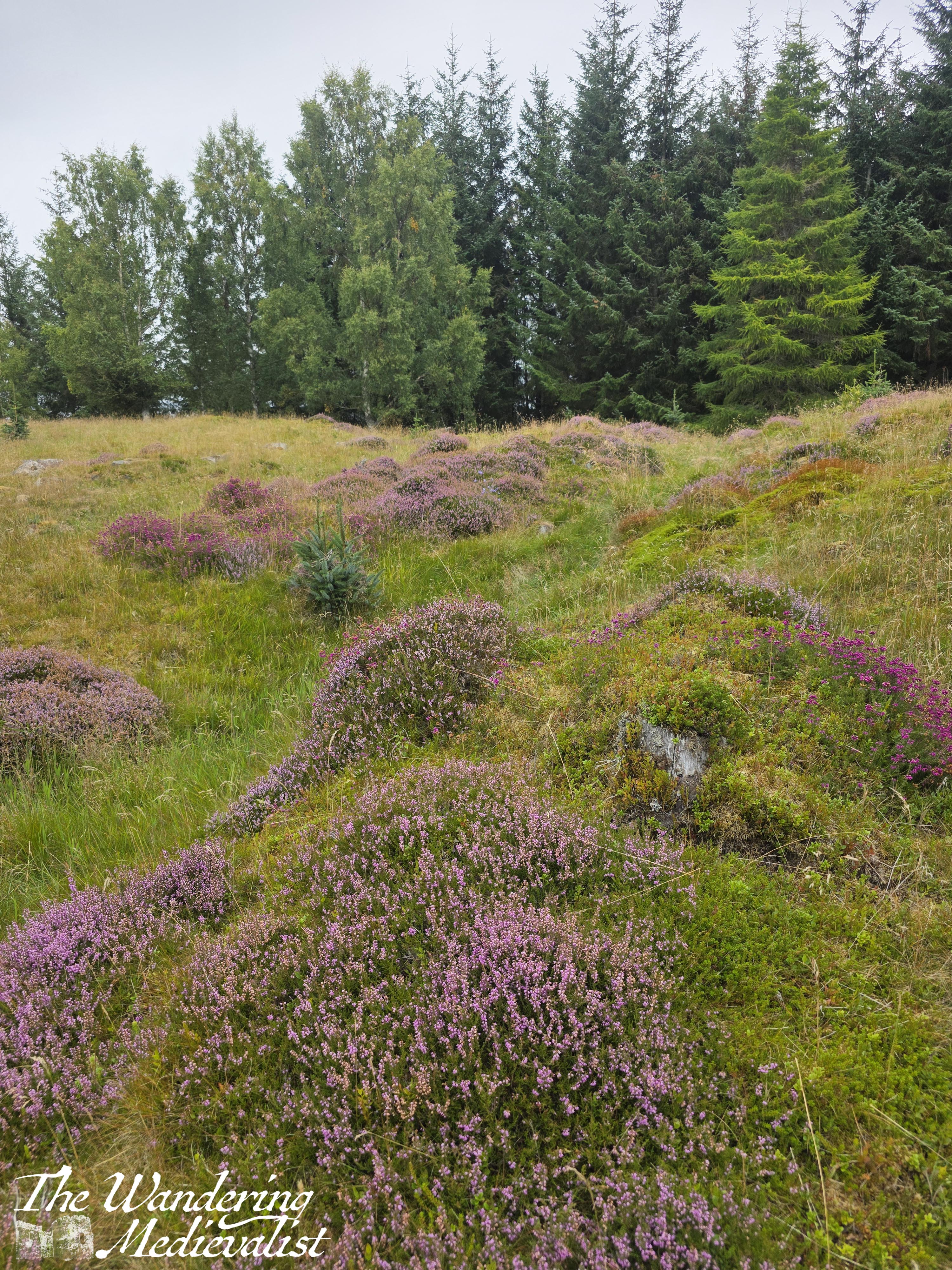
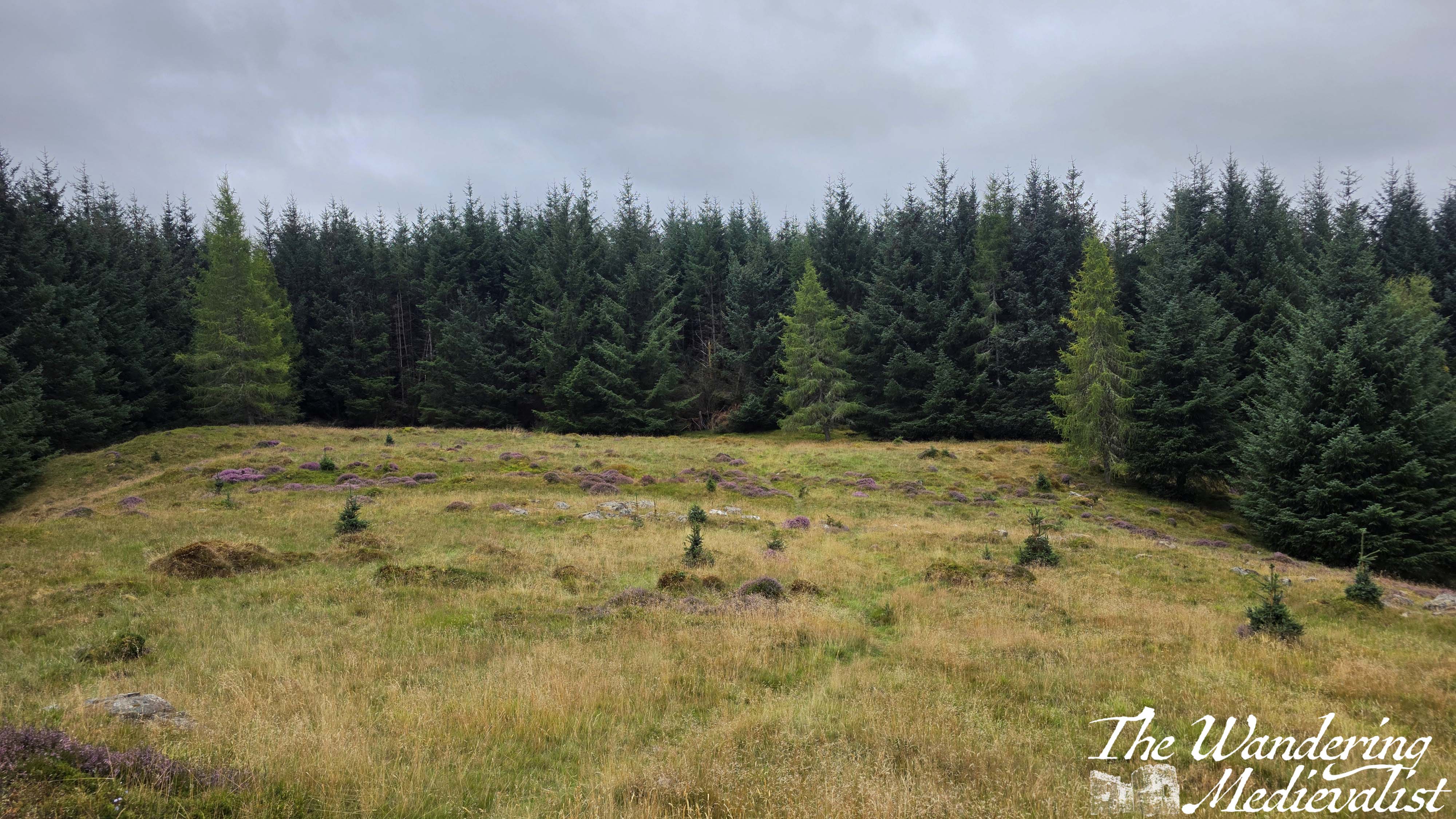
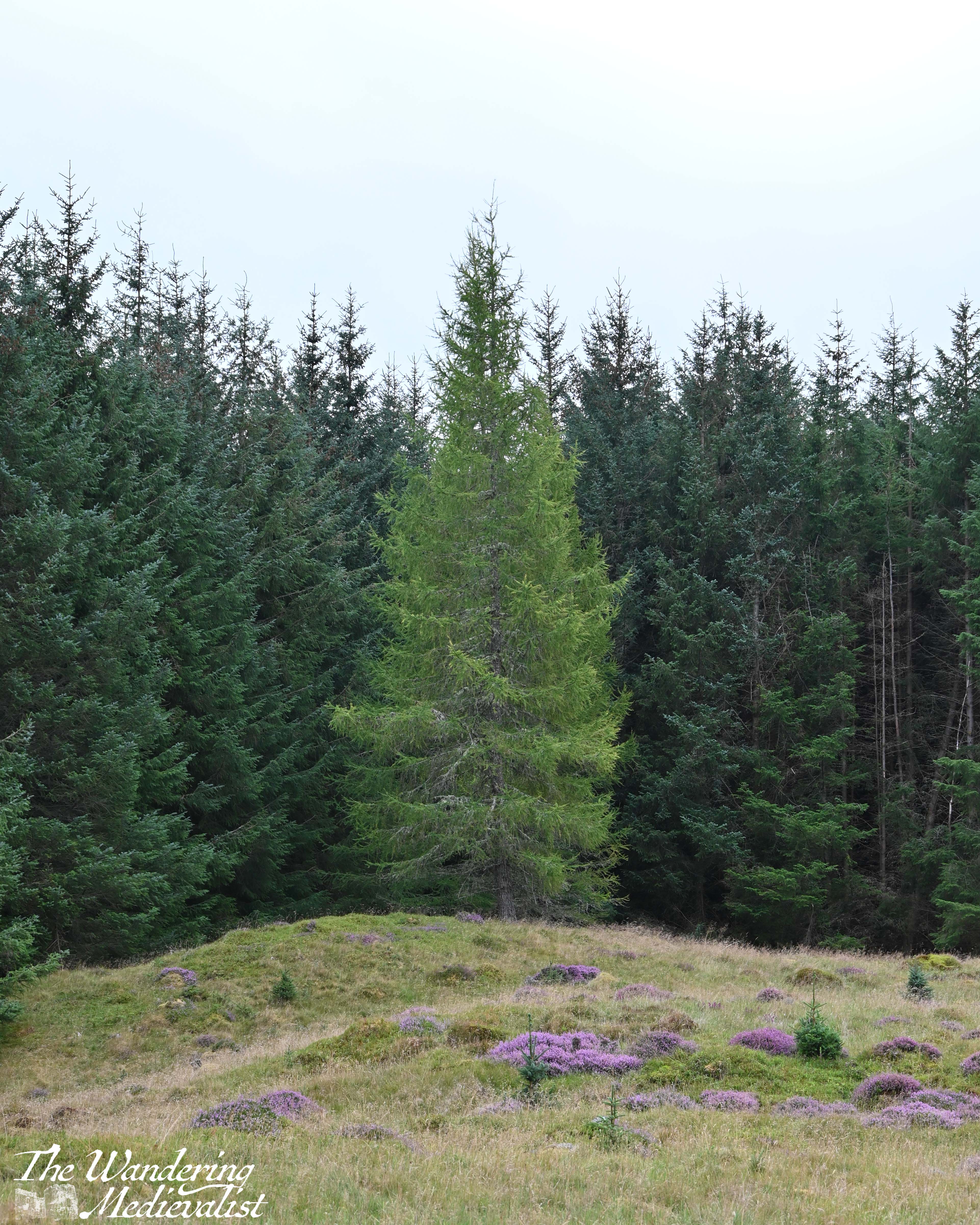
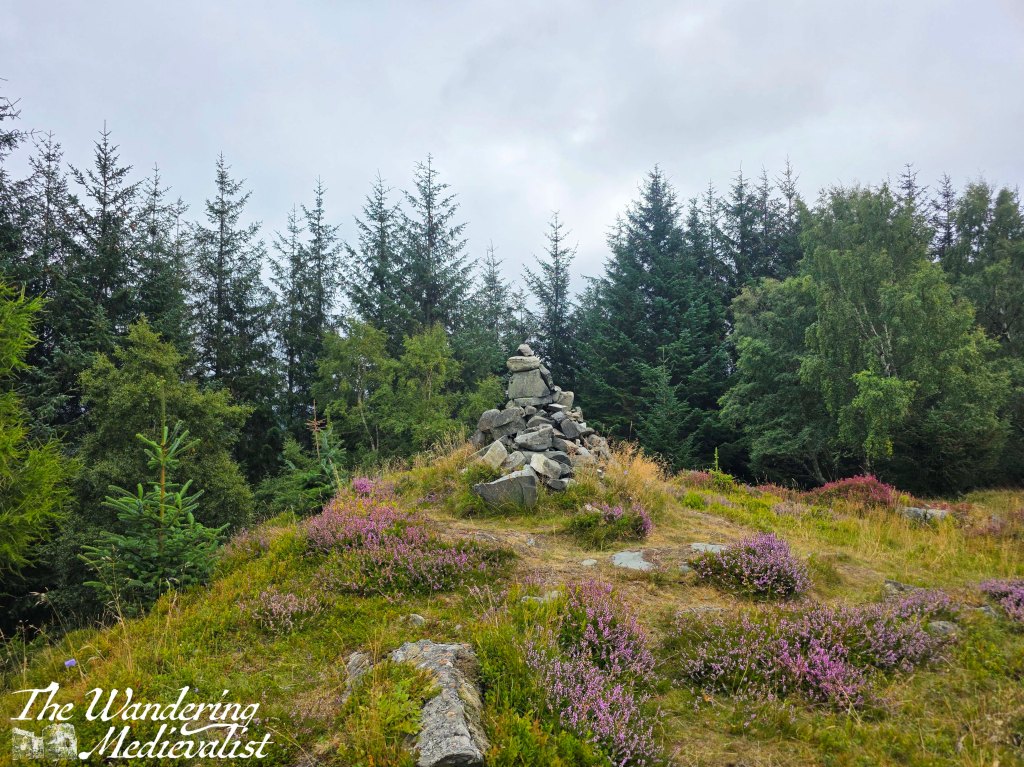
Then, suddenly, there were signs that up ahead the trees were thinning, and we reached the clearing at the top of the hill – wide open, grassy, with large patches of beautiful purple heather.
While it is not really visible to untrained eyes like ours, this clearing is the remnant of an Iron Age hill fort, the Dùn. Scientific equipment and archaeologists can identify the rings and gaps where entrances may have been, but for us it was just a lovely peaceful clearing where we could sit for a while, have a snack and some water, and enjoy the quiet. Well, quiet except for a sheep in a nearby field that was baa-ing with a gusto.
The views were unfortunately marred by the low cloud that made the distance hazy, but there was enough of a vista to make one imagine how impressive it could be on a clear, sunny day.
And of course, there is a rock cairn marking the top of the hill; I realise how fortunate we were to be hiking at a time when the heather was in bloom, as it really did add some spectacular colour to an otherwise mostly grey and green landscape. I could have sat quite happily for hours watching the bees, enjoying the many different shades of purple from a soft lavender to bright almost fluorescent magenta – I also found myself humming ‘Heather on the Hill’ from Brigadoon, and had it stuck in my head for hours after.
However, despite a hearty breakfast and a few hiking snacks, we hadn’t really provisioned ourselves for a long time away, and so we eventually headed back to the break in the trees and began the meander back down towards Aberfeldy. We have reached that age – as I am sure I have mentioned – where down can be harder than up, and this was definitely the case once we left the forest path and re-joined the road. Small pebbles and stones combined with dust made for a slippery descent, and almost as slow as the climb. But, we did enjoy the views a bit more heading down and I can see how this could be even more lovely with autumn colours.
While not a particularly long walk, like its sister walk at the Birks of Aberfeldy, the Dùn hill is unexpectedly steep and requires a bit more stamina than originally expected. One review of the walk did mention this, though one we did not read until later; as the other half pointed out, it is worth observing how far a walk ascends in height to make sure you are prepared for the climb. We weren’t, but we made up for it with an excellent dinner that evening at a relatively new place in Aberfeldy, the Inti lounge. Fortunately, we had reserved a table as it was packed by 6.30pm – food and drink all fantastic! In particular, the best whisky peppercorn sauce we had ever had (and this from the other half who is serious about his peppercorn sauce) and a delicious play on a traditional cocktail, the Highland Iced Tea, made with whisky and Irn Bru.
I would definitely be up for trying this walk again in better weather, but also forewarned about the climb. There are plenty of walks up mountains and hills in the area that are not quite so steep, and take a longer trail up that allow for a bit of flat along with the up. Nonetheless, this is a lovely peaceful walk in the woods and an equally serene, history-filled clearing at the top – and perfect if you are staying in Aberfeldy and do not want to drive!
Whew, this was a long one. I knew it would be, and I was excited to give it a go, but I think I mis-calculated the mileage. Nonetheless, I managed, and it was a good challenge for me as well as a nice stretch of the coast.
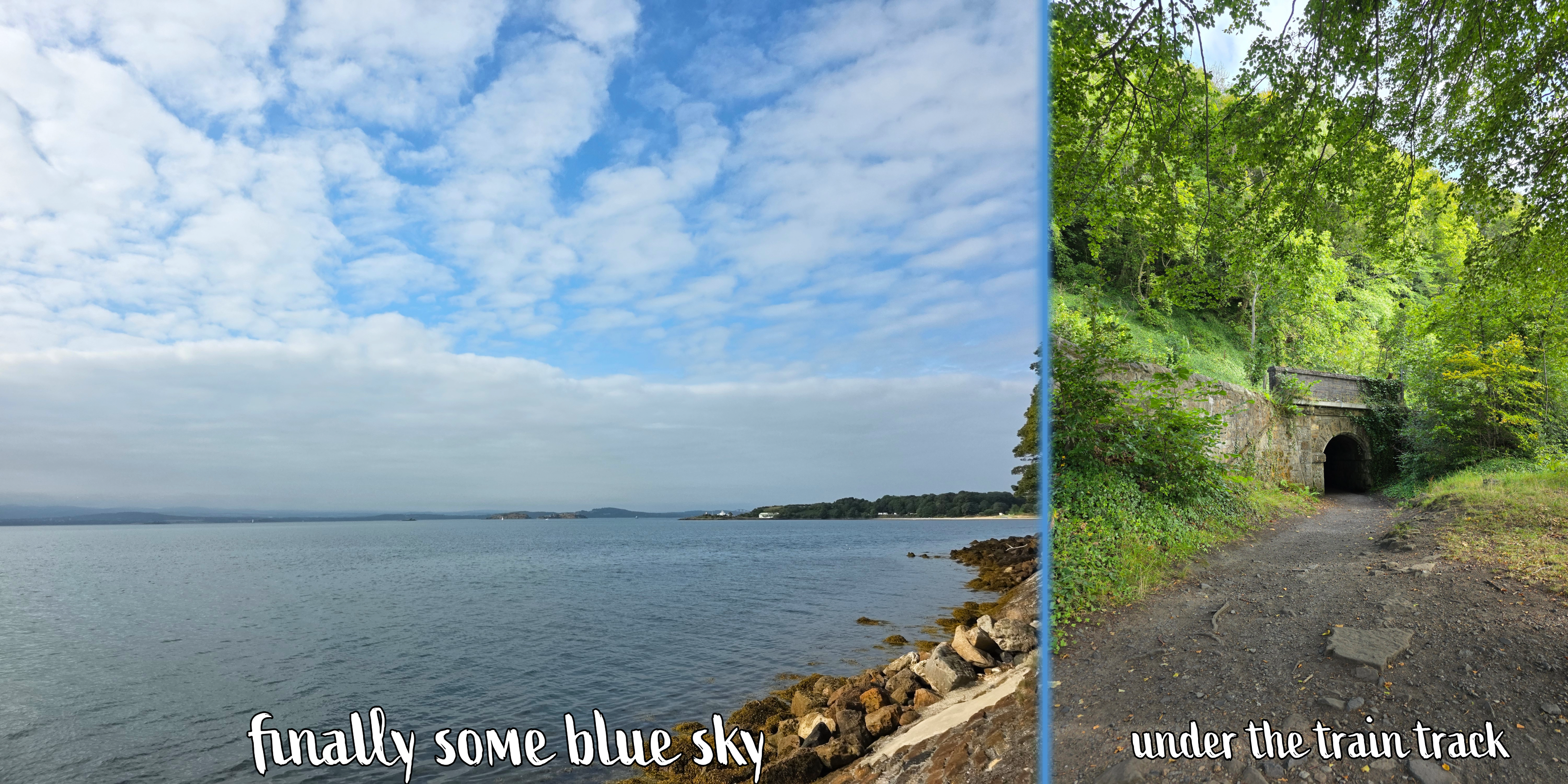
The morning started with some overcast and the hopeful promise of blue sky by the middle of the day.
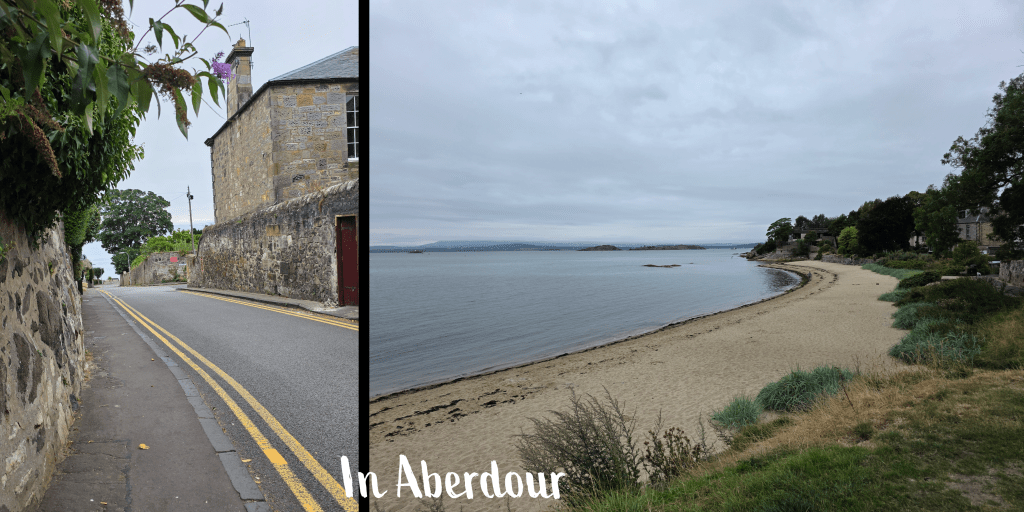
My starting point was Aberdour, famous for its castle which I have visited in the past, but chose not to stop on this occasion due to the clouds. It is definitely on the list for a re-visit soon.
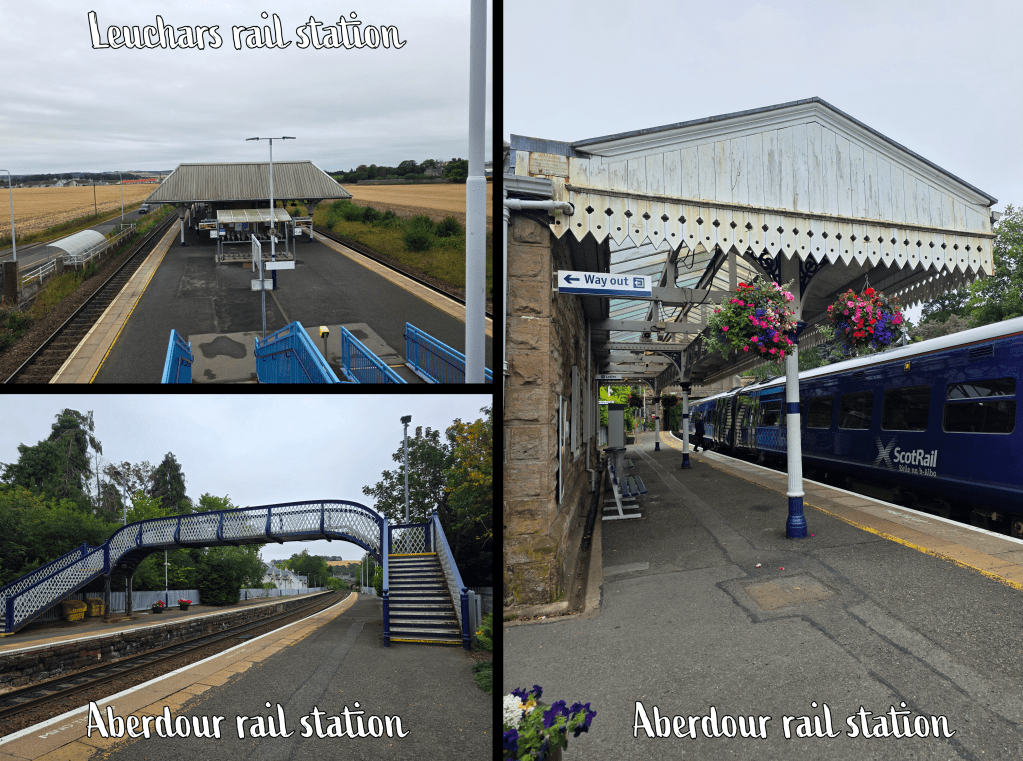
Aberdour is best reached by train, from the north requiring a short stop in Kirkcaldy on the way; I boarded in Leuchars and it was an easy, quiet trip. The station in Aberdour is beautiful – Victorian, with decorative metal scroll work and beds of flowers in and around the building.
From the station I headed through the car park to the main road, where there was a short half block before a turn down Shore Road. I counted the start of my walk from this intersection, where I officially re-joined the path.
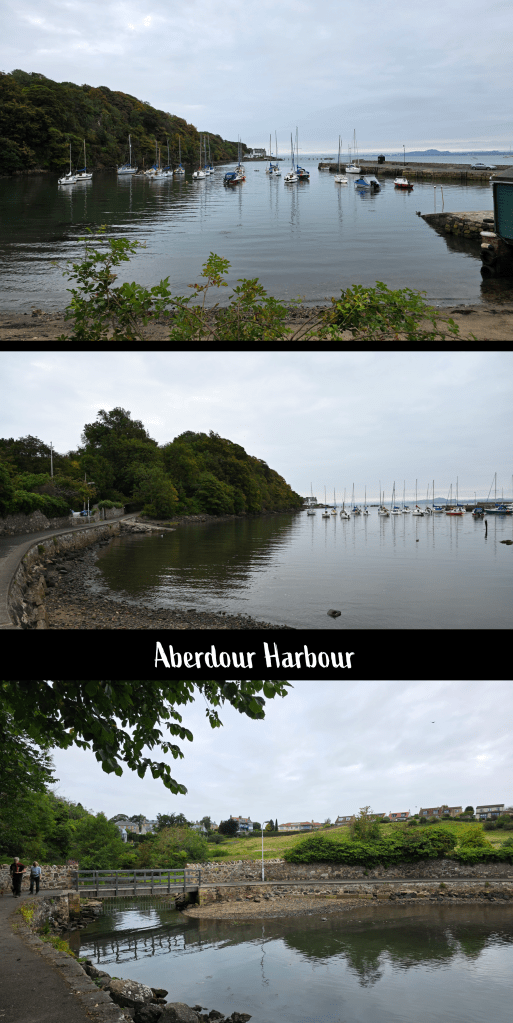
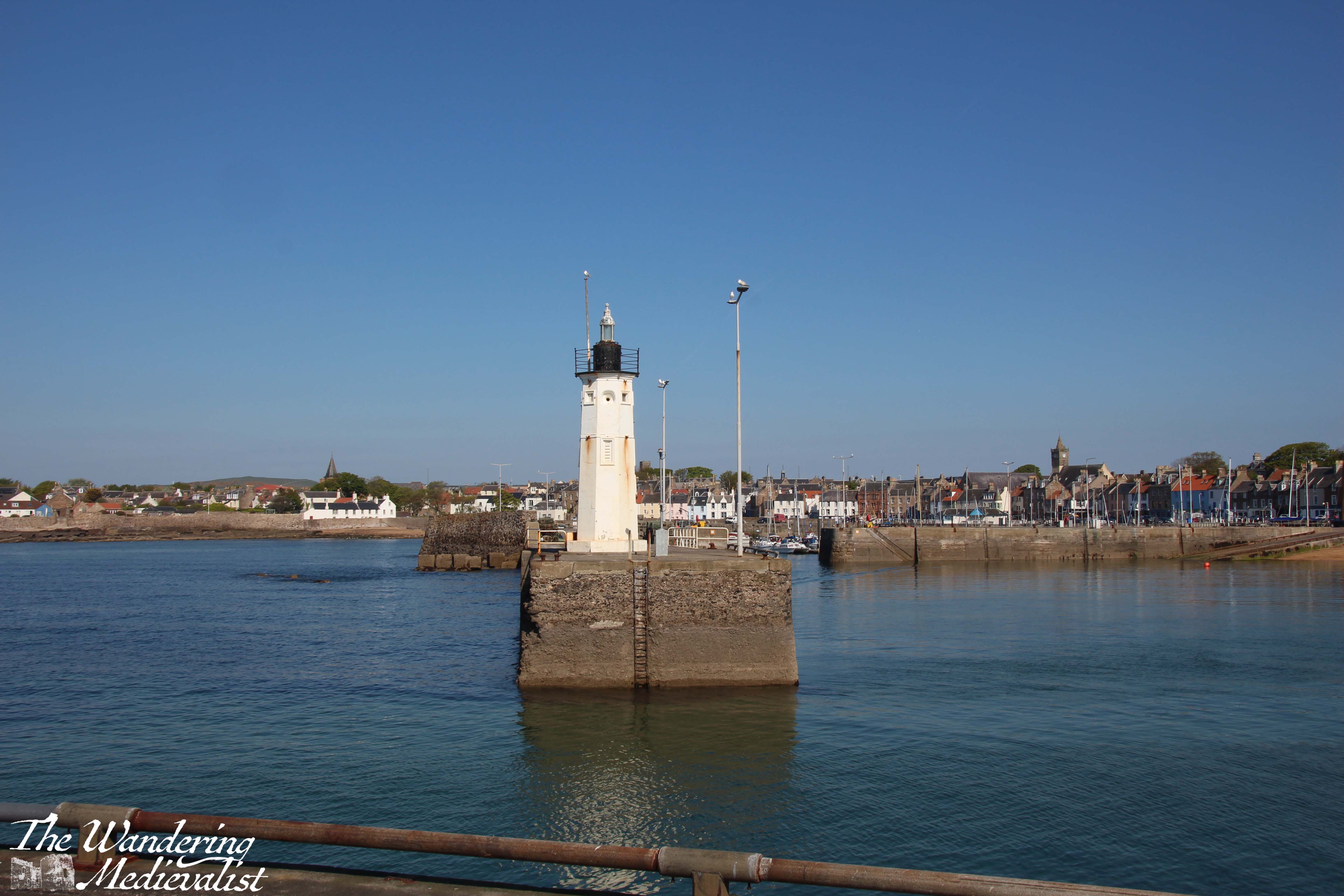
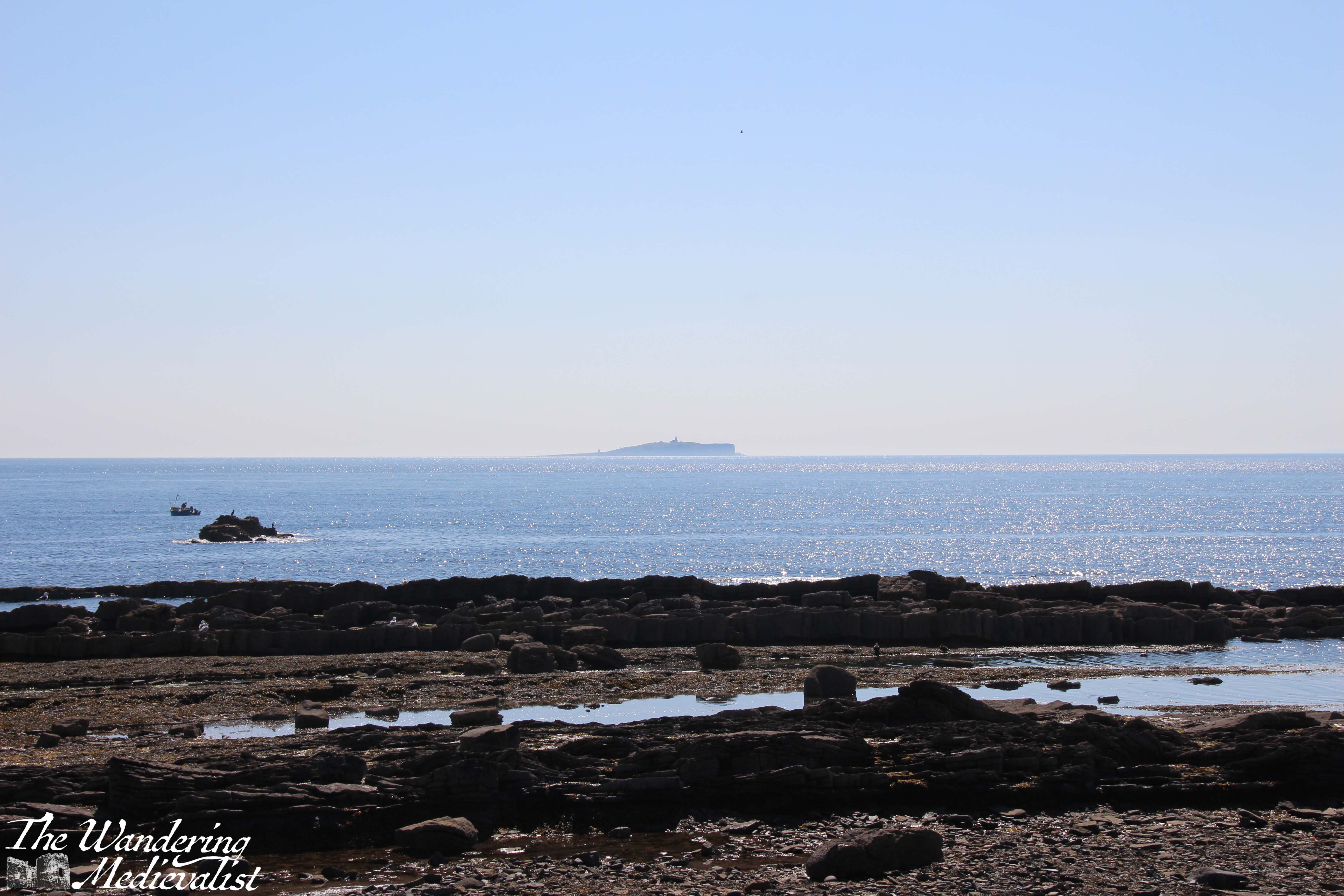
Shore Road runs down towards the water, passing some shops, a park, and large well-appointed houses with rocky gardens. In little time, it is clear you are descending a hill, and at the waterfront where there is a seating area and a beach off the the right. To the left is the harbour, and ahead of you in the Firth of Forth is just visible the outline of Inchcolm Abbey. Once the sun came out, I was able to get a good shot of the island.
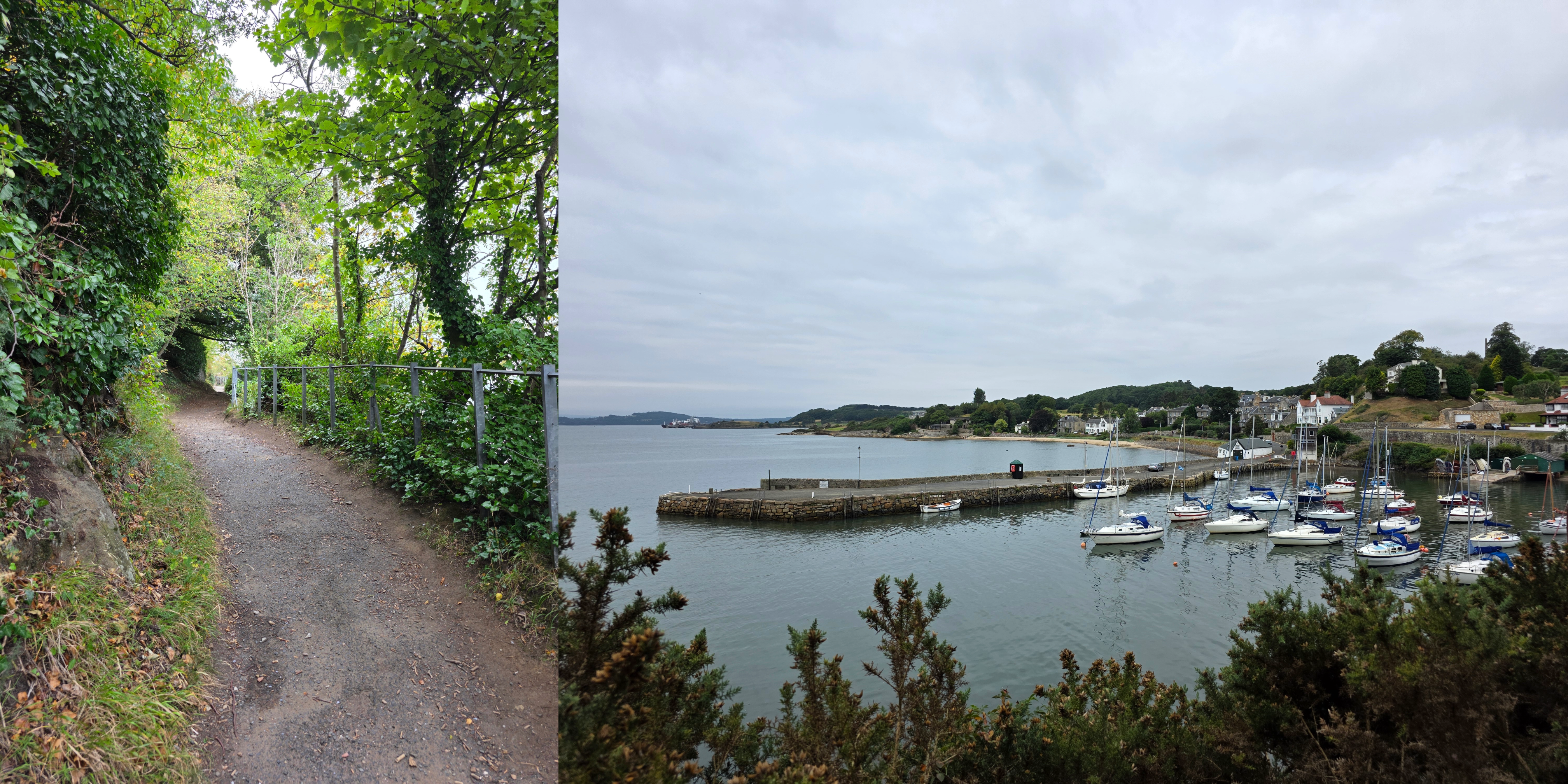
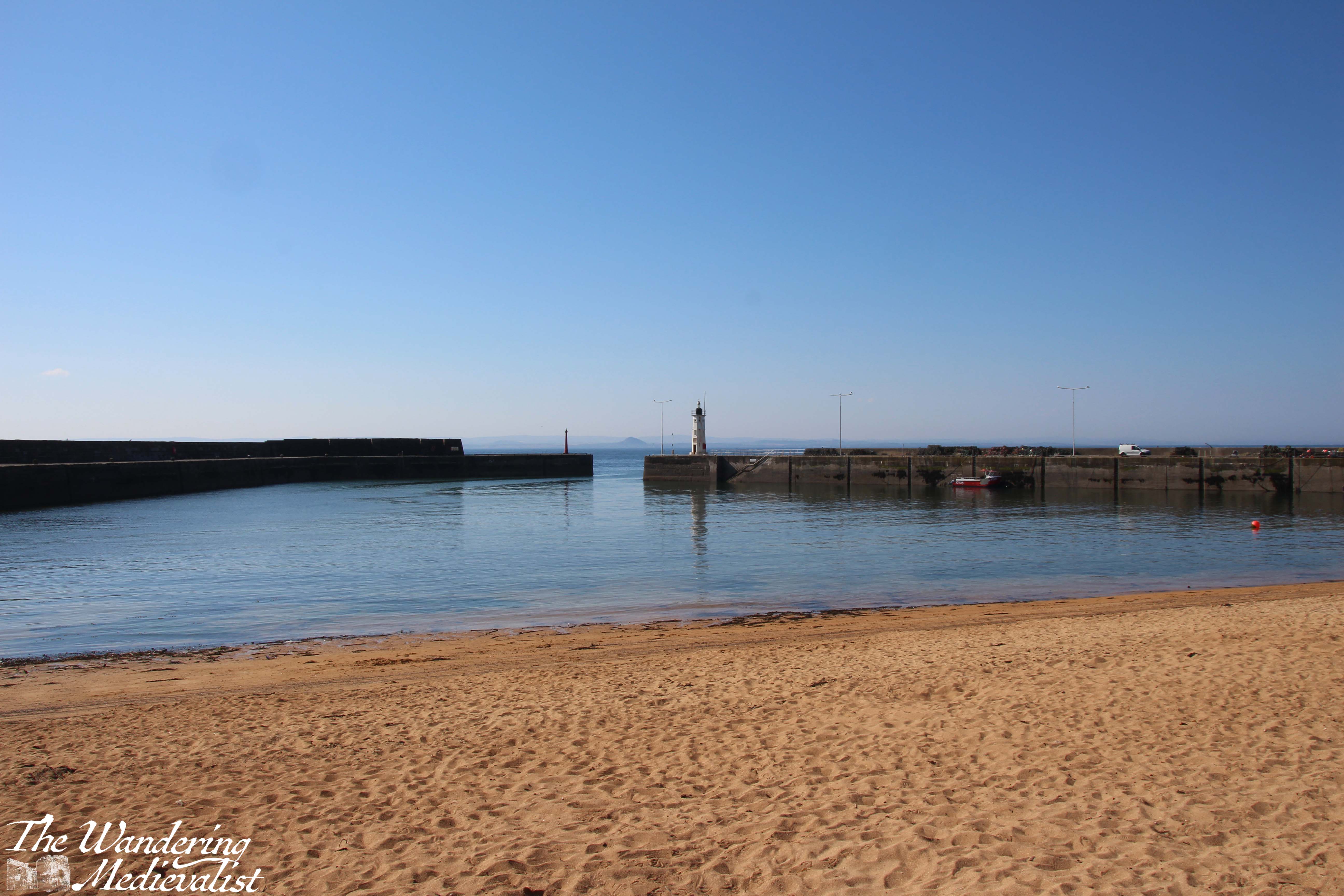
From here, the path leads towards the harbour, and just as the road turns into wharf, there is a sign directing walkers to the left. The harbour is small but with plenty of sailing vessels – less fishing, more pleasure boating here it seems – and sheltered by a headland. As the path loops around the harbour it crosses a burn that has cut through two sloping fields. I knew that at the top of the hill was the castle, but it hidden from view.
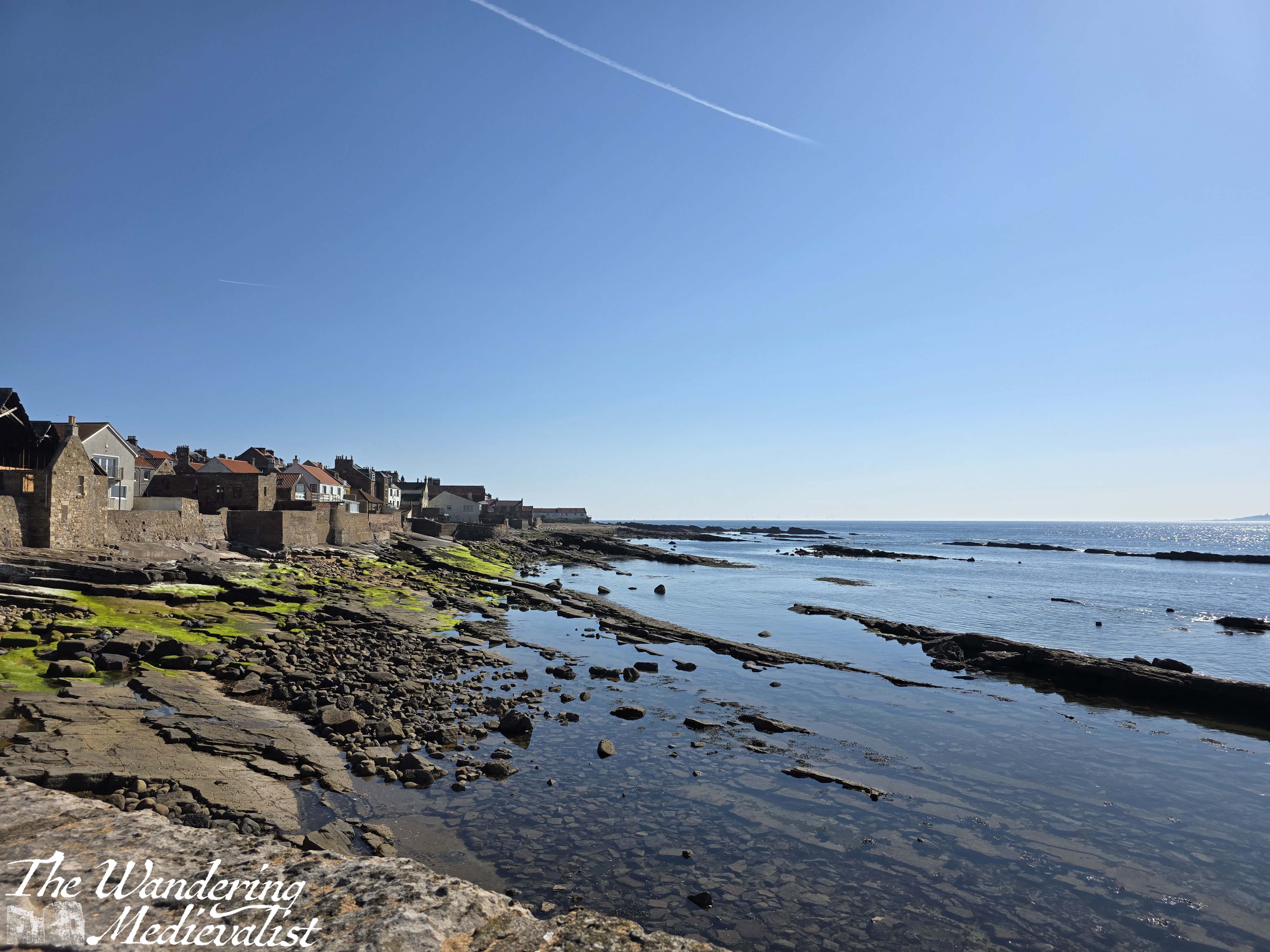
Beyond the harbour, the path climbs a bit as it continues around the coast, with occasional breaks in the trees for views back towards the village or out to Inchcolm.
It was an odd weather day, not sunny but nonetheless quite warm and a bit sticky. My cardigan, needed for the train and early part of my trip, did not last long.
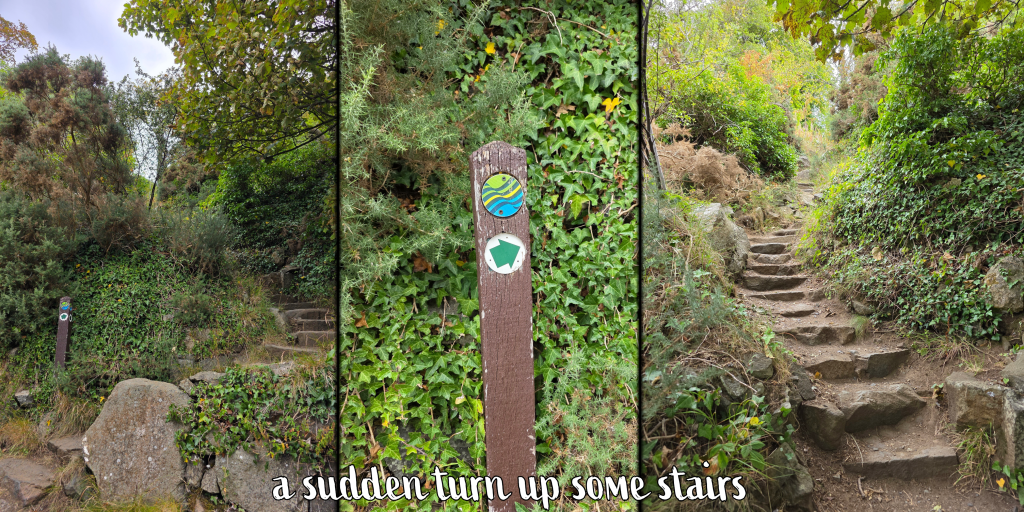
After perhaps five minutes, some houses appear through the trees, but be aware that the Coastal Path does not follow the road here, instead taking a sharp left up some stone steps.
As the trail winds through the trees there are a few small footpaths leading off into the distance, but if you maintain your course relatively straight, you will eventually reach a hilltop meadow.
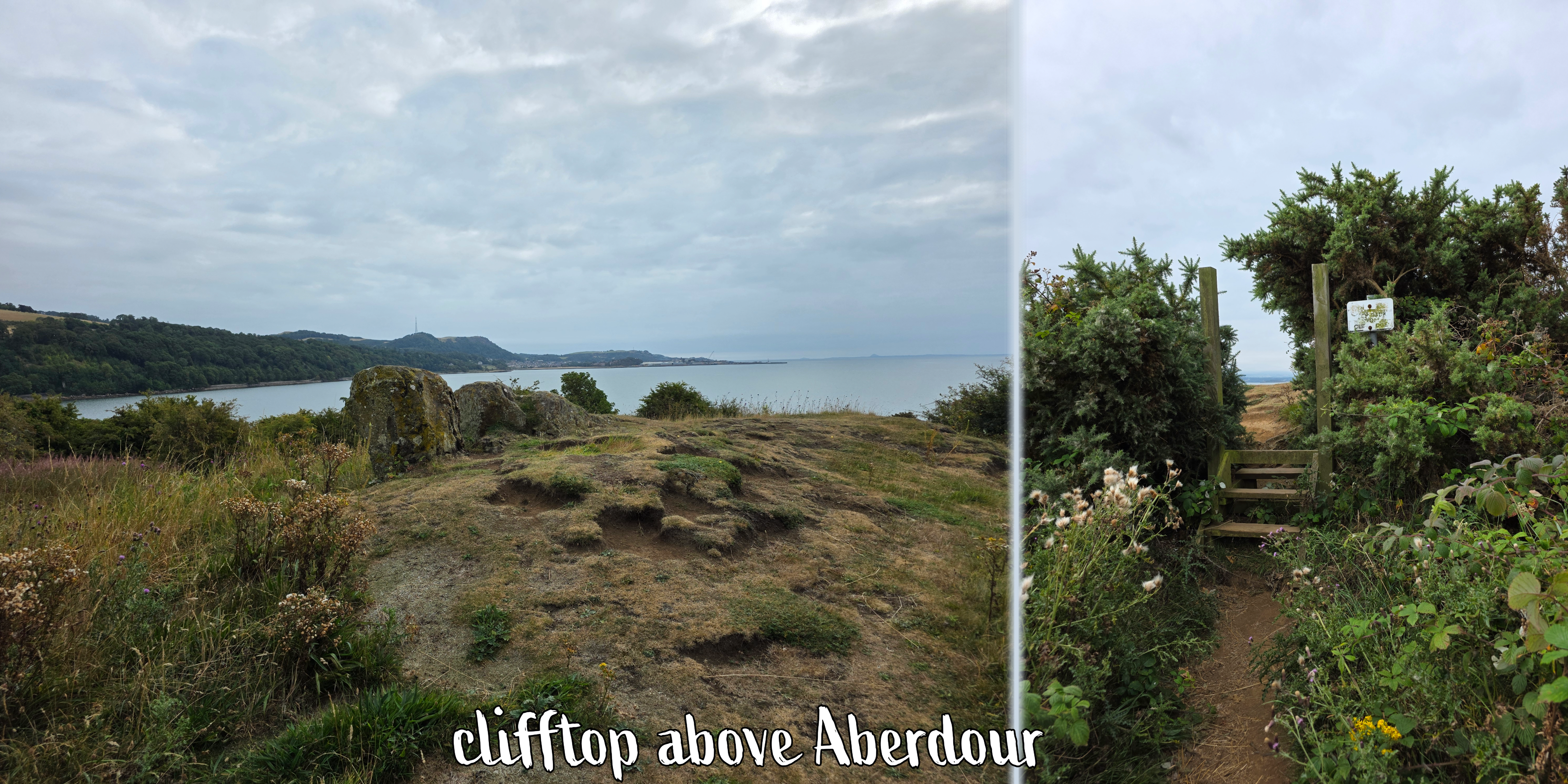
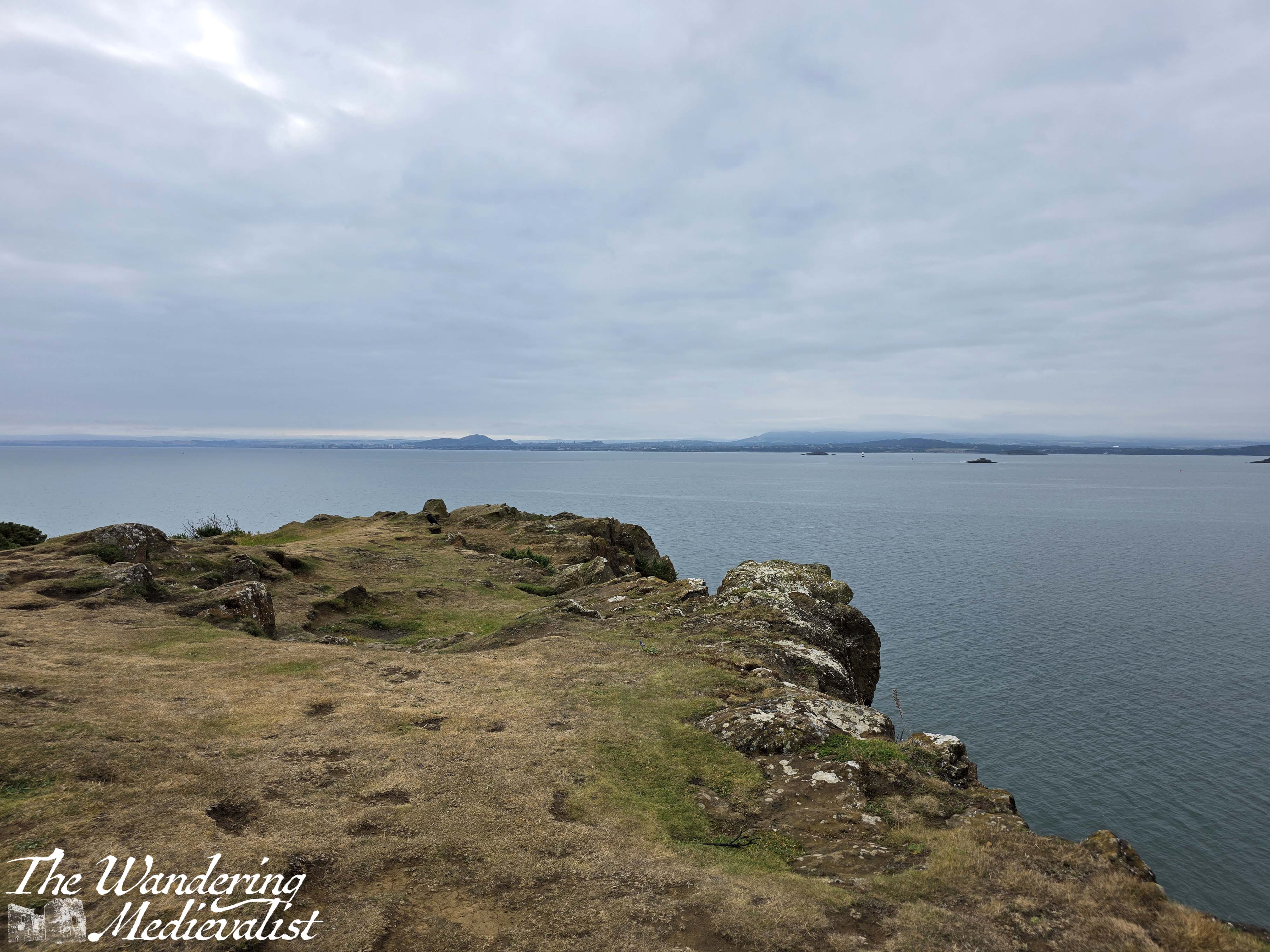
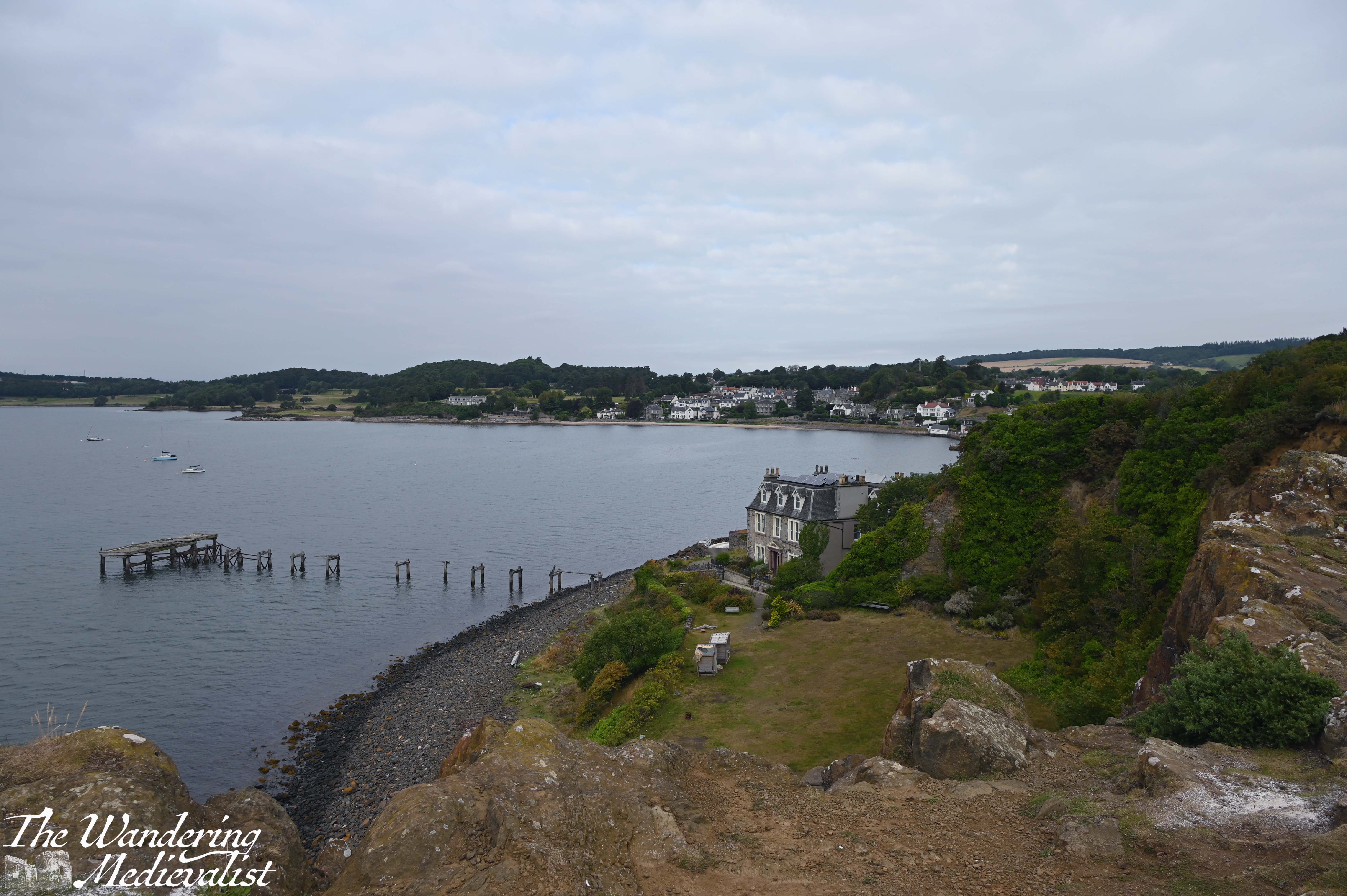
It was just about at my arrival at the hilltop that the sun began to win its battle with the clouds, peeking through a few gaps, though clouds over Edinburgh and south still looked threatening. I was also delighted to discover what seemed to be a set of small standing stones, and a gate that led to the top of the cliffs that overlook Aberdour. The edge is sharp and not fenced at all, so there are plenty of warning signs – it is a dramatic spot looking over the water, along the coast, and to the distant Forth bridges. I learned later that this is Hawkcraig Point, once home to a Royal Naval Submarine research base, though there is very little remaining except for a lighthouse.
Once I had taken my fill of the view, I headed down the hill towards the narrow road which must have been constructed to reach the point. At the time it was being used by some very keen fishermen.
The road passes through a large parking area designated for caravans (unlike many car parks), which was incredibly busy. More than a few dogs were sitting outside in front of their temporary homes, watching me closely as I passed, and occasionally looking up at the regular outgoing planes from Edinburgh airport – clearly we were on the flight path that day.
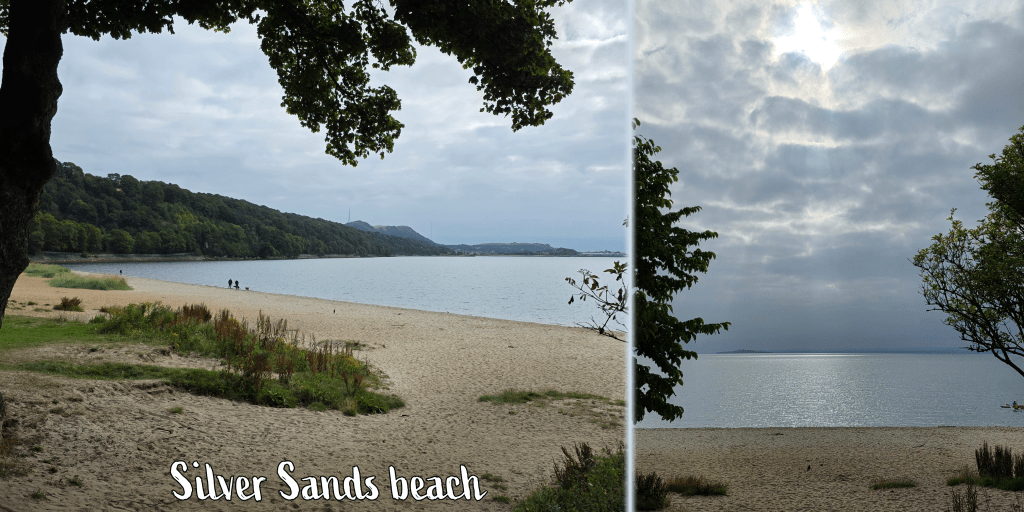
Soon I reached Silver Sands beach, which was already growing busy. Like many beach areas in Fife, it is well-kept with a good car park, some playground equipment, and a cafe that had not quite opened yet, much to my disappointment. I could have done with another coffee.
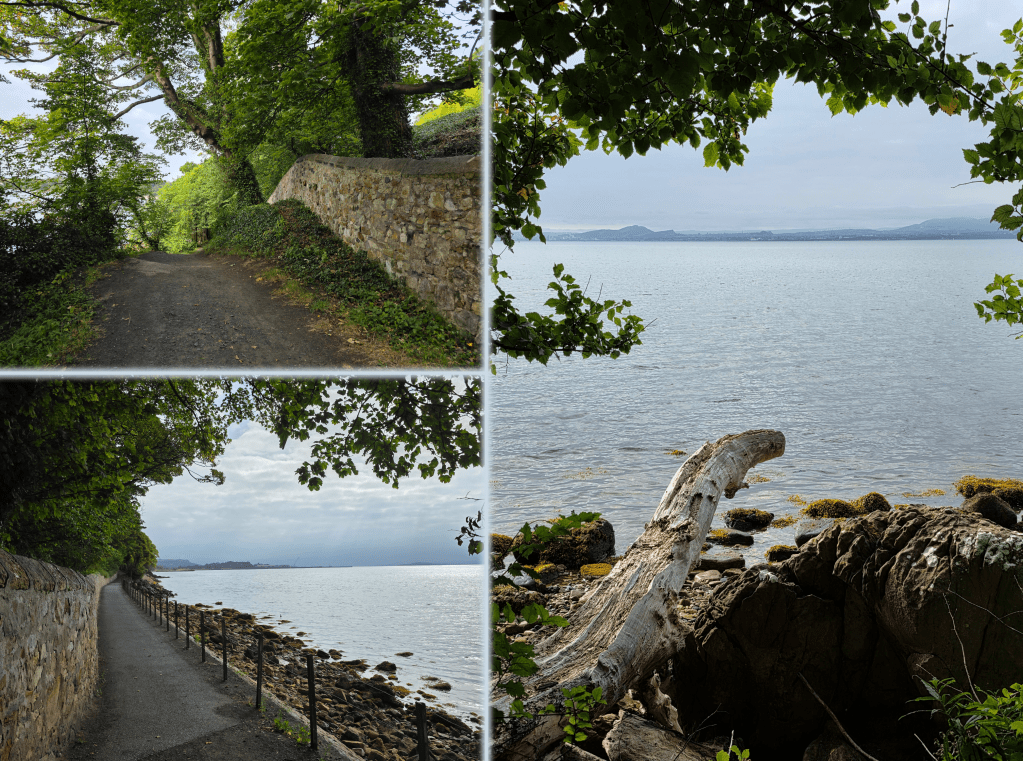
At the far end of the beach, the path disappears into the woodland with a well-kept trail that is either paved or packed dirt and close to the edge of the water. Below you is a rocky shoreline with sea birds, and I paused for a short while to watch a pair of cormorants (or that’s what they looked like anyway) doing some breakfast fishing.
Inchcolm Abbey in the Firth of Forth
In a short time, the left-hand side of the trail becomes a long stone wall, an old estate wall, which follows the path as it rises and falls over some gentle hills. This was a popular stretch with runners, as it was mostly paved, and required a bit less attention to your feet.
About half-way between Aberdour and Burntisland, the route passes under the rail line through a stone tunnel. This is a busy stretch of track with quite regular traffic, and it is a section I have always loved when on the train as the views across the Forth are superb.
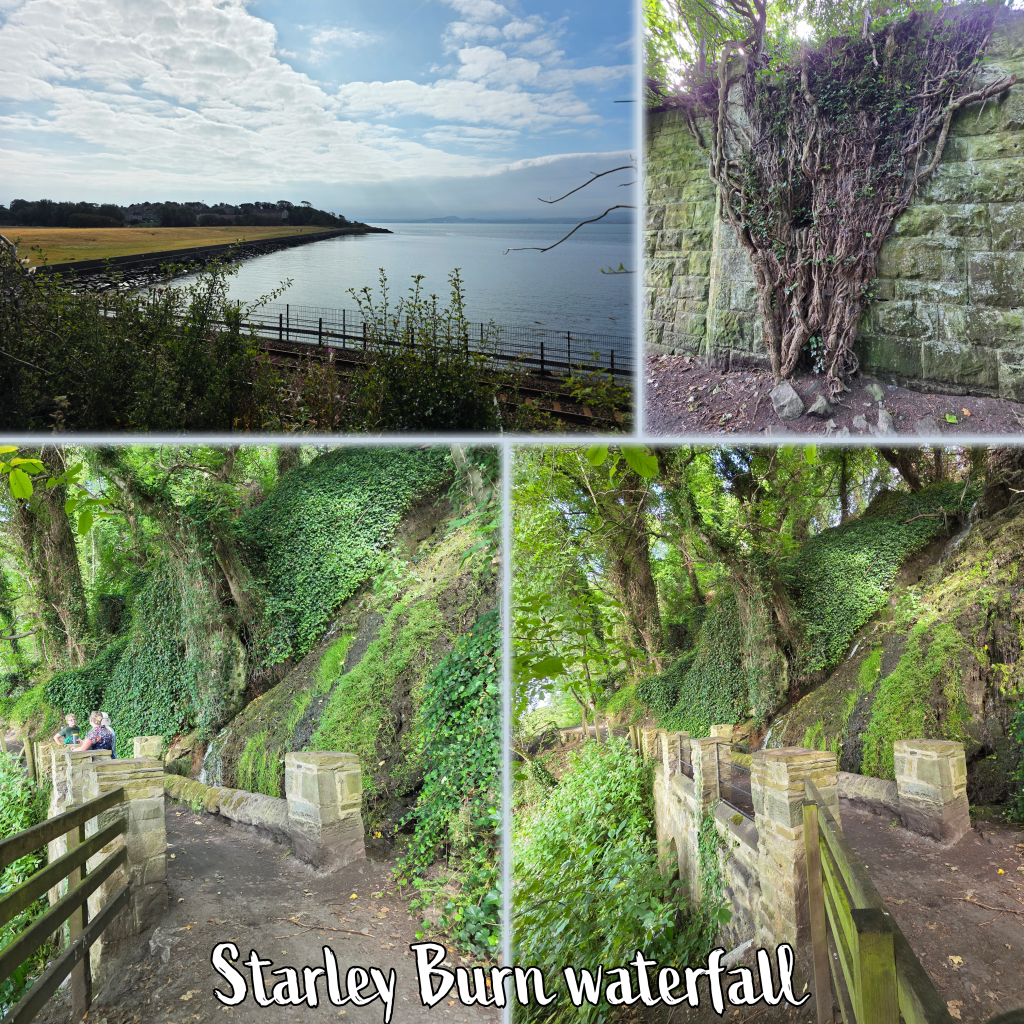
Just outside of the edge of Burntisland, the path crosses Starley Burn over a lovely pedestrian bridge. There is a waterfall above which falls about 12 – 15 feet, and the lime-rich water causes a thick coating on the rocks. It’s a nice peaceful spot in a glen, good for a short break should you need one.
Soon after crossing the burn, the path jogs left inland a bit, and narrows between the train on one side, and a stone wall on the other, with fields up to the left. By this time the day had warmed up nicely, with no wind and only a breath of breeze, so the section here was quite warm, away from the water.
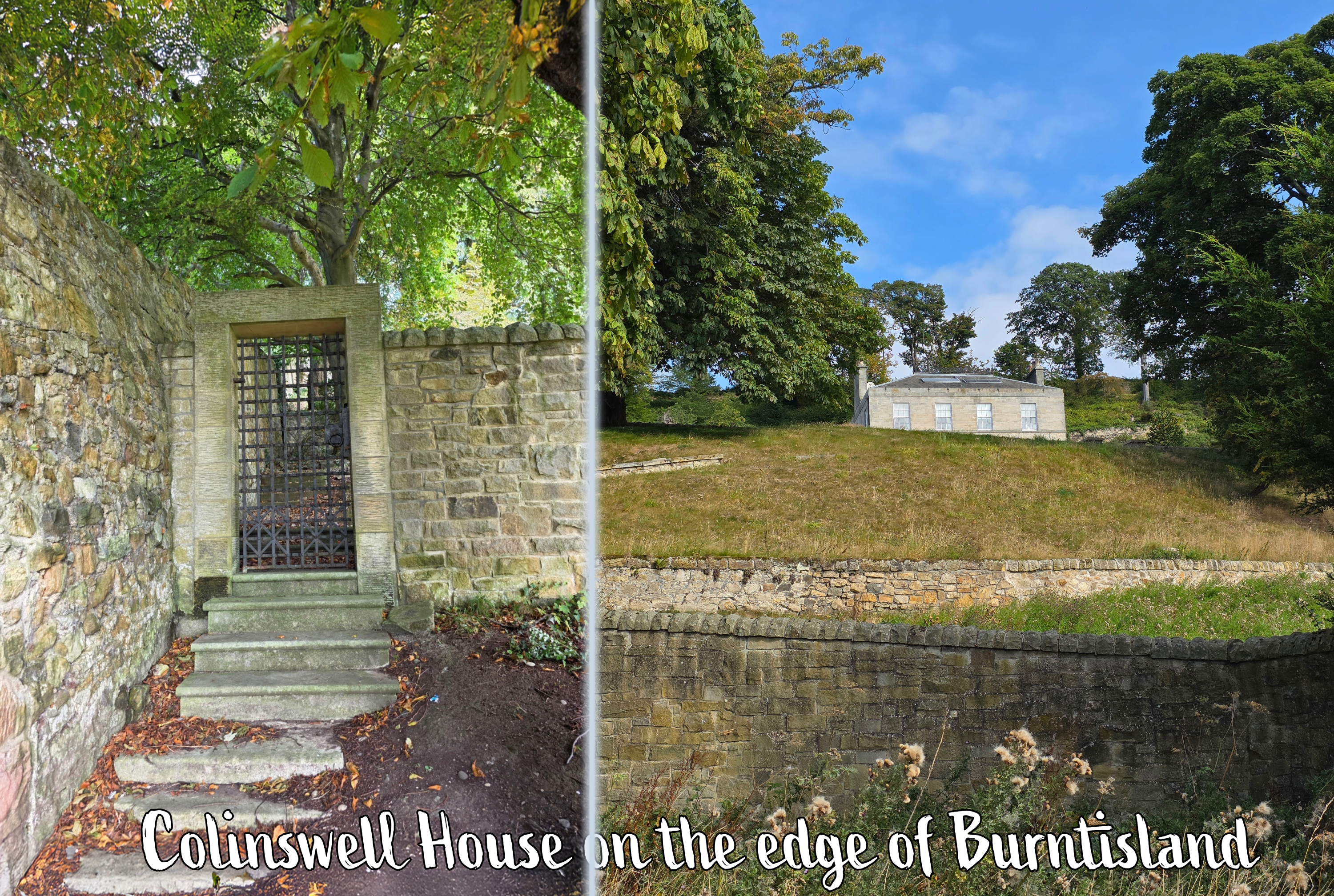
Approaching the edge of Burntisland, the route passes a lovely old estate which reminded me of something out of a Jane Austen movie, including a metal gate in the estate wall – Colinswell House, I learned upon searching. Shortly beyond is Burntisland proper, and the path leads along the edge of a very nice neighbourhood of relatively new homes.
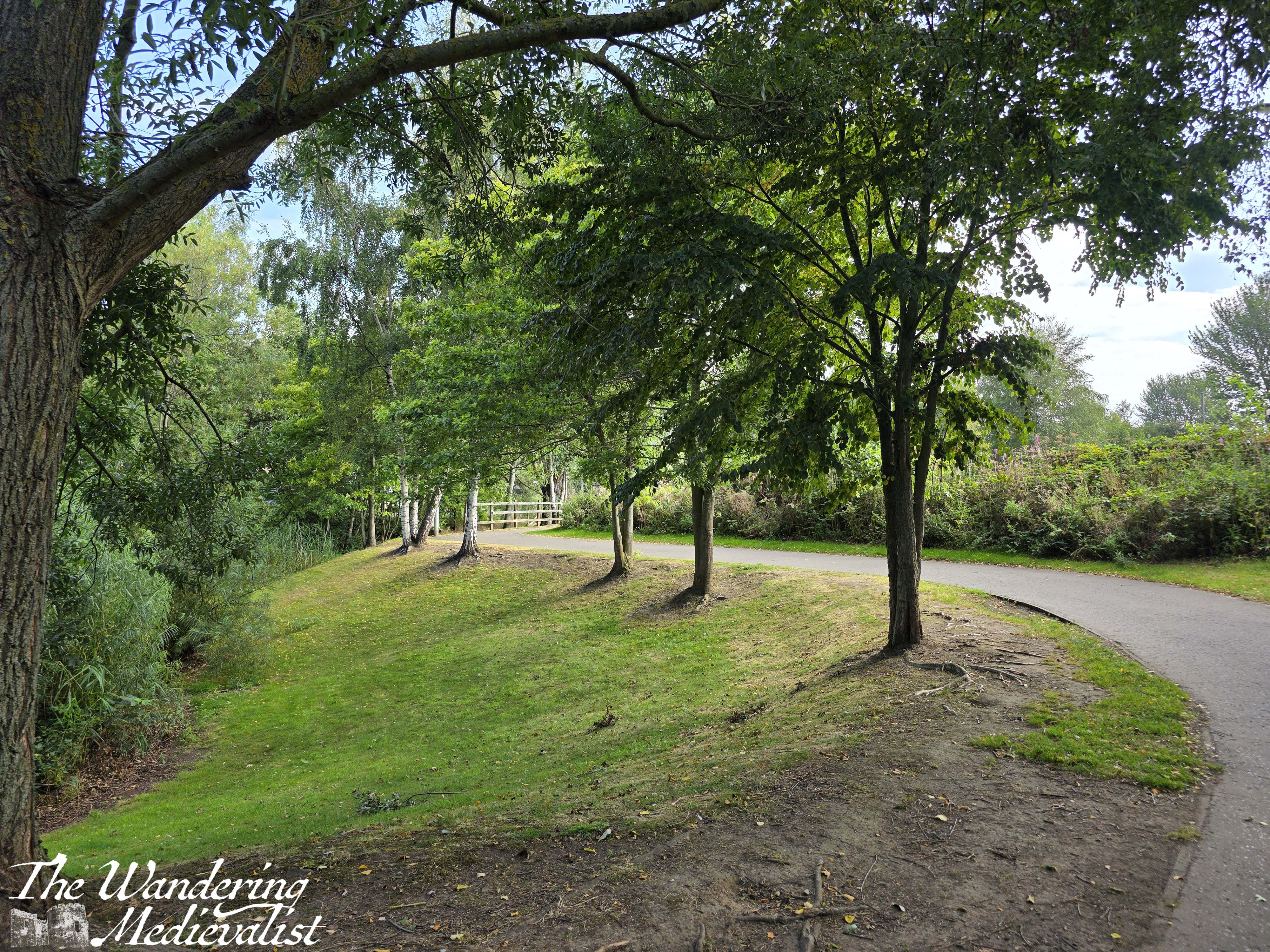
There is an option to pass under the track but don’t be tempted, as the route continues straight before beginning to wind through a nice park. It was well-kept with cut grass, oak and silver birch trees, and a small burn down below between the park and the residential area.
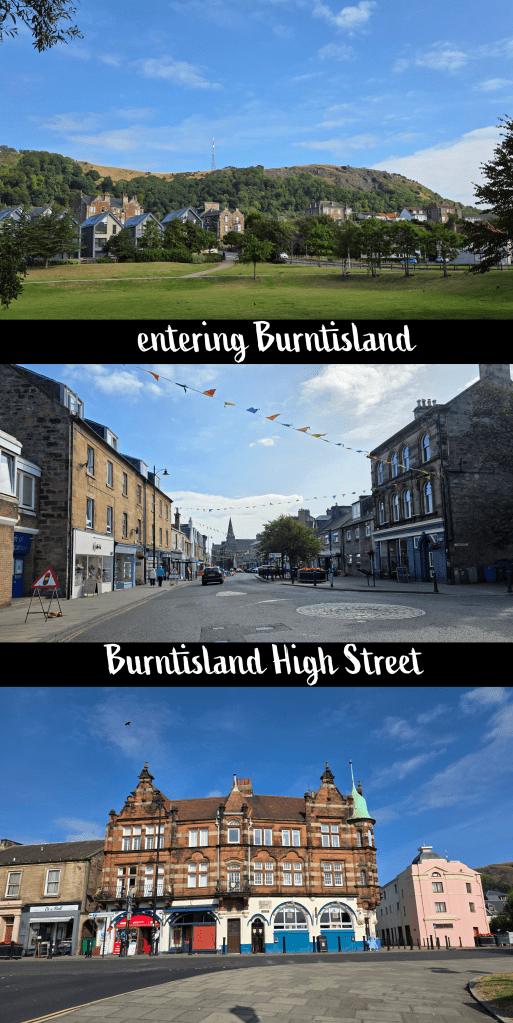
About a half-mile beyond the edge of the town, the route passes into an open park with a view of houses and the hill behind. At the edge of the park turn right up the hill on Kirkton Road. Descending the other side takes you past a few apartment blocks, though these disappear quickly when at the bottom you turn left on to the High Street (not East Broomfield Road, which you reach first). Follow the High Street, which is lined with shops and pubs, quite pleasantly not too many chains but instead local places that seemed quite popular – particularly the butcher and the bakery.
Just before the High Street runs into the Links there is a Co-op food store, a great place to grab a drink or snack if you need it. Across the road at the edge of the Links is also a public toilet – not the fanciest toilet in the world, but it was the first one I had passed that was open. Beyond, I could see the large trucks and brightly-coloured tents and rides of the Burntisland Fair, which takes place over the summer. I caught a few glimpses as I followed the edge of the grass up Links Place and then turned left along Lammerlaws Rd. There is an odd mix here of quite old pubs and buildings that show the age of the town, and much newer additions as well as the bright colours of the fair.
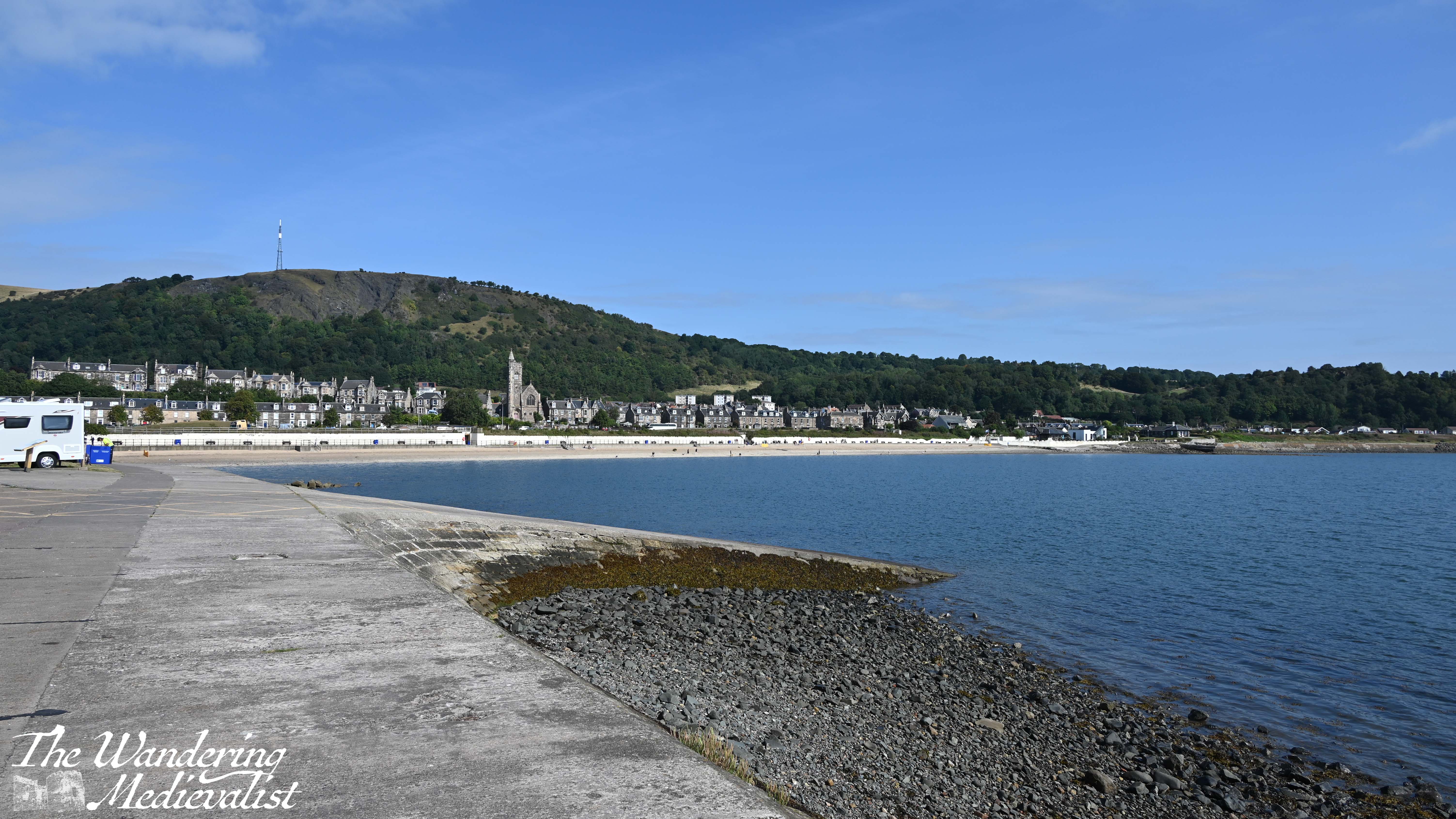
Lammerlaws Road becomes a bridge over the train track, and some walkers taller than I may be able to see over the wall – I tried with my phone but had no luck. Continue straight until you reach the water’s edge, where you can see the busy beach and promenade to the left.
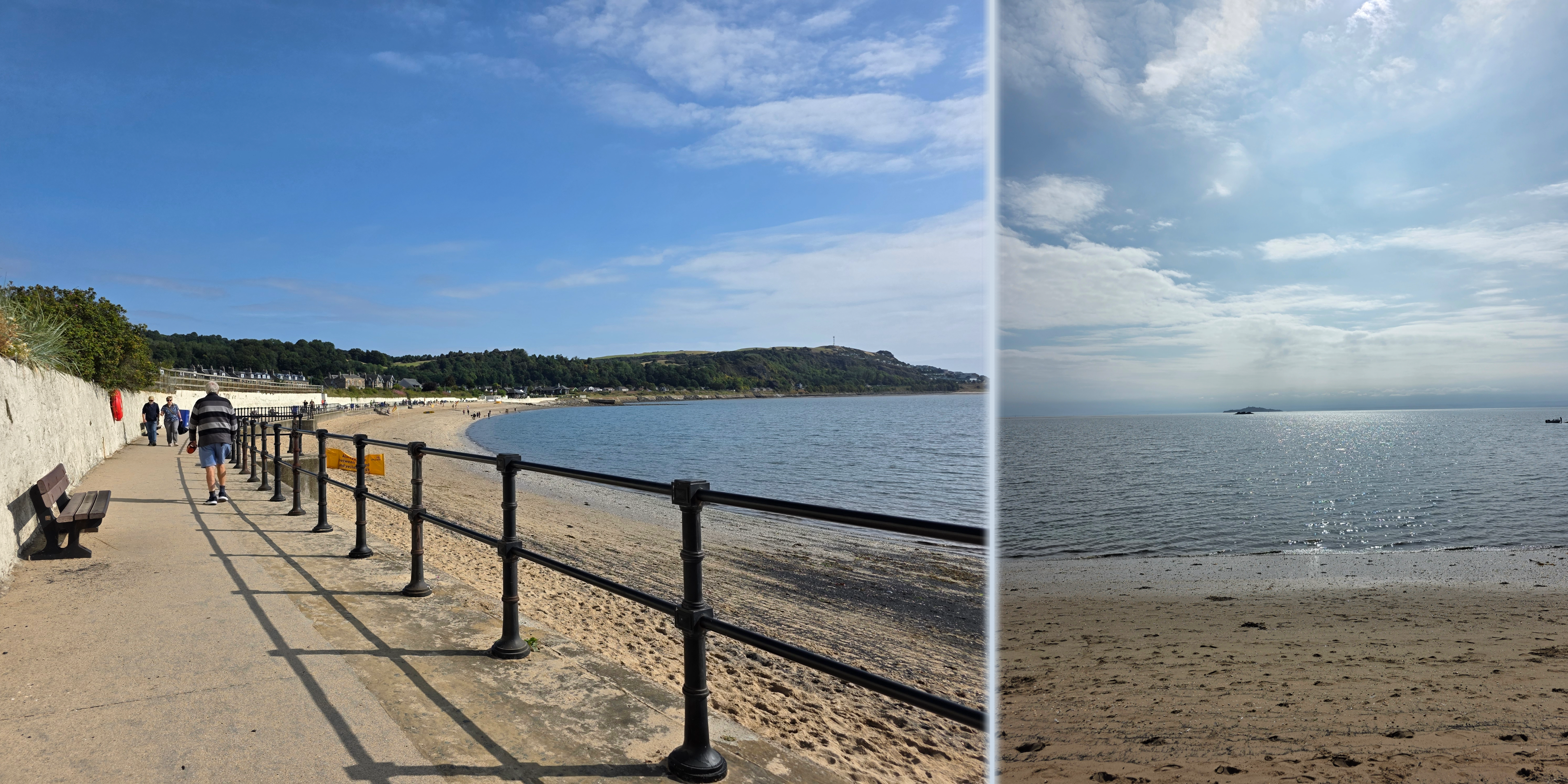
Burntisland promenade is narrower but no less busy than some others, with plenty of families and dog-walkers enjoying the sunny day on what was one of the last weekends before school. The beach was popular and there were life guards on duty, with large flags indicating where it was safe to swim. Just beyond their hut, the Coastal Path splits into two options: the high tide and low tide routes. It was about mid-tide, but upon looking at the low tide option, I decided I was not feeling up to proper long-term rock scrambling. So, I followed the road to the left, through another tunnel, and turned right along the A921.
This was a pleasant stretch of road lined with bungalows and cottages with well-kept gardens, and eventually runs past the town cemetery. Opposite the far end of the cemetery wall, there is another tunnel under the rails, and I chose this as my moment to re-join the beach. It was a steep slope down to the rocks, but beyond was lovely and sandy, with a relatively straightforward route that is solid and easy to walk on.
the low tide route
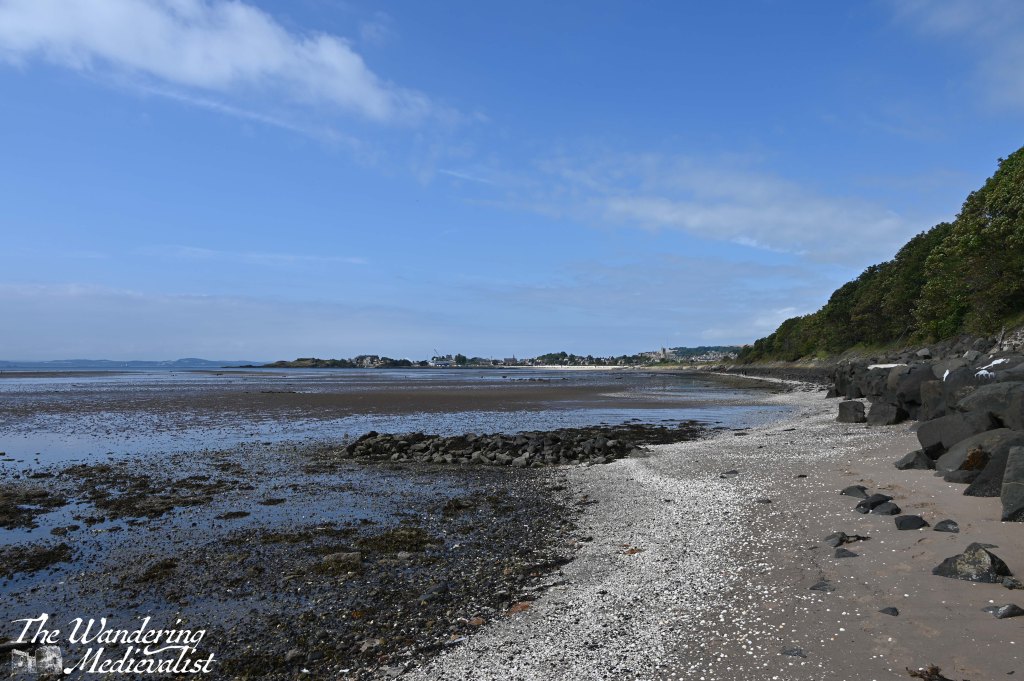
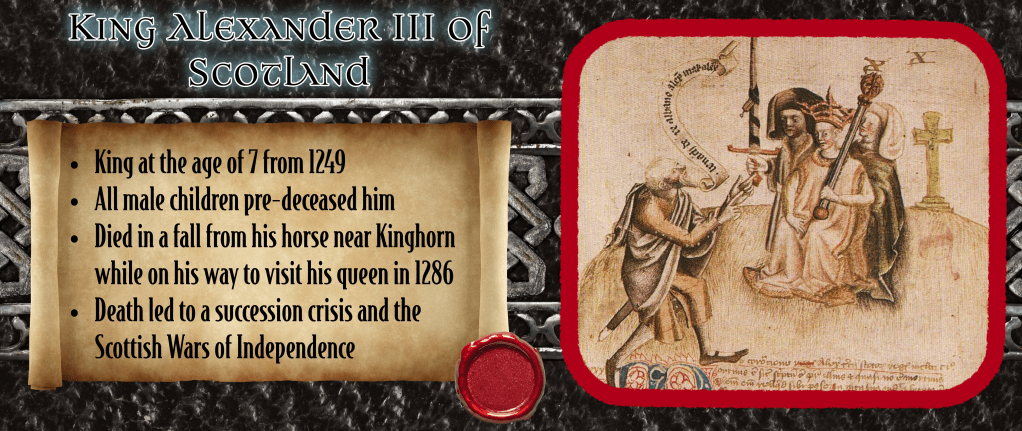
If I had stayed on the road a tad longer I would have passed the Alexander III memorial which would have been nice to see, but I did not realize it would be inaccessible from the beach.
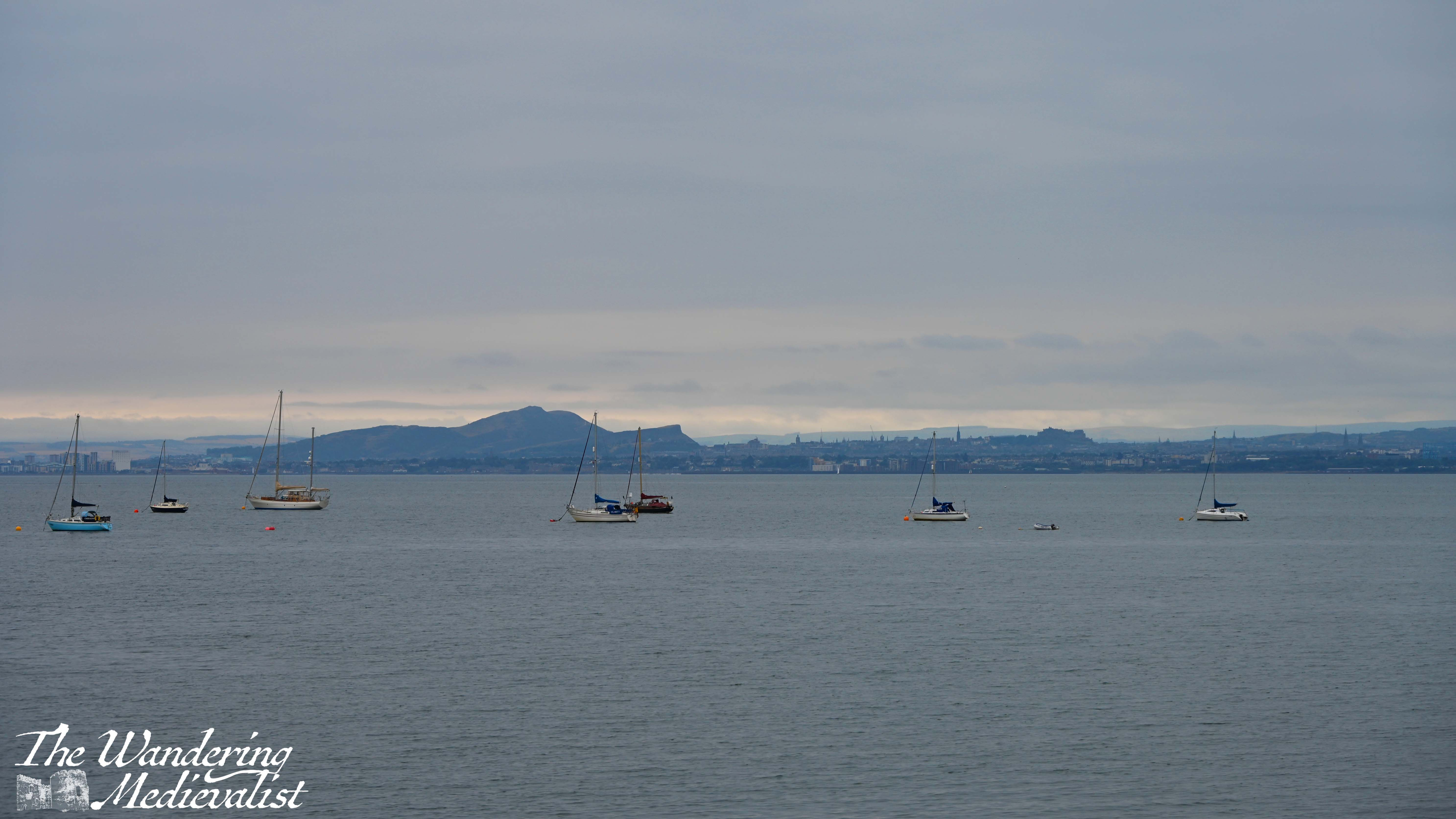
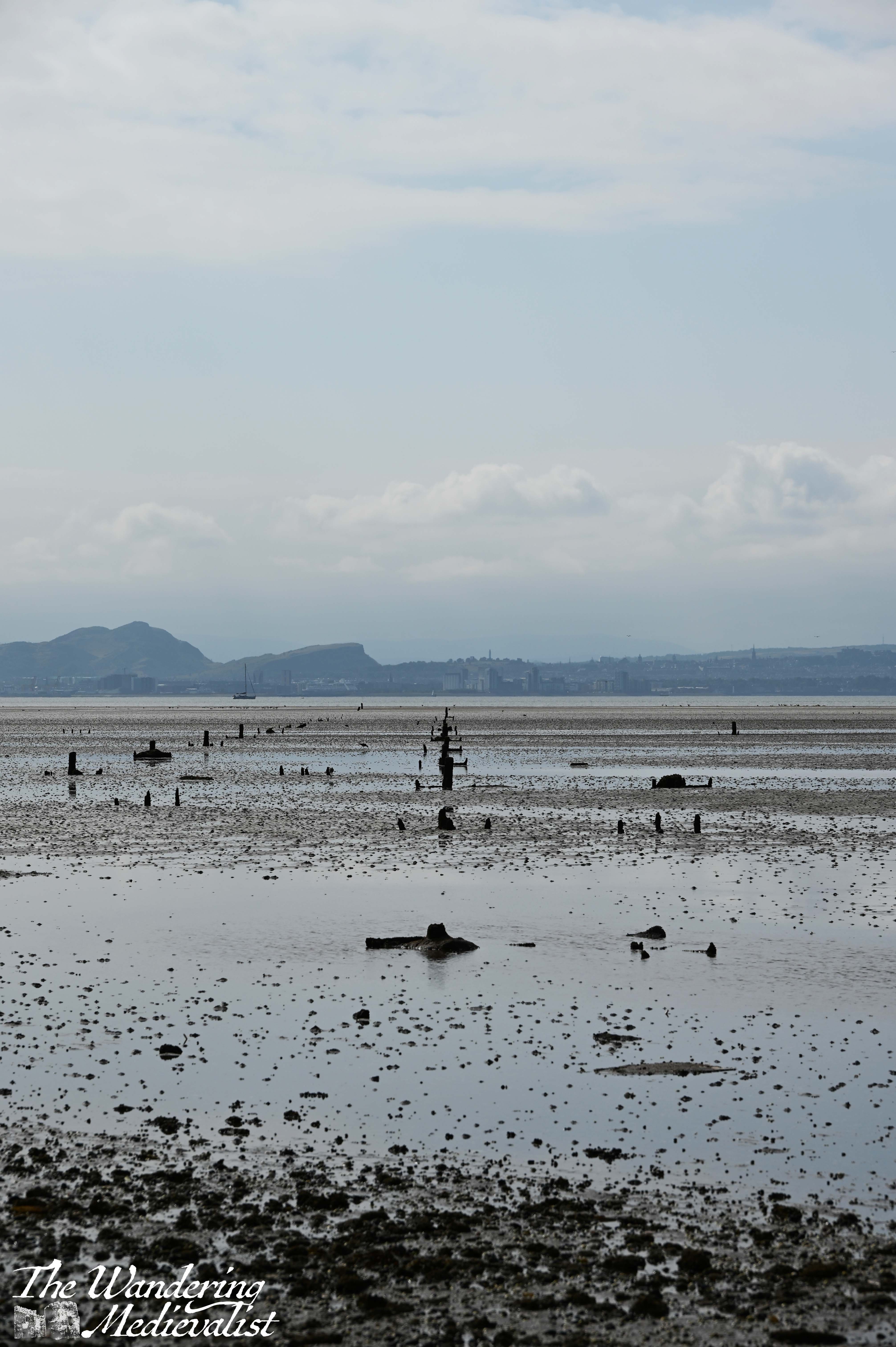
The beach here is incredibly wide at low tide, with flats stretching far out into the Firth that I can only imagine are muddy and a touch treacherous. On a clearer day, the views across to Edinburgh and Leith would be excellent, and even on a hazy day they were impressive.
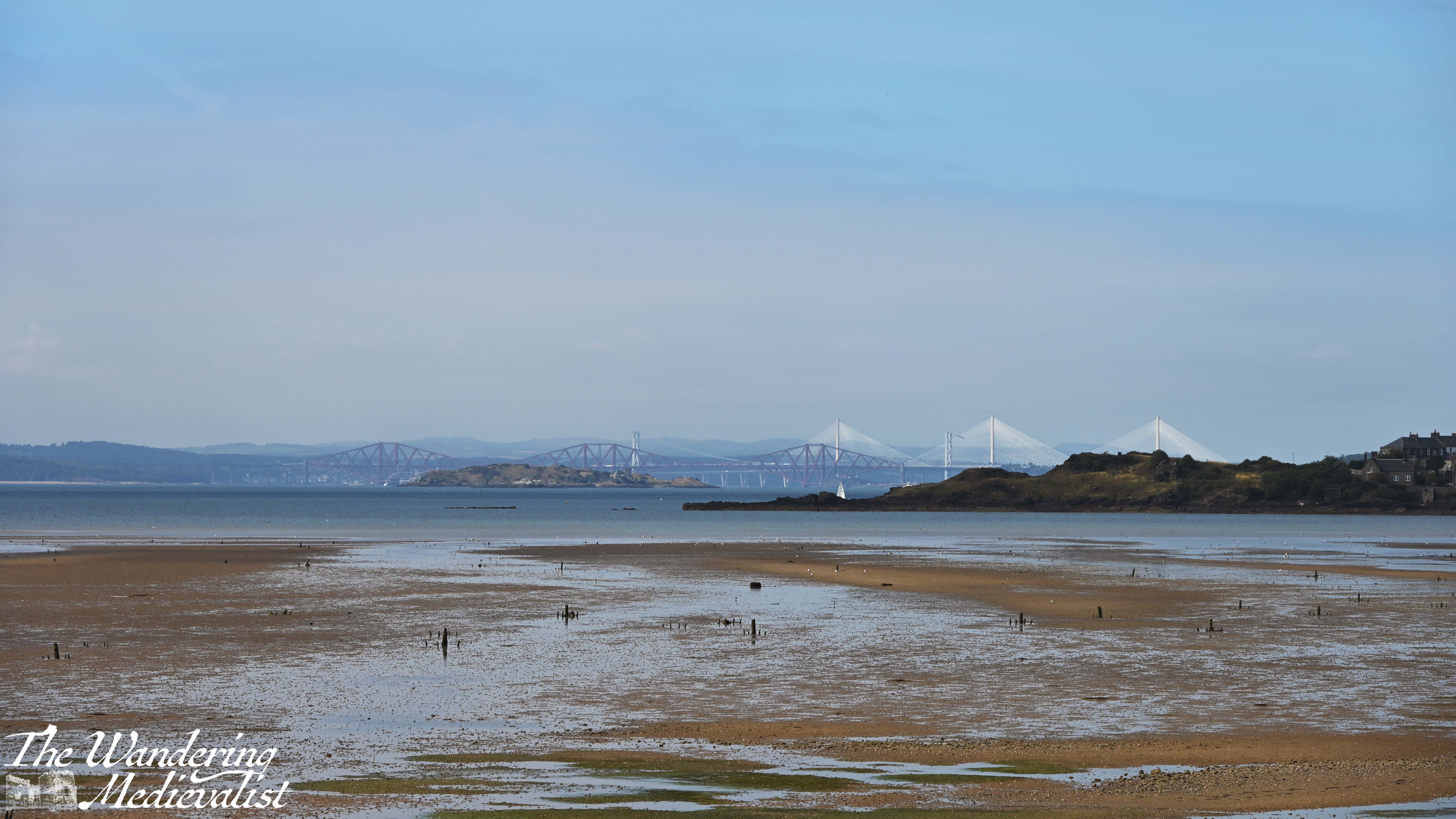
Another half mile or so beyond where I re-joined the beach, the dunes bulge out towards the beach, and the option is either to follow the sand or cut up to the grass. I opted for this, following the at times quite faint path through long grass, ferns, and various other flora. I’m not sure this was the most sensible option, but being slightly higher than the beach allowed some views back towards the three bridges – just peeking out over the headland – and a better feel for what you usually see from the train.
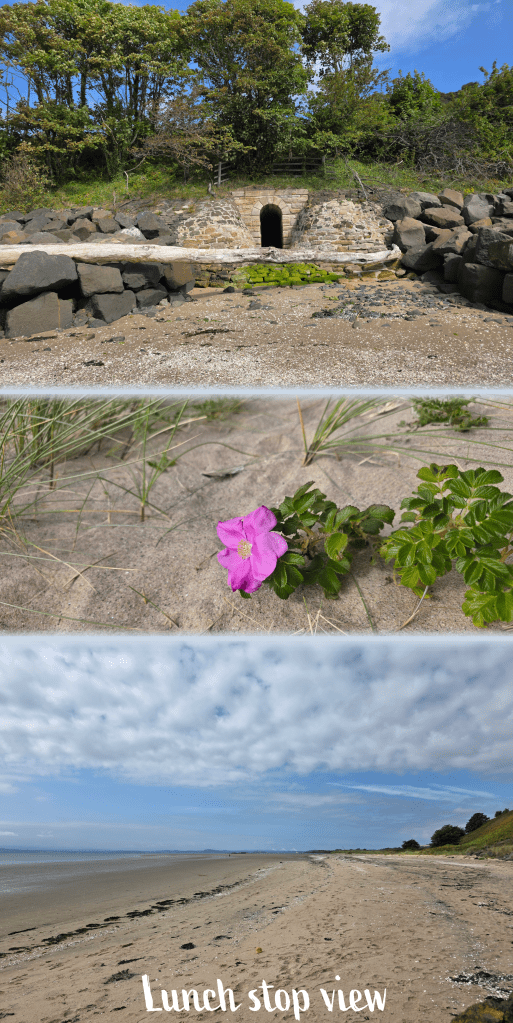
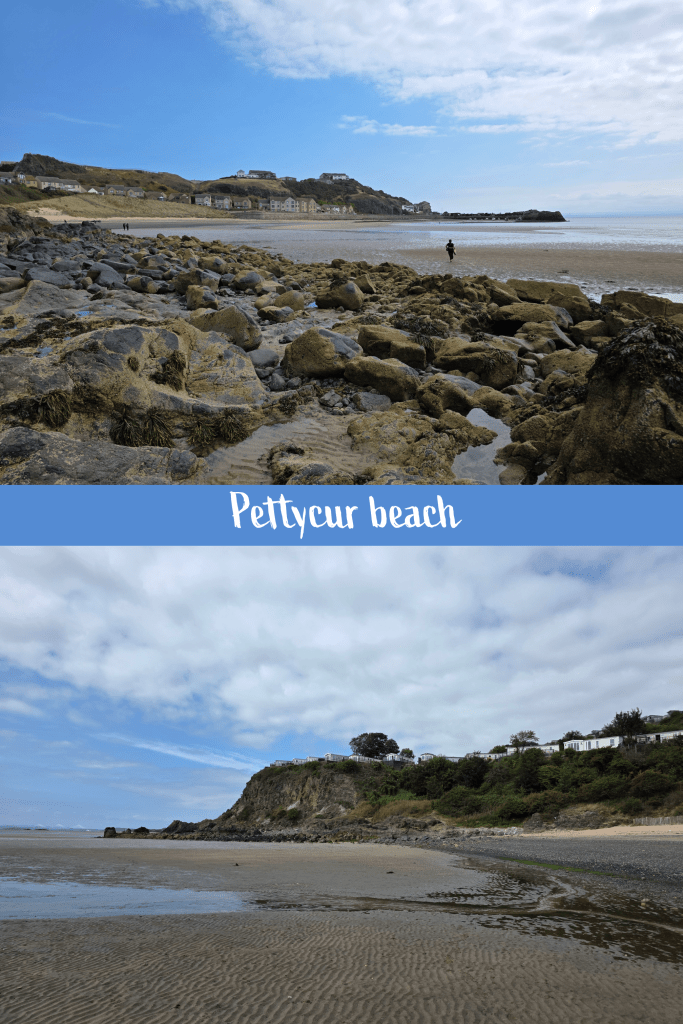
There was some near-bivouacking for a while, but eventually the trail re-joined the beach, with the road high above. As I approached Pettycur I could see a caravan park on the hill, and a steep flight of stairs leading up from the beach. This definitely was not what I wanted to see after a solid 5 miles or more of walking, and so I found a perfect rock ledge on which to take a proper break and enjoy my packed lunch. Which was, incidentally, inclusive of the all-American favourite, peanut butter and jelly (raspberry jelly, which in my opinion is the best).
God’s food, I will hear no objections.
It was salty, a touch sweet, and absolutely perfect.
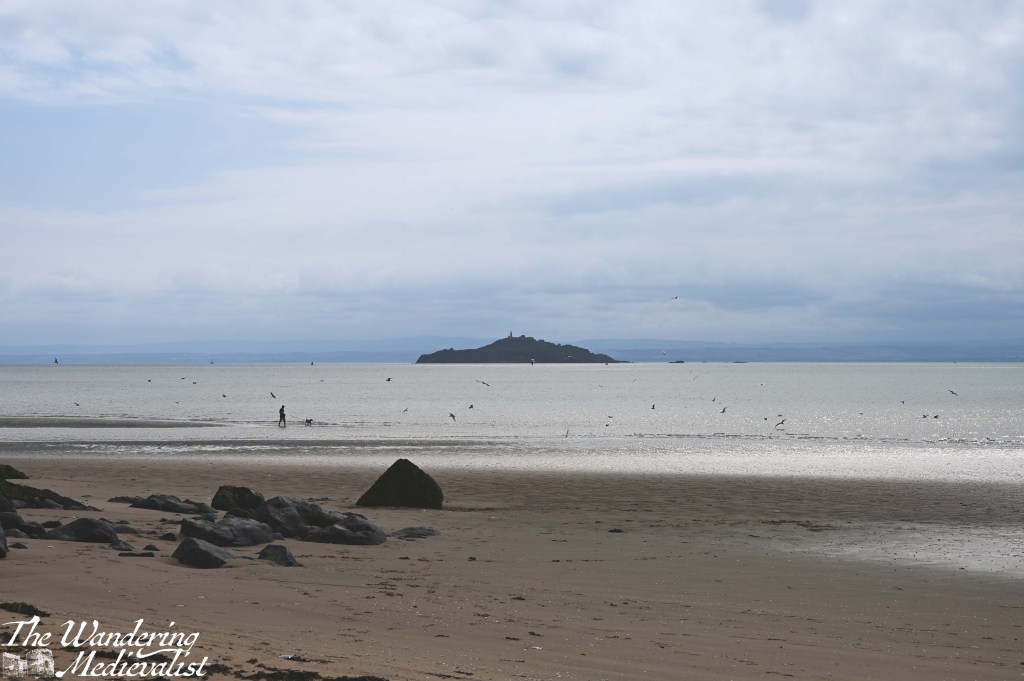
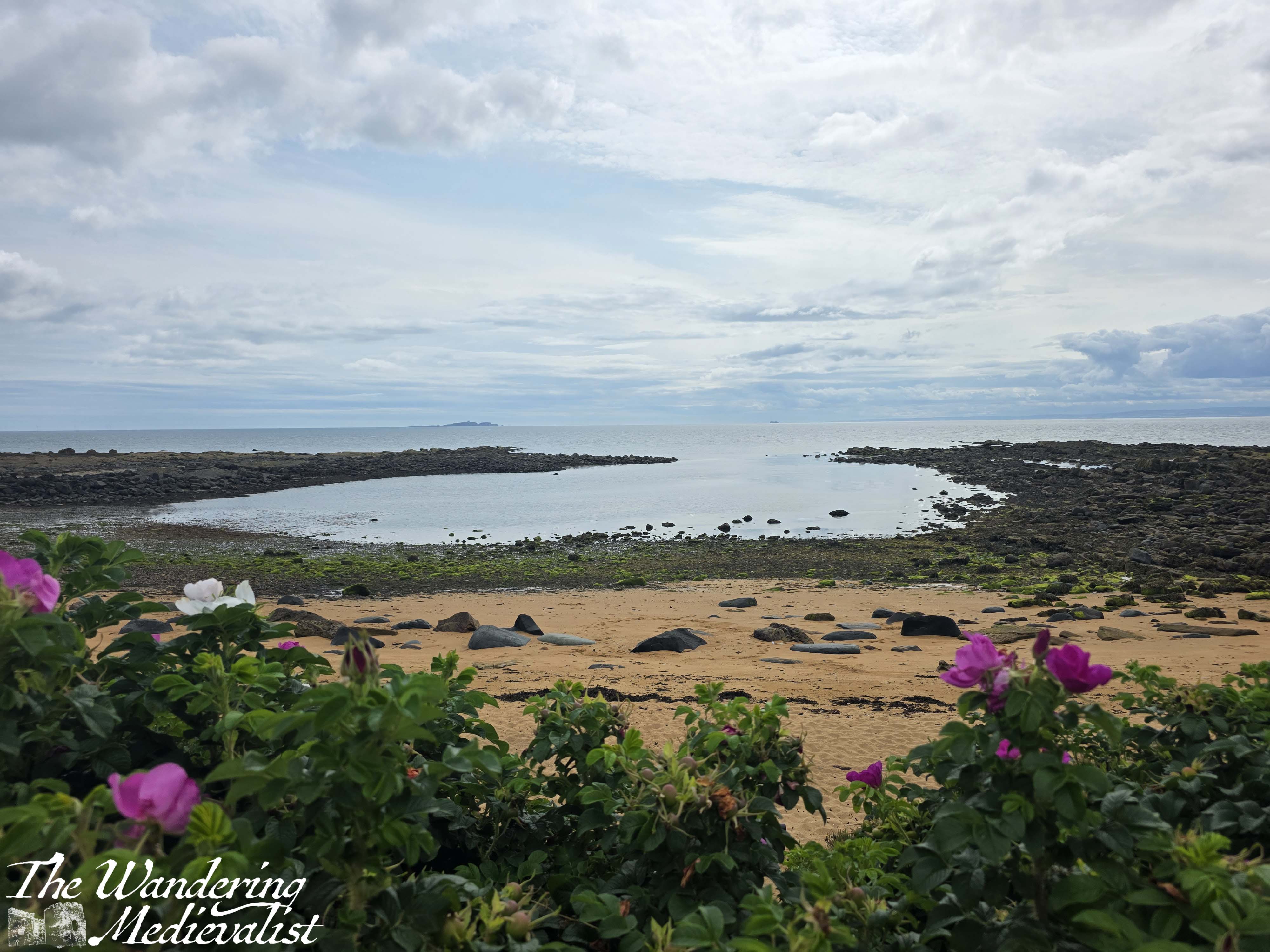
This is one of my favourite pictures from this walk. Peaceful beach.
As I enjoyed my flash-back to the USA, I pulled out my up-to-date map of the coastal path to determine whether I had to climb the hill or not. After deciding that I could just as easily follow the beach, I made myself sit for 10 minutes enjoying the view before packing up again.
The route I chose definitely included a touch of rock-climbing as a tidal pool cut off the sandy option; fortunately, the rocks were not slippery but heavily encrusted with barnacles, which were great for grip. They would be torture should you fall, but I managed to avoid both a slip and wet feet. This was the case even once I had crossed the rocks and negotiated my way across the sand, which was rippled and wet but not enough to reach over my boot treads.
At this point I was in Pettycur bay, which included a small harbour where the boats were all beached due to low tide. I climbed the stairs at the edge of the harbour to re-join the road, which would have been the high tide option I think. My break and snack hadn’t really done much to reinvigorate me, and I found myself slowing down as I headed up the long slow hill of Pettycur Road that runs from the beach up to the top of the cliffs. The houses here reminded me quite a bit of parts of Marblehead – lovely, large modern places built on stilts or into the edge of the cliff, open to the Firth of Forth and ocean beyond. For those familiar, it was a touch like part of Marblehead Neck, right at the far end from the causeway, though these houses were smaller.
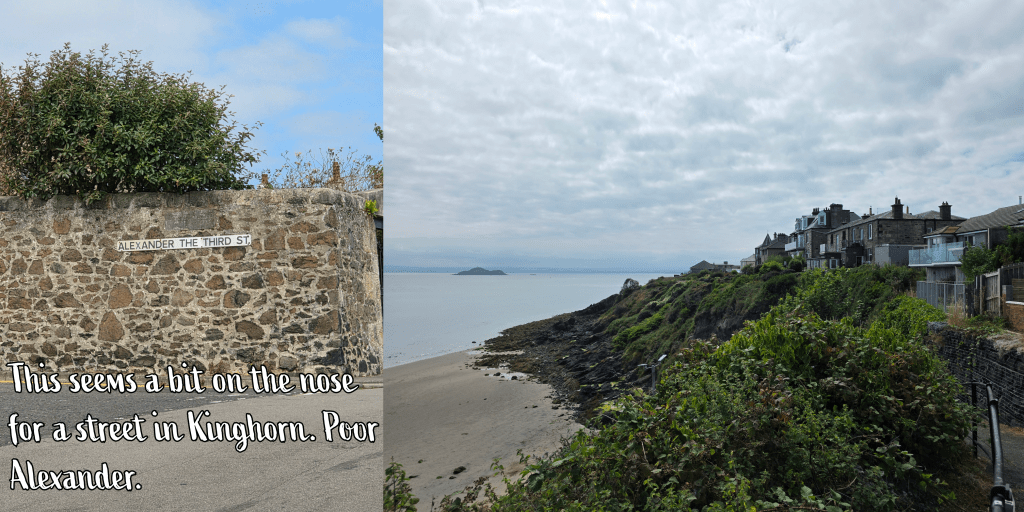
I had pretty much determined that when I reached the top of the hill, I was going to need another rest – I had been reluctant to look at the map to work out how close I was to Kinghorn. What rather gave it away was when I noticed road names that were Alexander III Street, and then David I Street – there is also a Canmore St and Queen Margaret St, showing the strong historical tie of the area to the Medieval Scottish crown. Suddenly, I realised, I was essentially in Kinghorn.
The sign for the Coastal Path turns right down a close, with the sea ahead, and at the end a set of benches. The view is, like so many others, spectacular – the ocean stretches out ahead, with the clifftop homes to your right and the town of Kinghorn with its train viaduct to the left. I paused for a few minutes to savour the triumph, though in doing so I missed that hour’s train. So, I took a gradual walk down towards the water before finding the spot at the bottom of the hill where I had marked the start of my journey from Kinghorn to Kirkcaldy.
I may have missed a few of the historical sites along the way that I hoped to see, but this walk really tested the limits of my fitness and I got to see parts of Fife I had only ever passed through.
It was a good final walk for the summer, I felt, leaving me in a strong place for when I come back from travels long enough to pick things up again. I’m looking forward to trying to stay fit while travelling – hotel gyms are uninspiring – but it’s a good goal to have, and I was really pleased when this hike didn’t completely destroy me. Was I a bit stiff that night? Yes. But it faded by morning.
For whatever reason, this past Saturday morning sleep was not my friend and I woke early – the same time I do for work, which is early for a weekend – and got myself going to aim for a bus an hour earlier than I had intended. And good thing I did, as this stretch of the Coastal Path took me longer than expected, even with a few stops to test out my new camera. Yes, that is one exciting development this week: I finally managed to order and have delivered the fancy new camera that was a – cough – Christmas present from my father. Entirely my fault that it took me this long to get it sorted, as I was waffling about what to get. I settled on a switch of brand, moving from Canon to Nikon. I still need to spend some time working it out, but I’ll get there. And I digress. (still…new toy!)
Crail is a bit more limited than Anstruther in terms of public transport, but the 95 is always a good option and I got my favourite seat upstairs at the front. Also on the bus were a group of young caddies, probably about 21, who were on their way to Kingsbarns and discussing their job and how much they would make after a day of work. Blew my mind – I can definitely see the appeal! A lot of hard work to get there, I know, but still paid incredibly well especially for someone on a summer break from university.
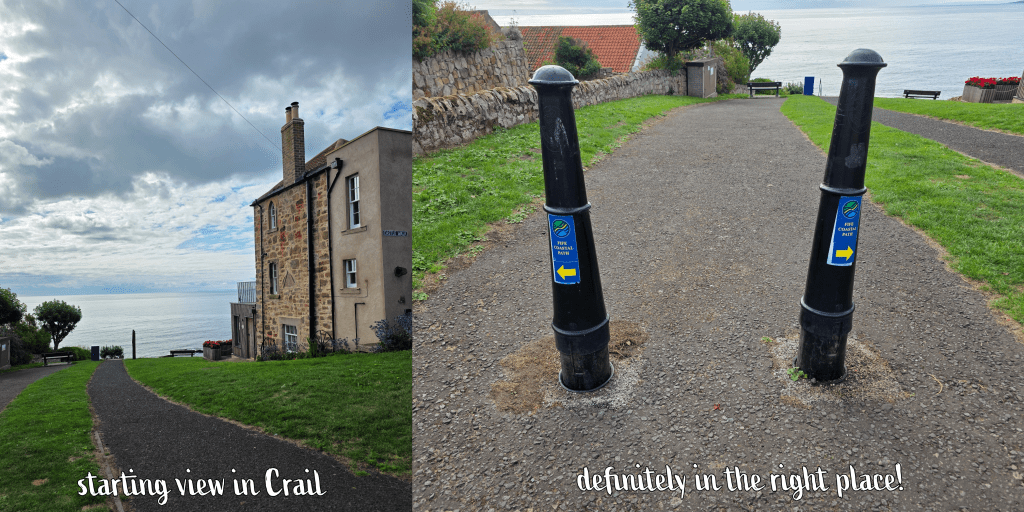
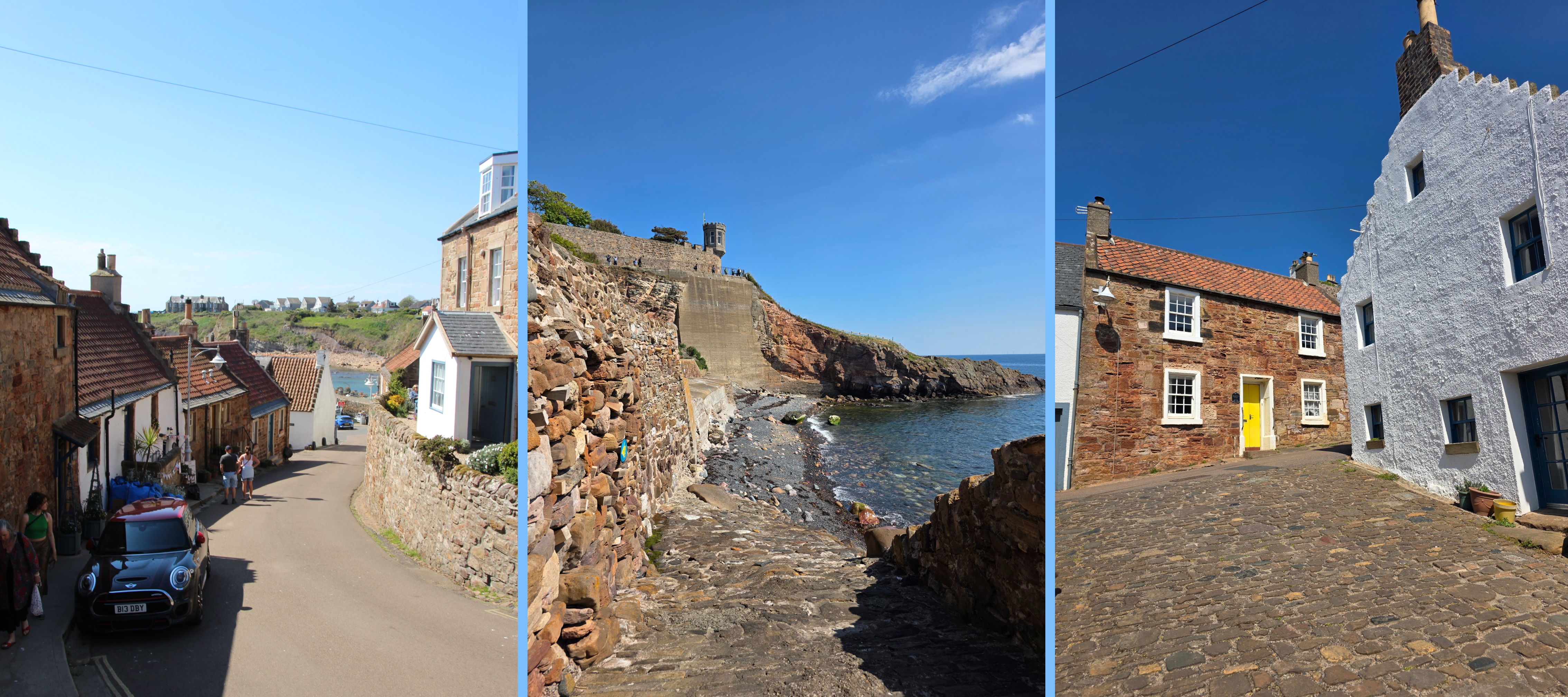
I arrived in Crail at 9am on the dot, alighting just before the roundabout where St Andrews Road turns into the High Street. It was a short walk of less than 5 minutes down Castle Street, then a slight veer to the left around the castle wall, to the spot where I had officially ended the walk to Crail from Anstruther a few weeks back.
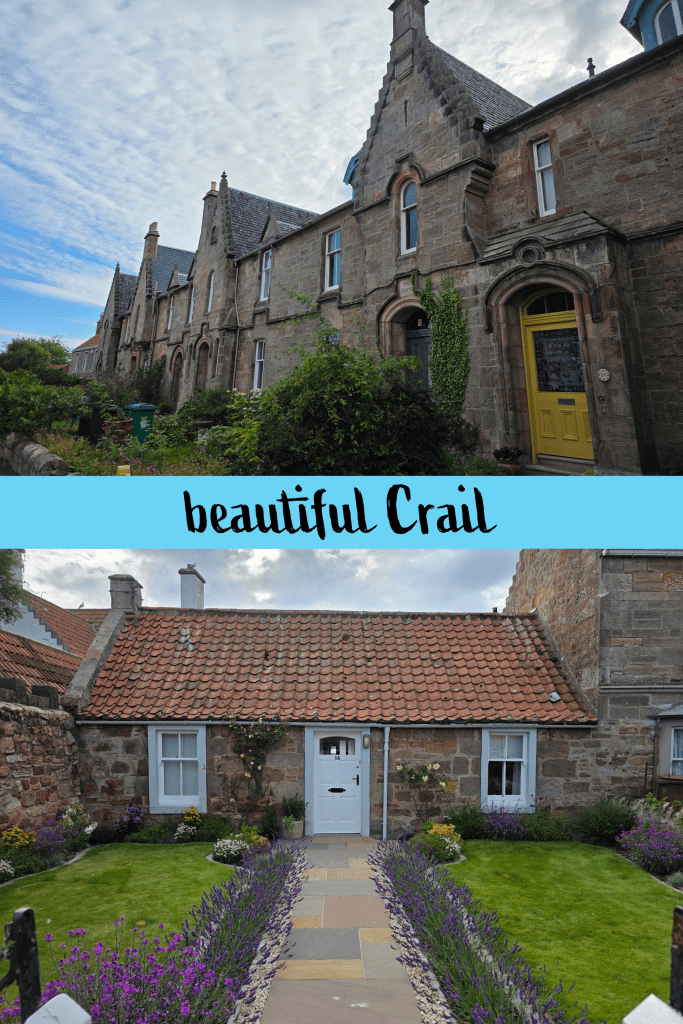
The oath is clearly marked here, along the Nethergate heading north-east. This street is just an endless line of beautiful houses and well-kept gardens, which are really all-pervasive in Crail. Even the edge of town where the houses are ‘newer’ is a lovely winding neighbourhood with beautiful gardens. That said, the constant shrieking of the gulls (expected, still annoying) made me wonder if I really coveted one of these cottages.
In about a third of a mile, the Nethergate ends at a stone wall and large grassy area, and the path takes a steep turn town towards the beach; ahead is a line of Victorian-era houses with beautiful gardens (notice a pattern?), and the open sea beyond.
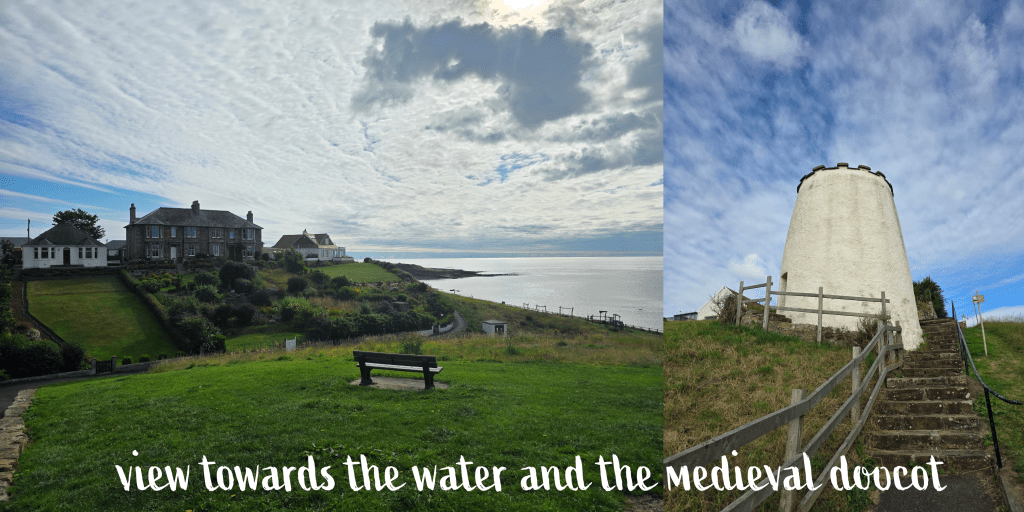
There are two paths here, one a straight shot down a steep hill along a wall, and one off to the left which is a touch more gradual. This is the official path, I think, though I chose the other way. Going along the wall eventually takes you past this late medieval doocot, which is still open (though I did not go in) and which includes a detailed explanation of what a doocot is. This one, built around 1550, housed pigeons until the mid-19th century, and is of a quite traditional round ‘beehive’ design, though there are plenty – for example one at Tantallon Castle – that are rectangular.
Beyond the doocot, I turned left along the shore, where there is a playpark next to the sea. The weather was mild but breezy, with a mix of sun and clouds that was the perfect opportunity to test my camera. The beach is rocky with small patches of sand, reminding me very much of the beaches at home. I was relieved to discover that there was also a toilet block, though it was far from clean or well-kept. Those in Crail had been at the other end of town, so this seemed a good opportunity, and potentially the last one on this walk. (Though if you ask very nicely, it may be possible to use the ones at the caravan park, I’m really not sure)
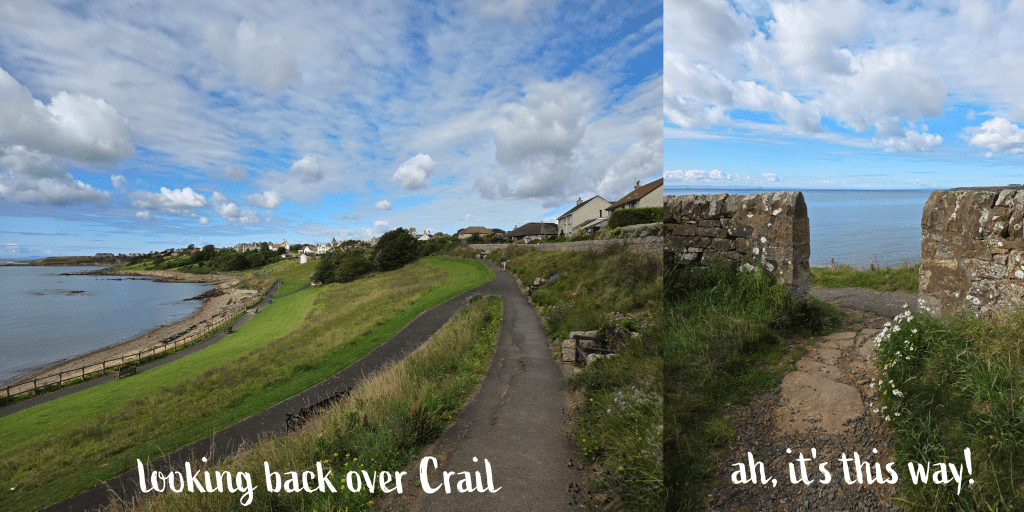
At the end of the bay, there is a flight of steps leading up to what I realised was the actual Coastal Path – oops – which had run along the top of the park. Either way is fine, I’m sure! This is of course a good spot to get a few pictures back over the beach towards the town. From here it was along the path for a short while, and a relatively fast right turn through a grassy field. There are several routes here, some leading off to the left that are clearly made by walkers, and the Coastal Path is not well-marked, but stick to the main trail heading straight for the water’s edge, and you will reach a gap in the stone wall. It may not seem the right way, but it is!
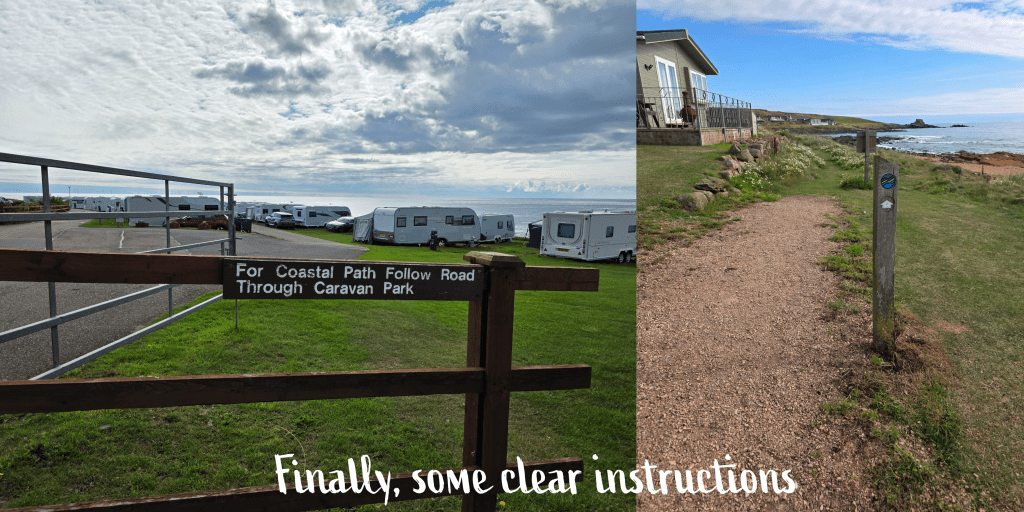
Once through the stone wall, you will see signs again and the entrance to the Sauchope Links Holiday Lodge and Caravan park. There is a clear direction here, sending walkers through the caravans on the main road. While it was early morning and the park was just waking up – some lucky souls sitting on their porch drinking coffee with a splendid view over the ocean – there were some vehicles too, keeping me on my toes.
I was really impressed with the holiday park which had a small but clean-looking pool and a good number of well-kept caravans. In time the caravan park merged into the holiday lodges, including a few glamping pods (I think) and then eventually some really lovely-looking lodges. The views were excellent, but I did have some doubt as to whether I’d want to be quite that close to the water here on the outermost edge of Fife – especially with Storm Floris expected in a few days. Eventually I discovered the style of house I liked best, up on the side of the hill a bit further back, with big patios and I am sure, a great view.
After about ten minutes or so of walking – it’s a big park! – I found a sign for the Coastal Peth taking me off the main road and down a sandy track towards the beach. The path runs between the lodges and the beach, alternately sandy, grassy, and occasionally rocky. It was an odd day where I couldn’t decide if I needed sunglasses or not, and it meant that the views were alternately bright and clear or a bit murky.
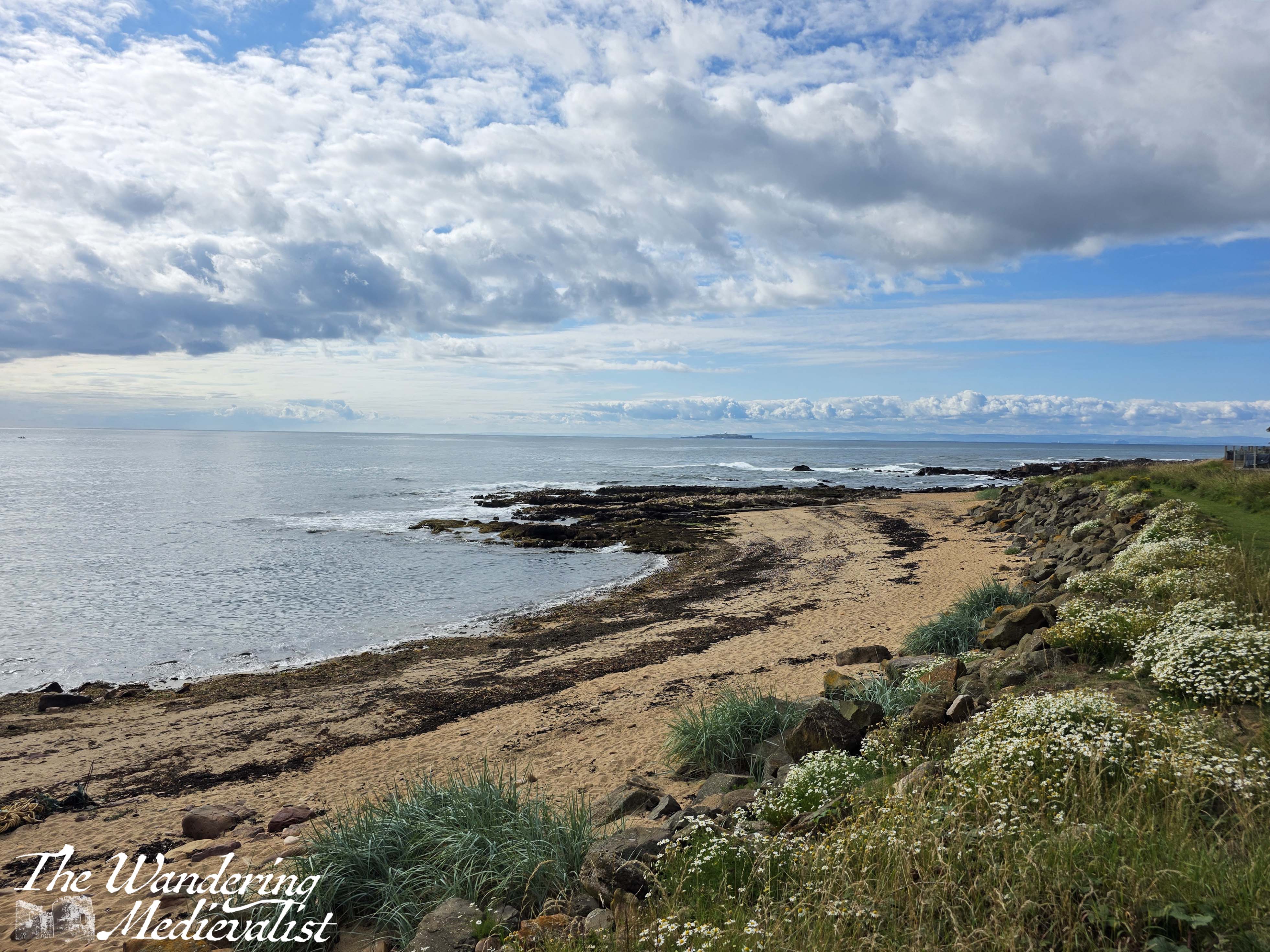
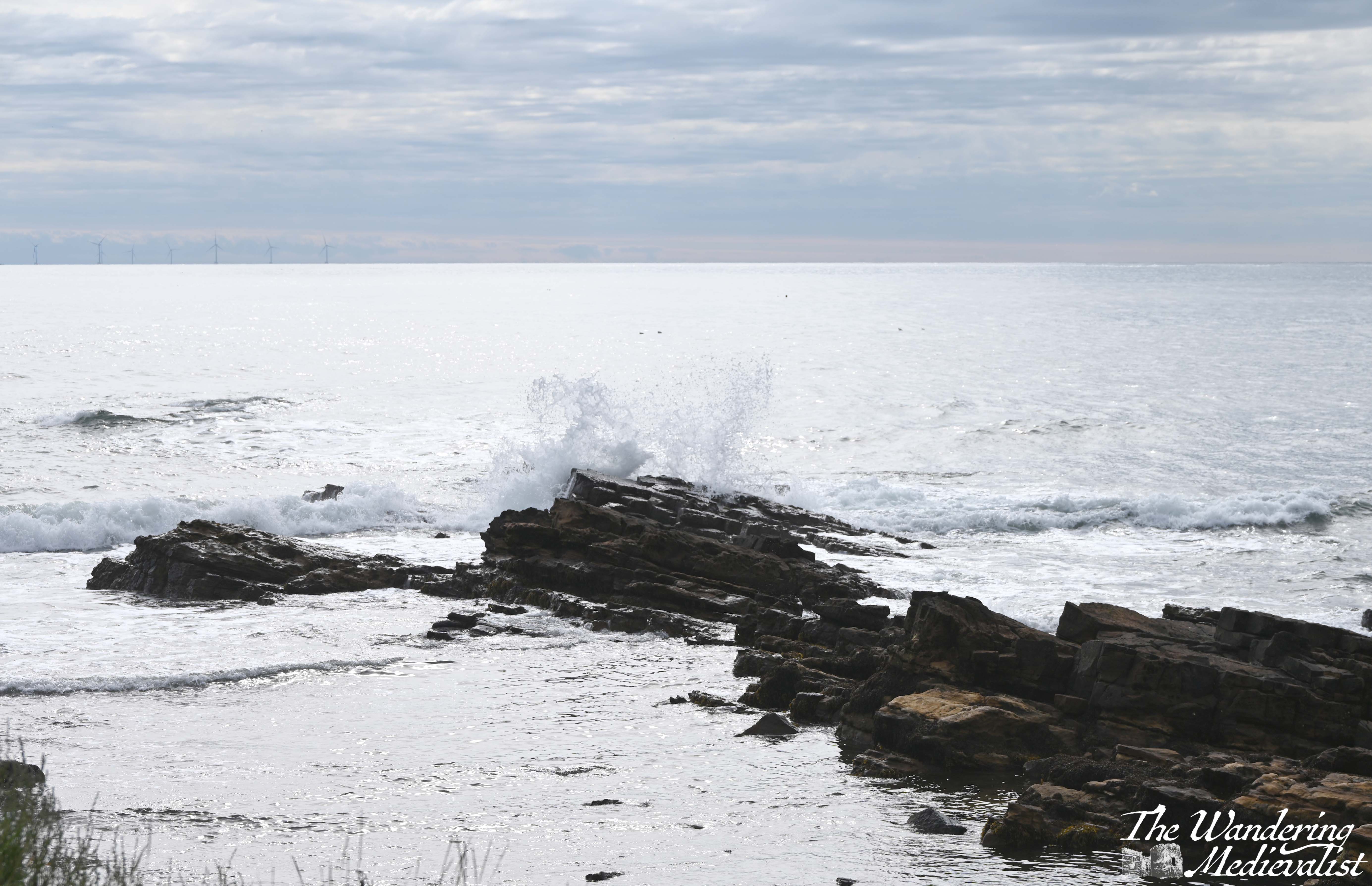
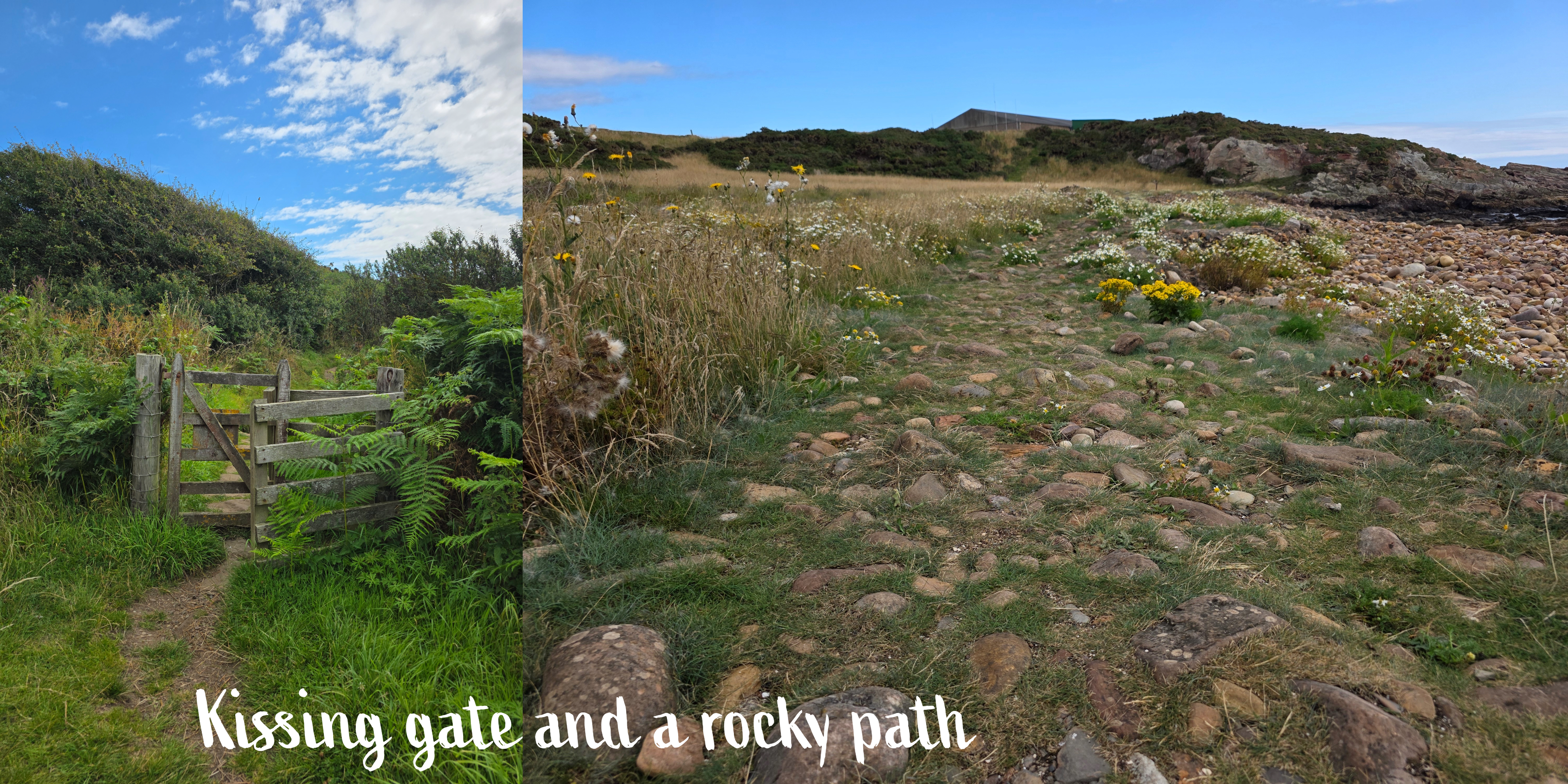
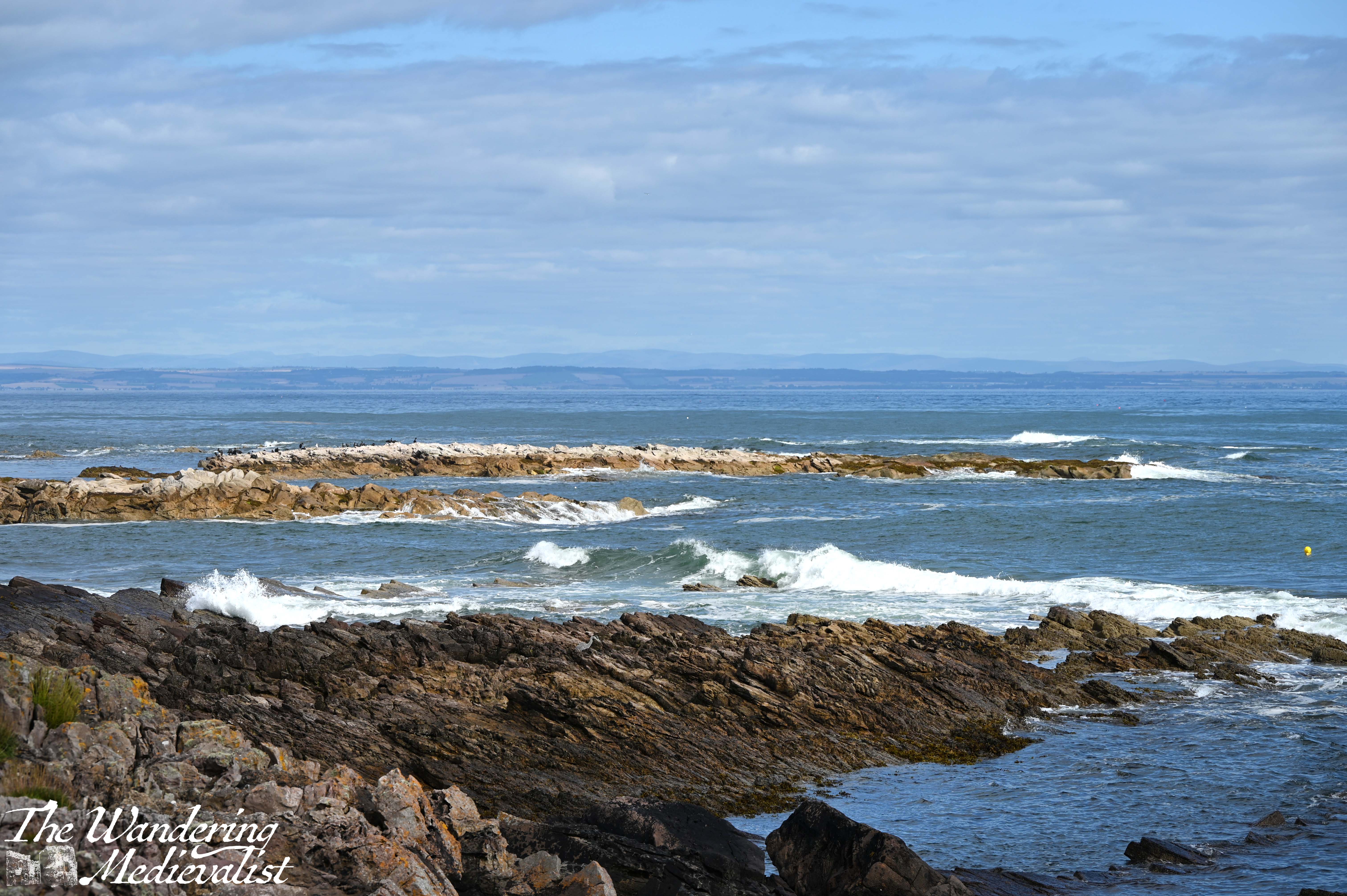
In time – longer than I expected – I reached the end of the park and went through a wooden kissing gate onto a more wild path, with high grass on both sides. There is a beautiful rock structure up ahead on the right, and a sign indicating that walkers are now entering the Kilminning Nature Reserve. Here are some great views looking back, particularly if there are waves crashing on the rocky promontories between beaches.
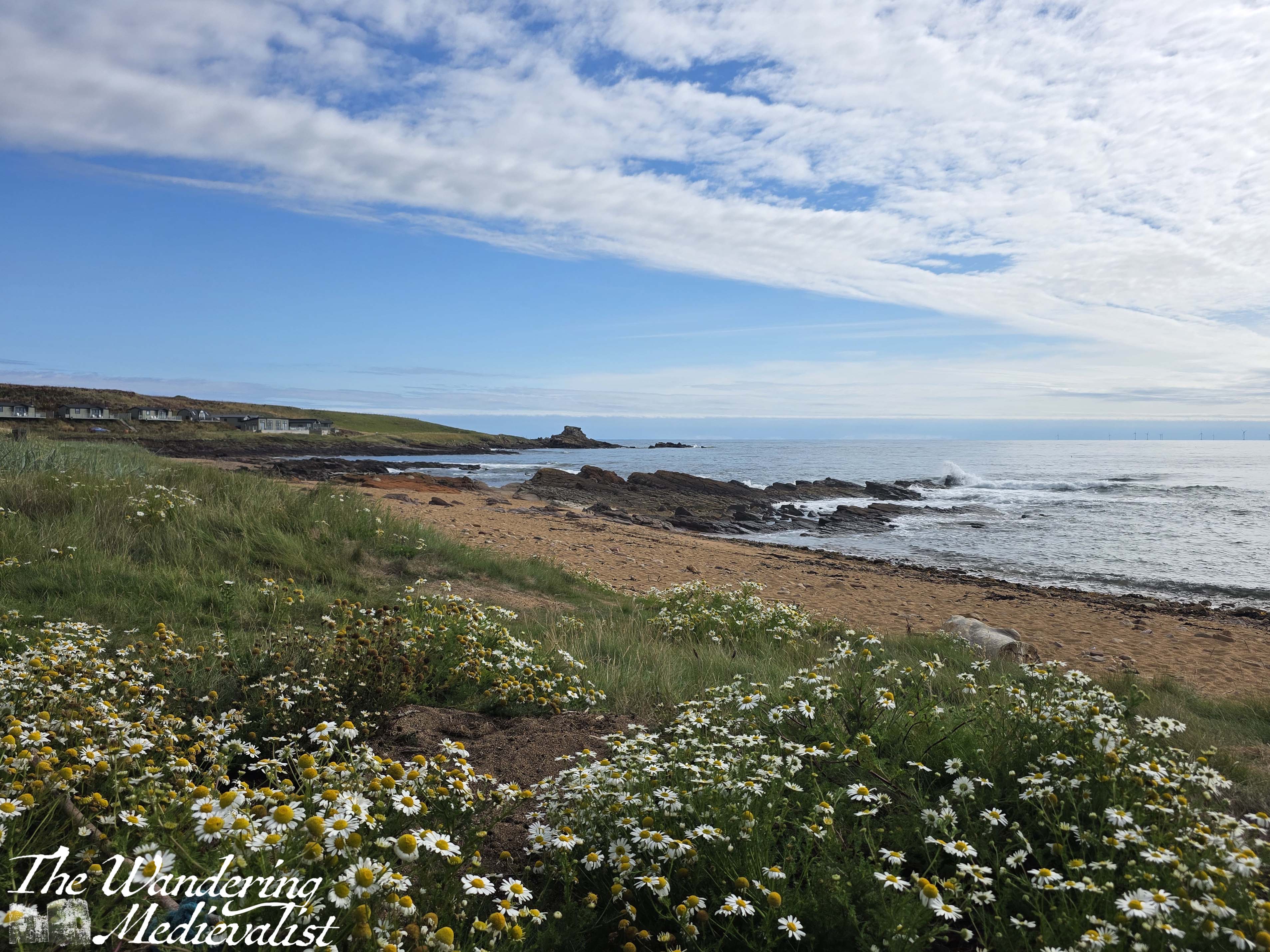
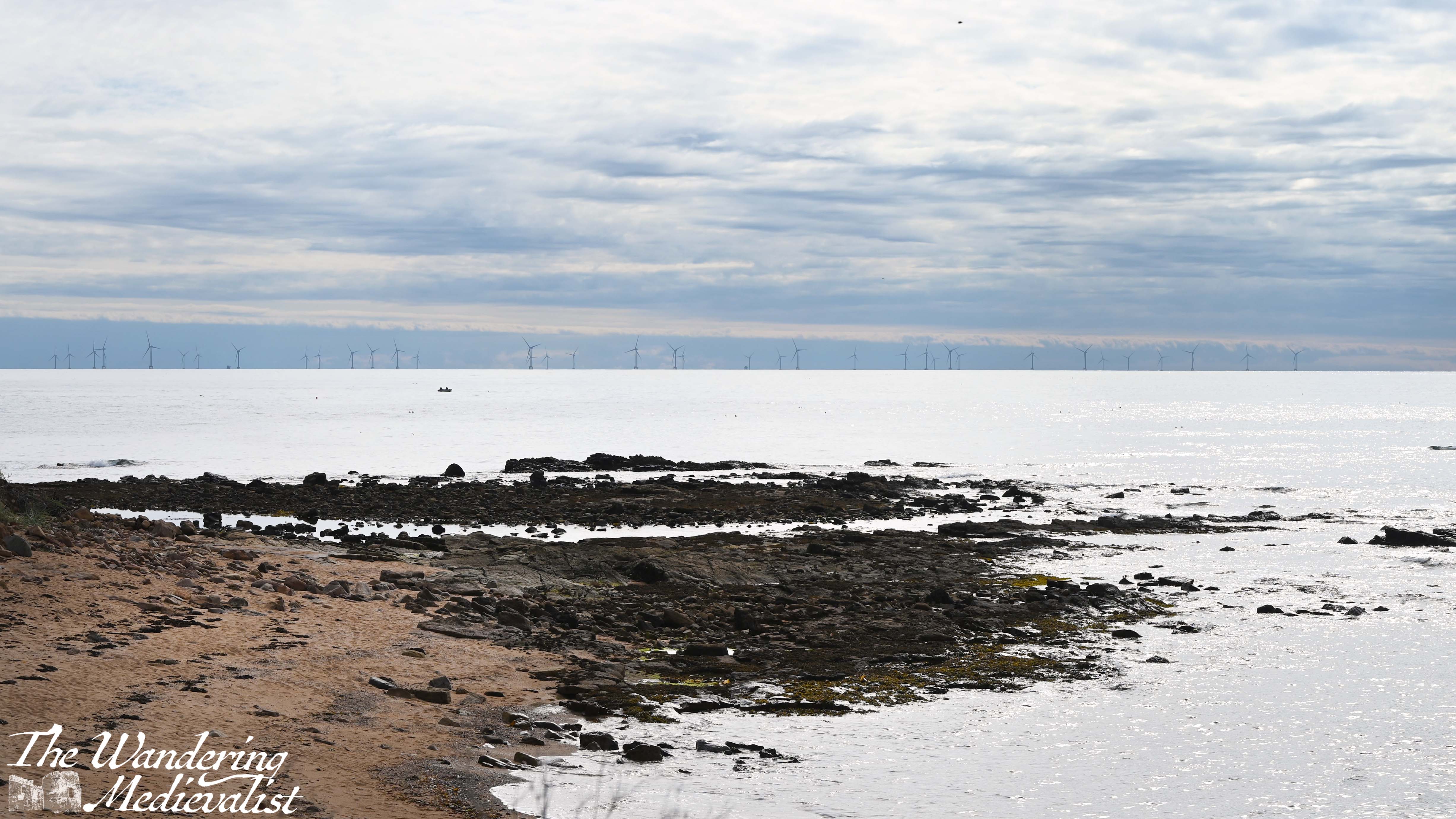
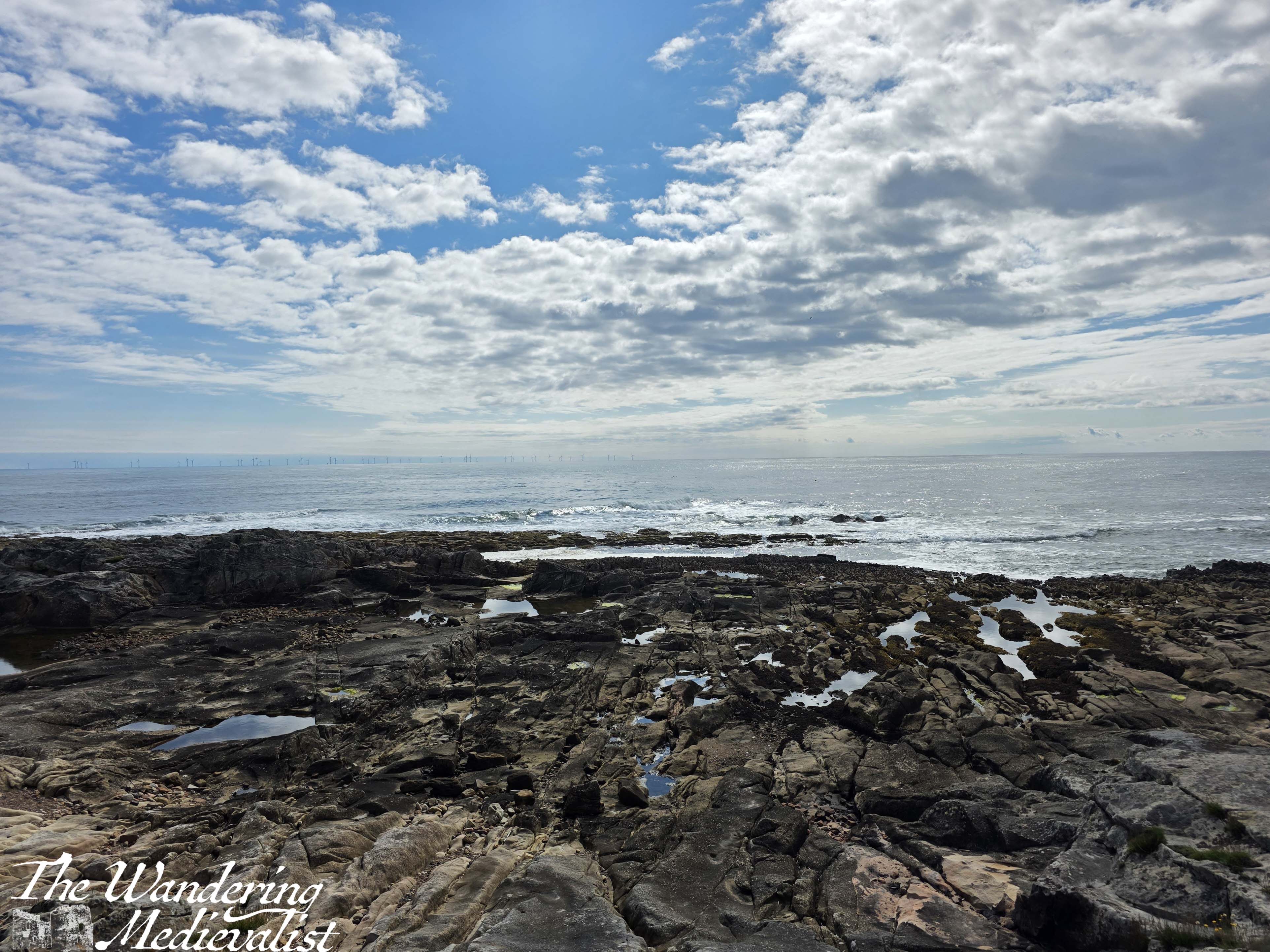
You will note in these pictures an enormous wind farm, with turbines all along the edge of the horizon. There is a lot of controversy over this wind farm, and the recent approval for what will be Europe’s largest wind farm; some object to the visual of them, but there are also environmental concerns. Personally I don’t think the optics are really an issue, and I don’t have knowledge to comment on the impact on sea birds.
From this point, the path rounds a corner into a relatively wide flat area, with long grass on either side and a rocky trail. There was one spot that was really muddy and required negotiation on stones, but overall it is pleasant, a touch flatter than much of the East Neuk trail. In a few places, you will notice entrances to bunkers along the coast; it was of course a perfect lookout spot during World War II.
This part of the trail is quiet and it might be tempting to look up at the view, but it is also quite uneven and I have in the past rolled an ankle pretty hard here. As you go past a viewing platform and through another kissing gate, the path becomes a bit more rolling, with some ups and downs on rocky stairs that can be steep.
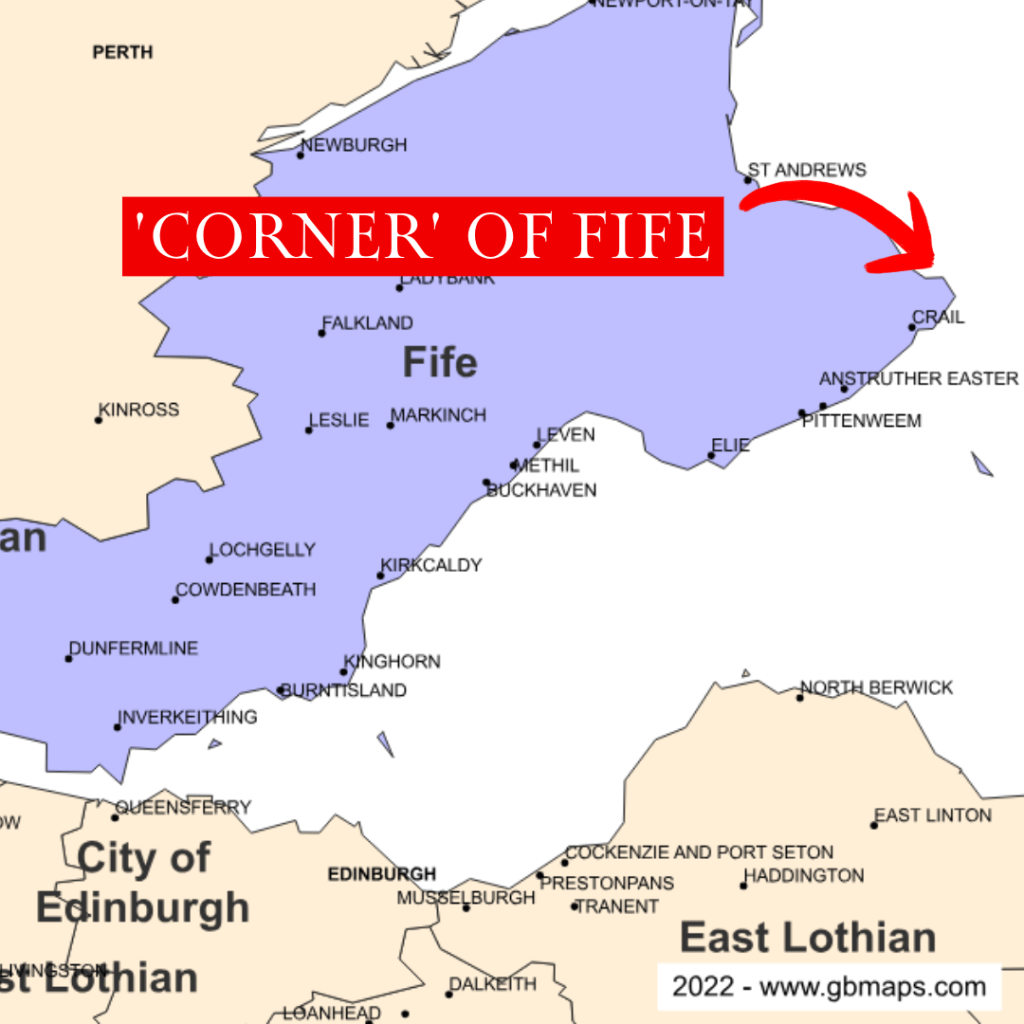
There are some great viewpoints, and eventually at the end of the bay you go up and down one more rise and discover a golf course on your left – this is Fife after all – and the ‘corner’ of Fife ahead. By corner, I mean the point of land that sticks out furthest in to the North Sea.
I found myself stopping here for several minutes, looking out over the crashing waves – it was a challenge really not to stay for hours, as I find them quite mesmerizing. Repetitive, yet always different.
I had a goal however and so pushed on. Right at the corner, the trail narrows slightly to pass between the Fife Ness Lighthouse above, and a bird blind and WWII pillbox, constructed in 1941 as part of the Crail airfield. Whereas you often see other evidence of WWII defenses further up the coast along West Sands and Tentsmuir, I had not noticed many or any in the East Neuk.
Once you turn the corner, you approach another small caravan park and the remains of Fife Ness harbour, first mentioned in the 1530s.
The harbour was used for fishing, as well as for shipping stone from nearby Craighead quarry – some of this fine stone was used to repair St Andrews Cathedral in the 1450s. The long lines of sharp rocks stretching into the waves make it clear why this point of Fife could be treacherous for boats; I was walking at about mid-tide, but the rocks clearly went much further under the waves.
There is also a great example of a Scottish seaside cottage, well-kept of course with a small garden. I wasn’t really sure that I was going the right way here, but there was really no other obvious route, so as before I just kept walking.
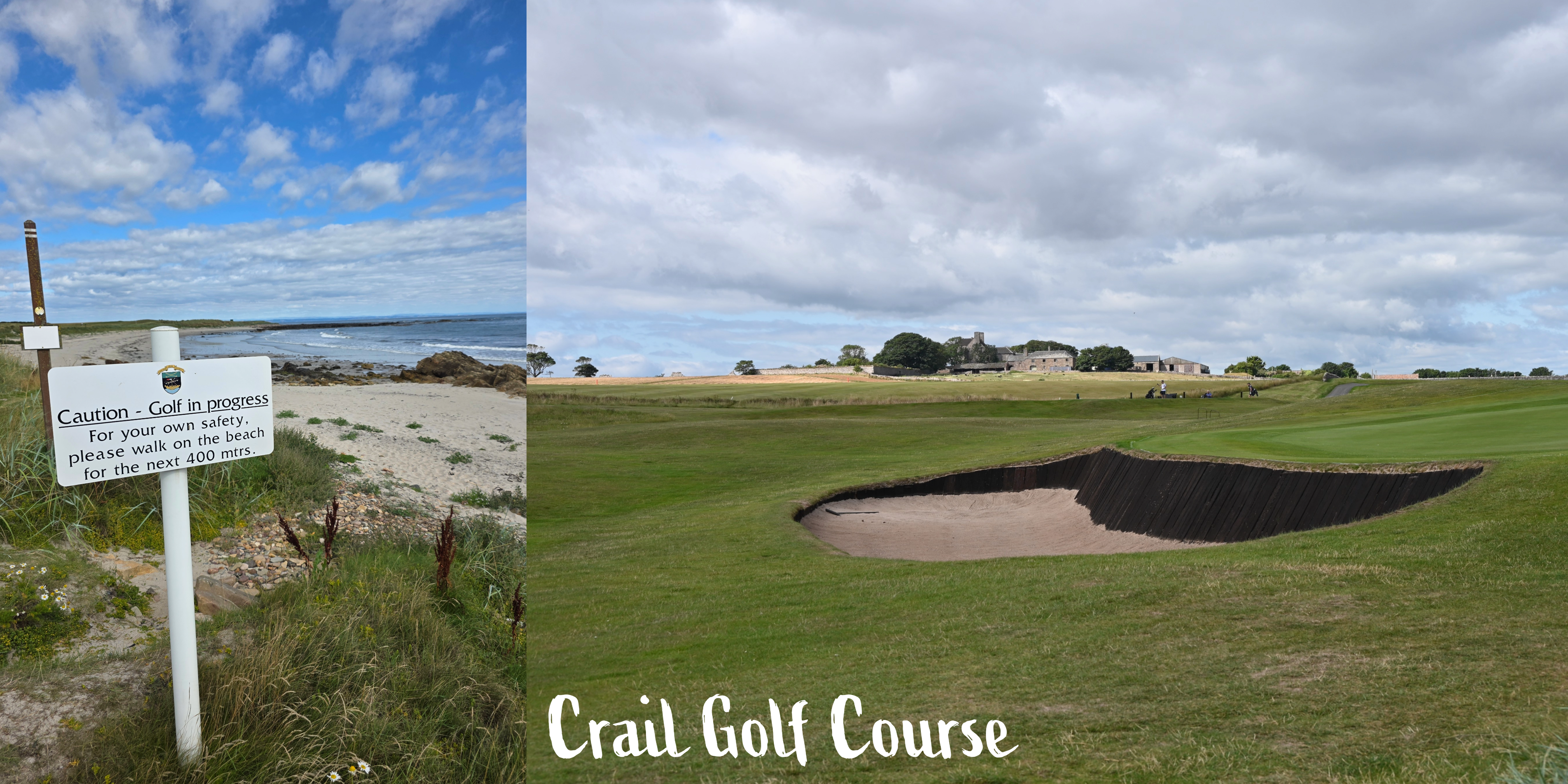
The paved road soon looked as though it would be heading directly for Crail Golf Club, but sure enough as I reached the edge of the green, the Coastal Path signs returned and I headed off to the right on a path that ran along the edge of the green.
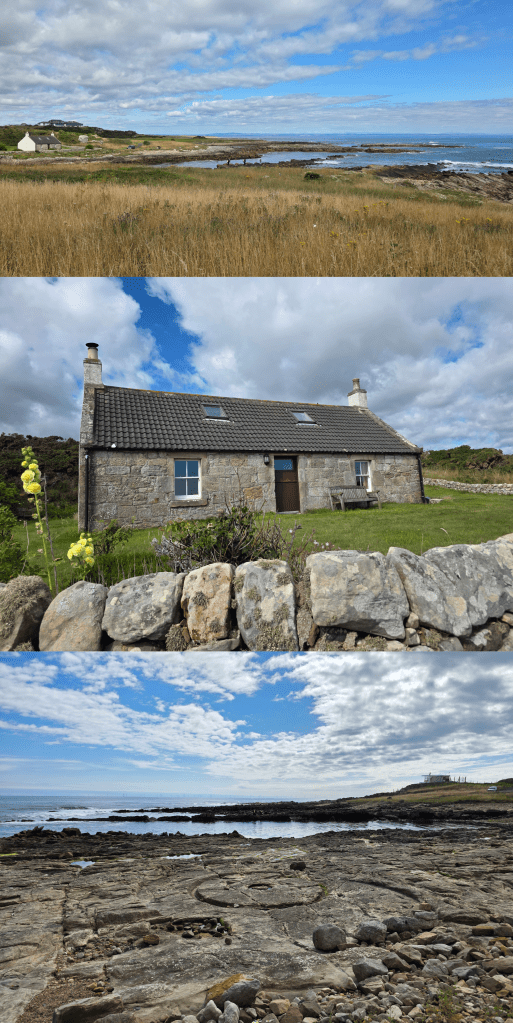
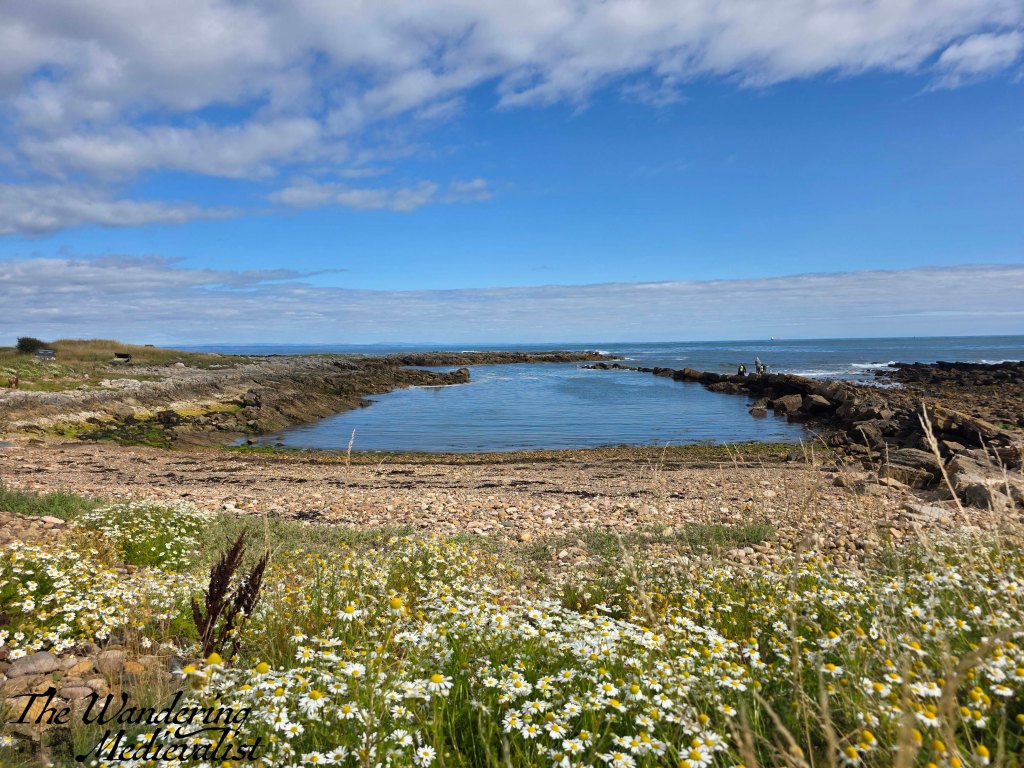
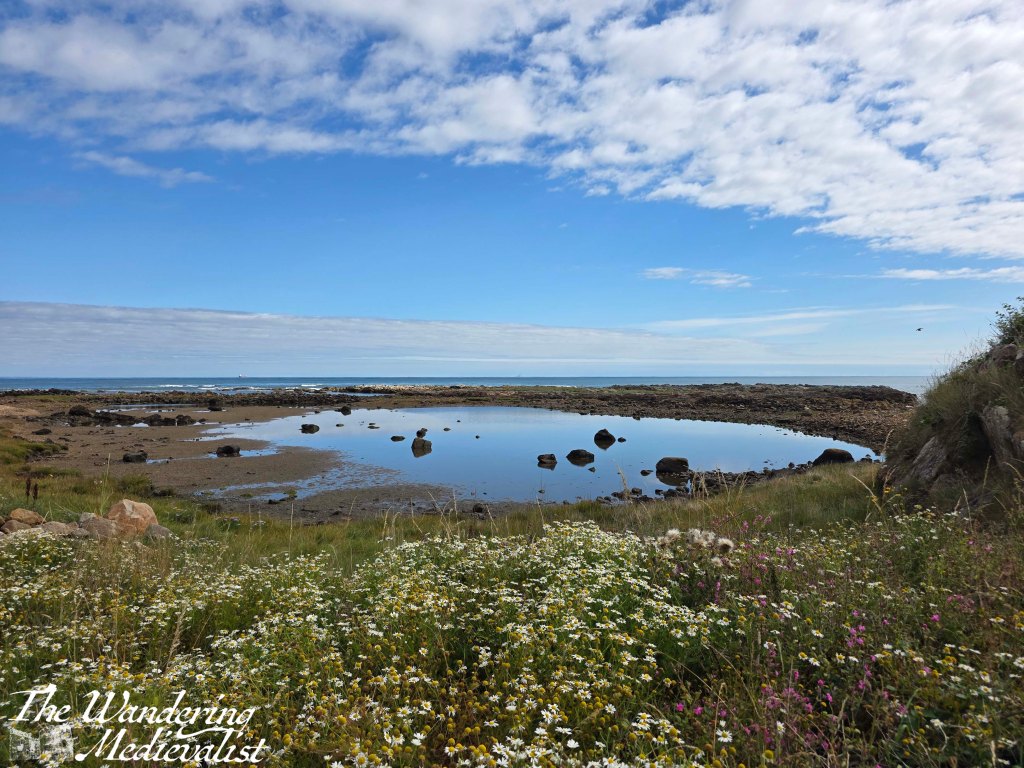
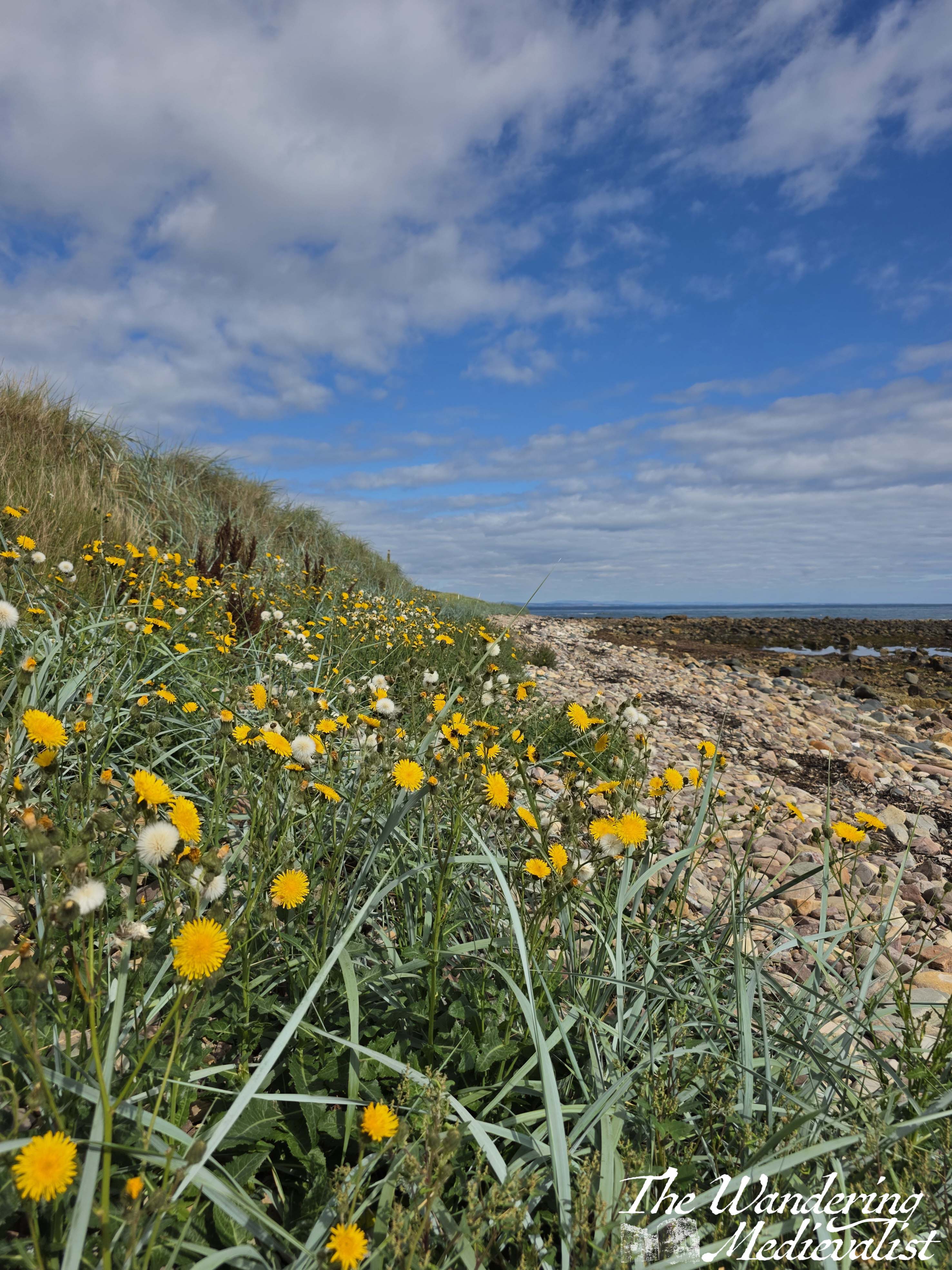
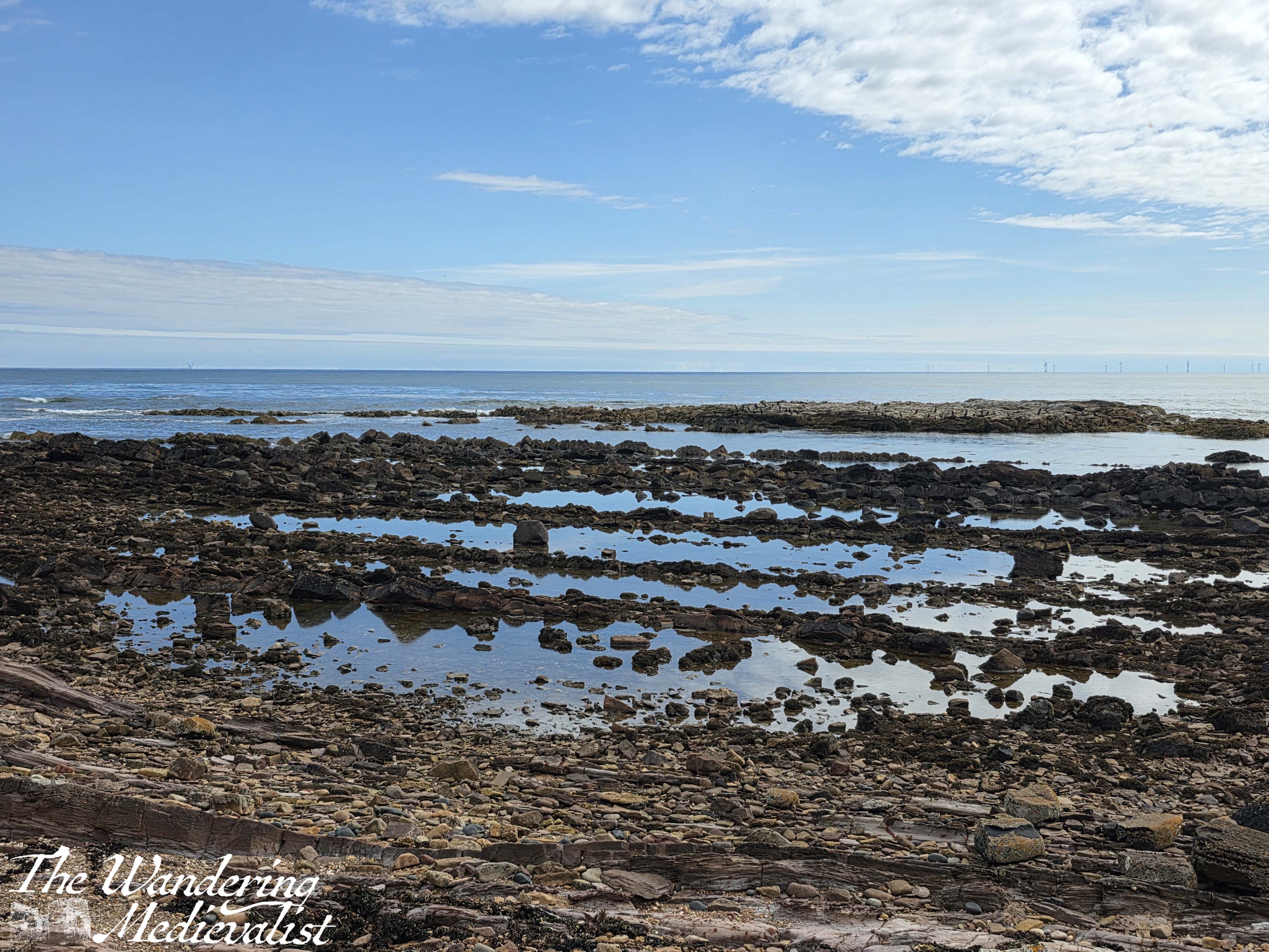
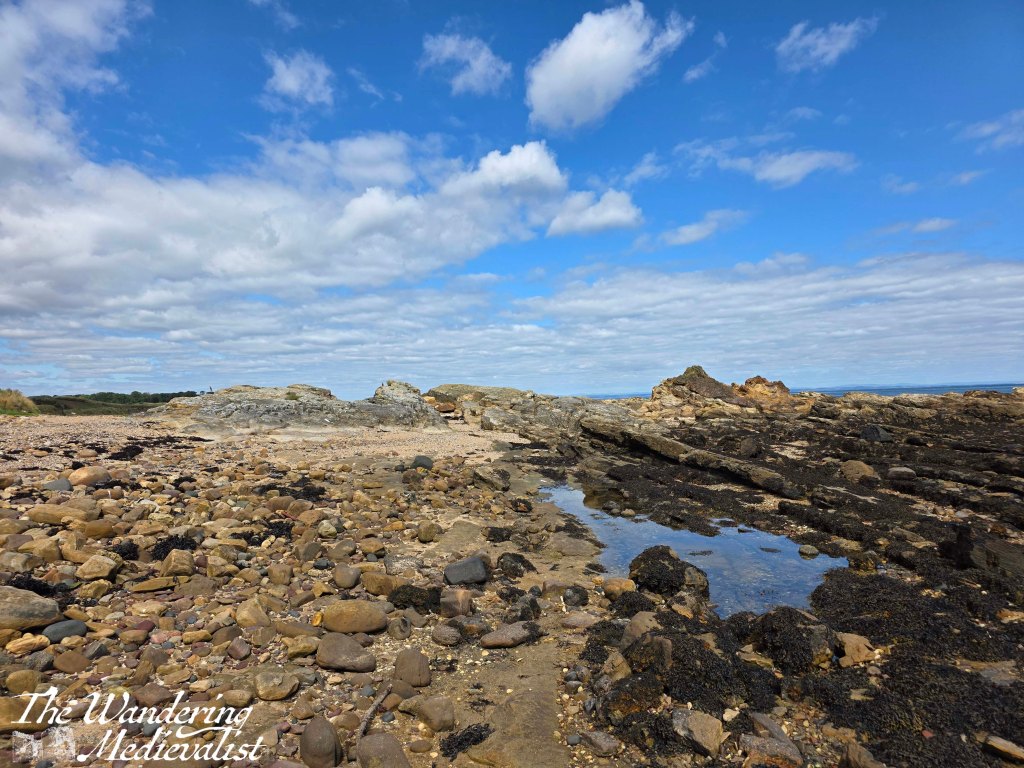
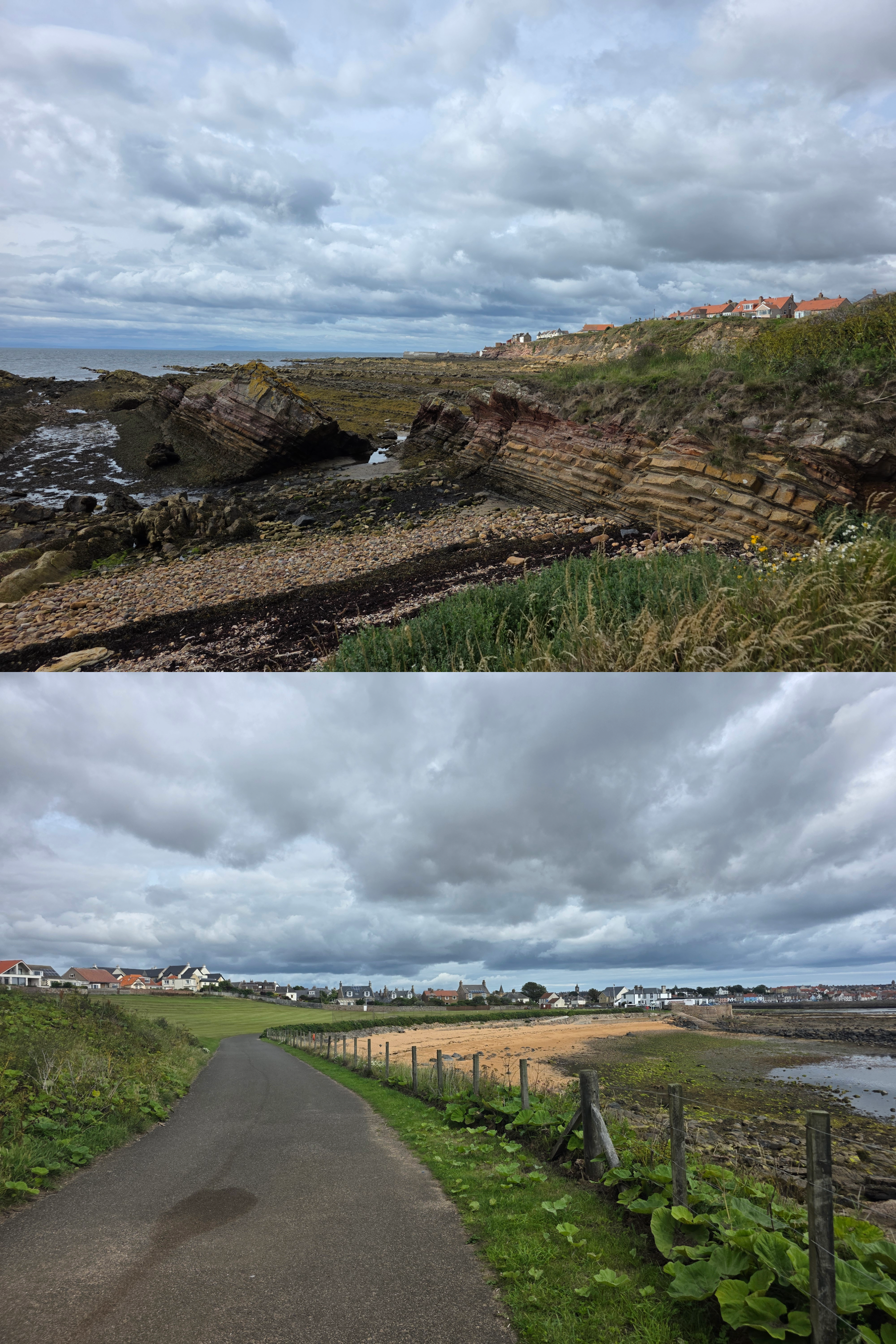
This is a really beautiful stretch, particularly in the sun as it was when I walked, with the ocean and multitude of wild flowers. It is hard not to be fascinated by the layers of stone and the pools of water between them, glistening in the sun. There are a few signs on poster boards for adult geology classes, and it is easy to see why this would be a good spot. The layers of stone and water erosion are very evident.
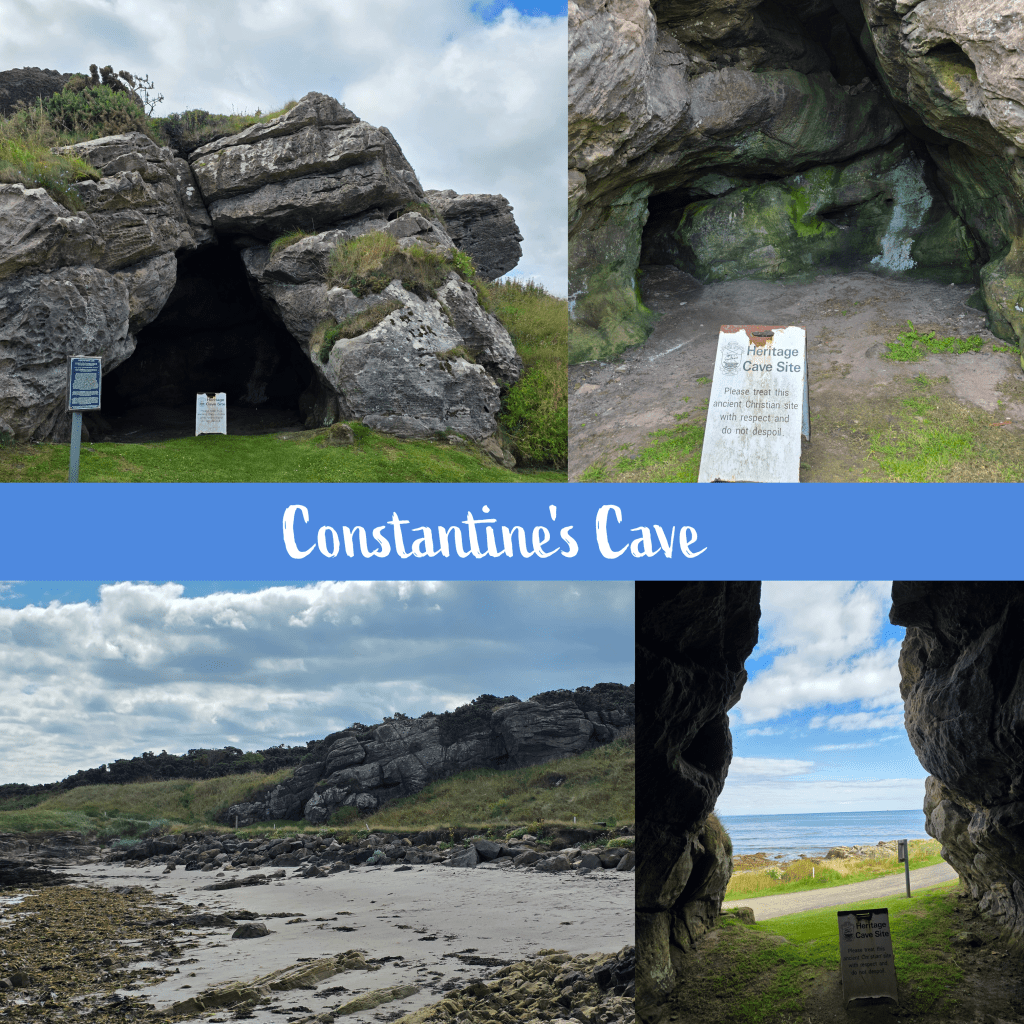
From here the path hugs the edge of the golf course, at times moving up to the walkways designed for golfers, but only for a short while. I stumbled across Constantine’s Cave quite by surprise, absolutely not expecting it to be in the middle of the golf course. Interestingly, the other half and I had planned to walk to the cave some years ago, joining the trail near the airfield, but gave up due to my rolling my ankle (see above). I’m quite pleased in the end that we didn’t go the whole way, as compared to the Caiplie Caves this one is a bit less dramatic.
While visually not as impressive, the cave does have an interesting history; excavation work has shown evidence of a stone wall across the entrance, protecting the interior space, and the earliest occupation layer was pre-Roman. The cave’s name comes from the local tradition that King Constantine III of Alba (903-943) was killed in a battle near the cave.
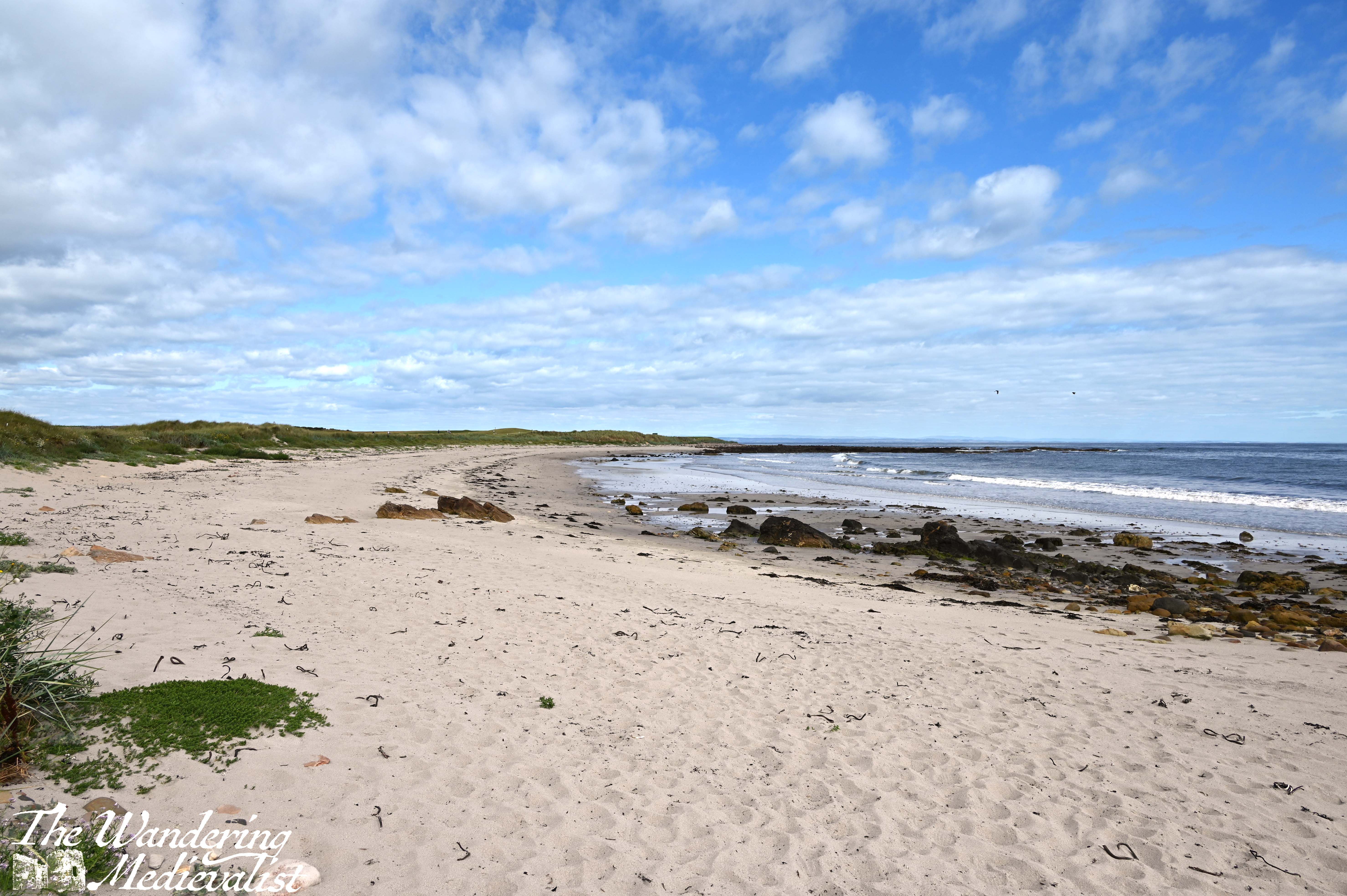
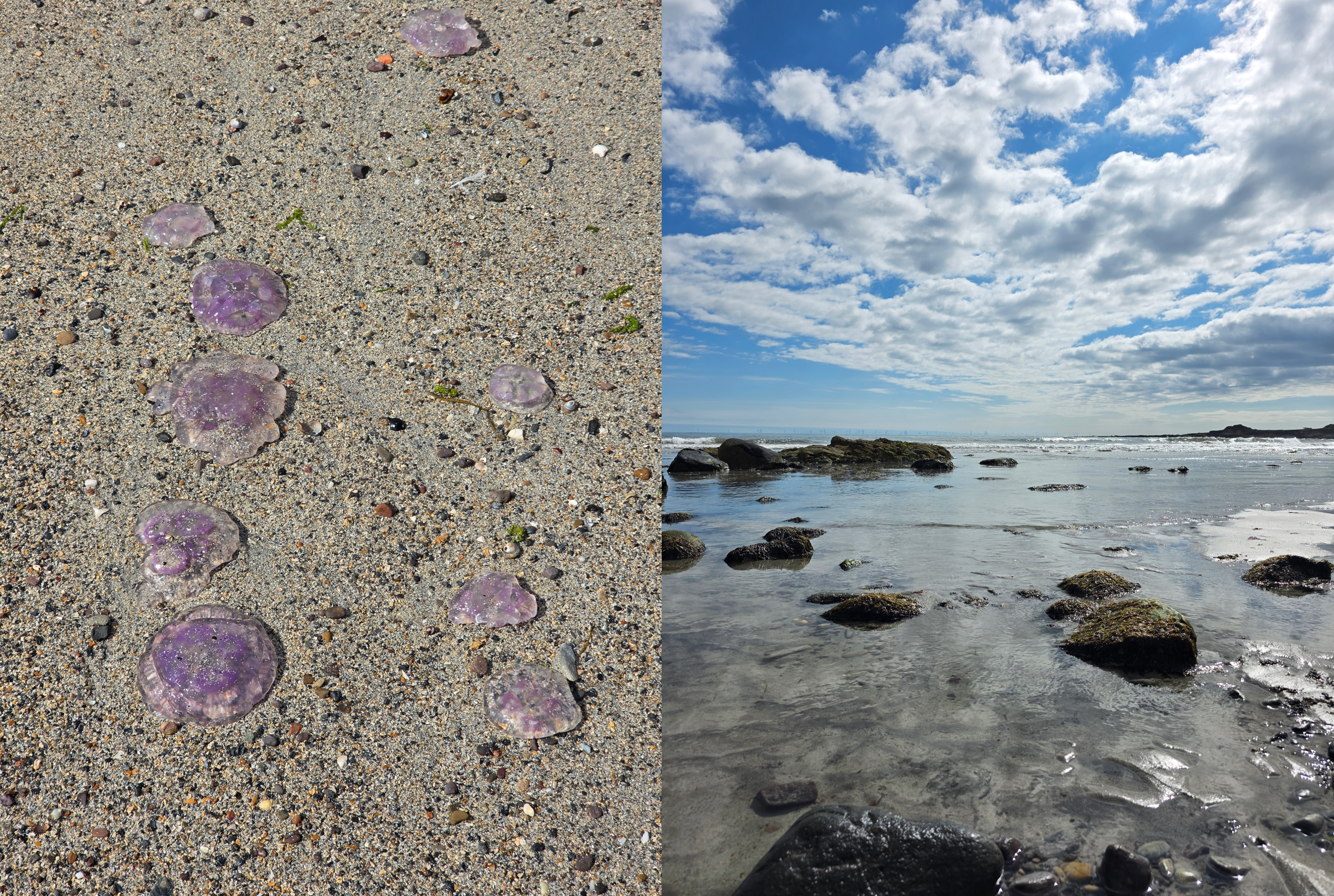
Not far beyond, walkers are directed to move down to the beautiful sandy beach below, to avoid interfering with the golf play. I was very happy to do so, enjoying my ramble in the sand, though it was somewhat hindered by what must have been hundreds of beached Moon jellyfish along the high waterline. Eventually I chose to move closer to the waves, where I could avoid stepping on them.
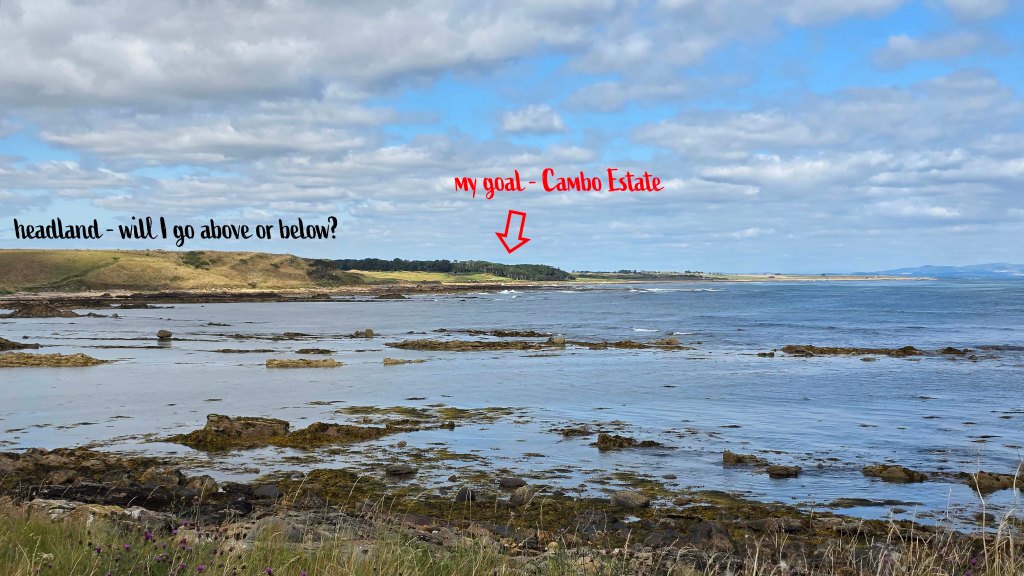
The sandy beach slowly becomes rocky, and the last few metres require some scrambling to return to the upper path, along the golf course. Soon after re-joining the grassy trail, another corner is turned and all at once I could see the tree line of Cambo Estate ahead, though still a distance away. It was a touch intimidating to see the coastline between there and where I stood, including a headland that I was not sure if I would pass over or under.
I should note that the official map of the Fife Coastal Path warns walkers that this section of the trail, between Crail and St Andrews, can be challenging and may not be passable at high tide. While I had neglected to check the tide – not a mistake I will make again – I was lucky to discover it was going out rather than in, so I had plenty of time. Absolutely be more sensible than I if you try this walk, and check well in advance – there are plenty of websites and apps available.
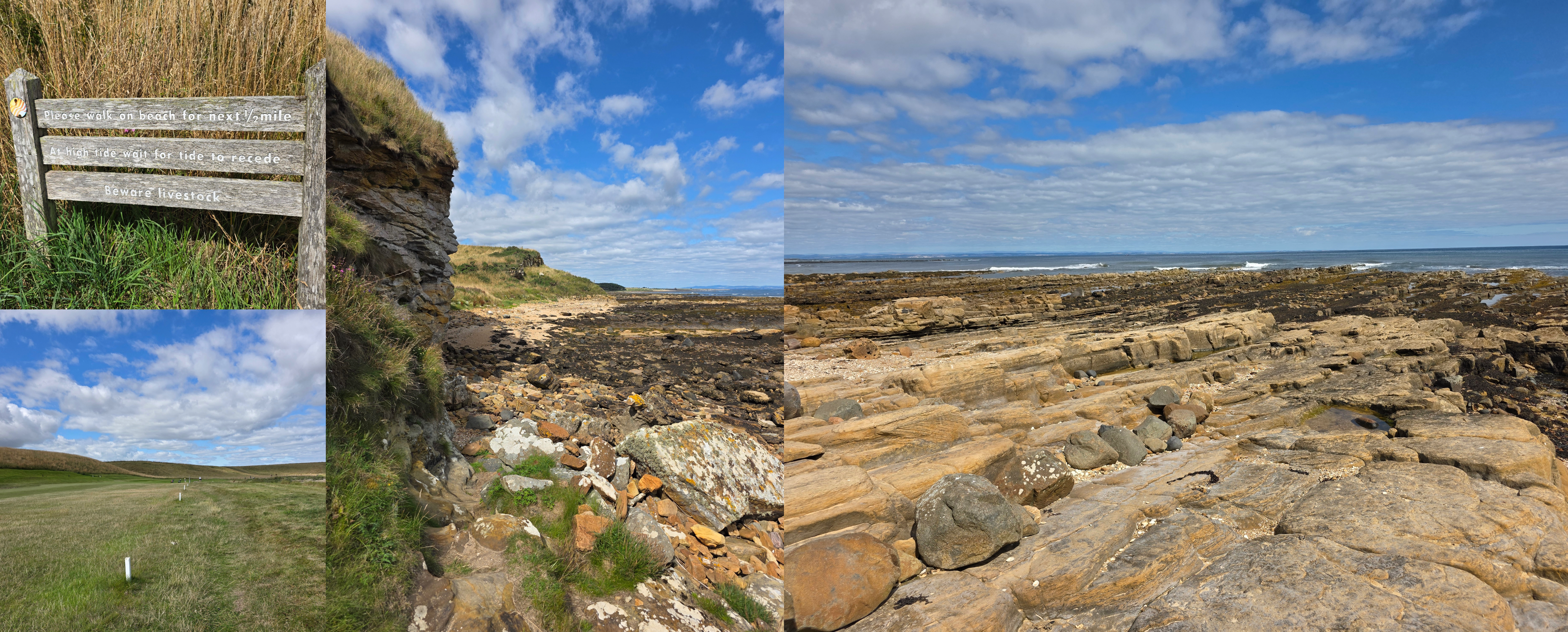
From here to the edge of Crail Golf Course, it can be on occasion difficult to tell if you should be on the beach or not. At least once I opted for the beach route, seeing a faint trail from other hikers, as it was nice to have a bit of variety. I was so fortunate to be walking on such a gorgeous day, and at a time of year when daisies and other wild flowers are everywhere. (I do not know names – must educate myself on wild flowers). There is a series of small white posts in the grass that seems to separate the well-manicured golf course from the trail, but those are not always clear.
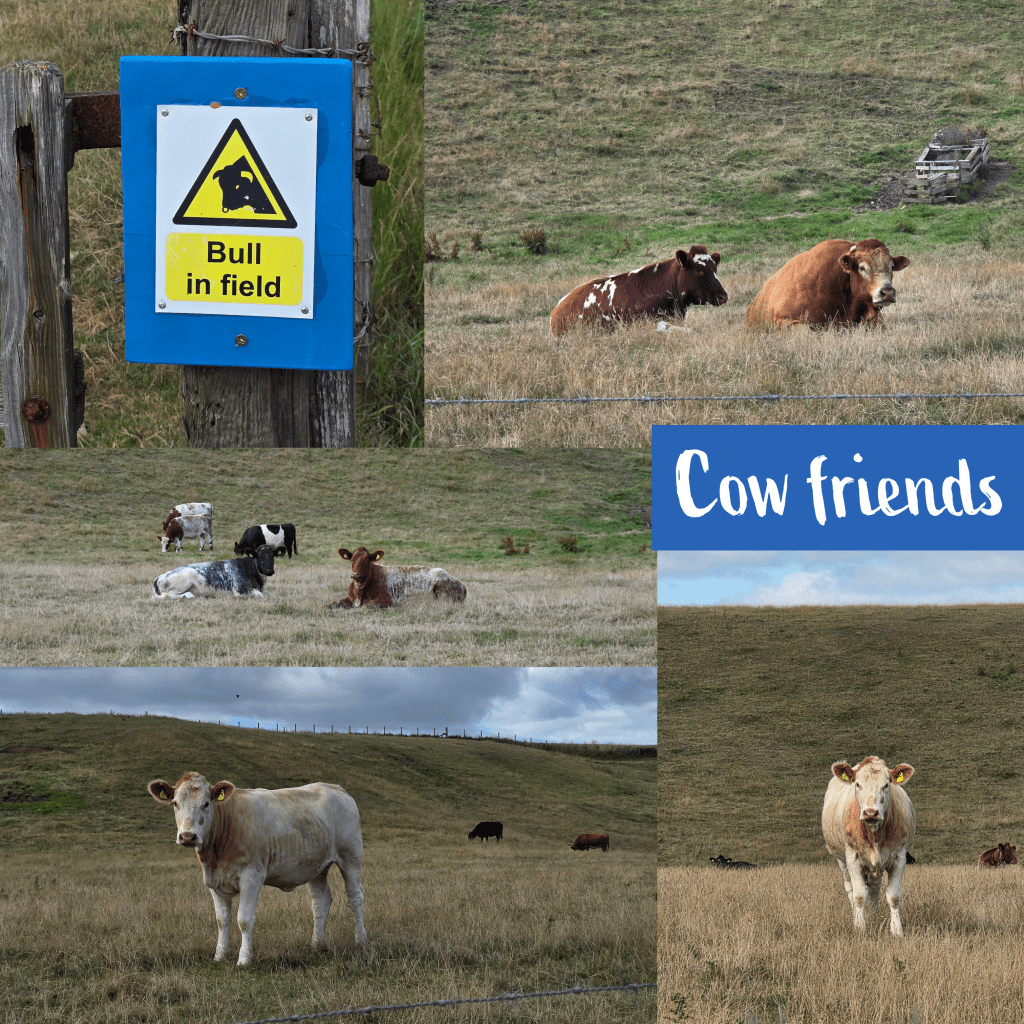
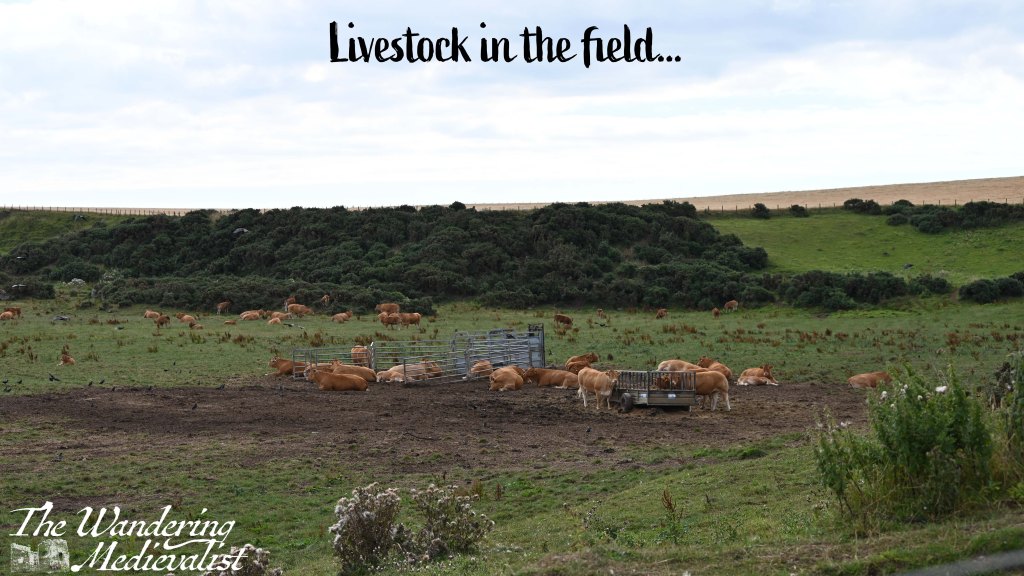
Eventually, after about 1.3 miles of edging along the golf course – with frequent reminders that golf is being played and you should be aware, and listen out for ‘fore’! – the course ends and there is a different kind of hazard, albeit short-term. The field of livestock was relatively calm, with one or two getting up as I passed. The white cow did keep a close eye on me, but never actually moved, just watched carefully that I would not be a problem.
At the far edge of the livestock pasture, the path leads steeply up hill – the headland I could see from a distance – then almost immediately back down again. There may have been an option to scramble along the beach here, rather than going up and down, but there was a great view at the top so worth the extra push. This may also be the only option at high tide.
Once down at beach level, the path cuts in front of a large cliff, onto the beach. There is a warning sign here to stay on the beach to avoid the fields of livestock, which are clearly open to the beach.
At first, the beach is not too difficult to manage, a combination of sandy and rocky but mostly rocky. I could see it as definitely being slippery if wet or if the tide had recently receded. As someone who grew up playing on beaches like this, I really enjoyed this section, especially with the view off to the right. The most challenging parts were soft sand and dodging the cow pats that were evidence of the open boundary between beach and meadow.
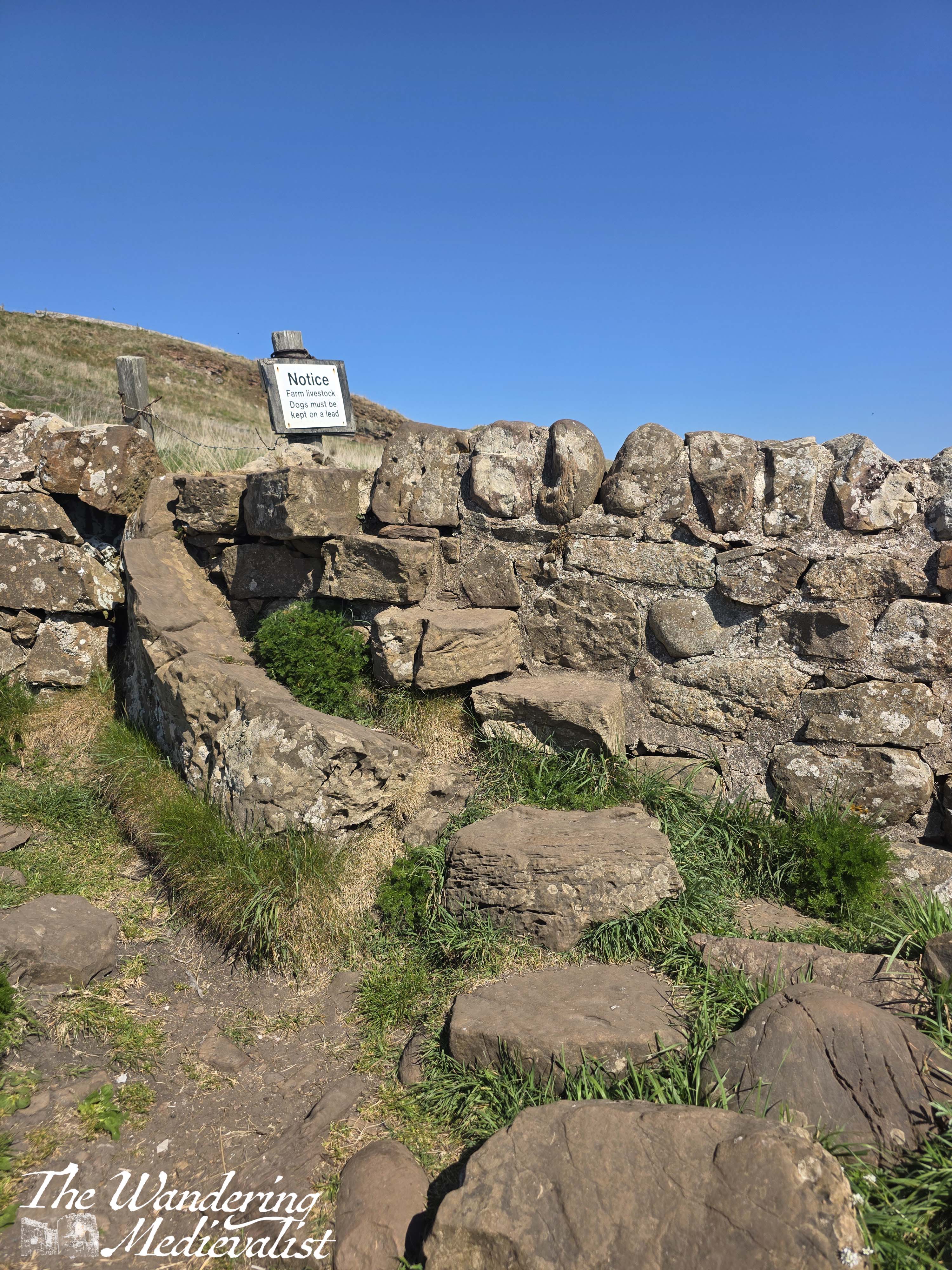
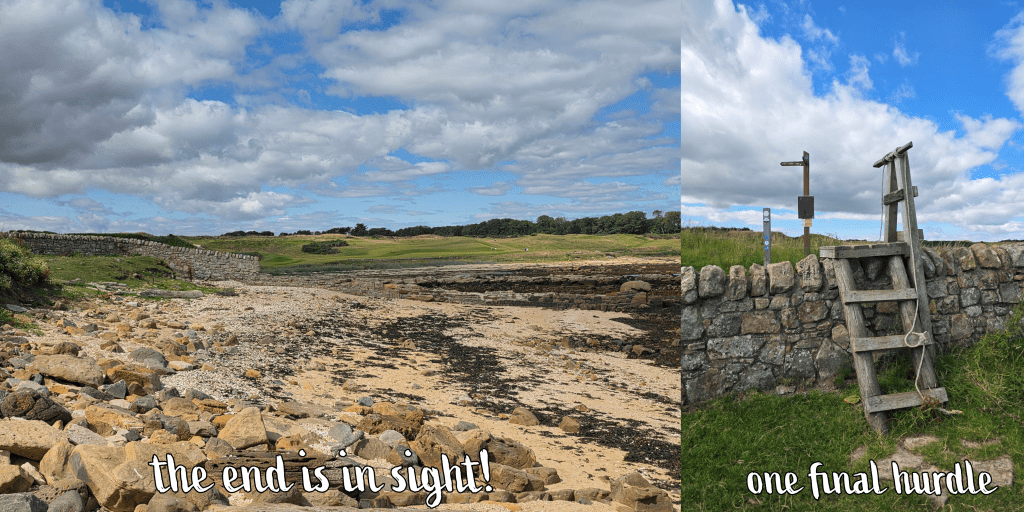
As I plodded along the beach, though, I realised that I was starting to run a bit short on time. It’s always a touch frustrating on a trip like this when your public travel options are limited, and you find yourself racing the clock. The farther I went, the rougher the terrain became, with rocks that were too small to completely stand on, but too large to step between, requiring a lot of attention and energy, slip sliding along. Progress slowed, and I was running low on energy. Finally, I caught sight of a stone wall – this was the end of the beach walk, though I was challenged in the end by a final obstacle – using a rope to haul myself up a wooden ladder to cross the wall.
It was at this point that I realised I needed to add two things to my hiking arsenal: one, a portable power bank, as my phone was beginning to run low (using it for pictures and voice notes) and I needed it for my return bus ticket. Two, an updated map of the coastal path; mine was from 2017, and it has become increasingly evident with each walk that changes have been made since then. While there is an online version, you are often out of range of data on these walks so it quickly becomes obsolete.
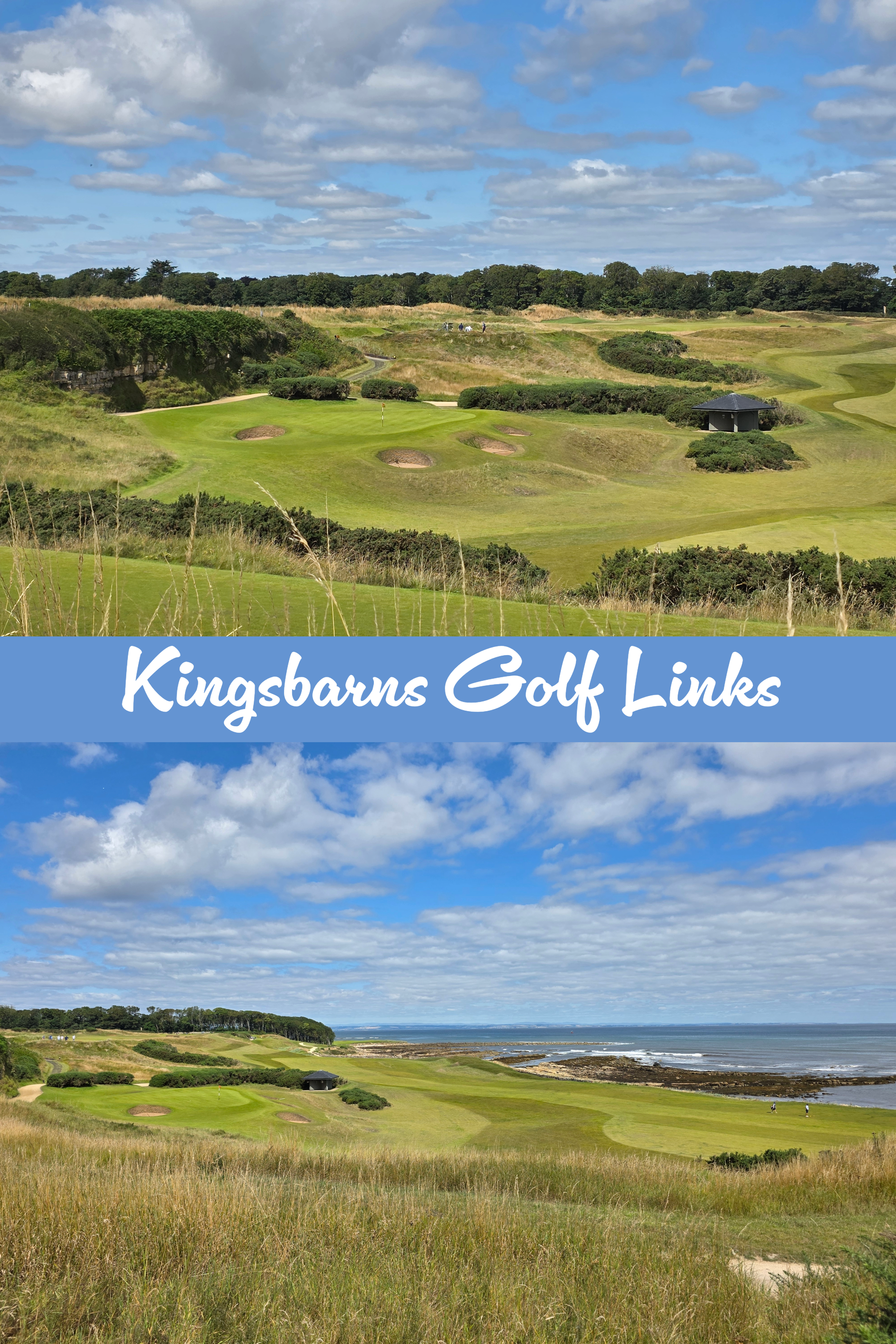
Carrying on past the wall, the path heads up a small hill, offering views of the livestock field on one side, and Kingsbarns Golf Course on the other. It was a busy day for golf with several large groups out, and to my amusement I identified more than a few American accents among them.
I thought that the path stayed by the coast at this point but instead it loops up above the golf course, which caused me a bit of confusion. My last efforts along the beach had driven me beyond the point of questioning, though, so I pushed on, enjoying the view over the course. It was also helpful to see the treeline of the Cambo Estate clearly ahead of me, knowing that was my goal.
The path is a touch unclear here, but I used my instinct and habit at this point to keep to the edge of the golf course – a brief turn left then almost immediately right again, between a few greens. The sun was bright and hot by this time, and up to the left I could see a few old estates including the roof of Kingsbarns Distillery.
The Coastal Path approaches the estate wall and is briefly forced around to the left, curving towards the water, before a small gap in the stone appears. There is a wooden gate and sign for the path – I was quite relieved, as I knew the end was near and I did not want to go all the way back down to the beach.
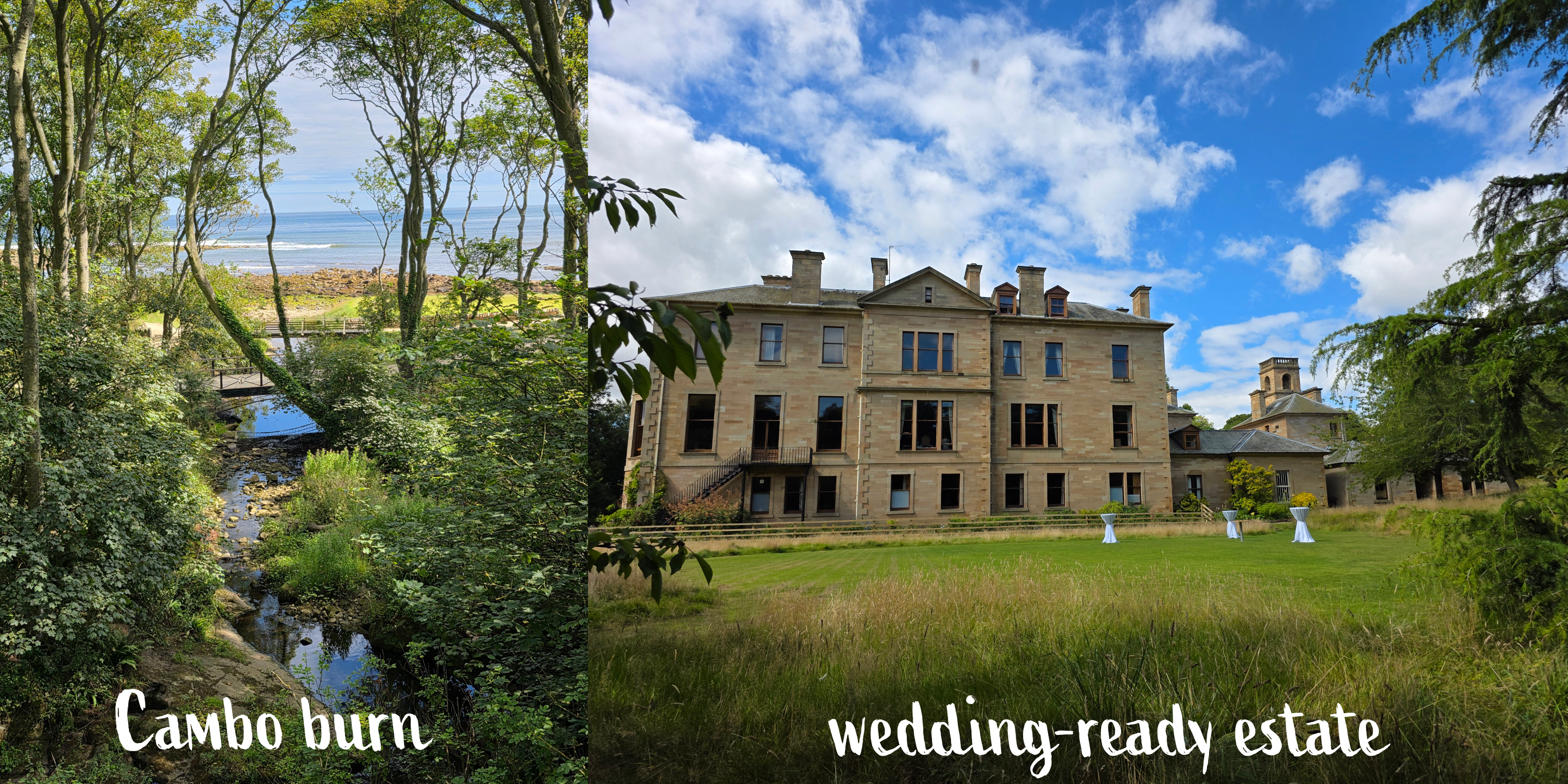
Through the gate, there is an immediate right-hand turn down some wooden stairs, and a view through the trees towards the beach, looking over the Cambo burn.
Once you go down the steps, the path sweeps towards the river, and on the other side splits into several directions. One leads down to the coast, one further along towards Kingsbarns, and one up towards the estate house and gardens. This was where I marked the end of my walk – 5.5 miles from where I started in Crail. But, I still had a way to go, walking up through the estate grounds.
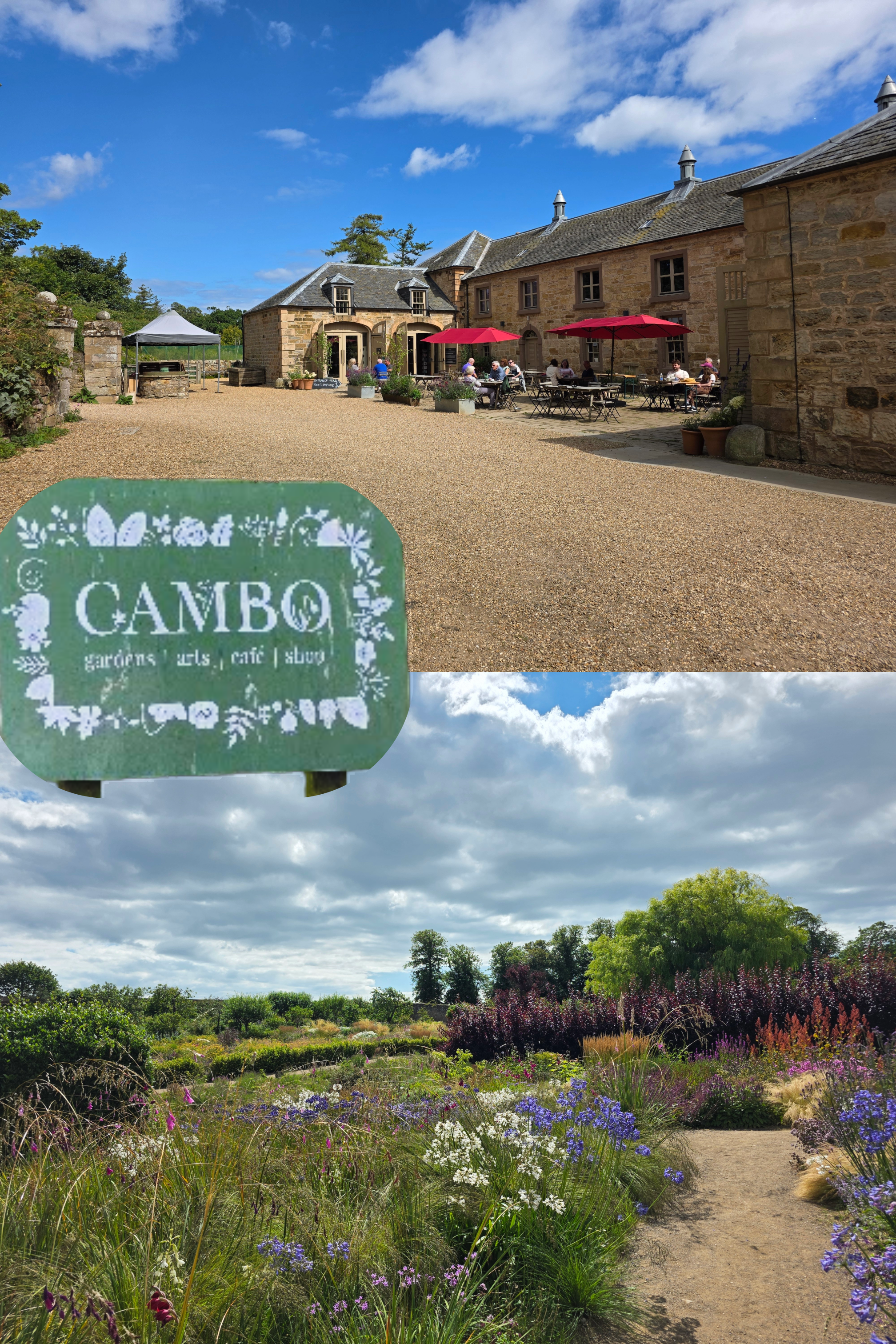
Cambo is a beautiful spot to visit, with a walled garden, excellent café, and plant shop. It is possible to walk up past the walled garden, through the car park, and along a path all the way to the road – for those hoping to make a bus, this is a solid mile. I tried, I really did, but I missed by about 10 minutes, having forgotten just how far it was. Fortunately, the other half took pity upon me and collected me from the bus stop where the only alternative was a 45-minute wait.
I did consider joining the groups of families and couples enjoying their lunch in the sun, but I was hot, sweaty, and a touch bedraggled. Home was the better option. Overall I found this a really pleasant walk, and not as difficult physically as I thought, meaning that my stamina is definitely improving.
I might try it the other way were I to do it again, with the rocky beach the first thing I tackled rather than the last. But I do seem to have developed a pattern of walking counter-clockwise around the edge of Fife, and I am now reluctant to change that. Public transport is possible for this route but a bit tricky, so worth just being aware of the limited options (one bus an hour to Cambo), and of course, check the tides!
Autumn travel approaches, but I hope I will manage at least one more section of the trail before I disappear overseas.
After my plans for a walk last weekend were rained out (torrential rain, not pleasant Scottish mist), I was determined to get back on track this weekend. It has however been a long and stressful week at work, so I chose a slightly shorter route again rather than pushing myself for the five miles I was planning. After spending the last few weeks arranging my autumn travel, I am becoming concerned that the goal to get this walk done by end of January might be a touch ambitious, but I can only try and get as much done as possible. And it doesn’t mean I’m going to not finish at all, just that it might take a bit longer. Eagle-eyed readers checking my Fife Coastal Path challenge page may note that I have extended the challenge by 6 months. A new goal, and one I intend to keep!
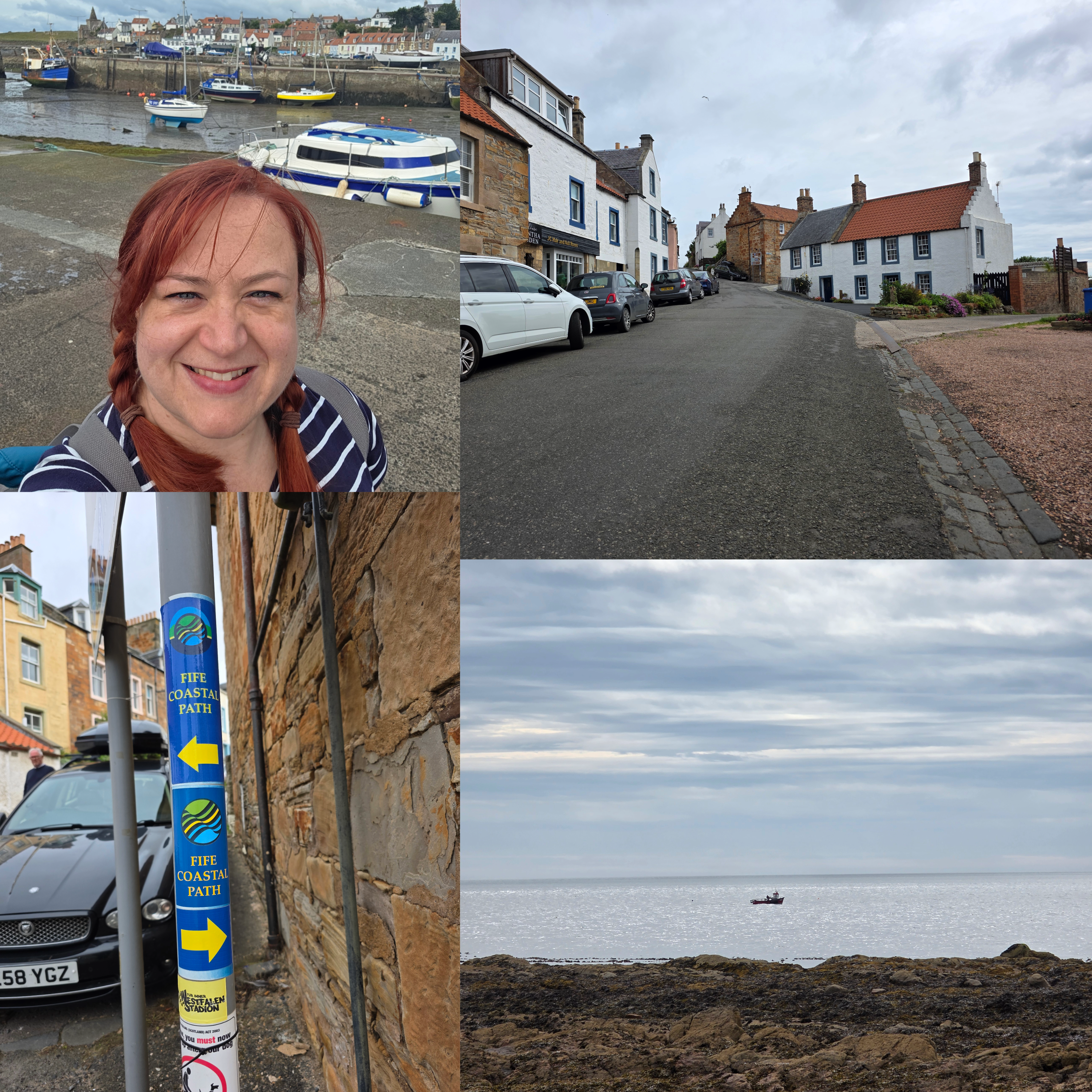
It’s been a warm few weeks, but this morning I discovered a lovely cool air wafting through the bathroom window, and the sky was overcast but not threatening, so it seemed a good morning to make a bit of progress. So, I hopped on a bus to St Monans, where the primary bus stop is on the main road. It is a relatively short – though steep – walk down Station Road to the waterfront.
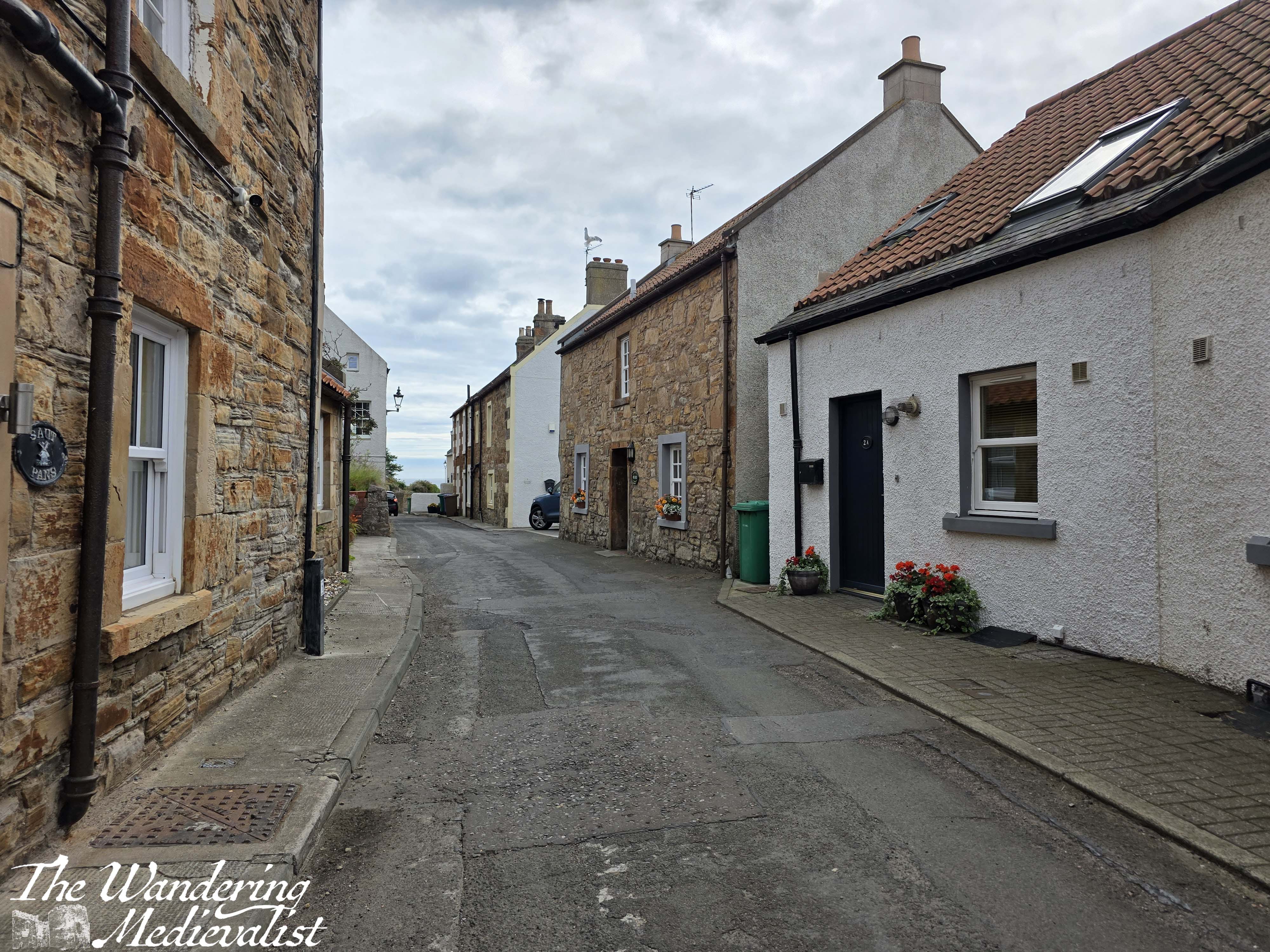
I finished my walk at the East Pier, and so it is here that I set my timer again, before heading up away from the harbour along Forth Street and then making a quick right onto Rose Street. Rose Street is lined with beautiful old houses and cottages so omnipresent in the East Neuk, and ends at a small car park from which the Coastal Path continues.
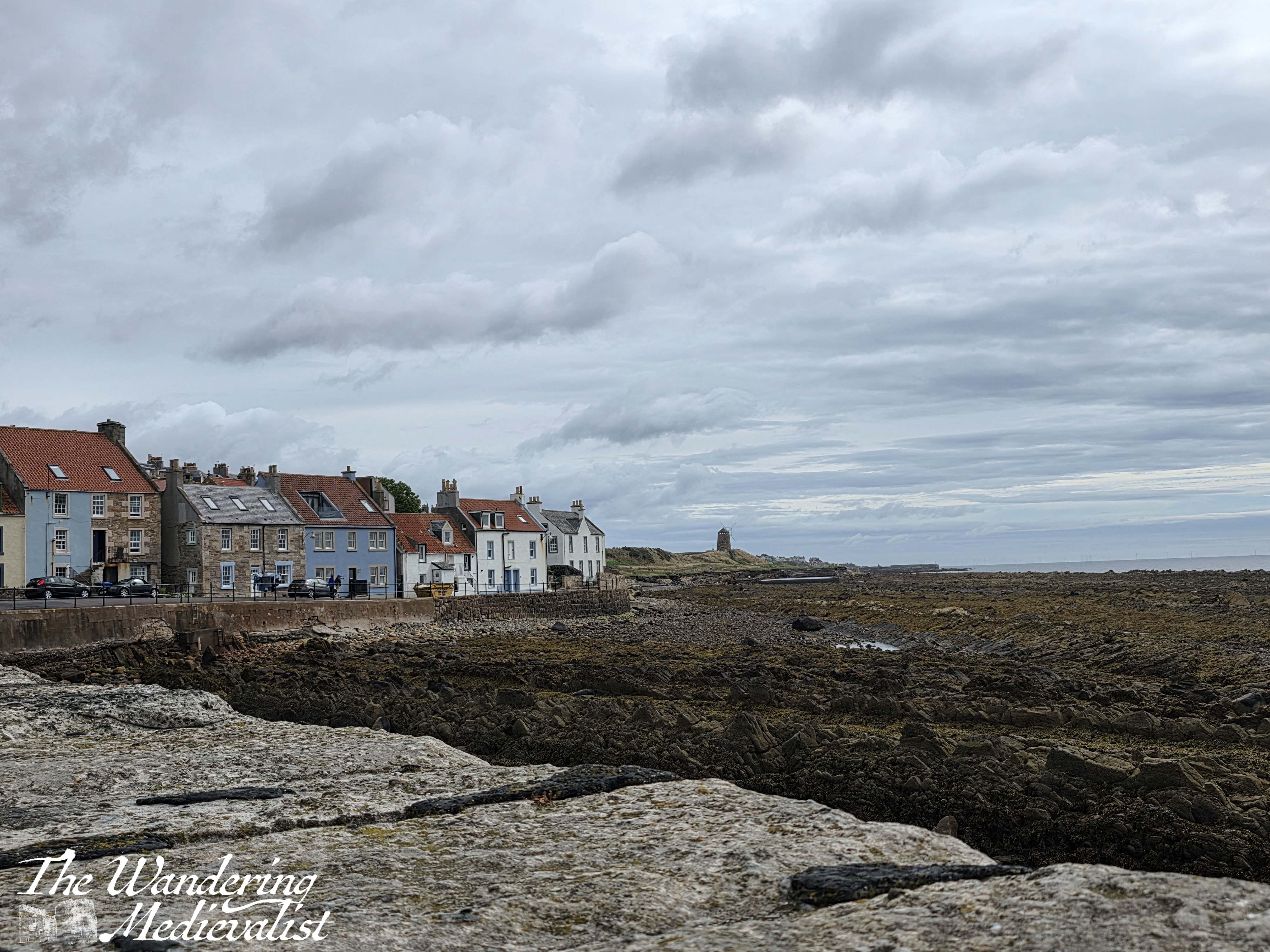
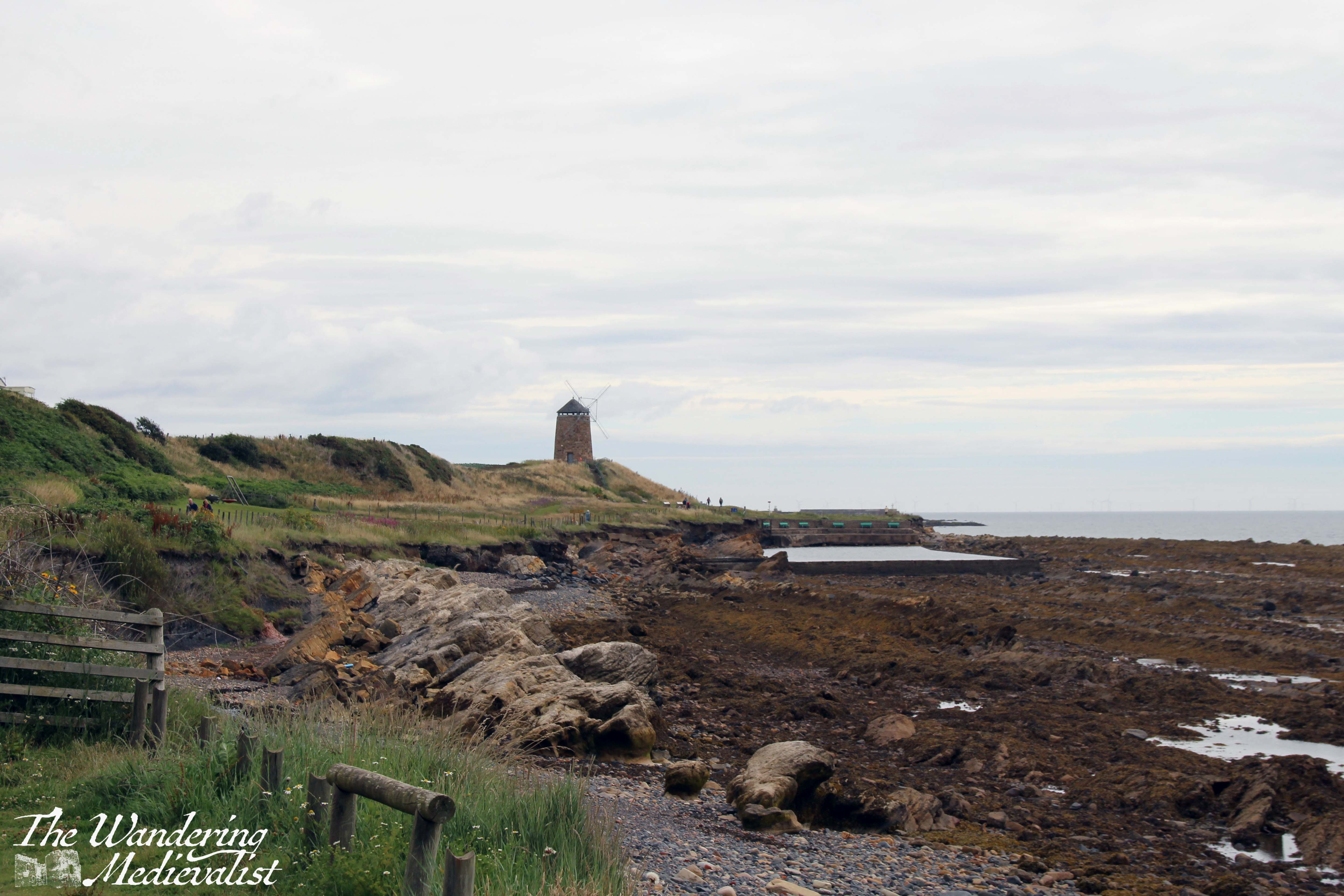
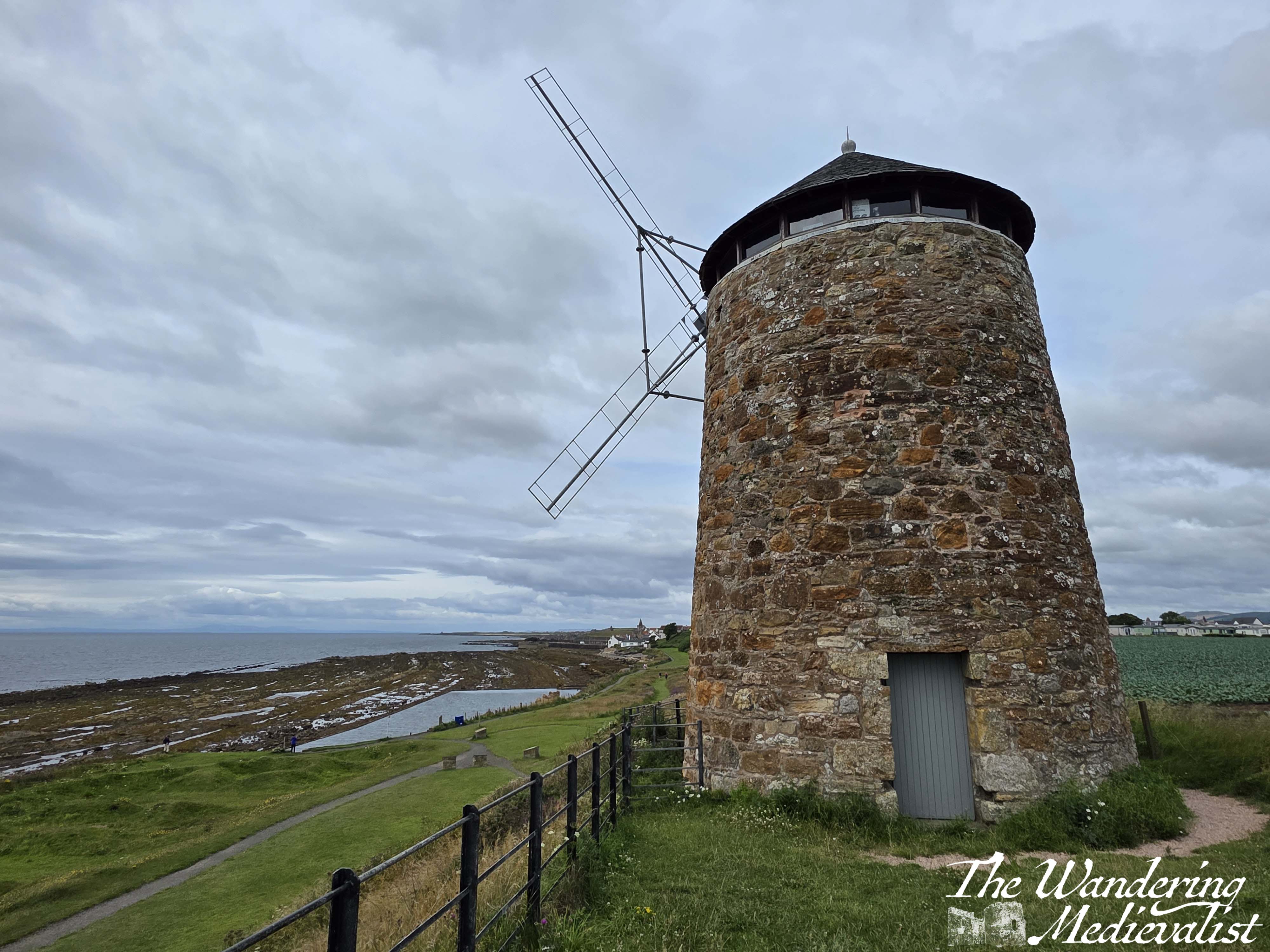
Immediately ahead, less than a ten minute walk, St Monans windmill dominates the horizon. A remnant of the 18th-century Scottish salt trade, the windmill pumped sea water into salt pans, which were boiled using the plentiful local coal supply – Fife was a major coal producer from the 1800s until the 1980s.
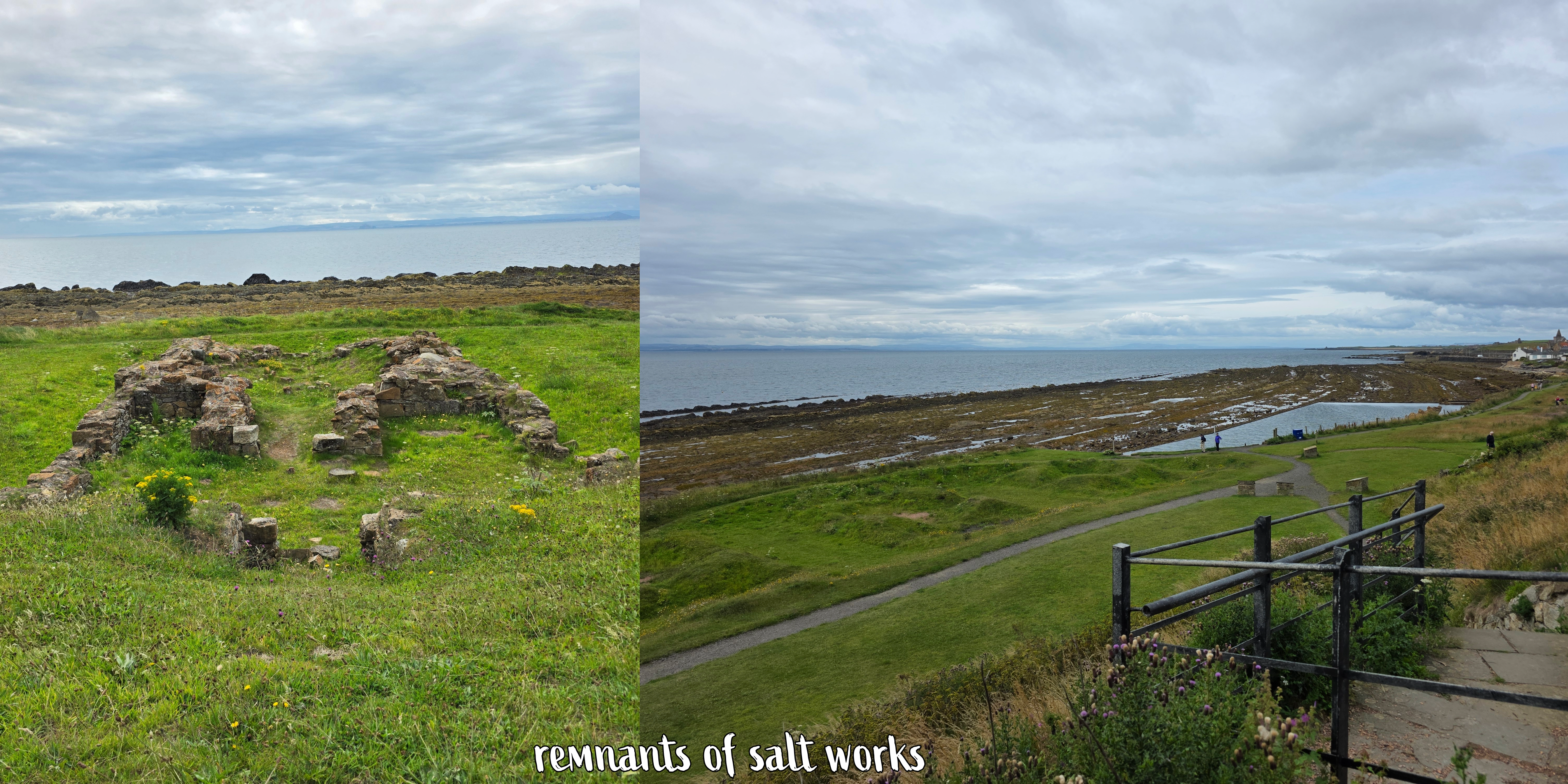
As you walk past the windmill, the remnants of the salt works are evident in indentations in the grass as well as the foundation ruins of a workhouse. I of course took a quick detour up to the windmill itself to see the view in both directions. Below the windmill is one of many coastal bathing pools though this one was empty in the brisk breeze.
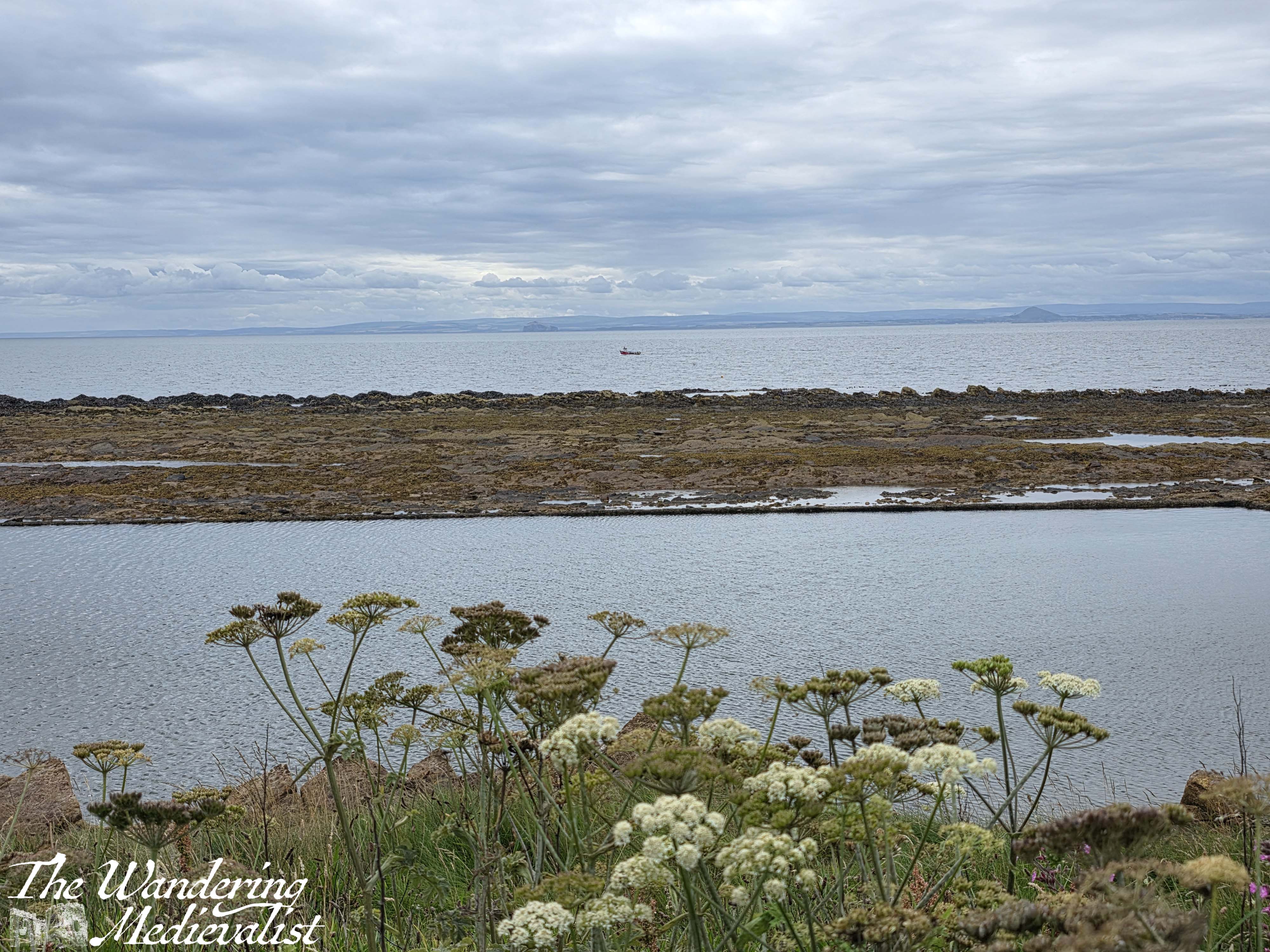
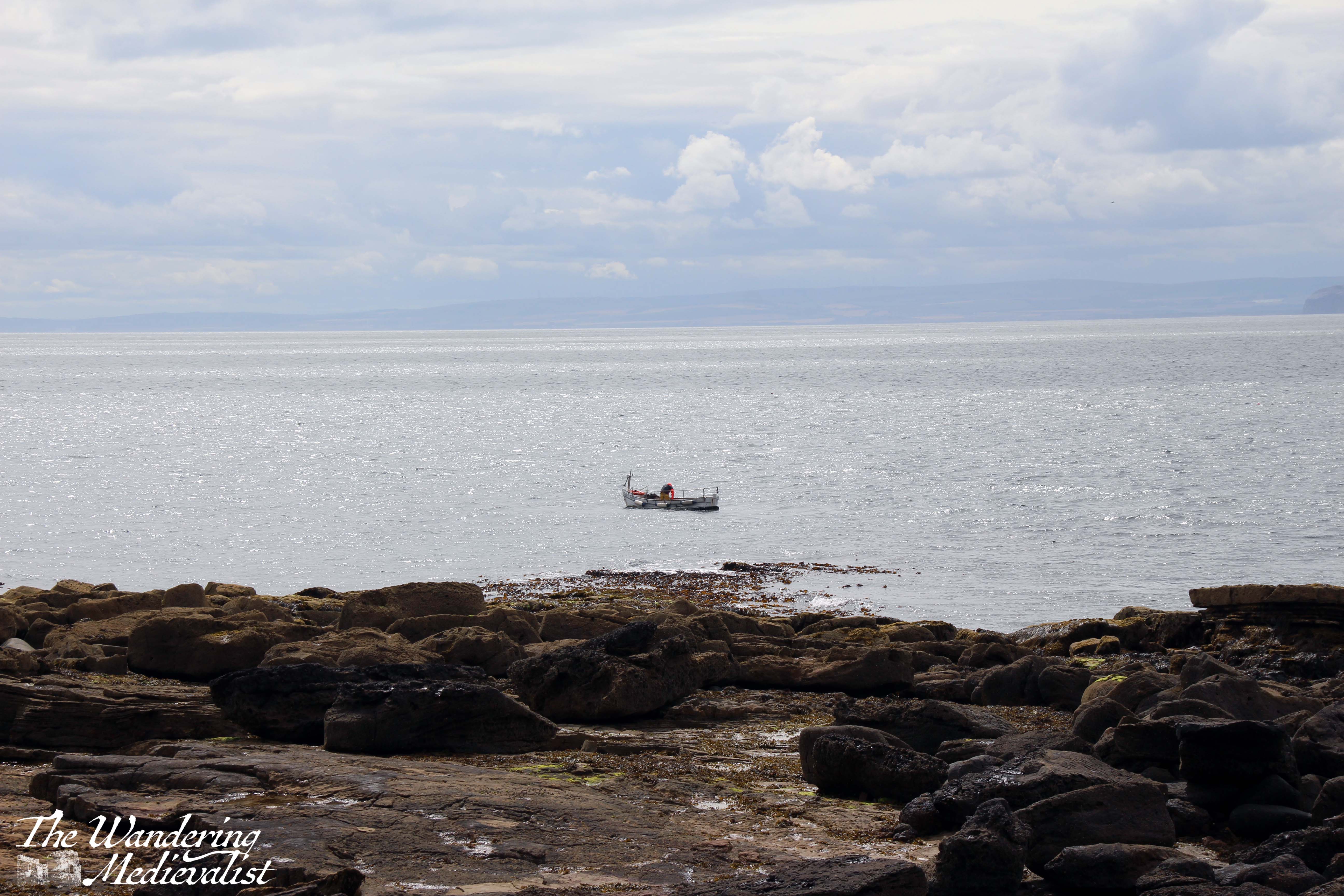
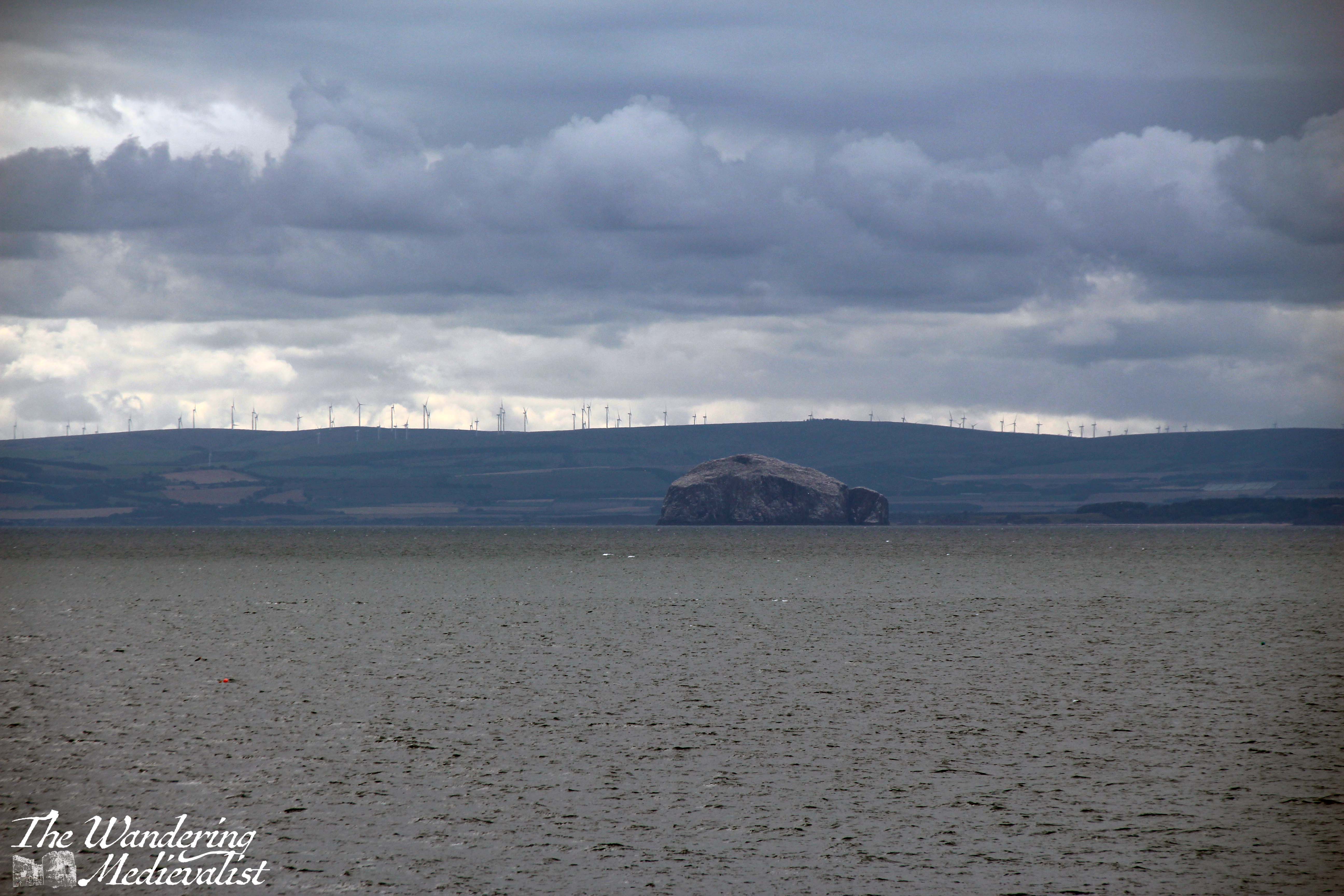
As I kept moving, I was warm enough to manage with just a t-shirt, but wind-breaker would not have gone amiss. This section of the walk was already busy again – more so than further towards Kincardine – with dog walkers and even a few foreign tourists. Passing the windmill, one can already see Pittenweem in the distance, as well as across the Firth of Forth to the Bass Rock.
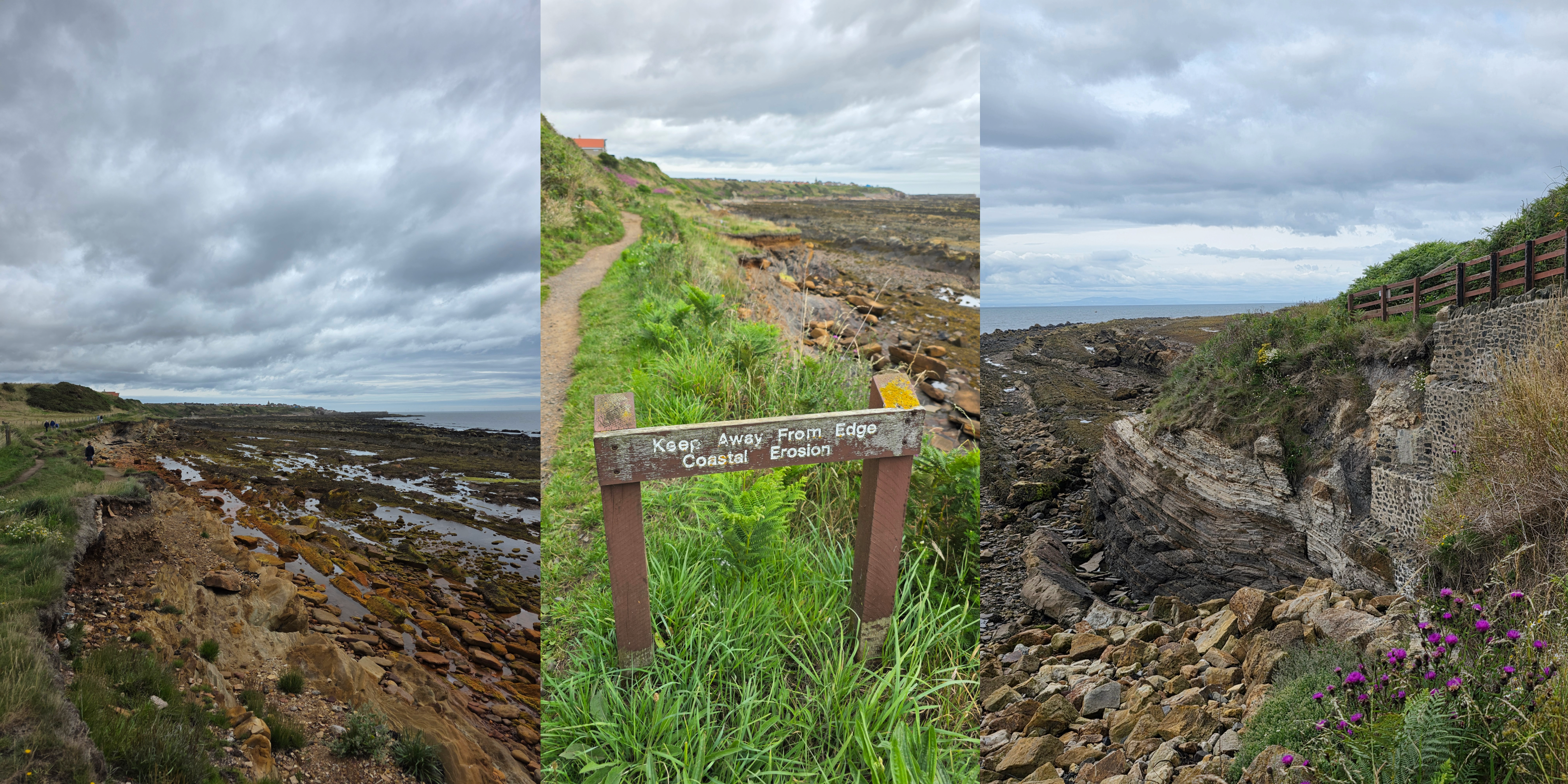
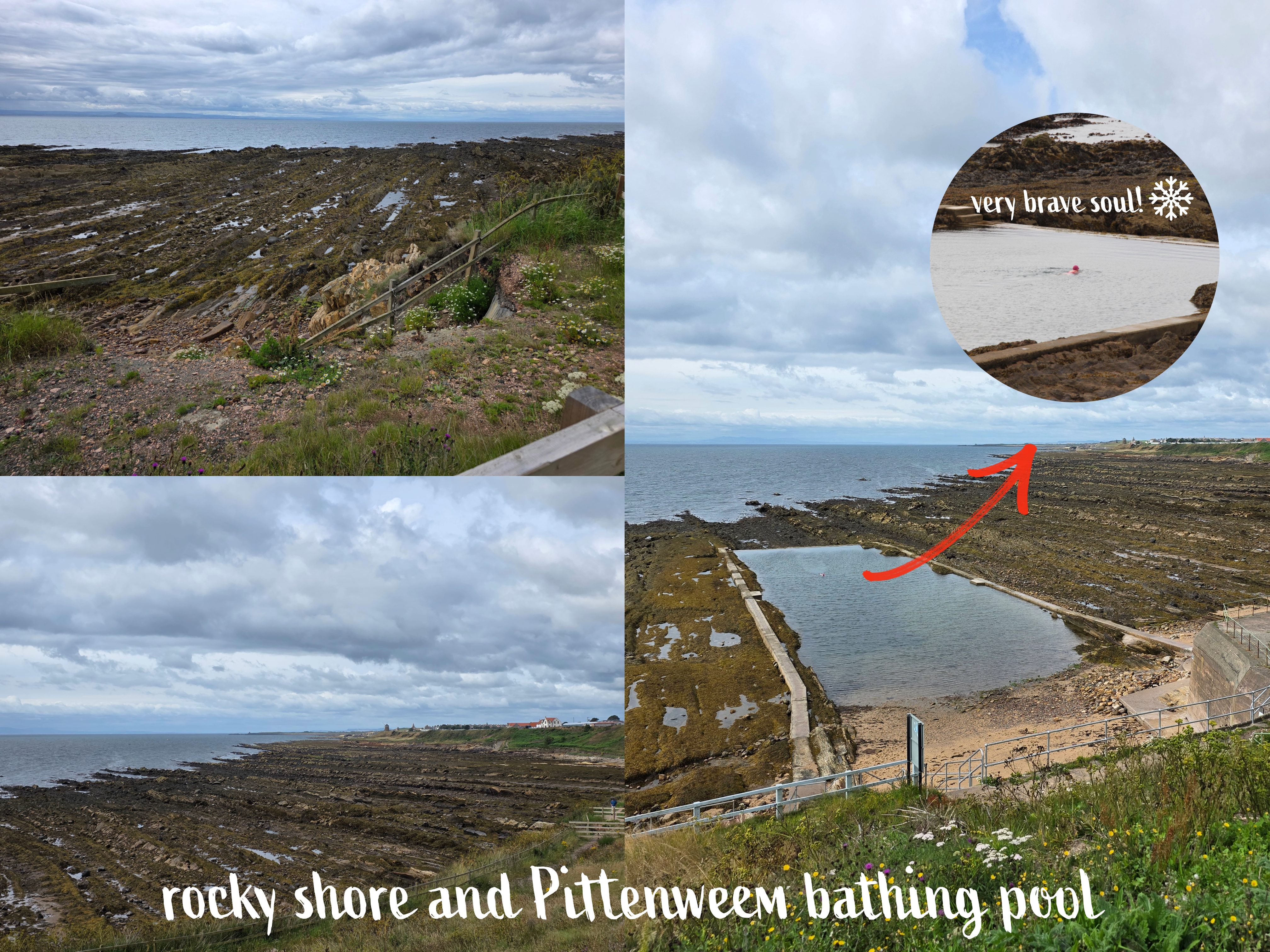
Not long before the houses of Pittenweem appear, the path splits with one route leading up the hill and the other along to the swimming pool, where there was a brave soul doing laps in what could only have been chilly water. Due to very evident coastal erosion, this portion of the path is quite new, heading up the hill towards West Brae, where there is a small snack shop and a mini golf.
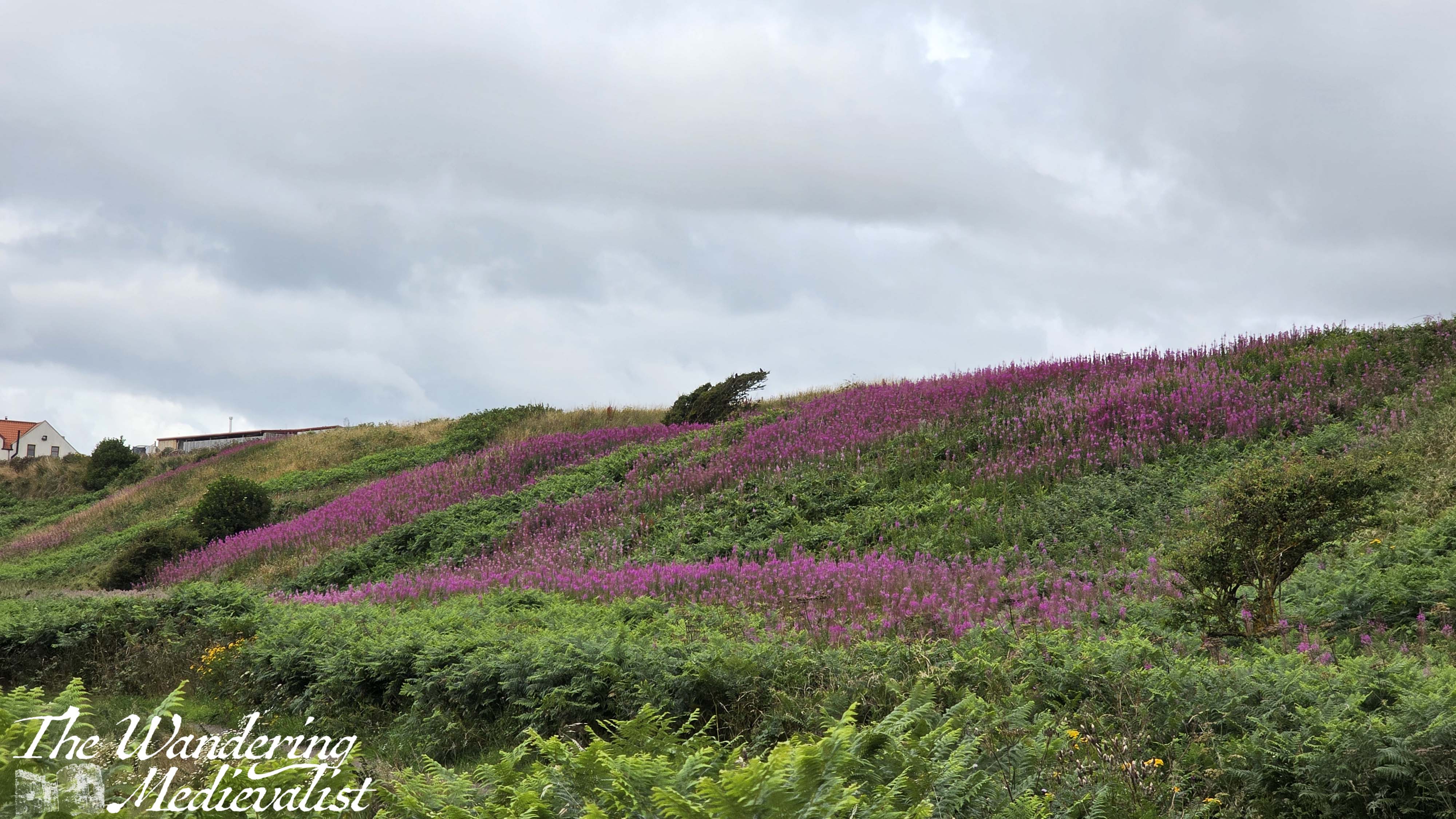
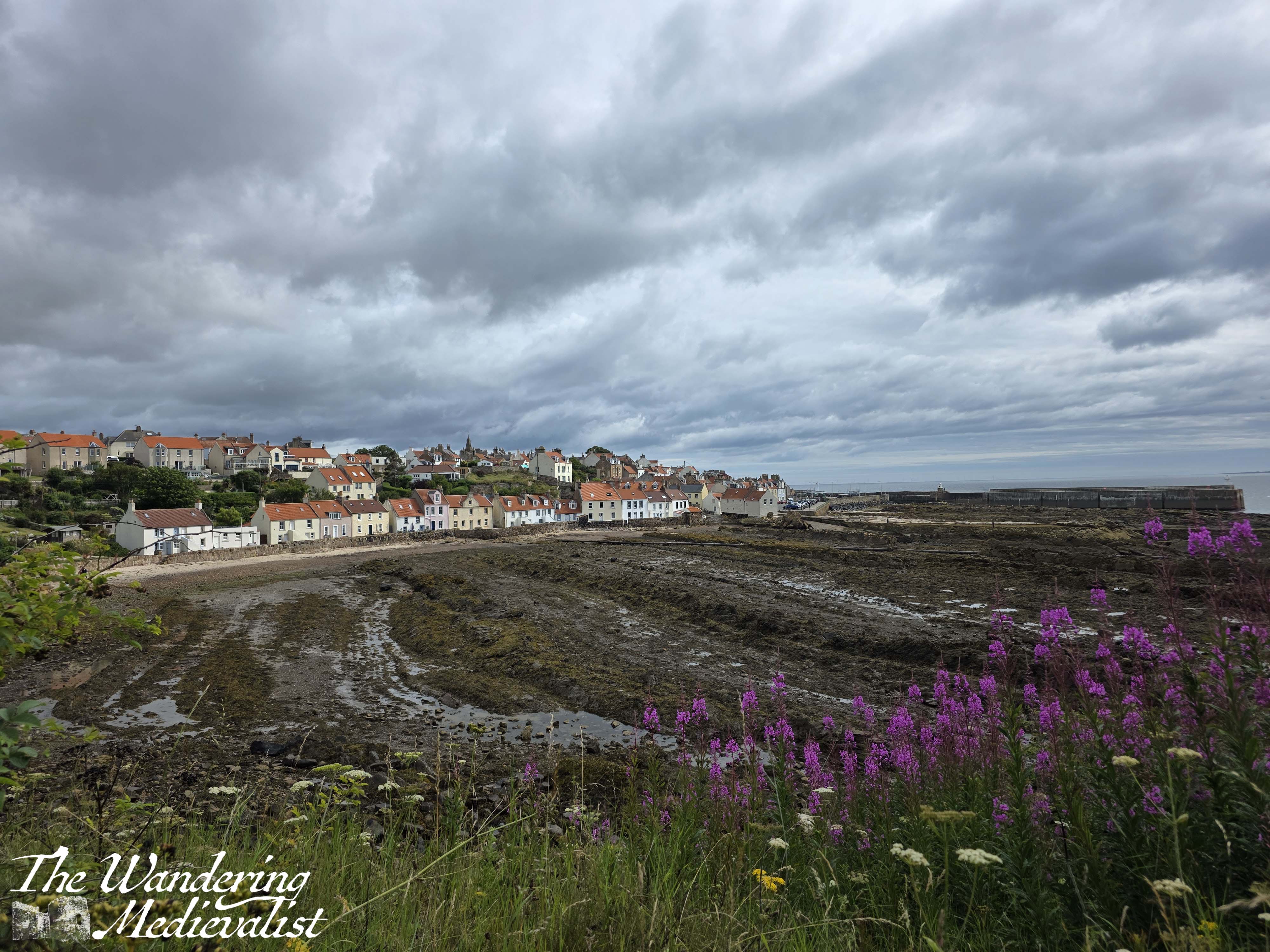
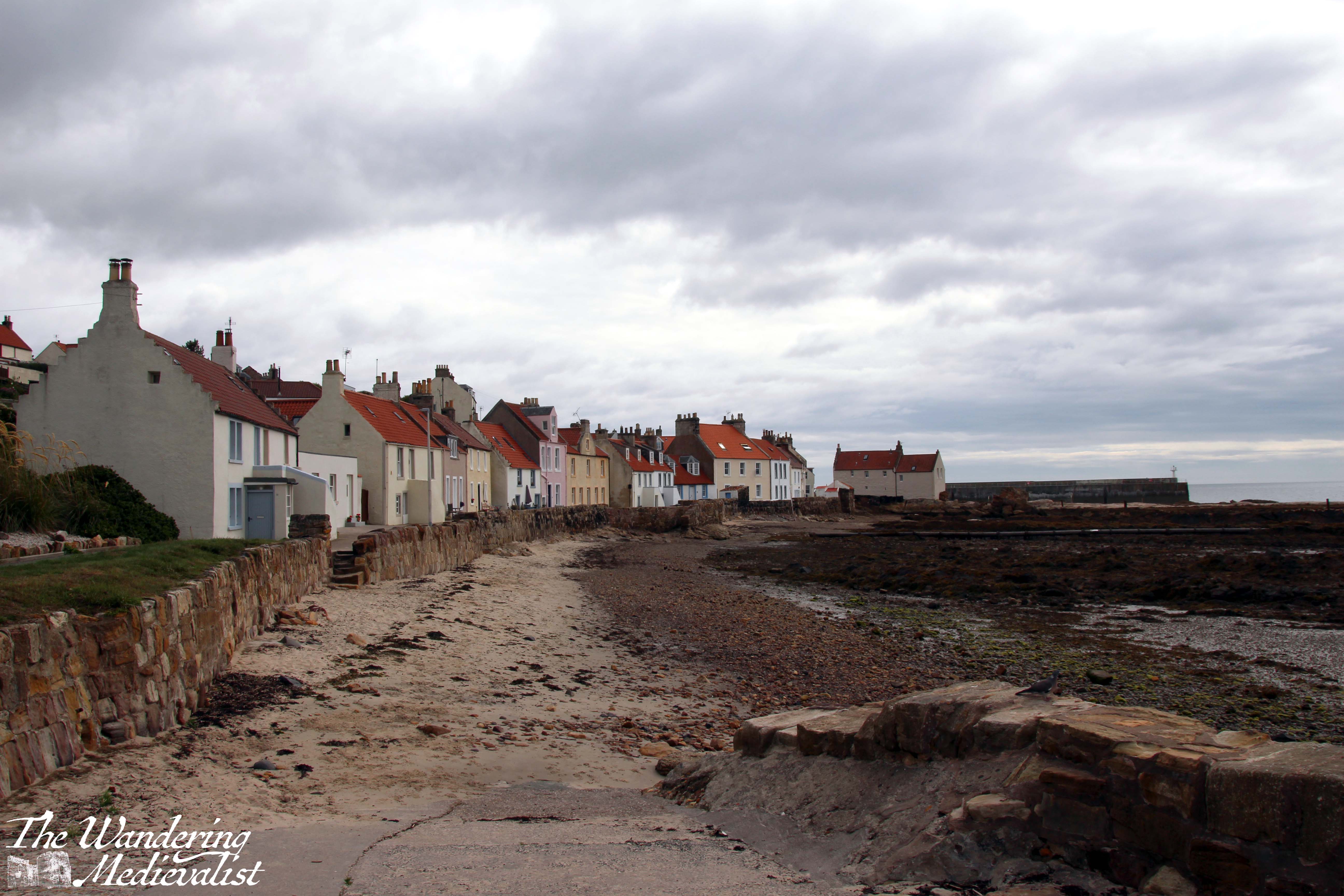
The coastal path heads down again after this brief rise and around the corner to a great view of the town. The sun was trying to come out as I reached this point, desperately fighting against the clouds, which made for some very dramatic colours, as you can see above.
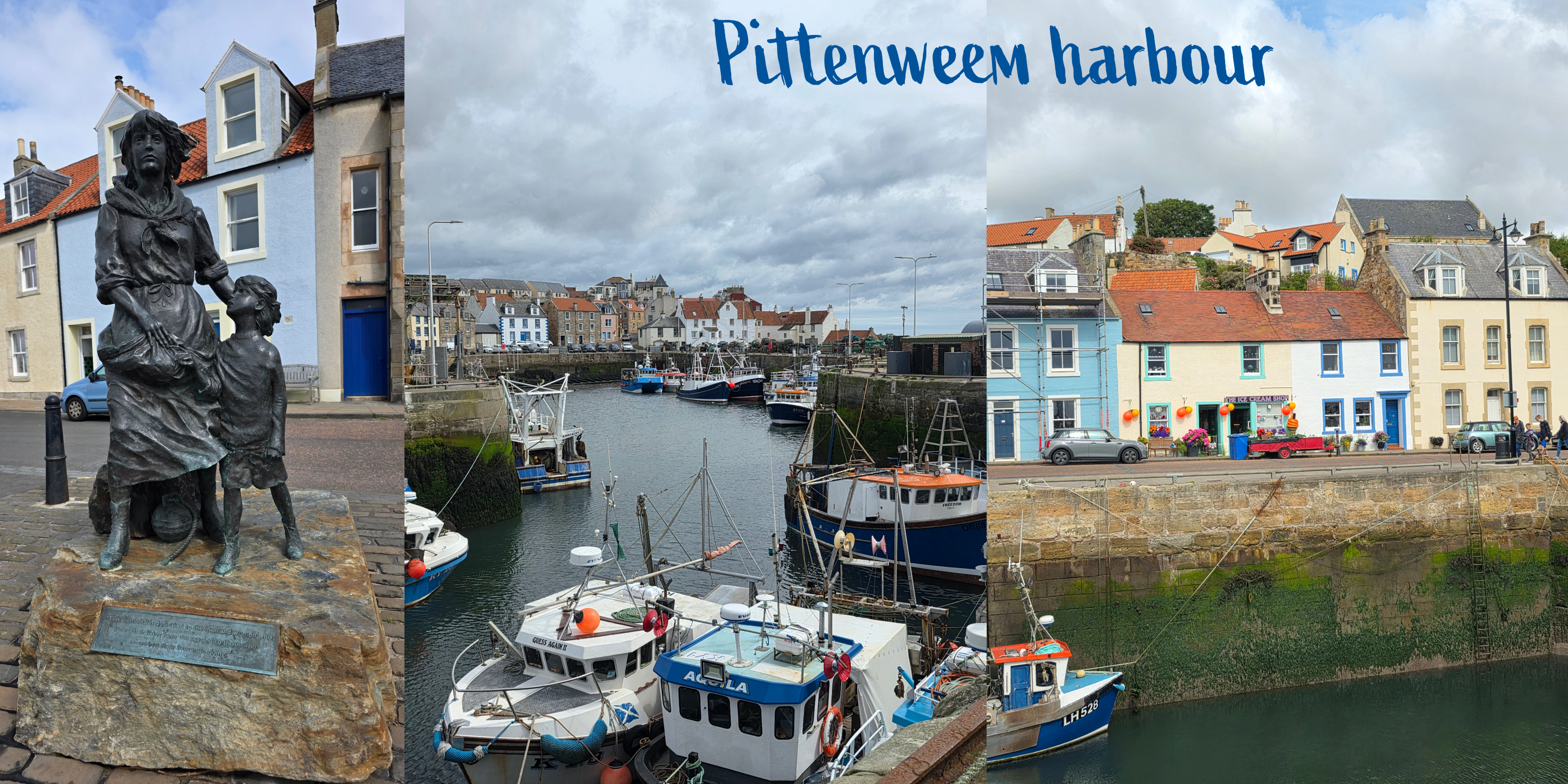
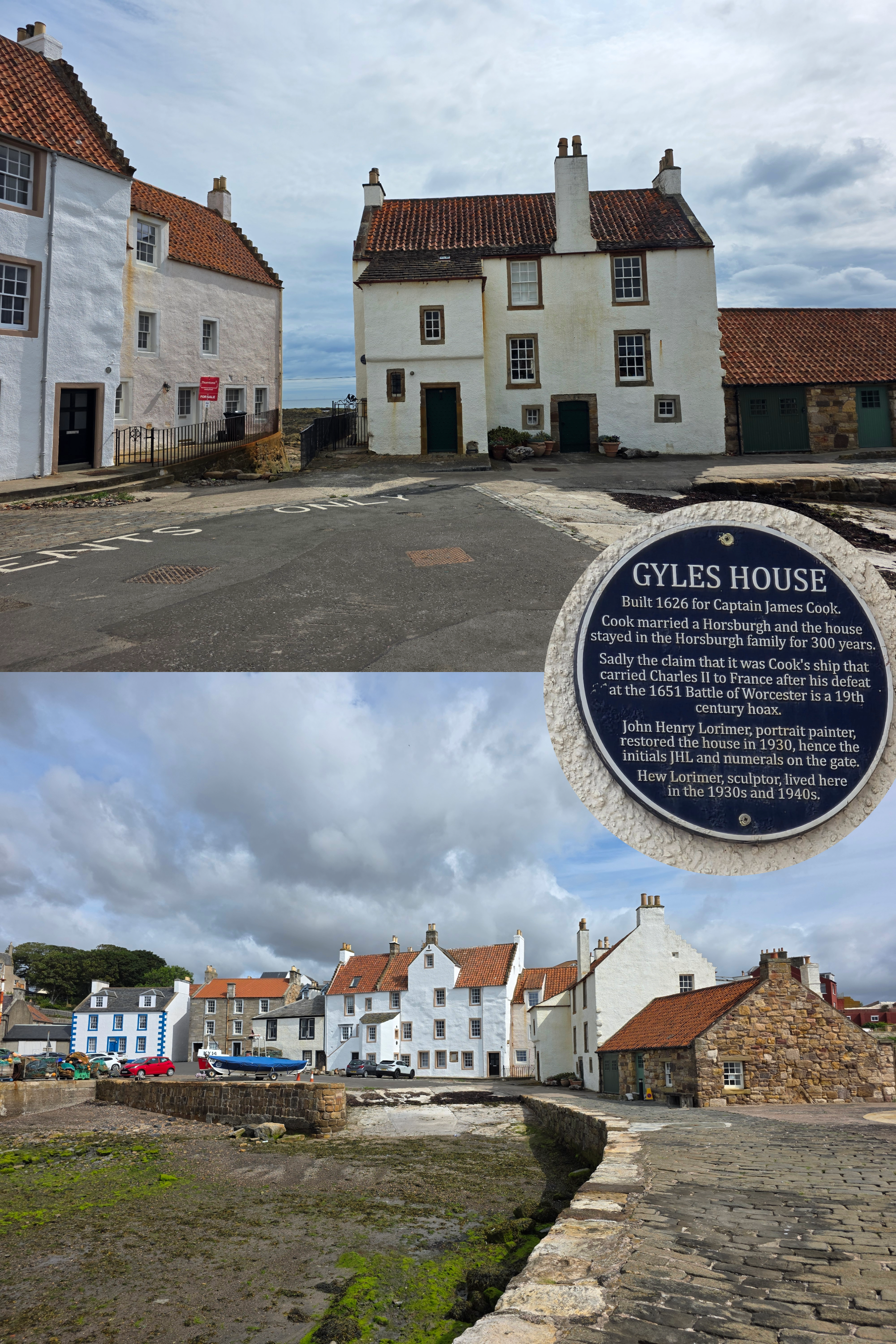
The route enters Pittenweem on the path between the coast-facing houses and the rocky shore; clearly an area built well before the advent of cars, when it would have been more likely to take a boat to your doorstep. Shortly the path opens up to a road and a car park, at the end of which is a beautiful statue that is the Pittenweem Fishermen’s Memorial – the figures of an anxious mother and child looking out over the sea for their returning loved ones. It could as easily be in my home town as here, though Pittenweem is still far busier as a fishing port. In fact, it is the busiest port in the East Neuk with an active fish market.
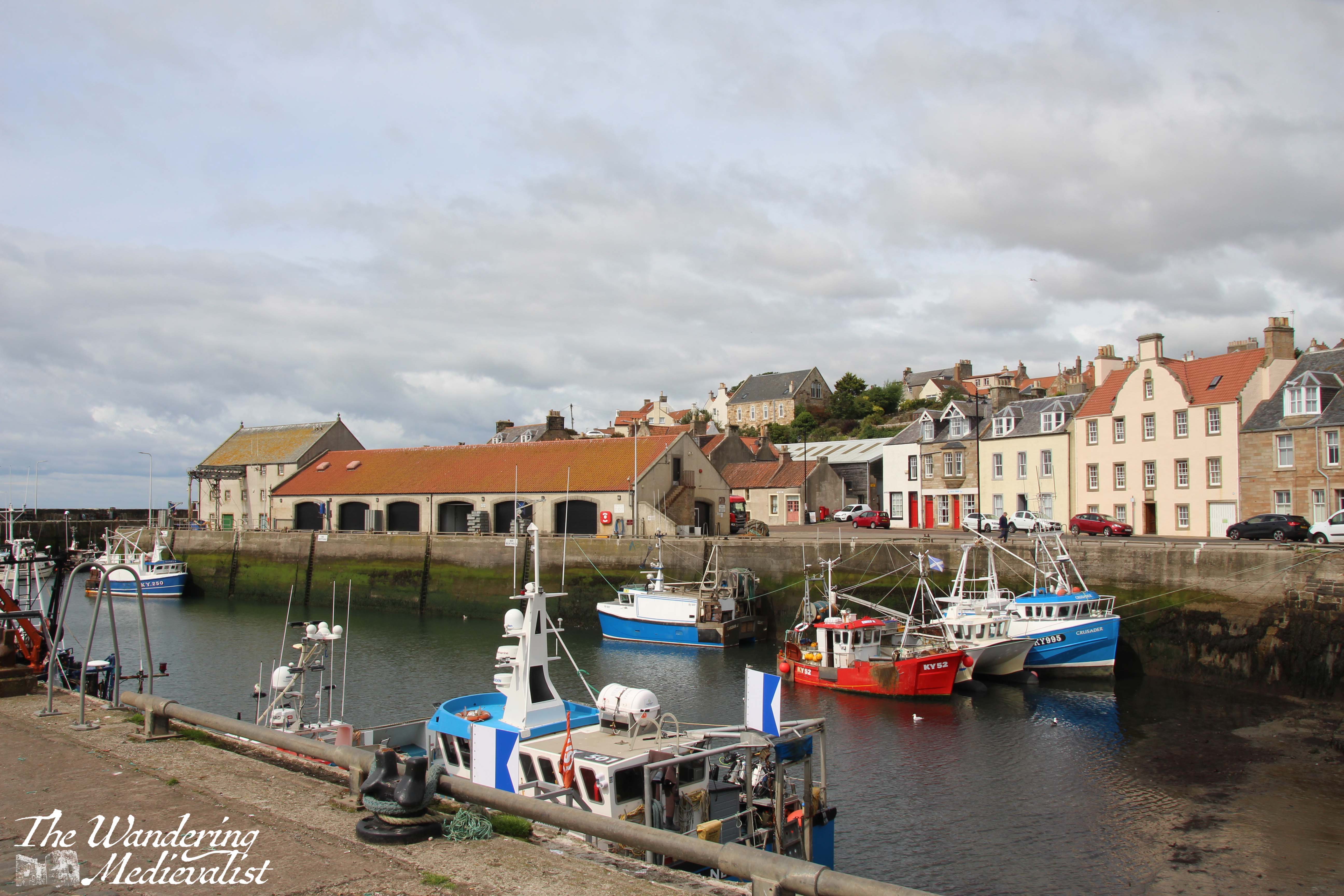
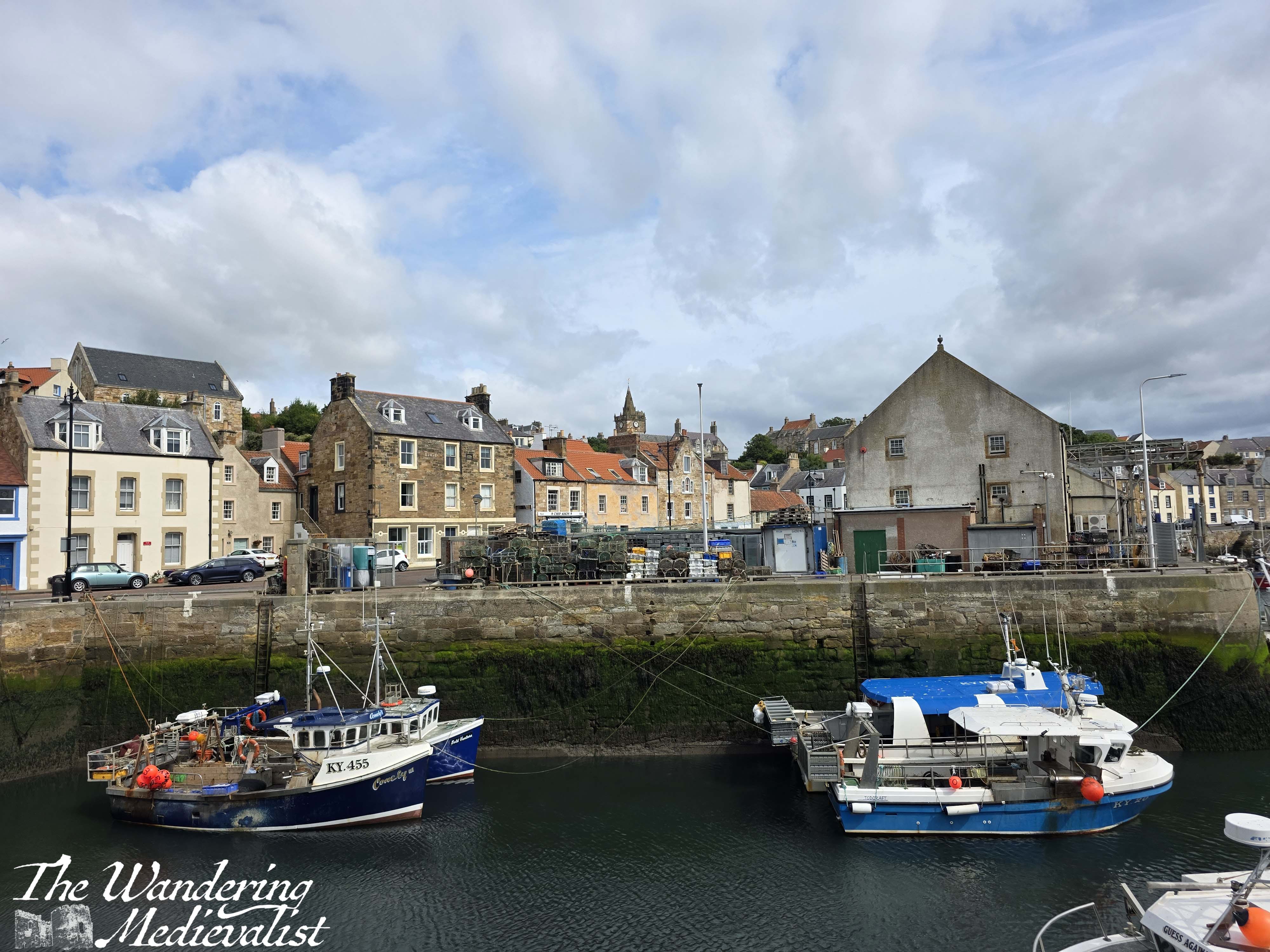
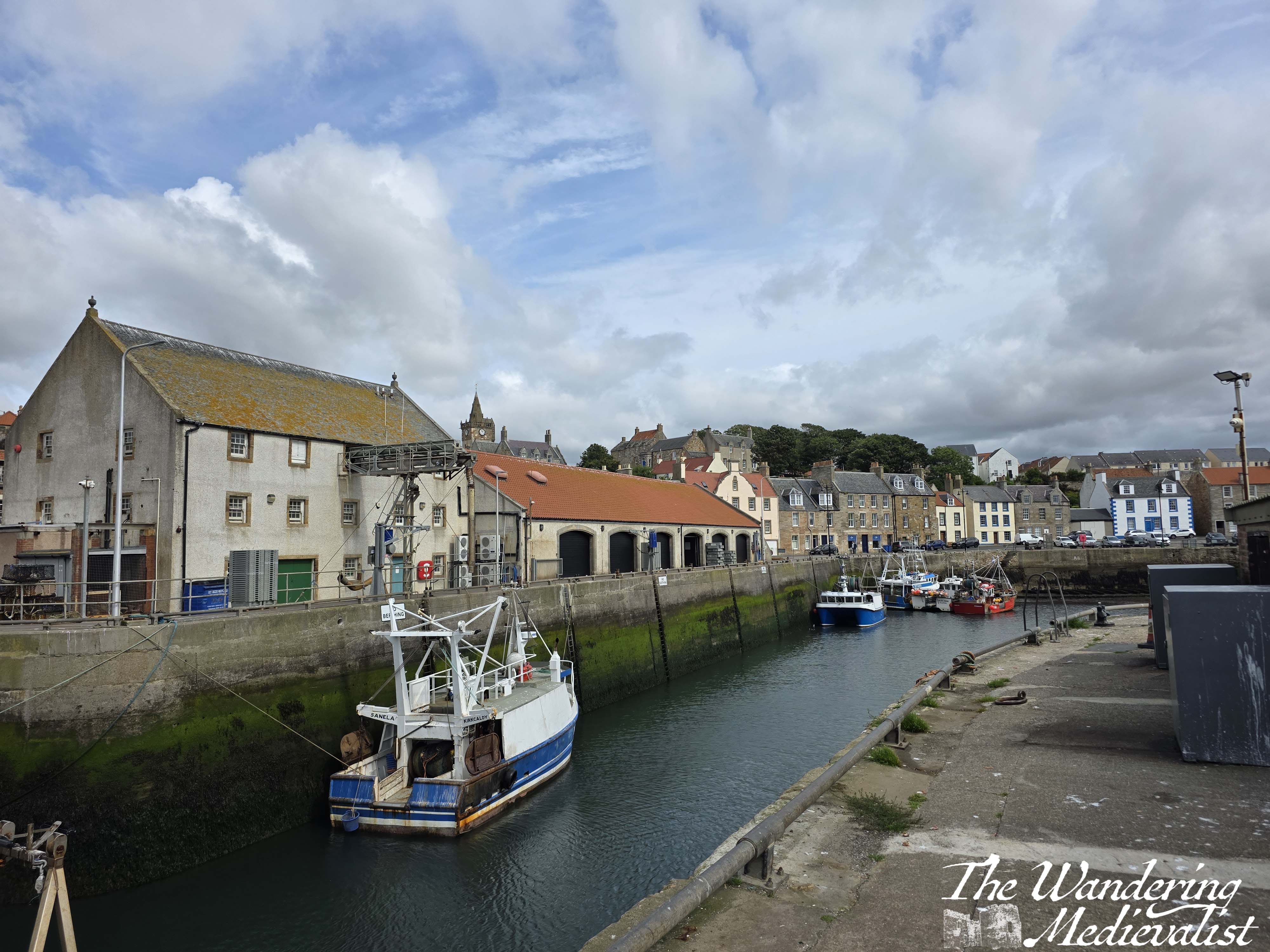
I took a short detour – again – out the harbour wall where you get a real feel for how active the place still is. There are some beautiful old buildings at the water’s edge, which I took a bit of time to appreciate before heading on my way.
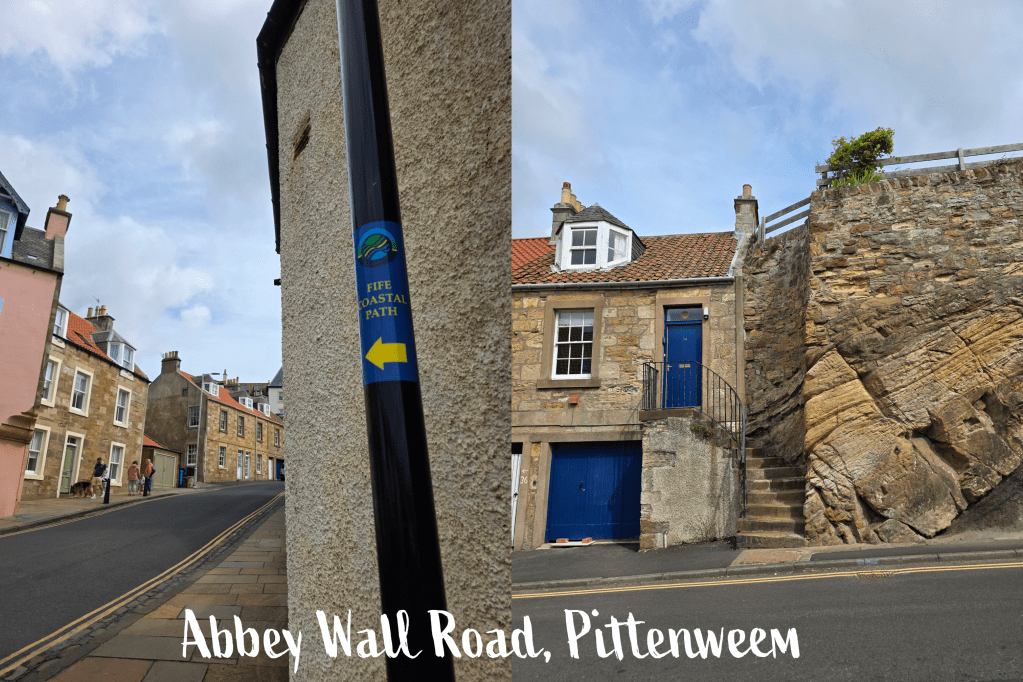
Beyond the harbour, the path heads up a hill along Abbey Wall Road, which is lined with houses. I love the way the stone wall rises from the rock, as if they were one.
Then suddenly, at the top of the hill, the view opens up and is a gorgeous vista over the ocean and coast in both directions.
From here to the edge of Pittenweem, the path hugs the top of the cliff, with neighbourhoods disappearing up roads to the left, and the path a hazy line through Glebe Park, some grassy patches and behind walled gardens.
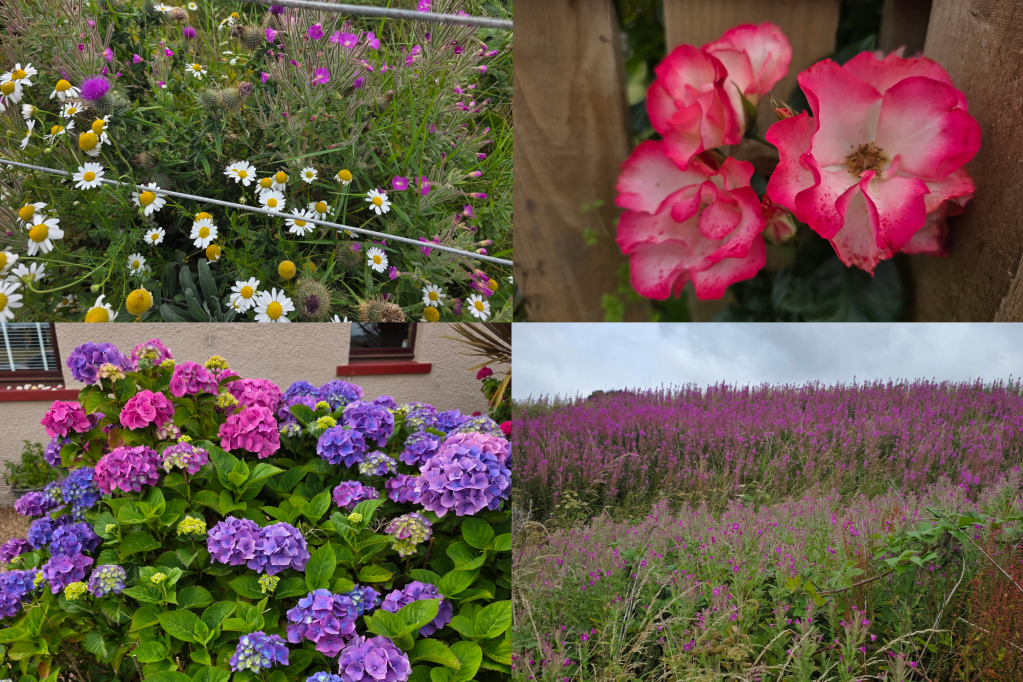
It’s the time of year for flowers!
As with most East Neuk villages, the edge of Pittenweem is very dramatic, with a line of houses right up against a wide field. Less than a quarter of a mile beyond, the path takes a turn down the coast with some relatively steep rock steps that could easily be slippery if they were damp.
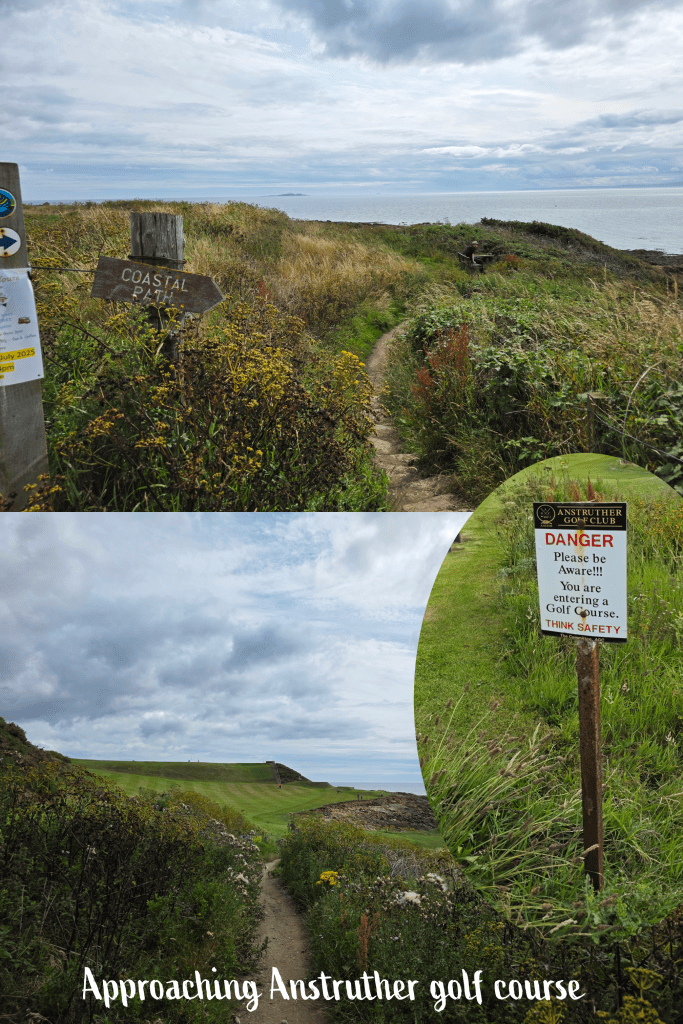
Descending the rocky steps, one finds the first signs for Anstruther Golf Course, and the alert that walkers should be courteous of players and listen for any signs that an errant ball might be coming their way. Wildflowers line the narrow trail until suddenly they stop, with well-manicured grass immediately ahead.
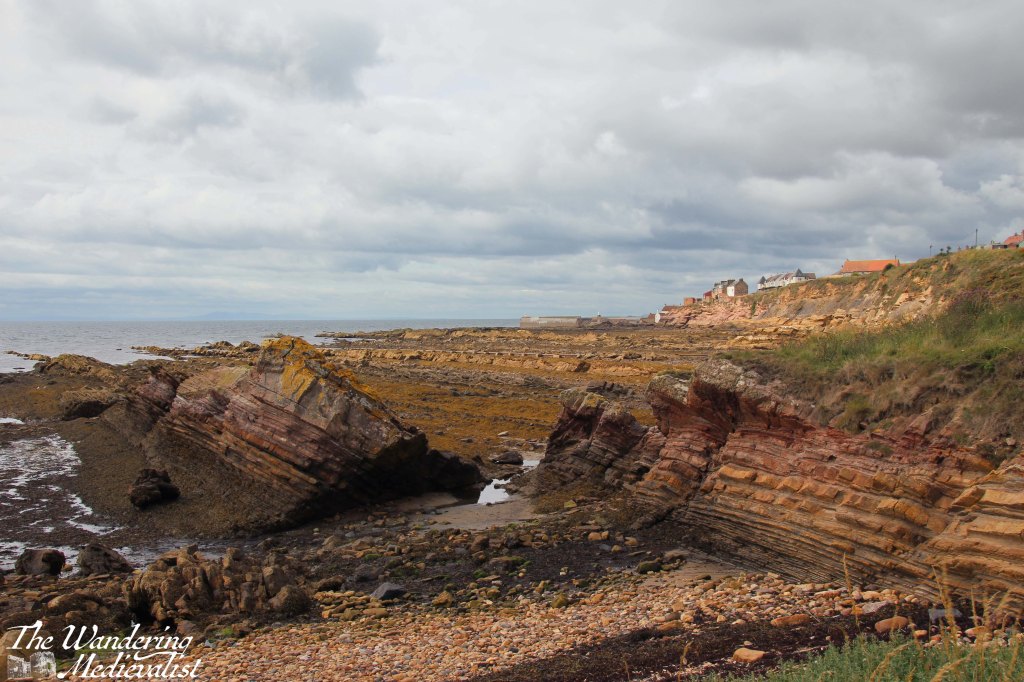
Generally, the Coastal Path is best followed by keeping close to the edge of the grass, where it meets the rocky shore. There are some great views back along the dramatic shale coastline, back to Pittenweem.
In little time, the edge of the golf course moves inland, with the path sticking close to the shore. It isn’t particularly well marked, but as long as you stay on the edge of the line where the shore meets the beach, you are in good shape, and there is an obvious trail. There are also some relatively gentle ups and downs – in fact this whole section has a few more ups and downs than many on the East Neuk – between grass tufts, a few boulders, and some more wild flowers and gorse.
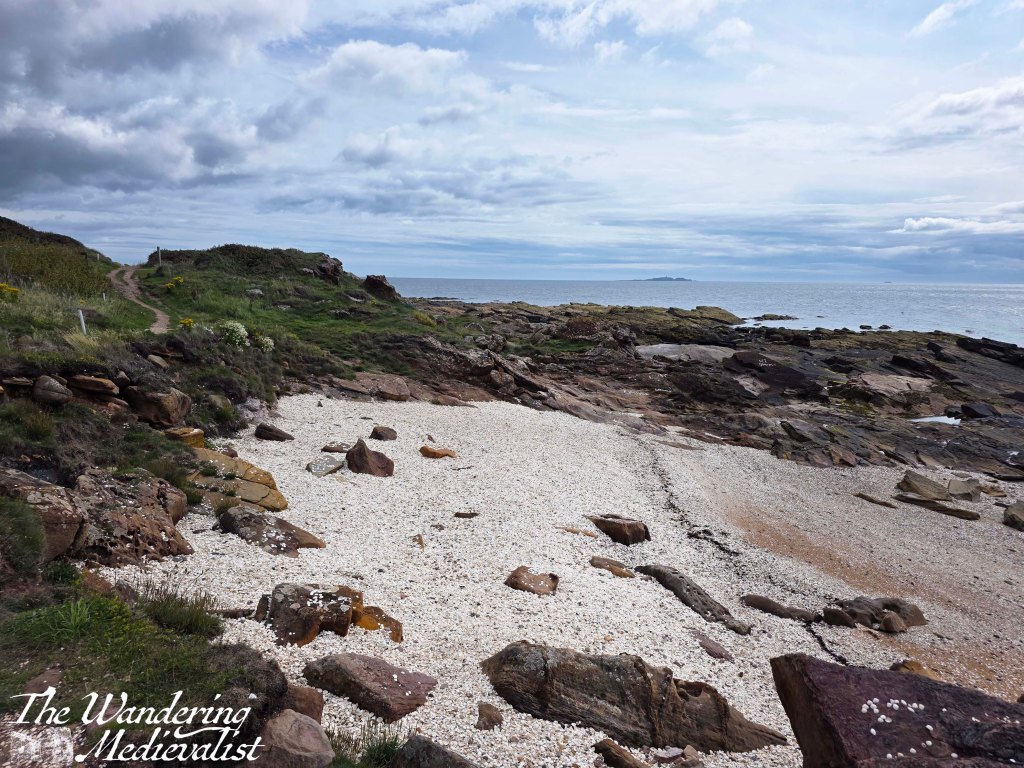
You will pass this beautiful white beach made entirely of shells, which some have used to write out messages on the rocks as they go by. It looked to me like the kind of beach nicer to look at than walk on – sharp shells are not the greatest material to explore.
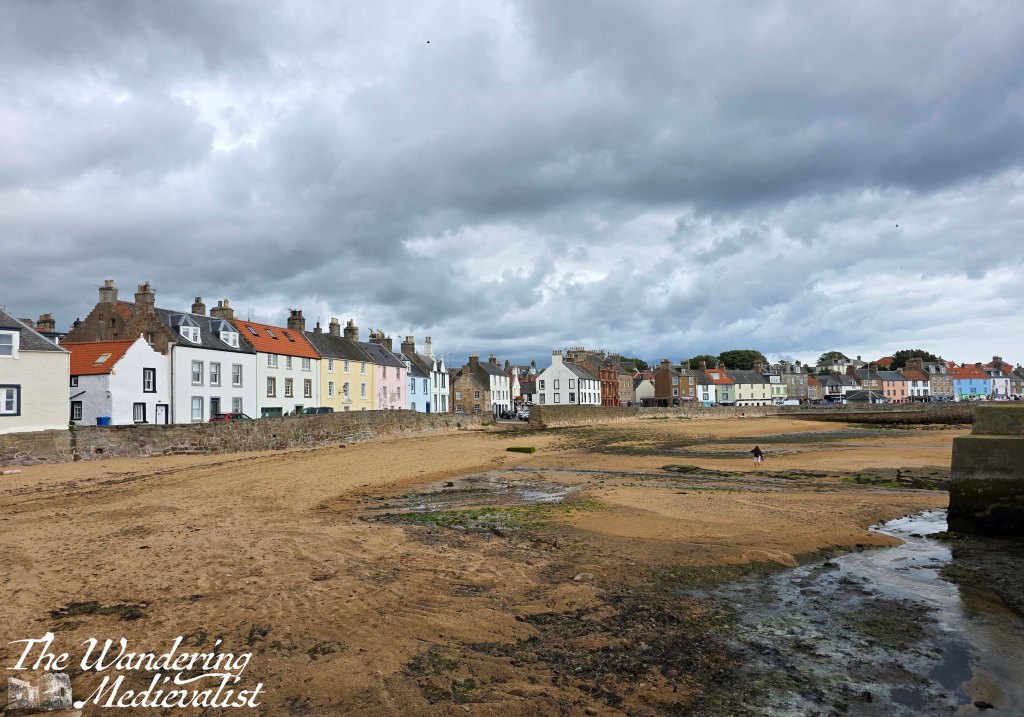
Around the corner from this beach, Anstruther opens up ahead of you, and it is possible to get a real feel for the size of the town. While not enormous – the population is about 3,500 – it is the largest town in the East Neuk with a seafront that stretches for more than a mile, including its busy harbour and beaches.
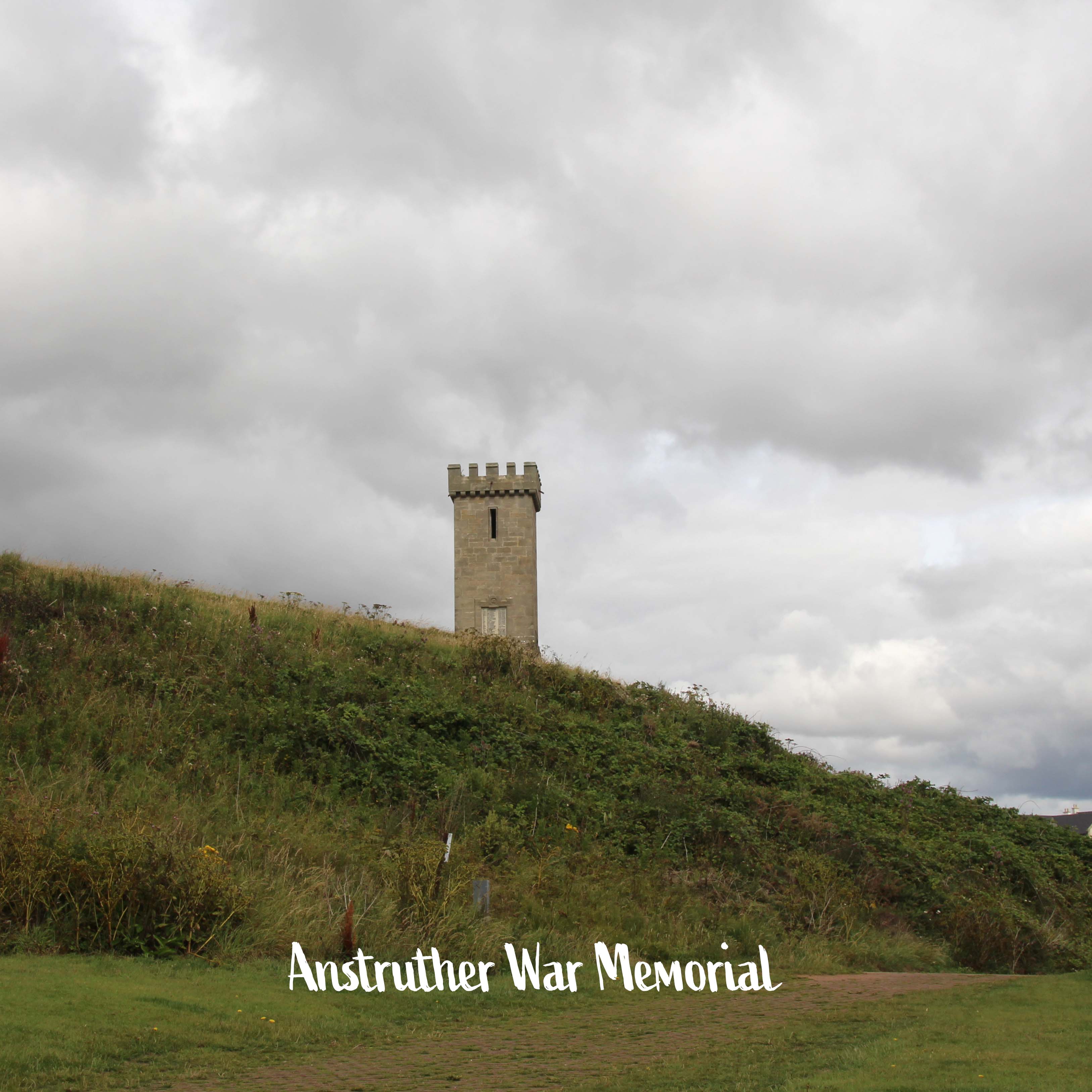
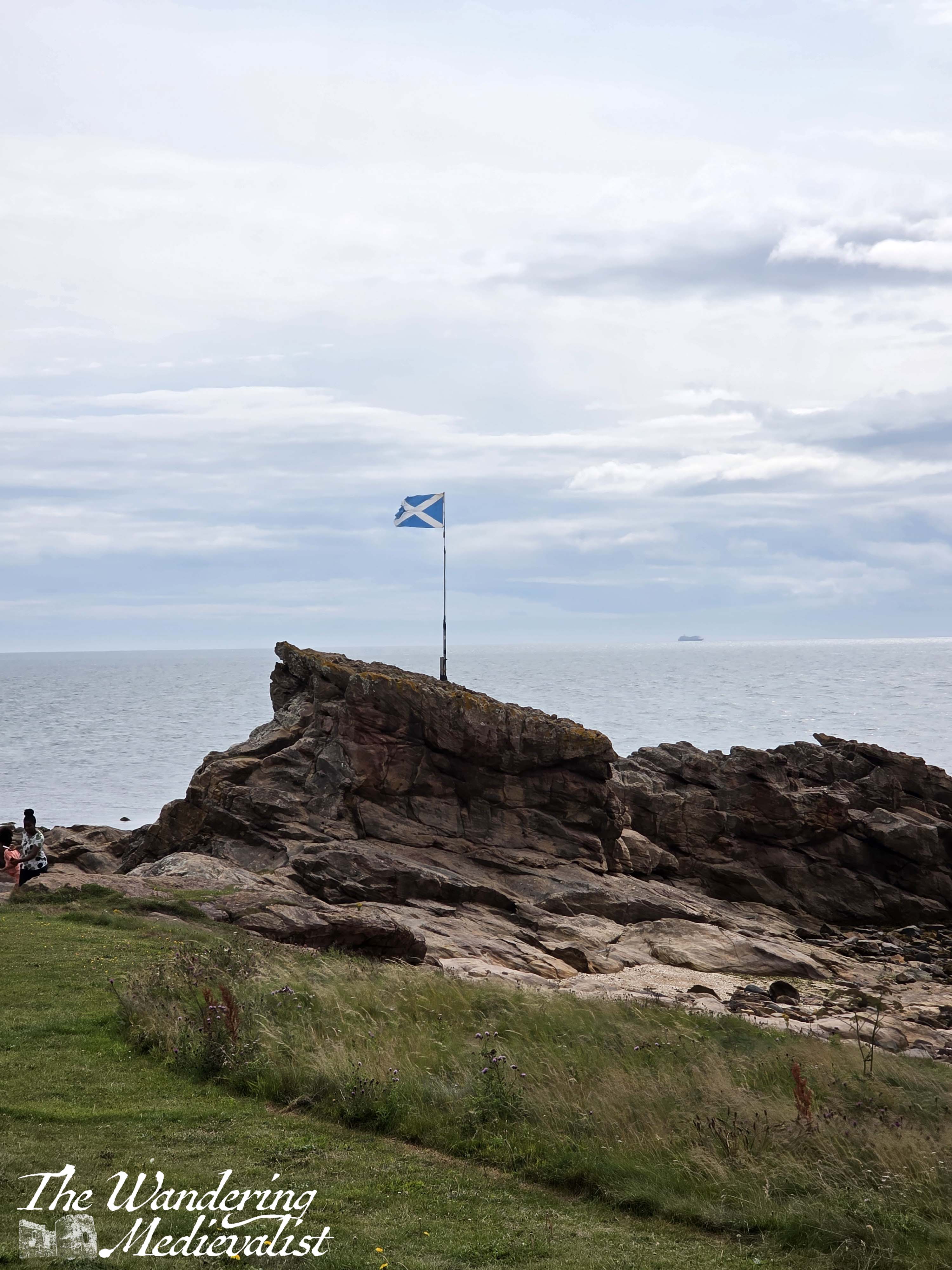
Above you on the left is the Anstruther war memorial, designed as a medieval-looking tower with crenellations on top, and over to the right on a rock is a lone saltire flag, quite dramatic against the sea.
There is a playpark here which was busier with dog walkers than children on the day I passed, then the path circles around between Anstruther beach and the first hole of the golf course.
Beyond the beach, you pass the golf club itself, which must have a stunning view over the ocean and Anstruther harbour. The coastal path continues straight here into the residential neighbourhood and is well-marked, taking walkers up Crichton Street. If you take a short detour at this point though, you reach this lovely wee cottage and view over the sea – I can’t resist a stone cottage!
At the top of Crichton Street, turn right onto the A917, which is the main route along this part of the East Neuk, running from St Andrews down towards Elie. Though it is narrow, this portion of the road is quite busy with cars and busses and trucks, sometimes going a touch faster than would be wise.
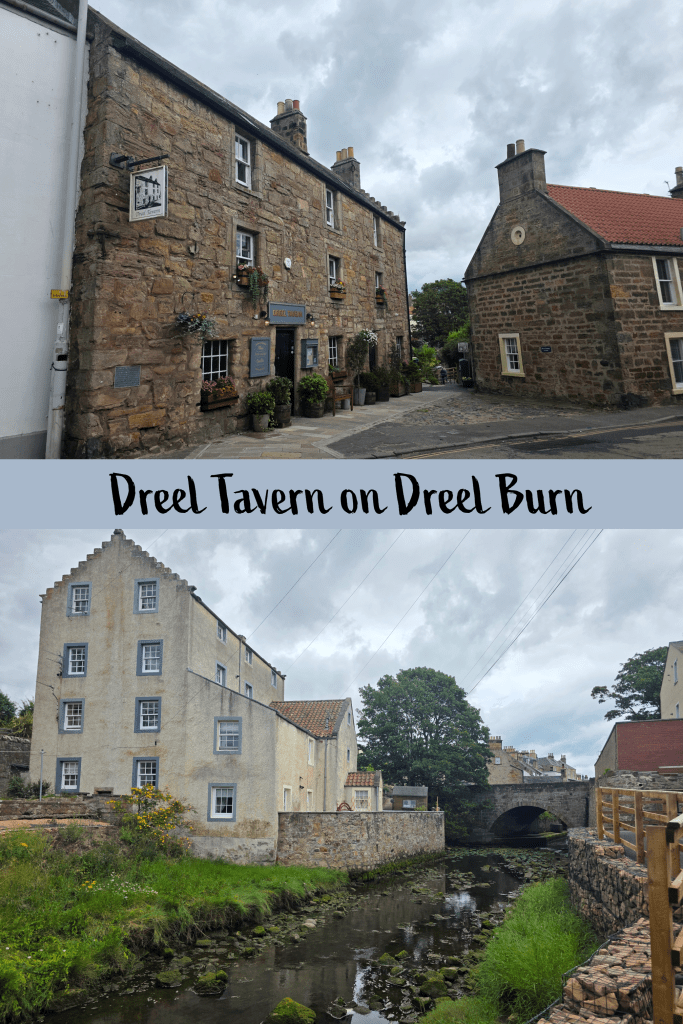
One of the first notable buildings is the Dreel Tavern, which sits at an angle away from the road. Dating from the 18th century at the latest, the Tavern currently serves meals and drinks, both inside and in the large beer garden to the rear. Also to the rear is the Dreel Burn, along which you can walk in both directions, though it shortly winds around the churchyard and across the beach to join the ocean. There is a great deal of work being done at the moment to restore the water quality of the burn.
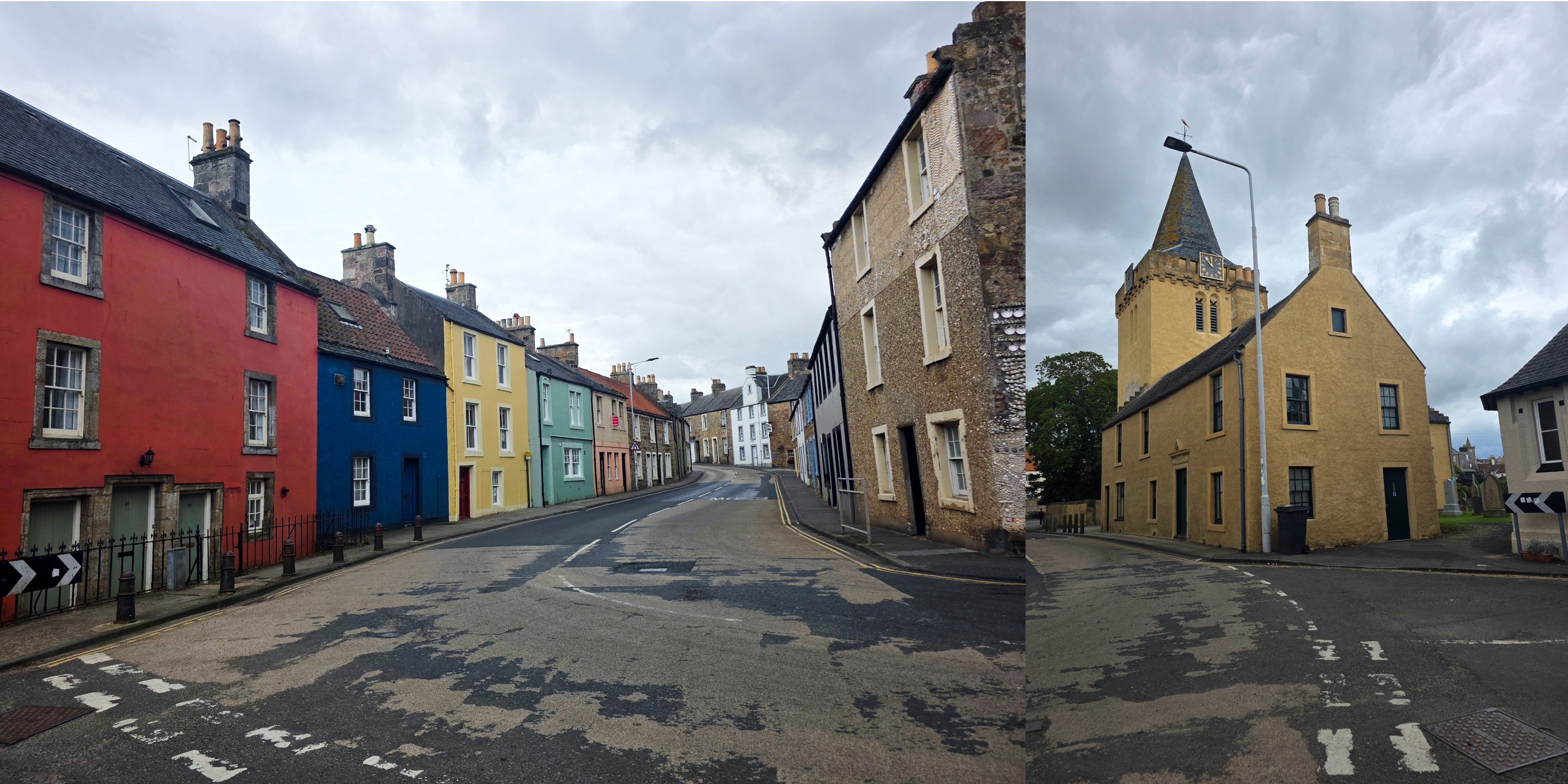
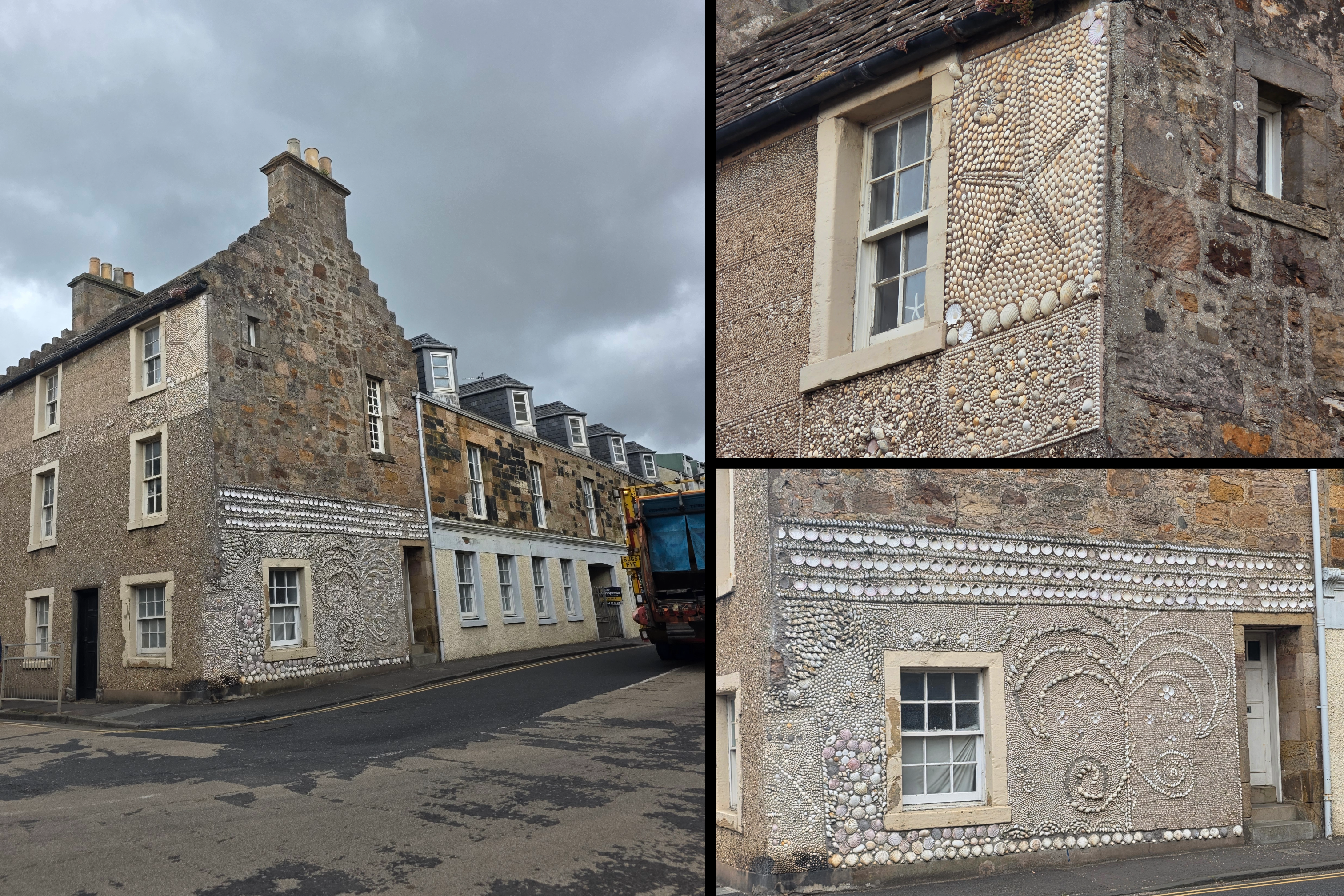
Beyond the tavern on the opposite side of the road, there is a lovely stretch of well-restored older homes in bright colours, and on the corner a house that has been meticulously decorated with shells.
From here, you have two routes. One is the official Coastal Path route, which carries on along the High Street, crossing the burn, and then following the road into the centre of town. Keep to the right, passing in front of the Bank Hotel, and then turn right to meet Shore Street. There are bus shelters on either side of the road, but be careful when choosing a side. Busses to St Andrews, for example, leave from both sides depending on the route, so make sure you check the time tables! While several routes pass this way, frustratingly they tend to arrive around the same time, so you may be left without transport for a while. Fortunately, there are plenty of shops and cafes in which to pick up snacks. And of course the famous Anstruther Fish Bar.
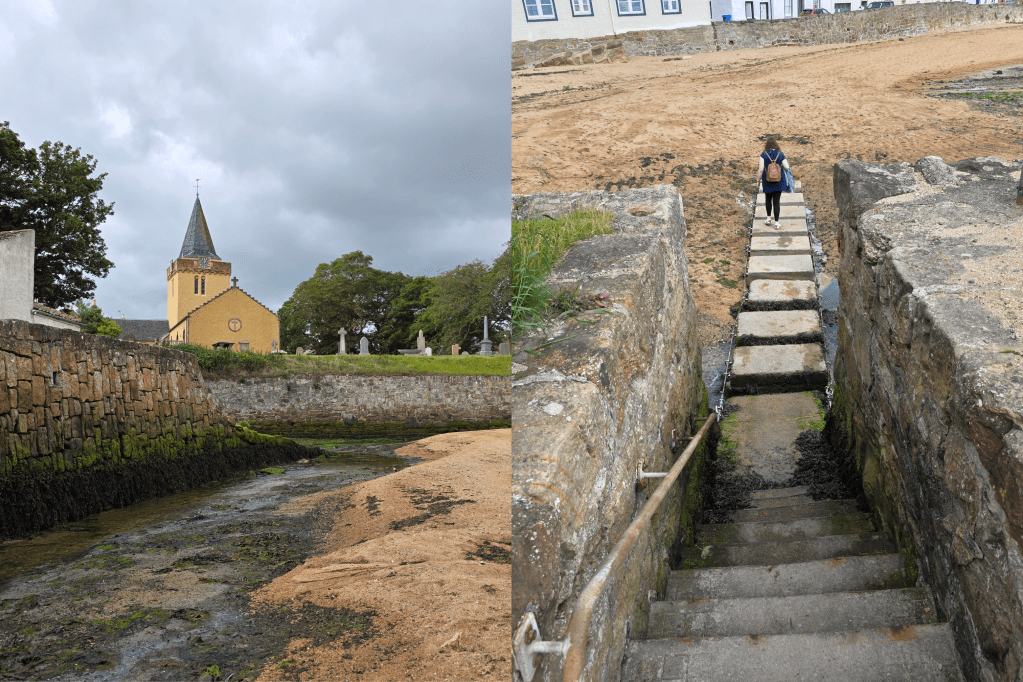
There is another option however, and this is not to turn left along the High Street, but instead to continue straight down the Esplanade, to where there is a car park. If you choose this route, do take a short moment to detour back to the Dreel Halls, which is the tall yellow building you cannot miss. Formerly a church, the upper part was built to house the Town Hall in the 1790s, while the downstairs was used for a school.
Once you have taken a short wander through the extensive graveyard, return to the Esplanade and head for the car park you can see ahead. The homes here are mostly 18th-century or so, and some are beautifully decorated.
The view from the car park is excellent in all directions.
But what is most intriguing – and possibly only accessible at mid- to low tide – is a notch cut in the wall, and a steep flight of stairs leading down to the beach. At the bottom is a set of concrete stepping stones that allows you to cross the water of the Dreel Burn.
The beach ahead is soft and sandy, and can be a bit of a struggle if you are wearing heavy boots. The view of Anstruther in the gathering clouds was stunning, though, and I was pleased to have opted for this route.
As I headed for the bus shelter, these dark clouds became more and more ominous, and I was lucky I think not to be soaked. Fortunately, the breeze of the day continued in my favour, pushing the clouds past, and an almost blue sky returned as I waited for the bus.
Next weekend, I’m aiming to wrap up the East Neuk with the Crail to Cambo route. We’ll see how I do!
If you had to name one stereotype about Scotland, chances are that it might include the weather. In particular, that the weather is typically cold, wet and windy – dreich as they say. But this stereotype is, I think, based more upon west coast Scottish weather than east. Dundee is known as the sunniest city in Scotland, and the past few weeks have really bucked the trend in that our weather has been quite sunny, mild, and generally beautiful. We are in fact on the verge of a drought, and not for the first time in recent history – I’ll leave my opinions on why behind for now.
So, last Saturday was another stunning sunny day, a touch hazy but nonetheless offering blue skies and a happy requirement for sunglasses and even sunblock. In all fairness, May is quite often a good month in Scotland – I remember fondly studying for my final exams in 4th year outside, getting sunburned, and then having to work out how to even out the tan before wearing a strapless dress at the grad ball. Serious problems.
Determined to get a bigger chunk of the walk done than I have previously, I once again headed for the East Neuk, this time choosing the faster X60 bus to Anstruther that cuts directly south rather than following the coast. My walk started at the far end of the harbour in Anstruther, by the Dreel Hall, which meant that the first stretch was along Shore Street.
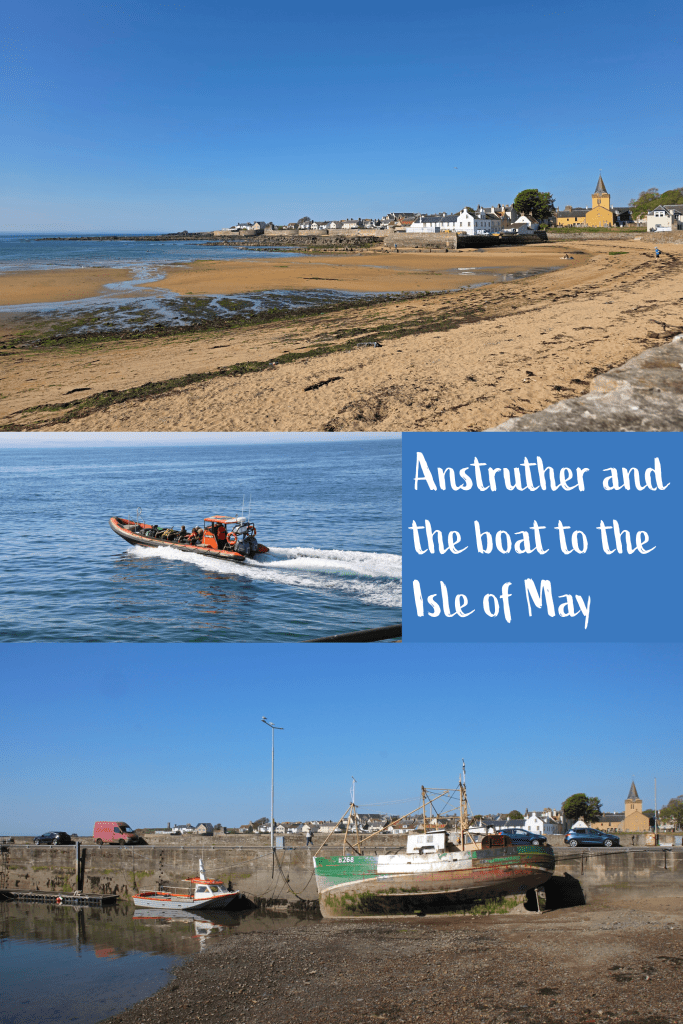
This section of Anstruther is busy with tourist shops, restaurants, the famous Anstruther Fish Bar, and of course the harbour on the right, full of boats. I think this is probably the busiest of the East Neuk harbours, offering day trips to the Isle of May and providing a home for an active RNLI Lifeboat station.
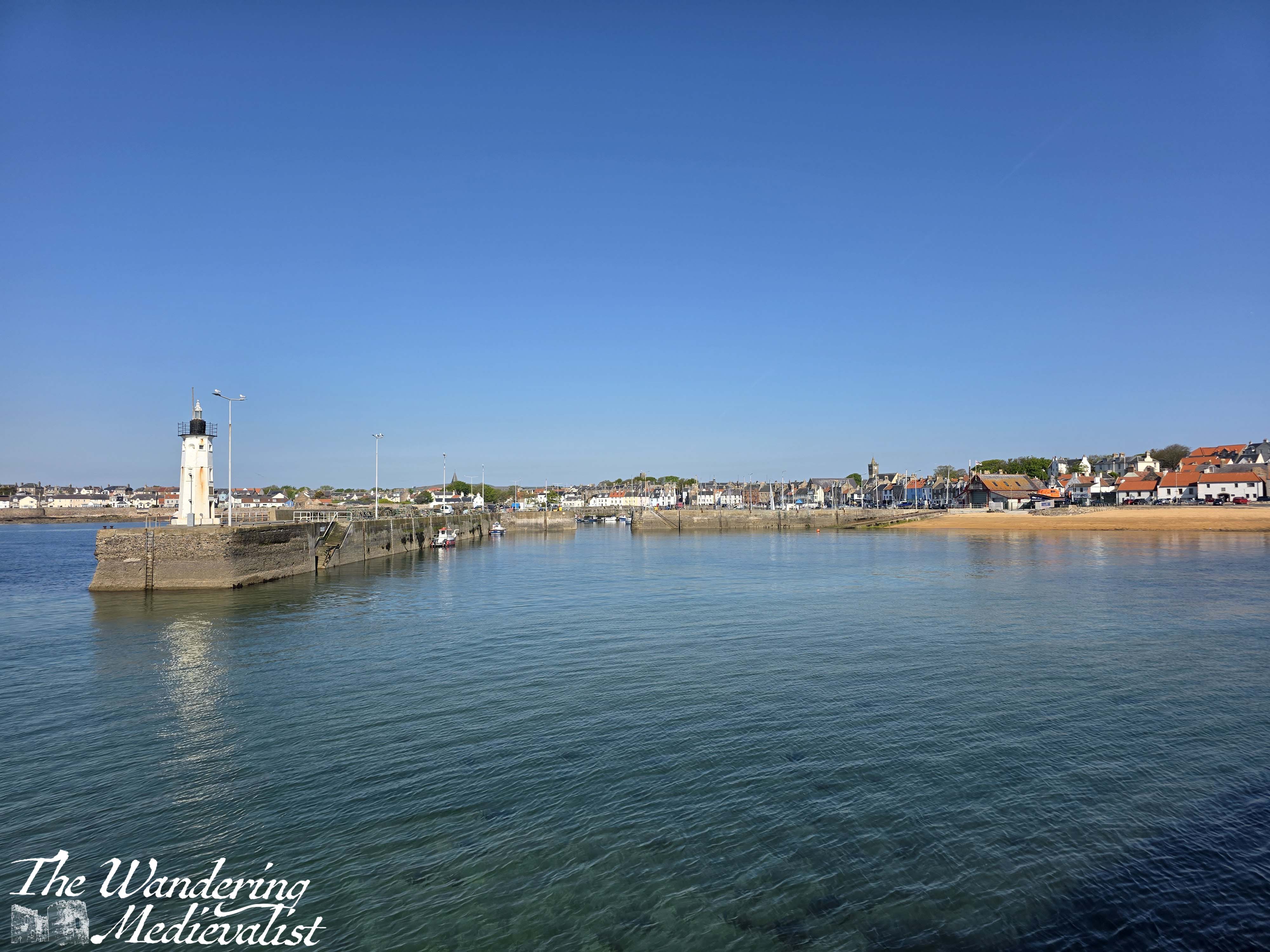
As it was such a nice day I took a short detour to walk out the harbour wall to the end and look back on the town.
From the shore edge of the harbour, there is a great view along the coastline and also out into the Firth of Forth to the Isle of May – the latter is a popular spot for a day trip, with hiking and a large colony of puffins available for entertainment. On my bucket list!
Cellardyke
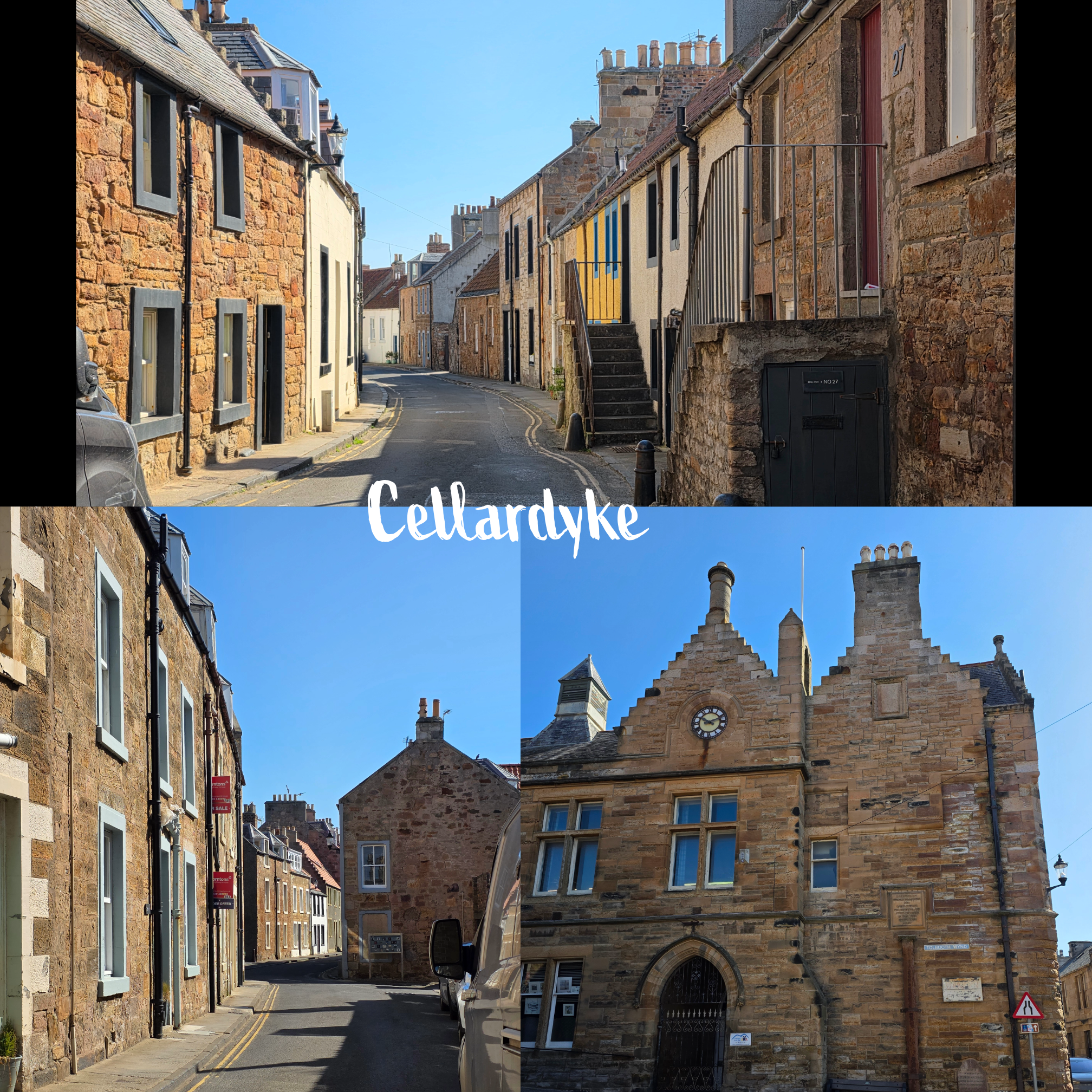
The coastal path here continues straight along the shore into the town of Cellardyke, which is immediately connected to Anstruther. Both towns have been fishing villages for centuries, and the surviving houses date from several hundred years ago to quite recently, though more of the former. Cellardyke has always reminded me of New England, with narrow winding streets and houses lined up against the shore. Occasionally between the houses is a narrow access point to the ocean beyond, offering glimpses of the glimmering water and waves.
About halfway through the village one comes across the Tollhouse and village hall, bottom right above. Here one can take a route up to the left to see a higher view (take the high road🎶) but I continued on to the right, and around half a mile after entering Cellardyke, the road reaches the harbour.
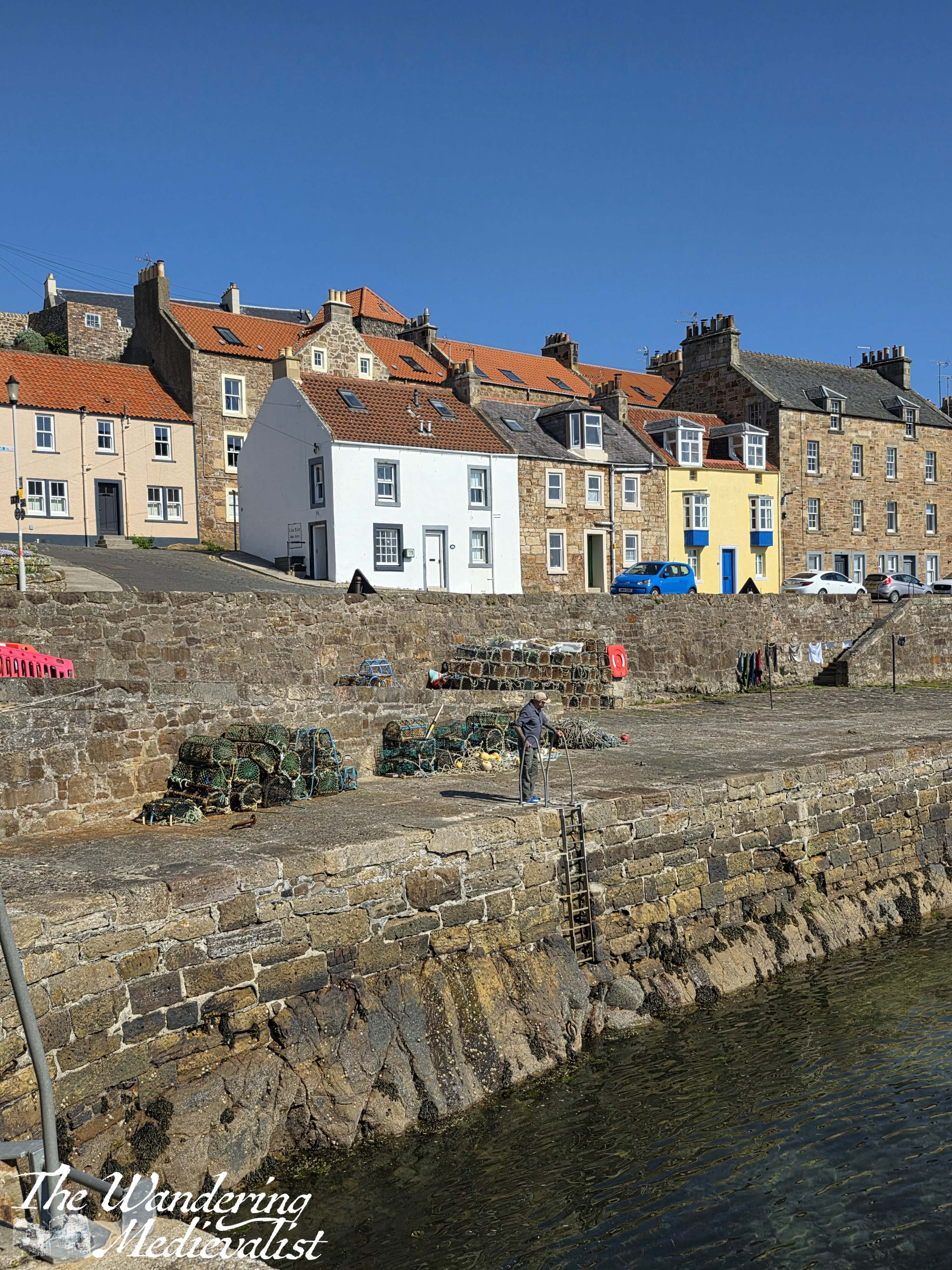
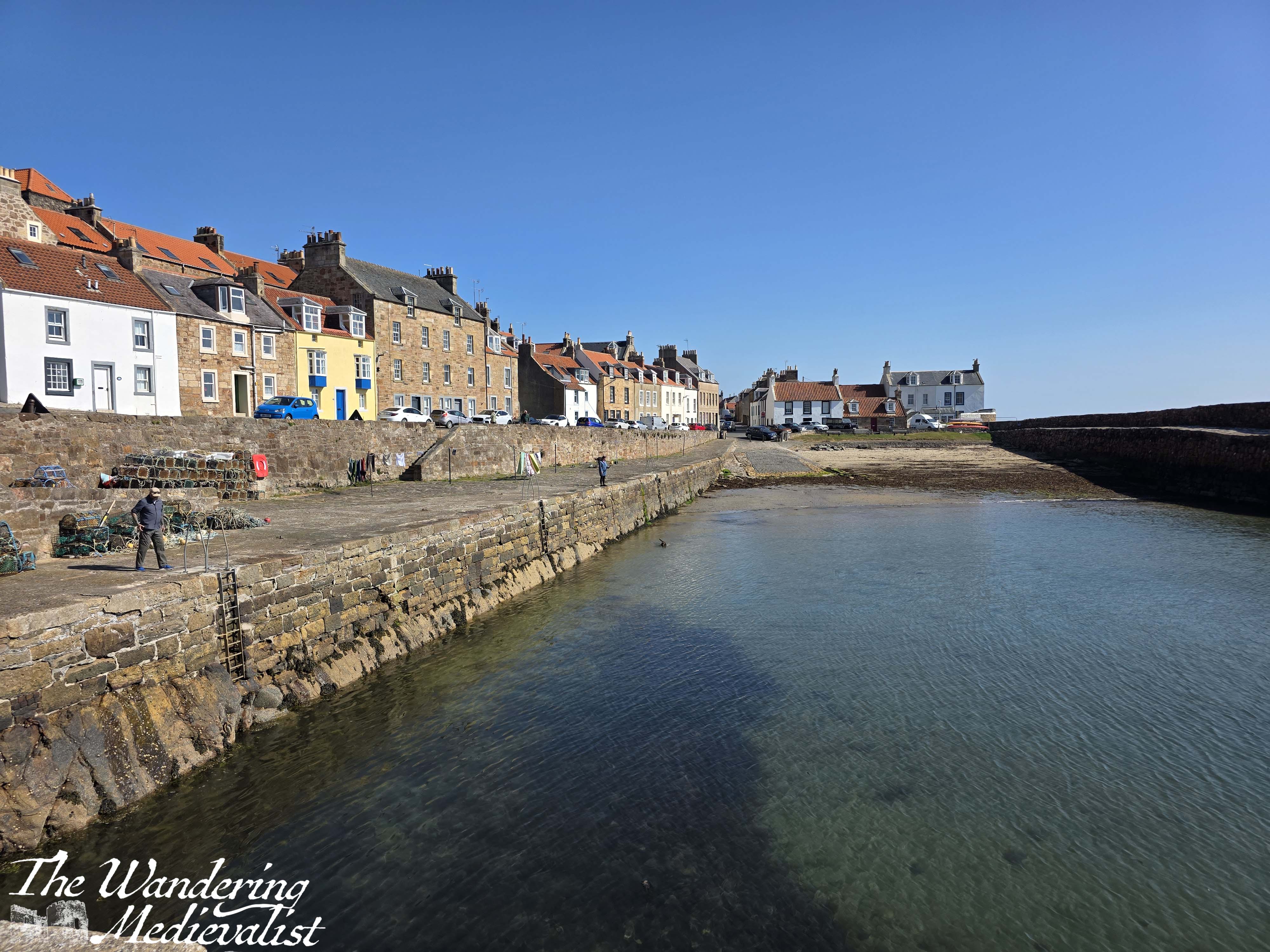
It’s not particularly large but it is active and surrounded by well-kept houses that stack closely together as they rise away from the water.
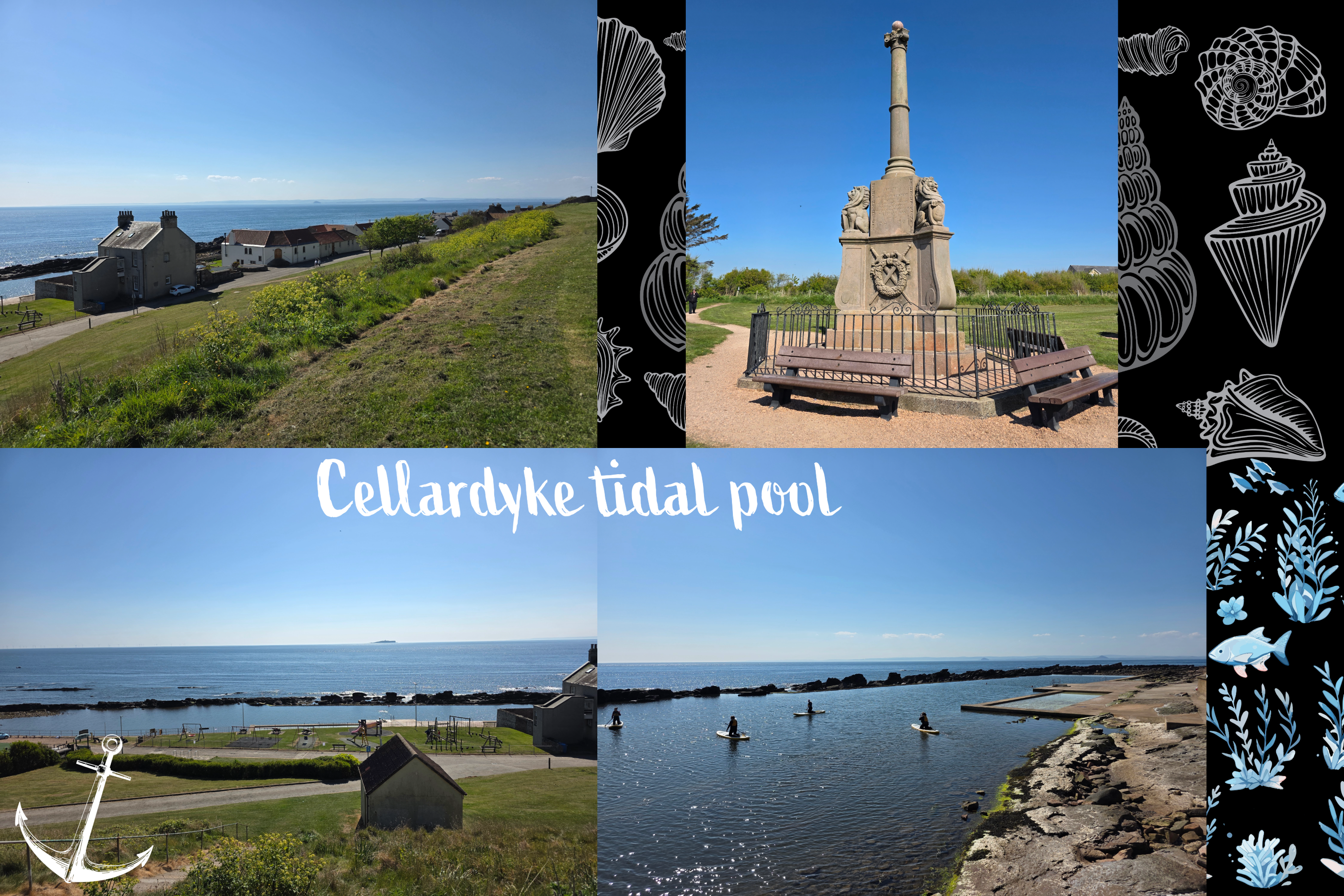
Only a few houses further along, the road opens up to a green hill on the left and the open shoreline on the right. The hill is quite steep but climbing to the top via a path or stairs allows one to view the war memorial up close, and look out over the water and tidal pool.
As you can see, it is a busy area, with bathing and water sports available, and a good-sized play park. There is also a van selling snacks, another coffee, and a shore-front eatery. Just beyond this waterfront is a well-kept caravan park with a lovely view out over the water.
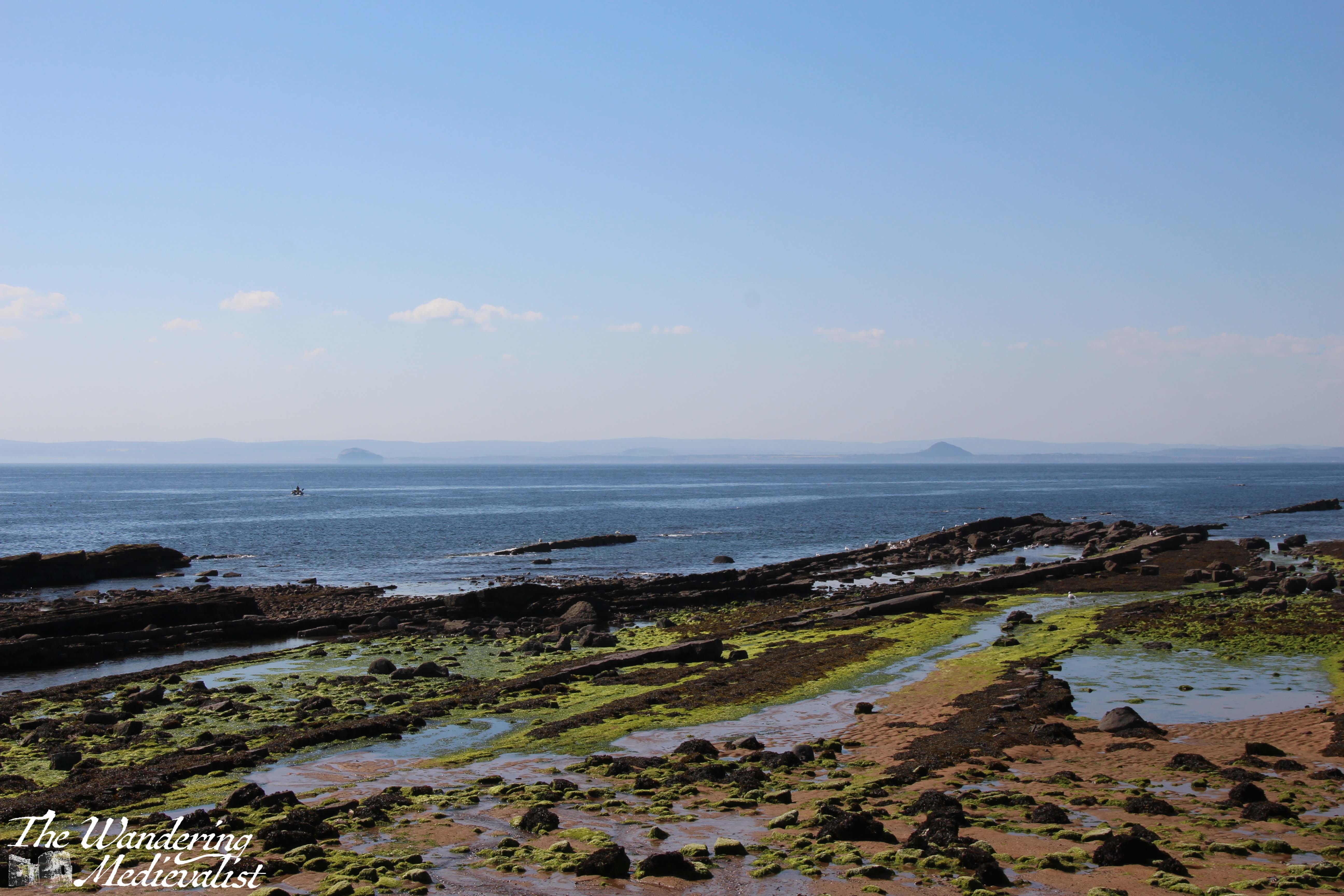
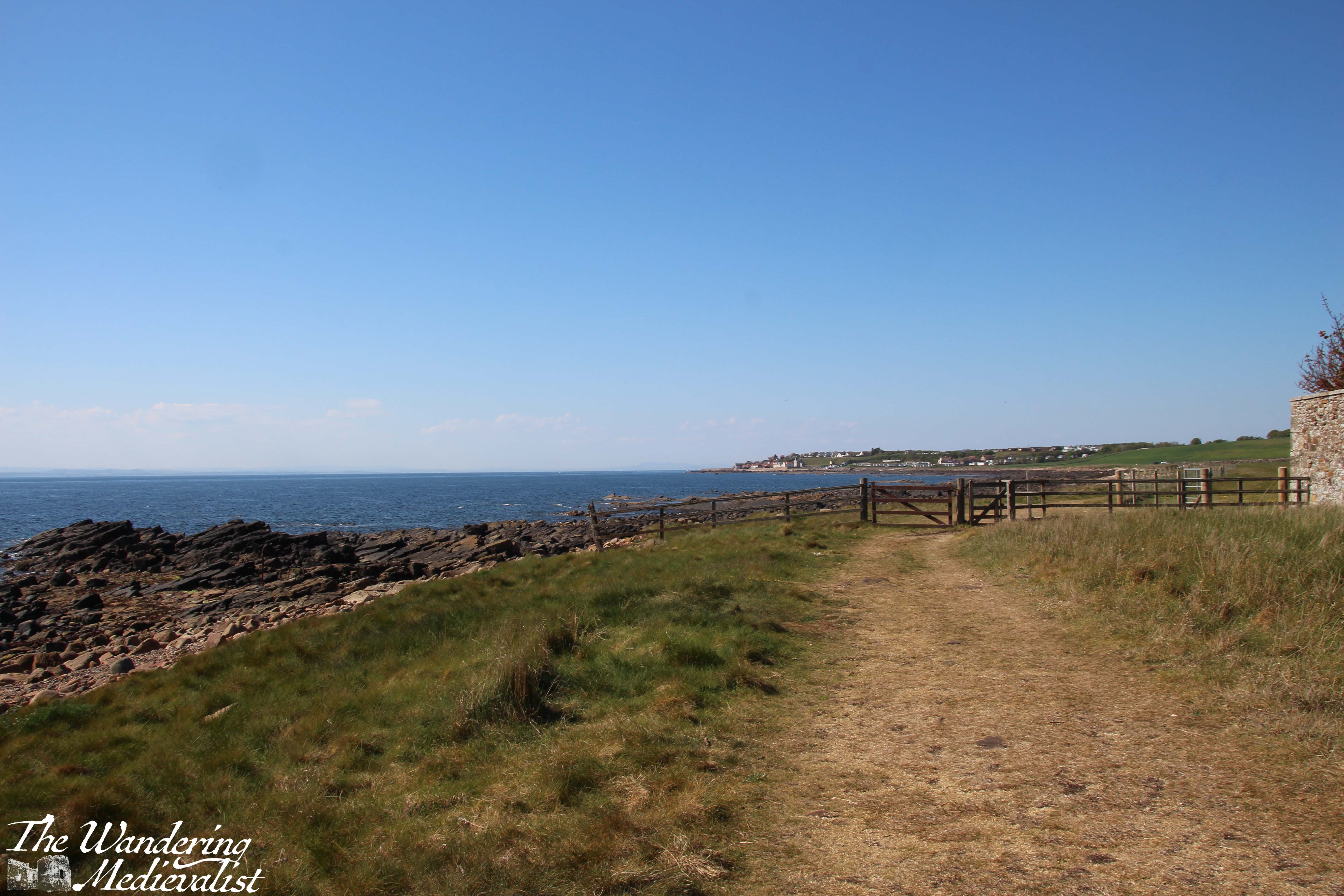
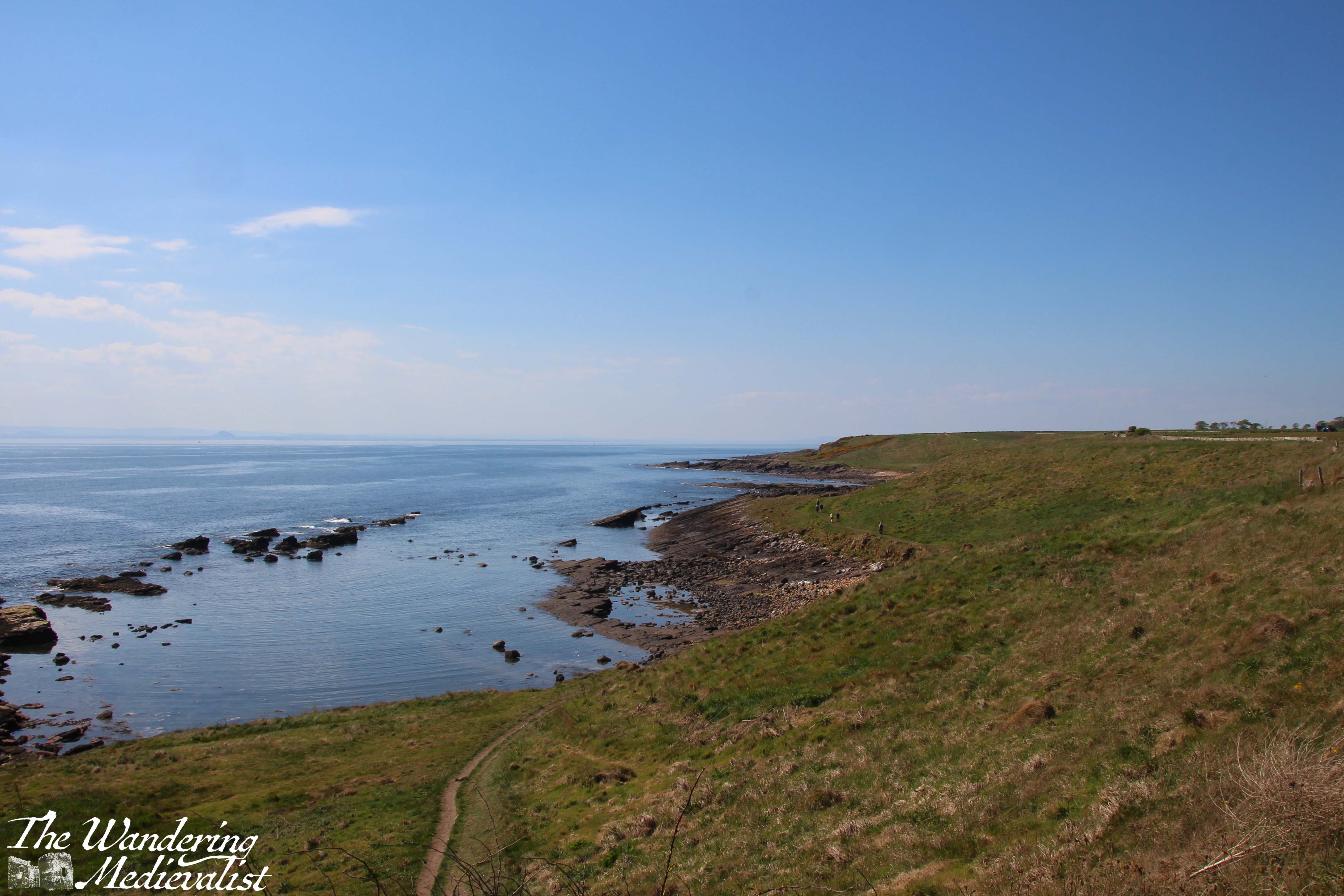
After passing the caravan park, the path leads out of the village and along the coast, with the ‘usual’ beautiful views over the water and rocks. The path here is considerably flatter than the one I took the previous week, with only gentle hills until the very end. It is also quieter, and while I did pass some walkers, there were not nearly as many as on the shorter path.
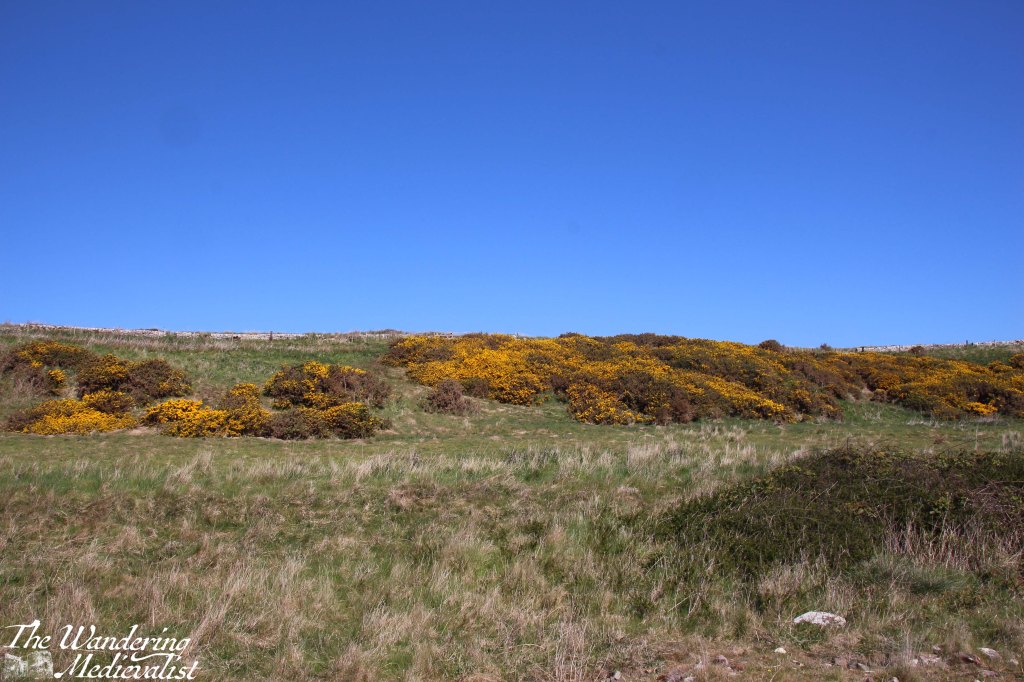
About a mile beyond town, I passed Caiplie Court, a small collection of beautiful cottages with a large garden and some coos that were not feeling particularly photogenic. As the path continues, the left-hand ground begins to rise gently into hills covered with grass and yellow gorse. Just under 2 miles from the edge of Cellardyke, I noticed a low headland in the distance, ending in an outcropping of rock.
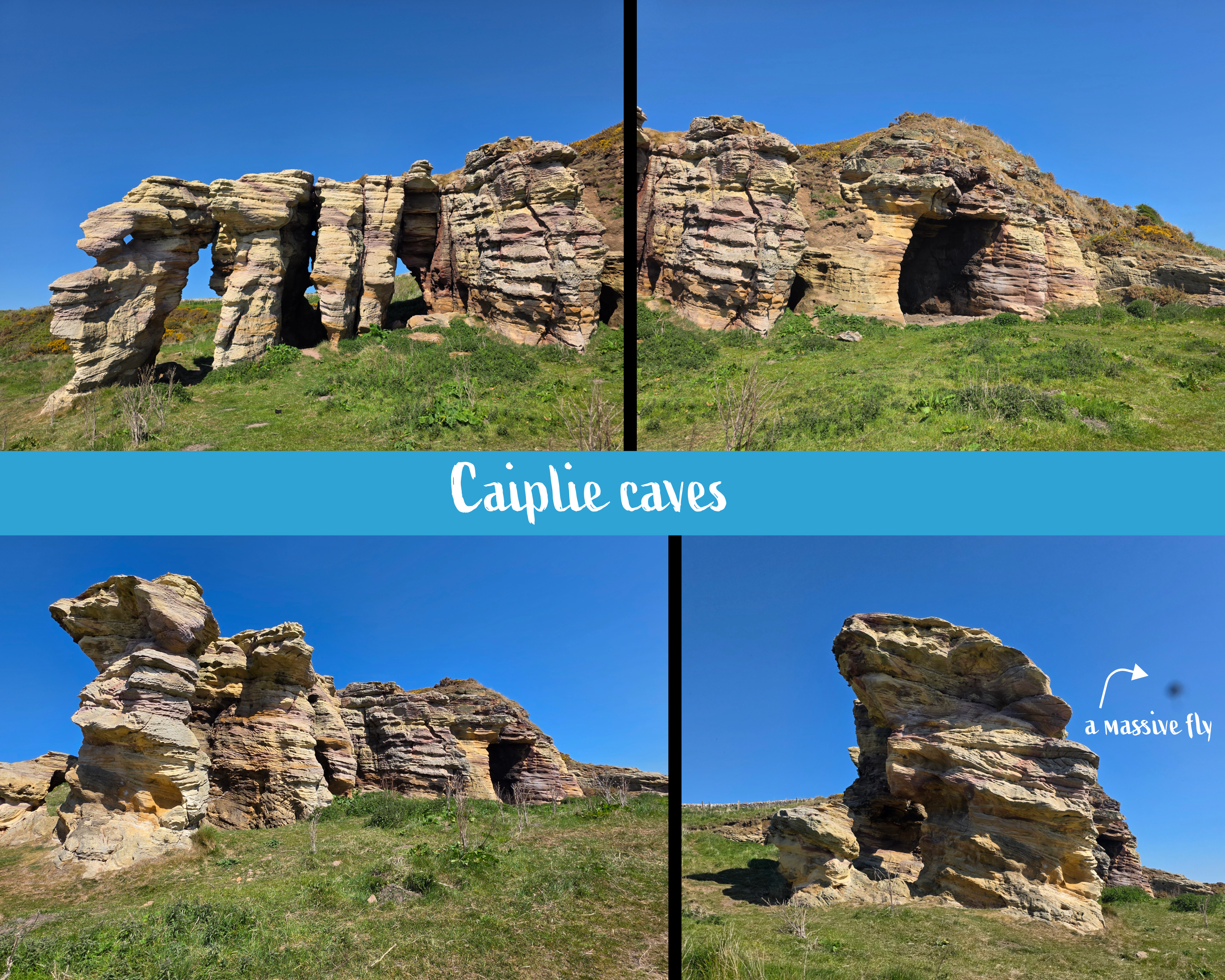
Caiplie Caves
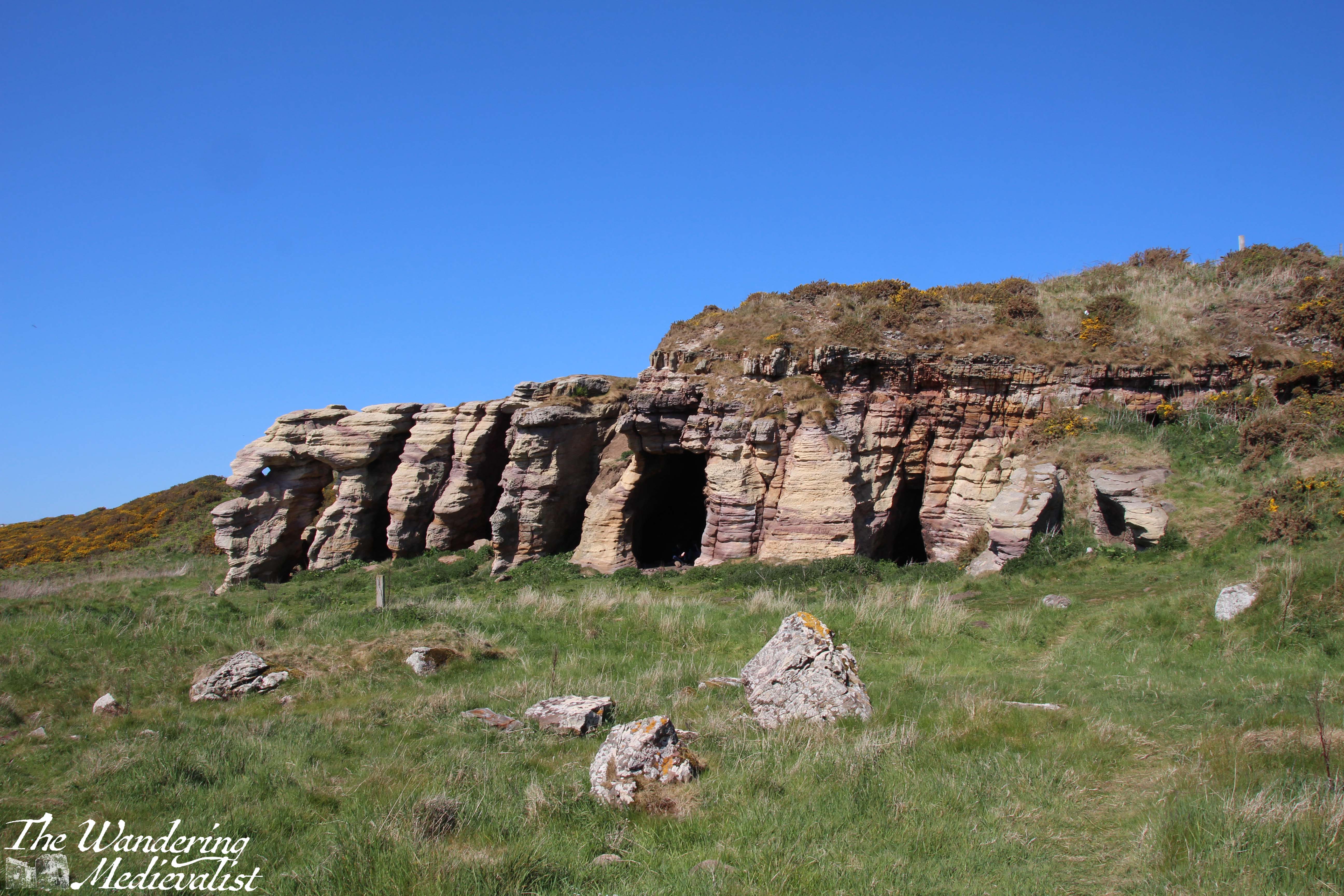
As I hoped, this turned out to be the edge of the Caiplie Caves, a group of sandstone caves that have been linked to the early Christians in the area.
There was a group of teenagers meeting in one of the caves so I chose not to get closer, but according to Historic Environment Scotland, there are a number of crosses and even Pictish symbols carved into the rocks. The caves were likely used as chapels and perhaps even as small cells. I hope at some point to return and take a closer look!
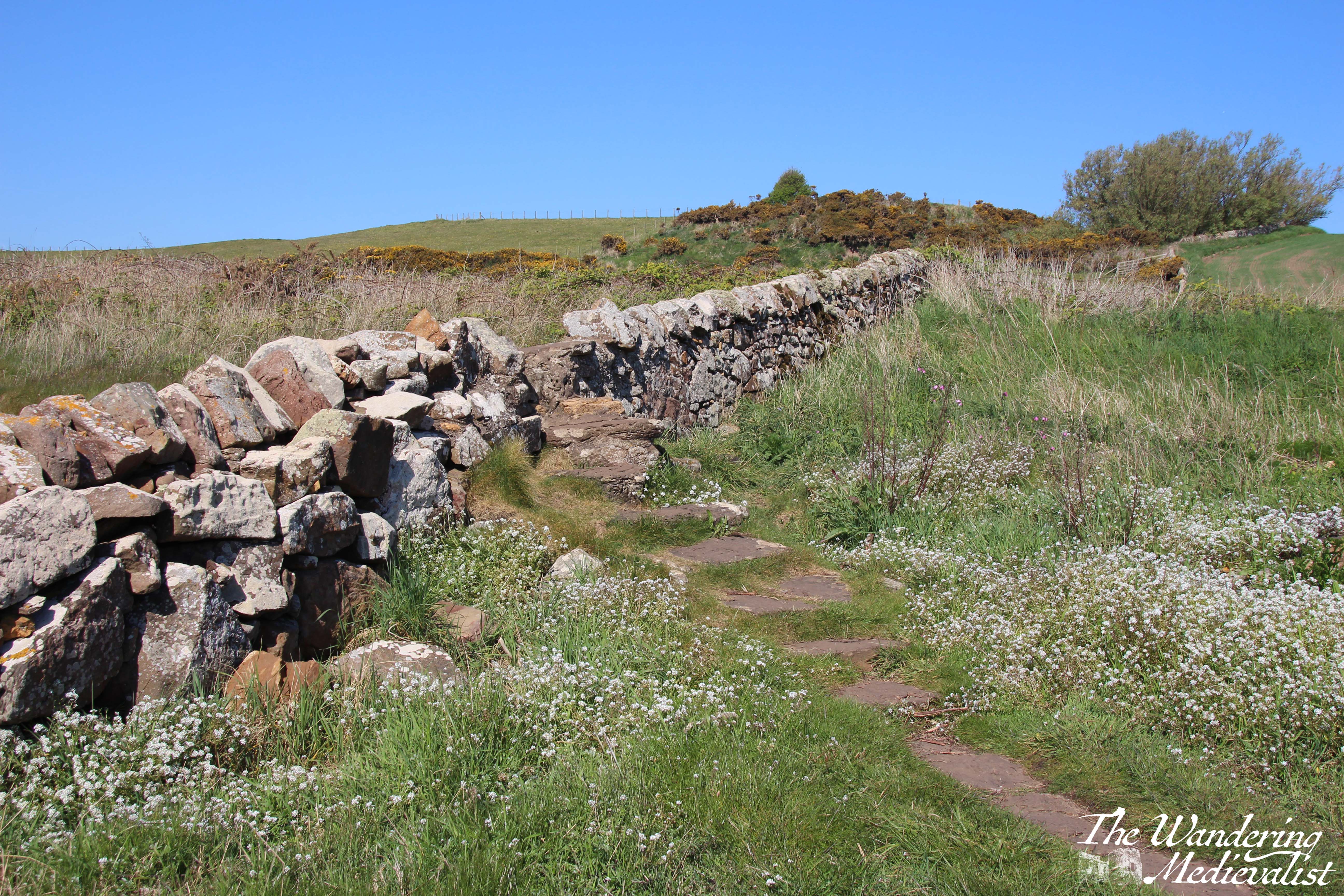
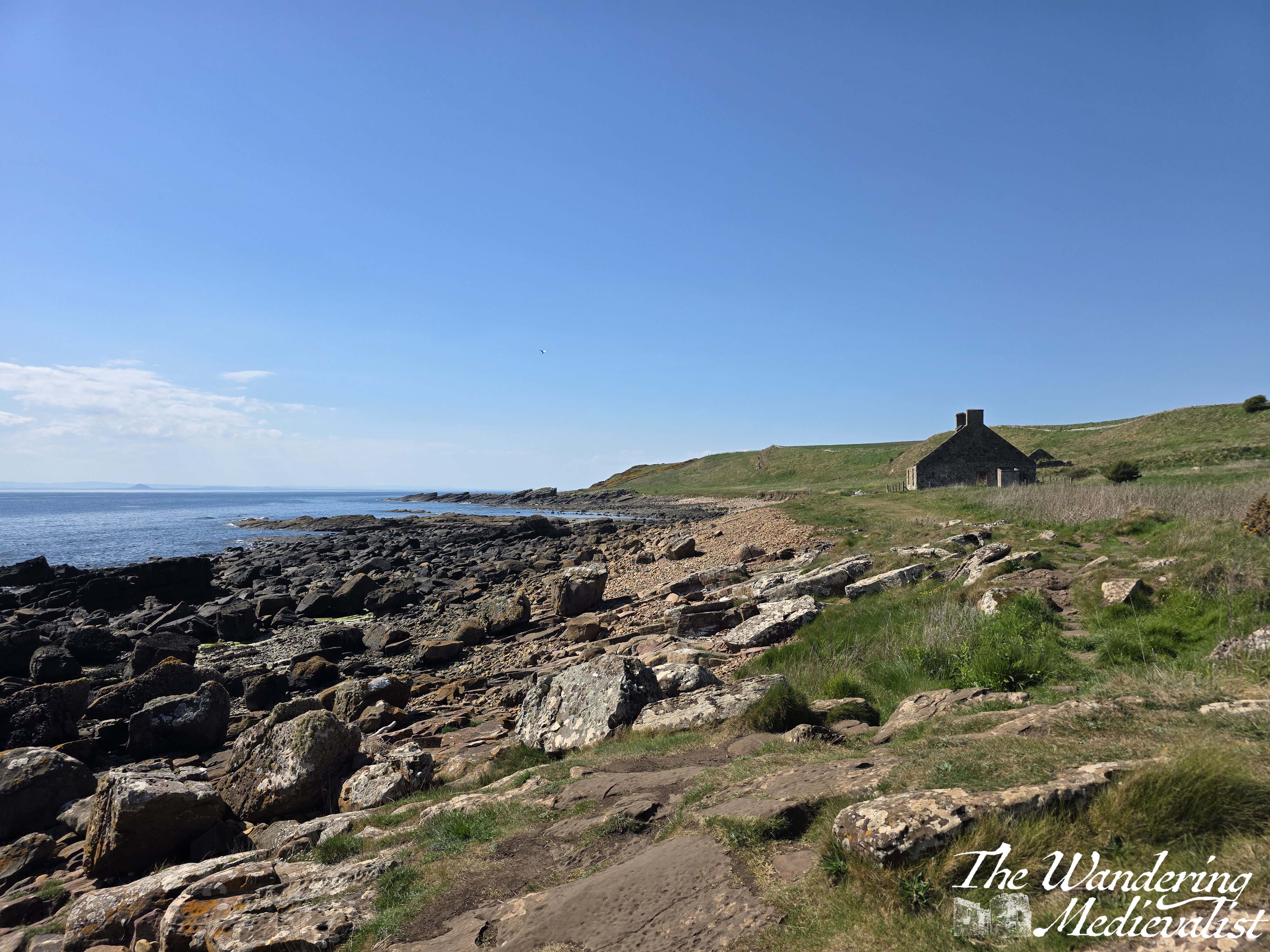
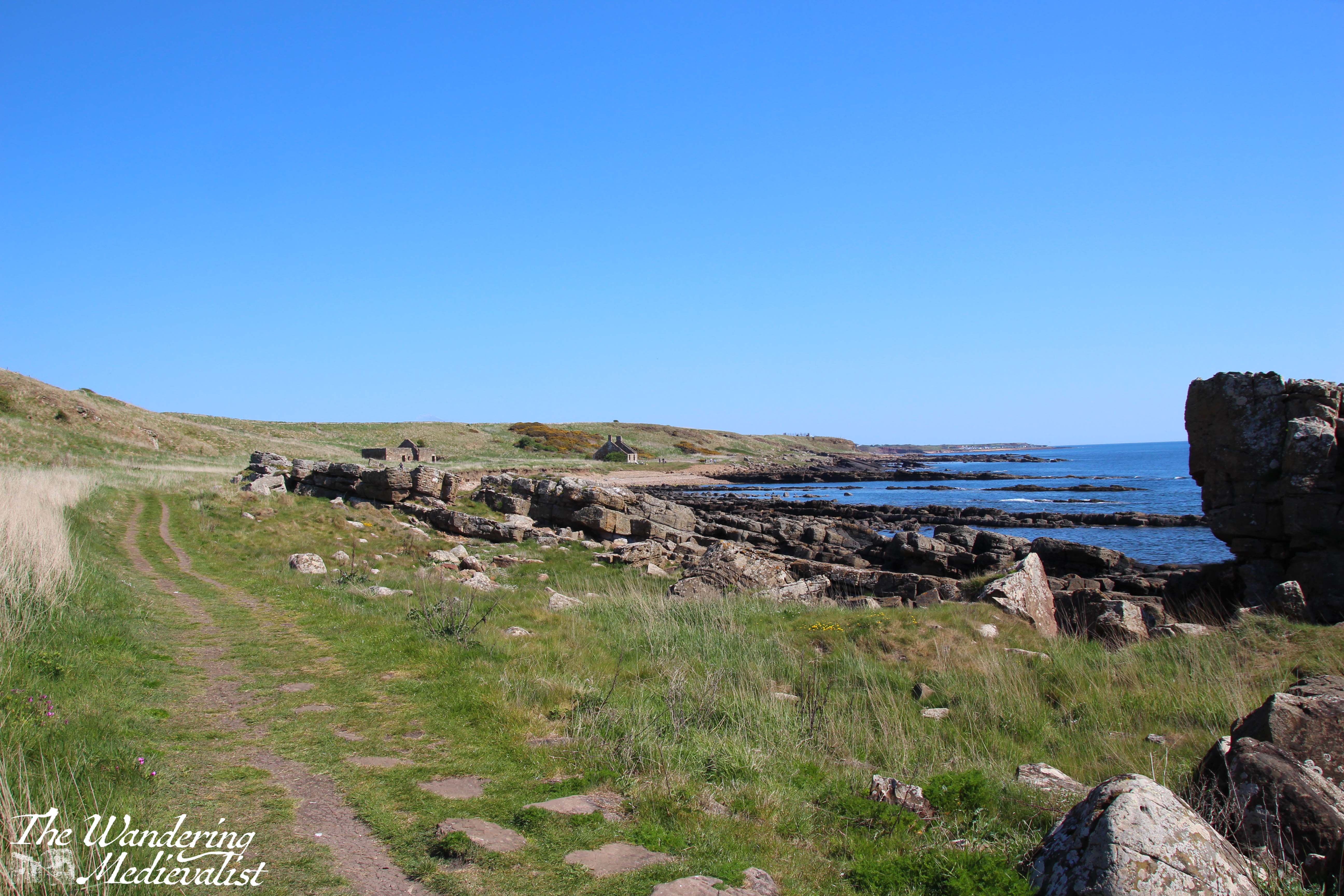
It was about this point in the walk when I was starting to think about taking a short break, but still continued on for another half mile or so. I crossed one stone wall and then reached another with narrow steps leading up one side and down the other. From the top of the wall, I could look over the bay ahead of me which included two skeleton former houses.
Just in front of the house was a perfect place to perch for a few minutes, breezy enough to keep away some of the swarms of flies that pestered me every time the path was sheltered. In some pictures the flies are visible, and in a few I’ve removed them so as not to ruin the view. Oddly they don’t appear to be biting, just incredibly annoying as they whir around your face, ears and hair.
A bit refreshed, I continued on towards the next headland. There were a few more bays and outcroppings, and I remember distinctly being worried to check the map in case I still had miles and miles to go. Fortunately, I was doing better than I thought. I paused briefly at the bottom of a flight of stairs, allowing another couple to pass me and offer me more sun screen, though I think was red more from exertion than sun (I did slather on the SPF30 before leaving the house, even Scottish sun can burn!).
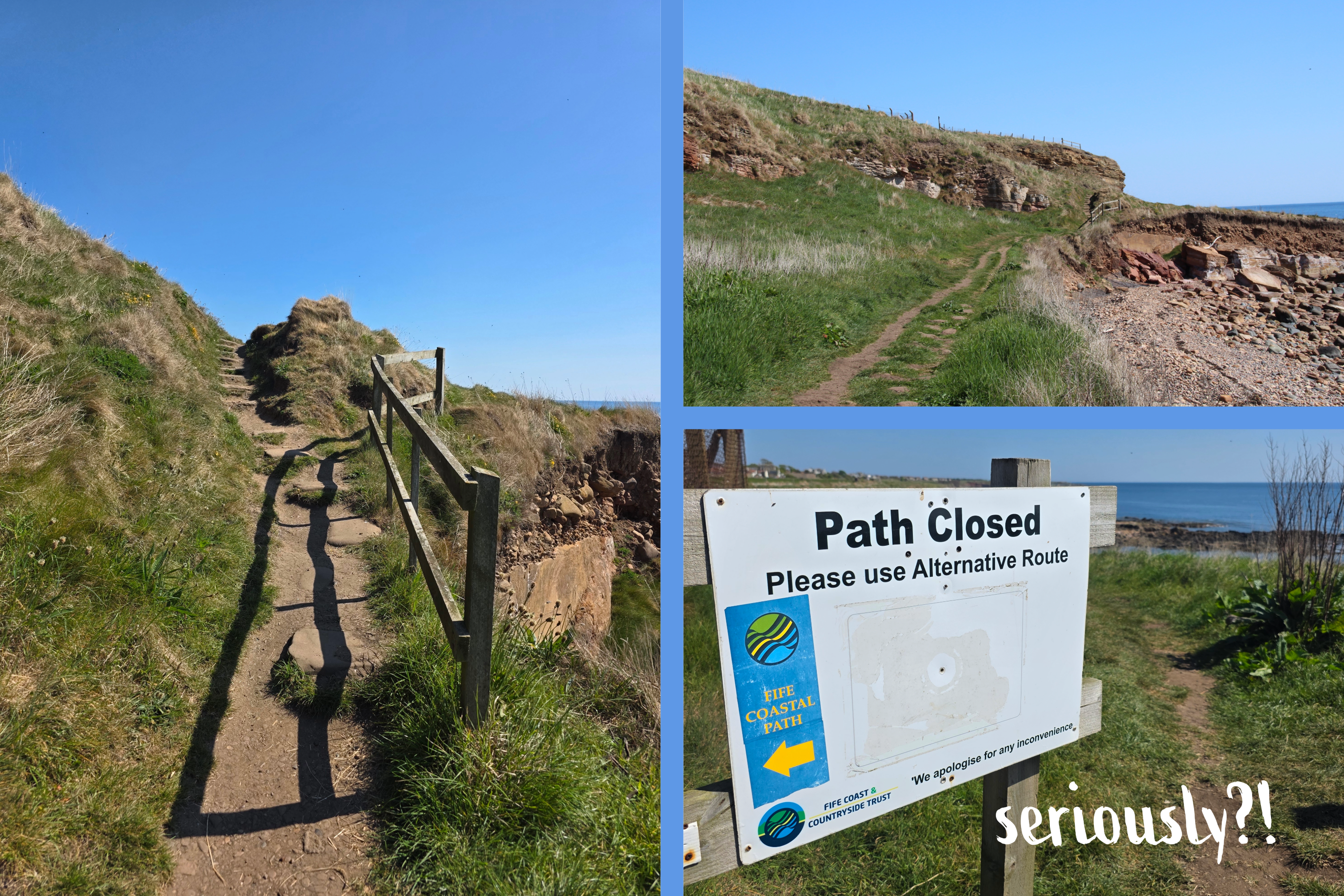
At the top of the stairs I was greeted, unbelievably, with ANOTHER path closed sign! Fortunately, this really did not impact my walk much as it had evidently been closed for some time. I took one look back to the west again before heading towards Crail, which stretched out along the coast before me.
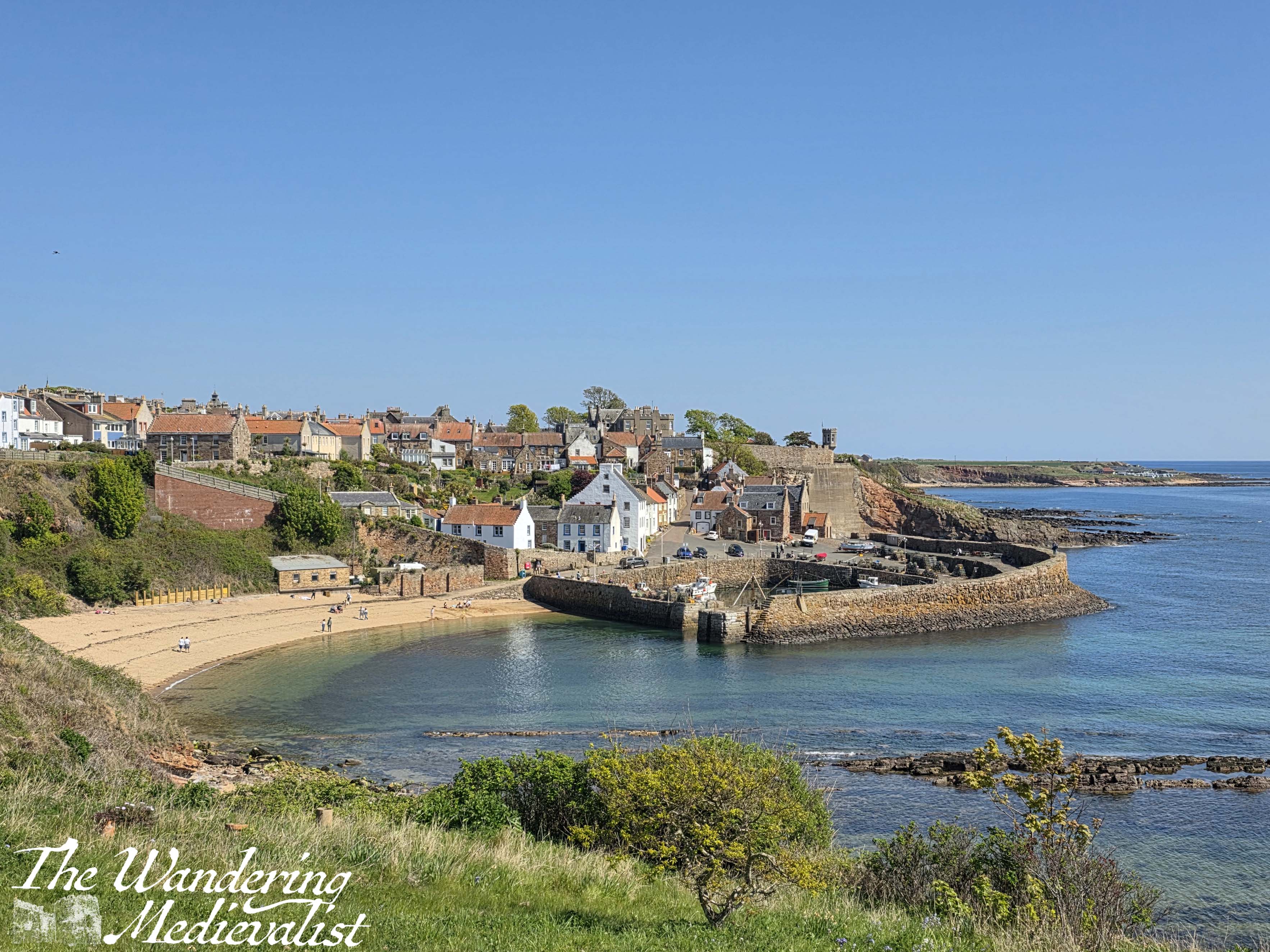
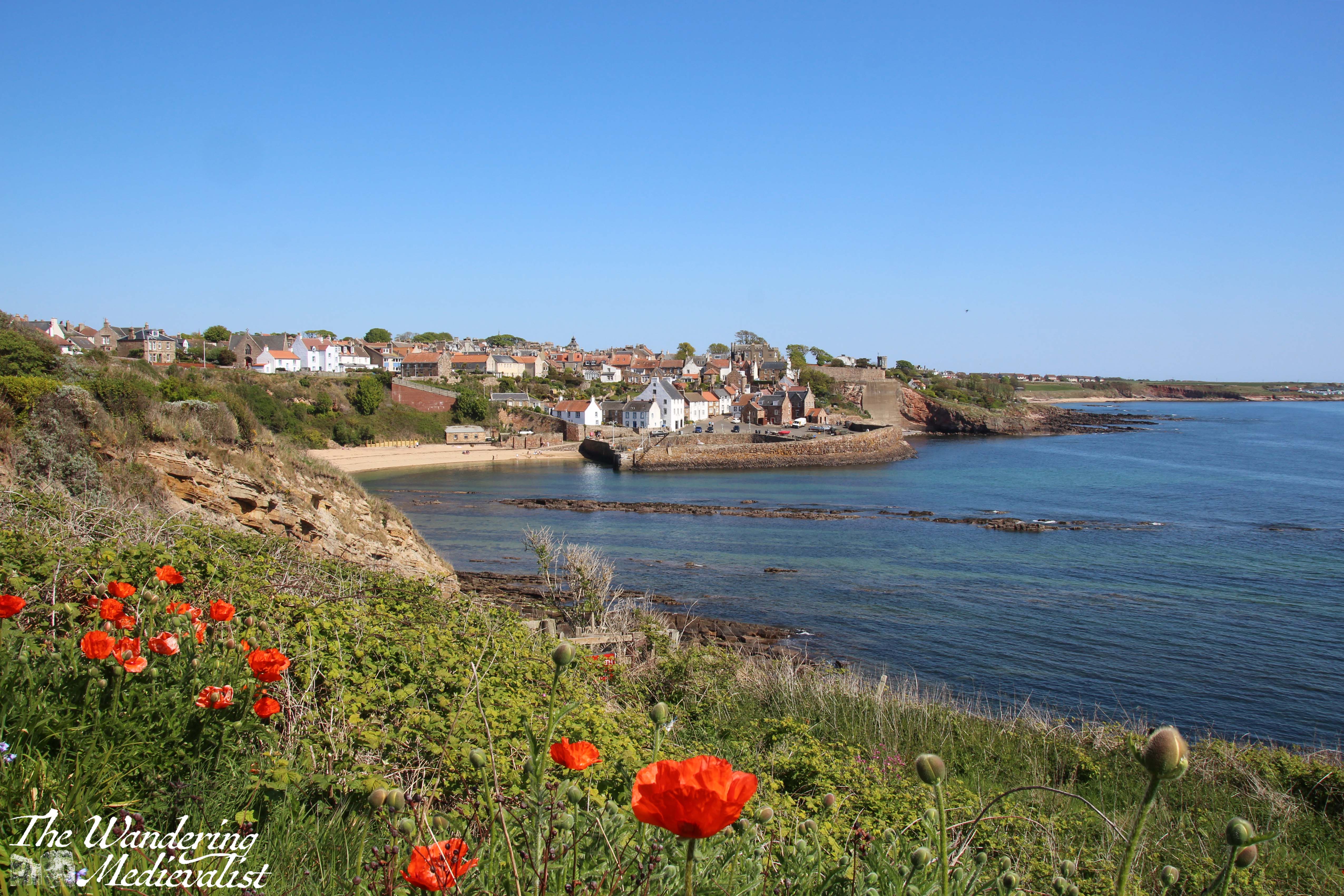
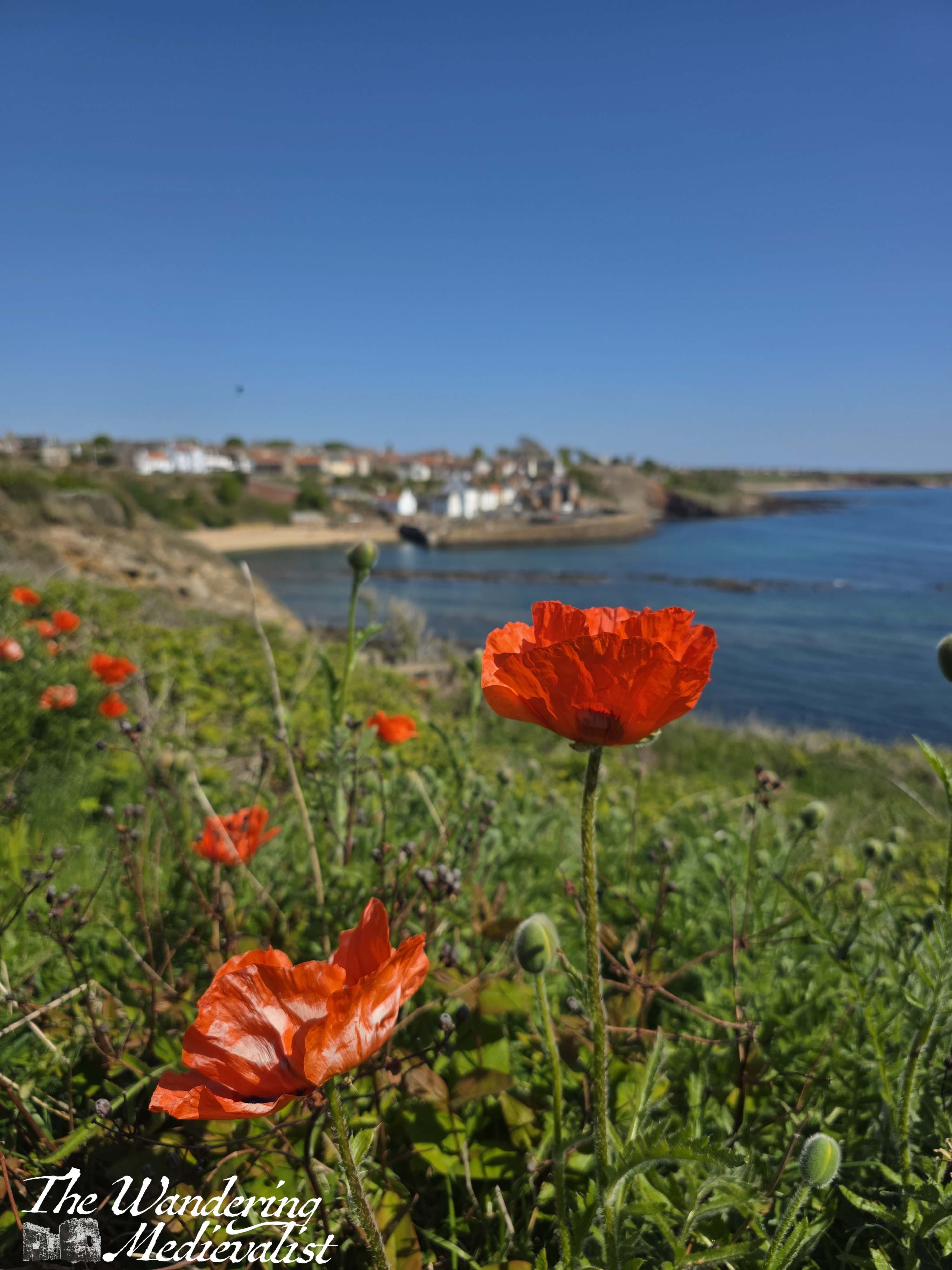
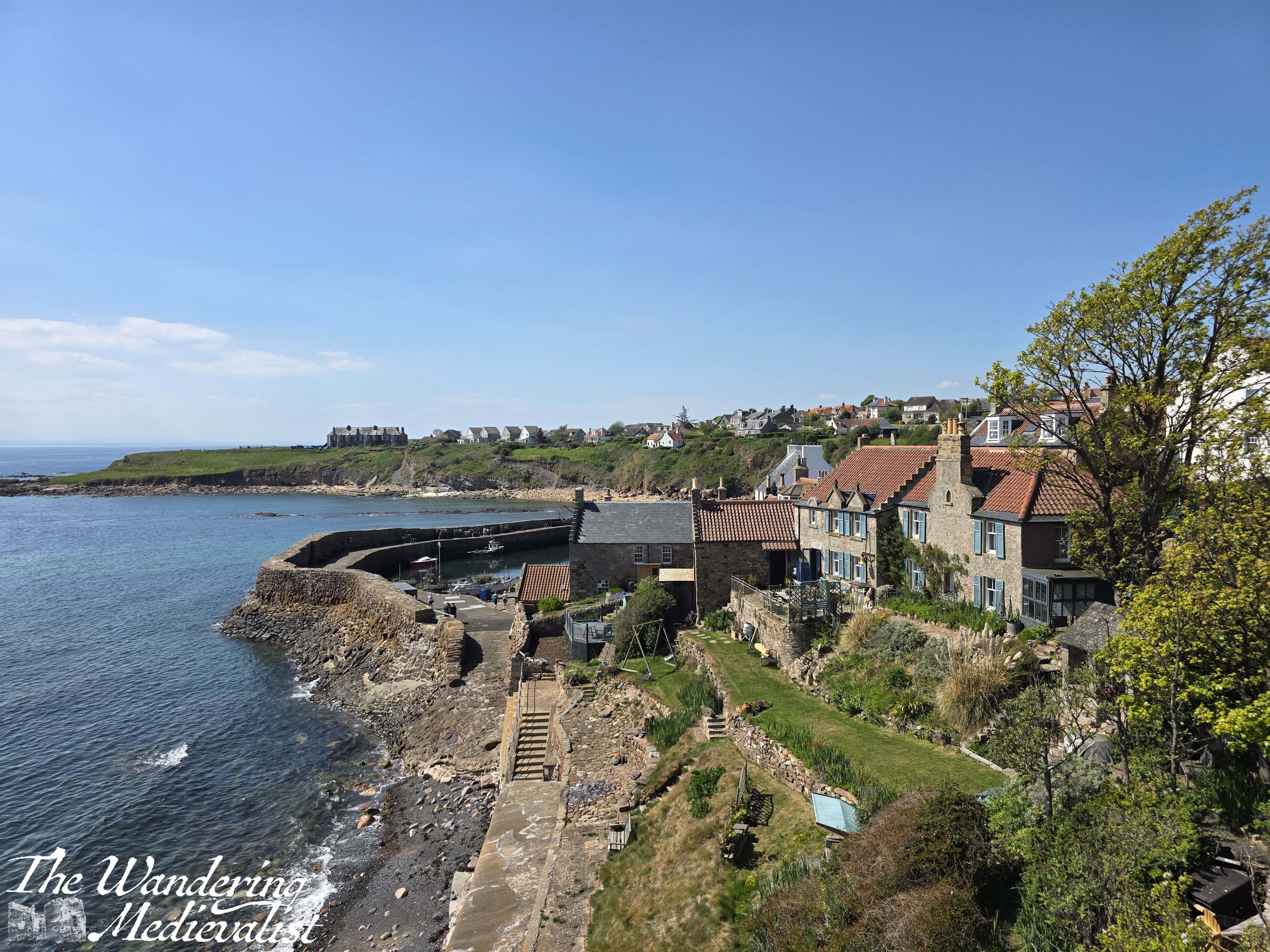
The approach to Crail is along the edge of the cliff, with a field on the left and the edges of the town springing up in the near distance. The advantage of the cliff height is that it allows for spectacular views down over the old village, beach and harbour; I was even lucky enough to find a few splendidly red wild poppies to enhance the sight.
There is no question, this is one of those views – it appears on paintings, mugs, tea towels, calendars, any tourist memorabilia of Fife. And for good reason.
The re-routed path takes walkers through a farm gate, and along a row of houses opposite the cliff edge. After one more viewpoint, the path swings up left towards the main road – Anstruther Road. I have to admit I was not entirely certain as to the route here and had to double-check my map, as the one sign pointed haphazardly at two potential routes.
Crail
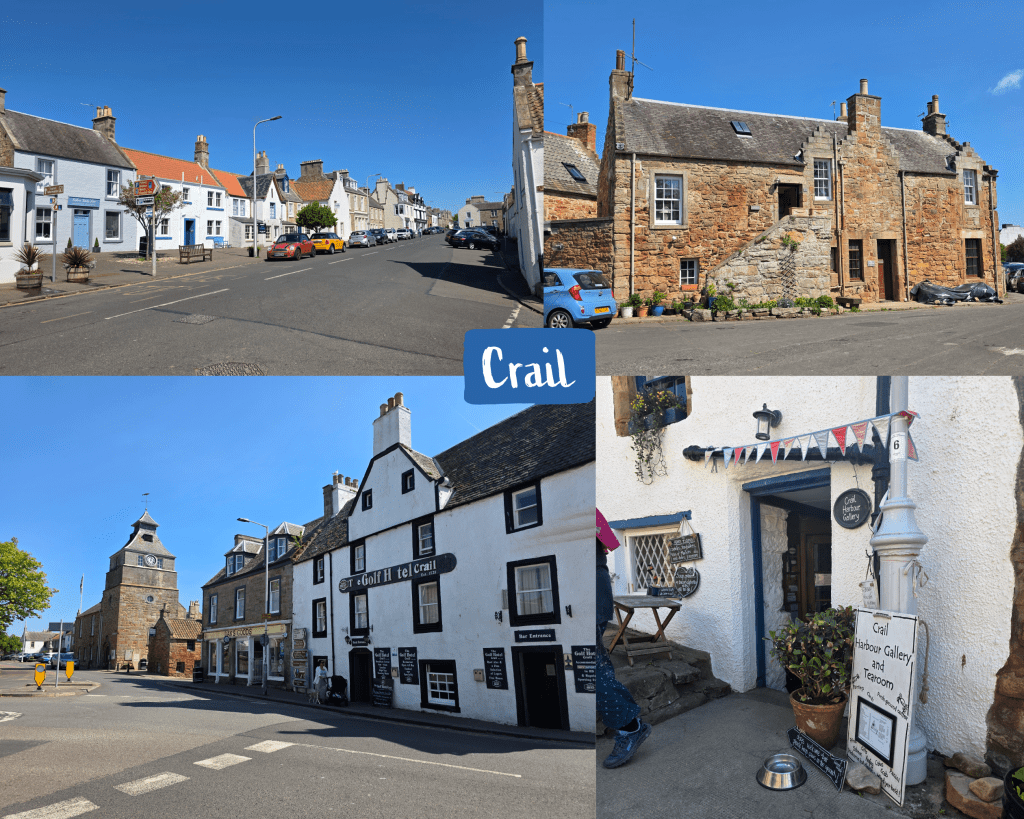
Like many of the East Neuk villages, Crail is beautifully kept with lovely gardens, expensive houses and plenty of character. It is arguably one of the more picturesque villages in the series, and it is a particular focus for the local arts community, famous for pottery in particular. In July, the town hosts an Arts Festival that draws visitors from around the world. It is not hard to see why this place would inspire artists…
The coastal path follows the Anstruther Road then turns sharply right along the aptly-named Shoregate. One of the aspects of these villages that I love the most is the myriad of closes and wynds that allow pedestrians their own routes. Often they are lined with garden walls, overflowing with trees, clematis, roses and other greenery. Shoregate tempted me with a peek at St Claire’s Wynd, but I followed the coastal path signs instead.
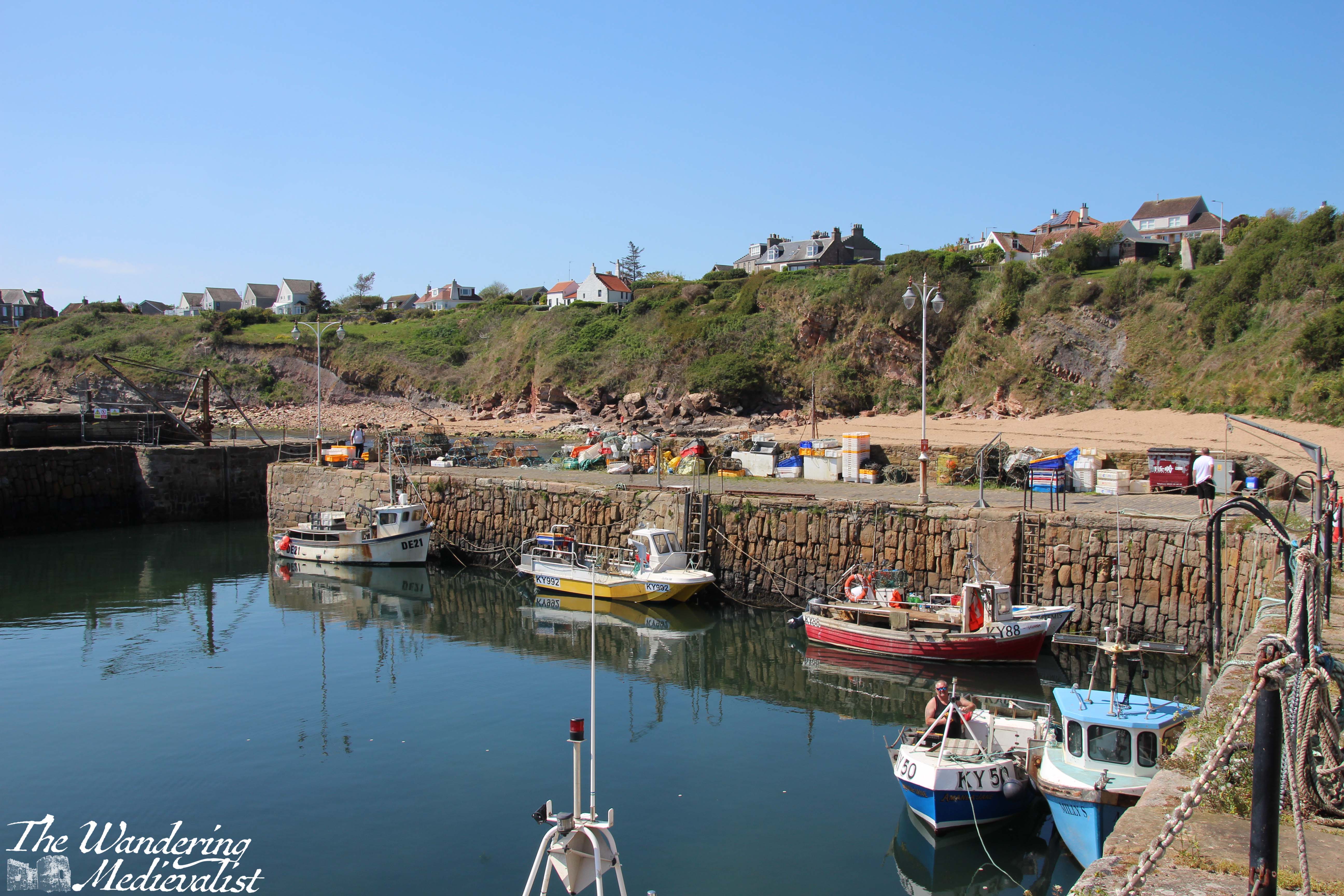
Now I have to admit that I did take a detour down to the harbour, though the coastal path directs walkers to take a left and hug the coast. The path to the harbour is quite steep and a good portion of it is cobbled; signs warn drivers that there is no public parking at the bottom. I certainly would not want to attempt it in a car!
The harbour is certainly worth a visit if you are able to walk down. There are several refreshment options including ice cream, access to a public toilet, and plenty of places to sit and enjoy the view. I am sure that in the summer, it is an incredibly busy spot!
I was nearing the end of the walk – and my stamina – as I turned to head back up the steeply cobbled hill, but at least I was not pushing a pram like the father behind me, who understandably had to pause several times. It was far too busy for me to explore the Crail Harbour Tearoom though it looked amazing, and as I discovered soon after, offered incredible views from its back terrace (just visible in the first photo below). Instead, I headed straight up the hill onto the path that edged around some houses.
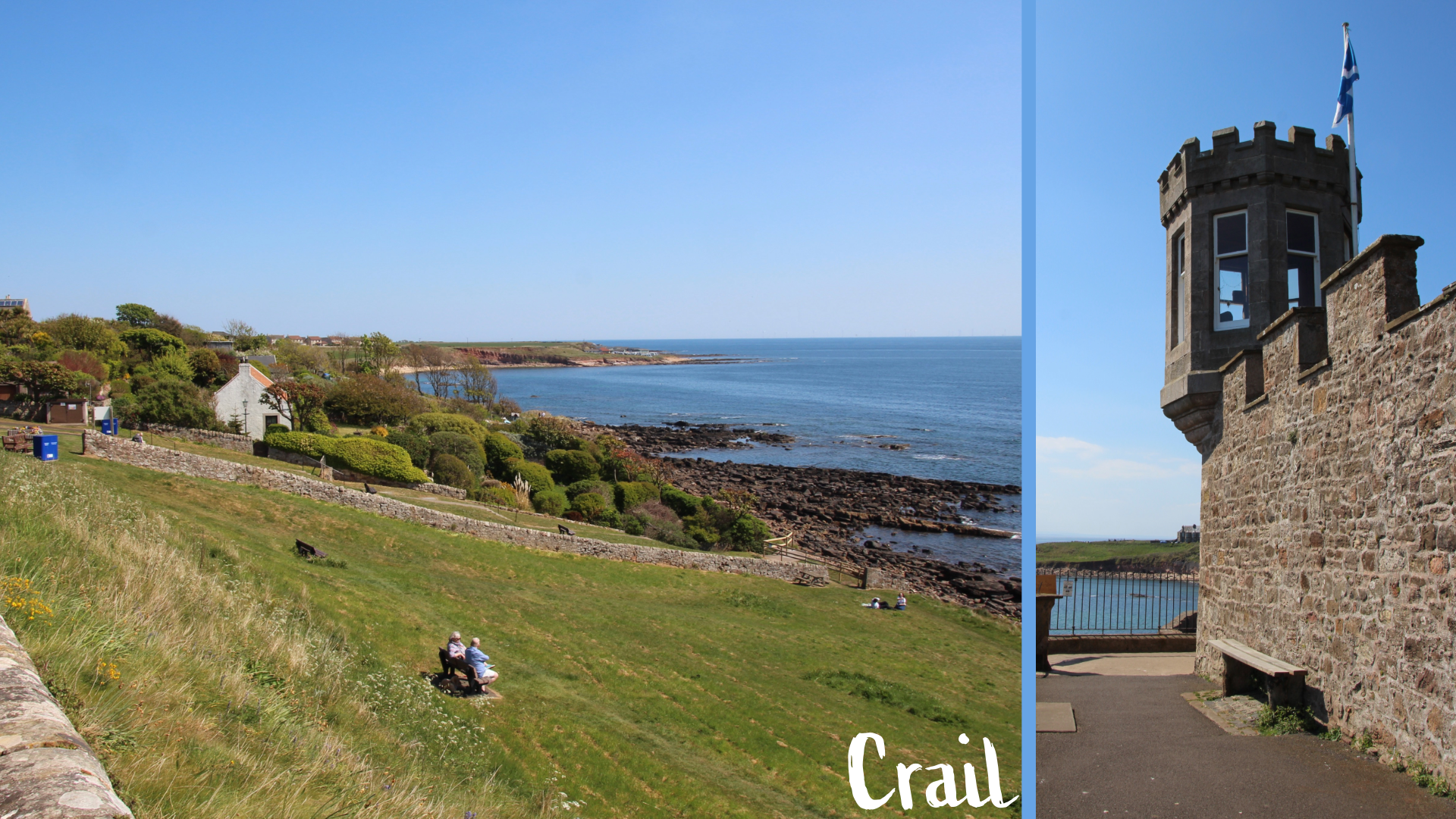
The path is narrow here, with views across the water and back towards the harbour, with the retaining wall of the castle to the left. After curving around the corner tower that reminded me a touch of the lookout towers in San Juan, the path leads along the top of the steep grass park seen here:
And this is where I marked the end of my walk for the day – 5 good miles from start to finish, and a little more for my two short harbour detours in Anstruther and Crail. I could easily have picked up the 95 Stagecoach bus again to head back to St Andrews, but I was fortunate to have a lift.
This was a good walk, with a bit less to see than some other stretches of the path, but still very pleasant particularly on a sunny day. The water views are spectacular as the corner of Fife approaches, and both Anstruther and Crail are great towns to spend some time in.
The next stretch from Crail around to Cambo is one of the longer walks, so I may not manage that until later in the year, but the step count challenge at work is helping to get my fitness back up to scratch and I look forward to my next walk!
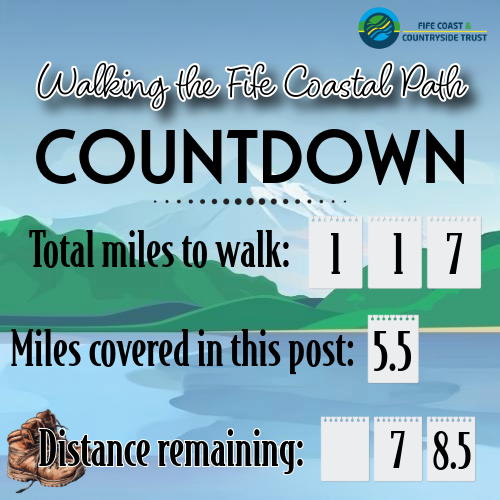
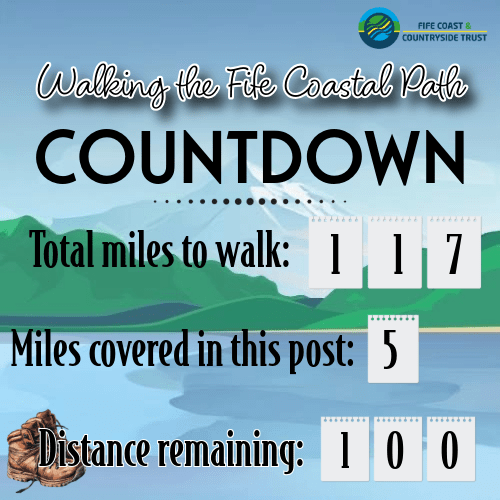
This segment marked another exciting moment – reaching the 100 miles to go mark! The first 17 miles seemed to go very slowly, so I hope I can pick up the pace a bit. Still…I’m getting there.
If you want to remind yourself why I’m doing these walks, check out my new page where you can keep track of my progress.
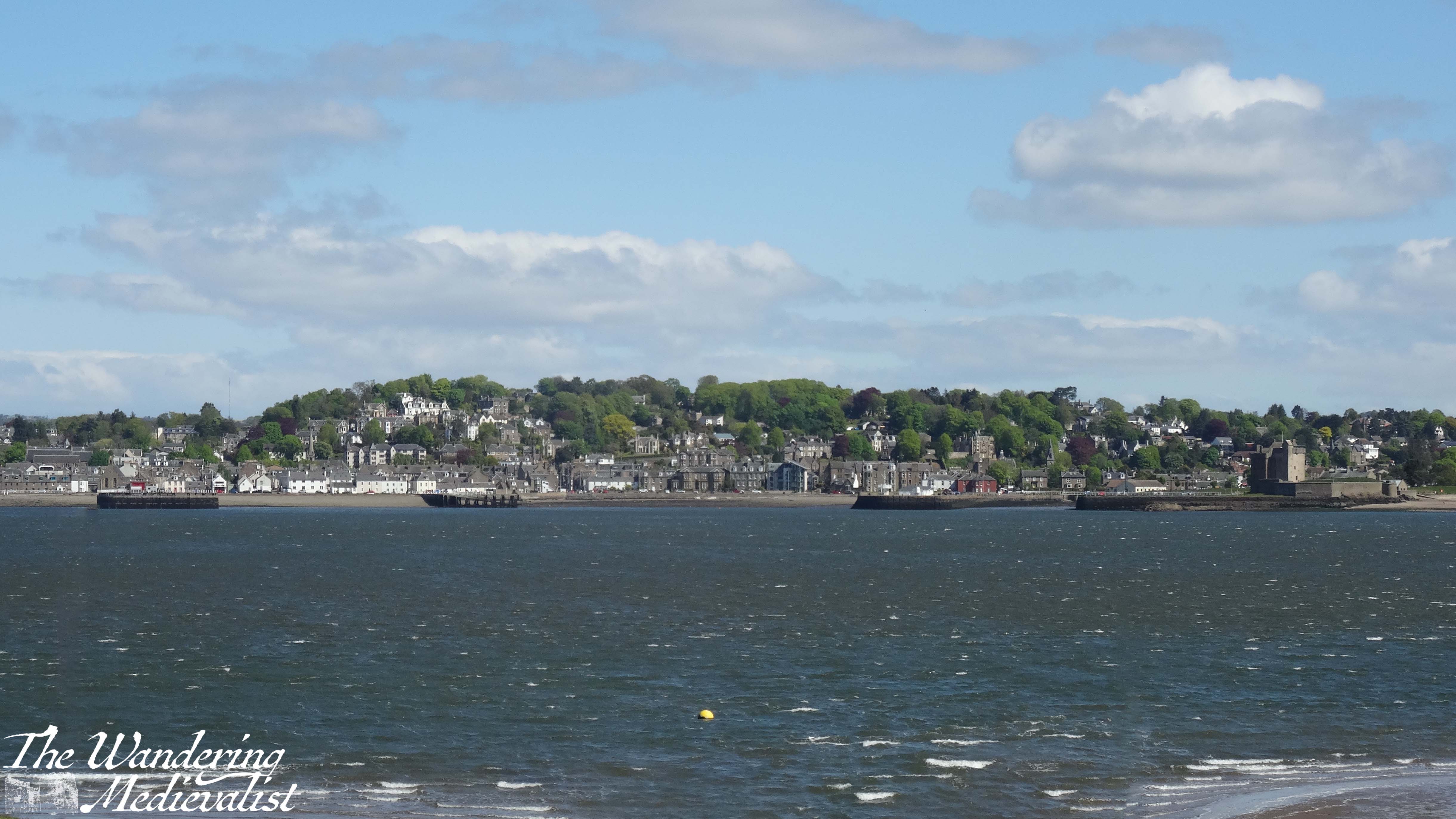
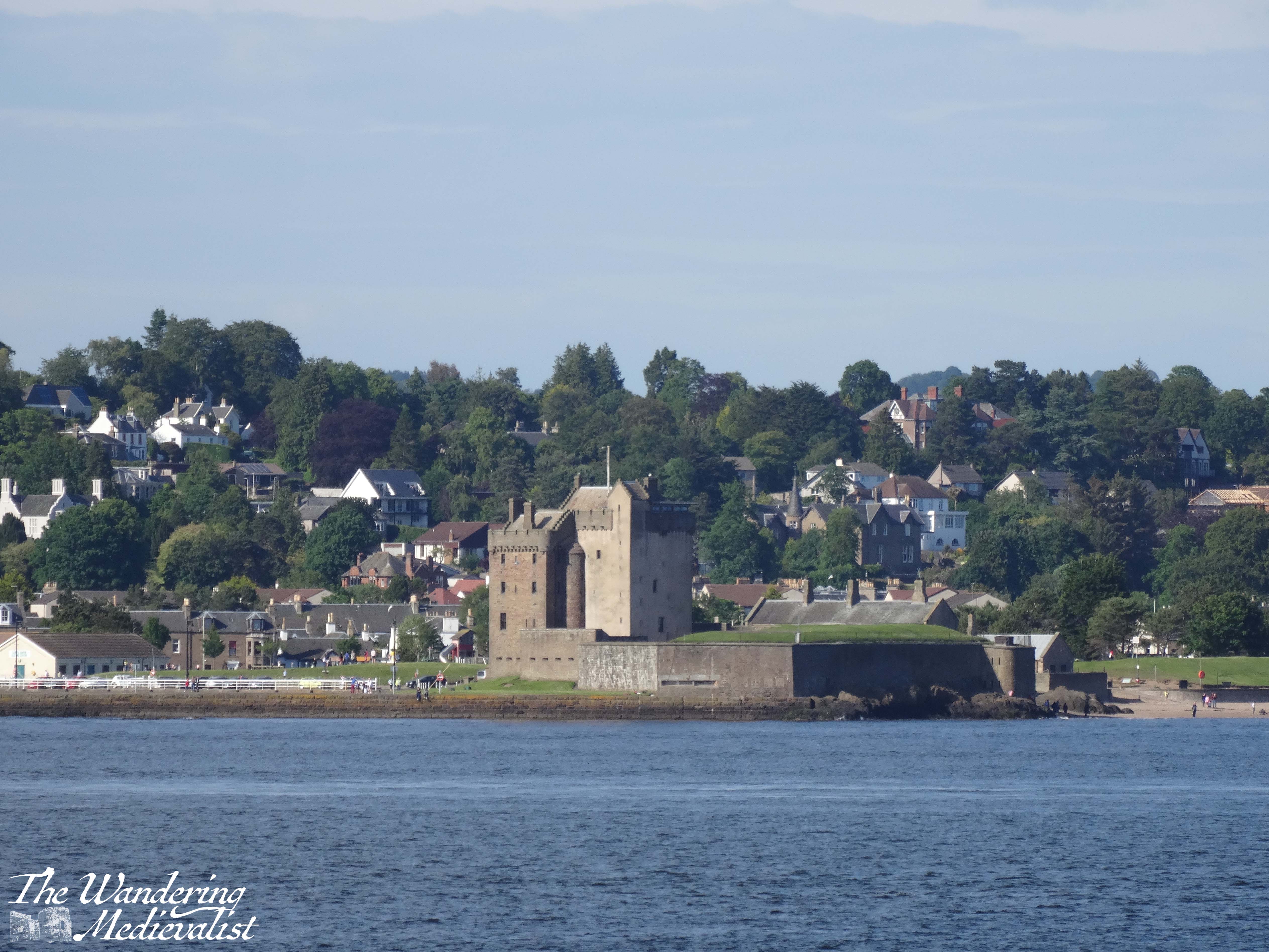
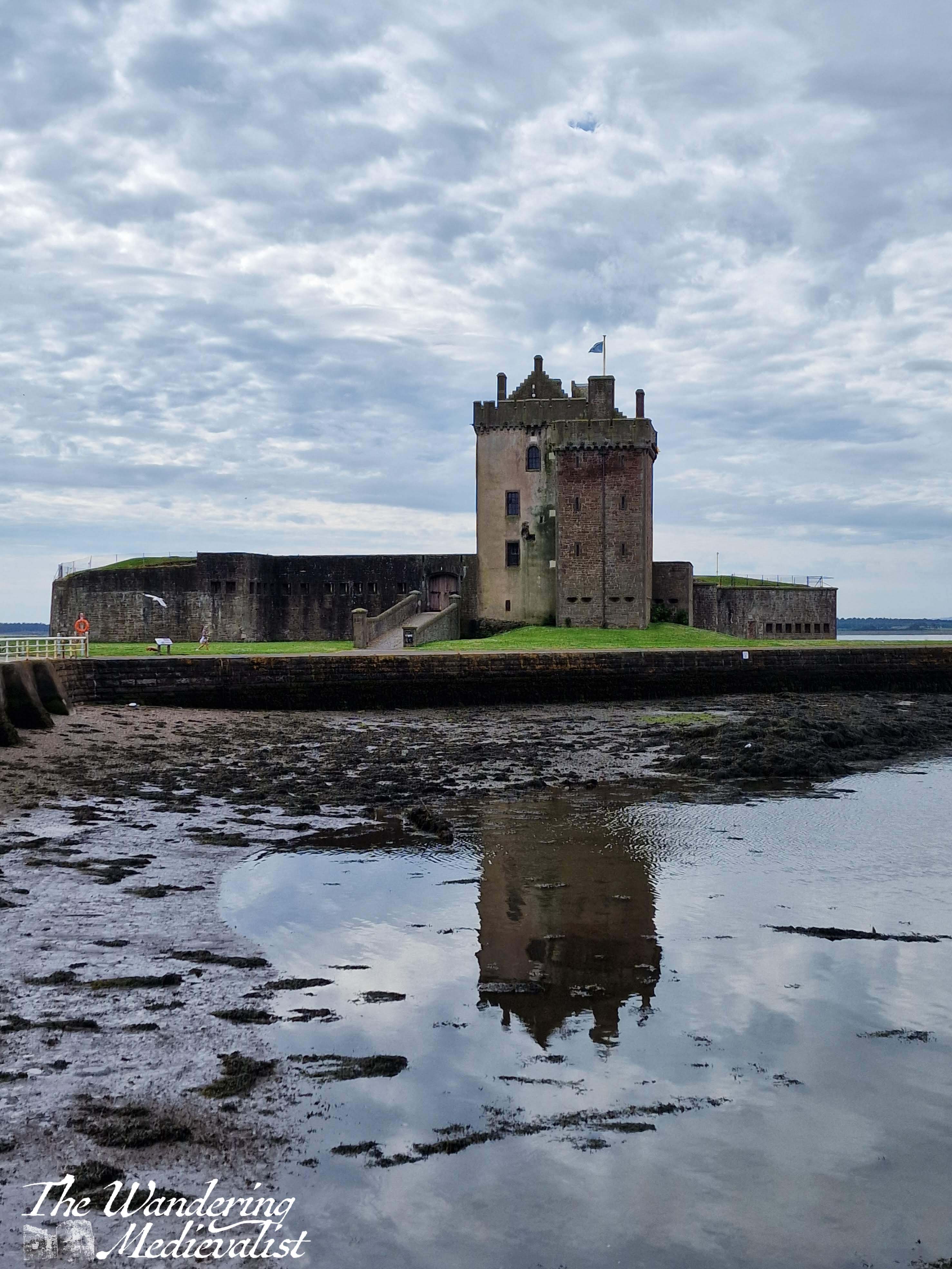
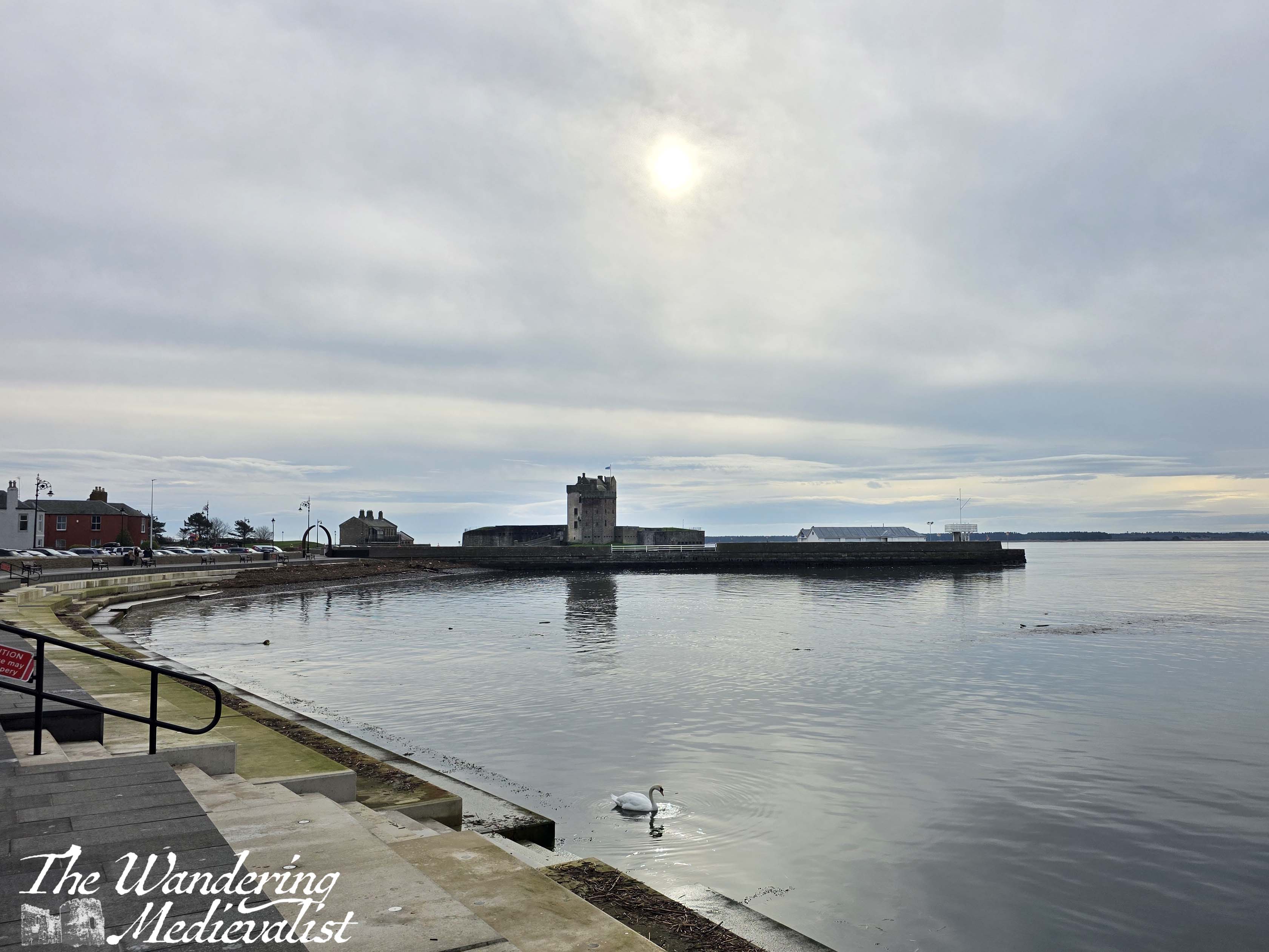
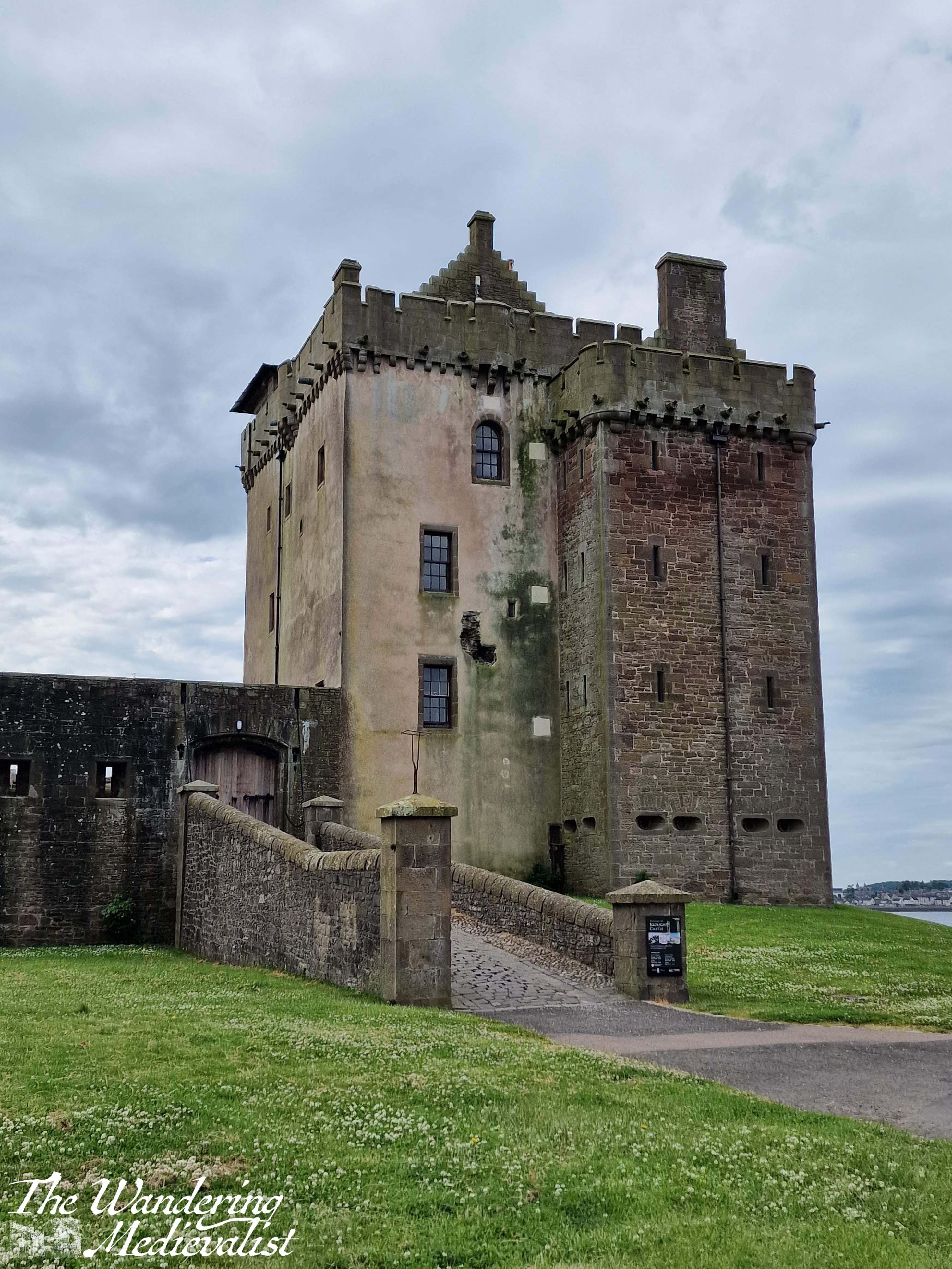
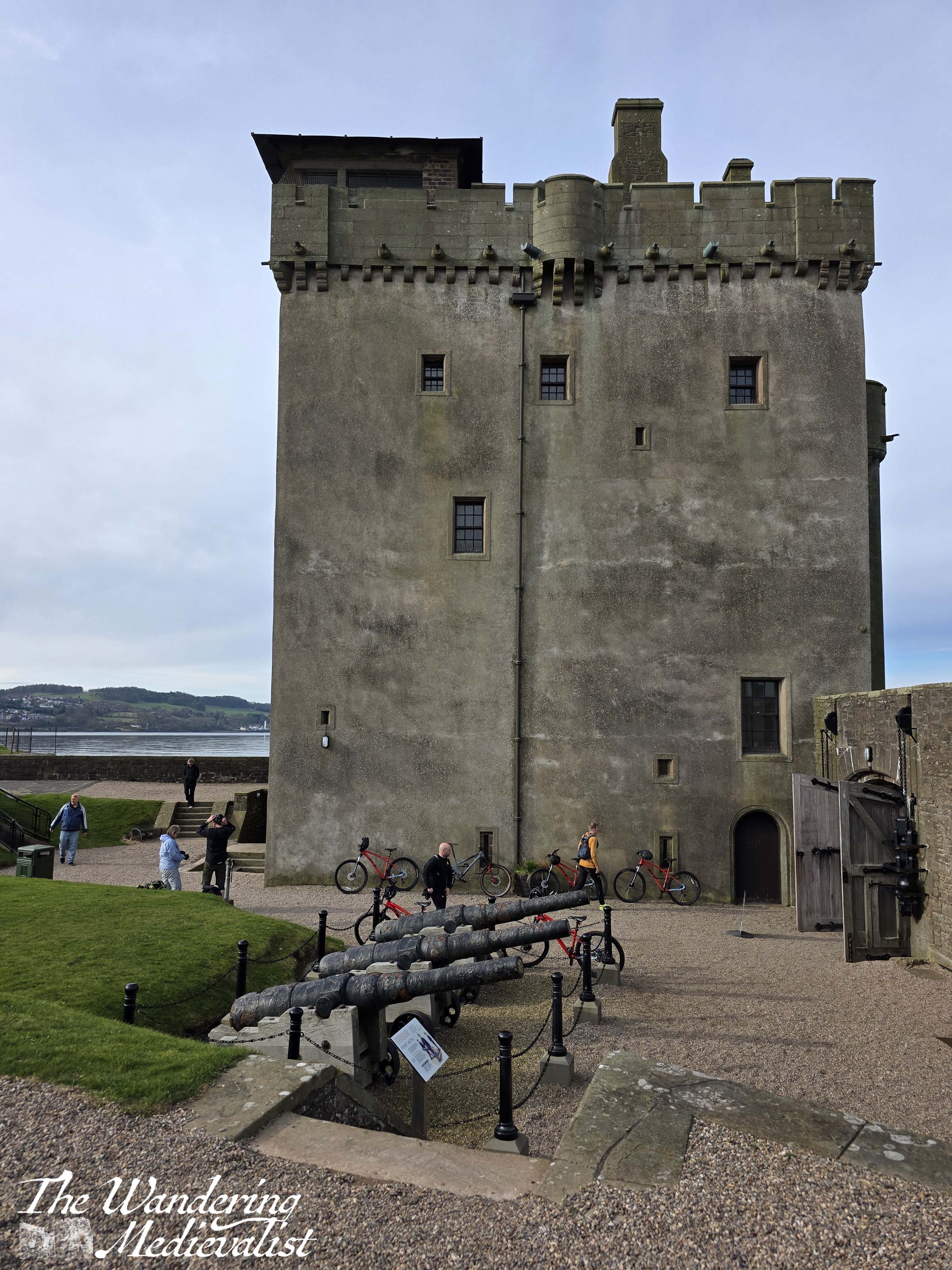
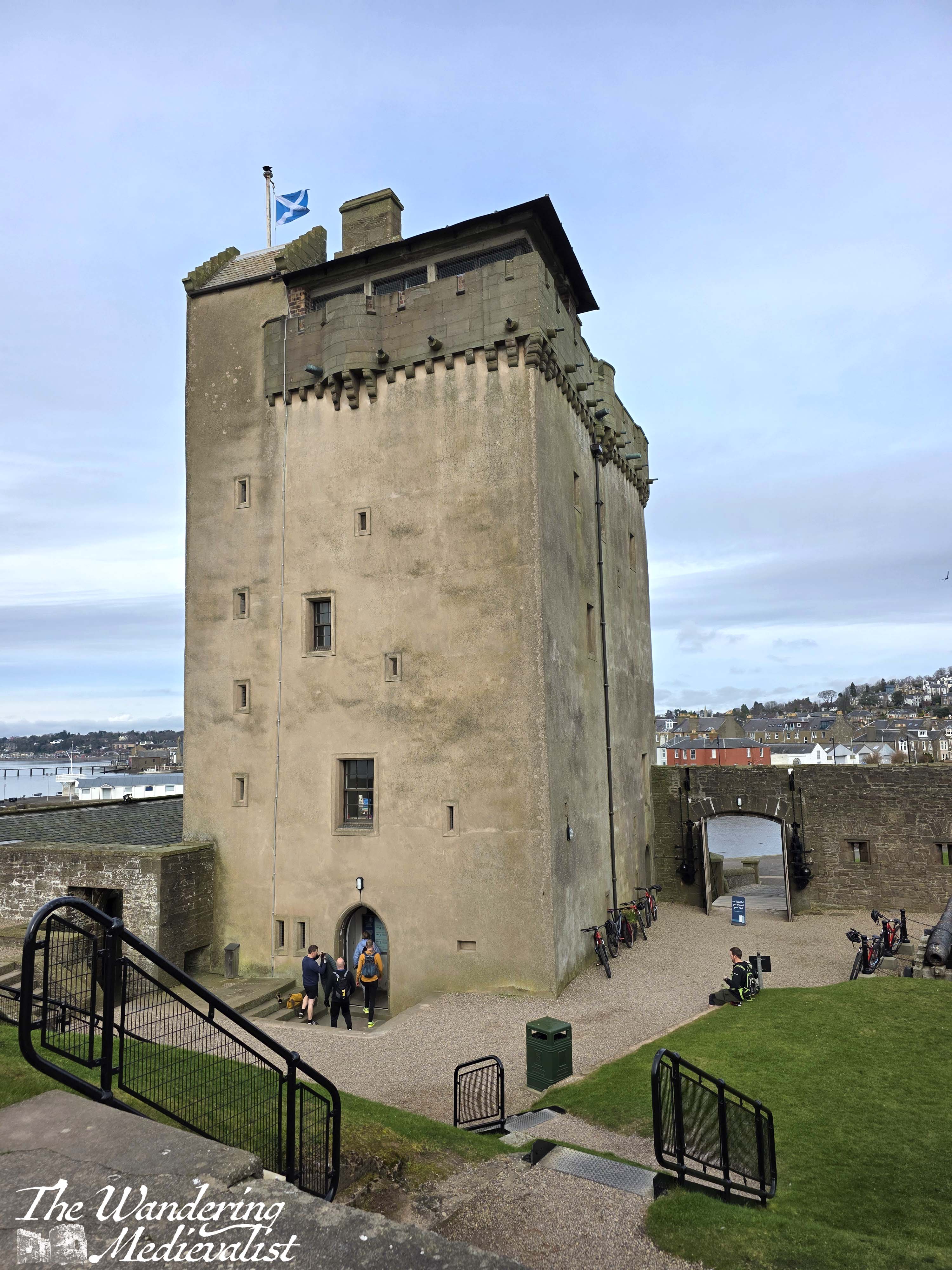
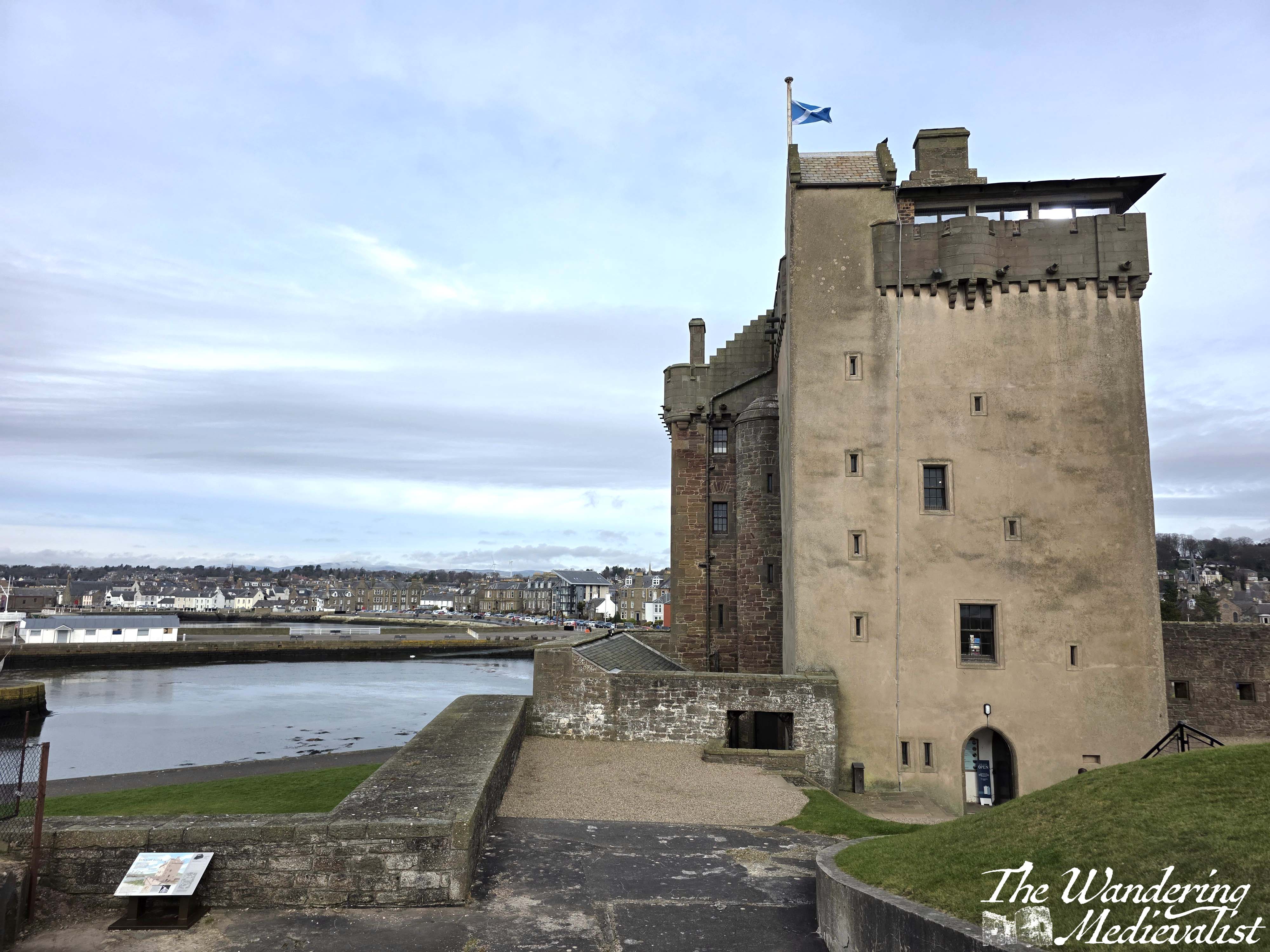
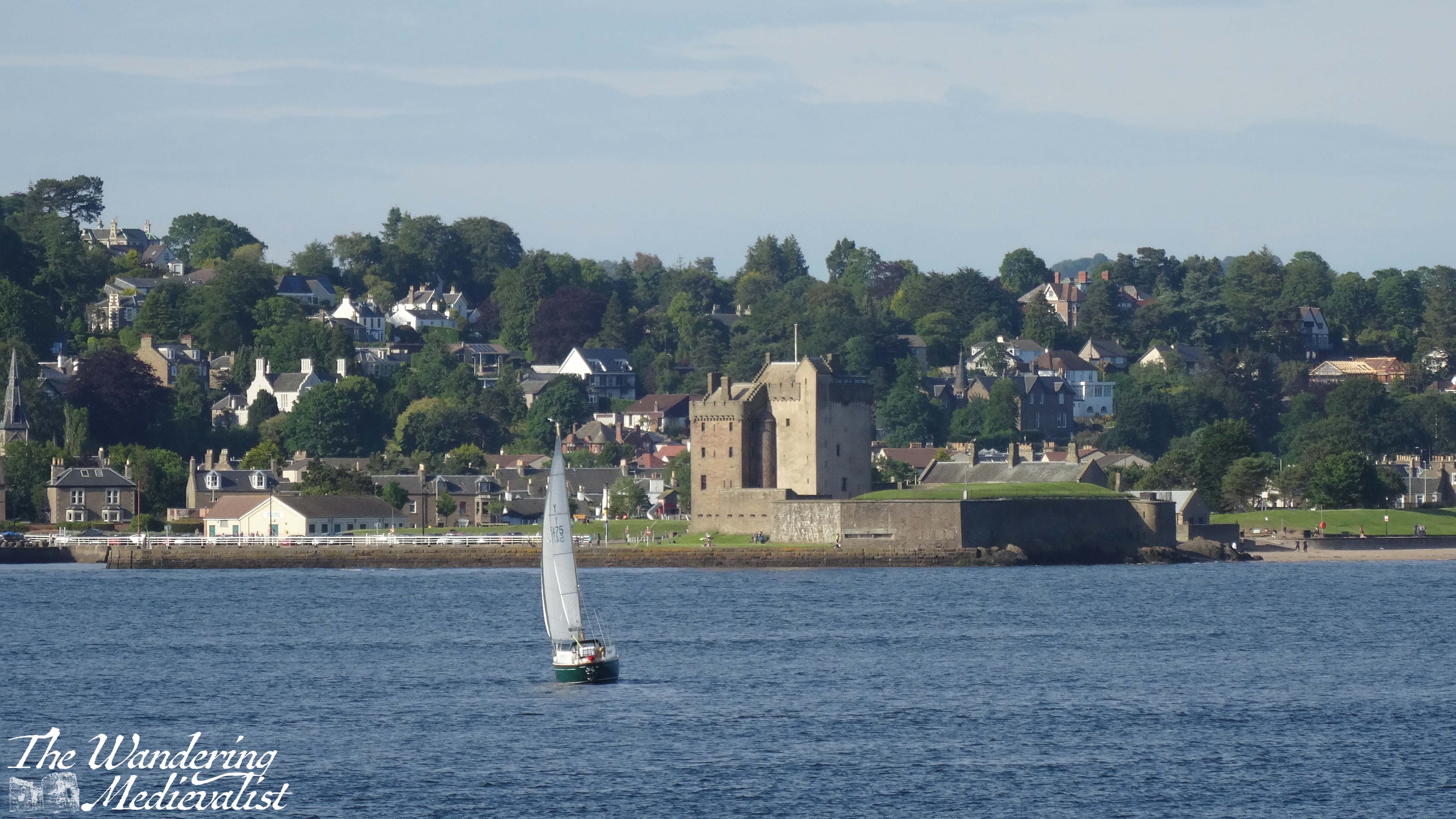
As I have doubtless mentioned before, we lived in Tayport, Fife during the first six months of the Covid pandemic in 2020, and for about a year before that. One of the main reasons I loved our flat there was that the view was spectacular – right out over the Firth of Tay, where I could watch the busy boat traffic and the currents changing. Sometimes there were dolphins, but more often it was just the view I loved – the changing weather and light as I looked across to Broughty Ferry and its castle.
For years I saw the castle only through the zoom lens of my camera, but was determined to eventually see it up close. Finally, as part of a work event that included a bit of regional exploration, I have been able to do so!
Location and History
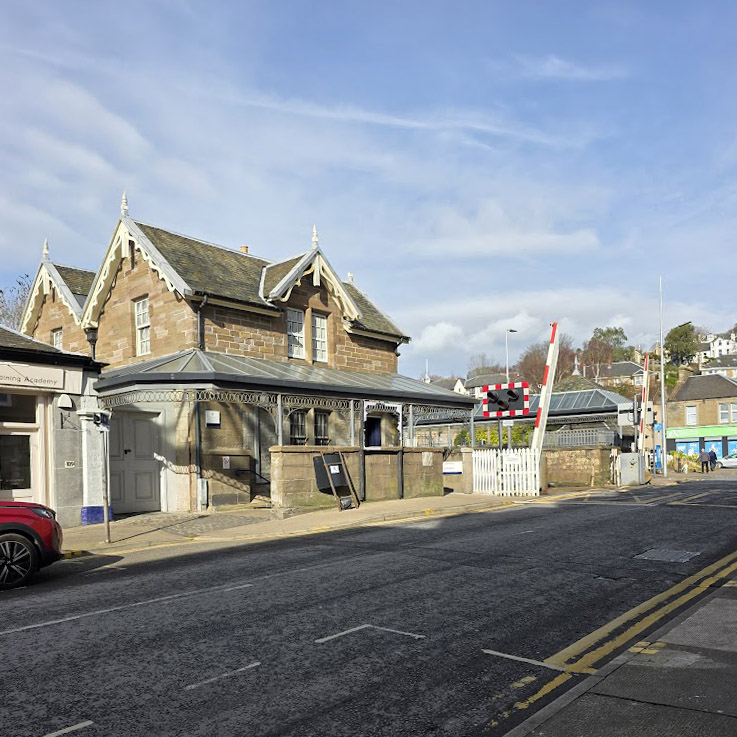
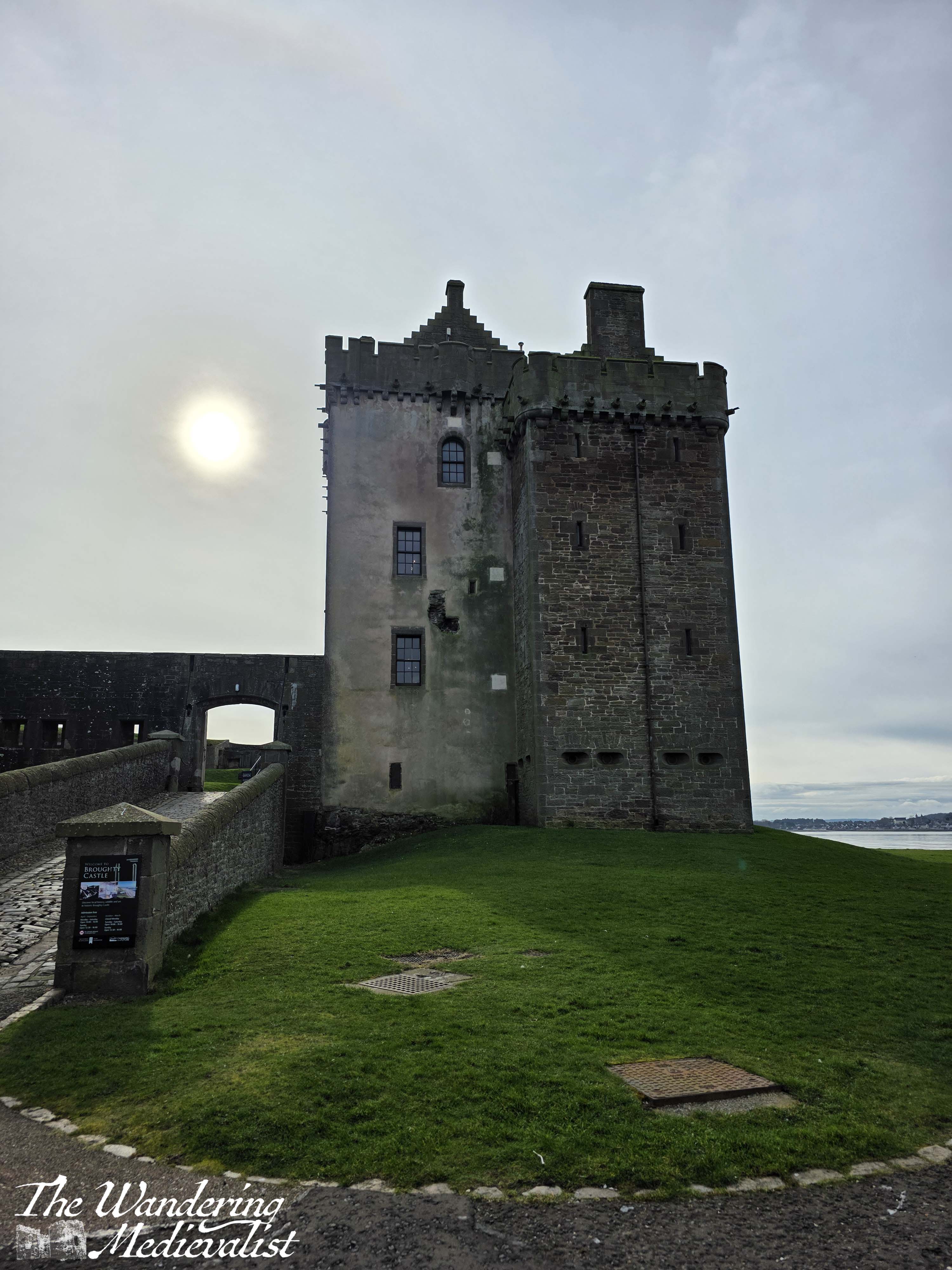
Broughty Castle is located at a prominent point on the northern edge of the Firth of Tay, about 5 miles east of the centre of Dundee, with a sandy beach on one side and sheltered harbour on the other. It is easily accessed by public transport, with busses running regularly and trains taking only 5 minutes from Dundee. From the Victorian-era train station, the walk to the waterfront is less than 10 minutes.
Broughty Ferry rail station
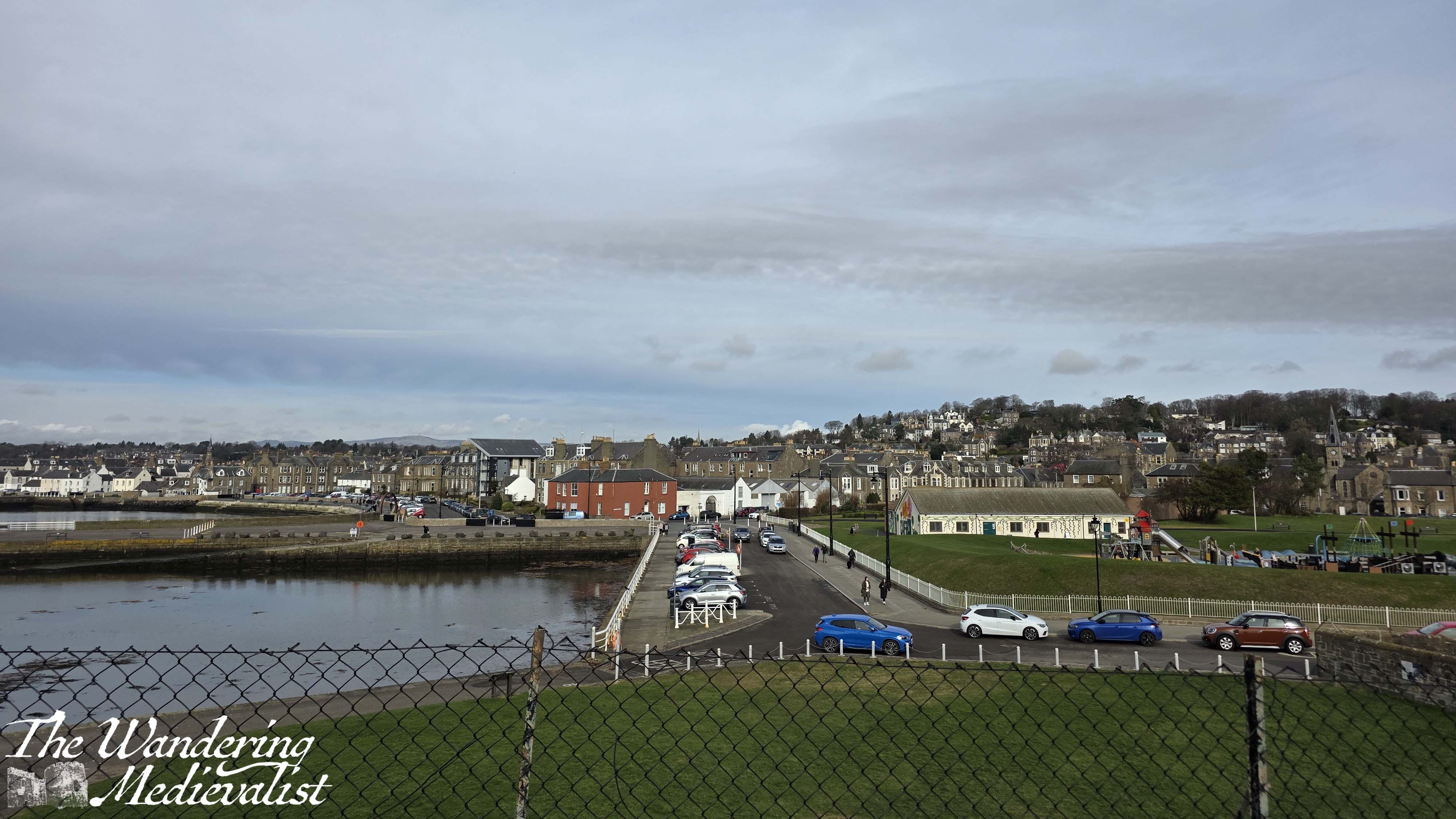
Broughty Ferry itself is a charming coastal town with plenty of unique shops, cafés, restaurants and pubs; it is easy to see why students and staff from Dundee might wish to live here or visit on weekends. Formerly a prosperous fishing village, in the nineteenth century the town became a key location for the wealthy jute barons of Dundee to build their villas and estates.
Even before this, Broughty Ferry was important as one end of the ferry that carried rail cars across the Tay on the line running from Aberdeen to Edinburgh. The other side was of course in Tayport, which previously was known as Ferryport-on-Tay (and in fact a sign bearing this name still exists at the edge of town). The enormous ramps leading into the water, wide enough for the rail cars, are both still visible today; the construction of the first Tay Rail Bridge in the 1870s rendered this ferry moot, though there is a reconstruction of it in the castle museum.
Relatively ‘new’ for Scotland, Broughty Castle was constructed in the 1490s; the strategic location is clear as you have an almost 360°view of the estuary, coastline and ocean beyond. There had been fortifications here for several decades, and a number of English ships were captured off the coast in the late fifteenth century.
The castle did go through a period of decline in the eighteenth century, but it was purchased in 1846 by the Edinburgh and Northern Railway, which built the harbour for the rail ferry. Ownership was passed to the War Office in 1855, and so it came back into military use.
The castle would remain in use as a defensive structure through the Second World War, when a defence post and lookout platform were placed in the main tower.
My visit
The castle is located at the end of a promenade along the coastline, where at low tide a touch of beach is visible. This portion of coast is very popular with walkers and cyclists, and in theory I think you could walk here from Dundee though I’m not familiar with the state of the path.
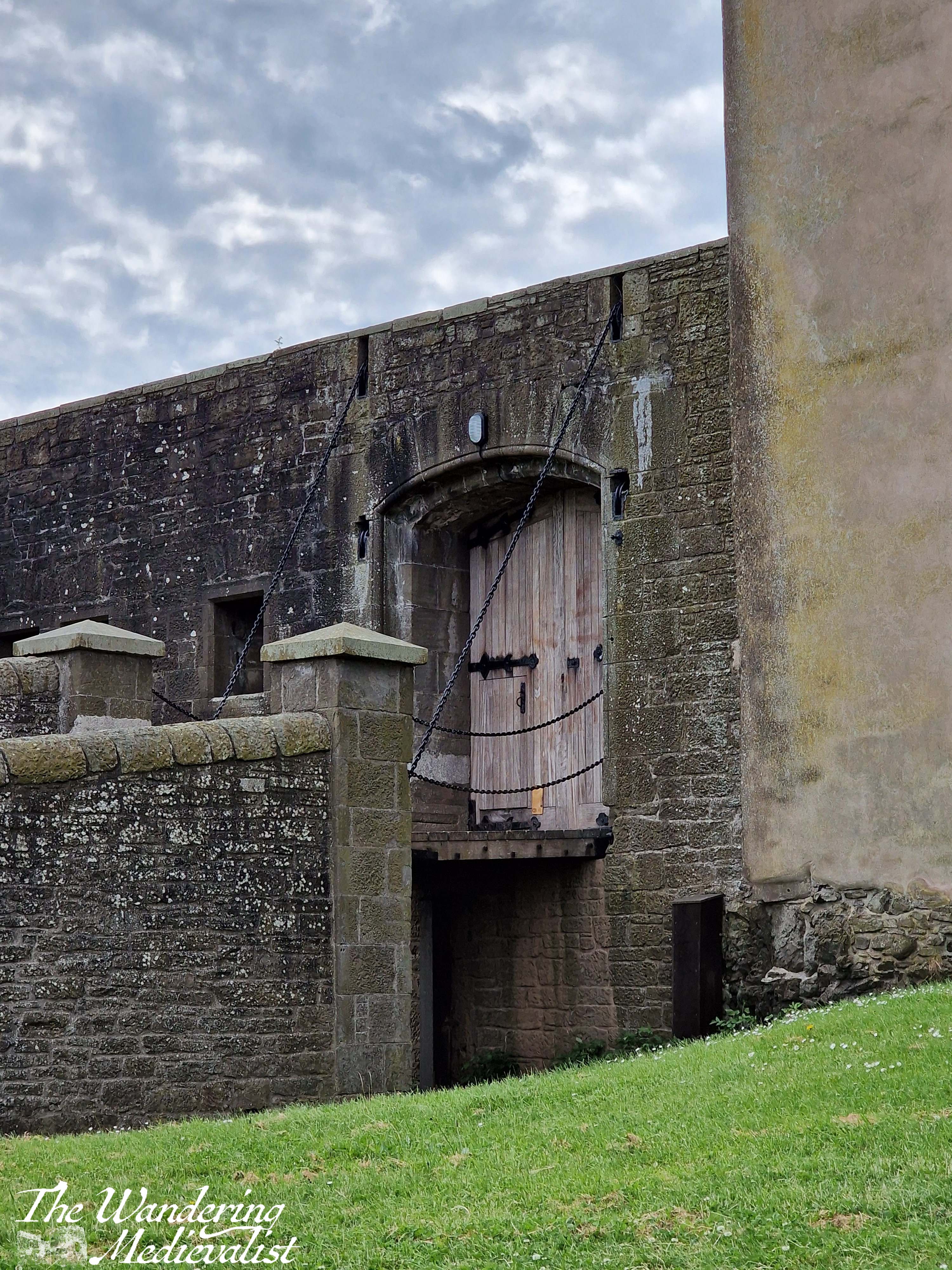
The shape of the tower is very familiar to anyone who likes Scottish castles; you will see the similar square(ish) tower at Castle Campbell, Balvaird, Doune, Hill of Tarvit, and many more. Perhaps less usually, the medieval tower is surrounded by much more modern fortifications reminiscent of the era of regular cannon (there are several lovely cannon specimens within the grounds). Earthen banks with concrete walls surround the castle on three sides, with the approach only still through a medieval gate.
Excitingly for us on the day we visited, the castle is free to enter; hours are seasonal, so it is worth checking ahead of time. Once through the gate, one is met immediately with a courtyard, where visitors can either enter the castle proper or explore the ramparts. We chose the second option to start, climbing up concrete steps to viewpoints where the shadows of large WWII guns are still evident, in rings indicating bolted-down machinery. The view really is fantastic, looking up the Tay towards Dundee (and the Tay Road and Rail Bridges), across to Tentsmuir, out to sea or up the coast towards Carnoustie.
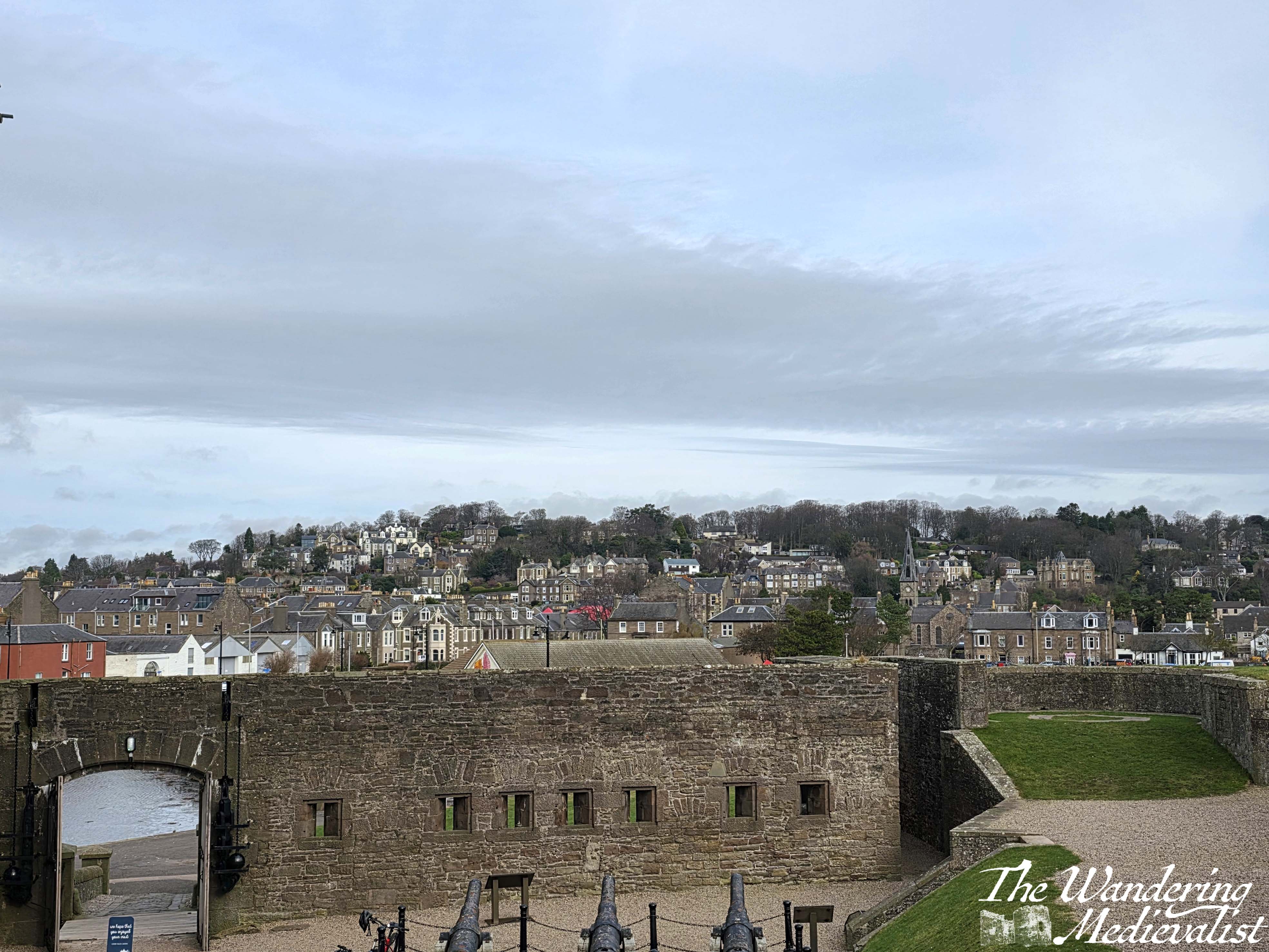
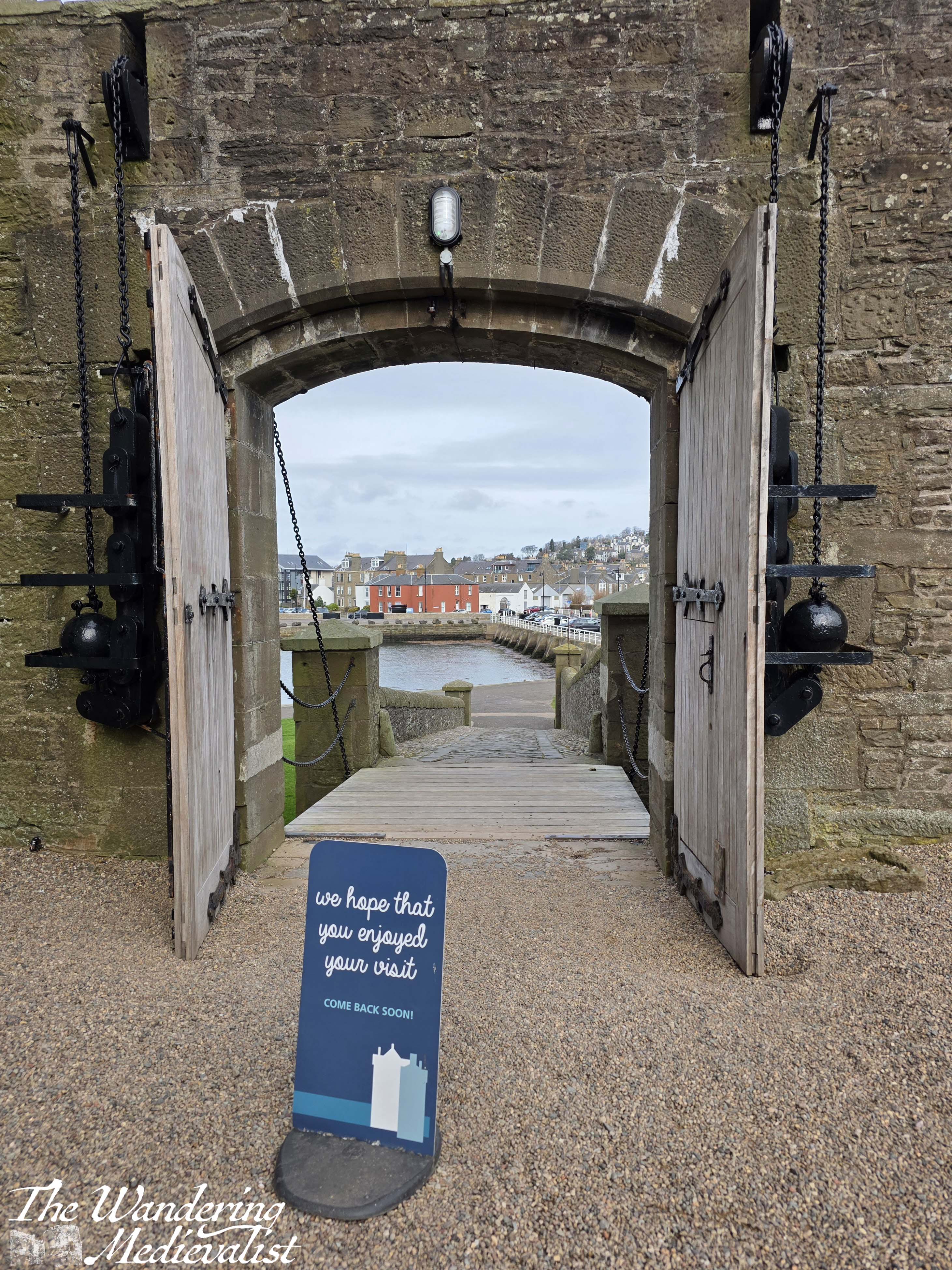
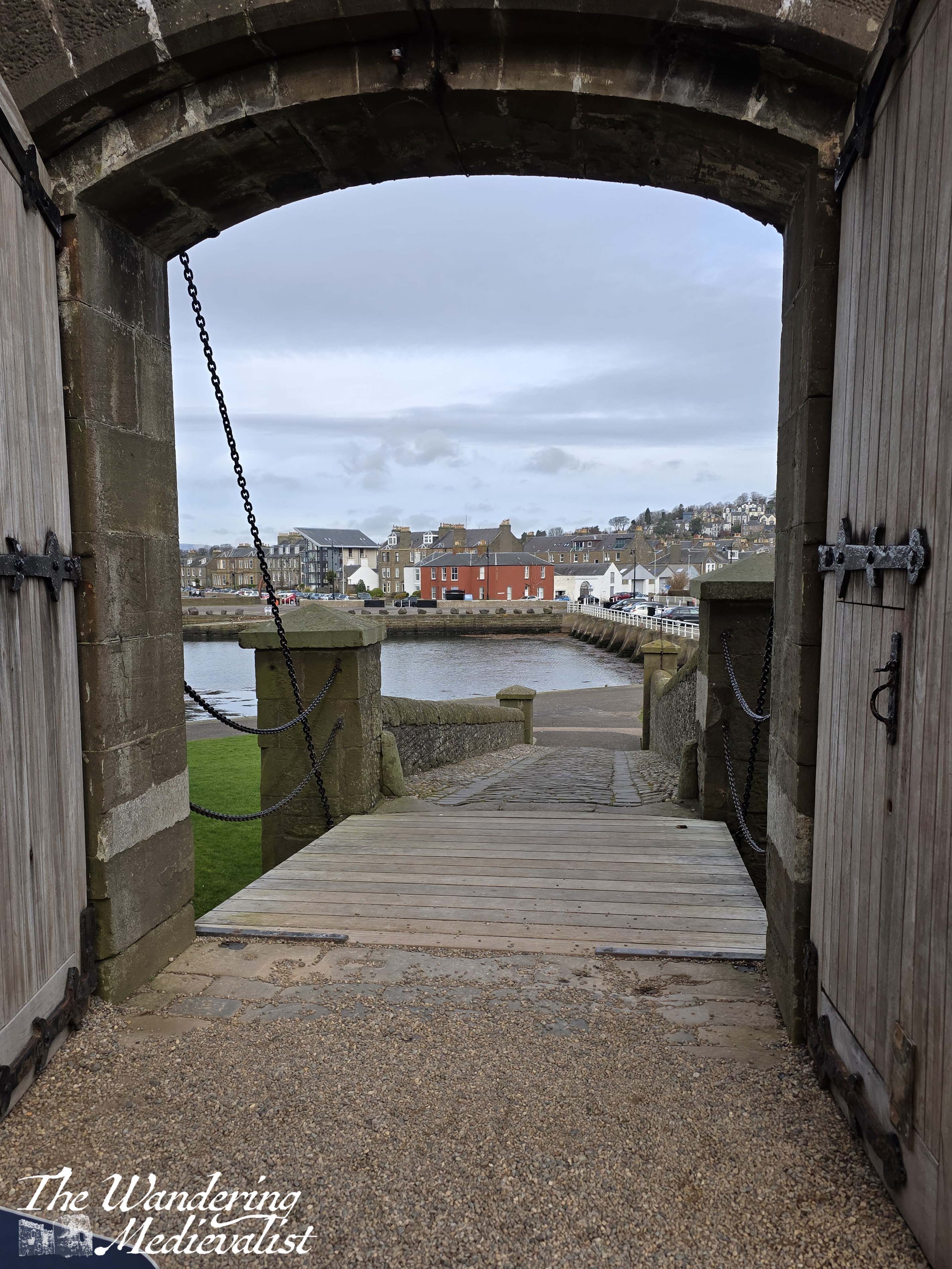
I particularly, for some reason, enjoyed the view back out the main gate, where the town of Broughty Ferry was visible in the near distance. Also enjoyable were the lovely old gate mechanisms, with enormous metal weights ready to hold the doors open or keep them closed.
While I could – and did – have stood for a long time watching the water and the Tay traffic, it was time eventually to explore the interior of the castle.
Now, if visitors are looking for ornately-decorated living quarters with medieval panelling, as you can find at some castles, they will be disappointed. Instead, this tower is still very much in modern use with each layer dedicated to a different part of the museum.
Access to the tower and upper floors of the museum is by a series of narrow stone steps, so some strength of joints is required – the stairs are certainly authentic, with dips in the stone where many feet have travelled, though nothing as dramatic as one often finds in old church towers. Nevertheless, the stairwells are narrow and winding.
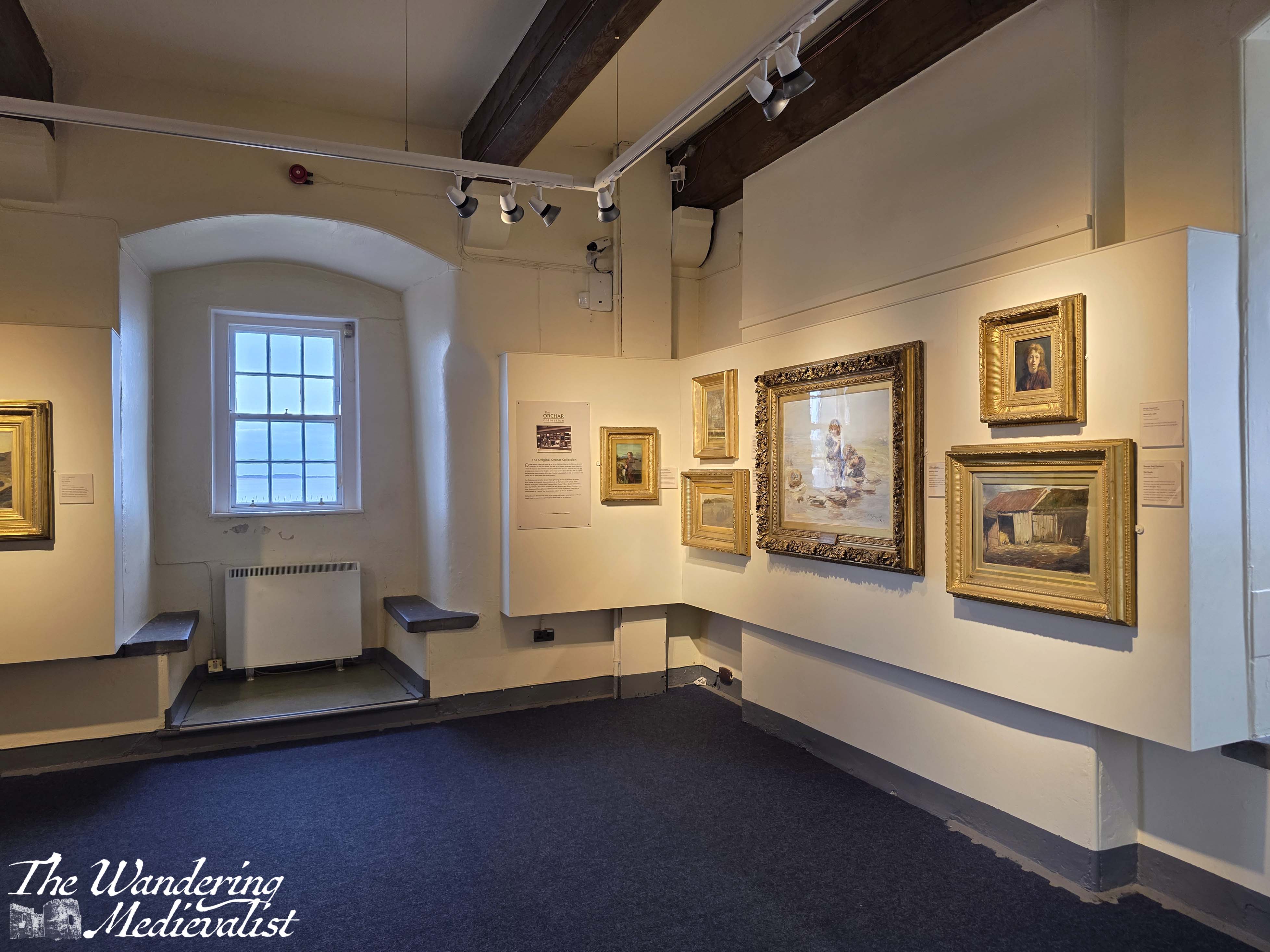
The first floor – up a short flight of stairs – is the museum shop and some displays including the one on the rail ferry. There are very helpful print-outs on the history of the castle and some gifts, postcards, and memorabilia. One floor up from that is the gallery, with some local artist impressions of the castle, Broughty Ferry, and some of the inhabitants.
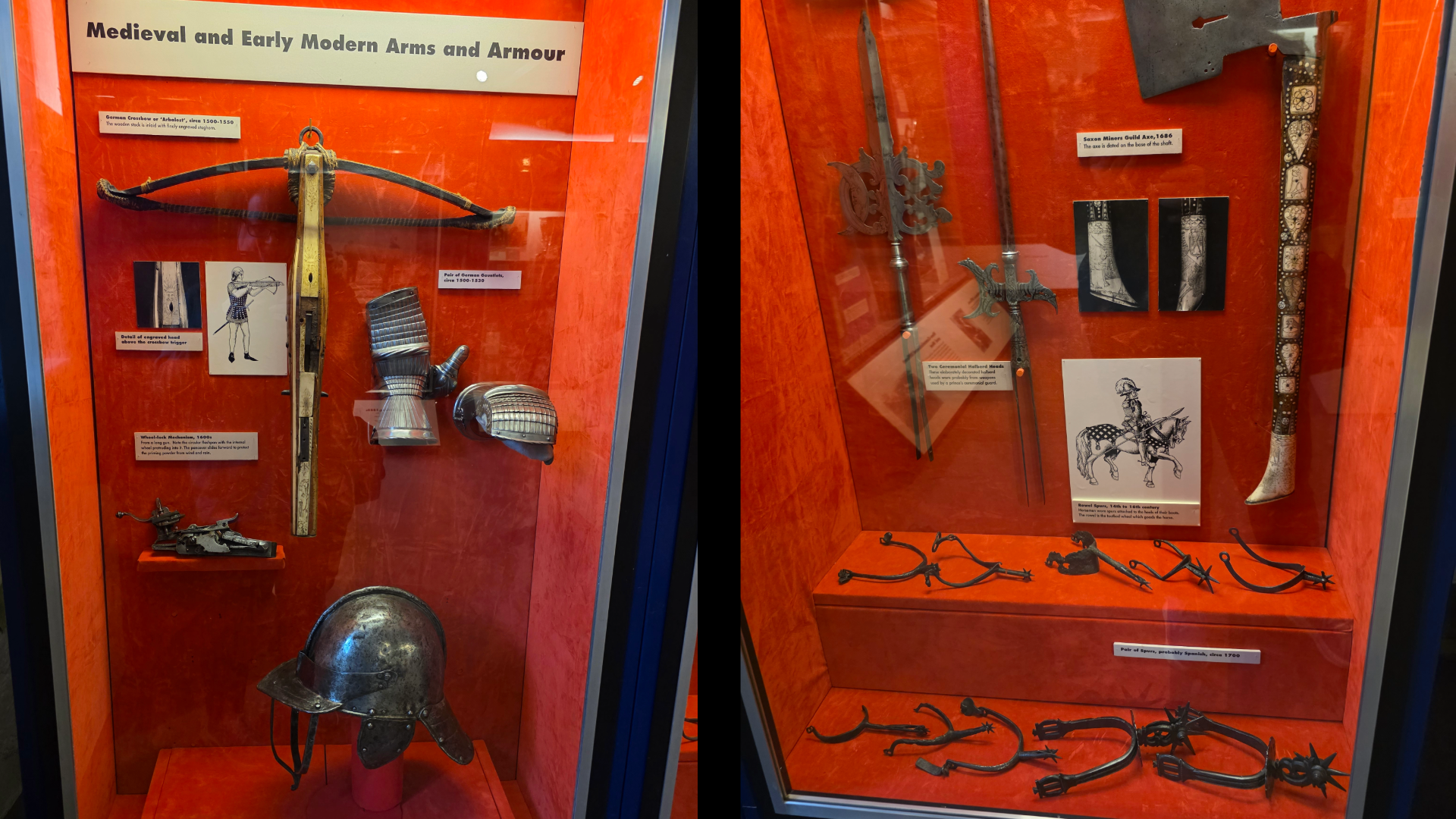
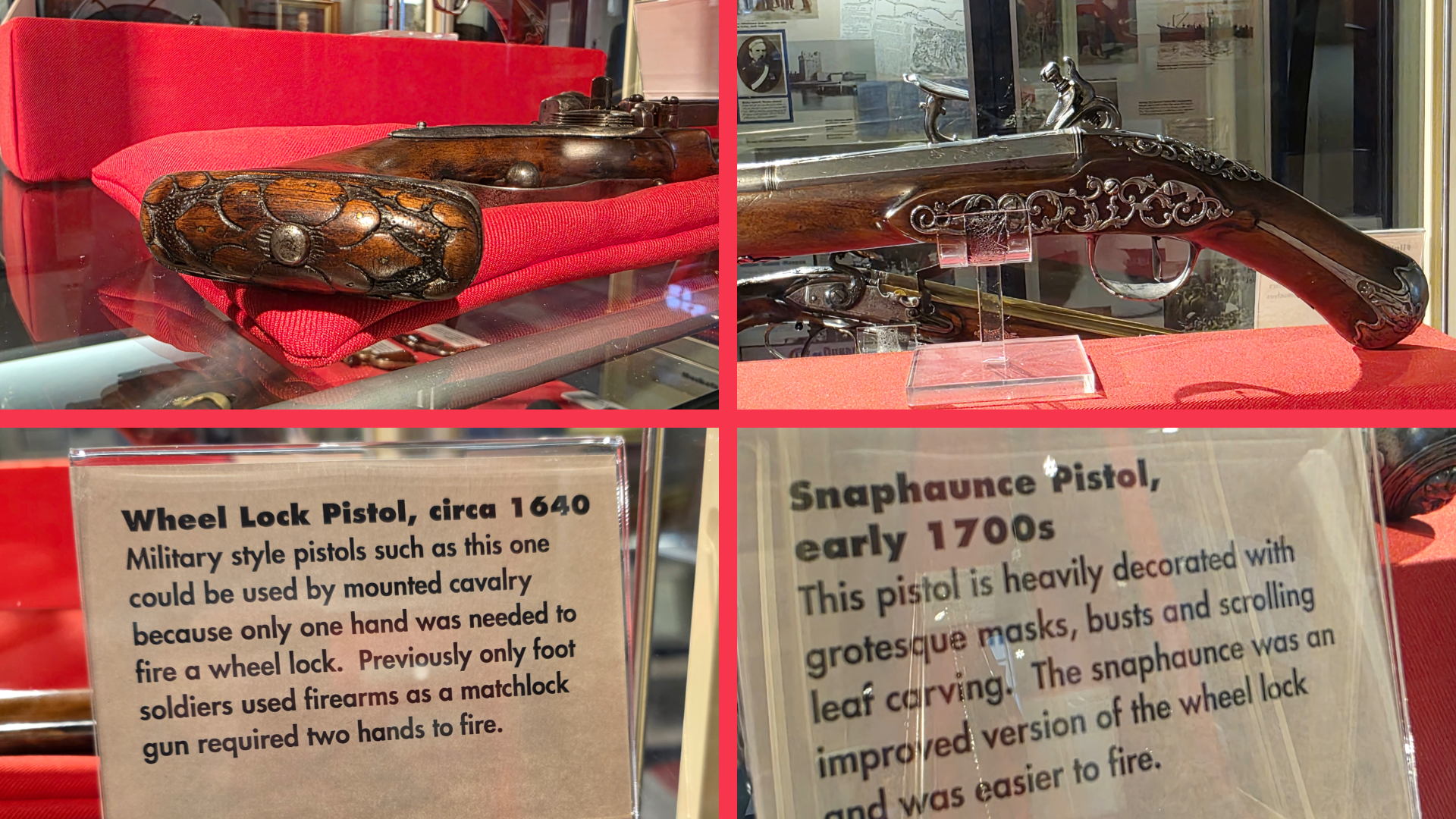
Above this floor is one aimed mostly at children with some dress-up and more learning-based exhibits. I have to admit that when there is a tower like this I am always anxious and eager to get to the top, choosing to explore as I work my way down, and this visit was no different. Continuing upwards, I came across the castle’s collection of medieval and early modern weaponry, including some armour, beautifully-decorated early firearms, flintlock rifles (very ‘Last of the Mohicans’ in feel) and more. Any weapon enthusiast will, I am sure, find it fascinating – one rifle even came from Japan and showed more typically eastern attention to fine decoration detail.
Finally, just off the display room was a few extra steps up to what is now an observation deck for wildlife such as birds, seals and dolphins. There is some information there about what you might see, and also the view before you. Unfortunately, the more aggressive avian visitors have forced the castle to put up a net around the deck, so pictures from this height are a bit difficult.
While not a castle that you may plan to spend a whole day visiting, Broughty Castle is positively crammed with historical information about the many eras in which this coastal defence was used. There are displays about the Tay lifeboat crews, about submarine miners in the late 1800s, the ‘Rough Wooing’ of Henry VIII, and more. Definitely a good option for families and those visiting Broughty Ferry for the day, the castle is educational and provides excellent views (I suppose a caveat here for family visitors – there is no fence around the edge of the ramparts, so youngsters will need to be watched!).
Plus, there are more than a few excellent spots nearby to stop for coffee, ice cream and cake. Our choice for the day was the Braw Tea Café, a not for profit enterprise providing on-the-job training and personal development to support disadvantaged women. While not open every day, when it is the café has excellent cakes and an outdoor seating area perfect for a sunny afternoon.
So if you are thinking about a visit to this lovely town, definitely do not miss out the castle!
I have been thinking for some time that it would be nice to share here some of the research I have done over my years as a medievalist. While I have not formally studied for some time, I am always fascinated by how new views can be found on events that took place hundreds of years ago. So in this post, I will share with you a version of a piece of work which I put together for the International Medieval Congress in 2019.
I’ve tried to make it accessible, and I hope you will find it as interesting a topic as I did. It touches on some of my favourite characters in history, and the subject upon which I focussed for so long: medieval marriage.
But really, it’s a story – a story of the people involved in the negotiations, of their personalities, their strengths and weaknesses, and their priorities.
The title of the paper was, ‘An Unexpected Proposal: the suggestion of a marriage between Joanna of Sicily and al-Adil during the Third Crusade’.
Setting the scene…
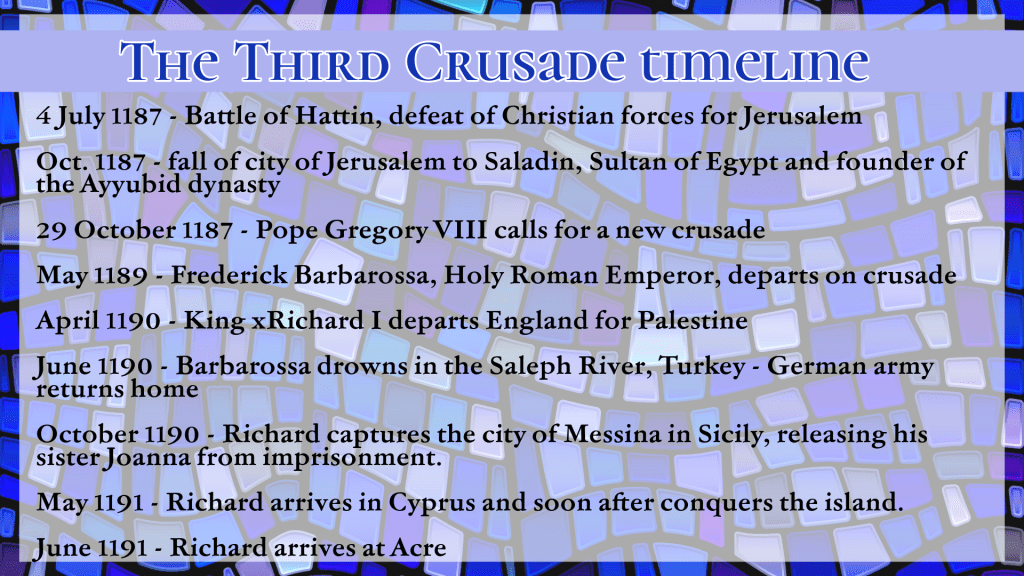
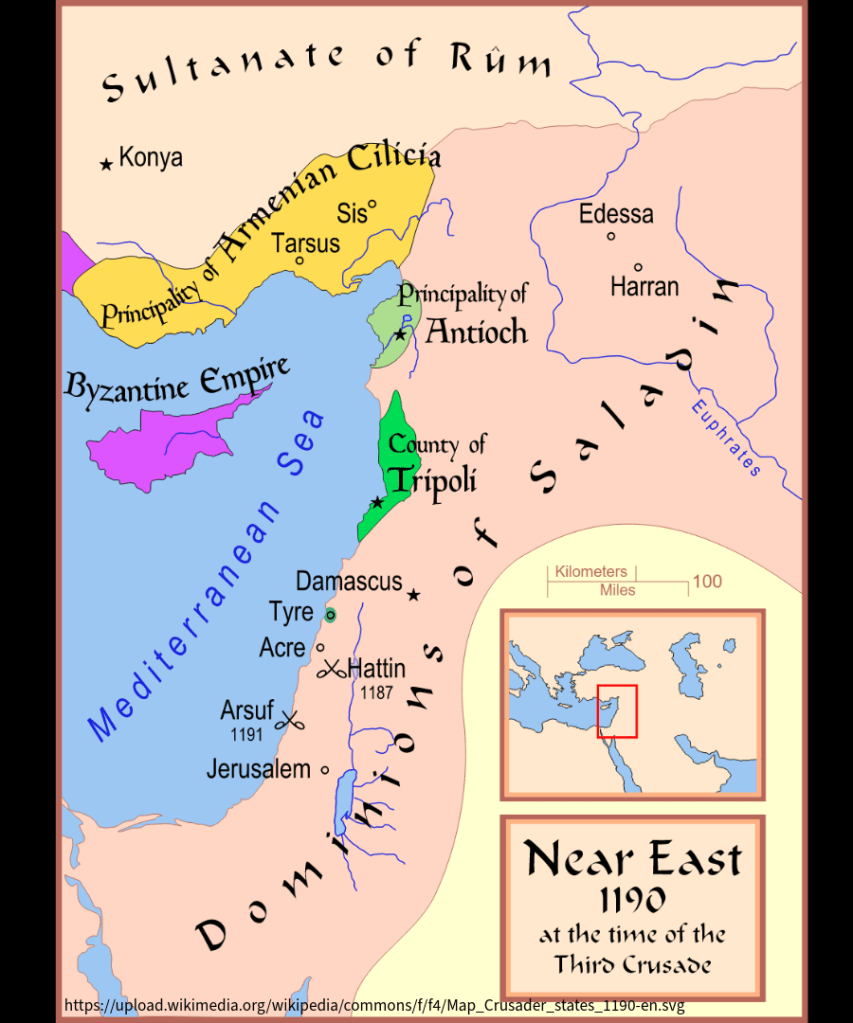
The tale begins in the midst of the Third Crusade, which was called in 1187 by Pope Gregory VIII after the fall of Jerusalem to the Muslim forces led by Salah al-Din, the sultan of Egypt (for the purposes of this paper, I will refer to him as Saladin, as do most western historians). Jerusalem had been captured by the Christian armies of the First Crusade in 1099, establishing the Frankish Kingdom of Jerusalem, so the loss of the city less than a century later caused most of the leaders of Europe to take notice. The Holy Roman Emperor Frederick Barbarossa was the first to set off, but he drowned while crossing a river in Turkey, and his troops disbanded. This left the kings of England and France to lead the second wave of the crusade, and both Richard I of England and Philip II of France departed Europe in 1190.
Arrival in the Holy Land
In June 1191, Richard I, king of England – known in later years as the Lionheart – arrived in the Holy Land after a number of delays, to take his role as leader of the Third Crusade. He had left England some months previously but was held up first in Sicily – where his sister Joanna was the dowager queen – and then in Cyprus – where he was ‘forced’ to intervene when the Byzantine ruler, Isaac Komnenos, seized his supplies and belongings after a shipwreck. (it’s an interesting story, but not the point of this paper…)
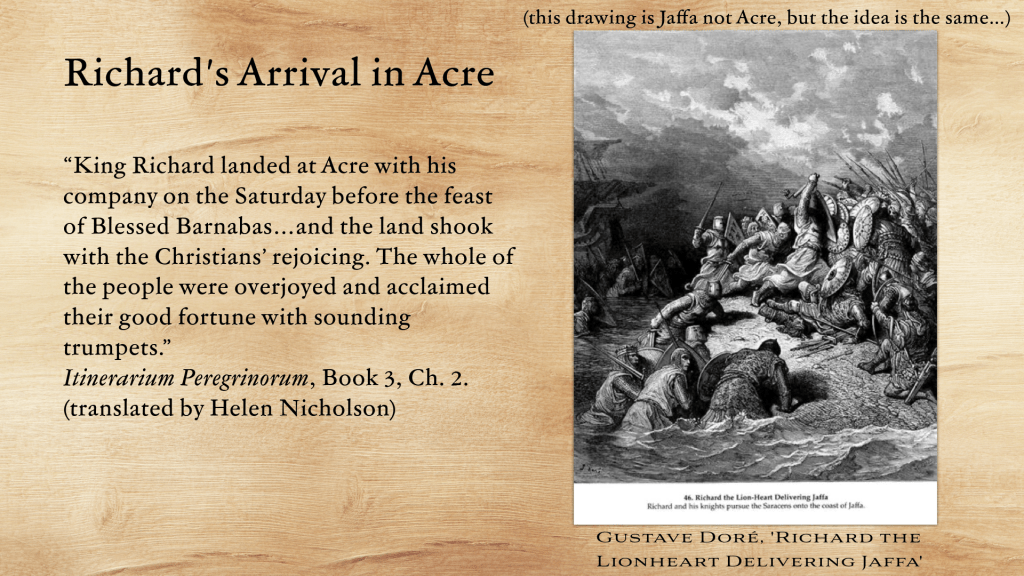
There were plenty of other high-level nobles and kings present upon his arrival, including his now arch-enemy King Philip II of France, (they had fallen out in Sicily) and two candidates for the throne of Jerusalem: Guy de Lusignan and Conrad of Montferrat. But, almost from his arrival to dramatically lift the siege of Acre, Richard’s secured his position as the foremost warrior and hero.
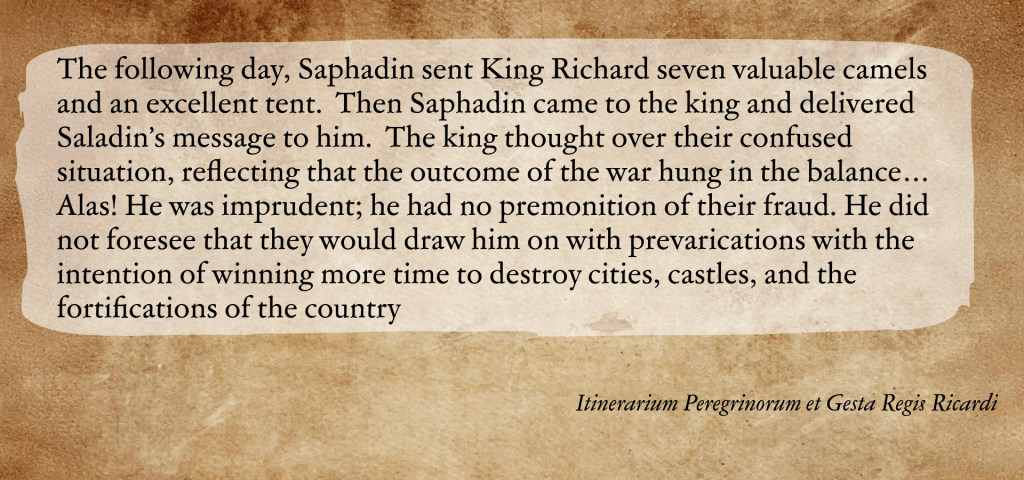
The Itinerarium Peregrinorum (long title Itinerarium Peregrinorum et Gesta Regis Ricardi), a Latin prose account of the Third Crusade that is likely to have been written from first-hand experience, tells us:
Even the enemy had a view on his arrival with one chronicler stating,
“He was wise and experienced in warfare, and his coming had a dread and frightening effect on the hearts of the Muslims.”1
Richard’s first few months were very successful; Acre, the maritime foothold of the Kingdom of Jerusalem, was captured, though the surrender was marred by the controversial decision to execute the Muslim garrison, probably more than 2,600 men. The motives for this action have been debated at great length, and you can read more in Gillingham and Spencer.2
However, the incident does give us insight as to Richard’s negotiating strategy. The treaty he had made with the enemy forces upon the fall of Acre were for Saladin to hand over a fragment of the True Cross and to release 1,500 Christian prisoners in exchange for the lives of the garrison and their families.3 When the terms were not upheld by Saladin, Richard followed through on his threat, without compunction.
Negotiations
The military aspects of the crusade have been the stuff of numerous articles and discussion, and the diplomatic negotiations were also an integral part of the relationship between the Christian and Muslim armies, as well as between Richard and Saladin. These negotiations have been examined thoroughly by Thomas Asbridge,4 but this paper looks in more depth at one particular part of these negotiations: a series of exchanges that took place in Autumn 1192, during which Richard suggested that the battle for Jerusalem could be ended by a marriage between his sister Joanna, the widowed queen of Sicily, and Saladin’s brother, al-Adil, often called Saphadin by European sources of the time.
Curiously, eastern sources discuss this proposal in some depth and are our primary evidence for it, while western sources are completely silent. This silence has always intrigued me. Many historians have focussed on the likelihood that the whole thing was just a joke, if it took place at all, but I believe it to be quite clear from reliable sources close to Saladin that the proposal was indeed made and considered in seriousness, at least at first.
Here I will make an effort to come to terms with why western sources leave the incident out, and I hope to answer some of the questions surrounding the event, which has been called ‘implausible’5, ‘extraordinary’,6 ‘remarkable’7 and ‘curious’.8
The proposal was not the first step in this round of negotiations. Rather, Richard had requested personal meetings with Saladin from the time of his arrival at Acre, but Saladin always refused.
For that reason, Saladin’s trusted general and brother, al-Adil, was his stand-in, and he met Richard in person on several occasions. They developed a rapport and traded regularly both food and gifts, and shared many meals.
In autumn 1192, Richard’s first offer, an opening gambit if you will, was one Saladin could never possibly accept. Baha al-Din, one of Saladin’s most trusted personal secretaries – and the writer from whom we get the most detailed account of these events – recorded Richard’s letter.
Saladin’s response, unsurprisingly, was a much wordier version of ‘no’.
He also reminded Richard that Jerusalem was as holy for Muslims as it was for Christians, and that the land had of course been theirs originally, before the First Crusade of the 1090s.
There was another player in these negotiations who was influencing Richard’s position. This was Conrad of Montferrat, one of two rivals to the crown of Jerusalem. Conrad was attempting to make his own agreement with Saladin, wherein the Muslim leader would confirm his possession of lands in Sidon and Tyre in exchange for Conrad’s attack on Acre, now garrisoned by Richard’s men.
Fortunately for Richard, the majority of Saladin’s advisors favoured a deal with the English king over one with Conrad. So, with his opening offer refused, Richard moved on to the second. There are three accounts of this incident, and I will look at each in turn.
Three Accounts
1. Old French Continuation of William of Tyre
This is the only surviving Christian source to mention the incident, and the source is often hostile to Richard. The writer states that Saladin was the initiator – the only source to suggest this, almost certainly in error. Further, the passage supports the belief held by some historians that Saladin was afraid of his brother. Certainly strife between two brothers is a common trope, but there is no real evidence of it, rather the sultan appears to have trusted and depended upon his brother. The overall accuracy of this version is therefore questionable.
2.Les Livres de Deux Jardins, an account heavily based upon the writings of Imad al-Din al-Ishfahan, a Persian scholar who worked as a secretary to Saladin and was personally involved in many of the political machinations at court.
Clearly, this account is far more in-depth and indicates the more likely scenario that Richard initiated the proposal, directly to al-Adil, who passed the terms to Saladin. It was not a secret.
Furthermore, this account brings in a fact left out by the Continuation, that it was Joanna herself who was the spanner in the works, refusing to marry a man not of her religion. I’ll come back to this.
3. Baha al-Din, The Rare and Excellent History of Saladin. As mentioned, Baha al-Din was one of Saladin’s personal secretaries and a writer who is considered one of the most reliable for this period due to his first-hand knowledge of Saladin’s inner circle. His account is most comprehensive, covering Richard’s opening gambit, Saladin’s subsequent refusal, and Richard’s regroup to approach a second time. The delicate nature of the terms is made clear in that al-Adil required both Saladin’s trusted emissary, Baha al-Din himself, and a number of emirs to be present when they were announced.
Al-Din asserts that he himself was given the task of bringing the message to Saladin and bore witness to the reply. There were to be no secret negotiations between Richard and al-Adil, rather al-Adil was cautious, acting in self-preservation – Saladin may have not reacted well to hearing about the offer second-hand.
Echoing Imad al-Din’s account but with more detail, the story goes on. Saladin immediately approved the terms, ‘believing that the king of England would not agree to them at all and that it was intended to mock and deceive.’9
Baha al-Din also confirms Joanna’s involvement, stating that she was very displeased, ‘How could she possibly allow a Muslim to have carnal knowledge of her!’ instead asking al-Adil to convert. (remember of course that she was Catholic and this was the Middle Ages – it was entirely unheard of to marry a non-Christian). With regard to this refusal of Joanna’s, I do have my doubts about whether Richard would have allowed the prospect of peace in the Middle East to be ruined by his sister’s temper tantrum. The fact that the story is repeated by both Muslim writers makes it more likely that Richard used her as an excuse to get out of a proposal with which he never intended to follow through.
What does it all mean?
What the sources indicate, then, is a diplomatic suggestion that, joke or not, was also quite daring. Al-Adil considered it so noteworthy that, rather than continue his personal tête-à-tête with Richard, he wrote immediately to his brother. If the brothers were aware, as Baha al-Din relates, that the proposal was a joke, they certainly reacted in a serious fashion. They may also have wished to call Richard’s bluff.
So one has to ask of Richard – why? Was the proposal merely a distraction? Did he do it just to see what Saladin and al-Adil would do? It could have been a test of al-Adil, a way of assessing his loyalty to his brother – certainly Richard himself had no reason to believe in brotherly bonds and knew how precarious the relationship could be, so perhaps he hoped that al-Adil would leap on the suggestion to gain power over his brother.
Seal of Richard I
Or perhaps he hoped that Saladin would grow to view his brother as a threat. Either way, Richard would be causing dissension in the ranks, which could only be to his advantage.
One can understand the Muslim writers’ assertions that Richard never intended for the proposal to be taken seriously when one looks at the rest of the tale. When Saladin accepted the offer, Richard was forced to scramble for a reason why Joanna could not, in fact, be married: he would have to ask the pope (dowager queens in Europe could not remarry without his permission), and that could take months. Richard suggested the al-Adil could have his niece instead, of course she was in Europe so again another delay…this is not the sign of a well-constructed plan. Richard may even have fibbed, saying that his Christian colleagues objected to the idea – but if the Christians had been asked, surely one chronicle somewhere would have mentioned it?
Finally, if this was a real proposal, part of a long-term strategy to end the warfare and allow Richard to return to Europe where the king of France was chipping away at his empire with the help of his brother John, why is it not in the Itinerarium Peregrinorum?
Because this period of negotiation IS there:
I feel this section to be a bit harsh on Richard. He was more than experienced at the art of war and negotiation, and would never have allowed himself to be distracted. Rather he would have been perfectly aware that a period of negotiation did not mean cessation of hostilities – frequently the opposite. Instead this indicates that the writer, whoever he was, had no knowledge of the more delicate negotiations taking place in the background, or if he did, he left them out. Which was it?
We cannot know for certain, but the only reasonable answer for either the writer leaving the story out or for Richard keeping the proposal a secret lies in Richard’s reputation. A little later, the writer of the Itinerarium alludes to the problem:
One has to remember that just because Richard was leading the crusaders did not mean that he was supported by all of them. In fact there were French factions – and others – who were seriously adverse to Richard’s strategies, particularly what they saw as his reticence to march directly upon Jerusalem- a true strategist, Richard was hoping to establish a solid base from which to attack the city, rather than attack directly.
A French source tells us that Richard had been overruled in his wish to approach Ascalon, a strategically vital city: whoever controlled Ascalon also controlled access to Egypt, Saladin’s home base. Its significance is evident in that Saladin himself had made it a priority to re-capture Ascalon in 1187 prior to his march on Jerusalem – this tactic was one Richard hoped to emulate, but could not convince the other Christians. They remained focused, inexorably, on relieving the Holy City.
Richard would have been considered even more suspect and likely found himself in danger had the majority of the crusading host discovered that he was offering his sister to a Muslim, rather than fight the infidels courageously for Jerusalem.
And it is here, I believe, that an answer may be found.
I have no doubt that Richard made the proposal, as suggested by two reliable Muslim sources, both very close to Saladin. It is possible that Richard’s closest advisors knew of the proposal and objected, but he mostly ignored them. However, the lack of inclusion in Christian sources such as the Itinerarium, which was unlikely to have been written by someone with the level of access to Richard that Baha al-Din had to Saladin, indicates a lack of widespread knowledge of the proposal. It is quite reasonable that there would have been a lot of detailed negotiation taking place which a member of the general crusading force would not know about, but which Saladin’s personal secretary would. An every-day crusader would also be more aware of the threats to Richard’s reputation that his close relationship with al-Adil caused.
The Muslim sources go into more depth about the gifts and offer a more detailed timeline than the Christian sources, and are generally better informed about the relationship between Richard and al-Adil. Richard was a bold strategist, and his life shows numerous examples of the willingness to make extreme choices in order to get what he wanted – he took part in several rebellions against his own father, beginning in his teenage years; he alienated the king of France by refusing to marry his sister and choosing another wife; he regularly led his armies into battle even when his life was in serious danger.
So, I do not see it as uncharacteristic for him to have made a proposal, almost off-the-cuff, just to see what kind of reaction he would get. But he would have been aware of the danger involved: his strategies were often questioned, he was frequently ill while in the East, and his kingdom was in serious peril during his absence. His reputation was not so strong that it could have suffered the kind of serious outrage which would have arisen had a French crusader heard of the proposal.
Muslim sources tell us what happened, but the details in the Christian sources actually hint more clearly at why the incident was omitted, or kept secret – it had to be.
As for the incident being implausible, I personally am not surprised by anything Richard did – he was bold, intelligent, witty, arrogant, and not above extreme negotiation. This time, he was up against an equally skilled strategist who called his bluff.
But Richard had some good luck. The proposal was refused by his own sister, and the counter-proposals that al-Adil convert or wed Richard’s niece, were passed over.
So, Richard never had to face a council of European and French nobles to explain that the Crusade was over because his sister was going to marry a Muslim prince. But it is intriguing to wonder what might have happened if he had…
Thomas Asbridge, ‘Talking to the enemy: the role and purpose of negotiations between Saladin and Richard the Lionheart during the Third Crusade,’ in Journal of Medieval History. ↩︎
Dunnottar Castle, sitting on the east coast of Scotland on a headland, is one of the most photographed castles in the UK; if you get a standard Scotland calendar, it’s as likely as not to contain one picture of this castle. And for good reason – the partially-ruined castle sits on its own rock surrounded by the sea, silhouetted against the sky and Aberdeenshire cliffs. Like Edinburgh, it is a castle through which one can see the passage of time, the periods of history in which it was used and built. The keep and entrance are thoroughly medieval, but the North, East and West ranges are all varying degrees of late medieval and modern.
Dunnottar is most easily accessed by car, but if you are trying a carbon-friendly tour of Scotland, you are still in luck. You can either walk up the seacoast from nearby Stonehaven, about 1.5 miles – though prepare for a few good climbs and wear sturdy shoes – or you can get a local bus to the end of the road, about half a mile. I am not sure how often these busses run, however, so definitely keep an eye on the schedules. My mother and I first visited more than ten years ago, though I cannot recall how we actually reached the castle as we were definitely without a car; I have a feeling we actually took a taxi from Stonehaven train station, so that may be another option.
Tickets for the castle are purchased once you make it inside the fortress, so in theory one could visit and walk along the coast to see the castle from a distance, but for free. The opening hours vary by time of year, but are up to date on the castle website, where you can also buy tickets in advance.
There is a good-sized car park with a porta-loo and a very good catering van that sells drinks, ice cream, chips and rolls with bacon, burgers, hot dogs, or haggis. There may have been a vegetarian option, but I am not positive.
The adjacent picnic benches are visited regularly by scores of sparrows living nearby, and they are quite tame, hopping right up to you for a few crumbs or a piece of roll.
From the car park, visitors start off down a wide path lined with thistle and wild roses, with the castle slowly rising on the horizon ahead.
One has an option to go left along the coast, right across a few small bridges to a viewpoint, or immediately to the castle. I recommend, to get warmed up, a jaunt along to the right first, where you will go down and up a few sets of stairs and path as to move along the cliff. This path is also lined with Scottish fireweed (purple flowers) and gorse, and there are several excellent places to pause for a picture.
The viewpoint itself allows for gorgeous pictures – as one would expect – of the rock on which the castle sits, the coast, and the sea. From here you can also get a good feel for the staircase awaiting you to access the castle.
Once you have had your fill of this particular view, you can continue along the coast quite a bit further, or you can head back down and up to the point you started, looking over the castle and bay. From here, you must descend what must be around 100 steps, zig-zagging down the steep hillside towards the beach. The stairs are wide enough for two to pass and have a solid railing, plus at least one bench at which one can take a breath. This route also offers some excellent views, though it’s hard to stop for long when there is a queue of people behind you waiting to get down, or up.
The bottom of the staircase offers again two options – you can scamper off left to explore the beach, or go straight ahead to the castle. Here one finds another set of stairs, though first you have a good view of the rock on which the castle is built, including a gated cave and the land bridge that once connected the castle to the coastline but was eroded for security.
Stairs take you in a postern gate type of entrance, and then up through the gatehouse to where you buy or show your tickets. From the ticket office, there is a well-marked route climbing up through the castle, past Benholm’s Lodging, a structure clinging to the edge of the rock. The top floor is a comfortable enough room, while the lower levels are all designed to aide in defence of the castle with numerous arrow loops.
Another short climb through a pends – covered passage that make you very pleased you are not storming the castle – and finally in front of you rises the medieval keep, strong and square and emblematic of high medieval Scottish construction. The keep was constructed in the 1390s by Sir William Keith, Great Marischal of Scotland, a hereditary post held by his family and one of great importance to the governing of the kingdom. Quite well preserved, the keep hosts a large kitchen hearth on the bottom floor and a rare straight stone staircase leading to the second floor. Here you can look out over the rest of the castle or the beaches beyond.
Once you have fully explored the keep, you will find countless other structures in various states of ruin from the storeroom and stables to the increasingly less-medieval ranges built through the early modern period. There is a cistern for water and probably fish, several residence blocks and the old chapel.
The chapel is key to note, as it is one of the oldest structures; consecrated in 1276 by William Wishart, the Bishop of St Andrews, it probably replaced a much earlier chapel to St Ninian, a missionary saint who is very popular in Scotland. The site of Dunnottar itself was likely inhabited as early as the fifth century by the Picts, and it was a religious site in the early Middle Ages, meaning that the construction of a defensive castle caused some upset. The pope even became involved in the dispute. Poignantly, the land that was graveyard is now mostly grass, with only one marker remaining.
The chapel may have been the site of a massacre of the English by William Wallace in 1297. Blind Harry, Wallace’s often unreliable biographer, relates that English soldiers had fled to Dunnottar for sanctuary – validating the site as a religious one – but that Wallace set fire to the chapel, burning many soldiers alive. The survivors were run off the edge of the cliff. The brutal story may not be completely true, but the may have gotten the gist of things.
A more complete history and many details can be found on the very helpful website for the castle.
A few highlights include a stay by Mary Queen of Scots – where didn’t she stay in Scotland? – and the protection of the Honours of Scotland (the royal regalia) during the invasion by Cromwell in the 1650s. One can spend a very pleasant time just sitting on one of the many benches and enjoying the view, over the sea or the castle grounds, which are impeccably well-kept.
Another option is to walk essentially around the edge of the rock, where you can enjoy the views down over a tremendous rock formation, and along the headland.
In all, you could easily spend several hours exploring the many nooks and crannies. The group I was with scattered to all corners of the castle, and it was lovely to sit in the sun and gradually wait for them all to drift back again, with various stories of things they had seen. Once we had traversed the stairs once more, we chose to walk along the cliff in the Stonehaven direction for about a mile, with the ocean and views of castle on one side and fields of cattle on the other.
This view really shows you the path down and back up to the castle, as well as the eroded natural land bridge..
There are a few caveats to visiting this castle – caveats may really be too strong a word, more things to be aware of when planning:
Firstly, as you have doubtless gathered, it is not particularly accessible. There are lots of steep steps just to get to the castle, and more inside as you ascend through the pends. Secondly, any refreshments you may want in the castle itself must be brought by you. This is of course quite reasonable, but considering the physical effort to traverse the stairs, it is worth remembering a water bottle. That said, the toilet facilities are limited, with only two stalls for the women and one for the men, I believe. At several points there was a bit of a queue – not a problem at all if you are prepared, but definitely worth knowing ahead of time. The one final disappointment to castle aficionados is that there is no shop selling merchandise, postcards, etc., though this is no doubt because the castle is owned and managed privately. Guide books are available at the ticket office at a very reasonable price.
Overall I’d say that the castle is not quite as suited for an onslaught of tourists as some others I have seen, but it is absolutely worth making the effort, especially if you are prepared!
Are you visiting Scotland on a whirlwind visit but only have a few hours in each location? Maybe you’re staying in Edinburgh but want to visit St Andrews for the day? This short walking tour of around one hour takes you past all of my favourite parts of St Andrews. Allow yourself a bit of extra time to pop into some shops and take some pictures, and I’ve added in a few detours if you do have a bit longer to explore.
St Andrews is an easy town to walk around and there are numerous places along this tour where you can pause for a rest or refreshment, but weather can also change quickly so make sure you are prepared. Only a month ago I was in town with my mother when the beautiful sunny view was overtaken in less than 10 minutes by the haar – Scottish fog. But as they say, wait a few minutes, and the weather will likely change.
One caveat is that while you will see portions of the University on this tour, it will not show you everything. The University does not have a campus, but is spread out around the town, so you will see the crest on many random buildings where you may not expect it.
This tour route assumes you are arriving for the day from the train or bus, so start at St Andrews Bus Station (if you are using a travel app, make sure not to confuse this with St Andrews Bus Station in Edinburgh!)
Part 1 – St Andrews Bus Station to the Westport
Start your walk at the zebra crossing just outside the bus station and continue along to the roundabout – do not cross at the first set of lights you reach. At the roundabout, cross Doubledykes Road and then use the pedestrian crossing at the next set of lights you come to. Continue along City Road heading south, and soon you will come to the Westport, one of the last vestiges of the St Andrews town wall, dating from the 1580s. If you want to cross the road here for a better picture, just be careful of the traffic!
the roundabout near the bus stationWest Port, St Andrews
Part 2 – The Westport to Blackfriars Priory
Go through the Westport, and I would recommend staying on the left side of the street; there are several nice shops and the St Andrews Brewing Company, a fantastic local brewery should you already be in need of some refreshment (I particularly like the Yippee IPA). When you reach the next intersection, cross to see the ruins of Blackfriars Priory. Built in 1520 to add to the Dominican Friary, the chapel was destroyed soon after in the Reformation. Behind Blackfriars is Madras College, formerly a secondary school for St Andrews but more recently purchased by the University as it continues to expand its property portfolio and teaching aspirations. Extensive renovation is now underway, though the Victorian-era facade will remain.
Part 3 – Bell Street
Cross back towards the BrewDog pub and continue almost straight along Bell Street. You’re entering St Andrews’ shopping district here, and you will find plenty of cafés and shops to keep you busy. Sheila Fleet at the end of the shop does some beautiful Scottish jewellery, and the Taste of Scotland shop on the corner offers a massive range of whisky, gin and other spirits.
Bell Street is also where you are likely to find a taxi later in the evening, as well as St Andrews’ most infamous late-opening pub, Aikman’s. It has not changed in more than 20 years, for better or worse, and is still popular with students.
Bell Street with Christmas lights
Optional detour: at the end of Bell Street, continue straight across to Greyfriar’s Gardens, where you can glimpse some lovely gardens and visit the famous Topping & Co. bookstore.
Part 4 – Market Street
Once you reach the end of Bell Street, along to the left you will see the St Andrews University Students’ Association, a large building completely clad in glass. It is the spot to get university merchandise, should you want some, and has a great café. I recommend however taking a right up Market Street, the main shopping street for St Andrews. You will find tourist shops, coffee shops, pharmacies, clothing stores, and two small supermarkets. Most of the brand stores are here including Pret A Manger, Starbucks, Black Sheep, and Costa.
Mitchell’s Deli about halfway along is a great spot for lunch, and Forgan’s offers a Friday night ceilidh. Market Street is always done up with Christmas lights in the winter, and hosts the Lammas Market for one weekend every August.
As the cobbled street widens, you will catch sight of the Whyte-Melville Memorial fountain, constructed in 1880. A massive re-paving and widening of the sidewalks was done in 2010/11, but they can still feel crowded at certain times of day or year.
Market Street – bottom end
Part 5 – Church Street
Once you reach the fountain, take a right onto Church Street, named for the medieval Holy Trinity Church that dominates the far end. Church Street is also home to one of St Andrews’ most famous family-run shops, Fisher and Donaldson – make sure to stop in for a yum yum, fudge donut, or other delectable treat.
At the end of Church Street is the now-closed J&G Innes shop (also known locally as the Citizen office), which has some truly stunning decorative carvings on the listed stone.
Part 6 – St Mary’s Quad and South Street
At the corner, turn left onto South Street, or take a quick jog to the right to enjoy the Church Square first. Cross the street across from the Criterion pub, and you will find a gated archway leading to St Mary’s Quad. This is the location of the School of Divinity and Parliament Hall, where the Scottish Parliament met to escape the plague in 1645. Take a short loop around the tree in the centre of the quad and you will see a statue of Bishop Henry Wardlaw, and the end of the new Music Centre that opened in 2021. In term time you will often find students relaxing on the grass or eating lunch here, and the King James Library offers study space and additional books.
Once you’ve enjoyed the quad, leave through the arch and turn right to continue along South Street. You will pass beautiful old stately homes, dating from the 17th and 18th centuries. At the far end, you will find Jannetta’s Gelateria, another famous St Andrews treat destination where the queue will snake down the street on a sunny day. Founded in 1908, Jannetta’s offers more than 50 flavours, not including the sorbet! Go on, treat yourself…
Optional detour: Across from Jannetta’s, go down Abbey Walk and make your way along the beautiful stone wall of St Leonard’s School until you reach the harbour. You can either walk along the inner harbour road or detour out to East Sands, then circle back up to the Cathedral.
Part 7 – St Andrews Cathedral
Continuing up South Street from Jannetta’s will take you in very little time to the ruins of St Andrews Cathedral. Originally constructed in the 12th century, the cathedral was the ecclesiastical capital of Scotland through out the Middle Ages, and the bishop (later archbishop) was powerful enough to build the nearby castle as his residence. The Cathedral fell into ruin through the Reformation, and the story goes that you can find stones from the great structure in buildings throughout the town.
Though not open in 2024 due to masonry repairs, St Rule’s Tower offers a fantastic view over the whole town if you can scale the narrow staircase. The graves in the cathedral grounds date from the last several hundred years and include the great golfer Old Tom Morris.
Enter the Cathedral through the gate and walk through the grounds, then exit through the door in the far wall. In front of you will be the North Sea!
Optional detour: Turn right along the outside of the cathedral wall and walk to the promontory where several large cannon look out over the ocean. From here you can see down to St Andrews Harbour, East Sands, and the pier.
Part 8 – The Upper Scores and St Andrews Castle
Turn left out of the Cathedral grounds and hug the coast to climb up a rise looking over the sea. This is one of the best views in town, along the coast, into the Cathedral grounds, and to the Castle. Below and to the right, you will see St Andrews pier, which is famous for its use during University processions. Unfortunately it was seriously damaged during Storm Babet in October 2023, so while it looks perfectly sound from above, it is not open to the public. There are several benches here where you can enjoy the view, and this is my favourite path in town.
Continue along the coast, following the metal railing and heading towards St Andrews Castle.
The castle was constructed starting in the 13th century and contains a bottle dungeon and siege tunnels – well worth the time to explore if you have it!
Part 9 – The Scores to the Golf Course
Once you have explored the castle to your heart’s content, continue down the Scores, the road that runs along the edge of the cliffs. Here you are entering the University proper and will pass the Principal’s house, St Salvator’s Hall (a student residence where Prince William lived in his first year), the Schools of English, Classics, Economics and Philosophy, the University Museum, and the Admissions/Student Recruitment office. You will also pass some of the most expensive real estate in Scotland – houses on the Scores are regularly valued at well over £1 million.
If you have some extra time, take a walk up Butts Wynd and peek into St Salvator’s Quad, the real heart of the University.
Eventually you will reach St James’ Catholic Church, the last building on the right; you can either follow the path down to the Bruce Embankment car park or stay on the left-hand side of the Scores. The monument is in memory of the religious Martyrs of St Andrews – of which there were many. Immediately in front of you is the Royal and Ancient Golf Club, and the Old Course.
St Salvator’s QuadMartyr Monument and the R&A
Part 10 – The Old Course and West Sands
The famous Old Course, where the UK Open Championship is played every five years or so, marks the end of this walking tour. Golf enthusiasts will want to continue around the edge of the course along the Links and take a picture on the Swilcan Bridge.
Non-golfers may want to follow the coastal wall towards West Sands, the long sandy beach where locals walk, run, play sports, swim and surf.
If you’re running short on time, follow Golf Place to North street. The safest thing to do at this point is take a short detour along to the right to where you will find a traffic light and pedestrian crossing. If you are very careful, you may be able to cross before this, but a warning: traffic comes quickly along this road and roundabout, and foreign visitors in particular should take care.
Walk up the hill and you will find yourself back at St Andrews bus station.
view from West Sands towards town
This route may take a bit longer than 60 minutes, and in fact you could probably stretch it to at least two hours if you include the detours. It does not cover all of the amazing parts of St Andrews, but it makes a good start. I hope you have time to give it a go!
If you enjoyed these pics, check out more of St Andrews at my online shop: