
Are you visiting Scotland on a whirlwind visit but only have a few hours in each location? Maybe you’re staying in Edinburgh but want to visit St Andrews for the day? This short walking tour of around one hour takes you past all of my favourite parts of St Andrews. Allow yourself a bit of extra time to pop into some shops and take some pictures, and I’ve added in a few detours if you do have a bit longer to explore.
St Andrews is an easy town to walk around and there are numerous places along this tour where you can pause for a rest or refreshment, but weather can also change quickly so make sure you are prepared. Only a month ago I was in town with my mother when the beautiful sunny view was overtaken in less than 10 minutes by the haar – Scottish fog. But as they say, wait a few minutes, and the weather will likely change.
One caveat is that while you will see portions of the University on this tour, it will not show you everything. The University does not have a campus, but is spread out around the town, so you will see the crest on many random buildings where you may not expect it.
This tour route assumes you are arriving for the day from the train or bus, so start at St Andrews Bus Station (if you are using a travel app, make sure not to confuse this with St Andrews Bus Station in Edinburgh!)
Part 1 – St Andrews Bus Station to the Westport
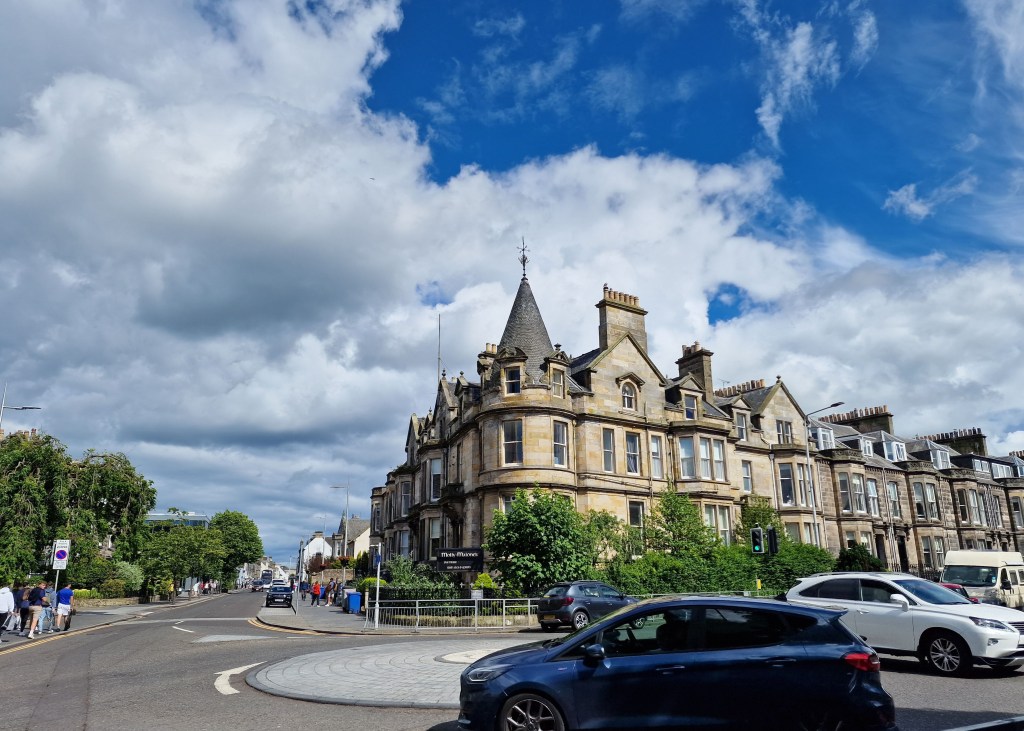
Start your walk at the zebra crossing just outside the bus station and continue along to the roundabout – do not cross at the first set of lights you reach. At the roundabout, cross Doubledykes Road and then use the pedestrian crossing at the next set of lights you come to. Continue along City Road heading south, and soon you will come to the Westport, one of the last vestiges of the St Andrews town wall, dating from the 1580s. If you want to cross the road here for a better picture, just be careful of the traffic!

Part 2 – The Westport to Blackfriars Priory
Go through the Westport, and I would recommend staying on the left side of the street; there are several nice shops and the St Andrews Brewing Company, a fantastic local brewery should you already be in need of some refreshment (I particularly like the Yippee IPA). When you reach the next intersection, cross to see the ruins of Blackfriars Priory. Built in 1520 to add to the Dominican Friary, the chapel was destroyed soon after in the Reformation.
Behind Blackfriars is Madras College, formerly a secondary school for St Andrews but more recently purchased by the University as it continues to expand its property portfolio and teaching aspirations. Extensive renovation is now underway, though the Victorian-era facade will remain.

Part 3 – Bell Street
Cross back towards the BrewDog pub and continue almost straight along Bell Street. You’re entering St Andrews’ shopping district here, and you will find plenty of cafés and shops to keep you busy. Sheila Fleet at the end of the shop does some beautiful Scottish jewellery, and the Taste of Scotland shop on the corner offers a massive range of whisky, gin and other spirits.
Bell Street is also where you are likely to find a taxi later in the evening, as well as St Andrews’ most infamous late-opening pub, Aikman’s. It has not changed in more than 20 years, for better or worse, and is still popular with students.
Optional detour: at the end of Bell Street, continue straight across to Greyfriar’s Gardens, where you can glimpse some lovely gardens and visit the famous Topping & Co. bookstore.
Part 4 – Market Street
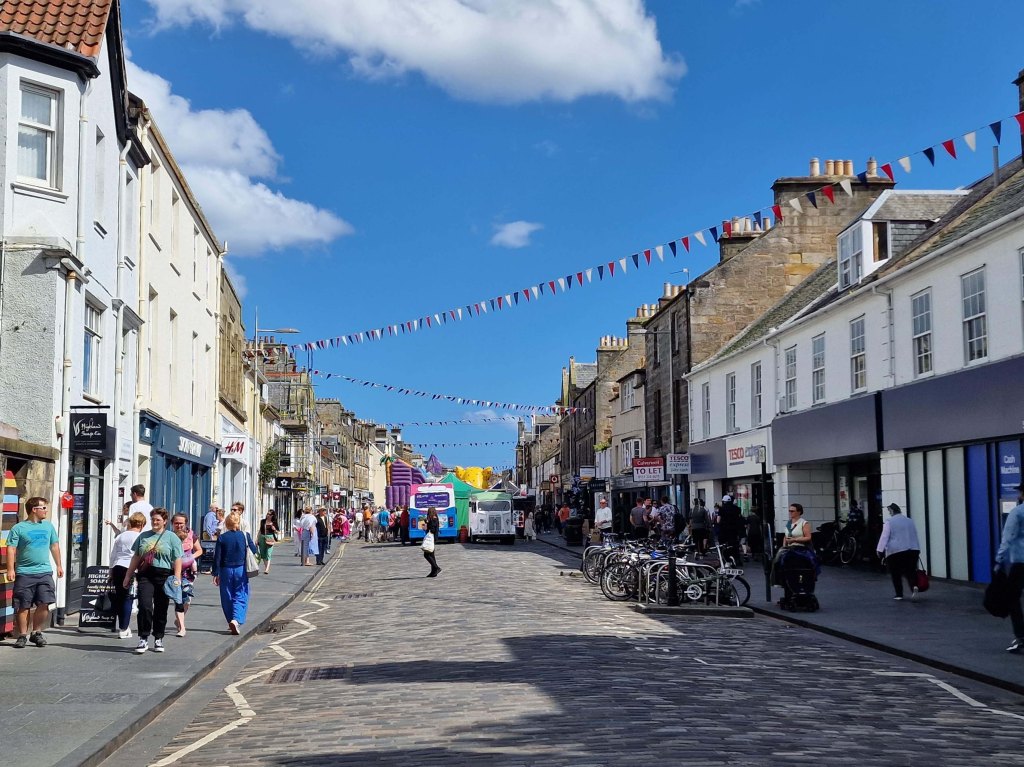
Once you reach the end of Bell Street, along to the left you will see the St Andrews University Students’ Association, a large building completely clad in glass. It is the spot to get university merchandise, should you want some, and has a great café. I recommend however taking a right up Market Street, the main shopping street for St Andrews. You will find tourist shops, coffee shops, pharmacies, clothing stores, and two small supermarkets. Most of the brand stores are here including Pret A Manger, Starbucks, Black Sheep, and Costa.
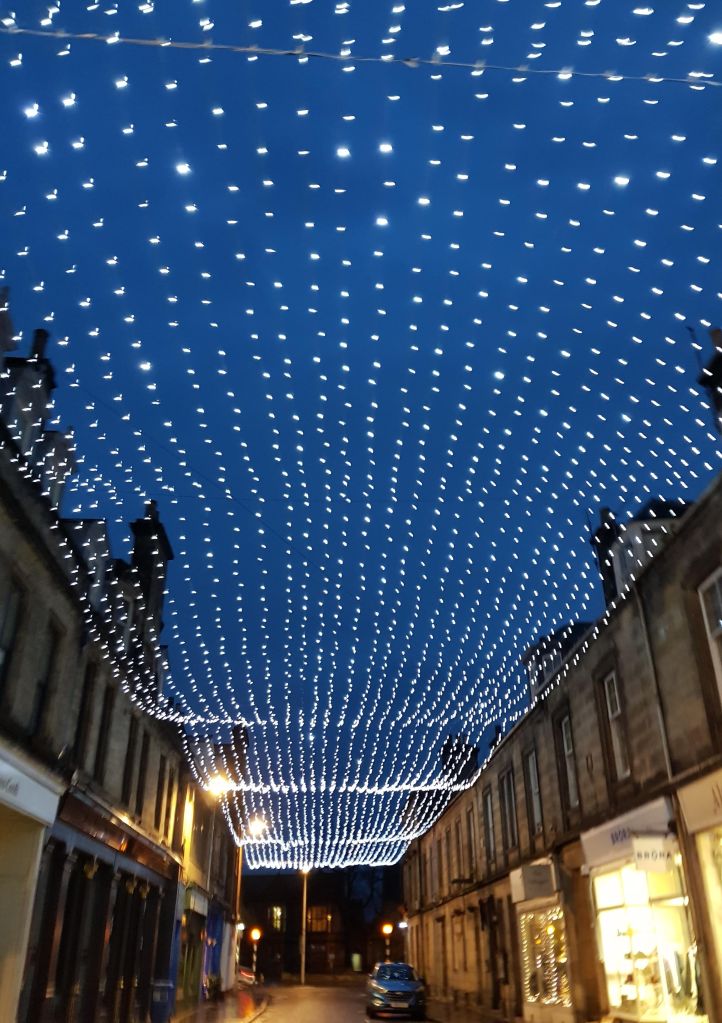
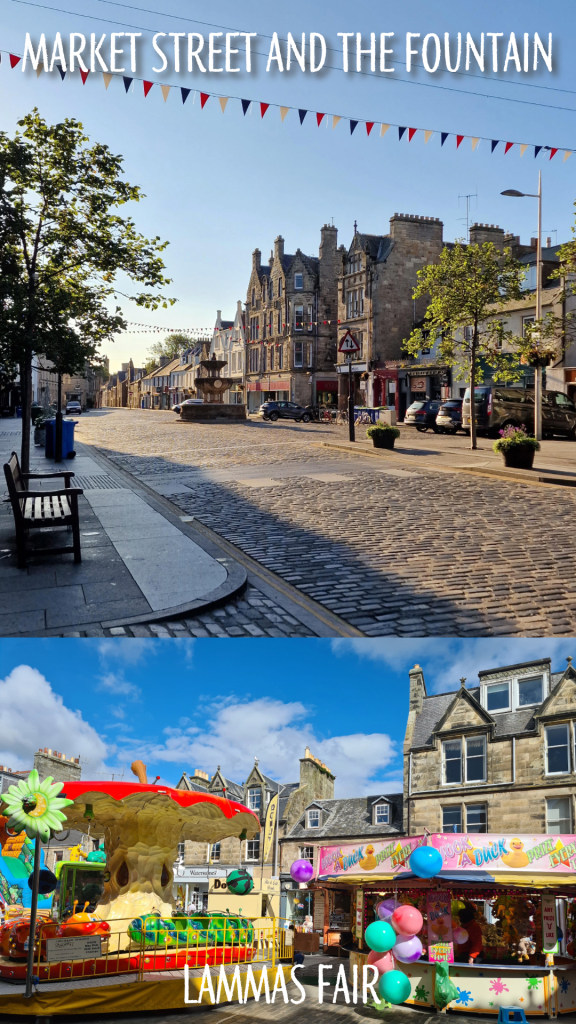
Mitchell’s Deli about halfway along is a great spot for lunch, and Forgan’s offers a Friday night ceilidh. Market Street is always done up with Christmas lights in the winter, and hosts the Lammas Market for one weekend every August.
As the cobbled street widens, you will catch sight of the Whyte-Melville Memorial fountain, constructed in 1880. A massive re-paving and widening of the sidewalks was done in 2010/11, but they can still feel crowded at certain times of day or year.
Part 5 – Church Street
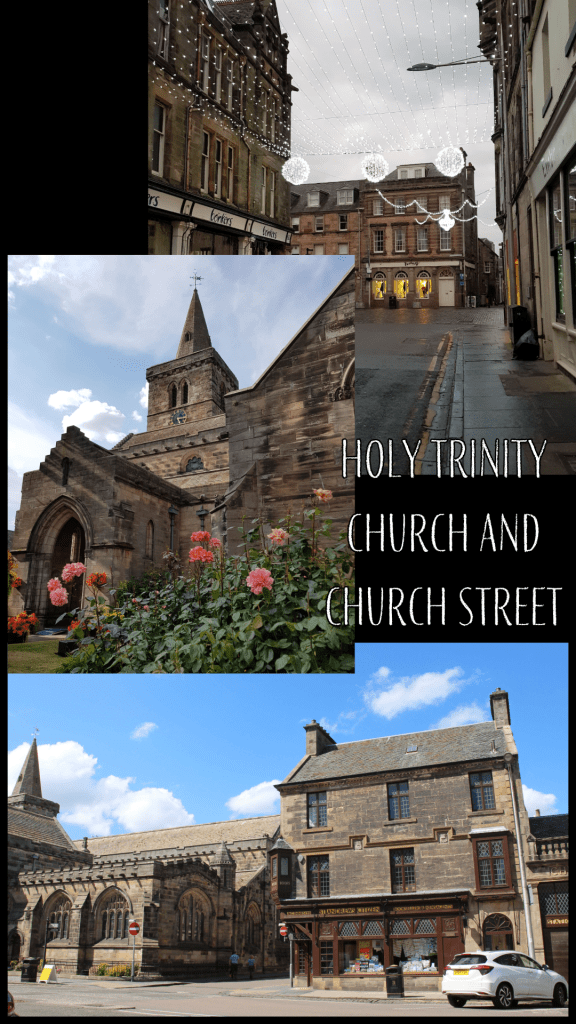
Once you reach the fountain, take a right onto Church Street, named for the medieval Holy Trinity Church that dominates the far end. Church Street is also home to one of St Andrews’ most famous family-run shops, Fisher and Donaldson – make sure to stop in for a yum yum, fudge donut, or other delectable treat.
At the end of Church Street is the now-closed J&G Innes shop (also known locally as the Citizen office), which has some truly stunning decorative carvings on the listed stone.
Part 6 – St Mary’s Quad and South Street
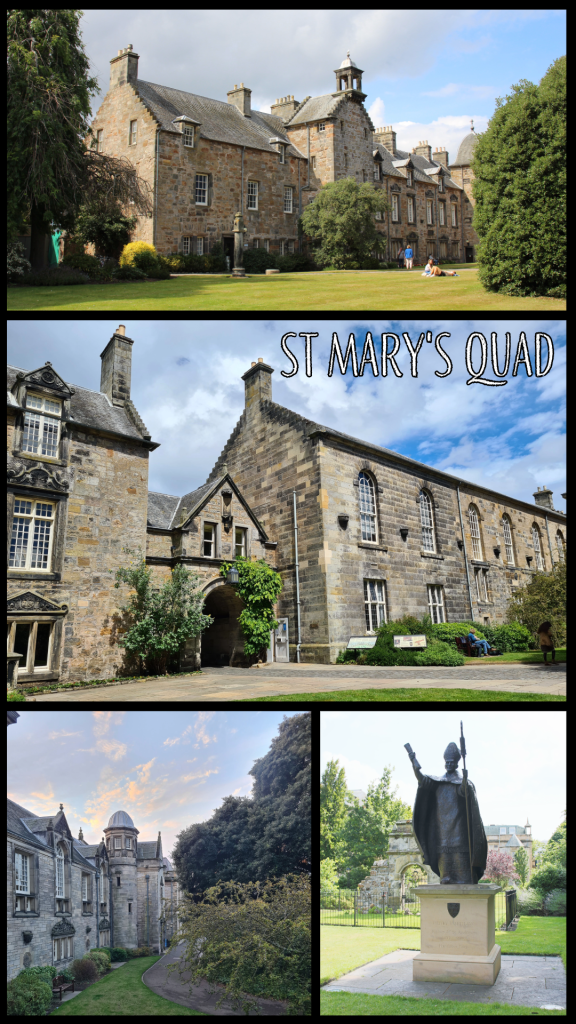
At the corner, turn left onto South Street, or take a quick jog to the right to enjoy the Church Square first. Cross the street across from the Criterion pub, and you will find a gated archway leading to St Mary’s Quad. This is the location of the School of Divinity and Parliament Hall, where the Scottish Parliament met to escape the plague in 1645. Take a short loop around the tree in the centre of the quad and you will see a statue of Bishop Henry Wardlaw, and the end of the new Music Centre that opened in 2021. In term time you will often find students relaxing on the grass or eating lunch here, and the King James Library offers study space and additional books.
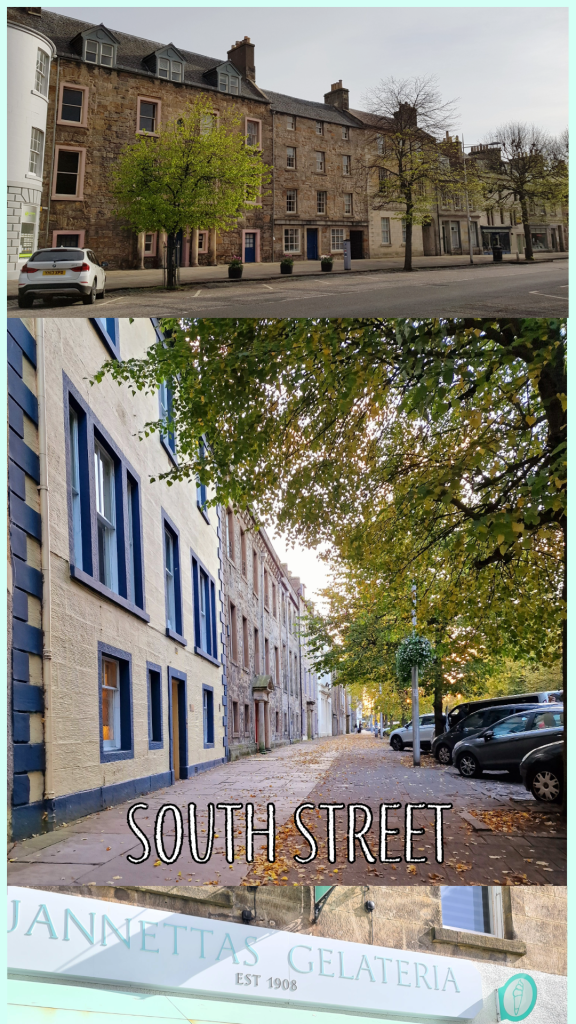
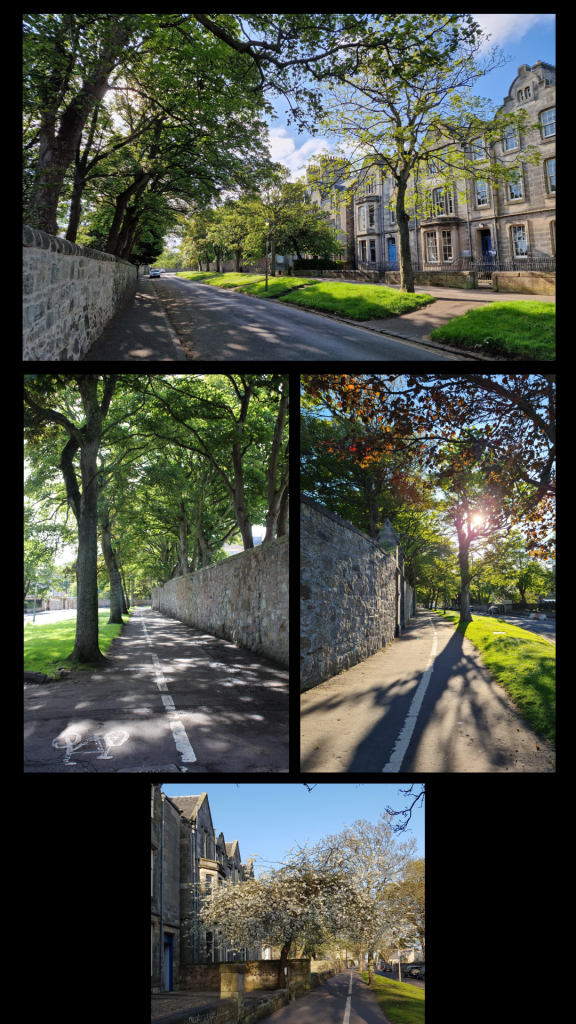
Once you’ve enjoyed the quad, leave through the arch and turn right to continue along South Street. You will pass beautiful old stately homes, dating from the 17th and 18th centuries. At the far end, you will find Jannetta’s Gelateria, another famous St Andrews treat destination where the queue will snake down the street on a sunny day. Founded in 1908, Jannetta’s offers more than 50 flavours, not including the sorbet! Go on, treat yourself…
Optional detour: Across from Jannetta’s, go down Abbey Walk and make your way along the beautiful stone wall of St Leonard’s School until you reach the harbour. You can either walk along the inner harbour road or detour out to East Sands, then circle back up to the Cathedral.
Part 7 – St Andrews Cathedral
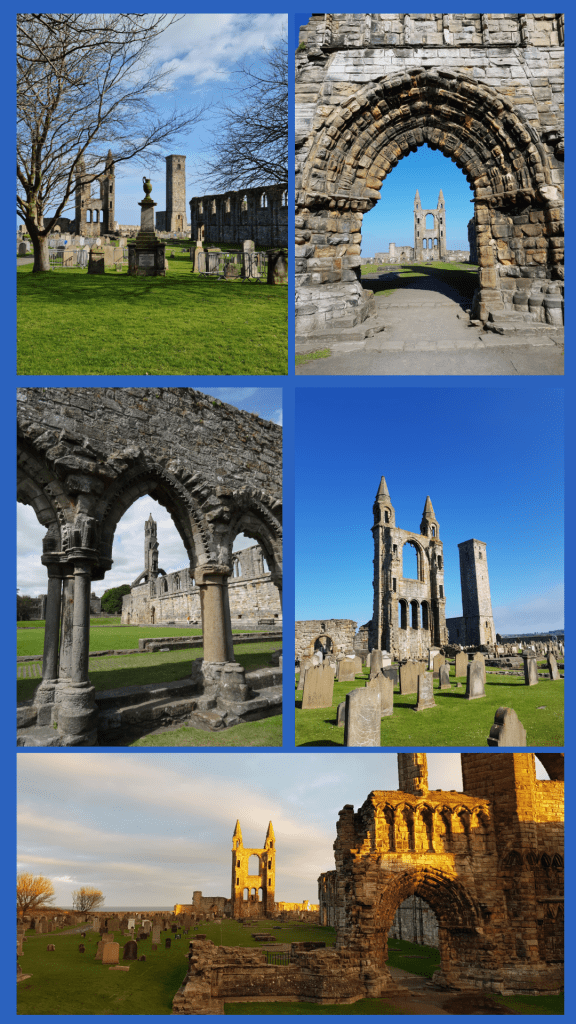
Continuing up South Street from Jannetta’s will take you in very little time to the ruins of St Andrews Cathedral. Originally constructed in the 12th century, the cathedral was the ecclesiastical capital of Scotland through out the Middle Ages, and the bishop (later archbishop) was powerful enough to build the nearby castle as his residence. The Cathedral fell into ruin through the Reformation, and the story goes that you can find stones from the great structure in buildings throughout the town.
Though not open in 2024 due to masonry repairs, St Rule’s Tower offers a fantastic view over the whole town if you can scale the narrow staircase. The graves in the cathedral grounds date from the last several hundred years and include the great golfer Old Tom Morris.
Enter the Cathedral through the gate and walk through the grounds, then exit through the door in the far wall. In front of you will be the North Sea!

Optional detour: Turn right along the outside of the cathedral wall and walk to the promontory where several large cannon look out over the ocean. From here you can see down to St Andrews Harbour, East Sands, and the pier.
Part 8 – The Upper Scores and St Andrews Castle
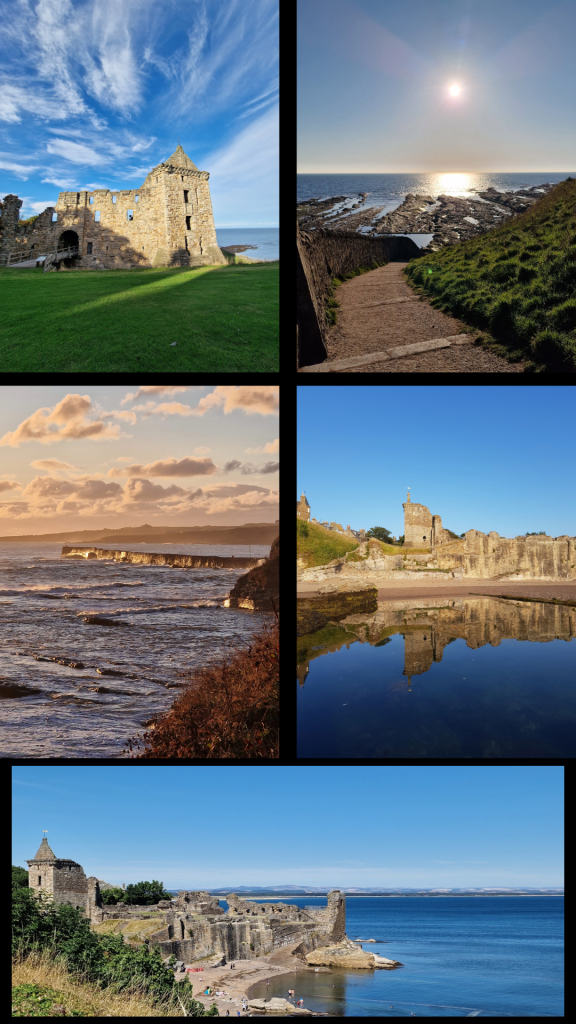
Turn left out of the Cathedral grounds and hug the coast to climb up a rise looking over the sea. This is one of the best views in town, along the coast, into the Cathedral grounds, and to the Castle. Below and to the right, you will see St Andrews pier, which is famous for its use during University processions. Unfortunately it was seriously damaged during Storm Babet in October 2023, so while it looks perfectly sound from above, it is not open to the public. There are several benches here where you can enjoy the view, and this is my favourite path in town.
Continue along the coast, following the metal railing and heading towards St Andrews Castle.
The castle was constructed starting in the 13th century and contains a bottle dungeon and siege tunnels – well worth the time to explore if you have it!
Part 9 – The Scores to the Golf Course
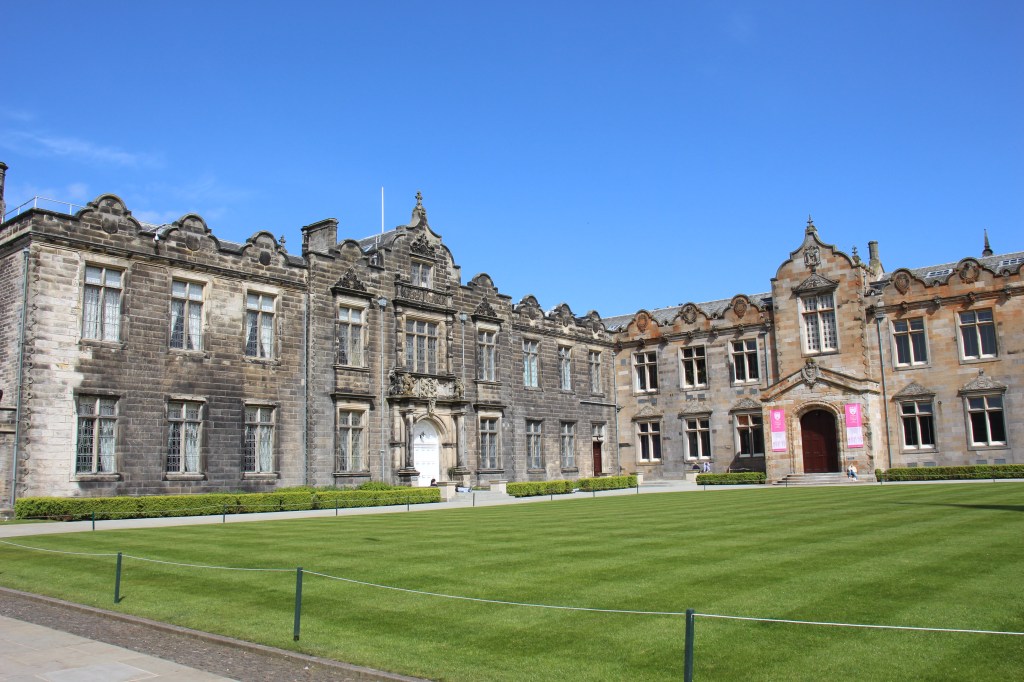
Once you have explored the castle to your heart’s content, continue down the Scores, the road that runs along the edge of the cliffs. Here you are entering the University proper and will pass the Principal’s house, St Salvator’s Hall (a student residence where Prince William lived in his first year), the Schools of English, Classics, Economics and Philosophy, the University Museum, and the Admissions/Student Recruitment office. You will also pass some of the most expensive real estate in Scotland – houses on the Scores are regularly valued at well over £1 million.
If you have some extra time, take a walk up Butts Wynd and peek into St Salvator’s Quad, the real heart of the University.
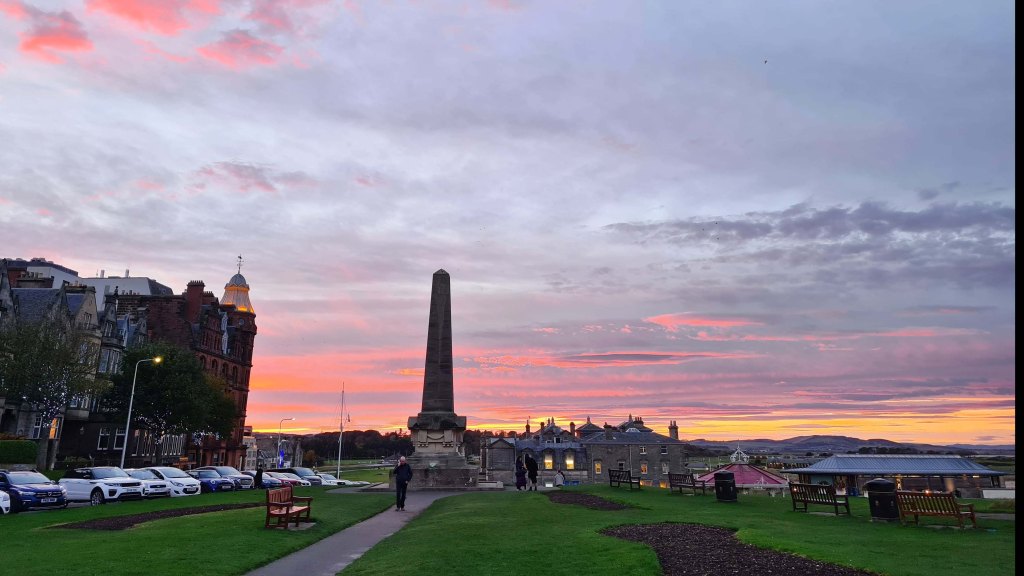
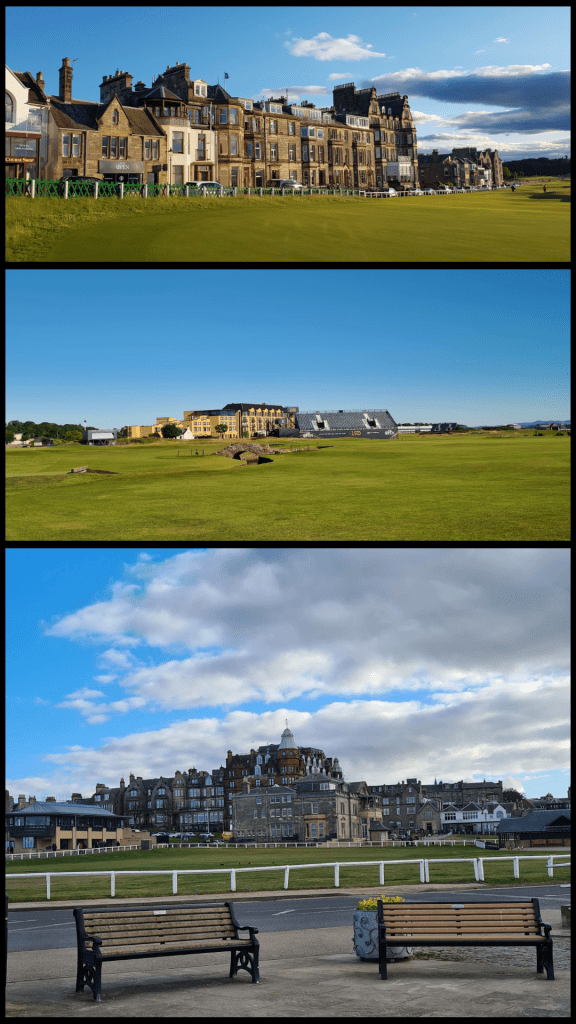
Eventually you will reach St James’ Catholic Church, the last building on the right; you can either follow the path down to the Bruce Embankment car park or stay on the left-hand side of the Scores. The monument is in memory of the religious Martyrs of St Andrews – of which there were many. Immediately in front of you is the Royal and Ancient Golf Club, and the Old Course.
Part 10 – The Old Course and West Sands
The famous Old Course, where the UK Open Championship is played every five years or so, marks the end of this walking tour. Golf enthusiasts will want to continue around the edge of the course along the Links and take a picture on the Swilcan Bridge.
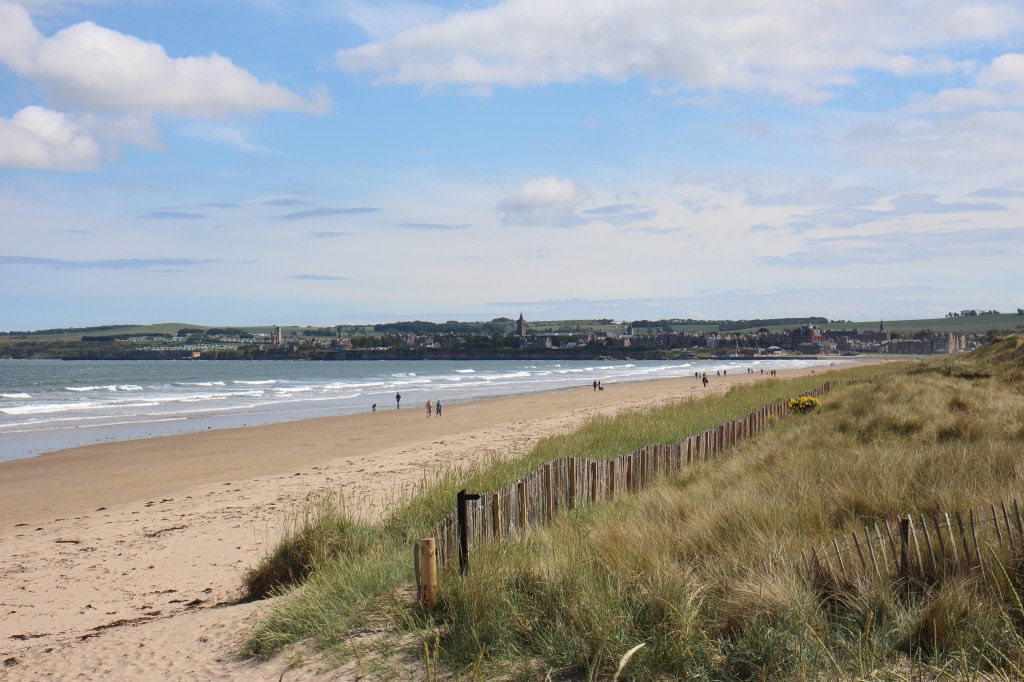
Non-golfers may want to follow the coastal wall towards West Sands, the long sandy beach where locals walk, run, play sports, swim and surf.
If you’re running short on time, follow Golf Place to North street. The safest thing to do at this point is take a short detour along to the right to where you will find a traffic light and pedestrian crossing. If you are very careful, you may be able to cross before this, but a warning: traffic comes quickly along this road and roundabout, and foreign visitors in particular should take care.
Walk up the hill and you will find yourself back at St Andrews bus station.
This route may take a bit longer than 60 minutes, and in fact you could probably stretch it to at least two hours if you include the detours. It does not cover all of the amazing parts of St Andrews, but it makes a good start. I hope you have time to give it a go!
If you enjoyed these pics, check out more of St Andrews at my online shop:



















 The Wandering Medievalist