
A few years back, I managed to secure some time off that the other half could not, and so I took myself away on a castle-finding adventure to North Berwick. My efforts were hampered slightly by two factors:
- Time of year – many castles and monuments are open only seasonally in Scotland, or their winter opening hours are limited.
- Restoration works – during the pandemic when everything was shut down, many castles in Scotland were discovered to have some dangerously unstable masonry. At the time I travelled, many sites were still closed, or partly closed, for renovation and restoration. As of writing, this is still the case for many castles, and for St Andrews Cathedral.
I had hoped to make it a two-castle day and see Dirleton, but it was completely closed, so instead I booked ahead – as one still had to do due to Covid restrictions – and being me, arrived about 20 minutes early. The empty car park was a short walk from the actual ticket office/gift shop. I was eager to get a bit of exercise though, so while I could probably have driven closer, I chose to walk the quarter mile and hoped for some good views as I did so.
Upon arriving at the shop, I was greeted by name – I was one of two people booked in all day! So I chatted with the shop assistants, who apologised that I could not get into the castle itself (which I was prepared for) and it was during this chat that I learned about the state of so many of the monuments in Scotland. Then, they allowed me access to the castle early, ‘You have it all to yourself just now,’ I was told. Music to my ears.
The approach to the castle is along the route one can imagine was used when it was whole, and there are lovely views of the main curtain wall. As I passed through the outer defences, two things stood out to me: one, the gorgeous orange-red of the sandstone; and two, the rather stunning way in which rain and wind had shaped and eroded the soft stone.
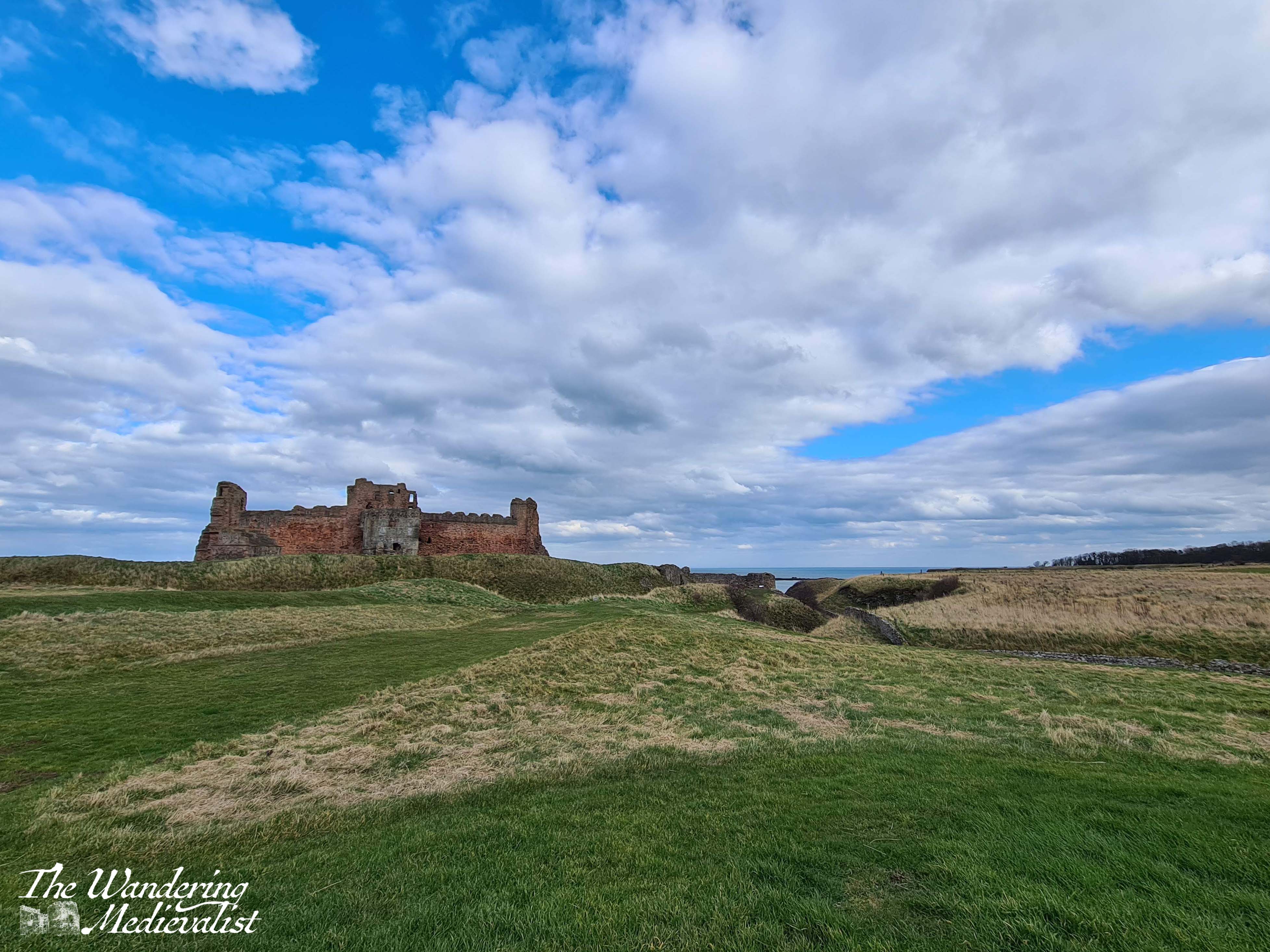
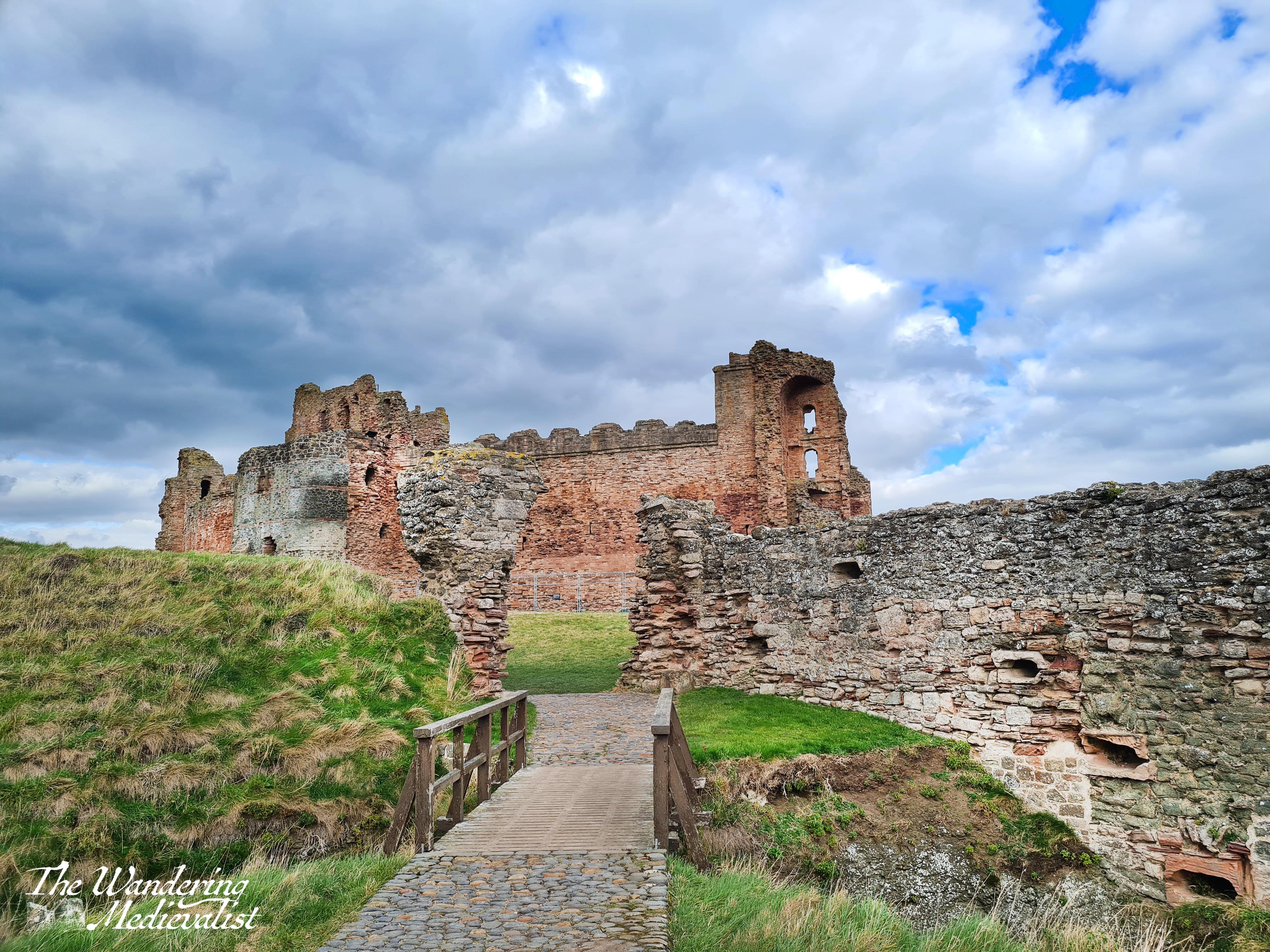
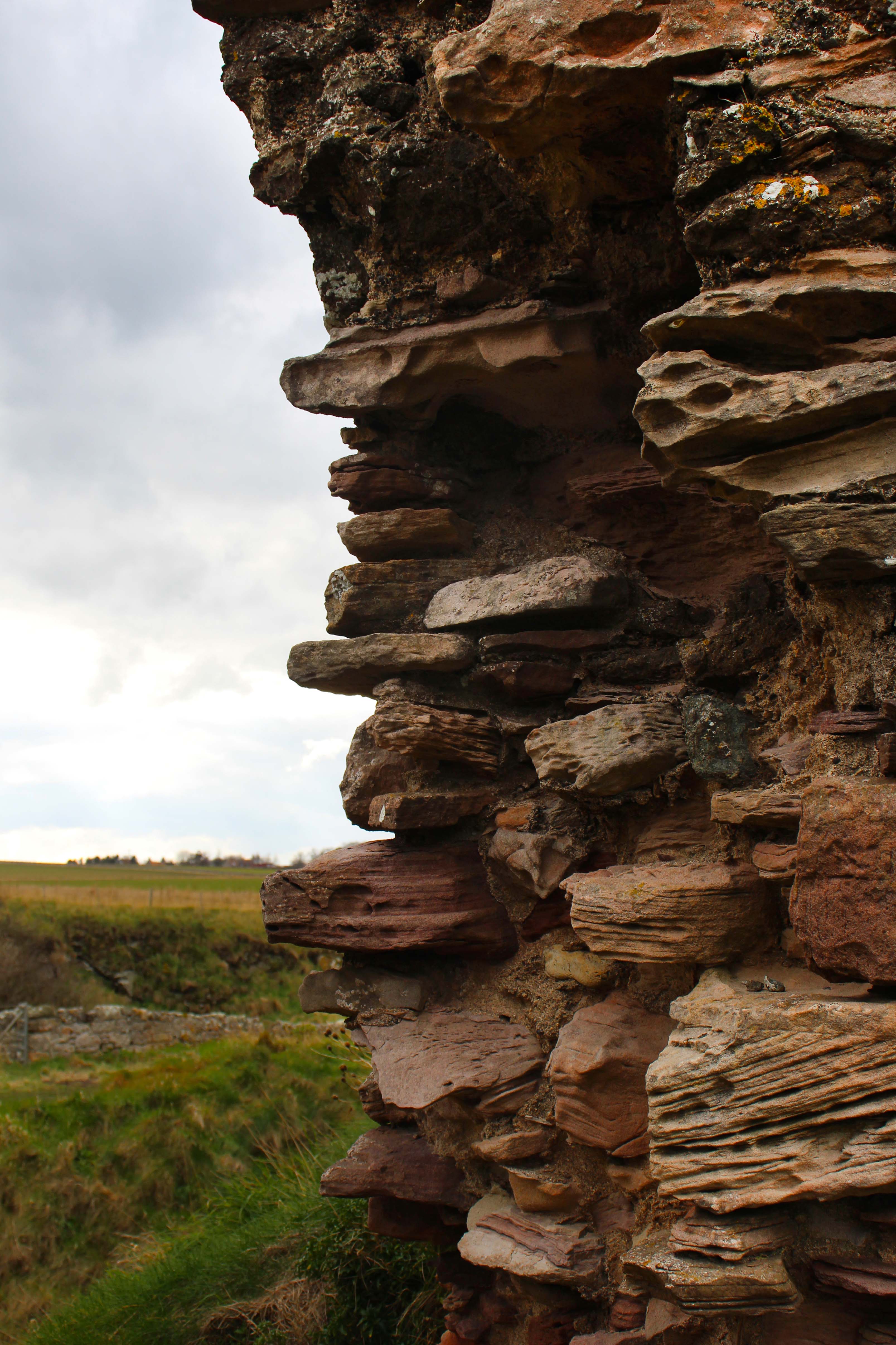
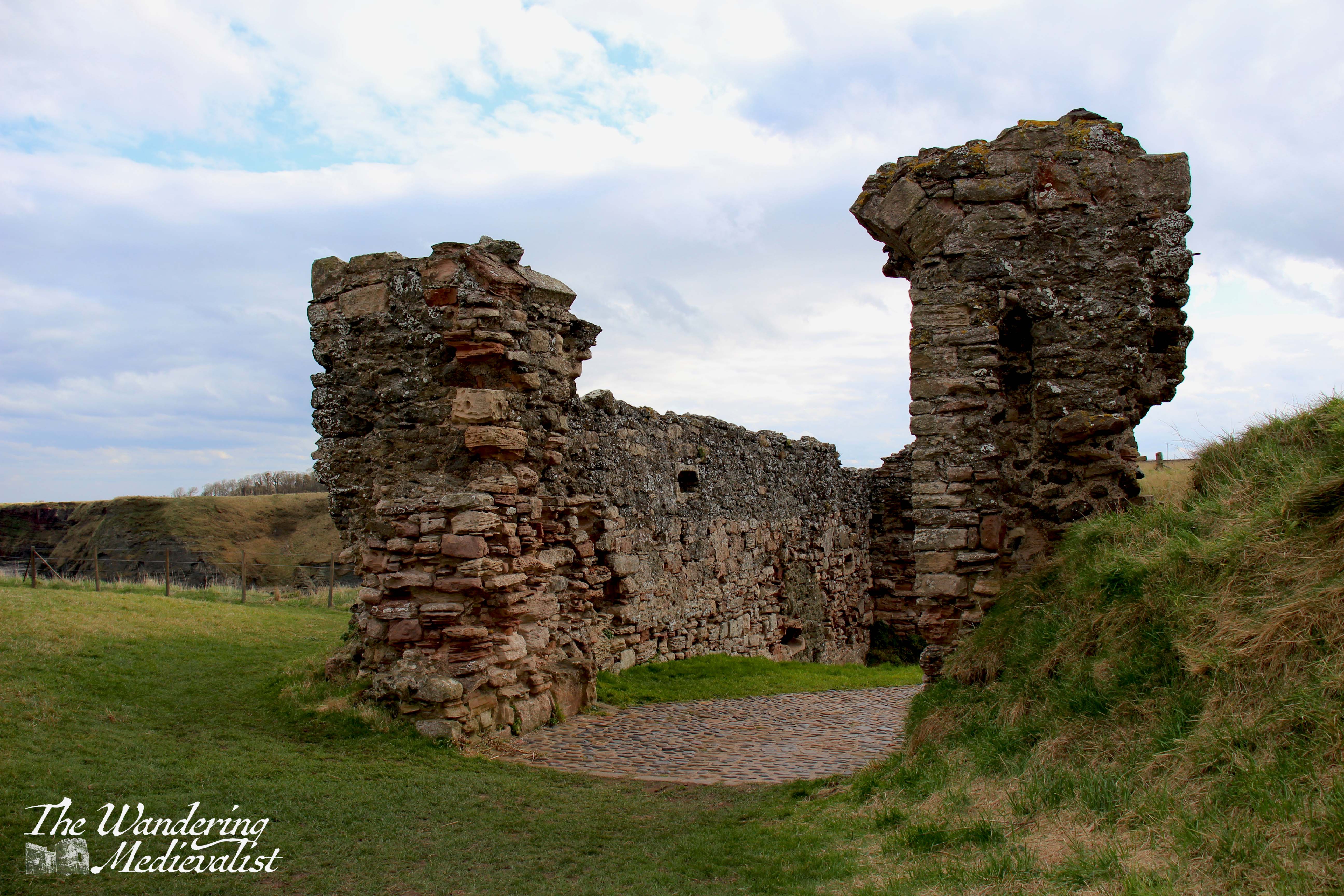
The day I visited boasted rather typical Scottish weather, in that it changed almost by the minute – sky was dark and stormy then bright blue and sunny, so I had a lot of fun playing with some of the changes in light.
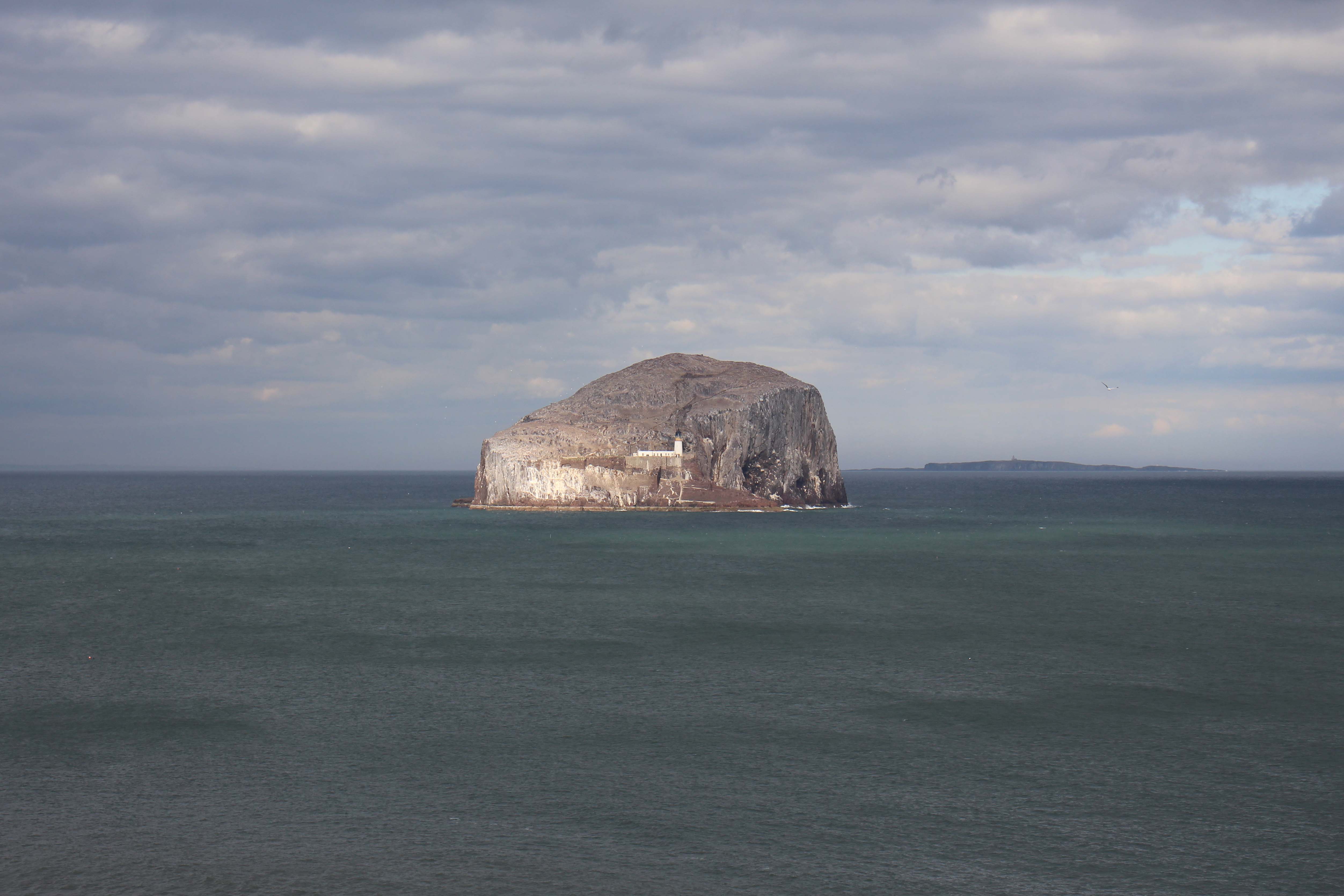
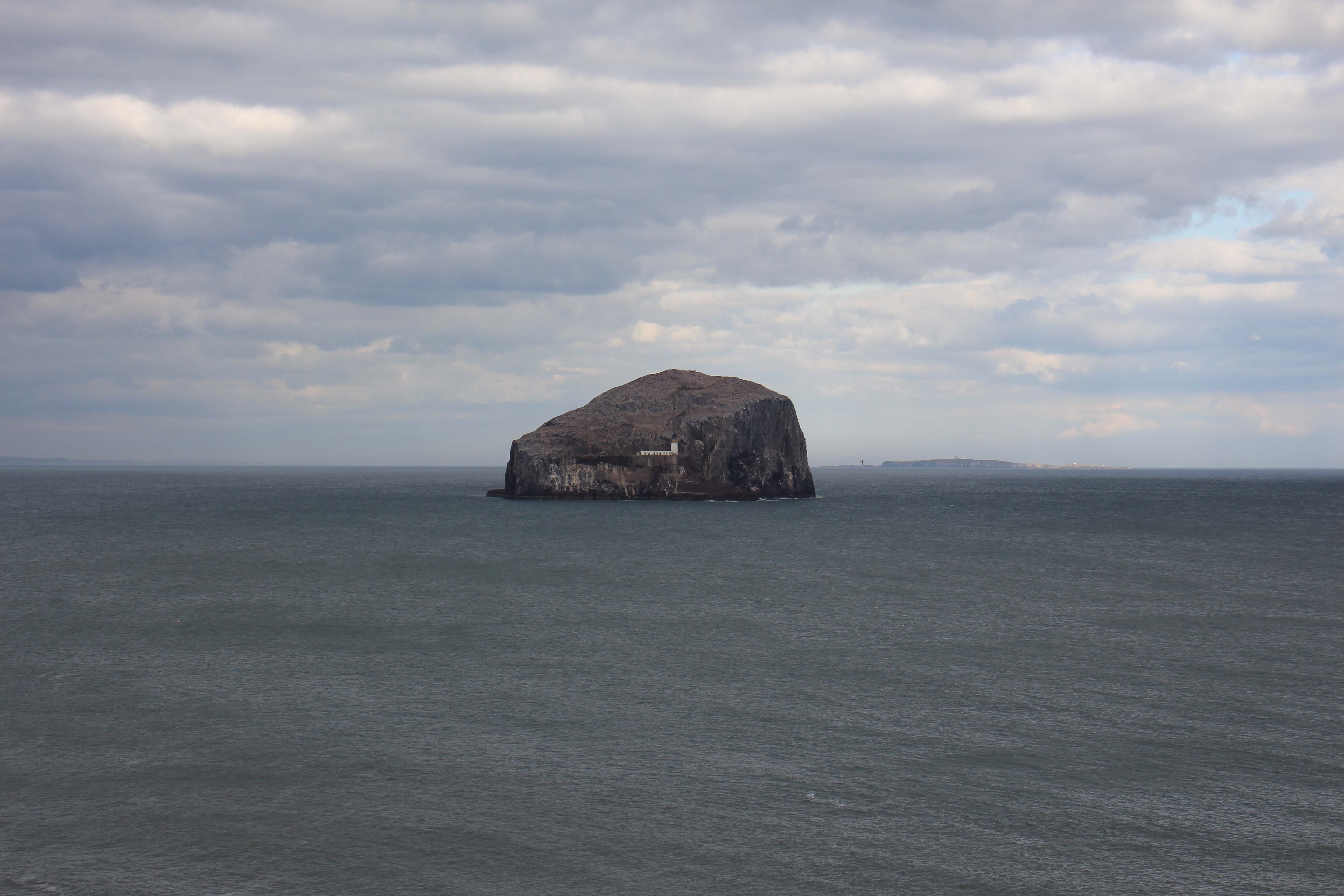
One of the most spectacular aspects of Tantallon is its view – not only along the coastline, but out to sea and the Bass Rock, a spectacular lump of stone in the Firth of Forth that housed a fortress in the Middle Ages and later a prison. At times it has hosted colonies of sheep. Today you can see a lighthouse, and the rock is the world’s largest colongy of northern gannets. Here it is in both sun and shadow:
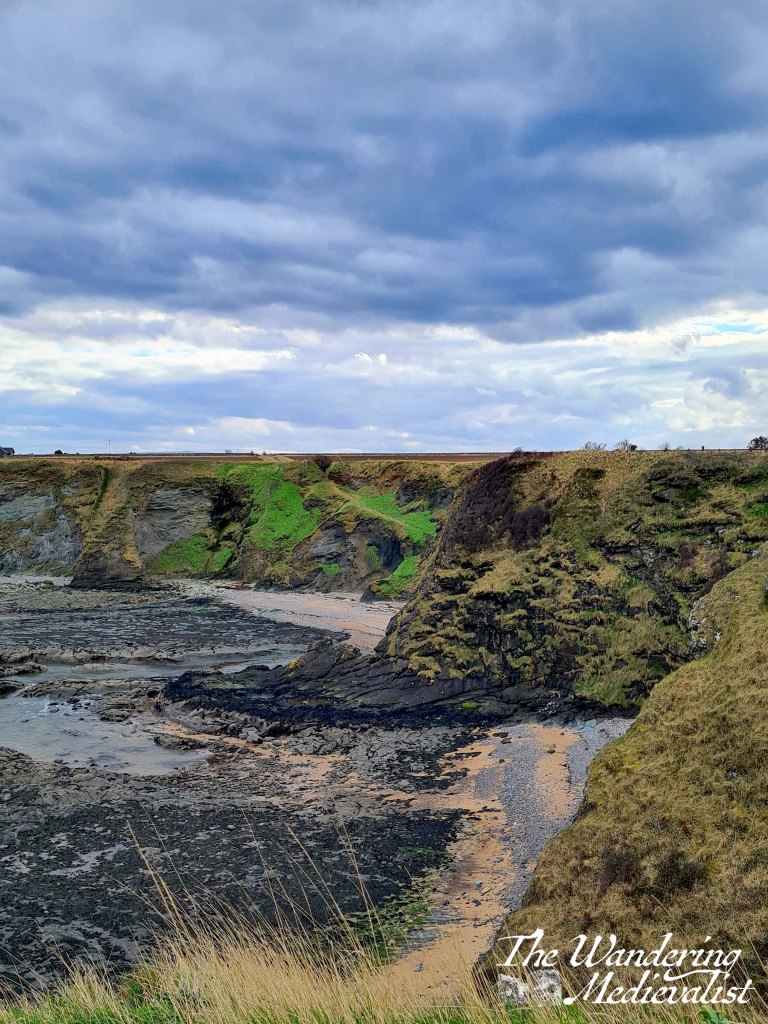
The other view from the castle is of course along the coastline – cliffs and rocky beaches galore, one could understand why landing an army here would be a formiddable undertaking.
I was eventually joined by a few other adventurous souls on this day, but in the meantime I sat down and enjoyed my picnic lunch in the lee of the castle.
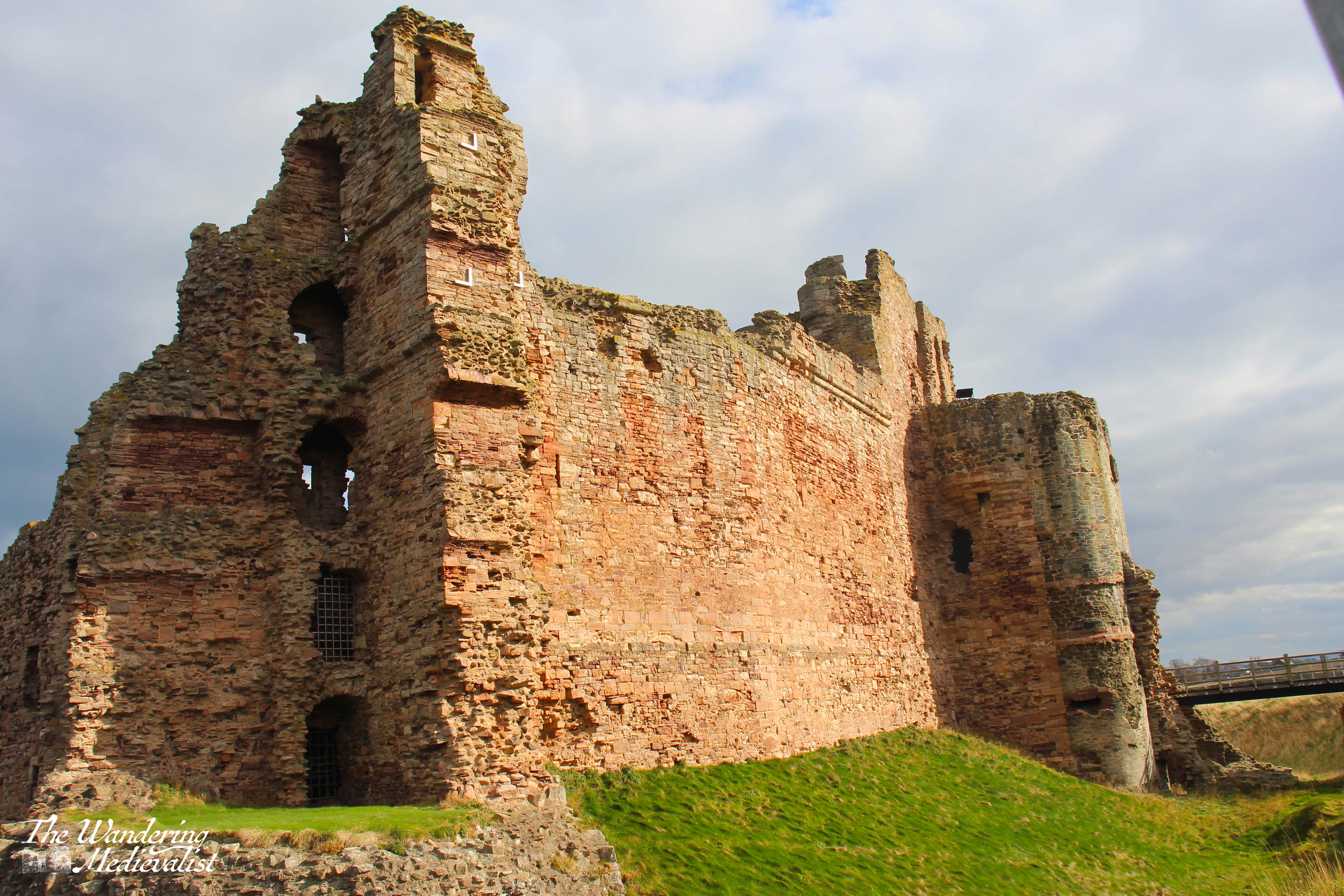
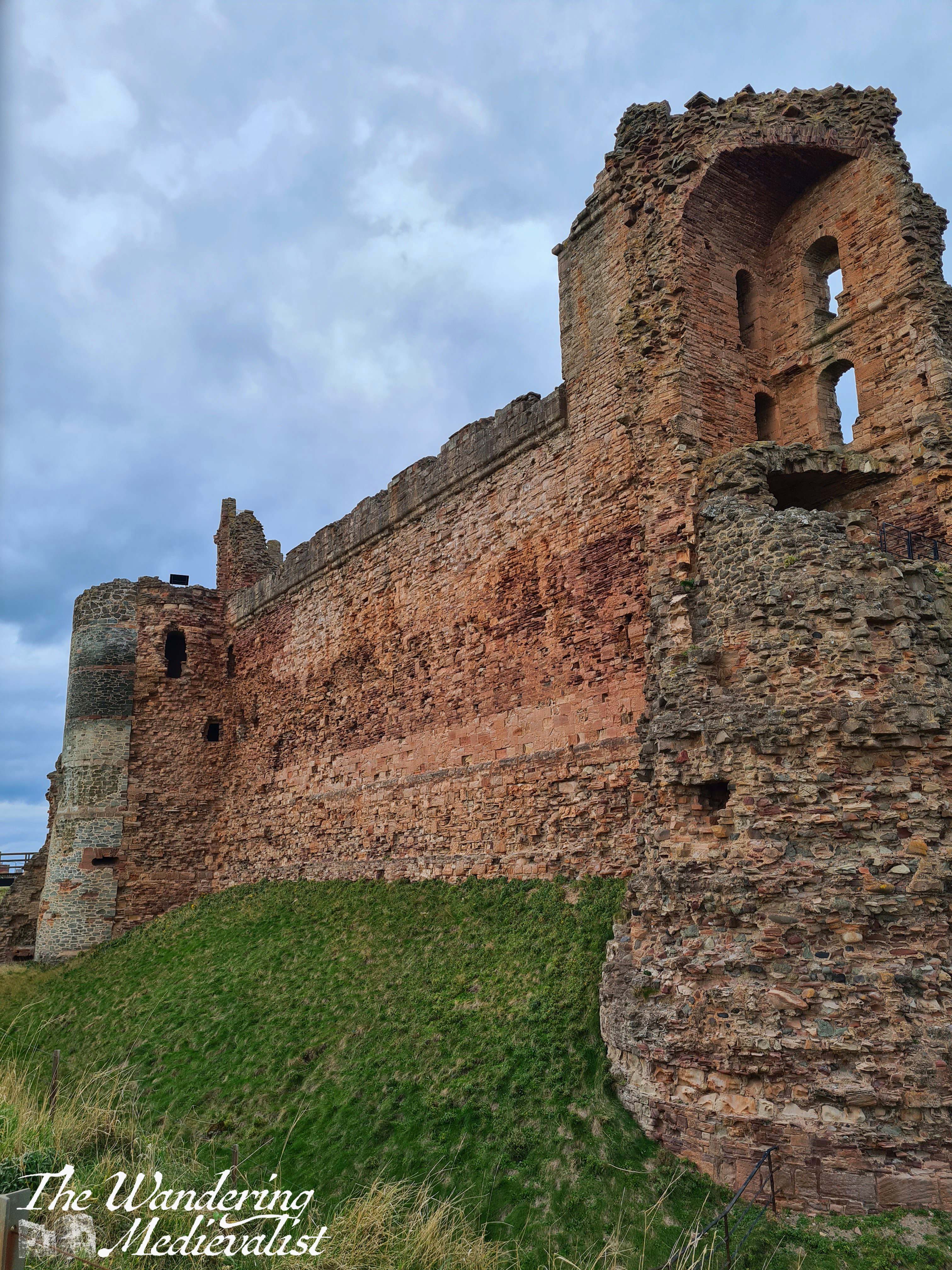
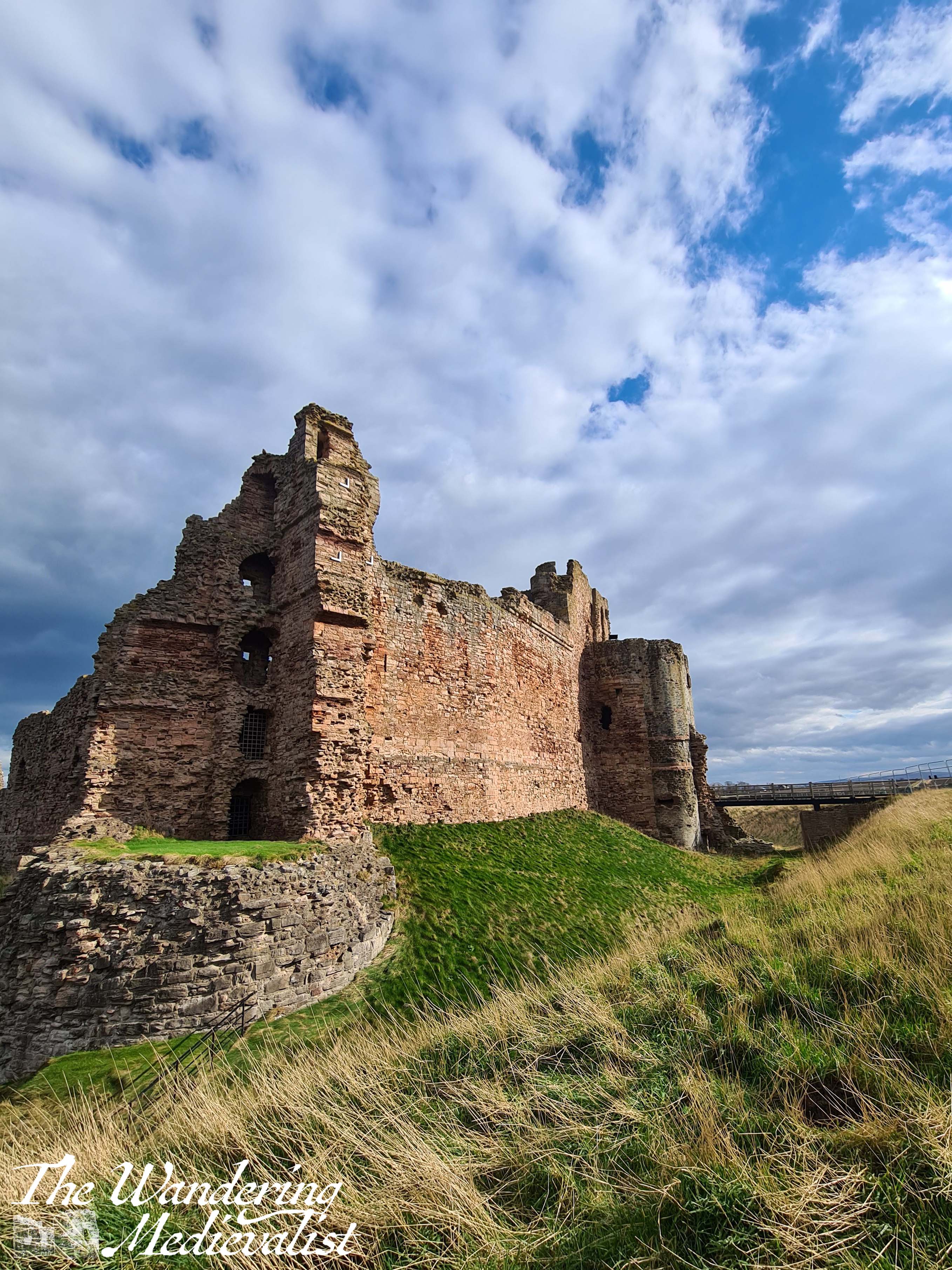

It would be remiss of me, as a historian, not to tell a bit about the castle’s background. It was built in the 1350s by William Douglas, who would be the progenitor of the Red Douglas line, descended through his illegitimate son George, later Earl of Angus. Douglas was quite clever in this design, as the castle defences are comprised essentially of one long wall, securing a headland that pokes out in to the Firth.
It was known in the Middle Ages to be nearly impenetrable, but unfortunately this was proven false through a siege conducted by Oliver Cromwell’s Parliamentarian forces in 1651. Twelve days of cannon fire were too much for even this curtain wall, and it was left as it is now.
The trip I spent visiting Tantallon introduced me to a part of Scotland I had never really seen before, and I found the North Berwick area to be both beautiful and well worth exploring in more depth. There is not a big town, but the roads were in decent shape and the edge of Edinburgh is very close, so one could probably be based in the city and do day trips. I will definitely be going back to visit Tantallon, hopefully with the opportunity to go inside and explore some of the ruined towers and rooms I could only glimpse from around the edge. I was struck, as I stood looking across towards Fife, that while the drive was around two hours, a boat could probably get me home faster, as the distance between Tantallon and Fife is less than 10 miles as the crow flies, more than 80 by road. When standing in St Monans several days ago I could look across to the Bass Rock and know this castle was hiding just behind it – just out of sight.
 The Wandering Medievalist