
The Queen’s View over Loch Tummel in Perthshire is one of the most famous views in Scotland, and one of the most photographed. It is not hard, when visiting, to see why, though actually getting to the viewpoint can be a bit of a challenge.
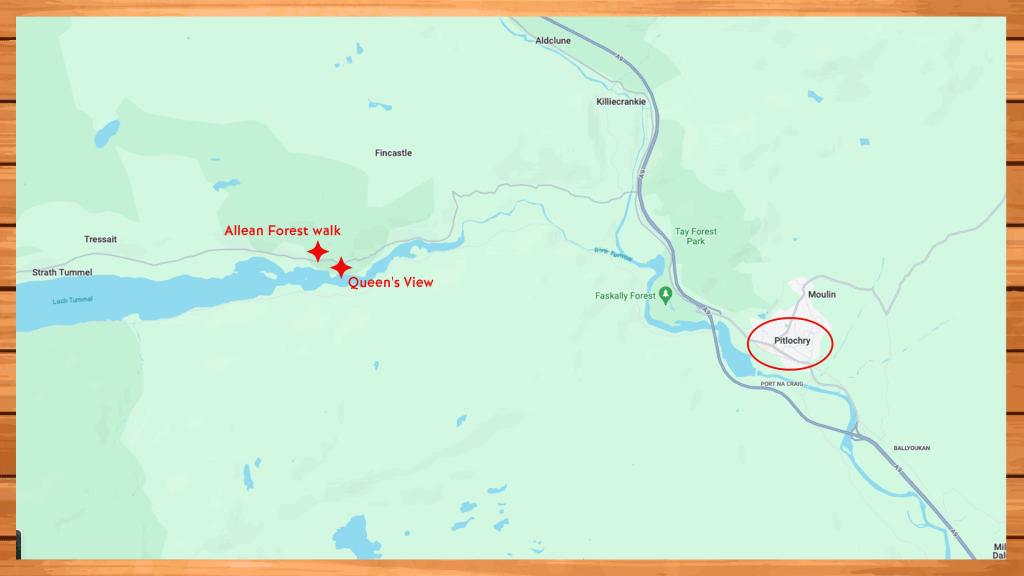
Not, I should point out, because it is physically difficult to reach – on the contrary, there is a large car park (not free!) and well-maintained path that leads to the main viewpoint (though occasionally you must fight to the front for the best view). The visitor centre is closed, and have been since the pandemic, but the area roundabout is kept up.
Rather, it is the road to the viewpoint that offers a challenge.
The advantage of Perthshire is that so much of it is just stunning, and easily reachable from Dundee, Edinburgh and Fife. Pitlochry, the nearest town to the Queen’s View, is less that two hours’ drive from Edinburgh or Stirling, and offers oodles of options for accommodation: guesthouses, B&Bs, lower cost hotels, luxury hotels, and a camping and caravan park. Pitlochry is a regularly-used base for exploring the area and only 14 minutes from the Queen’s View.
What is the problem then, you ask?
Simply that the short stretch of road between the A9 and the view is one of the windiest and narrowest that you will find on a two-lane road. Further, you are competing for space not just with other cars, but with large camper vans and coaches that offer tours throughout Scotland.

I have now been on the road twice, once as a passenger and once as a driver, and both times I found myself clinging to the door handle and searching for an alternate route back. (Note, there are alternate routes via the other end of Loch Tummel, but they are also quite narrow and add considerable time to a journey). I feel I should point out that I am making this observation after having explored the Highlands, Skye and Mull, so not without some experience on narrow and winding roads.
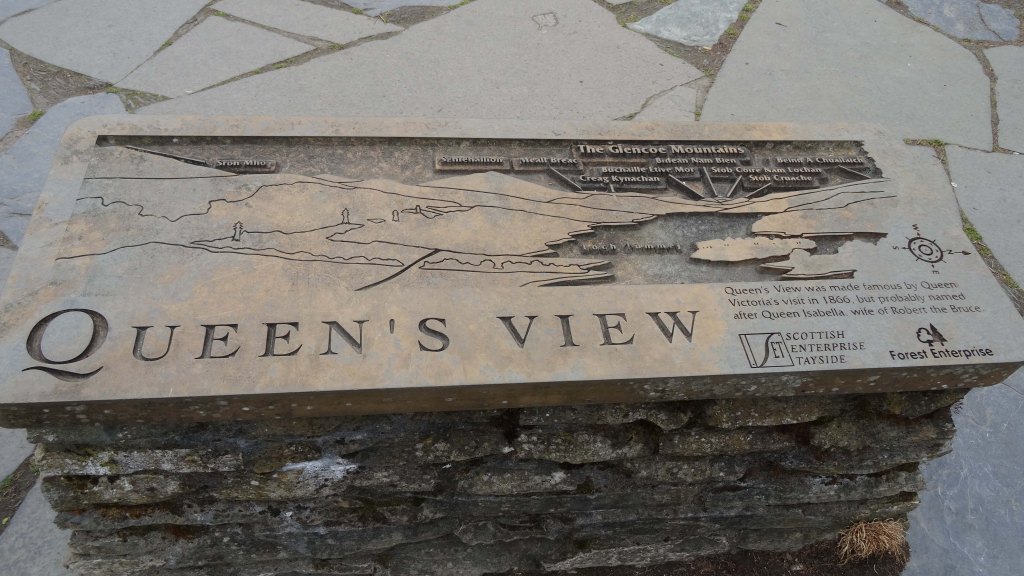
Once you reach the car park, there is a short walk and then the view really is spectacular. When Queen Victoria visited the spot in 1866, she assumed that it was named in honour of her – a view to match her greatness. What no one likely told her at the time was that it was almost certainly named well in advance of her arrival, and for Queen Isabella, wife of Robert the Bruce.
Standing at the viewpoint, you are looking down Loch Tummel, almost due west, with the peak of Schiehallion, one of the more popular hiking mountains in Scotland, in the distance. Even further, one can just make out – on a clear day – the mountains of Glencoe.
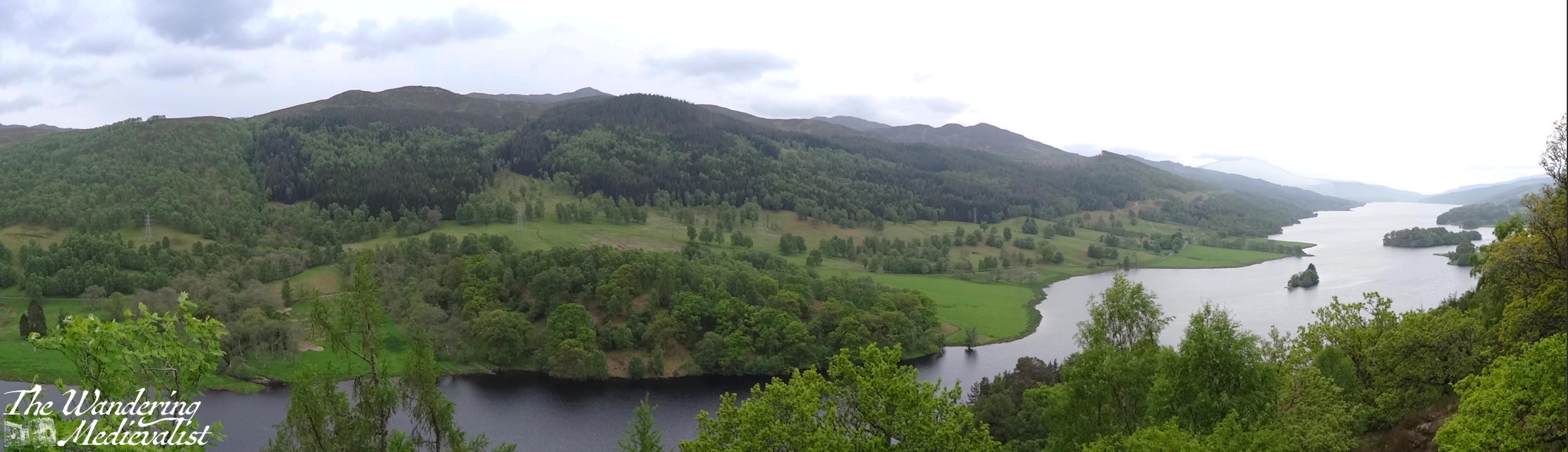
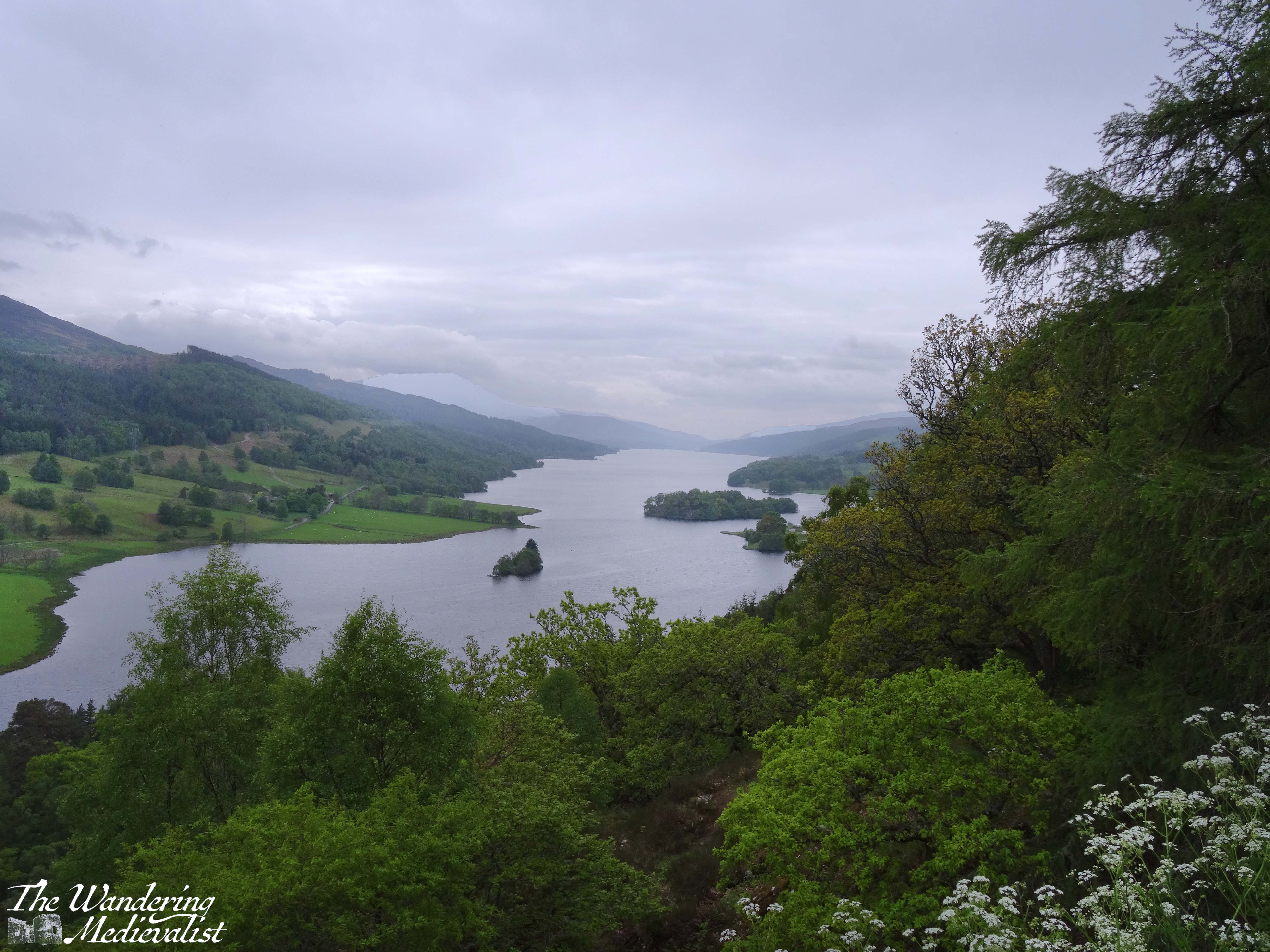

As you can see, the view is phenomenal in the sun but just as atmospheric in the cloud and rain; visiting earlier in the year may also mean less foliage growth between you and the water.
If the view has only whetted your appetite for Loch Tummel and the surrounding hills, I highly recommend continuing only minutes along the road to the Allean Forest, where there are two hiking loops you can follow up into the trees.
The car park is sizeable, and there is even a toilet block – warning though that it is a latrine that was far from well kept when I last visited. It was a ‘medieval’-style experience that I could well have done without. My hope is that in the years since the end of the pandemic, the facility has been improved.
Of the two available loops, one is shorter – about an hour – while the other is more like 1.5 to 2 hours in total. Both start off in the same way, climbing away from the car park through the trees and leading to several viewpoints over the mountains and down the loch.
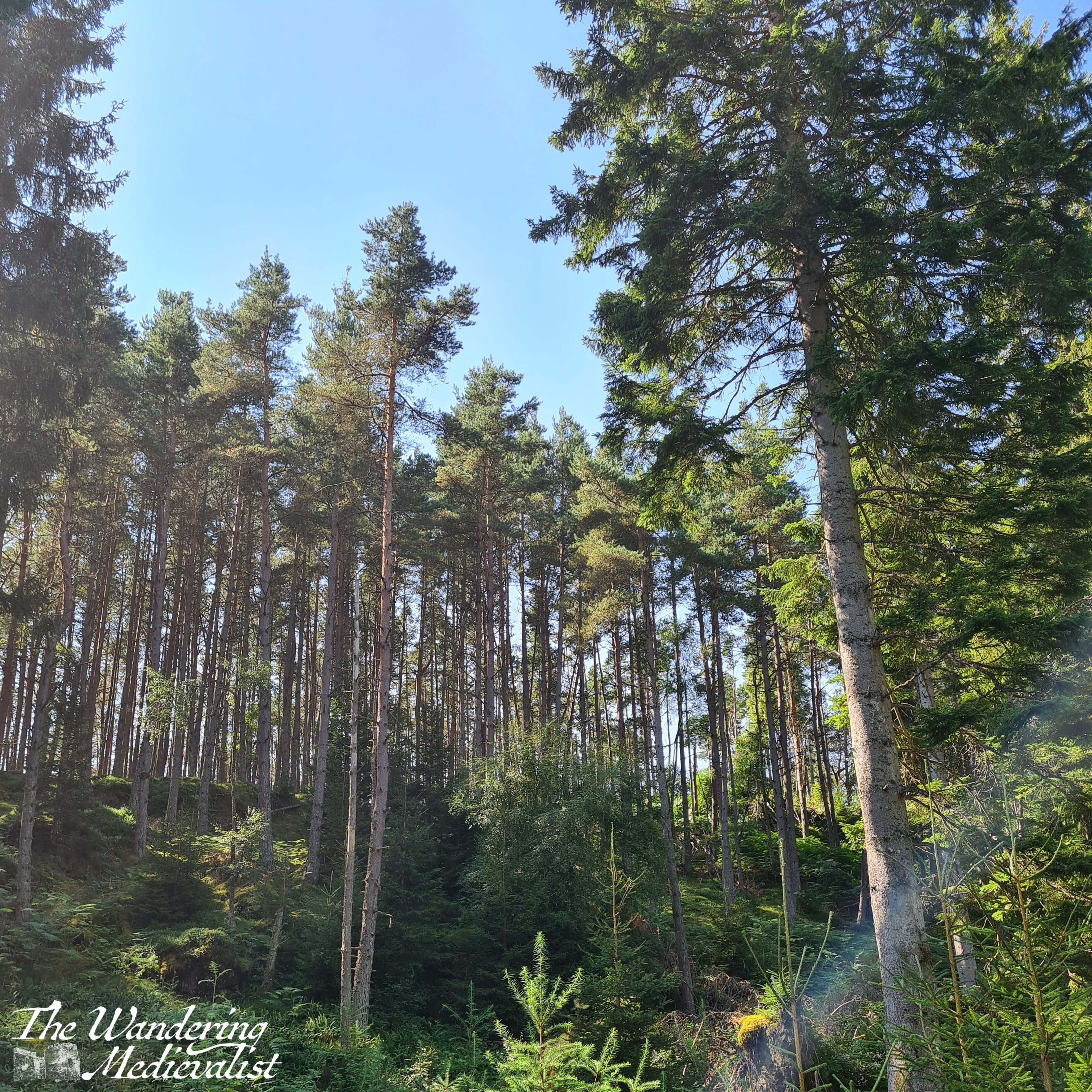
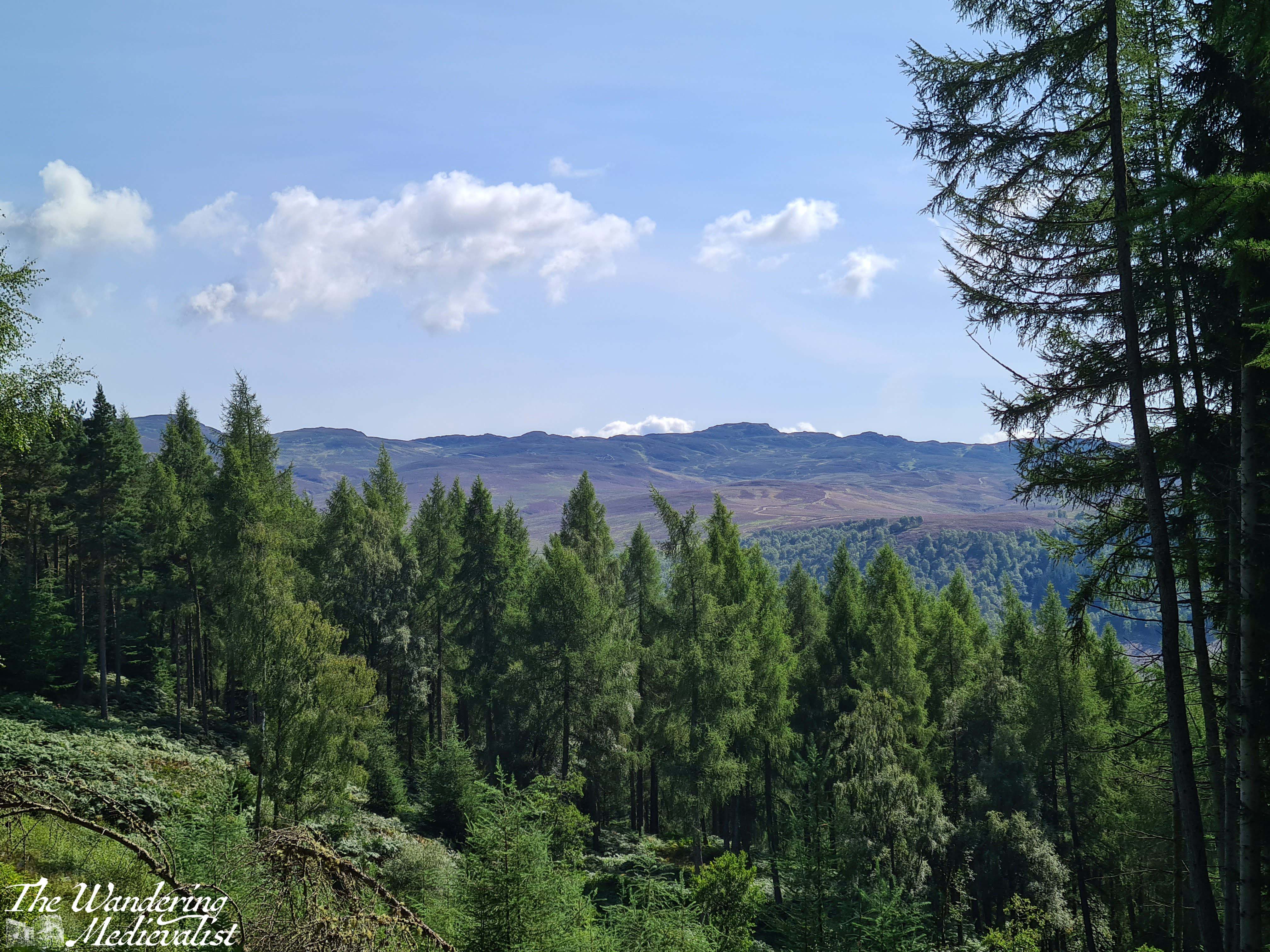
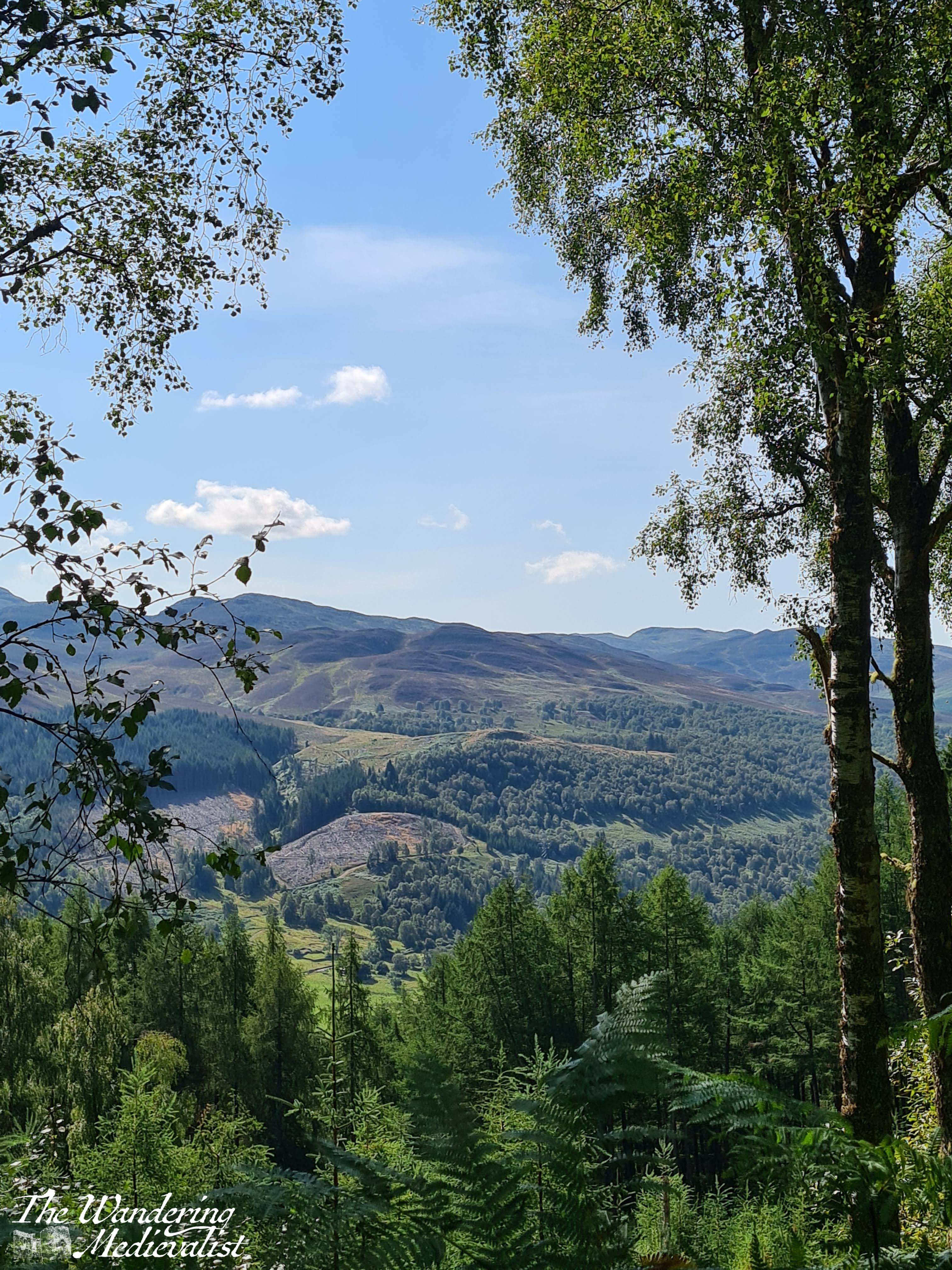
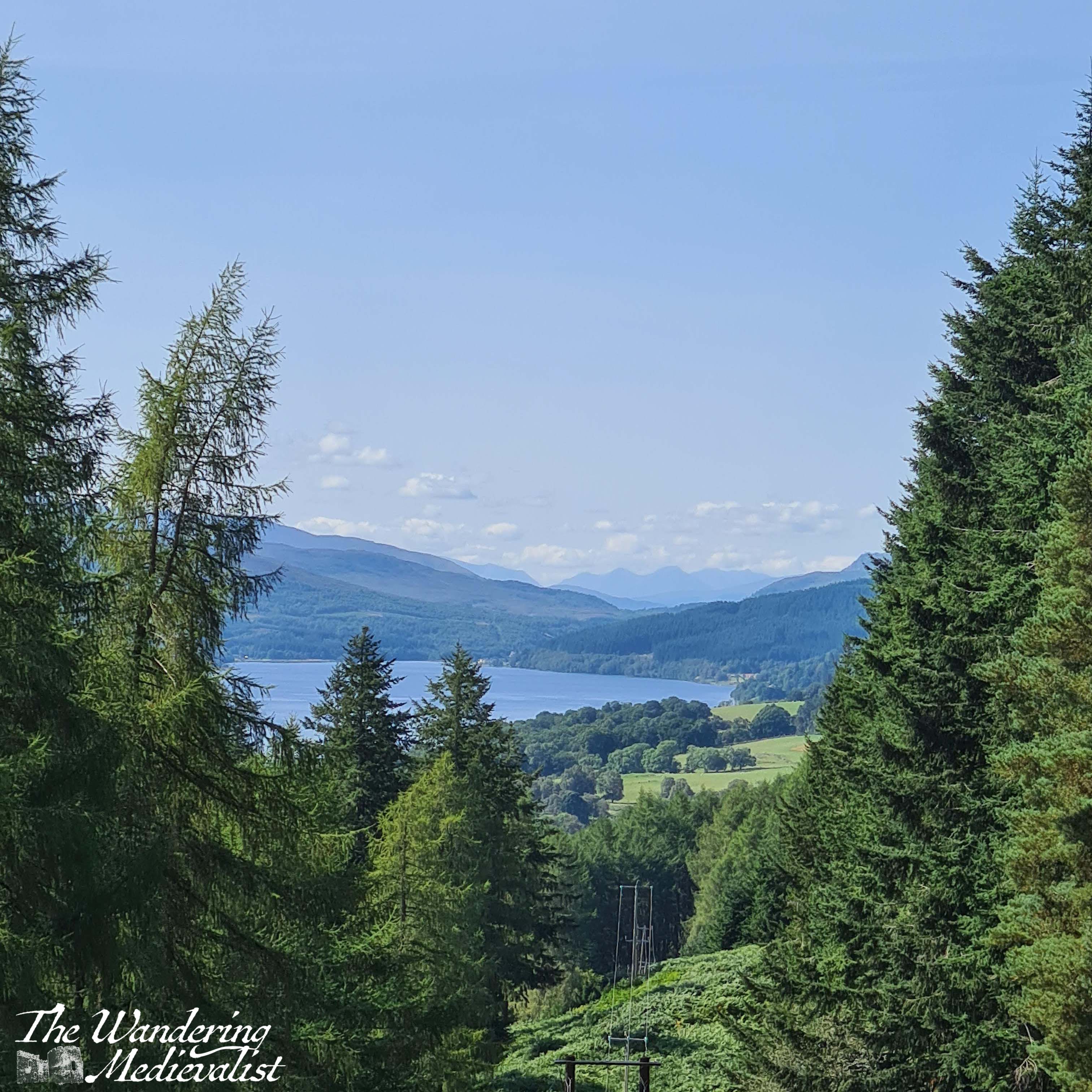
We did this hike in August, so the greenery was lush and at its height, though many of the spring and summer flowers had passed. It was not a hugely challenging hike but did have a decent amount of gradient, and my father decided he wanted to opt for the longer route. This turned out to be an excellent decision, as it took us past the ‘Family Circle’, ruins of an Iron-Age stone wall that enclosed a timber roundhouse.
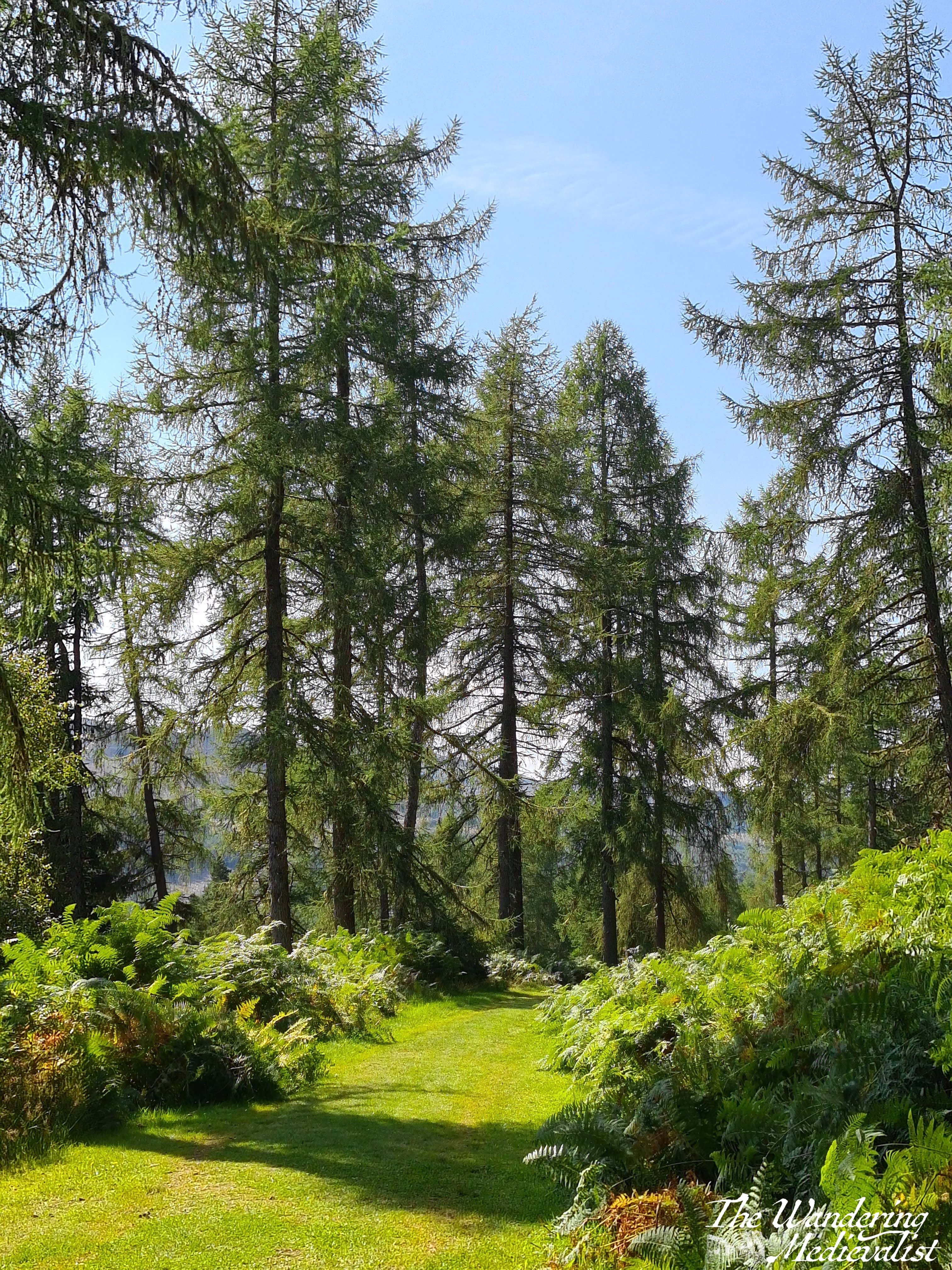
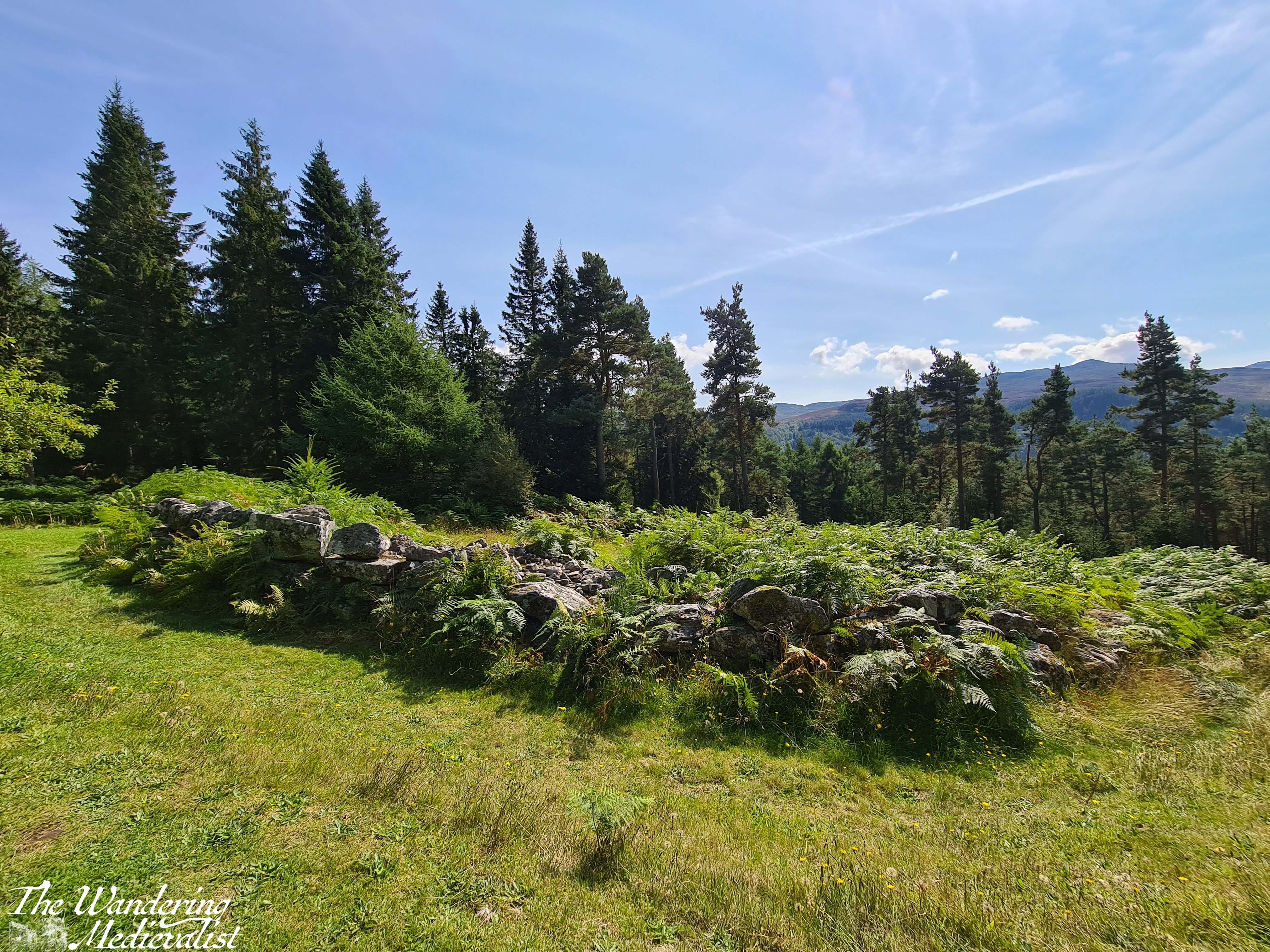
The appeal of this area of Perthshire clearly runs back at least 2000 years, as the plaque by the circle told us that this area of Scotland features more settlements of this type than almost anywhere else in the country. Excavated in the 1970s, the site shows evidence of being used in more recent times as well, for ironworking and drying corn or grain.
This particularly intrigued me, as family research I have done indicates that at least one branch of Scottish ancestry (don’t all Americans have at least one?) came from the area around Loch Tummel. It is a romantic thought that the area appeals to me because of that family connection – I have always loved the Loch Tummel and Pitlochry area – though it is also stunningly beautiful, as these pictures show. Perhaps it is a bit of both.

While the Queen’s View is a natural tourist draw and invites visitors from all over the world, the hills and forests around Loch Tummel are a recommended addition for walkers and hikers. They are not as challenging as many others, and the views are not as dramatic as further north, but the proximity to Pitlochry makes Loch Tummel a good place to explore. A few recommendations if you are attempting this journey are to ensure your driver is confident and comfortable on narrow roads, and to bring your own snacks and refreshments – the closest place I could find when visiting was Pitlochry, though new locations may have opened up since then.
 The Wandering Medievalist