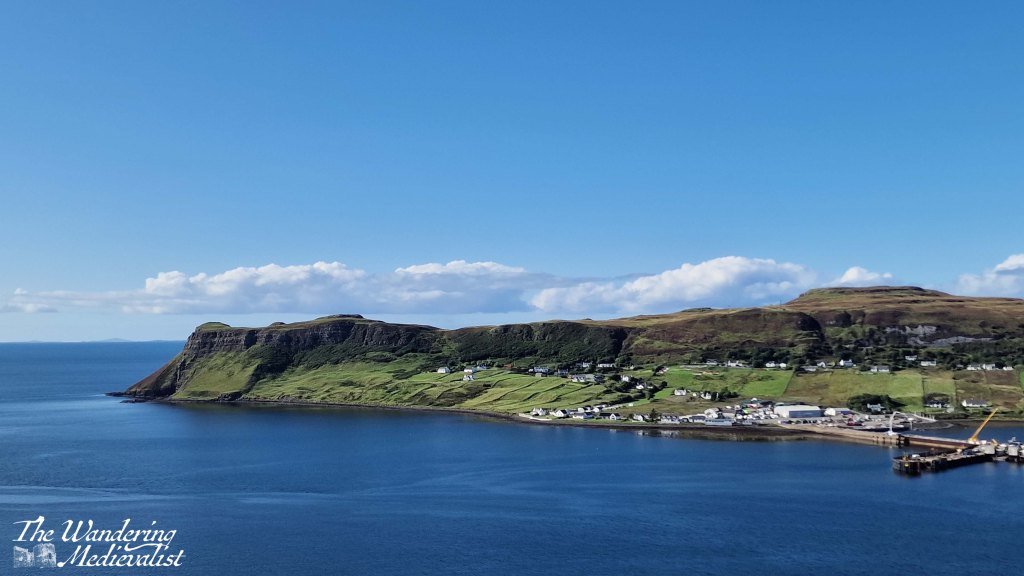
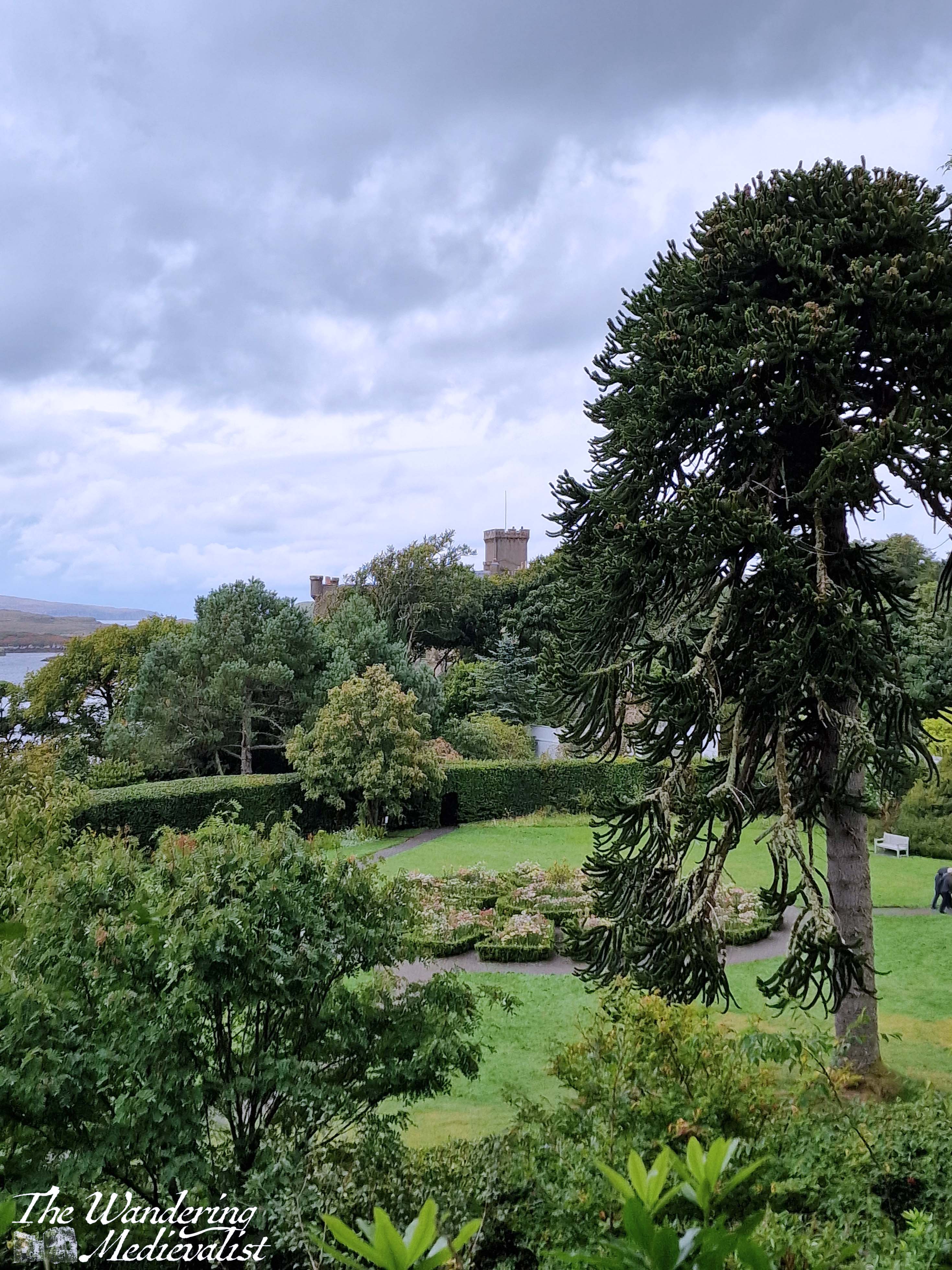
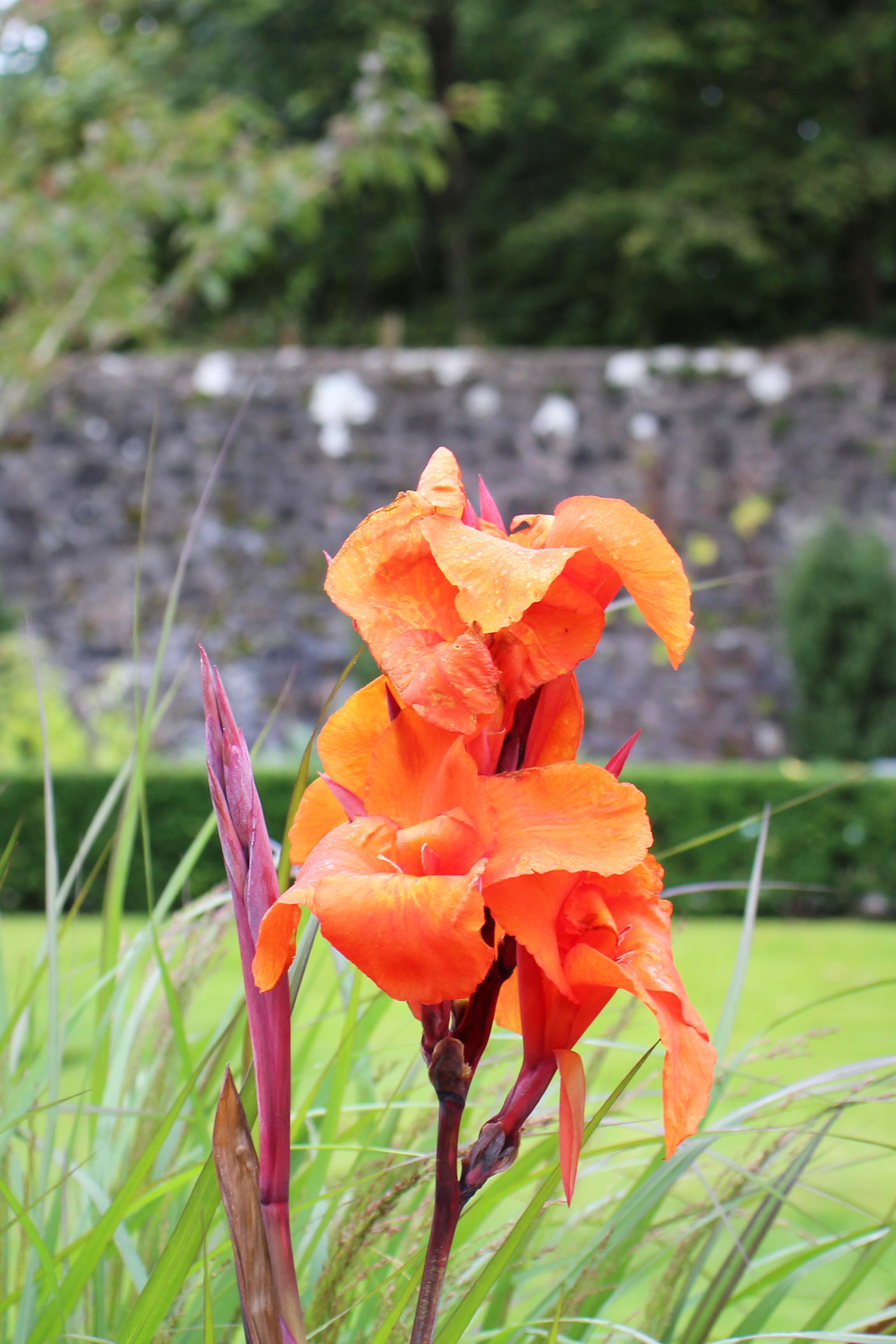
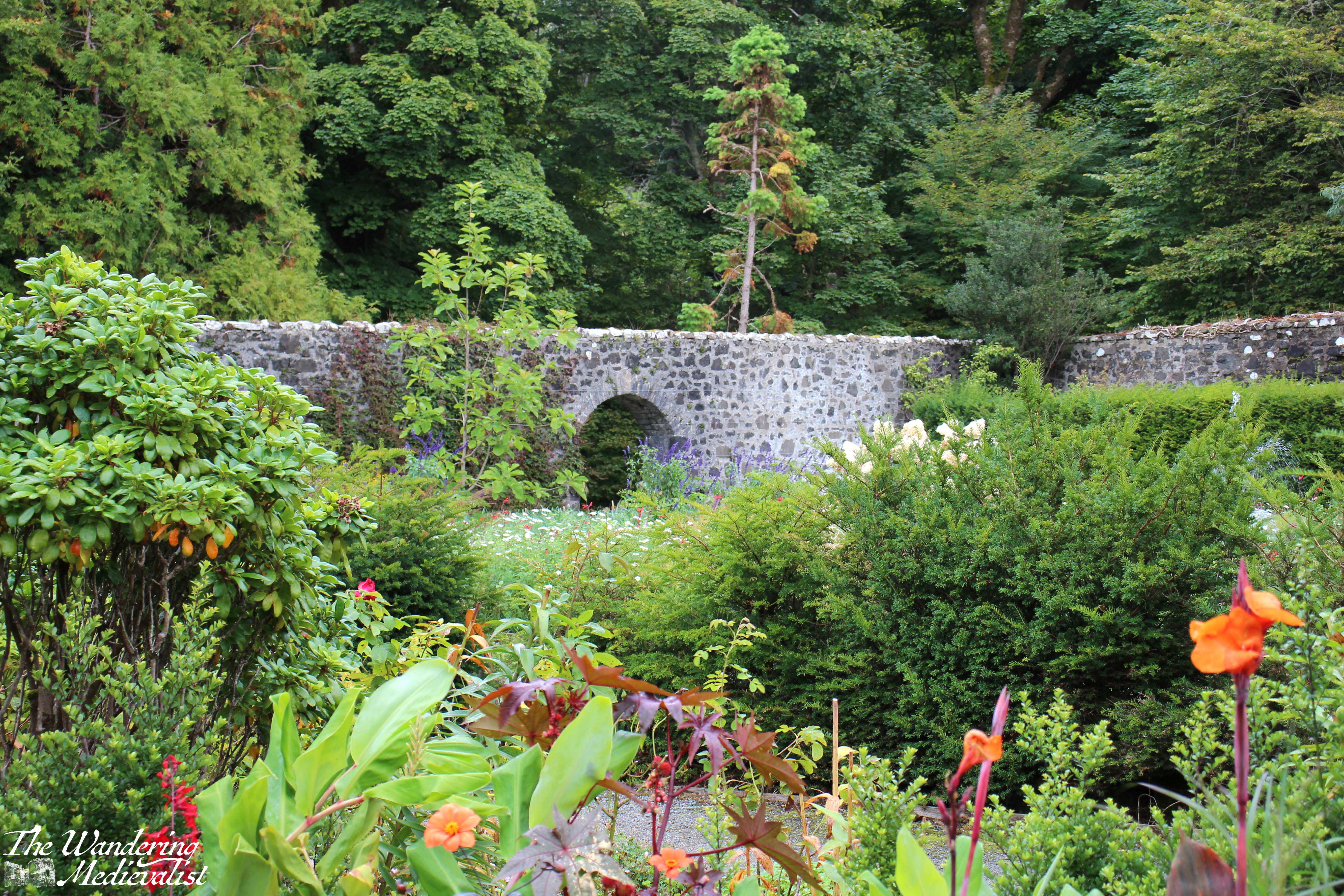
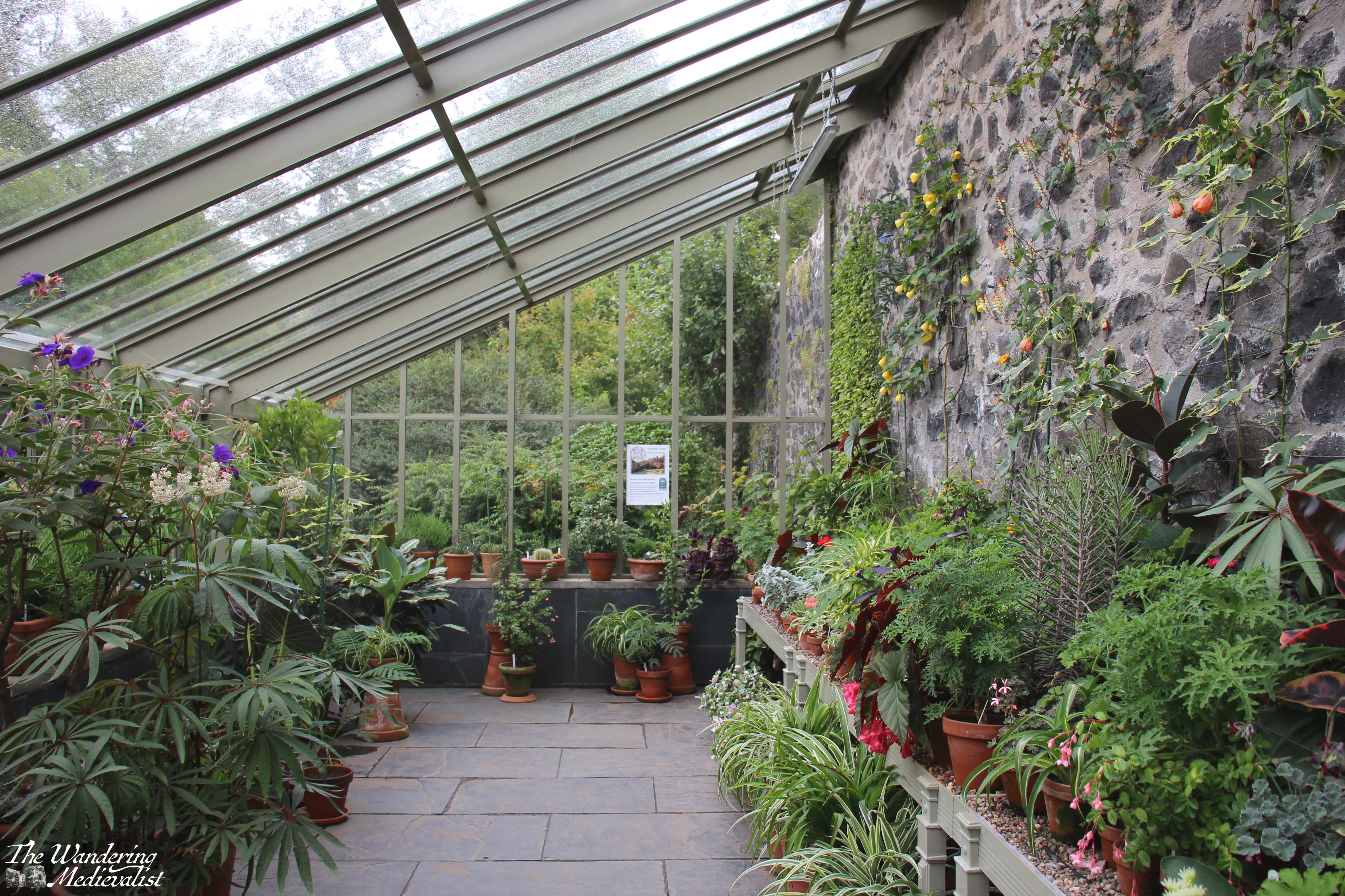
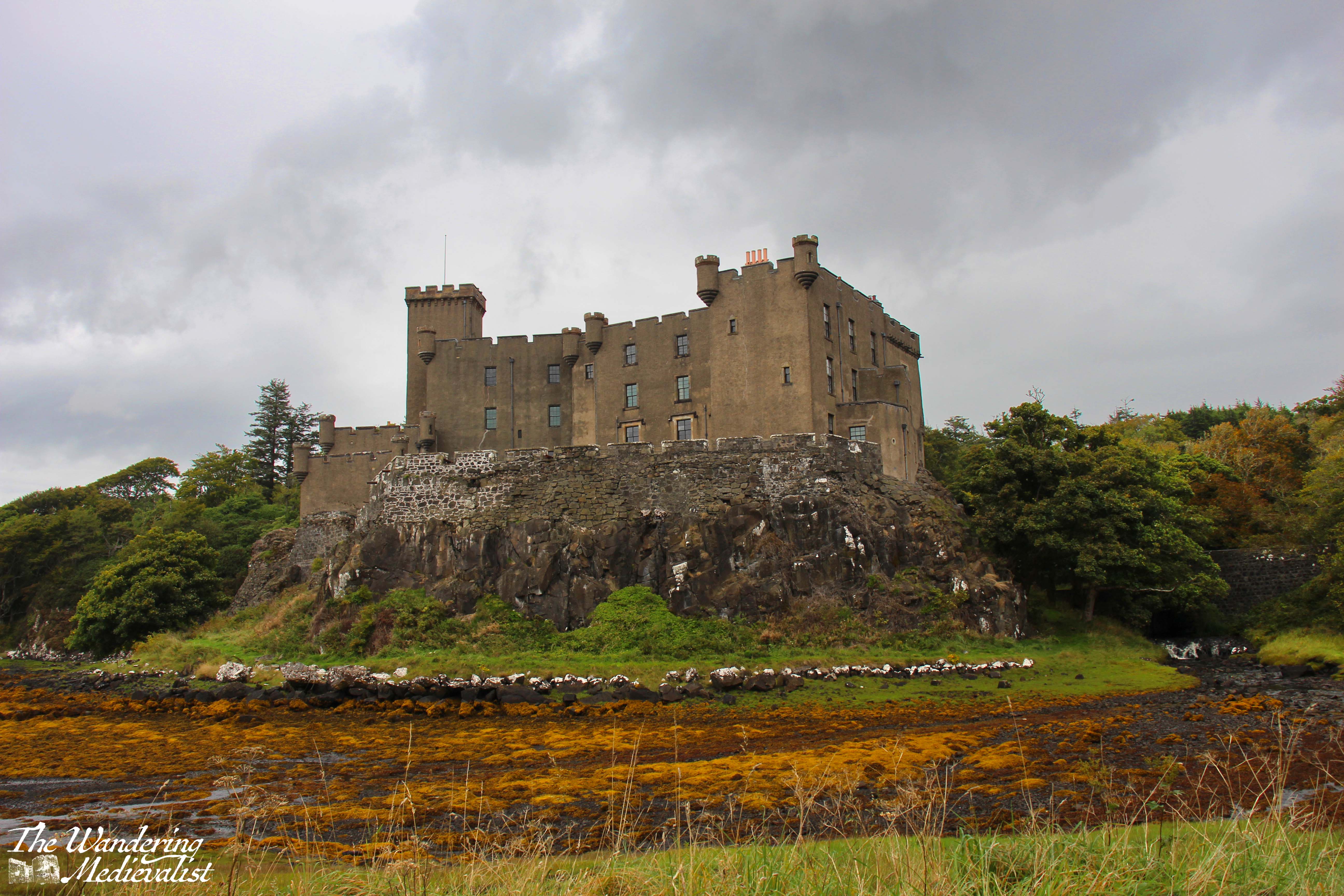
It has been longer than usual since my last post, but for the very happy reason that I have been on holiday with family. We went to Skye for my first time ever, and it was absolutely extraordinary, even on the rainy day we had when we chose to visit Dunvegan Castle. (and please be assured, many posts on Skye will be coming as soon as I can sort through the mountain of pictures I took)
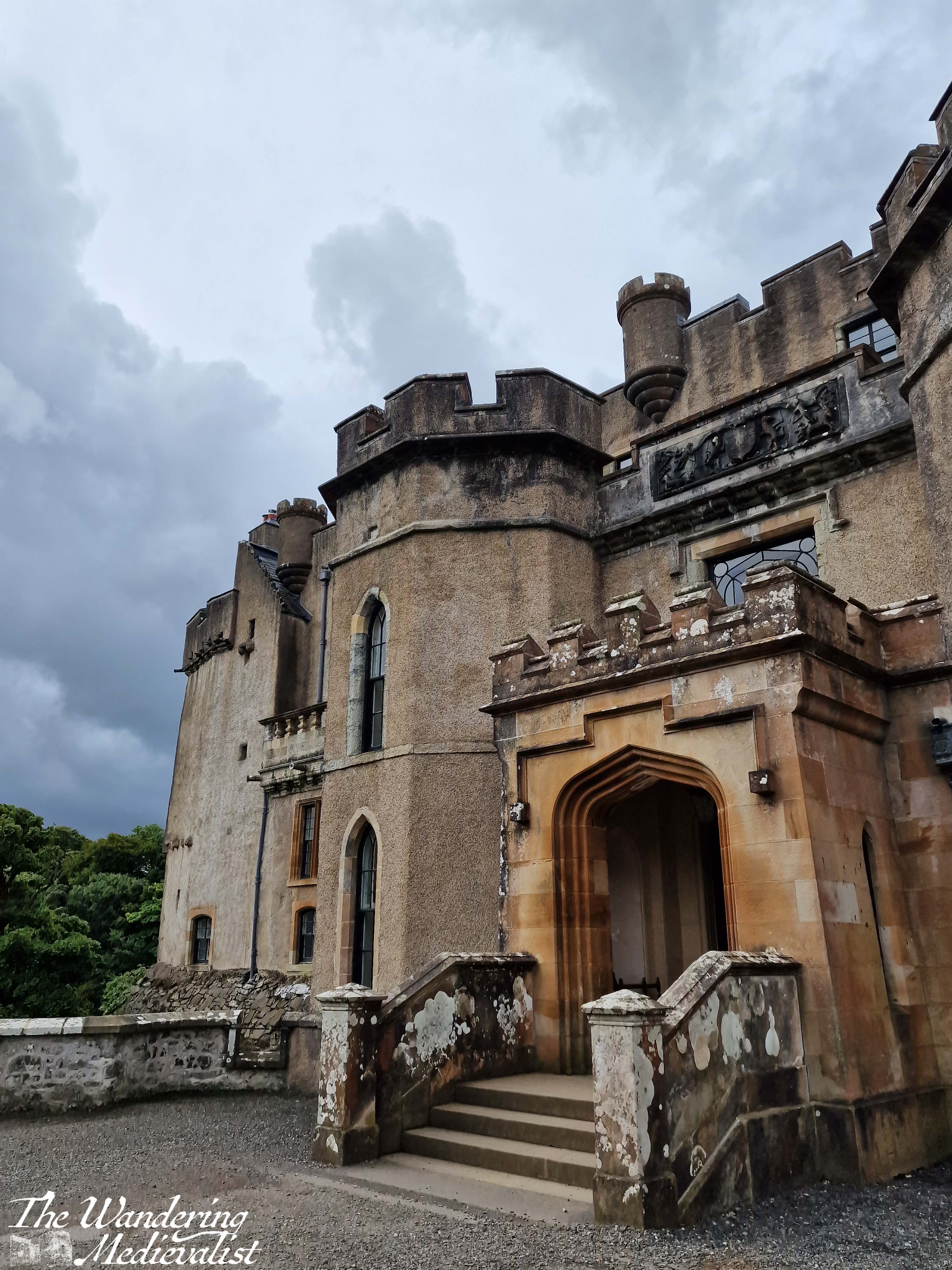
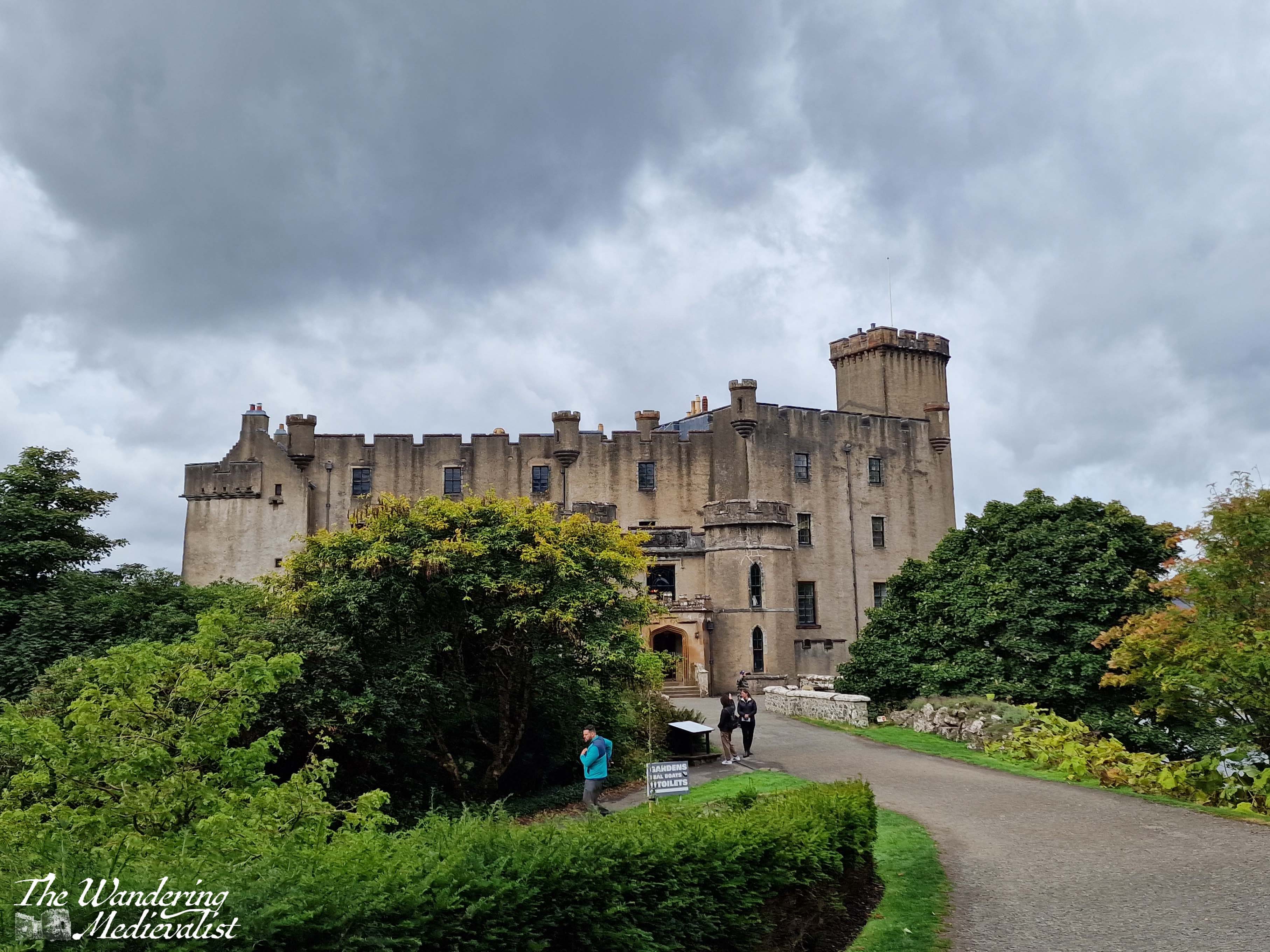
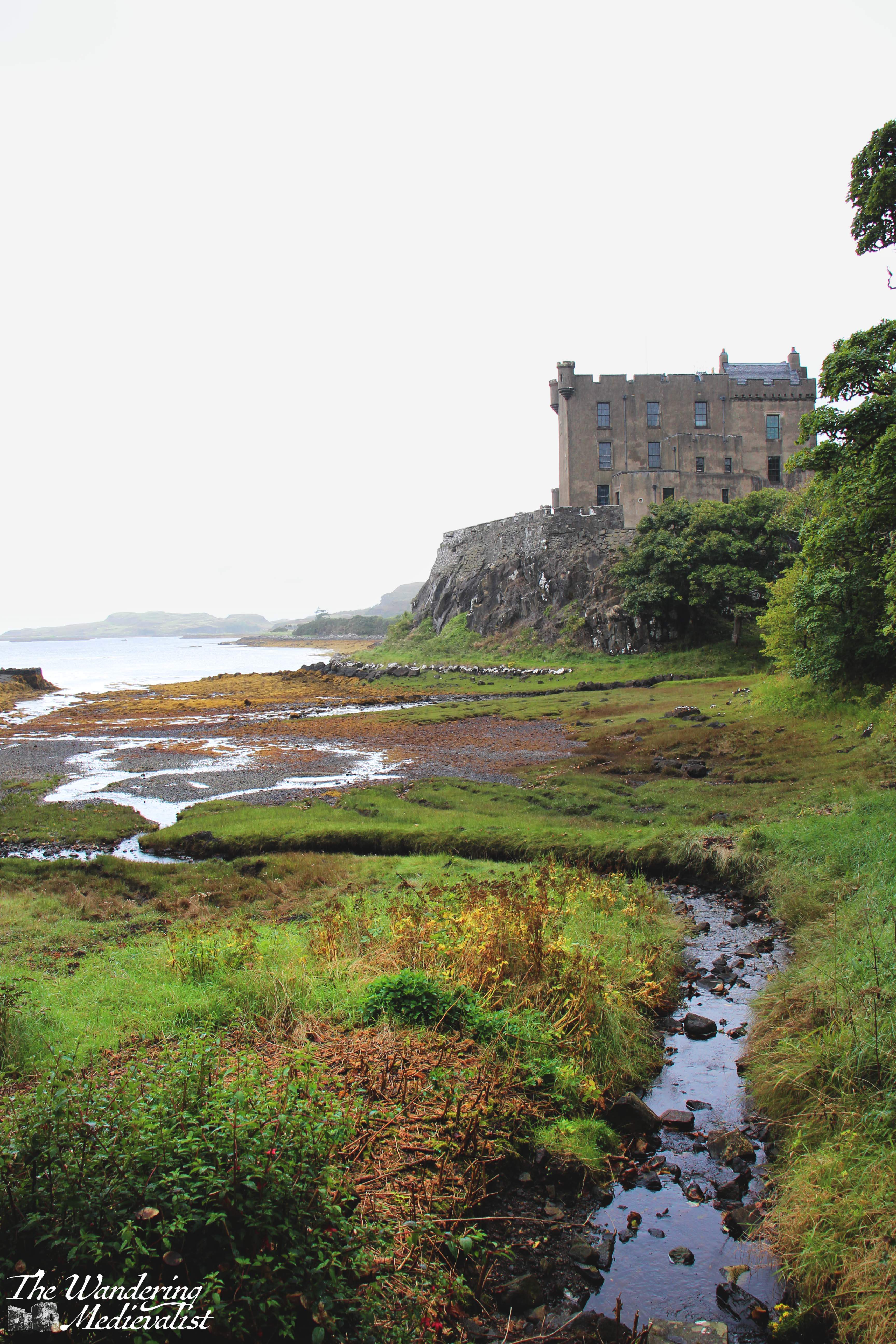
Now I have to admit, it doesn’t often happen that I am underwhelmed by a castle, but Dunvegan is on the list. It may be due to the rain – though that doesn’t usually hold me back – or the fact that I did not go inside to tour the castle proper, which does look impressive in pictures. But, the excitement I had felt preparing to see this famous spot did not quite measure up. It may also be that it has been remodelled in a mock-medieval style, or that the original stones have been coated with concrete to provide a smooth exterior (most likely I imagine for preservation). I have made my preference clear for older-style castles, even crumbling ones, to those still used as baronial residences or palaces.
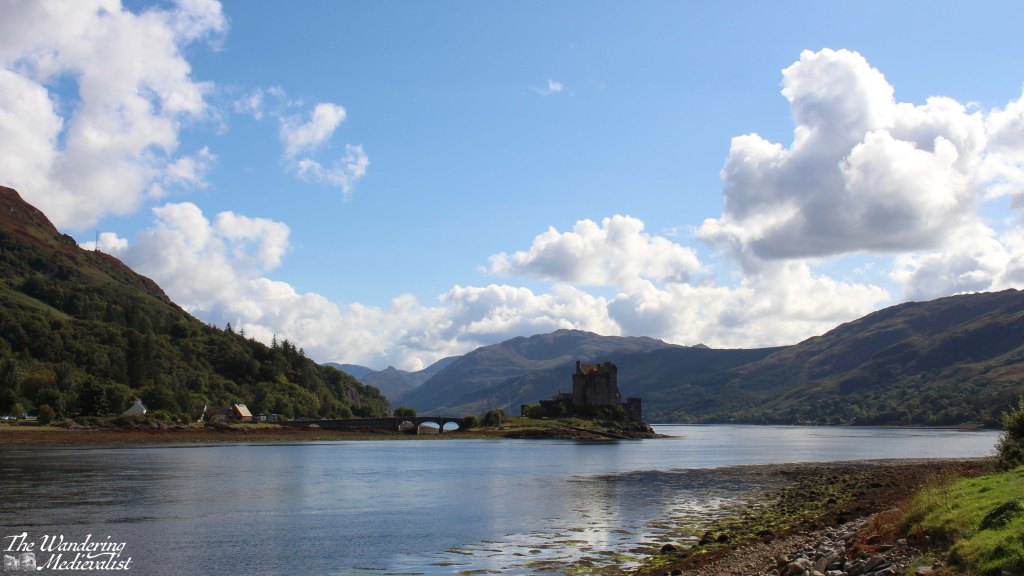
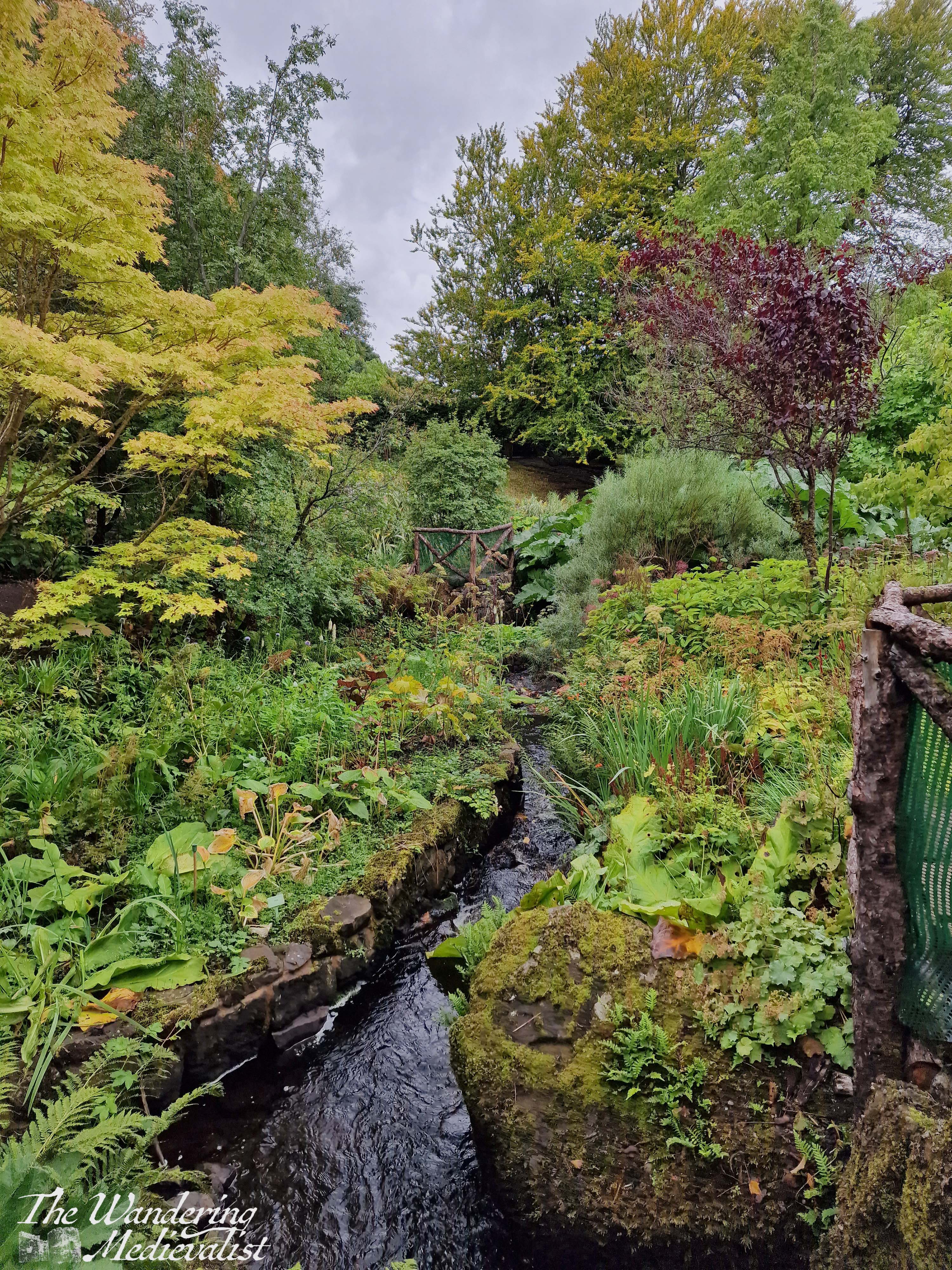
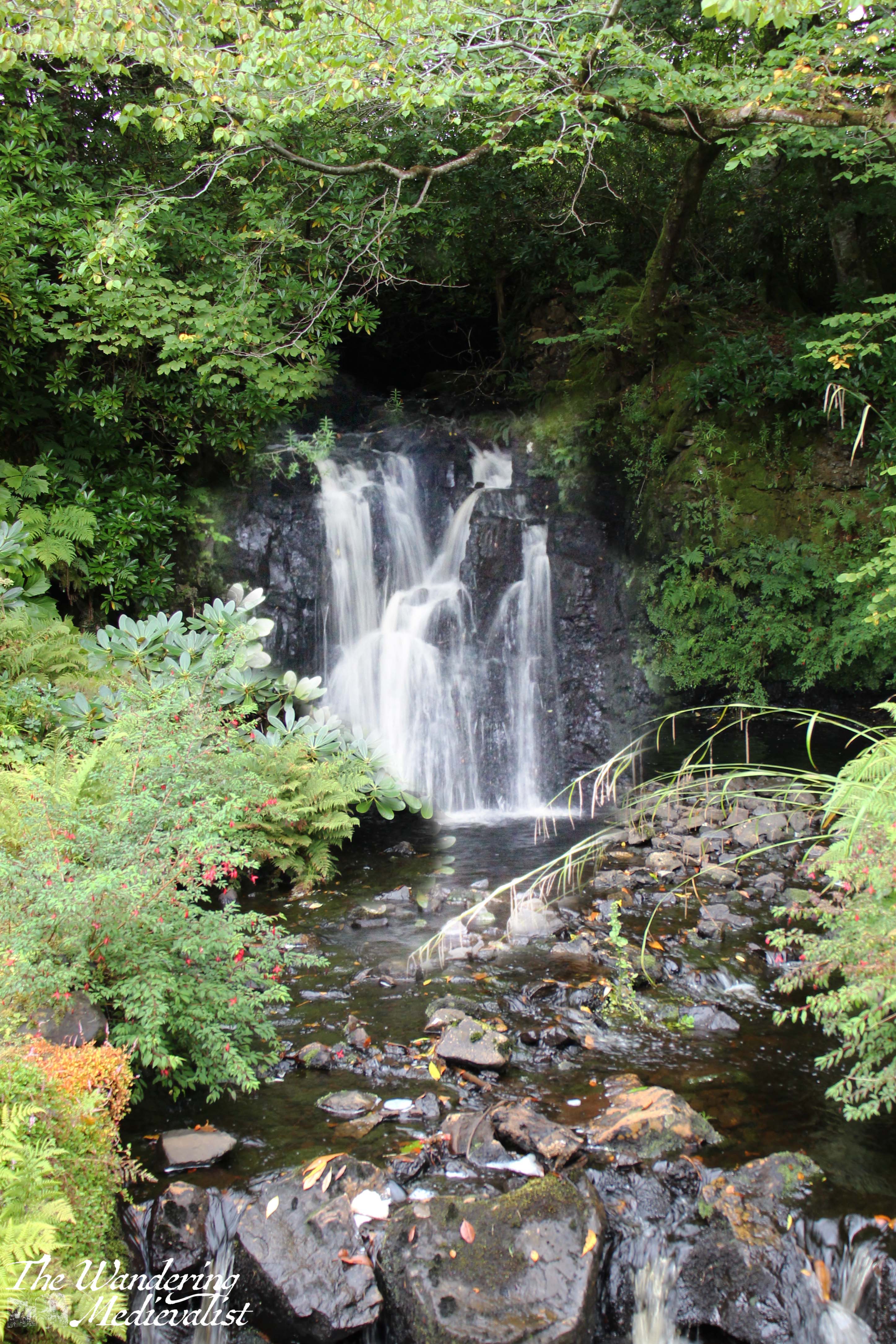
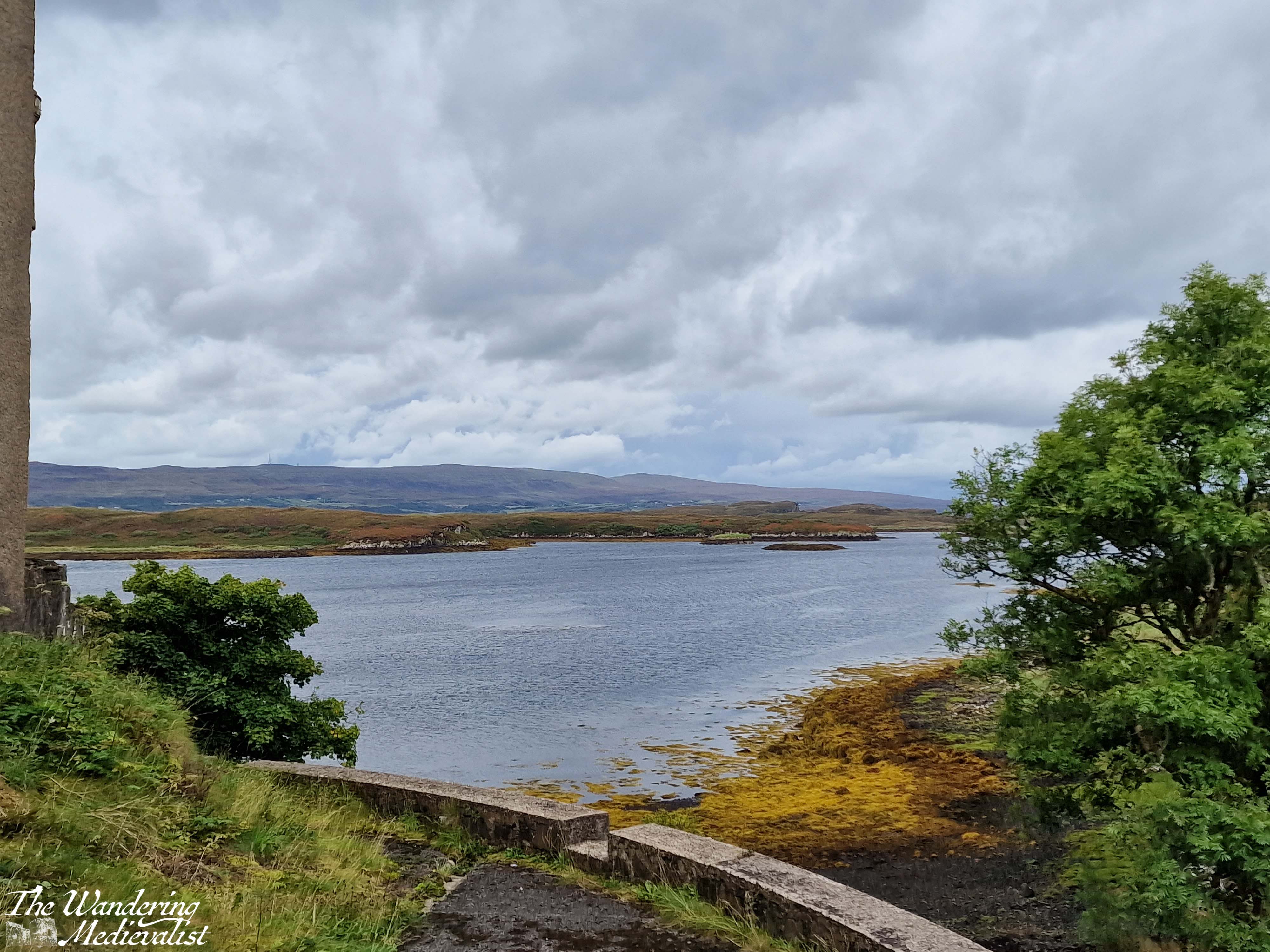
I do not mean to say that the castle is not incredibly impressive – by all means, the sight of it towering over the bay, commanding views and a romantic atmosphere even in the rain, demonstrates the significance of the location and why there was a fortress here for hundreds of years. The castle is the seat of the MacLeod of MacLeod, chief of the Clan MacLeod, and it is surrounded by a beautiful garden with water features, a walled formal garden, and more natural forest spaces. On the day we visited, the gardens were more our style and were the focus of our time. Even in the rain and after the height of the summer blooms, it was very easy to see how stunning the place would be on a sunny day in the right season. One amusing story here is that I had declined to bring my tripod with me due to the poor weather, but as I was resting my camera on a railing to keep it steady, a kind German man offered me use of his so that I could properly capture the waterfall. I think I did ok with out it, though!
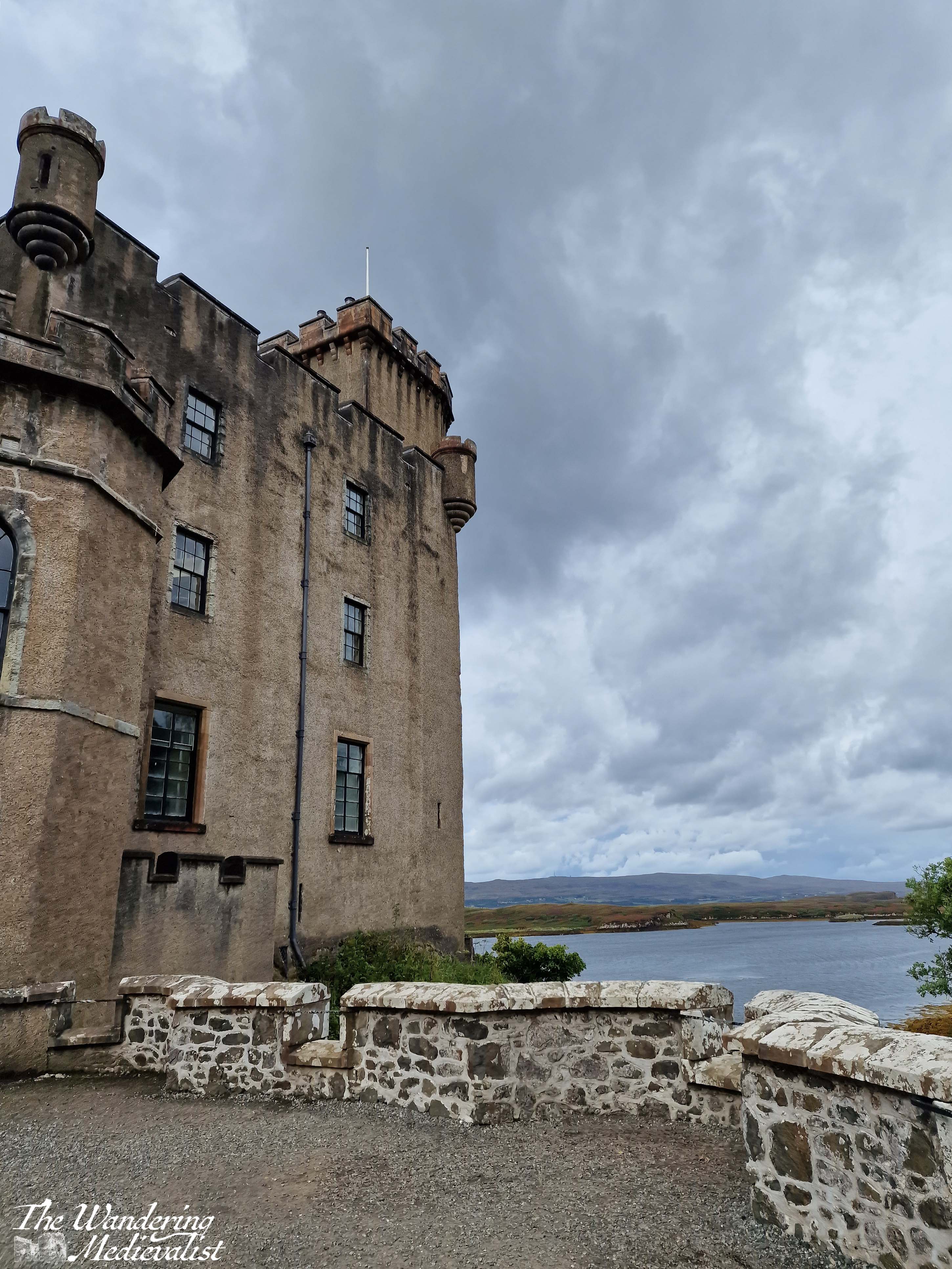
We made a circuit that ended with the walled garden and greenhouse, then ventured down towards the pier where they were advertising seal cruises. It is hard to imagine the cruise could beat the one we went on in Fort William, and even if we had been tempted, this is when the rain hit in honest, turning from a gentle pitter-patter to a downpour. I managed to get my brolly up in time to take a few pictures of the castle from the water side before we made our way swiftly back towards the car. From this angle it is even more evident why the spot would be chosen – more than 50 feet above the low tide, the castle would be incredibly difficult to attack from the sea.
One of the most striking aspects of Dunvegan really falls in its ownership, which is still held by the Chief of Clan MacLeod. This family line can be traced back to the thirteenth century, when Skye and many outer islands were still ruled by the Norse; Norse influence on Skye is evident in many place names. Despite living in Scotland and professing a love of Medieval history, I have never delved too deeply into the lore of Highland Clans, but more visits to castles like this one would be a good way to pique my interest. Certainly, if I were to visit again, I would hope to do so at a time of year when the flowers were properly in bloom and with someone who might have the patience to tour the castle itself.
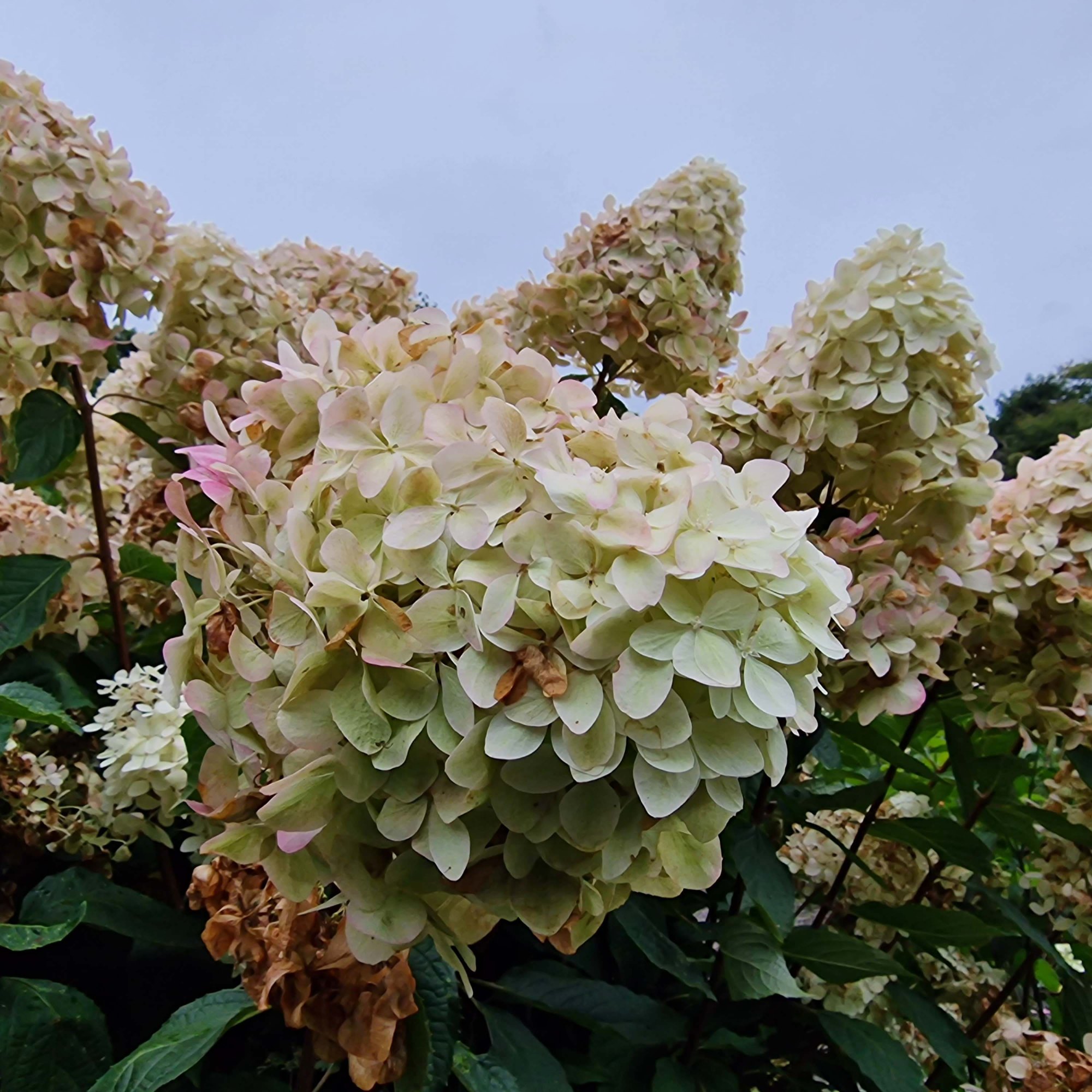
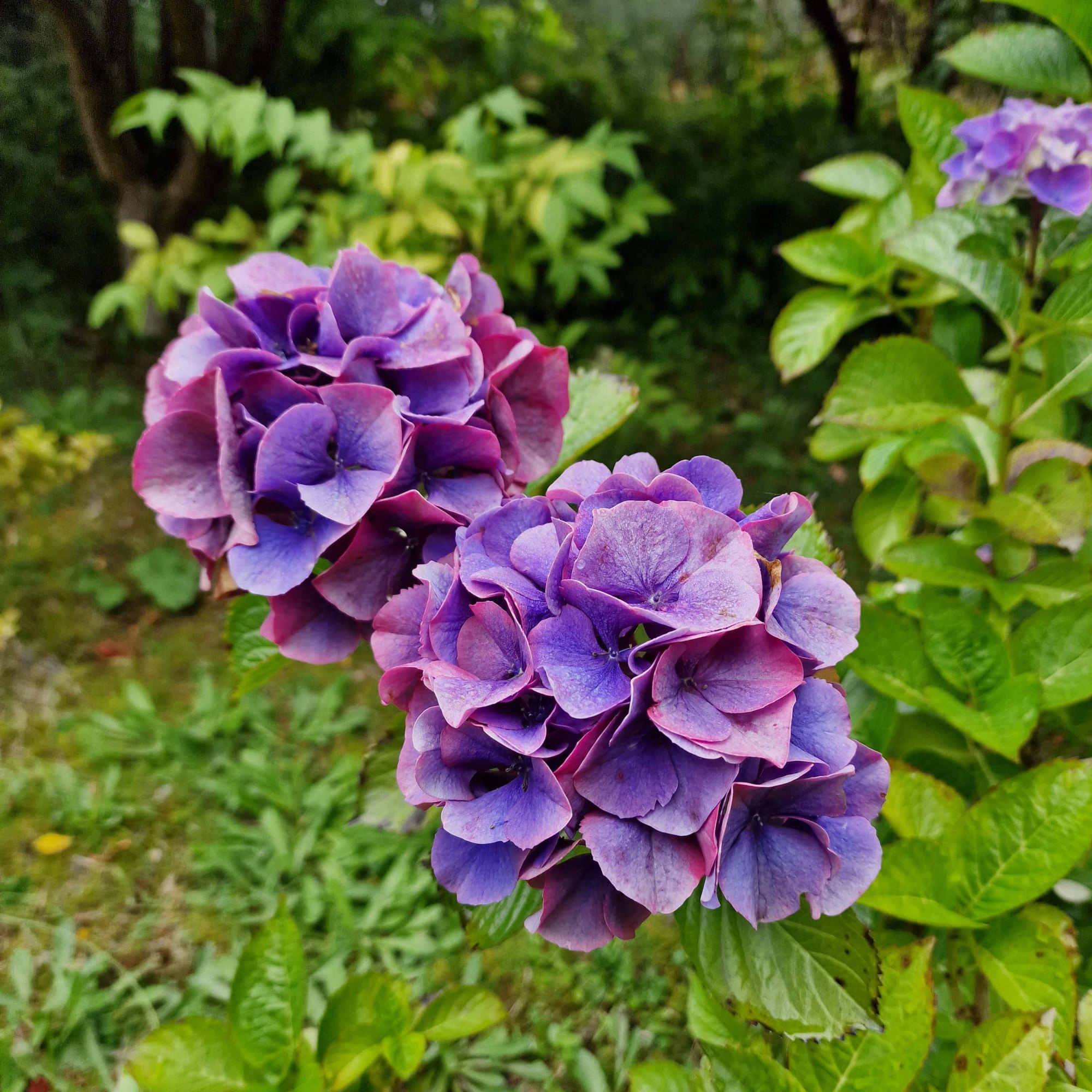
As an end note, here are some of the lovely variants of hydrangea blooming throughout the gardens:
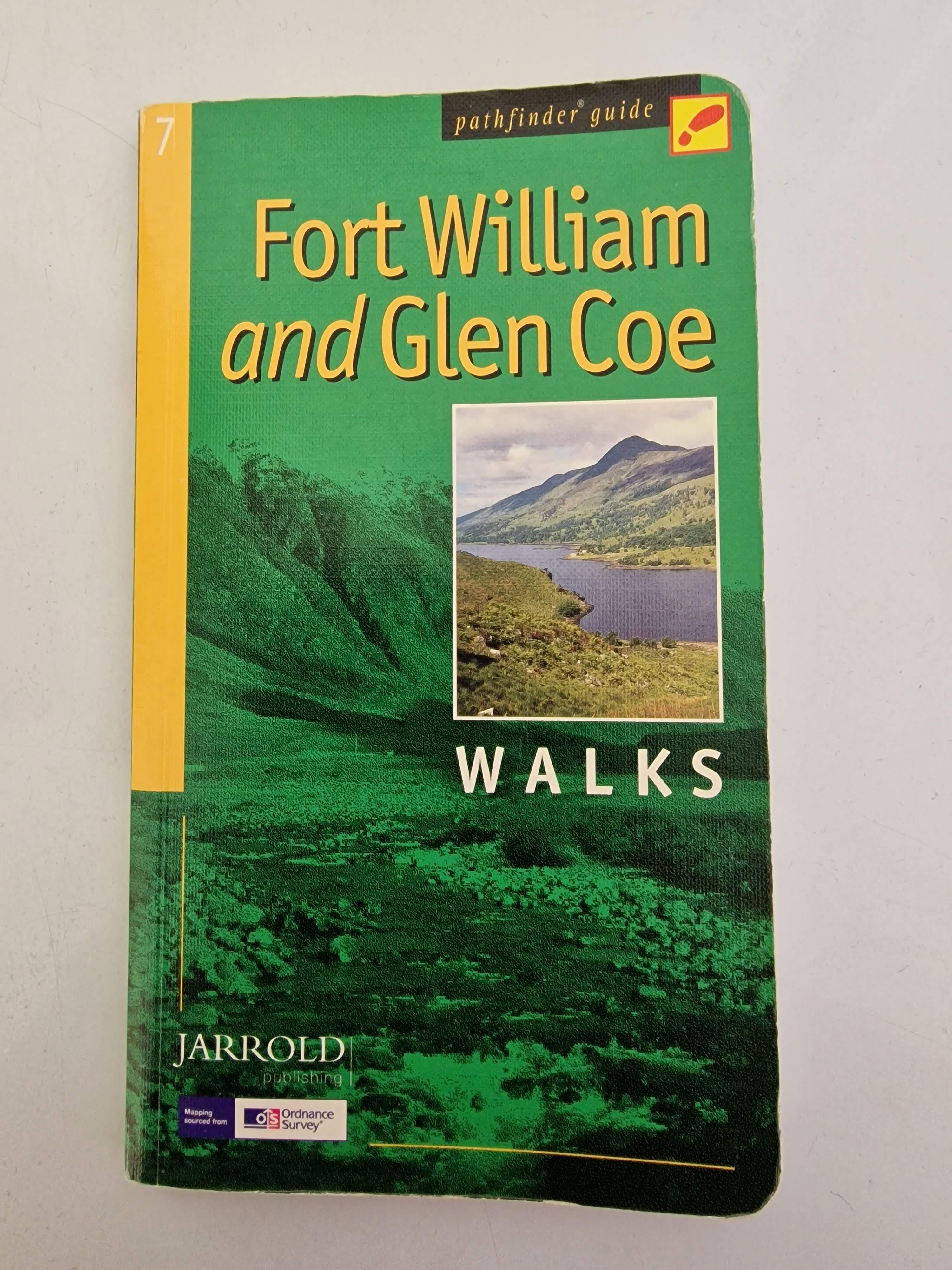
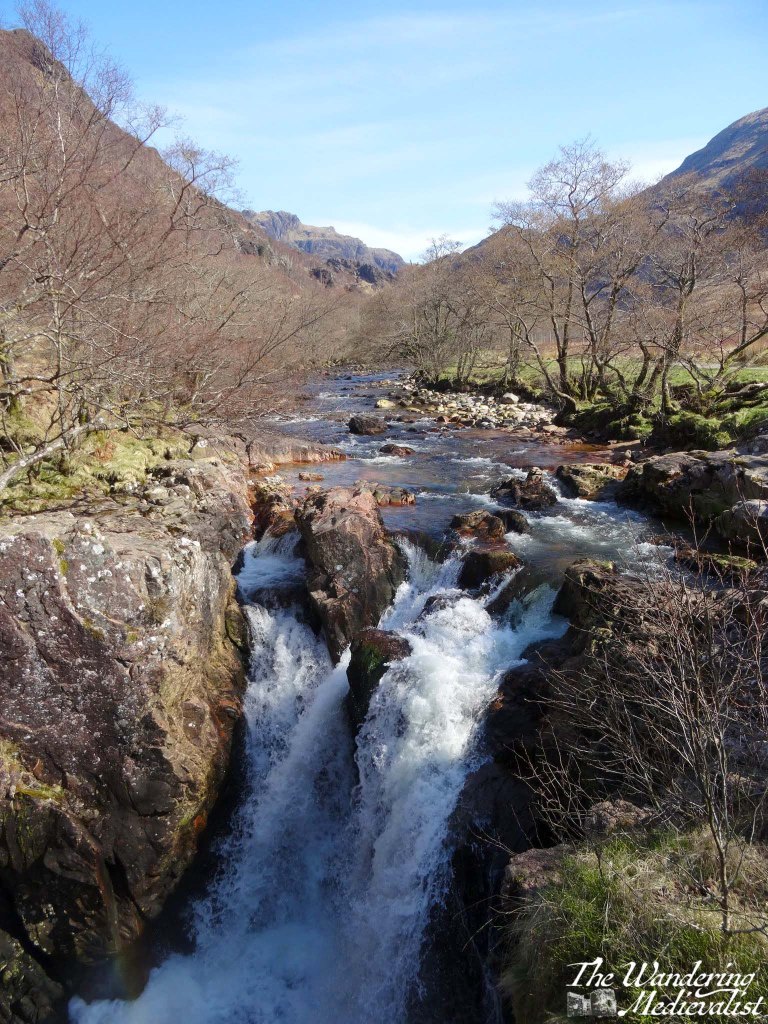
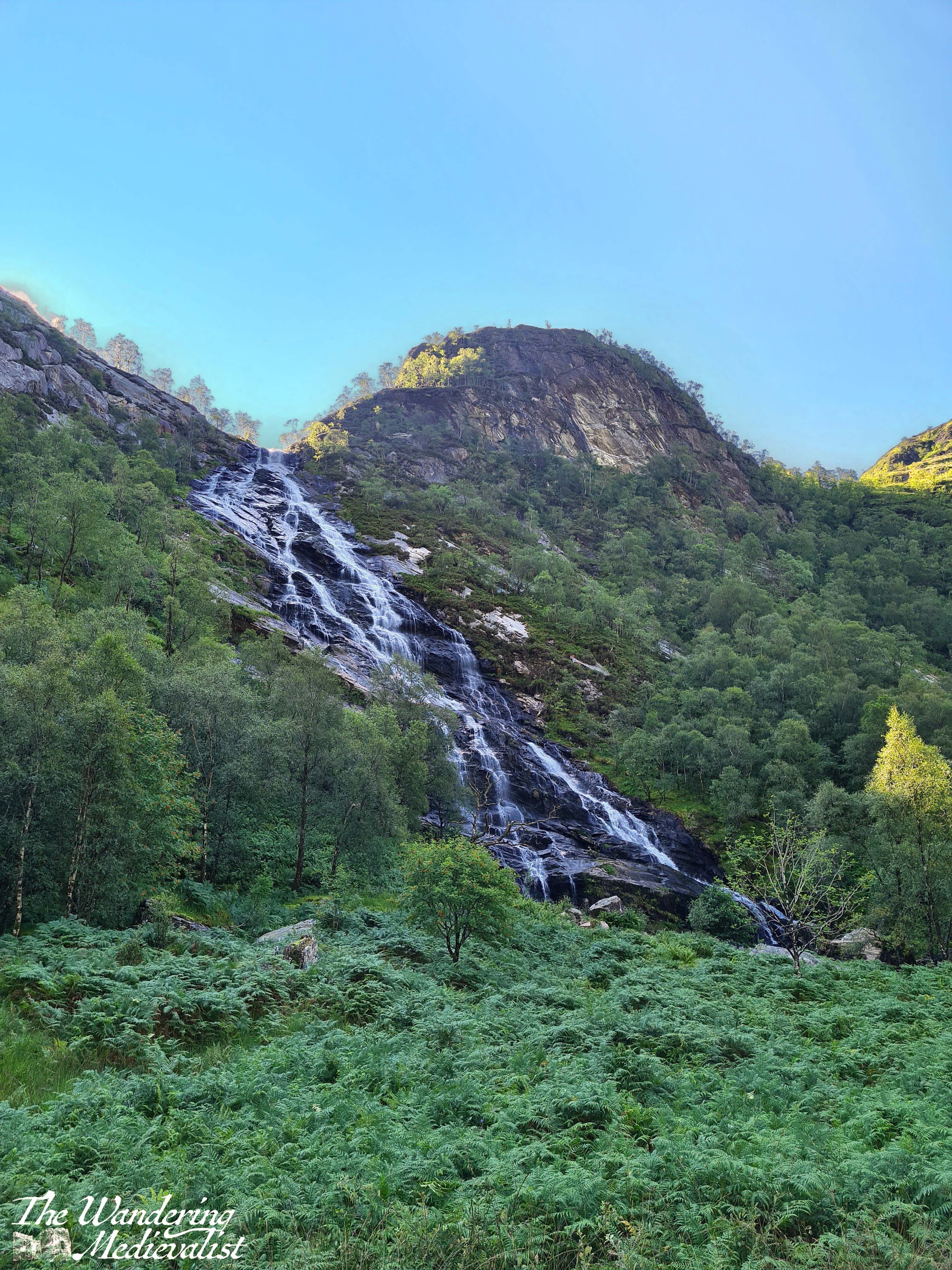
I first came upon this walk while perusing my well-used Pathfinder guide to Fort William and Glen Coe, and was immediately sold by the phrase, ‘one of the country’s most scenic waterfalls’. While the book also describes the path as ‘short and easy’, we soon discovered that while the waterfall description was accurate – and this walk remains one of the most stunning I have taken in the Highlands – the ‘easy’ part was less so.
While not particularly long in the first instance, the path does take one up and down some steep sections that are rocky and not suitable for anyone without a touch of fitness. Once through the gorge, the path is comparatively easy and comfortable. But, I am forever reminded of the August 2021 occasion on which I saw numerous walkers, drawn by the promise of a waterfall, attempting the hike in flipflops, some even with crutches and canes. Unfortunately, I imagine most of them were not able to continue to the best viewpoints.
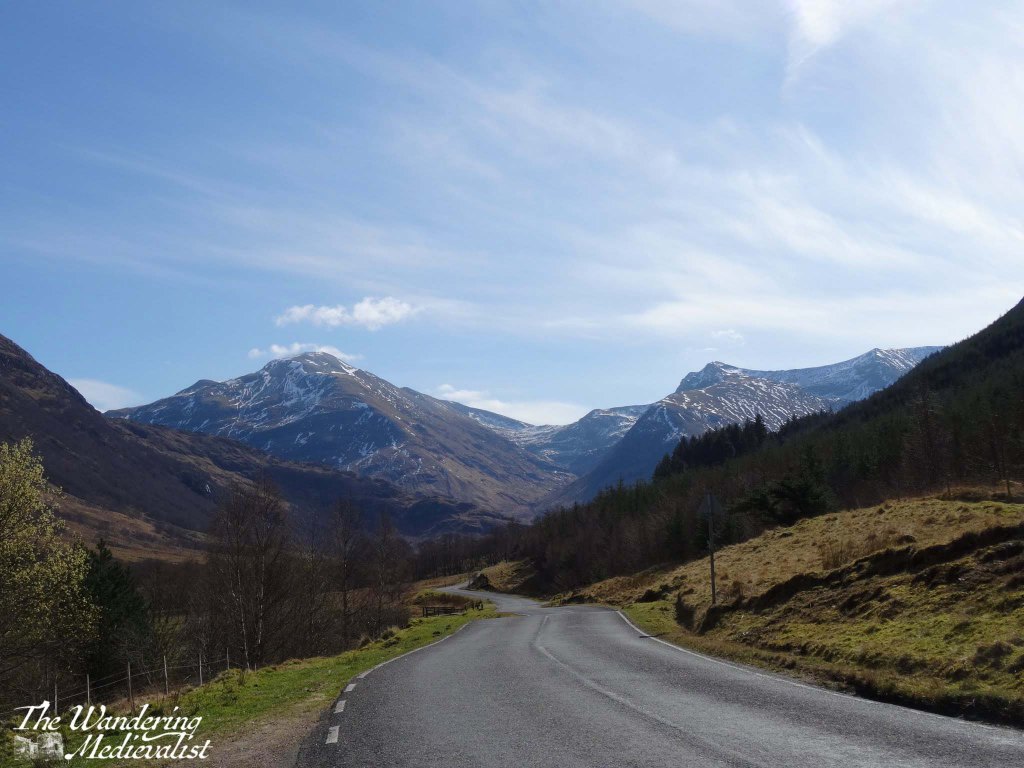
But I get ahead of myself. Our first challenge, as is often the case in more obscure walks, was to find the car park mentioned in the book. Starting in Fort William, one follows the signs for Glen Nevis and indeed for Ben Nevis itself, as the drive takes you past the most common starting point for hikers attempting the highest peak in the UK. Glen Nevis itself is stunning, and it is almost impossible not to stop a few times along the way.
Gradually the road narrows and passes a number of burns and wayerfalls, and on our first trip we thought we had found the car park when we reached the Lower Falls.
After a few more moments with the map though, we determined that we still had a way to go, and indeed the start of the Nevis Gorge walk, the Upper Glen Nevis Car Park, is another 1.6 miles along the single-track road. Once there, it is clear that it is the end of travel for vehicles. There is a good-sized car park, though when we visited in 2021 it had filled up completely by mid-morning. This may have been anomalous due to the higher than normal number of visitors that summer, but I have a feeling it is quite standard.
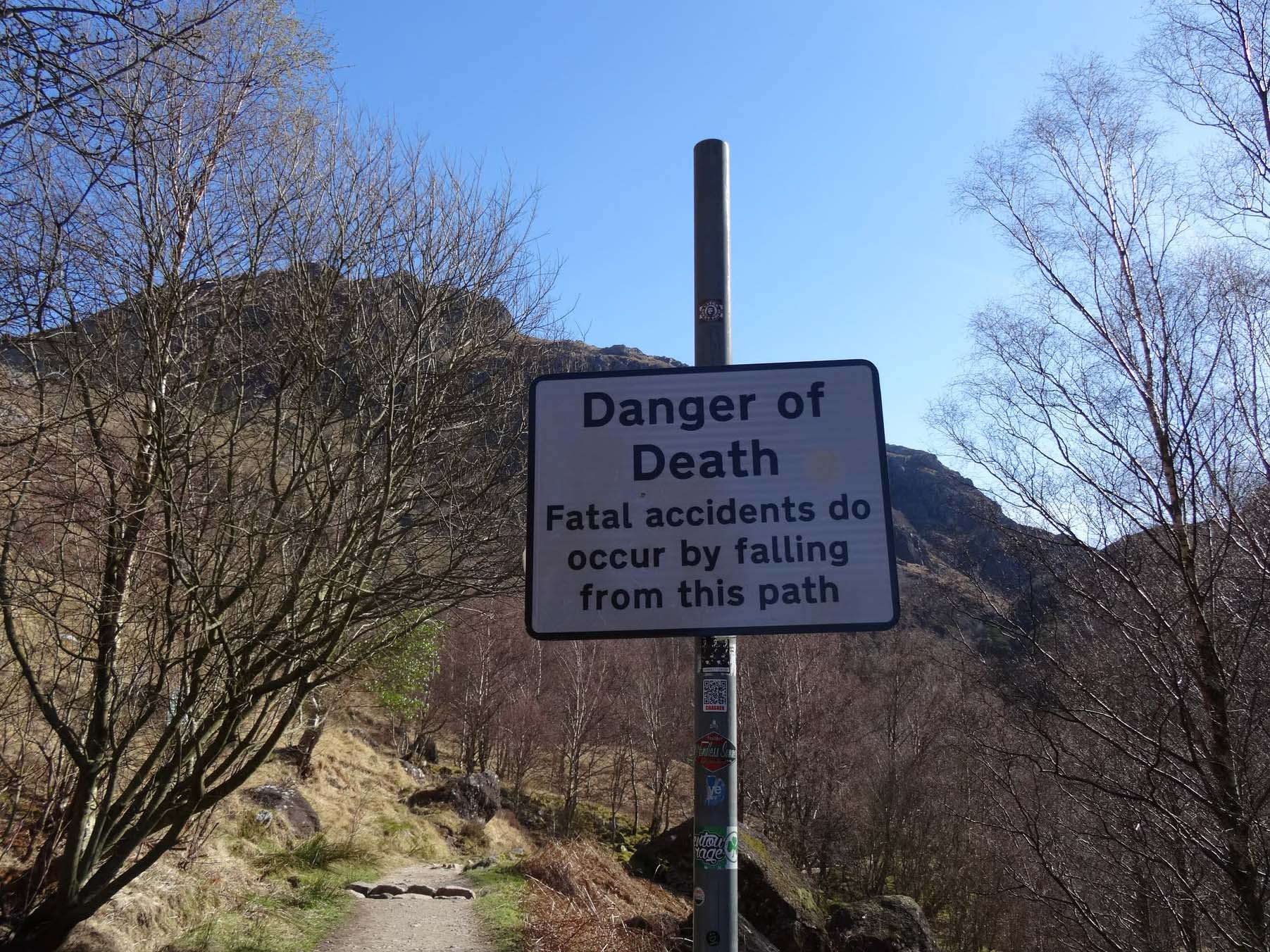
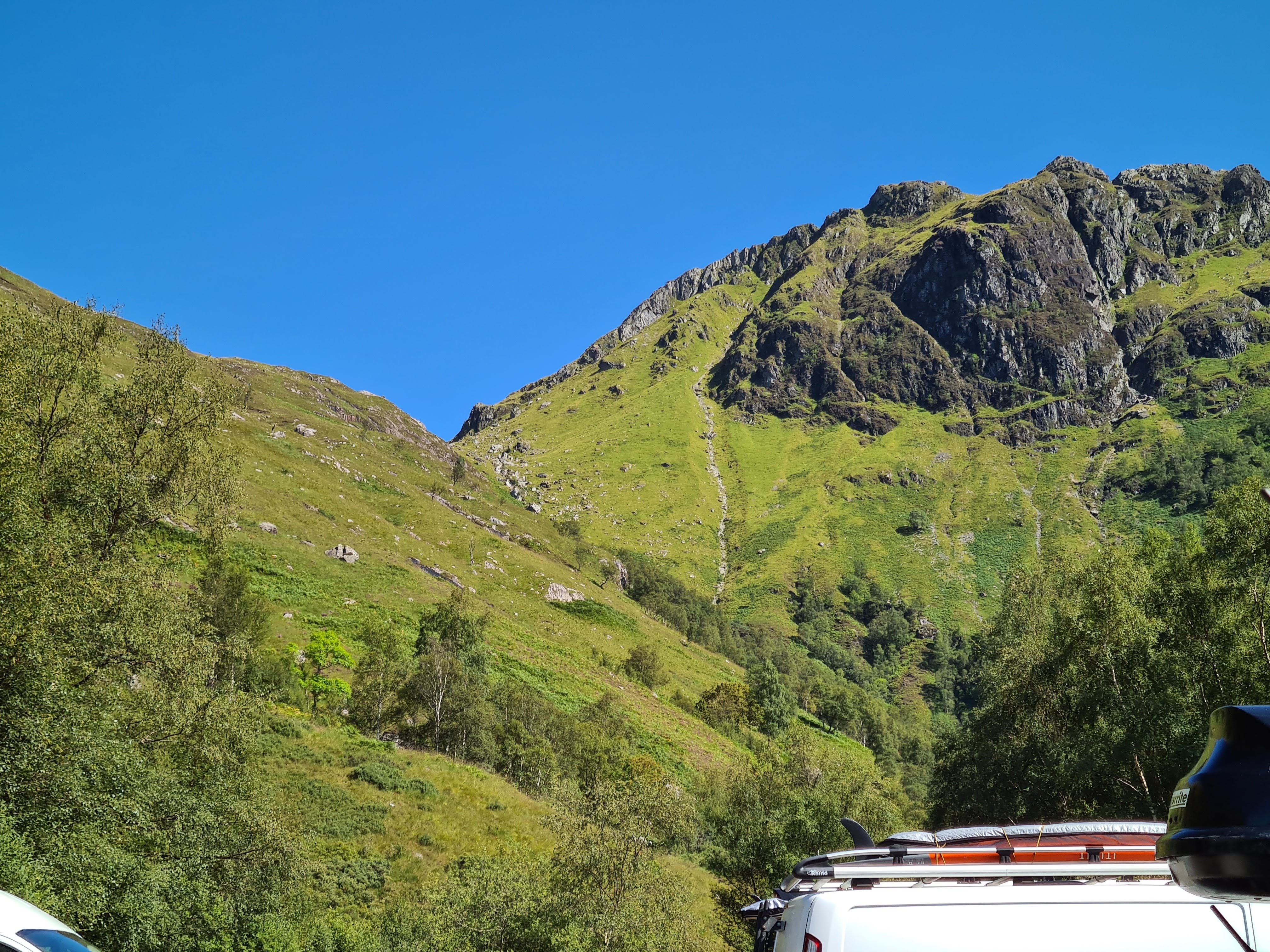
There are lovely views even from the car park, and I could not resist snapping a pic of the warning sign to send to the family – once we had returned safely of course.
While initially we paid less attention to the warning, by the time we had climbed a bit further and discovered the steeper areas of the trail, we realised how easy it would be to slip into the gorge – especially when mesmerised by the view.
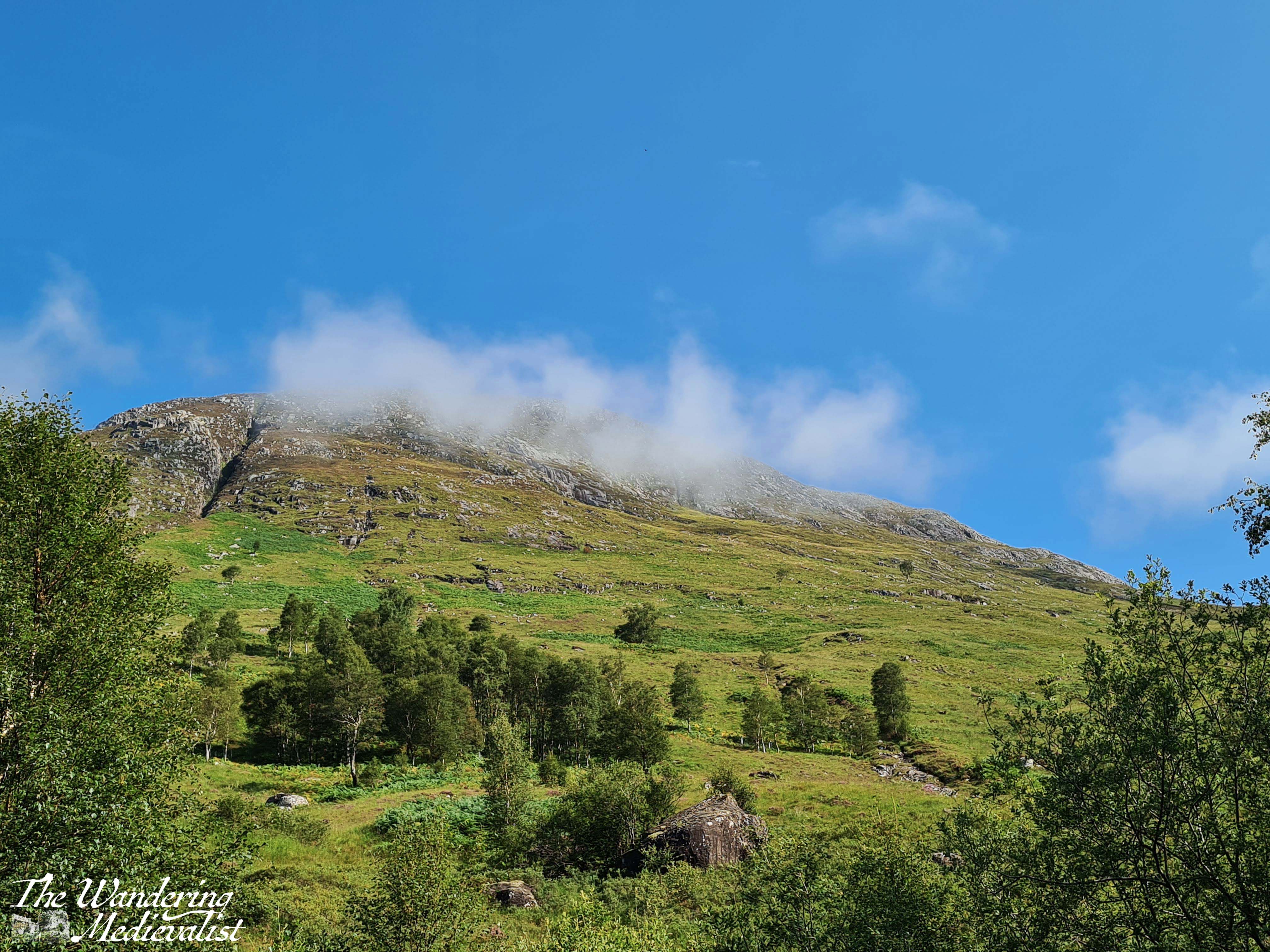
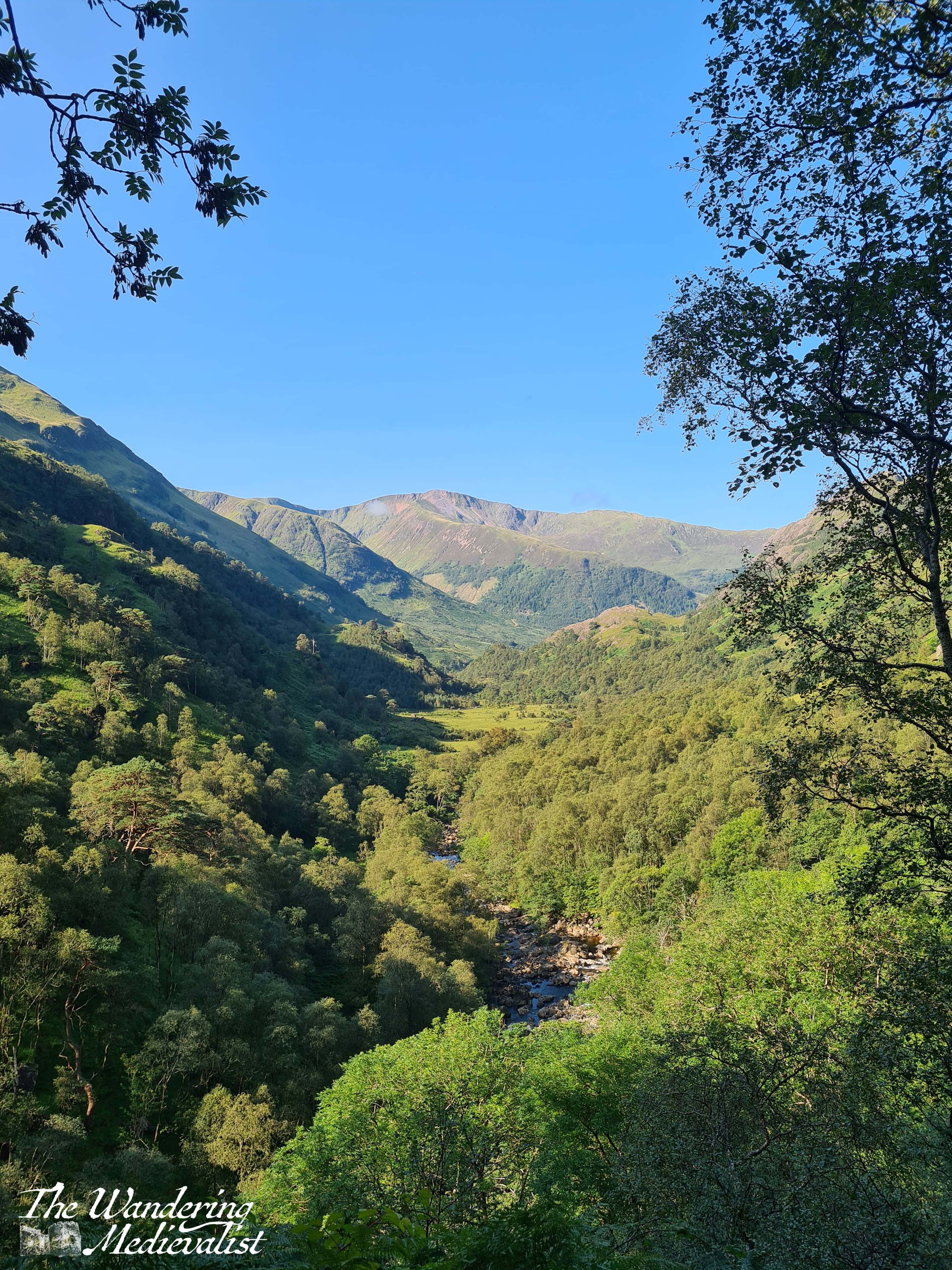
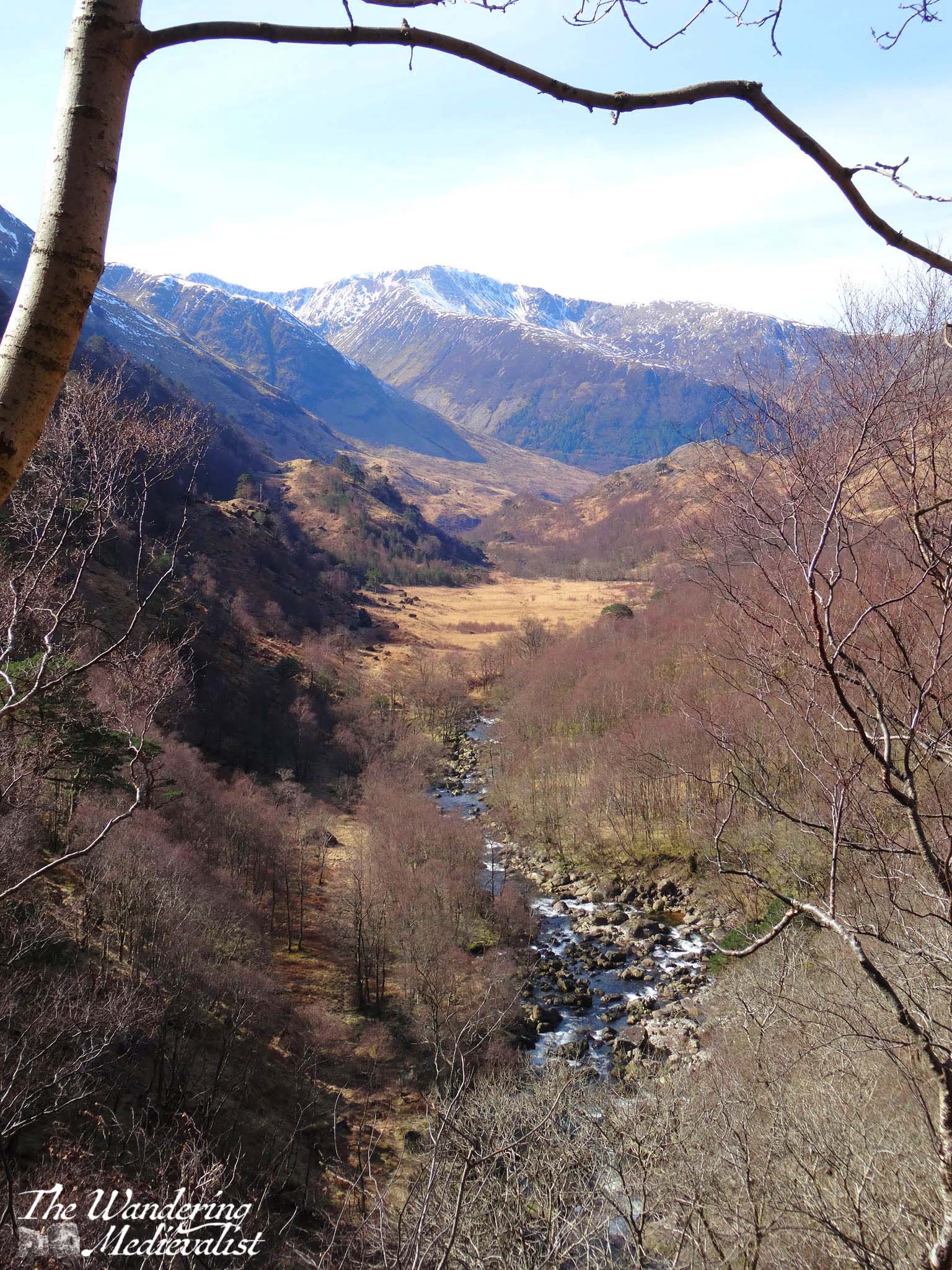
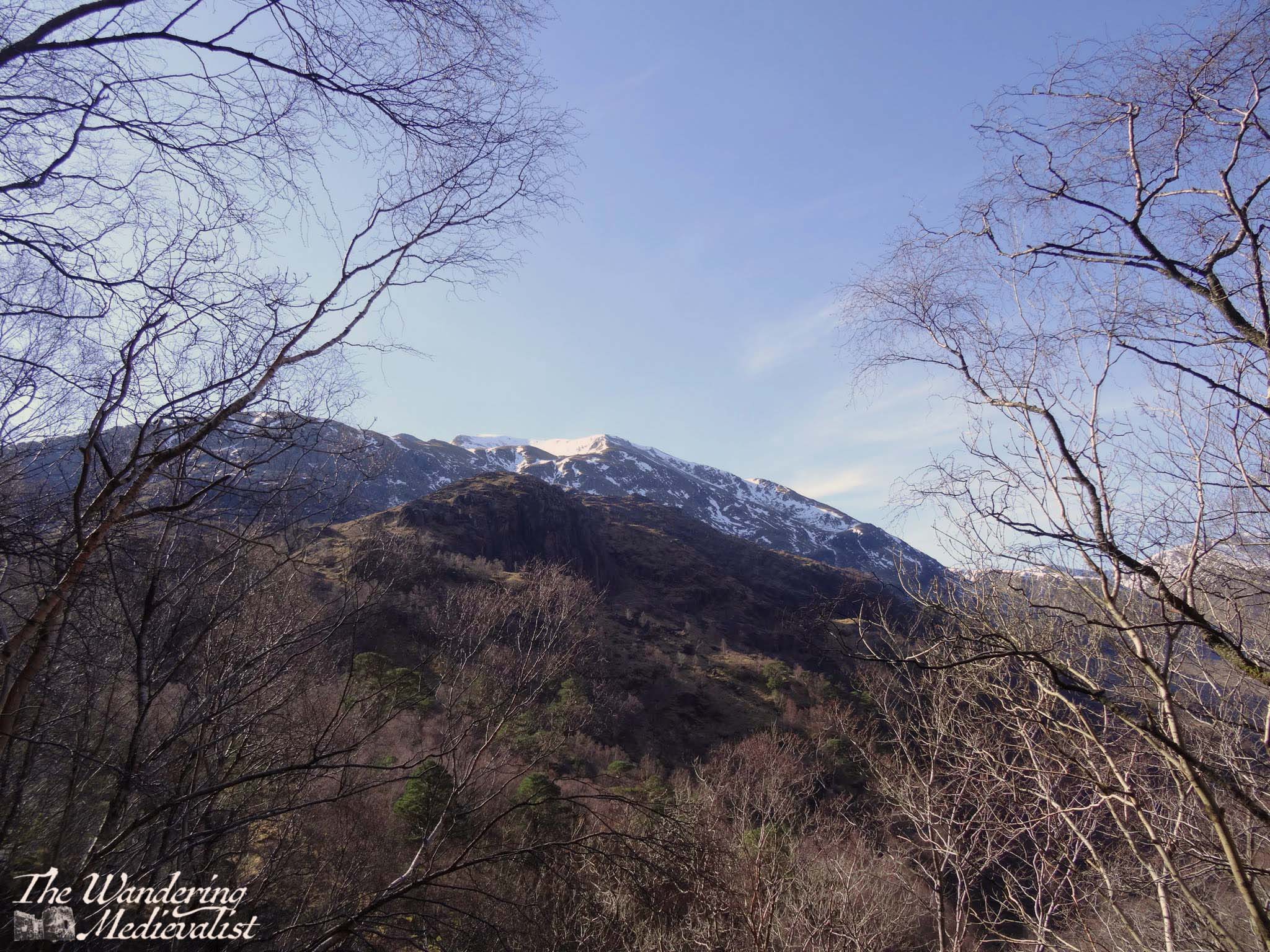
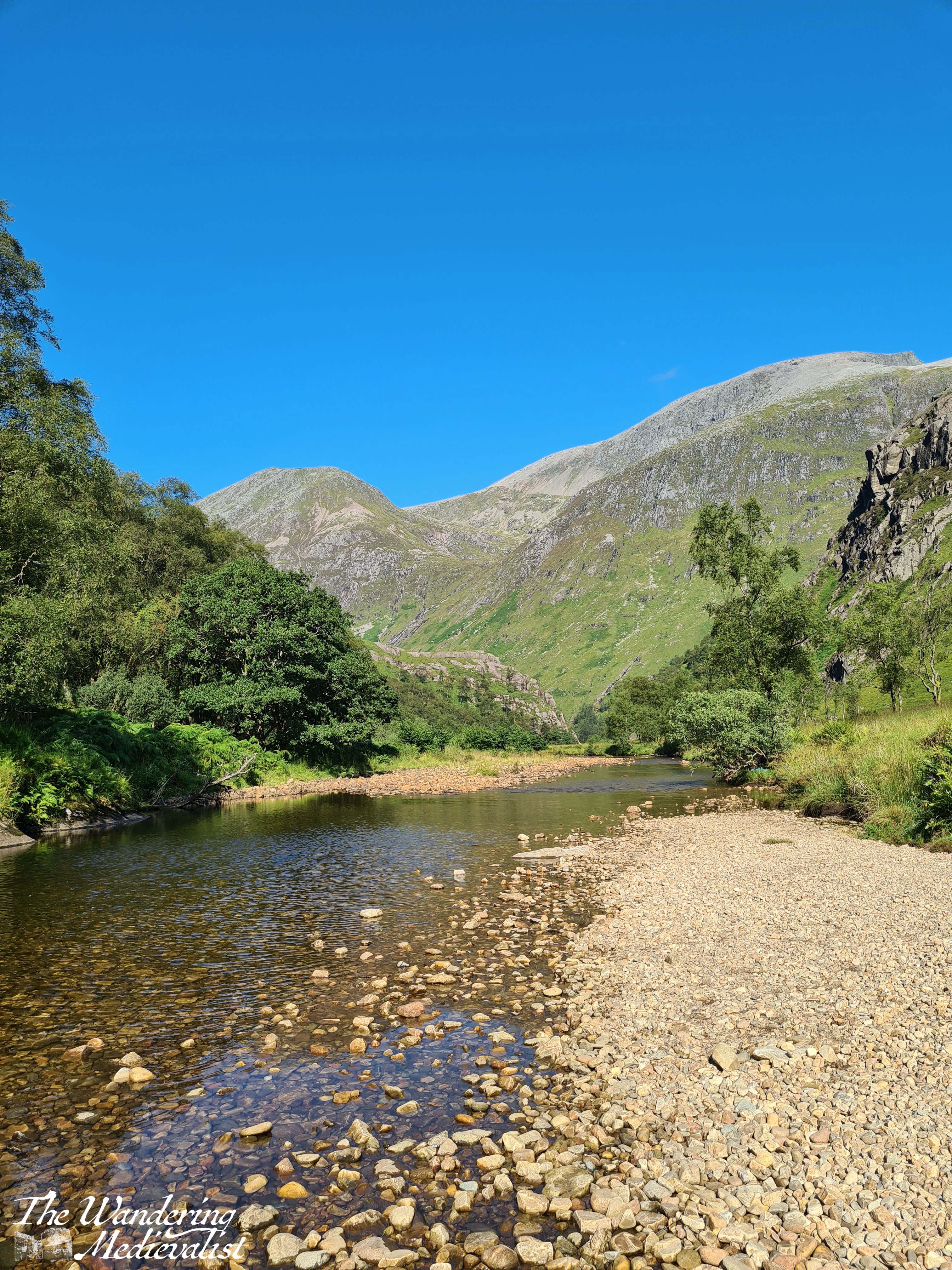
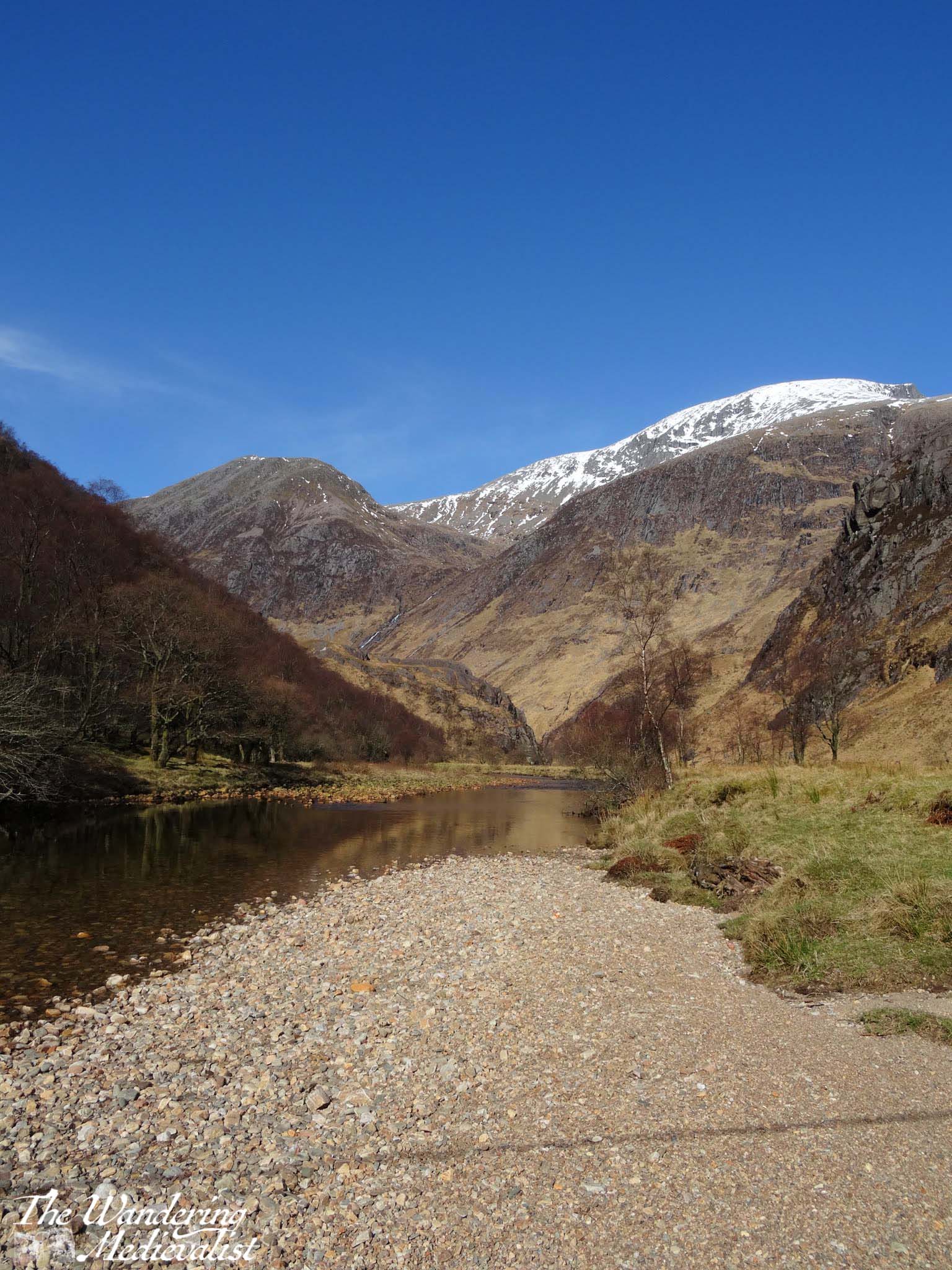
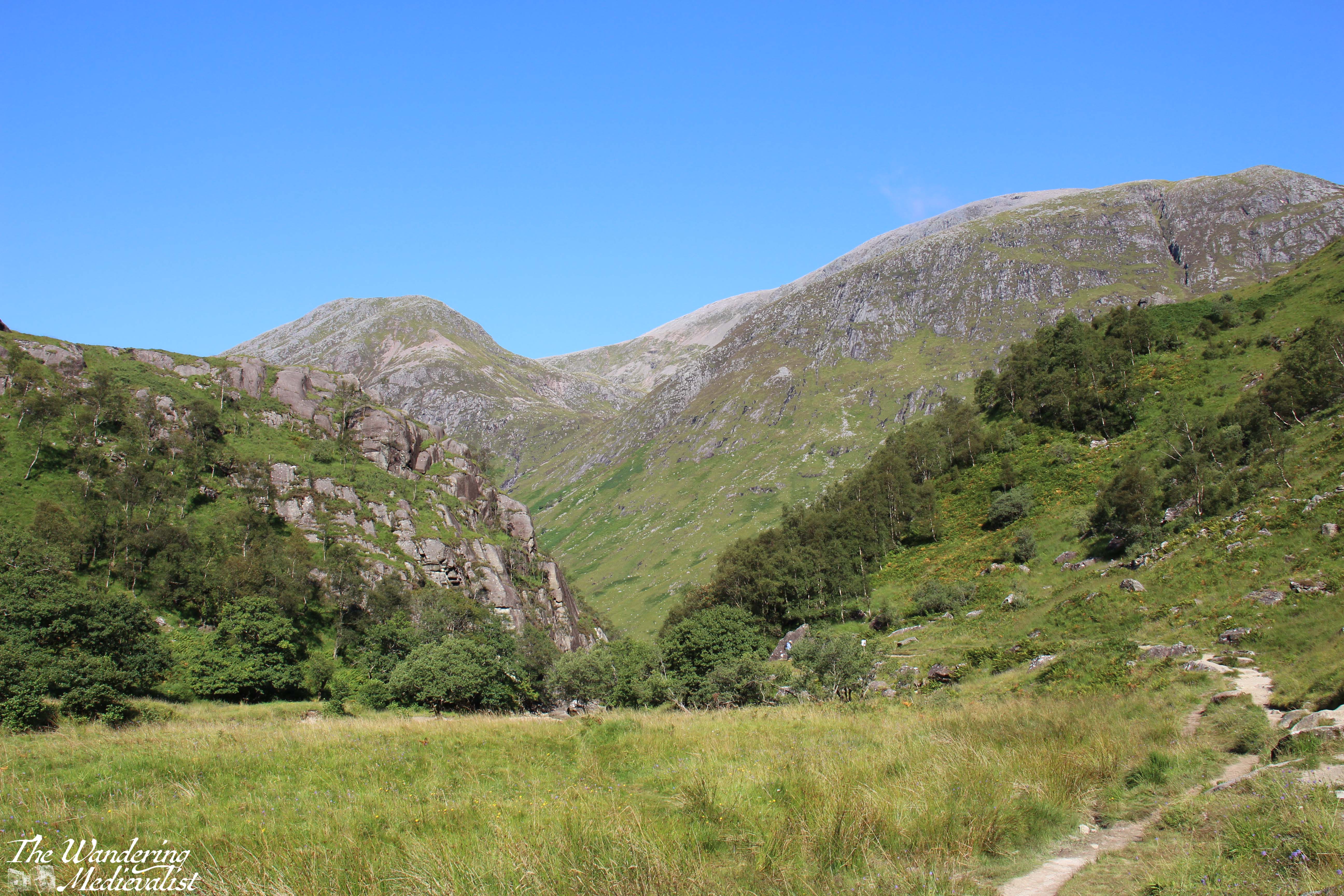
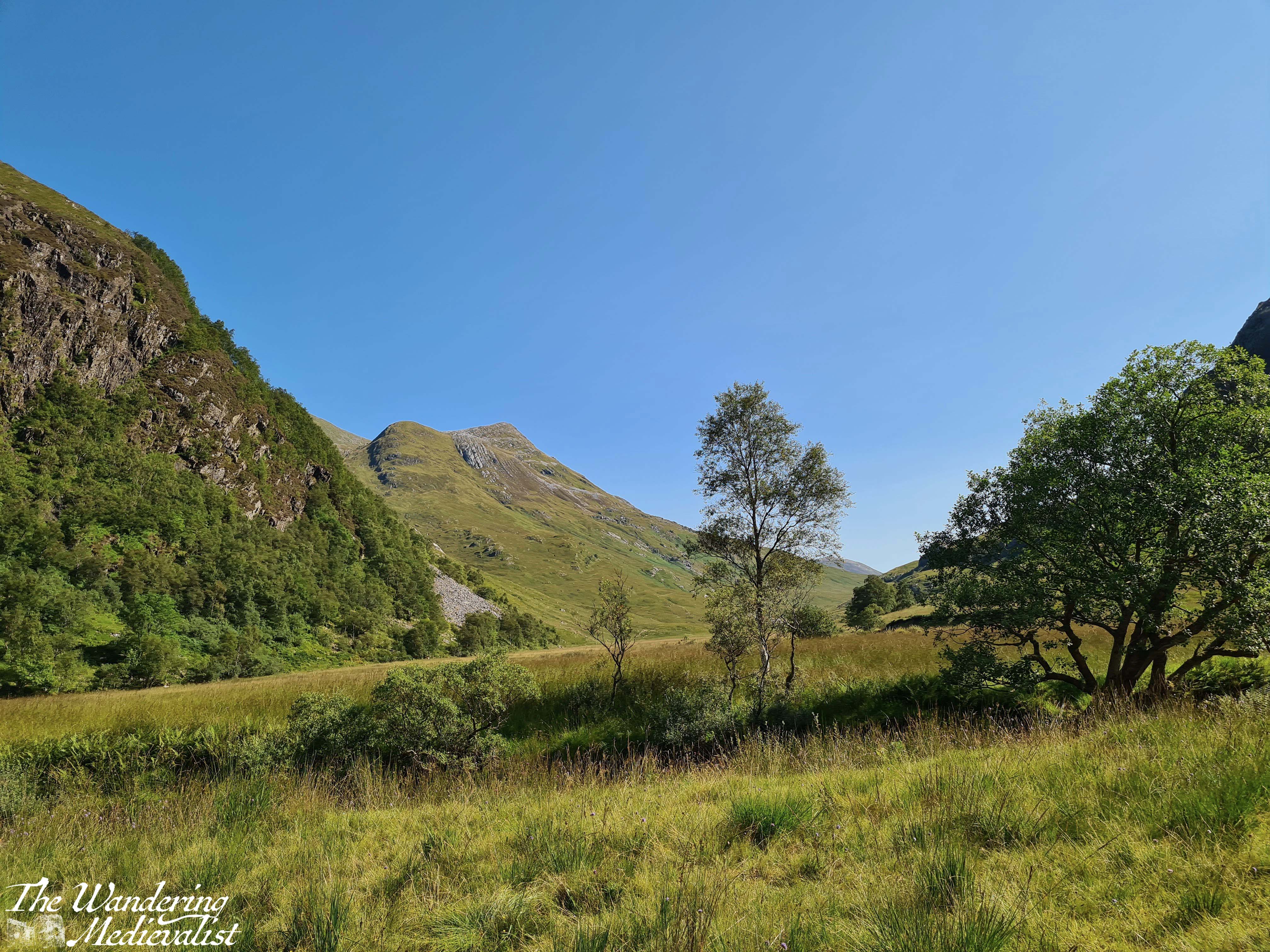
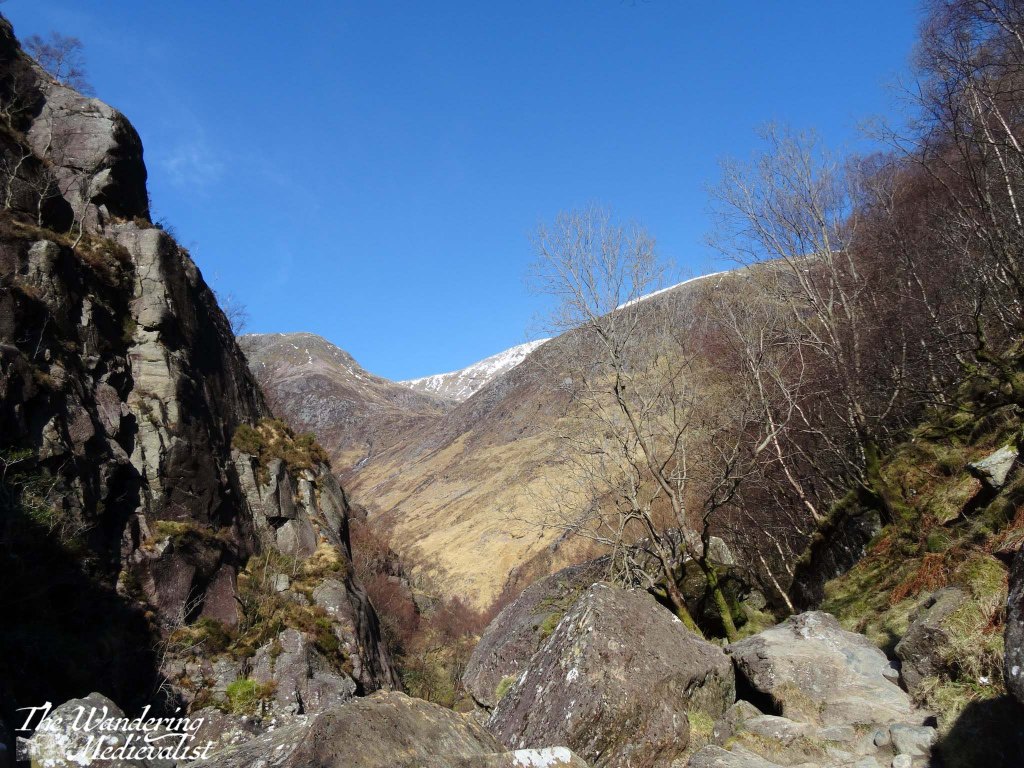
The path starts out quite innocuously through a lovely stand of birch, with some small streams and impressive glimpses through the trees up the hillside and down into the valley where you can hear – if not always see – the Water of Nevis. Before long, though, the trail runs into the side of the hill and begins to curve around to the right, at the same time that it starts to gain height. It narrows and becomes a bit more difficult to traverse, as it is clear that hikers are moving up and through the gorge. Warnings notwithstanding, it is impossible not to stop at a few points to enjoy the view over the glen – below you will see an early spring and late summer version of the view.
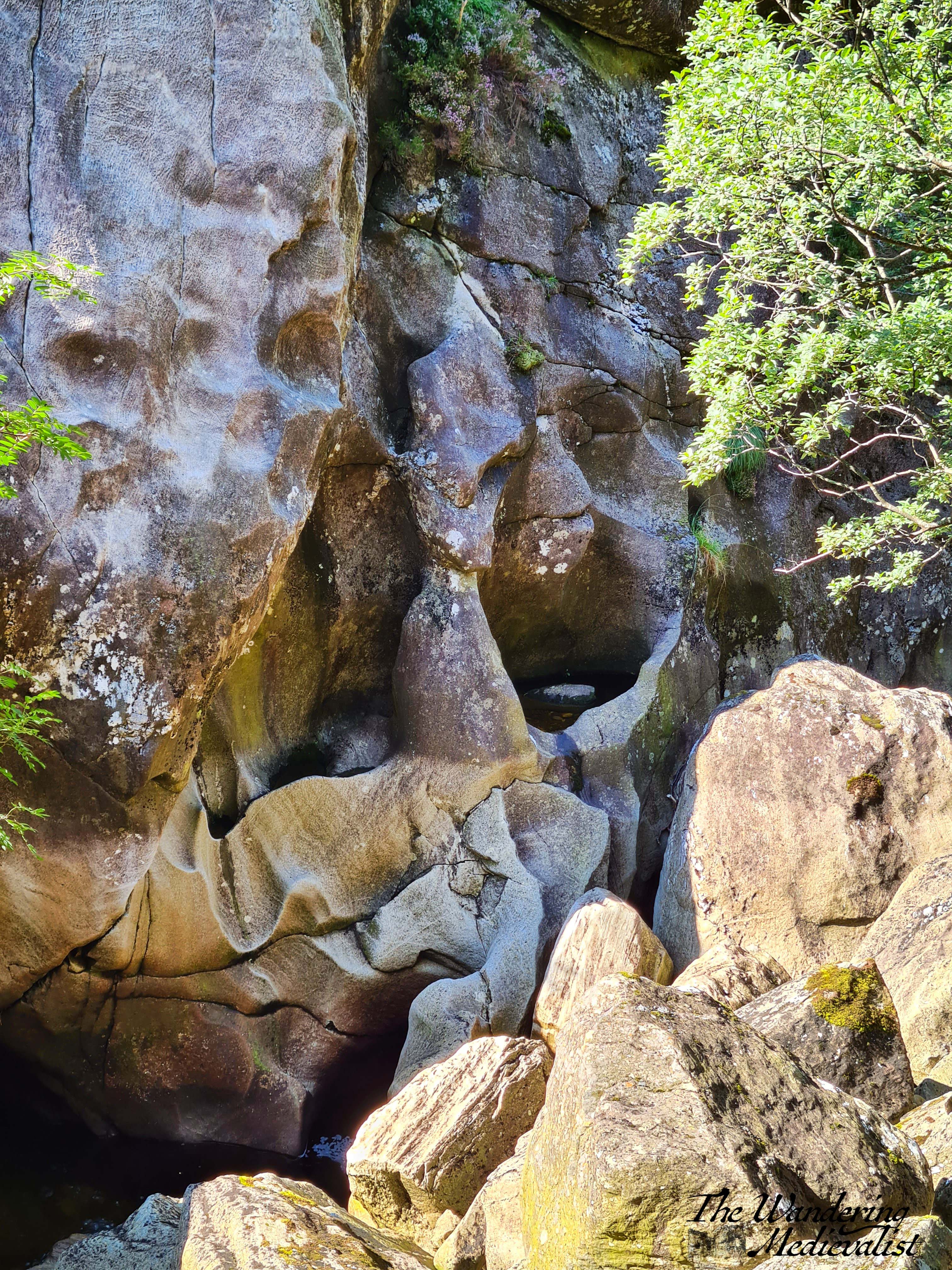
After a few sets of rocky stairs, the trail curves back around to the left and you know you are headed through the gorge. The rushing water below becomes more turbulent as it passes through the narrow gap, and while it is far enough below that you cannot often see it, the rock faces are sheer and carved by thousands of years of water.
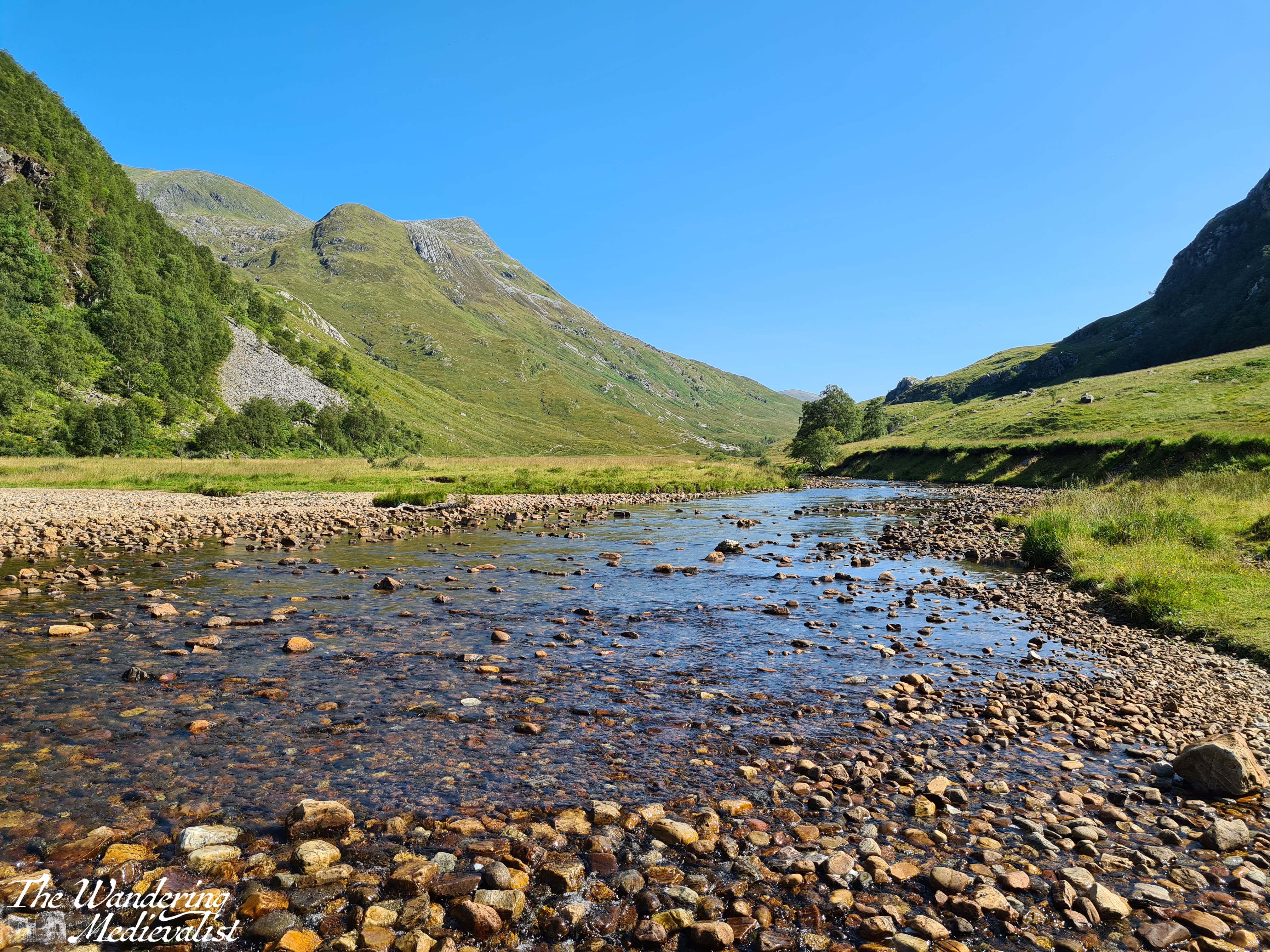
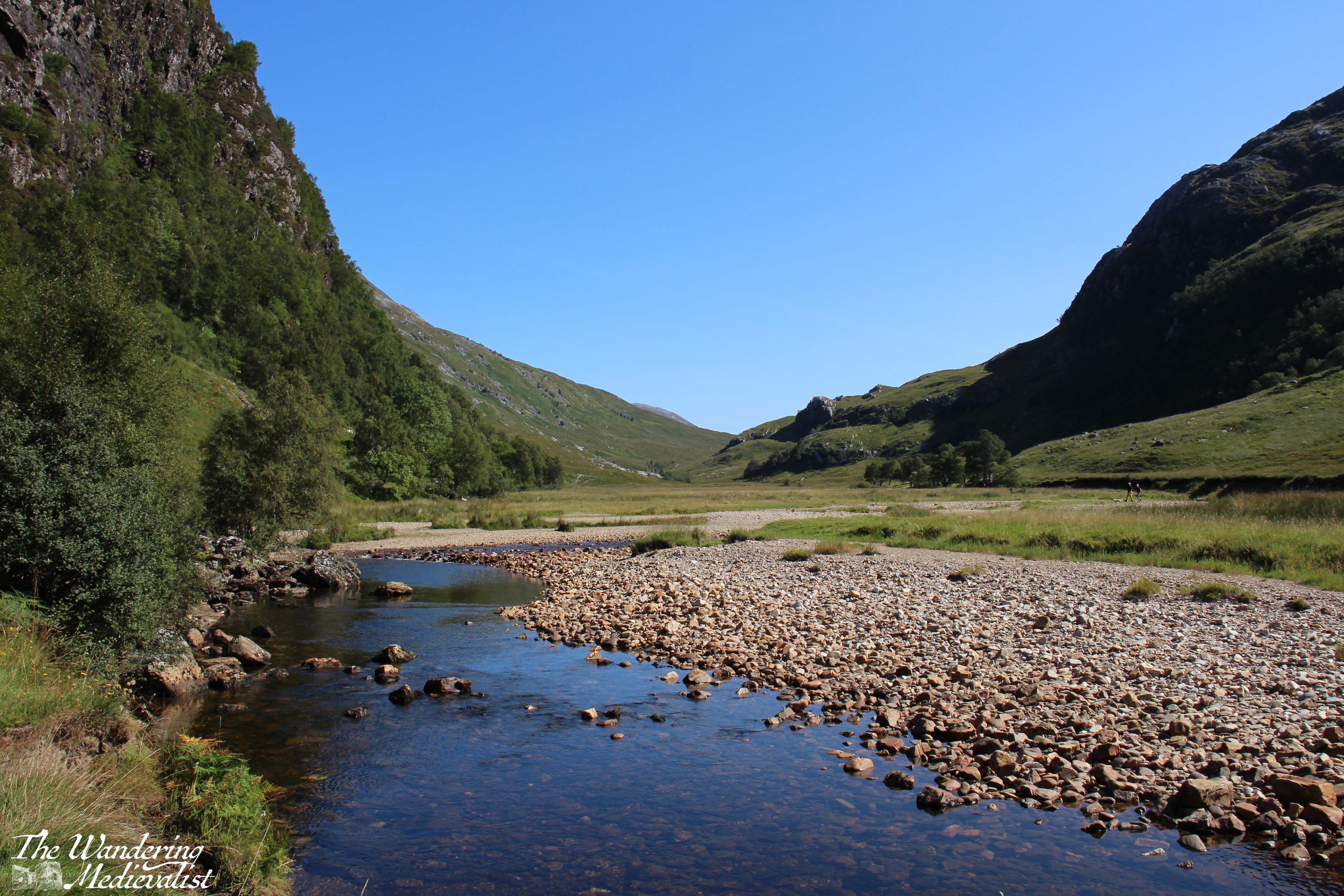
The trail eventually passes through to the other side of the gorge, and before you opens up a beautiful flat valley where the Water of Nevis cuts through the hills. Grassy flat land is dotted with stands of trees and rocks, and in the distance you can just see Steall Falls.
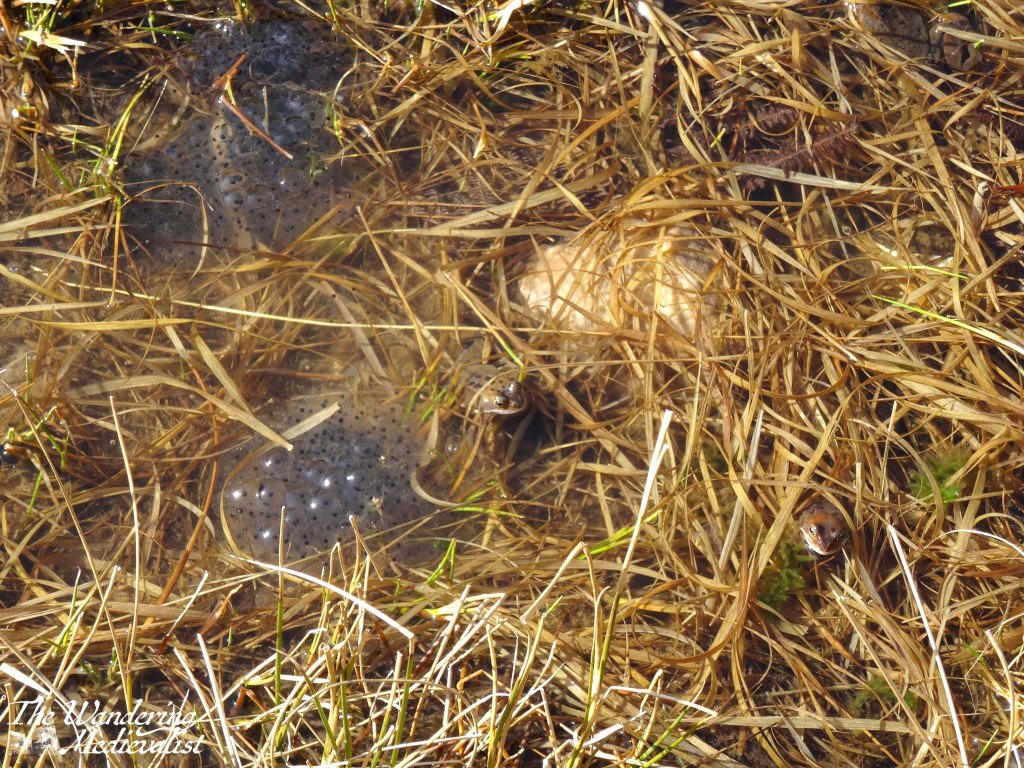
From here, the trail follows the curve of the valley, crossing some small streams and boggy ground; in March when we visited, it was absolutely full of frogs and frogspawn, glistening in the sun.
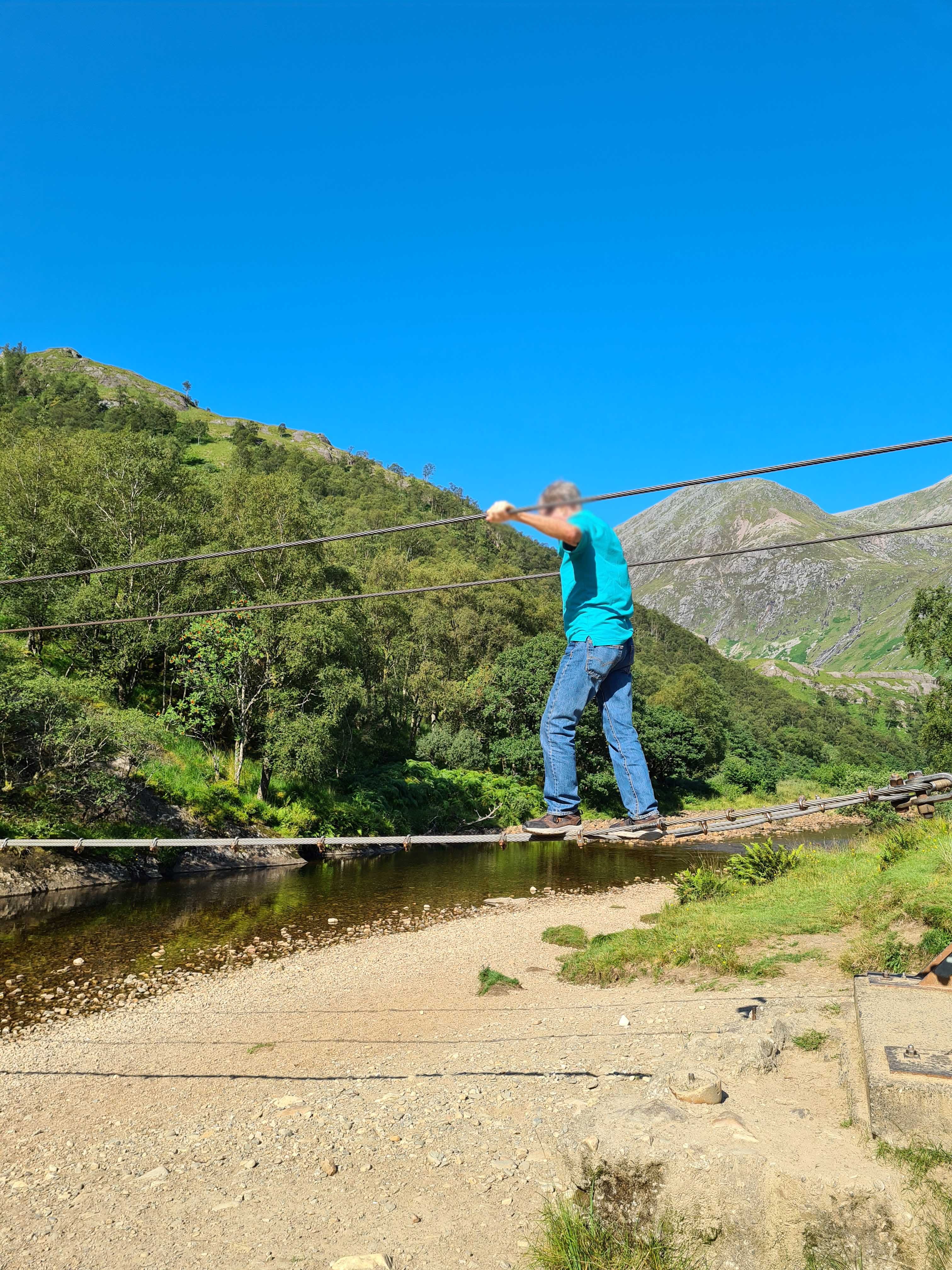
From this point you can continue along the valley up the back of Ben Nevis and eventually reach Spean Bridge or, if incredibly adventurous, the edges of Rannoch Moor. Or, if you are feeling adventurous in a different fashion, you can cross the river to approach the falls directly, though the trail is not as well-marked as one might hope (or wasn’t in the days just after the pandemic). On our first visit, the other half and I chose to just walk up the valley and find a spot on the riverbank for lunch. Dad on the other hand chose to cross the river. Not, as I did, on the rocks just poking above the surface that I crossed dry – unlike the hikers ahead of me – but instead on the wire bridge that spans the river. By wire bridge, I mean literally three heavy wires, one for your feet and two for your arms, which requires both height and upper body strength I do not have – I could not even reach the starting point. While at first the bridge is not far off the ground, by the time it stretches out over the water, it is high enough that one can imagine a fall into the shallow river would not be without injury. After a few uncertain moments at the start, Dad managed it quite well, and then waited on the other side while I plotted my route.
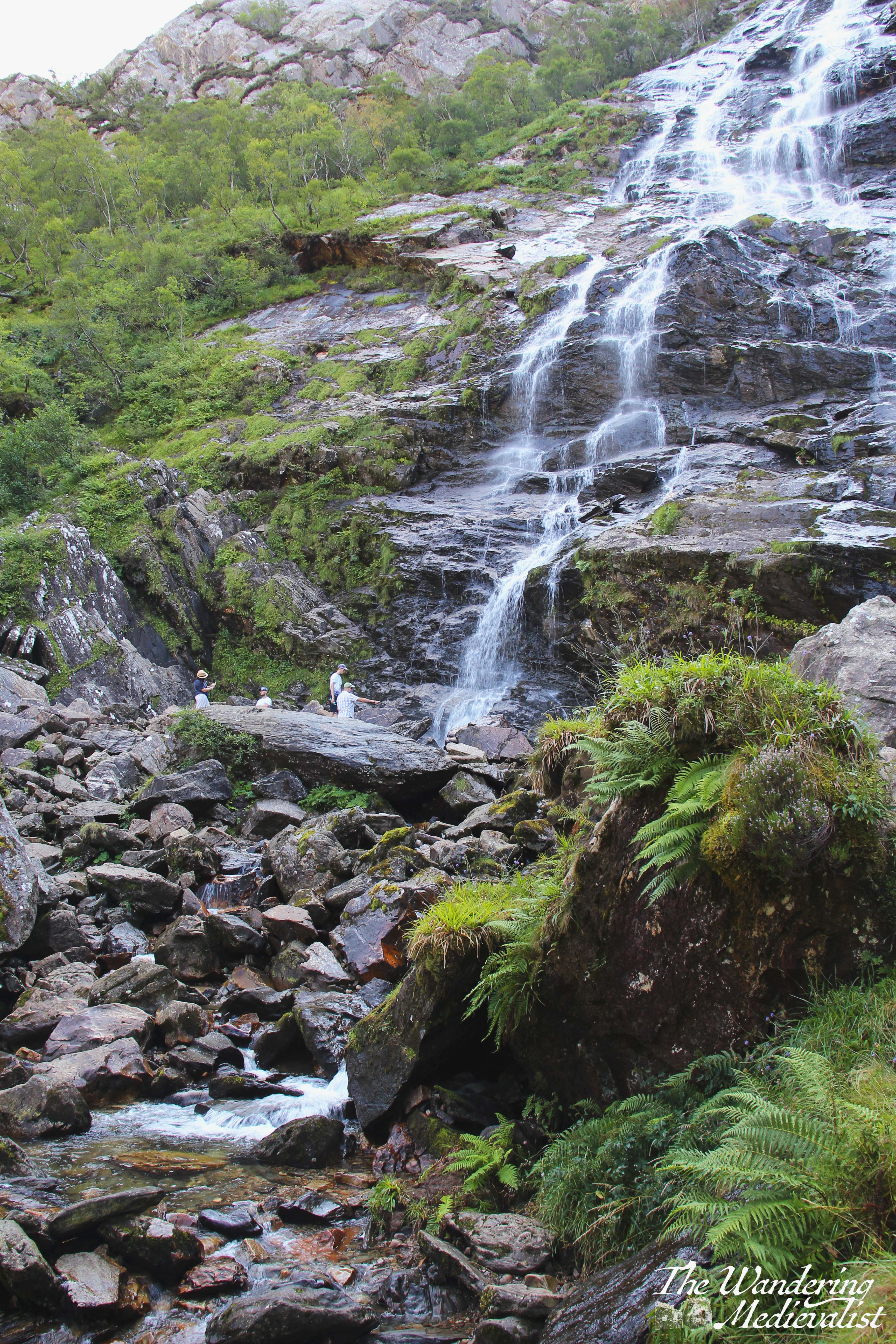
Once safely across, we hiked up towards the falls and I experienced the true viciousness of midges in the Highlands – fortunately I had spray, but the closer I got to the falls, the more swarmed around me, getting caught in my hair and the spray on my arms. While they did not bite through the spray, I ended up looking more freckly than normal and they went out of their way to aim for ears, nose and eyes. I managed to pause long enough for a few pictures of the falls and the view from the rocks, but the bugs were intense enough to encourage us to keep moving.
The falls are well worth the exploration – they are the second-highest falls in the UK, with a single drop of 120 metres (390 feet), and there are plenty of places for brave walkers to cross and climb up for a better view.
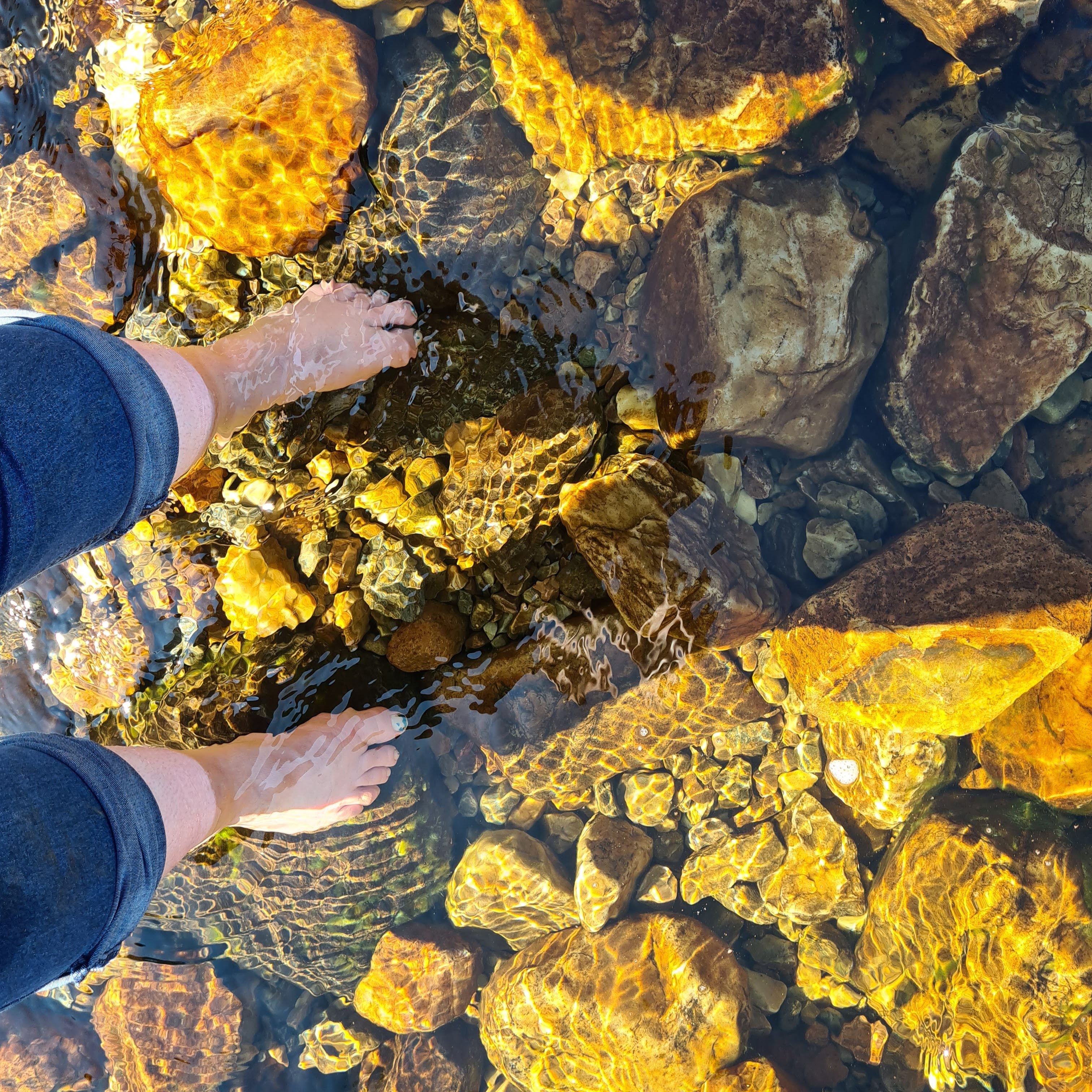
Dad and I tried to continue walking along the valley but found the path to essentially disappear into bog, so we headed back towards the wire bridge, looking for a place to cross. In the end, tired feet won out and I stripped off my boots to plunge into the icy water. It felt amazing and almost immediately numbed my toes to the rocks as I managed to just get across without falling. As we waited for our feet to dry, we sat on the riverbank and enjoyed the stunning view back towards the gorge.
The return trip is a touch less gruelling as it is more downhill than up, but the views are no less stunning and there is a great deal of truth in the fact that down becomes harder as one’s knees get older.
By the time we returned to the car I was very ready to take off my sturdy hiking boots and find some looser shoes to don for the drive back down the glen. I recall sitting in the car for a few moments just enjoying the car park view before finally heading back into town.
From here, Dad and I went on to the Commando Memorial, but even after our hikes on Ben Nevis and beyond, this remains one of the most stunning and magical trails I have found. The tranquillity of the valley around the Water of Nevis is breath-taking, and so quintessentially Scotland that it really should not be missed. That said, it is not a trek to take on lightly or unprepared; water, a snack, and sturdy shoes are an absolute must! And, if you are going in the summer, a strong midge repellent.
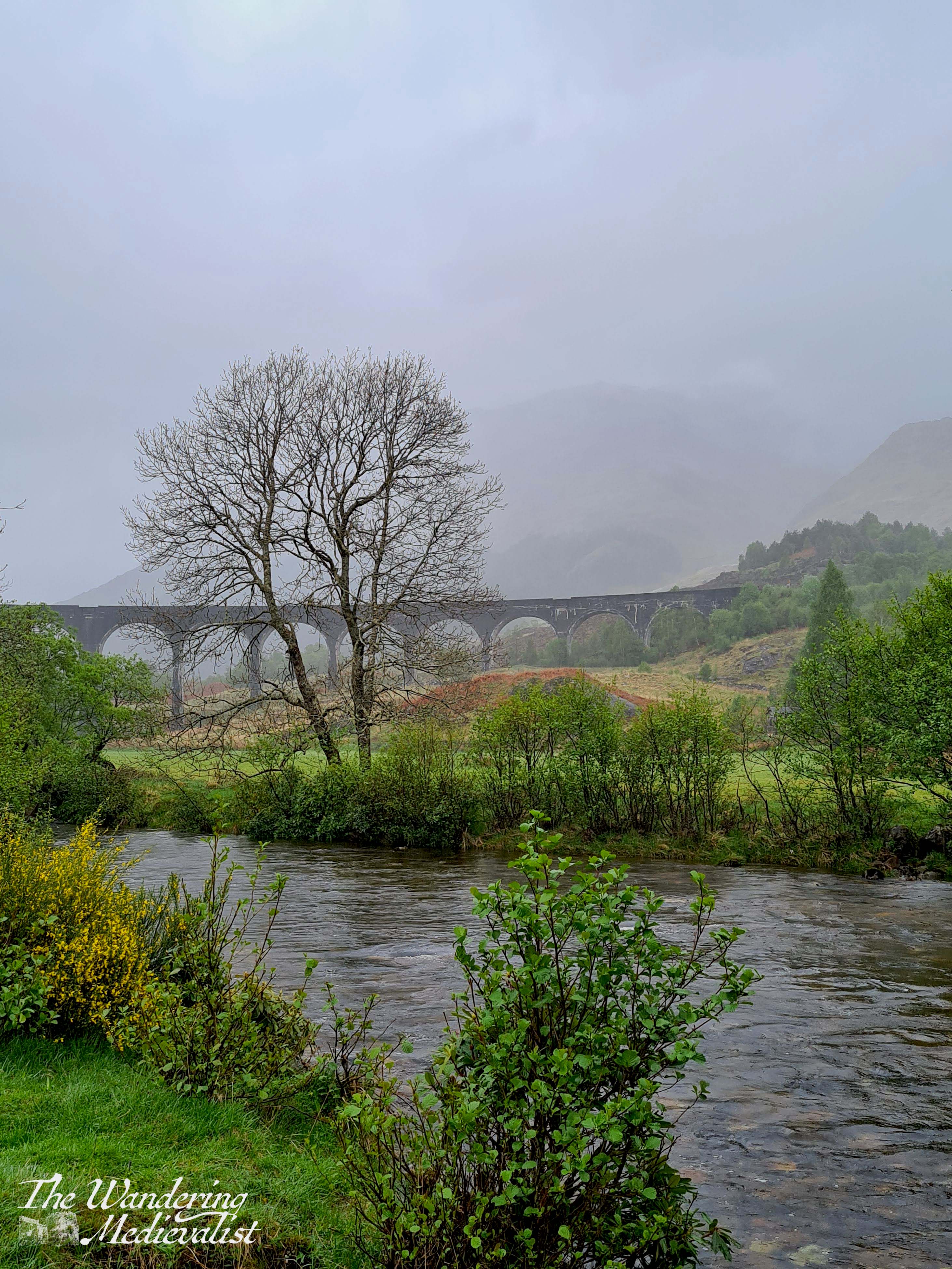
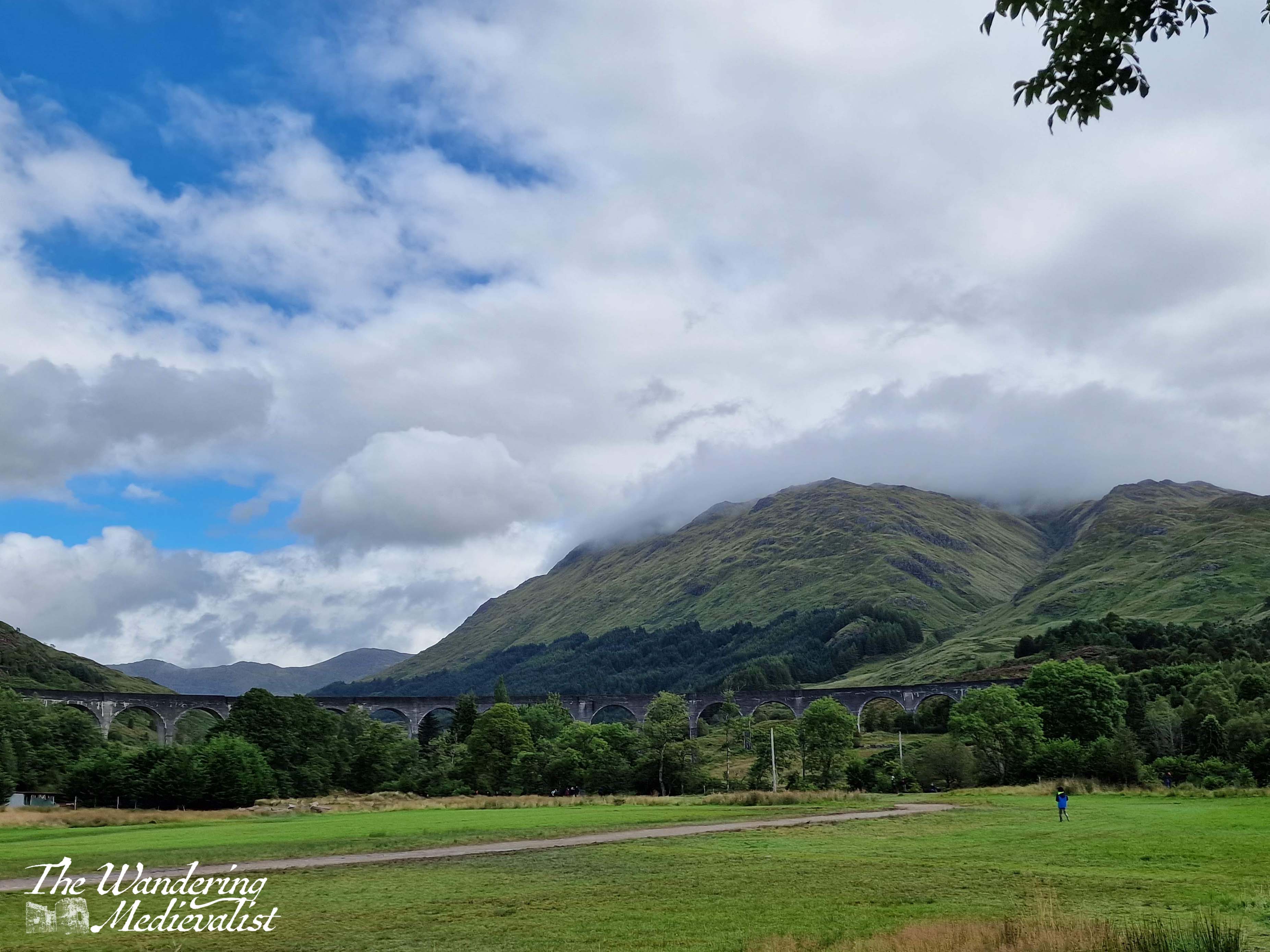
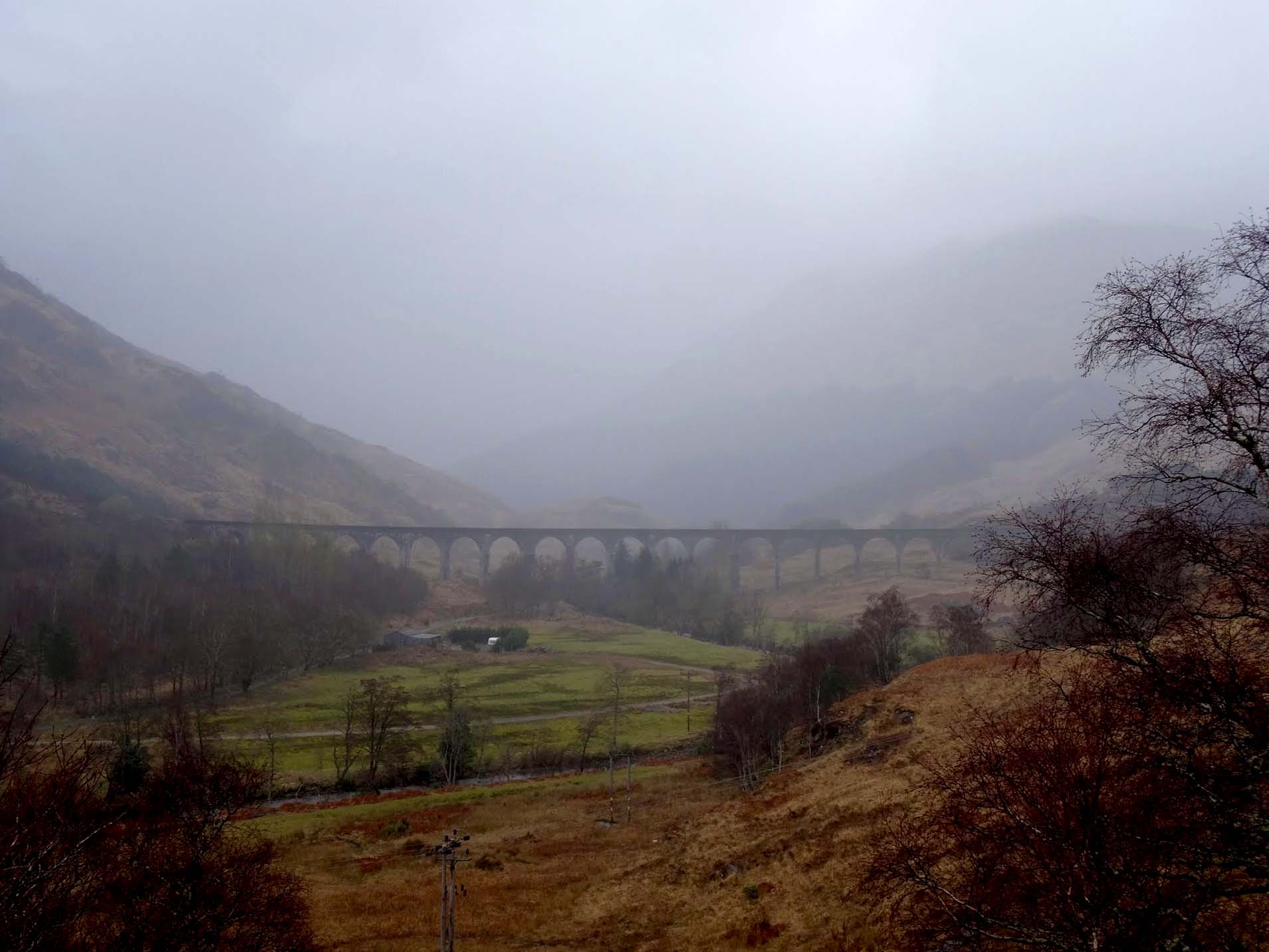
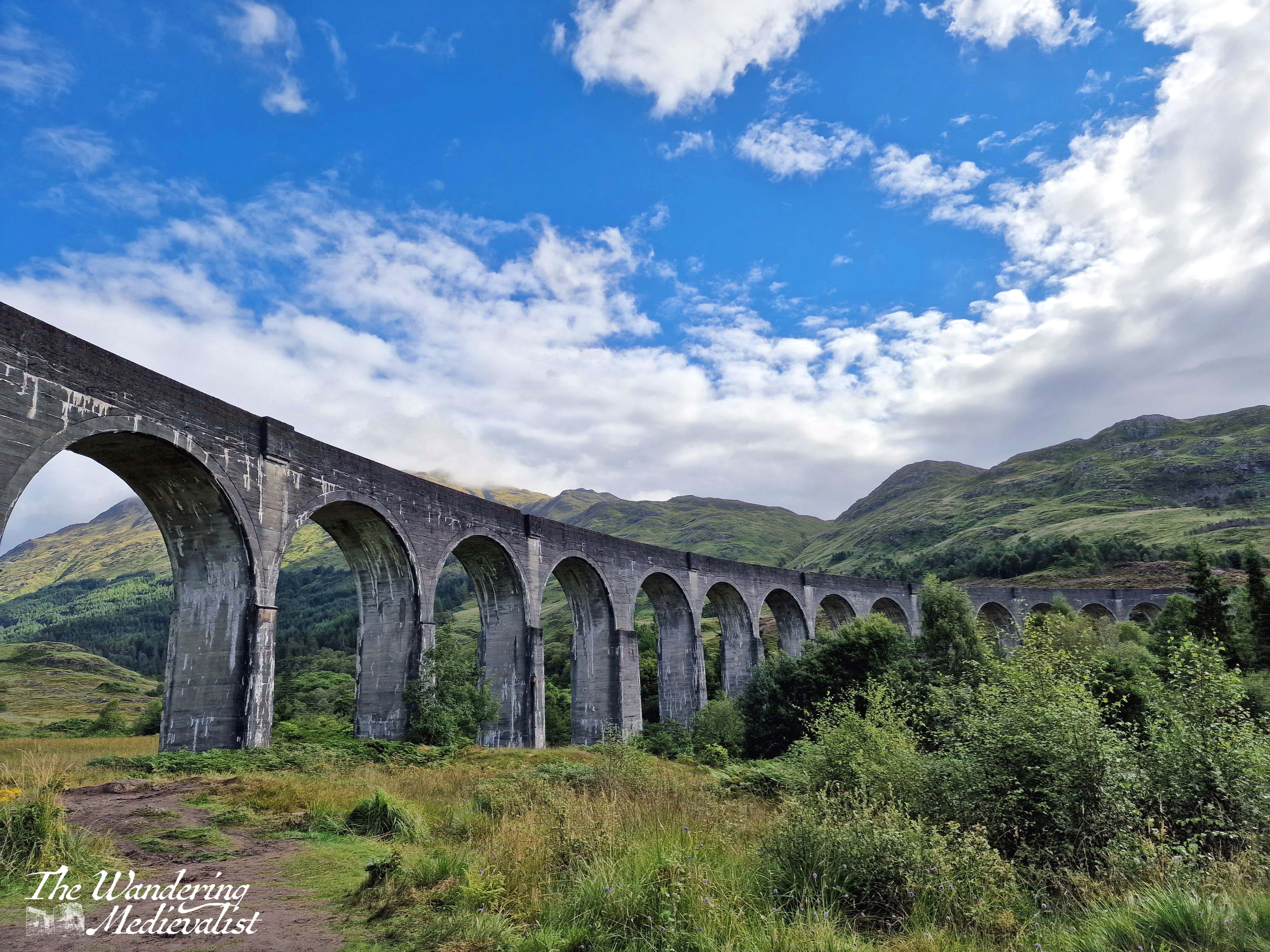
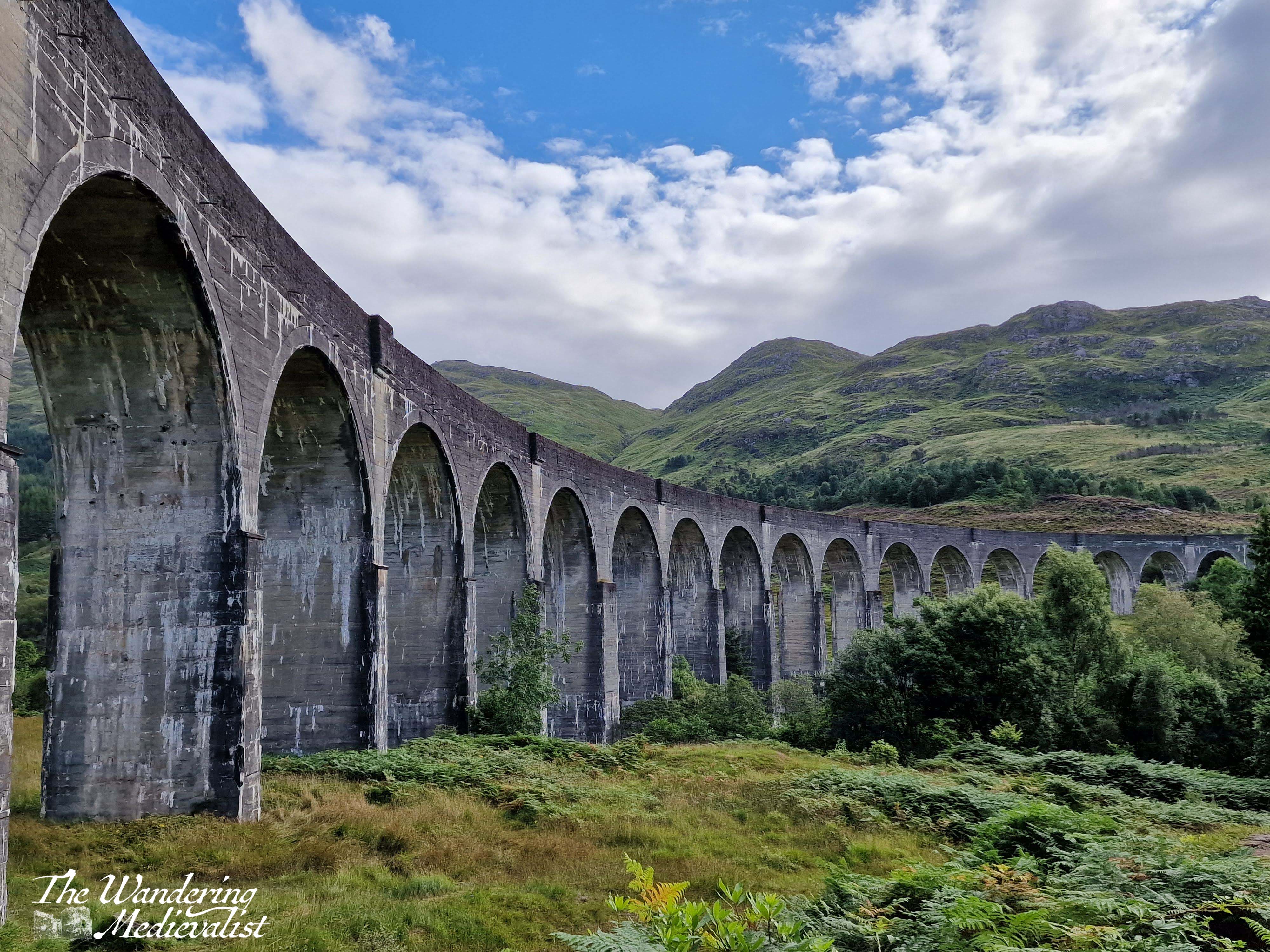
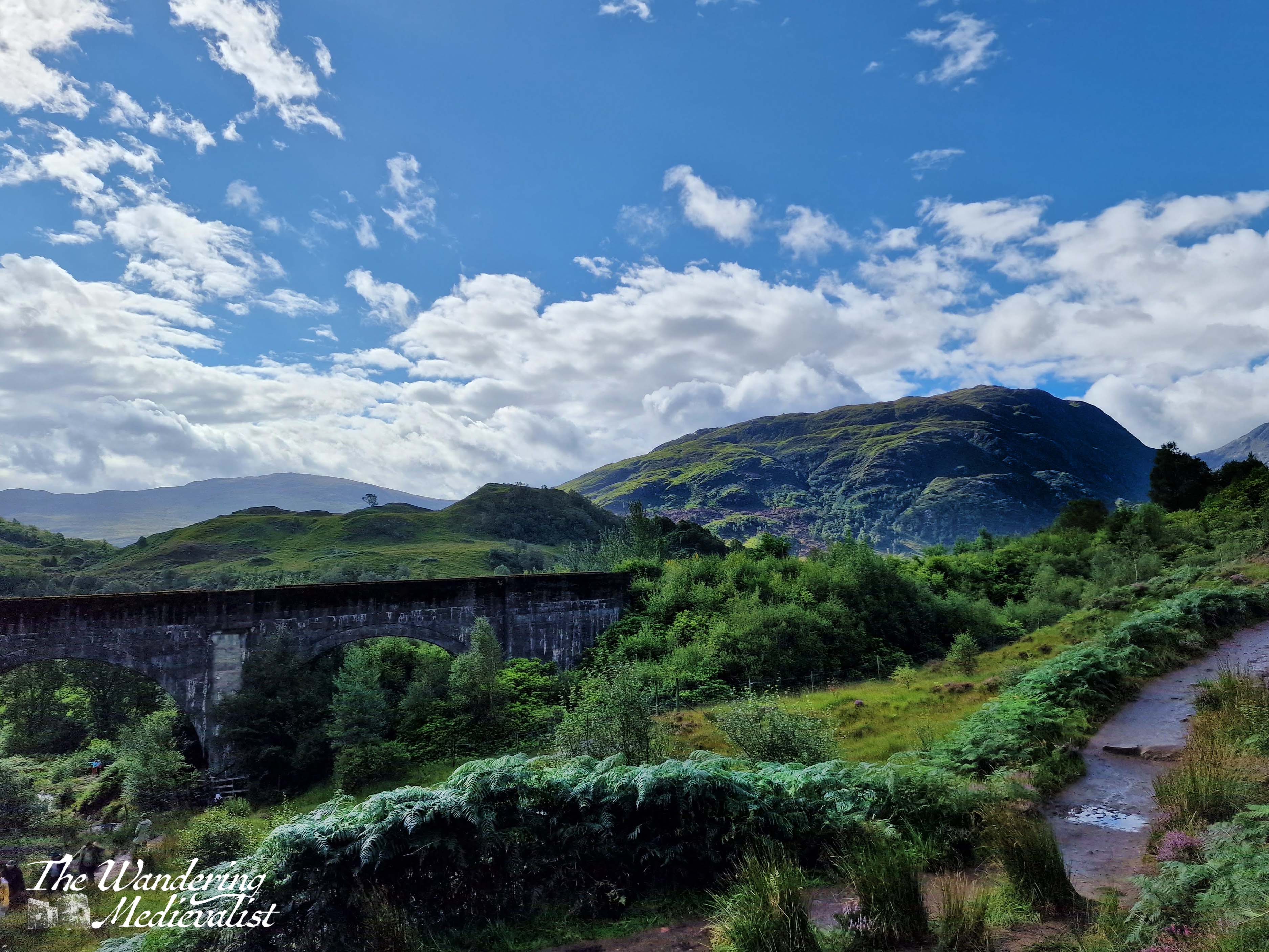
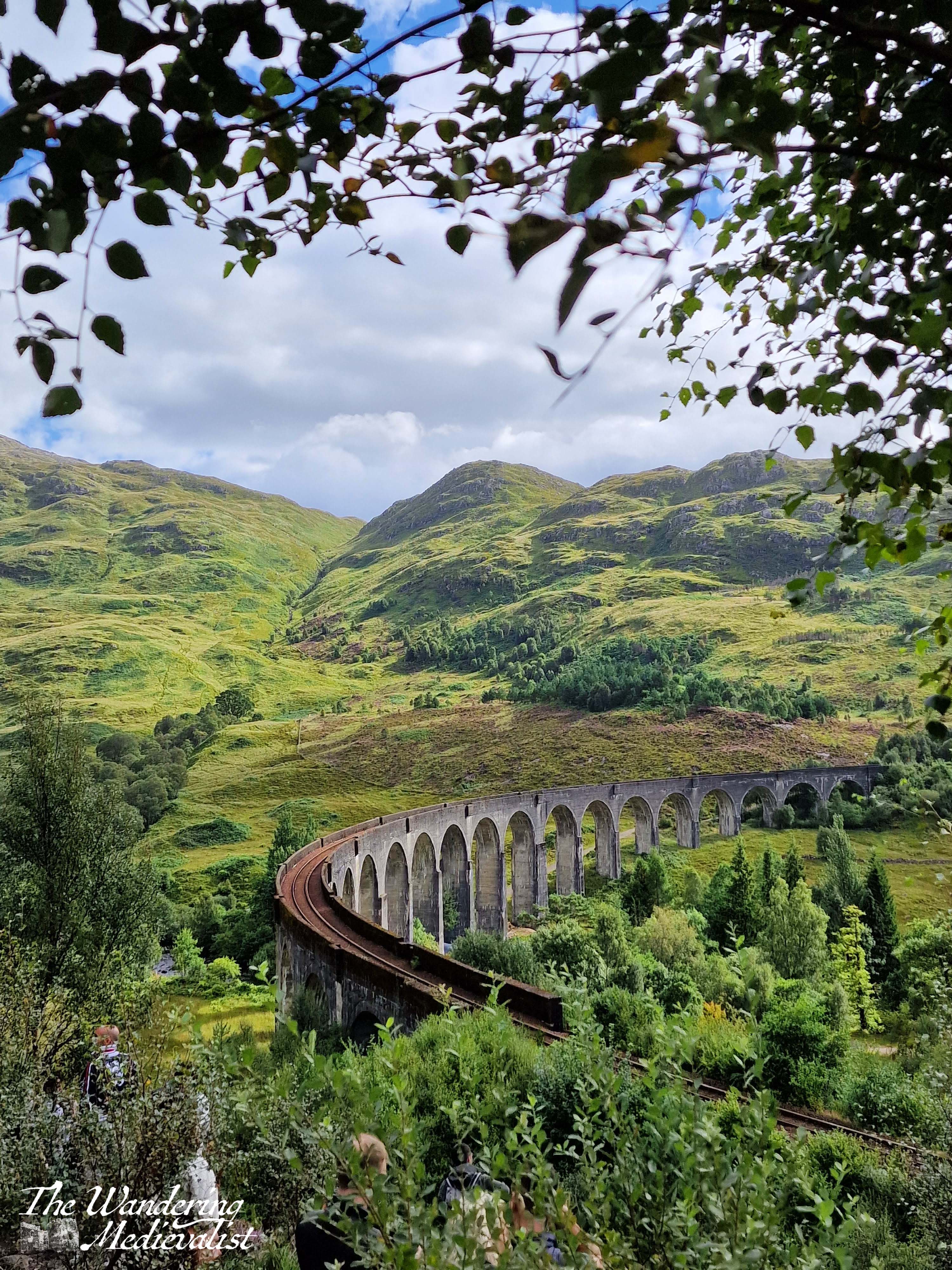
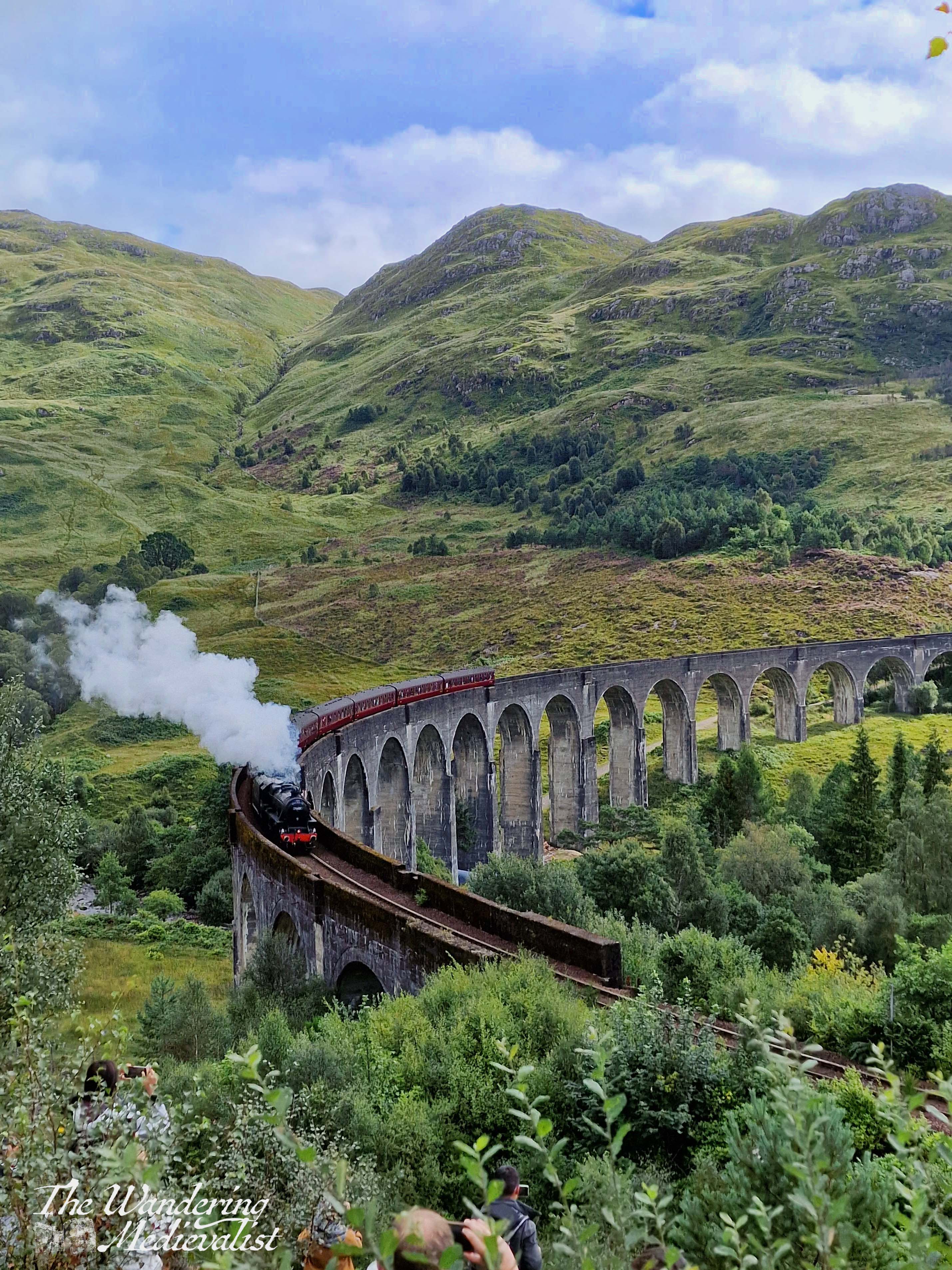
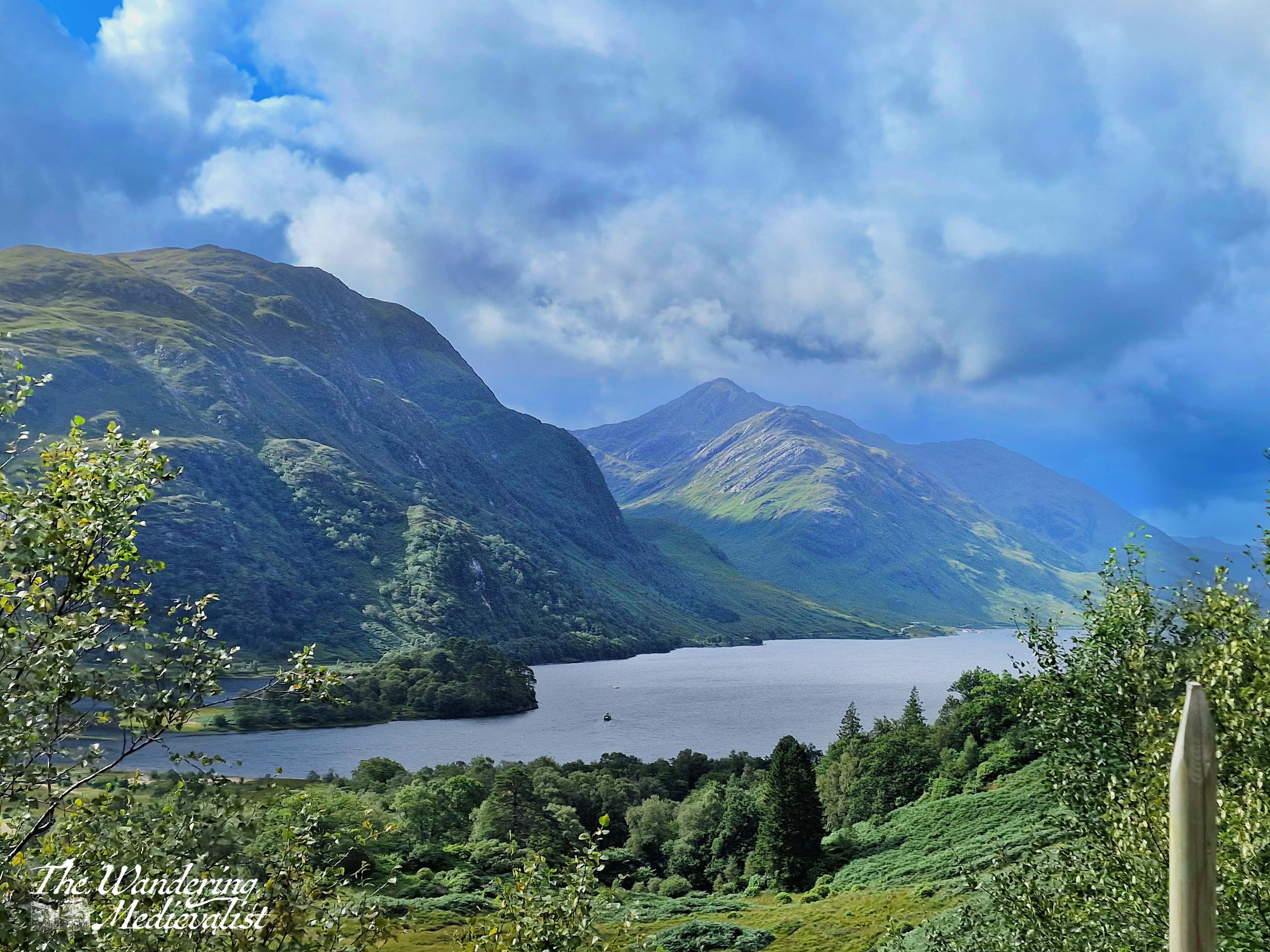
Whether you are a lover of Harry Potter, Jacobite history, or Scottish hills and lochs, this trail that starts off under the famous Glenfinnan viaduct and skirts the edge of the hills to come down alongside Loch Shiel is not to be missed. Even on a dreary rainy day, the stunning viaduct cutting across the valley is atmospheric and impressive, while in the sun and awaiting the famous Jacobite Steam Train, it is breath-taking.
My most memorable visit to Glenfinnan came last summer, when my father and I were spending a few nights in Fort William and I managed to convince him that this walk would have good views. We honestly did not even check the train schedule before leaving, but managed to arrive at the parking lot about twenty minutes before a train was due. We joined in the masses of people excitedly scurrying up the hillside – many very unprepared for such a climb – to get a good view of the famous train.
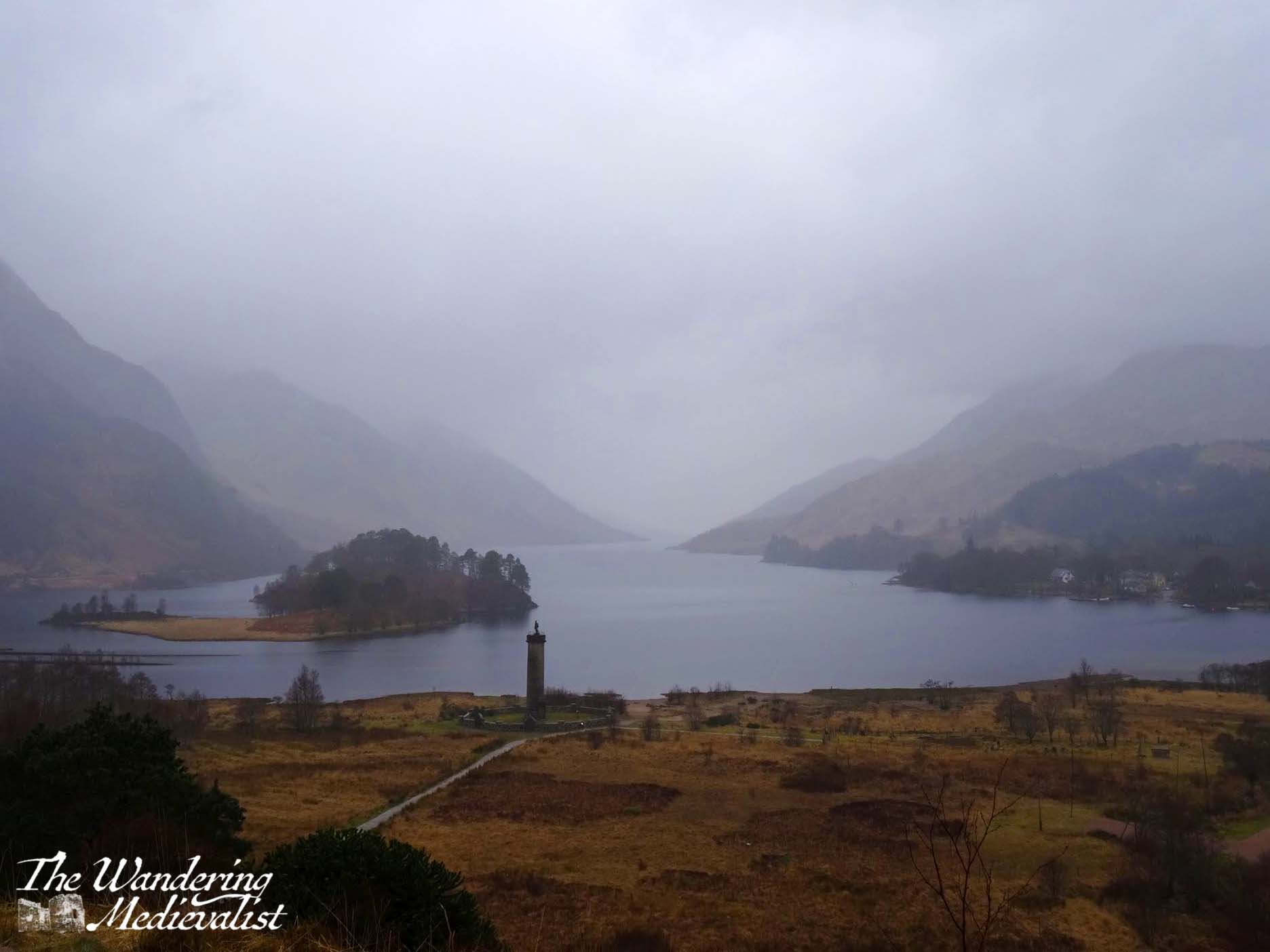
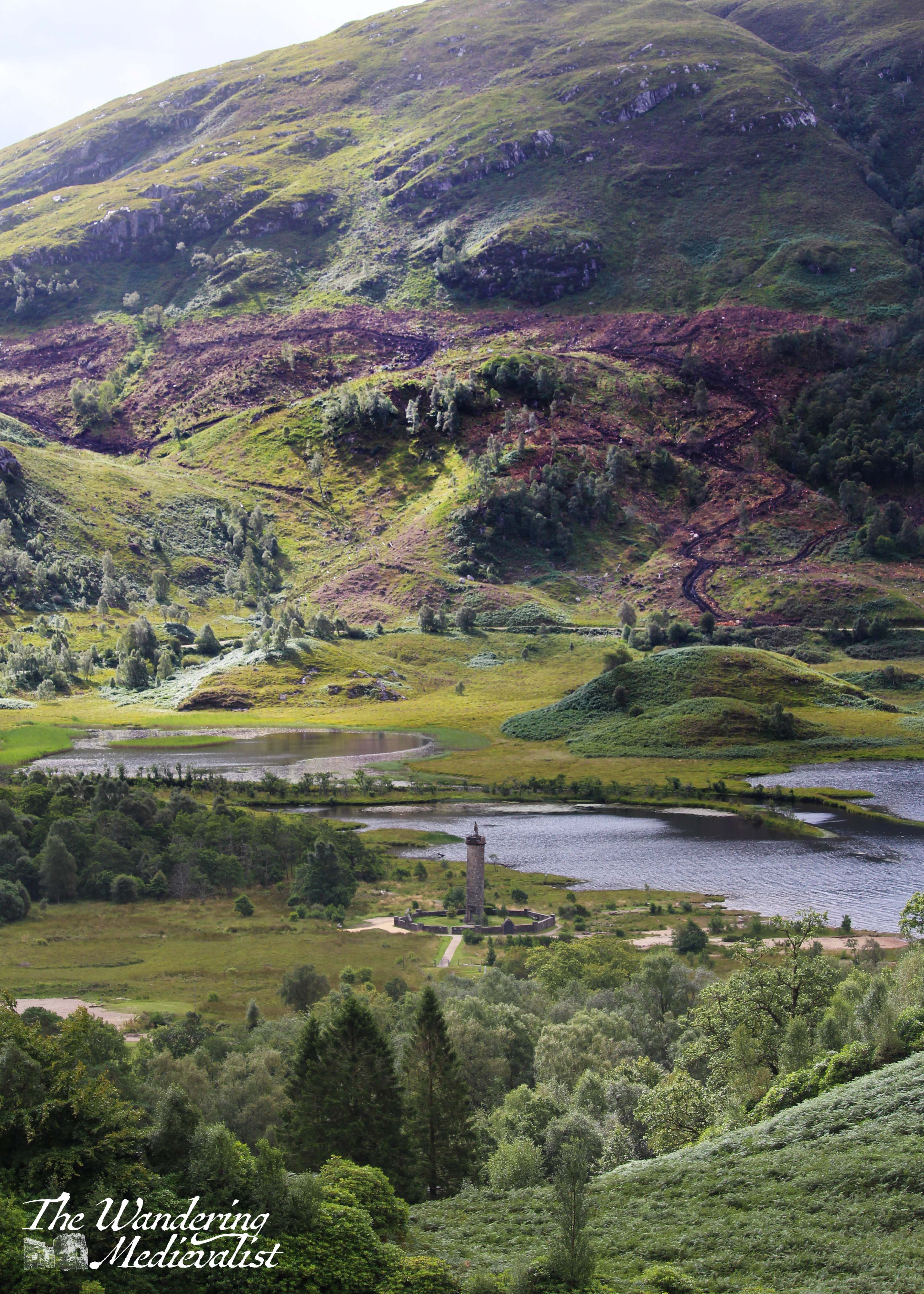
But I get ahead of myself – firstly, I should point out that the size of the car park here has expanded significantly since my first visit in 2017 and now is no longer free (£3.50 as of writing except for National Trust members). There is a substantial gift shop and café, catering to the bus-loads of tourists who stop here on their way to Mallaig. There are also two viewpoints; one, which we took in the pouring rain in 2017, is much shorter but provides a good view both over the viaduct and the Glenfinnan Monument and Loch Shiel. This is a good option if you are in a hurry.
The period of the Jacobite Rebellion is a touch too modern for my tastes – it is all relative – but one can hardly study Scottish History and live in this country without picking up pieces of the story. It has echoes of the American Revolutionary War tales you hear everywhere in the Boston area – hearty, brave rebels fighting against the evil English. The truth of the history is, as always, much less black and white, but that is not the purpose of this post.
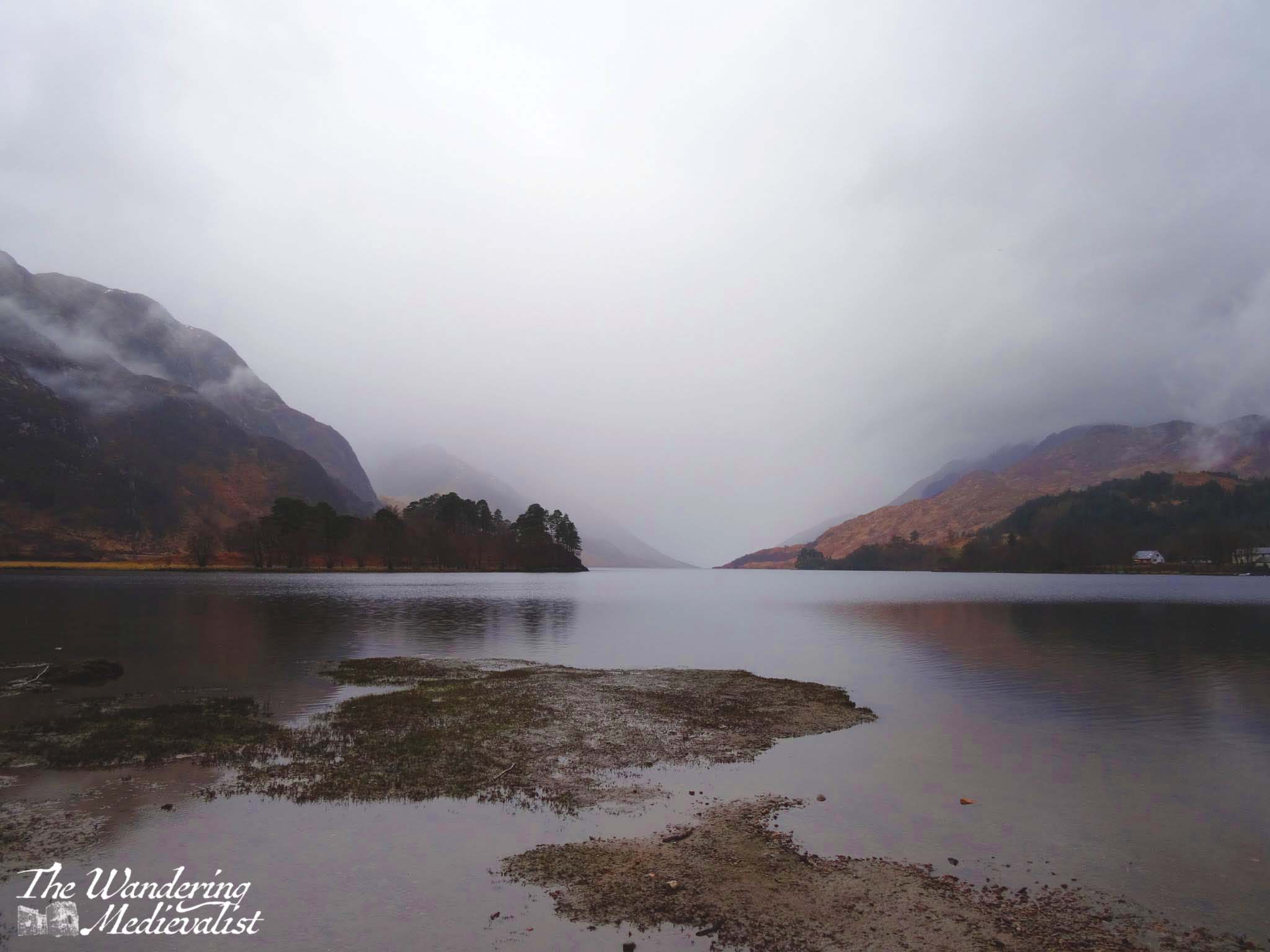
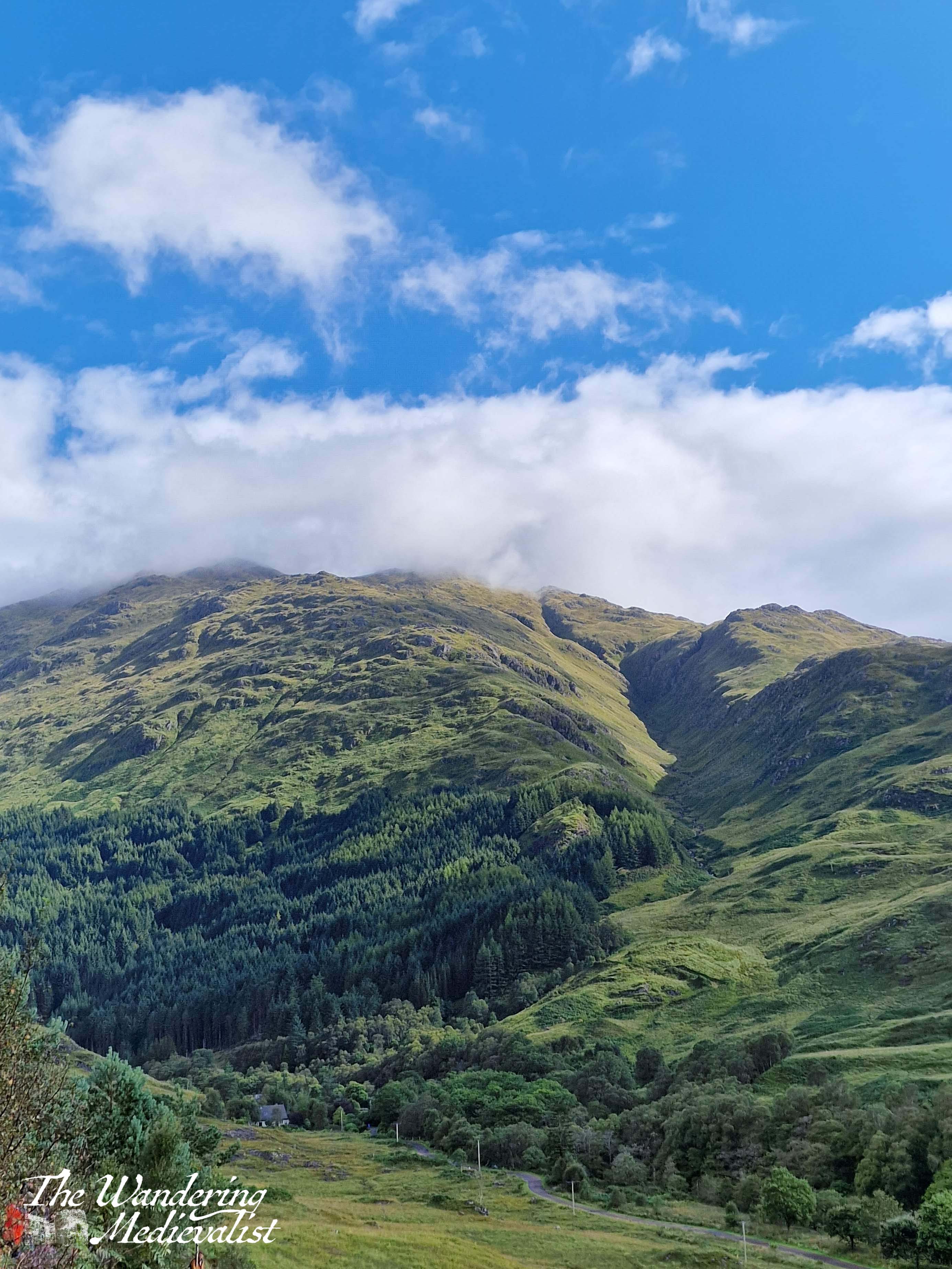
The Monument itself – a viewpoint and tourist attraction long before the viaduct appeared in Harry Potter – marks the location where Prince Charles Edward Stuart (Bonnie Prince Charlie) first raised his standard in 1745. It was the start of the doomed eight-month campaign that would come to a catastrophic end on Culloden Moor in April 1746, so one can understand why this area would hold a special place in Scottish history. The scenery is certainly evocative, with deep valleys cutting through rugged mountains that plummet straight down into the loch.
The second viewpoint is harder to access but also falls along the viaduct trail. Once parked, visitors can follow a well-kept path, skirting the edge of a burn, and moving slowly closer to and eventually under the massive viaduct. It was built between 1897 and 1901, to complete the extension of the West Highland Railway from Fort William to Mallaig. Side note, Mum and I rode this train some years back, but crossing the viaduct on the train is nowhere near as fun as walking beneath.
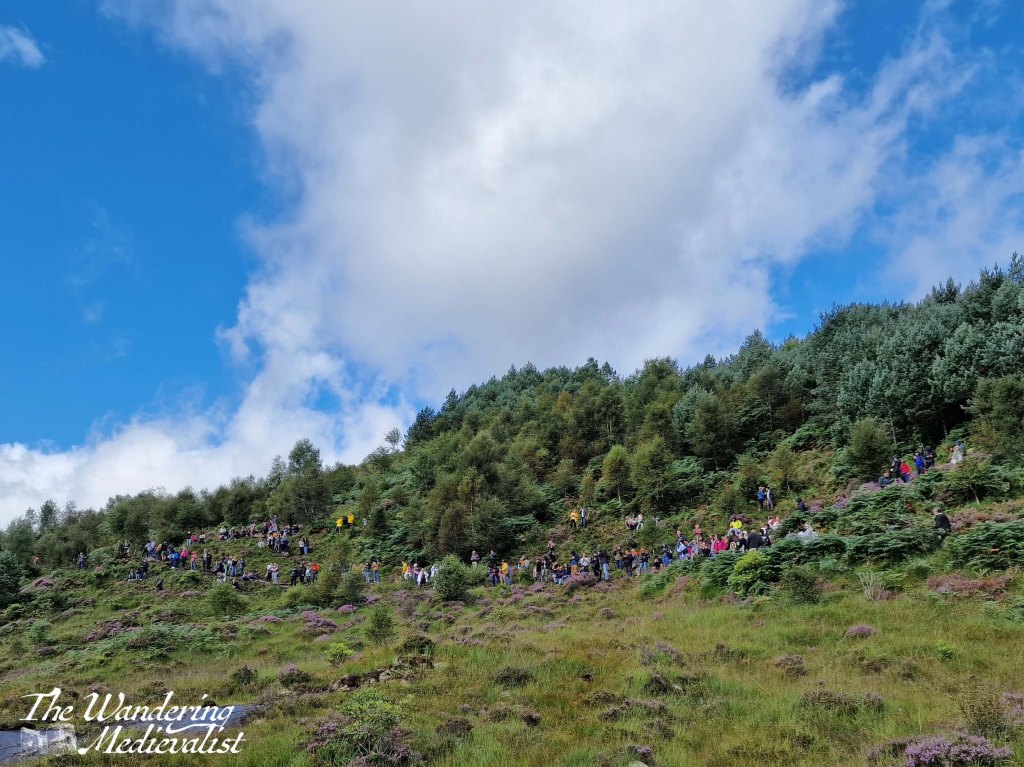
On the day Dad and I climbed, I quickly realised a train must be due, as I had never seen so many people crowded on the side of a hill in the Highlands before. The path is quite steep in places as it climbs the side of the hill, and I was impressed by the number of determined tourists in sandals, dragging young children behind them.
I convinced Dad to stop and wait, and sure enough, about ten minutes later, we could hear the distant train whistle, while the excitement in the crowd became palpable – and noisy. The first sign of the train was the steam, then it came creeping around the corner, blowing its whistle. The view was second to none, really, and I managed both still pictures and a bit of video, which I will post at the end. Frustratingly I missed the small child sitting on his father’s shoulders shouting out, “Avada Kedavra!” at the train. Not sure if the excitement got the better of him and he mixed up his spells, or if he is just a very dark child…
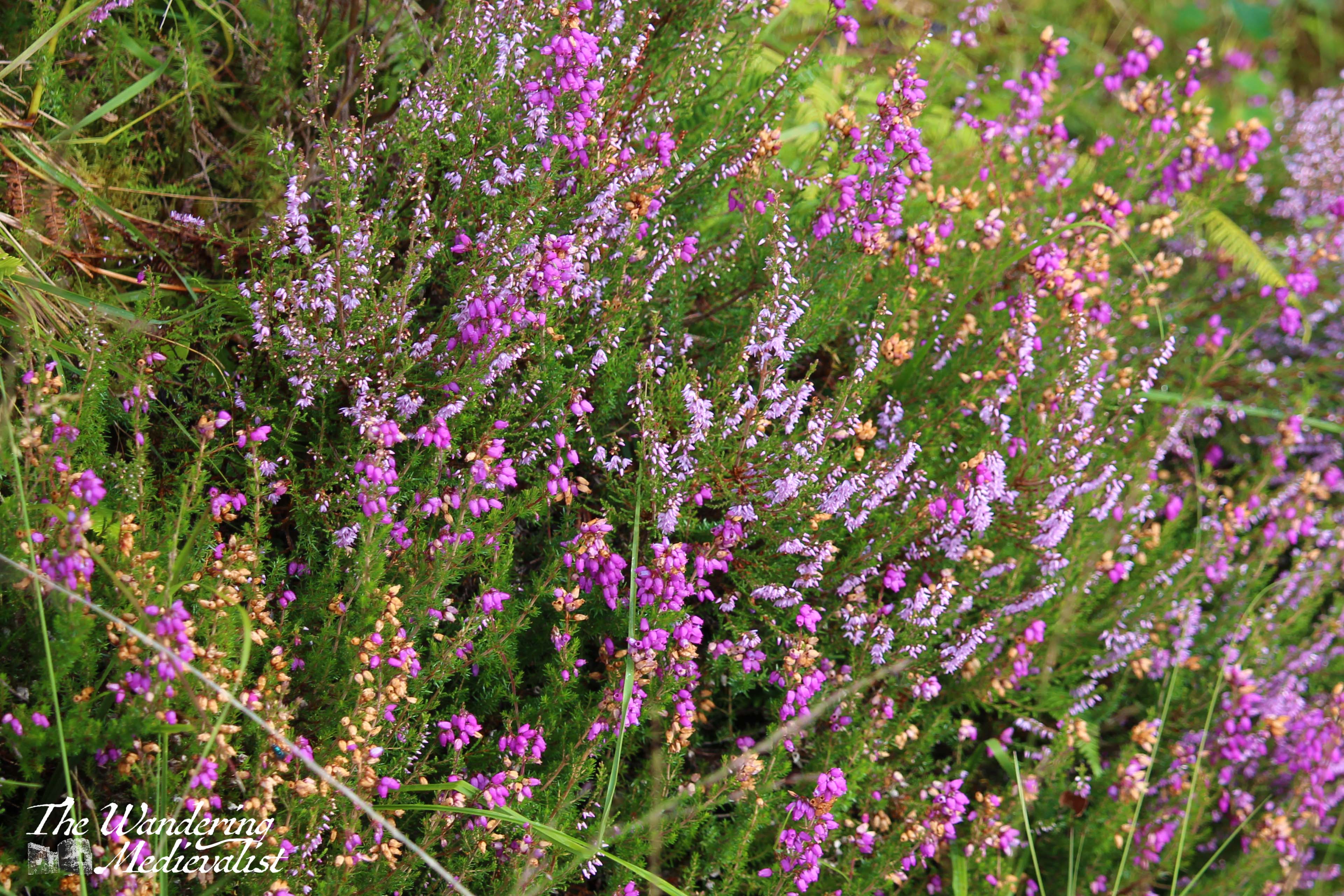
In any case, as the train moved on we moved against the foot traffic, further up the hill and following the path around the corner. For the most part the trail continues along the hillside with a few ups and downs, but with excellent views back to the viaduct, down to the Monument, and along Loch Shiel. It was a relatively busy path and narrow in places, forcing us to move to the side into the heather and ferns at the side of the path; I found myself grumbling slightly about proper hiking etiquette – or even just general courtesy – but only after being poked by some thistles as I allowed a large group of foreign tourists to pass.
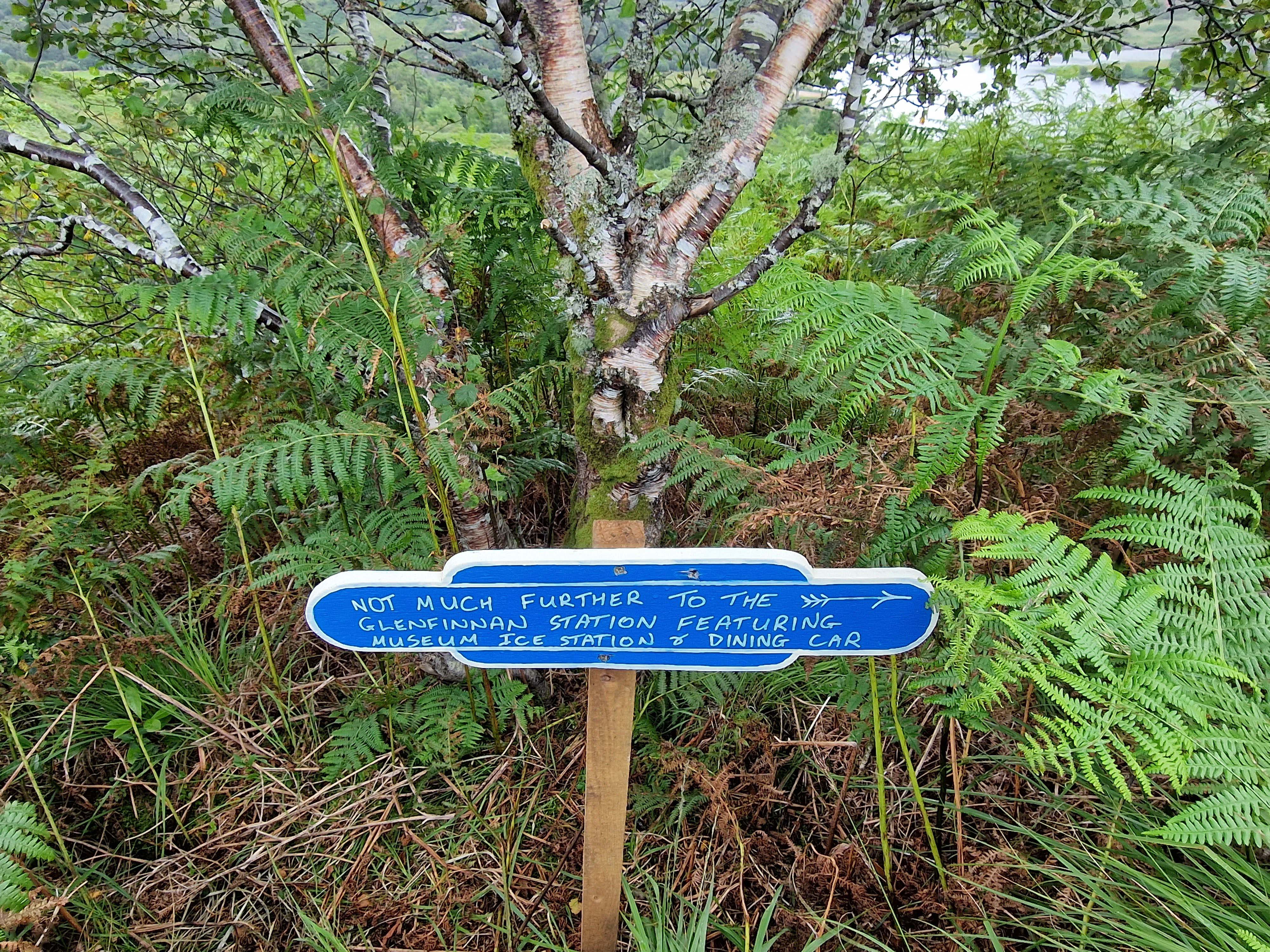
There are several more truly impressive viewpoints before the trail turns left and starts descending into the trees and back towards the loch shore. After a relatively short time, the path reaches Glenfinnan Station where there is a Museum and, as we learned, an option to purchase ice cream, at least in the summer. We took a short rest on the benches, enjoying the atmosphere of the station, before continuing on our way.
From here, most of the walk is on quiet roads, but there are a few excellent points to view the loch before one finally returns to the Monument and gift shop. I recall stopping in for a coffee and a truly excellent piece of millionaire’s shortbread before getting back into the car. It is worth observing that the times of the trains crossing the viaduct are posted both in the car park and online, so if this is the goal for your trip, it is well worth checking and positioning yourself in a good spot. I was lucky to visit on a spectacular sunny day as well as in the rain, and even without a particular affinity for Harry Potter or Jacobites, I found it a rewarding and even moving place to visit. If at all possible, though, avoid the height of summer unless you enjoy fighting your way through crowds of tourists woefully unprepared for a climb.
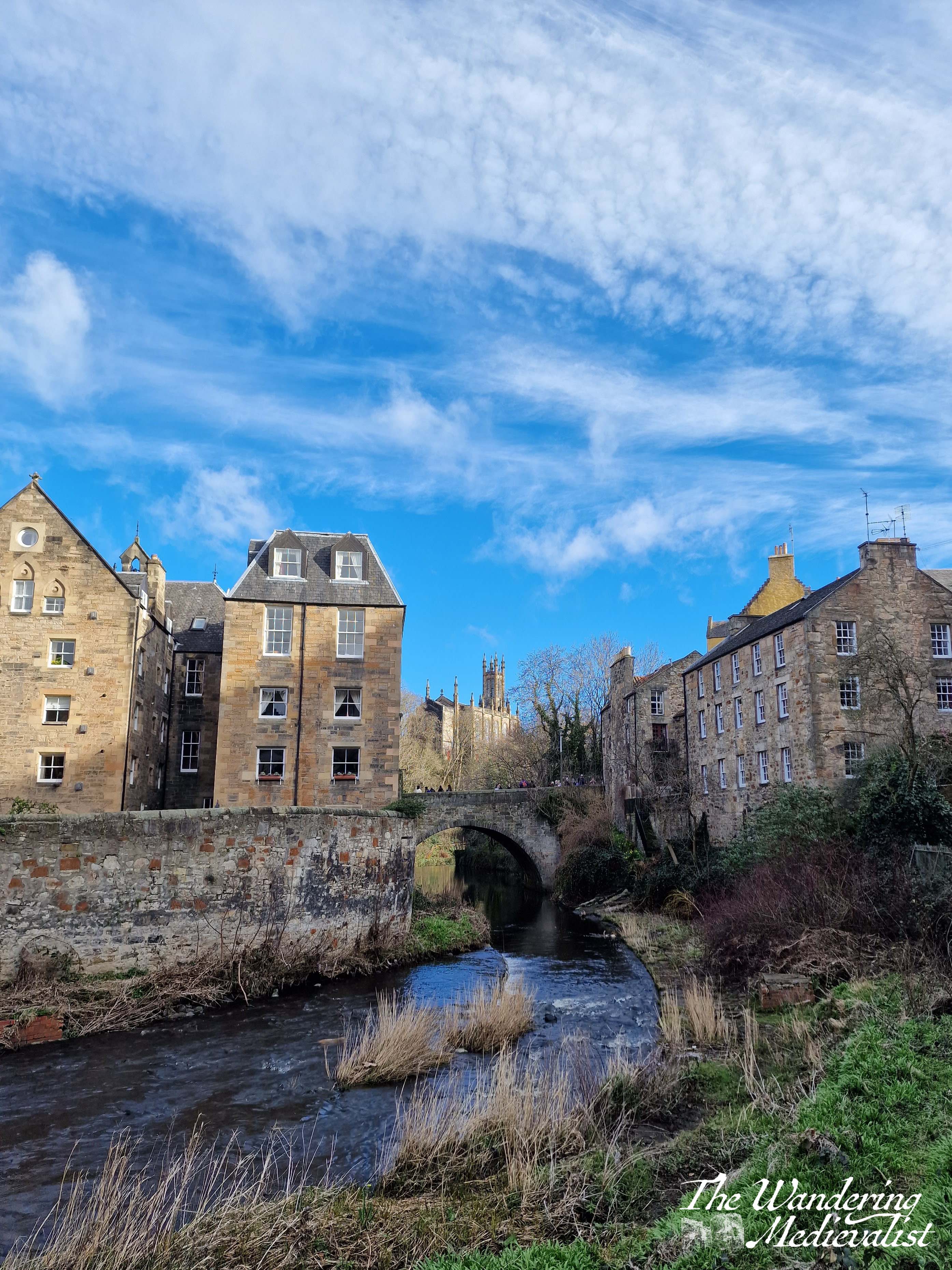
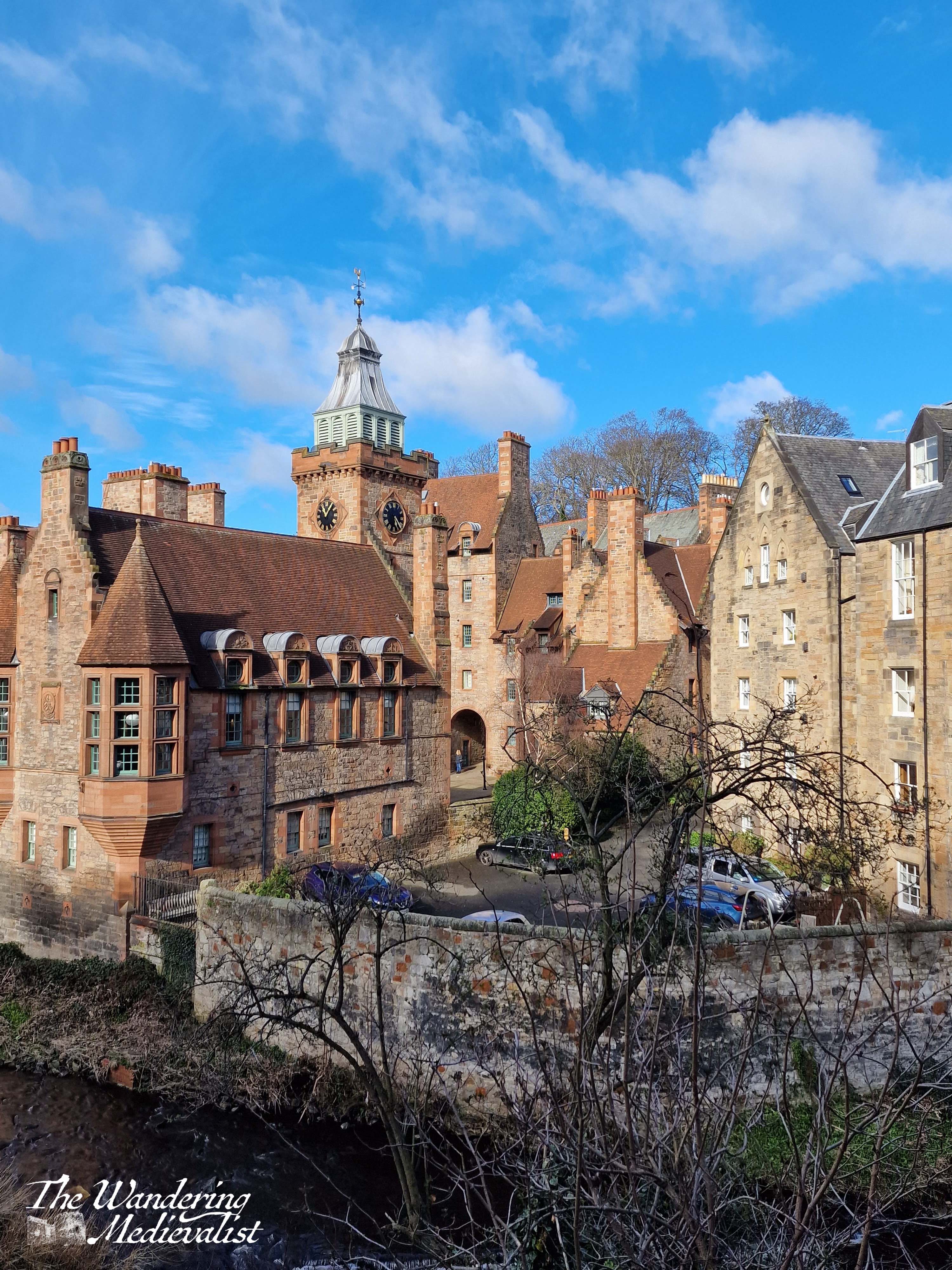
Dean Village is one of those amazing spots I have seen pictures of for years but never managed to visit as – despite it being so close – I do not spend as much time in Edinburgh as I would like. In March, though, I spent two nights there on my own and decided that it was time to finally explore this beautiful corner of the city. It most definitely belongs on a list of tourist attractions that does not disappoint.
I was staying in the Grassmarket and decided, rather than climbing up and over the Royal Mile, to circle around Edinburgh Castle on King Stables Road. From there I was surprised by how quick and easy it was to cross Princes Street and walk the perhaps five minutes along to the Dean Bridge and the views over Dean Gorge. The walk passed through some lovely parts of the West End, and I am always reminded how much I enjoy walking around Edinburgh.
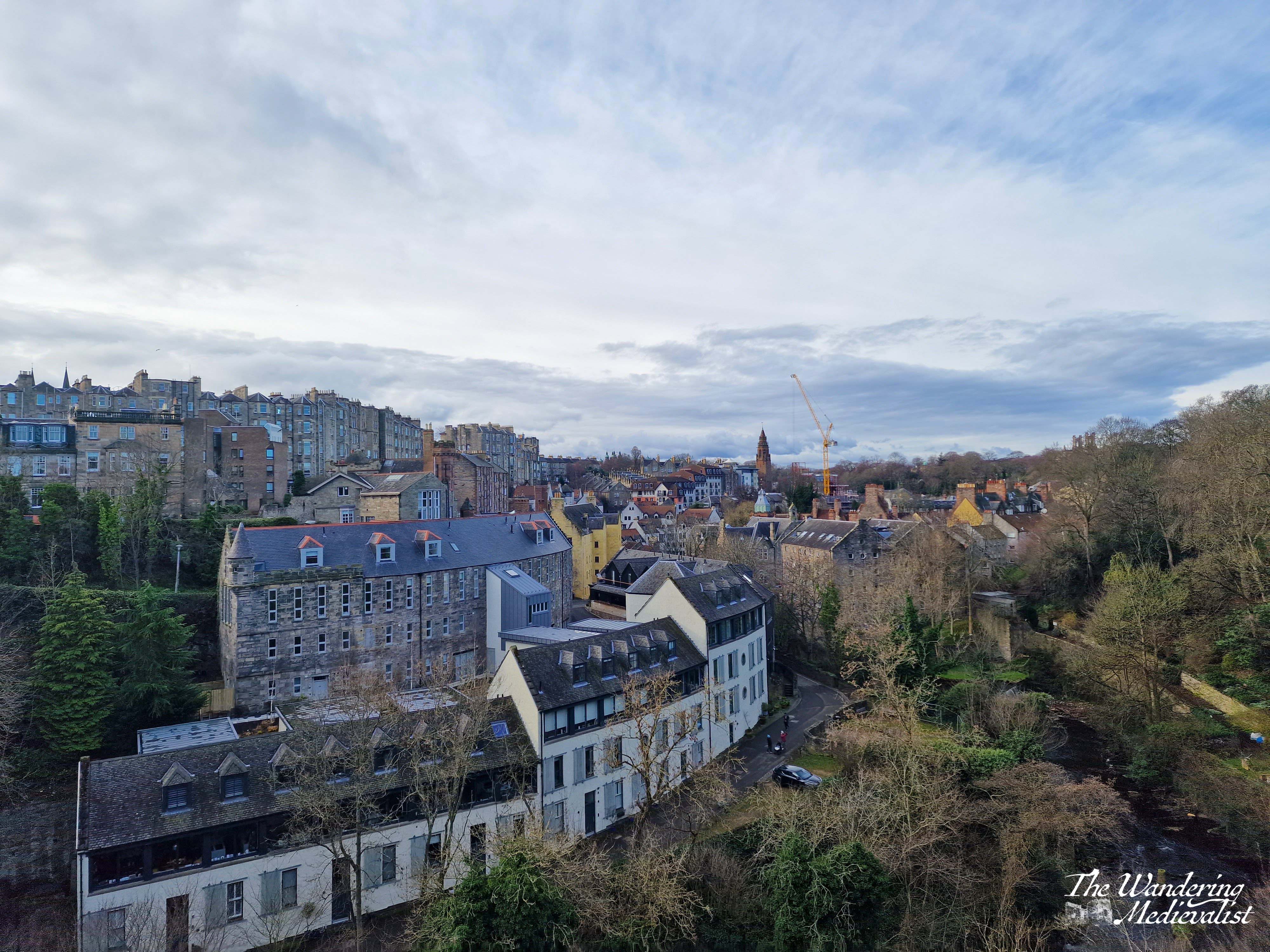
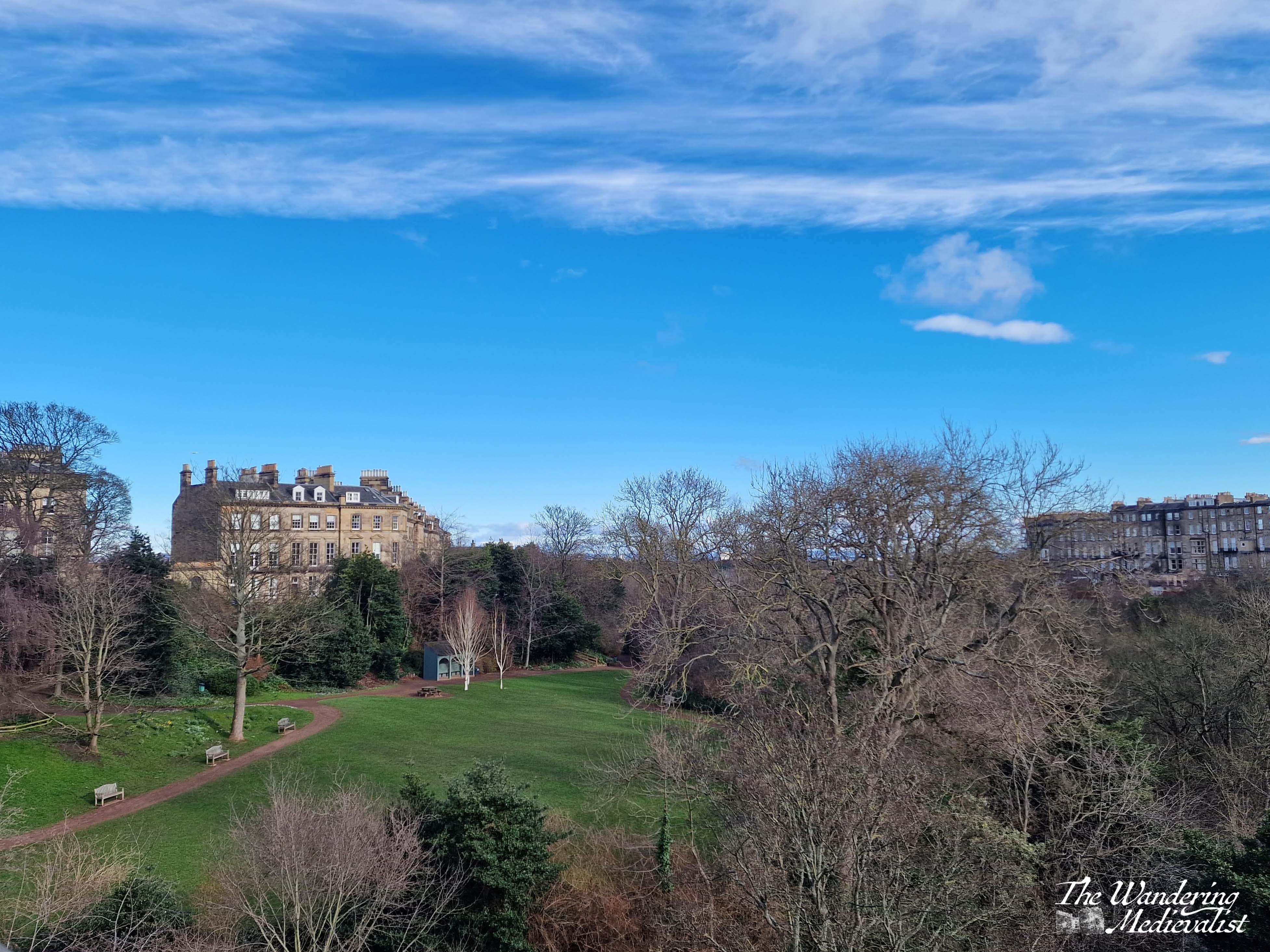
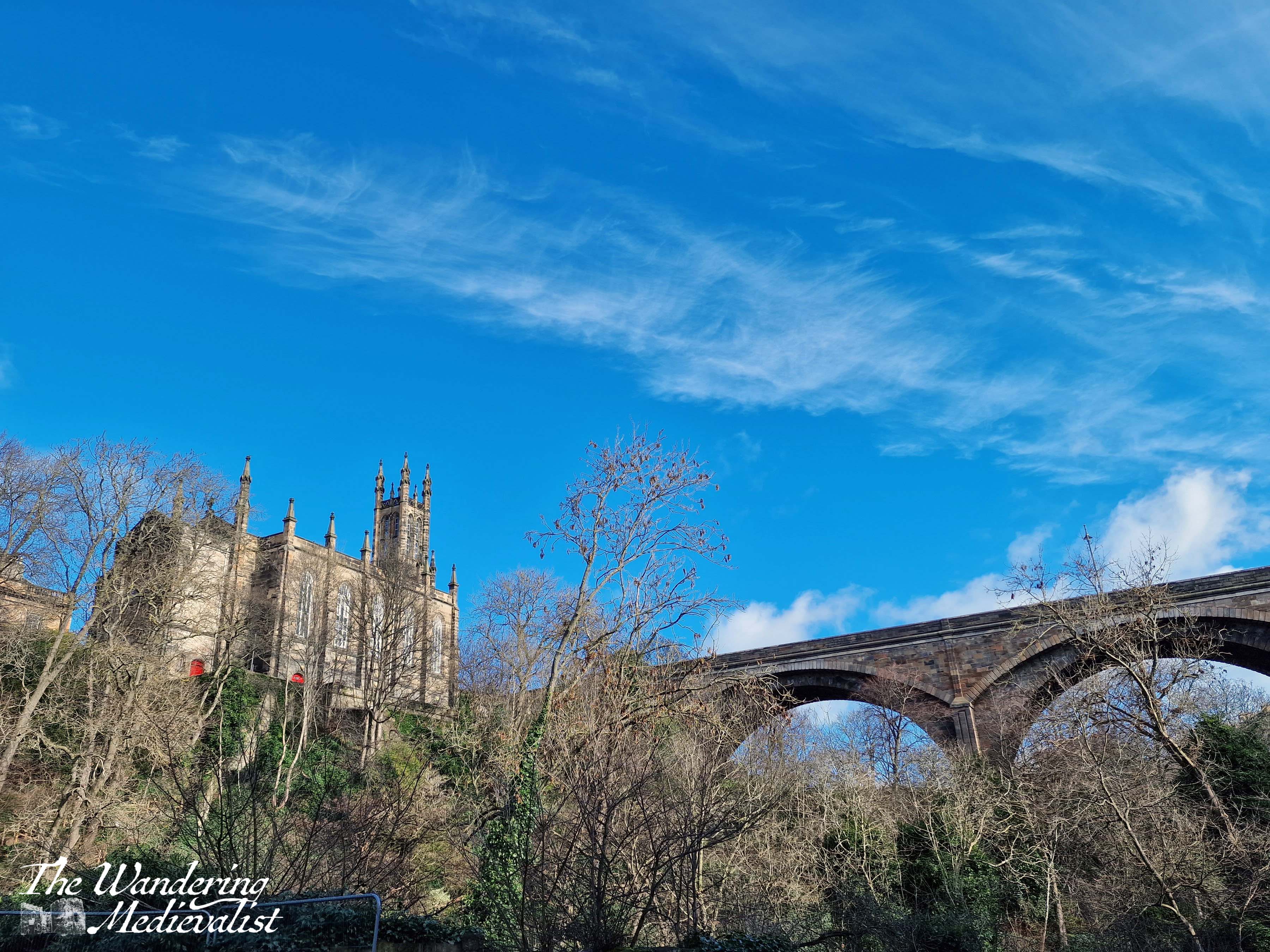
The first time I became aware of the spectacular view from Dean Bridge was while riding a Fife to Edinburgh Stagecoach bus, probably twenty years ago, which boasted seats high enough to see over the walls and along the spectacular rows of Georgian buildings. Finally, on this trip, I walked and found the view no less fantastic than I did when jet-lagged on public transportation. Below, the left-hand view is west over Dean Village, while the right-hand view is east towards Leith and Edinburgh’s New Town.
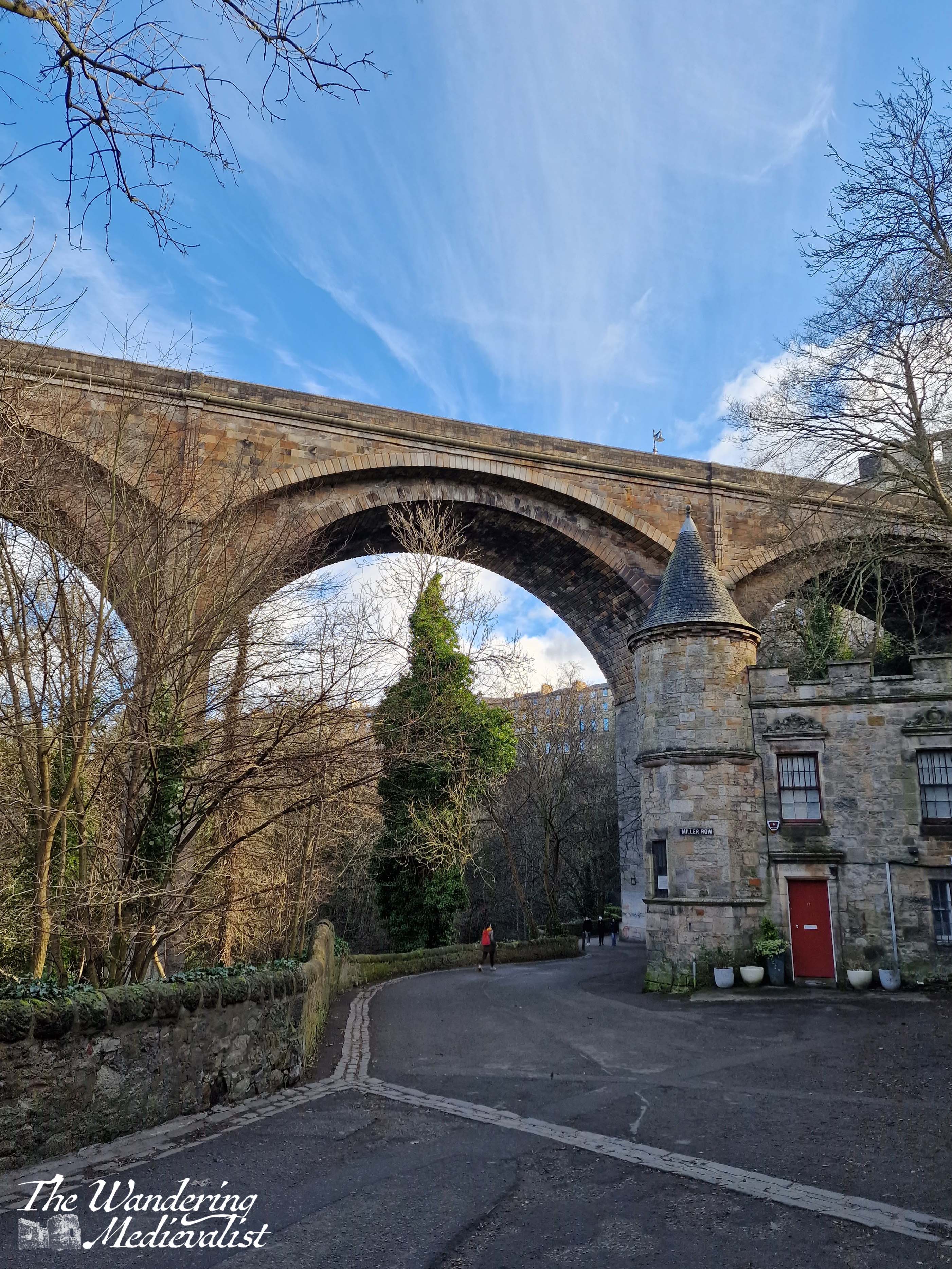
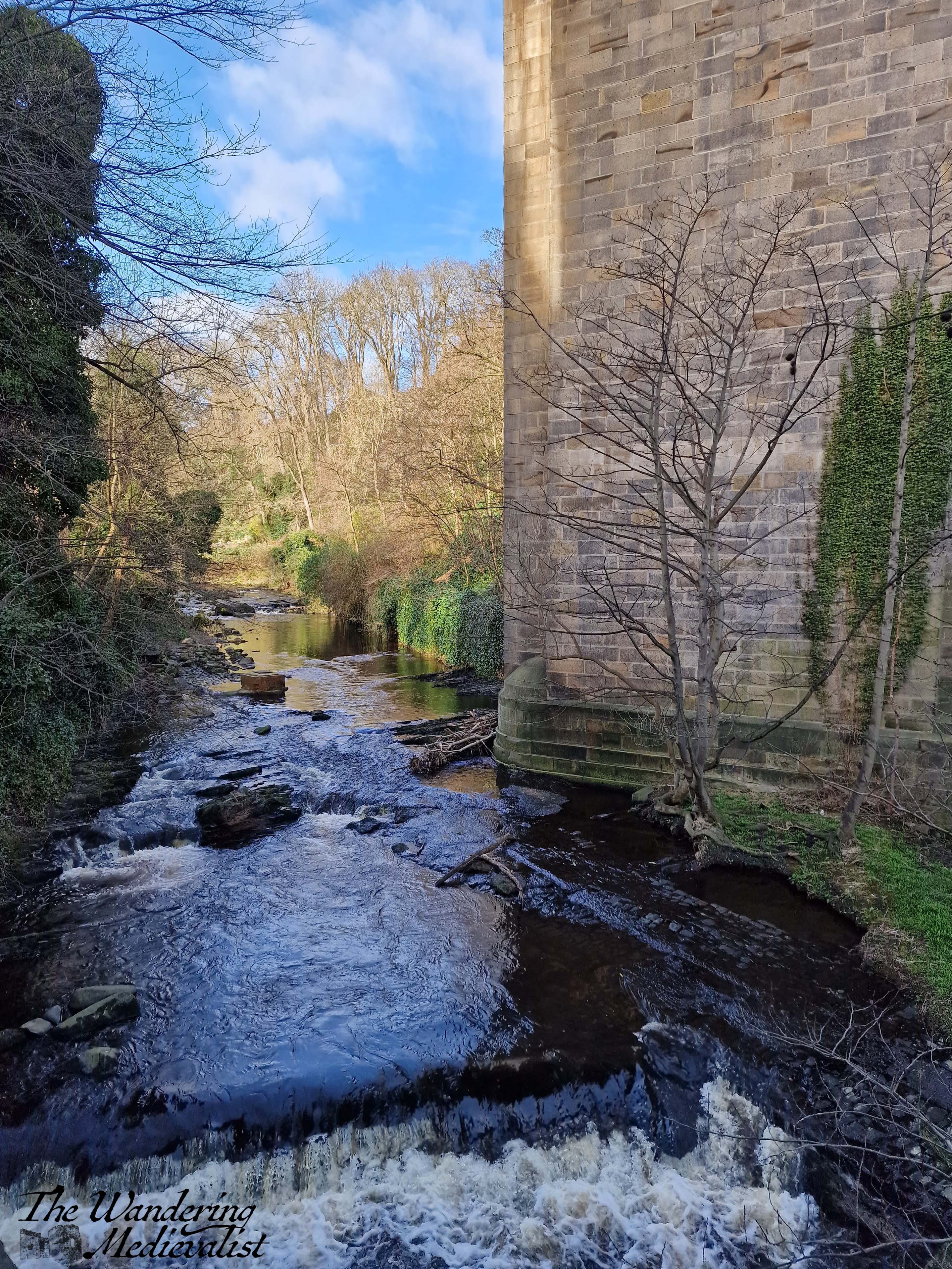
A historical note about the bridge on which I was standing at this point – it is, from Edinburgh’s perspective anyway, a quite new bridge, built in the 1830s to allow easier access across the gorge, from central Edinburgh towards Cramond and, one would assume, the Forth bridges and Queensferry. The village itself is at least medieval in origin, having been a grain milling area for hundreds of years, driven by the Water of Leith – the main river that starts in the Pentland Hills and runs through Edinburgh to join the sea at Leith.
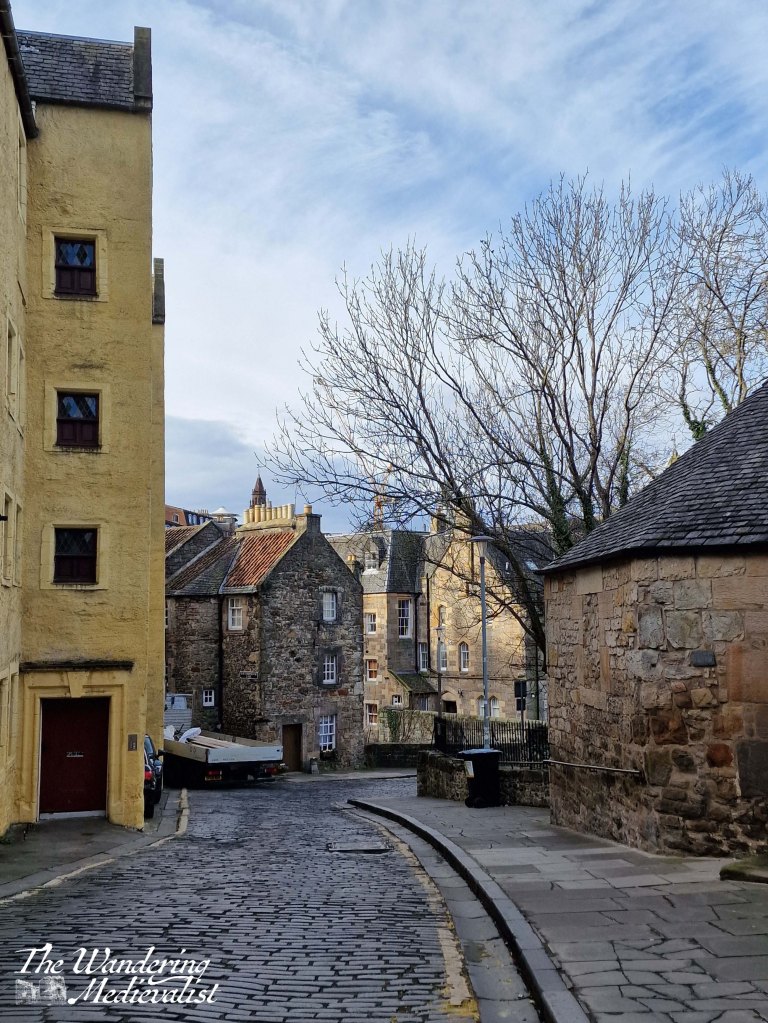
From this comparatively modern street level, visitors traverse down the steep, cobbled Bell’s Brae towards the village itself. I was impressed to see a Sainsburys van also manoeuvring this hill, with some skill.
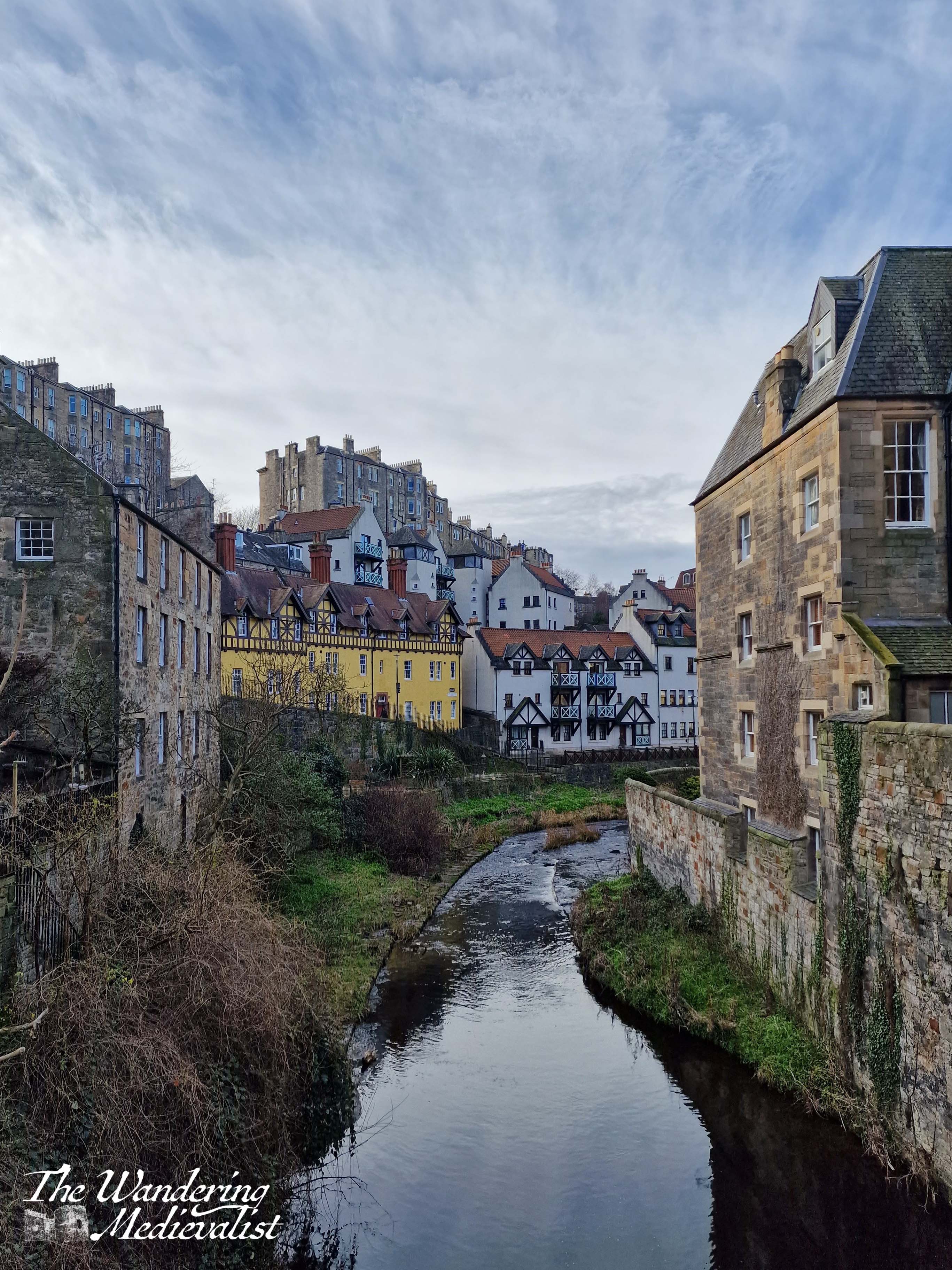
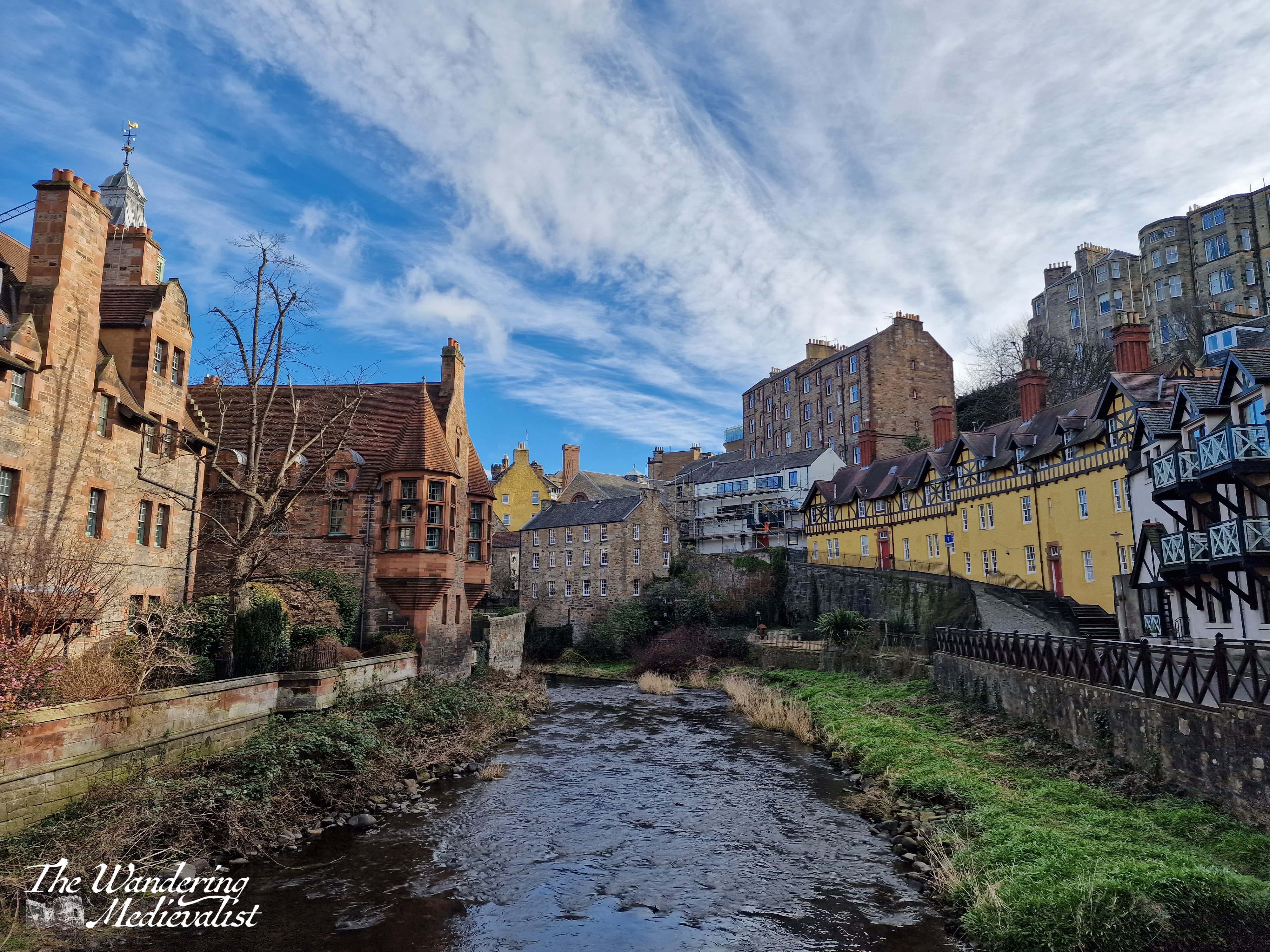
There is no question that most visitors will start on Bell’s Brae Bridge, which affords phenomenal views in both directions – one towards the Dean Bridge, and the other up the Water of Leith through the village (left and right respectively).
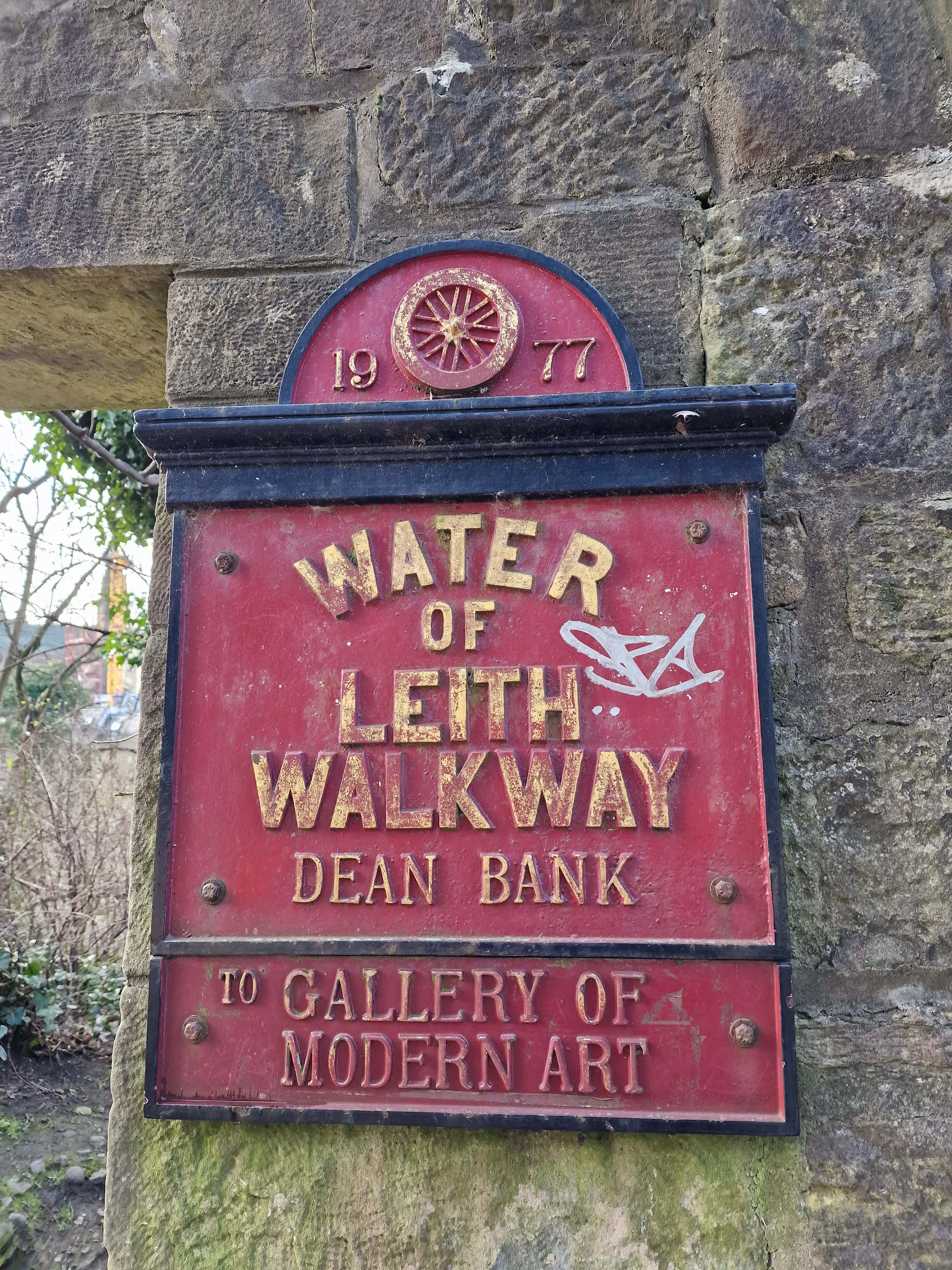
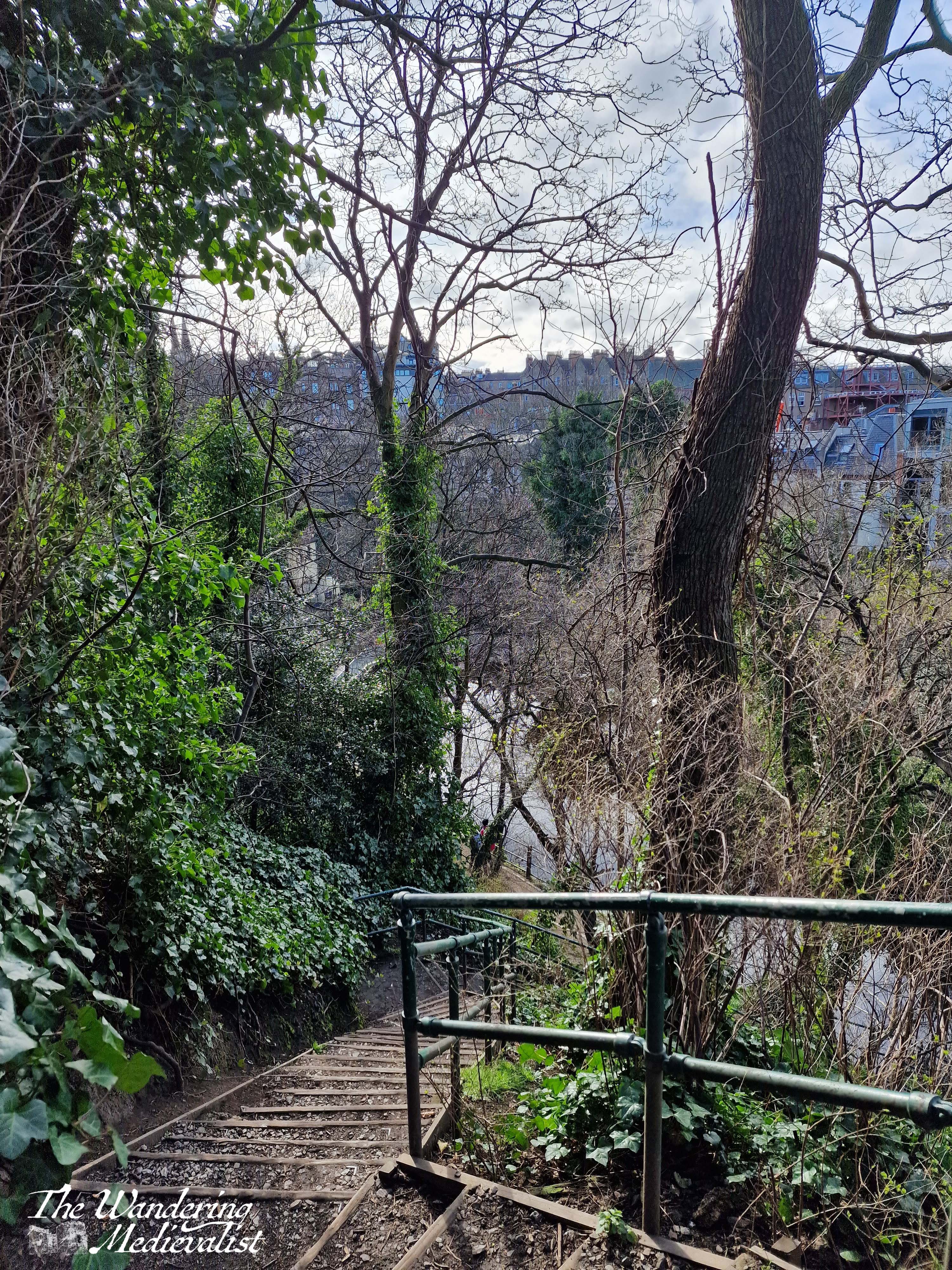
After crossing Bell’s Brae Bridge, I headed up Dean Path, a winding street that climbs up out of the gorge, and reminded me in places of some of the steep hills I recall in New England – the houses were the same style if built of stone rather than clapboards. I managed to get myself a bit lost trying to get into a garden that turns out to be private, but then headed back along the Water of Leith walkway, as I knew there was still plenty to be seen. Firstly, I tested my knees on the steep steps leading down to the water.
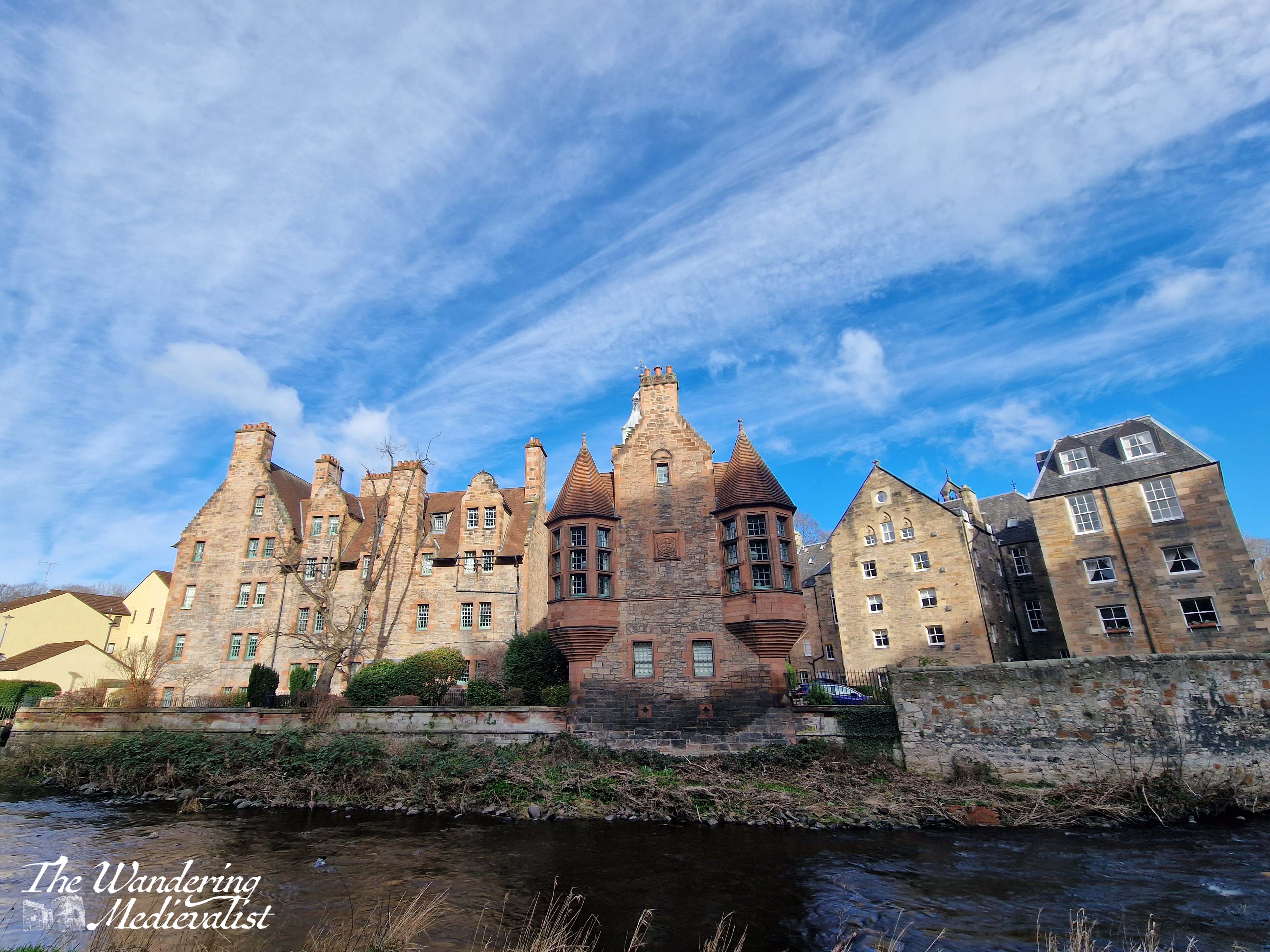
I passed the Water of Leith weir, getting properly wet from the spray, and re-joined the village at the crossing of a small footbridge. Unsurprisingly, from this bridge yet more amazing views could be had, particularly of the buildings which are apparently Dean Village Apartments and Well Court, a series of buildings designed to house local workers. They look, to me, almost like they could have been a very posh school, and apparently were extensively repaired in the early 2000s.
I could have stood all day and taken pictures as the light changed, but instead I decided to take a detour back along the Water of Leith Walkway, which stretches all the way to the port but would, I hoped, offer a few opportunities to cut back up towards George Street and the city centre.
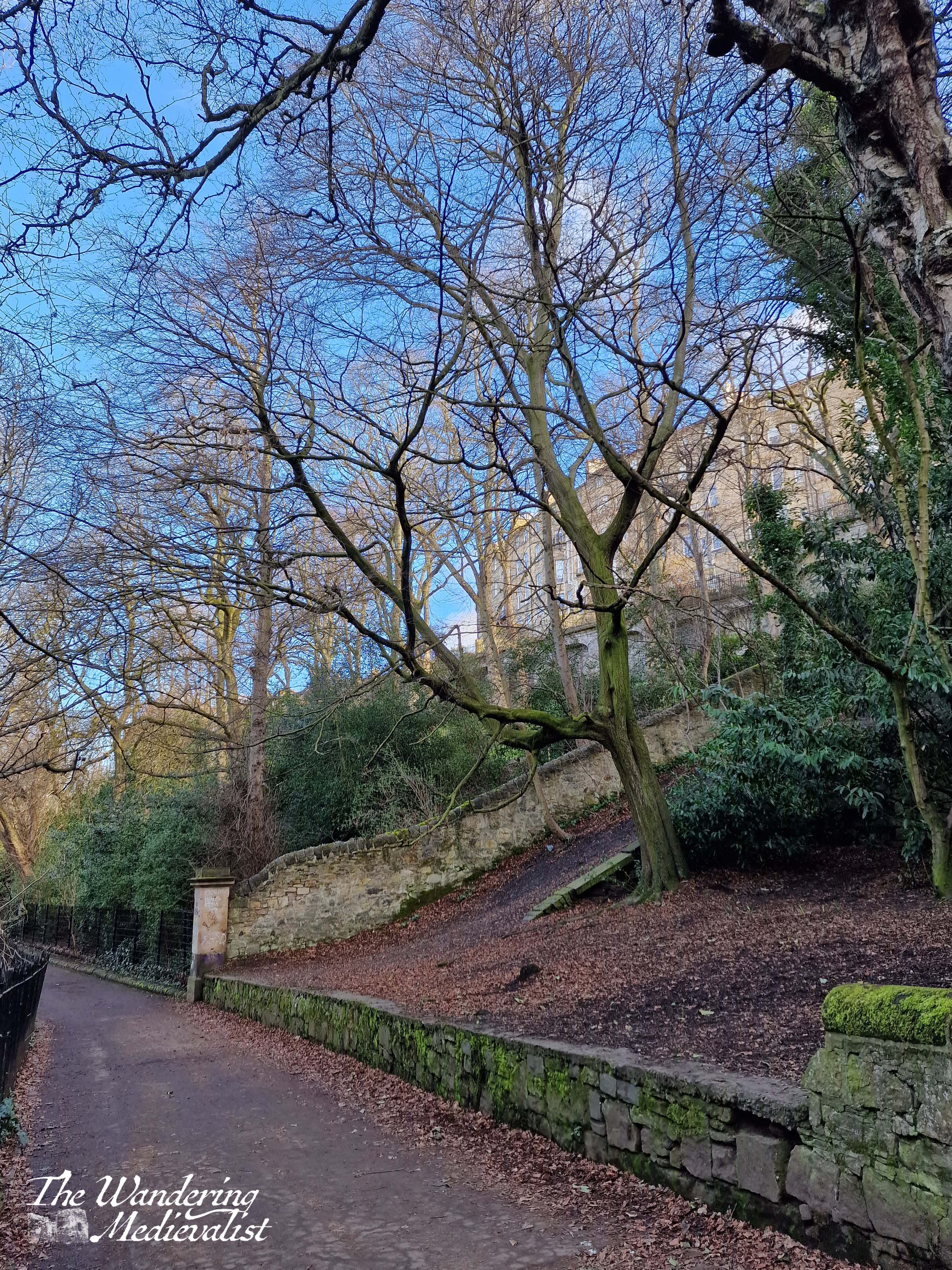
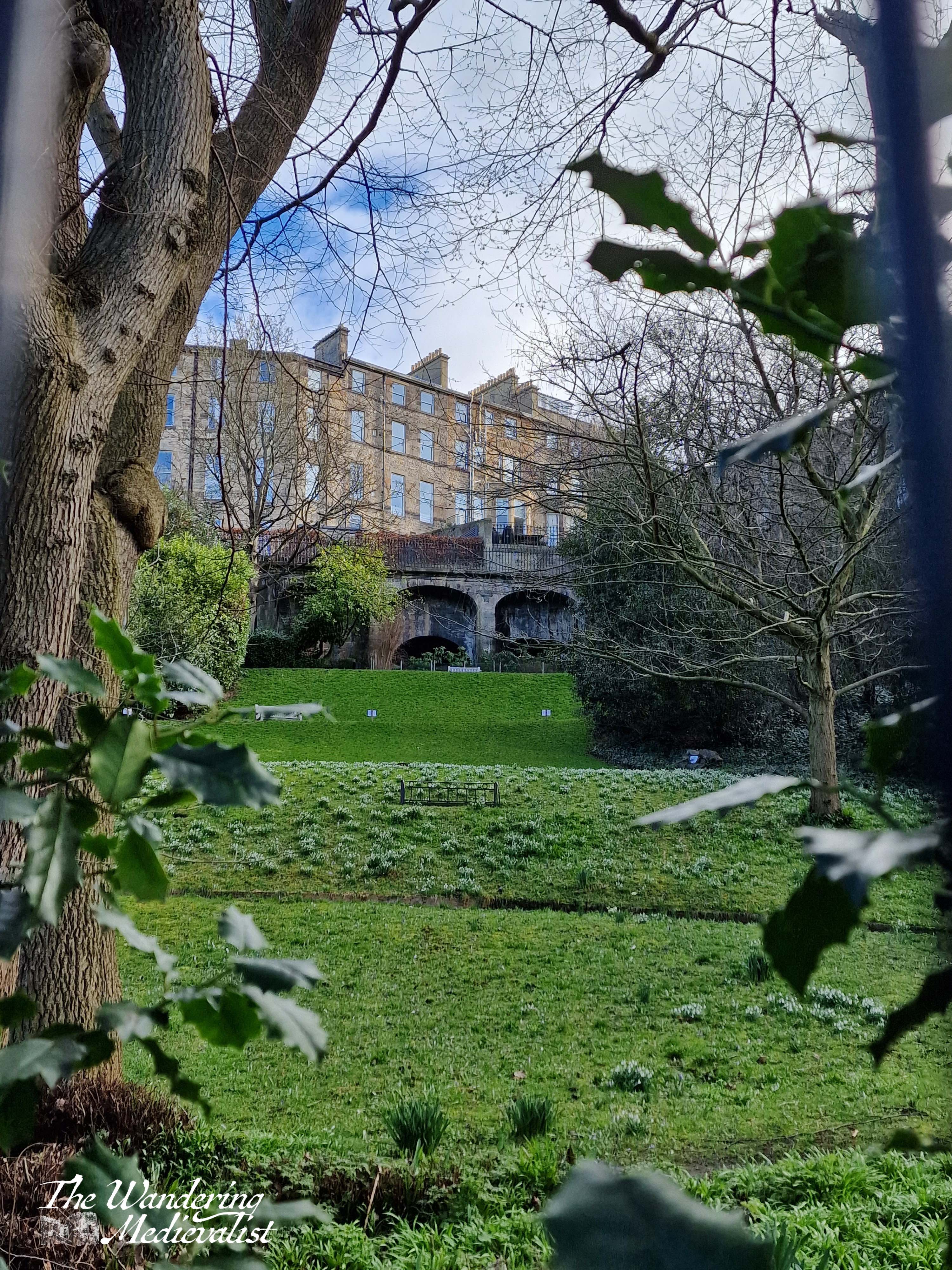
Like the village, the path did not disappoint, showing me a side of Edinburgh I had never seen – the backs of stately houses, steep lawns, and of course the river itself.
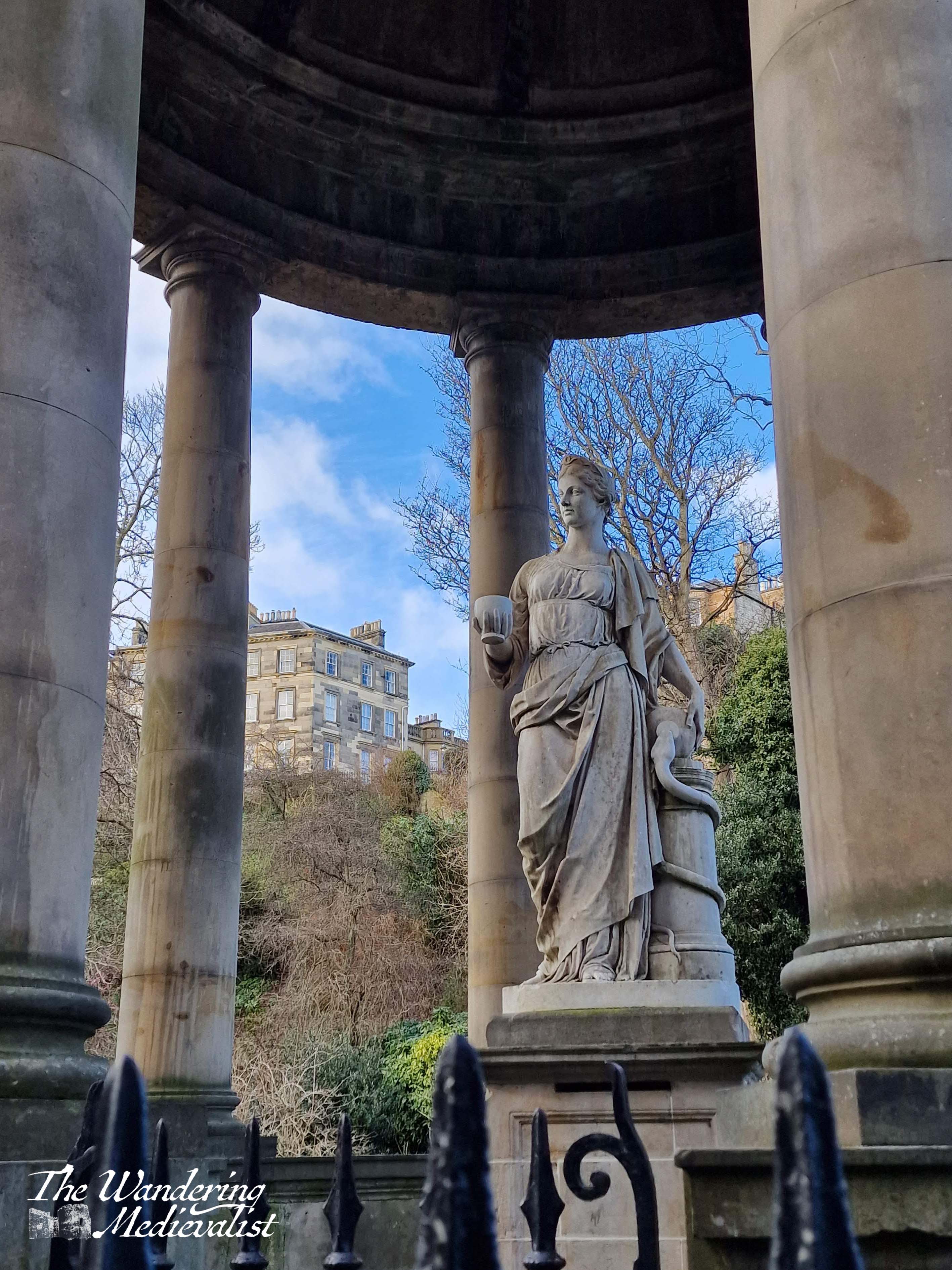
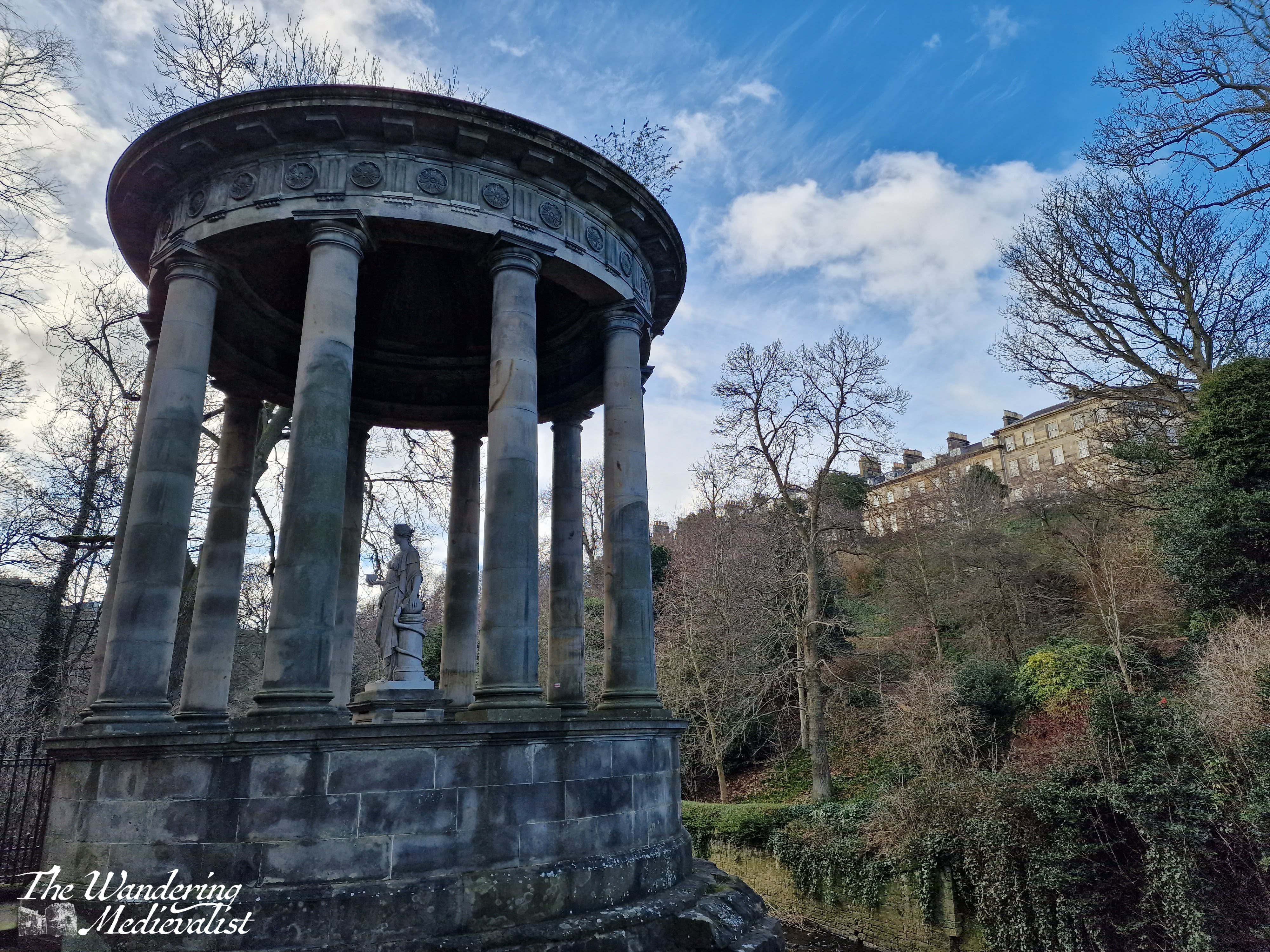
I would most likely have walked all the way to Leith were I not, by this point, getting quite hungry for lunch. So, I made it as far as St Bernard’s Well, a monument designed in 1789 and recently restored, marking the location of a natural spring that was rumoured to have healing powers.
Having reached St Bernard’s Bridge, I chose to head up into town at this point. Thanks to Google maps I was able to navigate up through the New Town and eventually to the St James Centre at the far end of George Street. It was well worth every step and I can very much see why this area of Edinburgh is so regularly visited, and photographed. Even on a week-day in March, Dean Village was busy with visitors taking advantage of the sunny weather. Absolutely a must-see area of the city and I cannot believe it has taken me this long!
Stirling is the castle I recommend above all others if someone is in Scotland for only a short time and has limited options or time; you can reach it using only public transport from both Edinburgh and Glasgow, and even – with a bit of effort – St Andrews. It is positively steeped in history and, in my opinion, is more medieval than Edinburgh, which has been re-built and added to so many times.
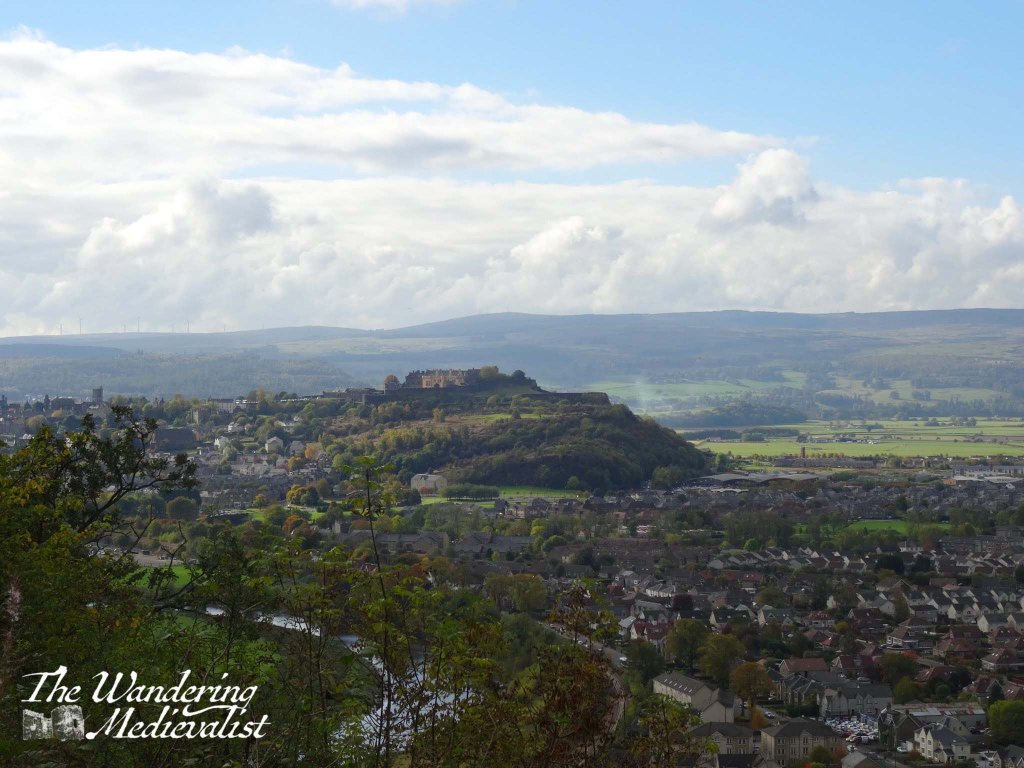
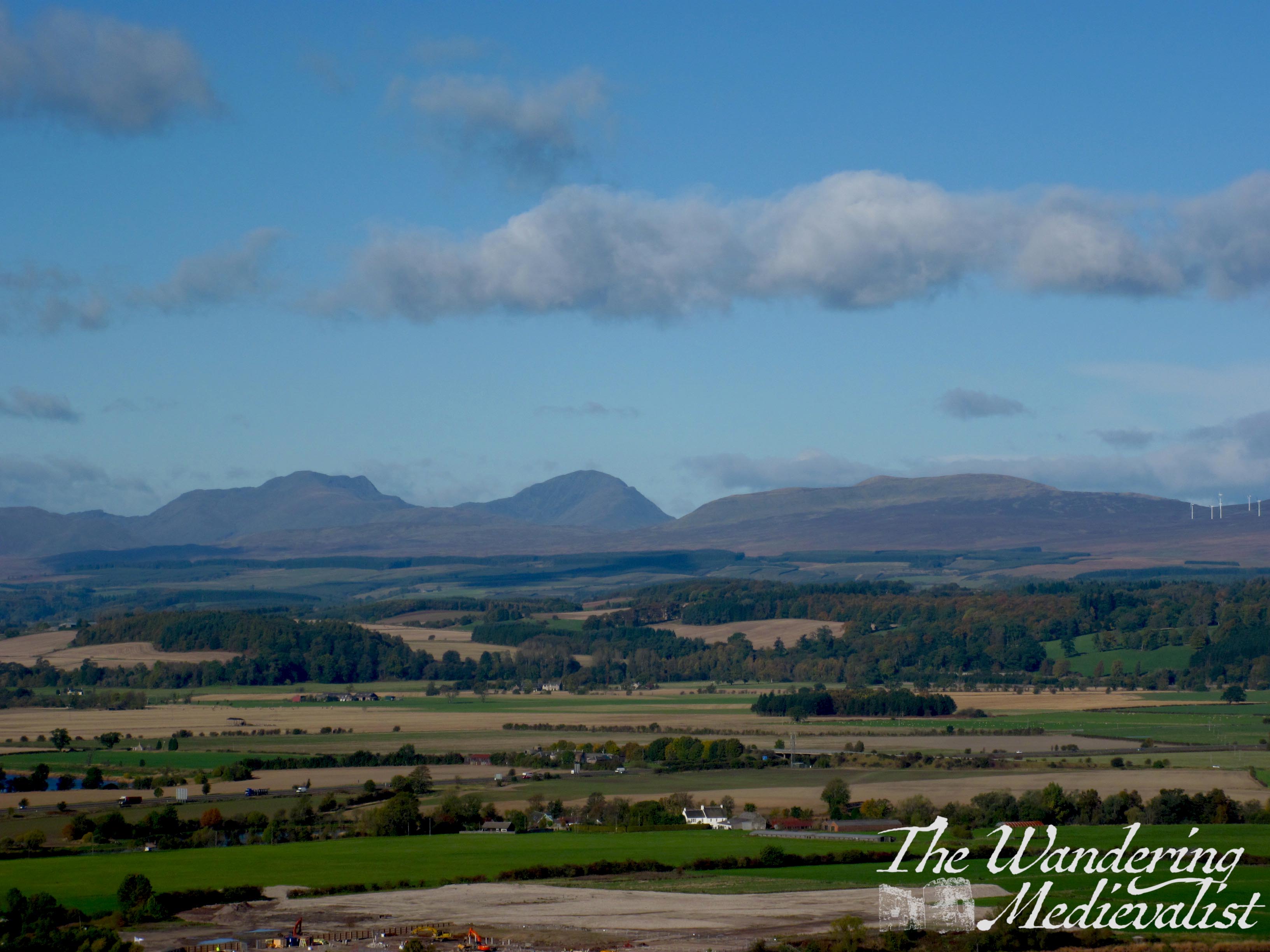
Like Edinburgh Castle, Stirling sits on a massive volcanic outcrop high above the surrounding plain, and from its walls you can see into Fife, the incredible winding River Forth, along the Ochils, and right to the edge of the Highlands. On the surrounding plains were fought at least two iconic battles of the Scottish Wars of Independence: Stirling Bridge (1297) and Bannockburn (1314).
Stirling was, for most of history, the furthest downstream crossing of the river that becomes the Firth of Forth, and a fortress here was a natural protector of the way to the Highlands and all of northern Scotland.
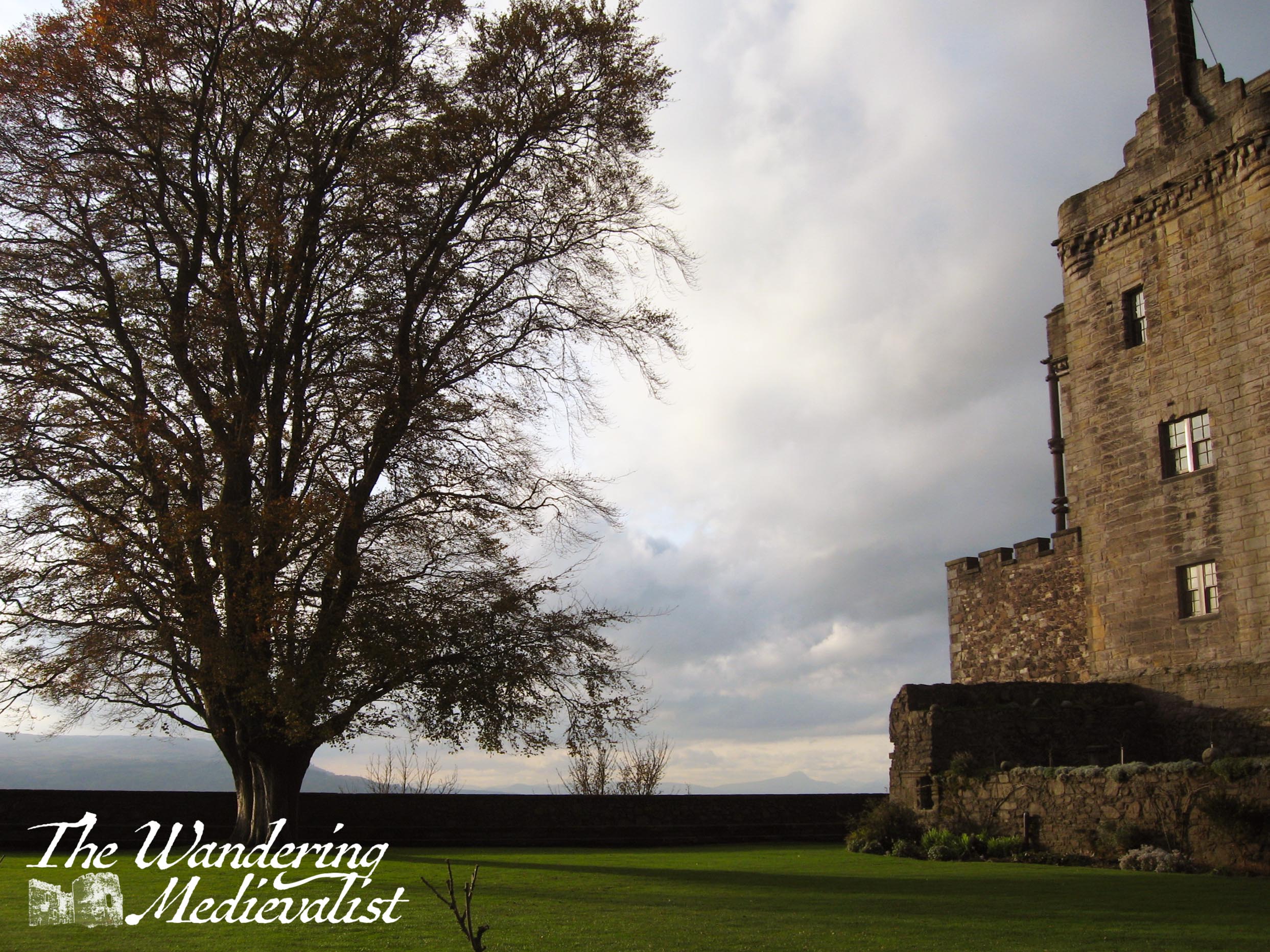
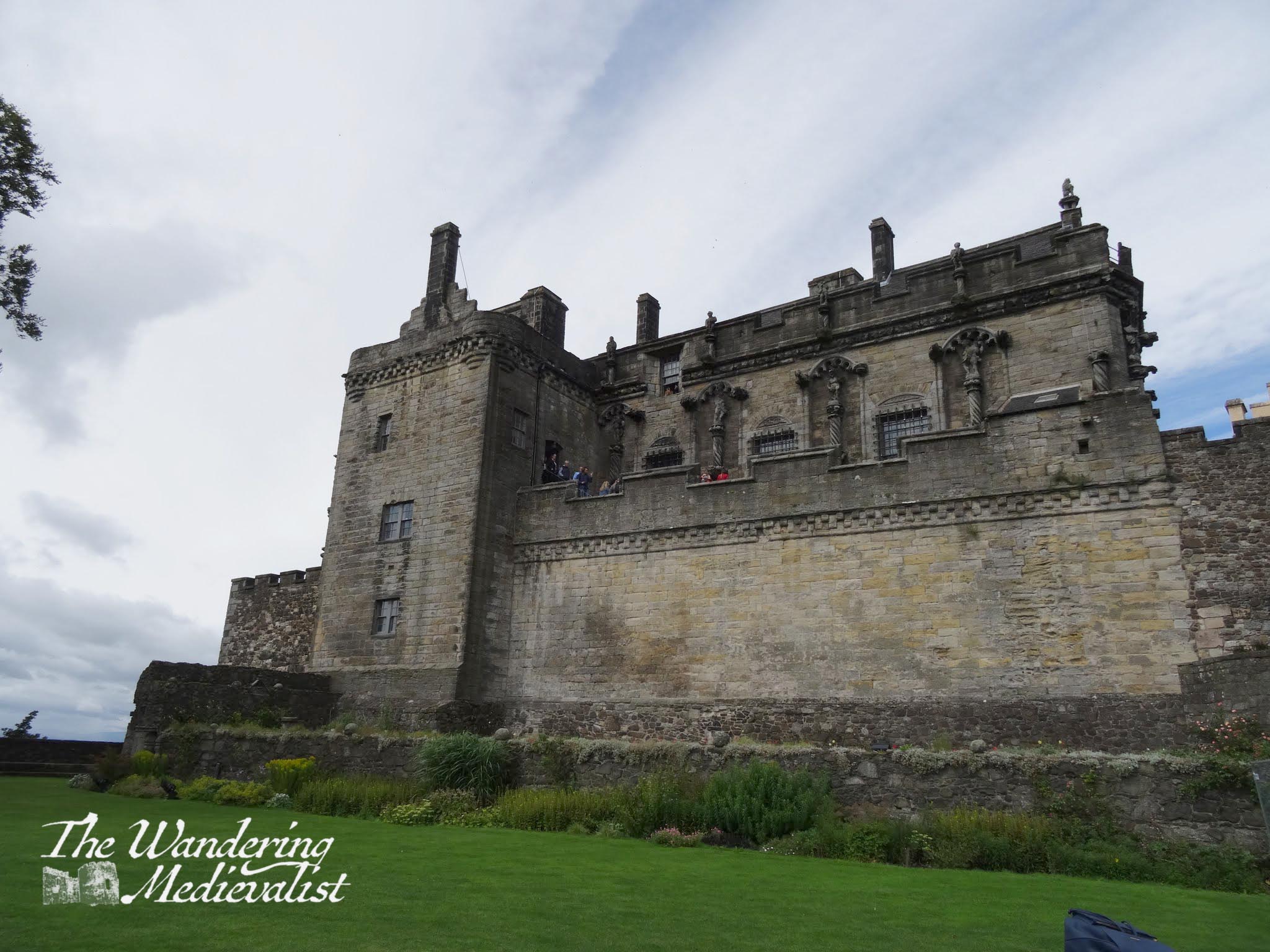
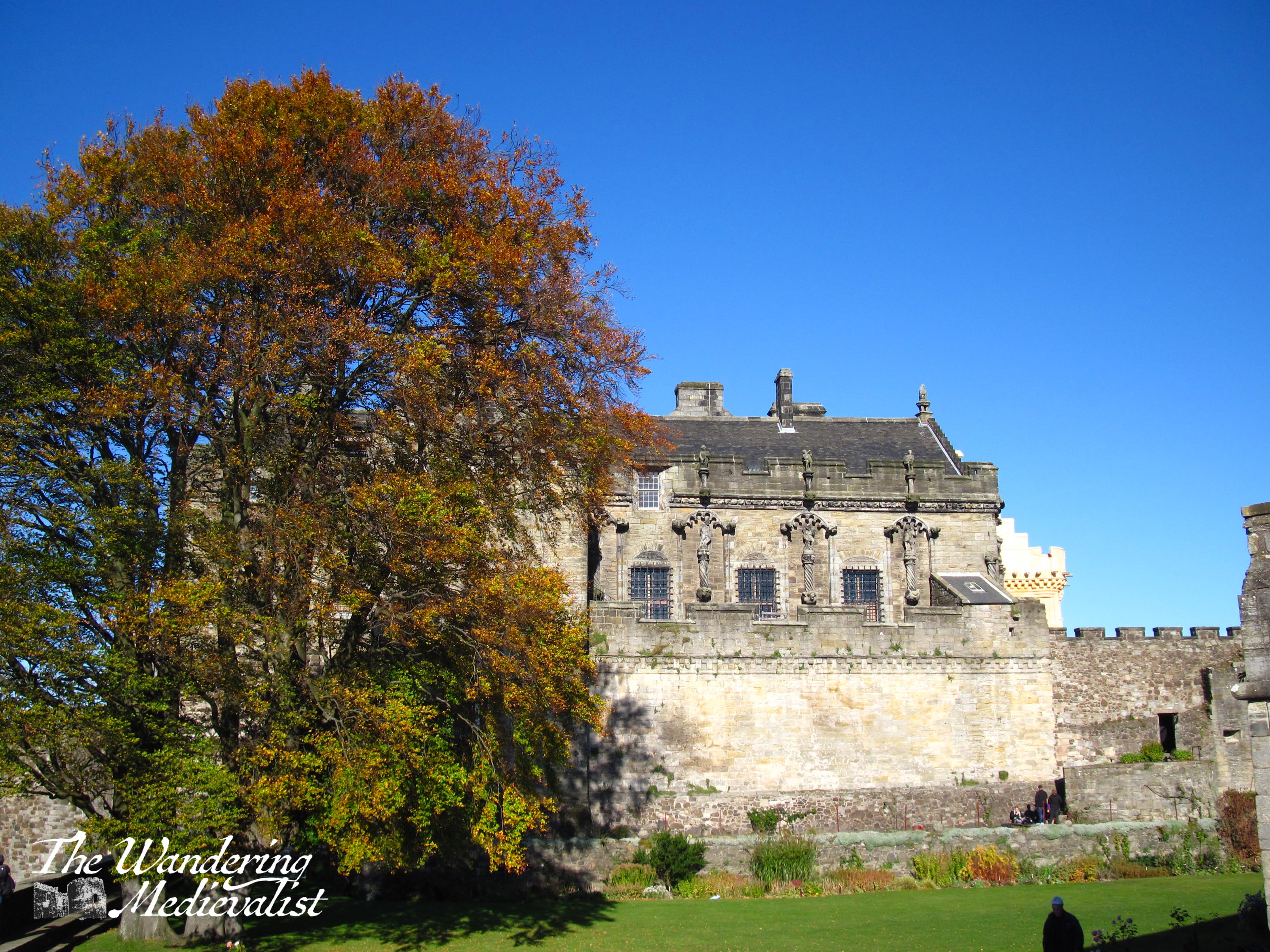
The historical significance of this castle really cannot be understated – it was fought over constantly during the Wars of Independence and changed hands regularly. Several times it played the role of haven for widowed Scottish queens – starting with Queen Joan Beaufort and her son after the murder of James I – and Mary, Queen of Scots was crowned here in 1542. There is first mention of a castle here in the 12th century, though most of the buildings date from considerably later, the 15th and 16th centuries, at which point the castle became more of a residence than a fortress. Even without an understanding of Scottish history, one must only stand on the castle walls and look north to understand the significance of the location.
I first visited Stirling in the final year of my undergraduate degree, while everyone else was busy studying for and taking exams. I had turned in my dissertation and had no exams, so took the long bus trip from St Andrews winding through Fife and Clackmannan to Stirling. It was more that two hours and passed through so many little towns I had never heard of but now know well – Dollar and Tillicoultry being the two I remember the most. It was my first glimpse of the Ochils, and the town of Stirling.
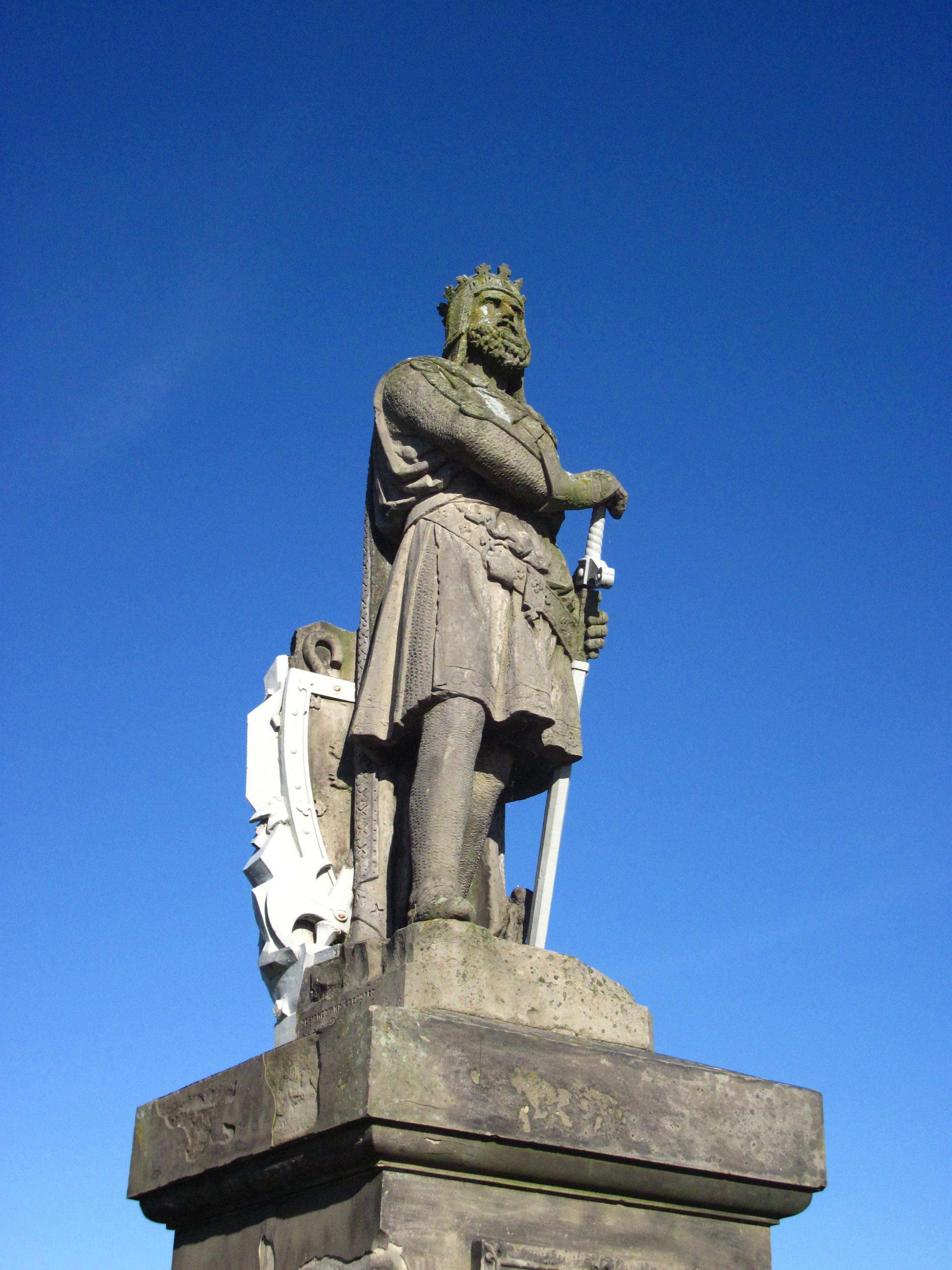
From the bus or train station in Stirling, one is met with an up-hill climb through the historic and picturesque town. Many old Scottish towns have the odd juxtaposition of beautiful old stone houses, contrasting with much newer housing and shops that always stand out. And then, before the castle, one is met by who else but Scotland’s national hero, King Robert I the Bruce (r. 1306 – 1329).
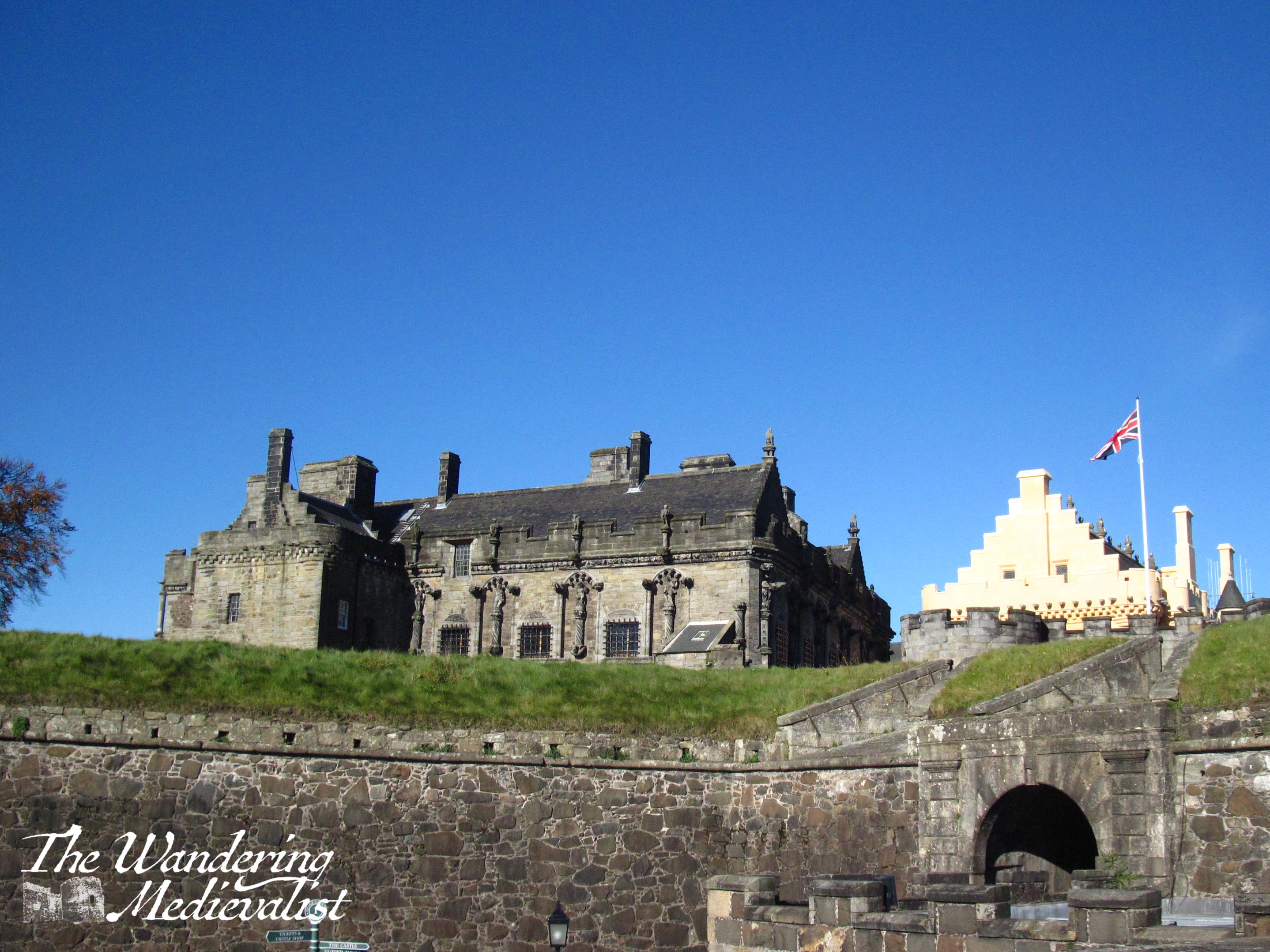
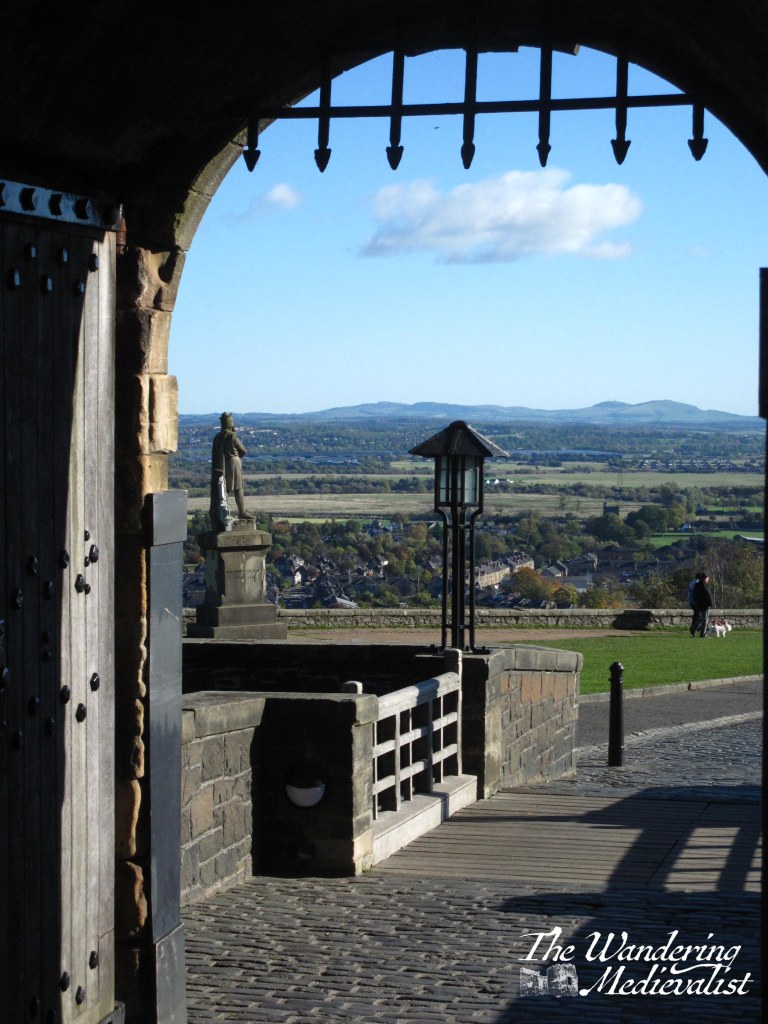
Visitors enter the castle through the main gate, across the drawbridge and under the portcullis. Past the guard room, the path leads up into the Bowling Green Gardens, where you can explore some of the rooms where soldiers lived. The green offers more stunning views over what is left of the formal gardens, and also up towards the palace area.
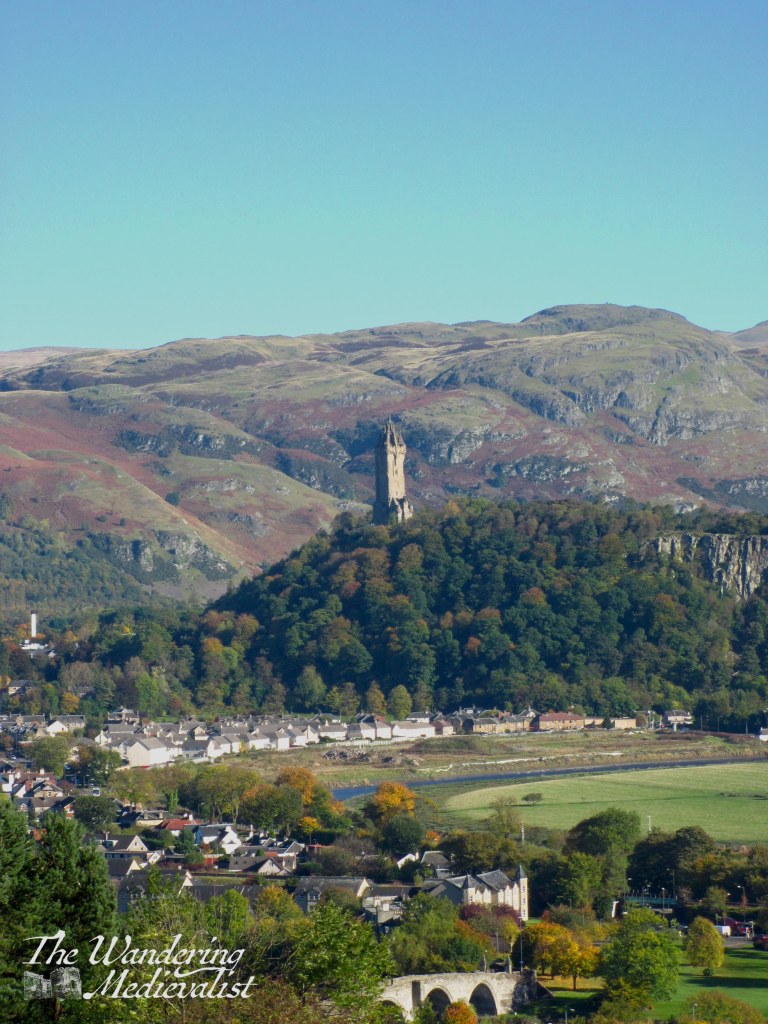
While at times I think I could just stay here, there is plenty more to see, including ramparts with enormous black cannon – great fun for kids to climb on – and gun loops that provide views over the town towards Stirling Bridge , the Wallace Monument and Ochils.
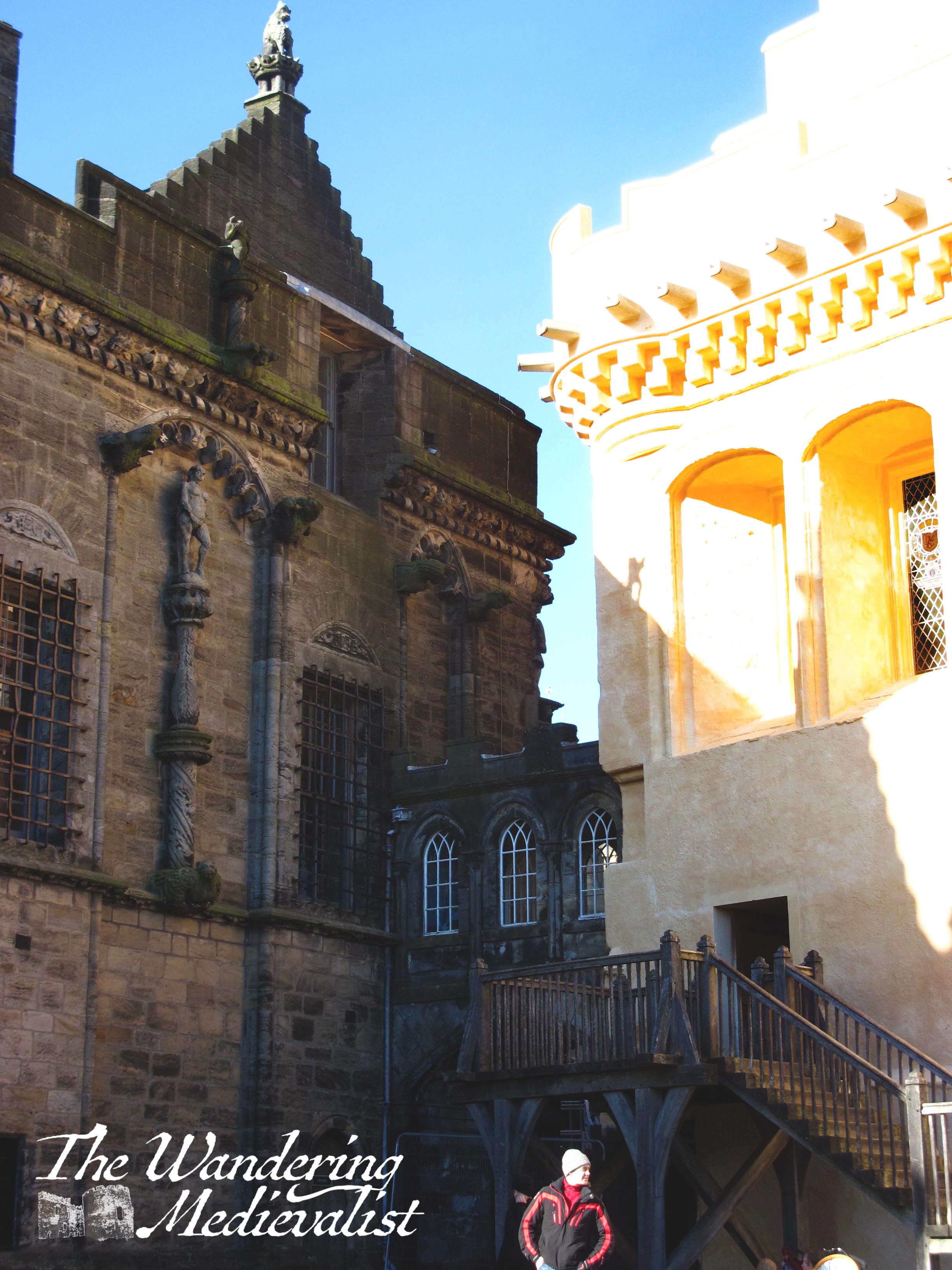
From these ramparts, one can visit the extensive gift shop, or move up into the palace and Inner Close. A great deal of work has been done over the past 20 years to renovate some of the palace spaces, in particular the Great Hall.
Once visitors have finished exploring the palace area, I recommend continuing beyond the chapel to the small garden that appears to be the ‘bow’ of the castle, were it a ship – this is where the views north are at their best.
It occurs to me as I write that it has been a number of years since I have visited Stirling, and I may be about due for a return trip – the only down side to this castle is that it is one of the more expensive to visit in Scotland. But well worth it!
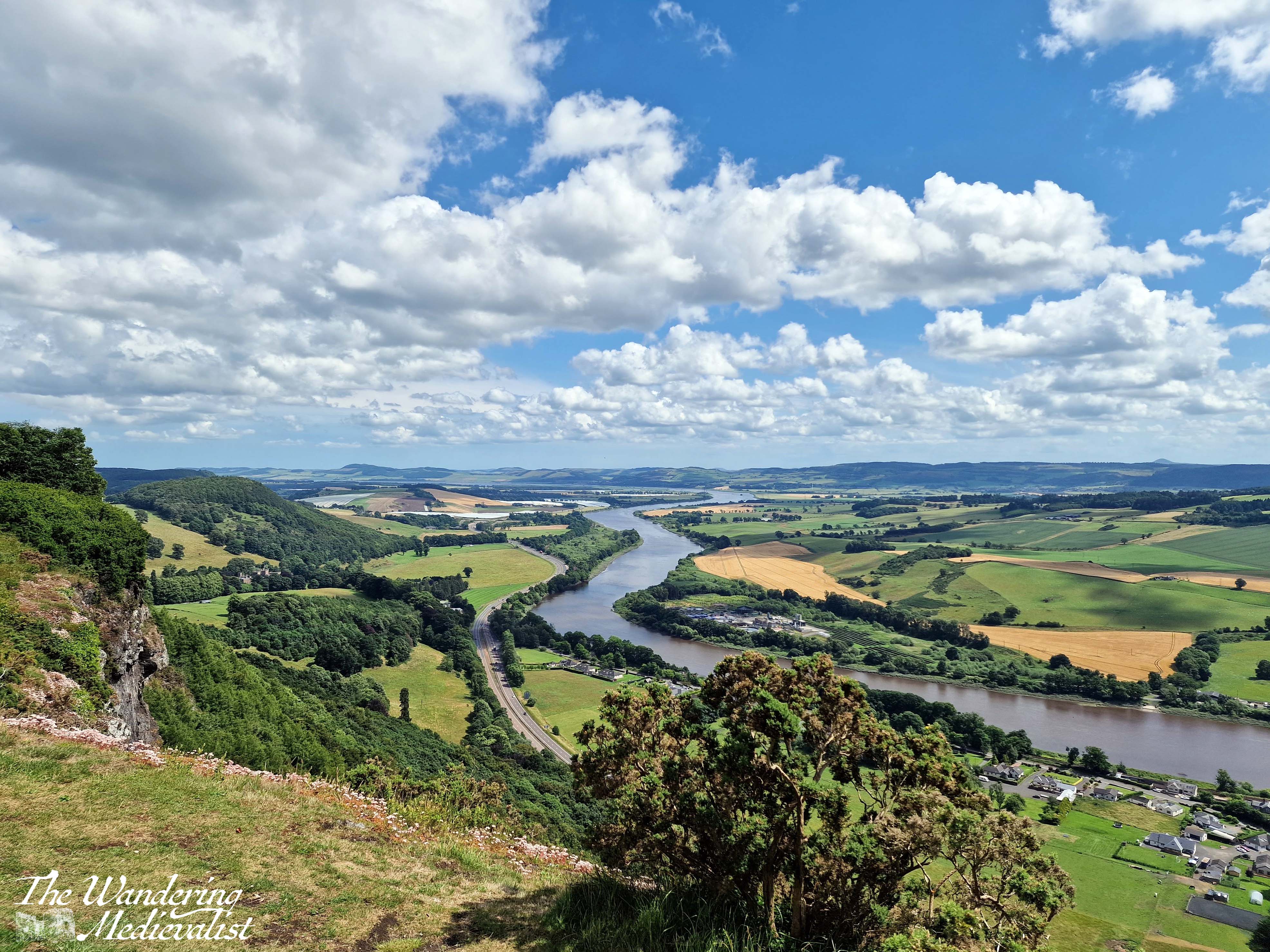
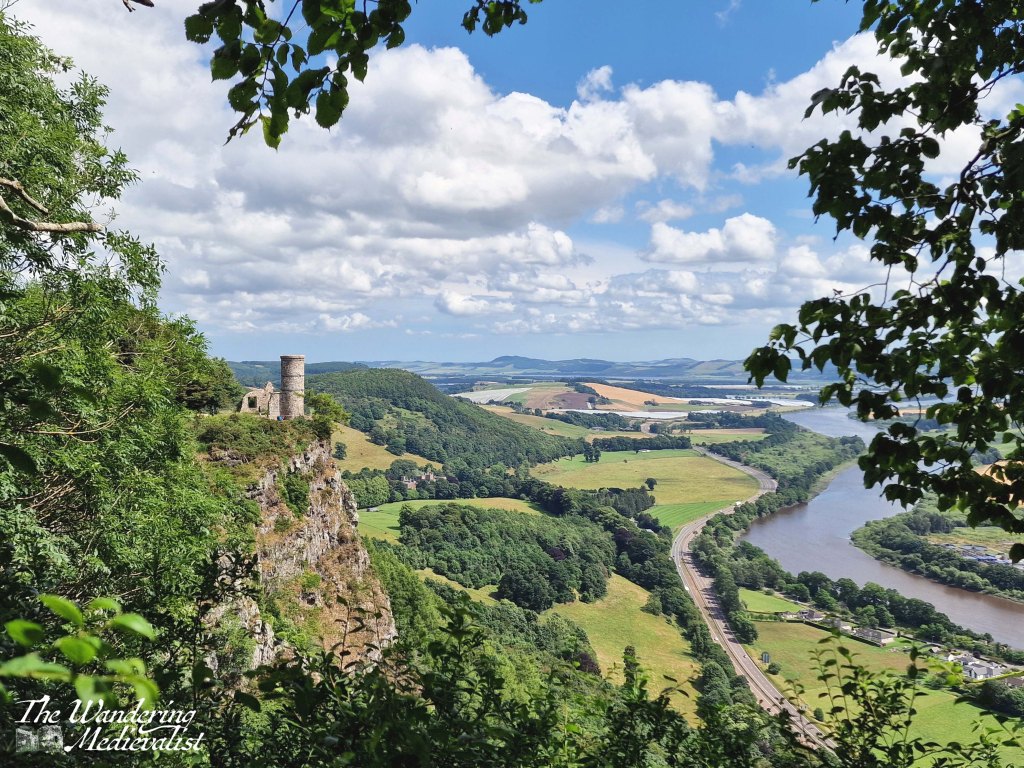
I honestly cannot recall the first time that I noticed the tower on Kinnoull Hill, standing out quite clearly as it does on the main road from Dundee to Perth. But, I do know that I have wanted to visit it and hike up to it for at least a decade and finally, last weekend, we did!
It came about strangely – we planned to go for a coastal walk in Tayport, but the roadworks on the Tay Bridge meant that we could not get down to Tayport at the normal exit. I suggested Broughty Ferry, but very soon we decided to try Perth, and this walk I have been planning for so long. I am quite pleased to report that, despite our parking in the wrong place, the hike did not disappoint.
Like many locations in Scotland, Kinnoull Hill has a series of well-kept and relatively easy to follow paths, criss-crossing the ancient volcano.
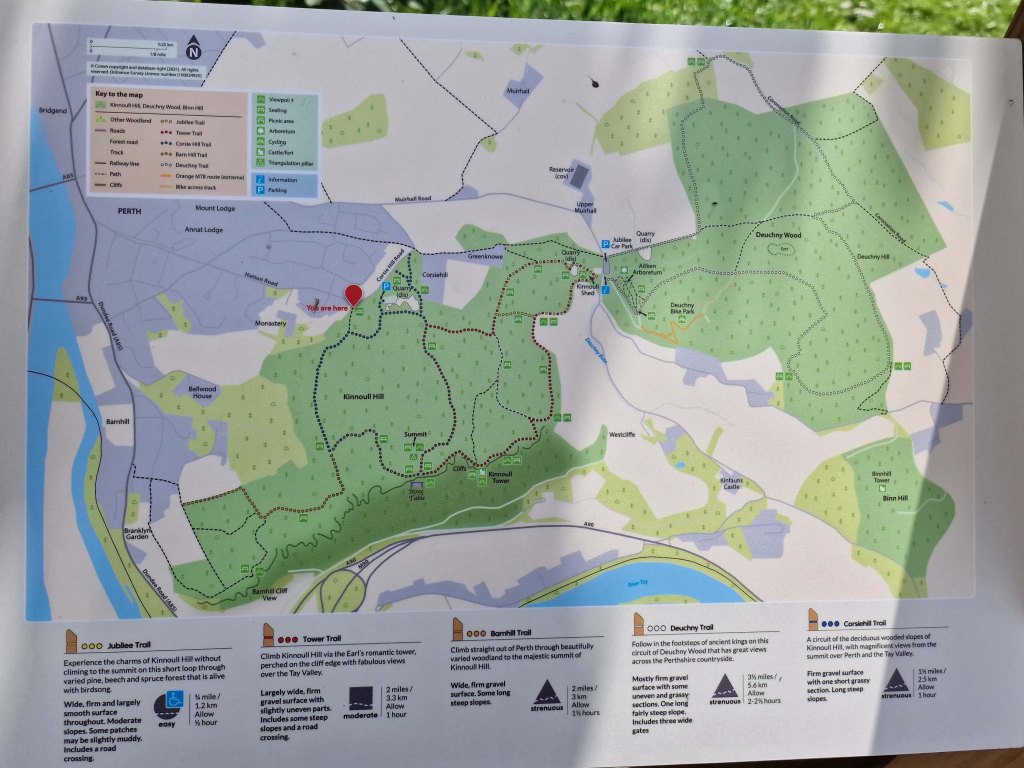
We parked at the location marked on this map but later realised that the Jubilee Car Park further along would probably be a better option; we were following Google and while she is usually quite reliable, she clearly was not aware of the parking situation here.
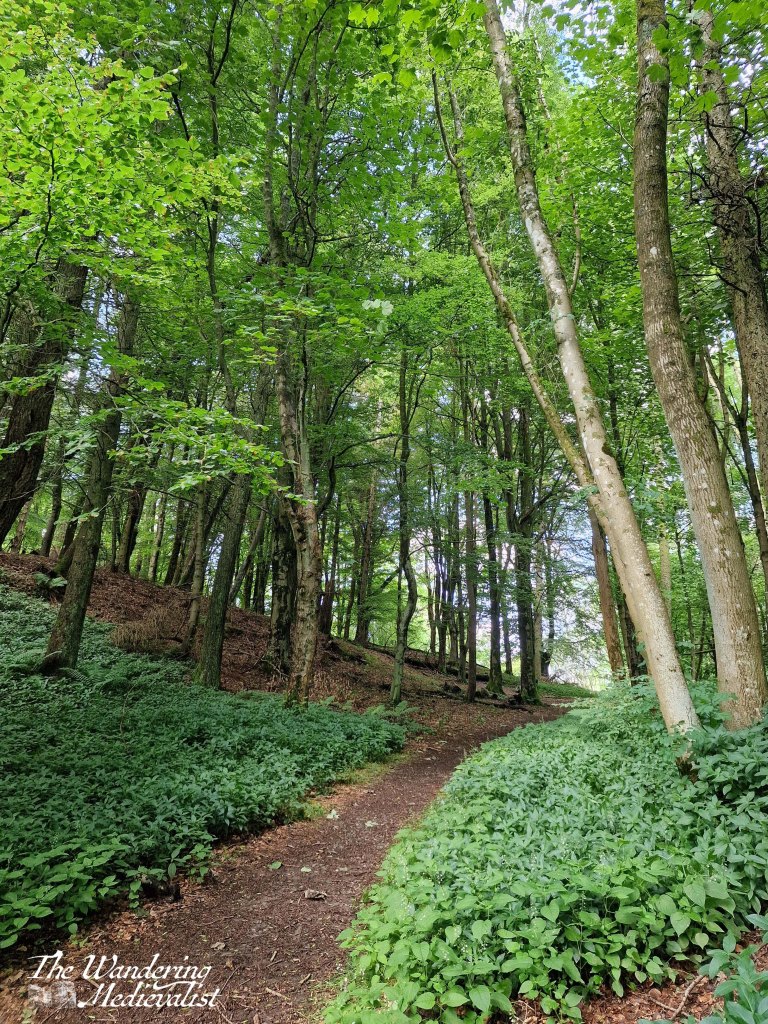
The start of the hike was relatively standard as we made our way up at a comfortable pace – the trail is clearly going uphill but it is not overly strenuous. With maps like the one above you never really know what you’re getting into in terms of distance, but we reached the view point in about 20 minutes or so, passing through some pleasant forest with patches of birch, lovely old beech trees and carved wooden animal sculptures along the way.
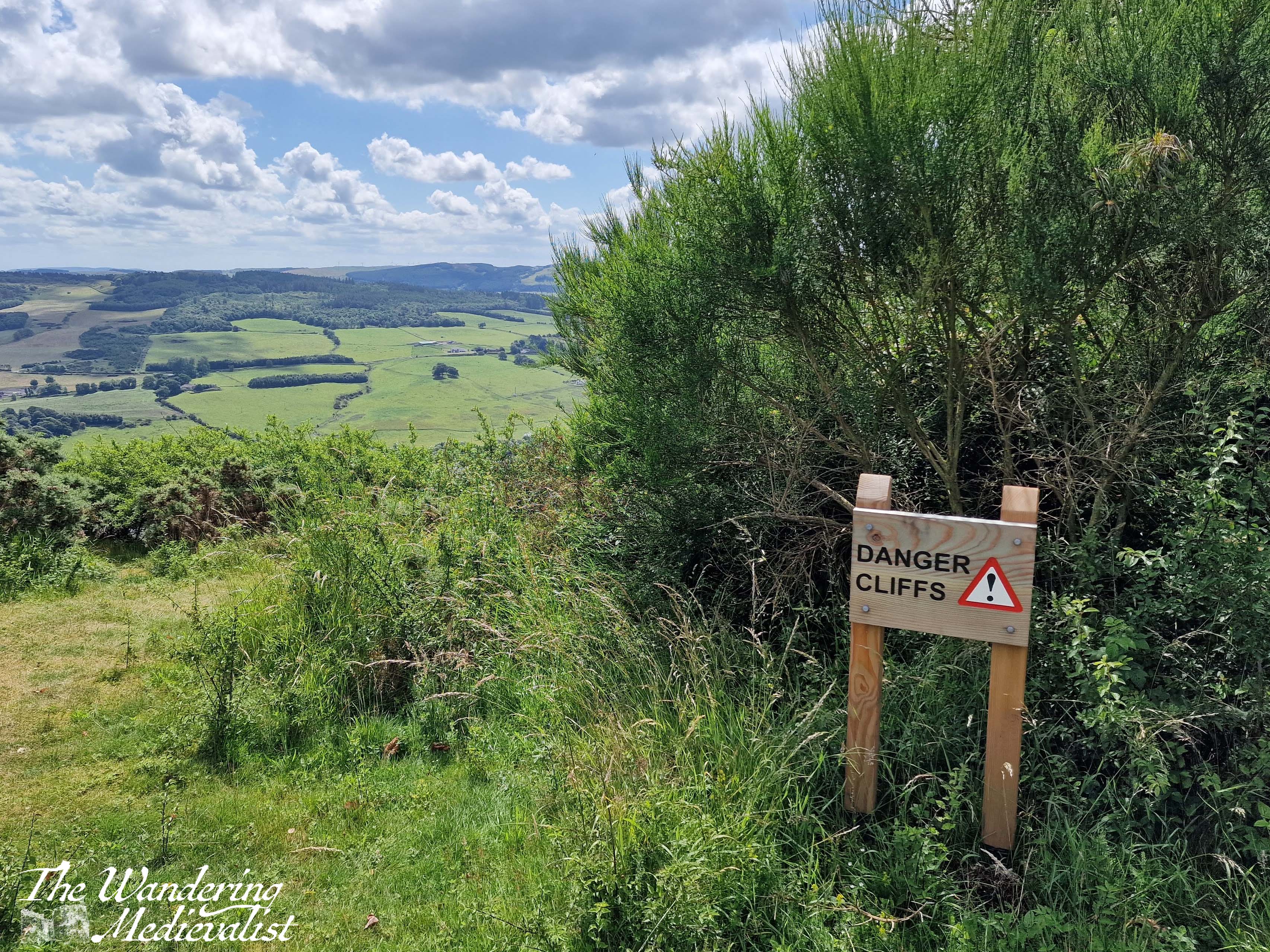
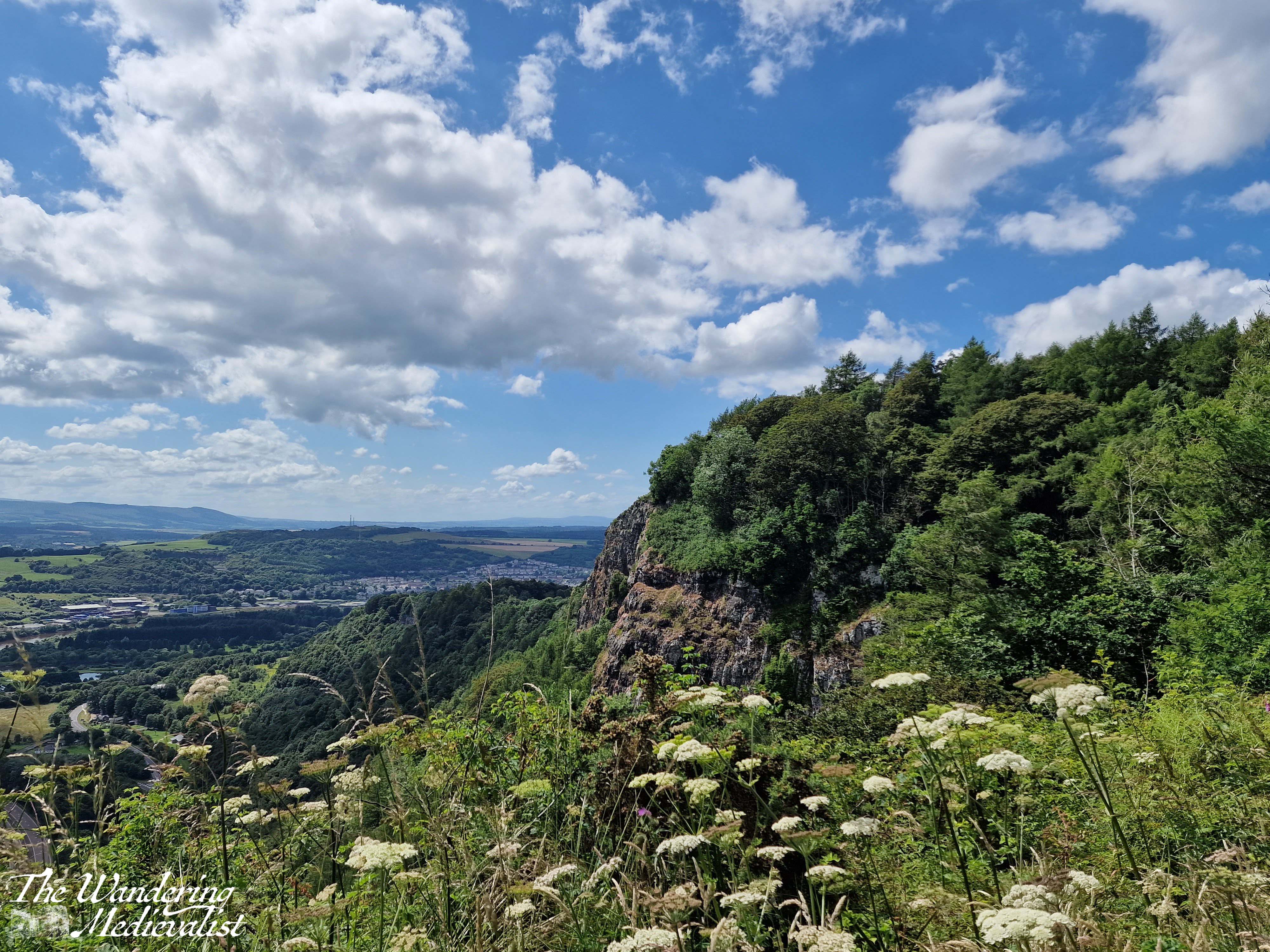
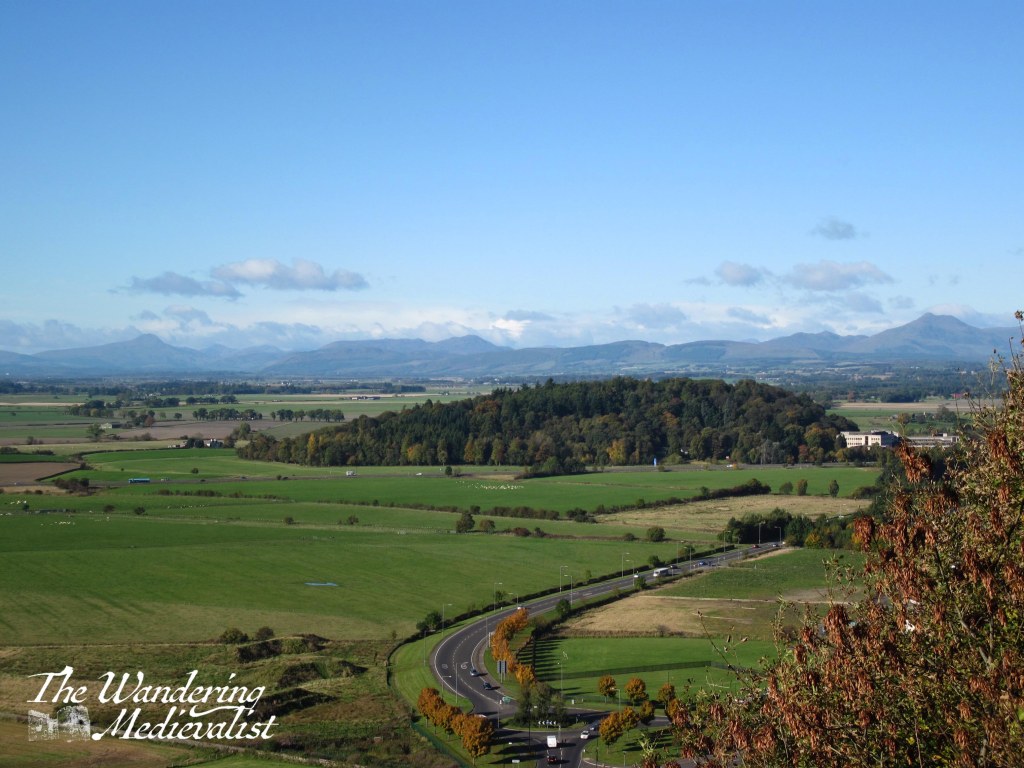
The view from the ‘Stone Table’ is absolutely fantastic, and boasts one of the most needless warning signs I’ve ever seen about the cliffs. You can see 180 degrees from impressive cliffs and the edge of Perth on the right to the hills of Fife and a hint of the tower to the far left.
There was no way we could be this close and not see the tower, so we headed off on the path that followed the cliffs – this one is quite steep in places with quite a bit of up and down, though there are viewpoints periodically along the way that are worth the extra energy required.
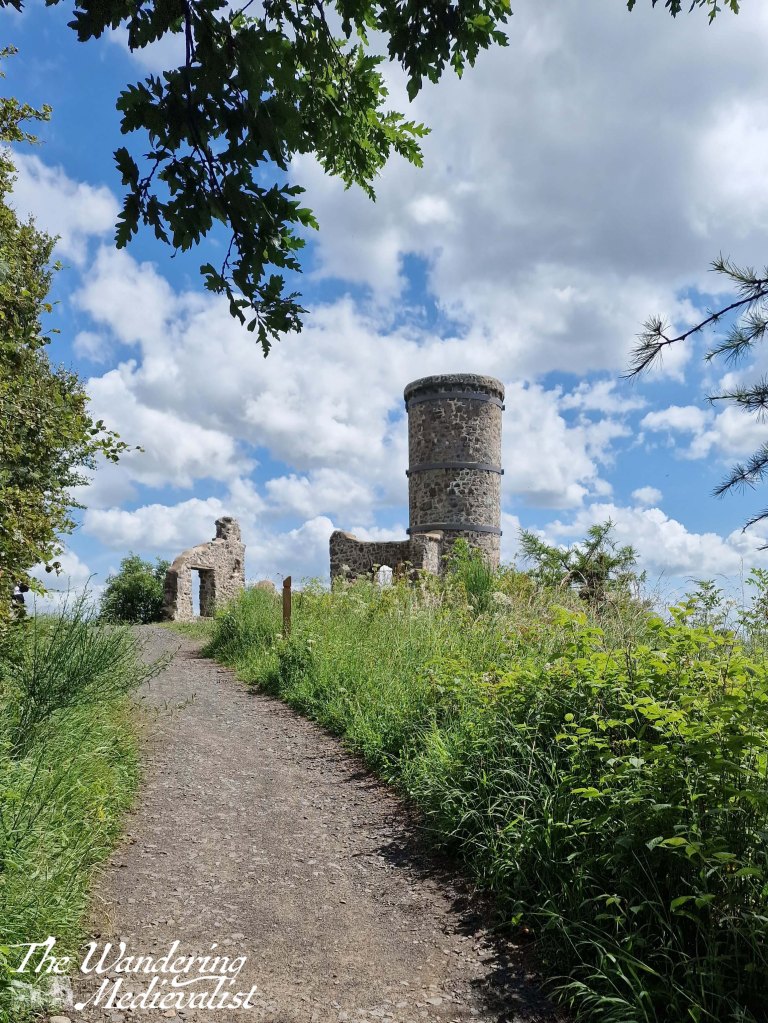
Then finally, we reached the tower which in and of itself is not particularly exciting, though the view is excellent. As one who is not overly fond of heights I struggled to follow the path that wraps around to the front of the tower, where there were groups of people resting and taking pictures, but I managed briefly before scurrying back to the safety of the path.
Once we had finished at the tower, we hiked back to the Stone Table viewpoint and sat for a while enjoying the view. Upon examining the map again we chose to continue the blue loop, which first took us to the summit of the hill.
I have to admit, I was really surprised by the view from the summit – I had assumed, for no valid reason at all really, that the best of the view was to the south. On the contrary, the top of Kinnoull Hill offers just as impressive views north, with the jagged peaks of the Highlands easily identifiable.
The faint hint of the mountains further north made me suddenly yearn desperately to be back up amongst them, so I hope I can plan a day trip before my next planned excursion in September.
The path back down to the car was sigificantly more pleasant in terms of surroundings – a bit more open, so fewer bugs, and more of a view into the trees and surrounding woodland. In the future, I would definitely park further along and take the red Tower Trail, which I imagine you could stretch to two hours if you wanted.
I am so pleased we ended up on this walk, and I will definitely be back to explore it again.
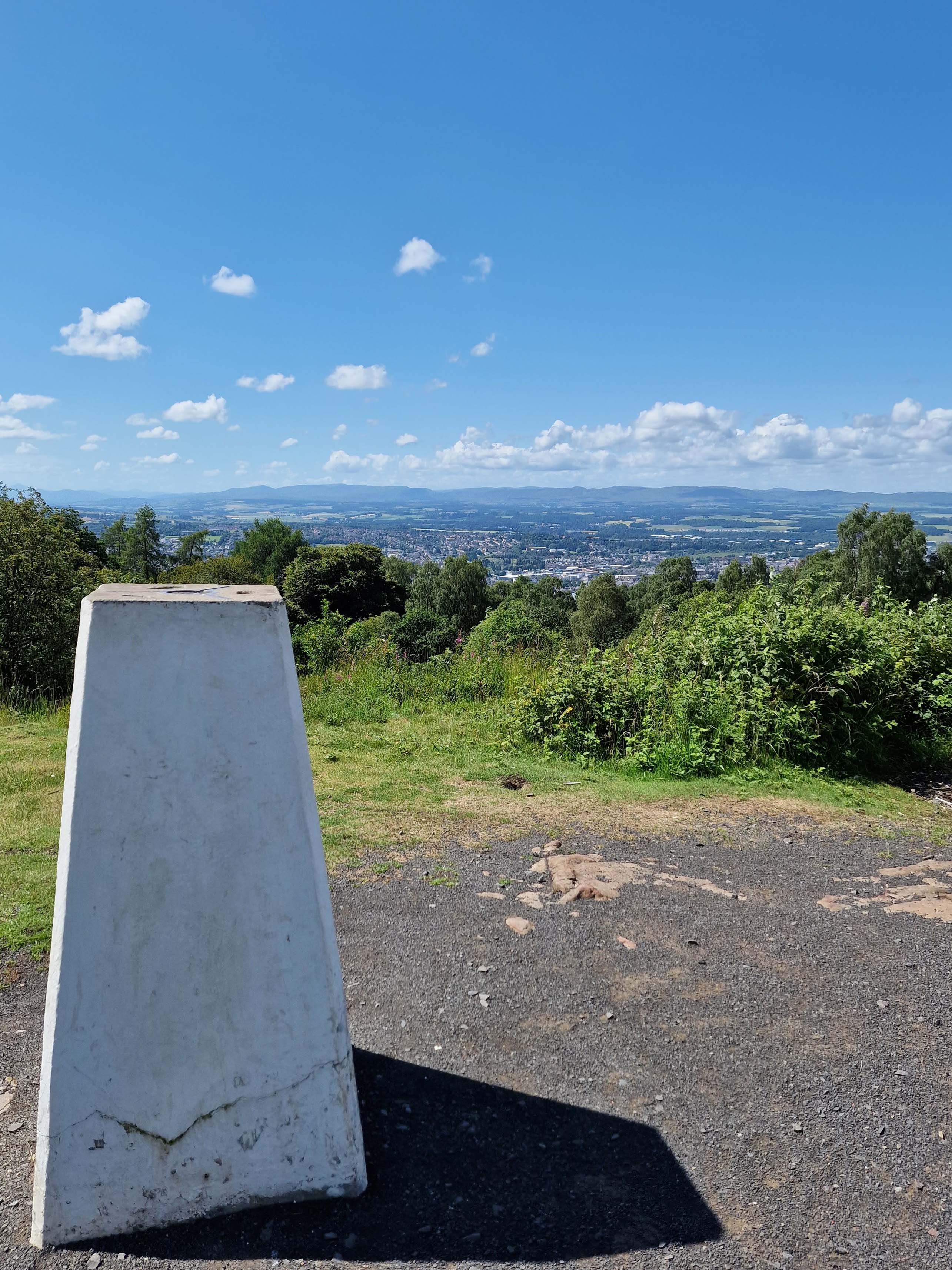
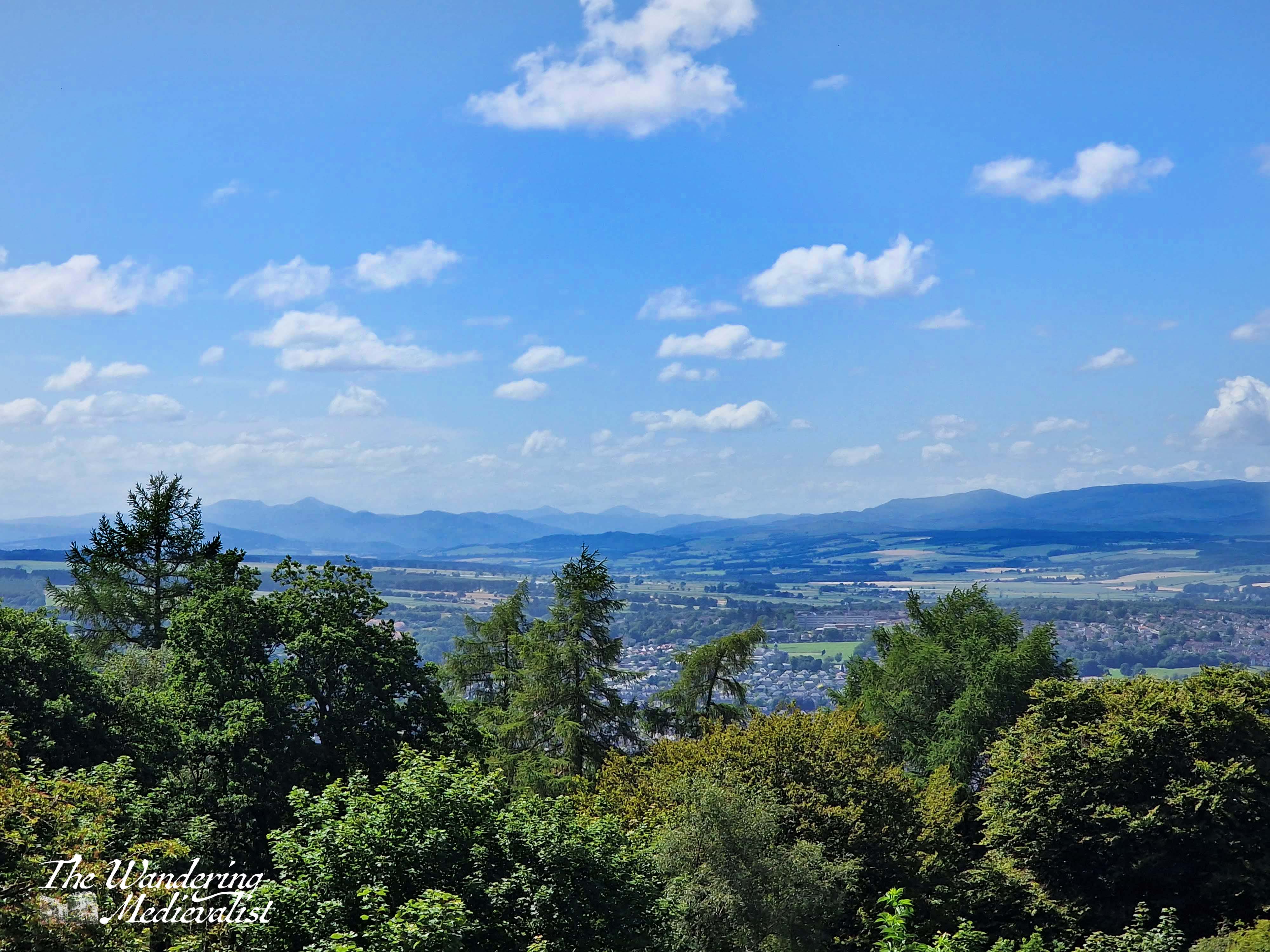
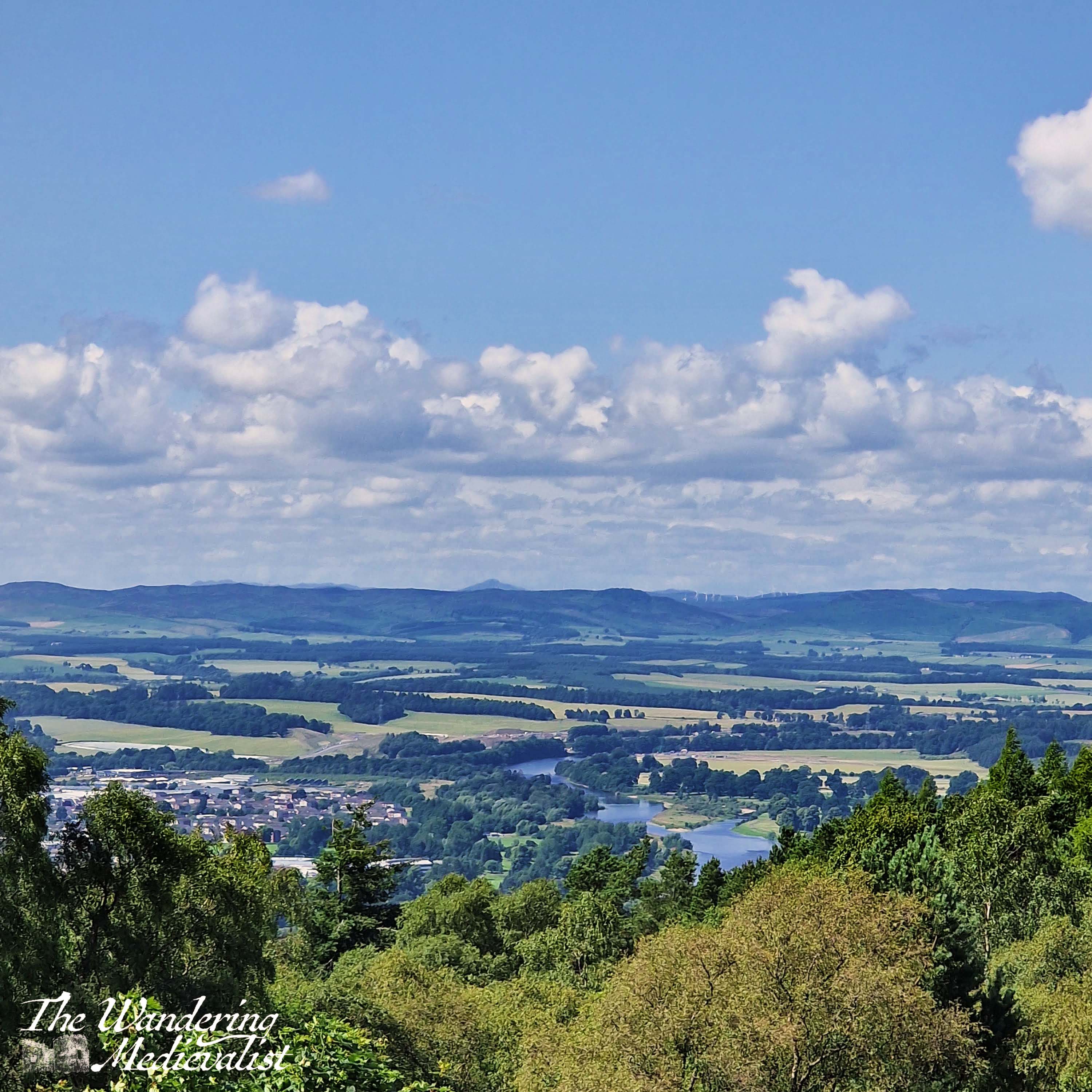
During our recent Sunday walk (definitely another post soon to come), we climbed a hill from which we could see the edge of the Highlands. As we caught our breath and tried to work out which jagged distant hill was which, I felt this visceral need to go there again, to see the mountains up close.
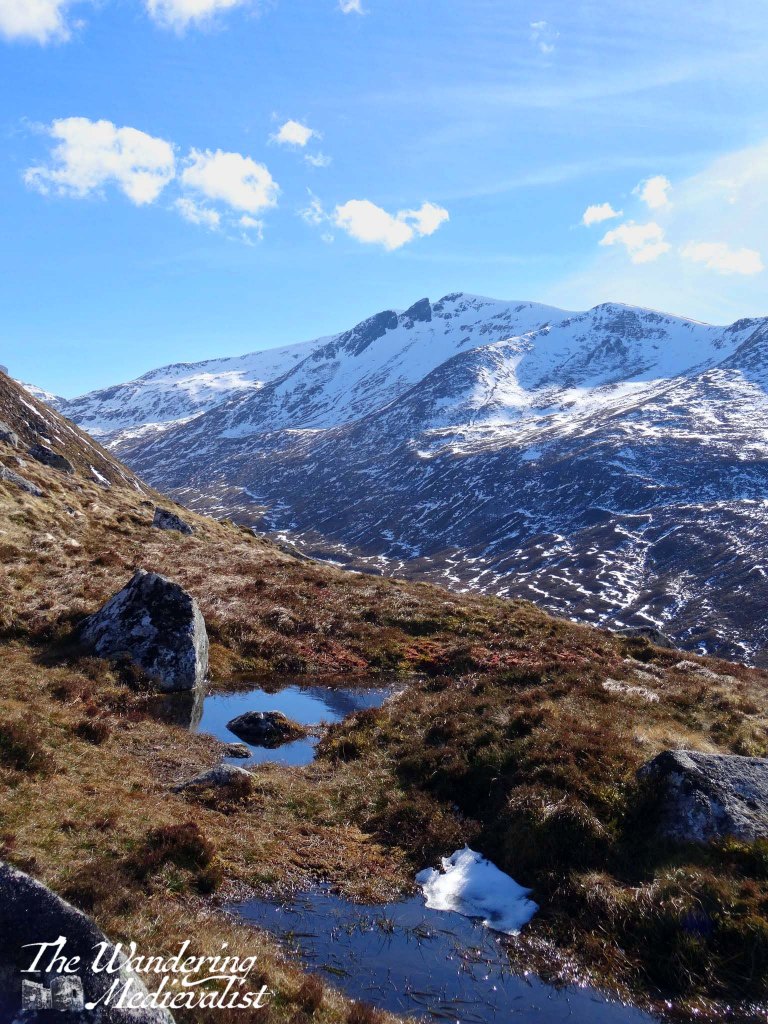
Ever since my first trip north of Perth, I have found the Highlands to be calming, comforting, peaceful – perhaps because they remind me of the White Mountains, or perhaps just because they do have a power over some people – me included. The Meall Beag viewpoint is one of those places in the Highlands where I can find my equilibrium.
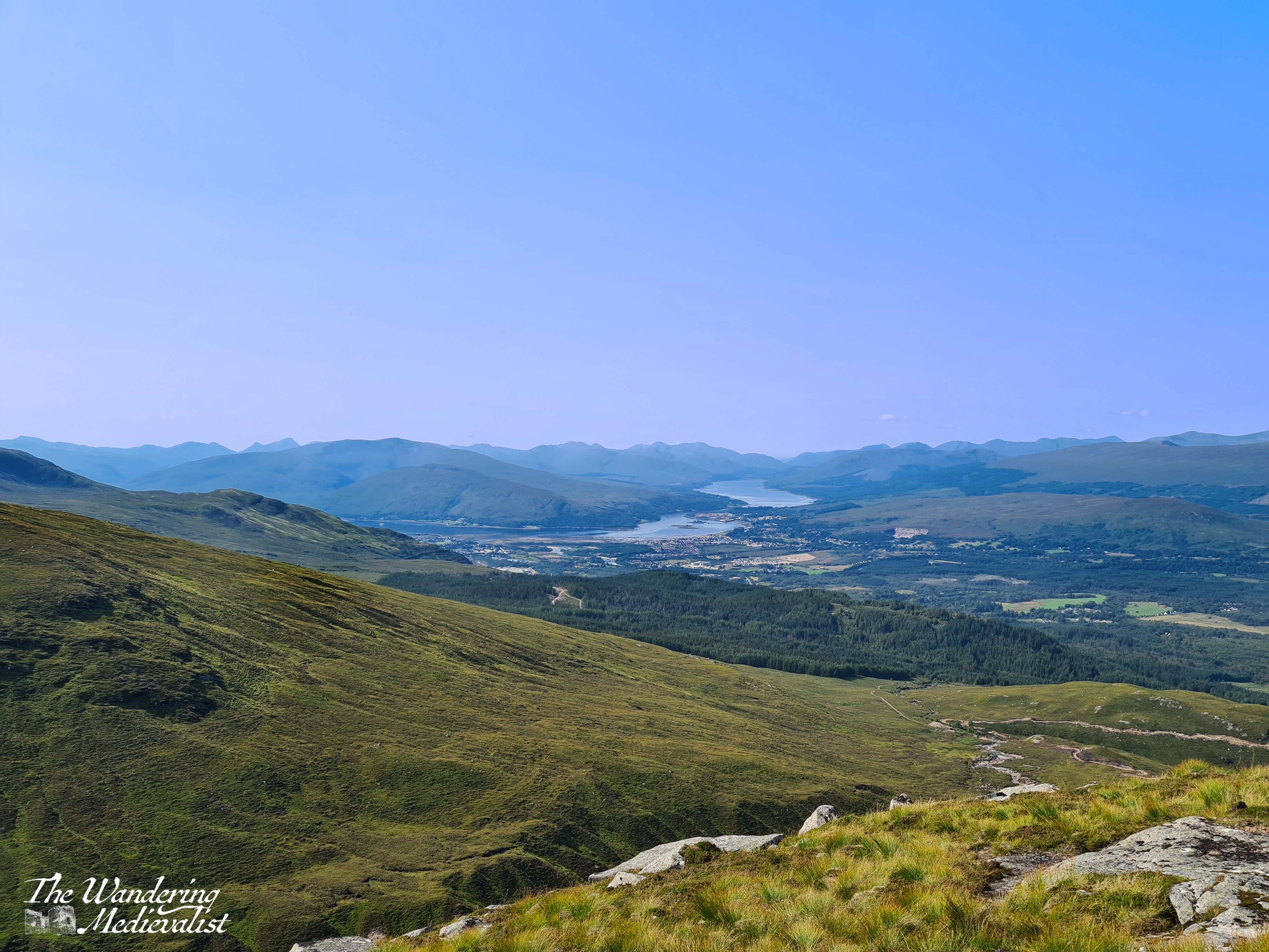
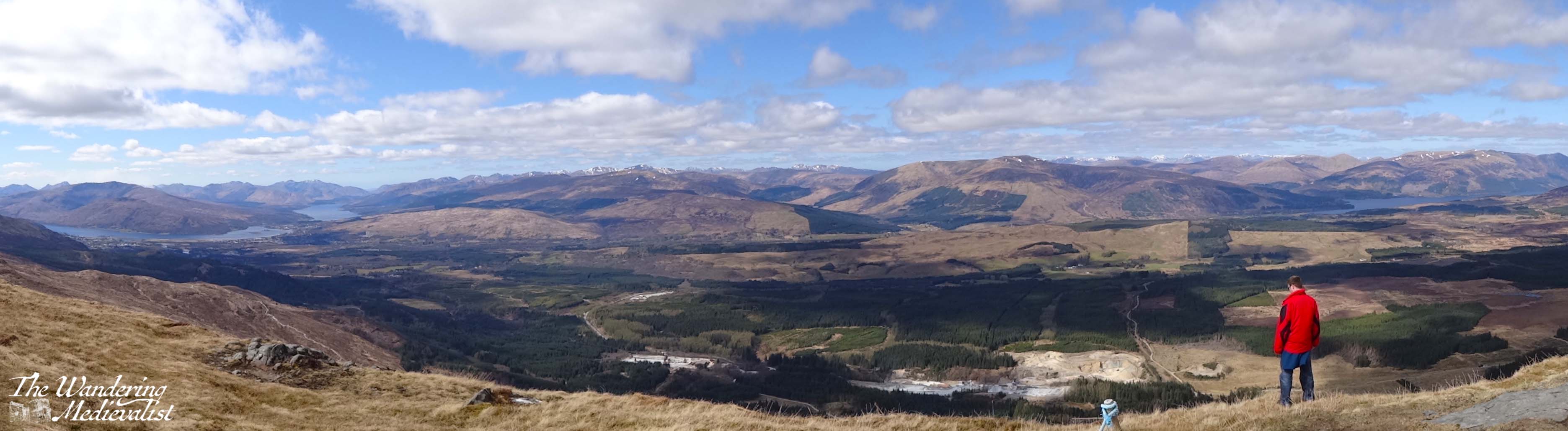
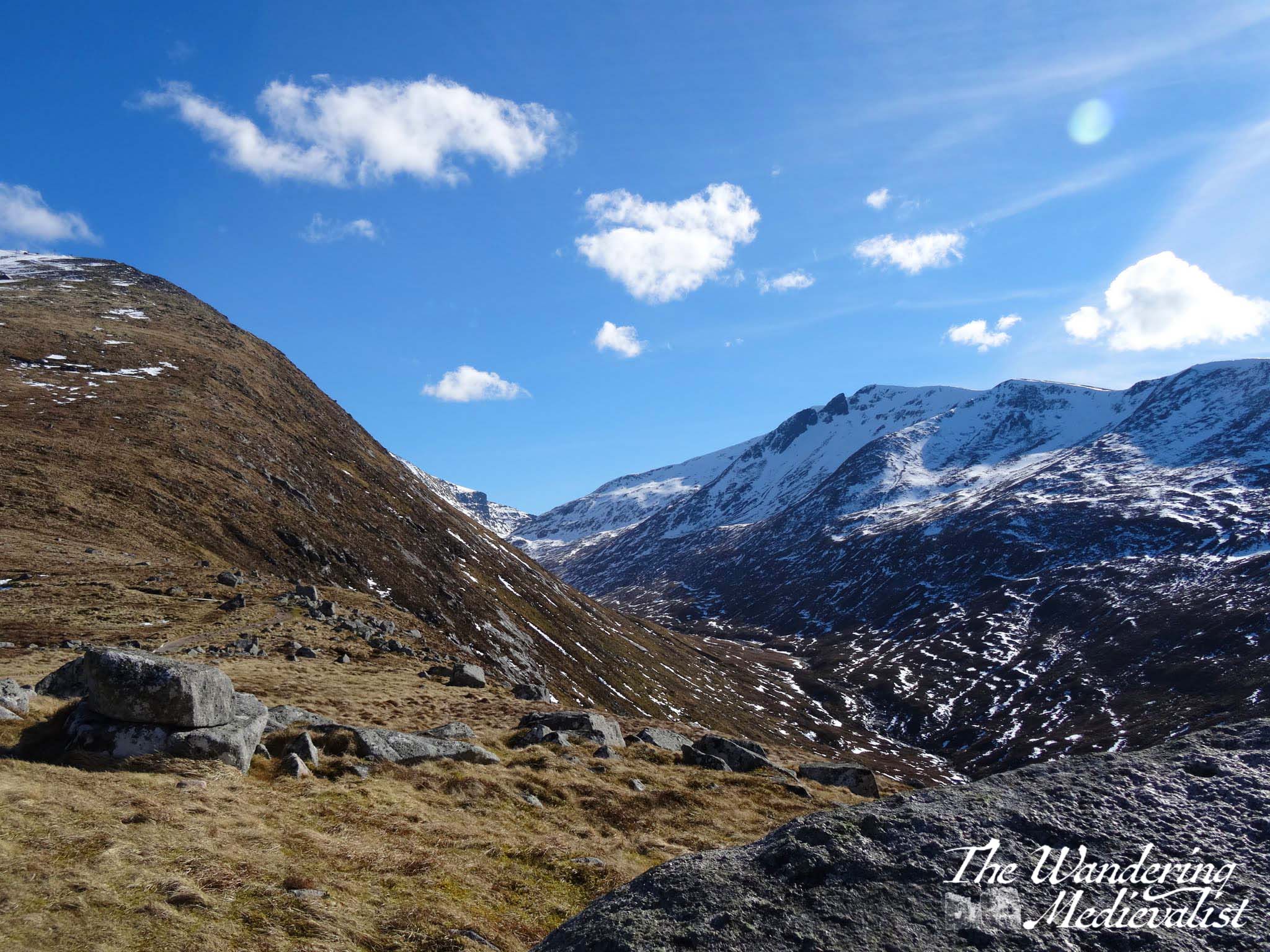
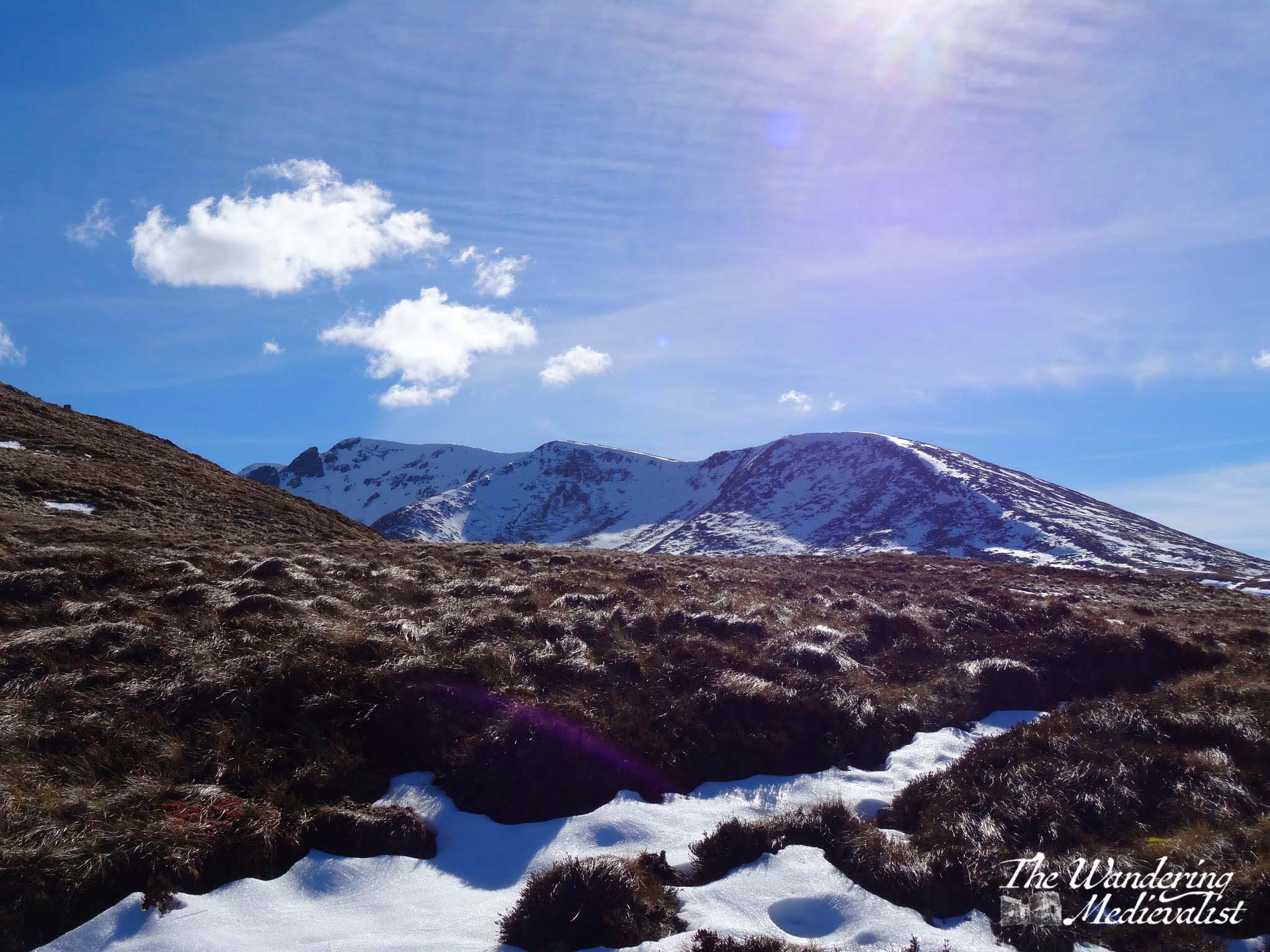
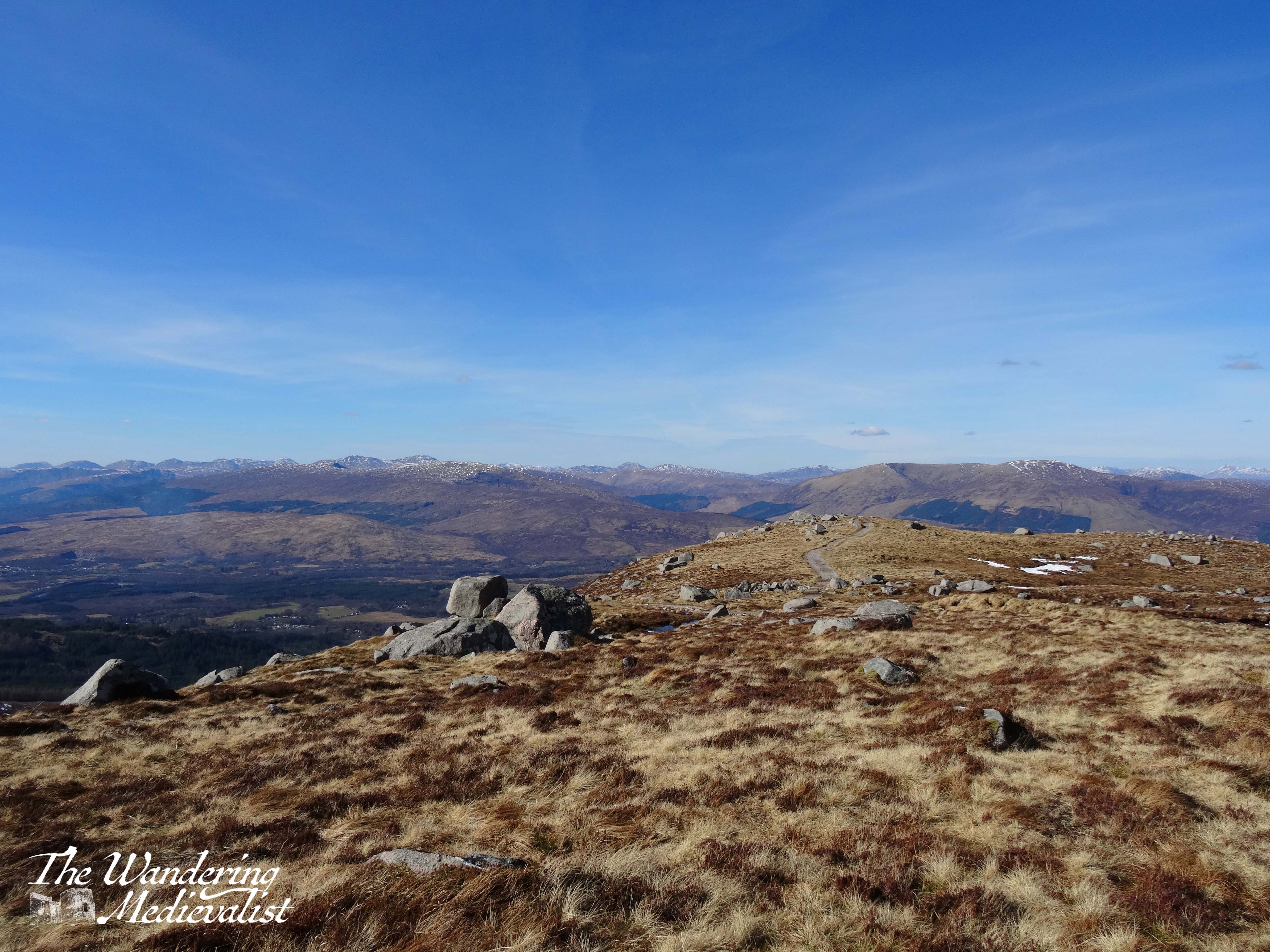
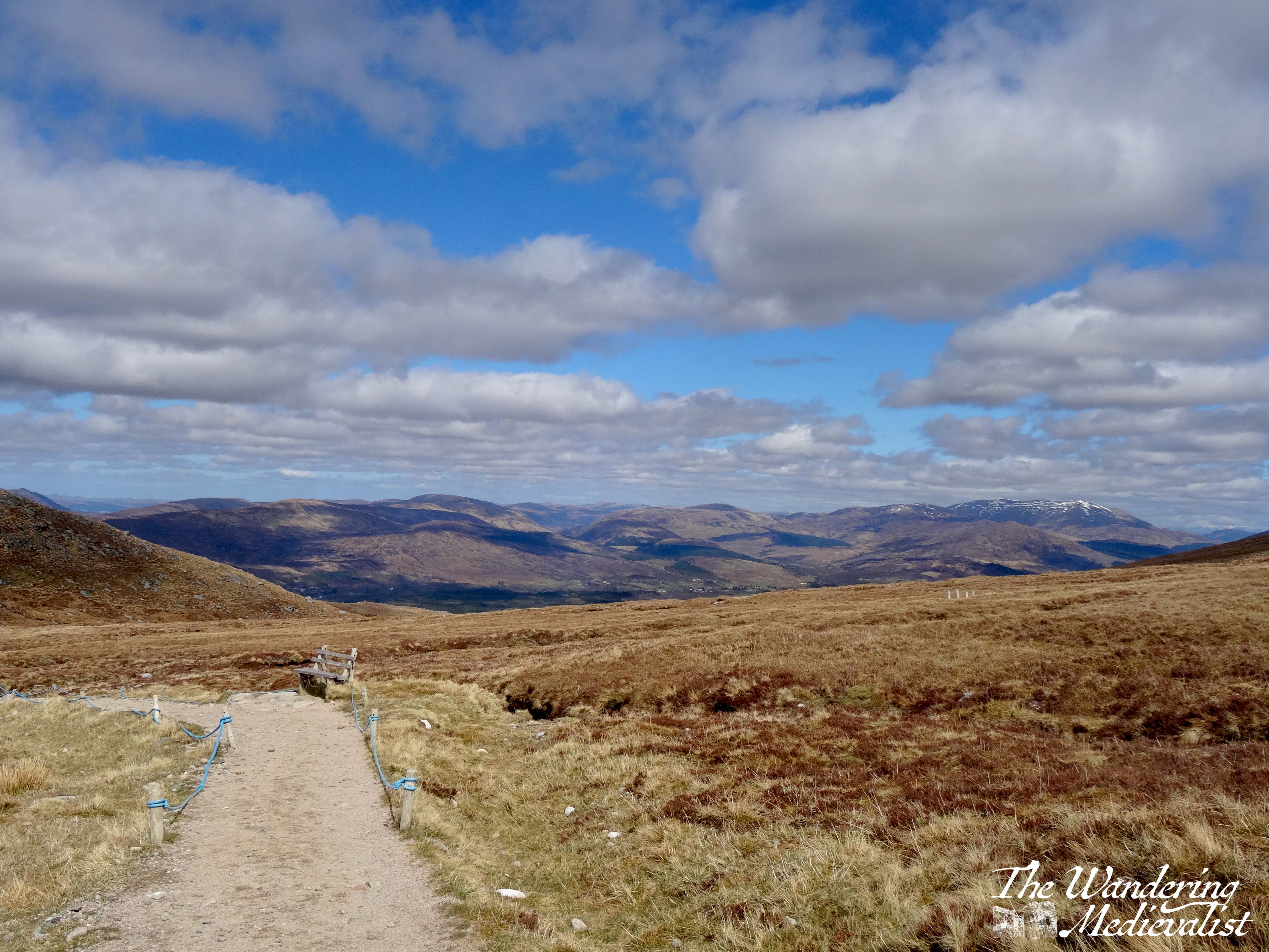
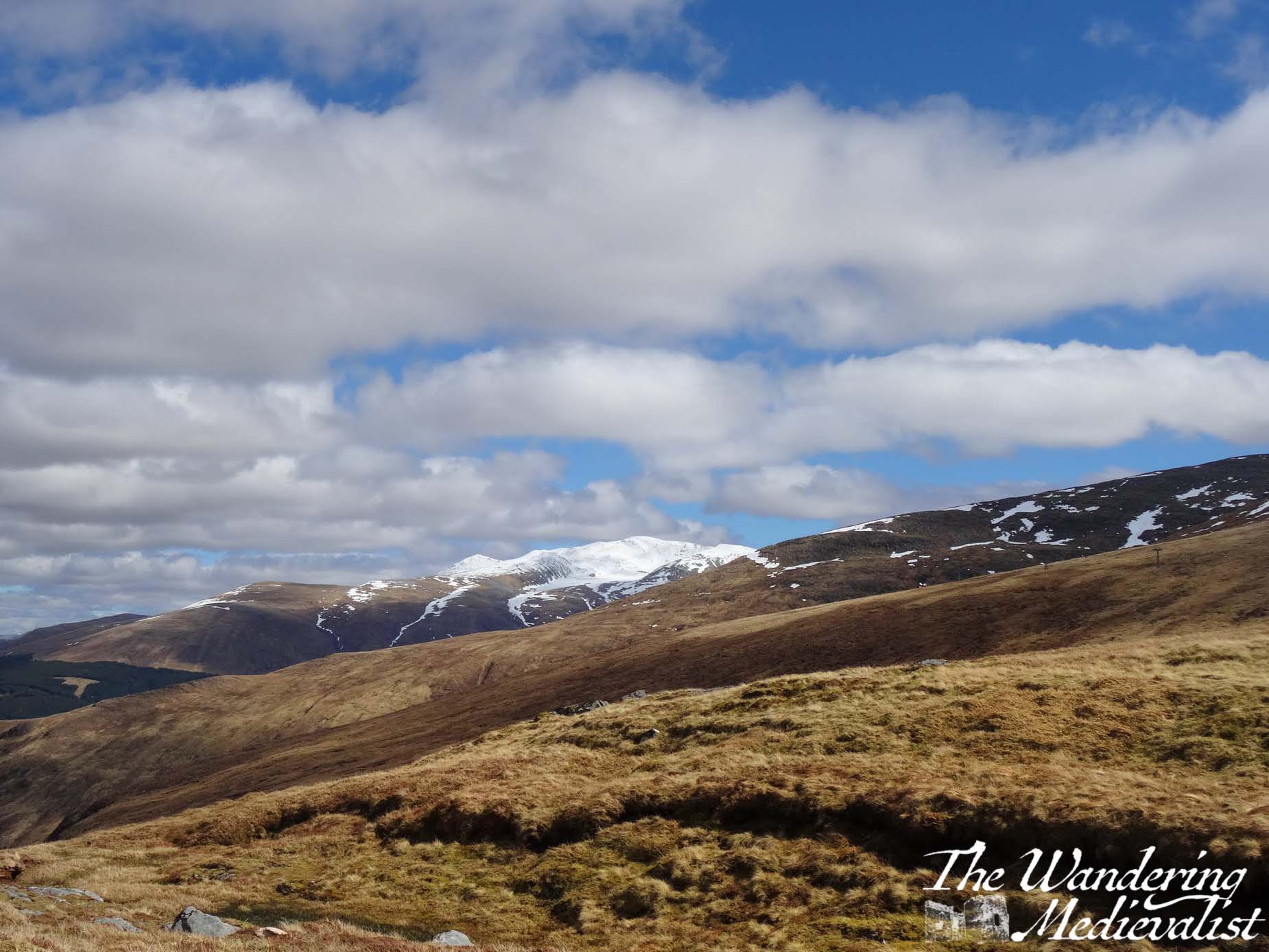
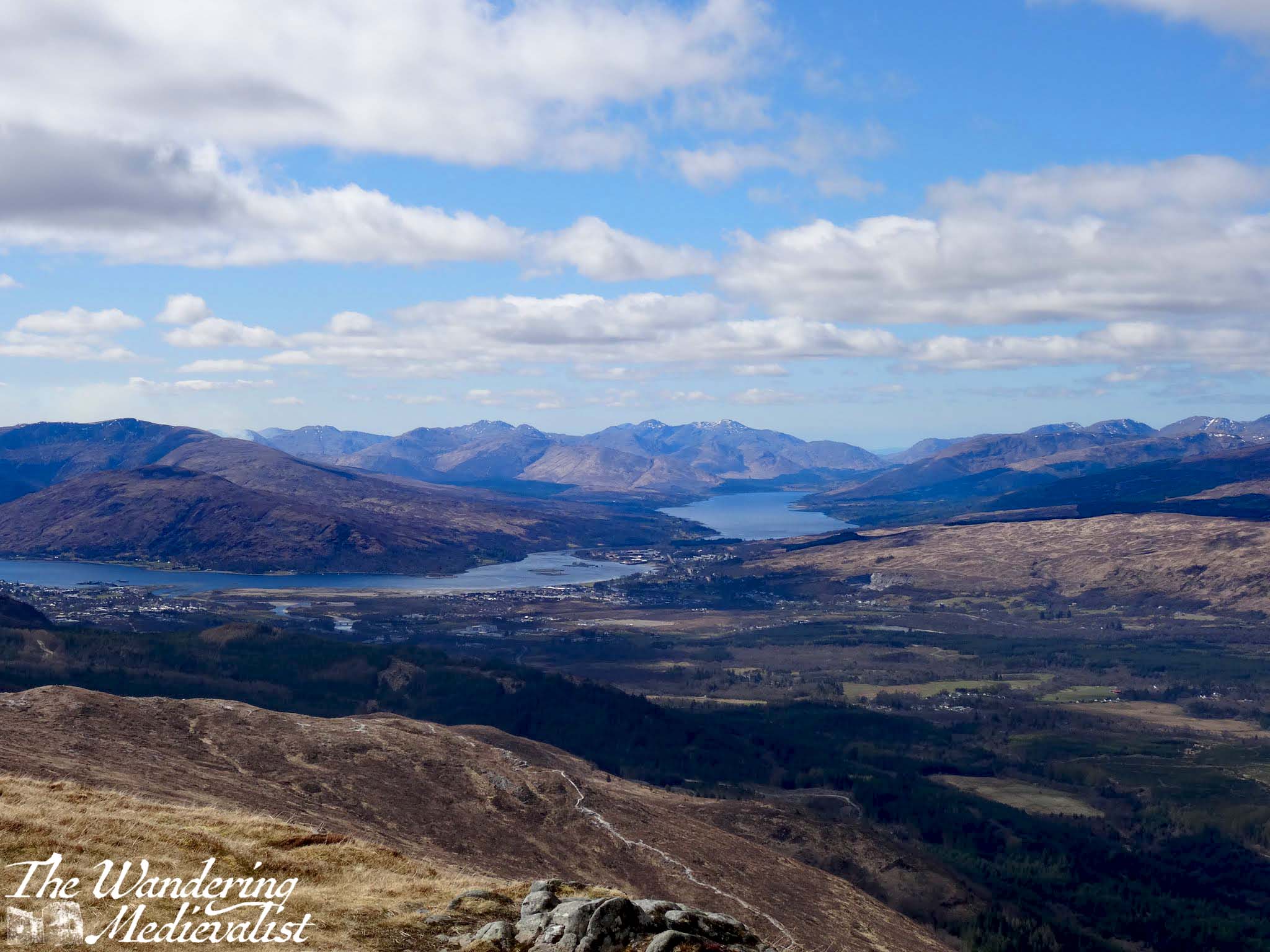
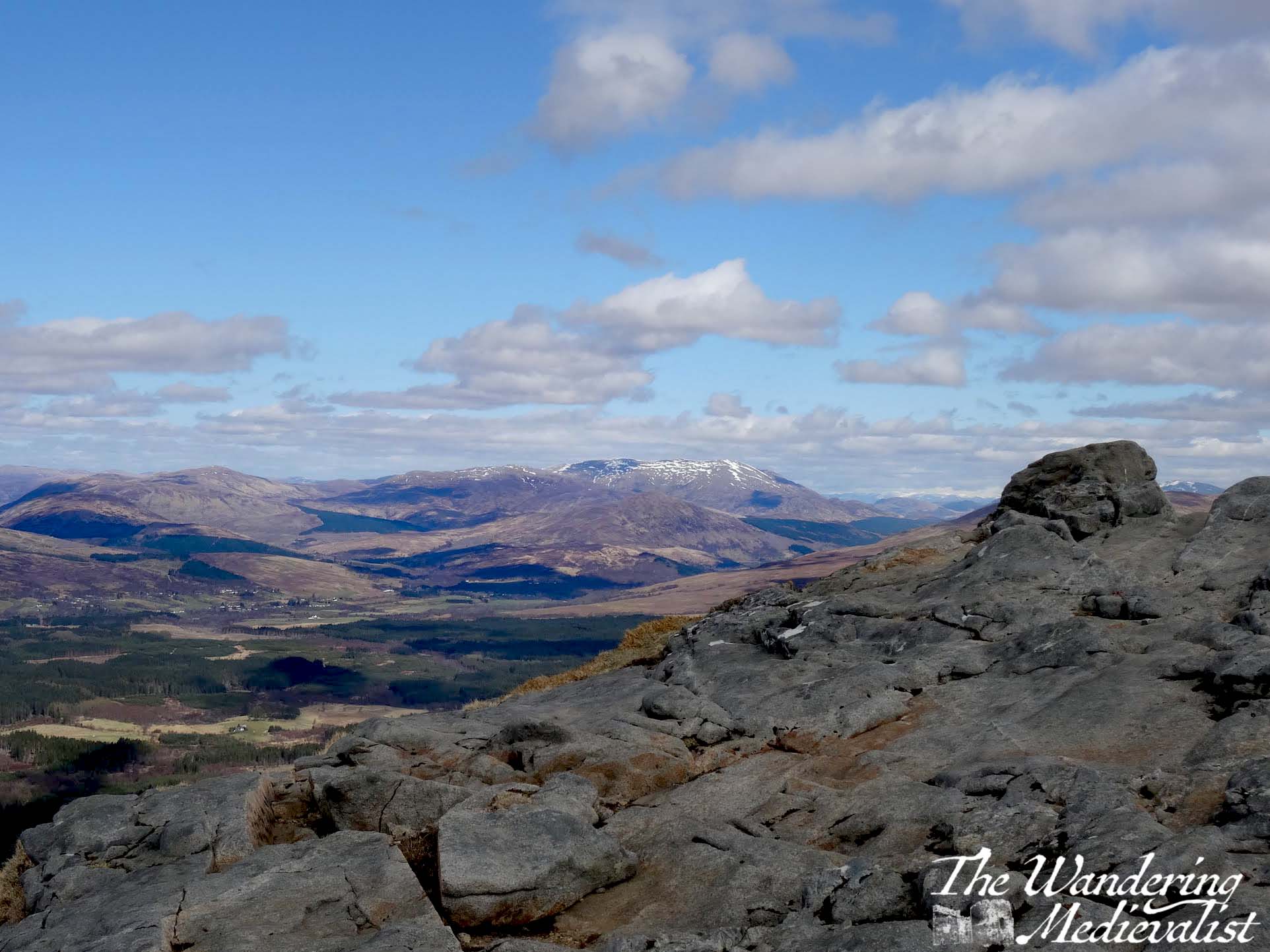
For some reason it took us until our second trip up the gondola to try the second, longer hike to the second viewpoint. I feel that referring to it in any way as ‘long’ is a bit misleading – the whole walk, out and back, is an hour at most and I think Dad and I did it faster. There are a few hilly bits but nothing overly strenuous, and the views are even better than from Sgurr Finnisg-aig. In fact, I realised on my second visit, that this viewpoint qualifies as one of my favourite places in Scotland, if not the world. From the benches or rocks, you can see west and a bit south to Fort William and Lochs Linnhe and Eil, east towards Spean Bridge, but you have a spectacular view of the back of Ben Nevis, all swept rocks and snow.
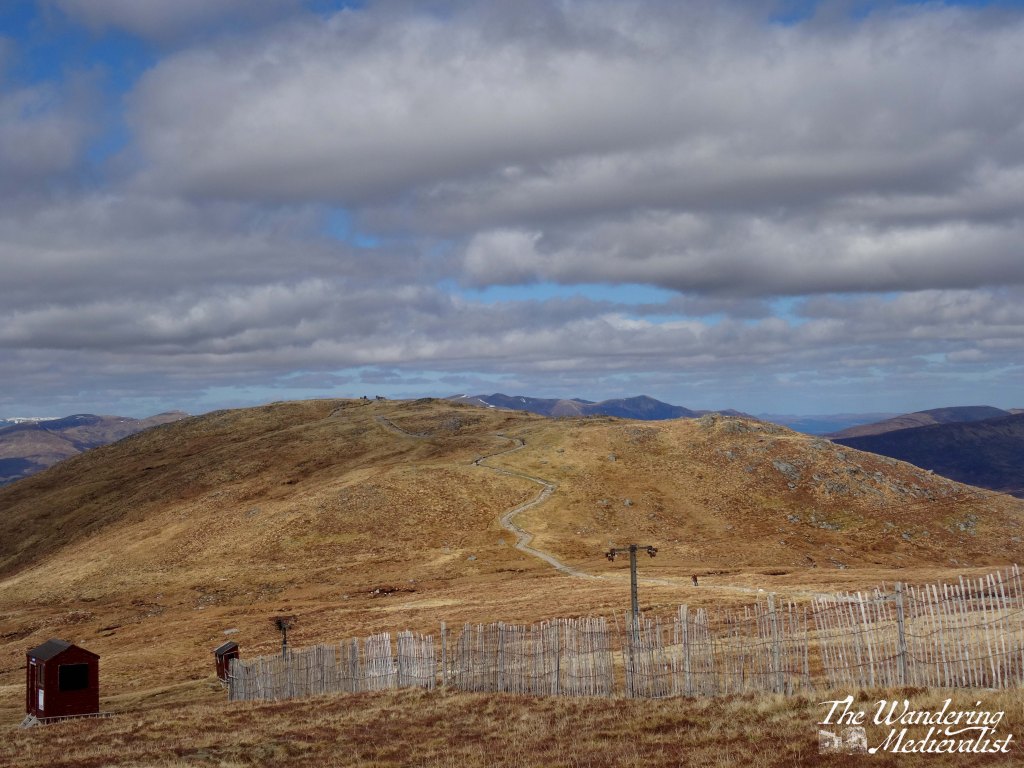
The trail begins as you leave the Snowgoose Café at the top of the gondola and turn right along a wide path, heading towards the chair lift that takes skiers to the top of the mountain.
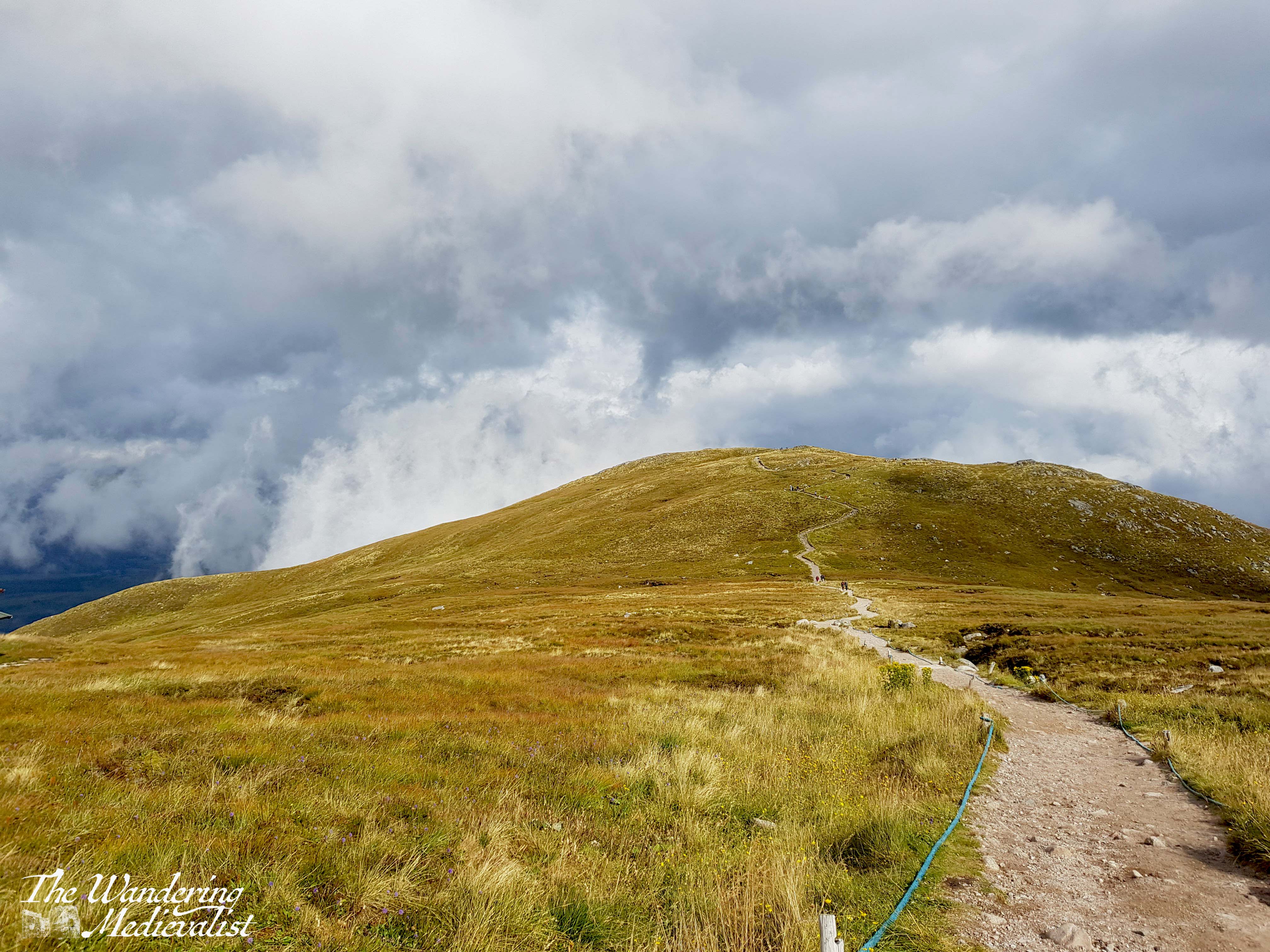
Eventually, it passes under the lift and continues along the side of hill, rising and falling and crossing over a number of small burns. Eventually, you can turn and look back at the café and gondola in the distance.
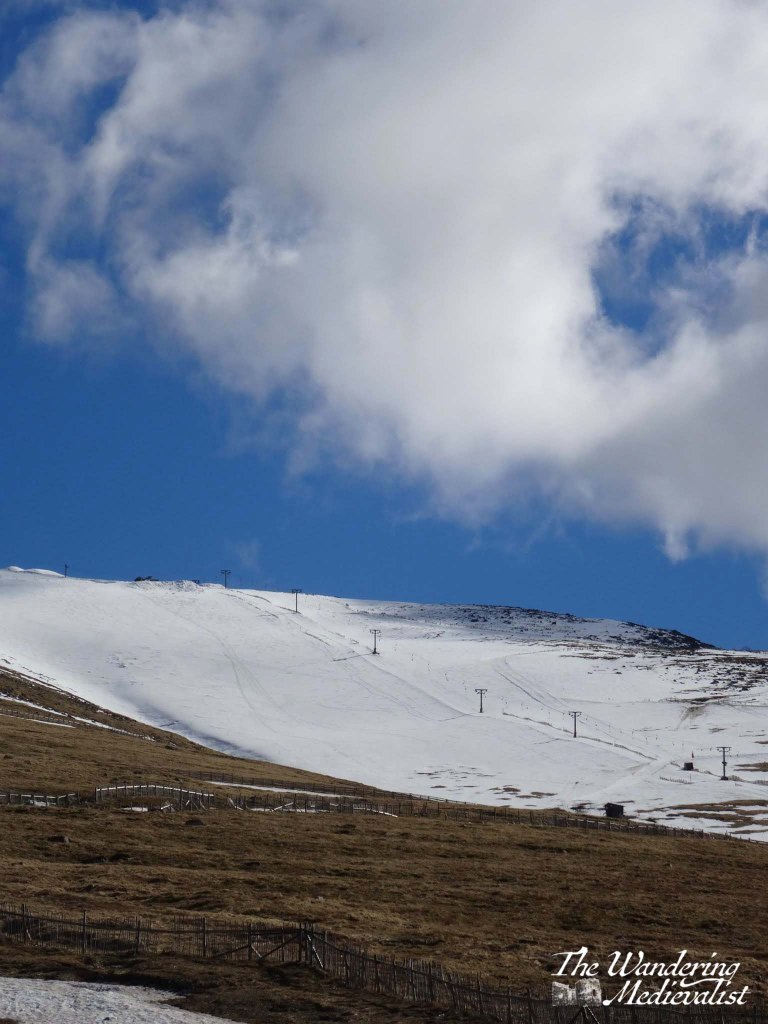
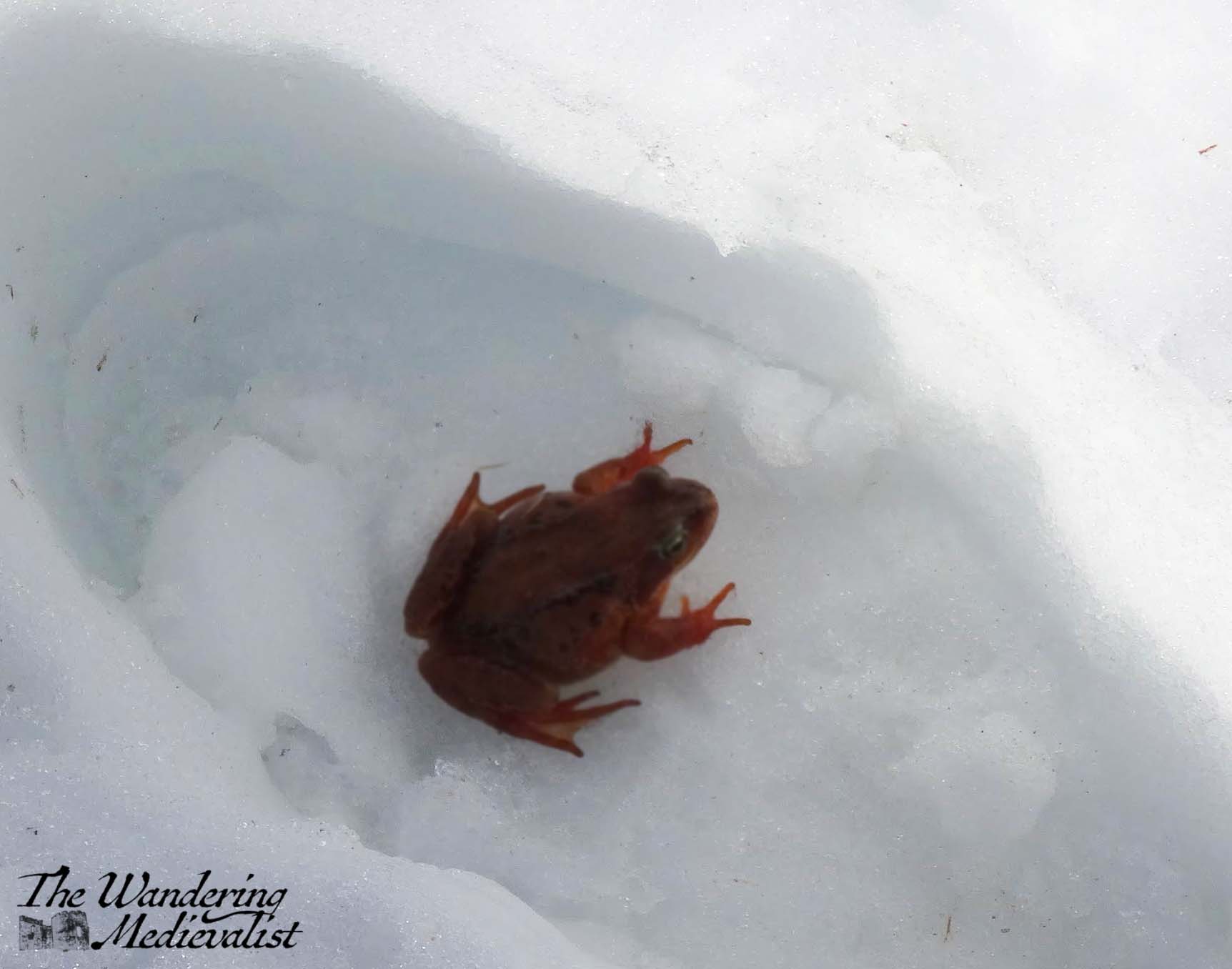
Here is the view back to the Sgurr Finnisg-aig viewpoint, as well as a little friend we found in the snow. As you move further around the hill, you get a better view down into the valley, and start to see the lochs and Fort William more clearly.
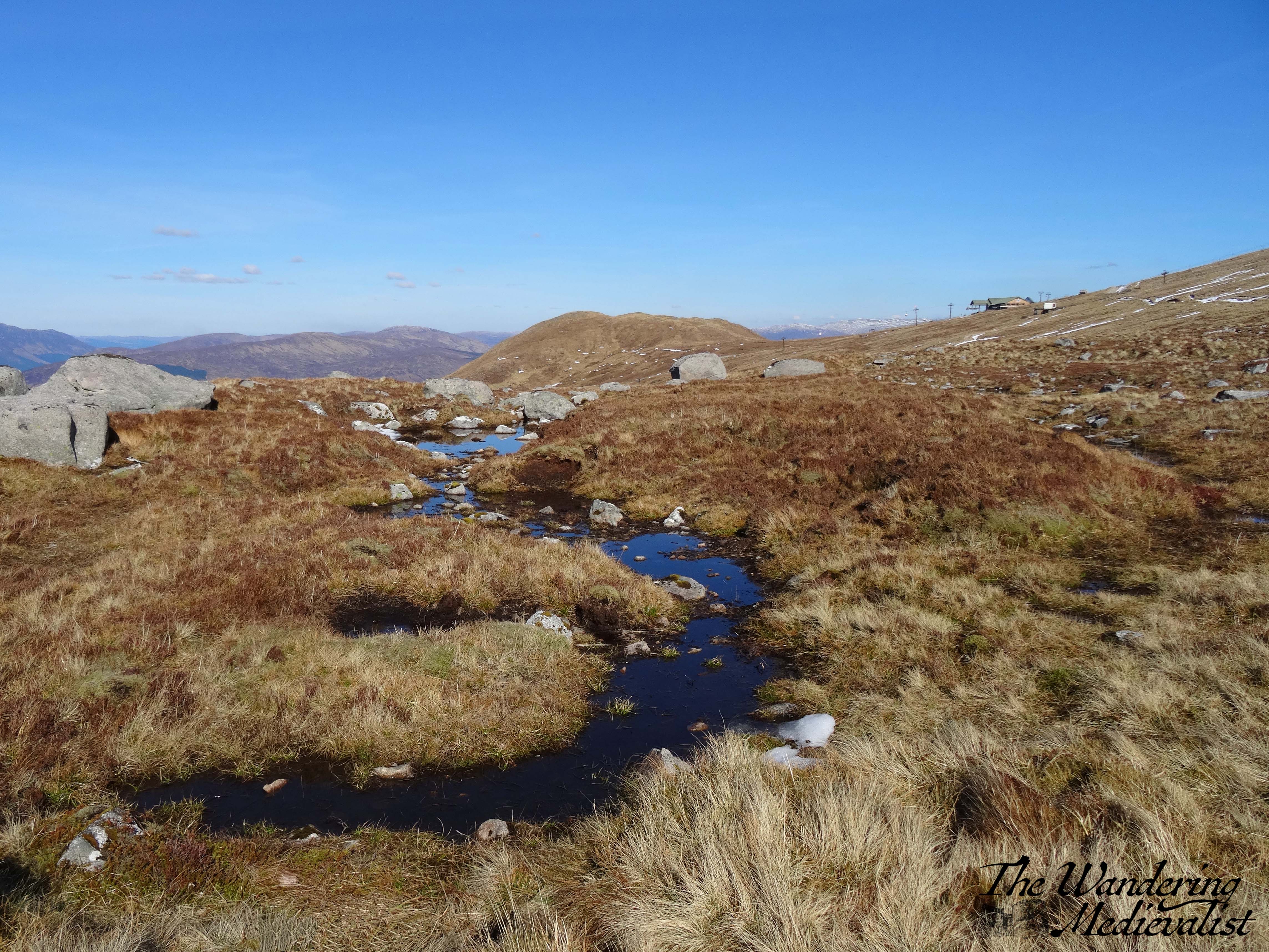
I find the peaty water tumbling through the heather and boggy land to be fascinating and beautiful, but nothing is as impressive as the view from the end of the walk. Like at the other viewpoint, there is a guide showing you what you are looking at, and there are series of both benches and rocks to perch on as you enjoy the vista. I could quite happily sit for hours, I think, watching the clouds (if there are any) and taking in the awesome sights of the view down and also back up the valley and to the sweeping height of Ben Nevis.
In both height of summer and snowy seasons, the view is just breath-taking, and I always have to force myself to turn around and start making my way back. Much like the let-down I always feel as the A9 passes Perth and Fife opens up in front of me – meaning I know I have really left the Highlands behind – I find the trek back to the café to be less enjoyable than the way out. But, once back at the Snowgoose, the best option I find is to get a coffee and maybe a snack, and if you are lucky, a table outside to take advantage of being high up the mountain for just that much longer.
On a list of my favourite places in the world, the views from the lodge and surrounding areas on Nevis Range are pretty close to, if not, the top. Whether in the depths of summer or the end of winter, in sun or rainy weather, the gondola trip itself is worth the cost and the walks at the top offer simply stunning views. It is worth clarifying at this point that the gondola does not actually climb Ben Nevis, but instead Aonach Mòr, one of several mountains in the Nevis Range that is popular with skiers.
We discovered the Nevis Range on our first adventure to the Highlands in 2016, when we arrived at our hotel too early to check in and decided to take advantage of the spectacular weather to explore a bit. I was a bit nervous about the gondola – I am not a fan of heights – but it is entirely closed in and very seldom so high off the ground that you imagine desperate scenarios reminiscent of James Bond films.
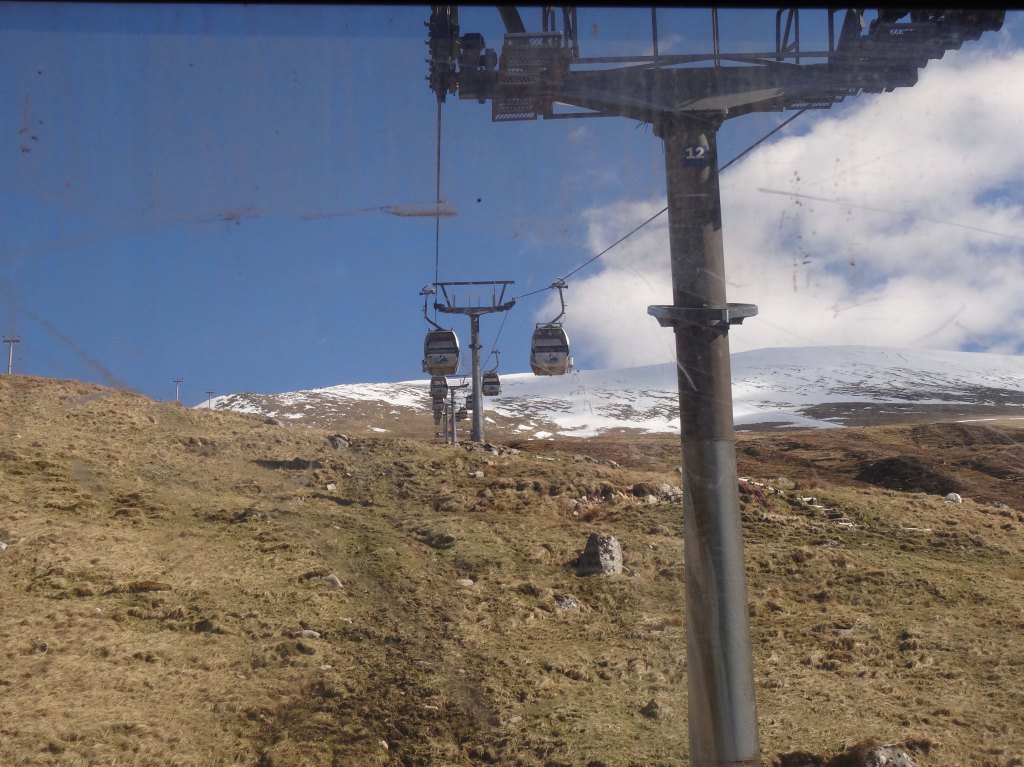
The windows of the gondola don’t allow for particularly clear pictures, but here is the view up, not far from the café at the top.
Both ends of the journey offer a place to stop for a snack or lunch, clean restrooms, and easy access to the cars – I believe that wheelchair access possible, though not 100% certain.
While at some times of year, the view is enjoyed primarily by skiers, by mid-March when we visited, most of the snow was gone but the mountain bikers had not yet taken over, so we had plenty of space to ourselves. A word briefly about the lodge at the top of the gondola, and the Snowgoose Restaurant within – I have been repeatedly impressed by its comfort and good food. The snacks and coffee are great, and there is ice cream or bottles of water aplenty, depending on your need. Best of all, the view is just out of this world.
From the lodge, there are two available walks, each to a different viewpoint. The Meall Beag viewpoint is a bit further away, so on our first trip we opted for the Sgurr Finnisg-aig trail, which is reached by turning left out of the lodge. It is a short walk, about fifteen to twenty minutes to the viewpoint, and the trail is well-kept.
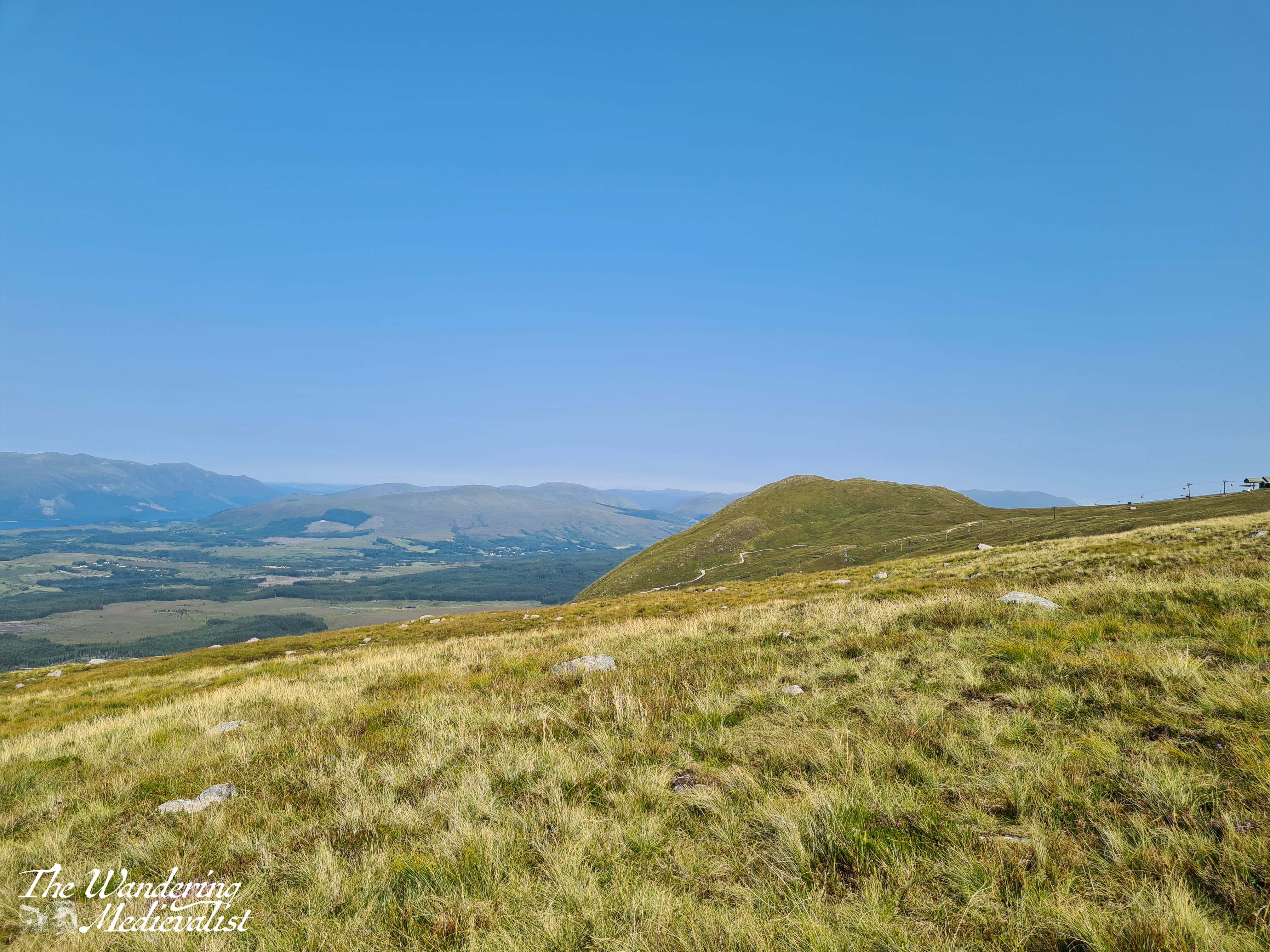
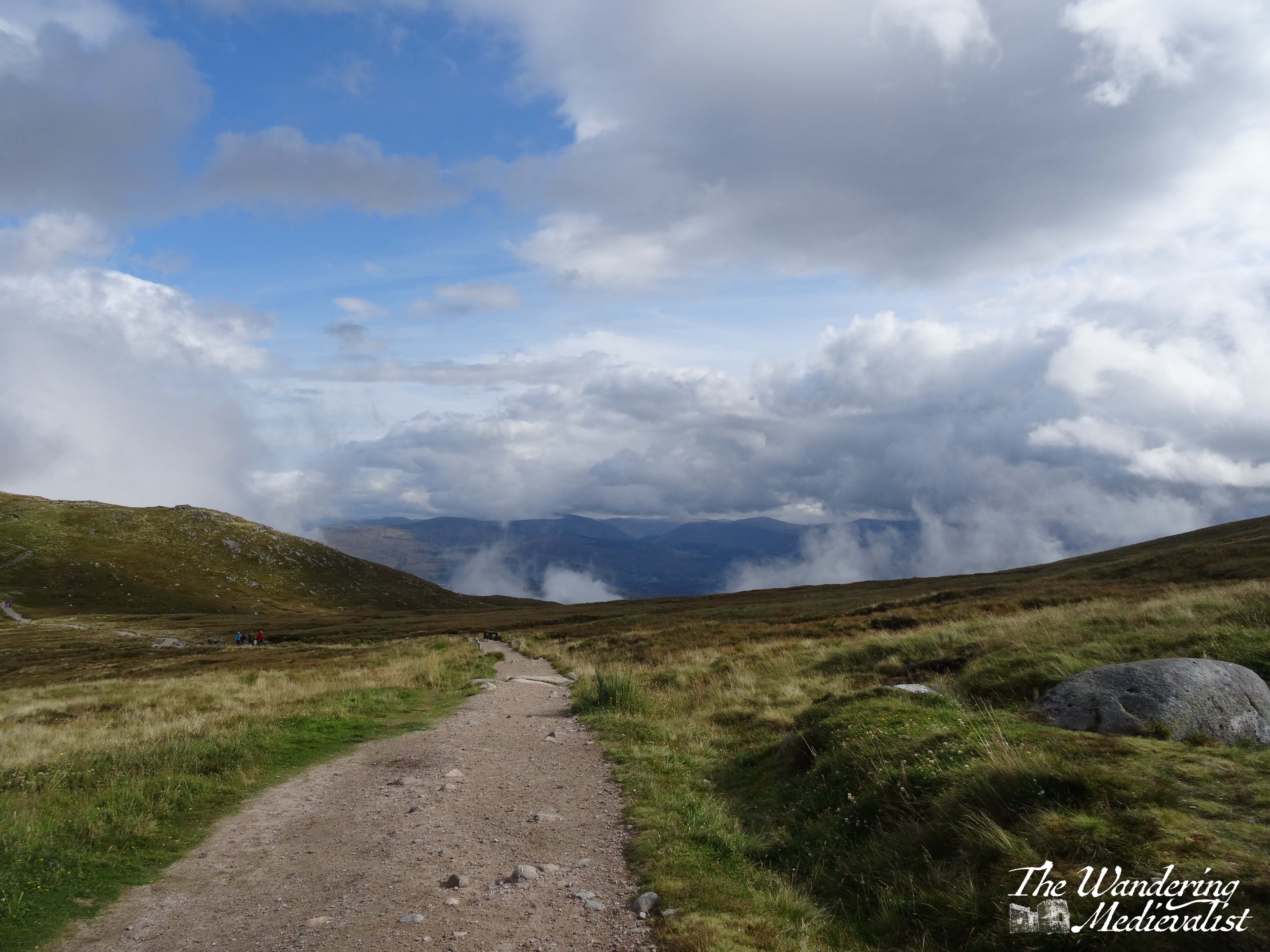
The start of the walk boasts views out to the east, and as you will see below, on the second time I took this walk with my father, you could see clouds rising in the distance. Our first visit was in mid-March, so snow was still evident on some peaks, but the cloudy visit was in late August – much greener and definitely no snow.
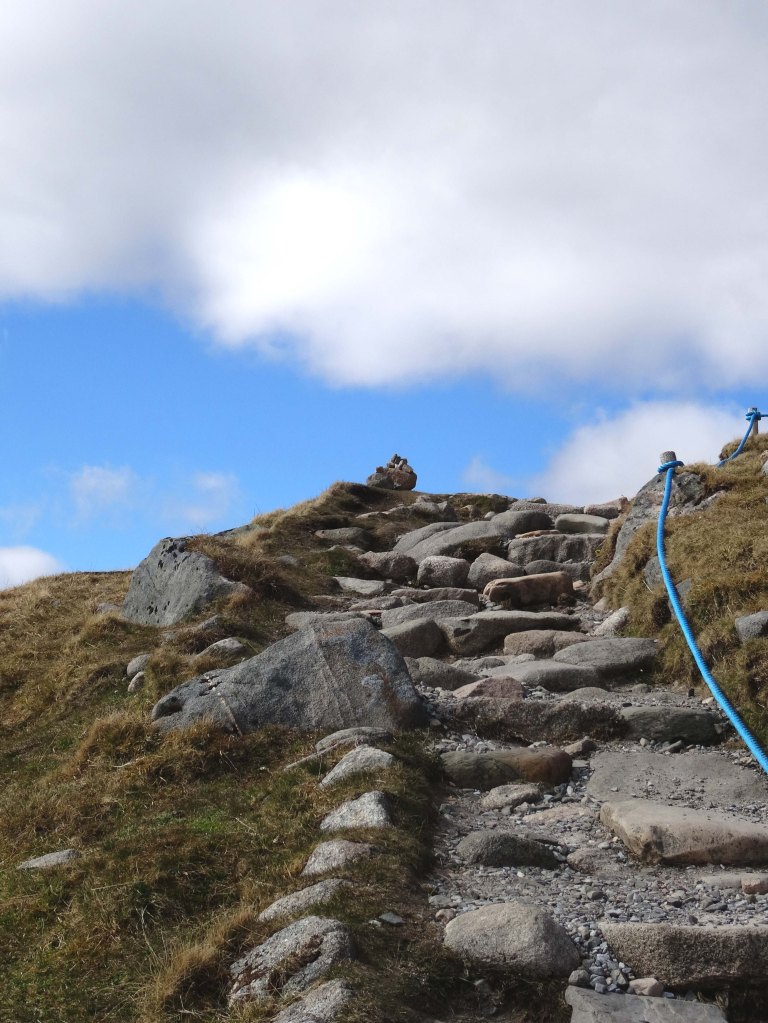
The trail is relatively even and easy-going until you get closer to the hill itself, and then you are faced with stairs. These wind and climb, at times a touch narrow, but there are plenty of places to pause and catch your breath or allow people to pass.
And there is no question, the climb is worth it. At the top is a rocky plateau of sorts, where there is a map to show you what you are looking at, as well as numerous spots to take advantage of the view. Standing at the map provided, one can see to the west and the edge of Fort William, Loch Linnhe and Loch Eil, to the east towards Roybridge, and north to the start of the Great Glen that leads up to Inverness. As noted above, these photos were taken on two separate trips, as is evident. In March, we were blessed with incredibly clear weather, while in August, clouds were closing in around us as we walked and by the time we returned to the café, rain had arrived.
On both occasions I followed this trail, I found myself equally distracted on the walk back by the spots of heather, the small burns, and the rock shapes poking through the grass. It is iconic Scottish mountaintop, and the gondola has made it accessible for many people who may not normally be able to enjoy it. My most recent trip up the mountain was actually in summer 2021, when masks were required in the gondola and travel restrictions meant that the tourists around us were all British rather that foreign. The outdoor nature of the trip made it ideal for Covid times, and the relative freedom after more than a year of various lockdowns was palpable.
One of the most pleasant parts of any visit to Nevis Range is once you have completed your walk, when you find yourself a table in the café with a coffee, a cake, or some lunch, and just enjoy the view. On the cloudier trip, I found myself fascinated with the way the clouds were swirling around the gondolas as they disappeared in the mist – though the ride down was without a view, as the video below shows. So whether a perfectly clear day or one where rain is imminent, I would most definitely recommend this trip and short walk. One caveat is that when there is high wind forecast, the gondola may not run for obvious safety reasons – on one trip we missed out and enjoyed the walks at the foot of the mountain instead.
I have done the Meall Beag viewpoint walk as well, but there are too many pictures for one post!
A few years back, I managed to secure some time off that the other half could not, and so I took myself away on a castle-finding adventure to North Berwick. My efforts were hampered slightly by two factors:
Time of year – many castles and monuments are open only seasonally in Scotland, or their winter opening hours are limited.
Restoration works – during the pandemic when everything was shut down, many castles in Scotland were discovered to have some dangerously unstable masonry. At the time I travelled, many sites were still closed, or partly closed, for renovation and restoration. As of writing, this is still the case for many castles, and for St Andrews Cathedral.
I had hoped to make it a two-castle day and see Dirleton, but it was completely closed, so instead I booked ahead – as one still had to do due to Covid restrictions – and being me, arrived about 20 minutes early. The empty car park was a short walk from the actual ticket office/gift shop. I was eager to get a bit of exercise though, so while I could probably have driven closer, I chose to walk the quarter mile and hoped for some good views as I did so.
Upon arriving at the shop, I was greeted by name – I was one of two people booked in all day! So I chatted with the shop assistants, who apologised that I could not get into the castle itself (which I was prepared for) and it was during this chat that I learned about the state of so many of the monuments in Scotland. Then, they allowed me access to the castle early, ‘You have it all to yourself just now,’ I was told. Music to my ears.
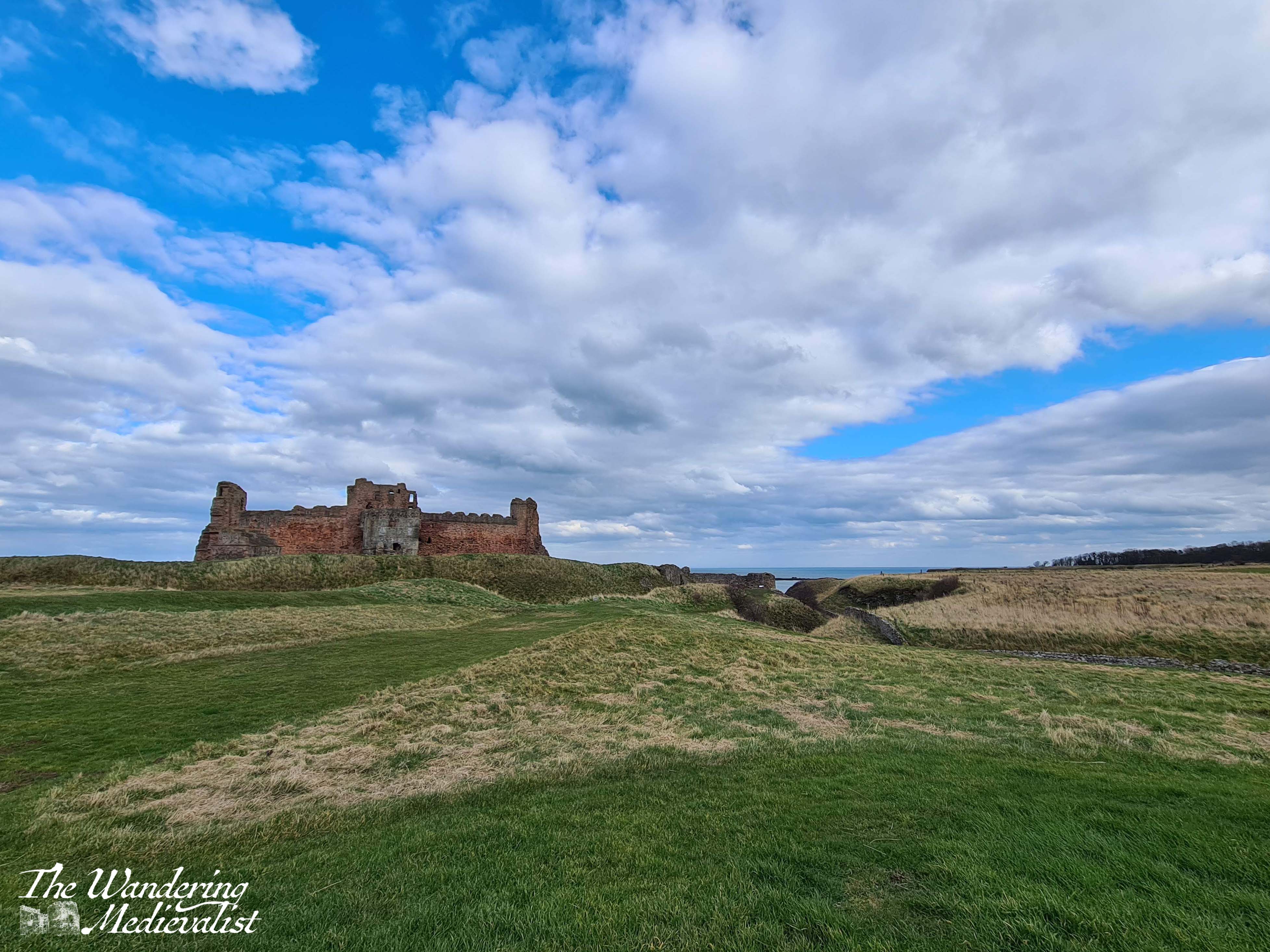
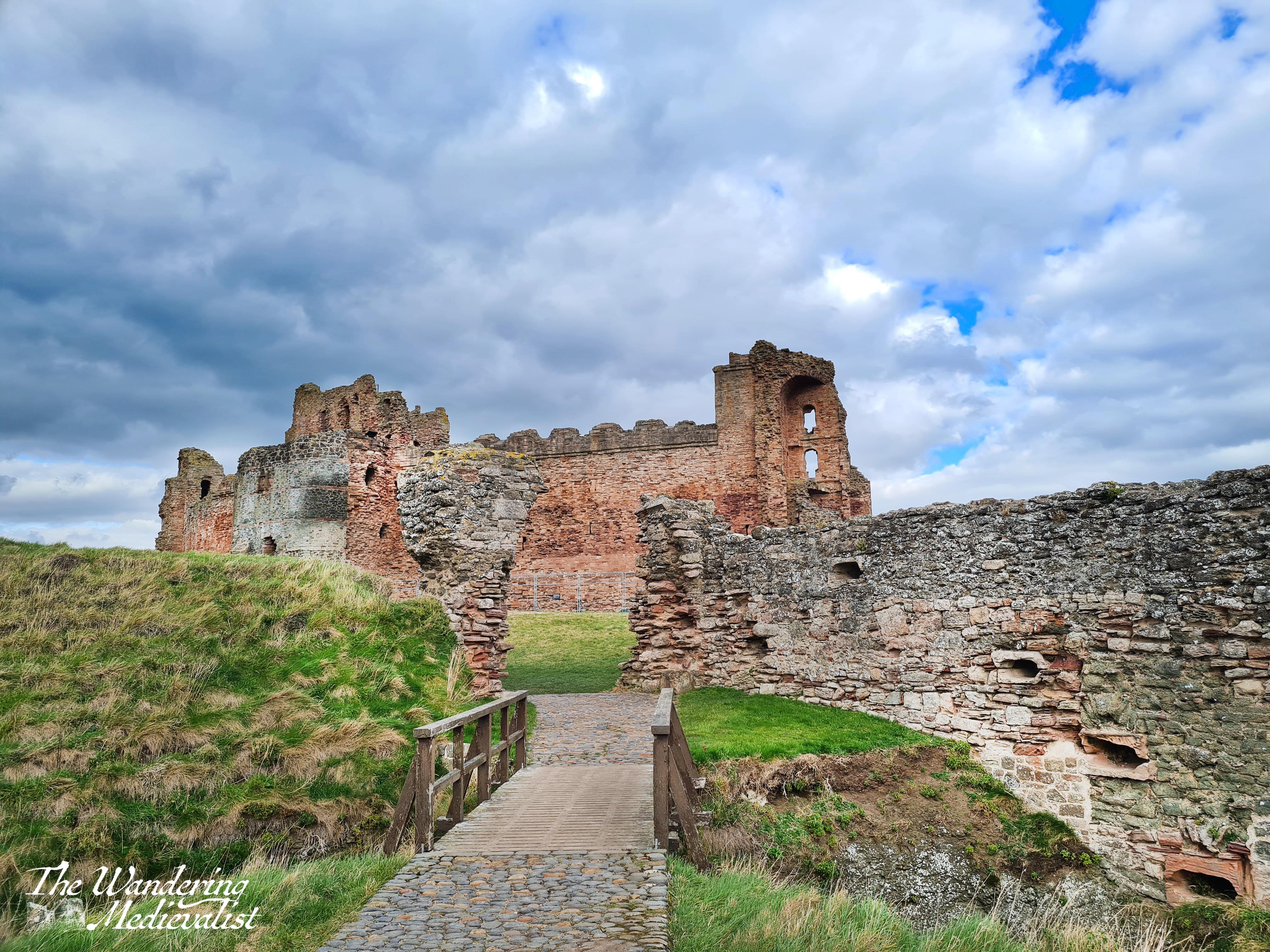
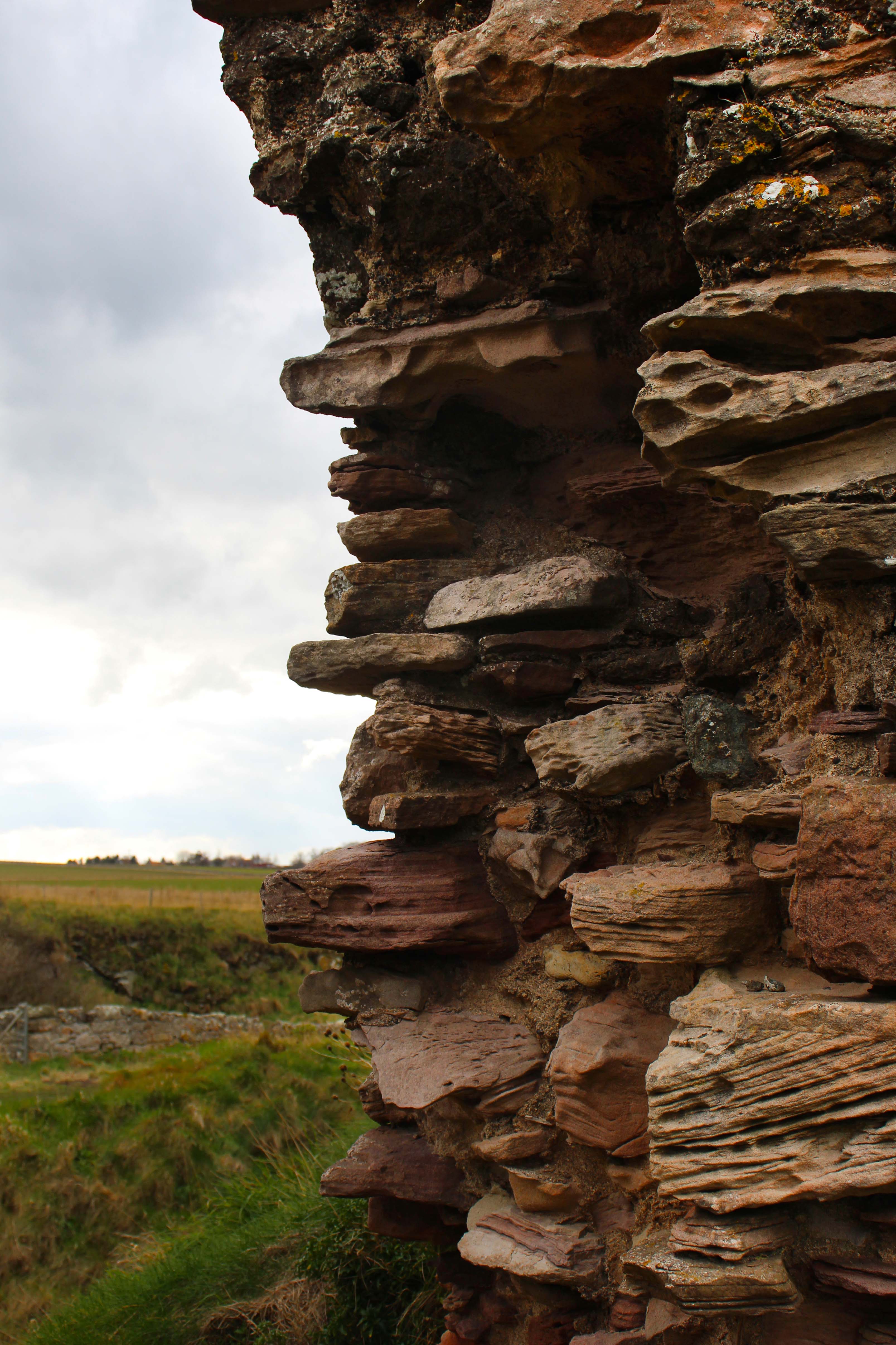
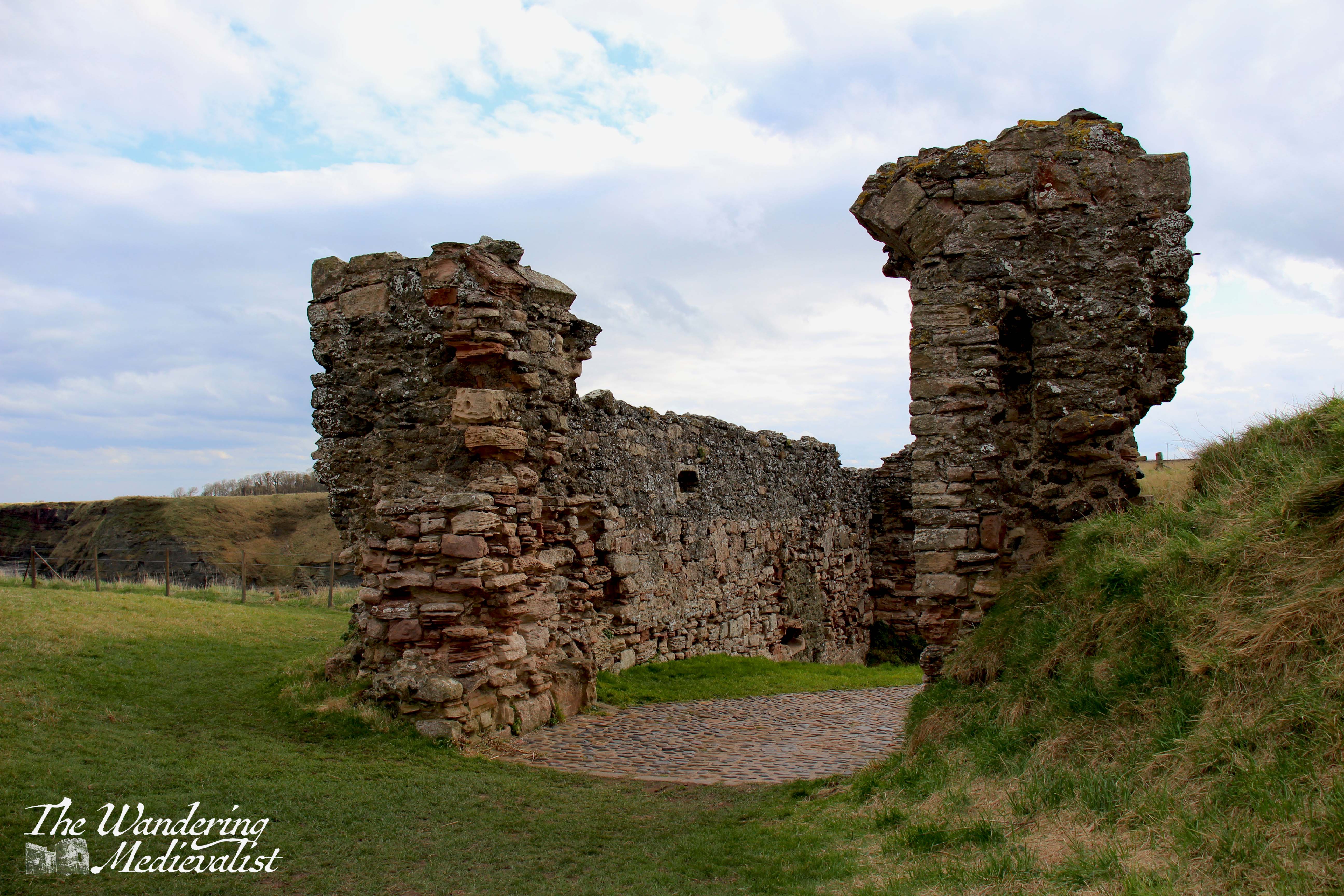
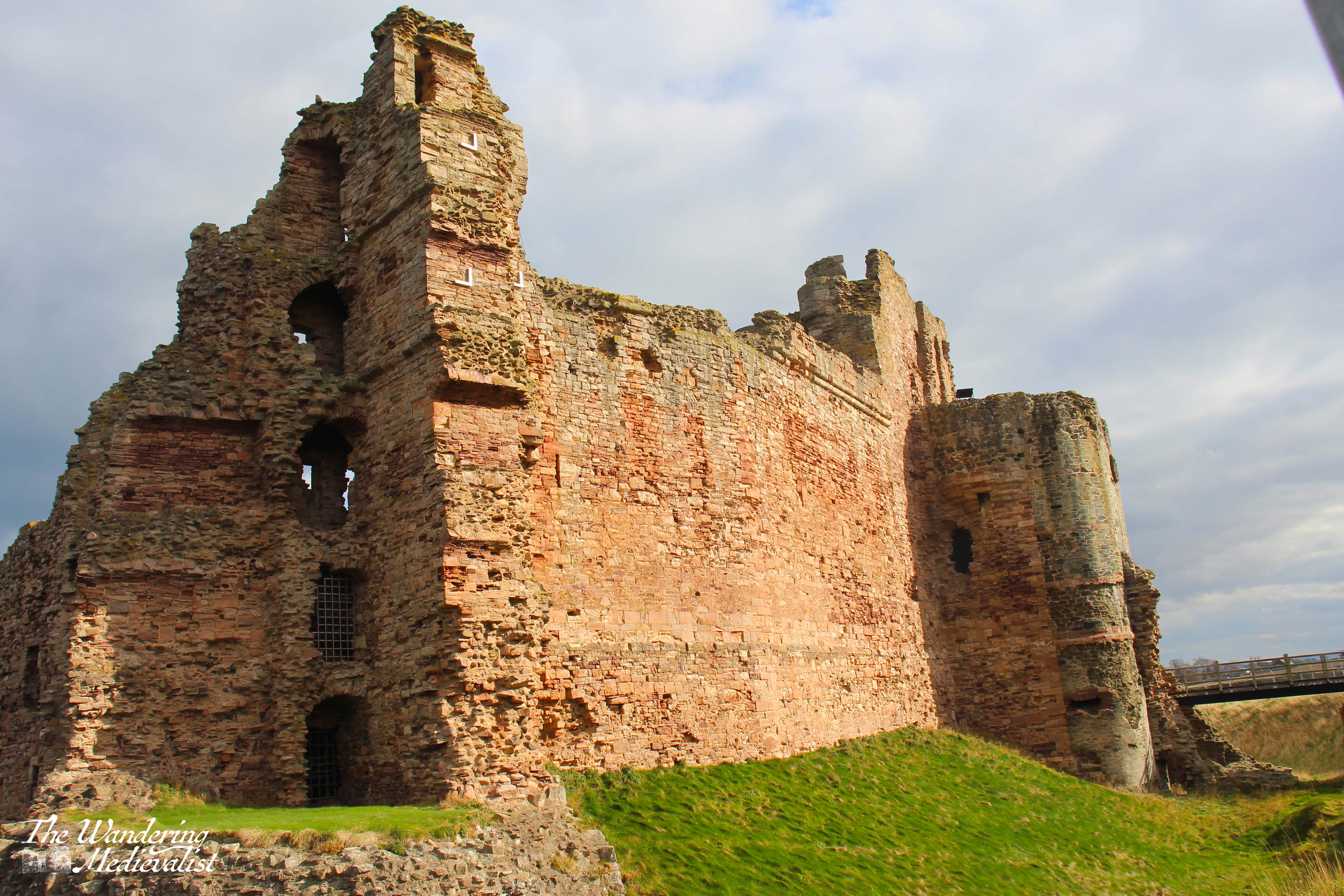
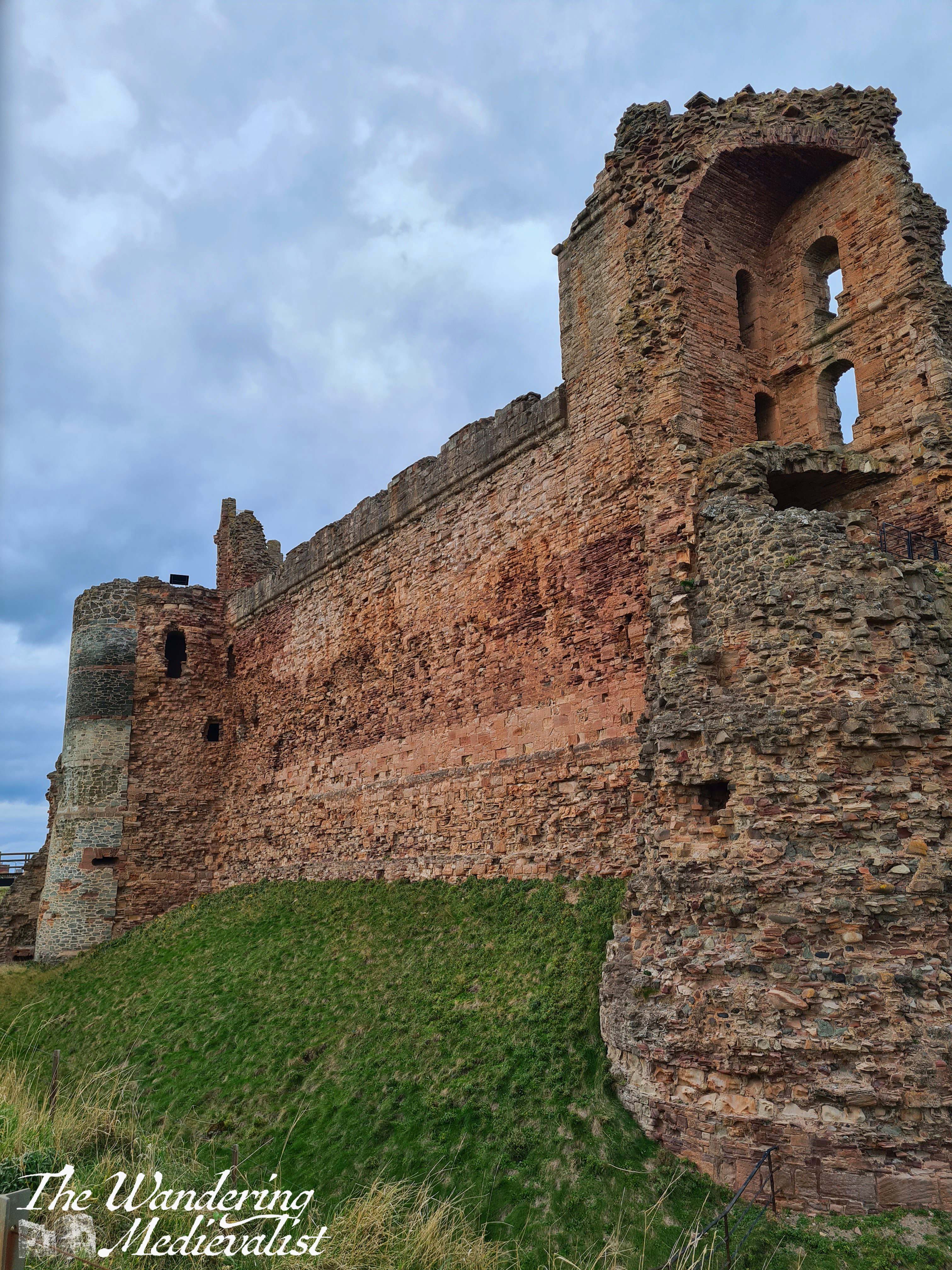
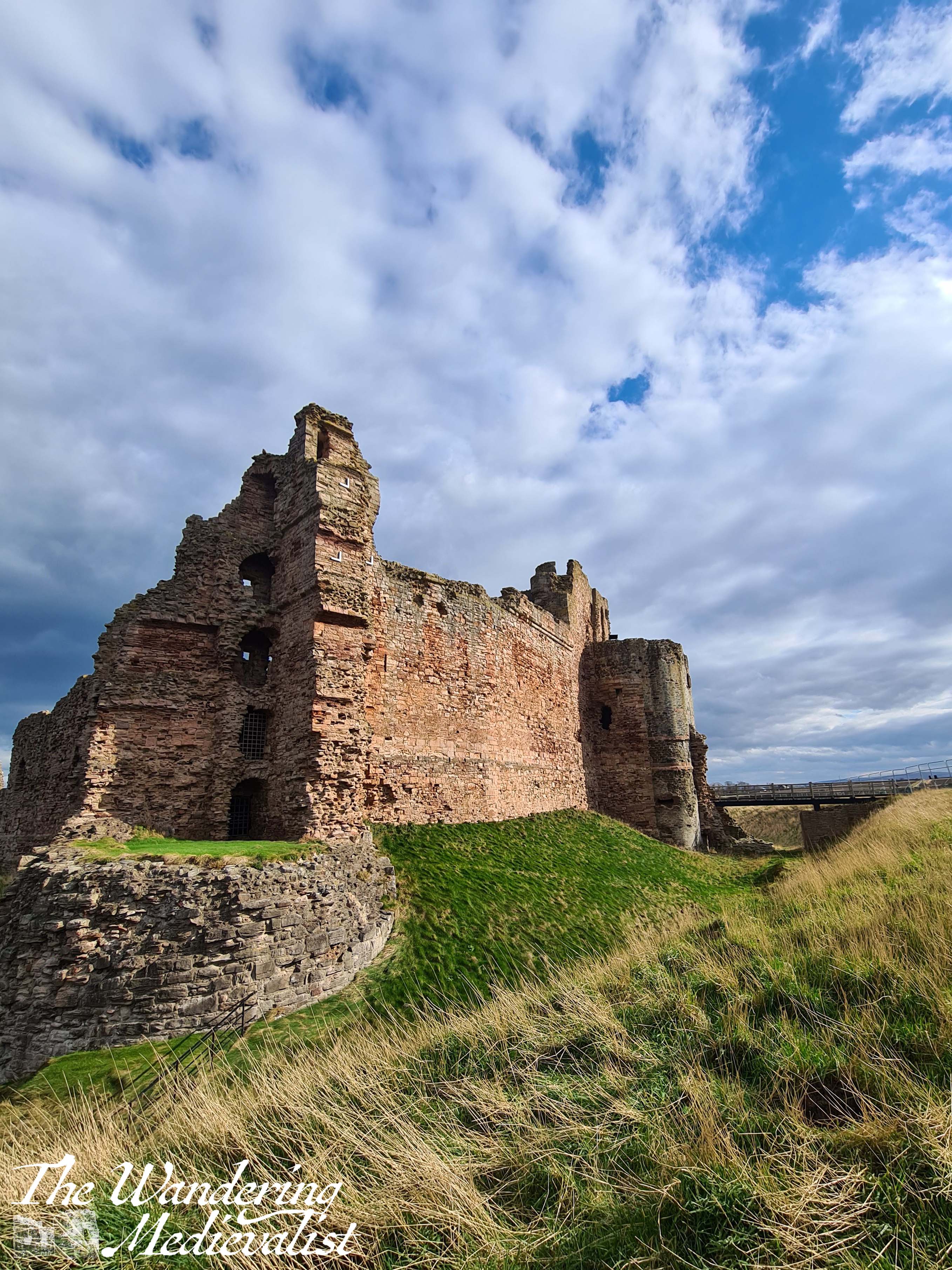
The approach to the castle is along the route one can imagine was used when it was whole, and there are lovely views of the main curtain wall. As I passed through the outer defences, two things stood out to me: one, the gorgeous orange-red of the sandstone; and two, the rather stunning way in which rain and wind had shaped and eroded the soft stone.
The day I visited boasted rather typical Scottish weather, in that it changed almost by the minute – sky was dark and stormy then bright blue and sunny, so I had a lot of fun playing with some of the changes in light.
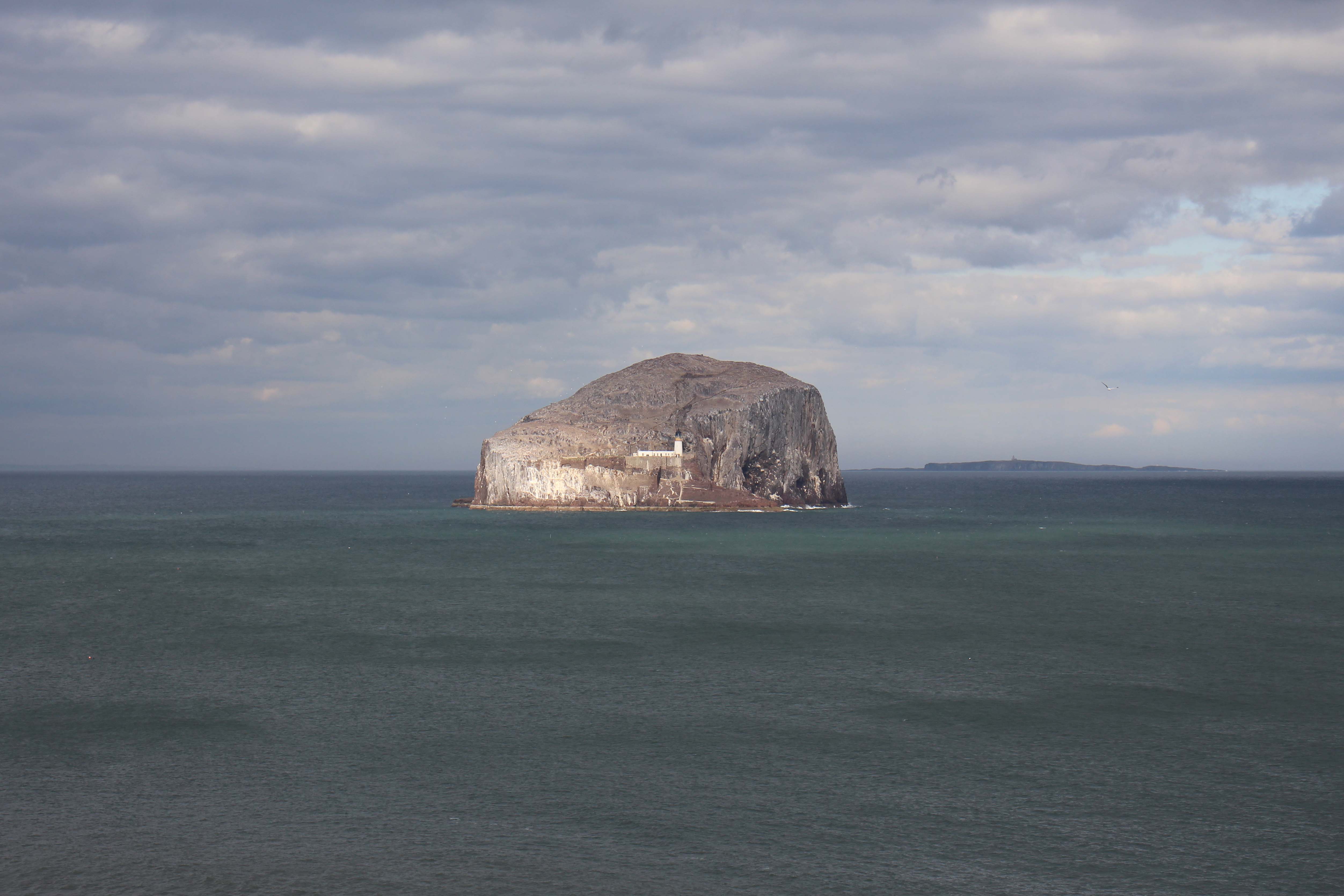
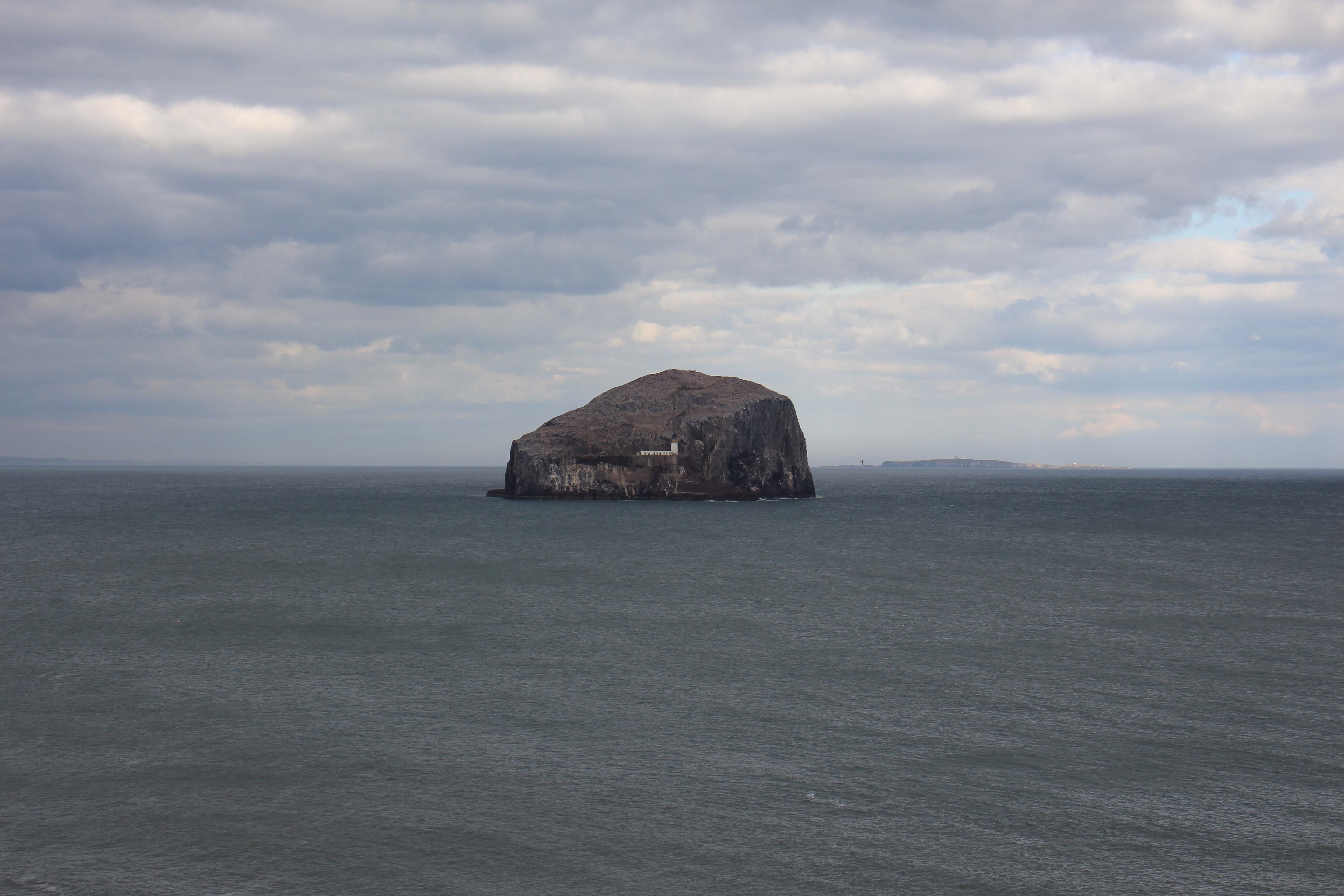
One of the most spectacular aspects of Tantallon is its view – not only along the coastline, but out to sea and the Bass Rock, a spectacular lump of stone in the Firth of Forth that housed a fortress in the Middle Ages and later a prison. At times it has hosted colonies of sheep. Today you can see a lighthouse, and the rock is the world’s largest colongy of northern gannets. Here it is in both sun and shadow:
view of the Bass Rock from Tantallon
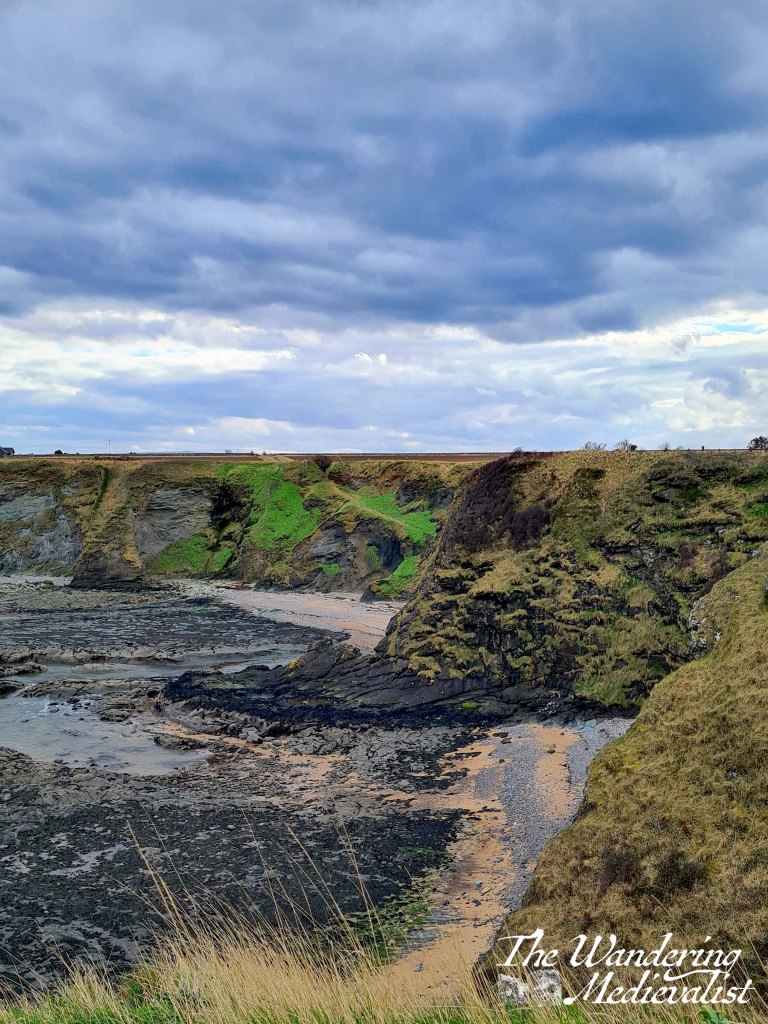
The other view from the castle is of course along the coastline – cliffs and rocky beaches galore, one could understand why landing an army here would be a formiddable undertaking.
I was eventually joined by a few other adventurous souls on this day, but in the meantime I sat down and enjoyed my picnic lunch in the lee of the castle.
It would be remiss of me, as a historian, not to tell a bit about the castle’s background. It was built in the 1350s by William Douglas, who would be the progenitor of the Red Douglas line, descended through his illegitimate son George, later Earl of Angus. Douglas was quite clever in this design, as the castle defences are comprised essentially of one long wall, securing a headland that pokes out in to the Firth.
It was known in the Middle Ages to be nearly impenetrable, but unfortunately this was proven false through a siege conducted by Oliver Cromwell’s Parliamentarian forces in 1651. Twelve days of cannon fire were too much for even this curtain wall, and it was left as it is now.
The trip I spent visiting Tantallon introduced me to a part of Scotland I had never really seen before, and I found the North Berwick area to be both beautiful and well worth exploring in more depth. There is not a big town, but the roads were in decent shape and the edge of Edinburgh is very close, so one could probably be based in the city and do day trips. I will definitely be going back to visit Tantallon, hopefully with the opportunity to go inside and explore some of the ruined towers and rooms I could only glimpse from around the edge. I was struck, as I stood looking across towards Fife, that while the drive was around two hours, a boat could probably get me home faster, as the distance between Tantallon and Fife is less than 10 miles as the crow flies, more than 80 by road. When standing in St Monans several days ago I could look across to the Bass Rock and know this castle was hiding just behind it – just out of sight.
The braes ascend like lofty wa’s, The foaming stream deep-roaring fa’s, O’er hung wi’ fragrant spreading shaws, The birks of Aberfeldy.
The hoary cliffs are crown’d wi’ flowers, White o’er the linns the burnie pours, And rising, weets wi’ misty showers The birks of Aberfeldy.
– Robert Burns, ‘The Birks of Aberfeldy’
Work completely took over my life last week, but thank goodness for Facebook memories, reminding me of the trip we took last year at this time to Aberfeldy and inspiring me to look back even further to our March 2020 trip. It was a strange time – we knew that the world was starting to change, that restrictions were coming into place, and in fact it was while in a pub in Aberfeldy that we heard the pubs were closing – it was a sombre and disconcerting time, full of the unknown.
But, we had rented a self-catered cottage at Moness Resort, and were determined to make the most of it. Perhaps foolishly, we chose the Birks of Aberfeldy as our first walk of the weekend – the start of the walk is just across from the entrance to the resort, and so easily accessible from both Moness and Aberfeldy itself (officially, in fact, one can start the walk from Aberfeldy high street). And I should clarify – the foolishness was not in choosing to go for this walk, but instead to choose it as the first walk of the weekend, before we had time to warm up a little. The other half was struggling with his knee, and the description of the walk I read in one of my books indicated that it was not overly long. It is, however, incredibly steep – in many cases, the path is in fact a set of stairs, leading up the side of the gorge. Stunning views, and definitely good for the quads – if not, necessarily, sore knees.
The start of the trail is relatively gentle, following the Moness Burn as it rushes over rocks and smaller falls. The statue portrayed at the top of this post is in a lovely wide clearing, indicating where Robert Burns may have first been inspired to write; one can understand this inspiration!
The path continues on eventually into a narrowing gorge, and this is where the walk becomes both more beautiful and a touch more challenging. Well-build wooden walkways and steps make it possible to truly experience the beauty of the lower falls.
I am a total sucker for waterfalls of course, and wish only that I had had my fancier new camera to properly capture them. Instead, I allowed both the other half and I to take periodic breaks as we climbed, and took plenty of pictures on my phone. It really is a stunning walk, with bridges and gorgeous colours of copper and green, even in the early spring when we were there.
Staircases like the one above wind up the gorge and away from the burn, and at the top of one I was delighted to see the tree on the right, which reminded me of something out of Sleepy Hollow – I half expected it to come alive.
Equally magical was this view up what almost seemed a fairy hill – though the other half told me I was getting a touch fantastical when I spoke the thought aloud.
The apex of this loop is Upper Moness Falls, impressive at any time of year but perhaps particularly when snows are still melting. You cross directly over the falls on a bridge, but the best view is a bit earlier in the walk, where lines from Burns’ poem are carved onto the railing.
The return loop is higher up above the gorge and involves far fewer stairs, instead just a meandering descent. I quite enjoyed having both options available – near the water on the way up, but also views down into the gorge and across the treetops and hills towards Ben Vrackie in the distance.
All in all, a stunning walk and one I would most definitely do again – but with my knee brace and quads prepared!