
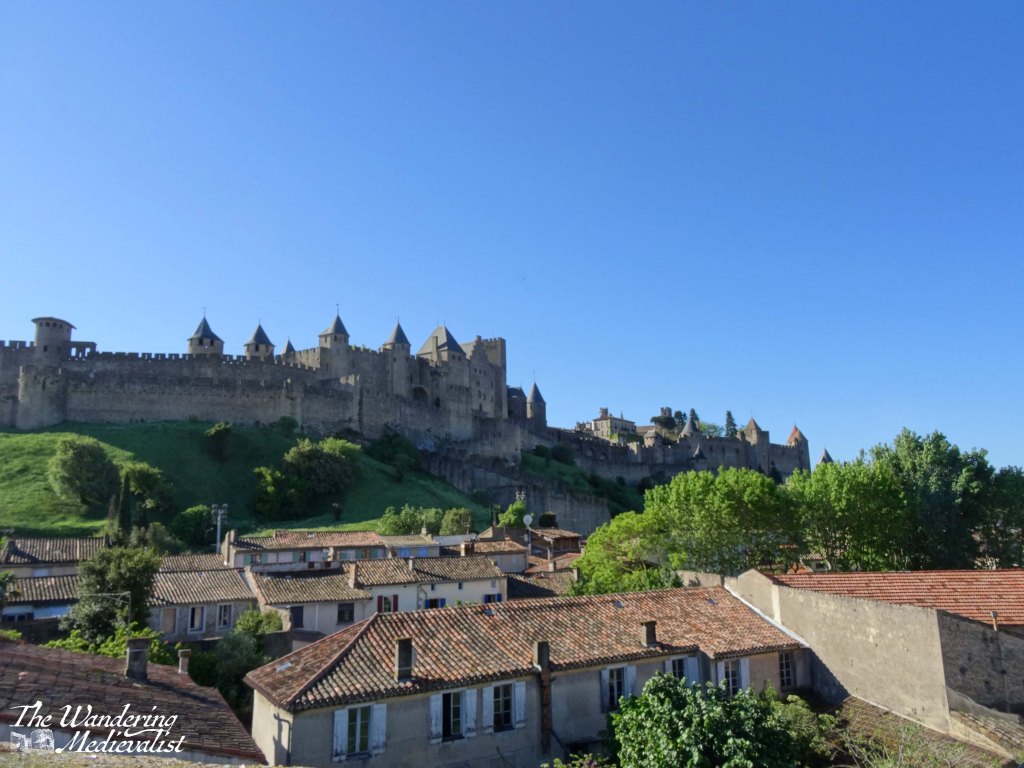
As I mentioned in my first post about Carcassonne, our first attempt to visit the château was stymied by industrial action, leaving Mum and I with an unplanned day of exploration of the restored medieval cité and surrounding town. It was a stunning sunny day with brilliant blue skies, and only towards the middle of the afternoon were clouds visible gathering in the distance and moving closer.
The night before, we had arrived in Carcassonne in cloudier weather, but I had selected our hotel carefully and the first thing I did was climb to the roof to enjoy the view. It was, in a word, breath-taking.
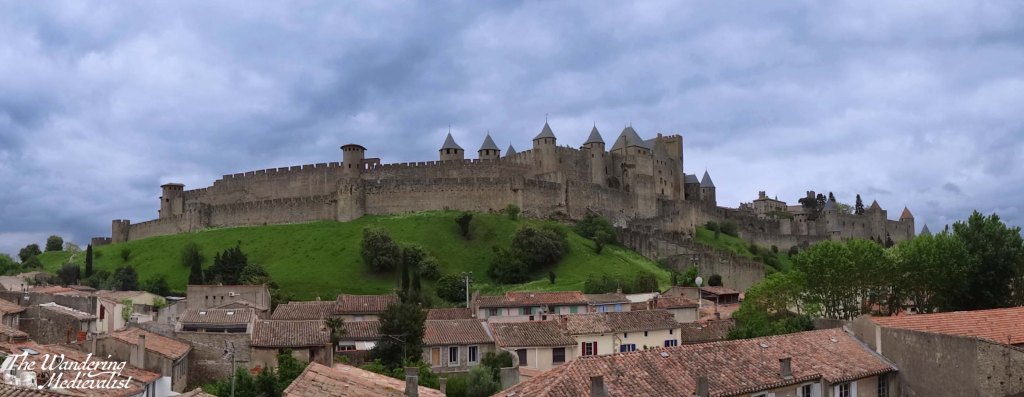
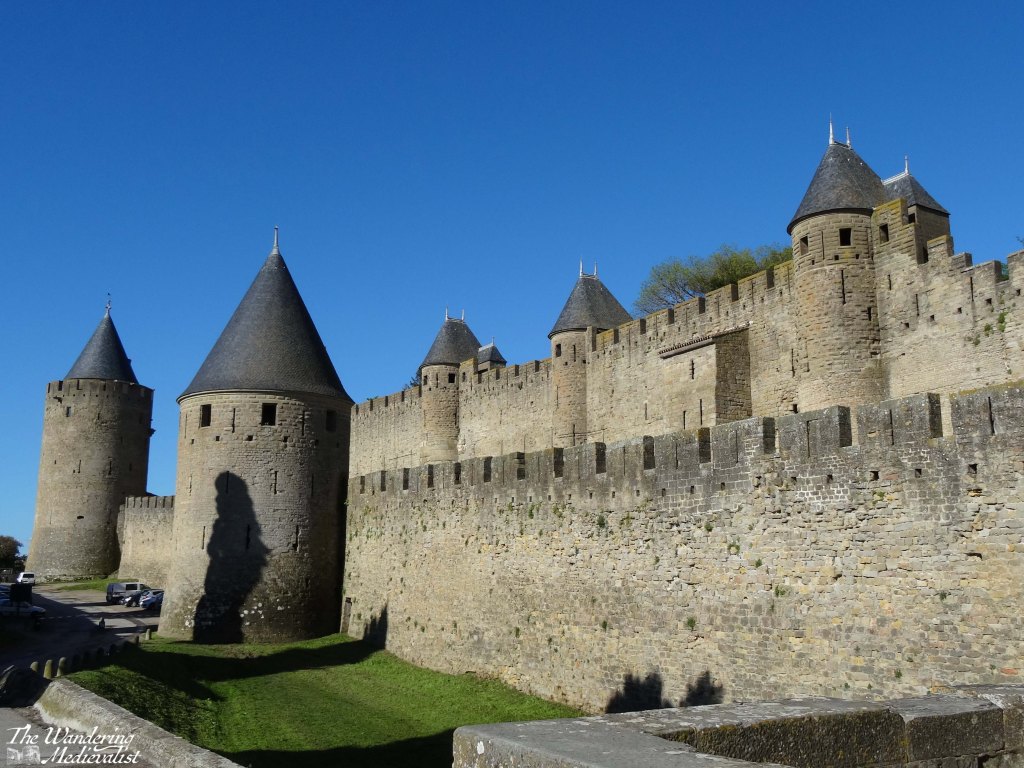
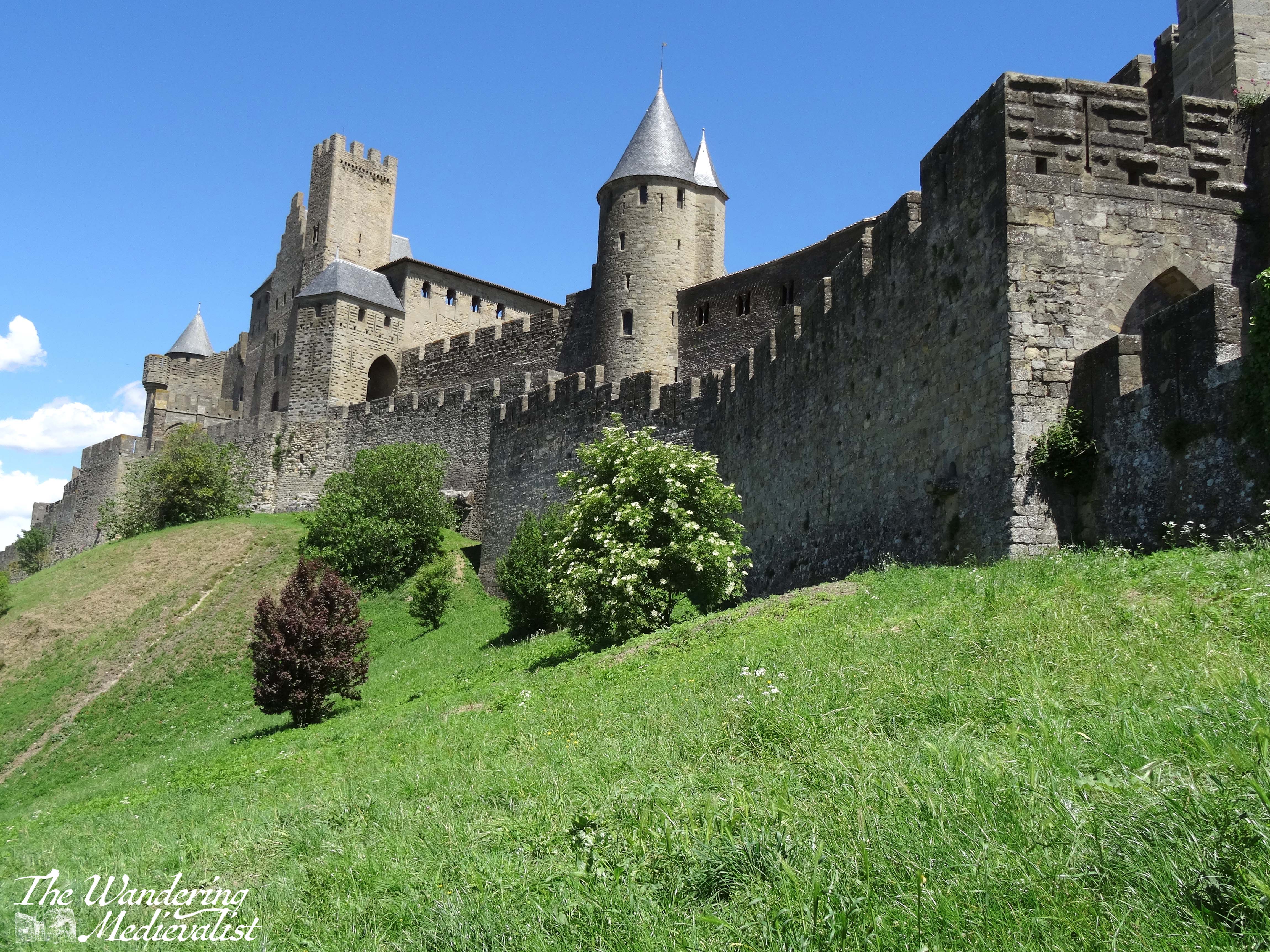
Upon seeing the view, I could not resist going out for a short walk to explore the city walls, which rise from the grassy hill in layers and are topped by the iconic coned towers towards the château, interspersed with older Roman-style roofs and towers.
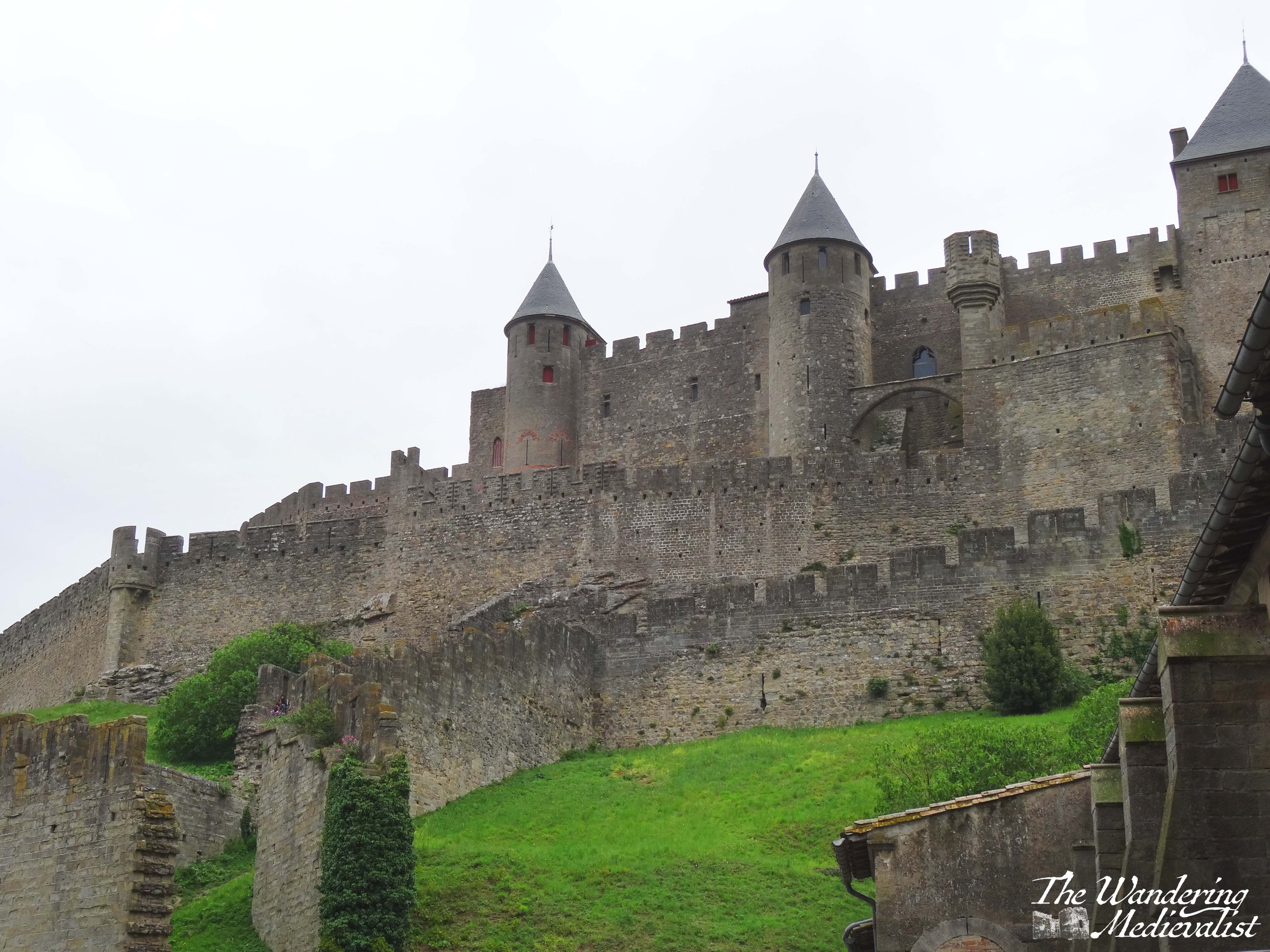
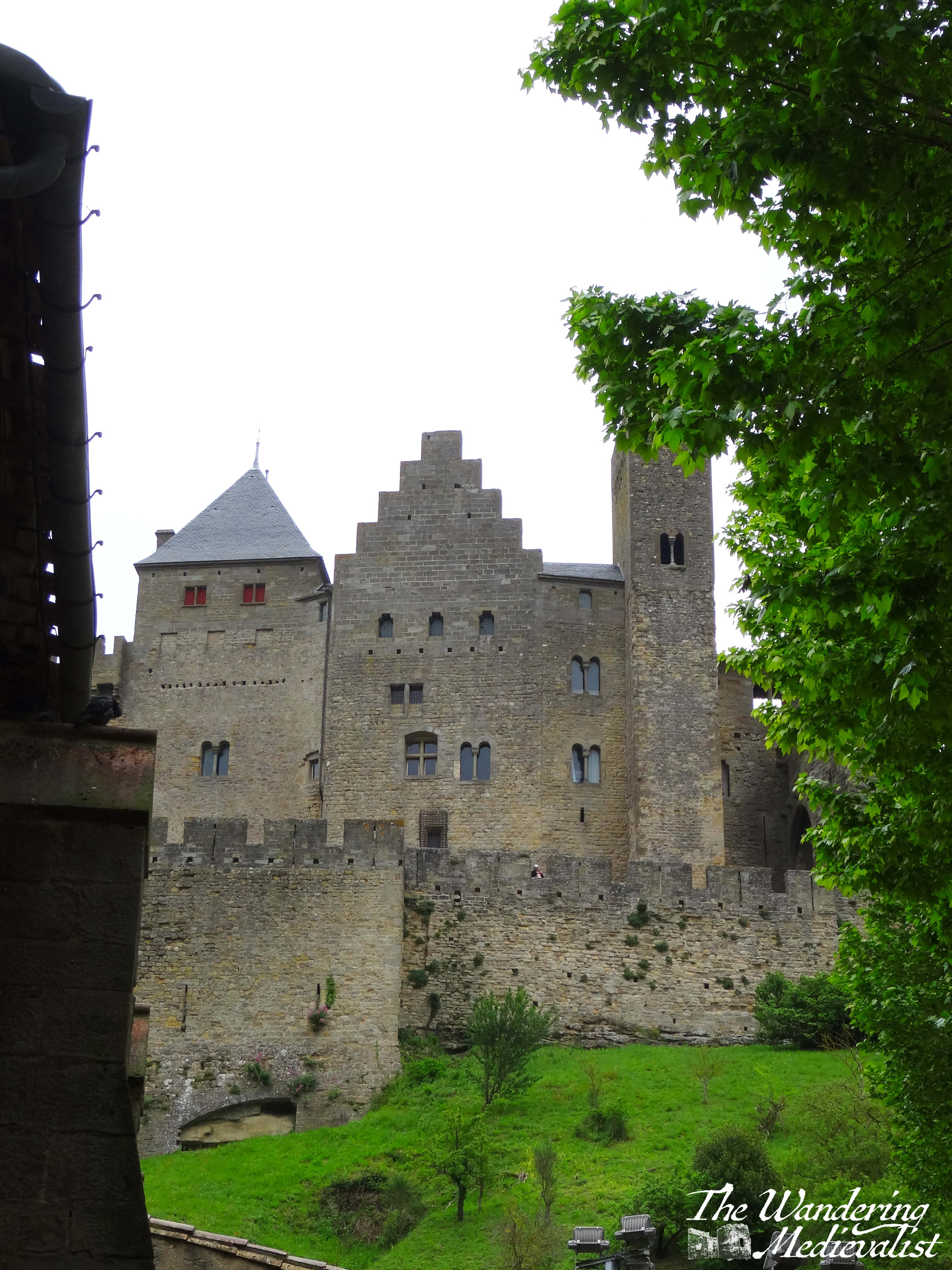

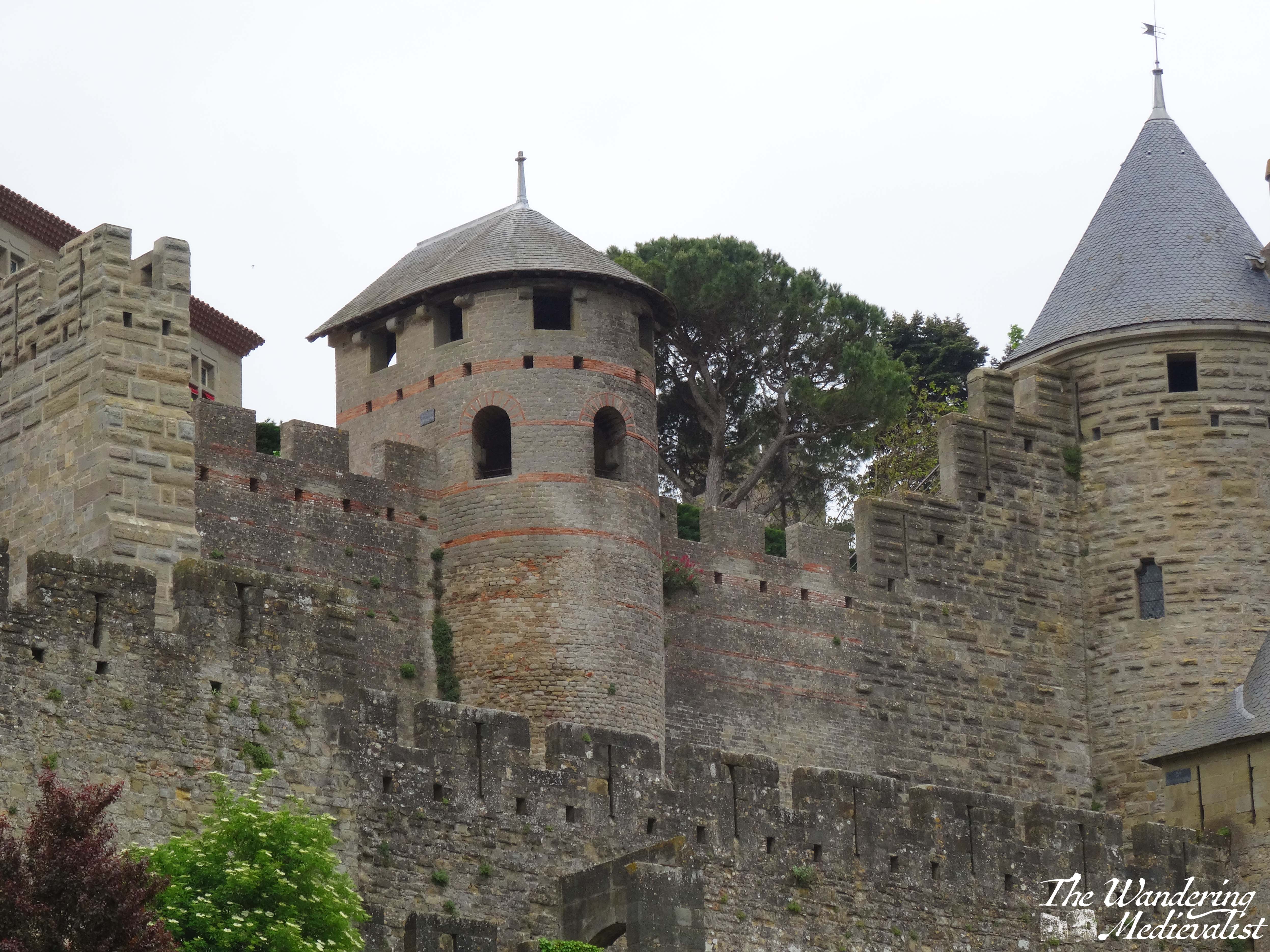
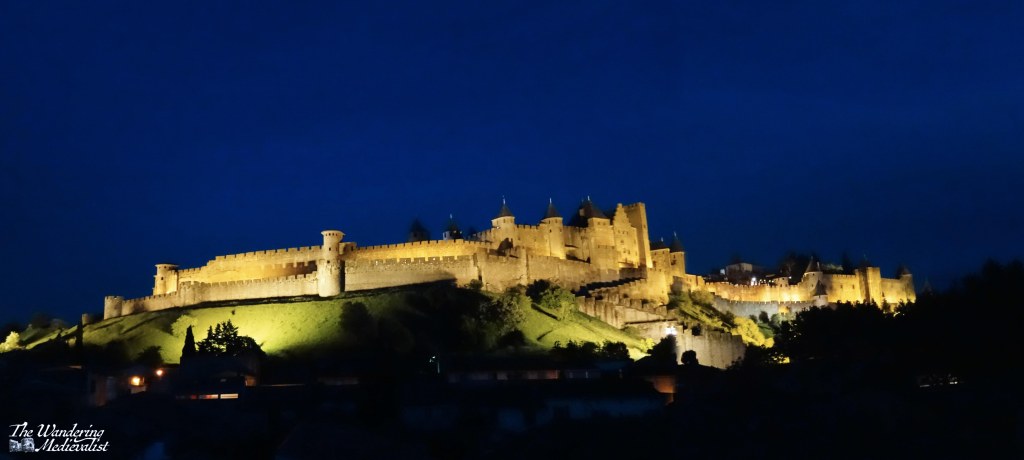
That evening after dinner I encouraged Mum to climb to the roof as well, and we enjoyed the arguably even more impressive night-time view. Like many monuments and historic sights, the walls are lit up and almost as clear as day.
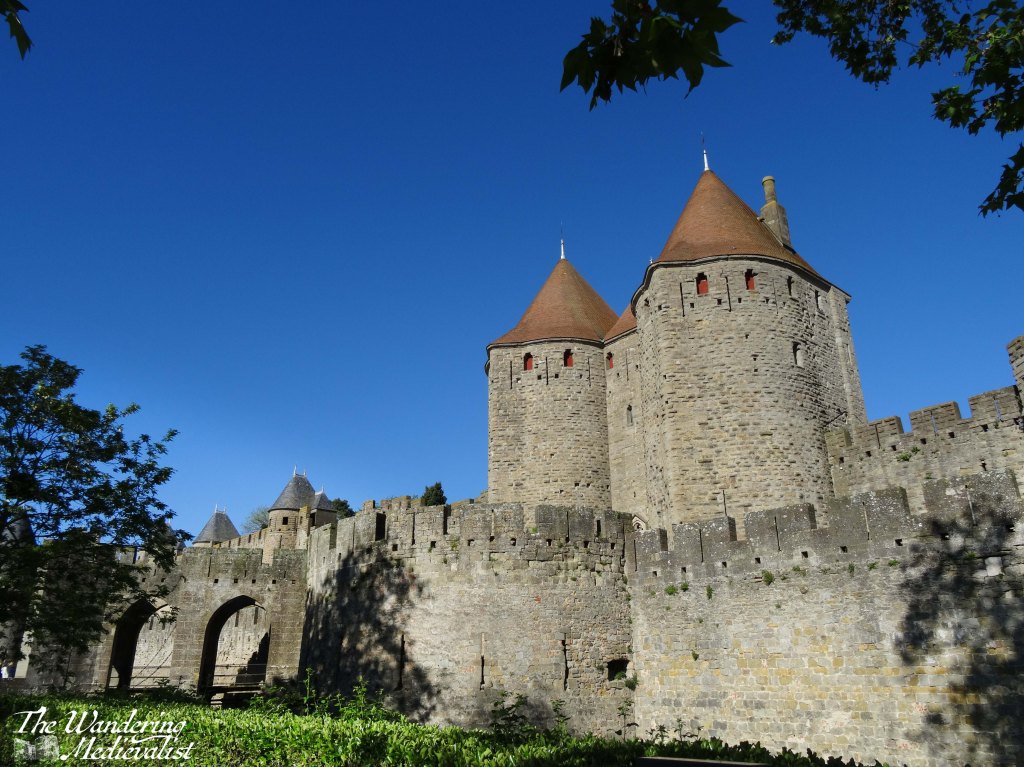
The following morning, we hiked up and around the hill to the main entrance to the cité, accessible through an impressive gatehouse.
Immediately outside the gatehouse is the replica bust of the Lady of Carcas, a legendary defender of the city. The story was that in the 8th century, Carcassonne – then ruled by Muslims after the Umayyad conquest of Spain in the early 700s – was under siege by the Christian Franks. The siege lasted more than five years, and during this time the king died, leaving his wife Dame Carcas to organise defence of the city.
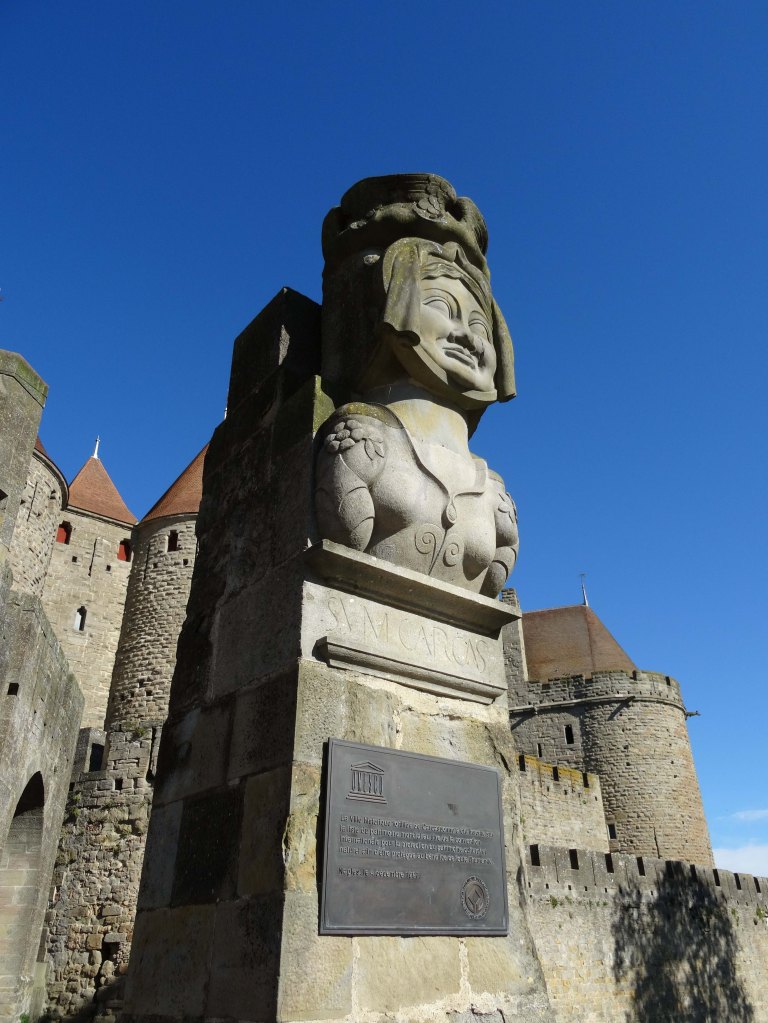
Her final and most famous effort to dispel the invaders came when the people were close to starvation; she found one of the last pigs left in the city, stuffed it full of wheat, and tossed it over the walls. This gesture convinced the Franks that the city was so well-provisioned that it could throw away pigs and so they abandoned their siege.
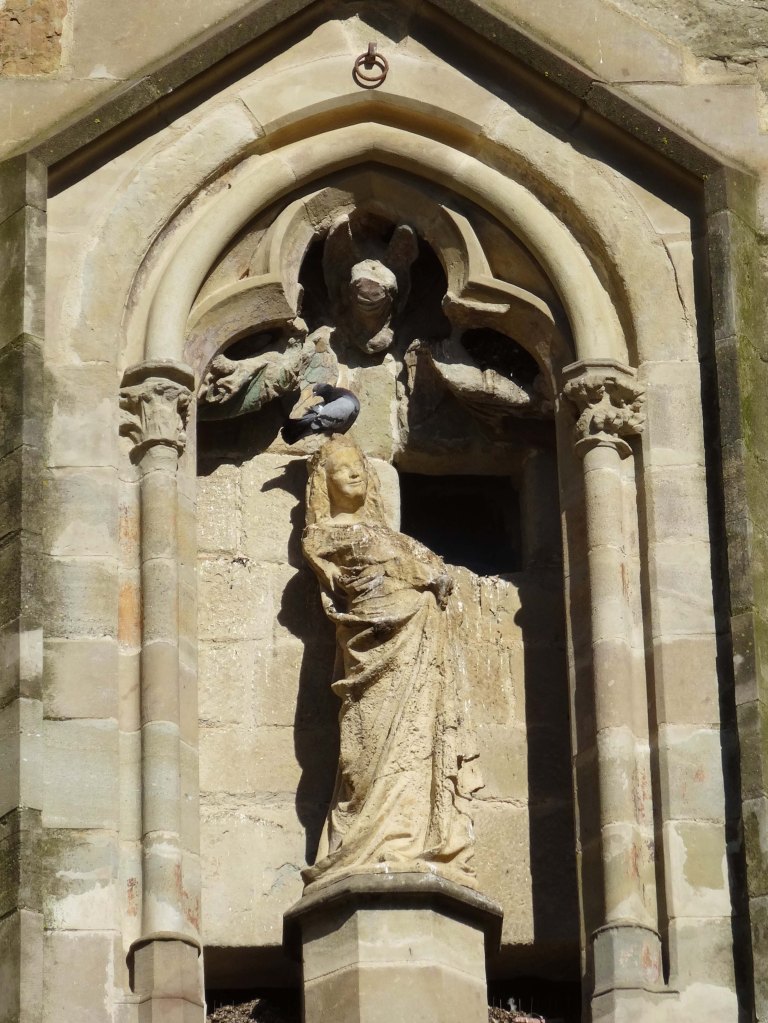
This story is almost certainly a myth, with its basis in oral tales of the early Middle Ages, but it is evocative of the long and often dramatic history of the city, which experienced its fair share of sieges, most famously in 1209. Due to its location on trade routes, Carcassonne welcomed a wide range of people from all over the world and so developed a tolerance for religion that likely encouraged the viscounts’ support of the Cathars. But moving on…
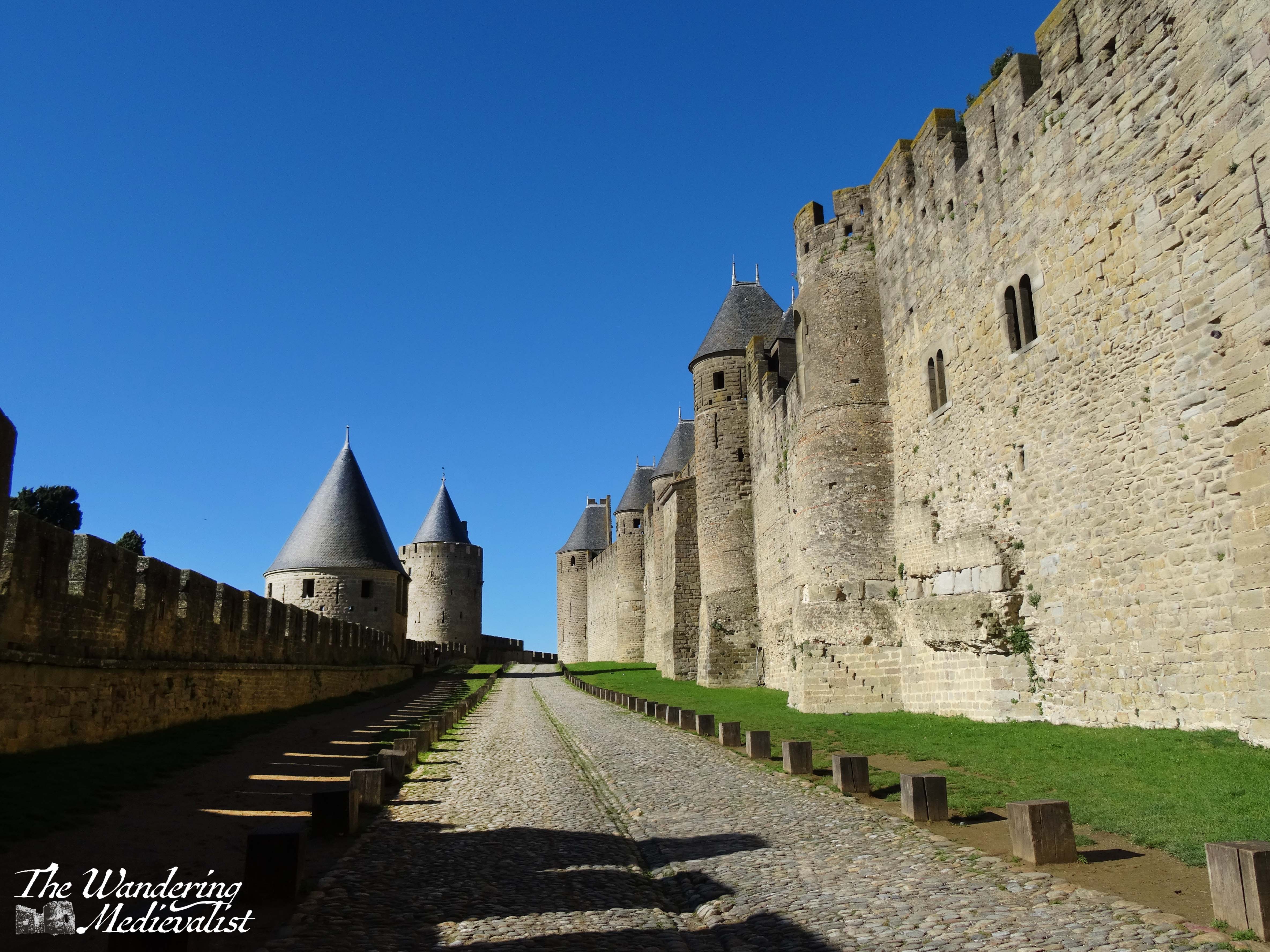
Once one has passed through the gatehouse, it becomes clear that the outer walls are just the first layer, and in fact the inner walls stretch endlessly in both directions.
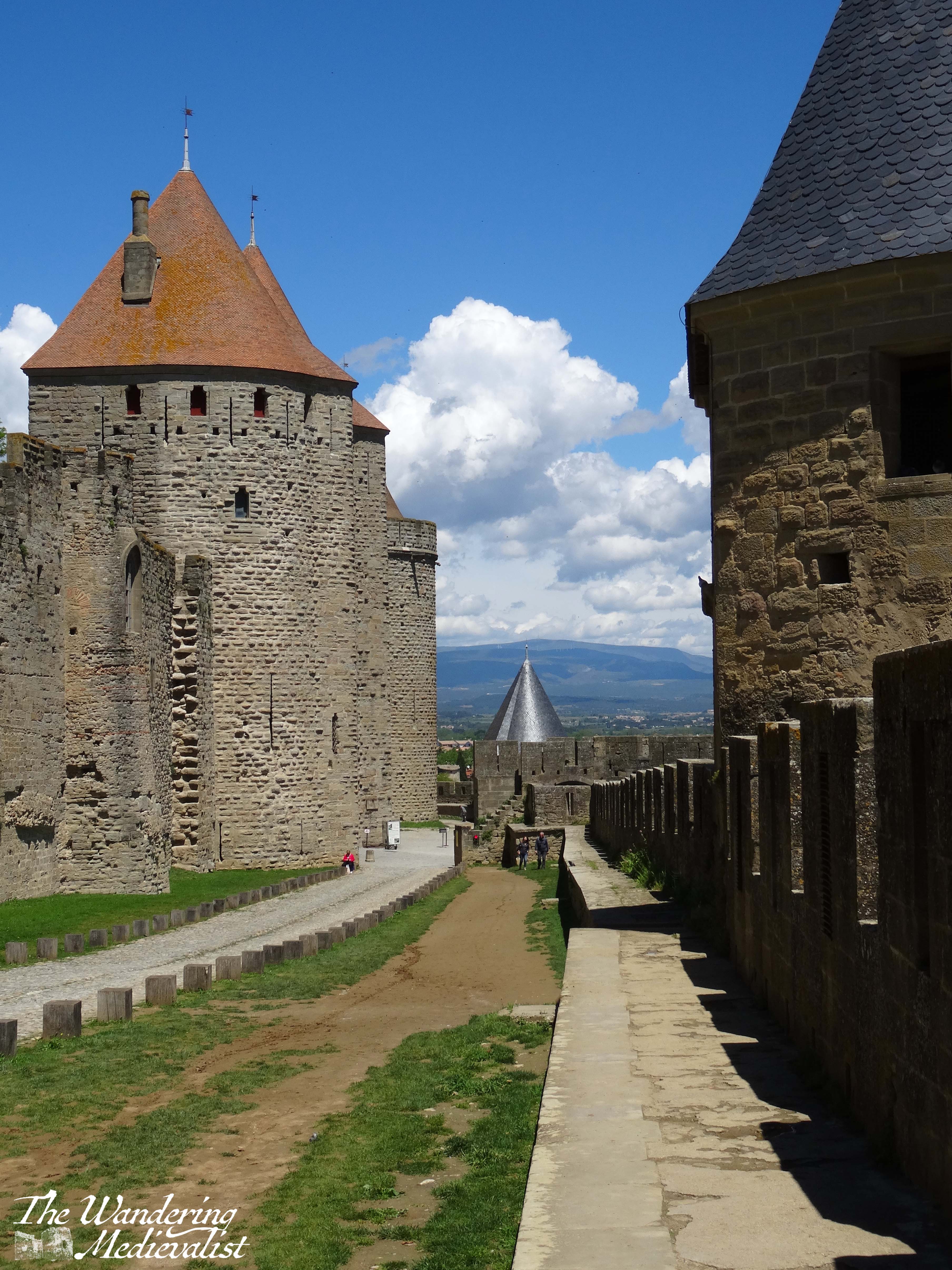
Another wall must be passed through before one enters the city proper, where immediately the stone buildings close in around visitors, creating narrow streets that twist and turn and were clearly not designed for modern vehicles. The medieval cité is reminiscent of Mont-Saint-Michel in the way the houses tower around you, but also in its tourist nature, with numerous shops selling a mixture of medieval and Provençale wares, scattered amongst restaurants and cafés.
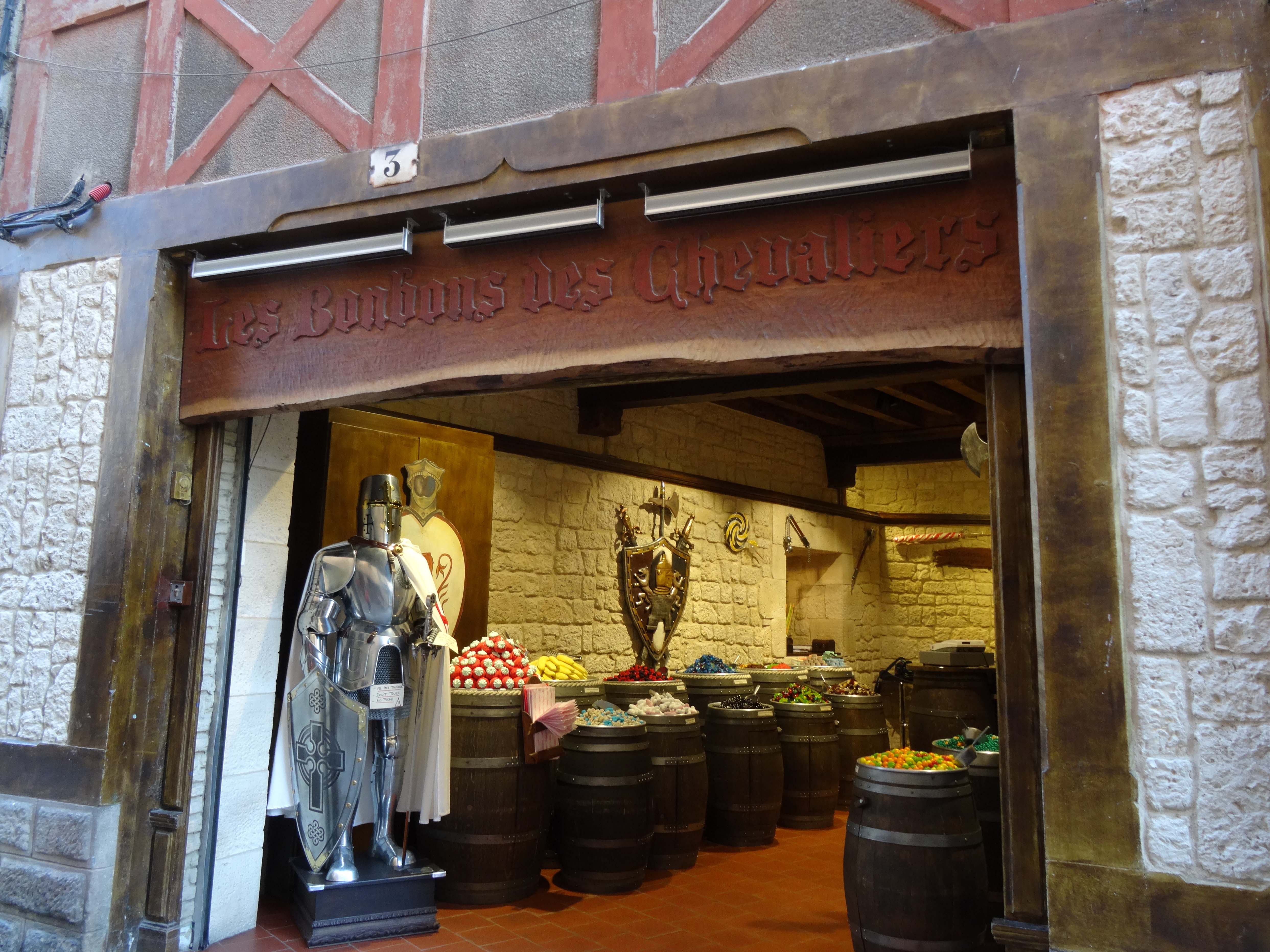
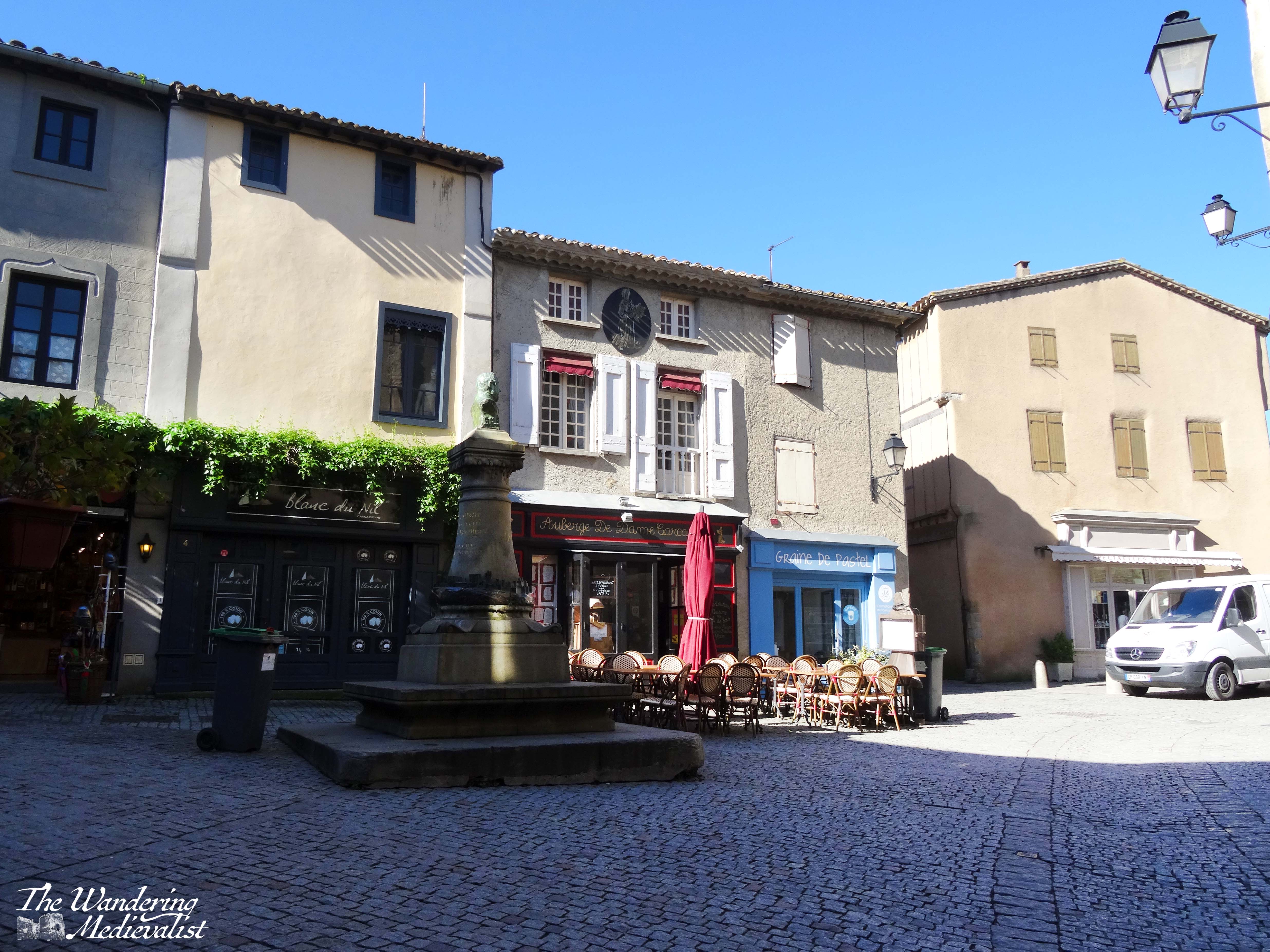
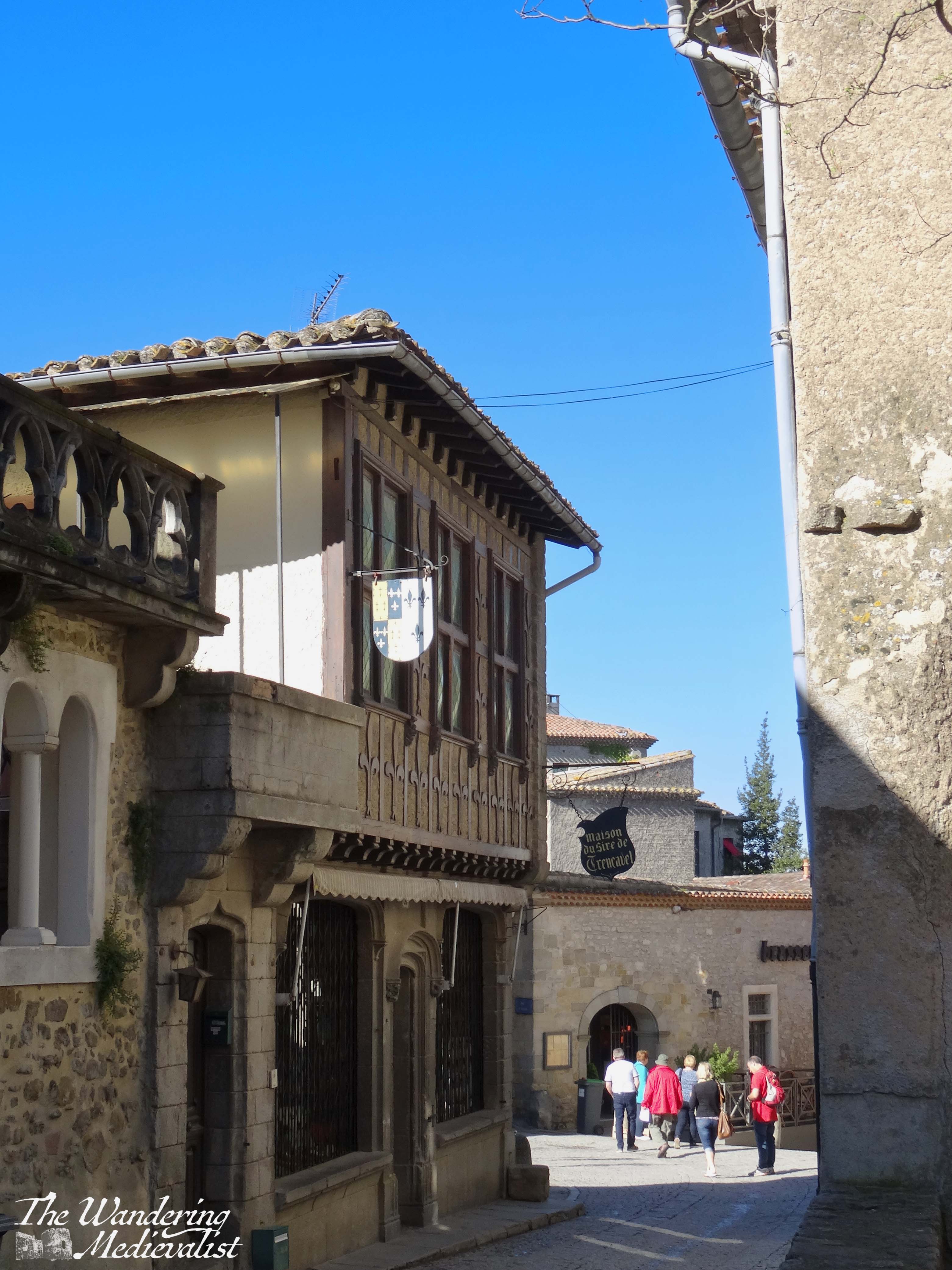

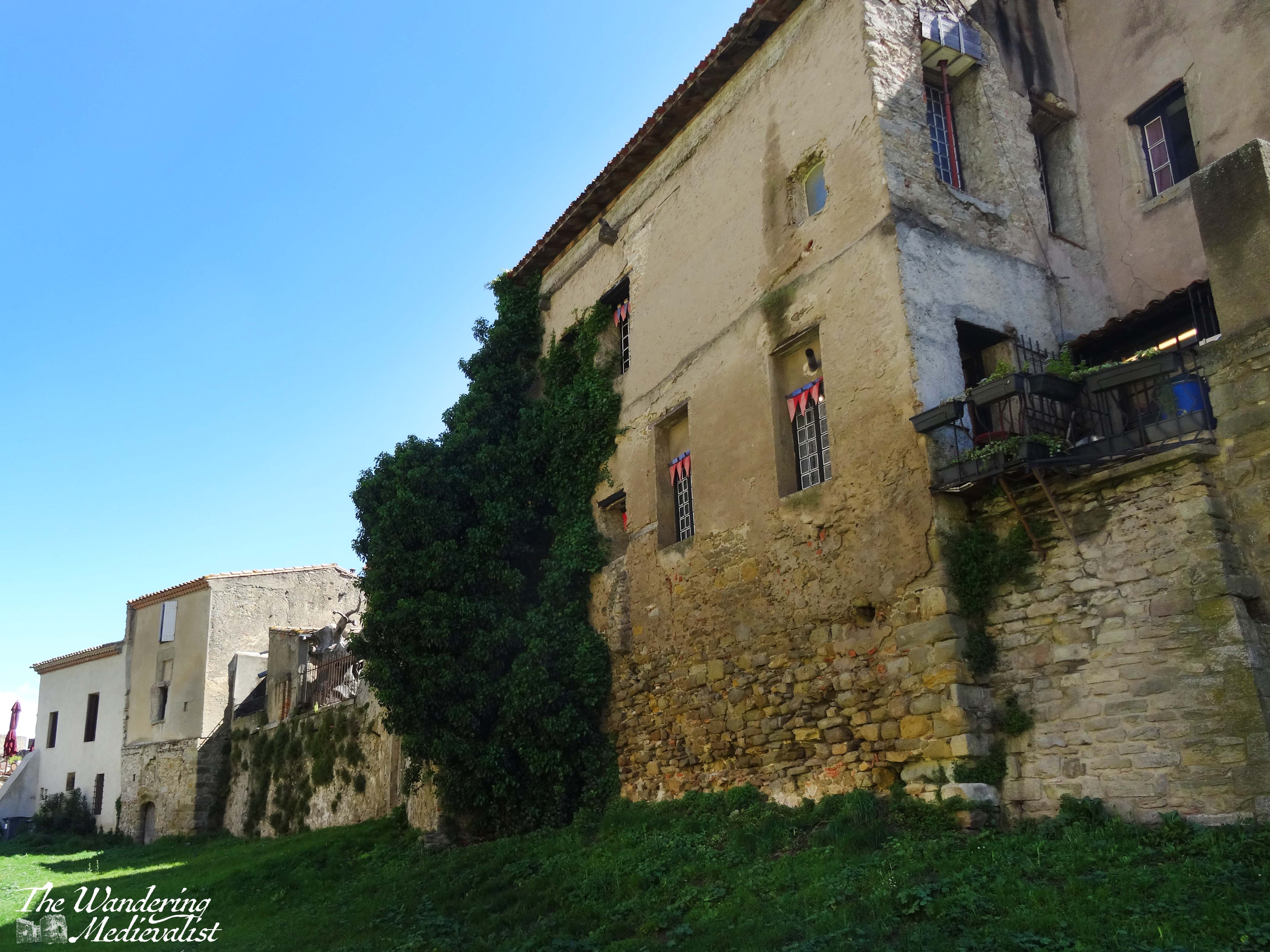
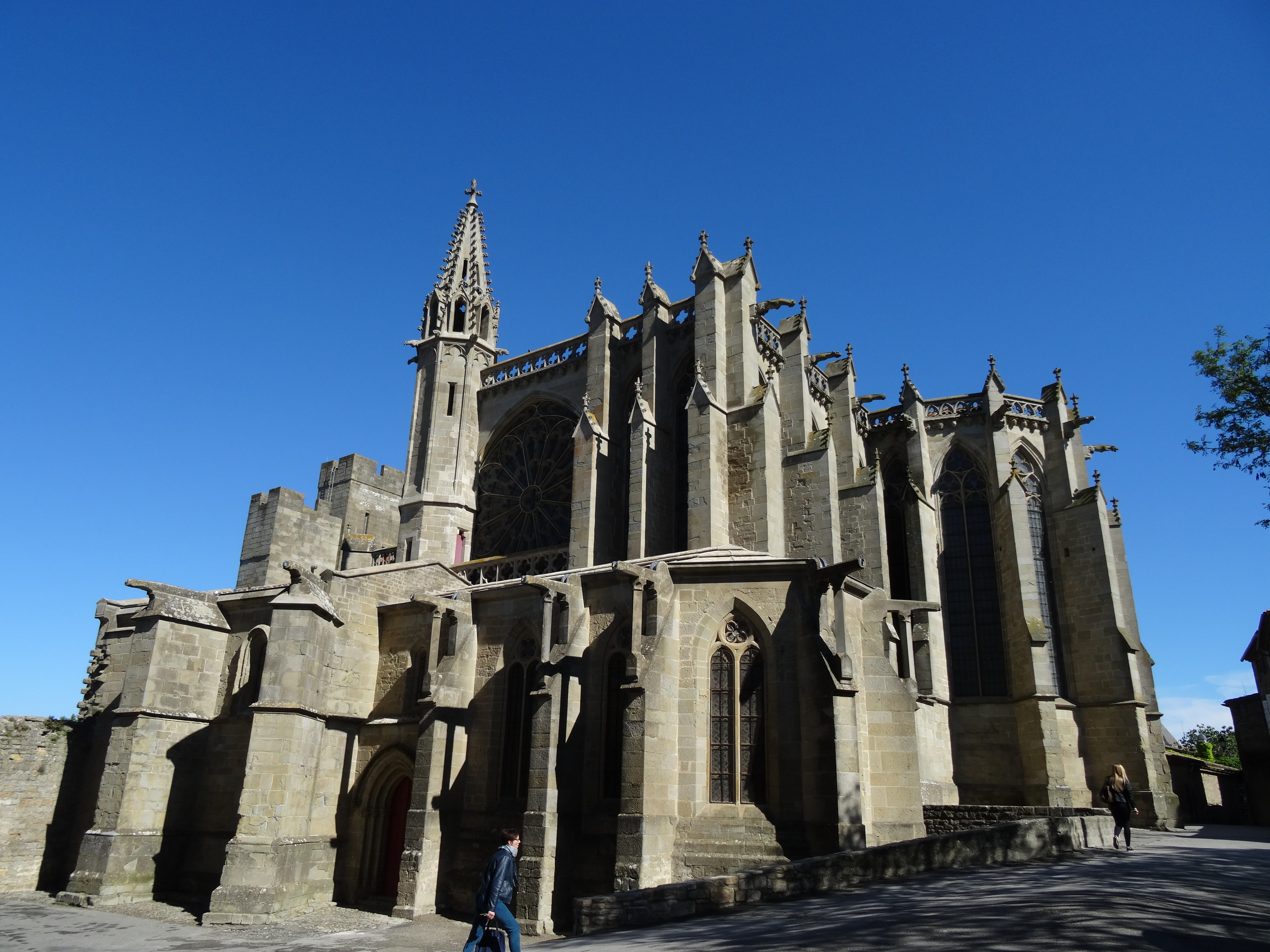
Our first stop – after a short coffee break – was the Basilica Saint-Nazaire and Saint-Celse, Carcassonne’s cathedral until 1801, and the source of many of the sculptures on exhibit in the château. That may be post 4 on Carcassonne, as I discovered far more pictures of it than I recalled taking!
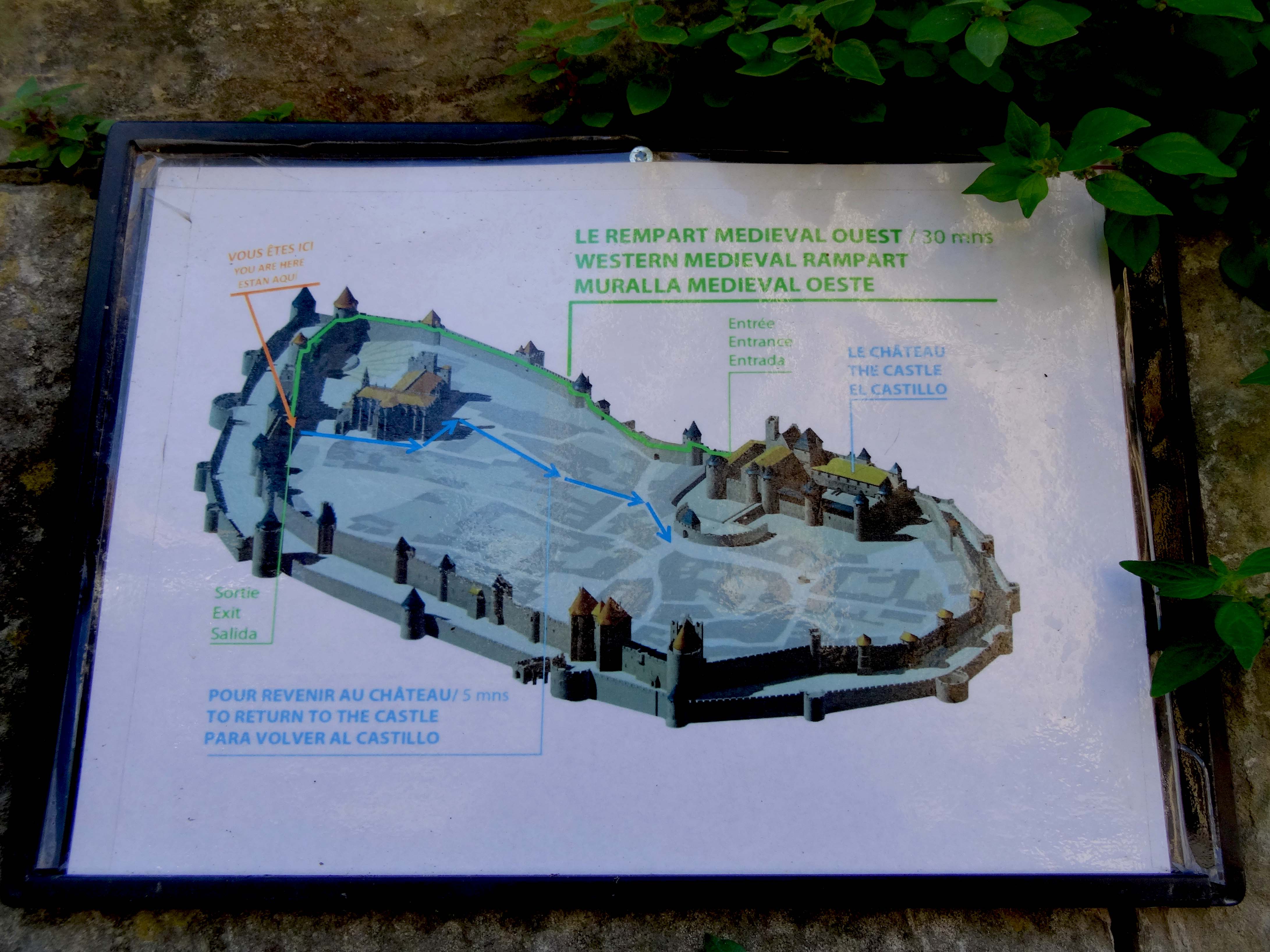
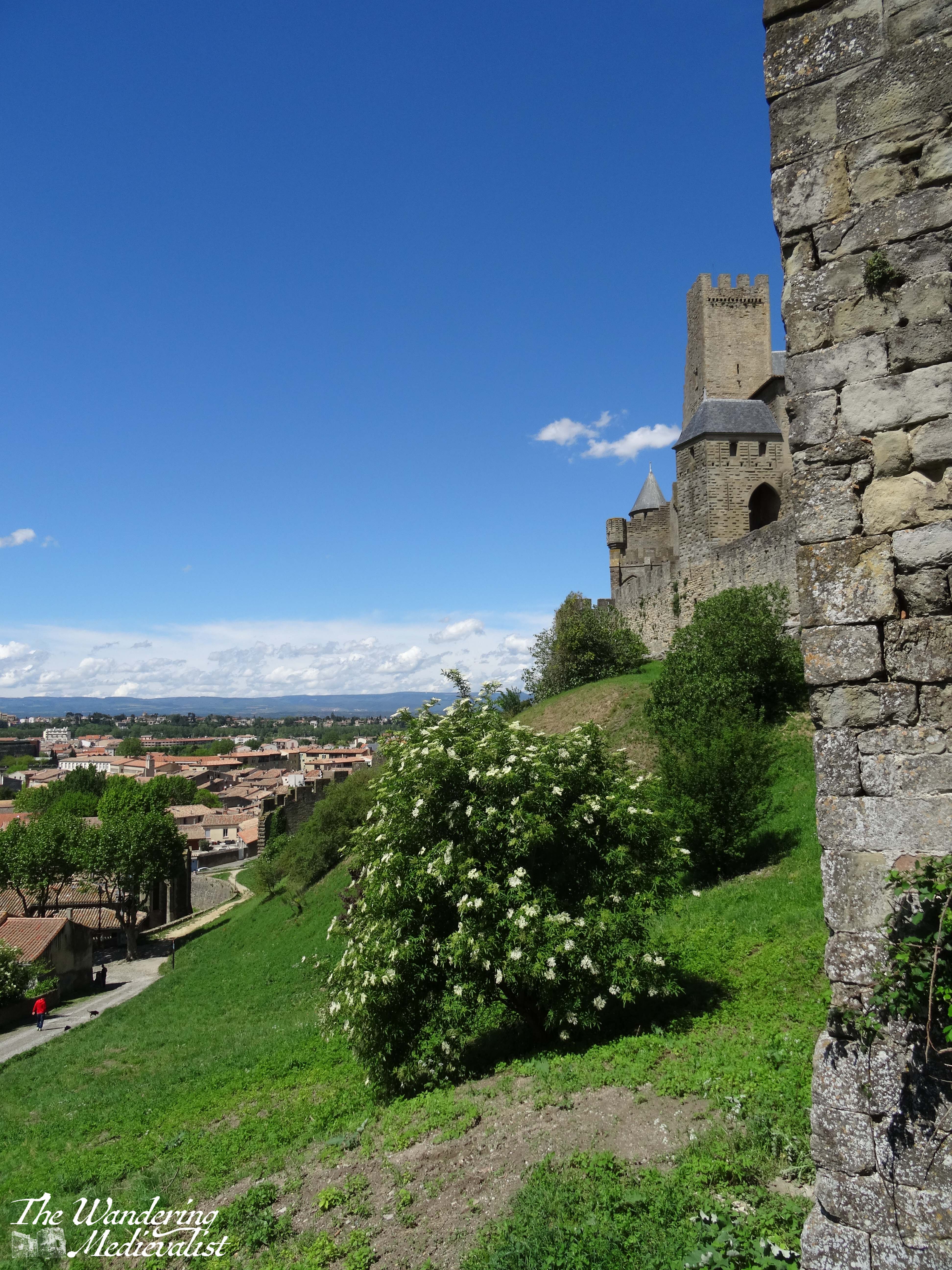
While we could not get into the château we could get onto the city walls, and the views make it clear why Carcassonne had been built where it was, and why it was so significant as a fortress – one can see as far as the first slopes of the Pyrenees, beyond the rolling hills and farms.
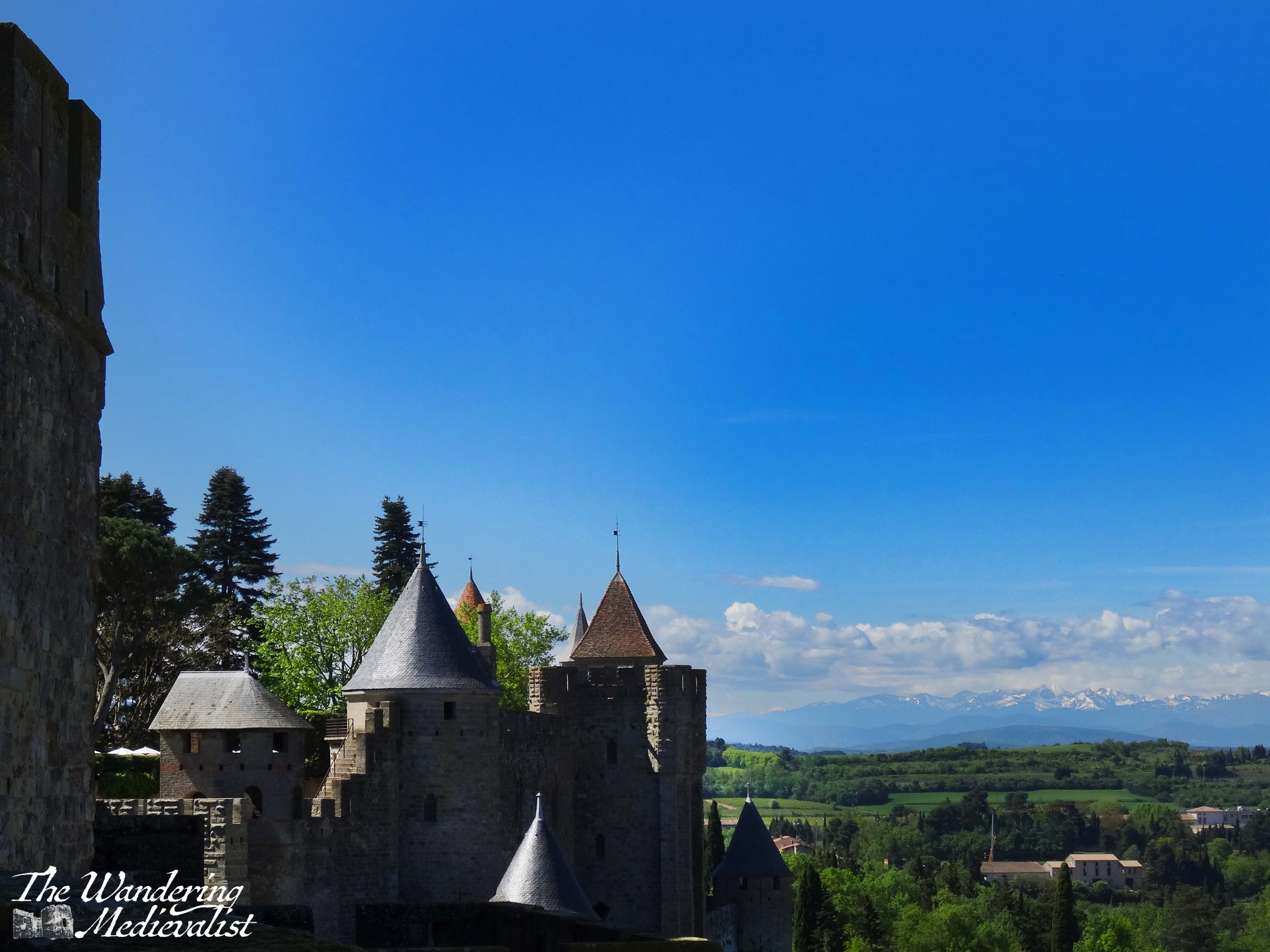
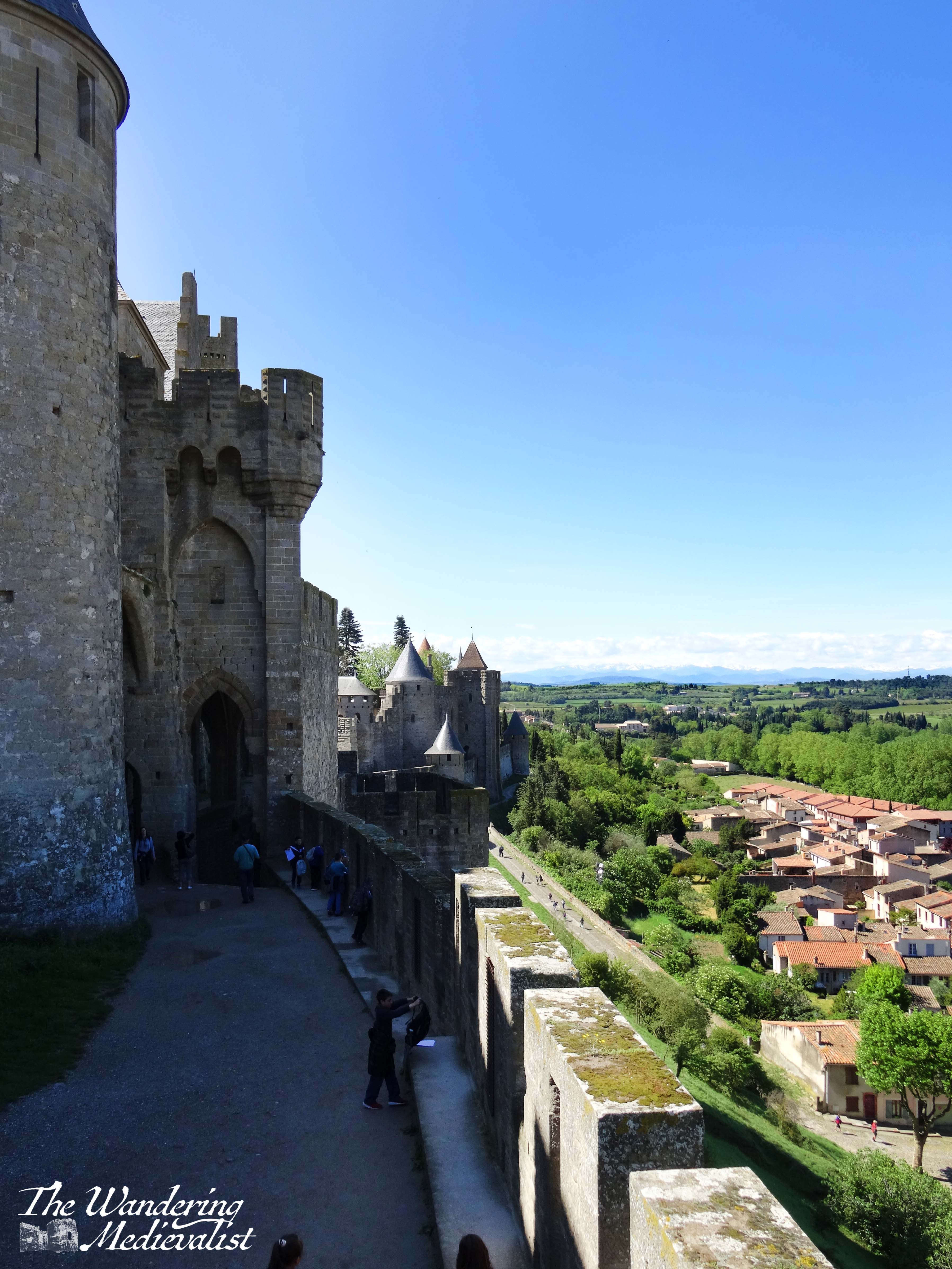
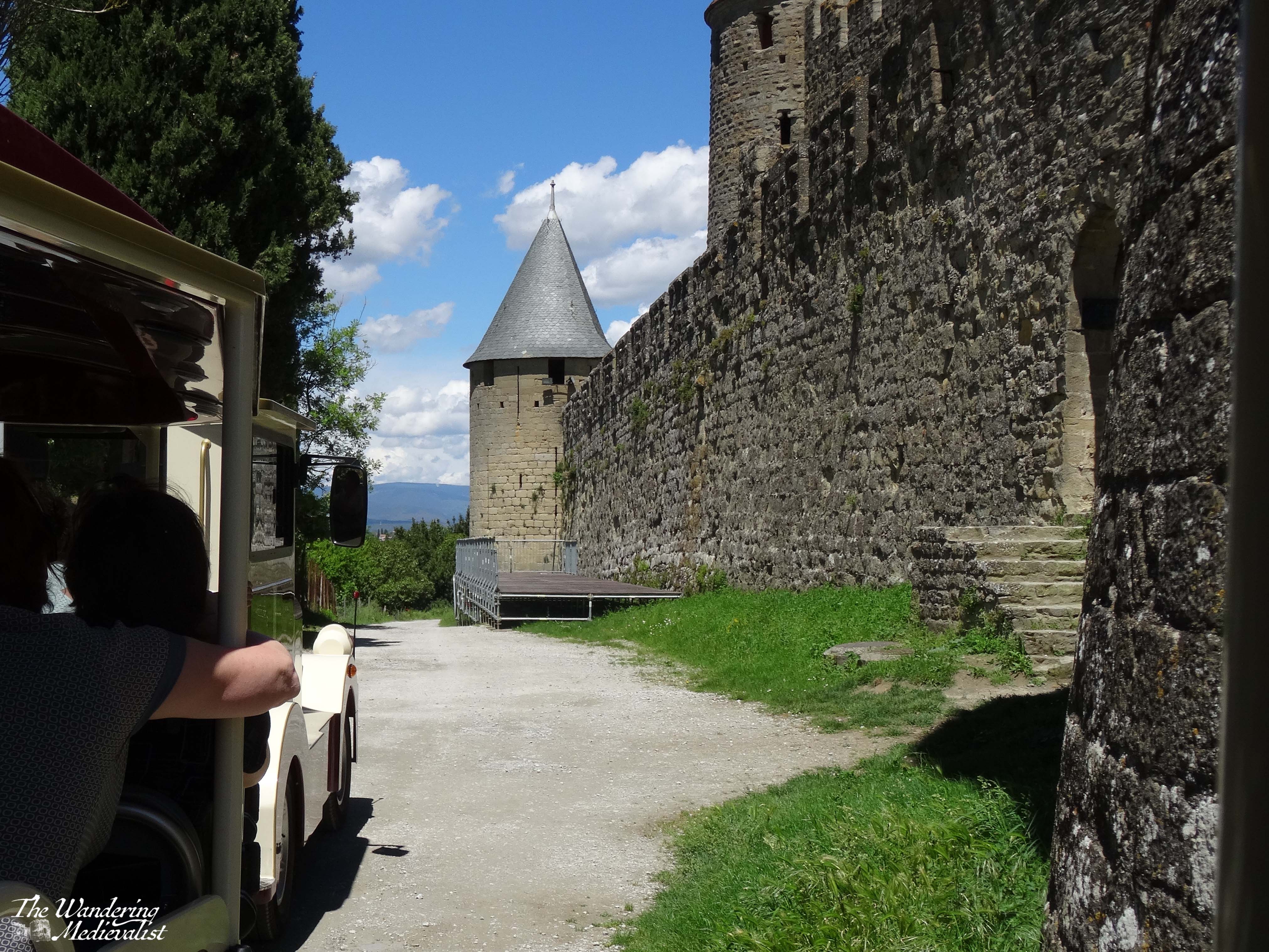
The day was growing warmer – it peaked at 31℃ (almost 90℉) – and so we chose to continue our circumnavigation from the comfortable seats of the small road ‘train’ just outside the city. The ride allowed us a bit of rest and also some spectacular views of the walls, and enabled me to plan my later explorations.
Mum eventually decided to return to the hotel for a rest – she was still suffering from jetlag – and so after lunch I made my own way back up to to the city, starting with the famous entrance-way which played the part of Nottingham in Robin Hood: Prince of Thieves.
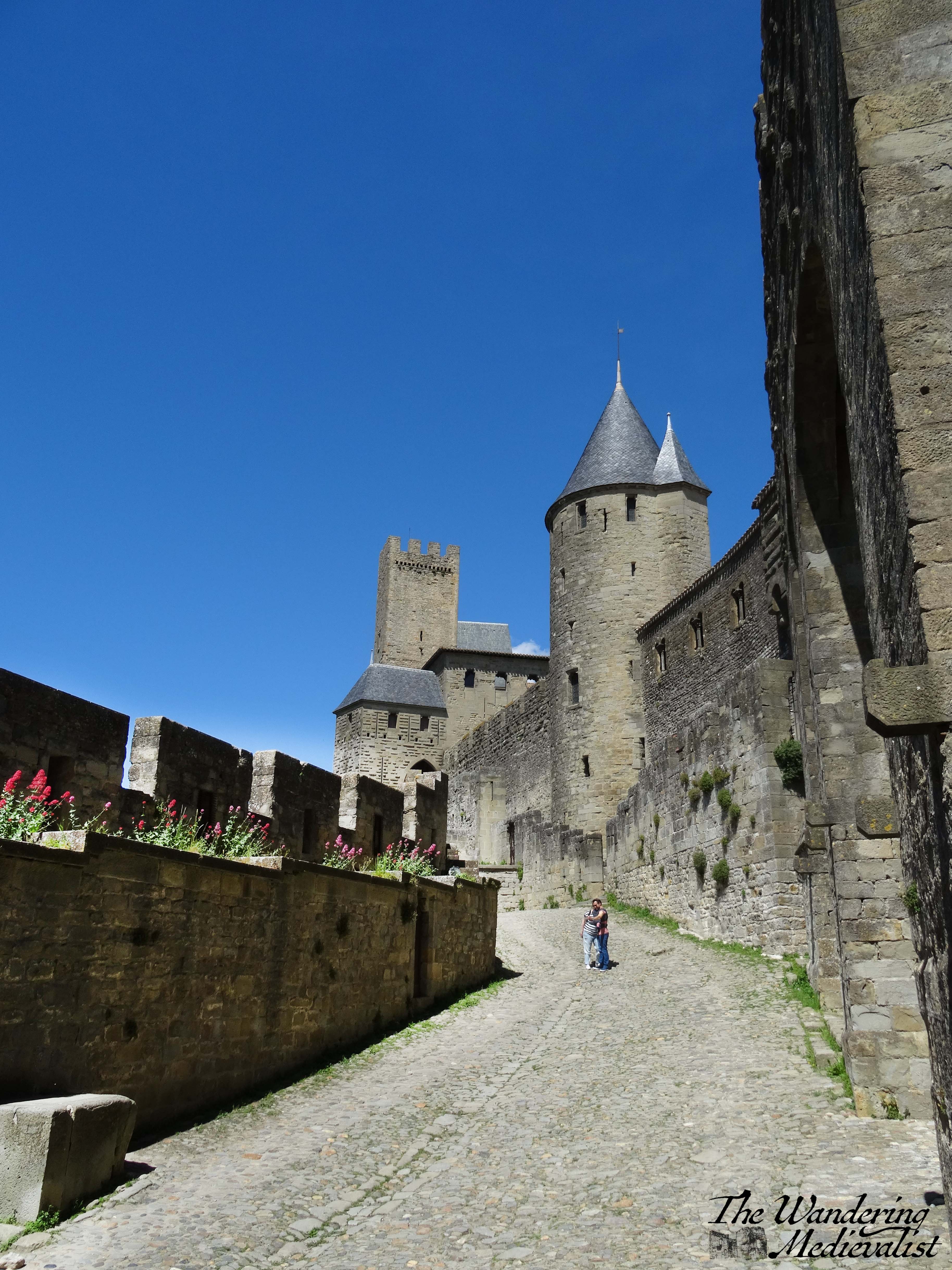
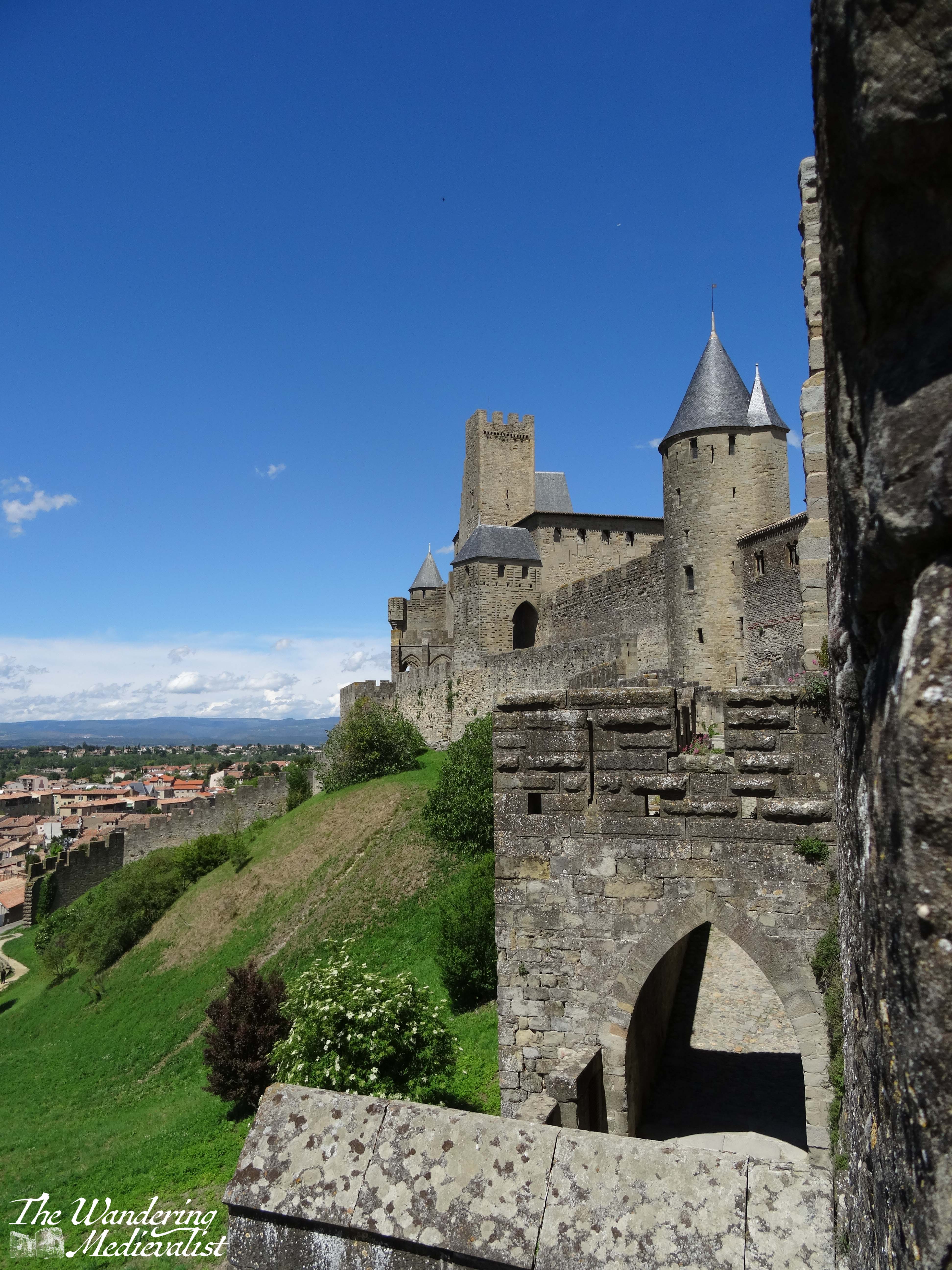
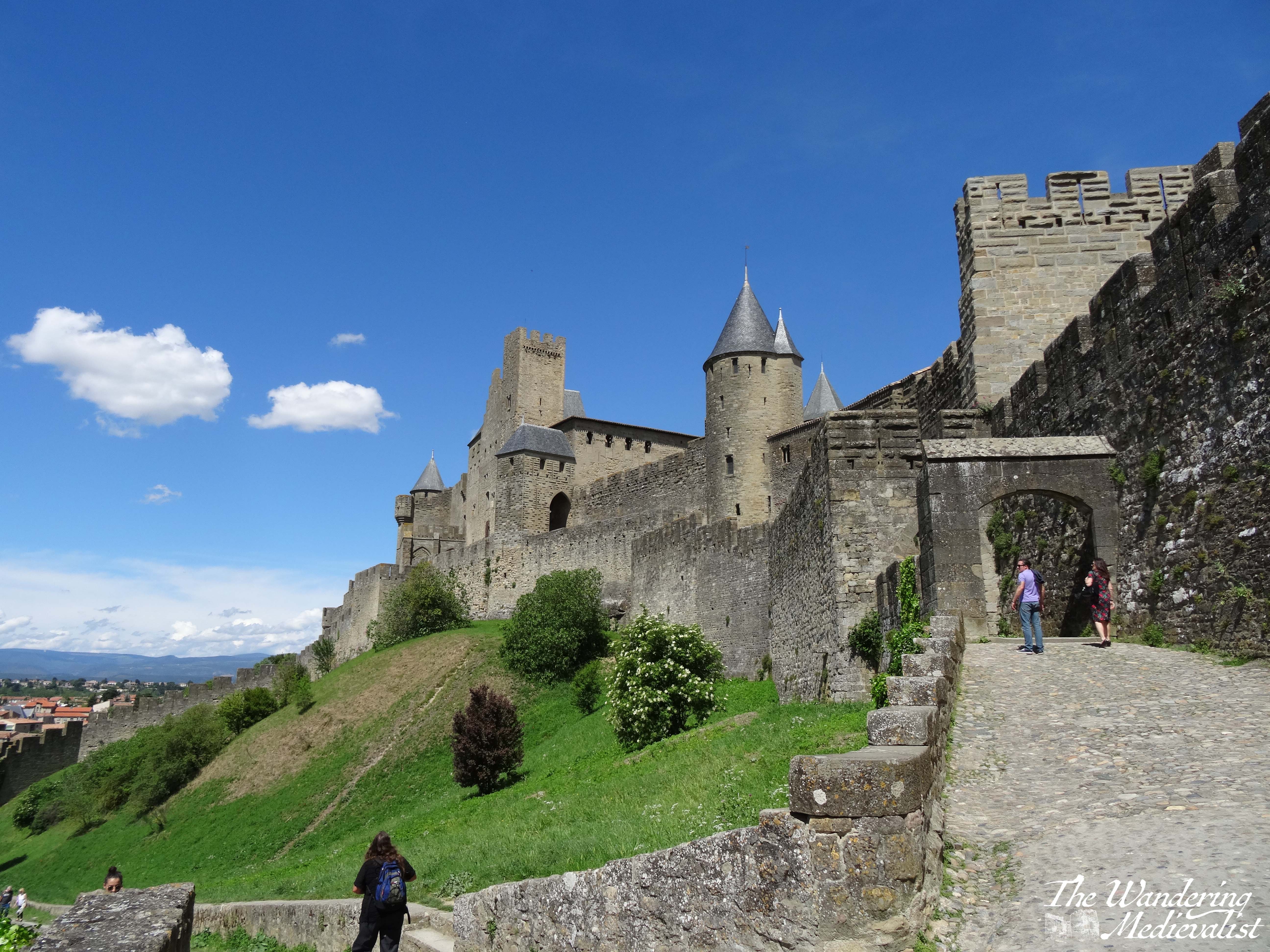
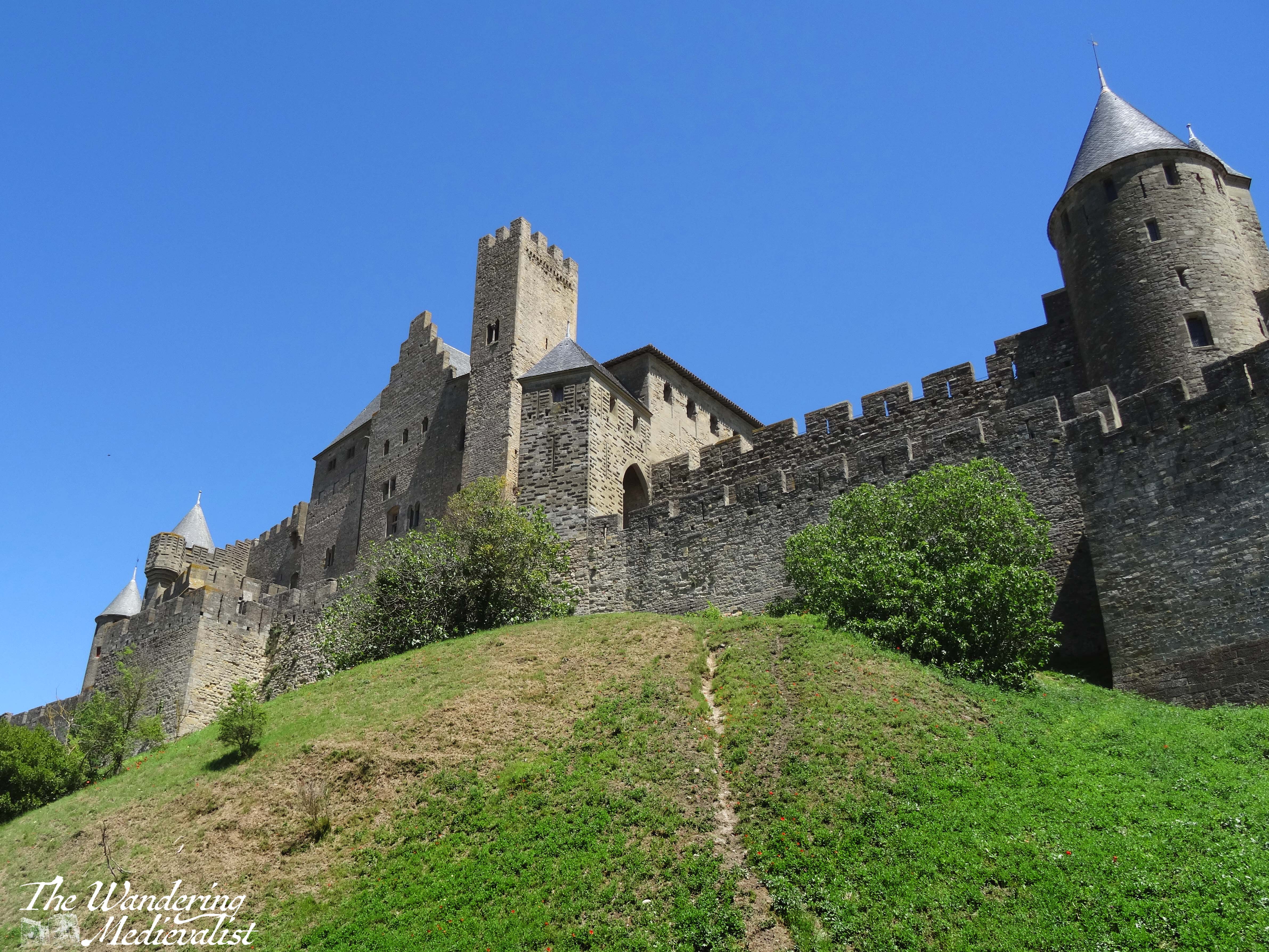
I find it very hard to narrow down the enormous range of pictures I took at this point, as I was completely in my element. While I do not have any real knowledge of medieval architecture, and so cannot say whether the appearance of the restored city is properly authentic, it certainly felt the way one might imagine a medieval city could have looked, from the layered walls and crenellations to the narrow passages and old stone walls. I had read enough by this point to identify the Roman towers with their red brick, and I was absolutely in my element wandering the battlements.
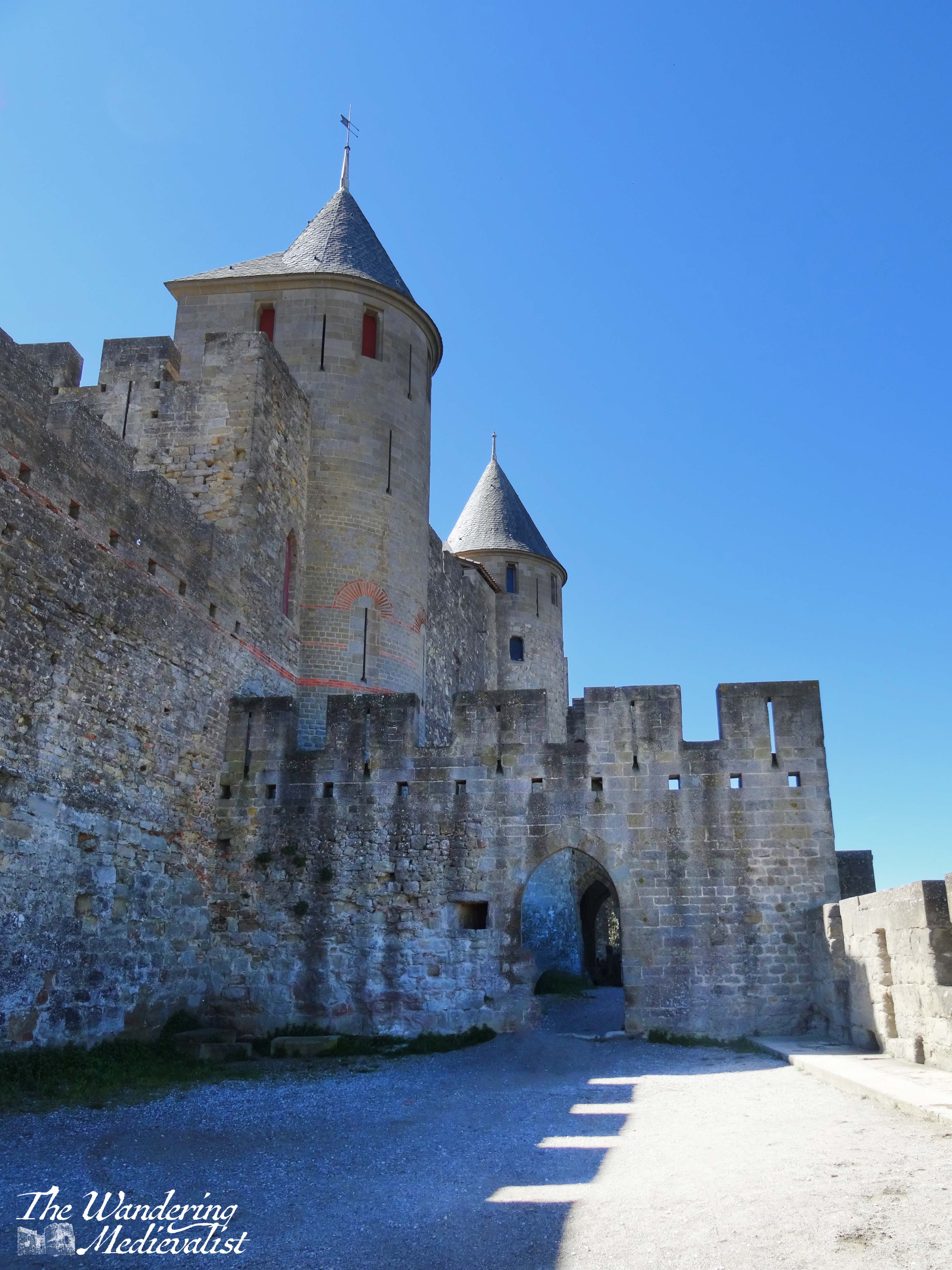
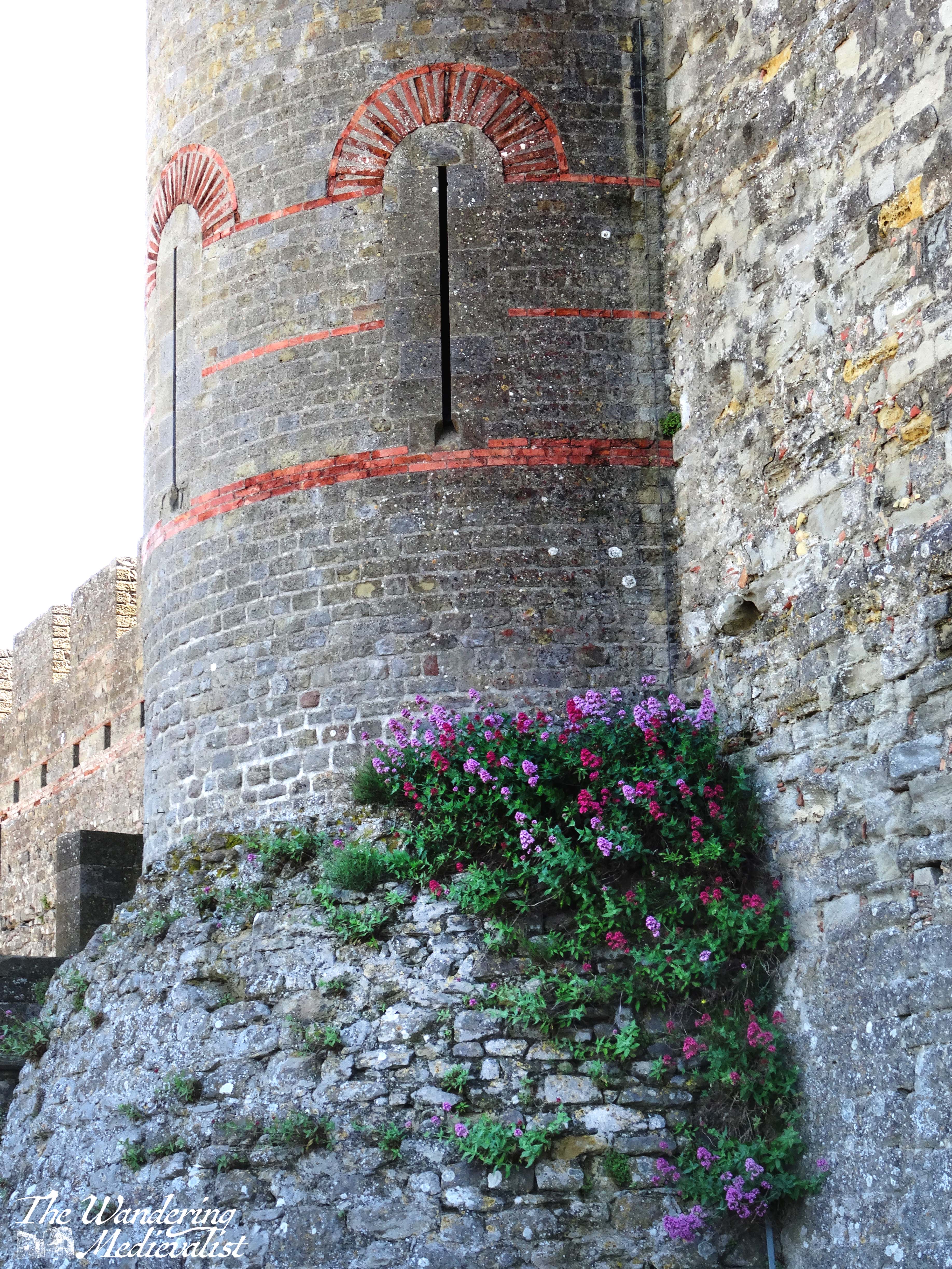
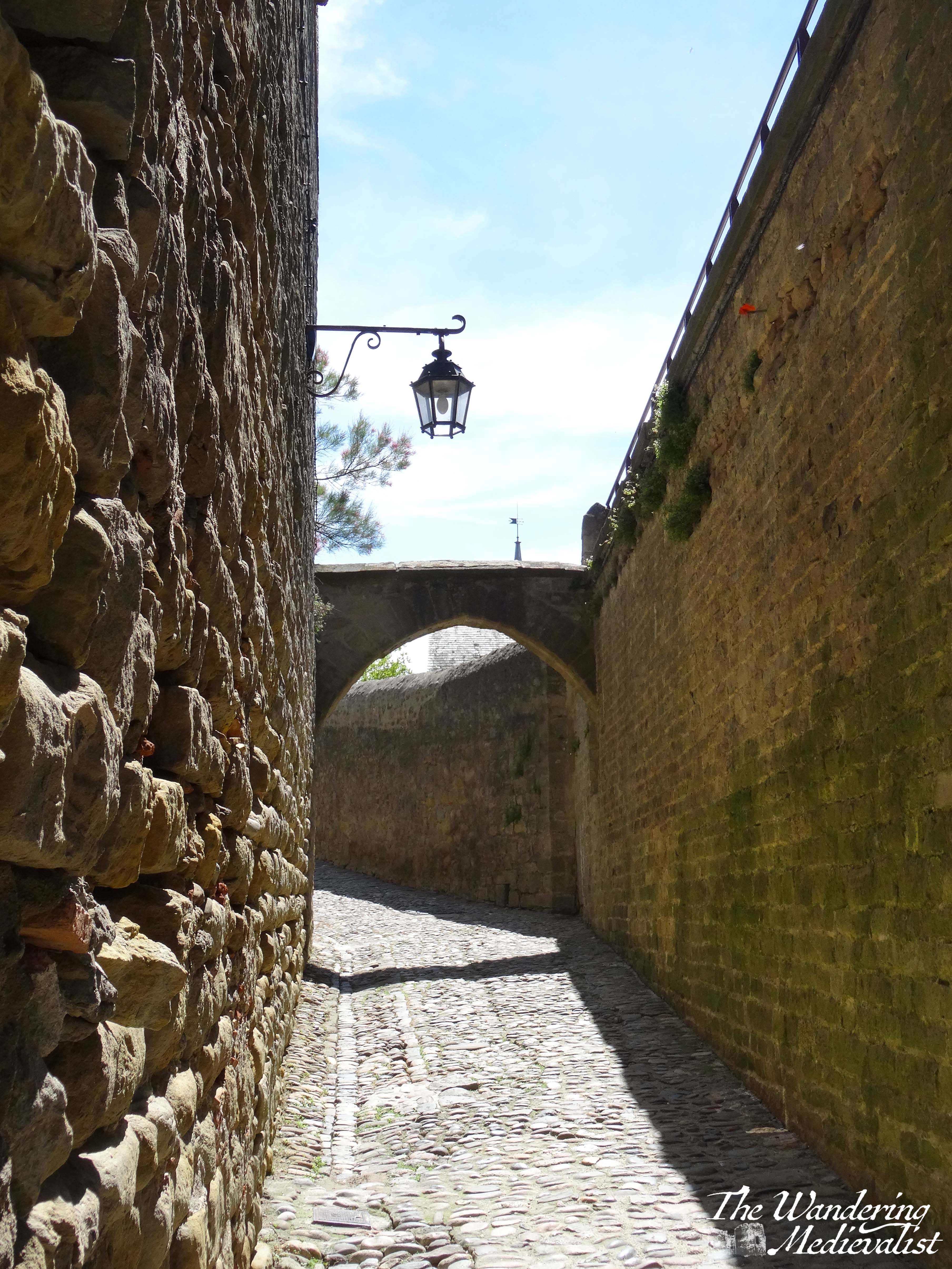
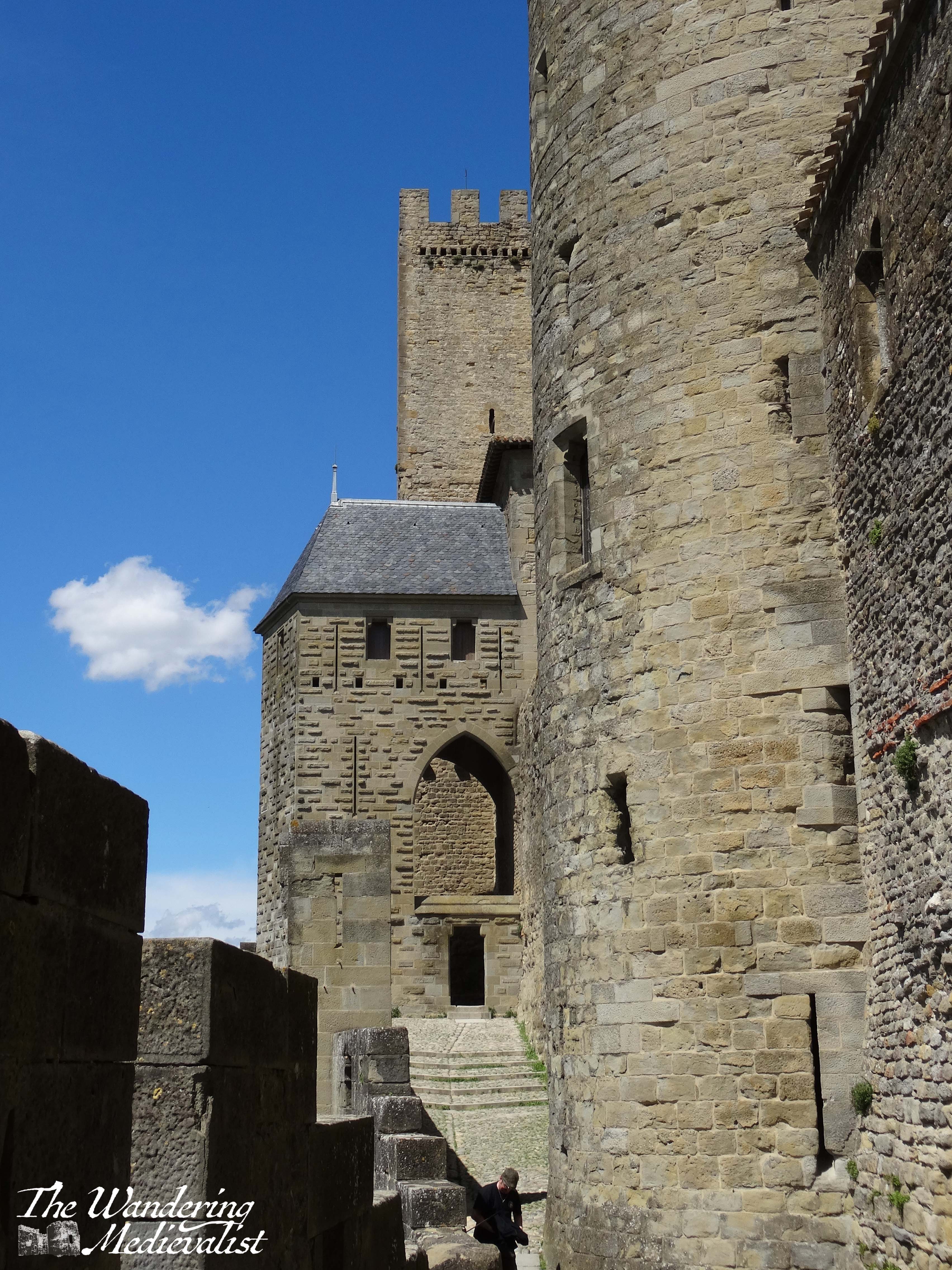
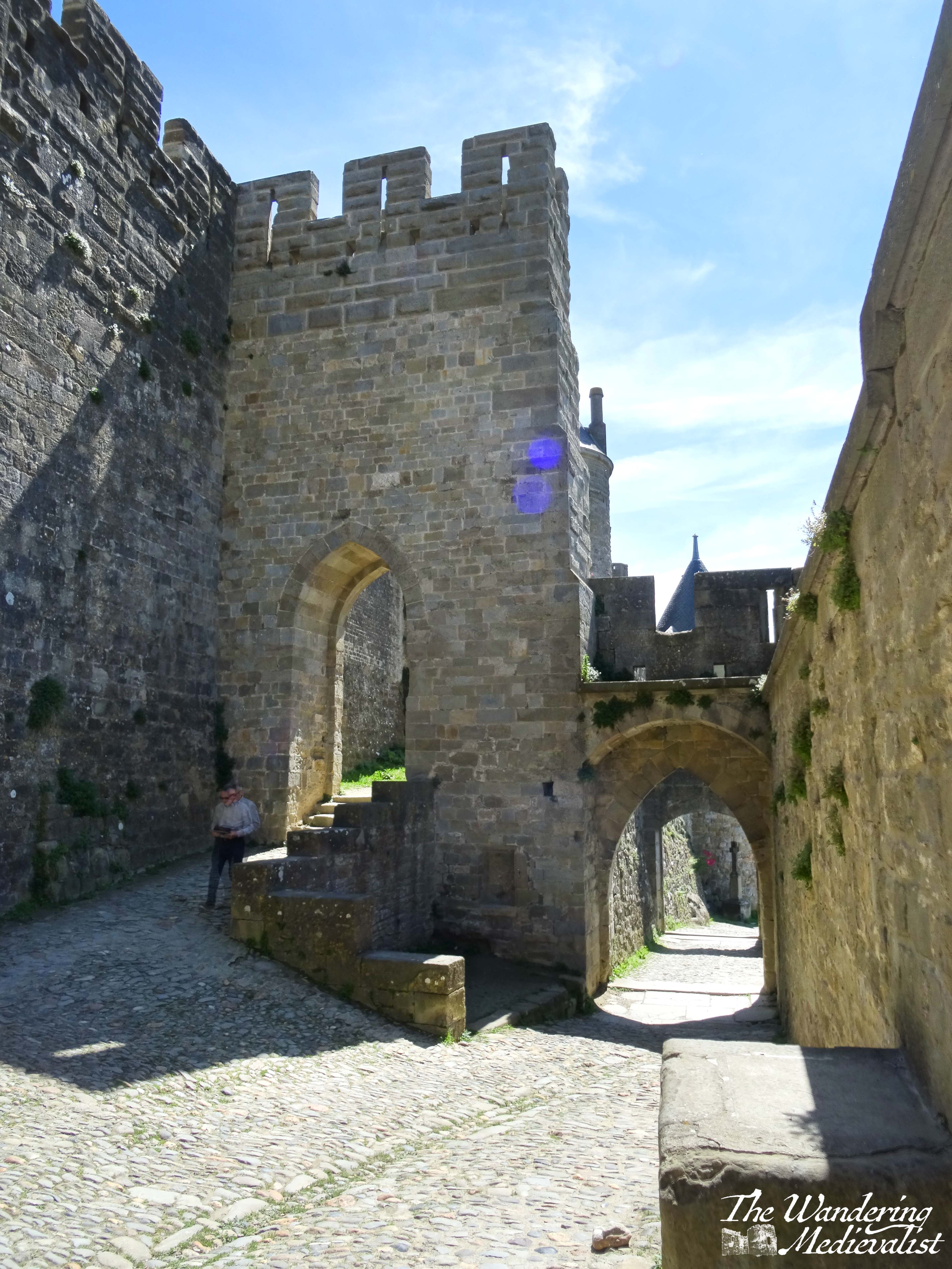
I could imagine another medievalist with more knowledge than I perhaps picking apart the restoration or pointing out numerous faults in how the city looks now, but it makes me think of the discussion I had with some of my summer school students about historical accuracy in movies. While I will likely get into that in more depth in another post, the essence is the question of how important accuracy, or authenticity, is when the point is to entertain, to begin to inform, to intrigue? I and most of the tourists visiting that day were no worse off for being ignorant of how it ‘should’ look, only enjoyed how it did, and if nothing else, the streets certainly smelled a lot better than they would have in the 13th century.
The highlight of the day came as I decided I had seen all I could of the walls, and chose one of the many pedestrian paths back towards the newer parts of town. As I walked, I noticed on the side of the hill the bright red-orange of a field of poppies, stunning enough on their own. But, as I got closer, I realised how perfectly situated they were against the blue sky and fairy tale-like towers, and I took a few of my favourite pictures of the entire week in France.
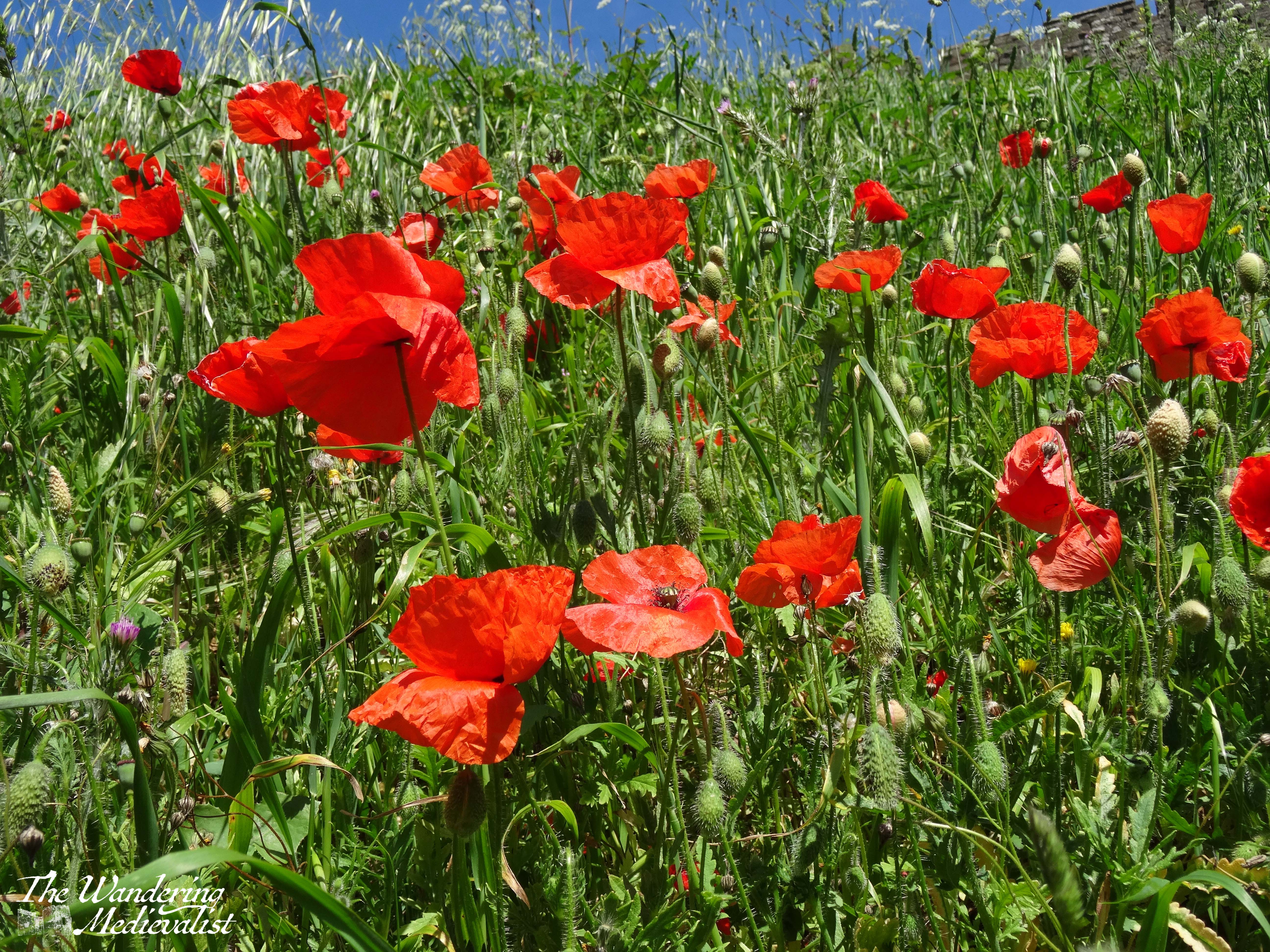
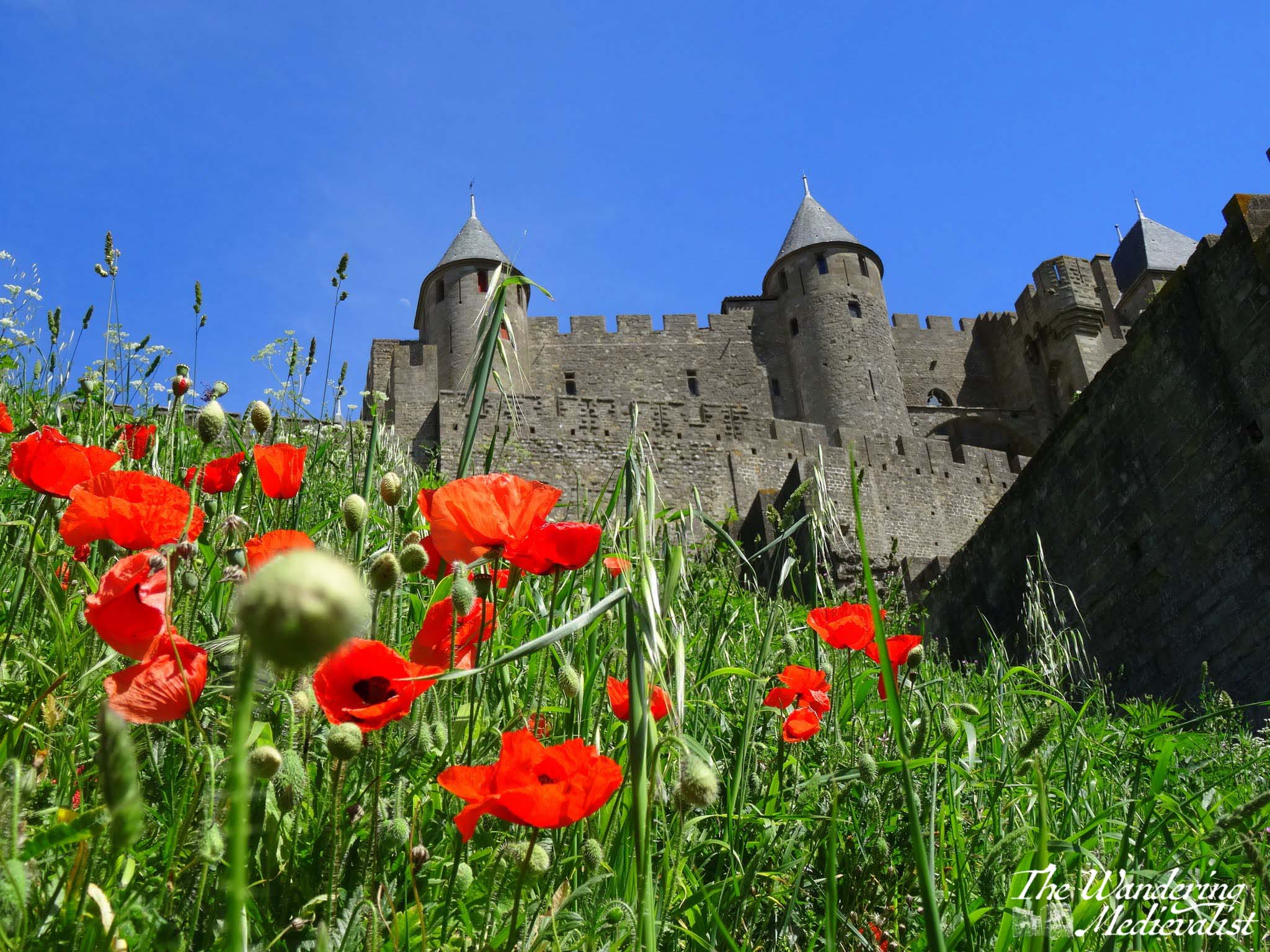
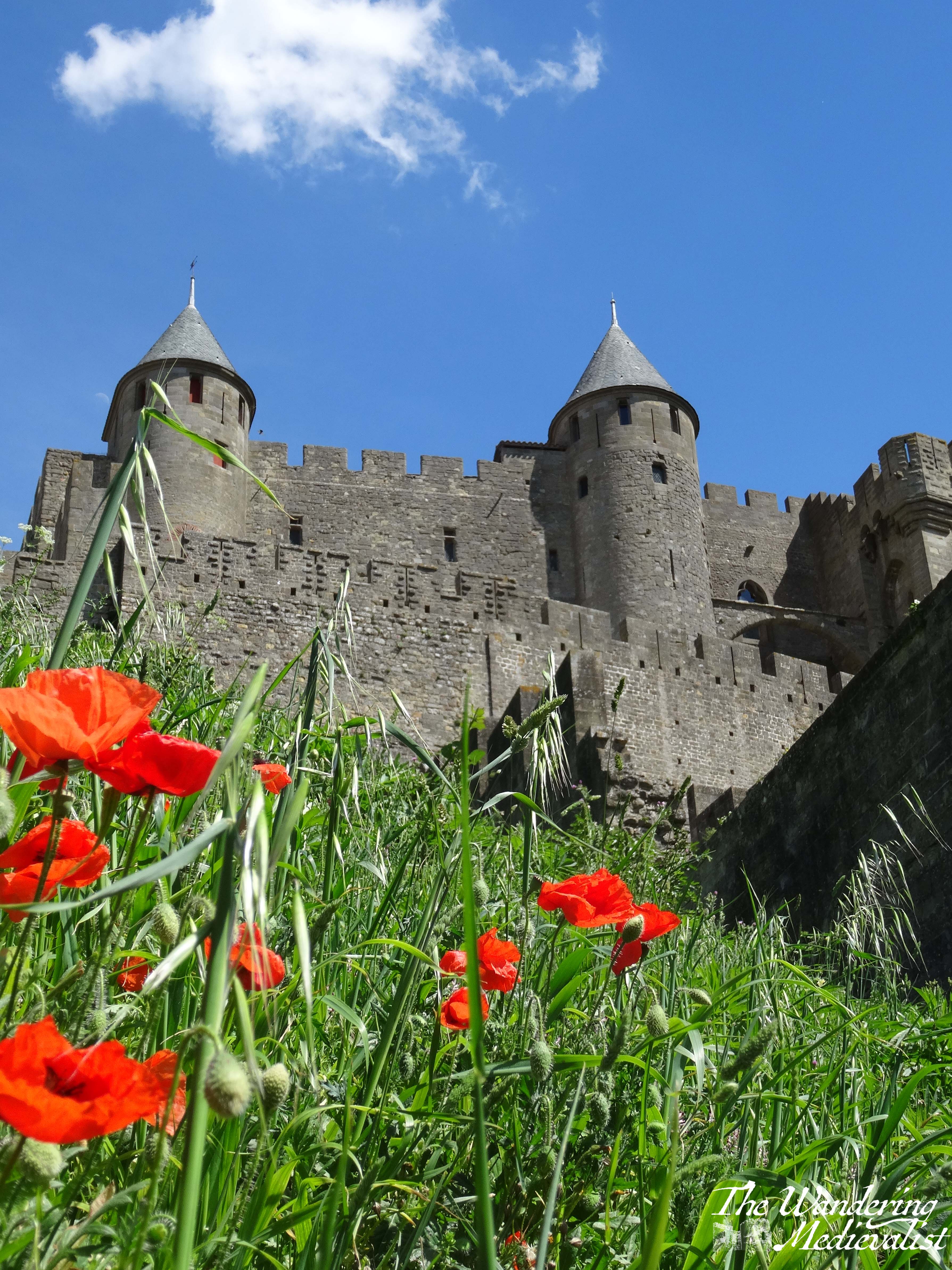
The blazing hot sun made for such stunning colours that I have not even had to edit these, and I could probably have sat here and just watched the view for quite some time. Unfortunately, that hot sun also meant that I was at risk of sunburn and dehydration, and so I made my way into the town to find some water and an ice cream.
I know I was incredibly lucky to have had such spectacular weather on this day, and to have been able to visit at all; Carcassonne is an absolute must for any history-lover or reader of Kate Mosse‘s several books on Languedoc, especially Labyrinth.
One could also wax philosophical about the significance of the city not just for medievalists and tourists but as a representative of the independent nature of medieval French nobility – the Albigensian crusade and the fall of the counts of Toulouse in the 13th century both demonstrate the rising power of the French kings as they fought to raise themselves from ‘first among equals’. This era also bookends nicely the lives of my favourite medieval family, Henry II and his children – his daughter Joanna was married to Raymond VI of Toulouse and was mother of Raymond VII. Carcassonne and the surrounding region is positively steeped in history, and stunningly photogenic – almost as much as the Highlands of Scotland 😉…almost.

 The Wandering Medievalist
One response to “Carcassonne Part 2 – Medieval Cité”
Ohhh the memories you brought back so elegantly! Thank you!
Love, Mum
LikeLike