
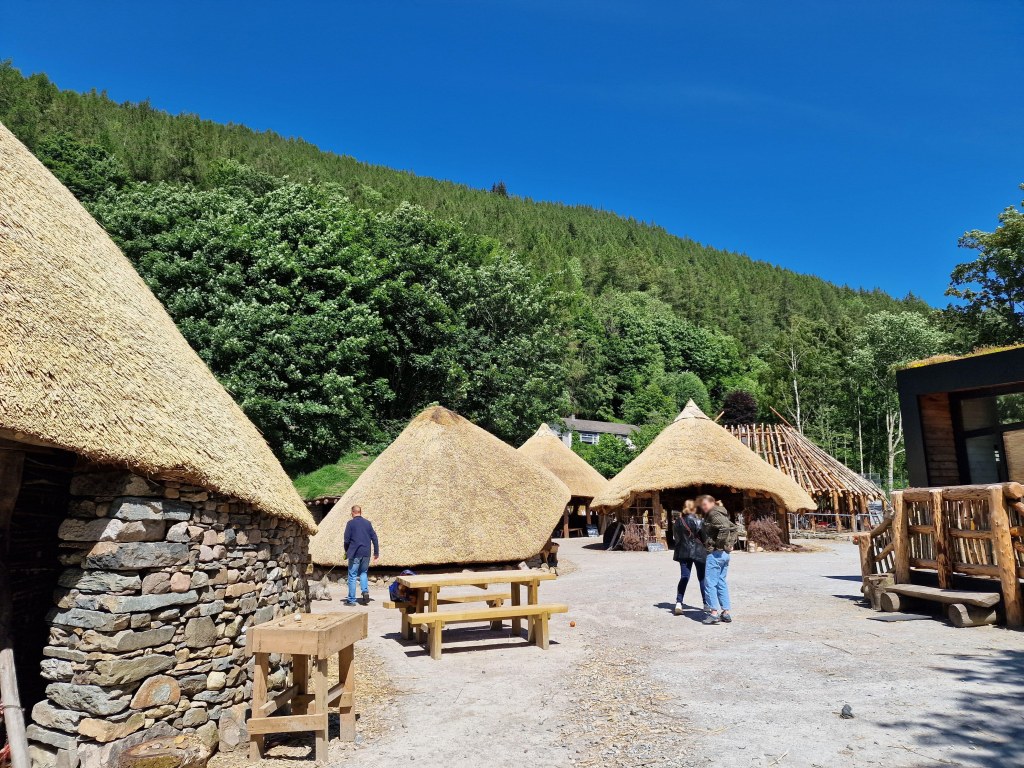
Monday of this week was one of those spectacular sunny clear Scottish days that belie the tradition that Scotland is only ever wet and rainy. The combination of sun and rain we have had over the past months has made everything lush and green, while the blue of the sky and lochs was almost otherworldly. As it was my last free day before I return to work in a week, I decided it was time for one last adventure, taking my favourite drive up through the hills to Aberfeldy and Kenmore, to visit the Scottish Crannog Centre.
Background on the Crannog
I had visited the Crannog once many years ago, when my family was visiting Scotland and staying in Kenmore; it was Halloween, and so my cousin had discovered a properly Scottish alternative to trick-or-treating for his young children. The Crannog was putting on a Samhain festival (Samhain being the pagan festival that coincides with Halloween), including the burning of the Samhain ram, and so we went along to join in. The kids were just old enough to understand what was going on, as the staff lit the ram on fire and encouraged us all to join in with scary noises to scare off evil spirits – check out the video below!

My only regret is that I took only one picture of the Crannog as it was – though being 31 October it was dark night by the time we were there – and that I did not record more of our visit.
I always had it in the back of my mind to re-visit, especially once the Aberfeldy area was established as one of our more regular holiday escapes, but somehow it never happened. Before we could arrange a visit, disaster struck the Crannog: in June 2021 it caught fire. The origin of the fire is unknown, and not thought to be malicious. The member of staff I met on my recent visit said it took very little time – just six minutes – for the wooden structure to be completely engulfed and destroyed.
I’m sure I cannot even begin to imagine how devastating that was to watch for the staff. The fire took place in the midst of lockdown, and it took several years for the centre to be able to re-open, this time on the other side of the loch on a much larger plot of land. The importance of the site for the community is clear in the many articles about the fire, and in the urgent plea to raise money for its restoration, a plea that was met at least in part by the Scottish government, which provided more than £50,000 in funding.
Visiting the new centre
One can really appreciate the newness of the centre, which only re-opened on 1 April 2024. The parking lot is well set out, and there are clean, new toilets available even for those who do not choose to pay to go inside. The visitor centre itself has clearly been carefully designed to be both comfortable and to match the surrounding woodland; it is topped with turf.
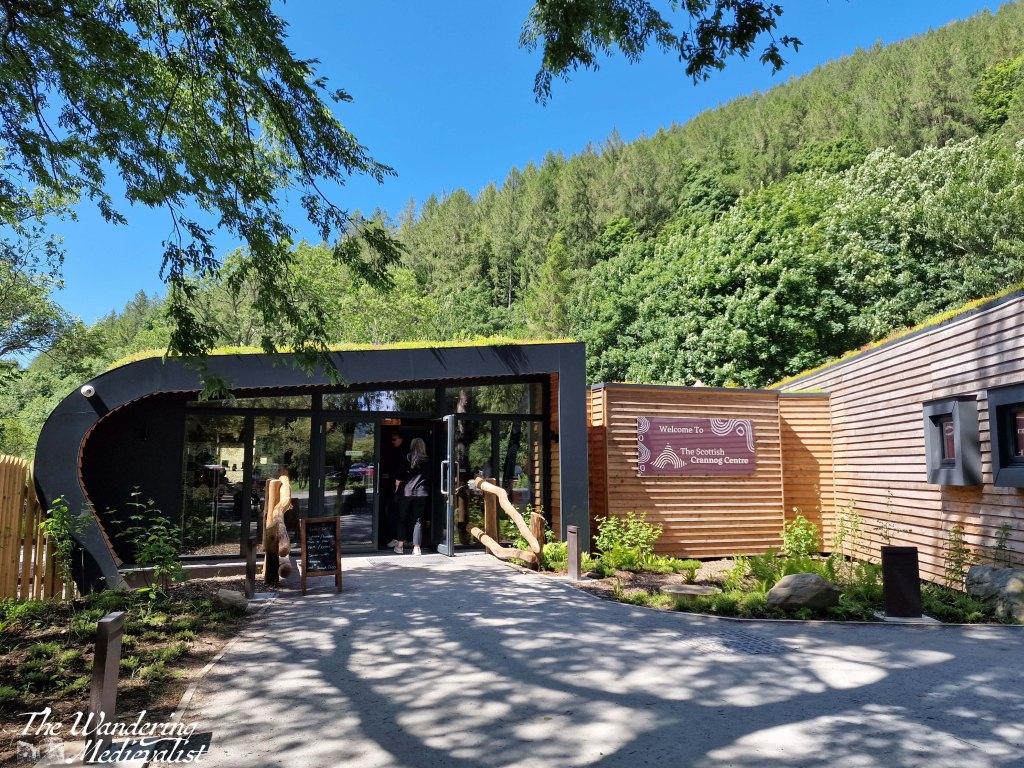
Inside, there were friendly and keen staff ready to help me register and pay my fee for the next guided tour – the only way to visit currently, but also well worth it. There is a small gift shop and café, and I had to wait only 10 minutes for the next tour (I did not visit the café but it smelled and looked very tempting).
The visit began in the museum, and was led by a member of staff who had clearly been involved with the site for years; her passion and fascination with Iron Age cultures was clear, and she did an excellent job of explaining the difficulties with studying this time period and of sharing her love for that period. The museum is relatively small but full of artefacts left behind for 2,500 years including wooden implements, pottery, metal tools, evidence of musical instruments, and stones and beads. With these artefacts, she was able to paint a clear picture of the type of life we think the people of the time must have had – agricultural and not isolated, but connected to places as far off as the Middle East through trade. One did not spend months or years building a crannog to quickly abandon it, after all.
Once we had finished in the museum, we were led out to what can only be described as a living museum, similar in feel to Plimoth Plantation in Massachusetts, but without the actors pretending to be era-appropriate citizens.
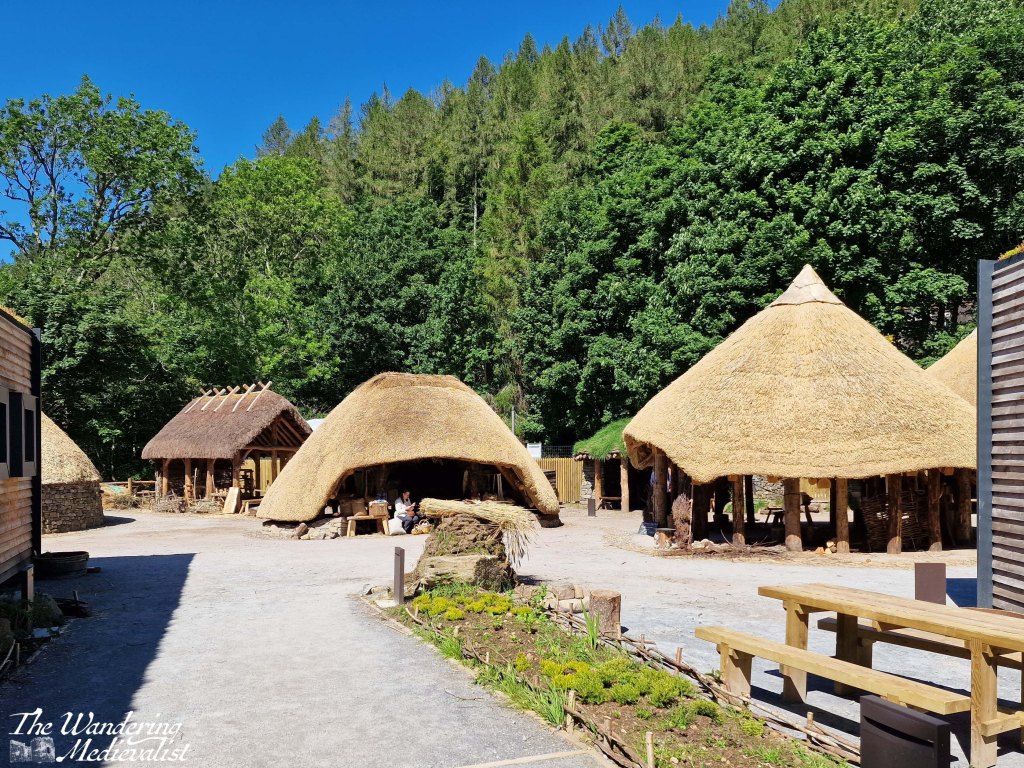
Instead, the staff who told us about the various aspects of Iron Age life were perhaps more valuable in that they learned and performed the tasks themselves, as close to how they would have done 2,500 years ago as possible. The buildings, too, were constructed using techniques from the Iron Age (for the most part), though as they explained, the roofs are guesswork as there is no archaeological evidence for anything beyond the shape and materials of the structures.
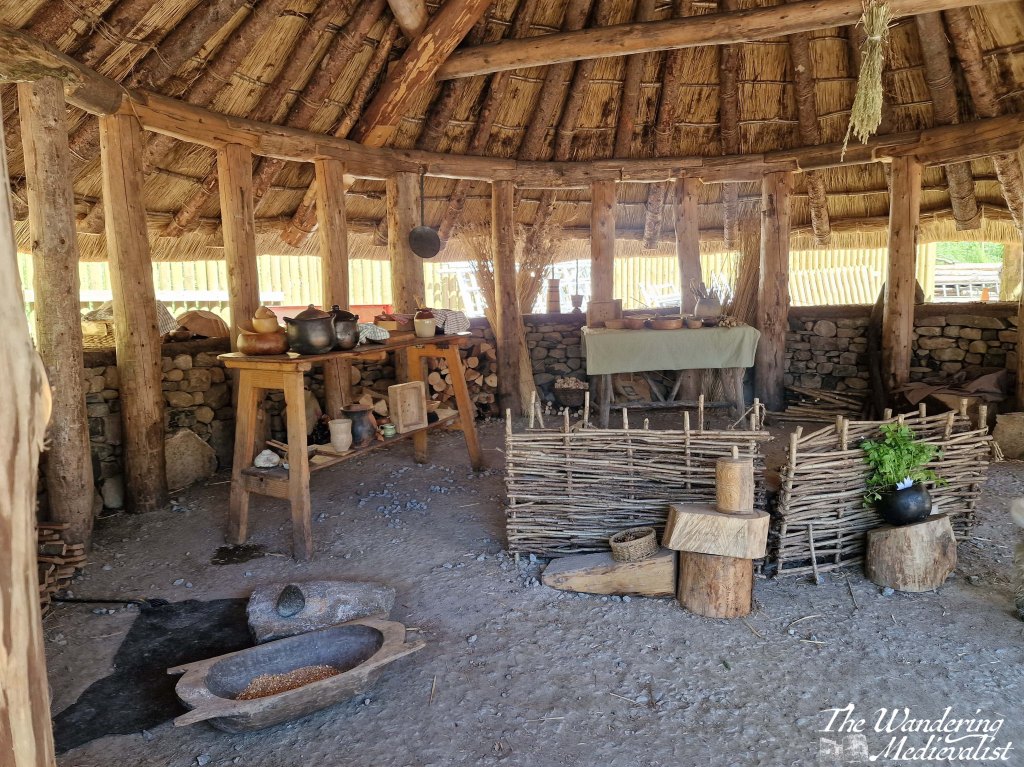
First we were taken to the cooking building, where an open fire was present and the staff explained how varied the diet was, and how the inhabitants preserved their food.
Next up was the blacksmith hut, where we were taught about the various metals available – copper vs. bronze vs. iron – and the methods used to smelt and shape it. There was also an interesting insight into the work needed to provide the charcoal required for iron work – planning and forest management at the very least.

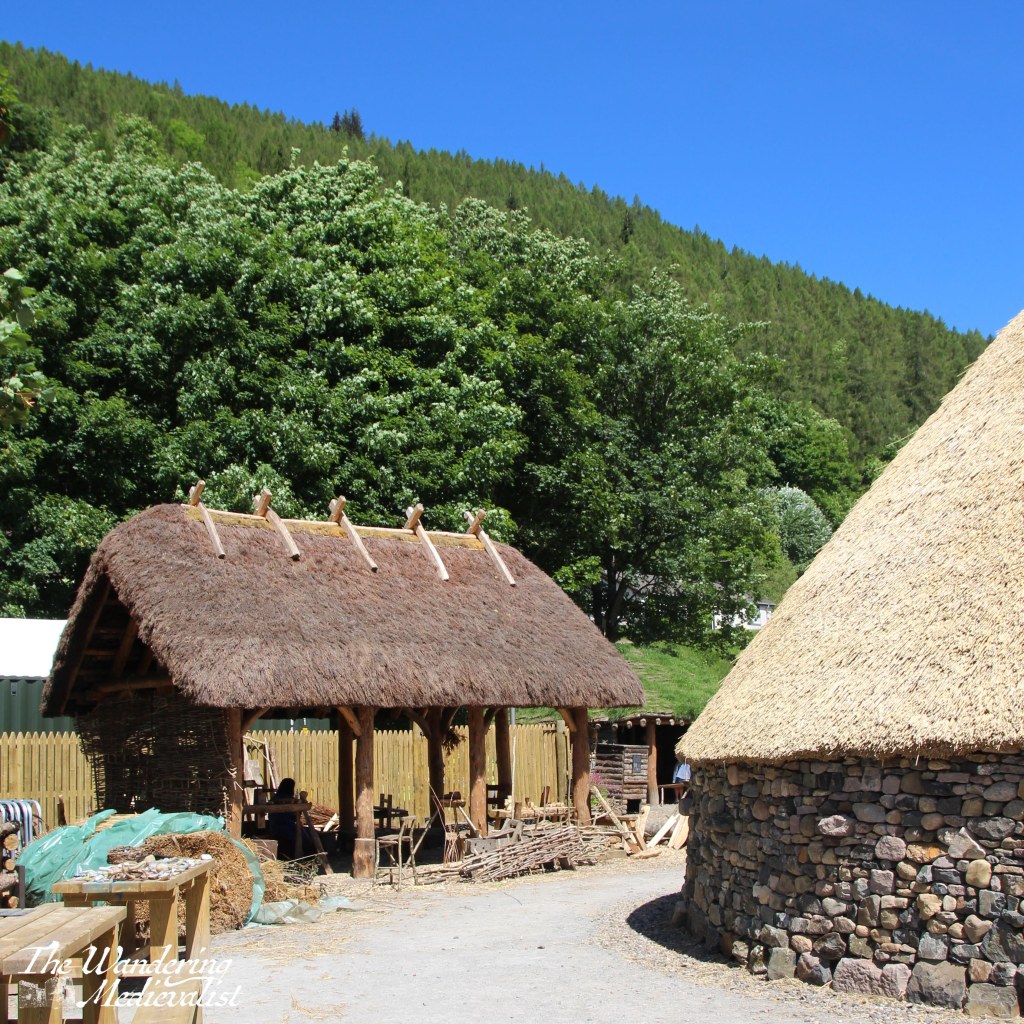
Then we moved to the woodworking hut and I found it particularly interesting to see how an Iron Age lathe was constructed and used.
It is far too easy, I think, to dismiss some daily tasks or technologies as modern, when many of them were done hundreds and thousands of years ago, just took a lot longer. Or, the technology existed but was vastly different from what we have now – many ancient builders and craftsmen would have had a considerable grasp of science, particularly physics, even if they didn’t think of it in that way. Friction, the power of heat, the potential energy contained in a green branch, for example, all were utilised.
One is tempted frequently ask ‘how did they come up with that?’ and indeed the answer isn’t always clear, but the next building – the textiles hut – really brought home the element of trial and error that must have been part of everyday life (annoyingly I forgot to take a picture). Archaeologists can show that a certain item or product existed, and it can take months and months of experimentation to work out how it may have been done; dyeing of wool, setting of dye, carding, spinning, weaving, all would have evolved as more was learned about what worked and what did not. The woman in the textiles hut was particularly good at making clear the vast amounts of time – and woollen yarn – that it would have taken to produce clothing, though she also reminded us that there was nothing else to do in the evenings and so everyone, including children, would have taken part in spinning. It was fascinating to hear about the lengthy and specific processes involved in producing, for example, a red tunic.
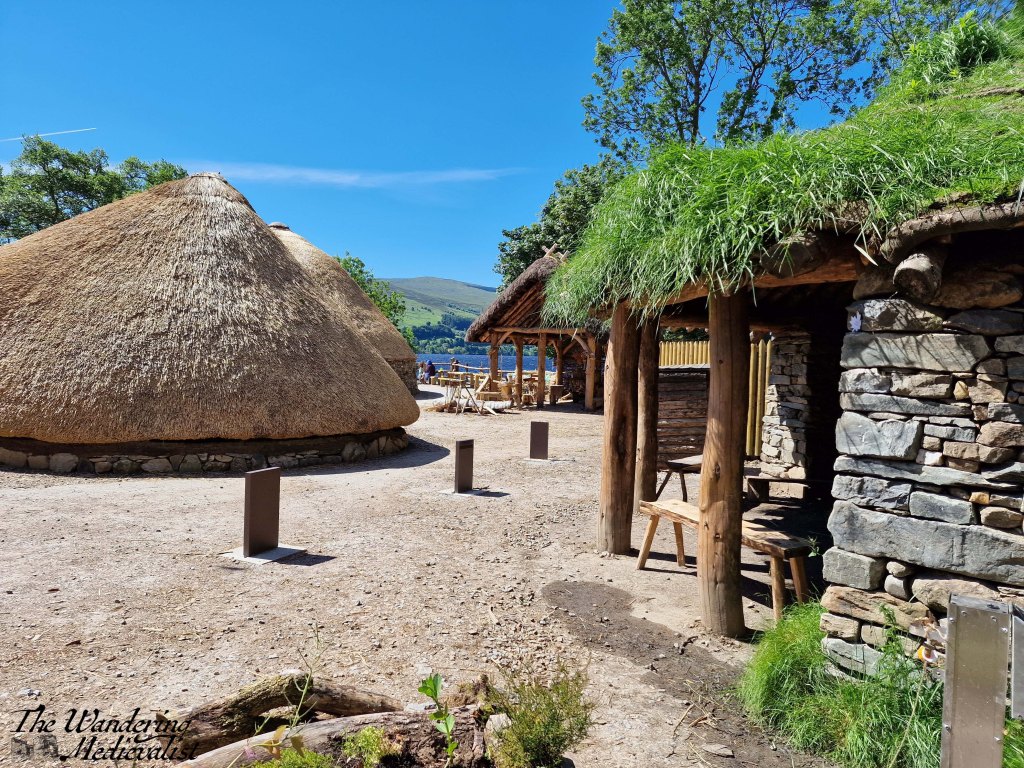
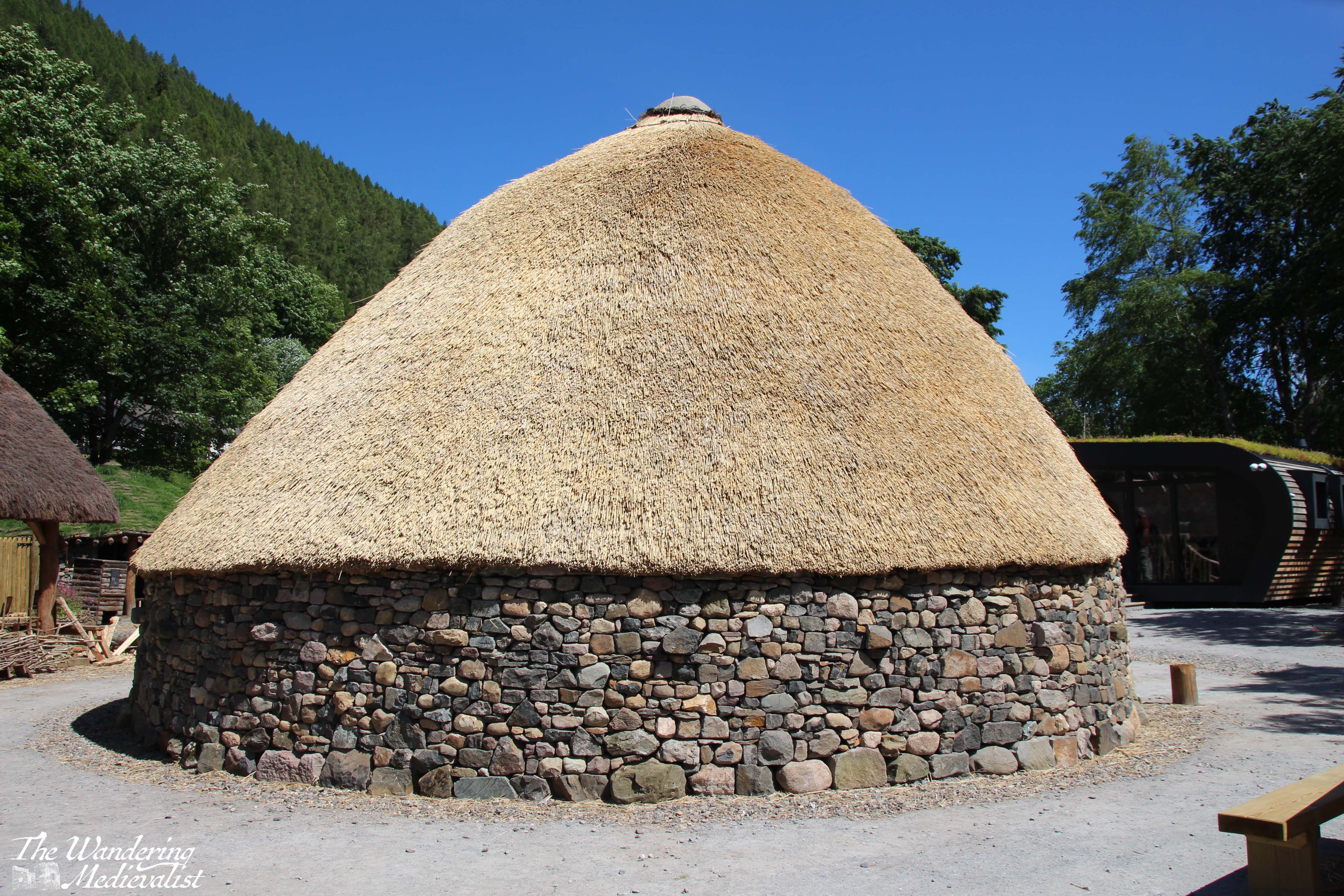
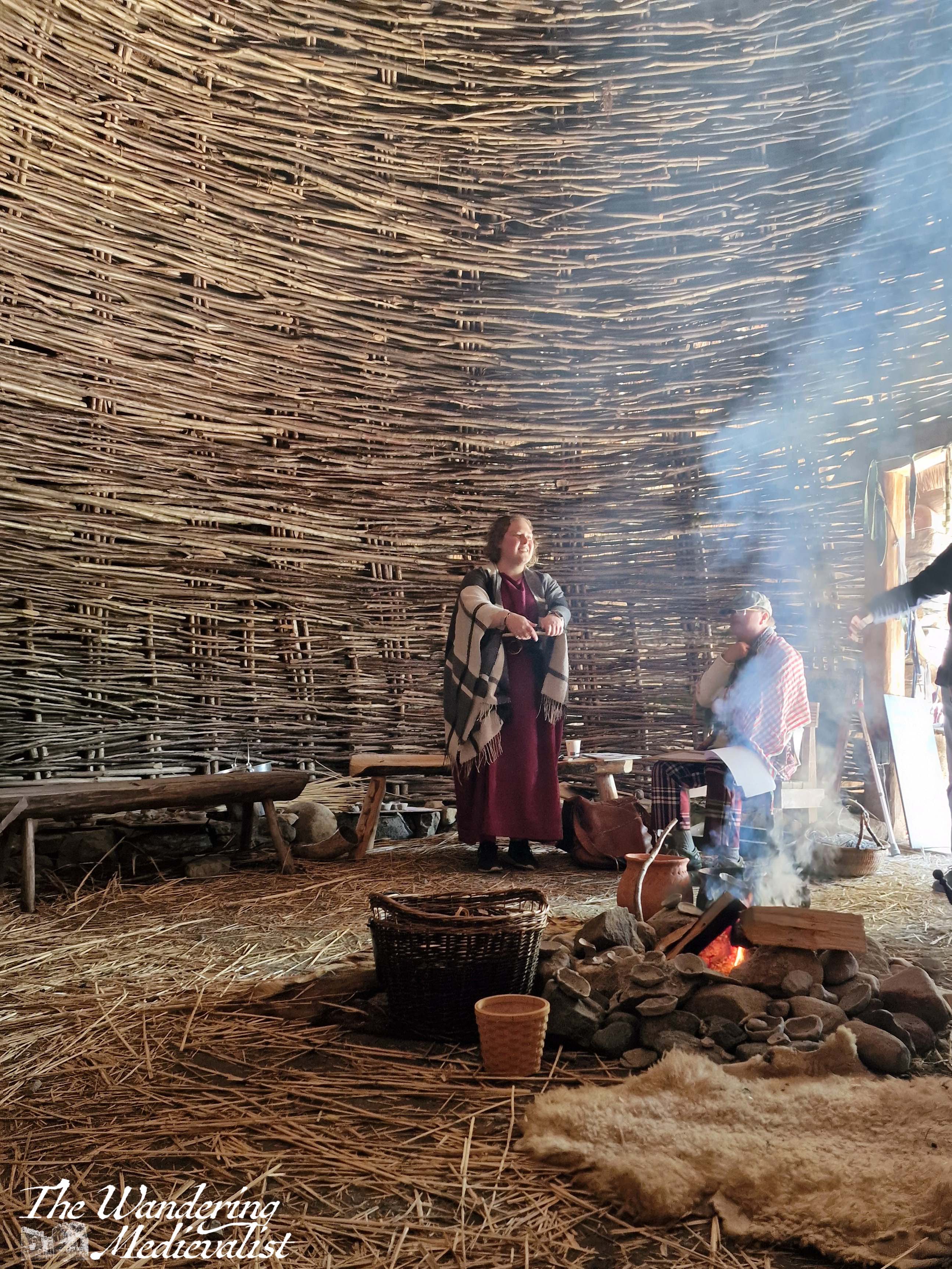
The final building was the round house, which consisted of dry stone walls, a thatched roof, and a tremendous upside-down basket that made up the domed interior walls and roof. Several staff told us how it was a massive effort from tens of people to cut the willow at the right time and weave the ‘basket’. As we sat listening to the staff talk about oral traditions, the wind was howling around the building but it stayed warm and draft-less, making one appreciate how it would have been possible to survive on the banks of this loch even in the winter.
The round house and interior ‘basket’ walls:
The Crannog itself is not yet re-built, as they are doing their best to construct it in the proper way, allowing the sunken beams to age in the loch before starting the floor and walls. The left-hand side of this picture shows the beams currently aging.
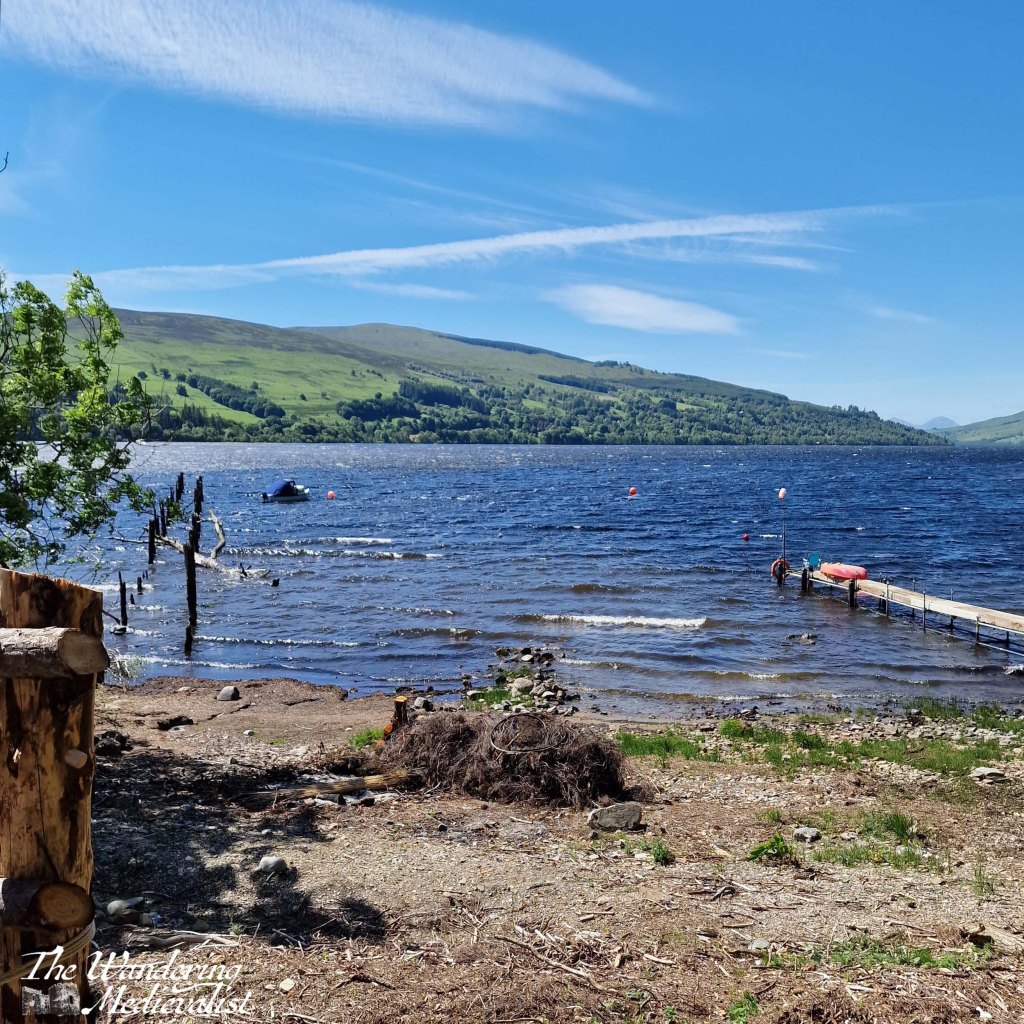
It should with luck be complete within 18 – 24 months, making a re-visit absolutely necessary. In fact, the site is constantly evolving, and the staff were so excited to talk about the upcoming projects to entice us back again.
If there is one thing that stood out – other than the impressive creativity and craftsmanship of the place – it was the team of staff, many of whom had been involved in the construction of the buildings and all of whom created replica products on a daily basis. Food, iron, textiles, woodworking – all of the examples we saw were crafted by the staff. Many, like the blacksmith, had studied both modern and ancient methods of the craft, and all were so passionate and simply loved to talk about what they did. Allowing us to view but also touch, feel, and even taste Iron Age reconstructions really helped bring the time period to life.
Background of crannogs
One aspect of the crannog that I recall thinking when I visited in 2006 and was repeated several times by the staff at the centre, was the ingenuity of building over water. The advantages are clear and include: building over water saves valuable land space for agriculture and livestock which is not always prevalent in Scotland; it is safer from natural predators and from other humans; it places inhabitants on the waterway that was a natural highway for trade; it is easy to access fresh water and fish; and many other reasons, I am sure.
While Loch Tay boasts the remains of many crannogs, the dwellings are evident on the banks of many rivers and lochs in Scotland, demonstrating that Scotland was a relatively desirous place to live in the Iron Age. Fish, game, and wild plants (garlic, berries, nuts) were abundant. The climate was likely a bit warmer and days like the one I visited showed just how fine weather can be.
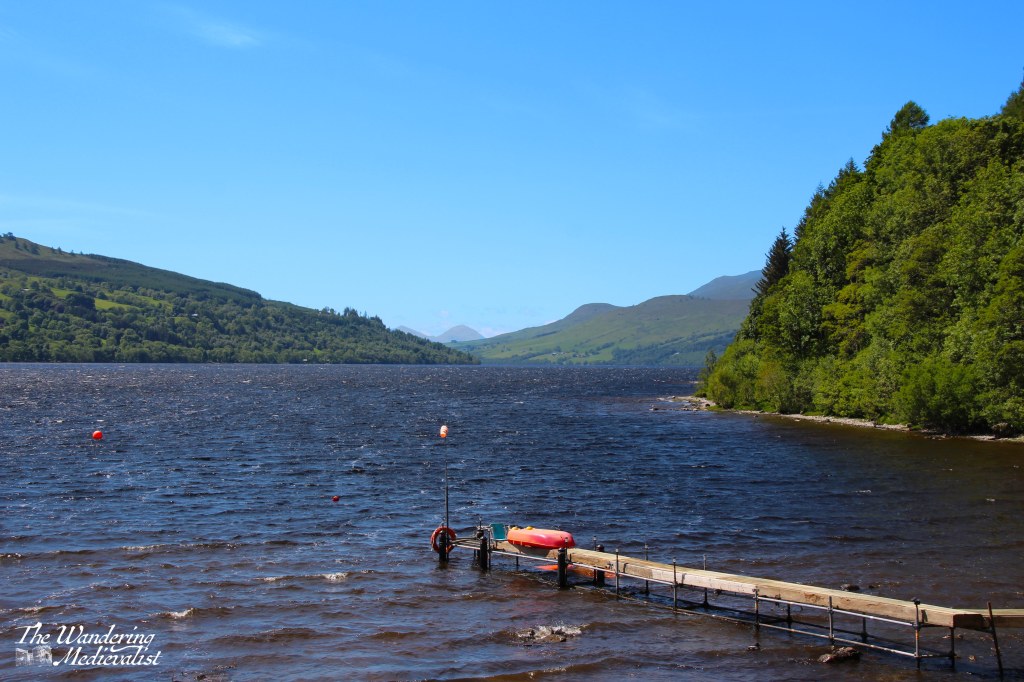
Not that I am in any way intimating that life would have been easy, but it certainly would have been far more varied than might be first thought. What remains most frustrating, of course, is how little we know about society at this time. It was pre-history, before written record, and many artefacts have not survived to inform archaeologists and historians. But, in the way of proper modern interdisciplinary study, academics from fields of history, archaeology, biology, anthropology and more can look at modern societies to understand more about how ancient peoples may have lived – ethnoarchaeology. All of this has informed the site, as well as the community of historians and experimental archaeologists who choose to learn by performing tasks in the ancient way. You can find out more about Scottish crannogs on the BBC website, and it is worth mentioning that crannogs were also prevalent in Ireland.
Now I fully admit to being a history geek – anything pre-1500 holds interest for me – but I think it fair to say that the Crannog Centre offers a fascinating and passionately-presented glimpse into Scotland’s history. A great day out for children and adults alike!

 The Wandering Medievalist
One response to “Scottish Crannog Centre”
[…] Visit the Scottish Crannog Centre. I’ve recently posted about the centre and highly recommend a visit – definitely good for families. A friend […]
LikeLike