
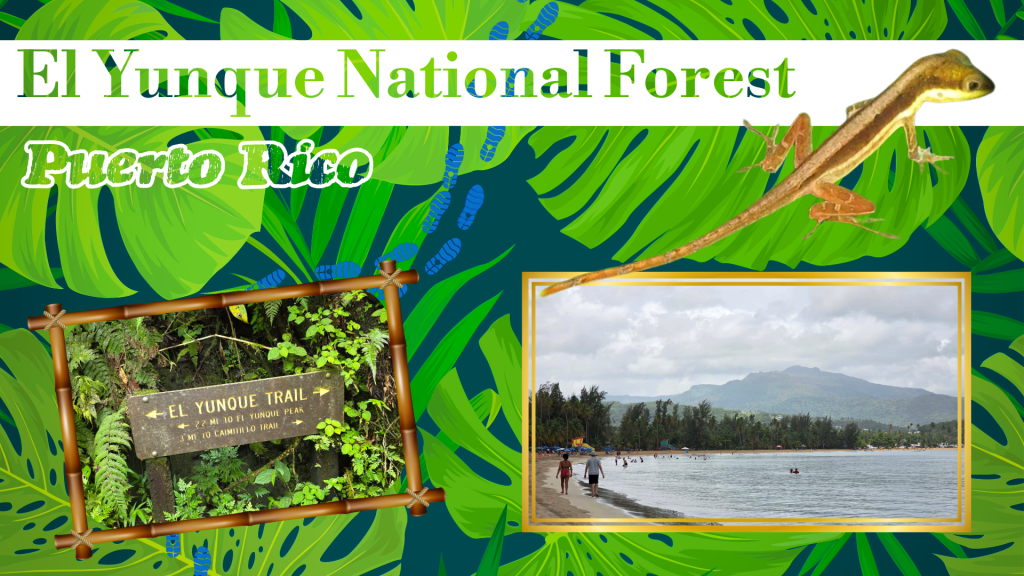
Here are my top 3 most interesting facts about El Yunque:
- It is the only tropical rainforest in the National Forest system (there are other rainforests, but not tropical).
- It is one of the smallest National Forests in area, but the most biologically diverse with more than 240 species of trees, 23 of which only grow here.
And saving the best for last! - There are NO mosquitos in this tropical forest (or very few), making it the perfect spot for hiking!
No mosquitos, I hear you ask skeptically?! It’s really true – a combination of the elevation, the slightly cooler climate, natural predators and the lack of stagnant water means that you will not be bothered by mosquitos while you take advantage of the glorious scenery, even if you forget your bug spray. The same is obviously very much not true on most of the island.
History of El Yunque
El Yunque (pronounced with the Spanish ‘y’ that sounds like a ‘j’) is one peak in the Sierra de Luquillo mountains, a subrange of the Cordillera Central mountain range that runs along the centre of the island of Puerto Rico. The peak reaches just short of 3,500 ft. (1,066 m).
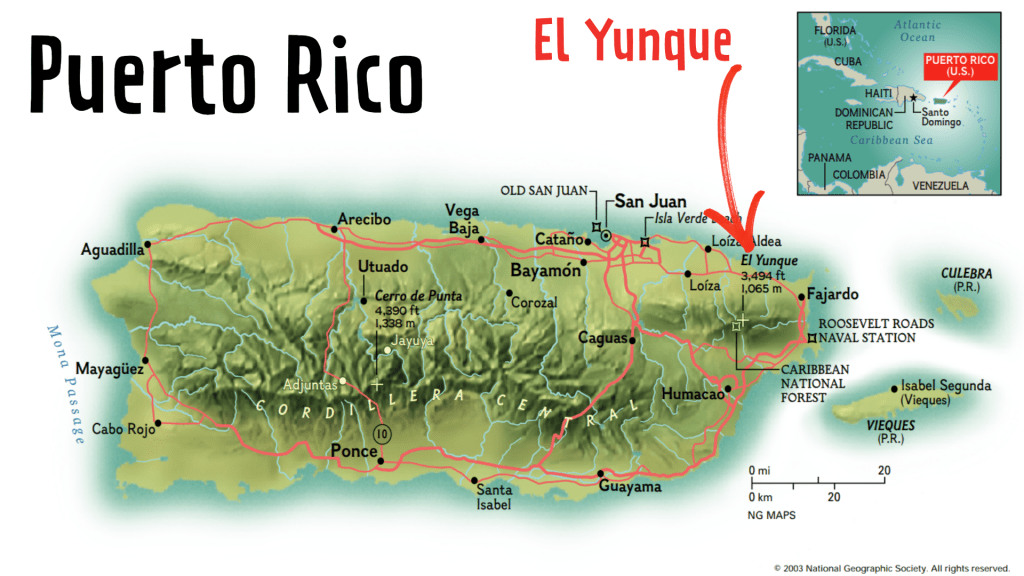
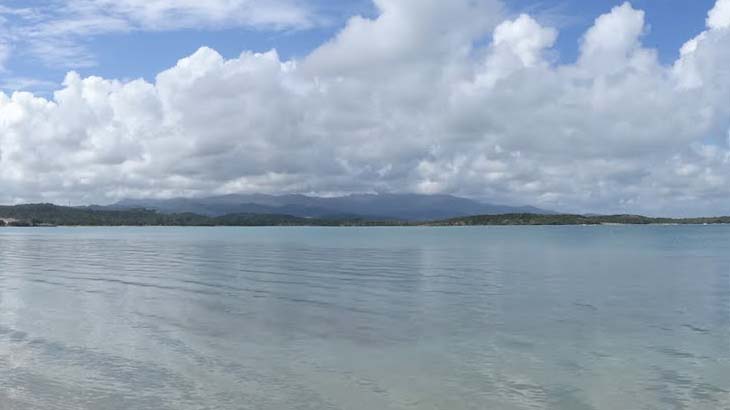
The name of ‘Yunque’ may have come from the Spanish for ‘anvil’, or perhaps from a native name Yuken – there are several archaeological sites on the mountain. The view of the mountain from the nearby beaches shows how starkly it stands out against the horizon, forcing planes from San Juan to Vieques to fly around rather than over; it is frequently shrouded in clouds, even on sunny days.
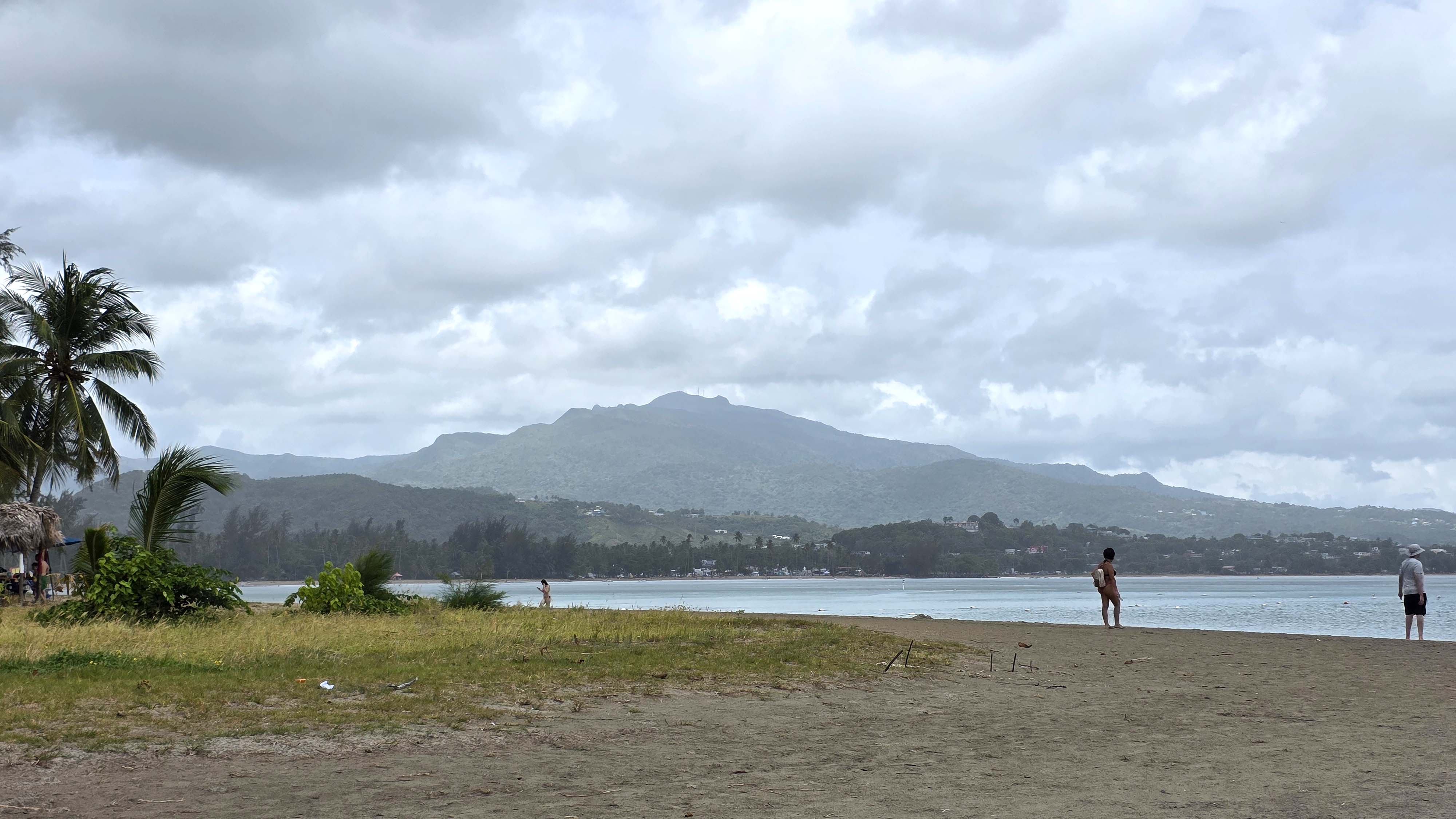
Coffee was cultivated on its steep slopes in the 1730s, but from then it was mostly left on its own, until it was set aside in 1876 by King Alfonso XII of Spain – one of the first forest reserves in the western hemisphere. In 1898, Puerto Rico was transferred to the United States, and this was one of the only areas where the forest had not been cut down. Teddy Roosevelt established the Luquillo Forest Reserve in 1903, and in time this became the National Forest we have today. The forest suffers regular damage from hurricanes and other storms ( in fact it had been quite badly damaged at the time of our visit in January 2018), but things grow fast in the Caribbean, and it recovers quickly. Roads and pathways less so, and even now there are still hiking paths that cannot be traversed.
Hiking in El Yunque National Forest
I have always loved hiking here, where it is usually the perfect combination of warm but not too hot, sheltered from the sun, and gently breezy. It is not uncommon to experience a brief rain shower (or sometimes not so brief, or not so light), but the weather dries you quickly.
There are plenty of paths of various lengths, as you can see, and while many are not particularly long, it is important to pay attention to the altitude change. Most vary between gently and quite steep, and hikers should be prepared to ascend and descend significantly even on shorter paths.
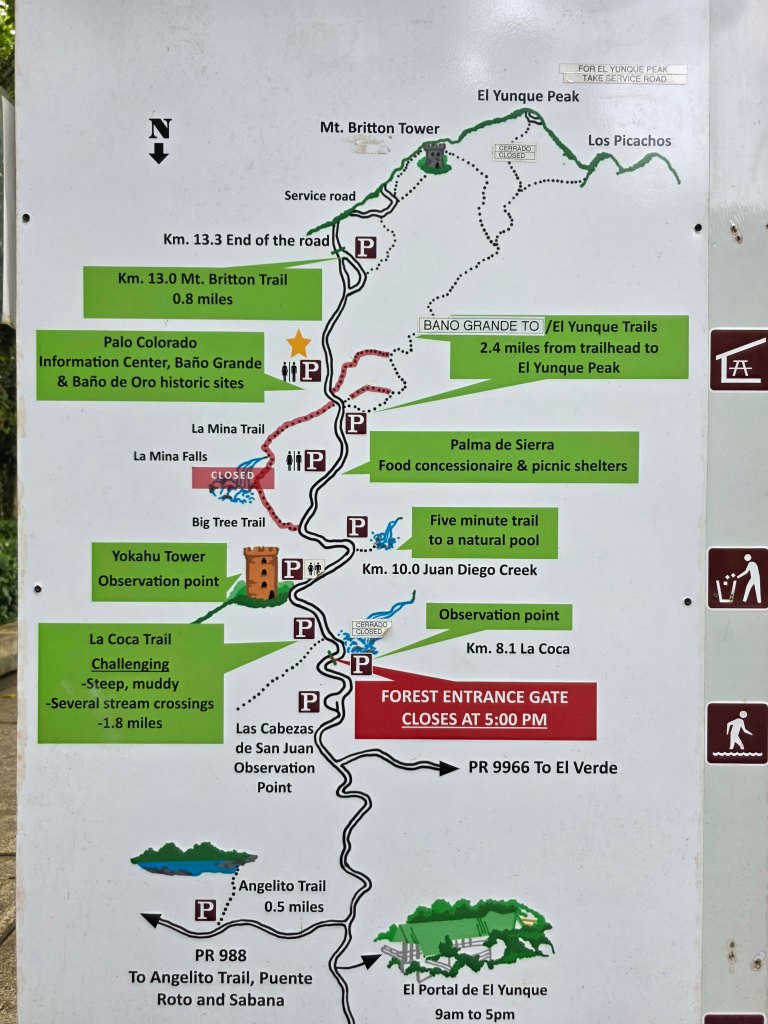
The popularity of the El Yunque trails was evident when I visited recently with Dad – he had insisted that we leave the house early and be at the main gate of the park by 8am, and sure enough there was a line of cars waiting to get in. By the time we left a few hours later, most of the parking had been taken up, even as far up the mountain as we were. So, a few pointers to keep in mind when planning a trip to El Yunque:
- Do arrive early, and be prepared to drive for a bit. The roads are narrow and winding, and we drove for almost 20 minutes inside the park before reaching the parking lot.
- Bring plenty of water – more than you might think, as the air sucks water out of you – and a snack. There is a café and a few small shops off the road, but a good rule of thumb in Puerto Rico is not to depend on them being open when you want. (That said, when they are open, there are some great options for souvenirs, so make sure you have your wallet)
- Wear sneakers, not sandals or flip-flips. Your feet might get warm, but you will need them – the trail can be rough, narrow, and slippery in places. You will not get far without injury in sandals.
- Likewise, prepare for those shoes to get muddy, and potentially stained with the orange-red clay that makes up many of the trails. I had to scrub my legs with a washcloth to get the mud off my skin, so it’s much worse for material.
- You don’t need bug spray, but you might need sun block. Puerto Rican sun is strong even through the trees.
- Check early on if the trail you want to hike is open. There is a lot of work being done just now, so have a second option just in case.
- Expect to get rained on. It might not happen, but it probably will.
- Don’t necessarily expect a view from ‘the top’. As stated above the peaks of El Yunque are often in the clouds.
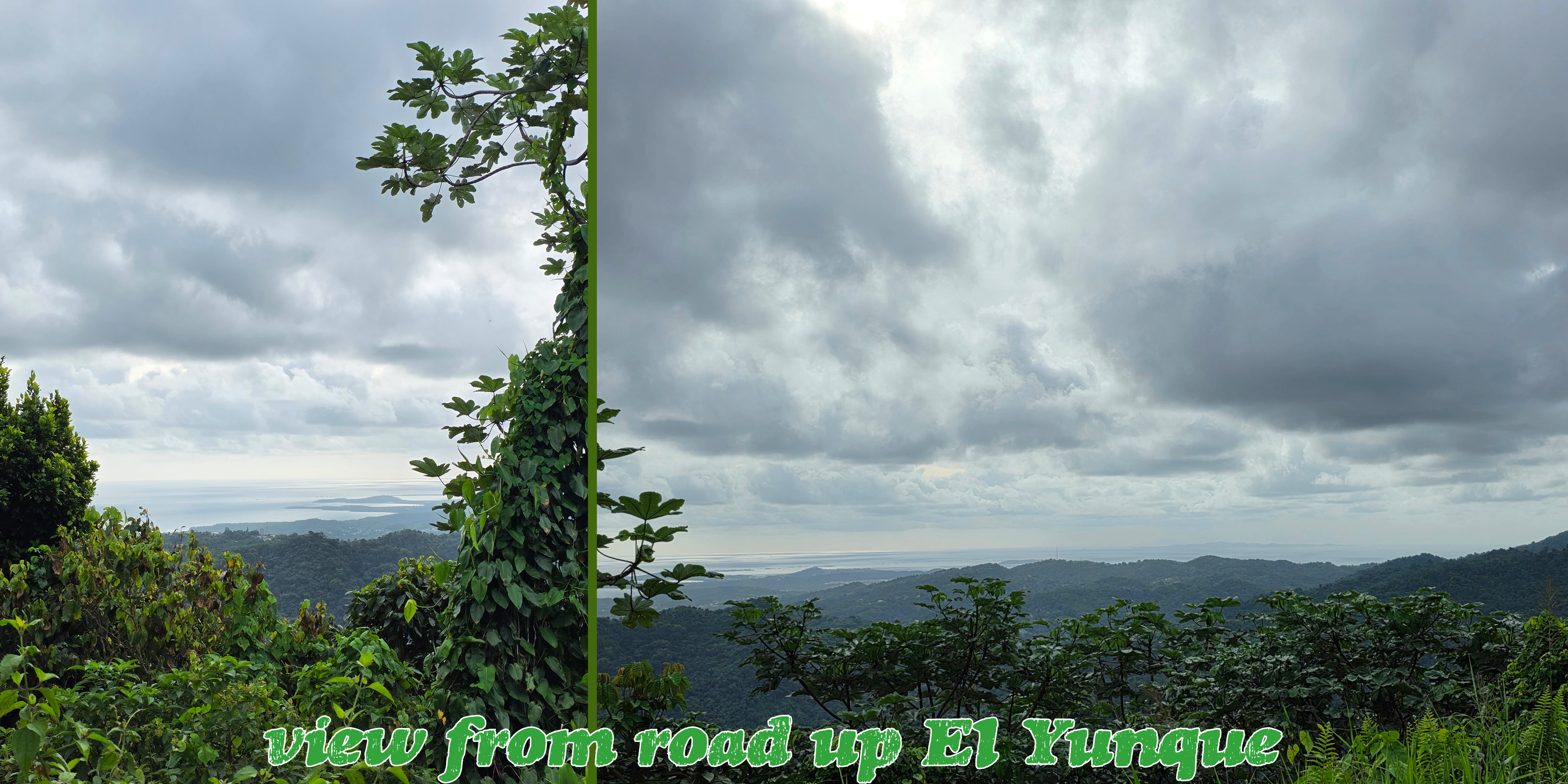
And finally…bring your camera! The flora you will see is incredibly beautiful, and when there is a view, you can see to the ocean in several directions, up to sharp peaks, or just along the tops of the trees into the distance.
One item to note – at most of the larger parking areas, there are rest rooms available.
My most recent hike – Los Picachos
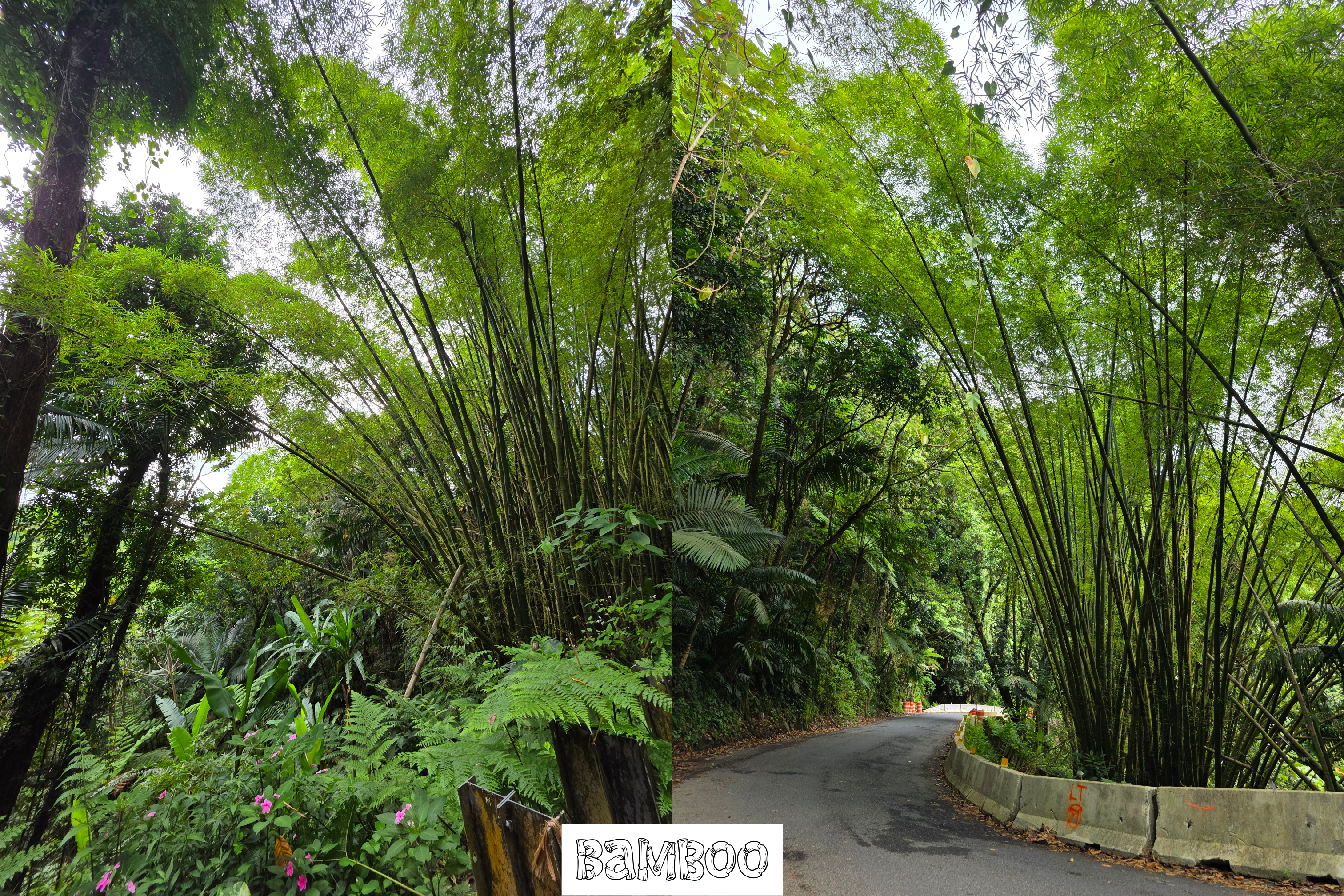
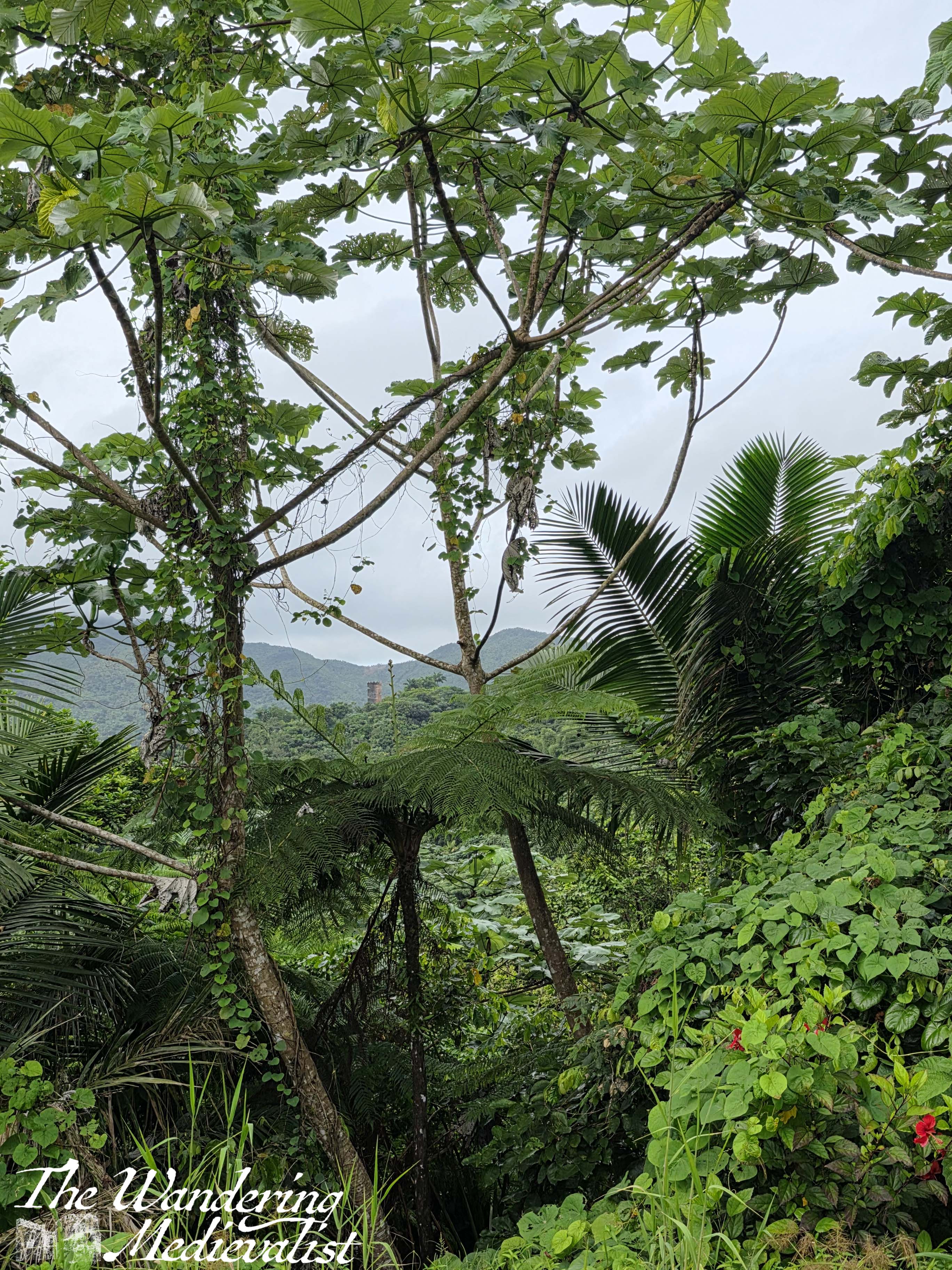
I just so happened to be in Puerto Rico for Father’s Day this year, and so being us, we chose a hike in the rainforest as our Father’s Day outing. We got up early to get to the entrance to the park, which is most commonly accessed through Palmer, up route 191. We got to the gate a bit before 8am and so parked with the other hikers for a few minutes at a small outcrop that offered some good views out across the island, and of one of the several viewpoint towers. The road often circles through and around these enormous bamboo stands, as well, which I have always thought beautiful.
In time we were allowed into the park and followed a caravan of cars up to the parking lot just below El Baño Grande, a former swimming pool constructed in the 1930s that includes an overflow dam surrounded by foliage.
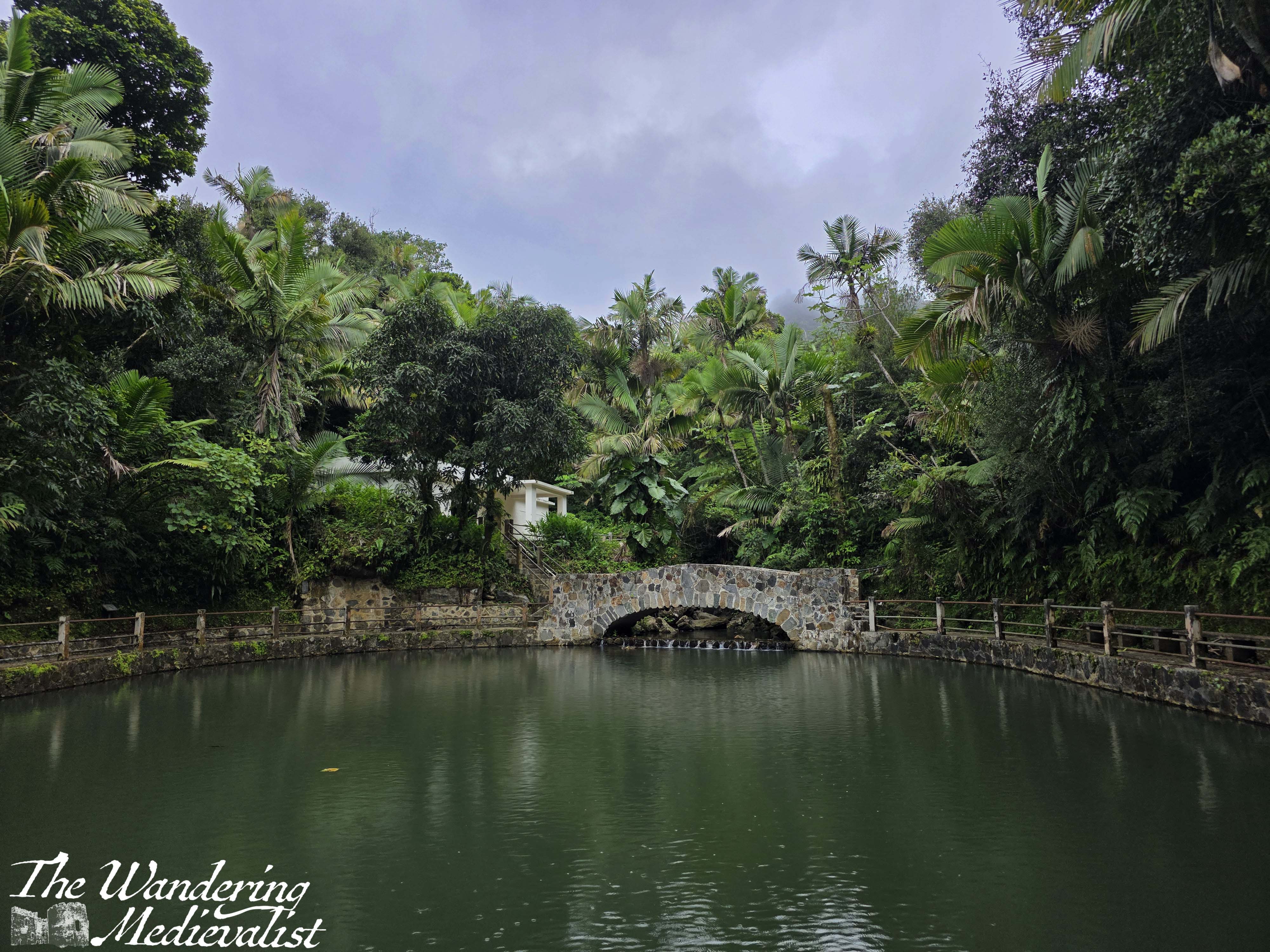
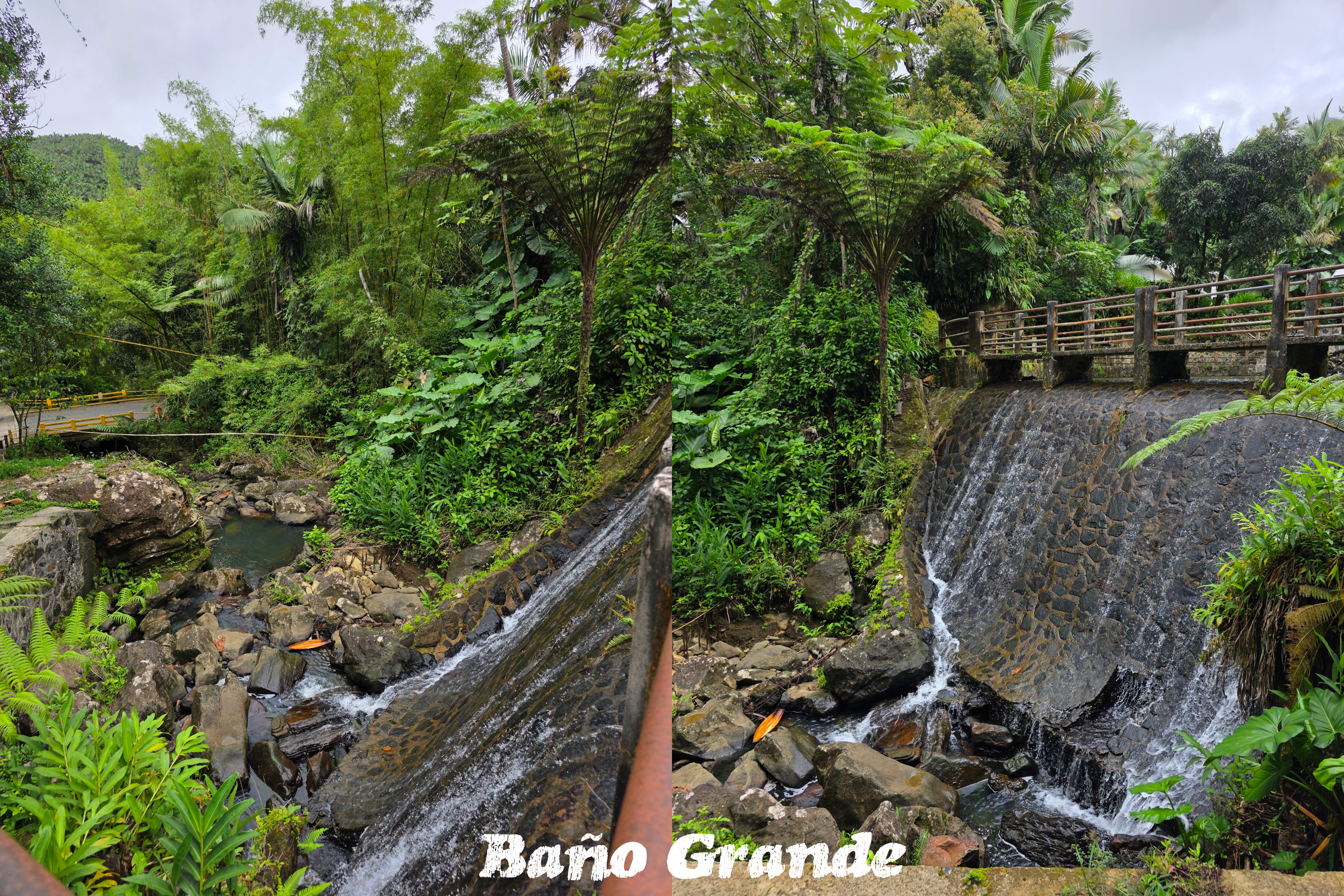
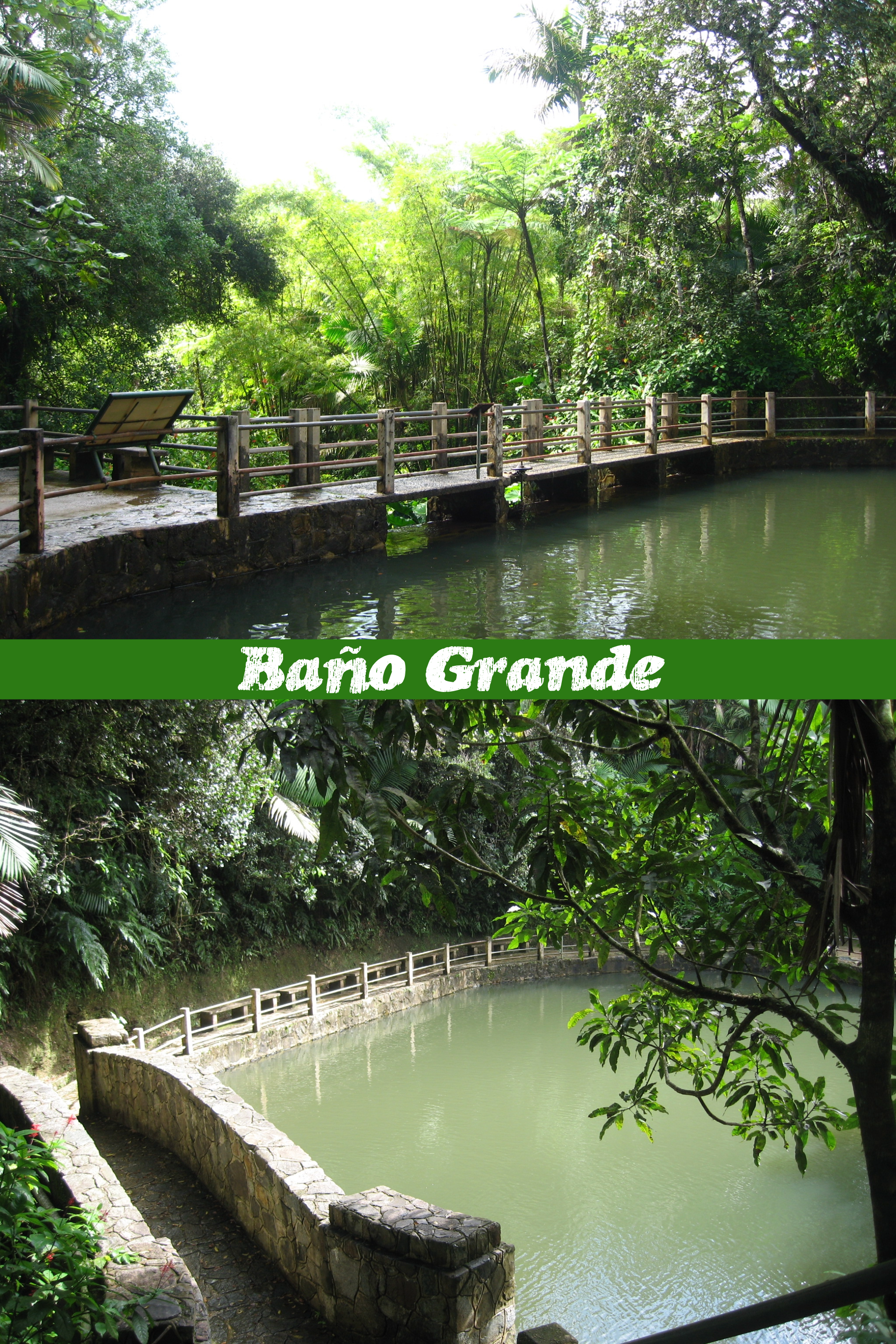
There is a very short walk around the edge of the pool, and also a trail that branches off to the right, leading towards the peak and Los Picachos – this was our route. Los Picachos is a ridge made up of a series of smaller peaks, just next to the El Yunque peak.
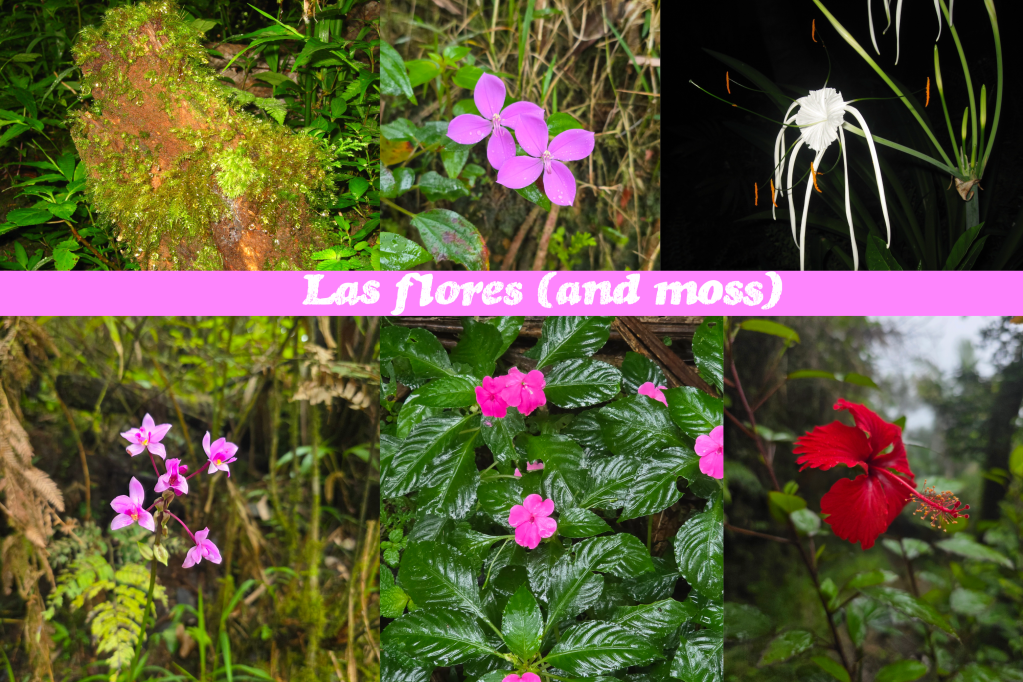
The path starts off very even and neat, though relatively quickly begins an ascent up away from the road. While the track is not particularly long – it says 2.4 miles to the top – it is very winding and quite steadily going up. In places the trail is very well-kept, graded and covered with pebbles that make for easy walking, but the higher it goes, the more traditional hiking trail it becomes – narrow, alternately rocky and muddy. But, the surroundings are stunning (and on more than a few occasions I nearly fell while being distracted) – deep palm forests, banana trees, small streams so dry they are barely visible, others that form little waterfalls, moss and rotting stumps, tree trunks with orchids growing out of them, and everywhere, flowers. Small, large, many different colours (though many are pink), most of them wild and as elusive as the fauna you can hear but seldom see. On previous walks I had caught sight of gecko and coqui (tree frogs), but the trail was a bit too busy on this trip.
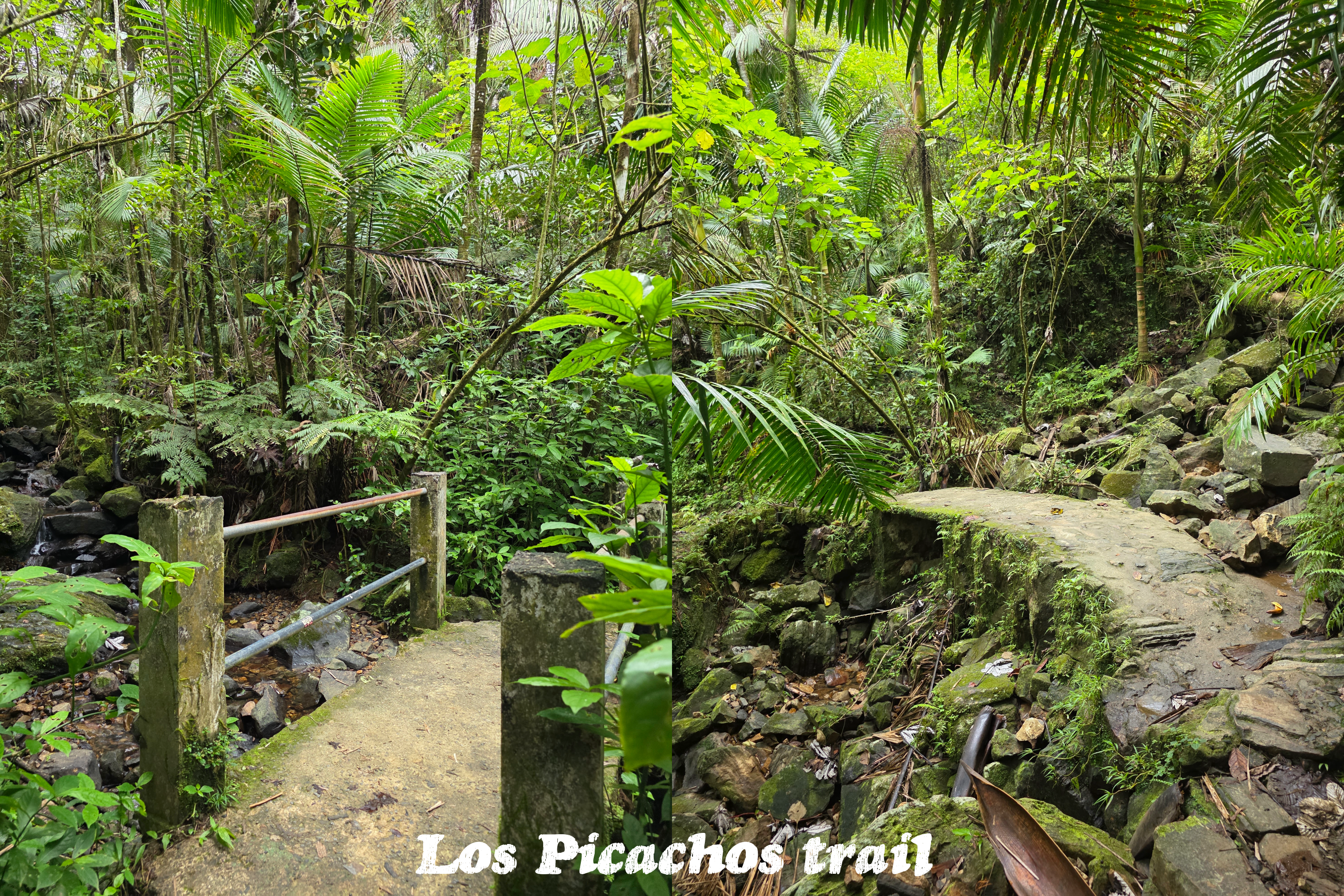
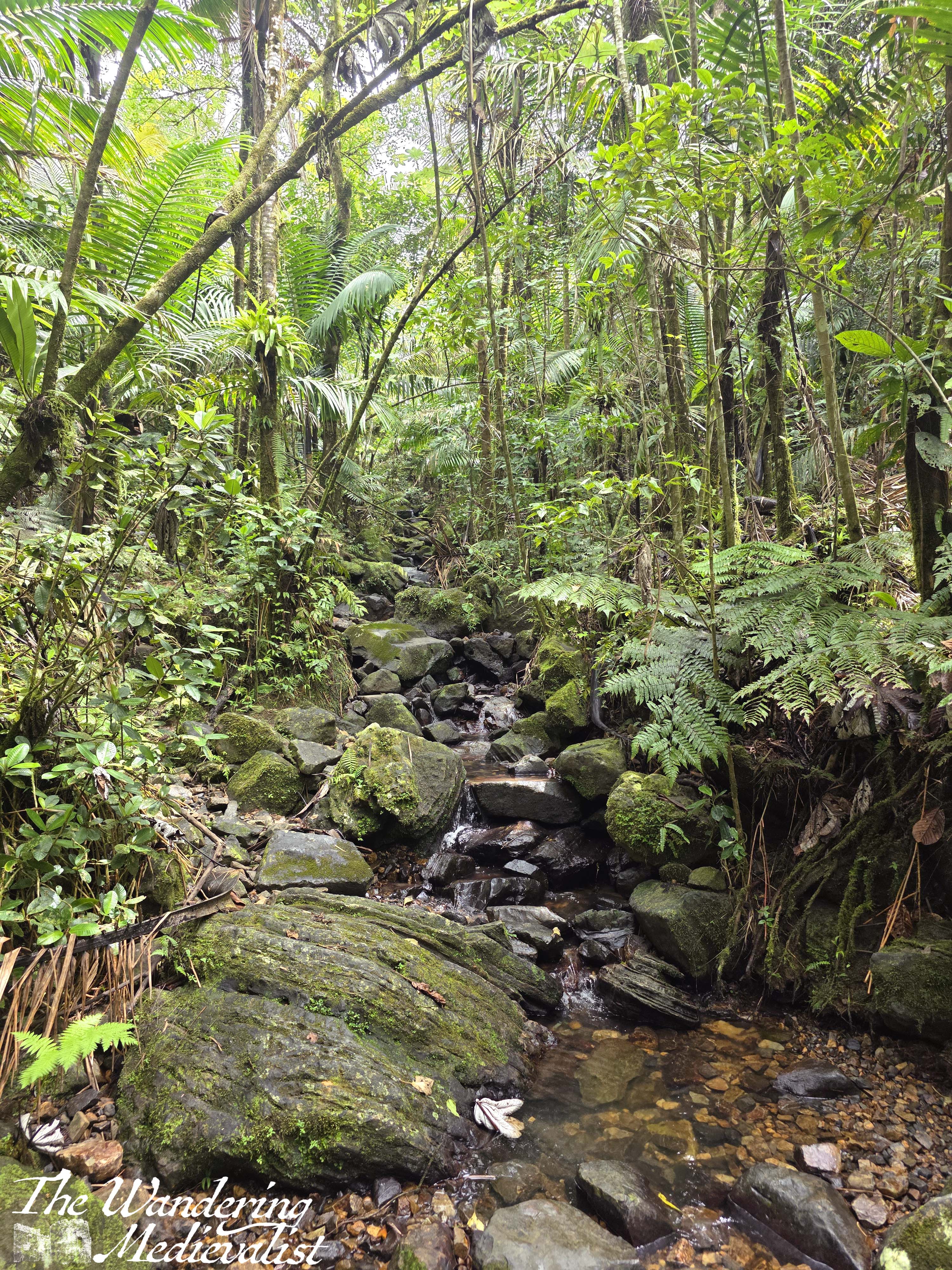
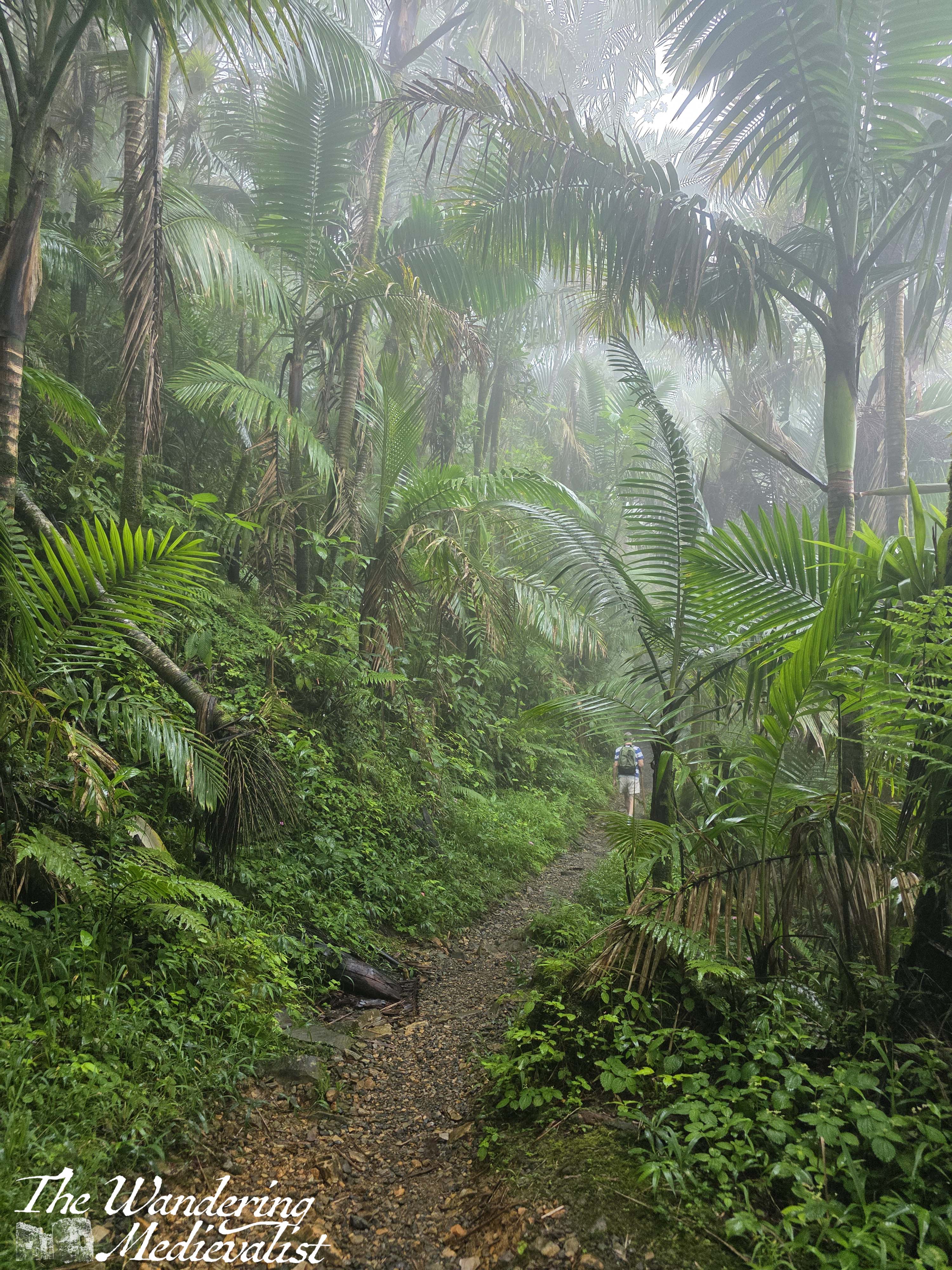
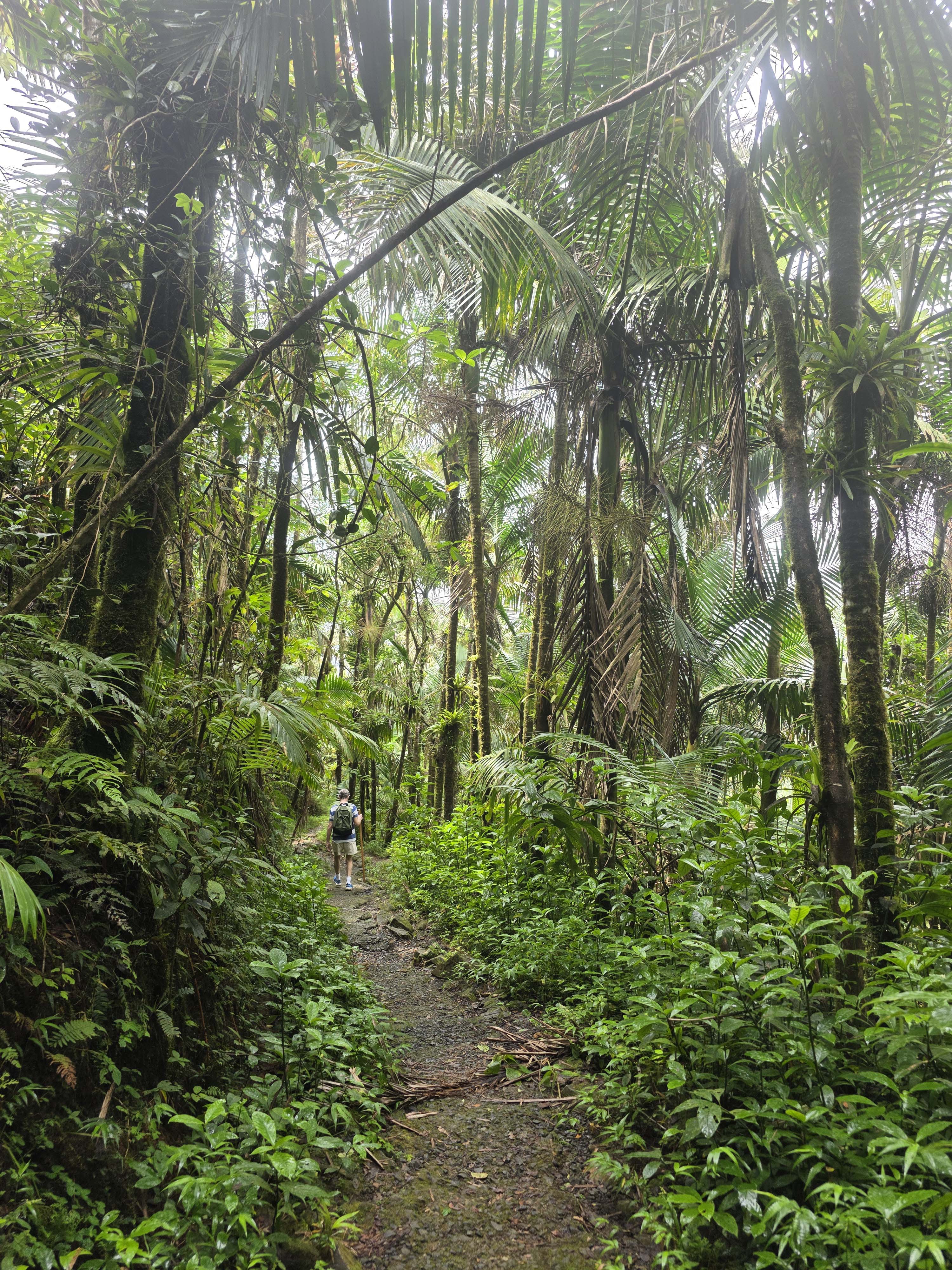
Just about 1.5 miles up, the trail we were on came to a T, with one side heading to Los Picachos and one to the Britton Tower viewpoint. A slightly worse-for-wear shelter with what had once been a fireplace offered a resting spot, before we pushed on towards Los Picachos.
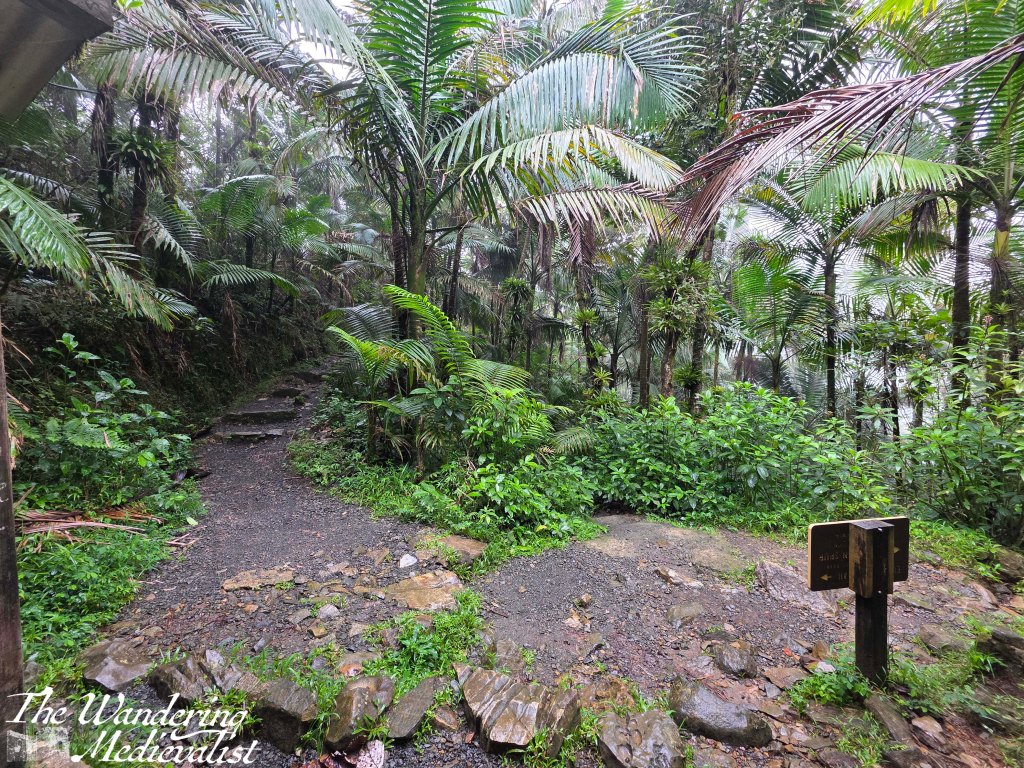
On the day we hiked, as you will see in the pictures, the higher we went, the wetter we got – it was a combination of rain and just mist, as we were essentially walking through clouds. Though the sign had said less than a mile to Los Picachos from our stopping point, it felt quite a bit longer, and as all of the viewpoints we found were blocked in by cloud, in the end we chose not to make the final climb up the stairs to the viewpoint.
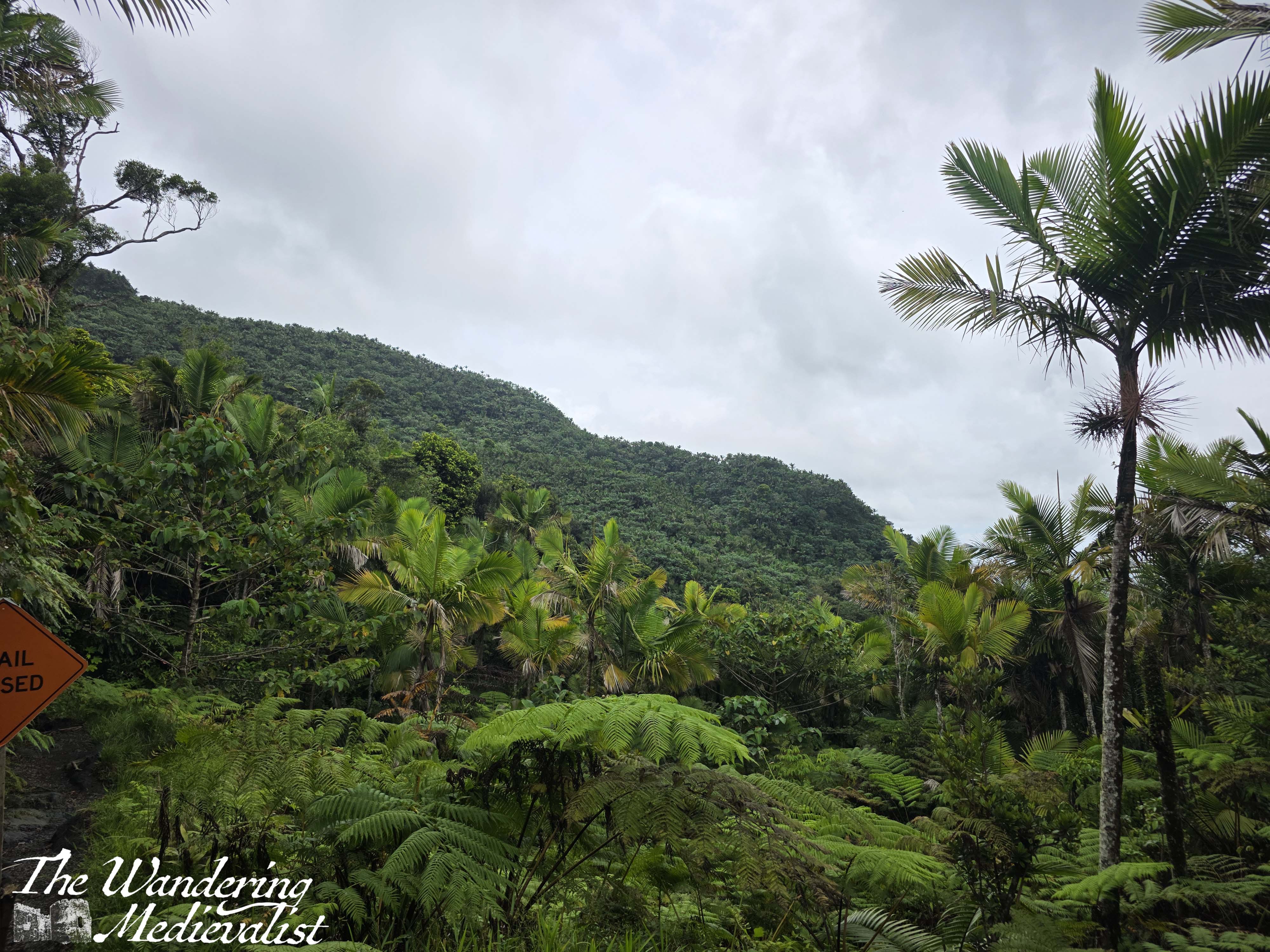

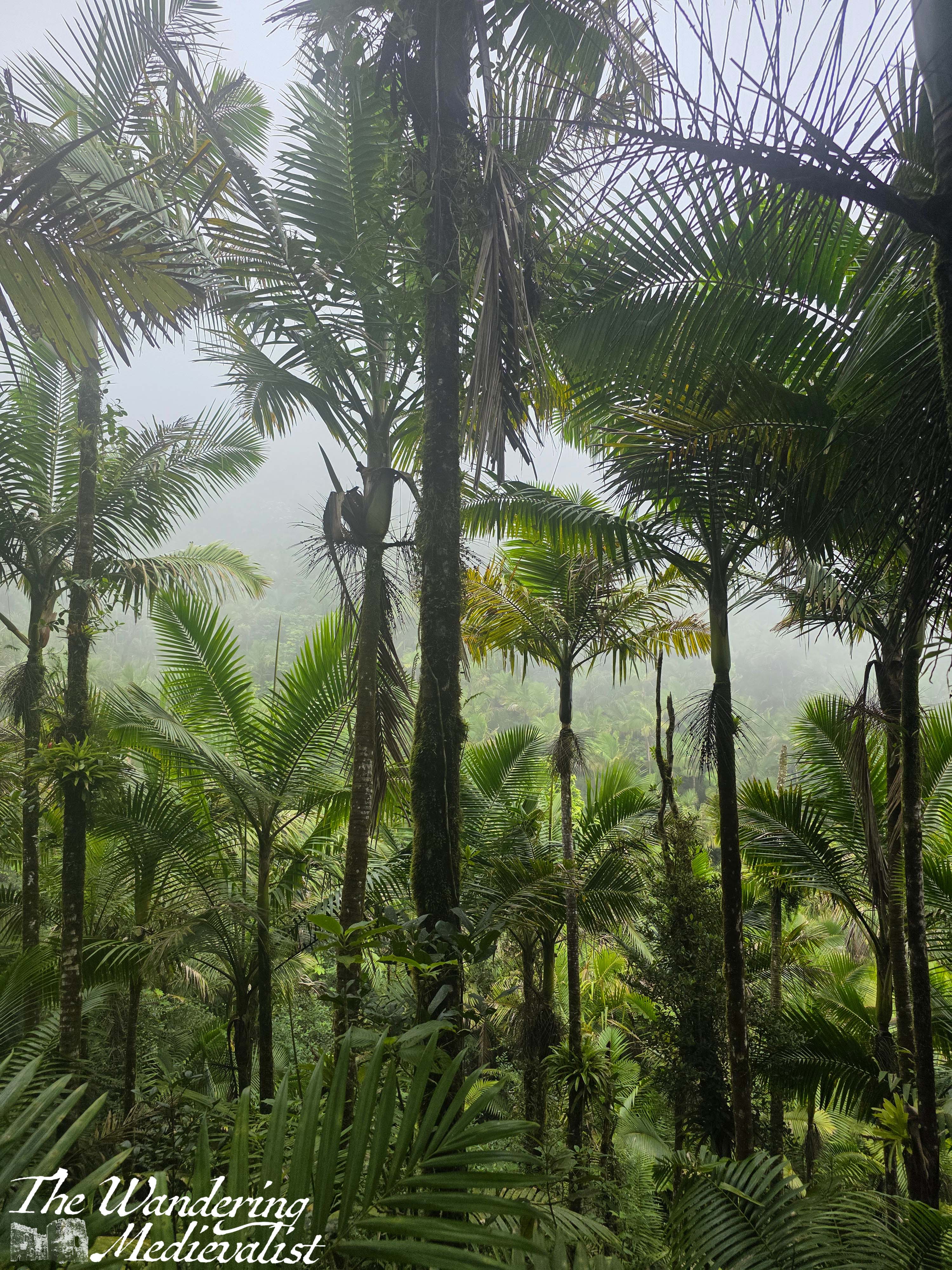
As we hiked down – I have to admit to now understanding what I never could have while hiking as a child, that down can be harder than up with over-30s joints – the mist lifted in places and a few rays of sun broke through the trees. For the entire week I was in Puerto Rico, though, we were plagued by Sahara dust – fine particles that cross the Atlantic and cause haze or clouds. This I s a common occurrence in the summer. Not once did I see the brilliant blue Caribbean sky you often see in the winter, though that was probably better for my Scottish-sun-accustomed skin.
The path to Los Picachos also used to provide a route up to the summit, though this is now closed; it is one of several closed routes.
La Mina Waterfall hike
My father used to use the mountain as his primary form of exercise, ‘running’ up to the peak, while I chose the slightly less intense La Mina trail. While not as long, it is a steady hike down to the waterfall along a river, that upon the return is an equally steady climb that certainly gets ones heartrate up – it is classed as ‘difficult’ due to several sets of ‘winding concrete stairs that can make the return trip somewhat arduous‘.
The first time I took this hike, I was entirely on my own while Dad did his run, and I just fell in love. It was a magical tropic paradise of paths that crossed brooks and streams, passed roofed picnic shelters and towering palms. As I walked down the stairs, I got frequent views to the left of the rocky, tumbling river, which in some ways reminded me of rivers in the Highlands or New England, except with very different foliage.


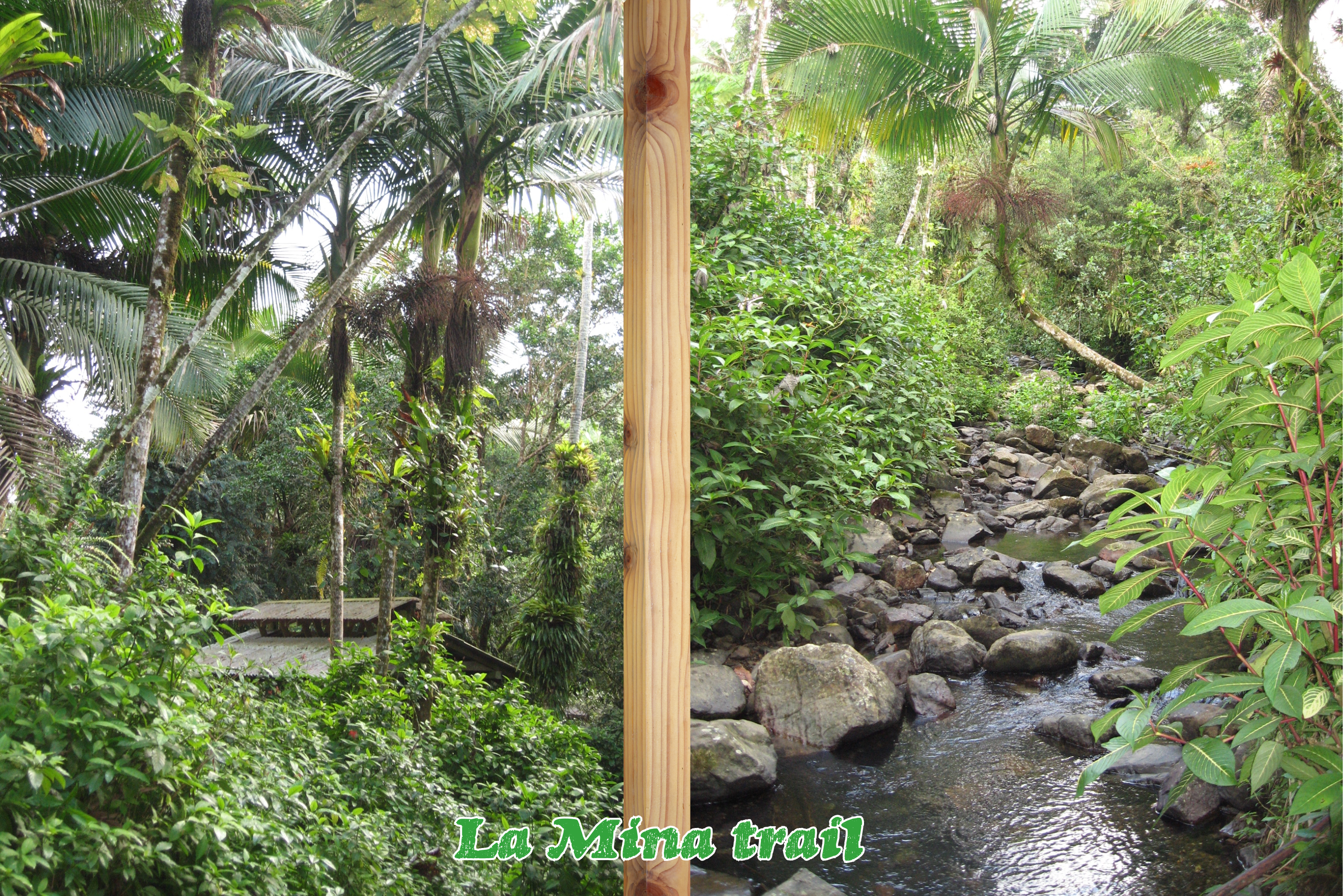
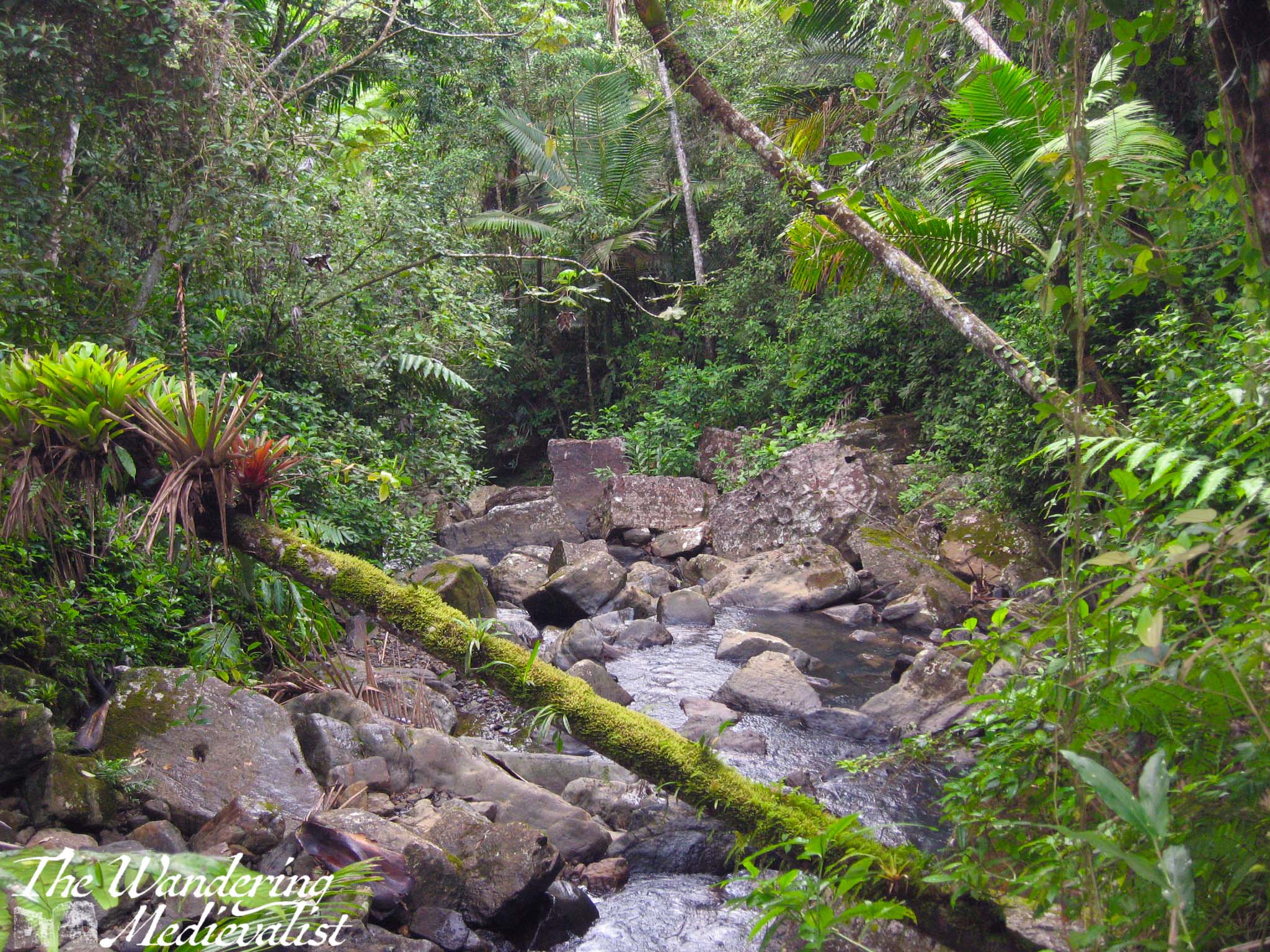
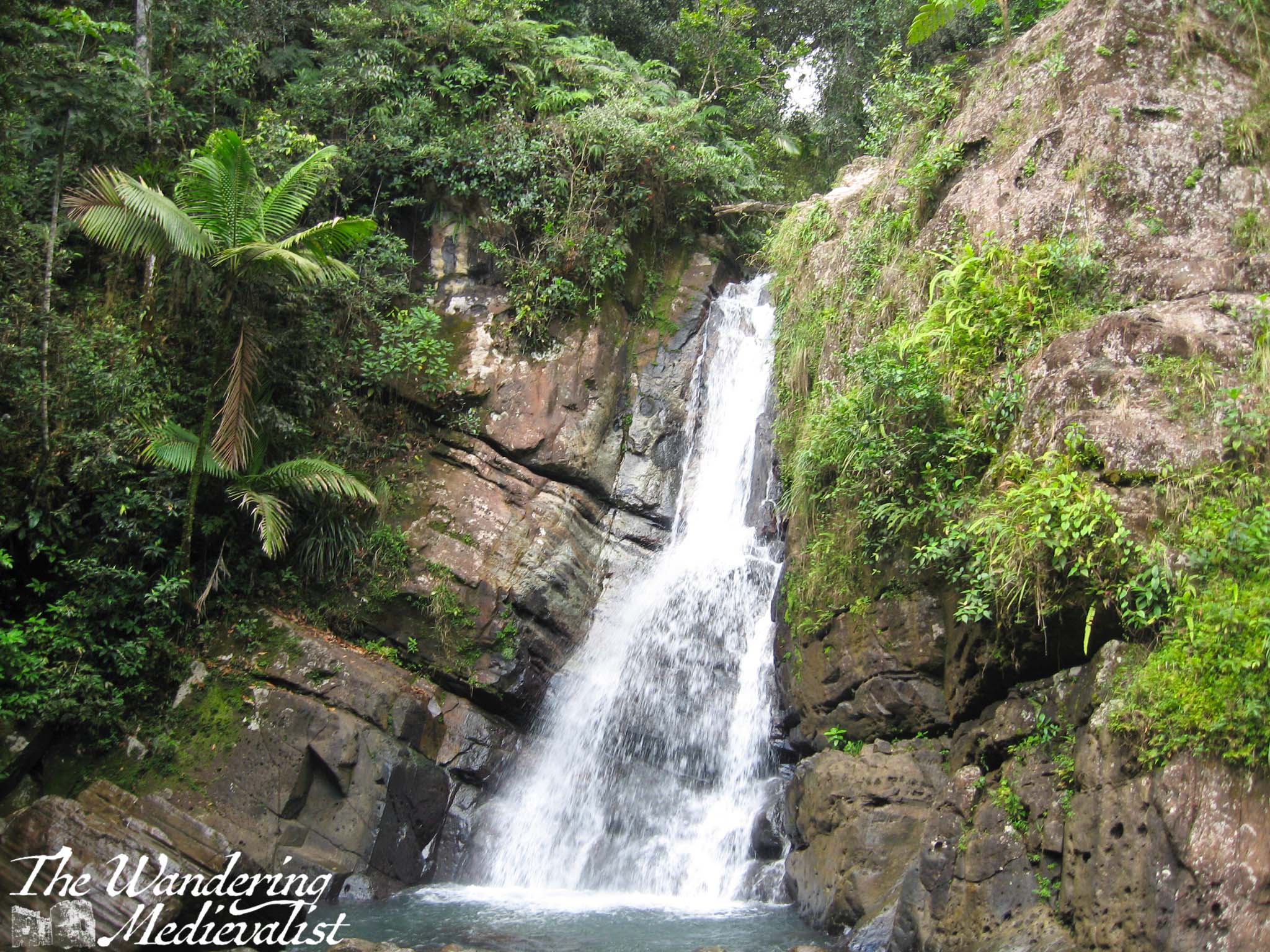
At the bottom of the trail, as expected, is a beautiful waterfall that falls about 35 feet into a cool pool where I have seen hikers swimming.
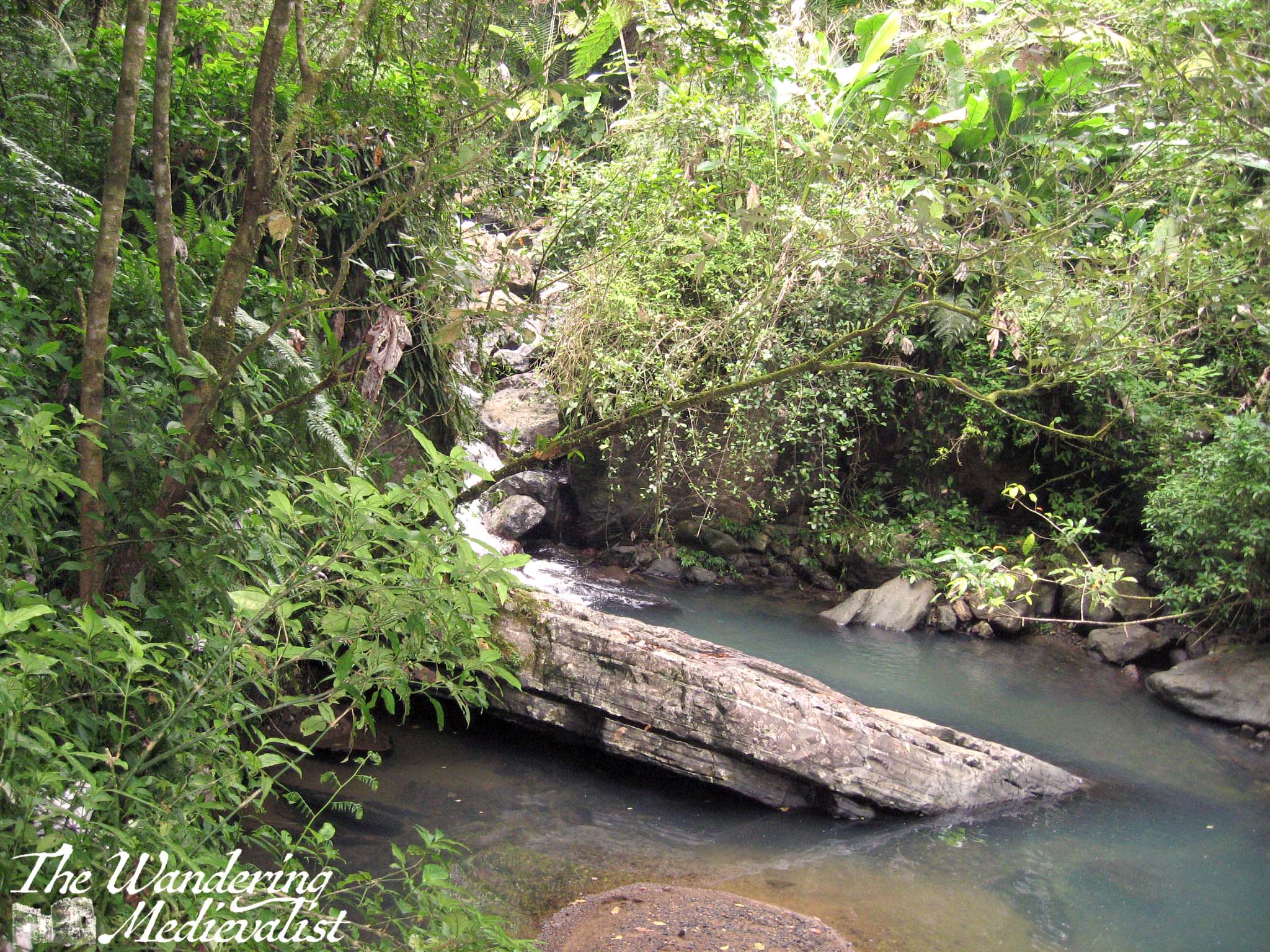
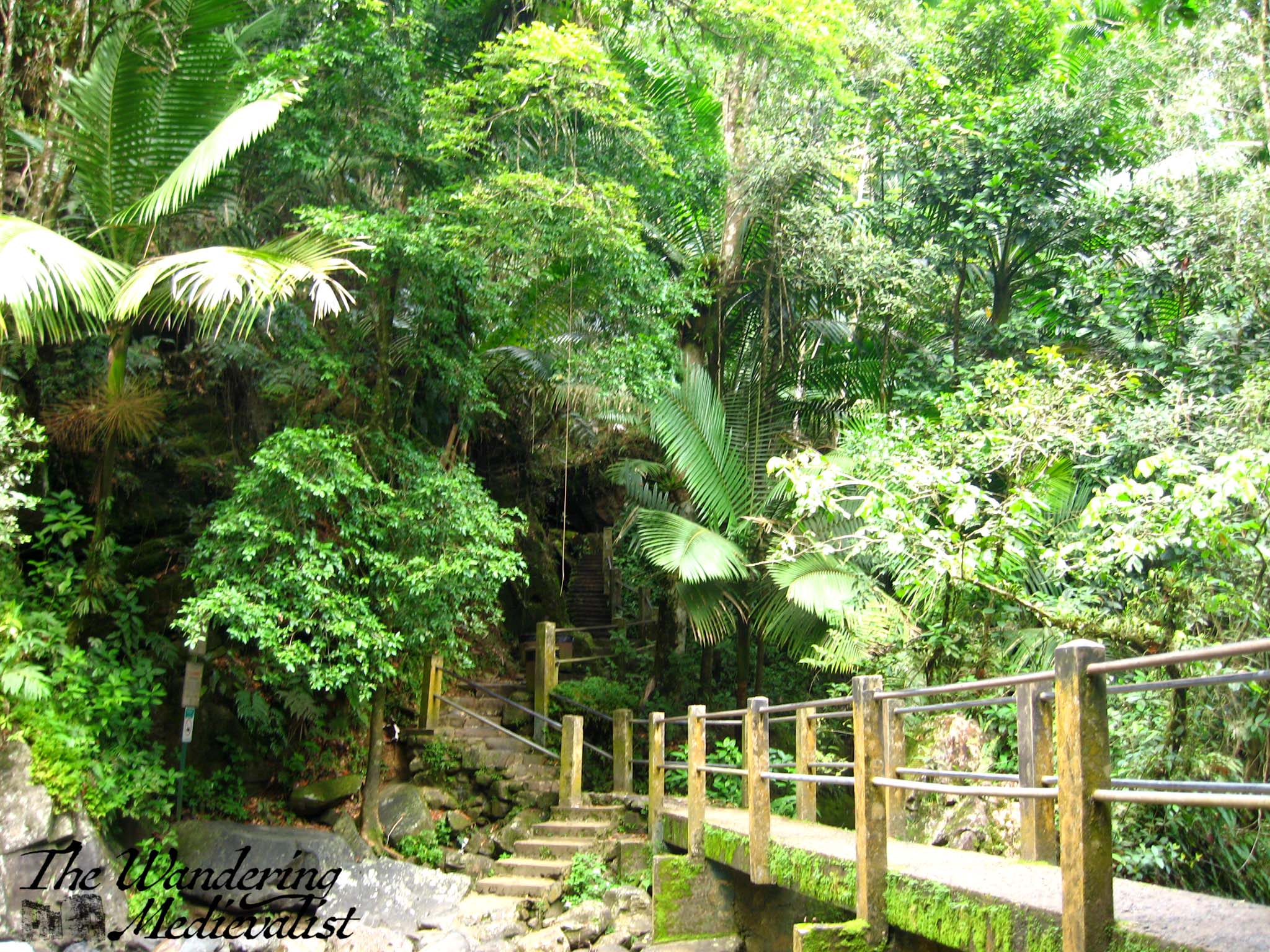
Disappointingly, this trail is currently closed indefinitely.
I know that there is a lot more to this National park than the area I have visited, and I hope that in time I may be able to explore a bit more. I still have not yet managed to get to one of the towers, and while I have climbed to the summit, it was so many years ago that I cannot find the pictures. A visit is an absolute must if you are in Puerto Rico and renting a car – tear yourself away from the beaches if you can for a day, and check out the stunning rainforest! You will not regret it.
 The Wandering Medievalist