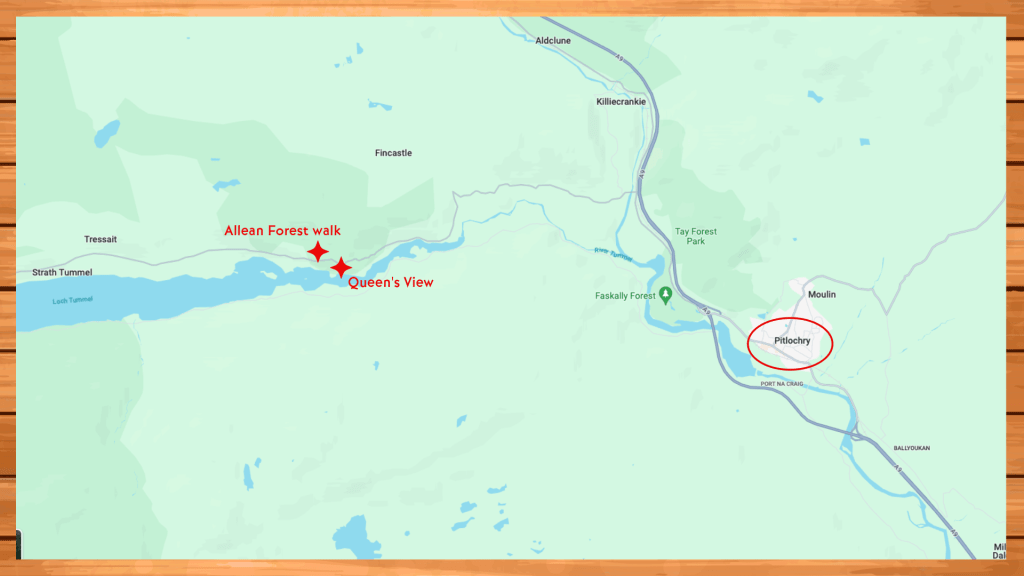
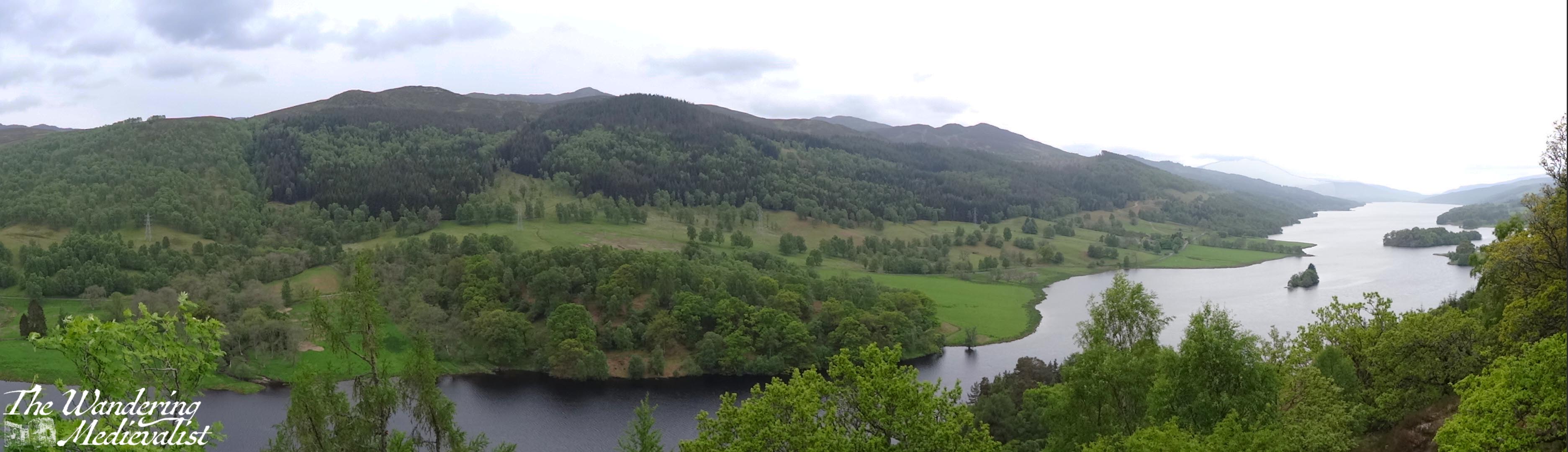
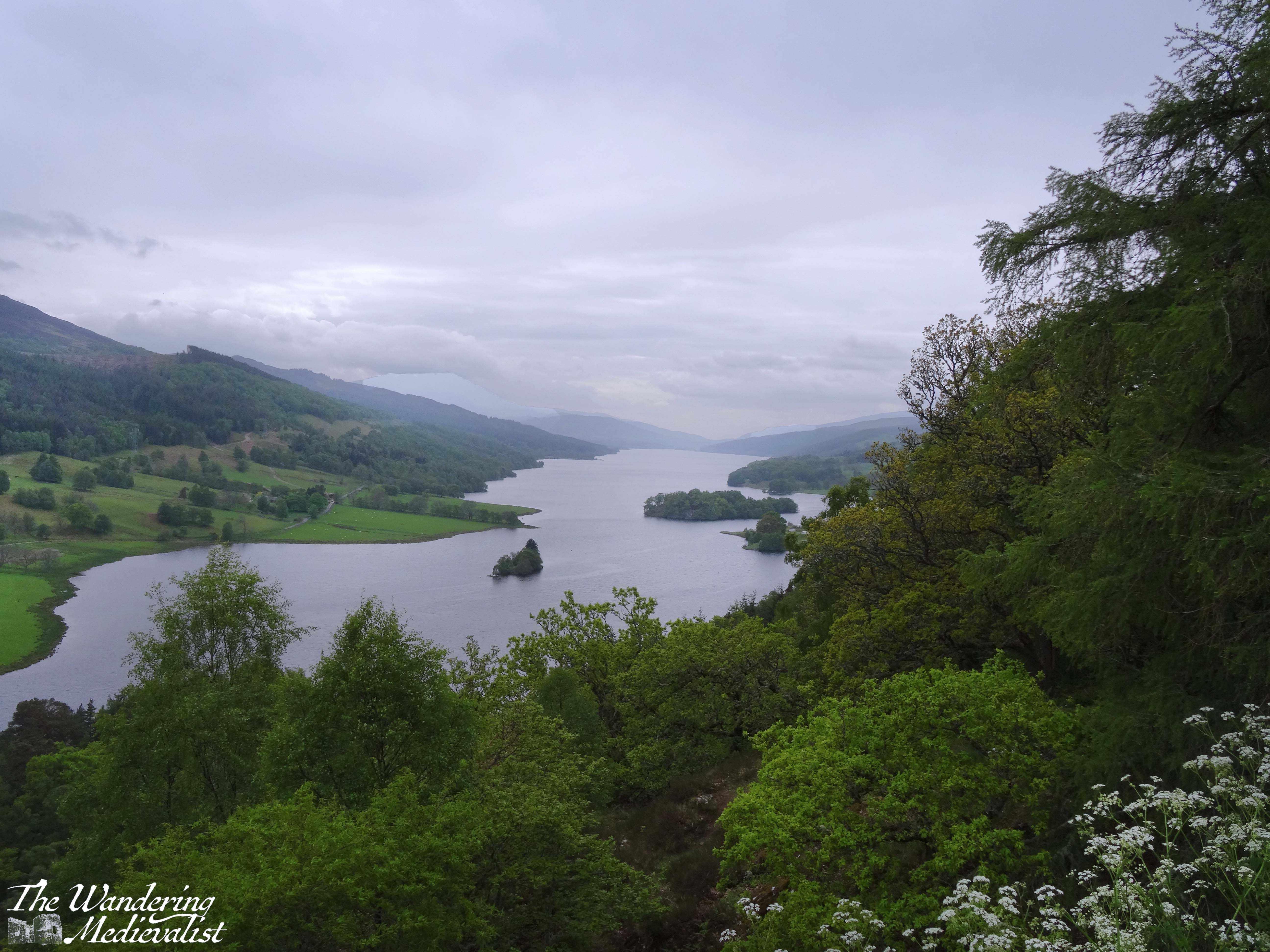
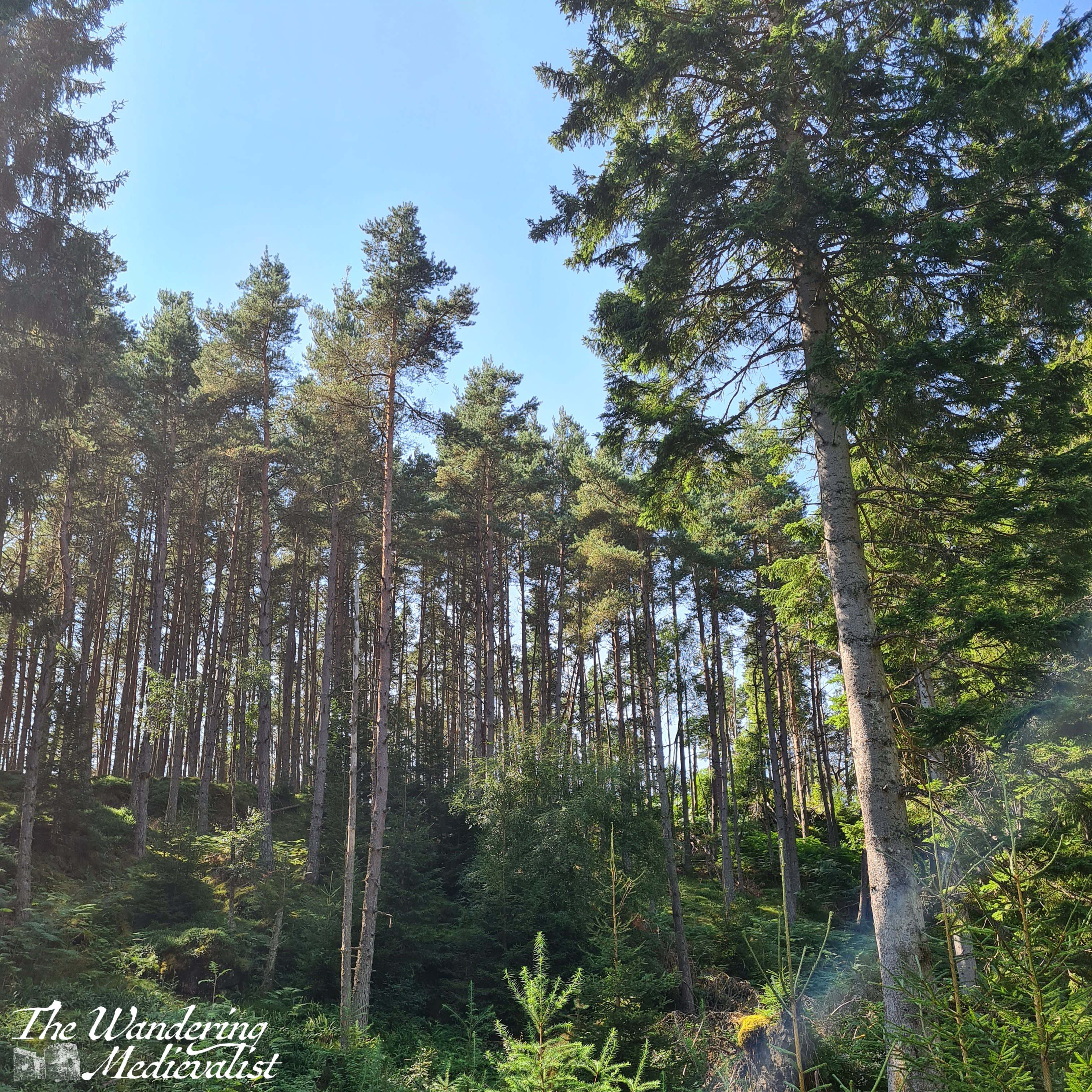
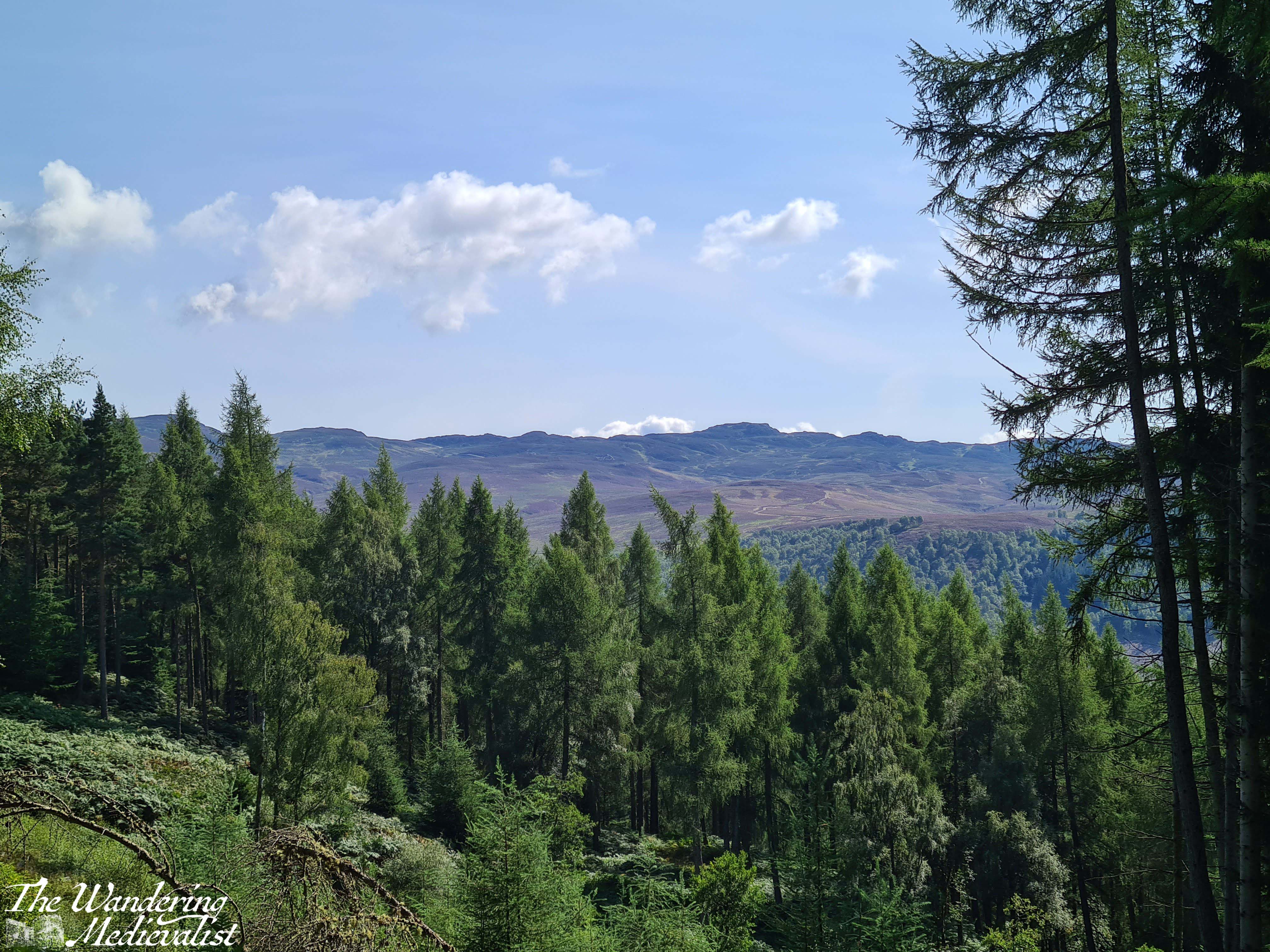
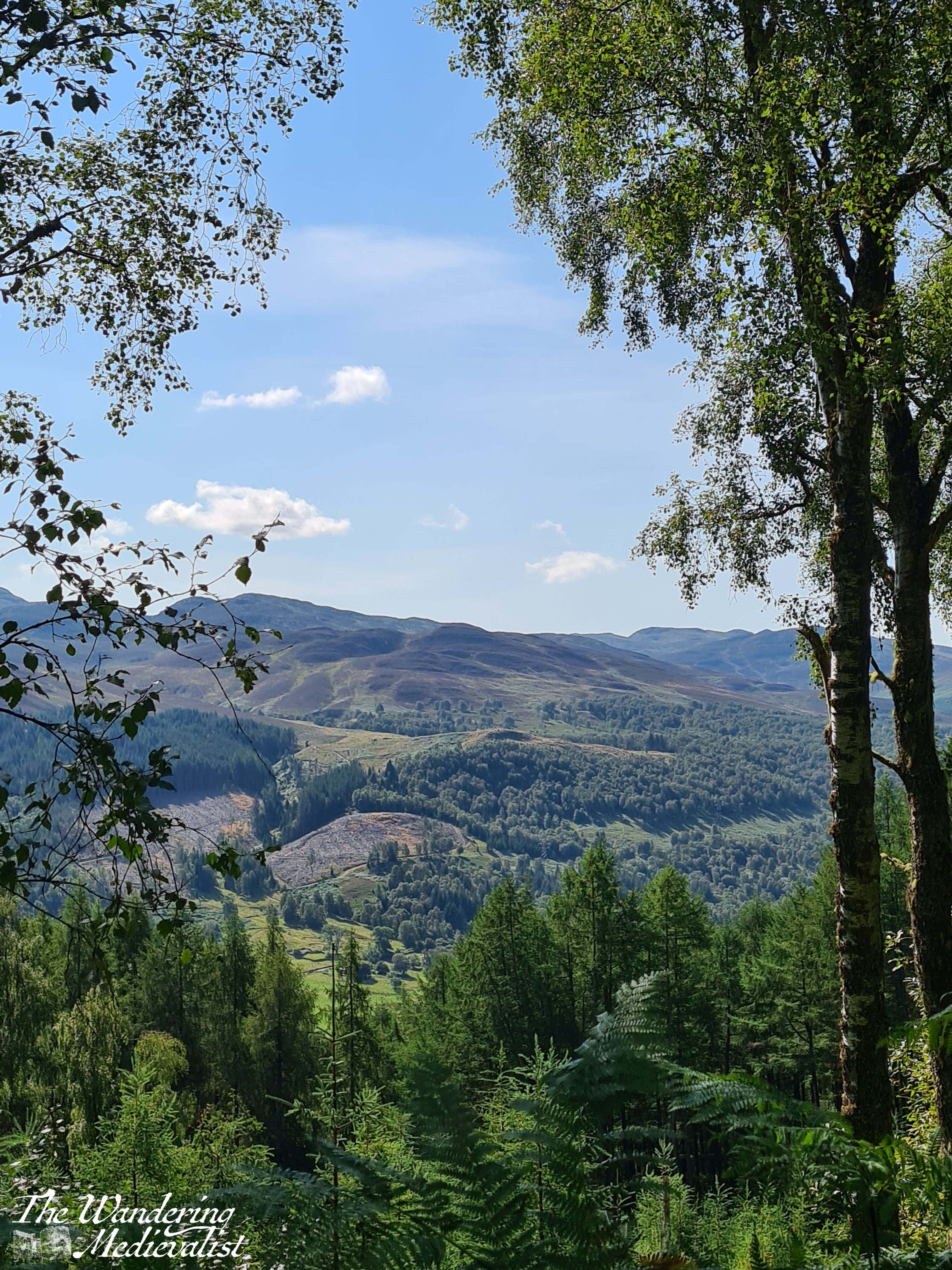
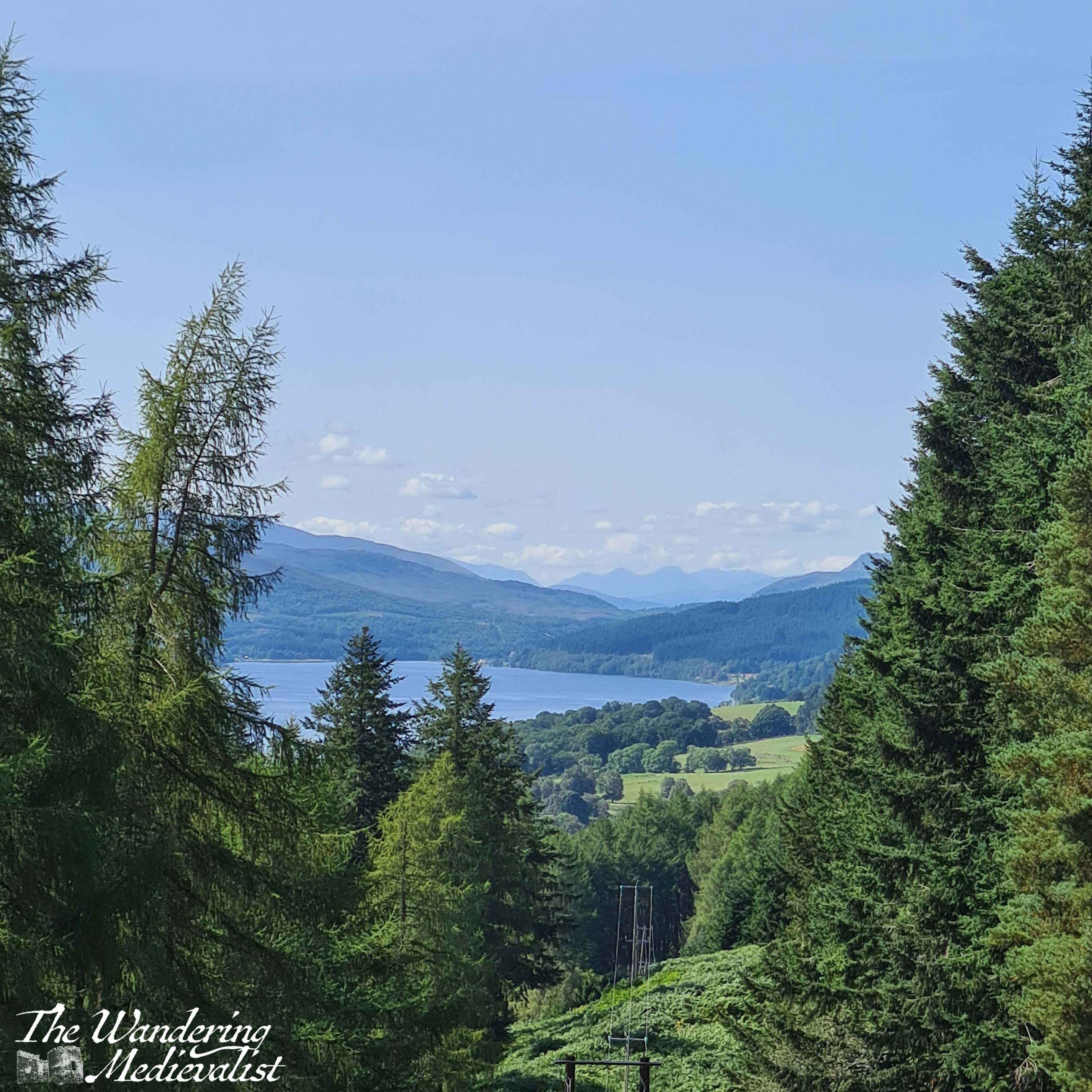
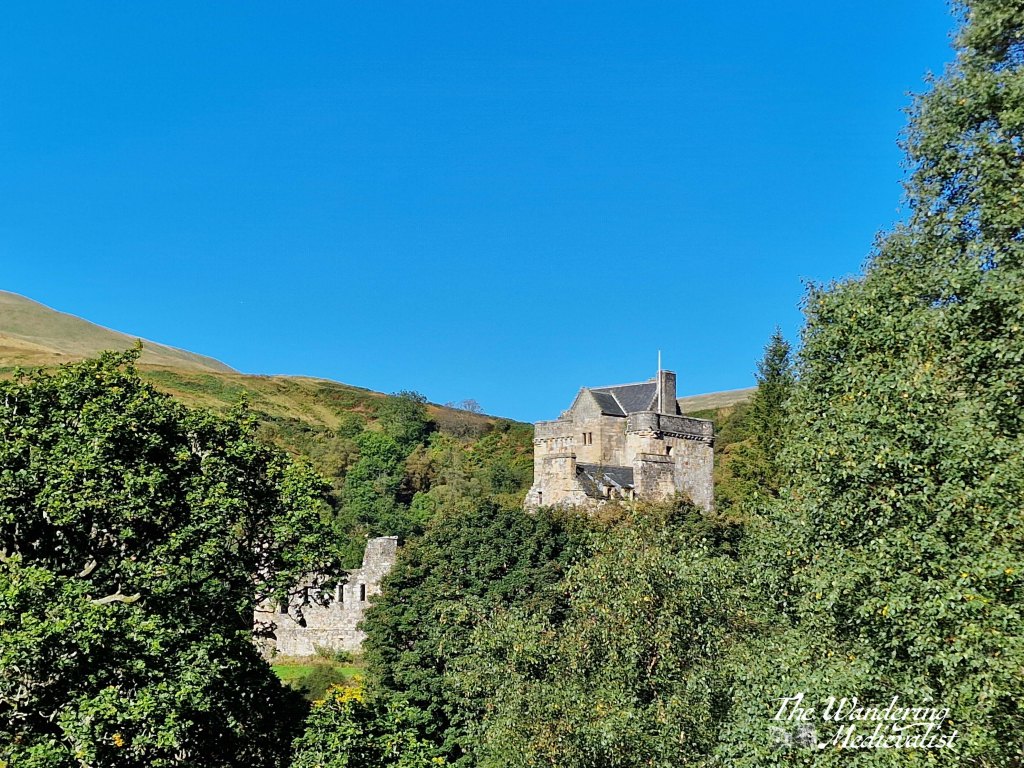
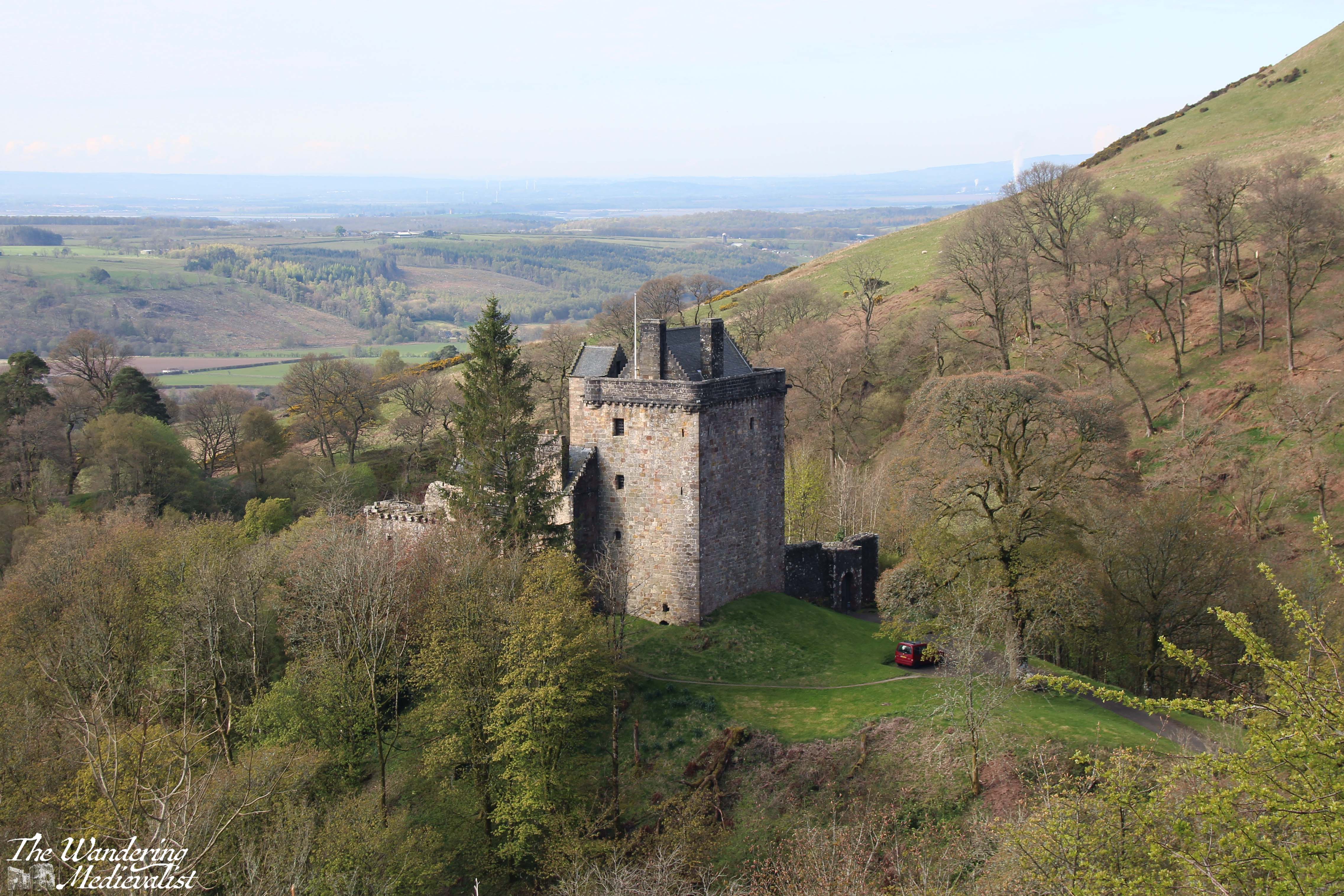
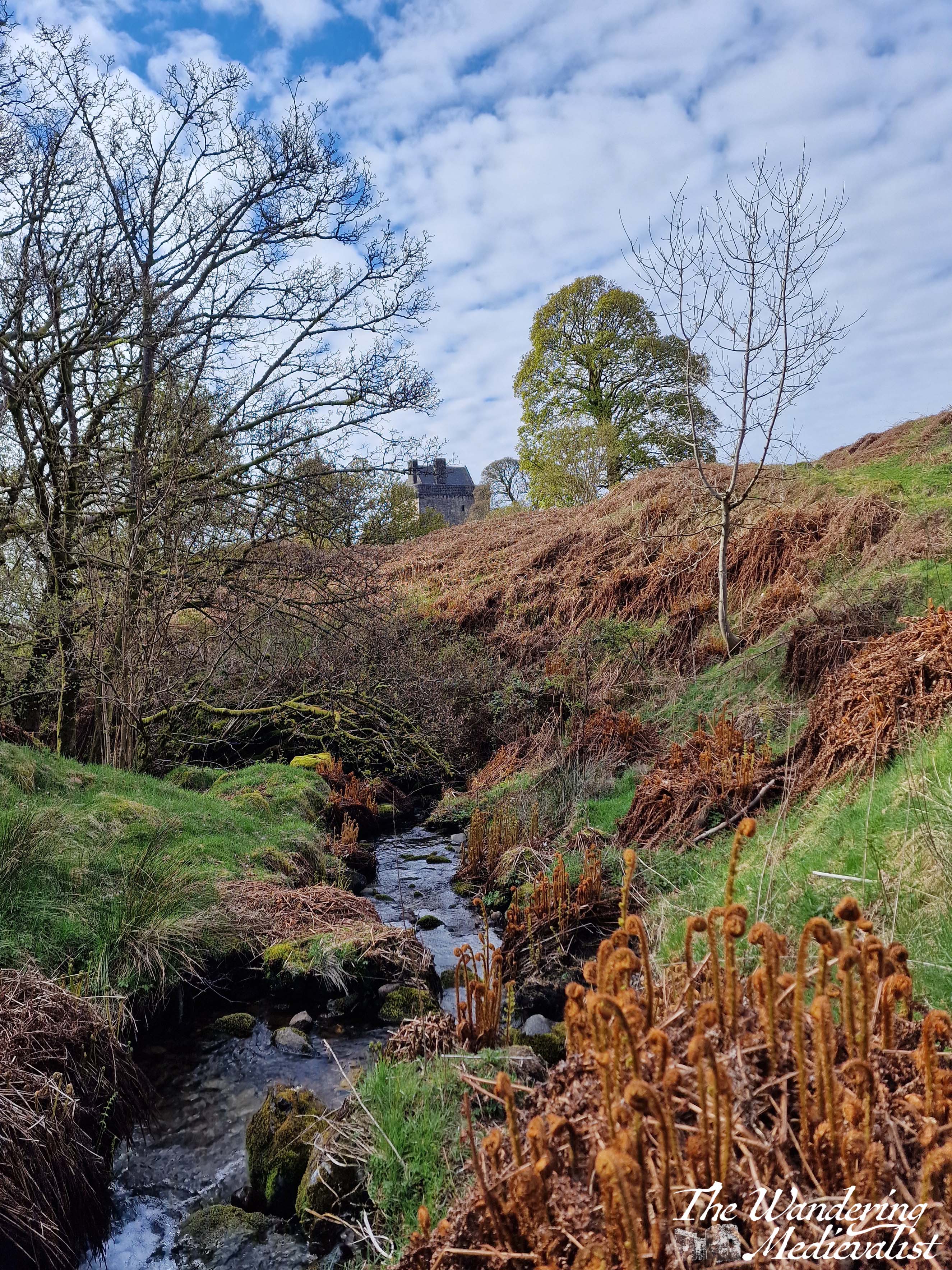
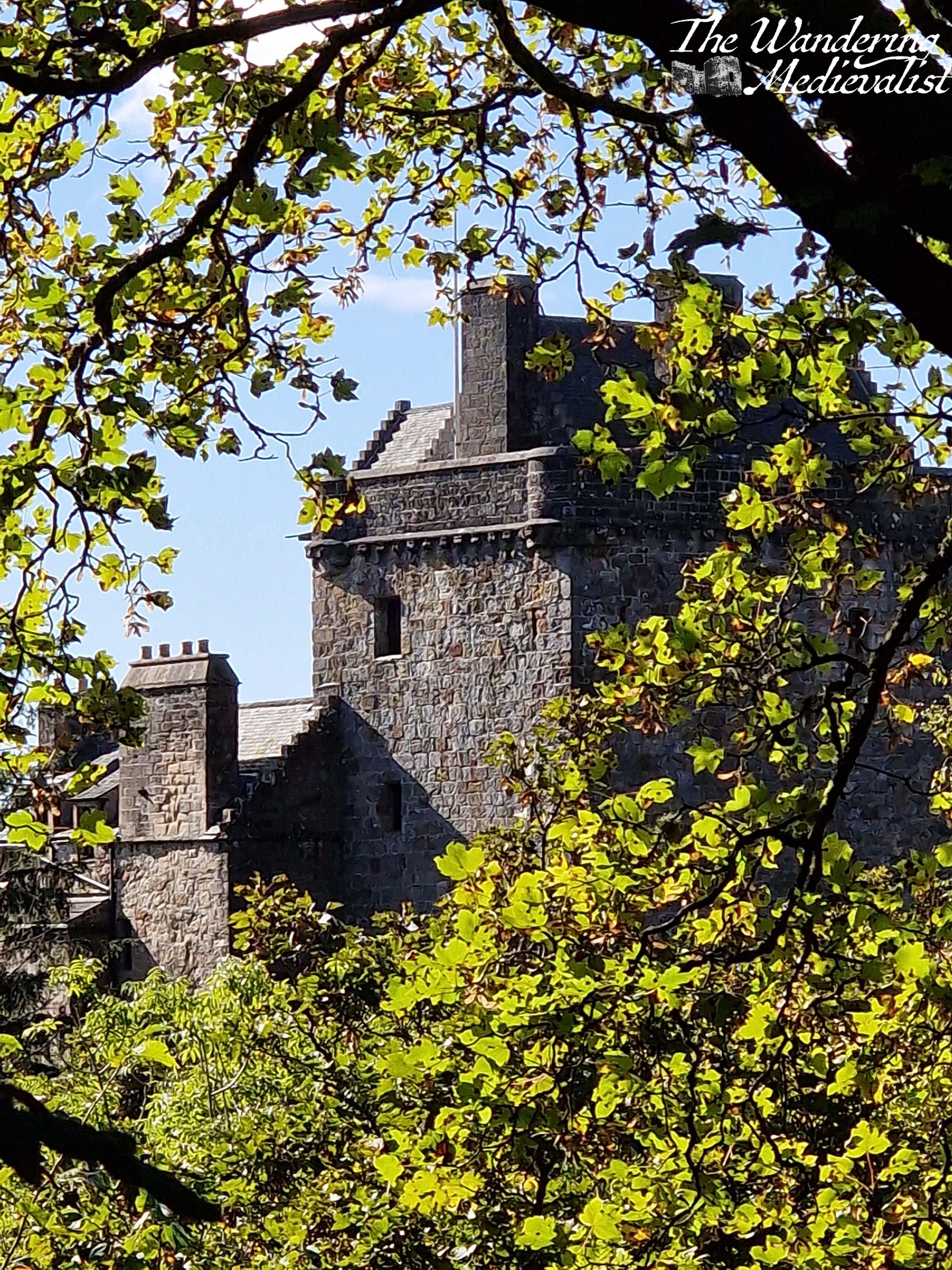
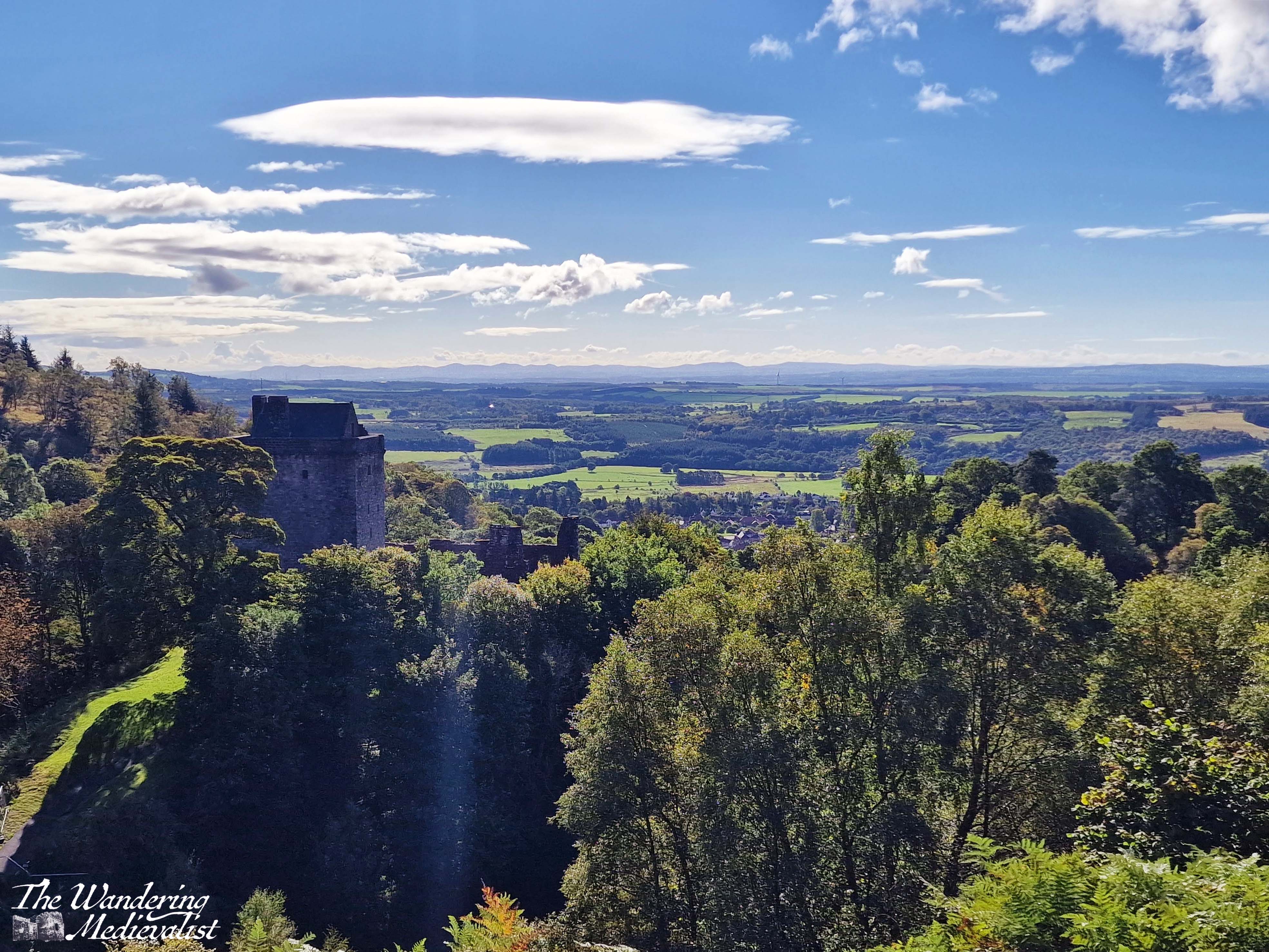
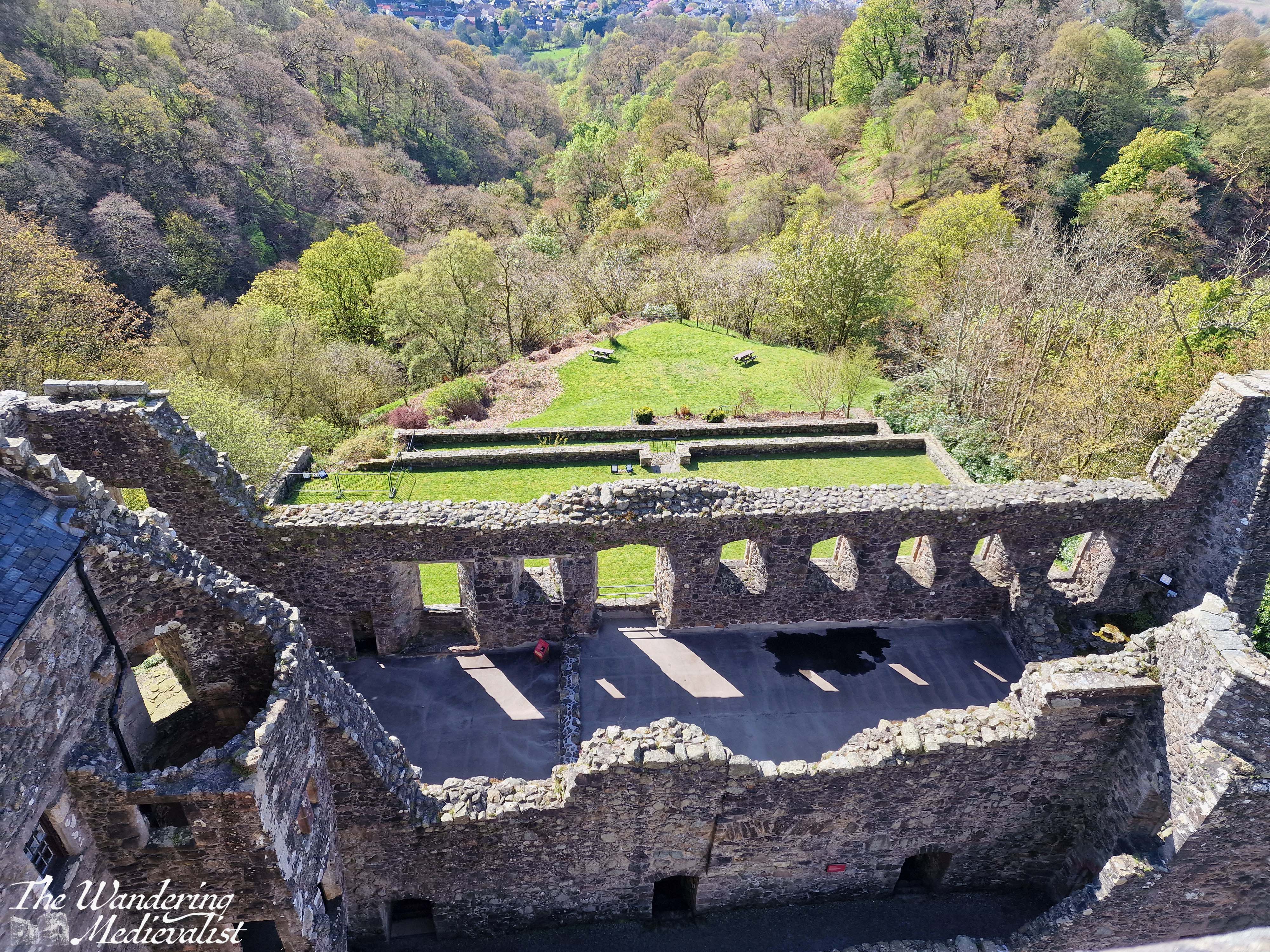
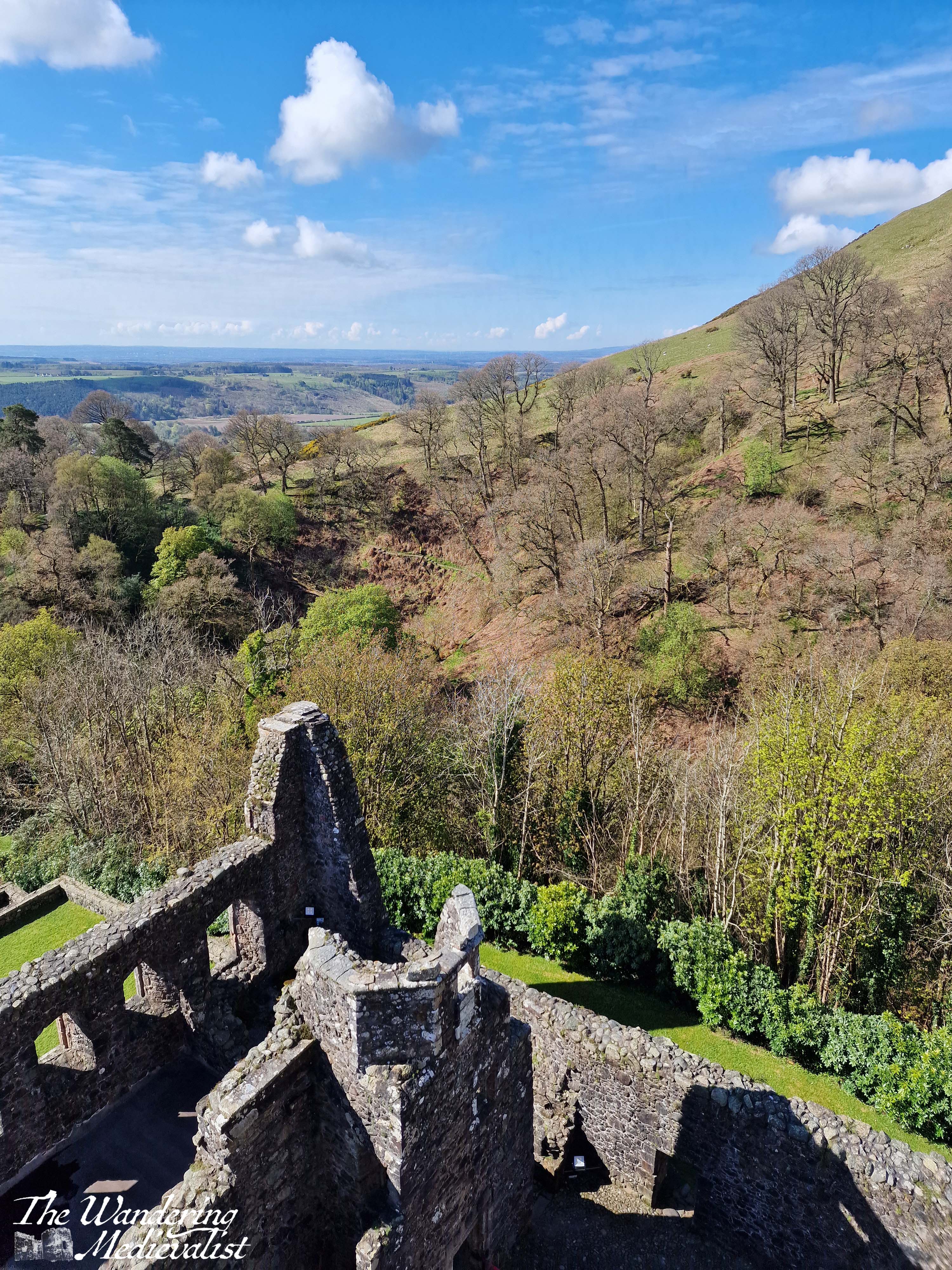
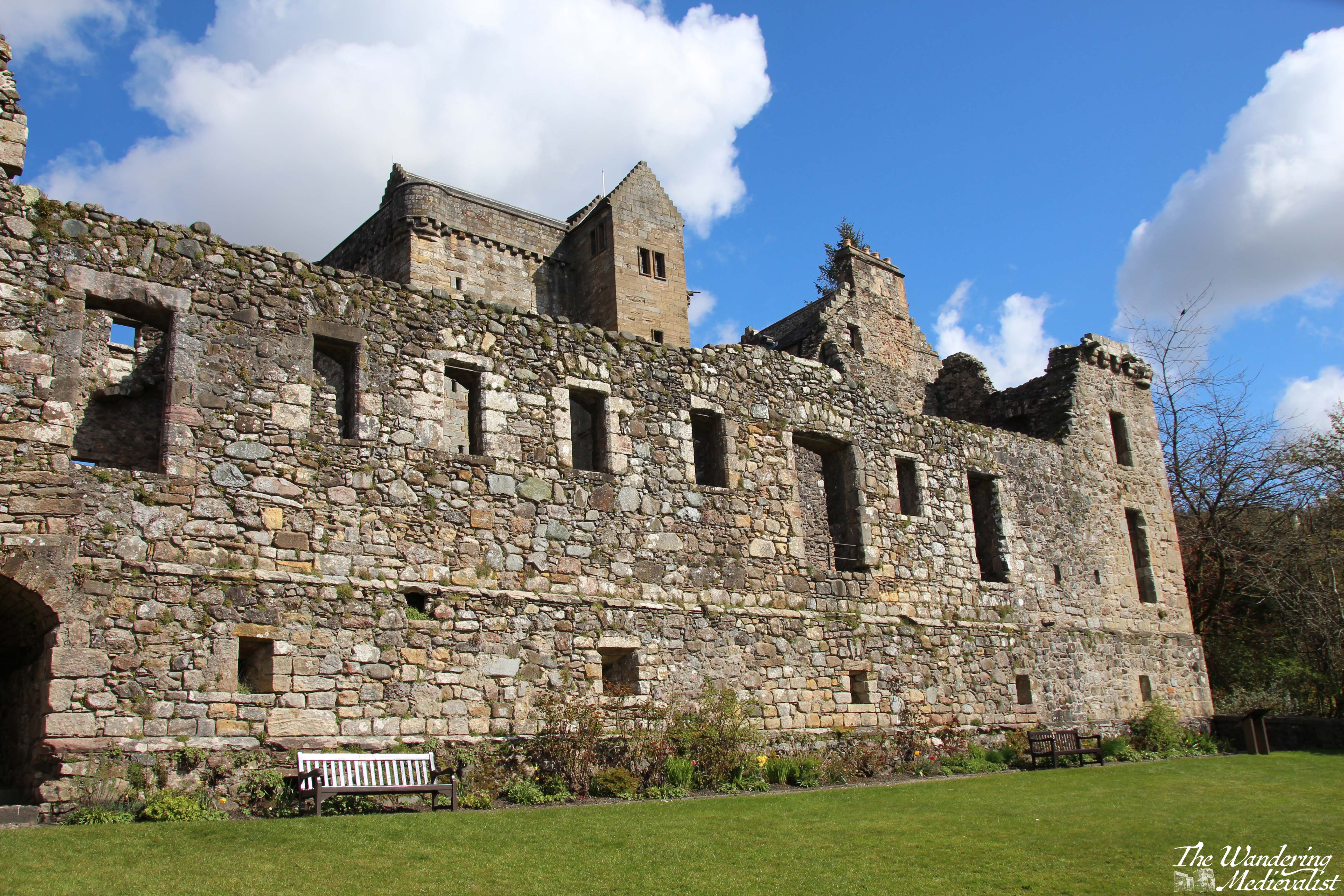
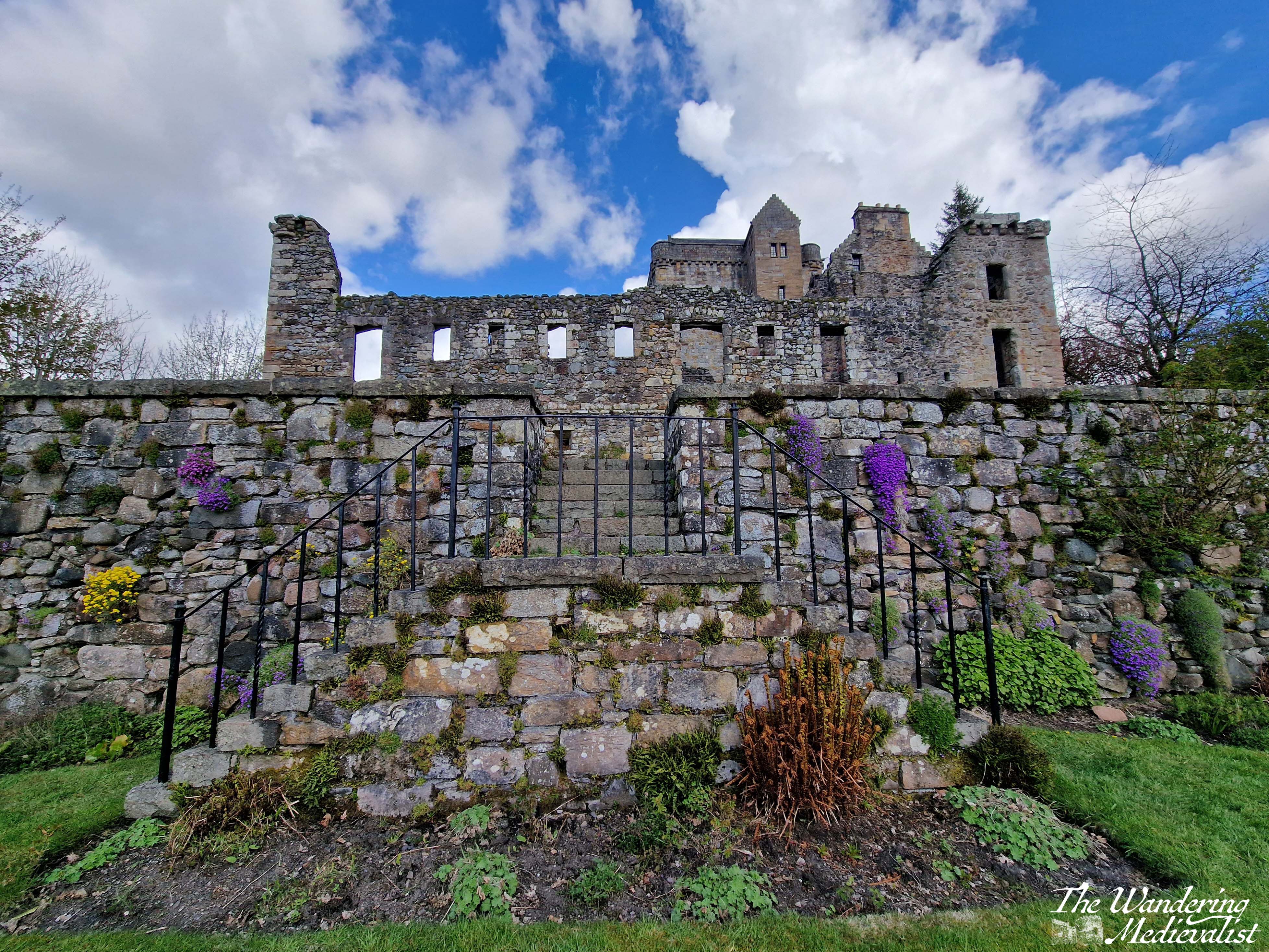
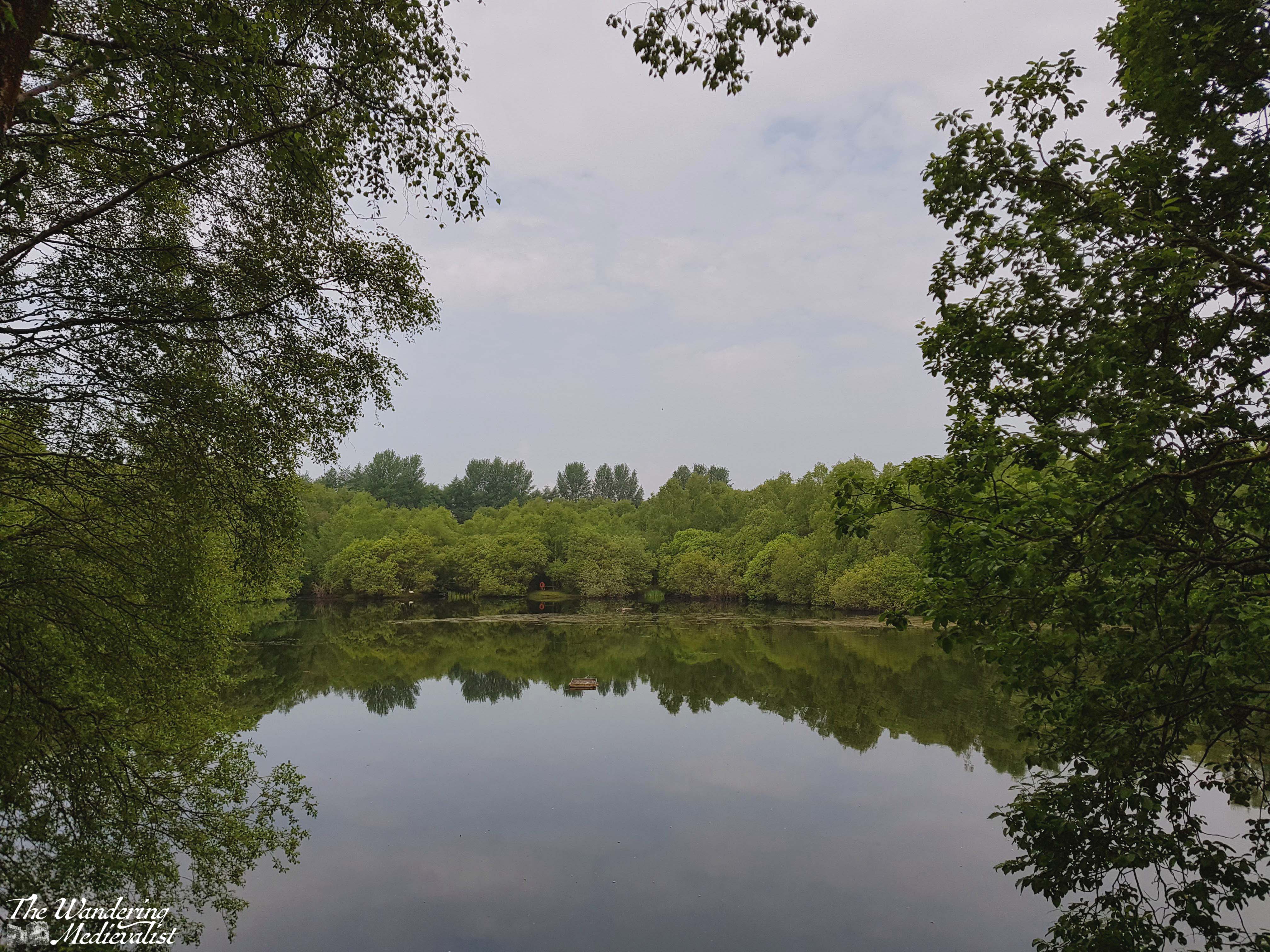
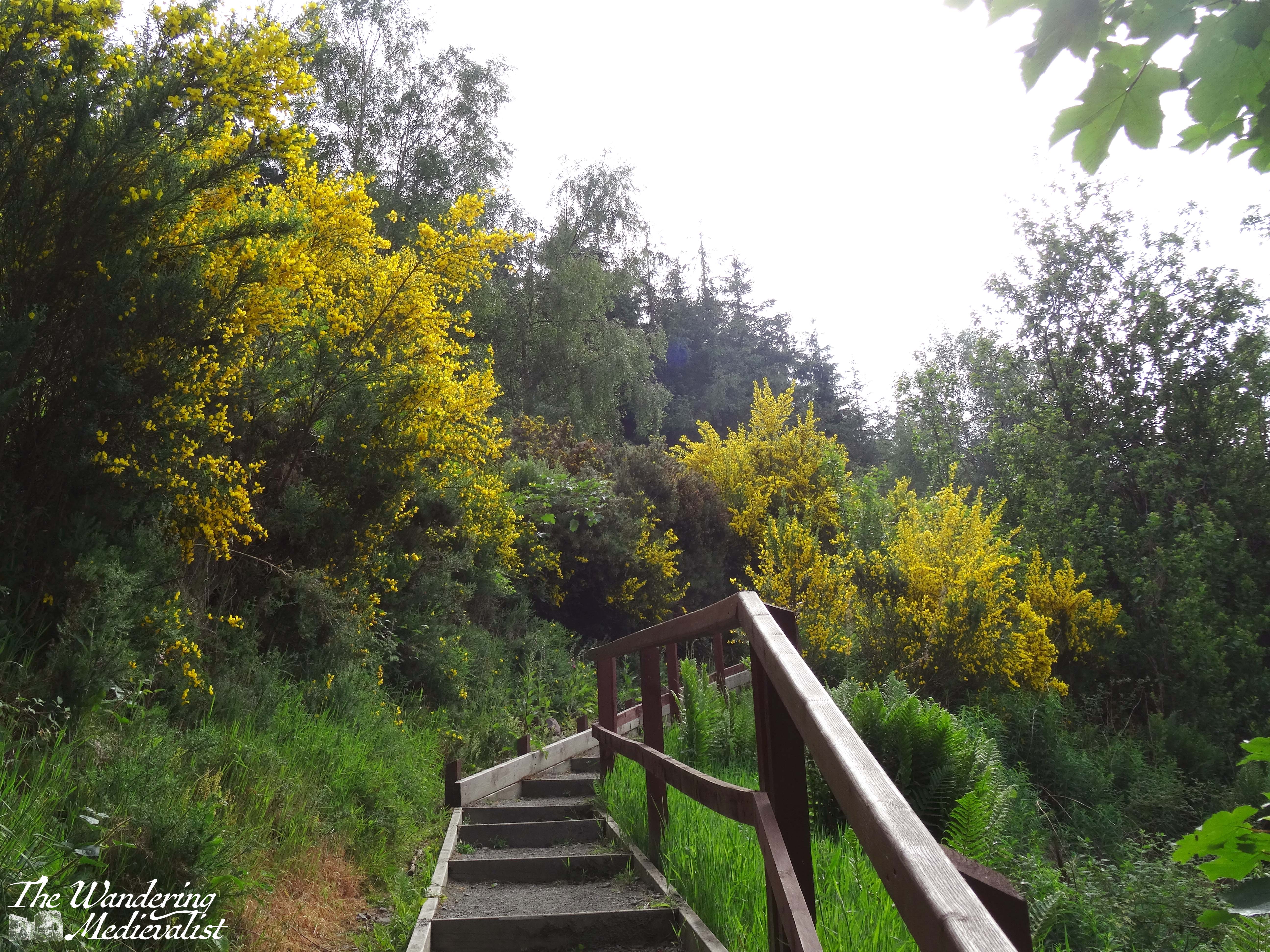
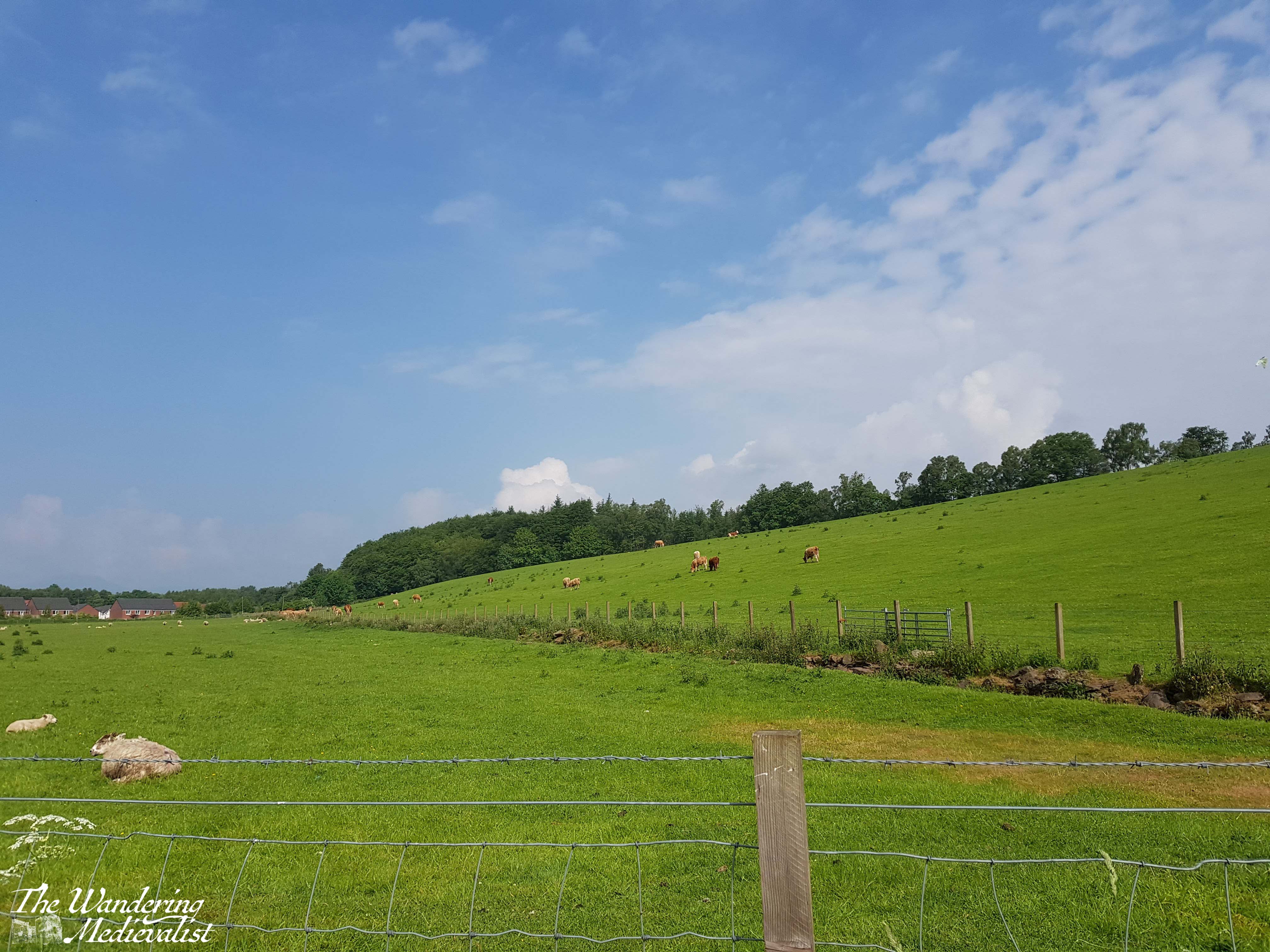
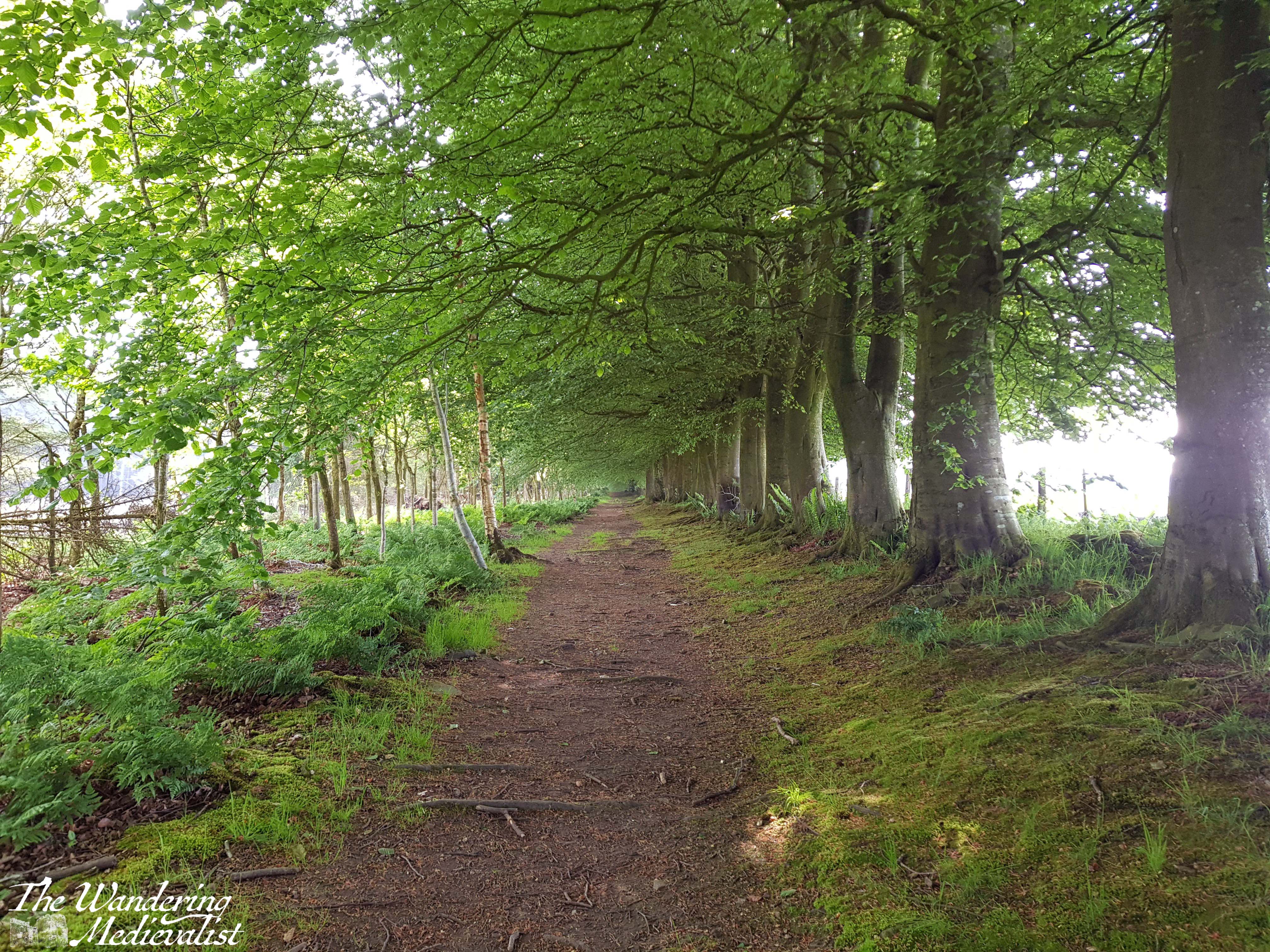
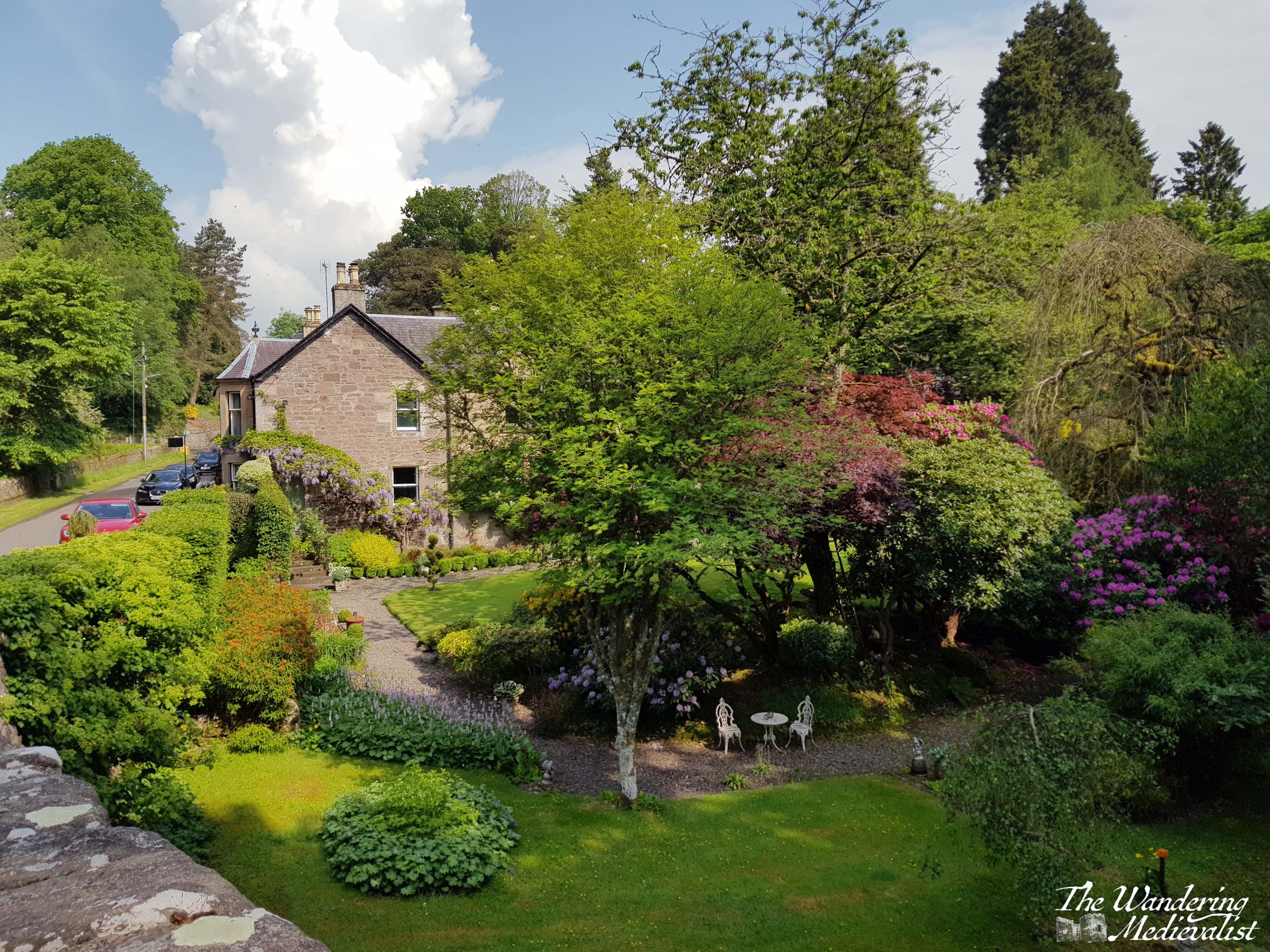
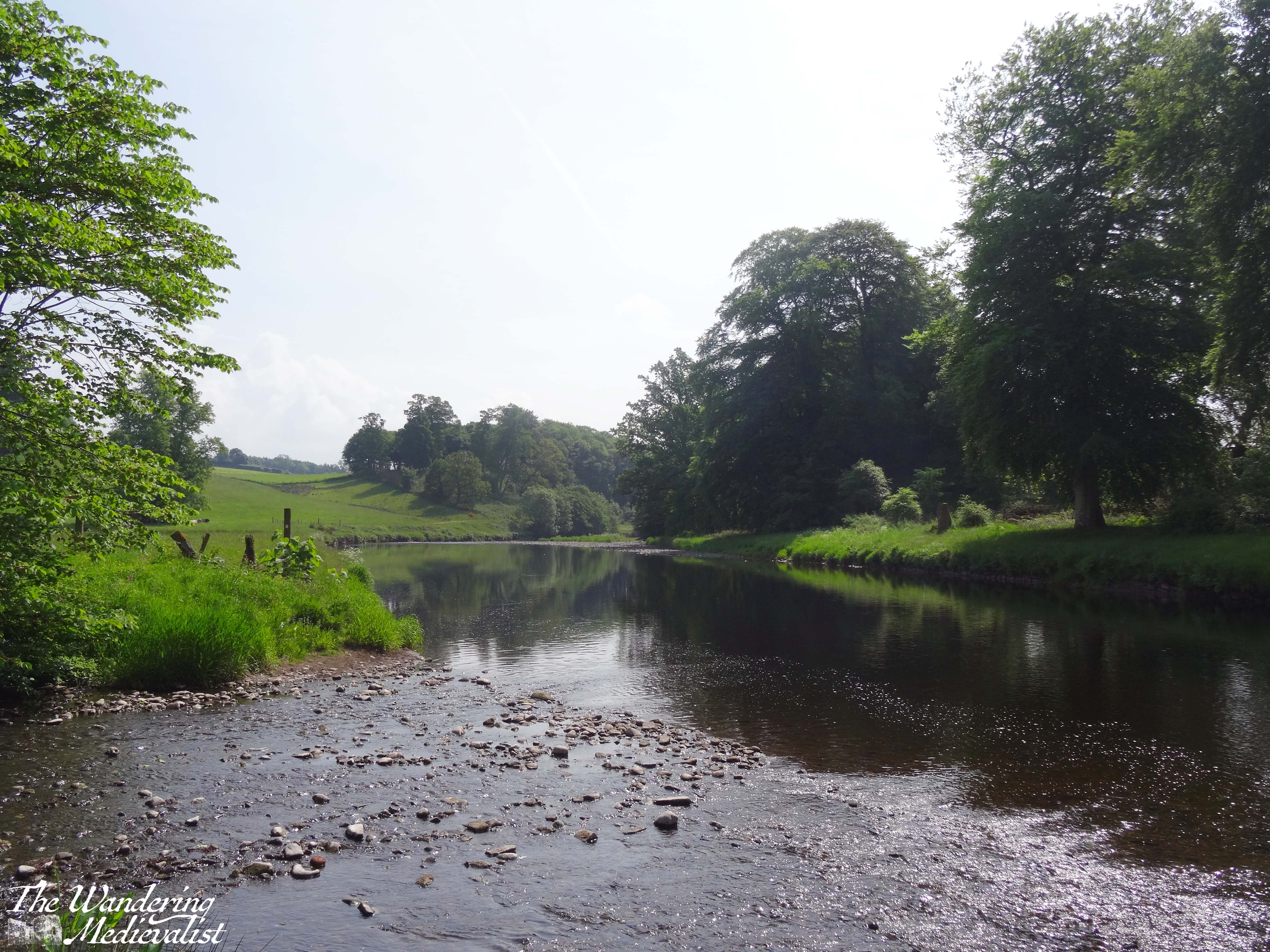
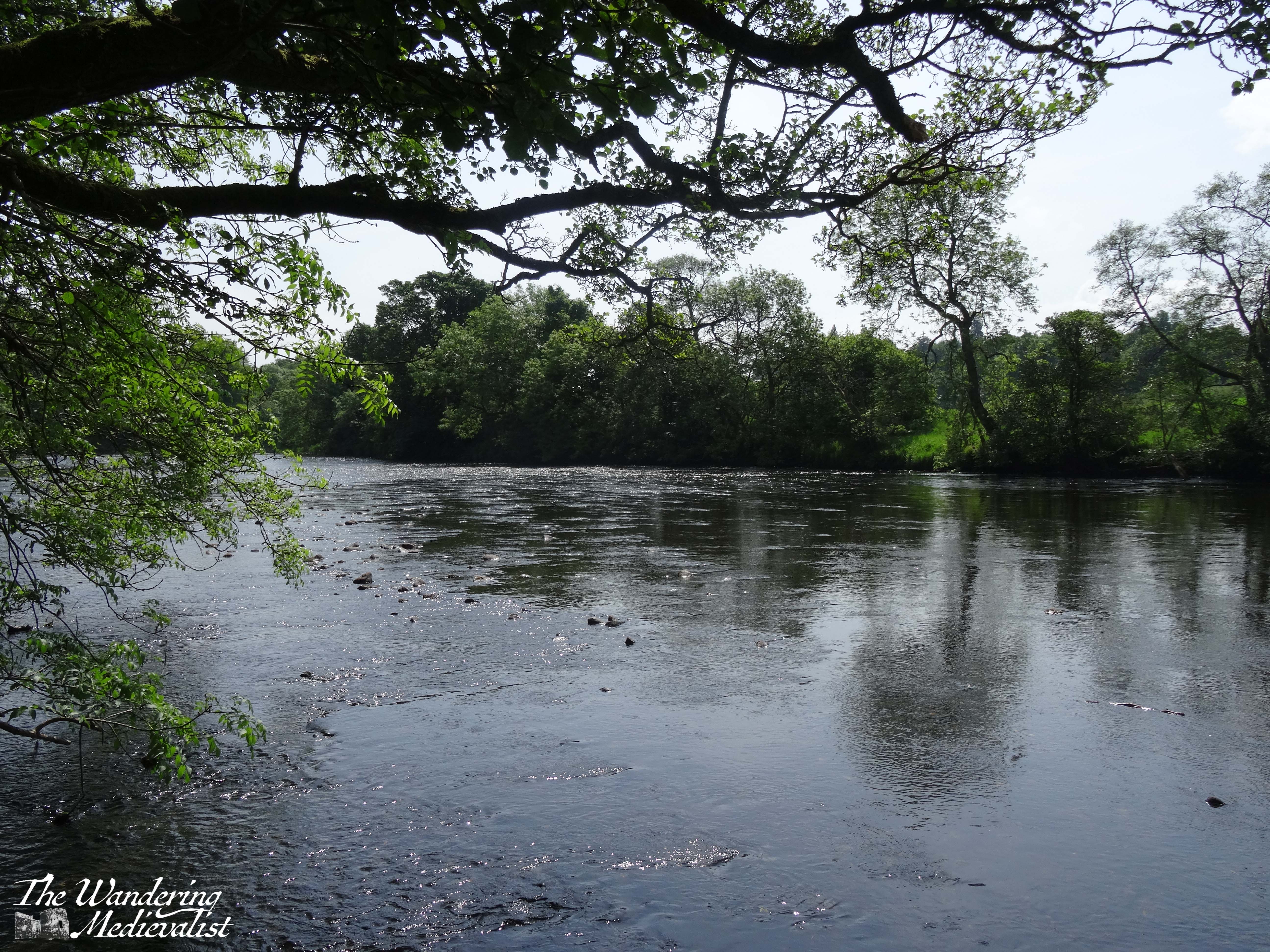
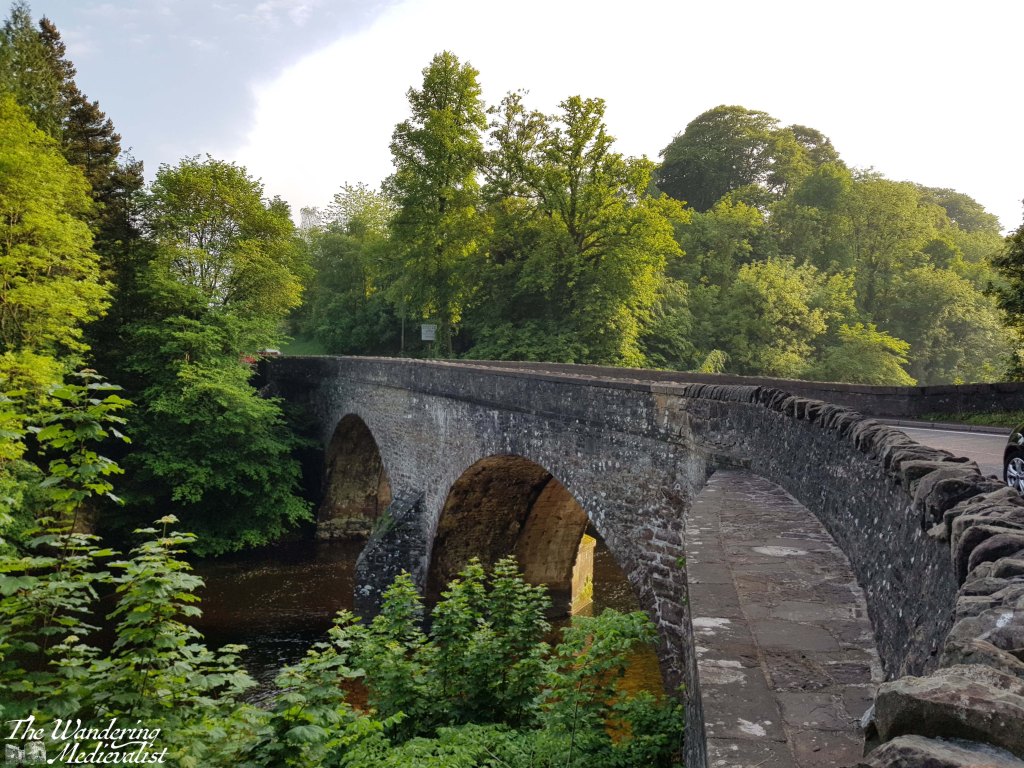
The Queen’s View over Loch Tummel in Perthshire is one of the most famous views in Scotland, and one of the most photographed. It is not hard, when visiting, to see why, though actually getting to the viewpoint can be a bit of a challenge.
Not, I should point out, because it is physically difficult to reach – on the contrary, there is a large car park (not free!) and well-maintained path that leads to the main viewpoint (though occasionally you must fight to the front for the best view). The visitor centre is closed, and have been since the pandemic, but the area roundabout is kept up.
Rather, it is the road to the viewpoint that offers a challenge.
The advantage of Perthshire is that so much of it is just stunning, and easily reachable from Dundee, Edinburgh and Fife. Pitlochry, the nearest town to the Queen’s View, is less that two hours’ drive from Edinburgh or Stirling, and offers oodles of options for accommodation: guesthouses, B&Bs, lower cost hotels, luxury hotels, and a camping and caravan park. Pitlochry is a regularly-used base for exploring the area and only 14 minutes from the Queen’s View.
What is the problem then, you ask?
Simply that the short stretch of road between the A9 and the view is one of the windiest and narrowest that you will find on a two-lane road. Further, you are competing for space not just with other cars, but with large camper vans and coaches that offer tours throughout Scotland.
I have now been on the road twice, once as a passenger and once as a driver, and both times I found myself clinging to the door handle and searching for an alternate route back. (Note, there are alternate routes via the other end of Loch Tummel, but they are also quite narrow and add considerable time to a journey). I feel I should point out that I am making this observation after having explored the Highlands, Skye and Mull, so not without some experience on narrow and winding roads.
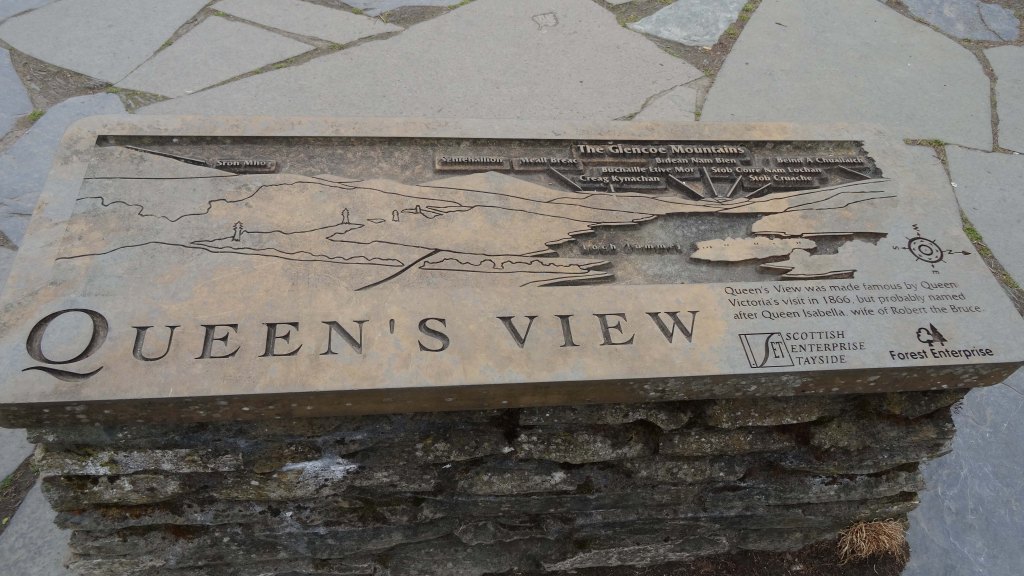
Once you reach the car park, there is a short walk and then the view really is spectacular. When Queen Victoria visited the spot in 1866, she assumed that it was named in honour of her – a view to match her greatness. What no one likely told her at the time was that it was almost certainly named well in advance of her arrival, and for Queen Isabella, wife of Robert the Bruce.
Standing at the viewpoint, you are looking down Loch Tummel, almost due west, with the peak of Schiehallion, one of the more popular hiking mountains in Scotland, in the distance. Even further, one can just make out – on a clear day – the mountains of Glencoe.
As you can see, the view is phenomenal in the sun but just as atmospheric in the cloud and rain; visiting earlier in the year may also mean less foliage growth between you and the water.
If the view has only whetted your appetite for Loch Tummel and the surrounding hills, I highly recommend continuing only minutes along the road to the Allean Forest, where there are two hiking loops you can follow up into the trees.
The car park is sizeable, and there is even a toilet block – warning though that it is a latrine that was far from well kept when I last visited. It was a ‘medieval’-style experience that I could well have done without. My hope is that in the years since the end of the pandemic, the facility has been improved.
Of the two available loops, one is shorter – about an hour – while the other is more like 1.5 to 2 hours in total. Both start off in the same way, climbing away from the car park through the trees and leading to several viewpoints over the mountains and down the loch.
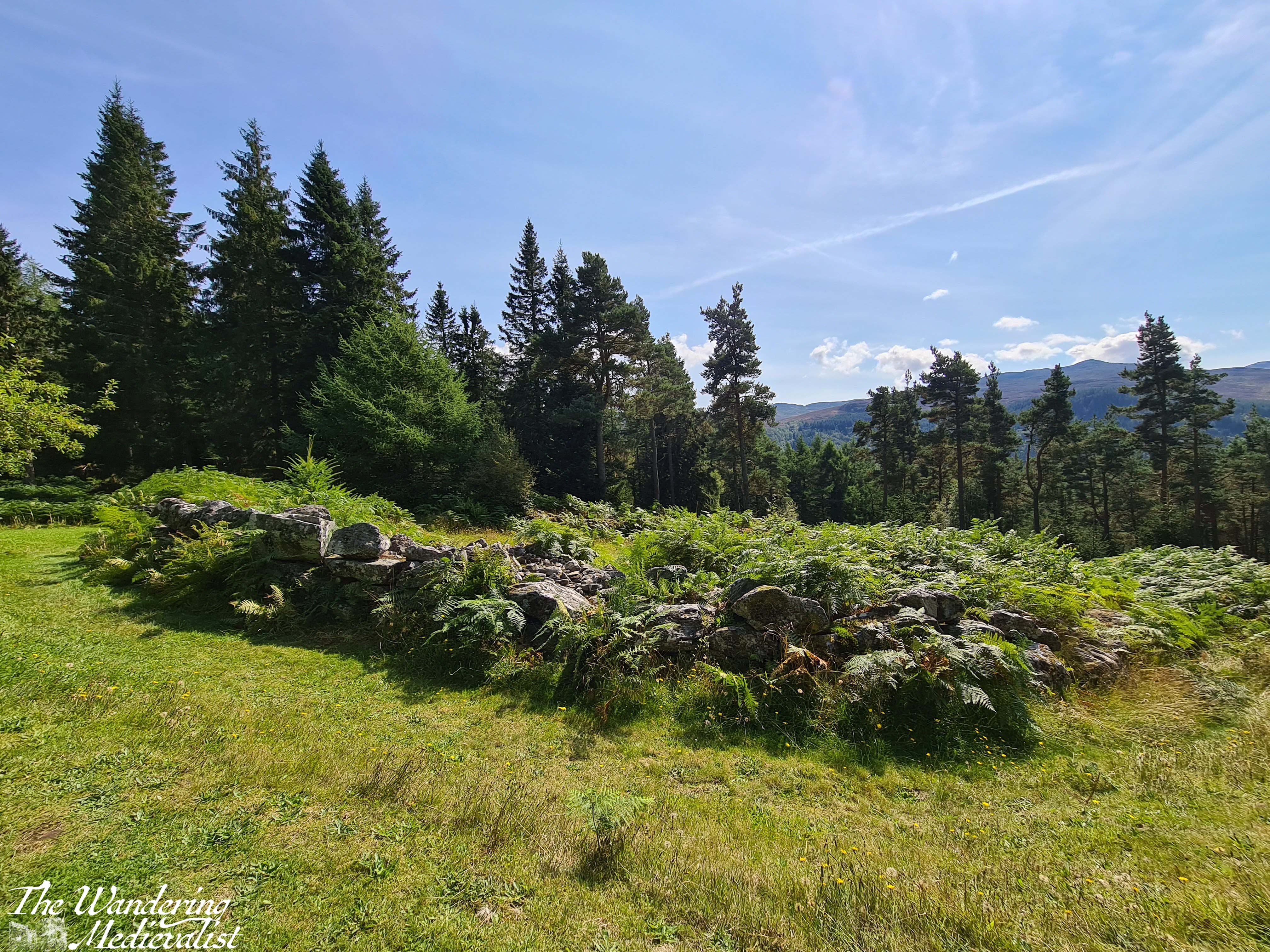
We did this hike in August, so the greenery was lush and at its height, though many of the spring and summer flowers had passed. It was not a hugely challenging hike but did have a decent amount of gradient, and my father decided he wanted to opt for the longer route. This turned out to be an excellent decision, as it took us past the ‘Family Circle’, ruins of an Iron-Age stone wall that enclosed a timber roundhouse.
The appeal of this area of Perthshire clearly runs back at least 2000 years, as the plaque by the circle told us that this area of Scotland features more settlements of this type than almost anywhere else in the country. Excavated in the 1970s, the site shows evidence of being used in more recent times as well, for ironworking and drying corn or grain.
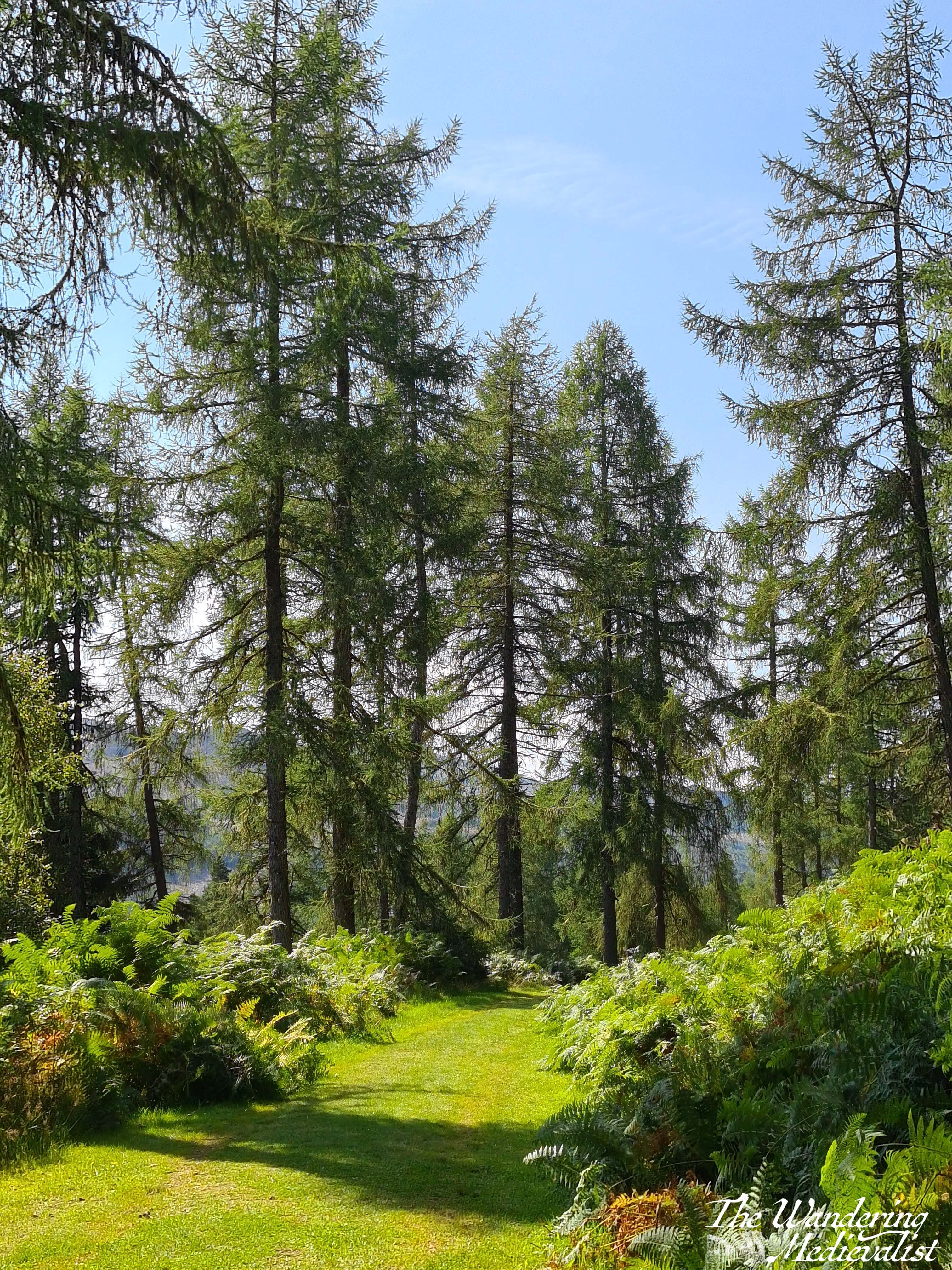
This particularly intrigued me, as family research I have done indicates that at least one branch of Scottish ancestry (don’t all Americans have at least one?) came from the area around Loch Tummel. It is a romantic thought that the area appeals to me because of that family connection – I have always loved the Loch Tummel and Pitlochry area – though it is also stunningly beautiful, as these pictures show. Perhaps it is a bit of both.
Loch Tummel from a bit further down,
While the Queen’s View is a natural tourist draw and invites visitors from all over the world, the hills and forests around Loch Tummel are a recommended addition for walkers and hikers. They are not as challenging as many others, and the views are not as dramatic as further north, but the proximity to Pitlochry makes Loch Tummel a good place to explore. A few recommendations if you are attempting this journey are to ensure your driver is confident and comfortable on narrow roads, and to bring your own snacks and refreshments – the closest place I could find when visiting was Pitlochry, though new locations may have opened up since then.
One of the most significant royal marriages of the Middle Ages took place at Poitiers, in May 1152. We know this because the chronicler Robert of Torigni – sometimes known as Robert de Monte due to his position as abbot of Mont-Saint-Michel in Normandy – tells us in his Chronicle that, ‘Henry Duke of Normandy, either suddenly or by premeditated council, married Eleanor, countess of Poitou, who had only recently been divorced from King Louis [of France].’
It is a relatively short passage and quite matter of fact, but we can be confident as to its veracity as Robert had a close personal connection to Henry’s family: his abbacy was within the duchy of Normandy, and he would be made godfather of Henry’s second daughter. For such a significant alliance, Torigni is quite tight-lipped, though he makes an allusion to one of the more controversial aspects of the match: the bride’s very recent separation from her first husband. If you continue to read Torigni’s account, you discover that her first husband, King Louis, was furious but could do very little about it – I’m getting ahead of myself.
Firstly, who were Henry and Eleanor?
Henry
Henry, duke of Normandy, was known by several other monikers including ‘Henry Fitz Empress’, ‘Henry Curtmantle’ and ‘Henry of Anjou’.
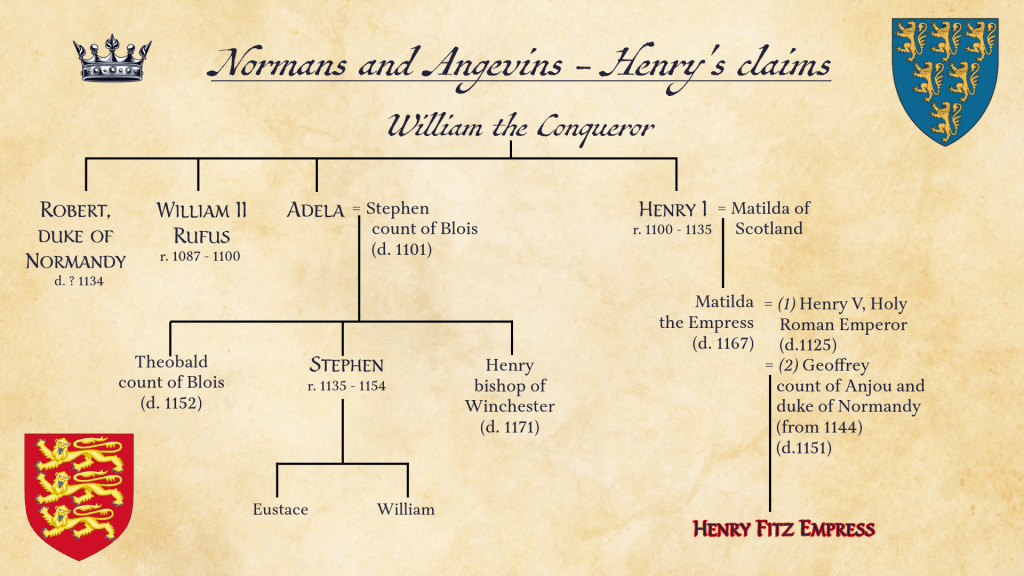
At the time of his marriage, he was 19 years old, and quickly becoming one of the most powerful men in Europe. His father, Geoffrey, had been regarded as one of the most handsome men in France, often called ‘Geoffrey le Bel’, and in his lifetime he was count of Anjou, Maine, and Touraine: a wealthy gathering of French lordships. Geoffrey was married in 1128 to Matilda, the only surviving legitimate heir of King Henry I of England. Though their marriage was notoriously unhappy – they in fact hated one another and separated at least once before being forced to reconcile – Geoffrey took up her cause when her throne was usurped by her cousin, Stephen of Blois.
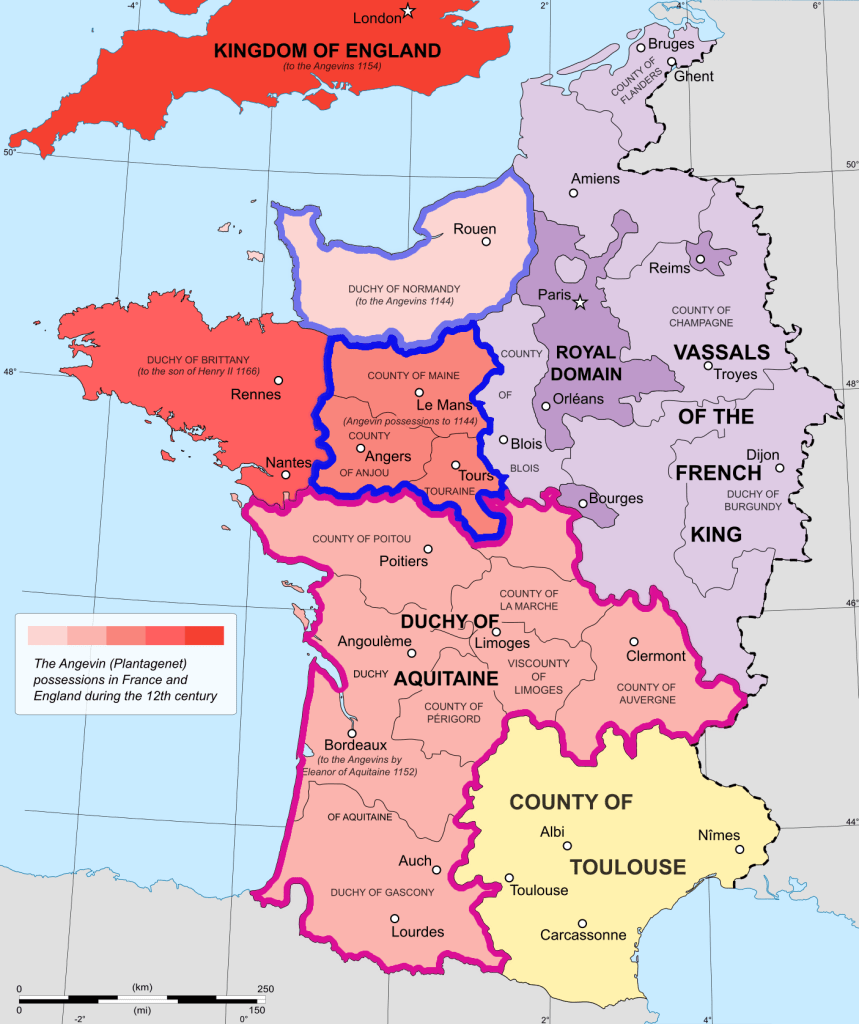
As part of that war, Geoffrey conquered Normandy and was granted the title of duke by the King of France. Normandy was one of the richest lordships in France, and this is how Henry, in 1152, was referred to as Duke of Normandy. His patrimony – the land he inherited from his father – was therefore immense, consisting of all the land outlined in dark and light blue, to the right. From his mother, he inherited a direct claim to the throne of England, and by the time of his marriage it was becoming increasingly likely that this claim would be fulfilled.
Eleanor was no less impressive than her new husband. She was heiress to the vast duchy of Aquitaine, outlined in pink above, and she had been Queen of France for fifteen years. During that time she bore two daughters and accompanied her husband on Crusade, stirring up gossip about her relationship with her uncle, Raymond of Antioch. She was referred to as one of the most beautiful women in Europe with enough regularity that it seems likely to have been true, and she was also educated and erudite, providing patronage to the arts through her court of love in Poitiers.
Her first husband, Louis VII, had loved her well but after fifteen years of marriage with only female heirs, he chose to set her aside on the grounds that they were too closely related under papal law. While seemingly absurd to modern eyes, this was a common ruse in the Middle Ages, when so many of the nobility and royalty were related within the prohibited degree set by the papacy.
The end of her marriage to Louis meant that she was suddenly ‘up for grabs’ in the European marriage market, and while Louis doubtless expected that he would be allowed to choose her second husband, there were more than a few lords who hoped to wed the richest heiress in France, with her permission or without.
A story is told that when Eleanor was travelling from Paris back to her capital after her divorce, she was forced to ride astride a horse to escape a bevy of men set on kidnapping and forcing her to marry. She managed to escape and reach the walls of Poitiers, where Henry would soon meet her.
The Marriage 💍👑
Even if one considers only the combination of lands, this was a significant alliance. In one day, Henry – by the right of his marriage – gained control of more of France than the king of France himself personally held. Quite a bit more, in fact – the royal domain is outlined in purple above. This infuriated King Louis on several counts: first, the obvious threat; second, the couple had not asked his permission to wed, which they were required to do as his vassals; third, Henry was as closely related to Eleanor as Louis had been; and finally somewhat related to the second point, Louis was now prevented from controlling Eleanor’s vast lands by marrying her to his own ally. Rubbing salt in the wound, Eleanor would go on to bear Henry five sons and three daughters – the first son just a year later.
At first, Louis attempted to exact punishment, but like most of Louis’ military endeavours it did not go very far, and Henry would spend most of the next thirty years outsmarting Louis both at war and at negotiation. This repeated humiliation was not a small part of the reason that Louis’ son, Philip, was so vehement in demanding respect from Henry and his heirs – he had no intention of repeating his father’s weakness, and he would gradually but progressively chip away at the English-controlled lands in France.
Within two years of the marriage, Henry was crowned King Henry II of England, forming an empire that reached from the border of Scotland all the way to the Mediterranean. The lands he inherited combined with those he gained through marriage to Eleanor made him the greatest landholder in Europe, even though a large portion was held as a vassal of the King of France. Henry therefore owed fealty to Louis for his French lands, a situation which would cause tension between two monarchs as to who would be superior. During Henry’s reign, his strength determined that he would be victorious; his heirs were less successful, while Louis’ were more so.
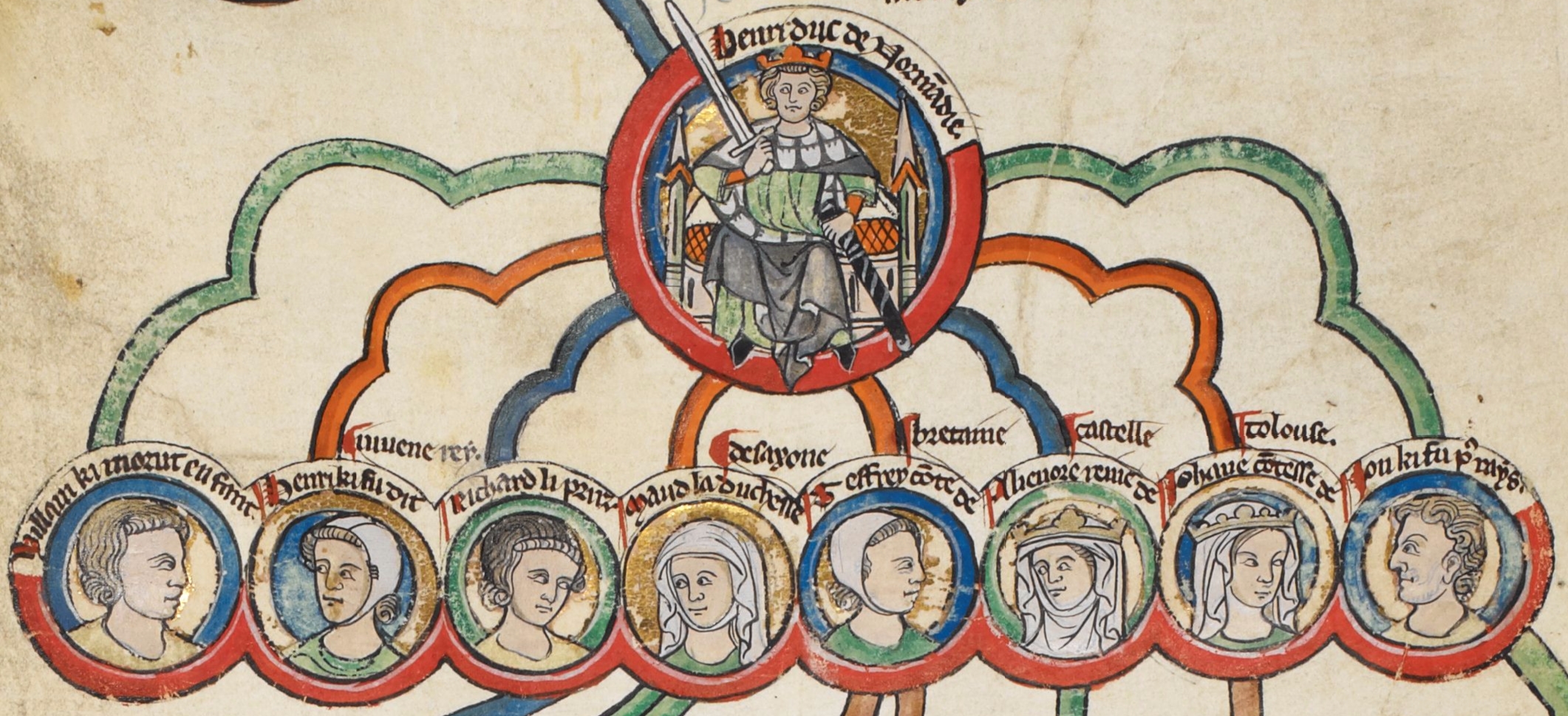
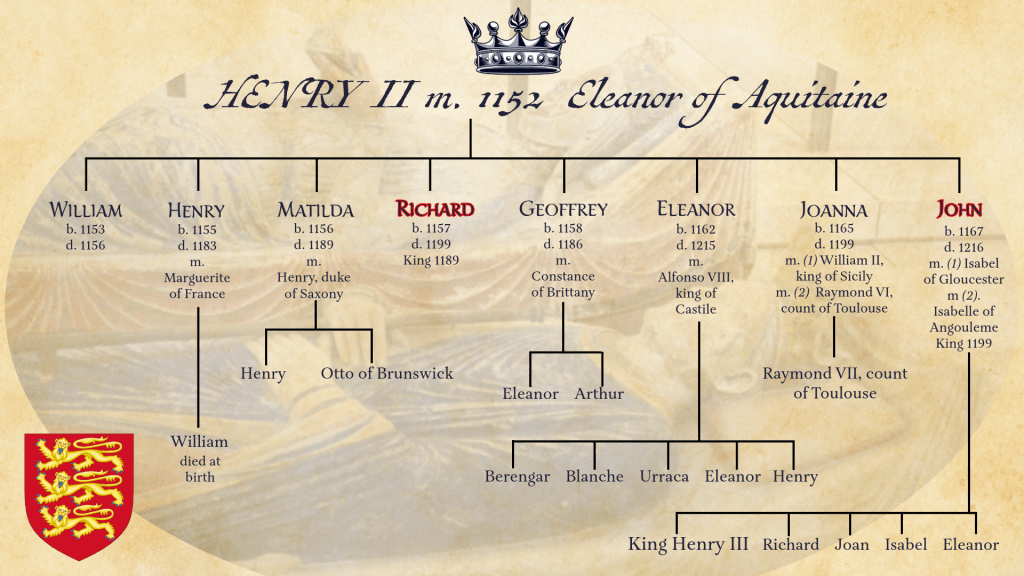
Henry and Eleanor’s children
But that’s not all…
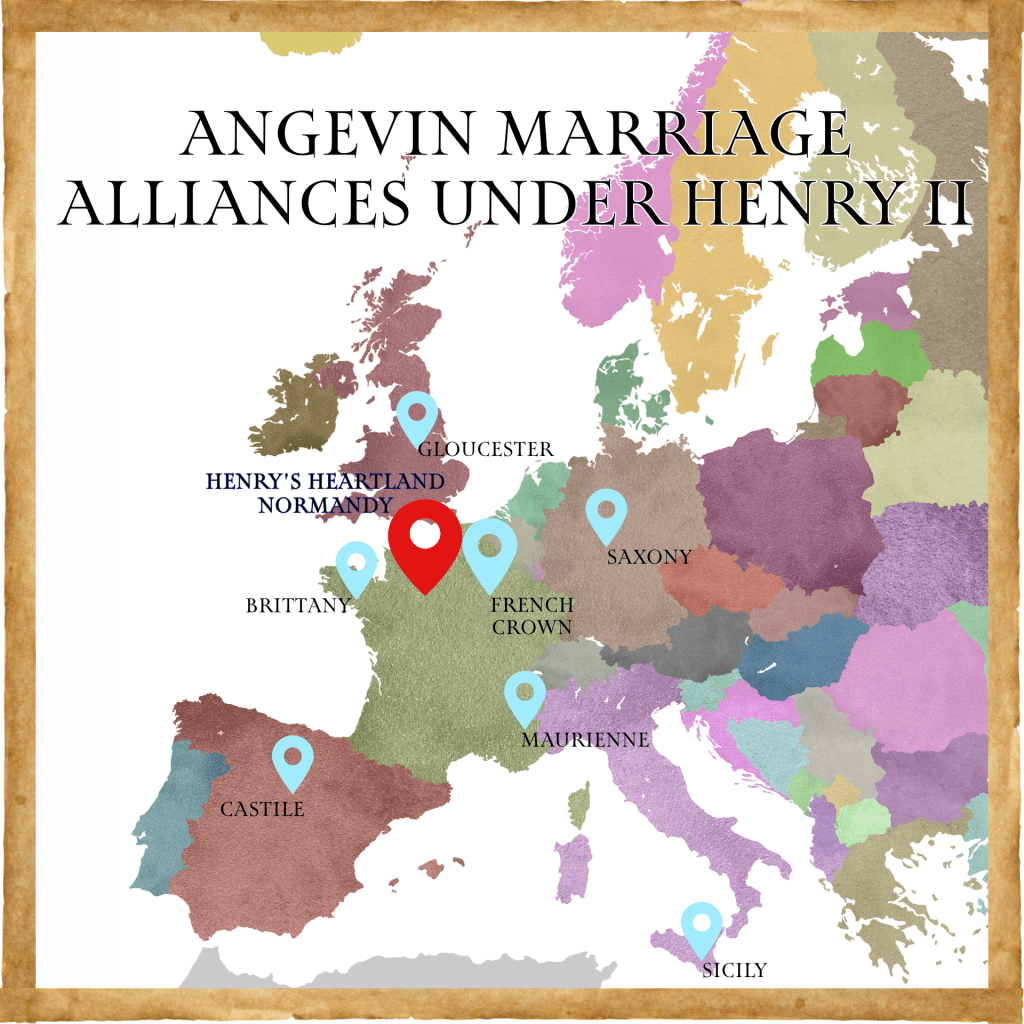
The marriage did more than just make Henry an incredibly powerful king. Due to his interests on the continent and his extensive holdings, Henry would make a series of marriage alliances with kings and lords throughout Europe, dictated by the borders of his new realm and by his many children.
Whereas in his grandfather’s day, the royal family of England tended to marry close by – French or Scottish royal, or even noble English spouses were common – under Henry, royal marital alliances included Castile, Sicily, the Holy Roman Empire and the royal house of France.
In the next generations these webs extended to Eastern Europe, the Byzantine Empire and re-secured alliances in France and the Spanish kingdoms The throne of England was now a prominent European player.
The marriages of Henry II and his children
Through their children and grandchildren, Henry and Eleanor were progenitors of the royal houses of England, Scotland, France, Portugal, Aragon, Sicily and Castile, the Holy Roman Emperor, the counts of Toulouse and many more. The name by which Geoffrey le Bel was occasionally known, ‘Plantagenet’, would become the family name of the royal house of England for 400 years.
But it wasn’t all fun and games…
On the flip side, the crown of England would spend considerably more time and money on the continent than before; efforts to re-claim lost lands in Normandy and Aquitaine would drain coffers for generations, especially after Normandy was lost early in the thirteenth century. One might even argue that the marriage set the stage for the Hundred Years’ War of the fourteenth century; indeed France and England were at war as often as not in this period.
There is also the point to be made that Henry’s efforts to make a strong alliance for his last son, John, caused more dynastic damage than benefit. John, named ‘Lackland’ by his father, was almost ten years younger than his brothers, born when Eleanor was in her early 40s, and around the time Henry first met and fell in love with his famous mistress Rosamund Clifford. While Henry had arranged for each of his sons to have a generous parcel of land – his heir the Young King would inherit Normandy and the throne of England; Richard would inherit his mother’s lands of Aquitaine; Geoffrey was wed to the heiress of Brittany – there was simply nothing left for John. Henry would spend a great deal of time and effort searching for a solution, and in doing so betrothed John to the daughter of the count of Maurienne, in south-east France. The count insisted that John be granted something from his father, and so Henry named three castles that in fact belonged to the Young King, his heir. The frustration of having his father give away three of his most lucrative and strategically important castles drove the Young King into further disgruntlement, and spurred his eventual rebellion.
Furthermore, despite the clear success of Henry and Eleanor in creating heirs, their marriage was not a happy one – at least, not for long. Their sons grew to adulthood under the strong ruling hand of their father, and they were increasingly impatient for some power and influence of their own. Richard, who was raised mainly in his mother’s lands of Poitou and Aquitaine, was the most independent while Henry’s direct heir, the Young King, was perhaps the least – or at least believed himself to be. Henry was a master at controlling and manipulating those about him, but his sons proved to be his biggest challenge.
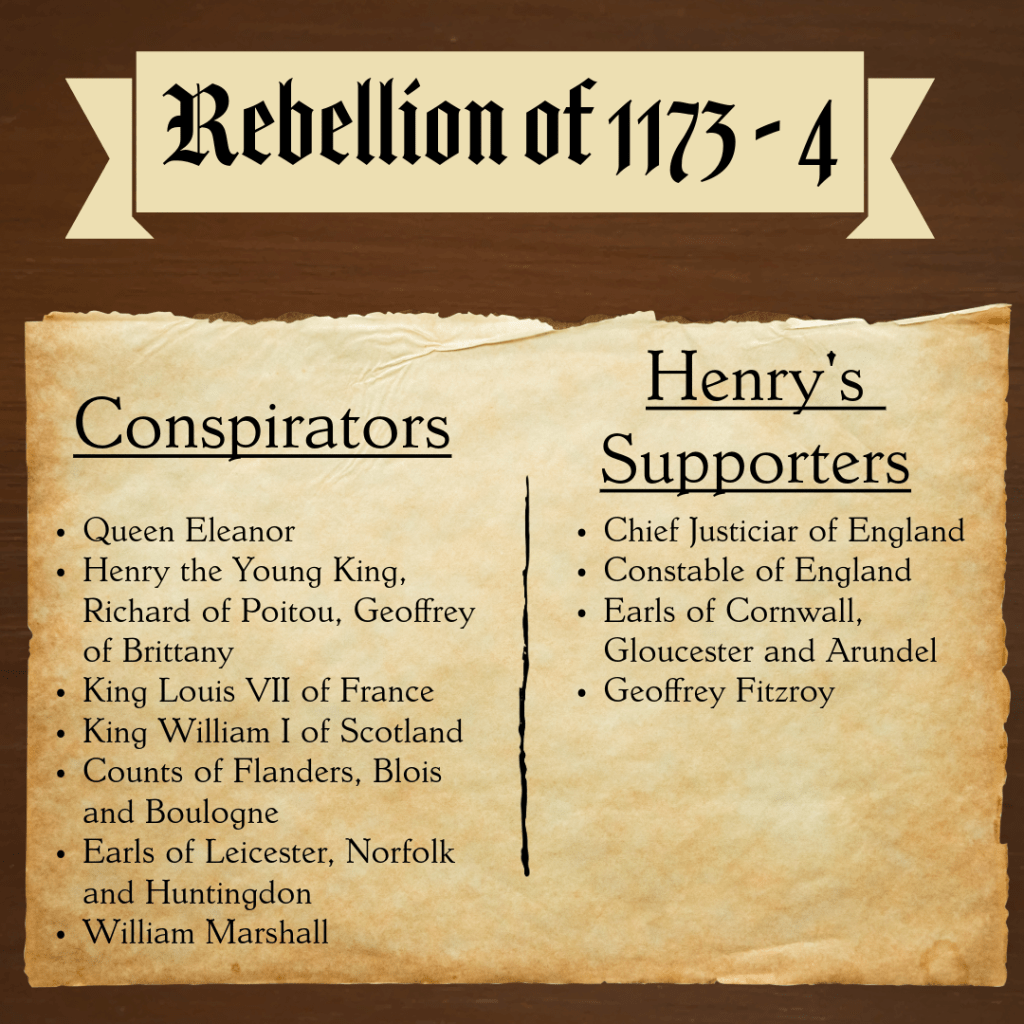
In 1173, goaded by Henry’s granting of castles to John and by the King of France, Henry’s sons agreed to a rebellion against him. They were to be supported by the King of Scots and a good potion of the French and English nobility.
Also in on the plot was Queen Eleanor, who by the early 1170s had been increasingly frustrated by her husband’s lack of action in Toulouse and too much time with his mistresses. (Eleanor claimed a right to the county of Toulouse through her grandmother, and both of her husbands had endeavoured to enforce that right, unsuccessfully. The Dukes of Aquitaine and Counts of Toulouse had been at odds for generations, and it was only with Eleanor’s daughter Joanna’s marriage to Count Raymond VI in 1196 that peace was established.)
The fact that Eleanor’s betrayal was one of the most painful to Henry was evident in the fact that after the defeat of the rebellion, he cast her into prison for 18 years, while his sons, he forgave. Side note, this story is one of my favourites about Henry – his entire family, the kings of France and Scotland, and half of his nobles all rebelled against him, but so ineffectively that he remained on the throne for another 15 years.
Henry and Eleanor were both unique in their time, as well as in history – powerful, charismatic, energetic and intelligent, they were both the perfect partners for one another and the perfect enemies. Though Henry’s Angevin Empire, with its heartland in Anjou and Normandy, would not survive long after his death, the significance of the English royal foothold in France beyond Normandy would echo for centuries, even if its extent was never what it reached under Henry and Eleanor.
Castle Campbell holds great appeal to me not only for its location but for the memories it evokes. My first visit took place almost entirely by accident. I was staying in Doune in January, in a tiny hotel that had very few guests in the off-season. In the breakfast room one morning, I struck up a conversation with a nearby couple upon realising that they, too, were American. The woman had been involved in a writing course in the Highlands and she and her husband were exploring Scotland a bit before heading back to the US.
As the conversation continued, I was offered a lift back to St Andrews, on the promise that I would provide a personalised tour of the town when we arrived. Along the way, they planned to stop at Castle Campbell – if I wasn’t already convinced, this tipped the scale. Now I suppose there could have been an element of concern here; was this a safe option for a single girl travelling on her own? But something in my gut told me it was just too odd to be anything other than a happy coincidence. A castle-loving American couple chose to stay at the same tiny hotel in Doune, in January?
Fortunately, my gut was correct. They were a lovely couple and we had a great day exploring first Castle Campbell and then St Andrews. And so my first visit to the castle was exterior only, and in the snow. I still recall the drive up the narrow road that eventually reaches a car park – that road has not changed, except that there is likely more traffic on it now.
The approach to the castle is nearly as stunning, meandering through the back roads of Dollar, which is a well-to-do little town with enough old stone houses and charming gardens to make anyone drool. The road is single-track with passing places, and if one is lucky, one can make it most of the way up before encountering another vehicle. With a hill on one side and the gorge of Dollar Glen on the other, the road is harrowing to say the least. I would certainly recommend going either on a week day out of school holidays, or first thing on a Saturday, before the tourists have found their way there (locals, I find, tend to walk up through the glen).
If you can make it up past the larger car park to the one at the top of the road, and if you are lucky enough to find a parking spot, it is worth every moment of wheel-clenching fear. (Note, if you can’t manage a spot there, the larger car park is still a good option though requires hiking the last quarter mile or so up the hill along the road. Great view!)
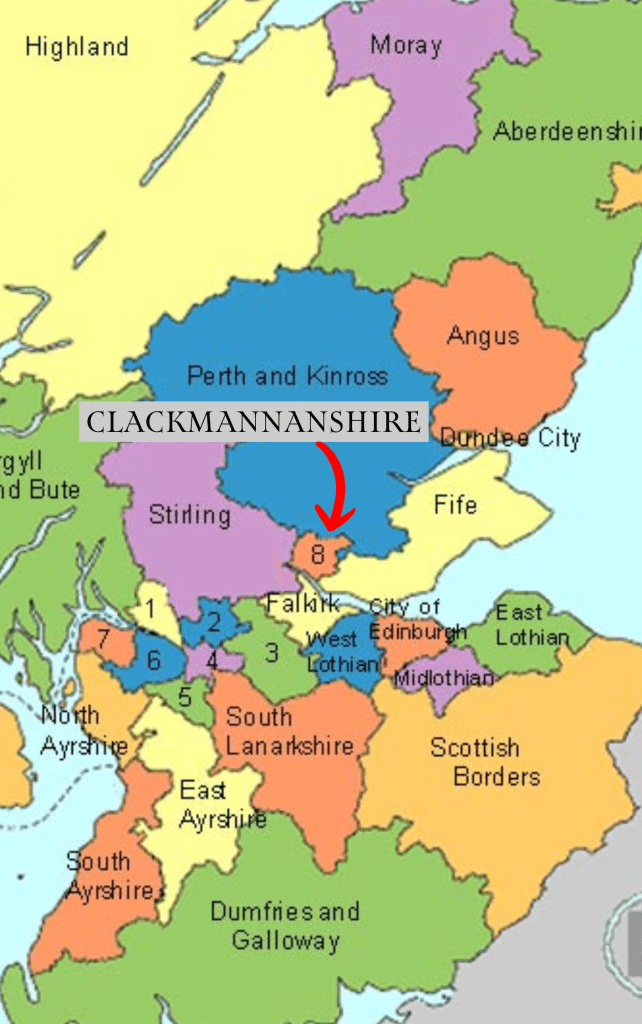
Once you have parked in the upper lot, you are still a good 5 to 10 minutes on foot from the castle, though there are tantalising glimpses of it through the trees. There is a metal farm gate that keeps the sheep inside, and on the other side you will find a sign informing you of the castle history, as well as that of the nearby Tower Trail of medieval tower houses throughout Clackmannanshire.
Here the path diverges – one branch leads straight ahead of you, heading steeply down-hill, while another leads up to the right. I would recommend, in the first instance, making your way up the hill a few hundred feet or so until you can look back over the castle, glen, and the flat land beyond. You can then head back to the main track, which is a steep decline until you reach the burn below.
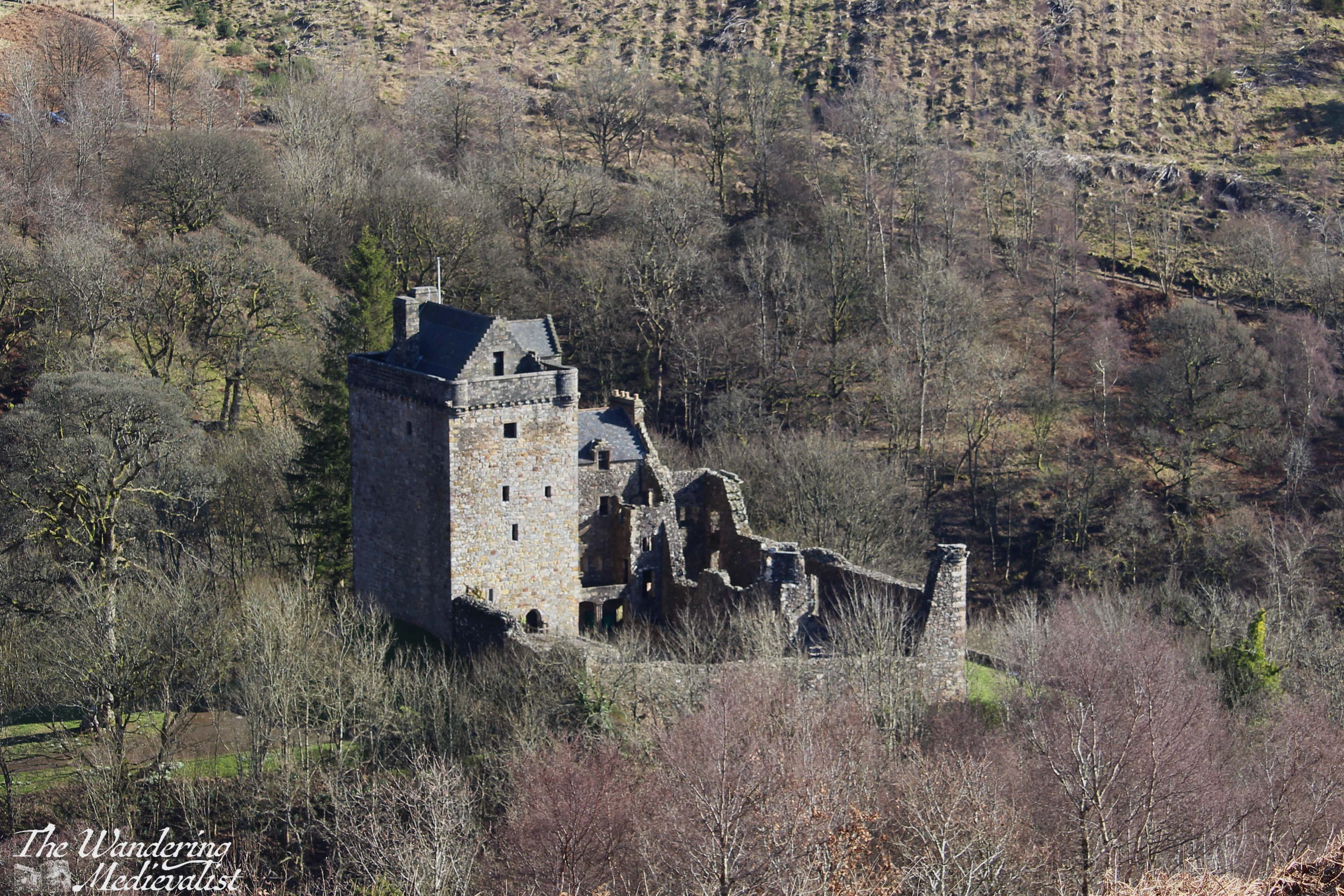
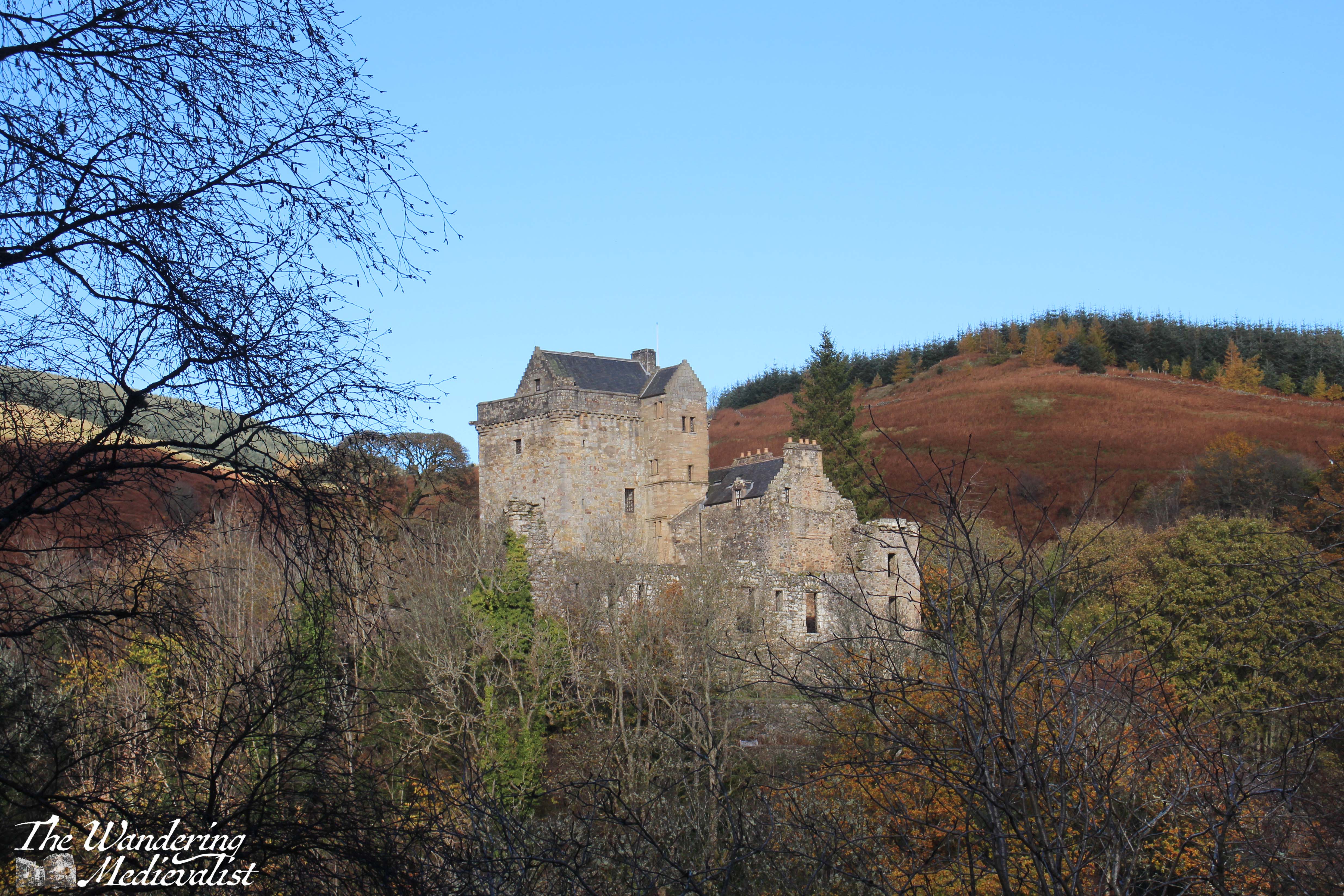
At the burn you can really see the castle rising out of the foliage, and so it gives one the energy to keep moving. Another up and down brings you to the main castle gate, which was closed for much of lockdown and only re-opened in April 2024. If you are feeling energetic, you can hike up behind the castle and follow a path into the hills, which I did just long enough to get another excellent picture or two; this is also the path to take if you wish to climb to the top of Bank Hill.
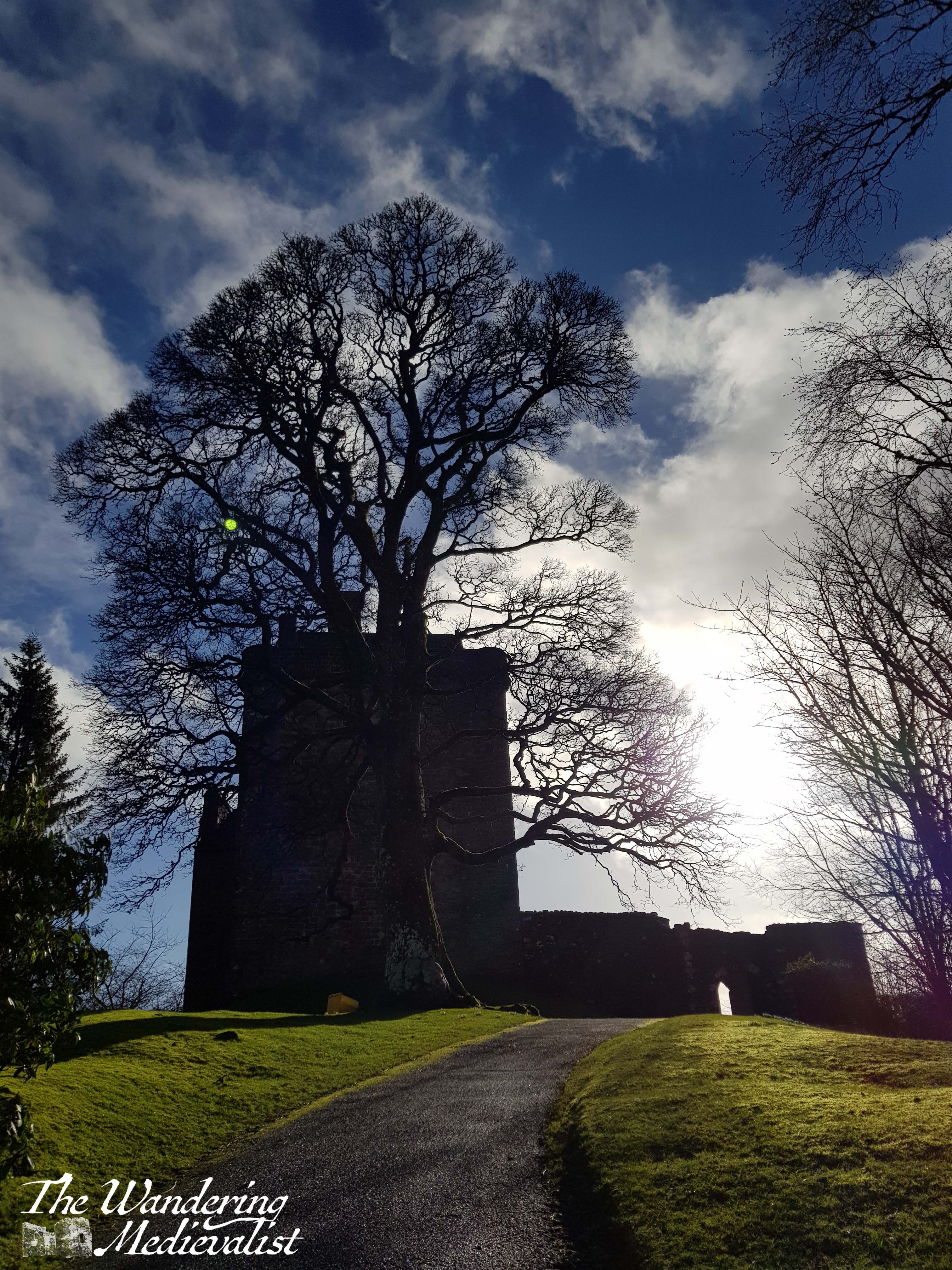
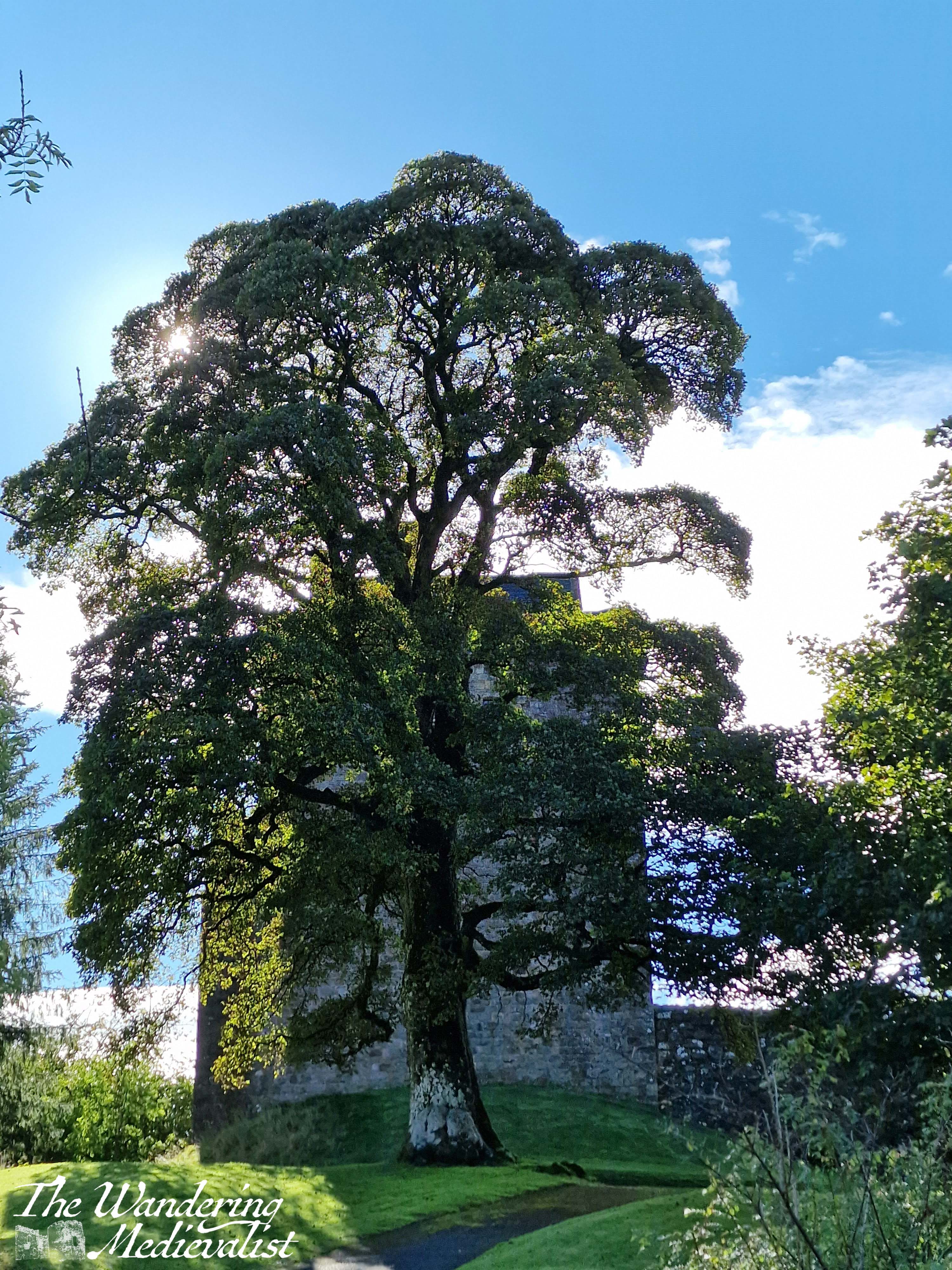
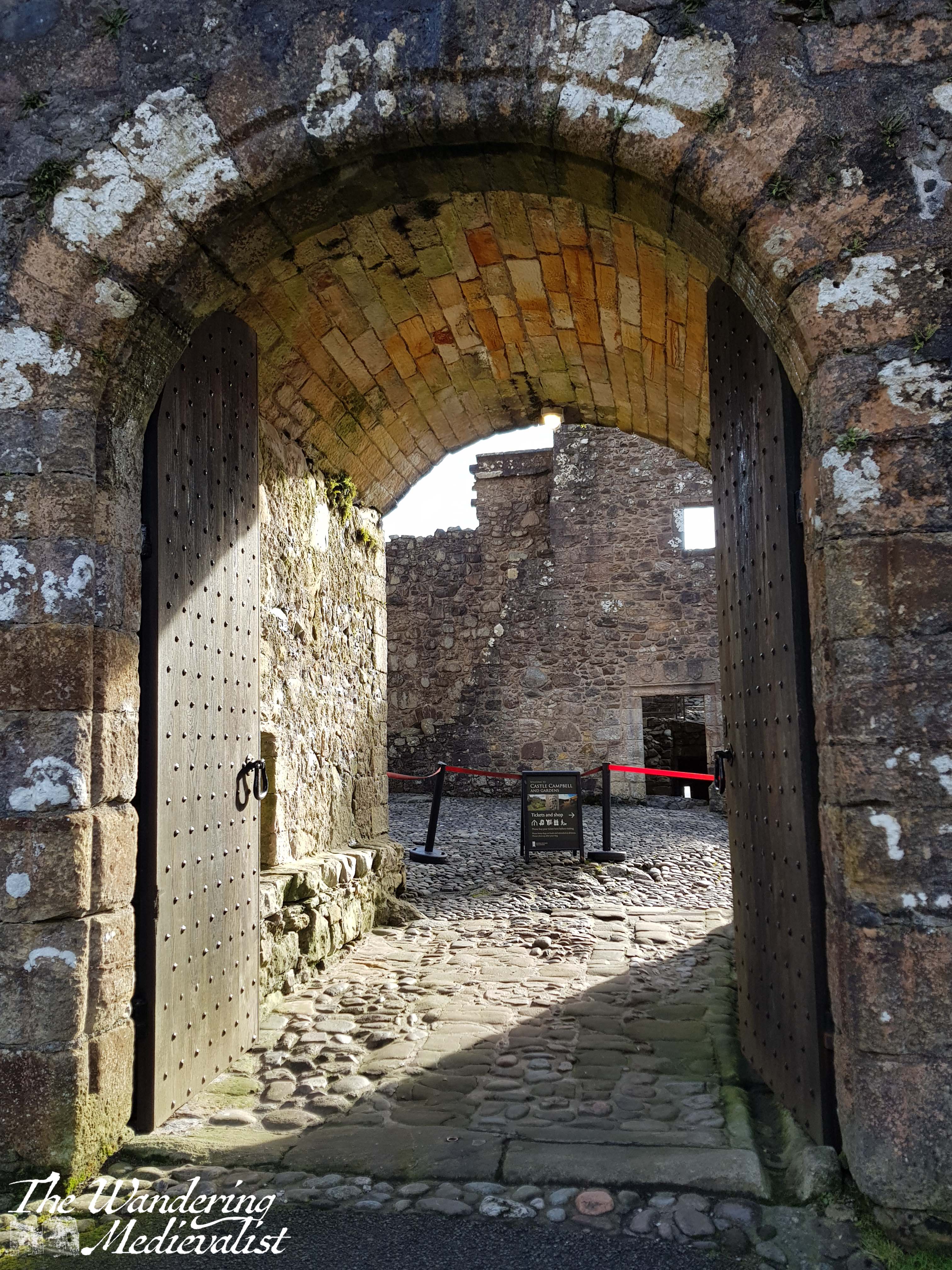
If your goal, like mine, includes seeing inside the castle, you need only climb one more short path to reach the main gate, which is set into the castle curtain wall, next to the imposing tower keep. The beautiful tree standing immediately outside makes for a stunning backdrop to pictures, too.
When I last visited, I was the second person through the gate when they opened in the morning, after an equally eager Eastern European tourist. As they so often are, the two gents running the castle for the day were friendly, helpful and knowledgeable, and I had a good long chat to them both about medieval history in general. There is no question that castle stewards appreciate a visiting medievalist!
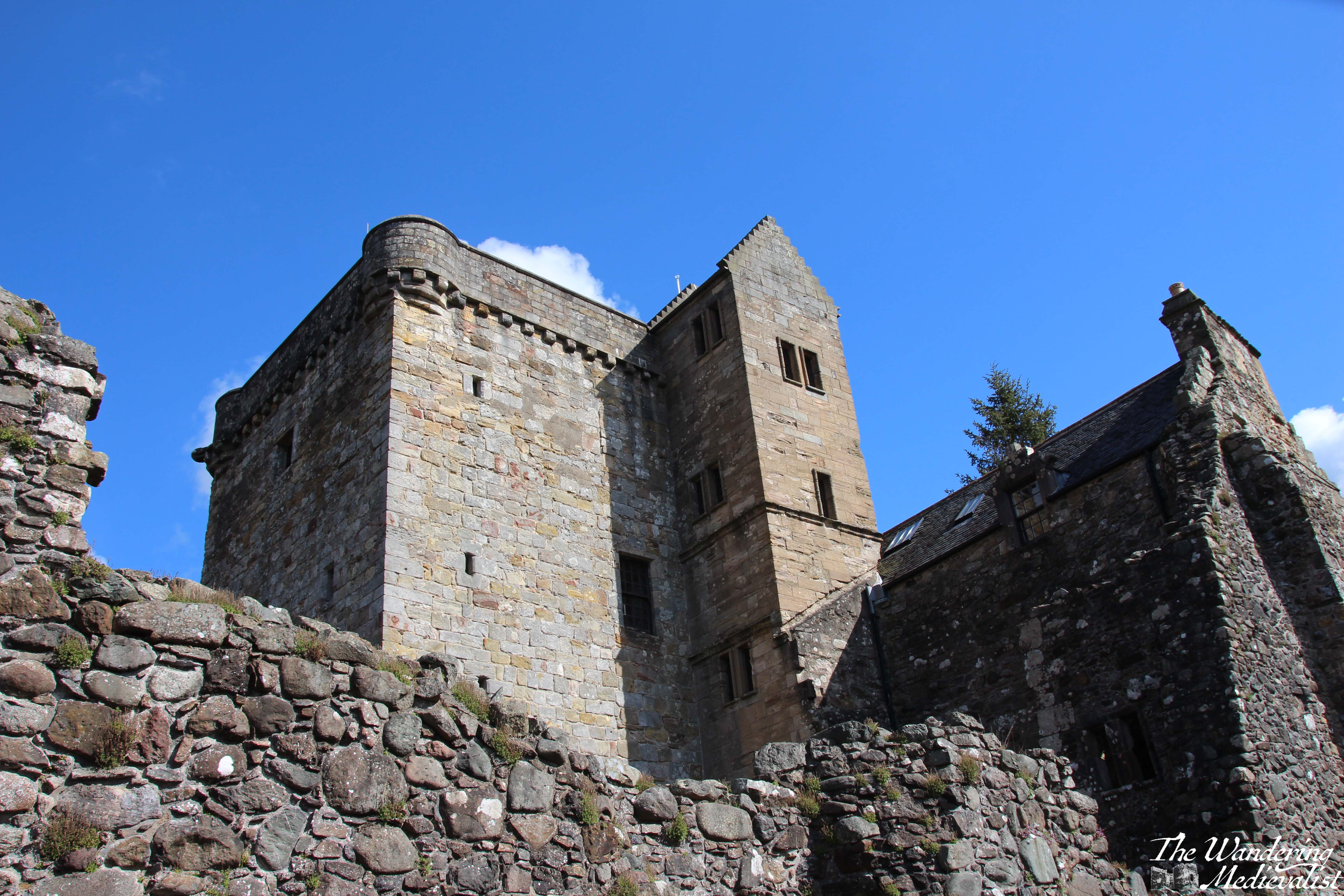
Castle Campbell, or Castle Gloom as it was known at its inception, dates from the early 1400s, though the benefits of its strategic location suggest it may have been fortified well before that time. One needs only observe the steep hills and deep ravines on either side – in one runs the Burn of Sorrow, the other the Burn of Care – to realise that it would not have been attacked without serious effort, and of course the views make it ideal for watching movements across the flat land below.
First built for the Stewarts of Lorn, the castle transferred to the 1st Earl of Campbell in the late 15th century, and much of it was rebuilt at this time after it suffered a fire and destruction by the Stewarts. By the late Middle Ages, the Campbells had risen to become one of the most powerful clans in the western Highlands, not in part due to their allying with Robert the Bruce during the Wars of Independence.
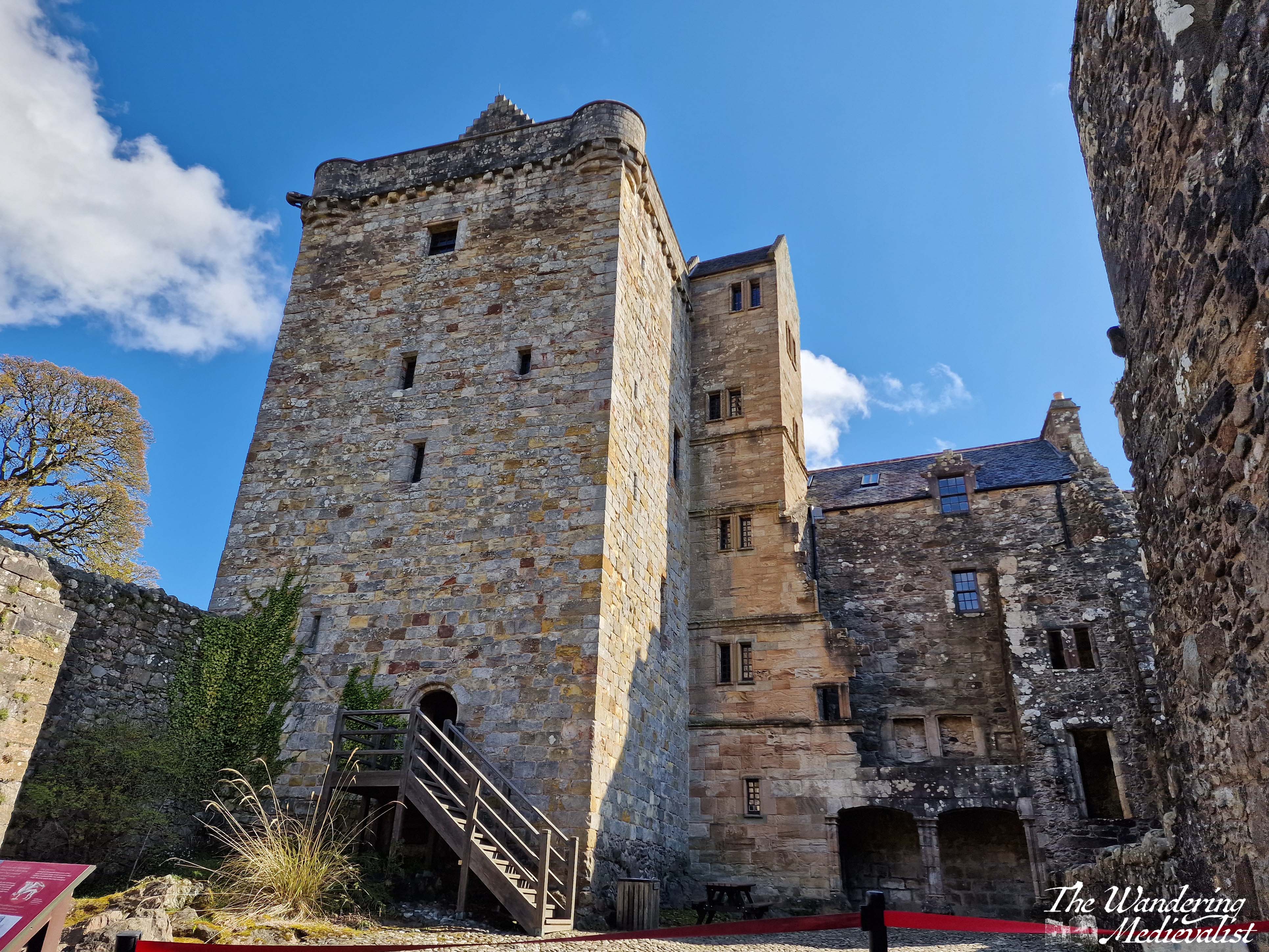
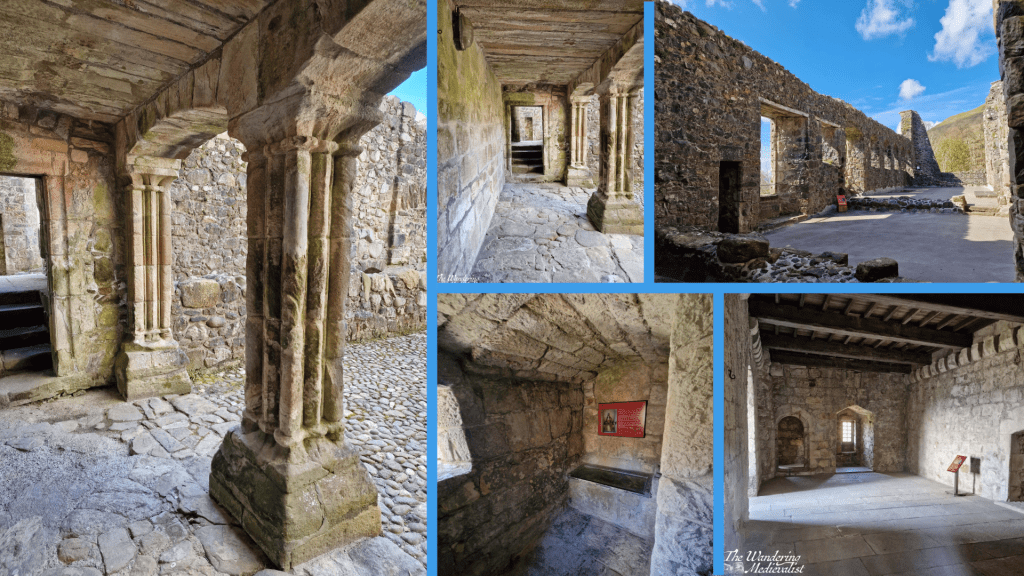
The keep and inner courtyard are still in excellent condition, and the keep is fully enclosed and can be explored by several spiral staircases. Some unique features include the loggia below, several latrines, a prison, and the well-restored chambers with window alcoves and fireplaces evident. On the first floor of the tower, there is a display on the castle and a diorama of what it may have looked like in its heyday, complete with formal gardens.
It was the second earl who built the south range of apartments – now mostly ruined – as well as the terraced garden below the castle. There is evidence of the architectural style being influenced by the royal castle at Stirling – certainly the castle was designed to demonstrate the wealth and power of the Campbells. In the 1450s and 60s, the earls were a vital part of the royal court, and used Castle Gloom as a stronghold and residence. In 1488, the earl petitioned King James IV to change the name of the castle to Campbell. Not long after, the earl would die alongside his king at Flodden, in 1513.
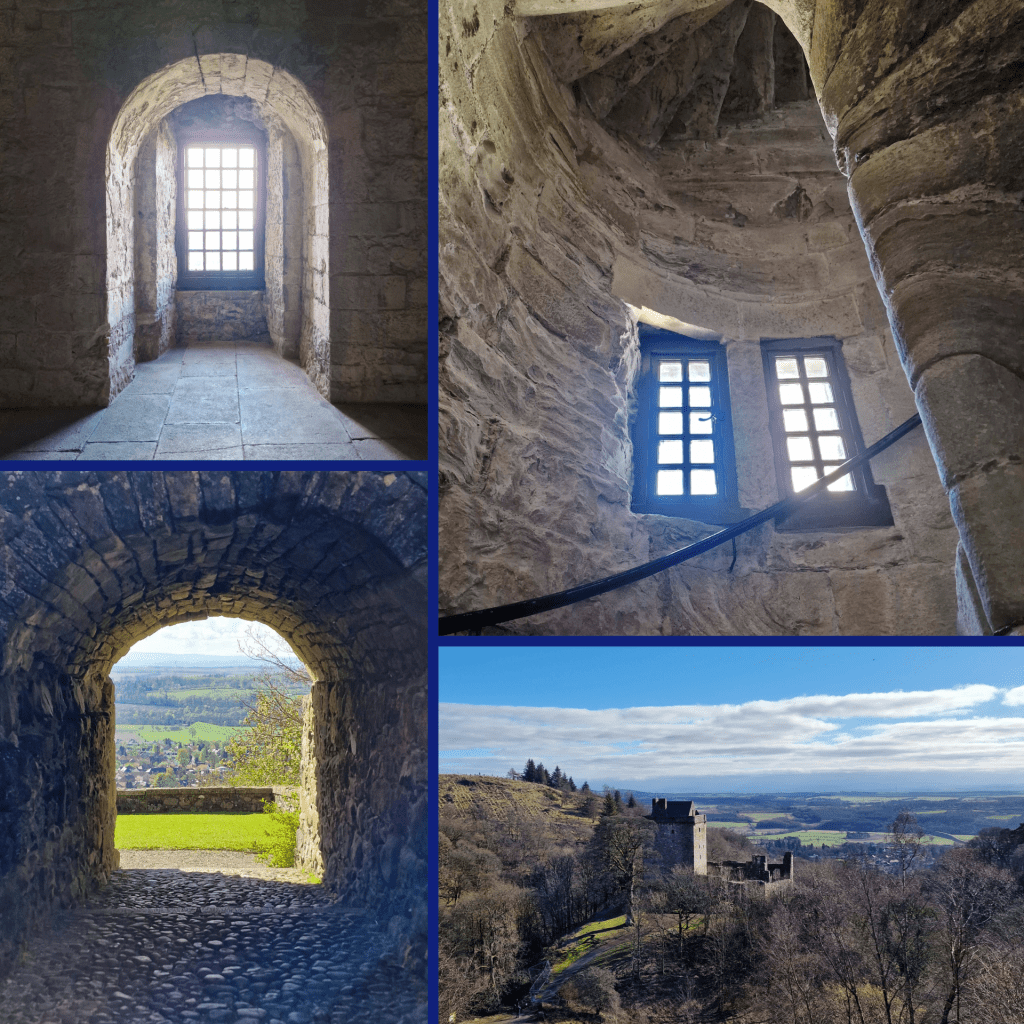
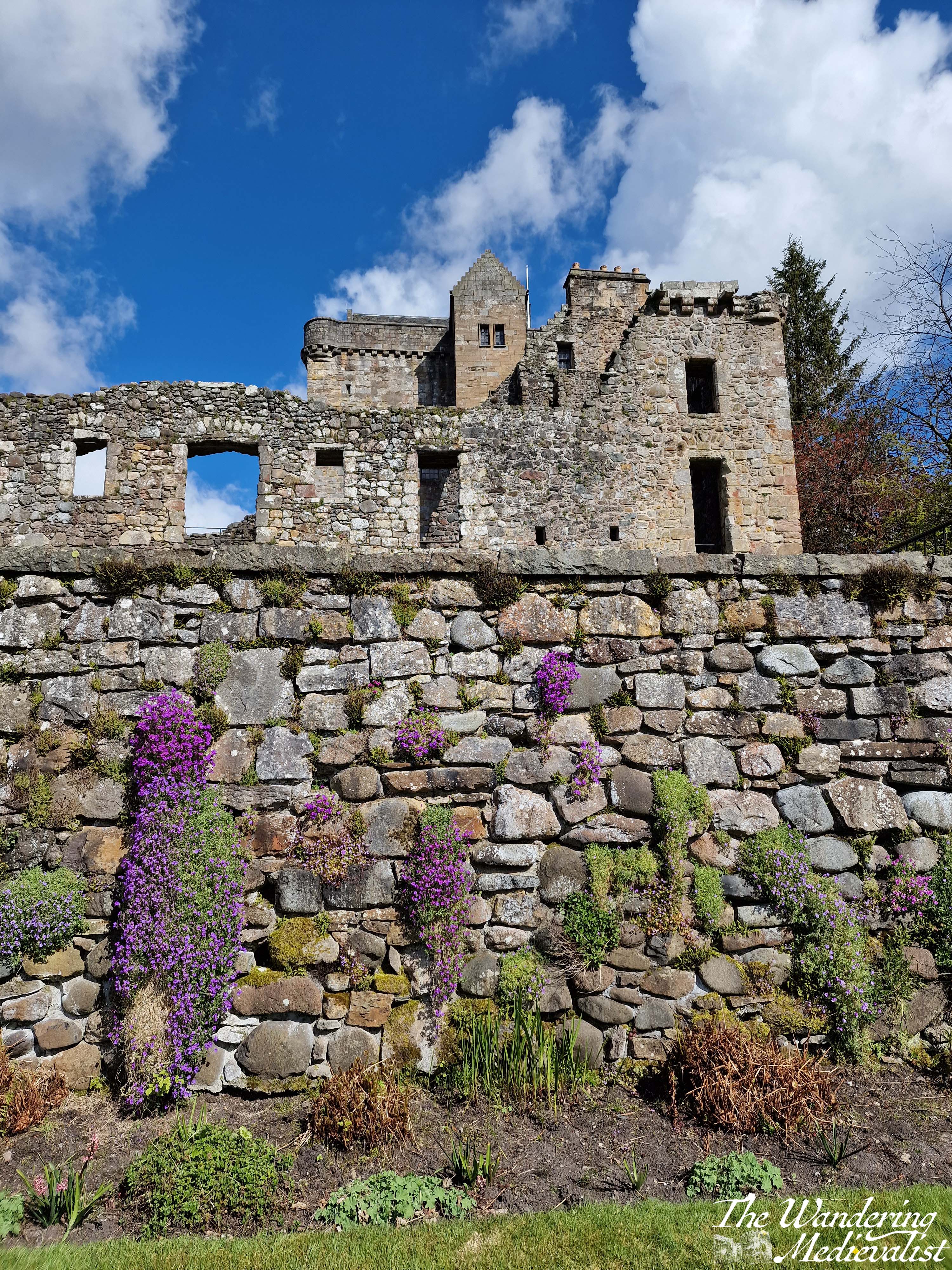
The loggia which can be seen in the pictures above – beautiful carved columns that stand out as unusual in Scottish castles – was likely added in the late 16th century, mirroring a style seen at the Bishop of St Andrews’ castle. Indeed, while Castle Campbell does not cover a great deal of ground, it includes all the features of castles – intact or partially ruined – that one might expect to see. There are bed chambers, the great hall, foot-worn spiral staircases, cellars for storage, and great recessed windows cut into the walls with which I am always fascinated.
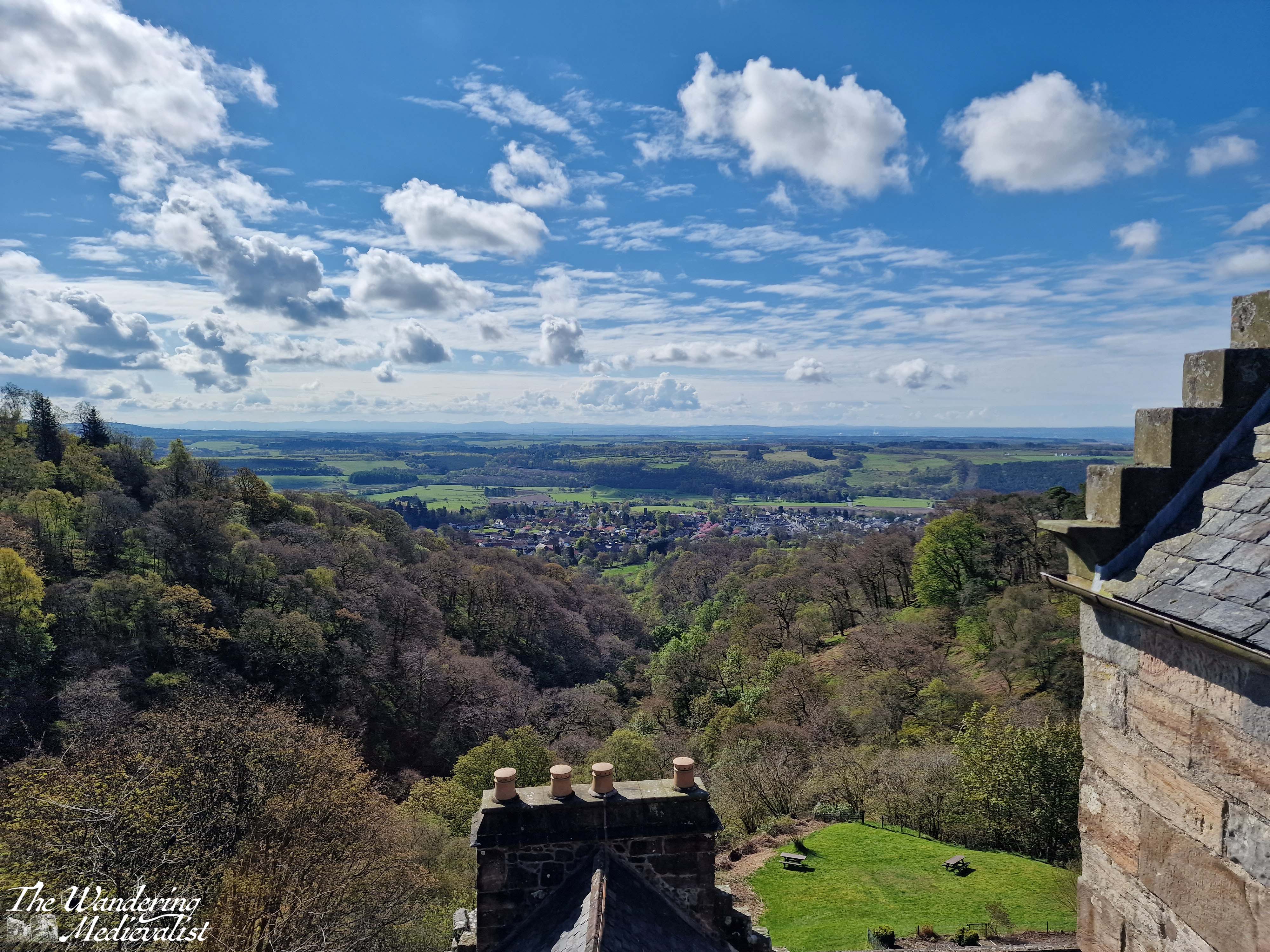
You can climb to the very top of the castle to look out over the countryside, and enjoy the slightly dizzying view down towards the gardens. As one not overly fond of heights, I required a few deep breaths before I ventured to the edge of the parapet. The views are incredible; if you look north the hills disappear into the skyline, if you look south you can see all the way to the edge of the Firth of Forth and the industrial smoke stacks.
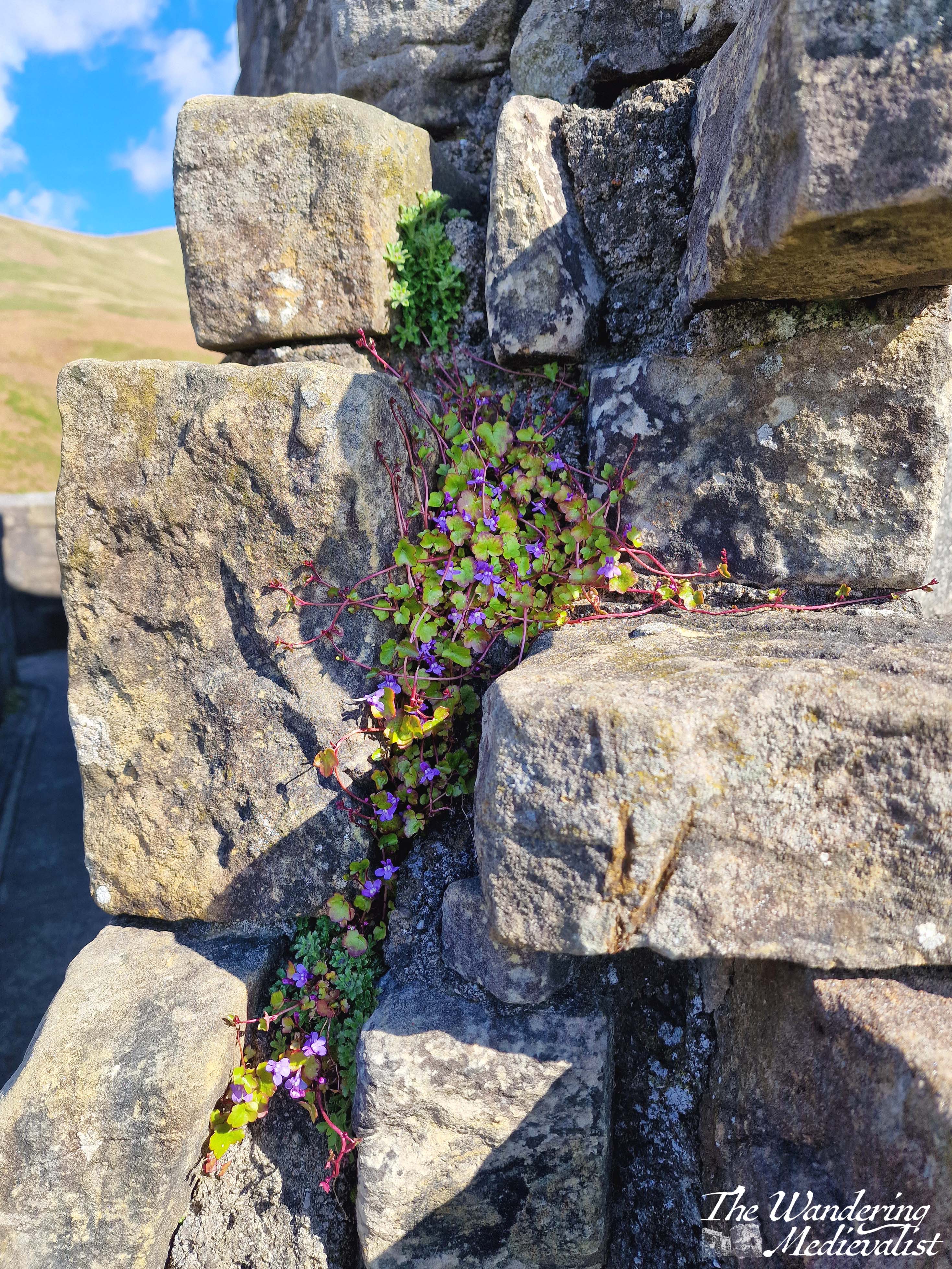
The newer parts of the castle, which are also those most in ruin, include two ways to get to the garden; one is out the side door, but the other is through a stone tunnel that emerges onto a grassy bank. The lower garden wall was all in purple when I last visited, and boasted views back up towards the main facade of the great hall, and the tower.
It is easy to imagine well-dressed lords and ladies parading around this terrace, perhaps playing a lawn game, enjoying the flowers and the views. According to the records, the castle saw several important visitors in its day, including (of course) Mary Queen of Scots, who stayed at Castle Campbell in January 1563, and the Protestant reformer, John Knox, who was favoured by the earls.
The Protestant leanings of the earls would lead to the eventual abandonment of the castle; Campbell had crowned King Charles II at Scone, but abruptly switched sides after Oliver Cromwell’s defeat of the Scots at Dunbar in 1650. The castle was used to garrison English soldiers in the early 1650s, and it was badly damaged and burned by the Scots in July 1654. The return of Charles II to the throne in 1661 saw the eldest Campbell executed for treason; his son was restored to the earldom but chose to reside in Stirling and built a house for himself beside Stirling Castle – Argyll’s Lodging.
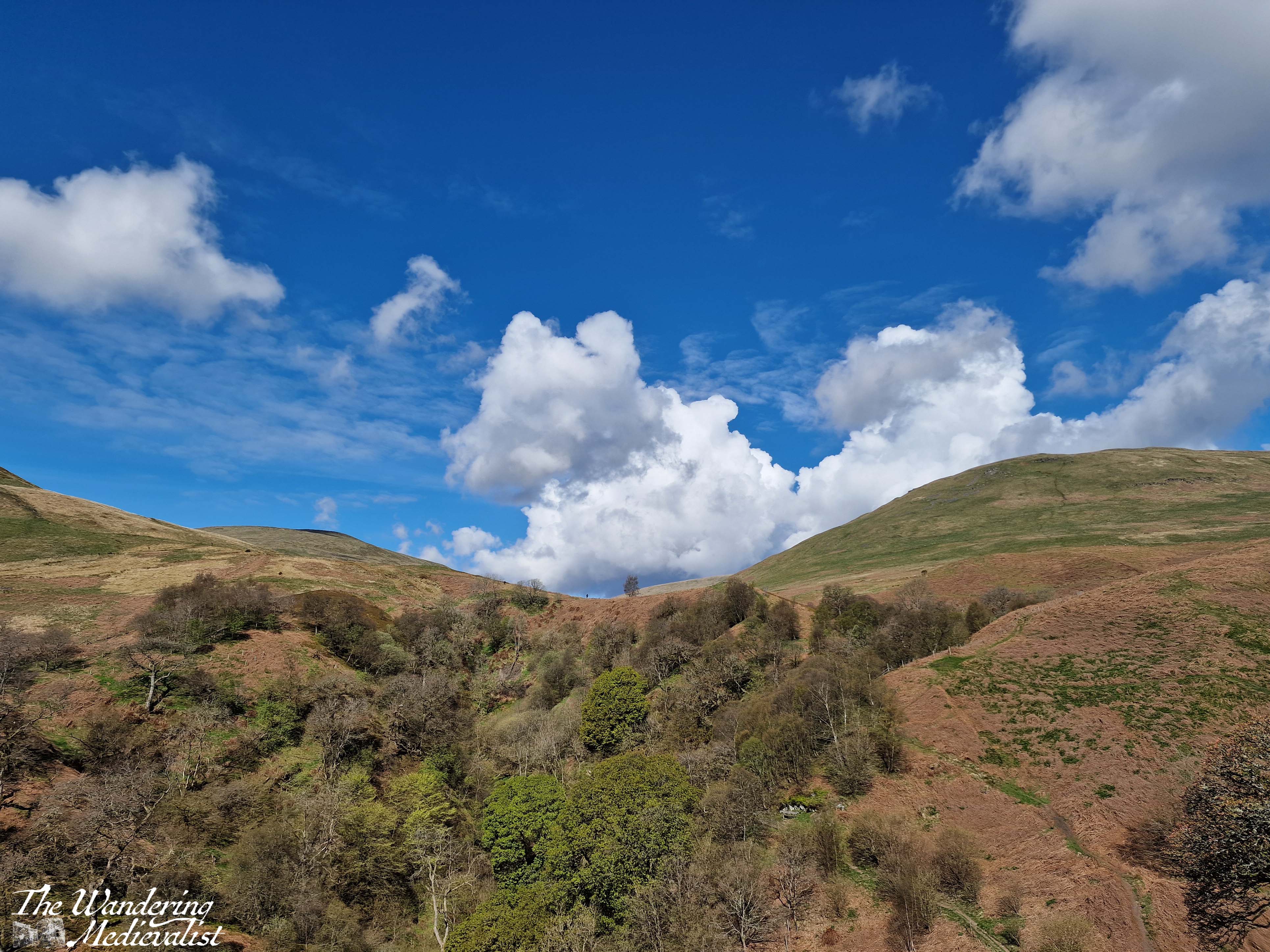
Over the subsequent few centuries, the area around Dollar became well-known for its beauty, and there is to this day a gorgeous – if at times challenging – trail that can lead you from the town of Dollar, up one side of the glen to the castle, and down the other side (though the top part of the Burn of Care side has been closed for some time due to trail damage). The hike is steep in places, but offers yet more unique views back towards the castle.
I am sure I will write more about the walk in Dollar Glen at another point, but suffice it to say, there is something moving about the castle ruin and the nearby hills.
While Clackmannanshire (Britain’s smallest county) is very much not the Highlands, it offers a very small taste of what one will see further north: sheep, hillsides covered in grass and gorse and heather, steep-sided ravines through which rivers rush and create waterfalls and gorges. Even though I have visited several times, it is a castle and an area I can never get tired of seeing, whether it is to roam the halls or find adventure in the hills and trails behind it.
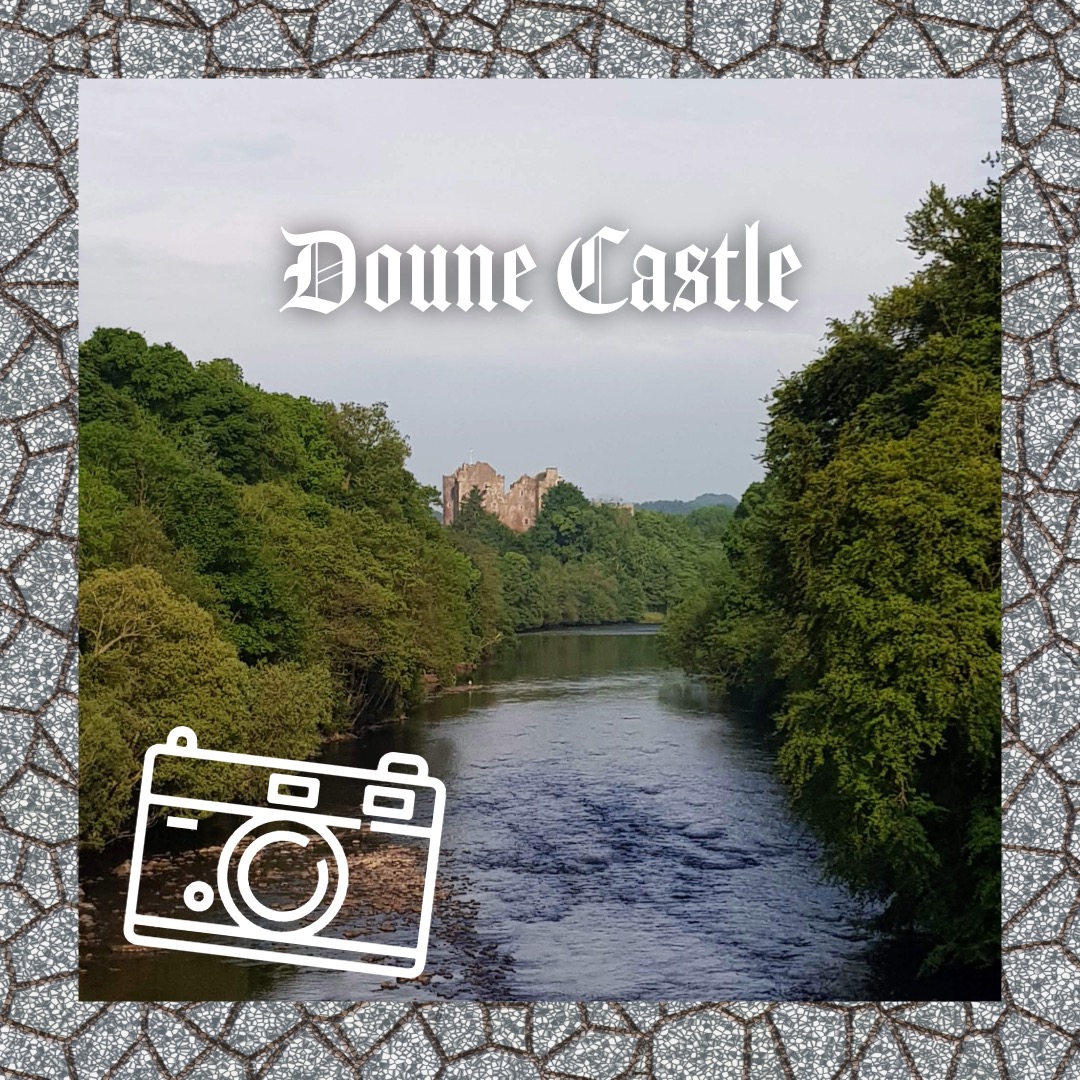
Several years ago, I took myself away for a few nights on a mini writing retreat. I chose as my destination somewhere out of the way and yet relatively easy to reach by public transport (though not on a Sunday as I had forgotten): Doune. I had opted for the same destination in January of my final year of university, when everyone else had exams and I did not. I’ve already written about my exploration of the fabulous castle, but as I discovered, Doune has plenty more to offer in the way of countryside walks and a charming village with lovely gardens.
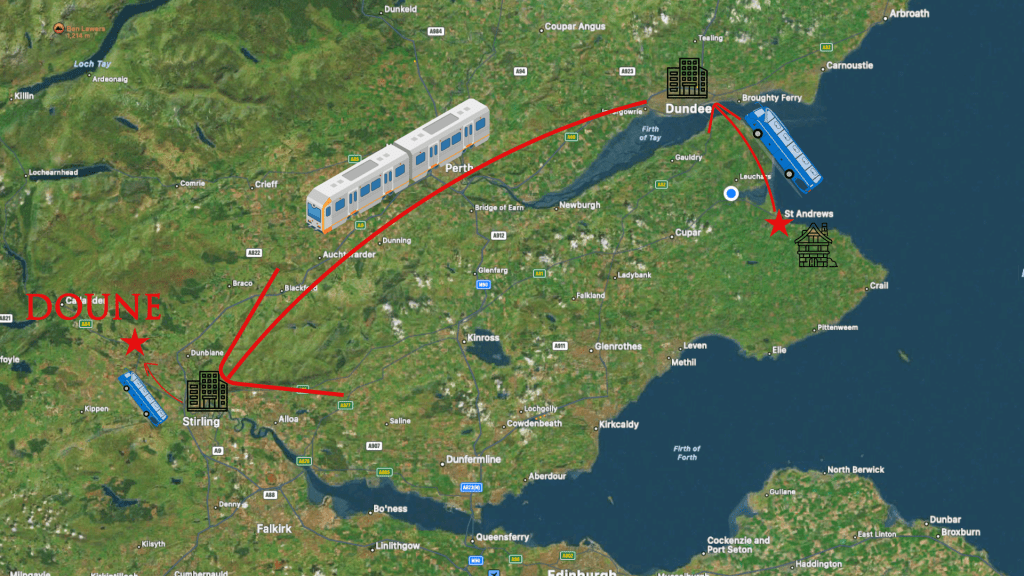
My journey from St Andrews to Doune involved a bus to Dundee train station, train to Stirling, and then transfer to another local bus to Doune.
I reserved myself a nice room with a bathtub and plenty of space to spread out and write. The hotel was the same I had stayed at more than ten years before and was a touch more run down than I remembered (the food also not quite as good) but it was in easy walking distance of the bus stop. Aside from one evening when we were treated to a typical Scottish summer downpour, the weather was excellent – sunny and hot, at least for Scotland in summer.
Rather than race for the castle, which was undergoing renovations, I planned myself a long walk which essentially circumnavigated the town centre, starting at Doune Ponds on the north-west edge of town. I was advised by the kind woman at the hotel reception to make sure I had midge spray (something we don’t often have to bother with by the coast) and so I made my way via the pharmacy in town. The reliable spray they said was the outrageously-priced ‘Smidge’ brand, but was worth the spend.
I cannot for the life of me recall where I got the instructions for my walk, which were to start at the conservation land area of the ponds, where there are numerous paths to take.
I attempted to follow the poorly-worded route for my walk and managed to find one of several paths up out of the pond area, through large gatherings of gorse bushes. I have a love-hate relationship with gorse, which is a beautiful bright yellow harbinger of spring, but to which I am quite allergic. So I climbed quickly up to where my route joined a farm road. I have been unable to re-create the route I took at this point though I believe I may have ended up partly on the Commonty Walk. The path and my instructions were a bit haphazard, but it was a beautiful warm day and I had water and snacks so I just kept walking. There was a lovely section of the trail through a wooded area with sheep fields to my right, and looking down over the town.
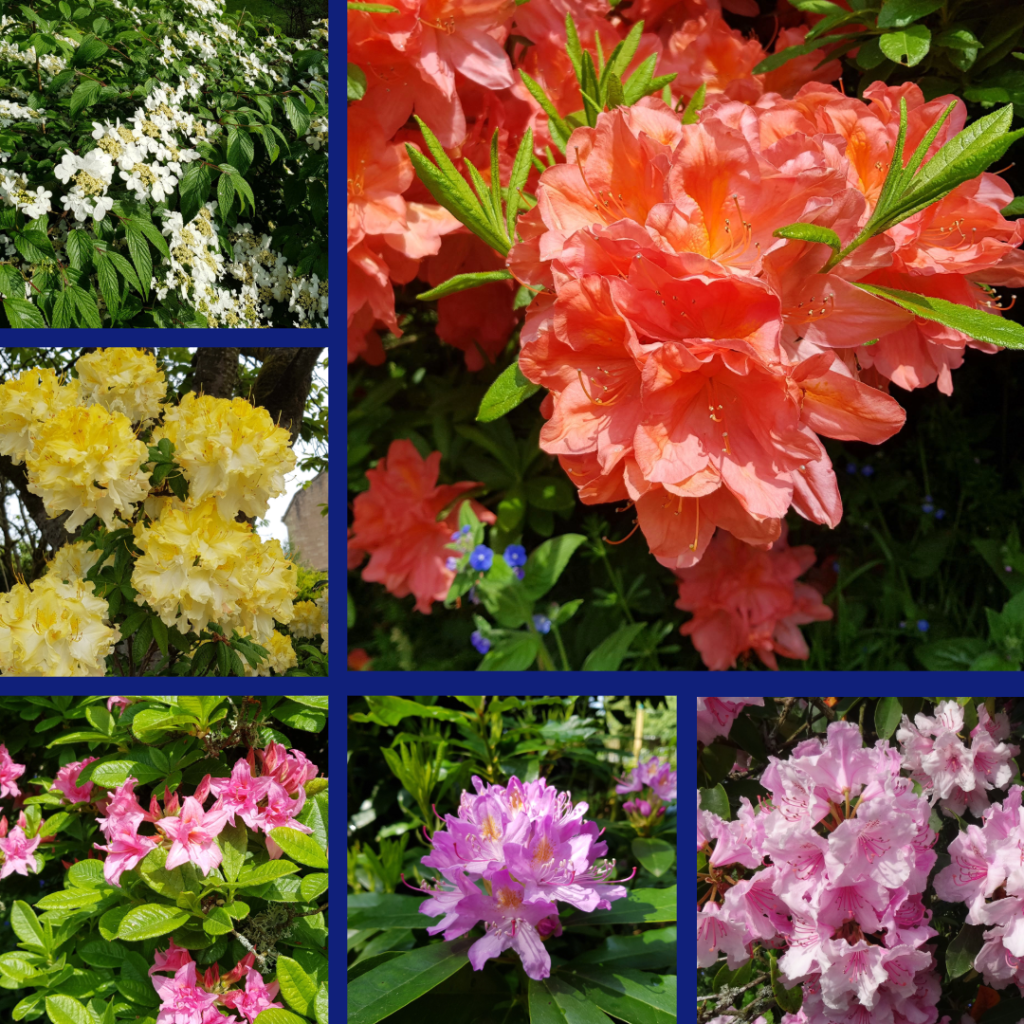
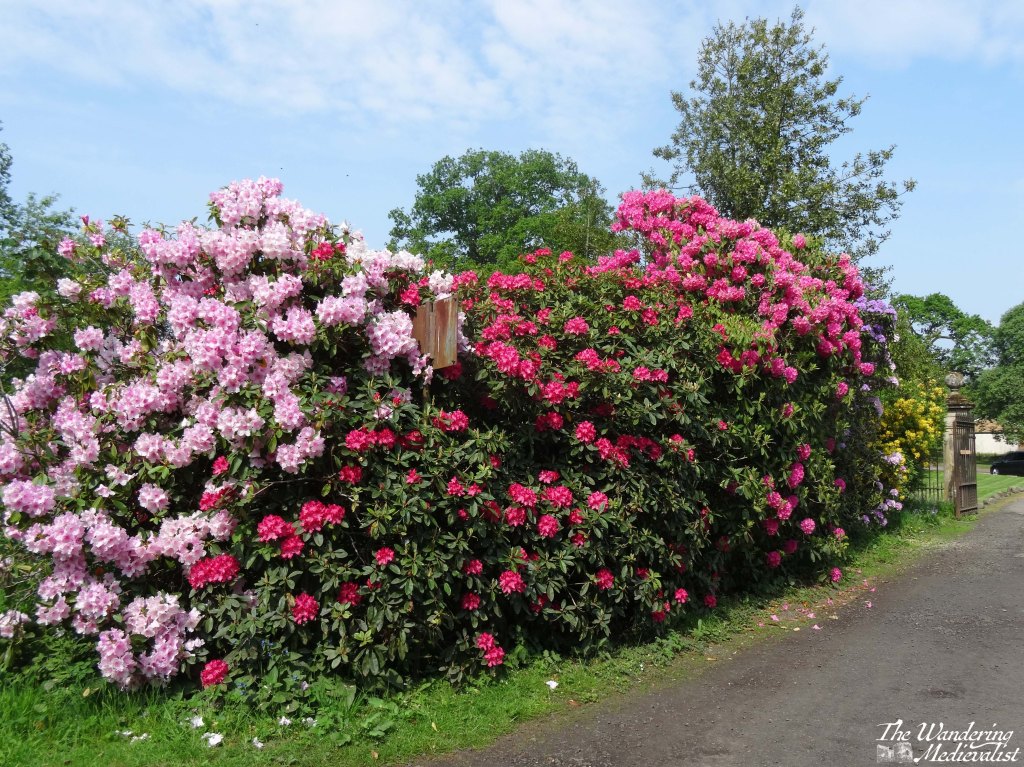
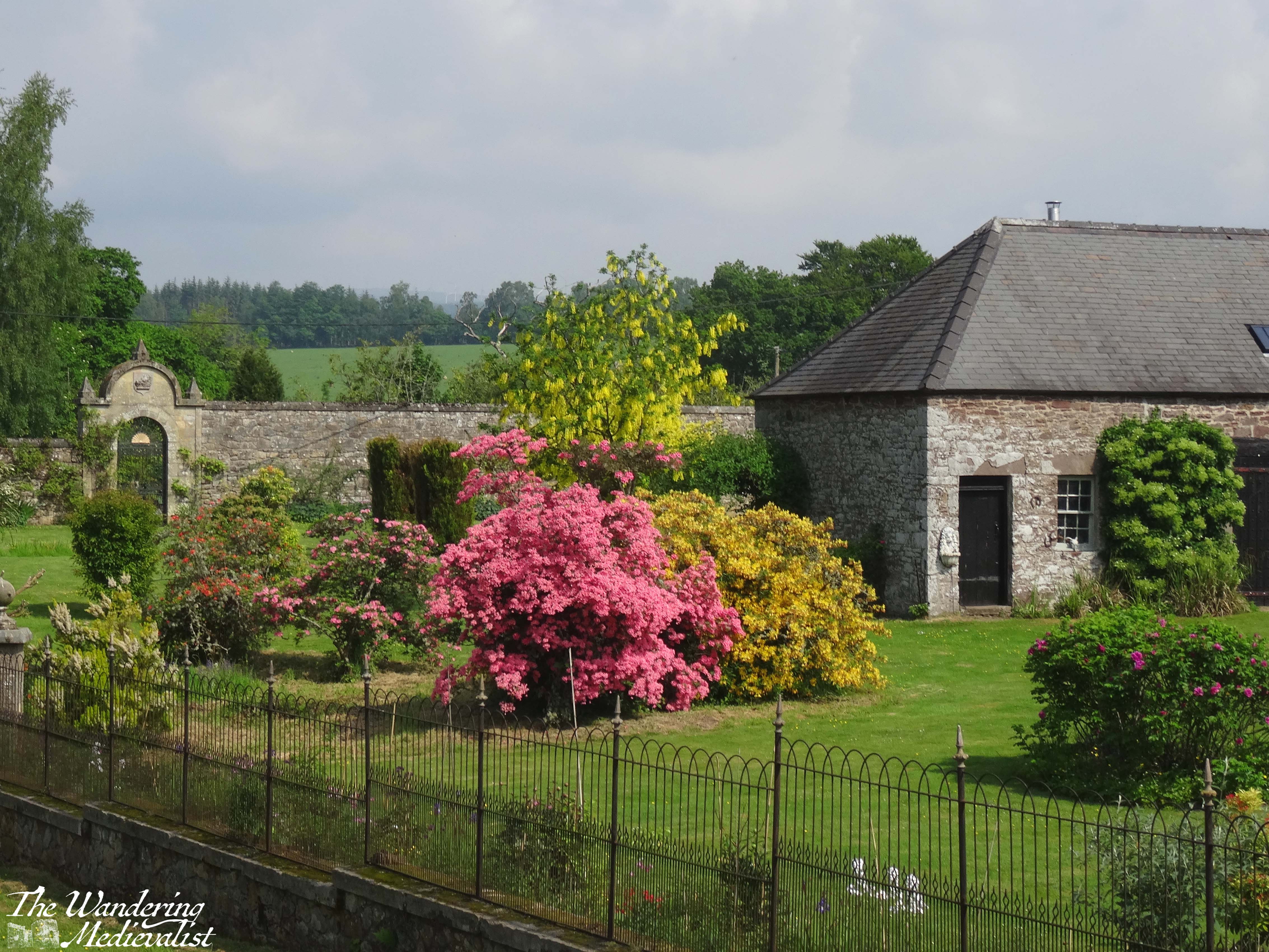
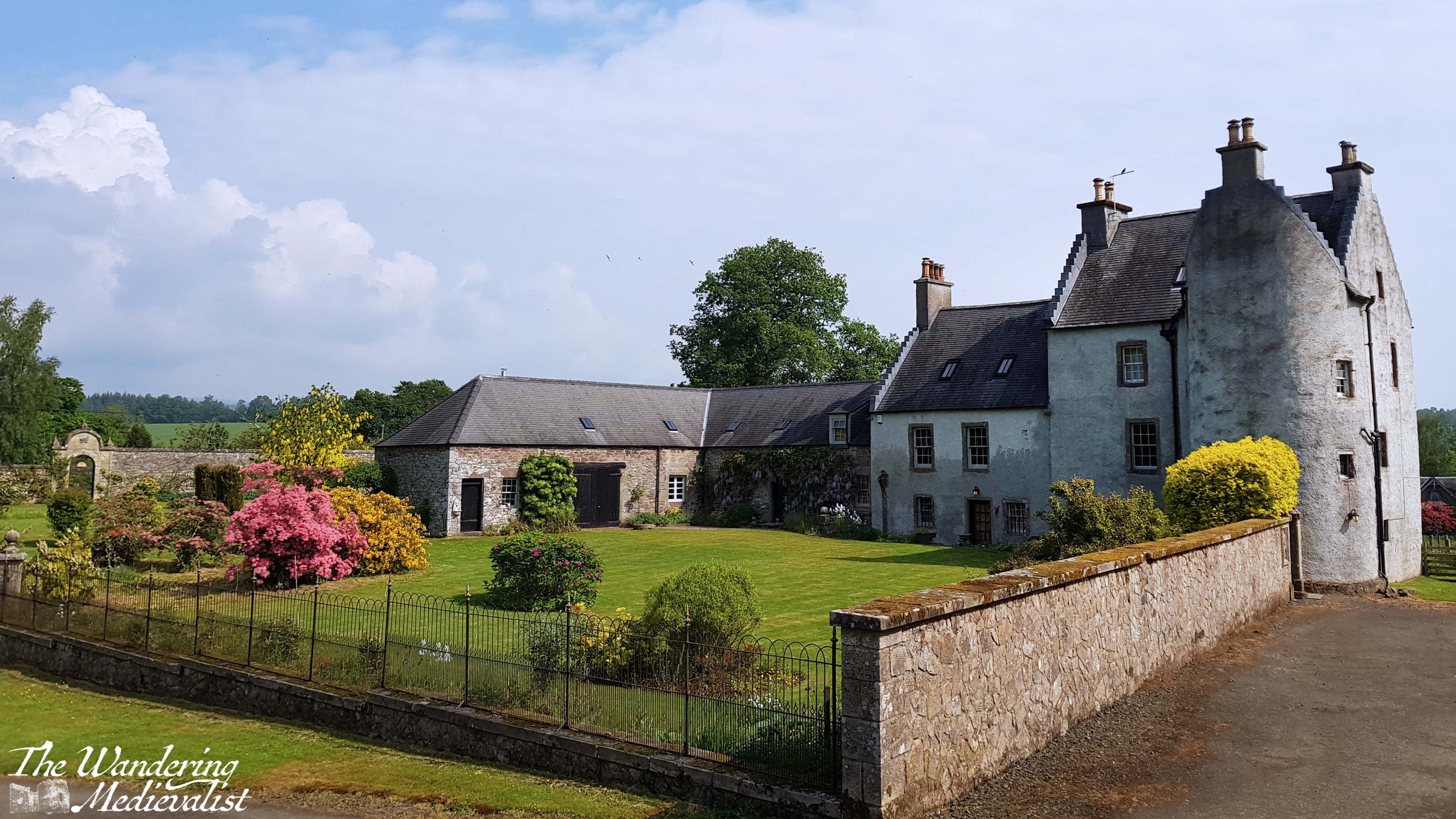
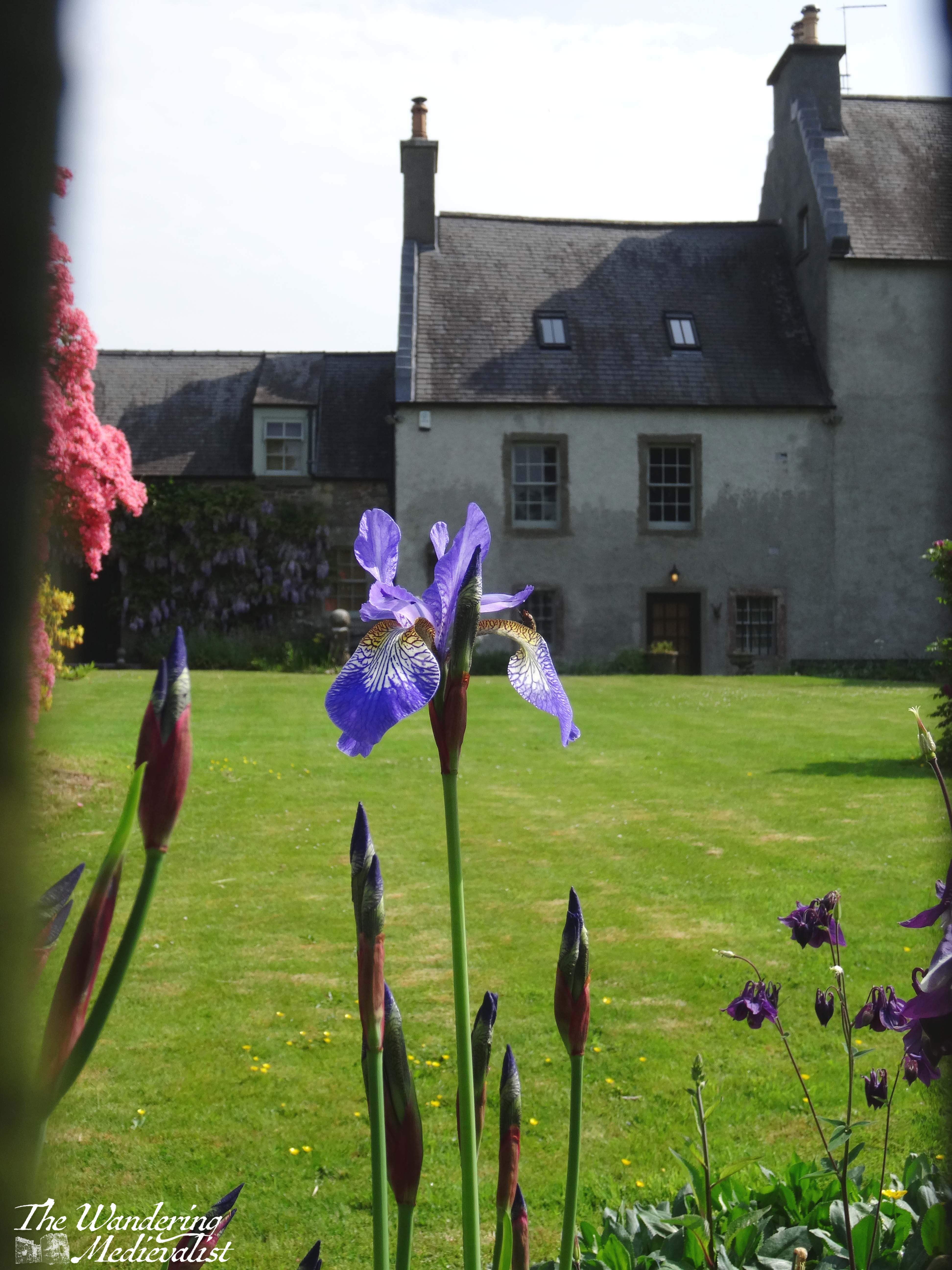
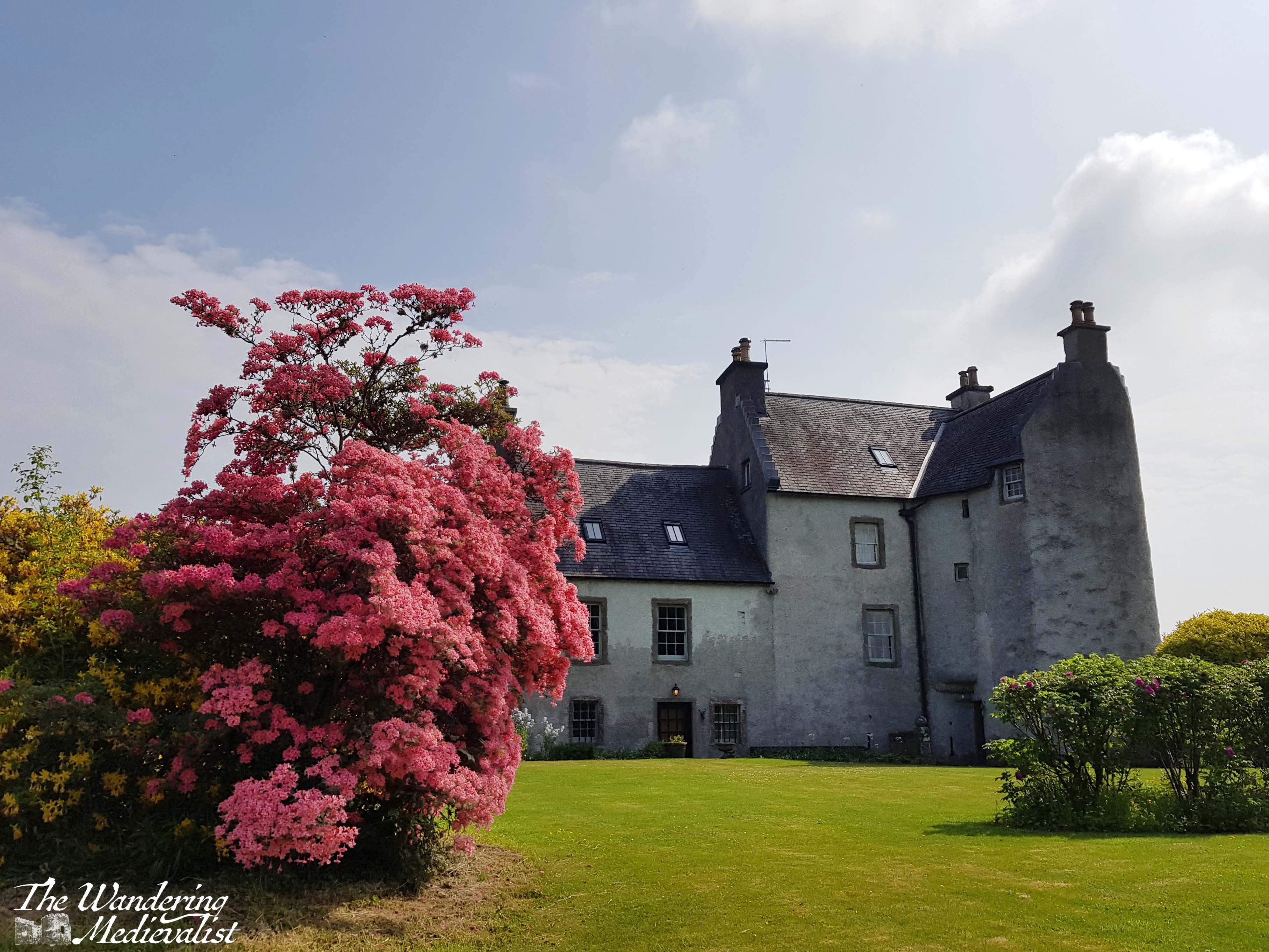
More than a few times I was sure I was lost, but eventually I ended up on the far side of the town, following my walk instructions which took me to the entrance of an old estate, recognisable from the gate cottage and of course the towering rhododendron bushes in full bloom. In fact, the flowers are what stand out to me most from this trip and this walk – everywhere I looked were gorgeous colours, in particular the rhododendron going from purple and white to bright red and coral pinks, and even a buttery yellow.
As I made my way down the path, I was met by a woman asking if I needed help, as the area I was heading into was closed to public access. I explained that I was trying to follow a trail, and trying to get to the castle, and when she realised (I assume) that I was simply a slightly lost walker, she immediately offered to guide me through the estate. It was my second experience in Doune of the joy of travelling on your own and being relatively happy to chat to almost anyone.
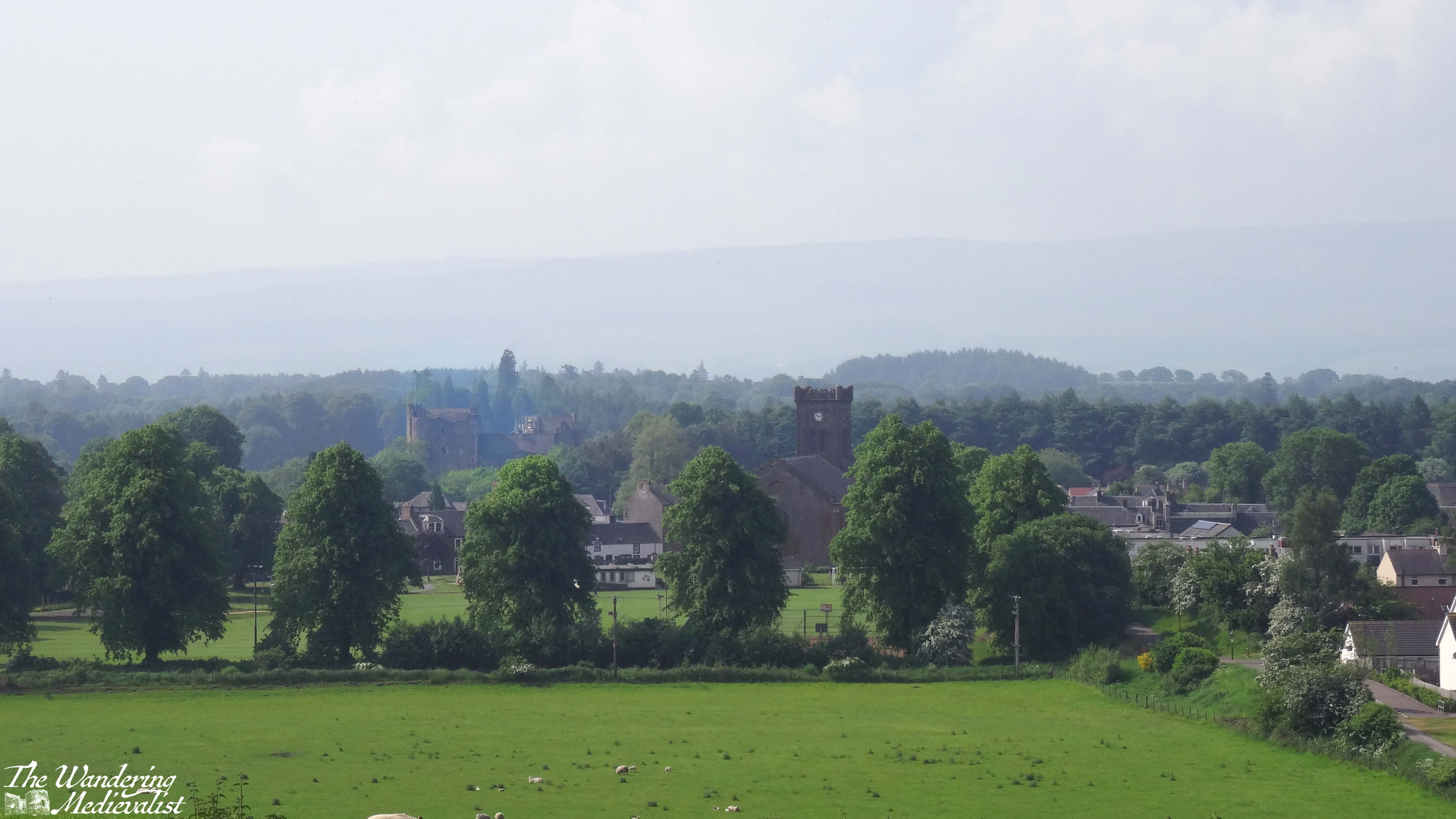
The estate where I ended up is called Old Newton of Doune, part of the Inverardoch Estate, and not long before the cast and crew of Outlander had been staying there while filming – to think I was only a few days off! The caretaker told me a bit about the area and allowed me to walk around the edge of the old estate house, which is stunningly landscaped and kept up. Built in the 16th-century, the castle-house was designed primarily for defence and only used for more domestic purposes several centuries later; now it is used as a group holiday rental. Though I was not allowed to go inside the gate, I was able to get plenty of pictures from the nearby hillside and path.
It was going to be hard to top my visit to Old Newton!
I passed out of the estate on a back access road lined with yet more rhododendron (so common on Scottish estates) and pines, to meet Castle Road. From here, I bypassed the castle and several gorgeous old stone houses, and followed signs for the riverside walk. As it was still a hot and sunny day, I was quite happy to be down by the gently meandering river, where there was a touch of breeze to keep away the worst of the bugs.
The path was well-kept and lined with trees, while the back fences and gates of the gardens of Doune offered hints at some beautiful landscaping. The route ended just before the bridge and cut up a set of stairs towards the road, where it would curve back up into the village proper. The bridge offers a stunning view back along the river towards the castle, but can be a bit hazardous. The sidewalk is there, but very narrow, so caution is essential.
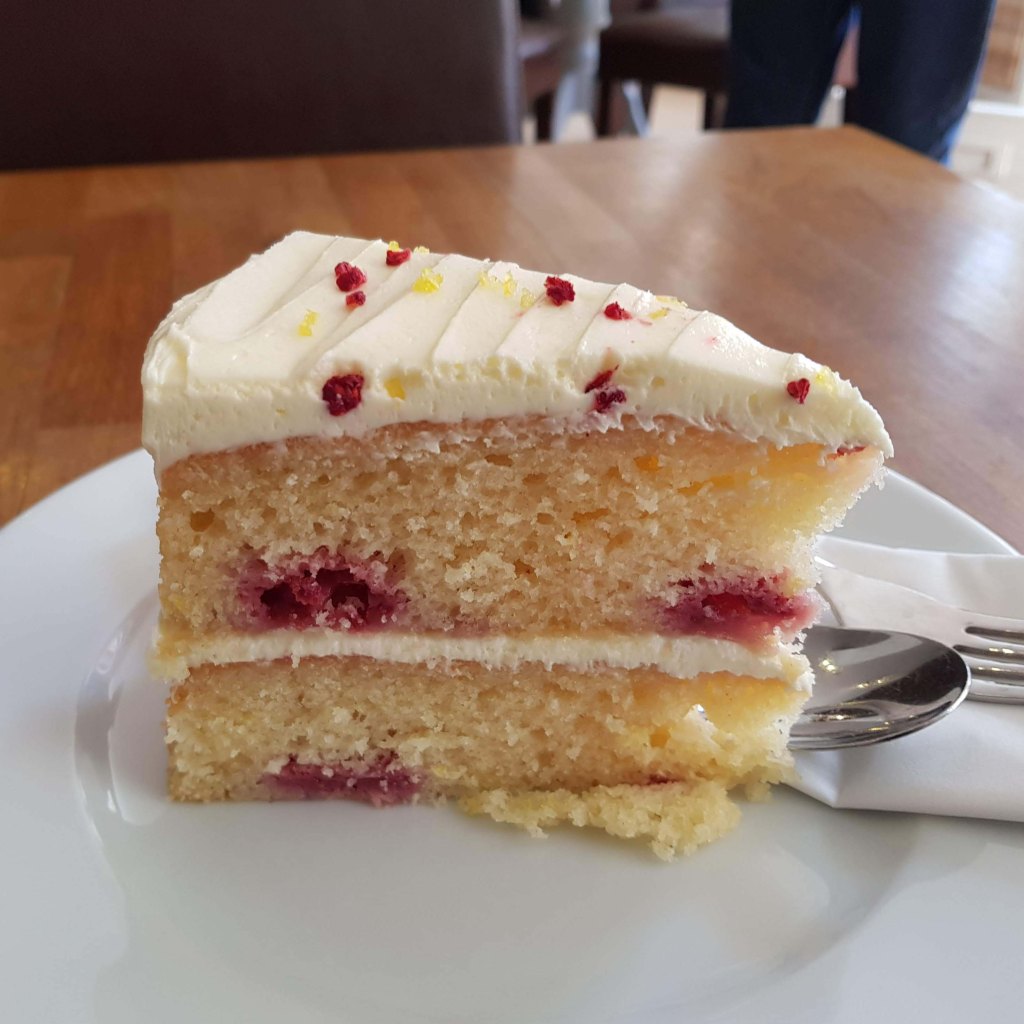
Back in the town centre, I found myself a table at the fantastic Buttercup Cafe, which had finished their lunch menu but still offered coffee and cake. I decided that my long walk deserved a bit of a reward, and so ordered a delicious raspberry and white chocolate confection along with my Americano. Highly recommended!
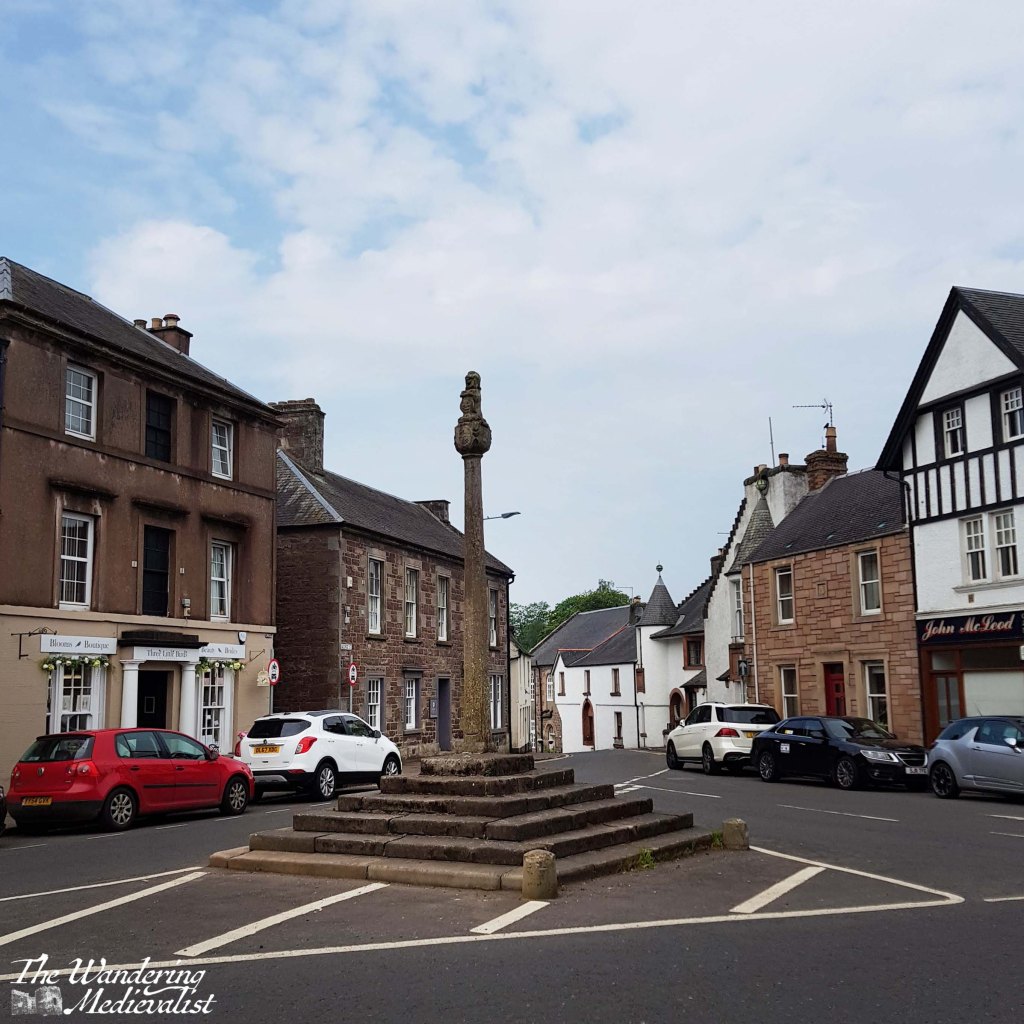
Mercat cross, Doune
my delicious treat at the Buttercup Cafe
I am sure that if I had more time, I could have found plenty more fascinating walks and trails to take, but I was determined to get a chapter or two of my book edited and re-written, so I headed back to my hotel for a shower and a few hours of writing. While I cannot say I’ll be rushing back to Doune in the near future – I feel like I’ve seen a good bit of it – there is no question that it is a lovely little town with residents well-enough off to keep some gorgeous gardens.
The 14th-century castle and evidence of a Roman fort demonstrate that the site of the town has been inhabited for potentially 1000s of years. In the 17th century, the town became famous for the pistols crafted by the Caddell family, Flemish gunsmiths. The pistols were often sold in pairs, and the Caddells had developed methods of ornamentation that made the weapons highly sought-after. Interestingly, this claim to fame ties back to the Boston area in that it is likely Doune pistols were used during the American Revolution and even, perhaps, at the early battles of Lexington and Concord. Now who says history isn’t fascinating?
It has been an absolutely hectic few weeks at work, and I am so relieved to finally get back to my blog and share a few more medieval sites with you. It’s been a while since I’ve written about an abbey, so here goes!
As I have doubtless mentioned before, I am not a particularly religious person, nor was I particularly interested in ecclesiastical history when I studied the Middle Ages (in fact tended to avoid it as much as possible). However, I must admit to having a curiosity about the architecture of abbeys and cathedrals. The symmetry, the arches, the mathematical nature of the buildings is fascinating and I find myself drawn to them and unable to resist capturing the lines and arches on camera.
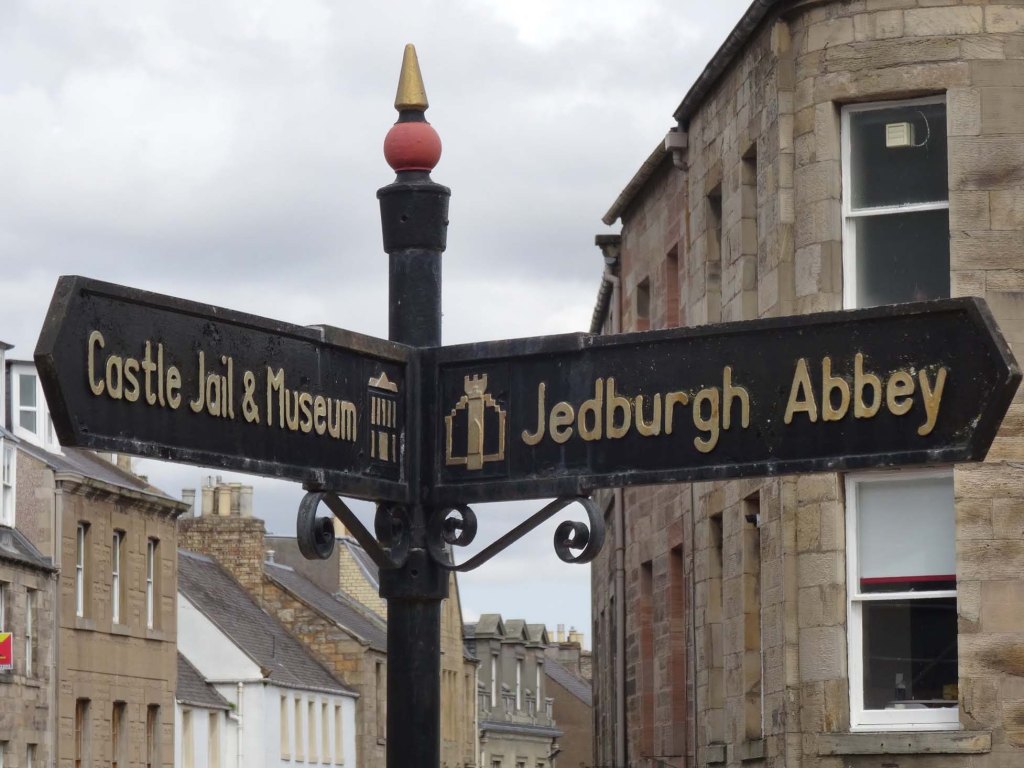
Jedburgh (named for its place along the Jed Water, a tributary of the River Teviot) was a location we chose quite at random when planning a special long weekend away, and looking for somewhere different than our normal jaunts north. Our two requirements were not too long of a drive (2 hours max) and nothing too expensive. So, we looked south and discovered a lovely boutique hotel in the ancient border town where the first church had been founded in the 9th century. The town is mentioned frequently in border disputes throughout the Middle Ages and beyond, boasts a beautiful old Mercat Cross and plenty of lovely shops along the old high street.
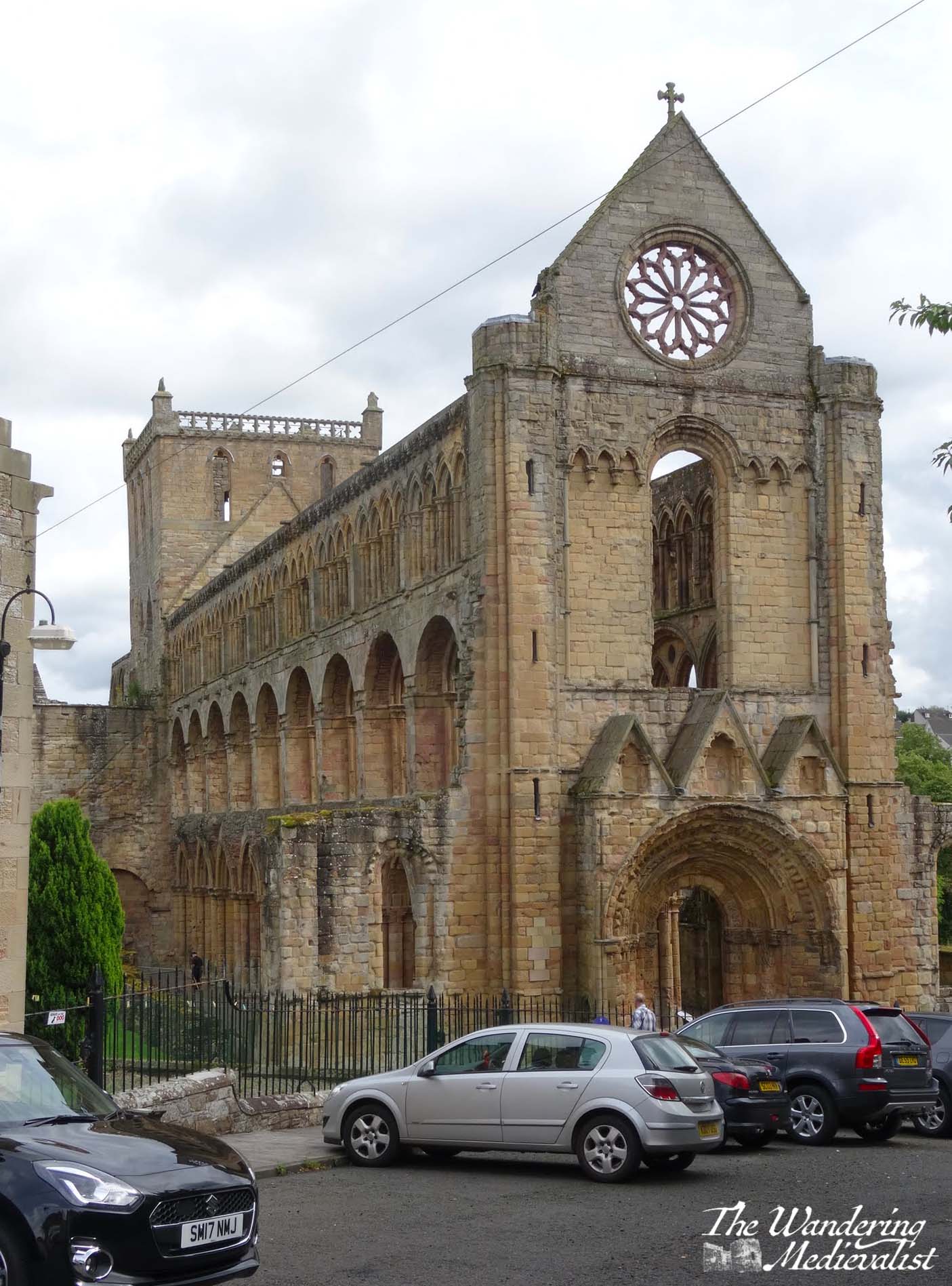
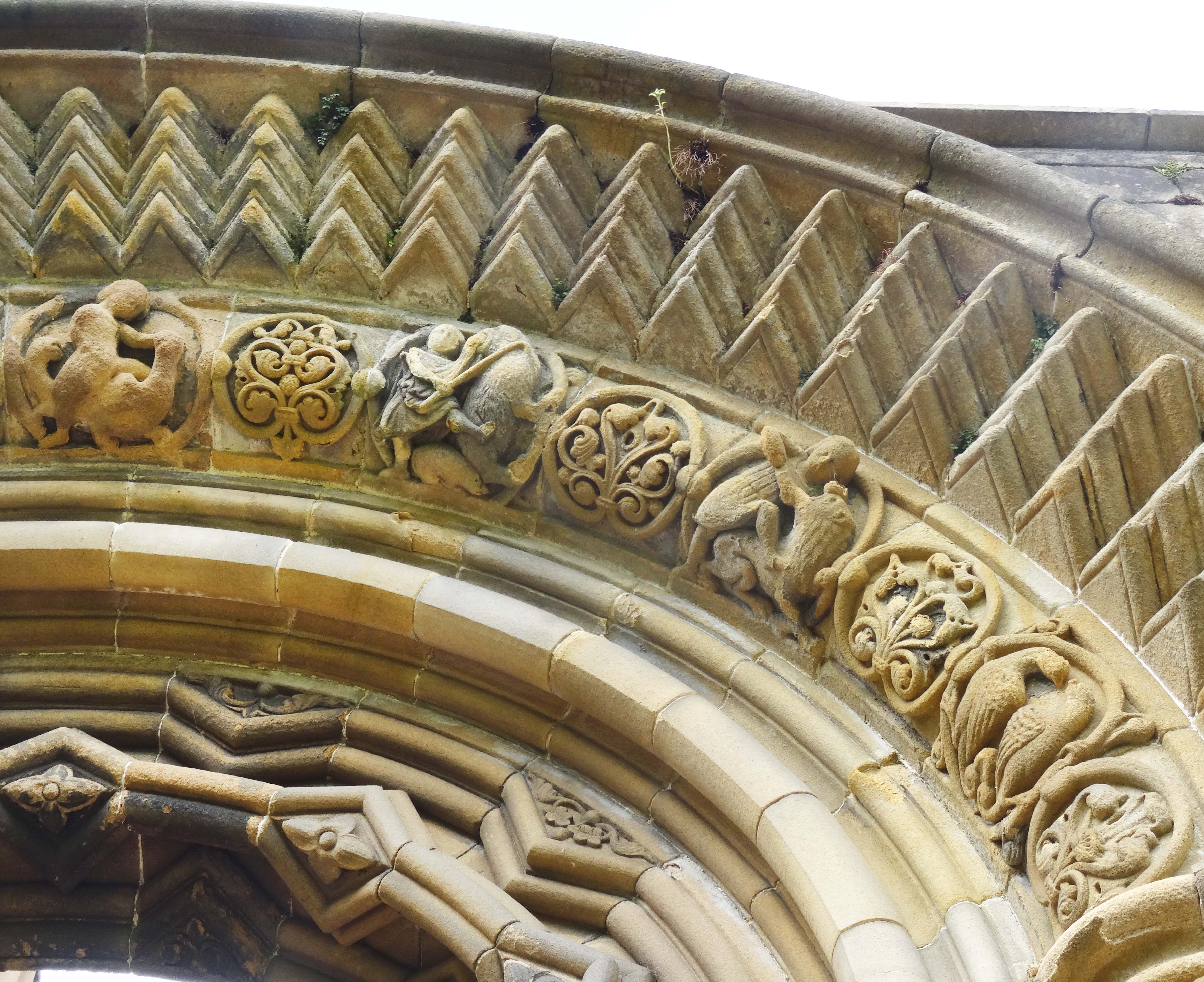
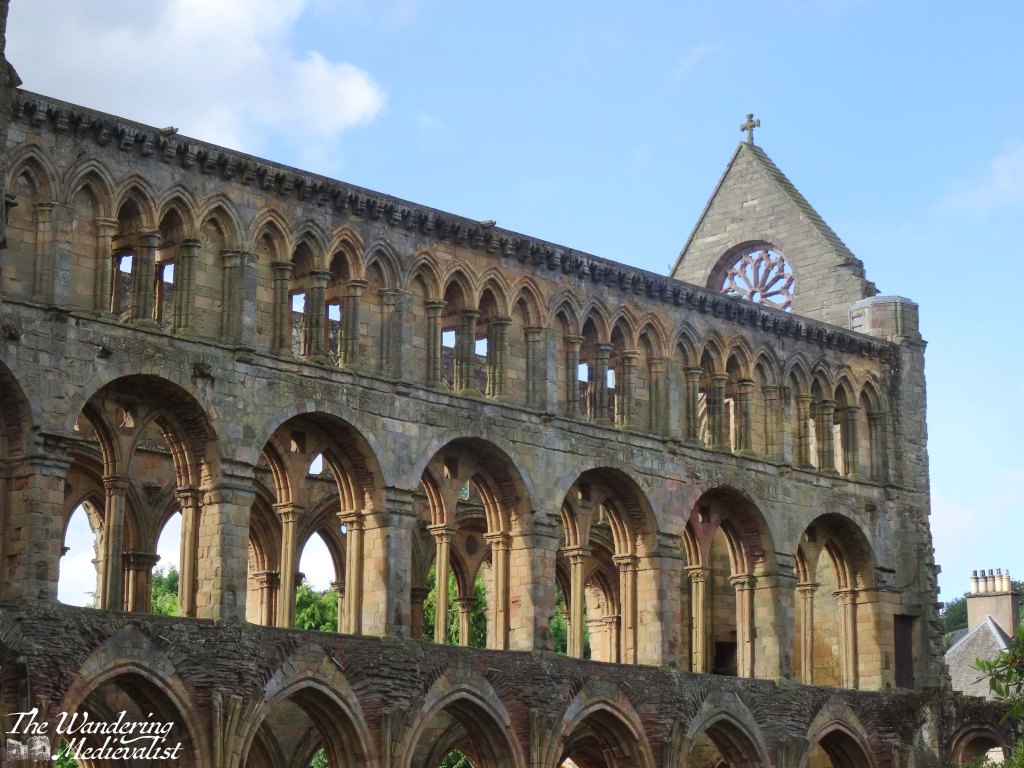
The community of friars at Jedburgh was initially established by Prince and later King David I in the 12th century, with the church gaining full abbey status around 1147. Unlike many of the border abbeys, which sit in secluded glens or fields, Jedburgh Abbey is situated in the centre of the town, and various portions of the structure were added across several hundred years. It was said to contain some of the finest Norman architecture and carving, and even in its ruined state, one can see the beauty of the workmanship that went into the construction. The plaque at the site tells us that the medieval master mason ‘used the church to experiment and to push the boundaries of what was possible both artistically and technically.’
As occurred with many church institutions, the abbey gained control over great parcels of land in the borders, and during the Wars of Independence in 1296 sided with King Edward I. The abbey was subsequently pillaged by the English as punishment after the Battle of Stirling Bridge in 1297, and then re-built and patronised by King Robert I the Bruce.
Unfortunately the location in the borders meant that Jedburgh – both the abbey and the town – suffered regularly in wars between the English and Scots, and in 1523 both were burned by the rampaging Earl of Surrey. As with most ecclesiastical institutions in Scotland, Jedburgh’s preeminence ended during the Reformation of the later 16th century.
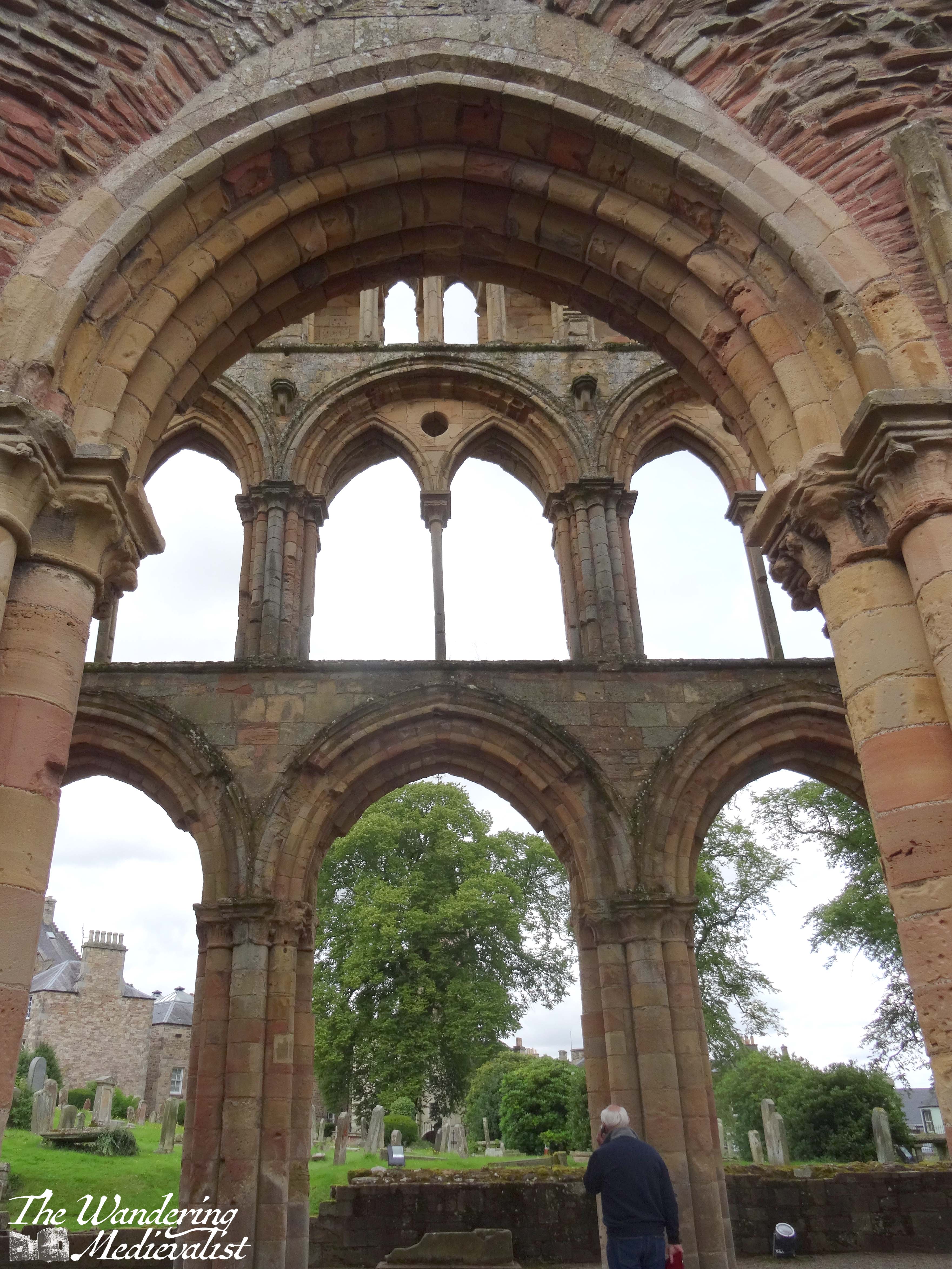
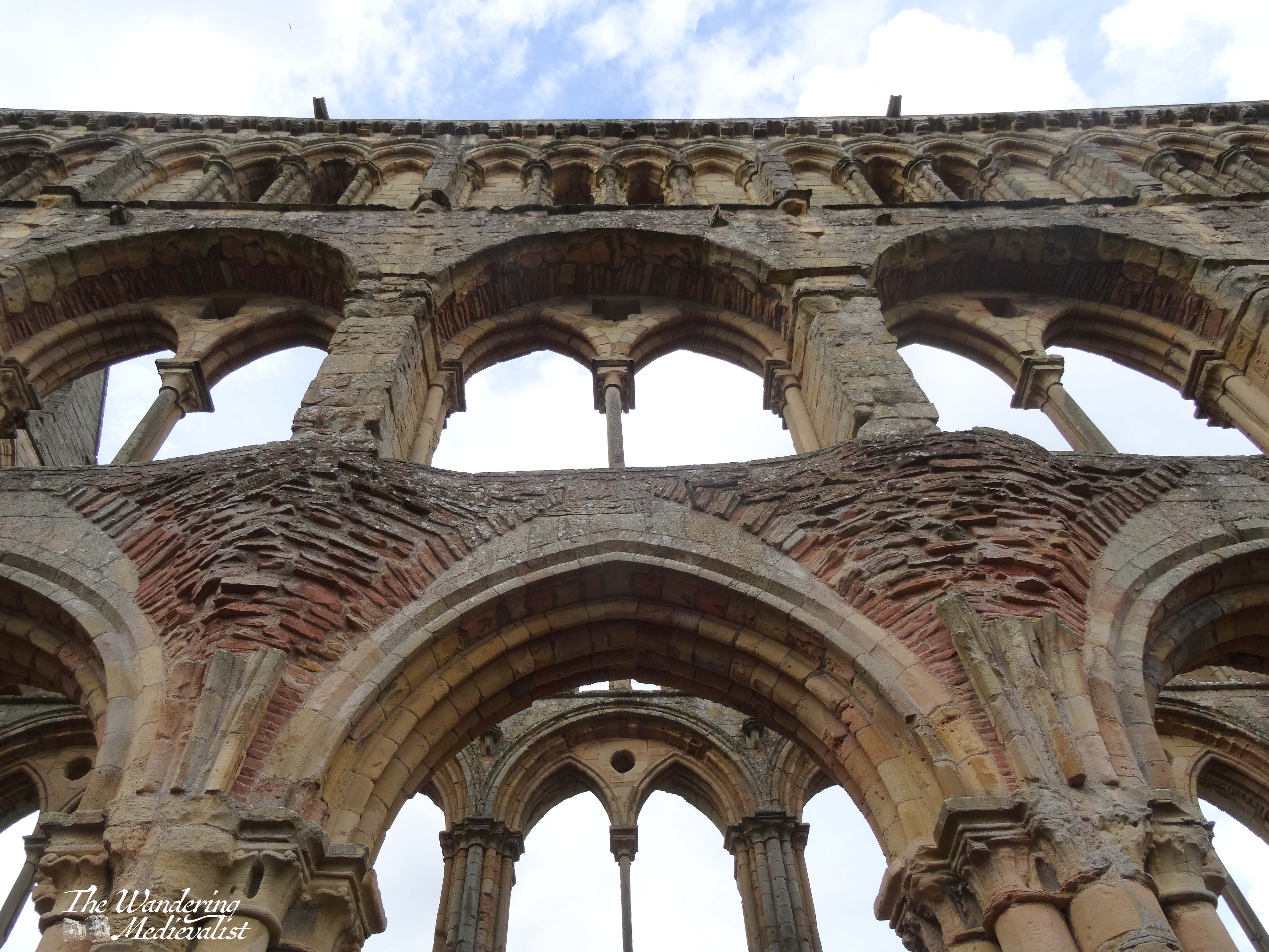
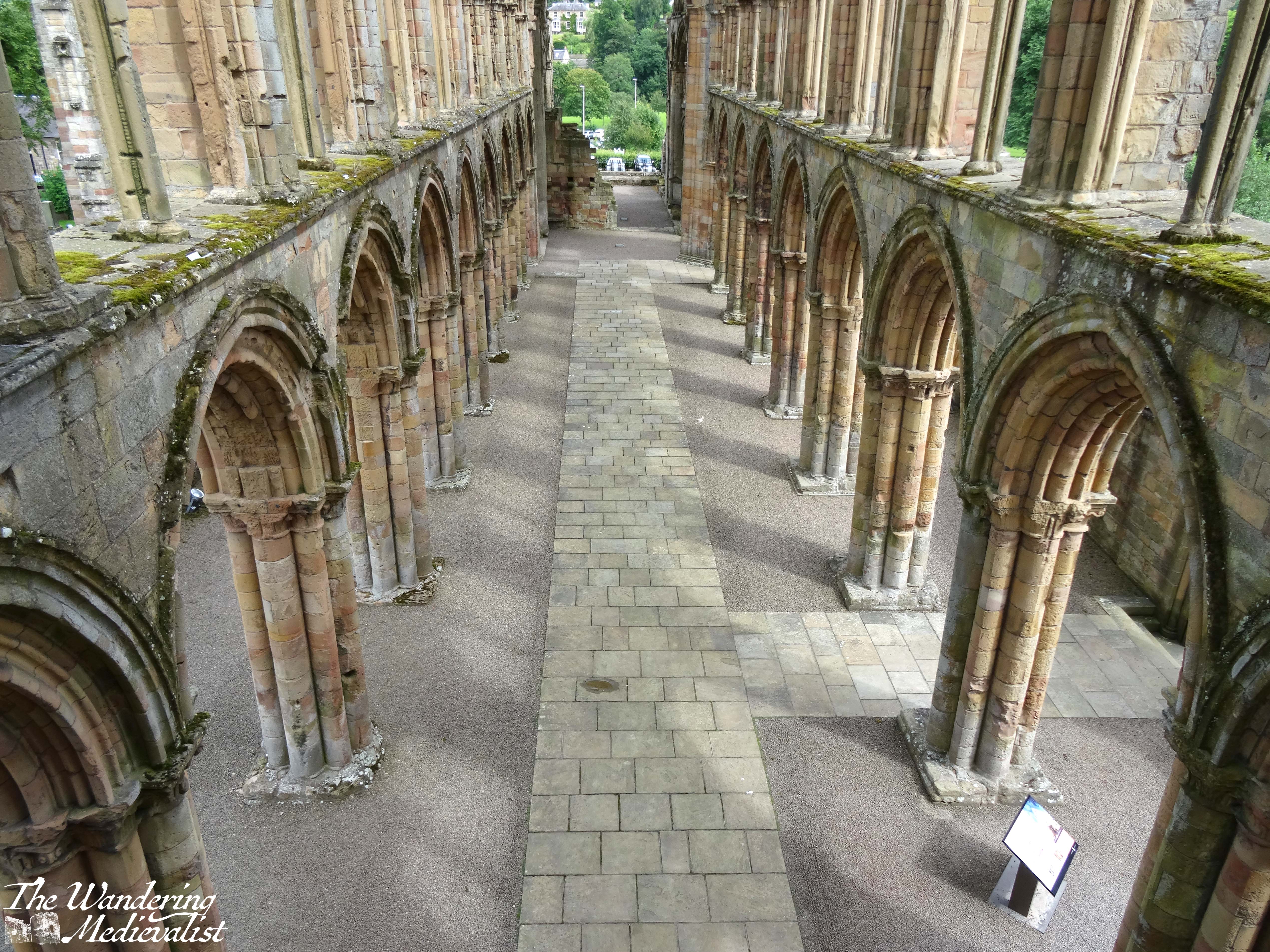
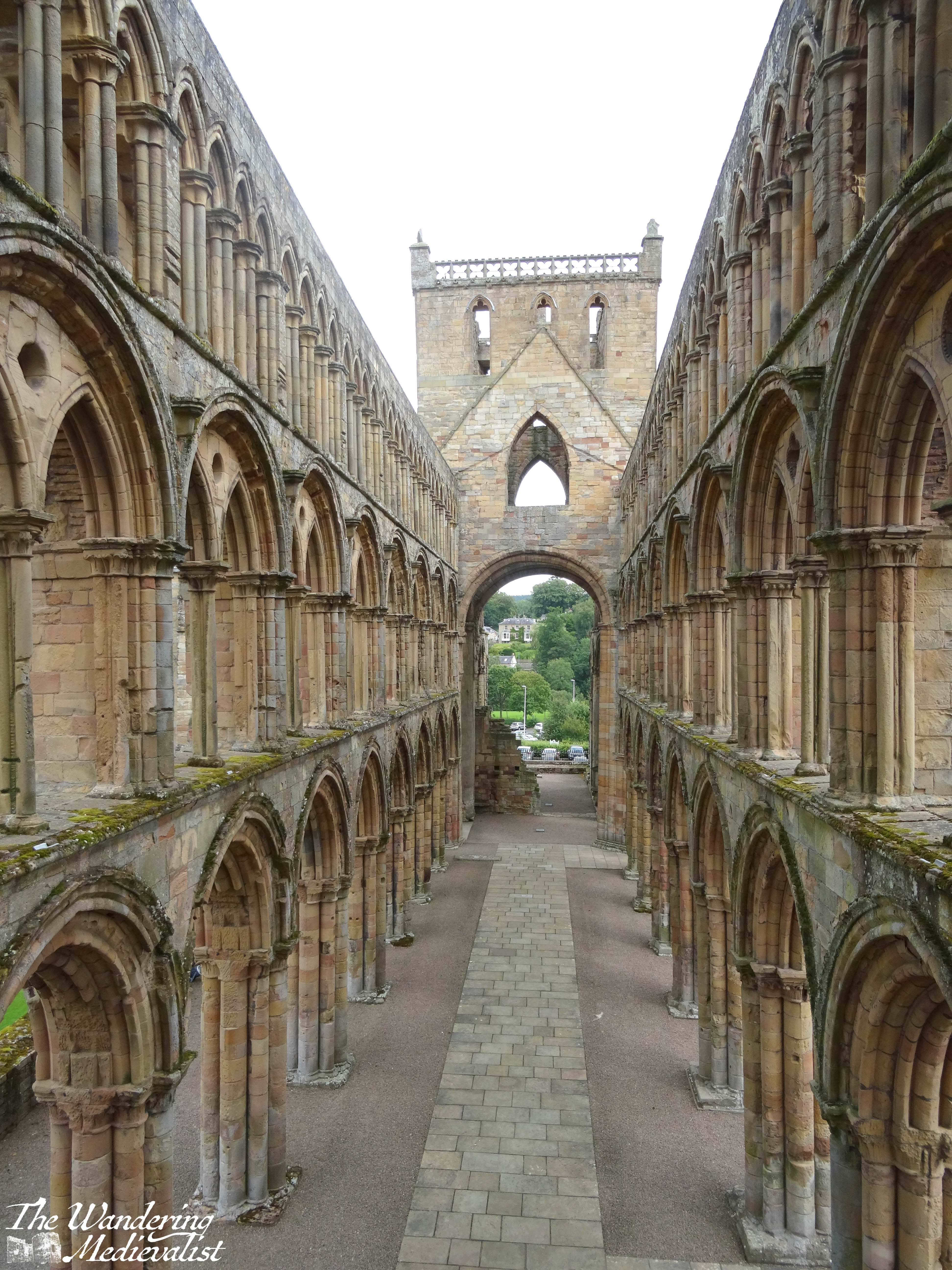
The abbey’s position in the town centre means that it is possible to enjoy views from roughly the level of the first balcony at one end, and to explore at ground level from the opposite end.
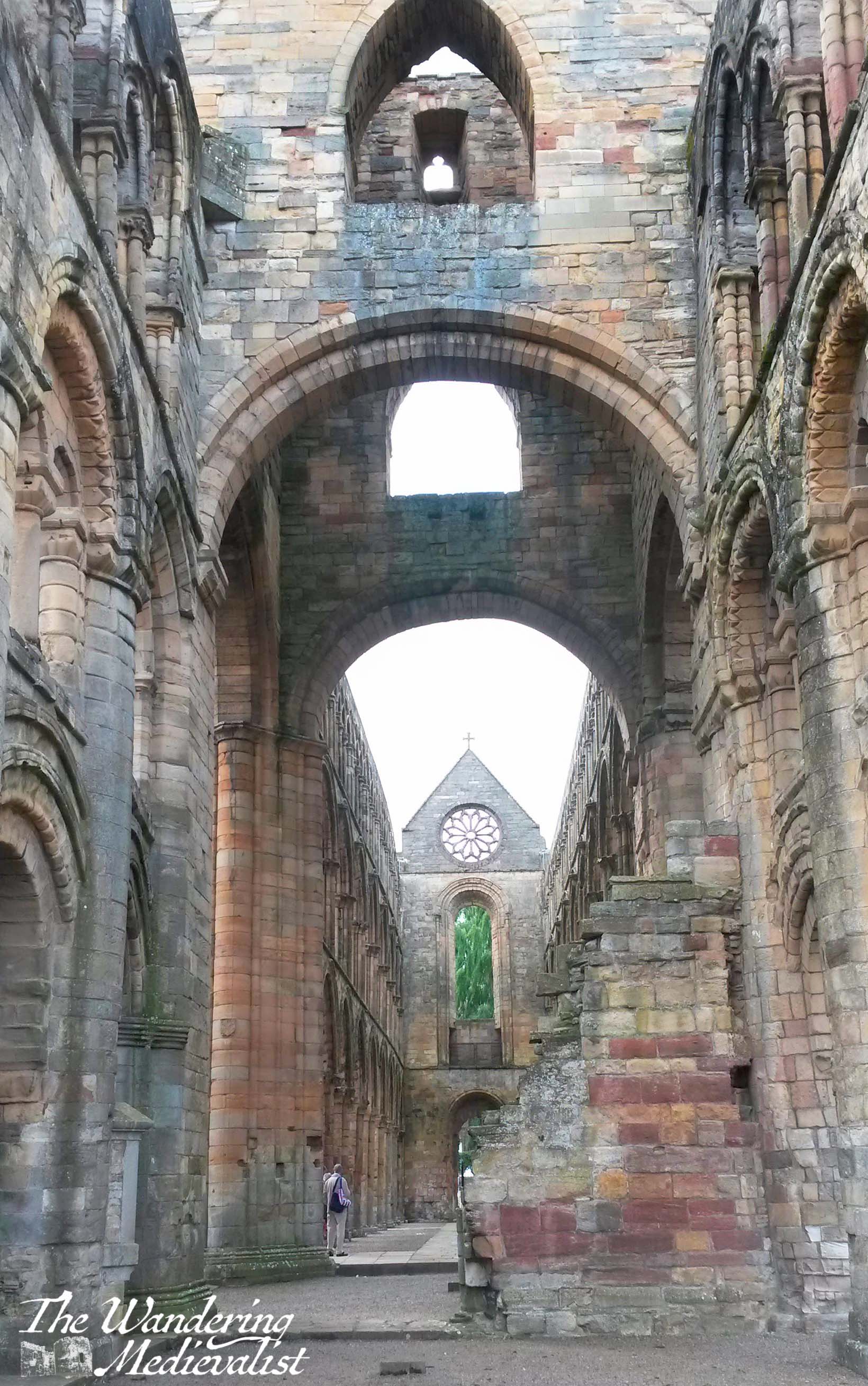
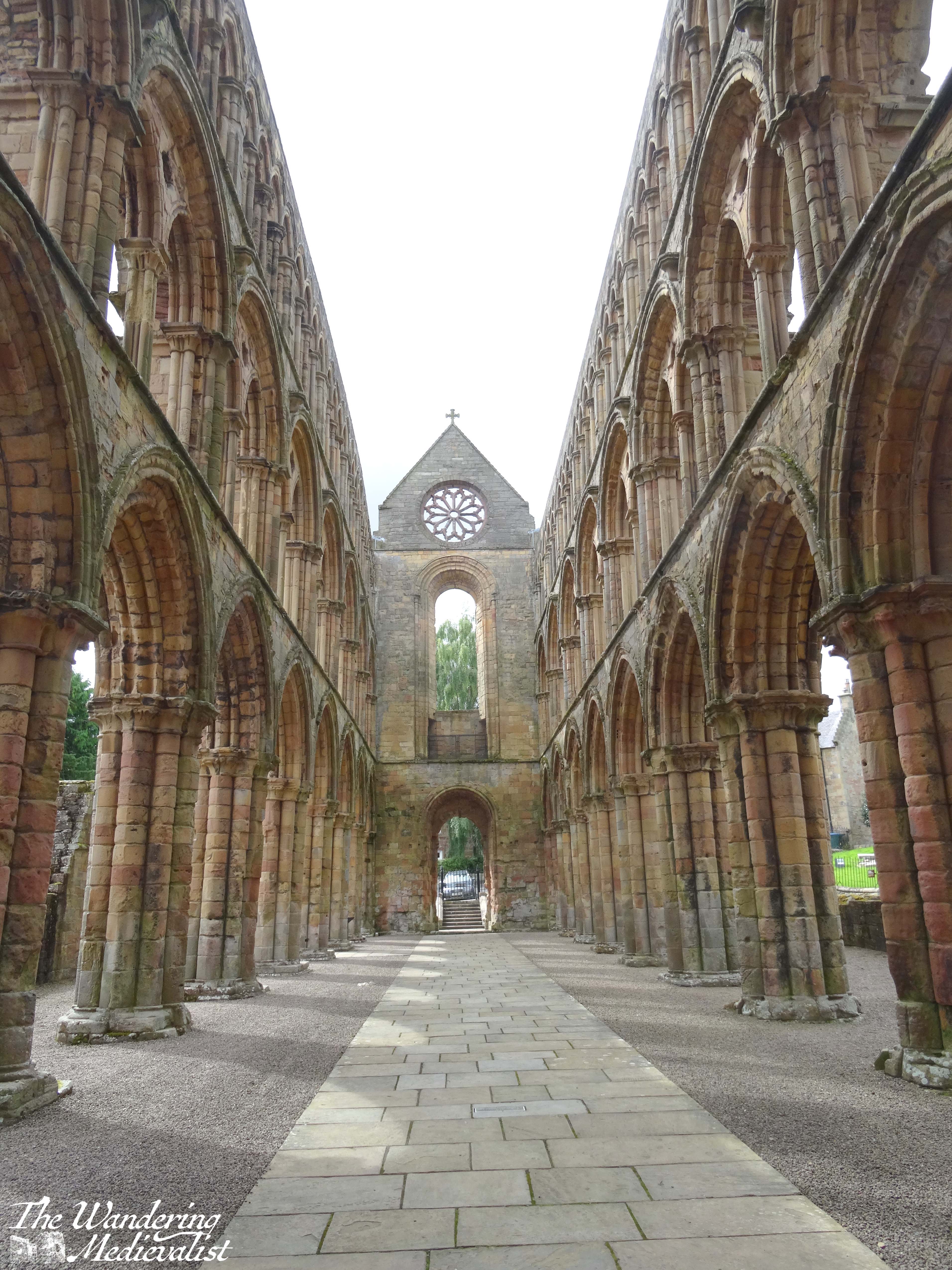
I love this series of views down the main aisle of the church, looking either towards the rose window or the grand processional entrance.
I was intrigued while reading about Jedburgh to discover that it had been founded by David I, who is known to have been a king who brought many ‘English’ innovations to Scotland. He had spent significant time in England in his early years, first in exile after the accession of his uncle, and later he became part of the royal family when his sister Matilda married King Henry I1. David himself was named Earl of Huntingdon by marriage to the heiress, and thereby granted a large parcel of lands scattered throughout England; he brought these with him when he became King of Scotland, complicating the nature of his feudal and personal relationships with Henry and future English rulers.2
David took advantage of the chaos in England during the period of the civil war between Stephen and Matilda to consolidate his own power – foundation and support of religious institutions was an essential part of royal activity during this time period. The architecture of the abbey shows an intriguing mix of traditional Norman round arches with the lighter, pointed arches of later styles. The solid yet ornately-carved columns are reminiscent of Durham Cathedral, while the fine window supports are clearly of newer construction. One cannot help but agree with the writer of the many plaques around the site – it is a monument to medieval construction and architecture, with gorgeous carvings and innovative architecture visible even after 100s of years and multiple attacks. Jedburgh is perhaps less majestic than the more out-of-the-way abbeys like Melrose or Dryburgh, but it is no less beautiful.
A marriage of ingenious dynastic significance. By marrying Matilda, Henry combined his Norman ‘invader’s bloodline, the new bloodline of the English throne, with the ancient Anglo-Saxon bloodline that Matilda carried from her mother, Queen Margaret (formerly Margaret of Wessex). With one marriage, Henry legitimised his reign and guaranteed that his heirs would carry both English royal bloodlines. The success (or rather lack thereof) of this plan will be discussed at another time. ↩︎
As the English kings now owed homage to the Kings of France for Normandy, now the Scottish kings owed homage to the English kings for their lands. Always a recipe for trouble when a king owes sovereignty to another king…see the whole 12th and 13th centuries. ↩︎
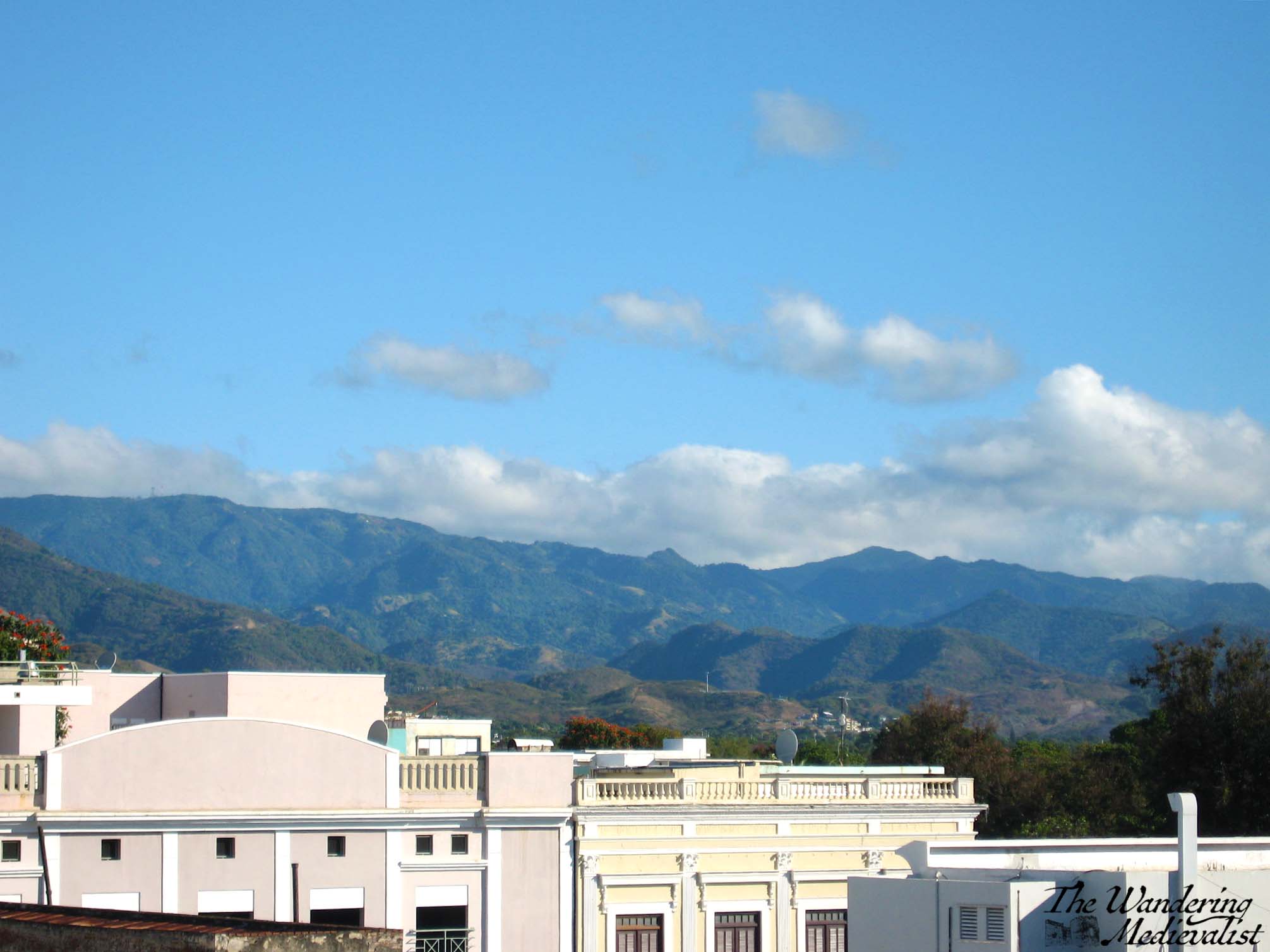
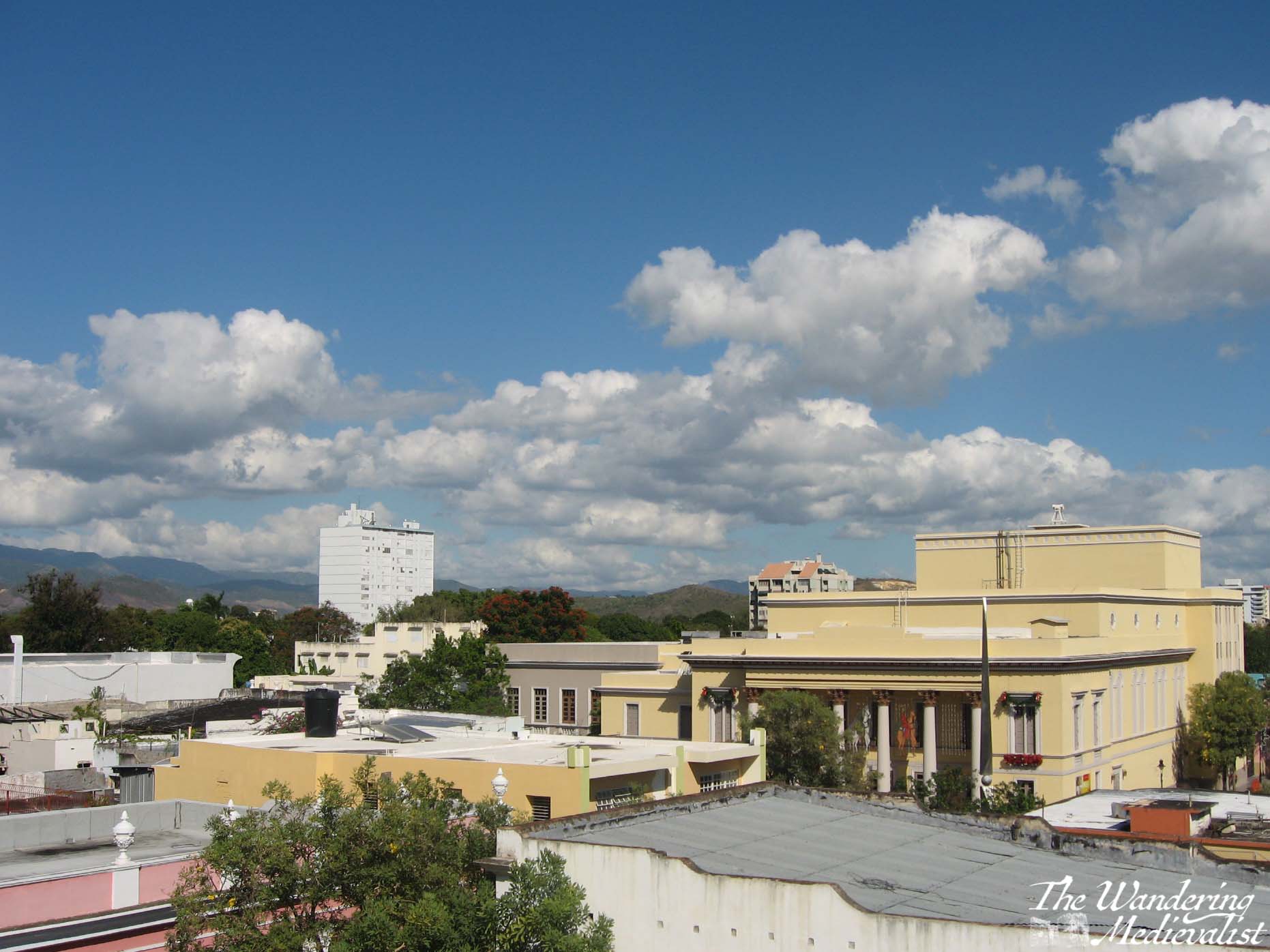
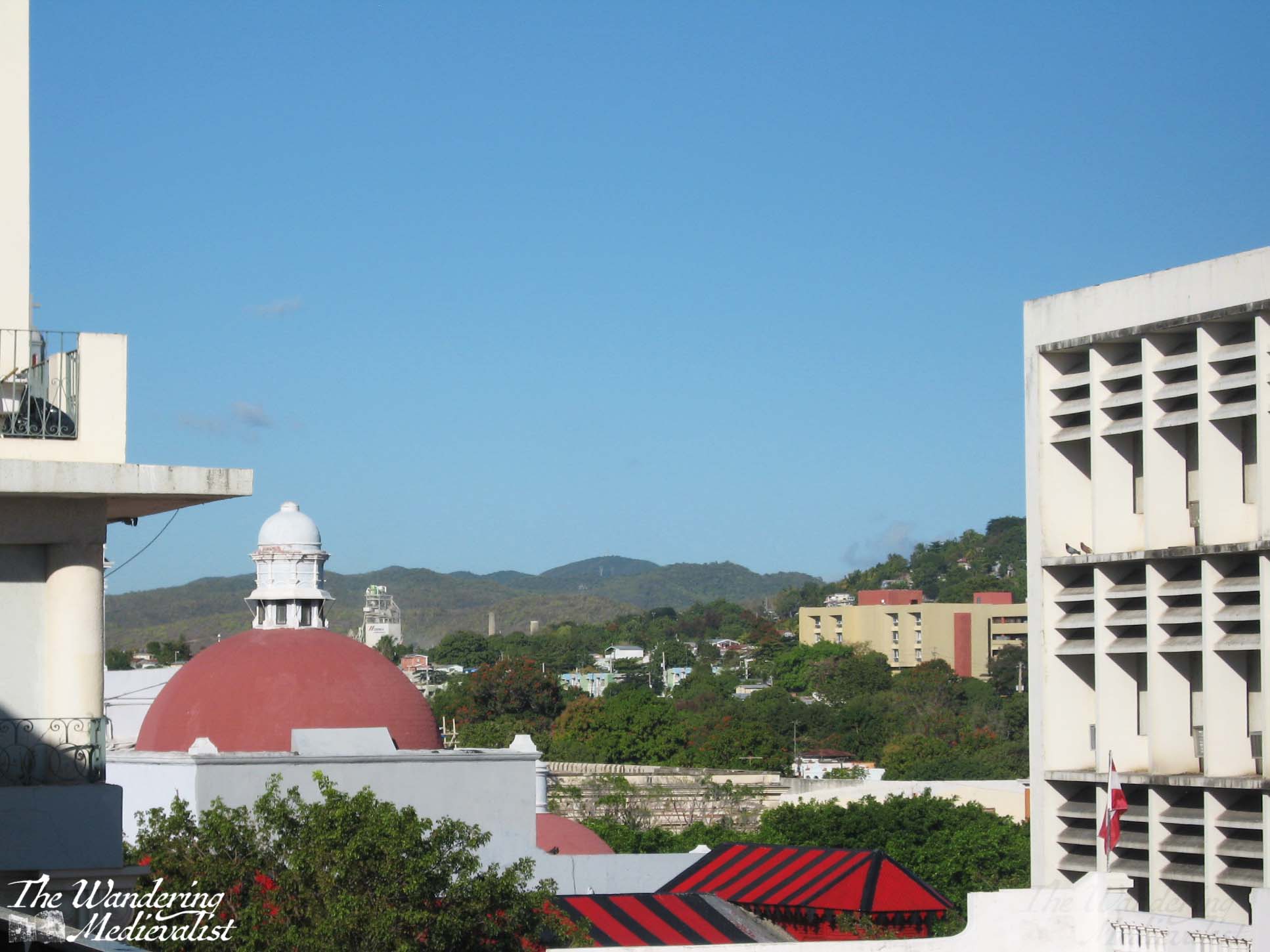
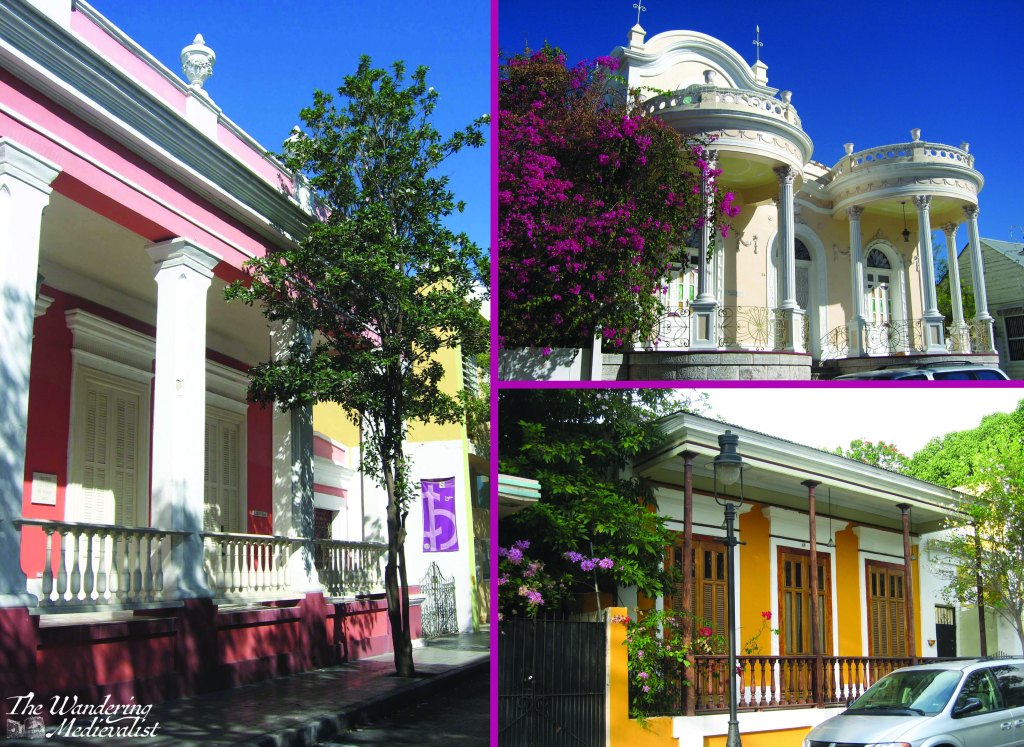
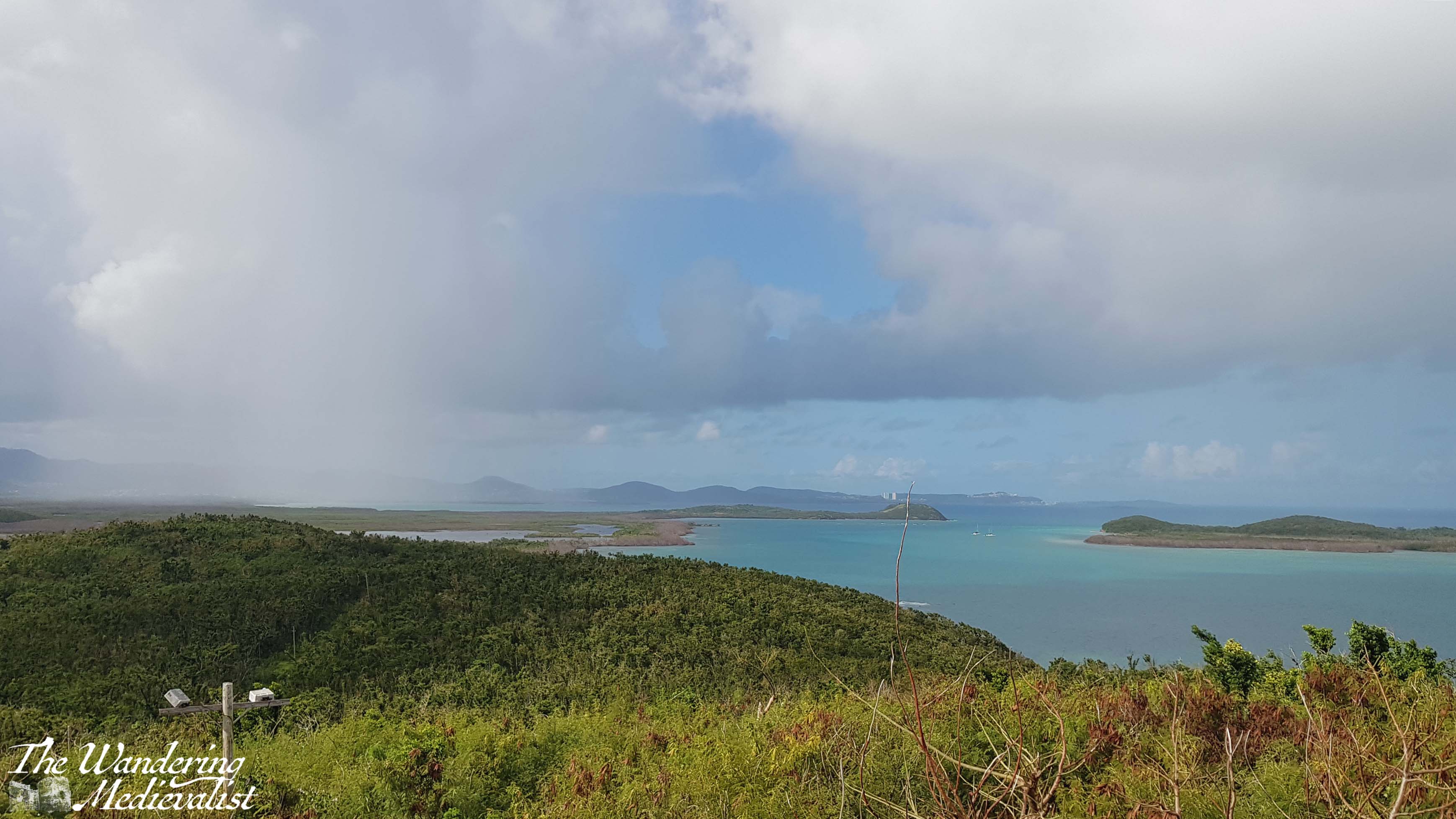
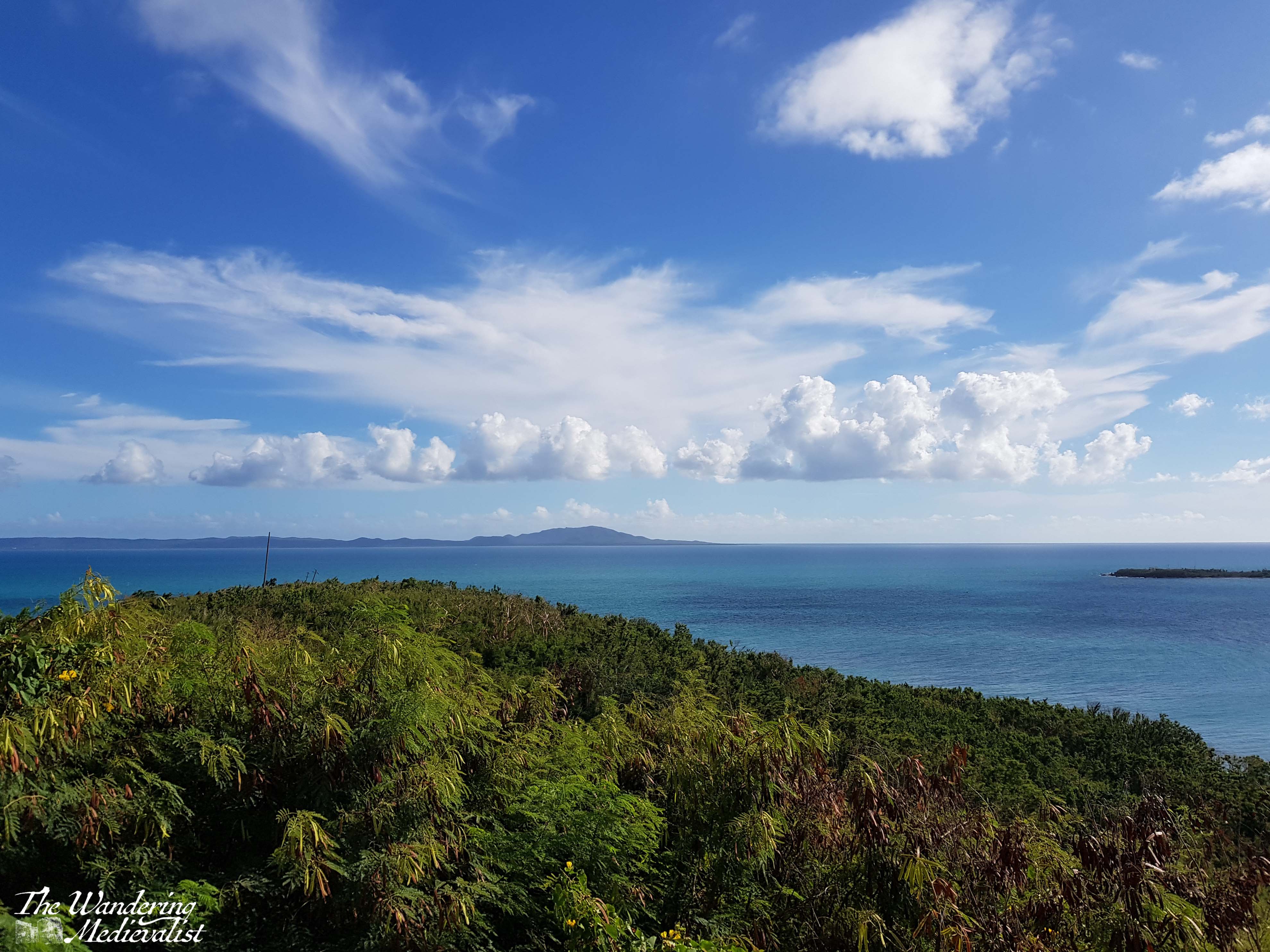
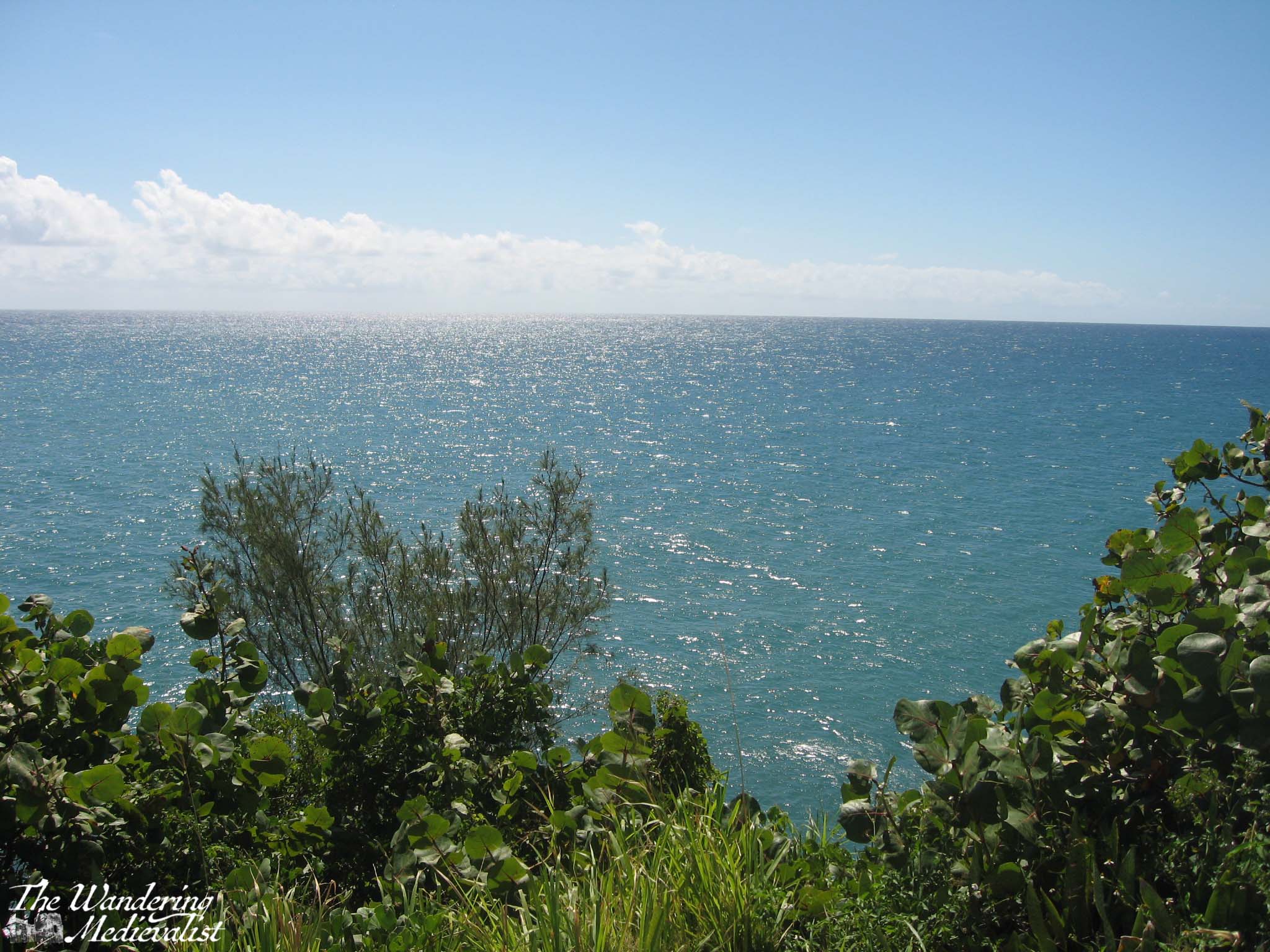
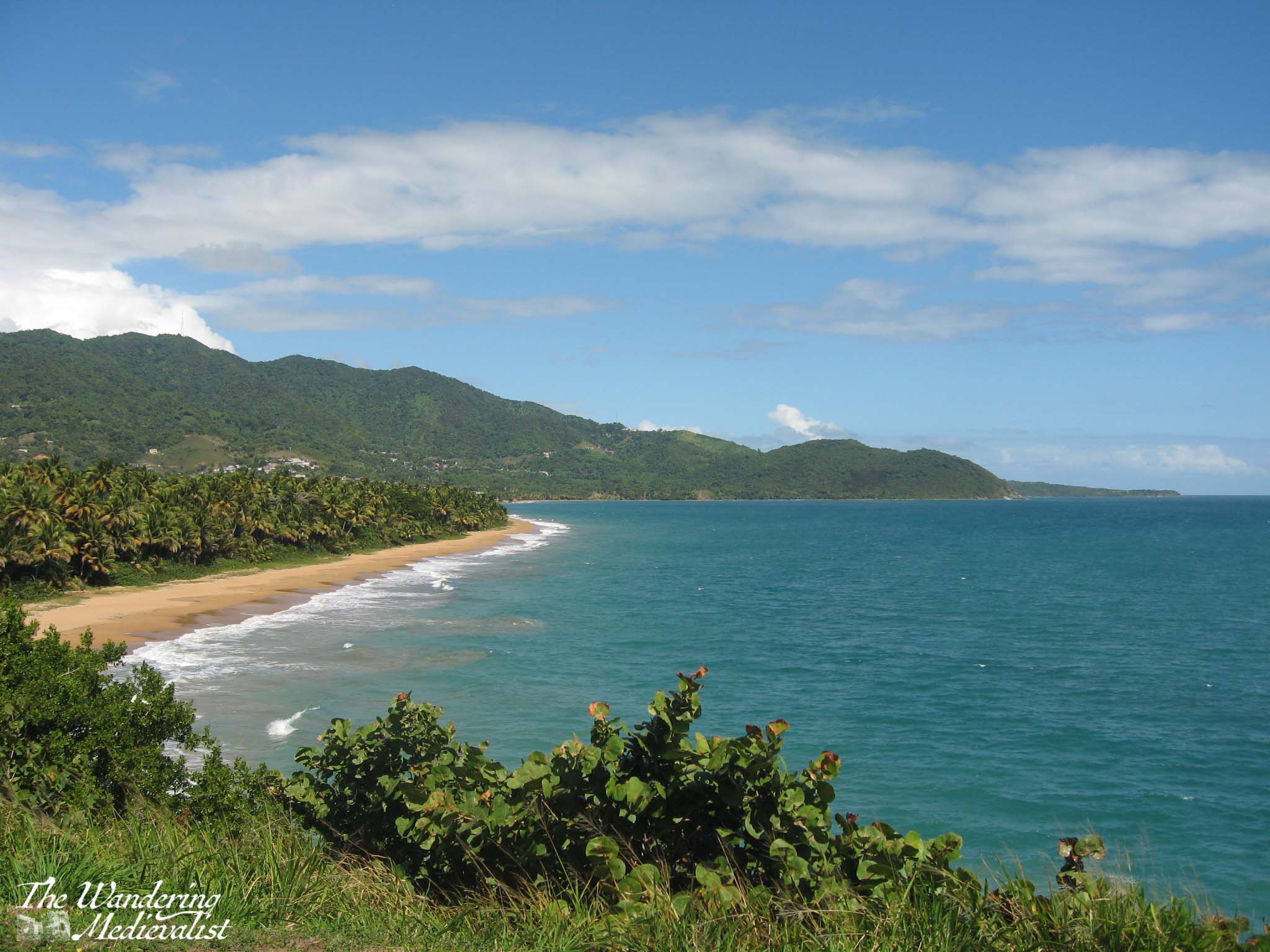
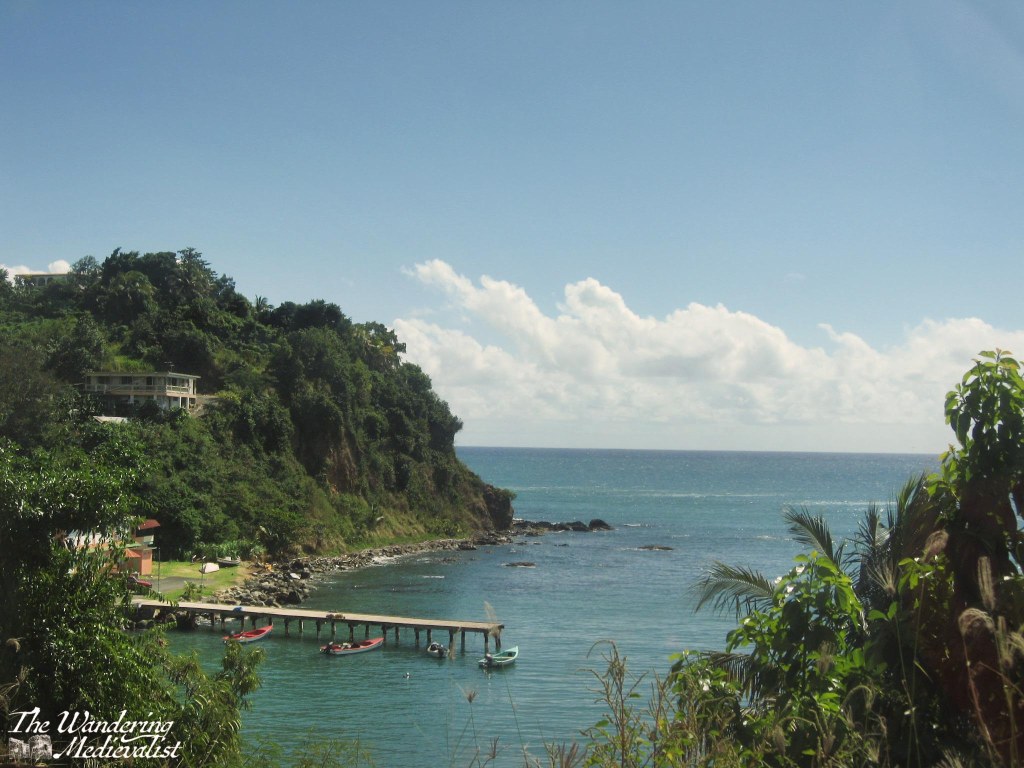
For a good part of my tween and teen years, I spent several weeks each year visiting my father in Puerto Rico. So much of the island is stunningly beautiful, with sunny beaches and tree-covered mountains of a rugged nature unlike those we have in New England and Scotland. The flowers are bright yellows, pinks, oranges and clear whites, the greens varying from almost yellow to dark rich near-black hues. The architecture is modern and also historic, with cities like San Juan and Ponce demonstrating their European connections. But there is also striking damage from numerous hurricanes and generations of poverty. I recall vividly driving through the mountains past corrugated metal houses, and coming across a road that had been washed away by Hurricane Maria’s rainfall. I could spend a great deal more time discussing the economy of Puerto Rico, but this is a photo blog and not a political one; I will likely return to the topic when I post about Vieques. The many sides of Puerto Rico mystified me when I was young, and it is only during my last few visits as an adult that I have truly come to appreciate the unique nature of the place, and realise how lucky I have been to see it change over the past 30 years. I have been trying to work out the best way for me to share my favourite places for some time, so I’ve settled on my highlights of Puerto Rico, starting off with the city of Ponce, on the south coast.
Ponce
I really enjoyed our short trip down to Ponce a few years ago, and was struck by its clear European roots – the architecture is very Spanish Caribbean. Newer buildings offer views up towards the mountains that form the spine of the island. The second-largest city on the island, Ponce was founded by the Spanish in 1692. It boasts a beautiful fountain in the square and the extraordinary Rincón Argentino, serving mouth-watering steaks.
In the mountains above Ponce is Hacienda Buena Vista, an old coffee plantation run on water power. It is beautiful and fascinating, with several enormous water wheels and a series of tunnels and rivulets carrying water all over the plantation.
Hacienda Gripiñas
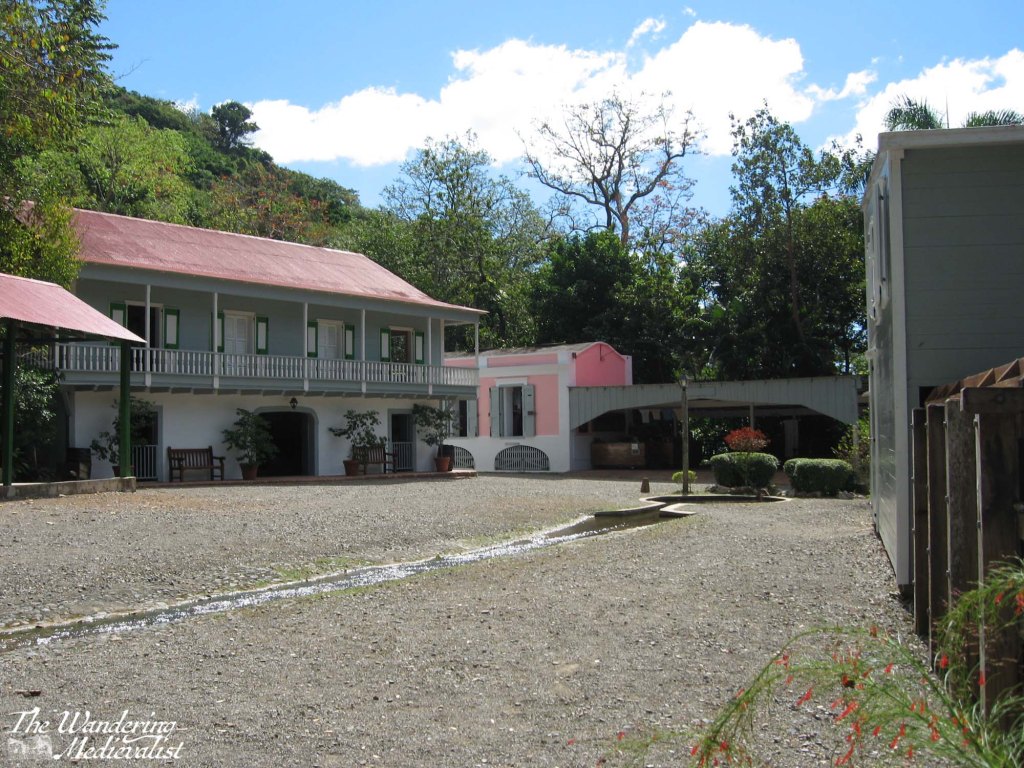
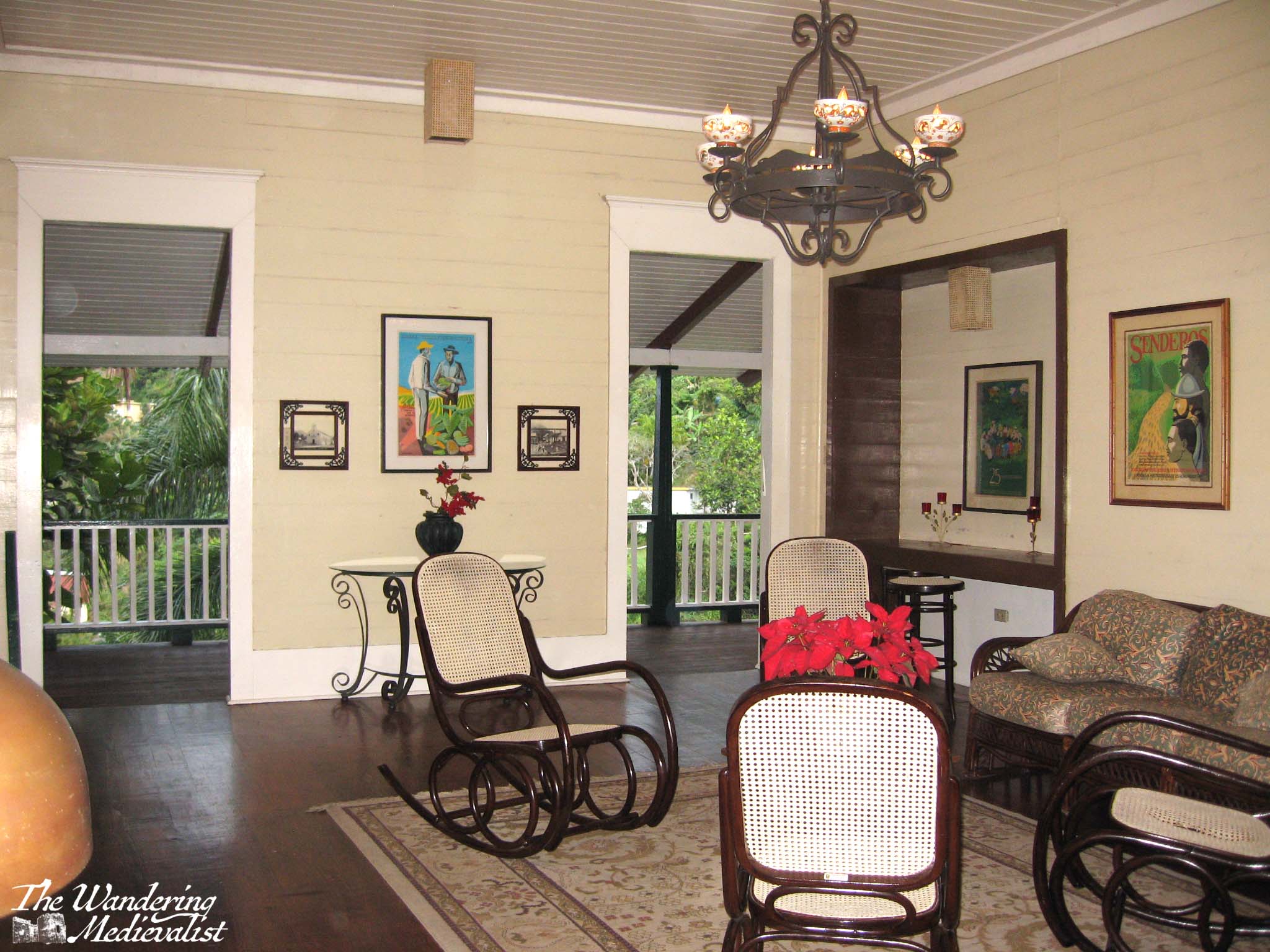
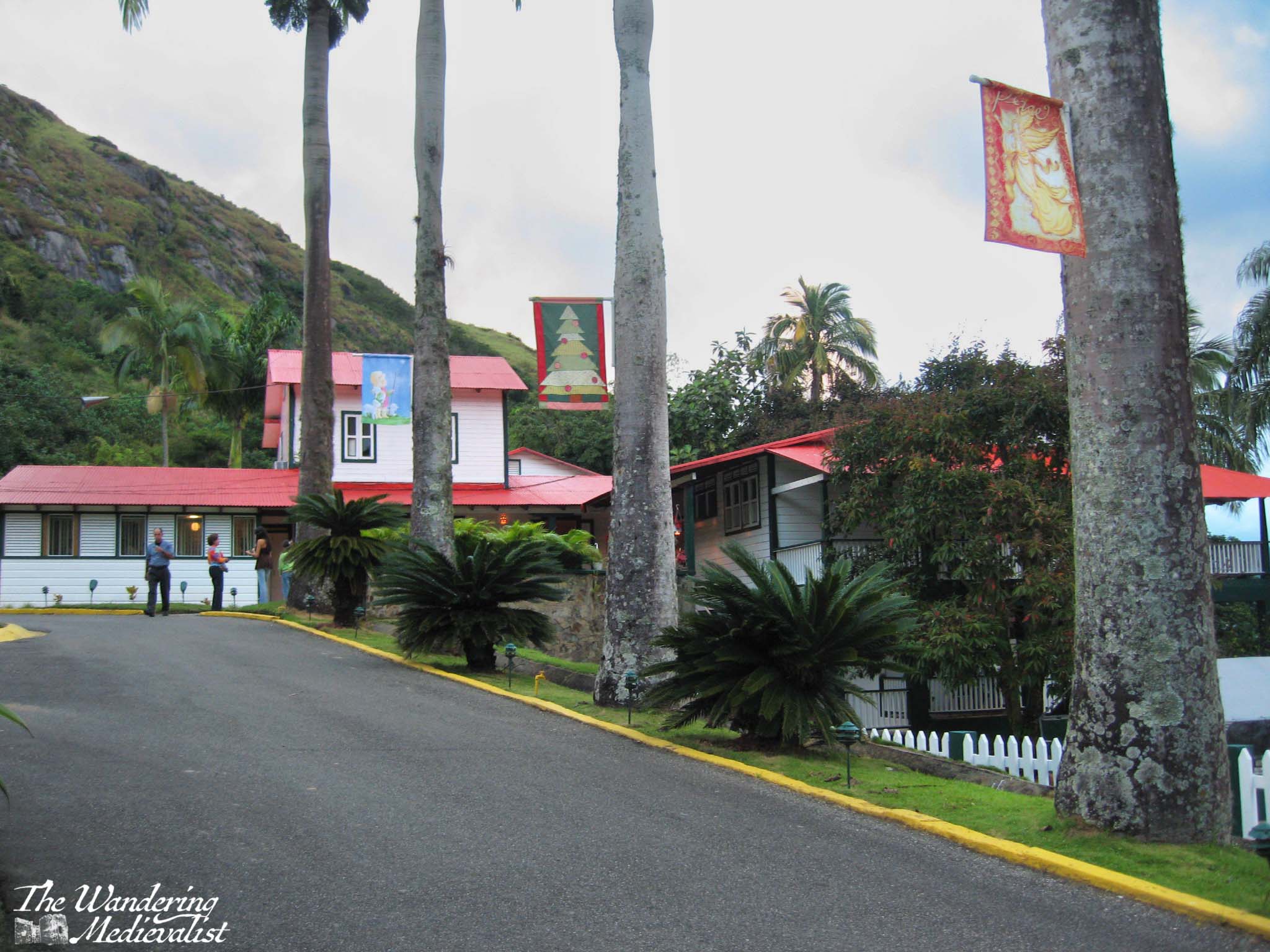
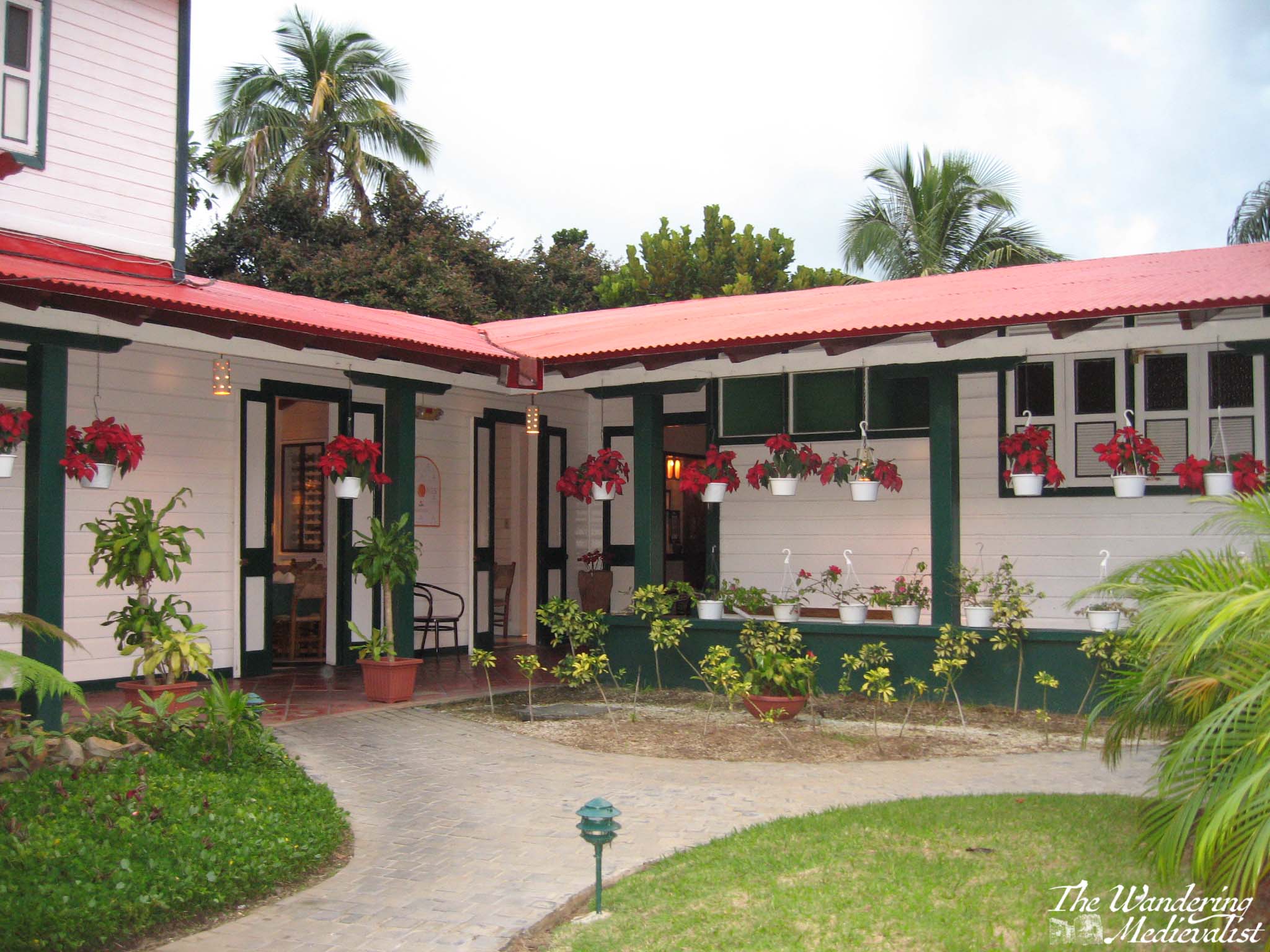
Further into the mountains near the town of Jayuya is Hacienda Gripiñas, another old plantation that has been transformed into an inn. Dad took me here many years ago and it stood out in my mind for its stunning beauty in the mountains, and the fried plantains we had with breakfast. The accommodation is basic, but the food was classic Puerto Rican and the surroundings quiet and peaceful.
Mountains of Puerto Rico
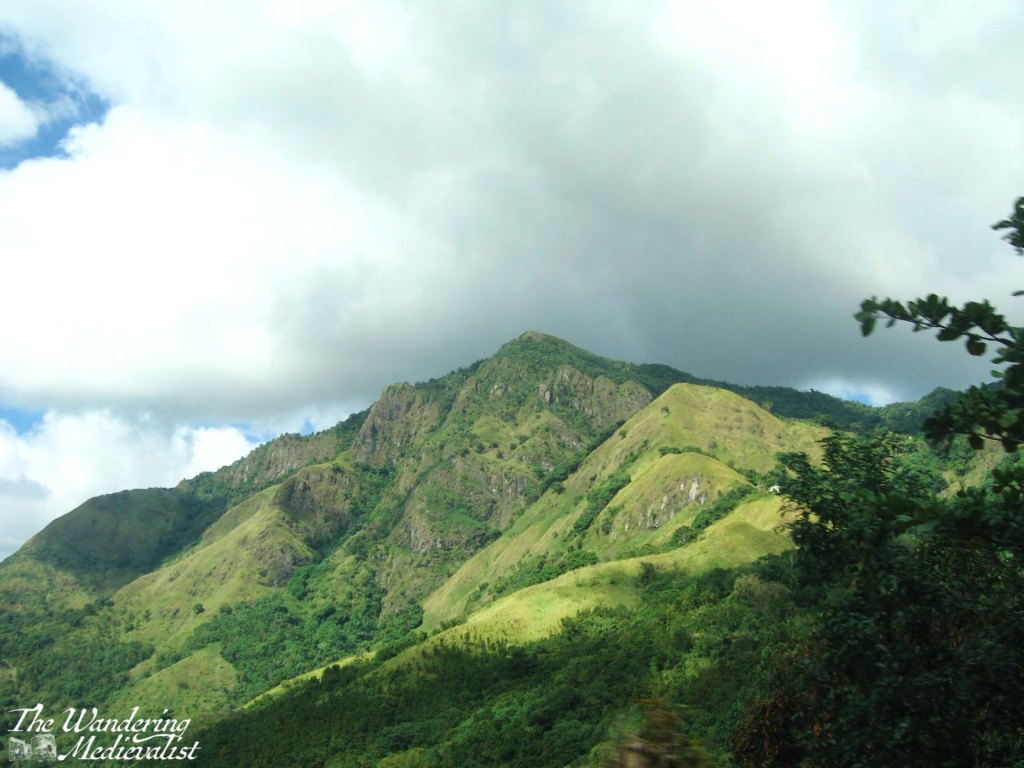
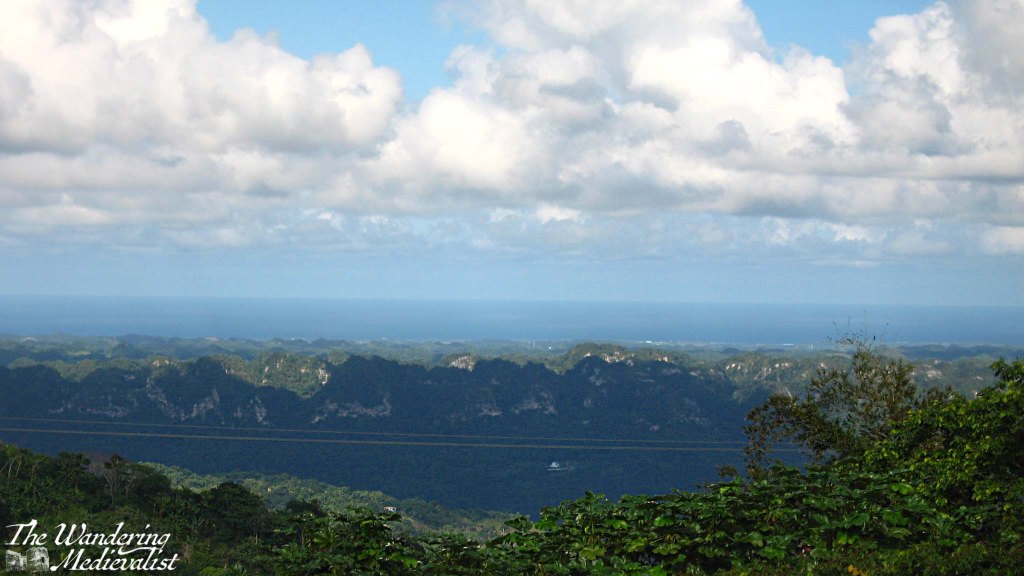
As is quite common in the Caribbean, Puerto Rico boasts a coastline of beautiful beaches and interior of lush, craggy mountains. Unlike northern mountains that were smoothed by glaciers, these have lots of sharp edges and cliffs. One of the only crops that grows at altitude and on such steep hillsides is coffee, and Puerto Rican coffee is some of the best I have ever tasted (costing about $1.50 from a roadside caravan).
El Morro, Old San Juan
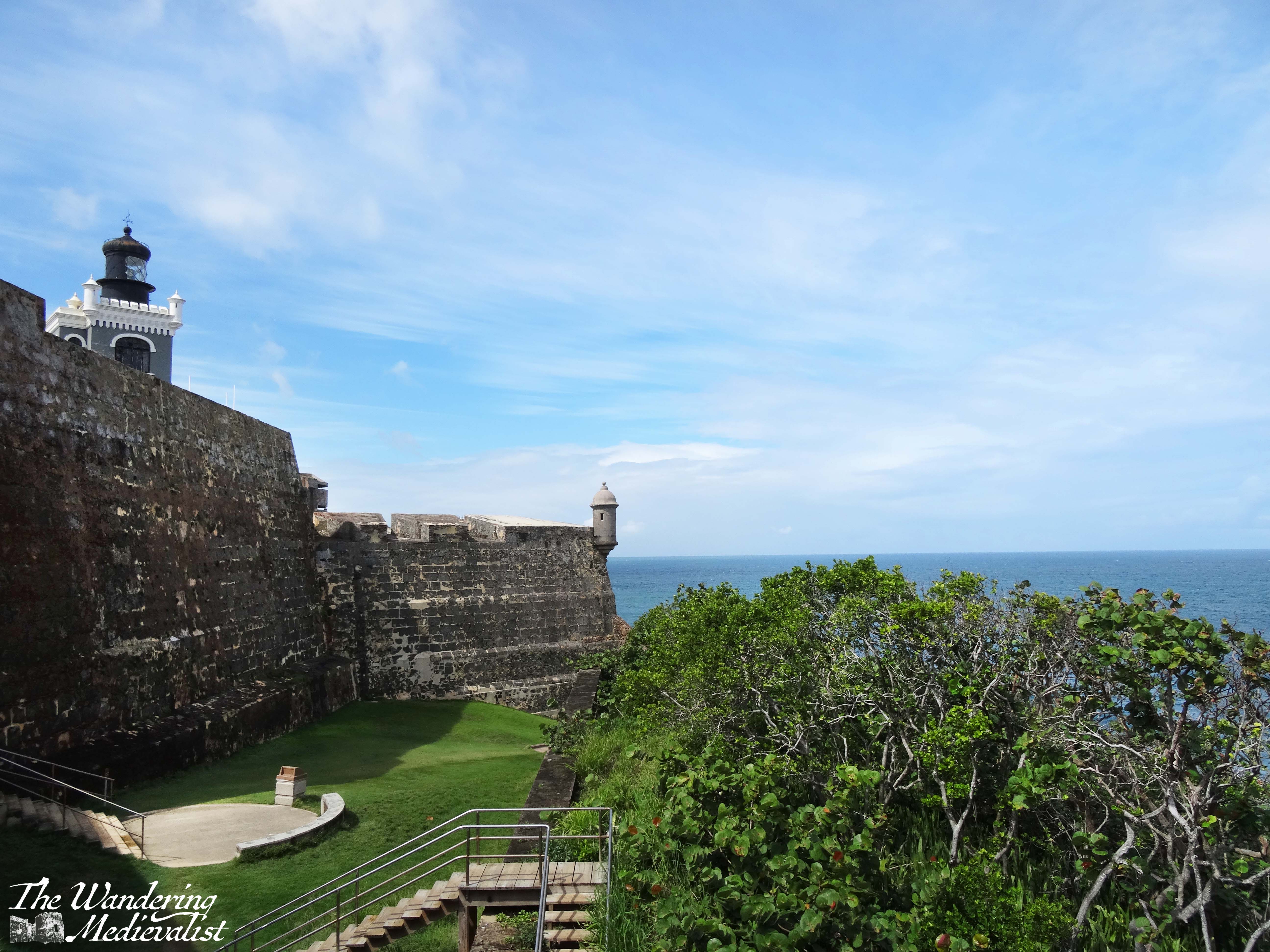
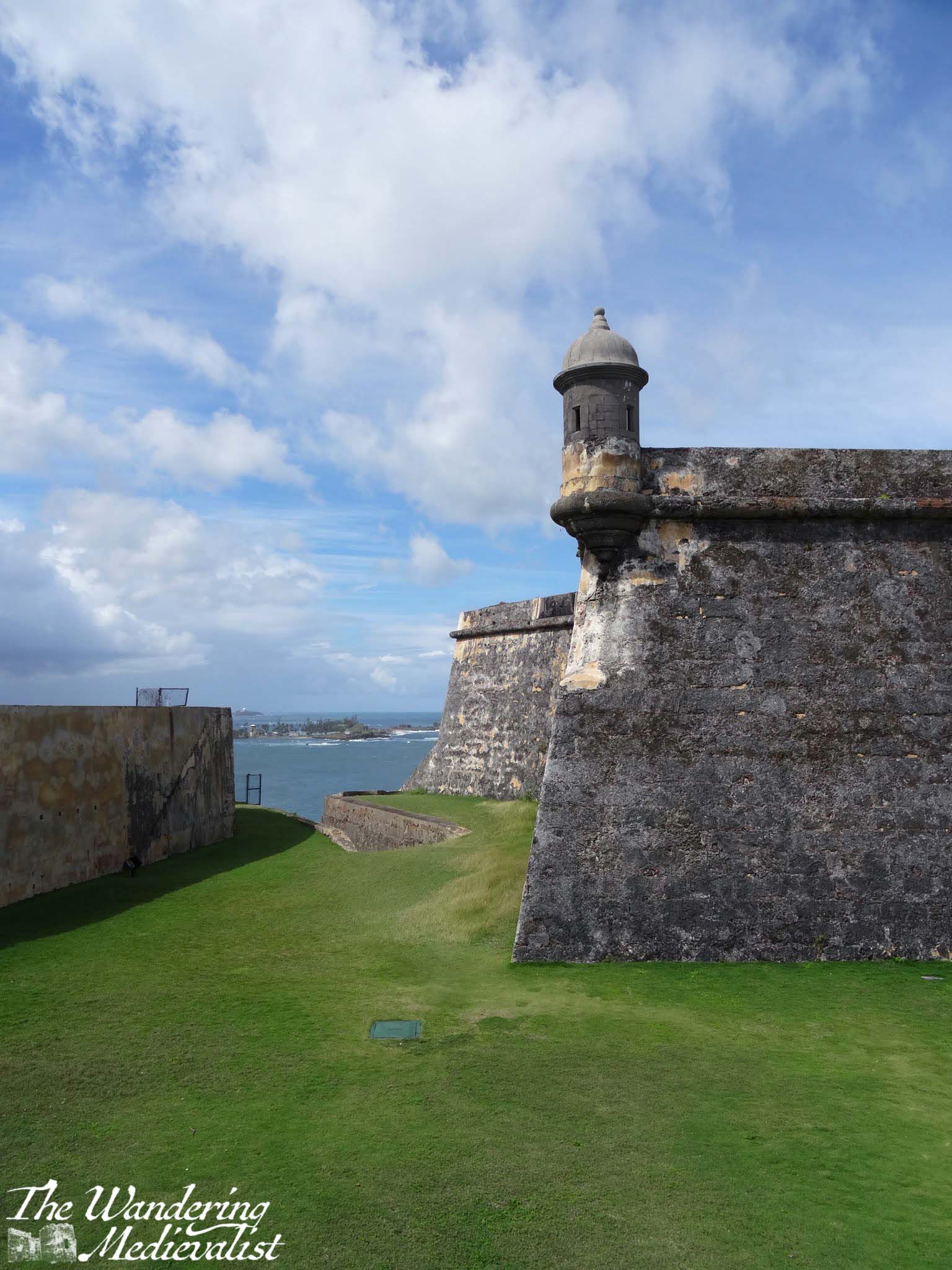
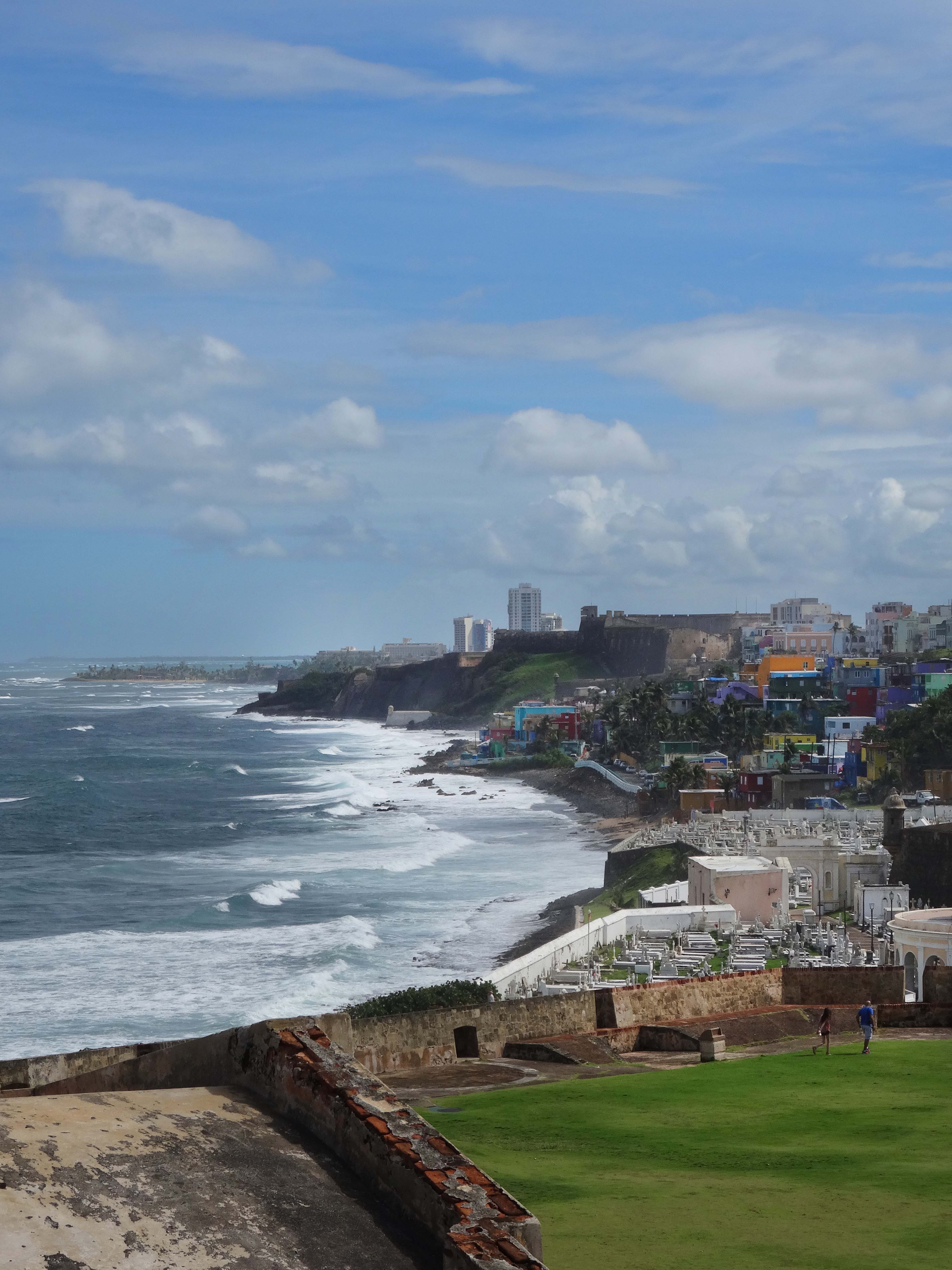
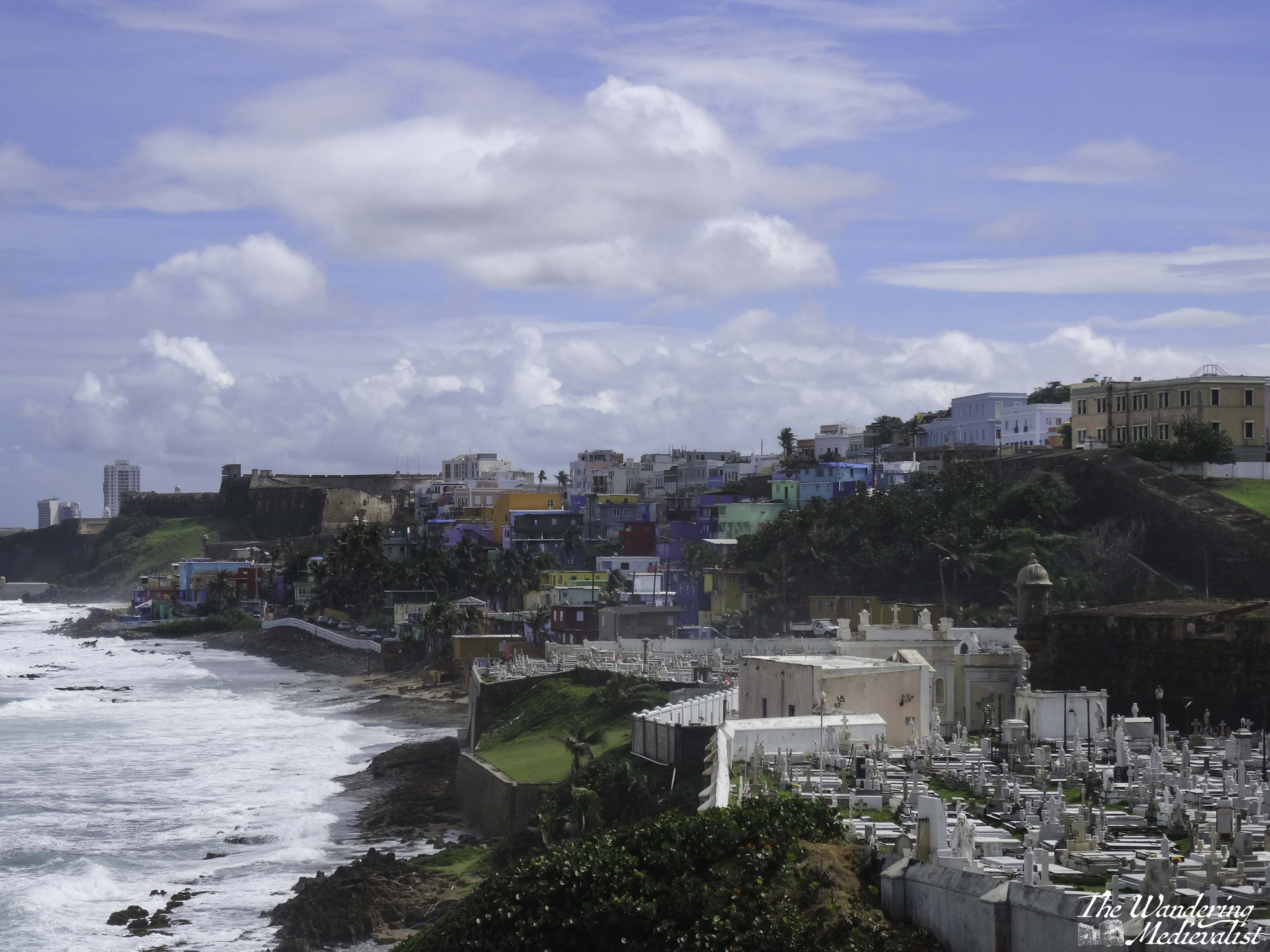
Castillo San Felipe del Morro is arguably Puerto Rico’s most famous building; the iconic garitas (overhanging, wall-mounted turret or sentry box) are a symbol of the island throughout the USA. Construction started in the 16th century and continued for more than 100 years, until it reached its current state in the late 1700s. While we did not manage to get inside the fortress, we did explore the outer walls and I was able to capture some of the stunning views along the north coast of San Juan, as well as one photogenic local.
Luquillo Beach
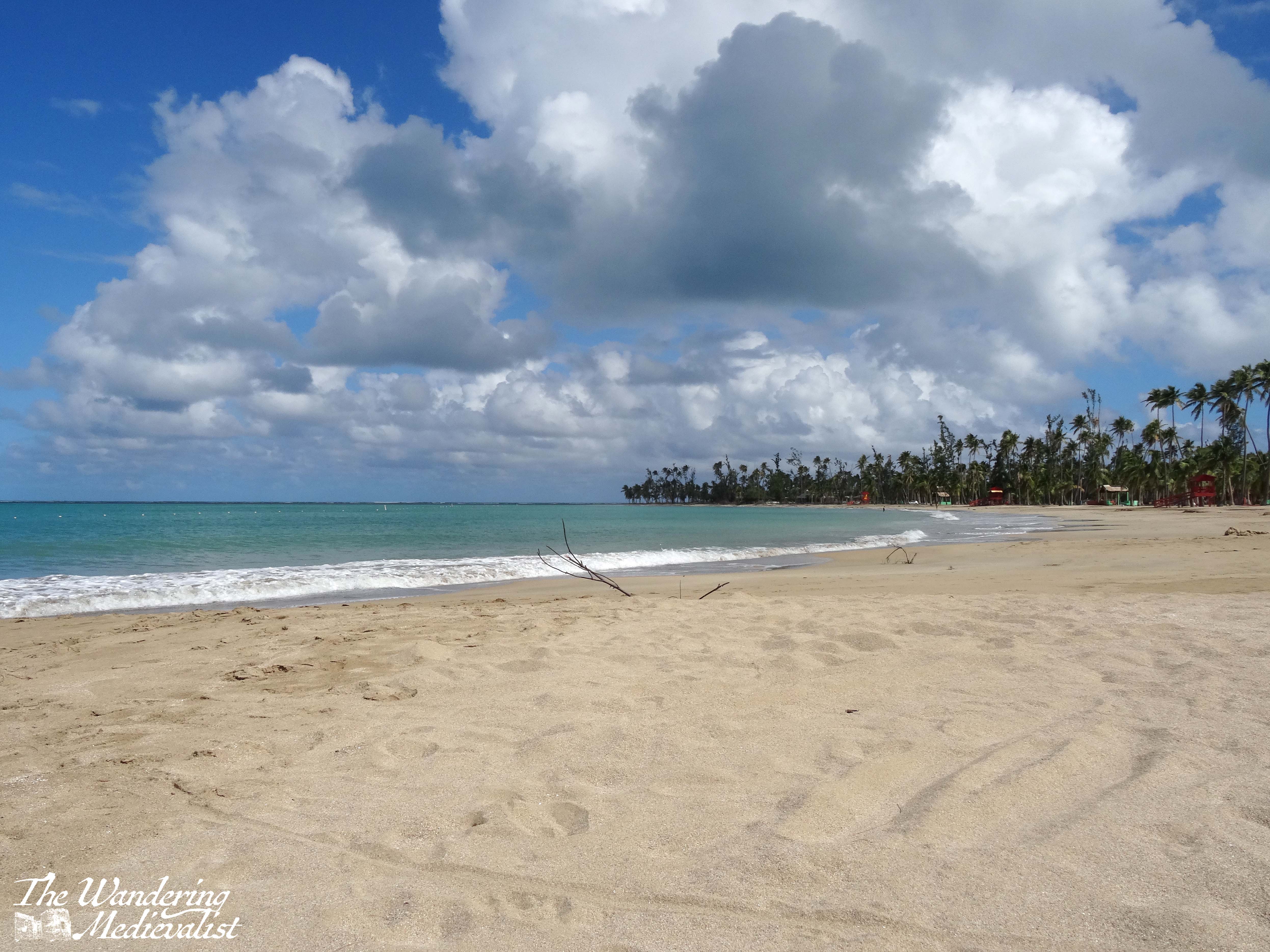
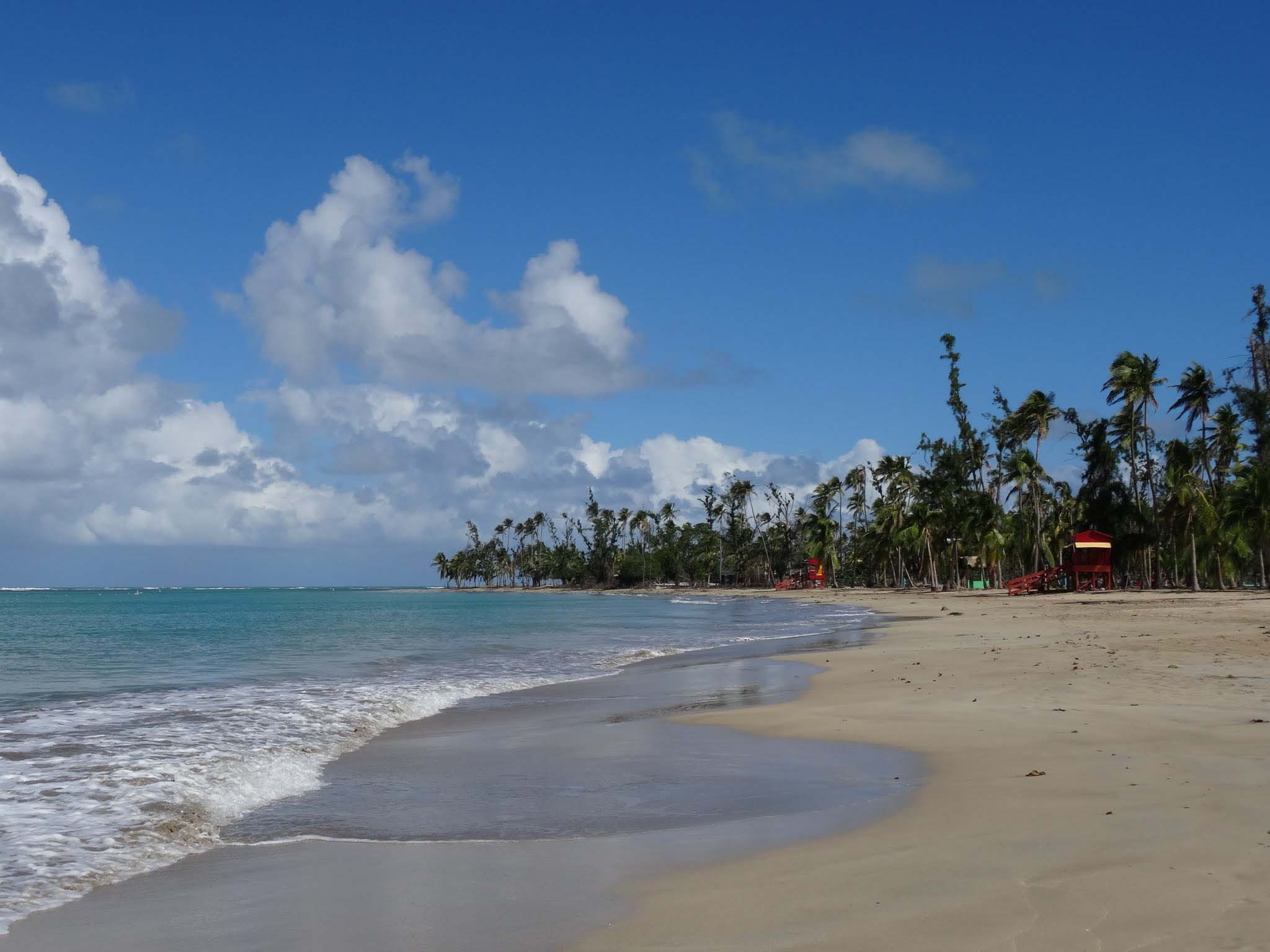
Moving eastward along the north coast of the island, one reaches the famous beach of Luquillo. At certain times of year, it is crowded with tourists and locals, taking advantage of the numerous kioskos offering food and drink refreshments like seafood, burgers, chicken, beer and cocktails. It is also a stunning beach with plenty of palms and warm clear water. We visited on our last day and wished we had never gone anywhere else! Though we were also lucky enough to have it all to ourselves…
Seven Seas Beach, Fajardo
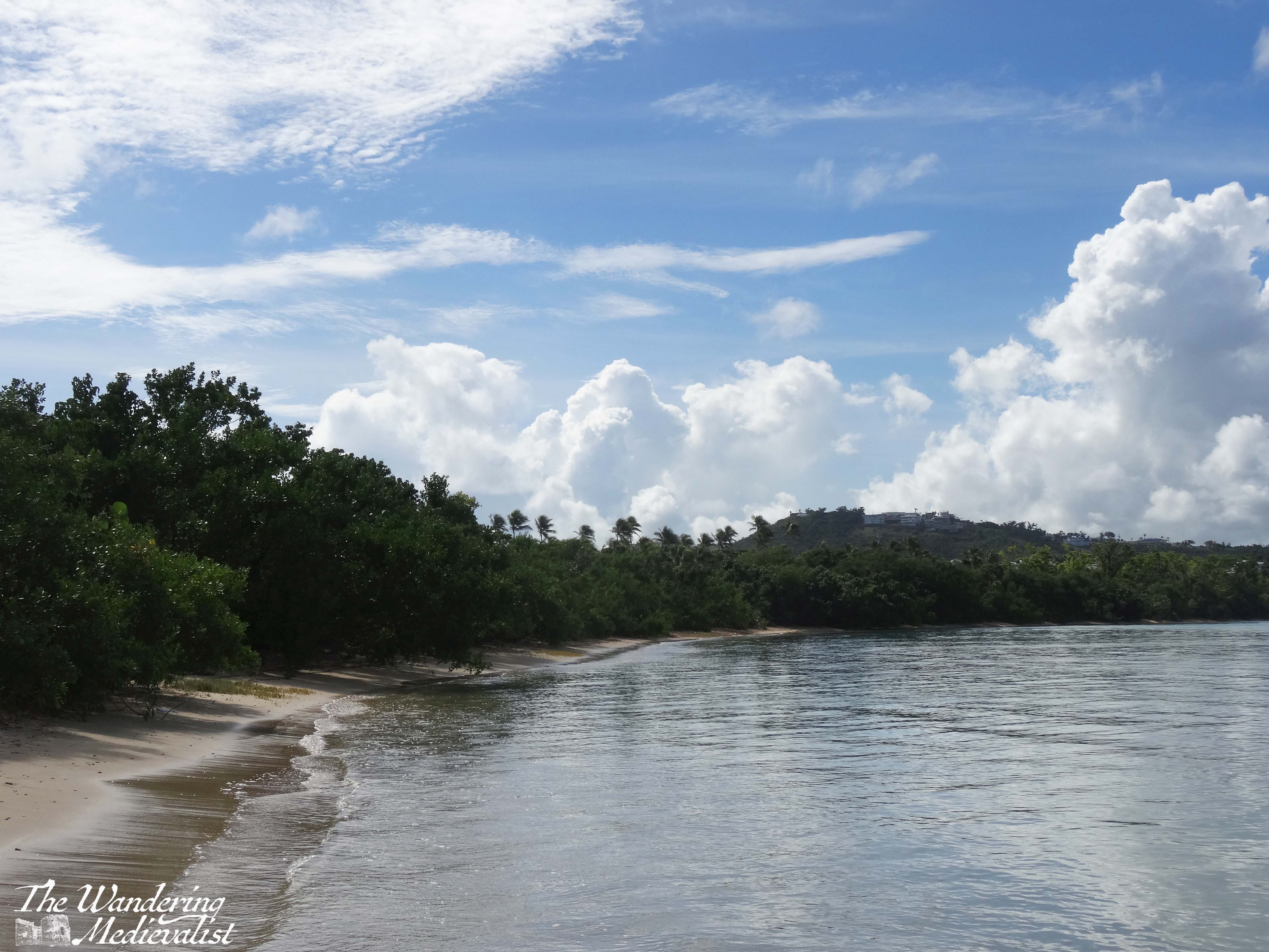
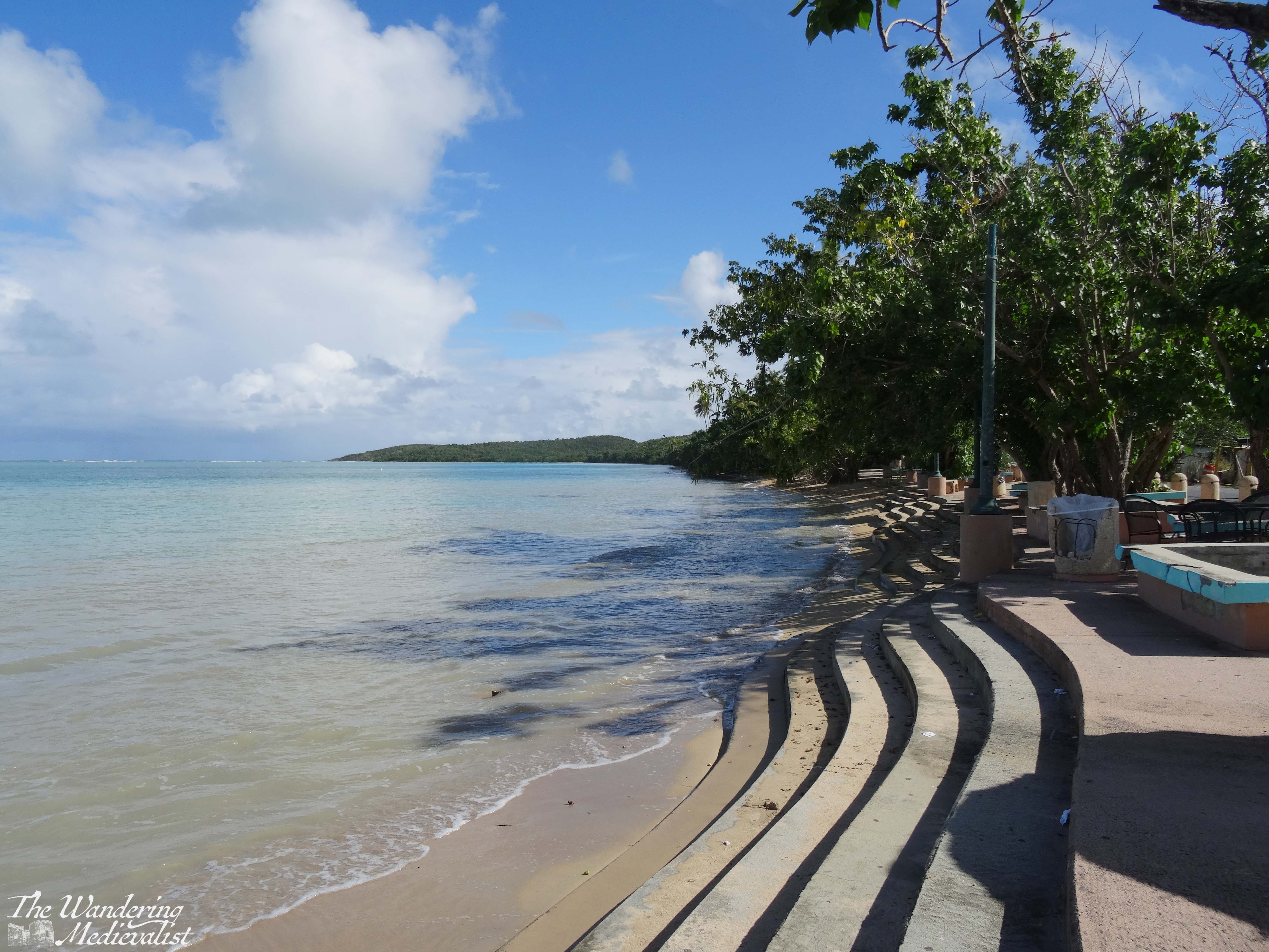
Our ‘local’ beach when visiting, Seven Seas is not as spacious as Luquillo but it is a great beach for a walk and a swim; the water is warm and relatively shallow, and its location makes it easy to reach. And, if you walk far enough, you can see through the trees into Laguna Grande, one of Puerto Rico’s eco-masterpieces, a bioluminescent bay. I was lucky enough to take a boat ride in a bio bay on Vieques years ago, and it is a truly unique experience.
Punta Puerca and the Vieques sound
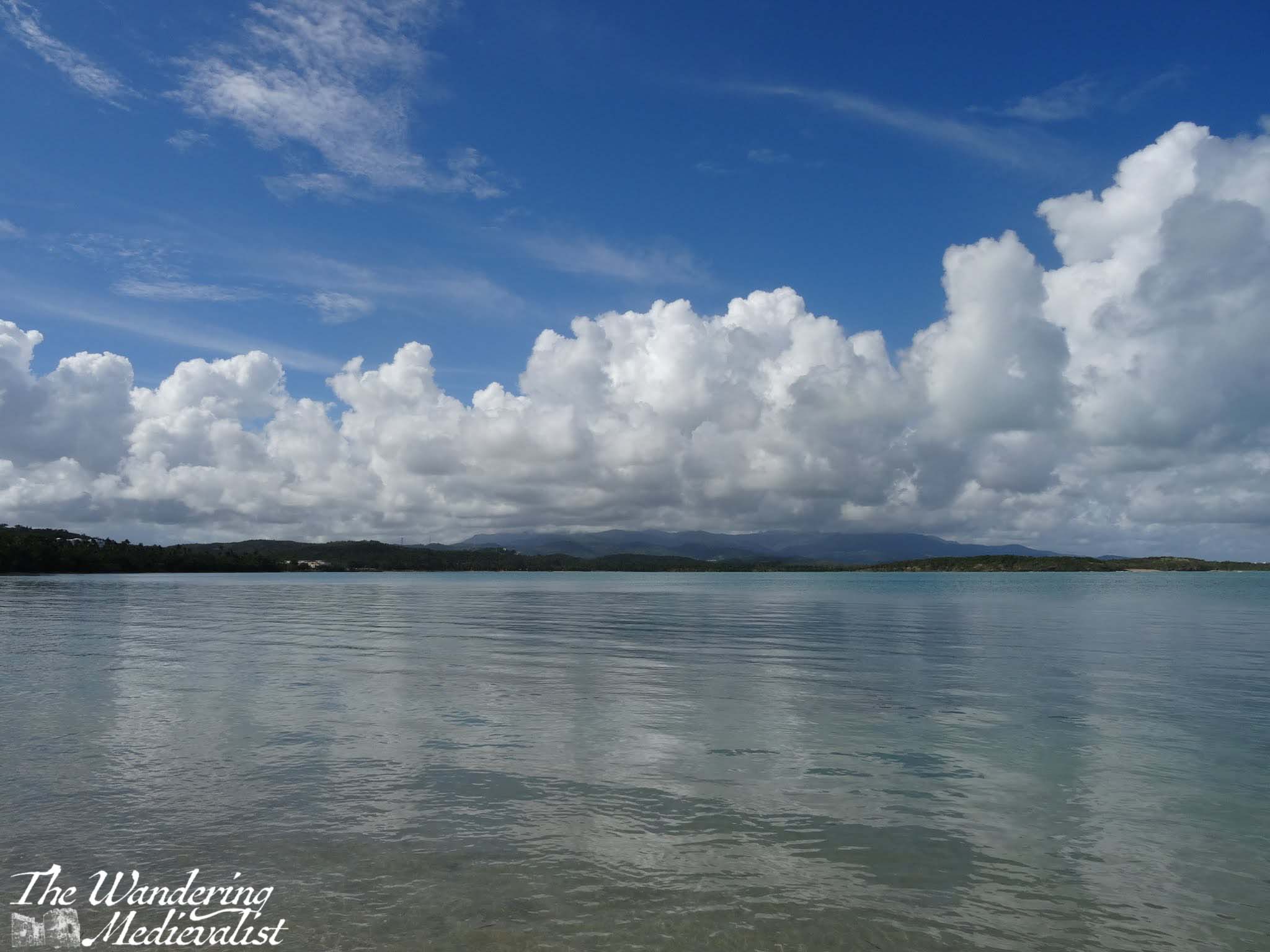
Not a small part of Puerto Rican history is a complex and often troublesome relationship with the US government. This was embodied by the US Naval occupation of more than half of Vieques island, and the enormous Navy base at Roosevelt Roads, near Ceiba. The base has been inactive since 2004, replaced by a large area of abandoned military buildings and the Jose Aponte de la Torre Airport. The hills of Punta Puerca offer lovely views back towards Fajardo and across the sound to Vieques. I plan to write more about Vieques in the near future.
Balneario de Humacao
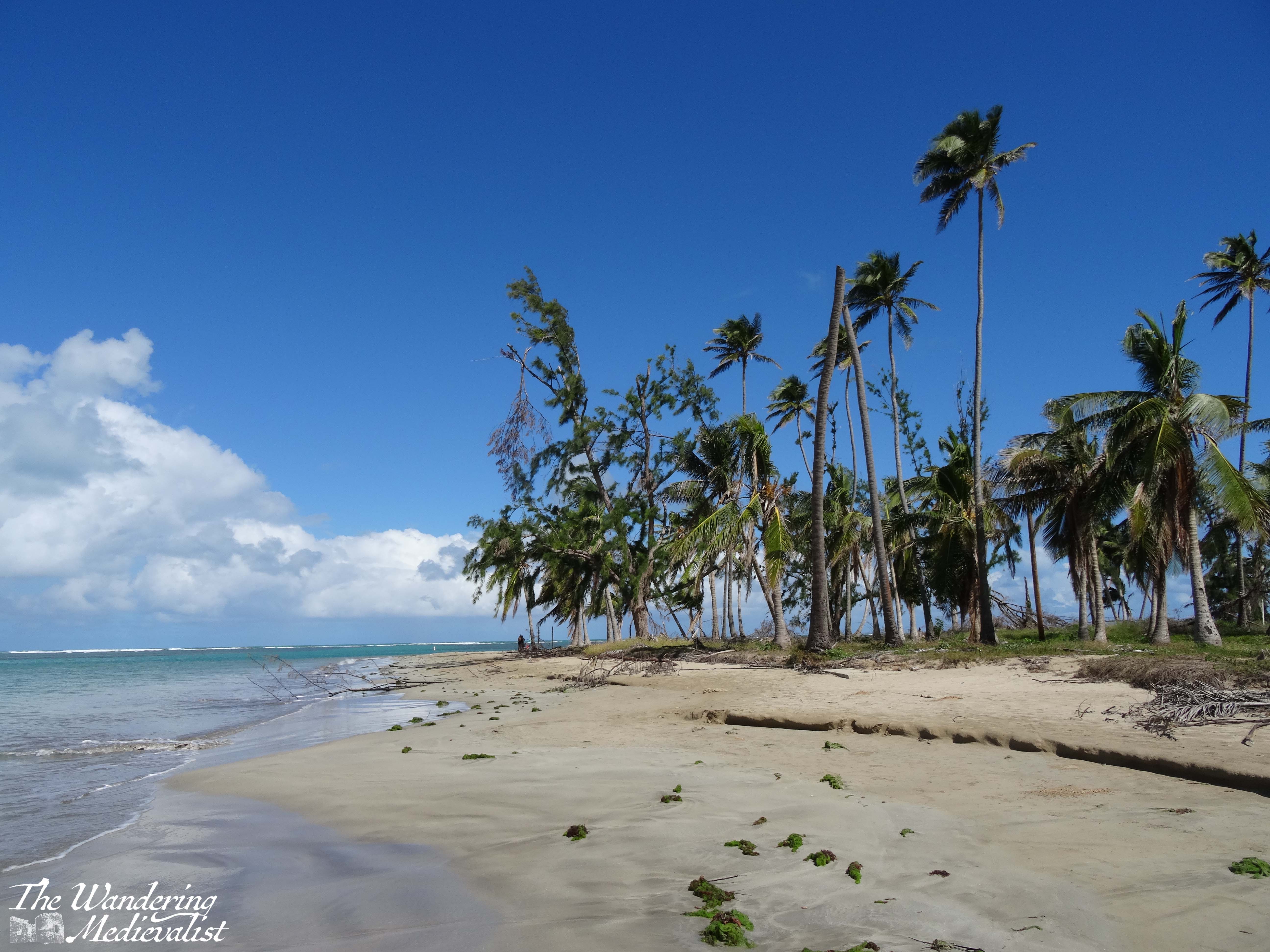
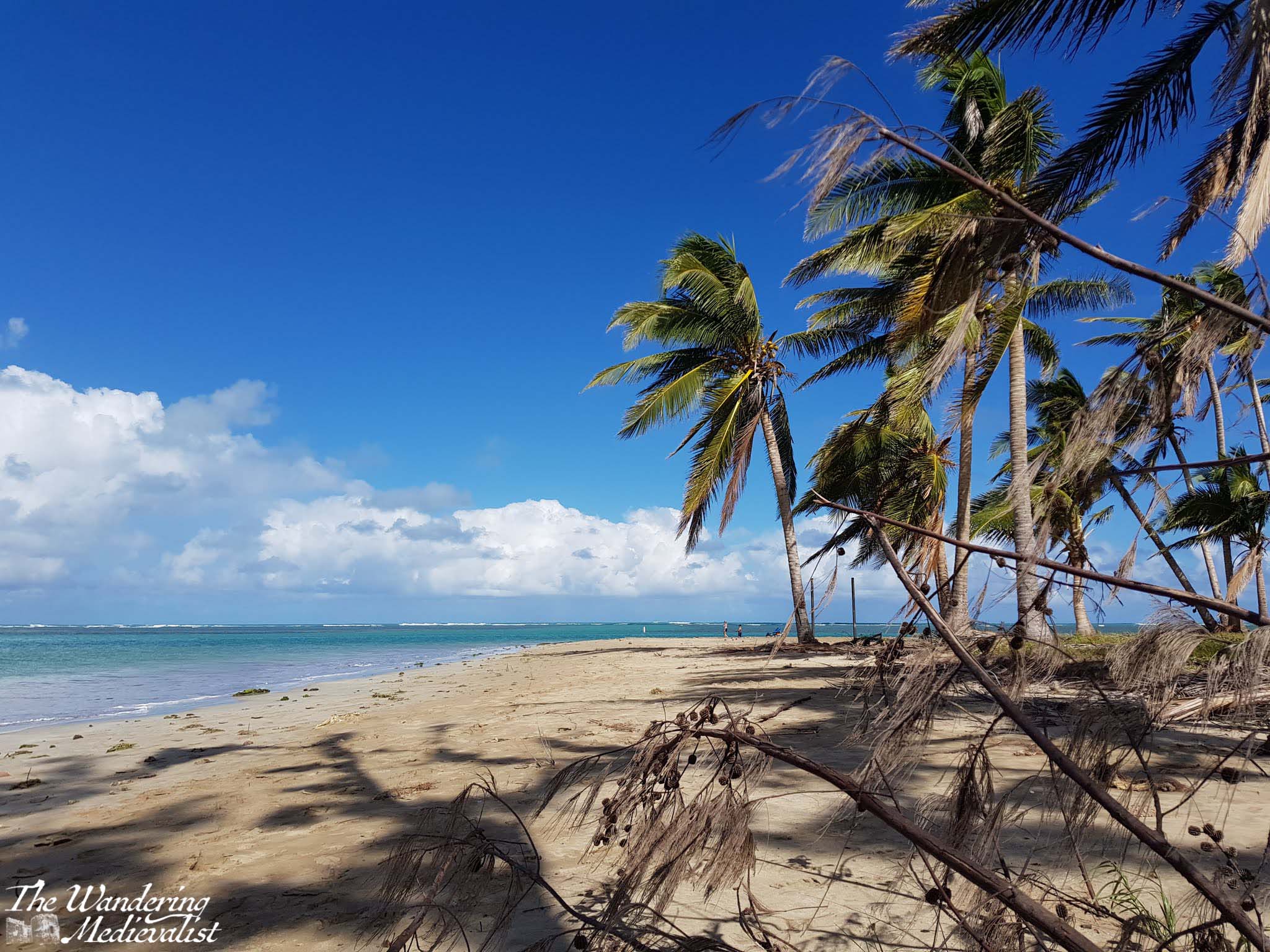
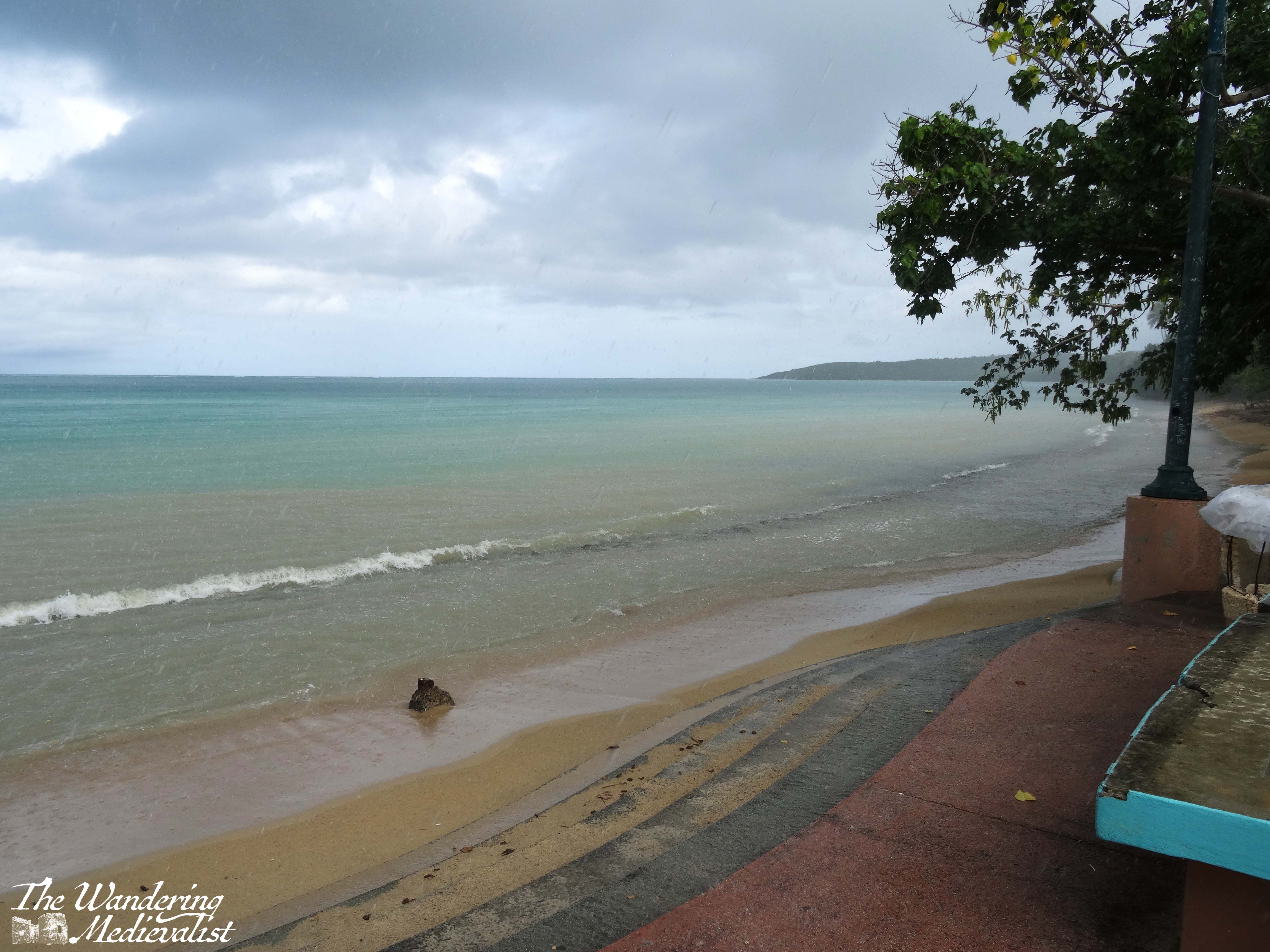
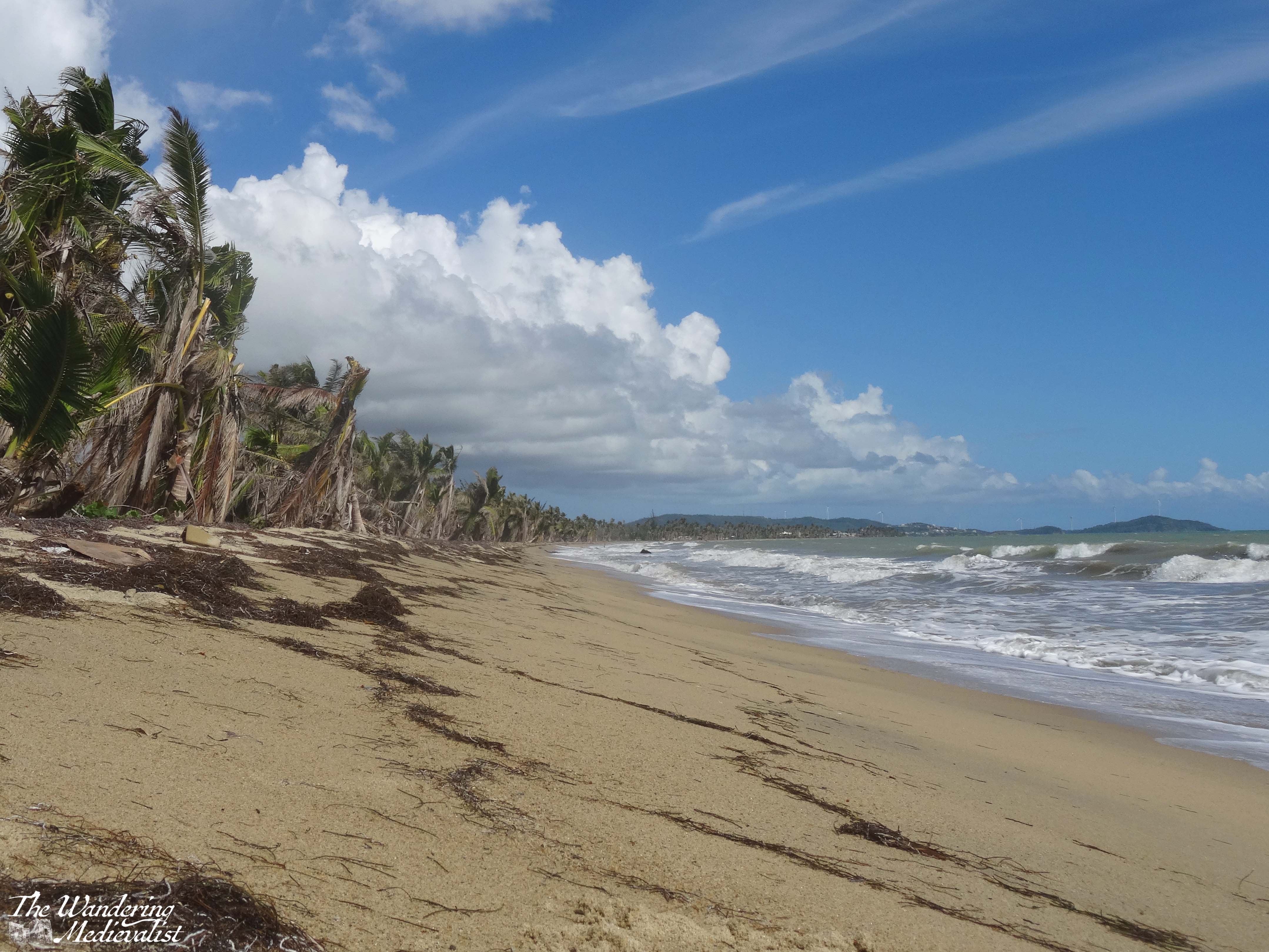
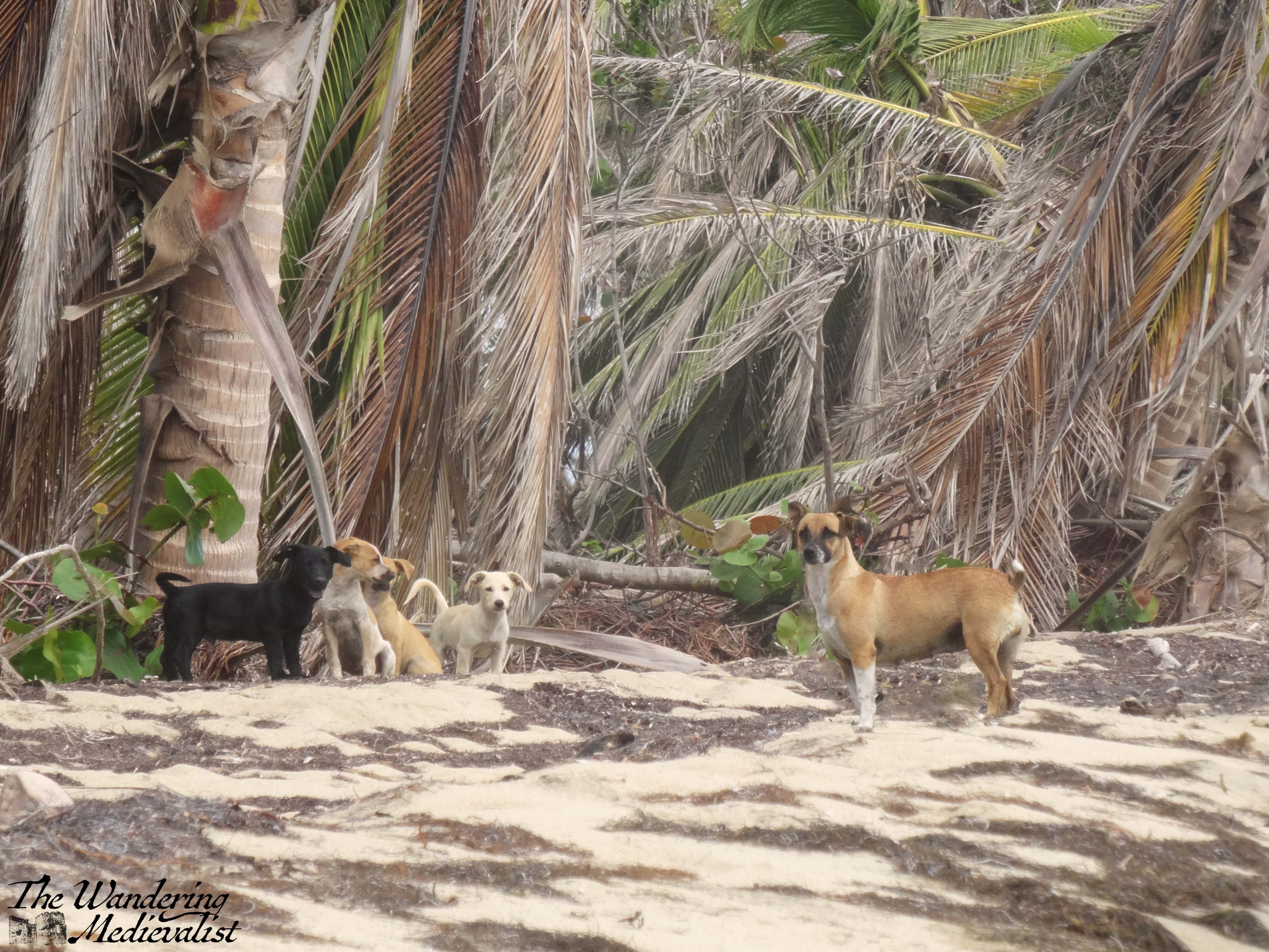
I cannot really recall how we ended up at this beach, other than my father must have recommended it. When we visited it was completely abandoned, and the recent hit by Hurricane Maria was evident in severely damaged palms and other foliage. The waves were a bit high for swimming and the beach quite narrow, but we were graced by a visit from the local gang of wild perros puertorriqueños. We didn’t have any food for them, so they watched us for a bit and trotted off down the beach.
El Nuevo Horizonte
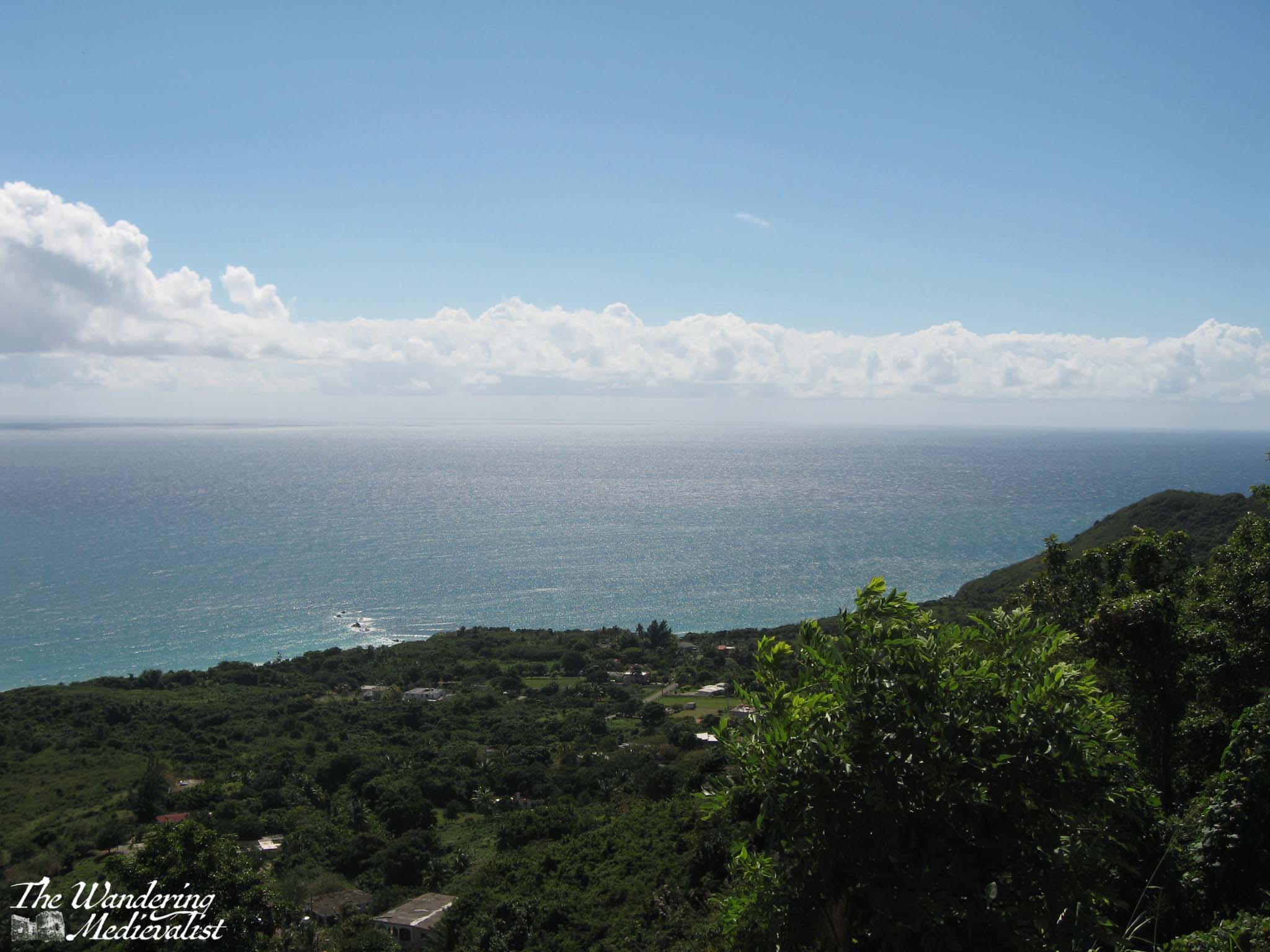
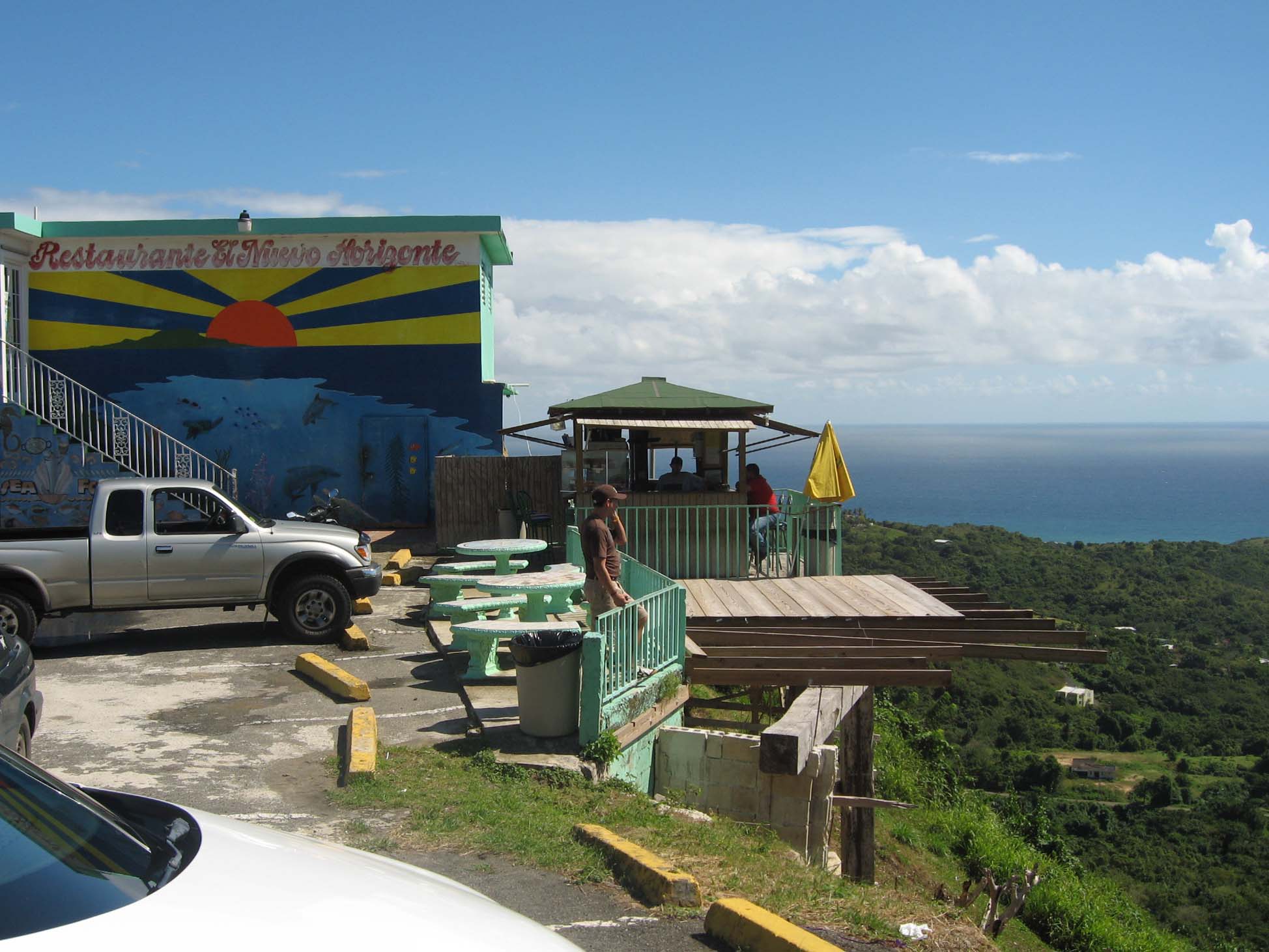
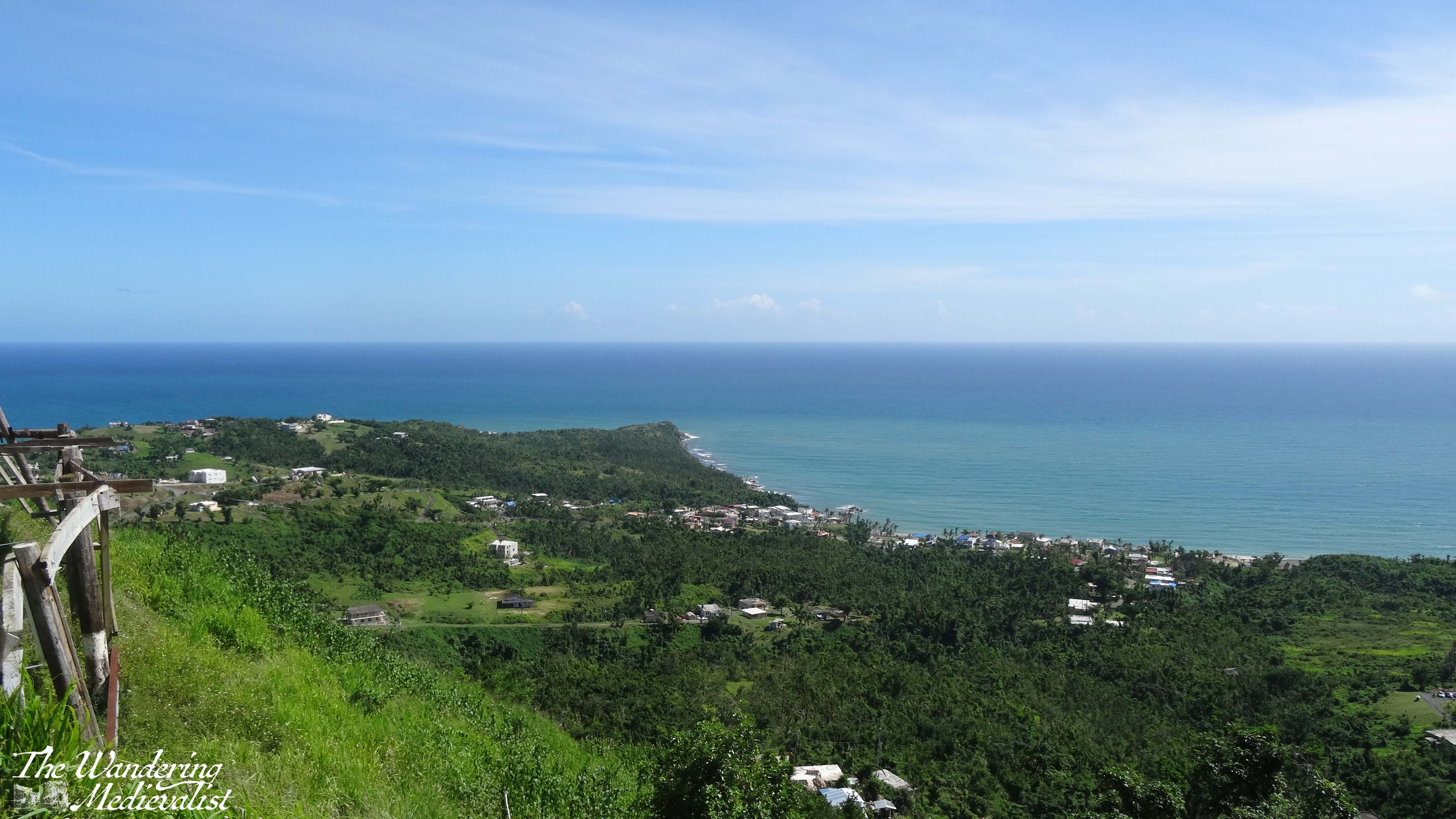
One of the most stunning drives in Puerto Rico – and harrowing at times due to narrow, steep and winding path – is route 901 that runs through the community of El Negro and up along the coast before plunging down the hills into Emajagua and Maunabo.
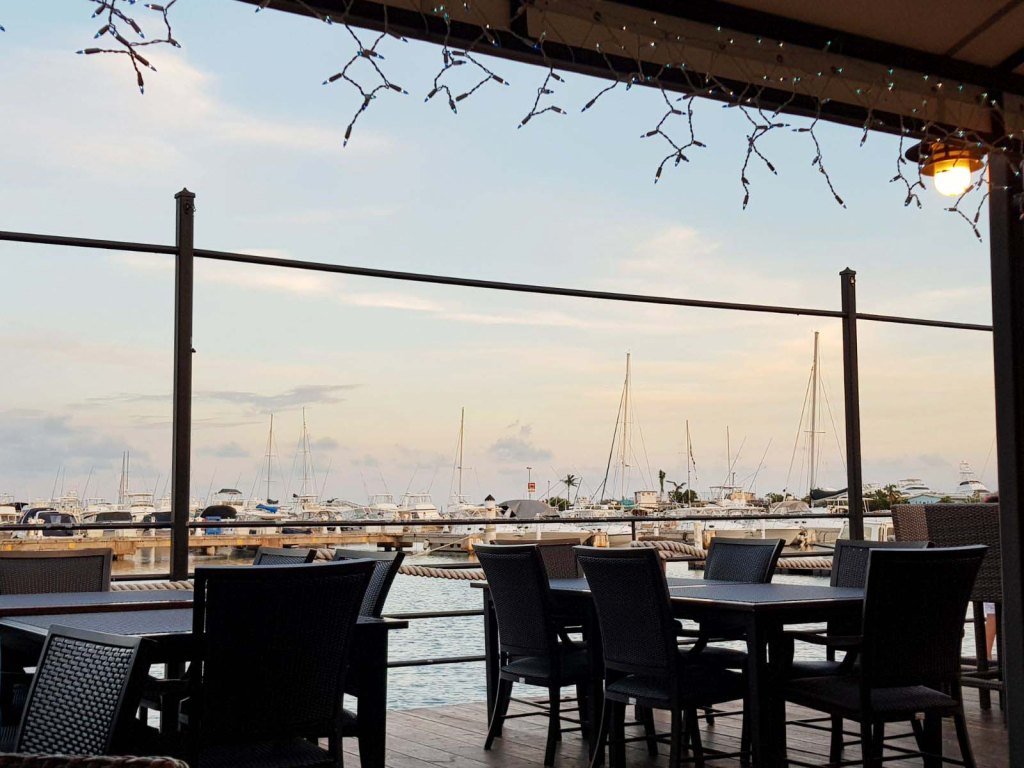
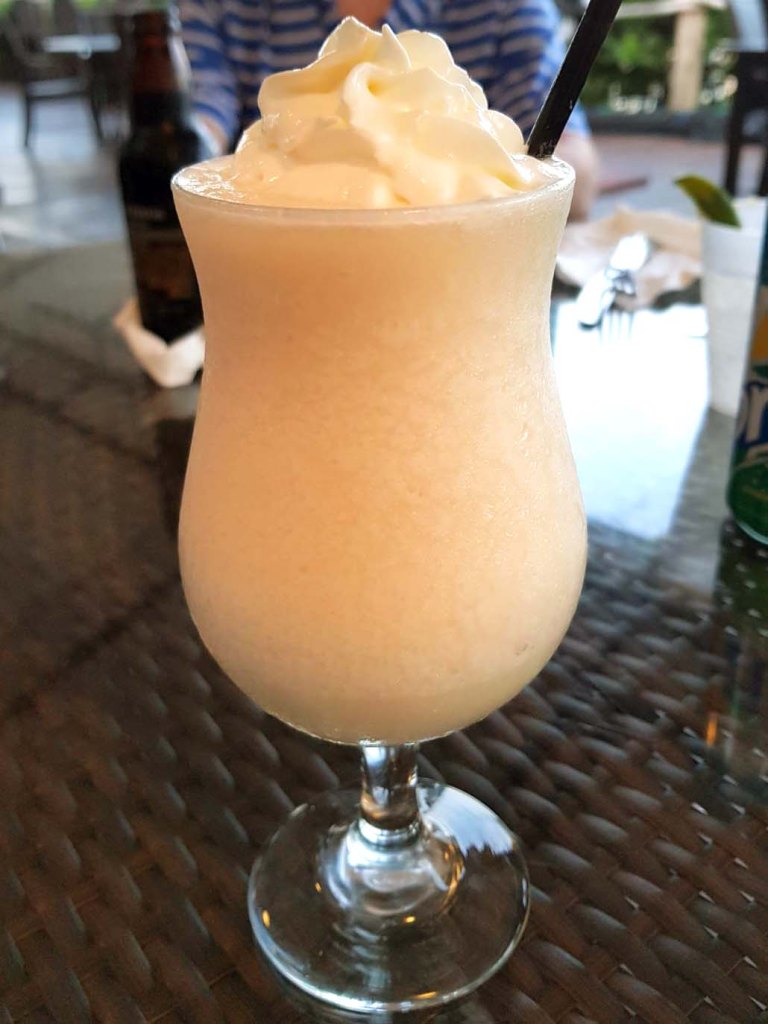
At the apex of the road, as it tops the hills, is Restaurant El Nuevo Horizonte, where one can find amazing views and very tasty frozen piña coladas, both with and without rum.
Playa Larga
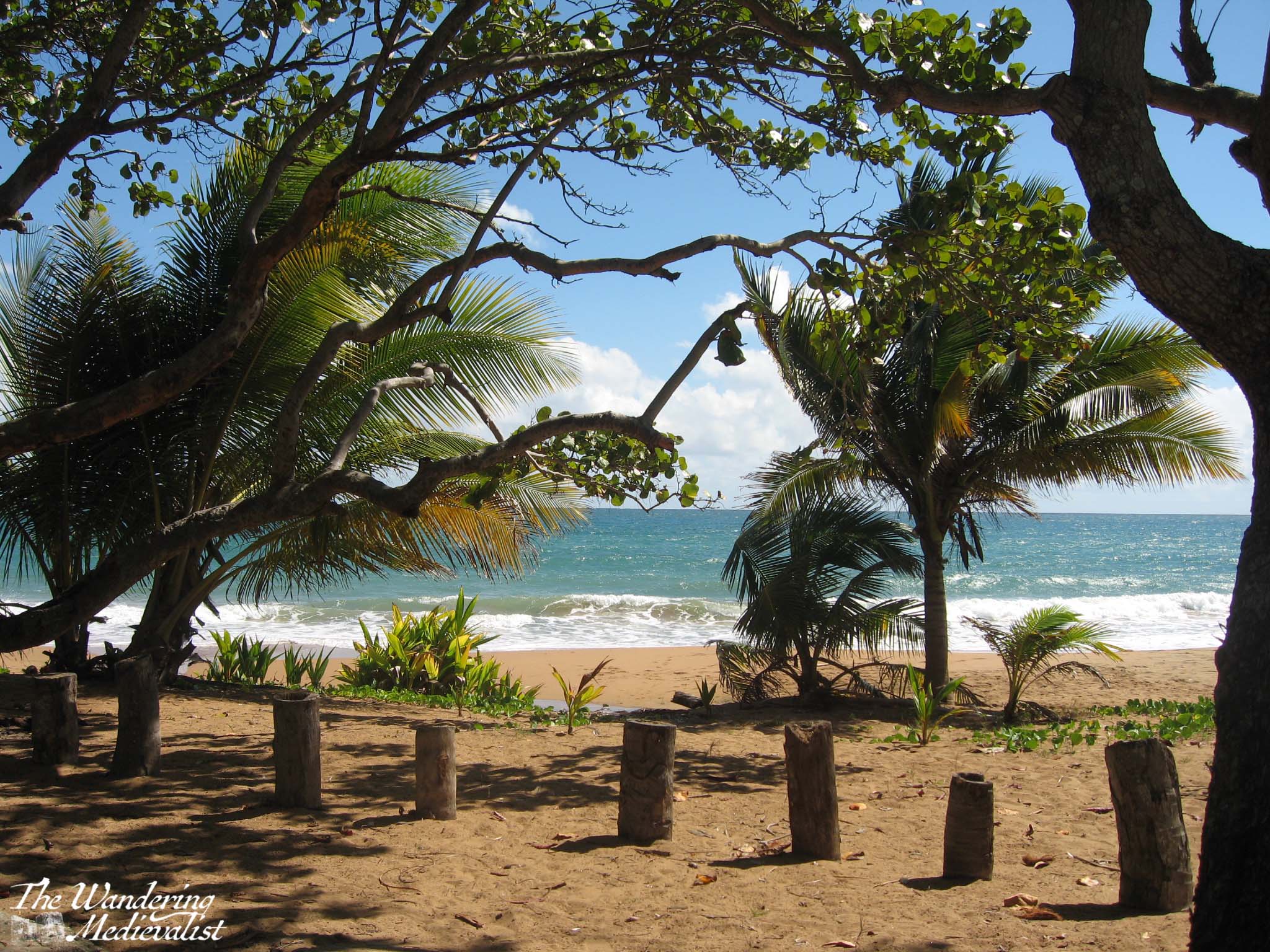
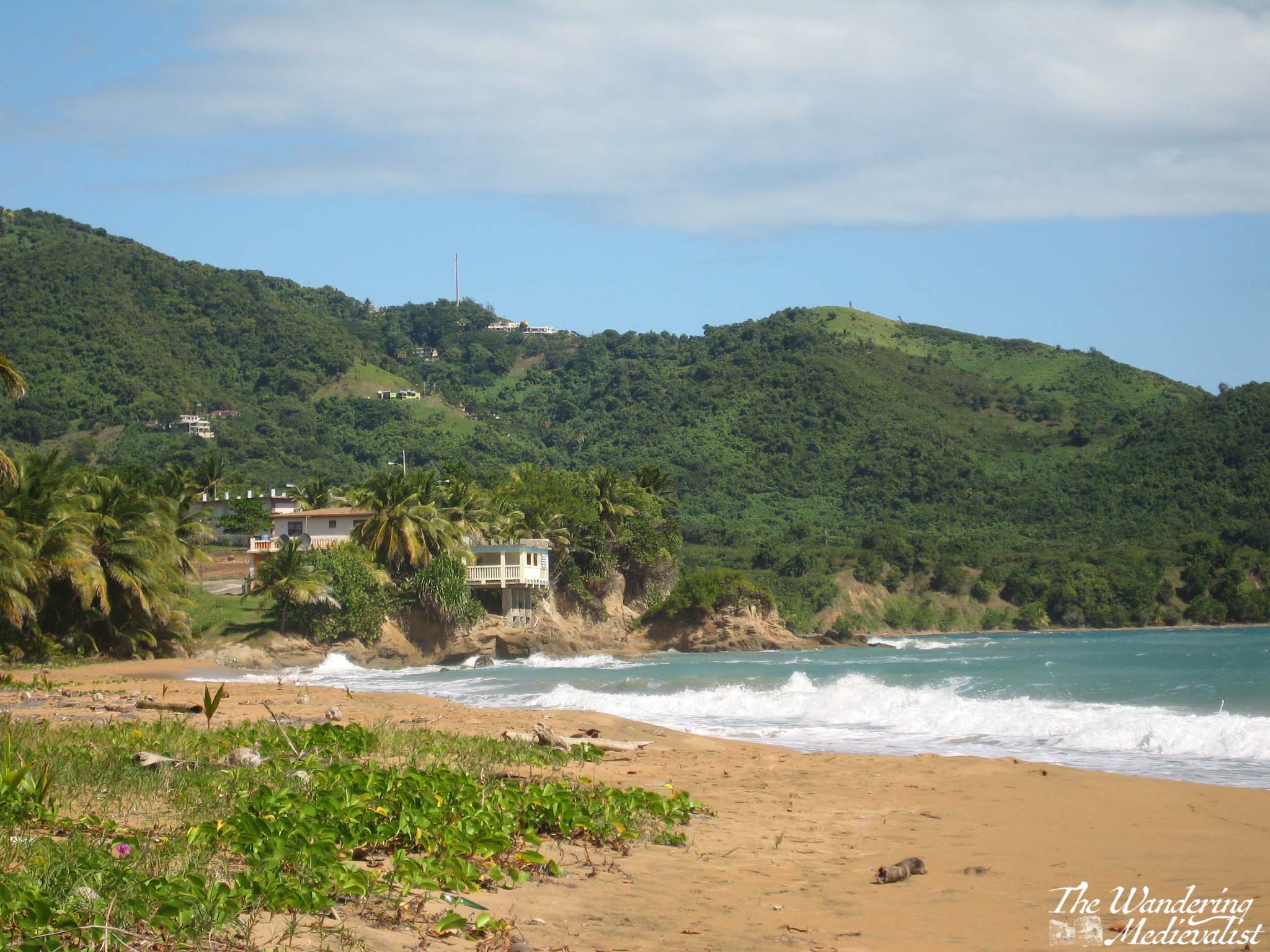
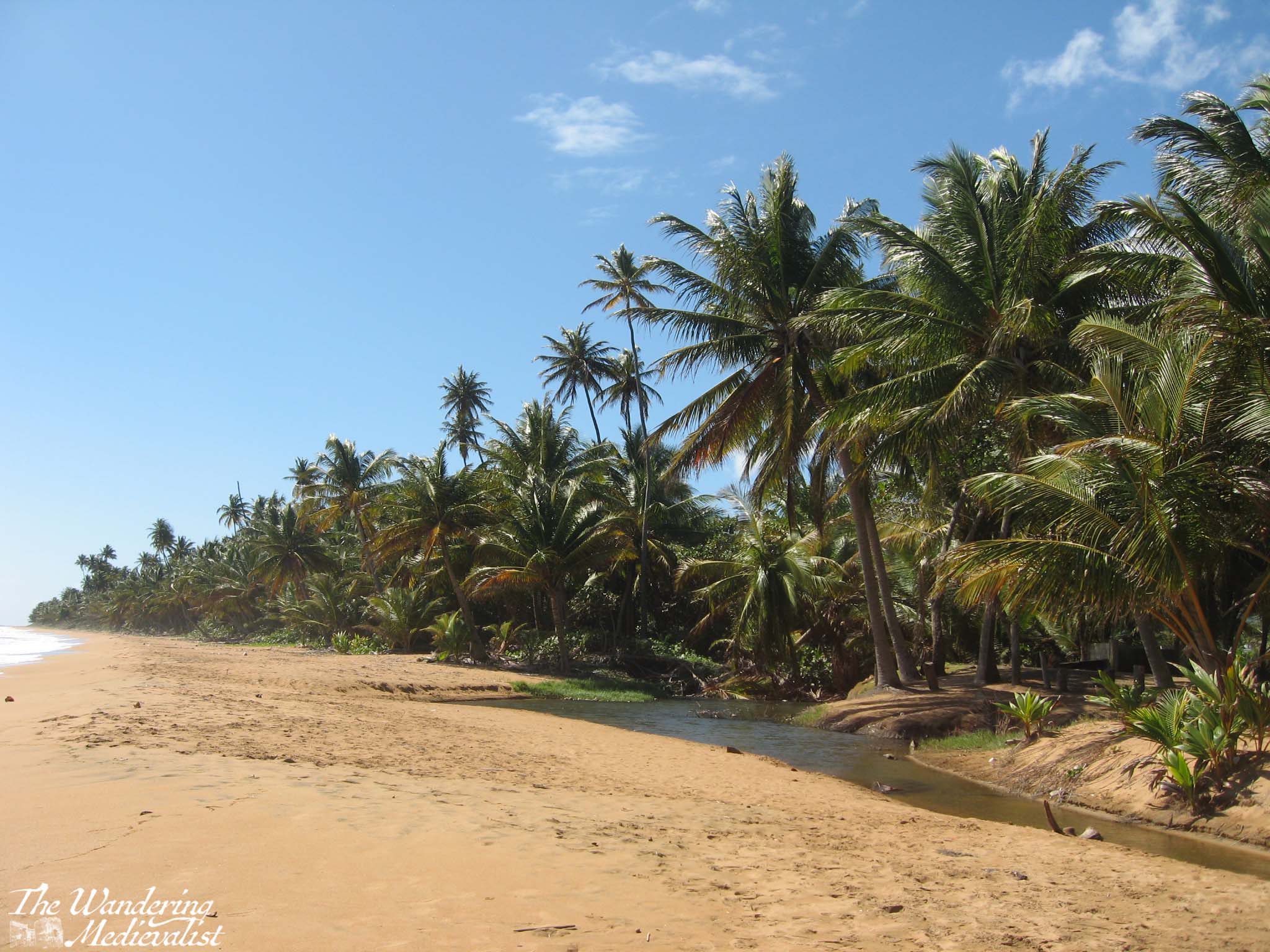
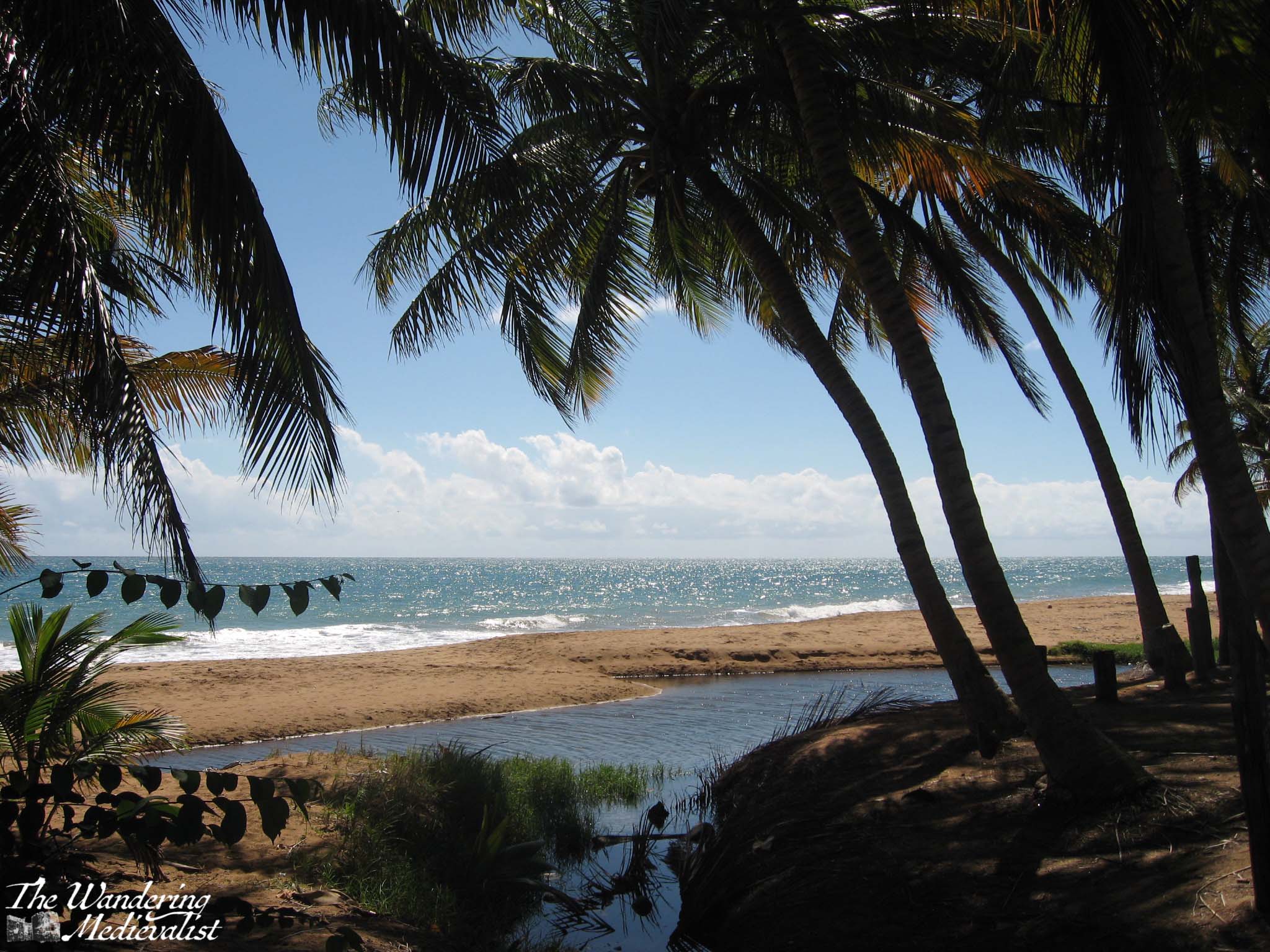
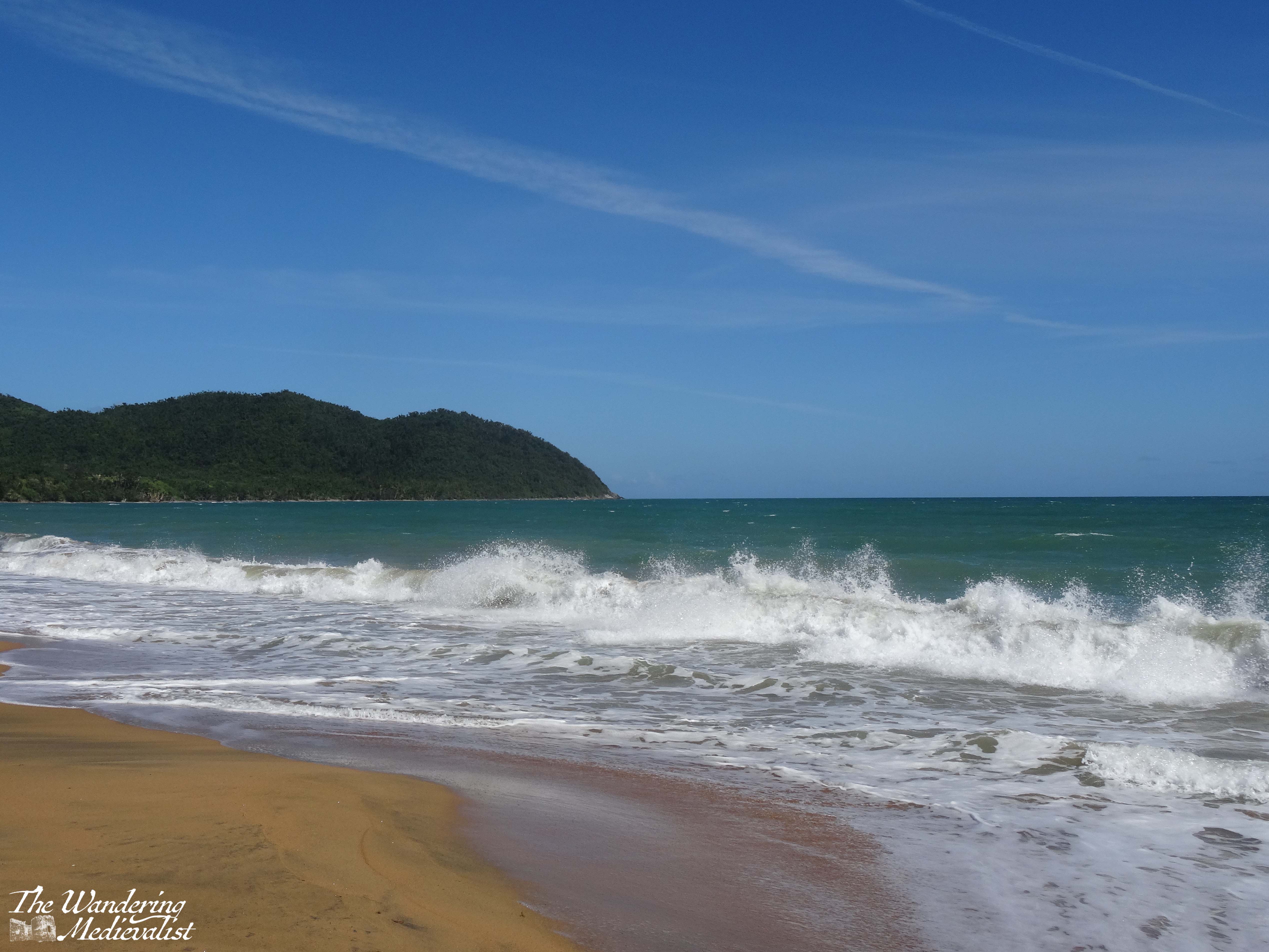
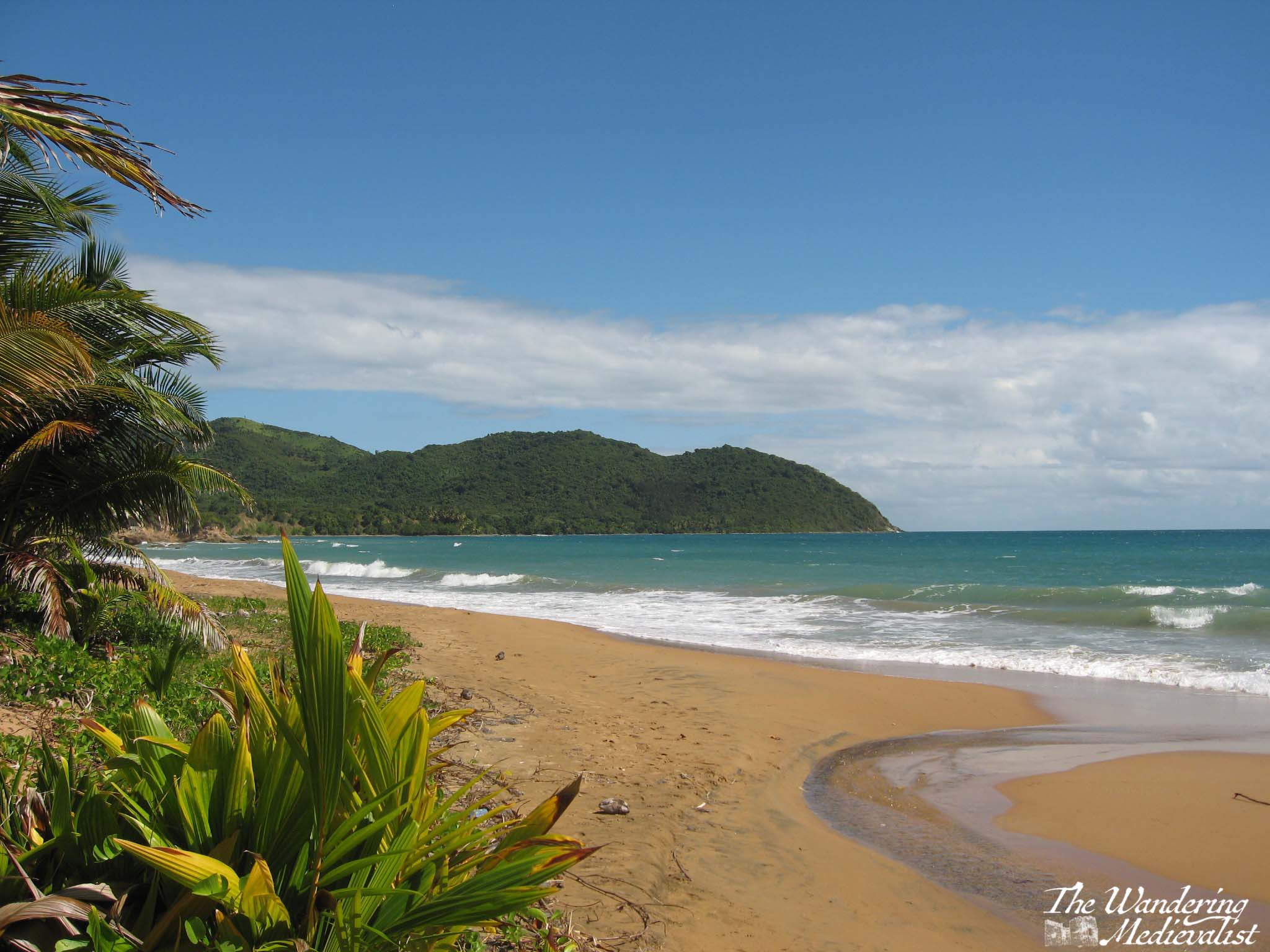
After visiting this beach for the first time, I routinely referred to it as ‘paradise beach’ (not partly because I didn’t know its real name). It is simply one of the most stunning beaches I have ever seen, lined with palm trees and with a small river that emerges from the palms to meander down towards the water. I have also taken some of my favourite pictures of all time at this beach. Yup, it’s one of the best.
Faro de Punta Tuna
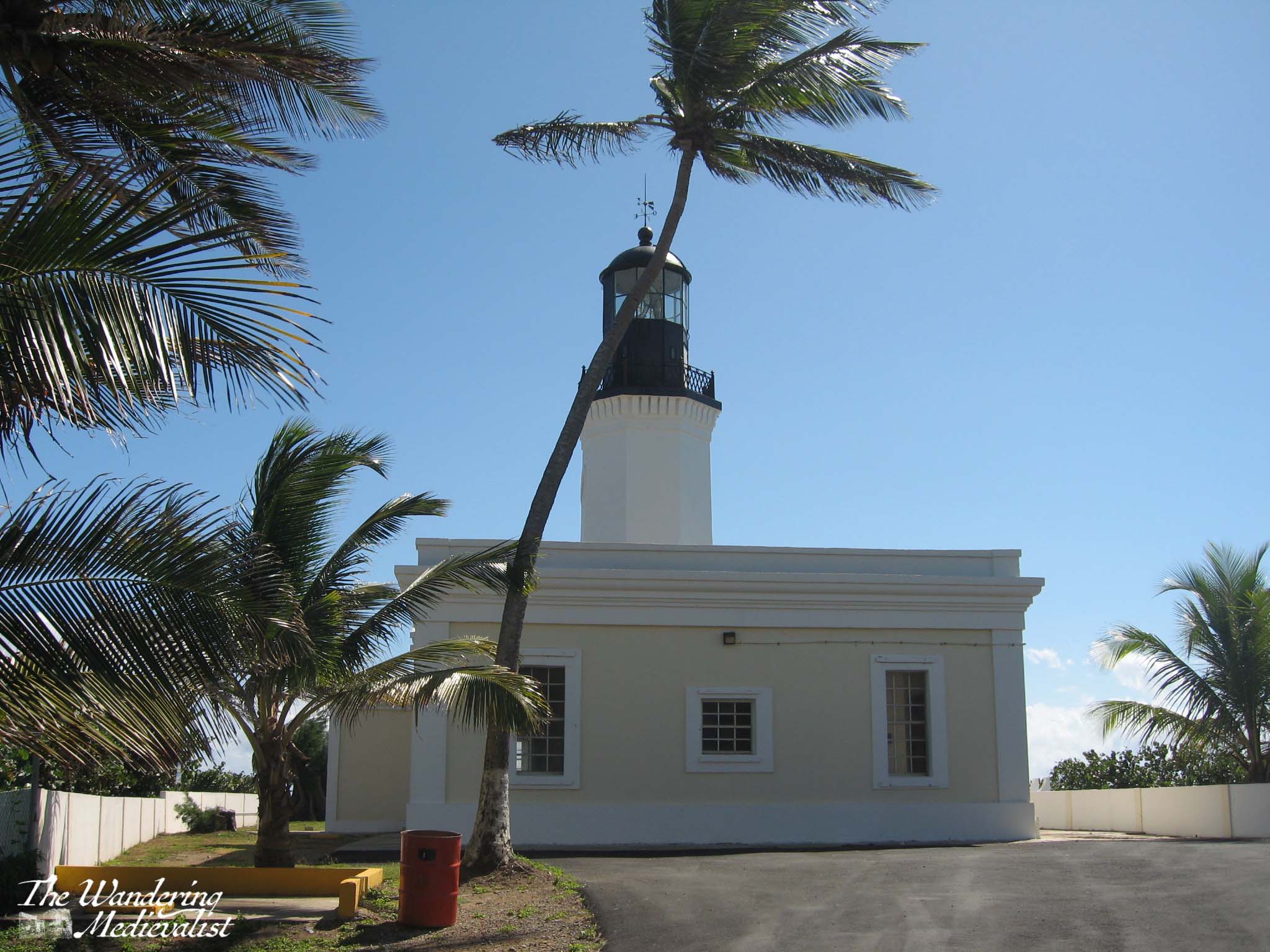
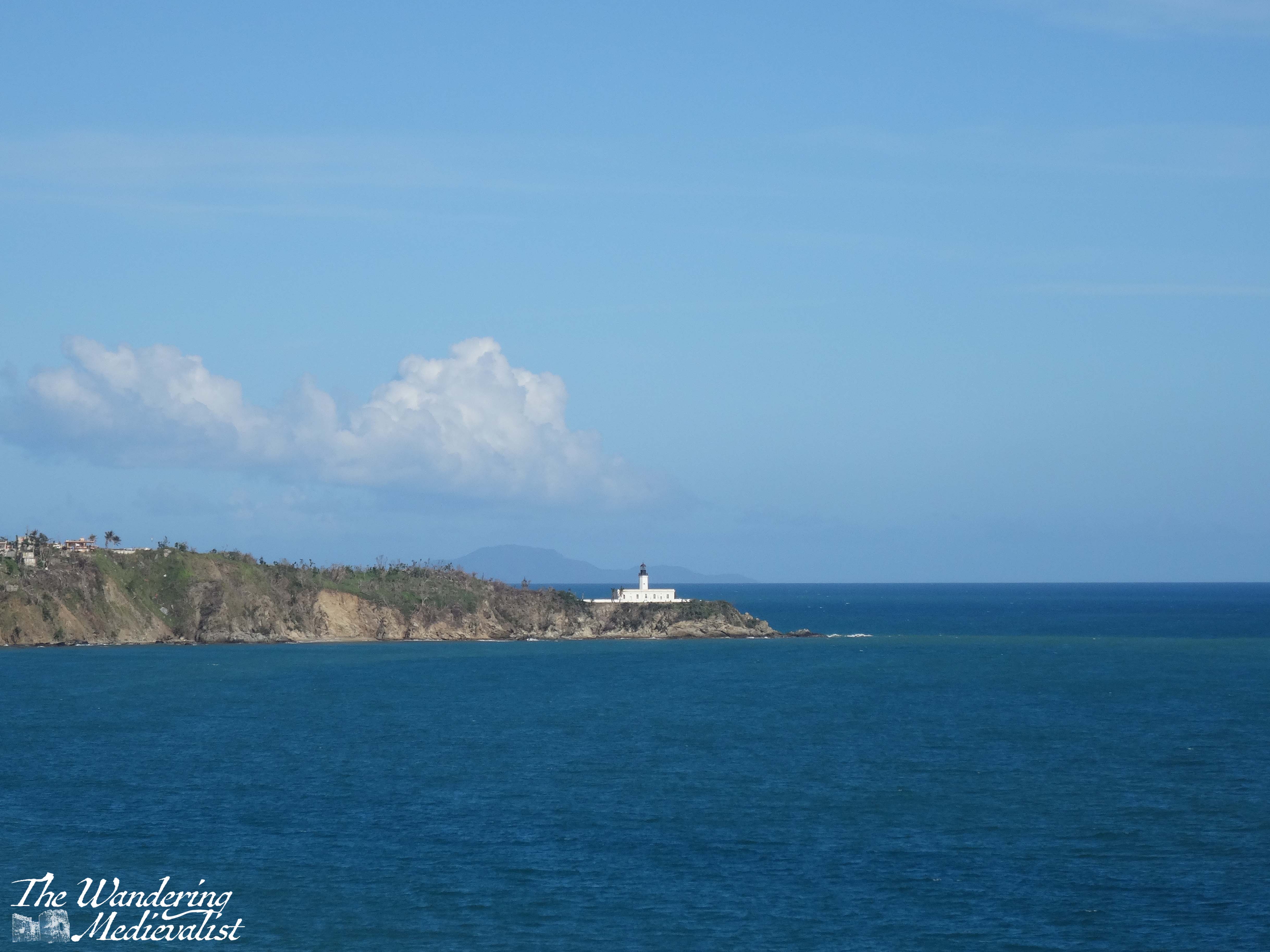
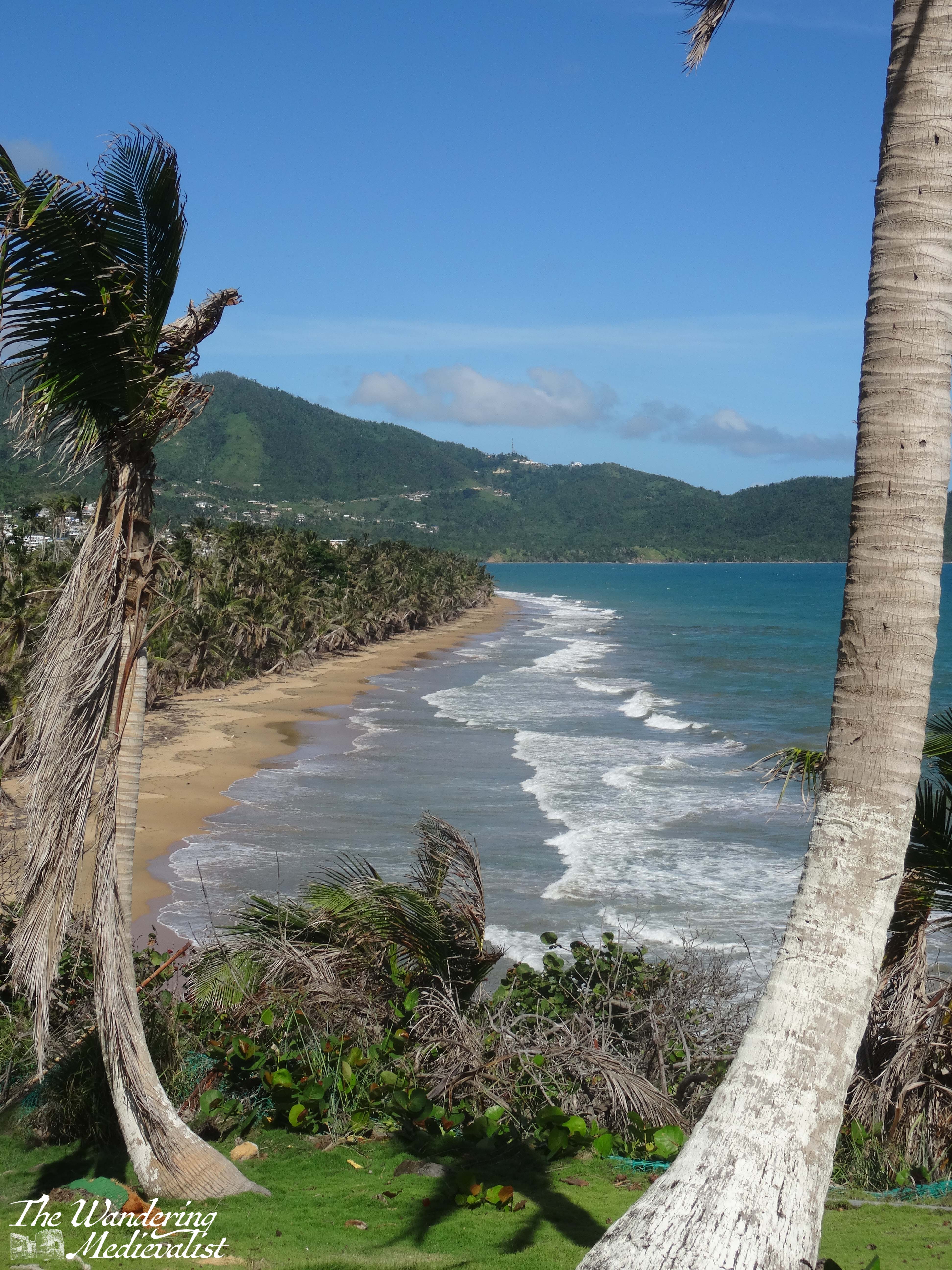
First built in the 1890s, Punta Tuna lighthouse is a close sister in style to the lighthouse looking over Isabela Segunda harbor on Vieques. It sits high on a promontory with my paradise beach on one side and Puerto Maunabo on the other. When we visited in 2018 it was also one of the clearest spots to observe the hurricane damage wrought by Maria, only a few months previous (check out the scars on the palm trees in the view overlooking the beach).
Puerto Maunabo
Last but not least, La Cueva del Mar, a spot in Fajardo overlooking the marina, where you can get fantastic fish tacos and of course, piña colada 🍹.
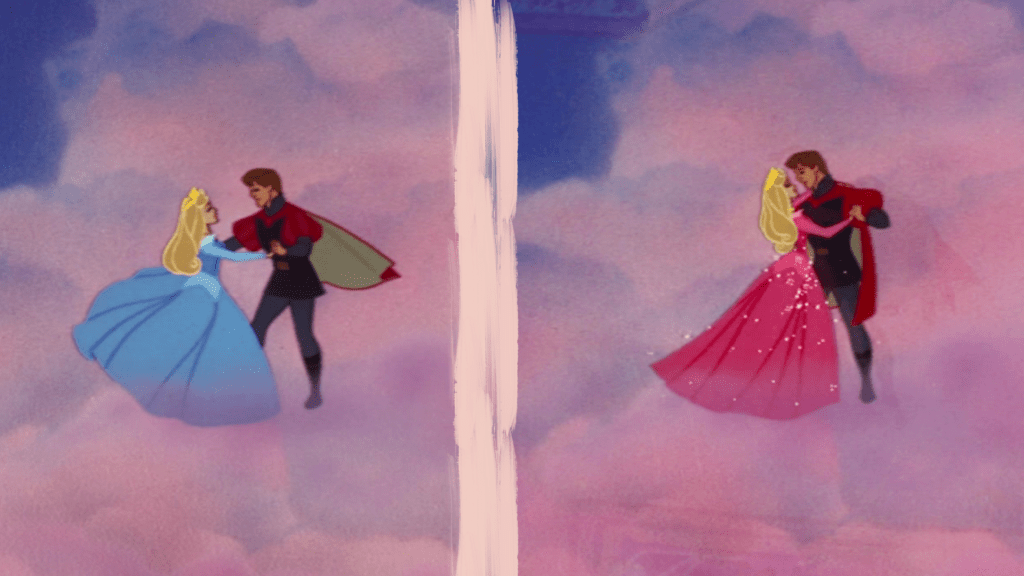
I must start off this post by prefacing that this is my favourite classic Disney movie and was watched by my me and my best friend at least once a month when we were young. We frequently dressed up as our favourite characters and fought over who got to be the ‘best’ fairy. And who was the best fairy. And whether the dress was better in blue or pink.
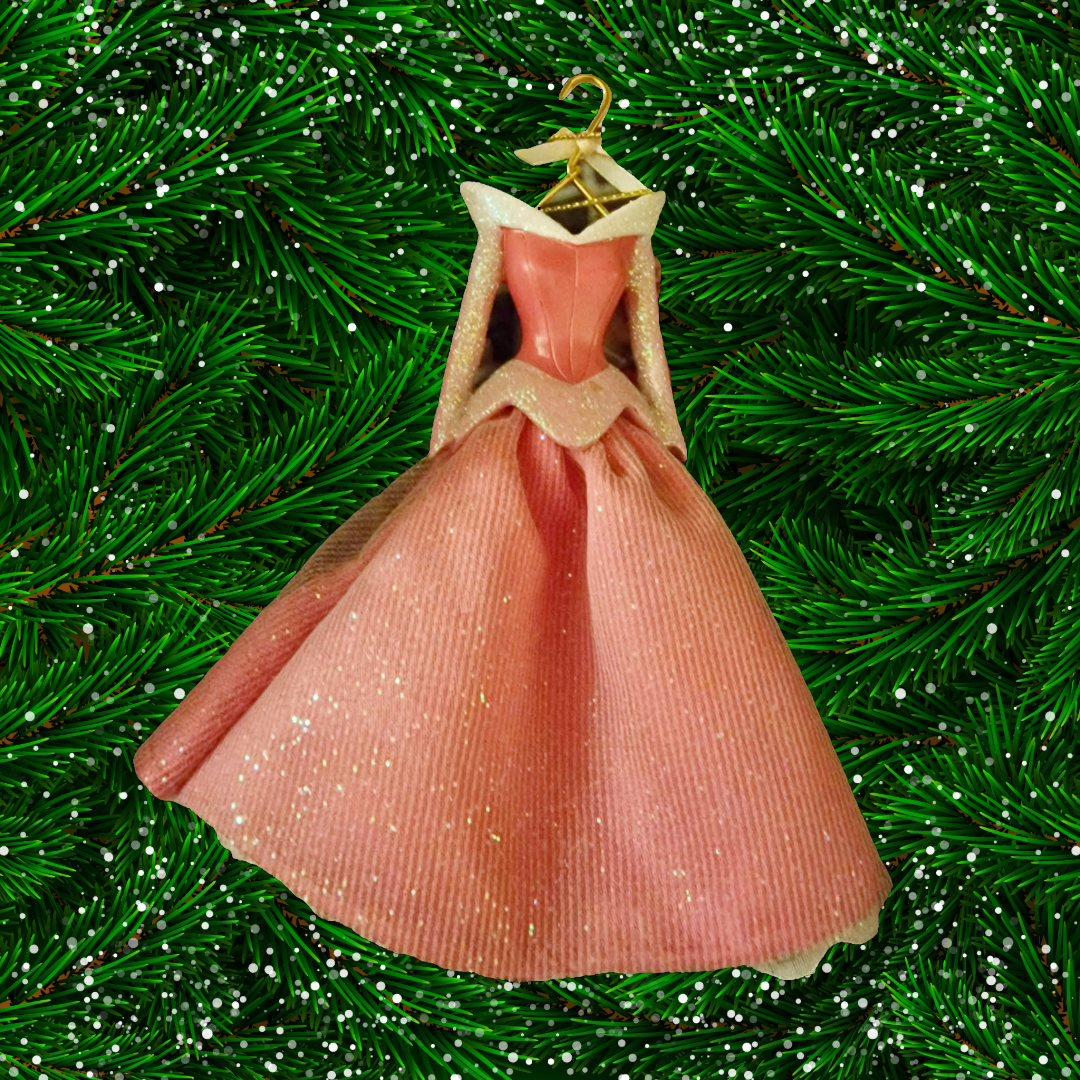
As we have grown up, it remains a familiar touchpoint for both of us, and she will often pick up something Aurora-related to remind me of the film that dominated our childhood (alongside Clue and The Princess Bride). My Aurora-dress Christmas ornament is one of my favourites and most-treasured.
The movie holds more than childhood memories, though – it was one of my first exposures to the medieval world to which I have devoted so much of my life. While I can’t say that our obsession with Sleeping Beauty led directly to my studies, the art and medieval aesthetic are striking.
Background – the story of Sleeping Beauty
Before I get too far into analysis of the movie, I wanted to take a quick look at the story behind the fairy tale. Disney, as it often did, softened the story quite a bit from its inception, in a French chivalric romance from the mid-14th century (Disney held on to this idea, locating the film in France and with the characters mentioning the century). Early versions of the story are considerably less romantic and certainly involve issues of consent – the first story involves the essential rape of the princess while she sleeps and the birth of a child. There was also a second half of the tale that involved the troubles of the princess and her husband after their marriage, which may have been the basis for other tales.
Fairies were added in the 17th century, and the intercourse softened to a kiss. This is roughly where the Brothers Grimm stepped in and separated the story of Briar Rose from later tales – Aurora was a name picked up by Tchaikovsky when he wrote his ballet.
With fairies came the further idea of good and evil fairies – the basis of the Maleficent character – who alternately gift and curse the princess. In some tales, there is a hint of a former relationship between Maleficent and the king – such as is later suggested in the 2014 Angelina Jolie movie of the same name – though this is not widely acknowledged. What does seem relatively static throughout the versions is the princess’s relative lack of agency, something that has aroused numerous criticisms of the story and the movie. But I will come back to this.
Alongside the film, I was also familiar as a child with a version of Sleeping Beauty re-told and beautifully-illustrated by Trina Schart Hyman. Each page is meticulously detailed and stunningly drawn, and the story itself sticks with an older version of the tale, where the princess does sleep for 100 years, and the travelling prince hears about her through legend. It is a much more haunting idea than the Disney version, and also provides a touch more incentive for the evil fairy’s actions.
The movie
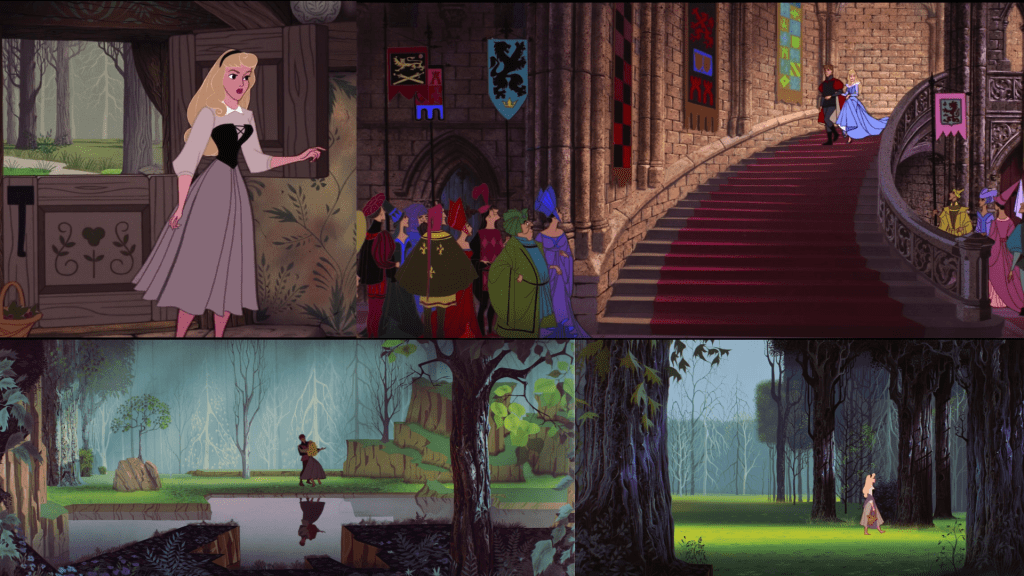
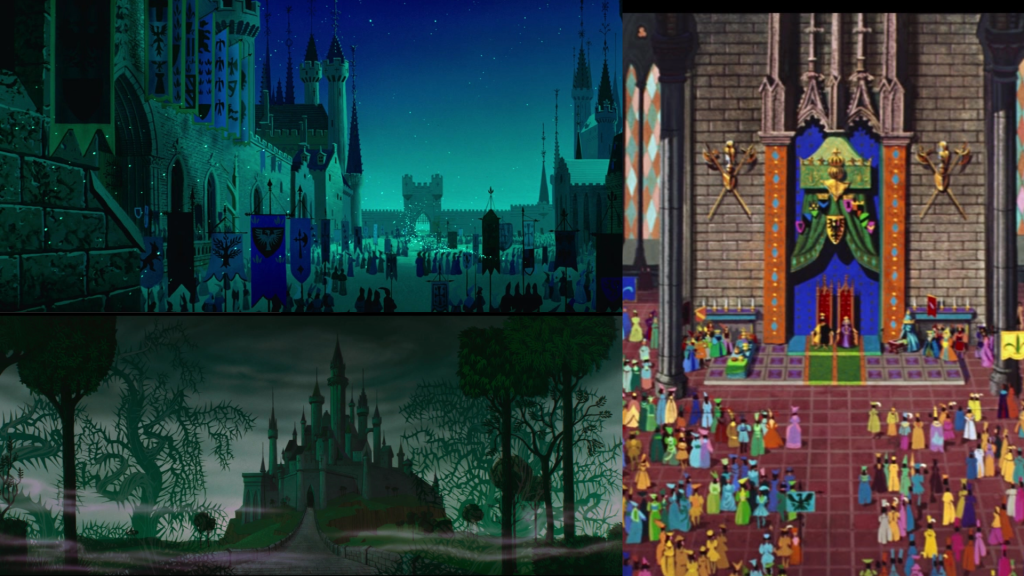
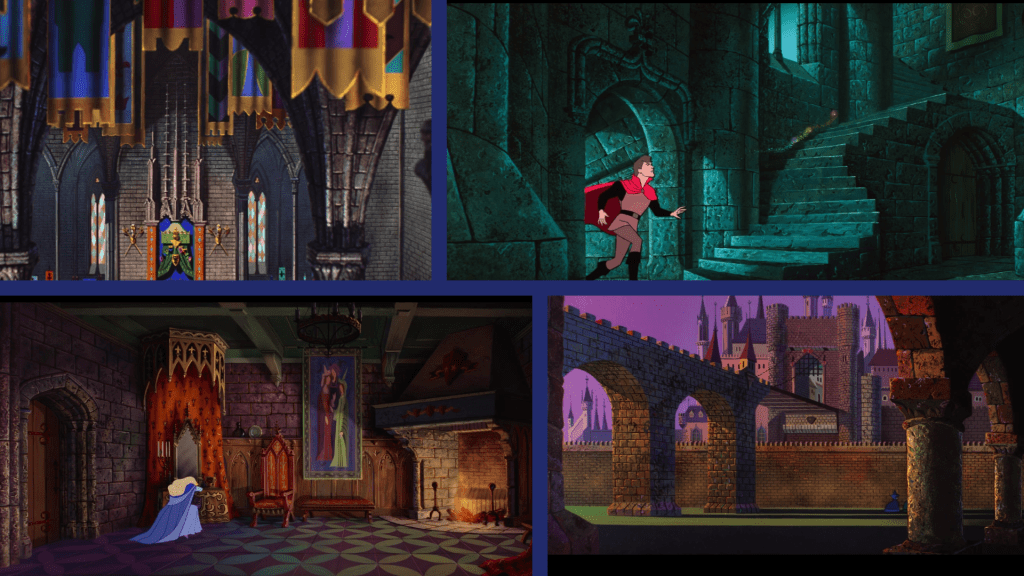
Small disclaimer: I was lucky enough to find some screen caps of the film online, and so all of the artwork below belongs not to me but to Disney.
Disney clearly looked at several versions of the tale and decided, in the almost decade of development time, to stick with some of the most common themes: a childless queen who has a miracle baby, an evil fairy offended by not being included in the celebrations, good fairies who temper her curse from death to long sleep, and a sleep only ended by true love’s kiss. Disney reduced the number of fairies to three – from seven, twelve or thirteen – and made the quite reasonable choice to have the true love actually meet the princess before she falls asleep. The length of sleep was also shortened considerably to only a few hours and not the 100 years of legend.
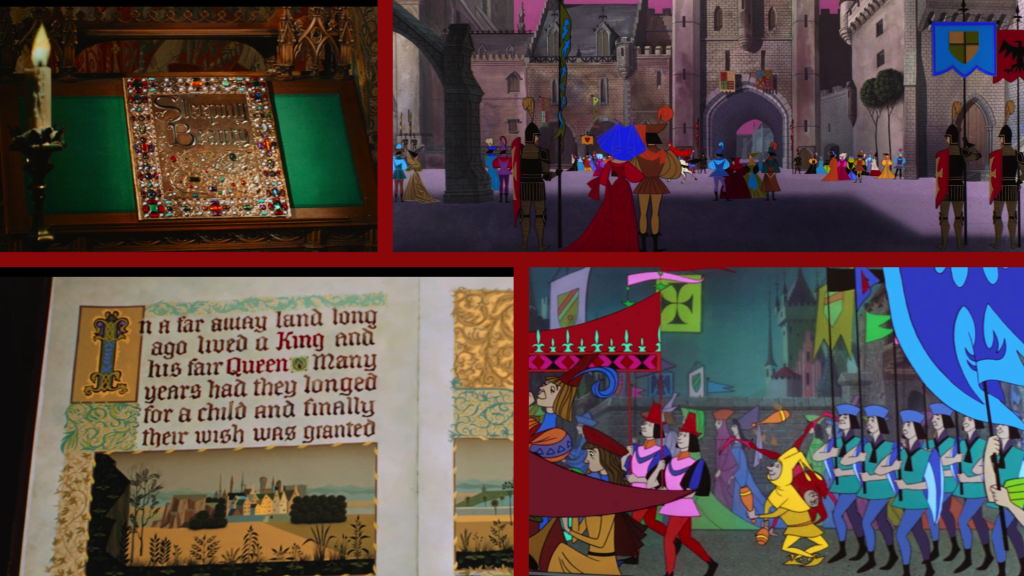
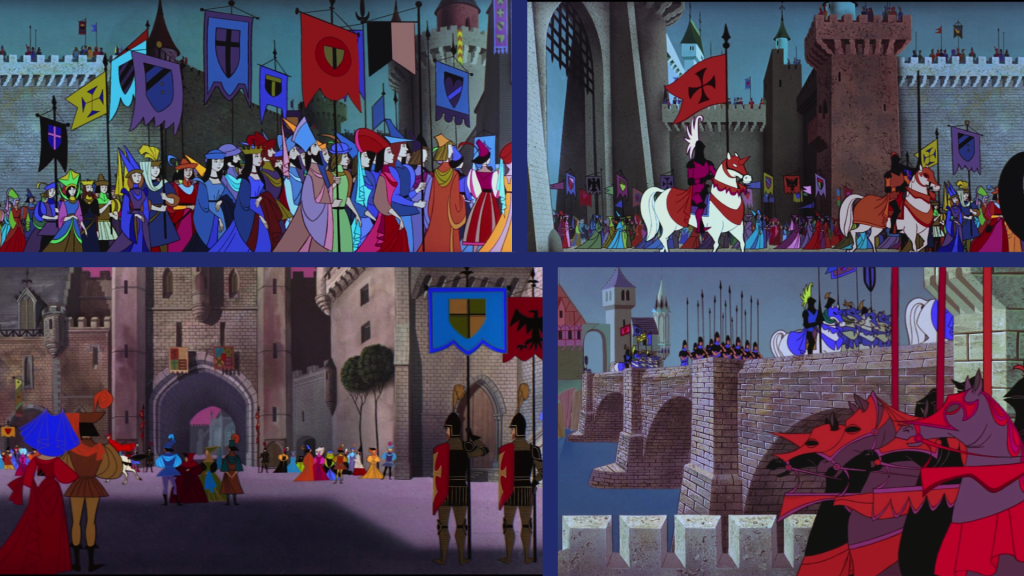
Disney made a few other very interesting choices when producing this movie. Firstly, one man was put in charge of the entire background design and visual feel of the film. This may be why it is so different from other animations of the time, and why I was so drawn to it – the background images behind the animation are simply stunning, with intricate details. The forests are alive and trees uniquely shaped; the castles are gothic and covered in carvings and textured stone; there are banners and flags with coats of arms and all sorts of medieval feudal emblems – fleur de lis, crowns, dragons, eagles. Even the woodcutter’s cottage in the woods is beautifully decorated in patterns we would not really see again until Frozen.
Secondly, the music is so unusual for a Disney film that even my other half, who deigned only to watch the last 20 minutes with me, remarked on how surprising it was. The reason is of course that the composer adapted most of the score from the Tchaikovsky ballet, infusing the story with a richness and depth of emotion. Even the main love song ‘Once Upon a Dream’ is written to the tune of Tchaikovsky’s Garland waltz. It is clear that the animators worked hard to match the images to the music; the three fairies arrive in a beam of light to flutes, and during the final battle the clash of cymbals matches the crashing lightening and eruption of the thorny thickets.
The beautiful artistry and music separate this movie from the other princess films made around this time such as Snow White and the Seven Dwarves or Cinderella (also a favourite if only for the mice). But, there is plenty of traditional Disney about it too – the characters are familiar, with the voice actors like Eleanor Audley, Verna Felton and Barbara Luddy recognisable from Cinderella, Lady and the Tramp, Alice in Wonderland and 101 Dalmatians.
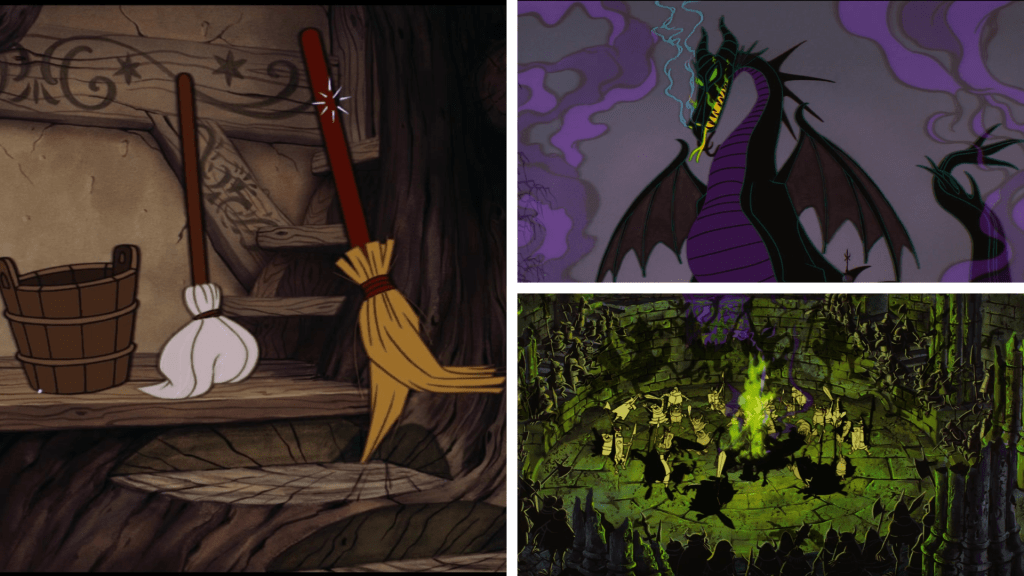
There are anthropomorphic characters such as the friends Aurora meets in the woods and sings to – a common theme for Disney princesses who are often lonely and more likely to have animal companions than human ones – though they do not talk. Some of the artwork is also reminiscent of other Disney works, in particular Fantasia – the self-propelling mop and broom, the evil henchmen dancing around a green fire, and even the dragon which Maleficent becomes in the finale all look vaguely familiar.
One of the most regular criticisms of the Disney films of this era is that the main female character, usually the princess, is one of the least interesting in the film. She is the focal point about which the events rotate, but she has very little actual agency, and often very few lines. This can certainly be said of Aurora, who sings a lovely song but then spends half of the movie, well, asleep, and is famous as the eponymous Disney character with the fewest lines, second only to Dumbo. Furthermore, she is of that era of princess where it takes only an outfit change to make her a convincing Barbie – long slender legs, impossibly narrow waist, golden curling hair and large blue eyes. (I confess to always longing for hair that curled at the end like hers, though I wanted red not gold). Her beauty is mythic, magical, modelled after the equally breath-taking Audrey Hepburn.
What must be said about Sleeping Beauty though is that while the main character is not hugely compelling, there are plenty of strong female characters around her.
Firstly, the three fairies: Flora, Fauna and Merryweather. While they may be a touch daft at times, they are strong and powerful and take control of most of the movie’s main events; the red fairy (Flora) in particular is the leader while the blue fairy (Merryweather) is spunky and fun. At times one might argue that they cause more trouble than not (it was their childish fight over dress colour that alerted Maleficent’s raven to their hideout in the woods), yet they are instrumental to the defeat of evil.
Secondly and perhaps most importantly, there is the fantastic villain, Maleficent. Even before her reinvention in the 2014 film, she was a fascinating character who is at least partly misunderstood. She wasn’t invited to the princess’s christening, and if you go back to some of the original stories, it is because she was the black sheep of the royal family and may even have been Aurora’s aunt.
Flora, Fauna and MerryweatherMaleficent arrives
Whether part of the family or not, she was deliberately left out while younger, prettier fairies were invited. One might say that her revenge of cursing the princess with death was overkill, but then again, she is the villain. And she is captivating – strong, deliberate, graceful and not lacking in majesty. I believe that writing has been done on the tendency of early Disney films to make most of the villains older females as though there is nothing worse – Snow White, Cinderella, Little Mermaid, 101 Dalmatians, even to some extent Beauty and the Beast – but one cannot argue that they aren’t strong characters with agency of their own. Personally, I thought being Maleficent would be great fun as a child; there was something intriguing about her intelligence and her freedom, and her quick change from humour to rage. In fact, when we played Sleeping Beauty dress-up, my friend and I often chose to be Maleficent, or one of the fairies – never once did either of us dress as Aurora.
The main character is essentially a medieval Barbie, but there are strong female characters around her.
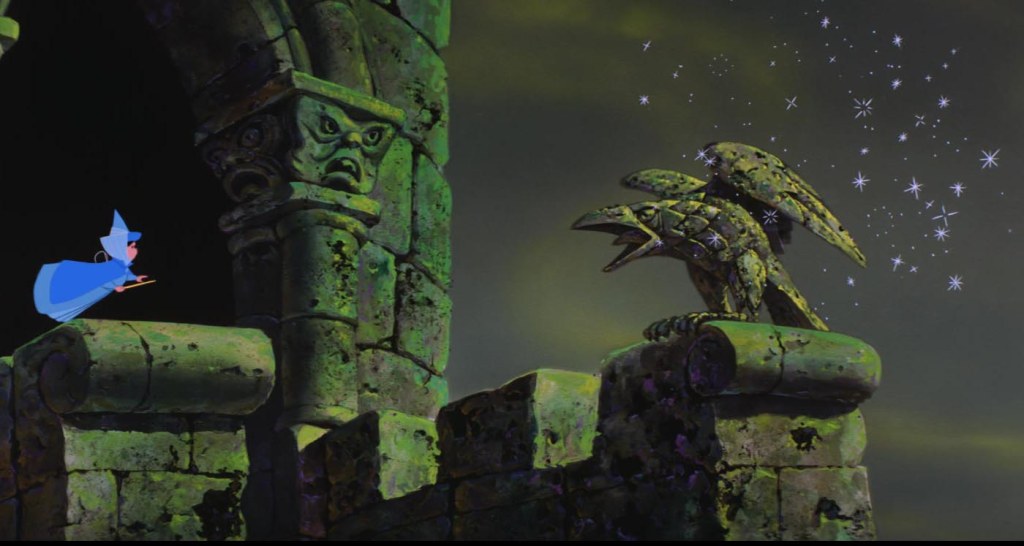
The three fairies brave the Forbidden Mountain to free Prince Philip, and in one of my favourite moments of the movie, an easily frustrated and feisty Merryweather turns Maleficent’s squawking pet to stone.
Merryweather’s crowning moment
There is a none-too-subtle implication that Merryweather is also one of the most competent of the fairies, as when Flora and Fauna attempt to sew and cook they fail miserably – but someone must have been completing these chores for the past 16 years. In case it wasn’t clear, Merryweather was my favourite of the three – spunky, a touch short-tempered, but caring, pragmatic and effective. Flora is bossy, while Fauna is just a bit goofy.
On top of the women, Prince Philip has a bit more personality about him than the other princes of the time – he actually got to speak and do some fighting, unlike Cinderella’s prince, who doesn’t even have a name. Philip sings, dances, and creates an attachment to the princess that is beyond just seeing her asleep (though yes, there is of course still an element of love at first sight). He fights and slays the dragon-Maleficent, though not without considerable help from the three fairies. His horse, Sampson, is a relatively obvious precursor to the very pet-like Maximus in the modern Tangled.
So why do I love the movie so much? One need only watch it to see the artistry, the stunning detail, that is a love letter (love drawing?) to the medieval aesthetic. The opening scenes are clearly high medieval, with the bejewelled book (opened against a background of the famous Lady and the Unicorn tapestry), scribe-like illuminated pages, feudal banners, knights, ladies in headdresses and more that evoke the Middle Ages.
There is little doubt in my mind that the artists had a strong affection for castles and studied many of them; Neuschwanstein may have been the inspiration for the gothic shape, but the interior courtyards and castle details could only have come from visiting medieval sites.
The stunning castle interiors are almost as evocative as the exteriors, with sweeping grand views of busy castle baileys, throne rooms, and decorated tower chambers that look not dissimilar to ones I have seen – granted without decorations – in castles recently. While I have never really tied my love of castles to this movie, it occurs to me belatedly that there must be some correlation.
I find myself frustrated when the classic Disney princess movies are compared to modern films like Frozen or Tangled, both excellent films but created in a different time period and with a different aim. The art and music is just as beautiful, but it is cannot be fairly compared to cels all drawn and filled in by hand. Newer films of course put more focus on equalising the position of the male and female lead, as well they should, but there is value in the older films. The value comes partly in Sleeping Beauty’s position as a work of art but also, like all art, as a mirror of the time in which it was created. Newer films make us appreciate how far we have come in character development – both male and female – and in what we expect from a story. Fairy tales are classic for a reason, and every generation re-writes them to best fit what they want the message to be.
For me, and for my best friend, we found the film an inspiration to be independent strong women like Maleficent or Merryweather. It certainly inspired me in my love for the Middle Ages and particularly castles.
But in closing, the most important question really must be: blue or pink?
Happy Anniversary to me and to you, my readers! 🎉🏆
It has been one year since I started this blog (though the idea had been percolating in my mind for some time before that) and I want to take a moment to say thank you for reading, liking, commenting, and most importantly loving all things medieval.
In honour of this anniversary, let’s look at some of the highs and lows of my last year:
Do you remember what my first post was about?
Maybe you weren’t following me then, or maybe it’s just a bit too long ago 😉
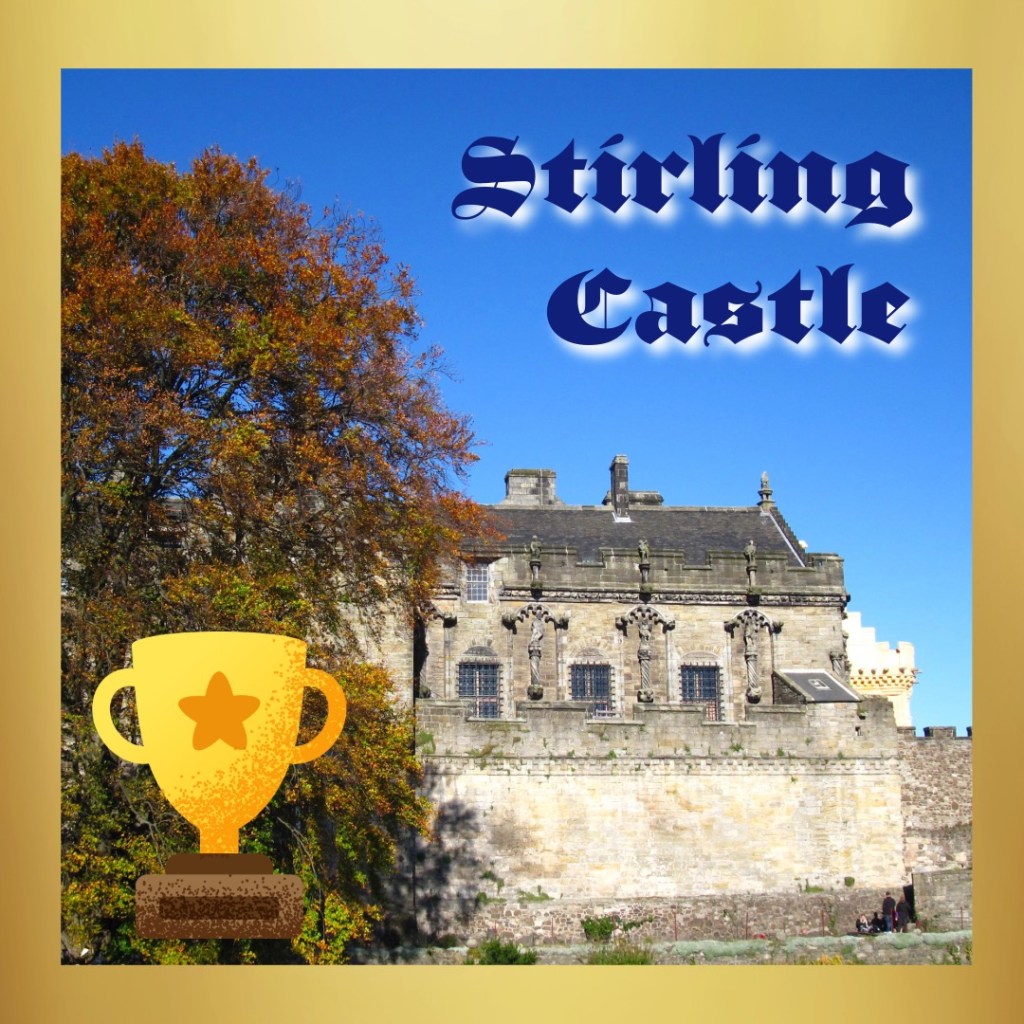
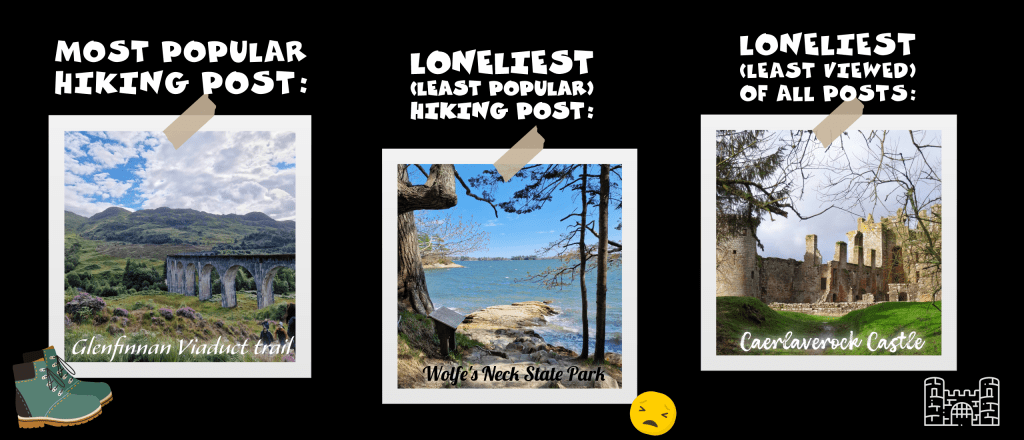
My most viewed castle post happens to be about the castle that I recommend first to all visitors to the area – better than Edinburgh in my humble opinion.
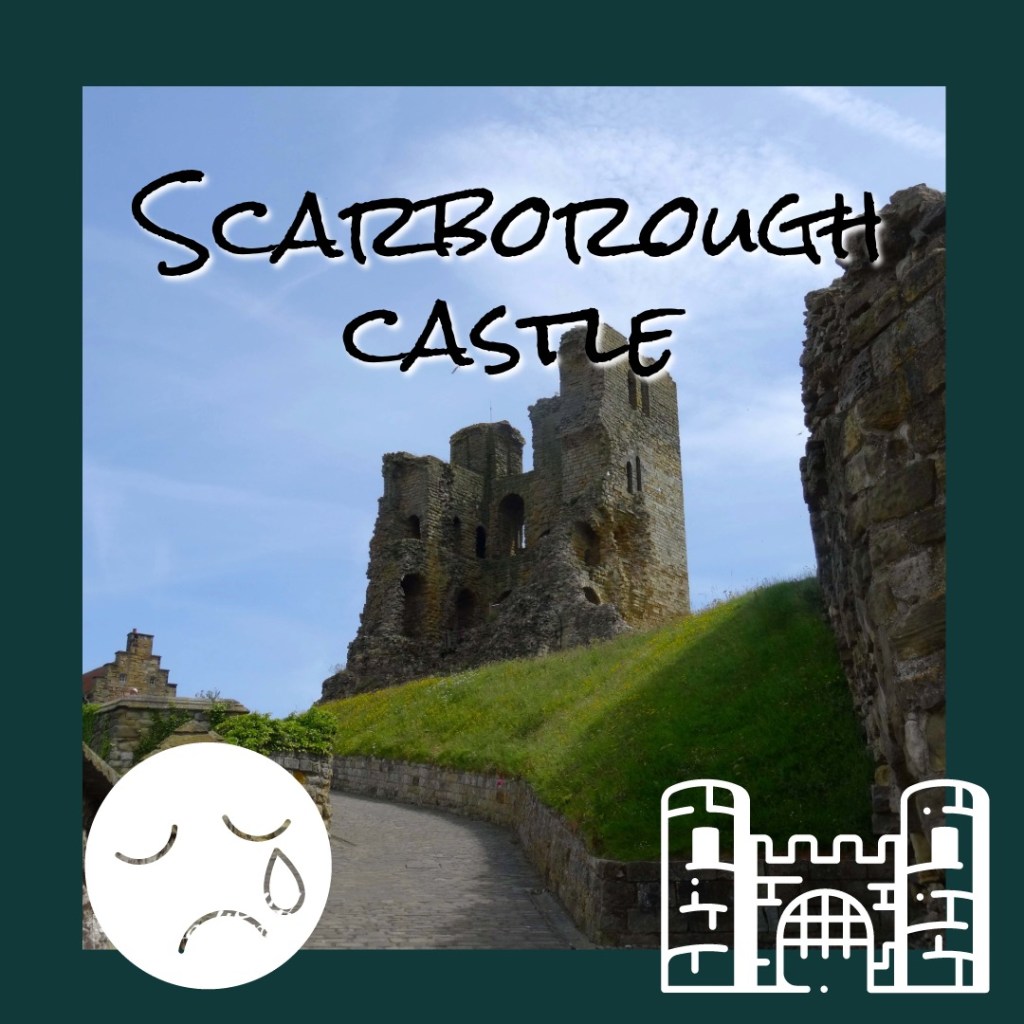
The least viewed castle post was poor Scarborough – maybe you missed it? Built largely by Henry II, it is well worth a look.
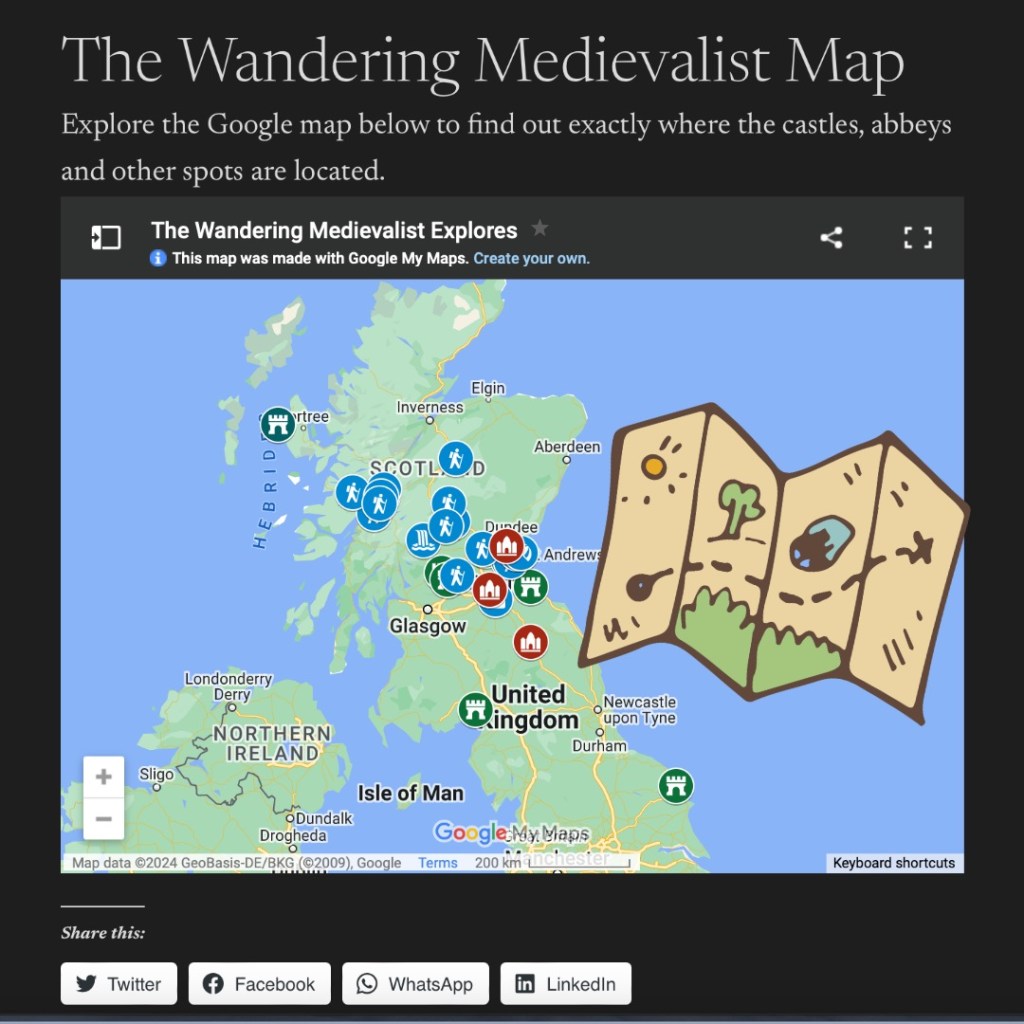
My most viewed page overall was the Wandering Medievalist Map – I’m glad to see it’s of interest! I do have a bit of a thing for maps…
Most of my readers come from the US or UK, which is no real surprise. Please do keep sharing with anyone interested in hiking, history, or my unique thoughts.
I mention my thoughts, because I was somewhat surprised to see that my most popular post of the year was not a Highland Hike or a Crumbling Castle or even an Ancient Abbey. Instead, it was a post simply about my opinion on a topic I could talk about for some time (and have)…
Have you read my take on Mel Gibson, Kevin Costner, Charlton Heston and other giants of the movie world?
Your interest in this post has motivated me to look at writing some more specific reviews, particularly of those movies who have most inspired my love of the Middle Ages. Perhaps I will even share some of my more academic writings about movies, in time.
A few reflections…
The idea for a blog came to me in the depths of pandemic lockdown in 2020, and it took me almost three years to find the time and headspace to get it up and running. In that time I had countless ideas for posts and opinions I wanted to share, and I’ve made a small dent in the long list I made.
Overall, it has been a fantastically fun experience. I have learned so much and perhaps more importantly allowed myself the time to learn about editing, photography, and how to put together a post that is not too long and not too short (though there may be a few of those). I’ve been exploring with page design, spending lots of time playing with Adobe, and I am much less afraid of the ‘manual’ setting on my camera. I have been more thoughtful about books I’ve read and movies I’ve watched, considering if they are something I might want to share, and I’ve been learning a bit about self-promotion (not my strong point).
Most of all, it is incredibly rewarding for me to have a creative outlet, to have a place to share my thoughts and pictures and hope that you will enjoy them. I have even been encouraged to turn back to my first love of creativity – writing. In time, I may even work up the confidence to share some of it with my audience.
In the meantime, I am excited to see my readership slowly growing, and hope it will continue to do so. I have plans that the next year will allow me to focus more on creative than I have for many years – even decades – and I cannot wait to see what will come of it. Creative has been missing in my life for too long, and I am welcoming it back with open arms, and remembering the value it adds to my life.
What else is next for the Wandering Medievalist?
I’ve got a few posts already planned, and hopefully some day trips to add to my collection. Look out for:
Balvaird Castle
Castle Campbell
Glencoe and Fort William
Highlights of Puerto Rico
My favourite drive in Scotland
Film review of Disney’s Sleeping Beauty
a visit to the newly-reopened Crannog Centre on Loch Tay
and much more!
News Alert! And perhaps most exciting, look out for the Wandering Medievalist online shop, launching in May! You will be able to buy prints of my pictures, request prints that may not yet be available, and in time additional products too (calendar? mug? photo book?)
Is there something you would like me to write to about? Complete this form to send me your thoughts:
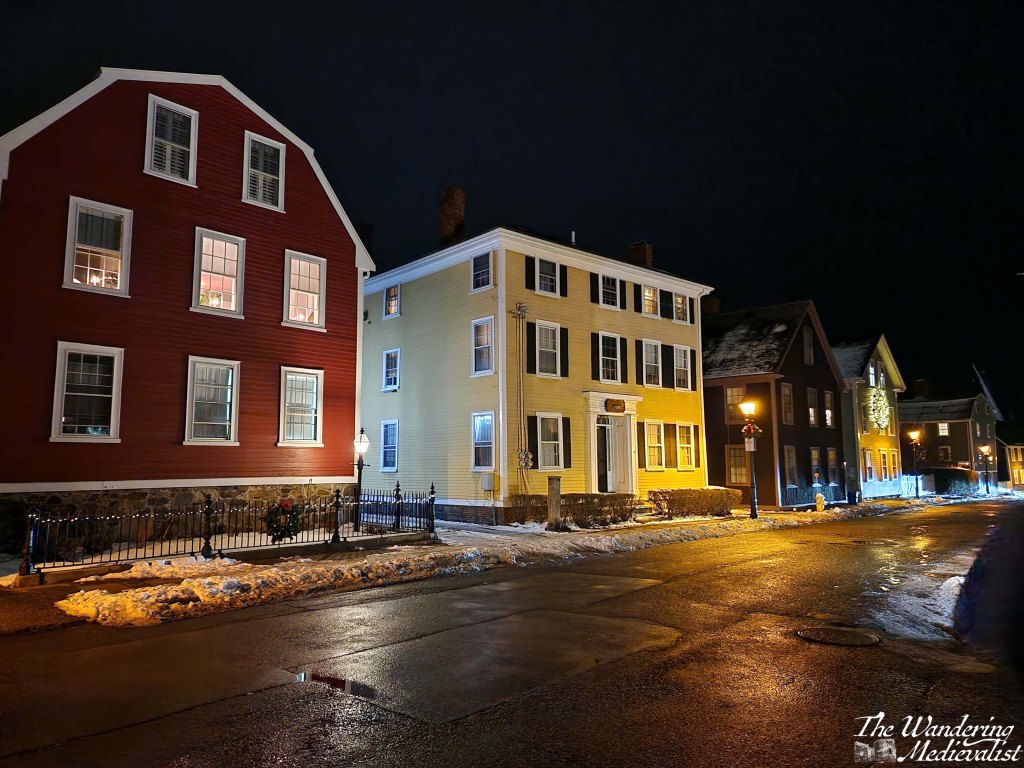
When living in a country where dark is so prevalent in the winter, one must be willing to accept and even embrace the night sky and the often stunning light that comes after sunset.
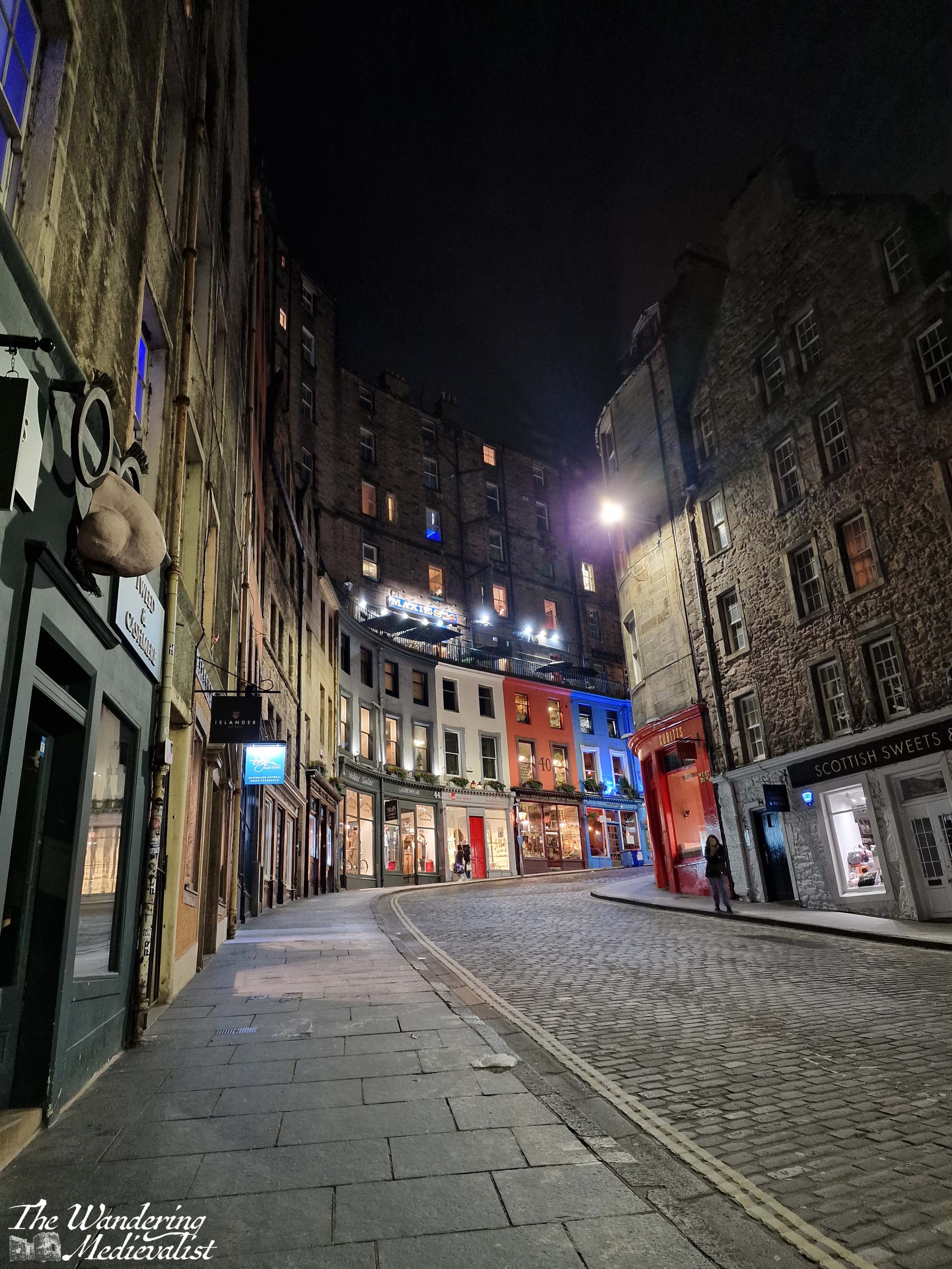
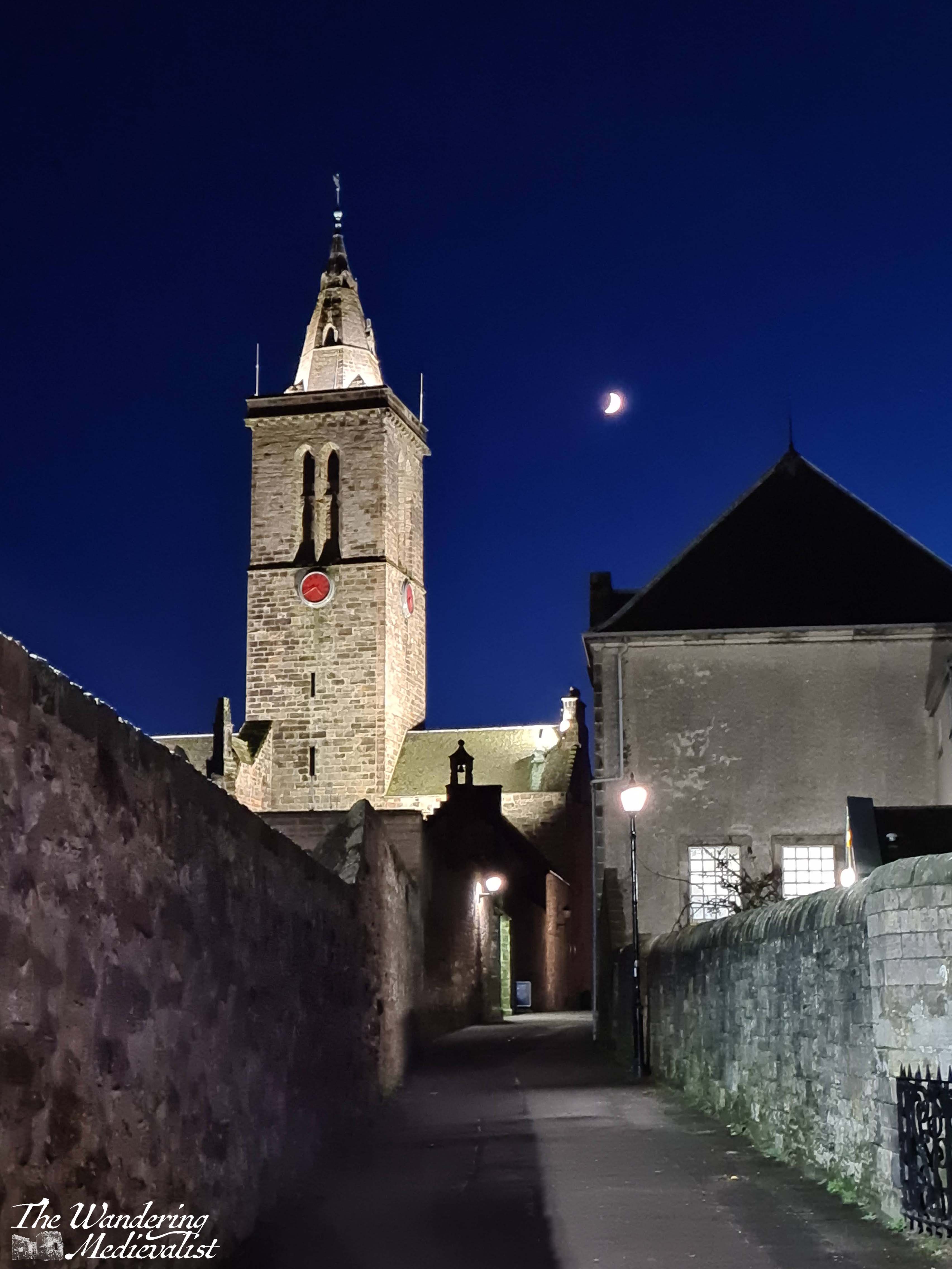
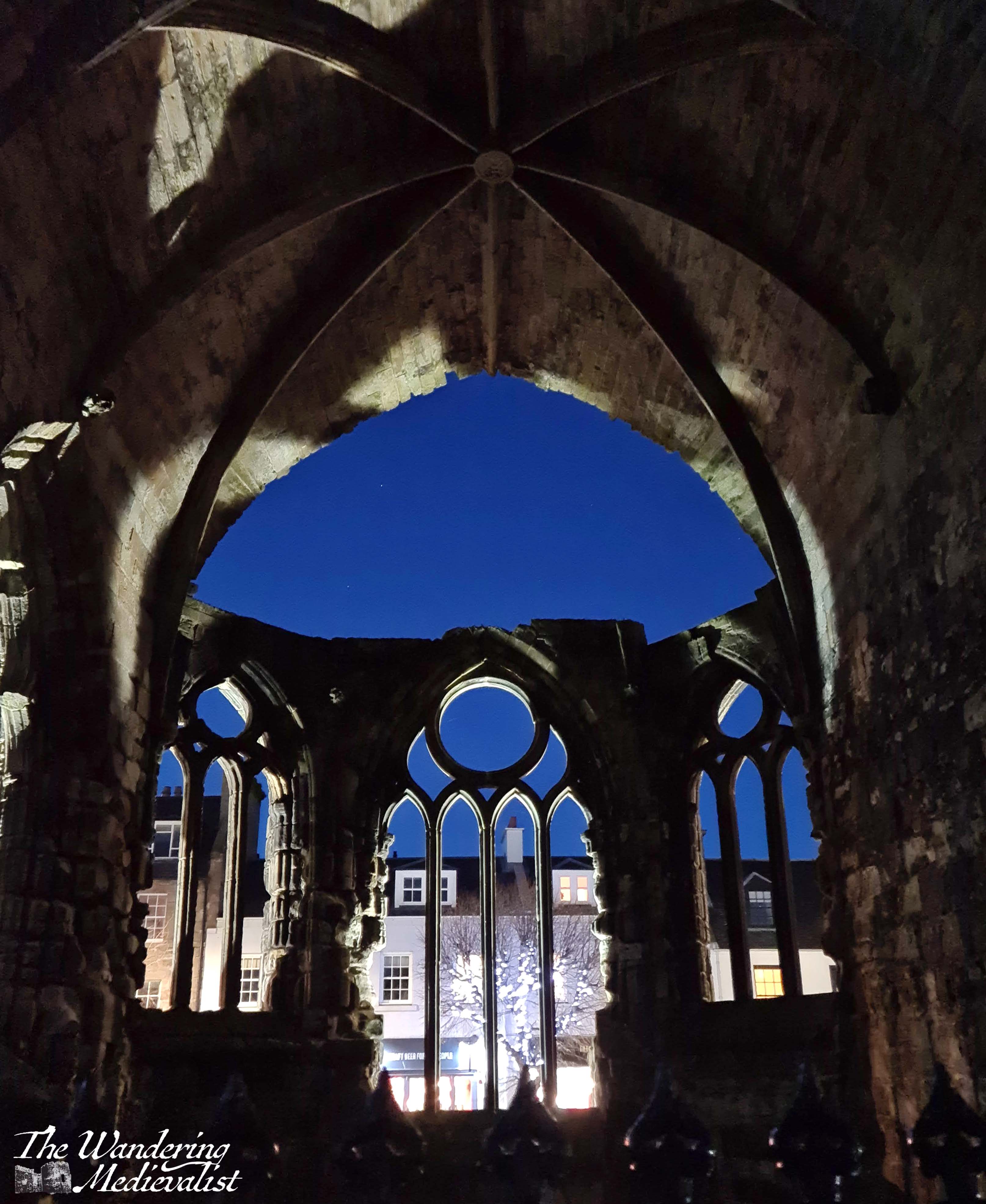
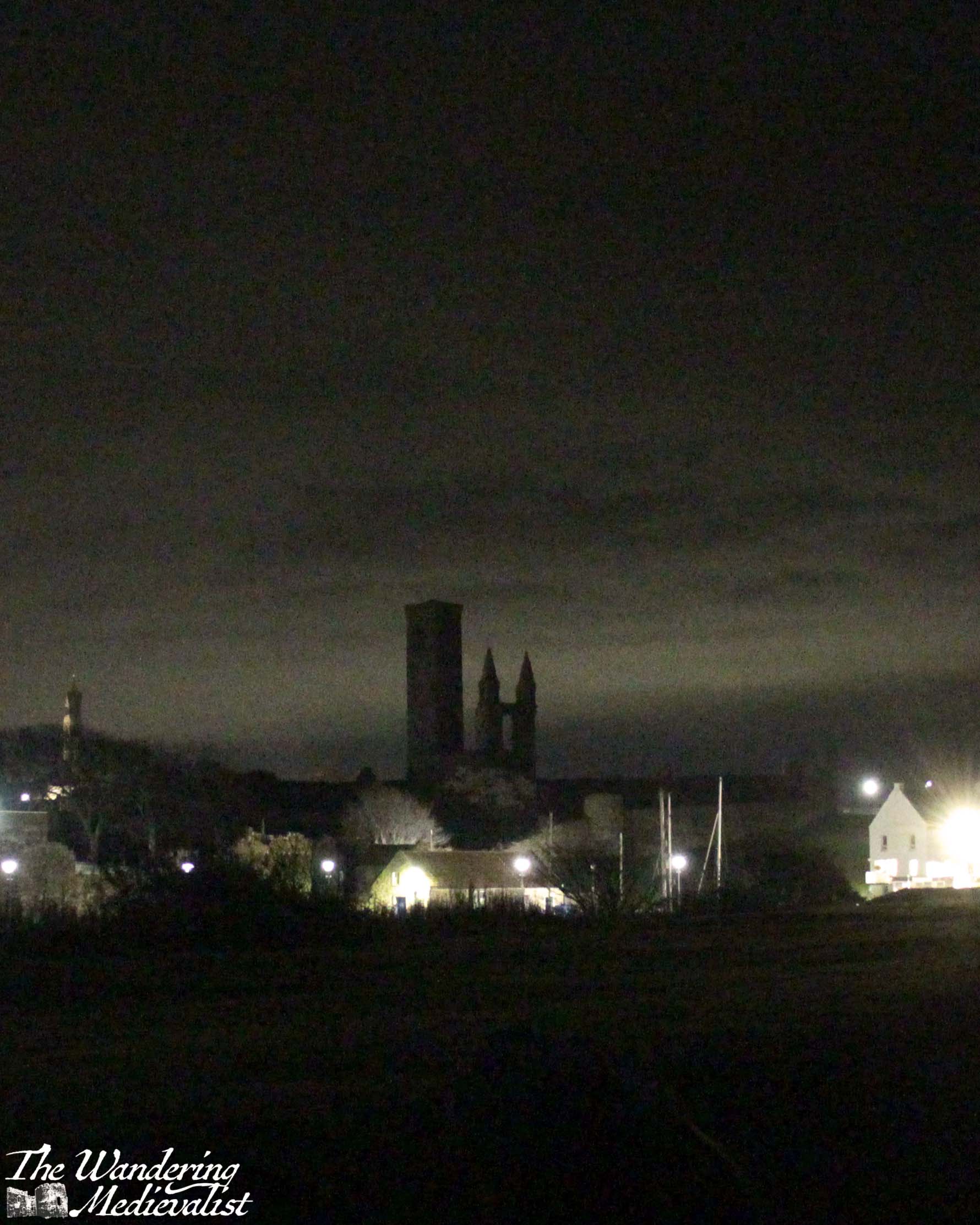
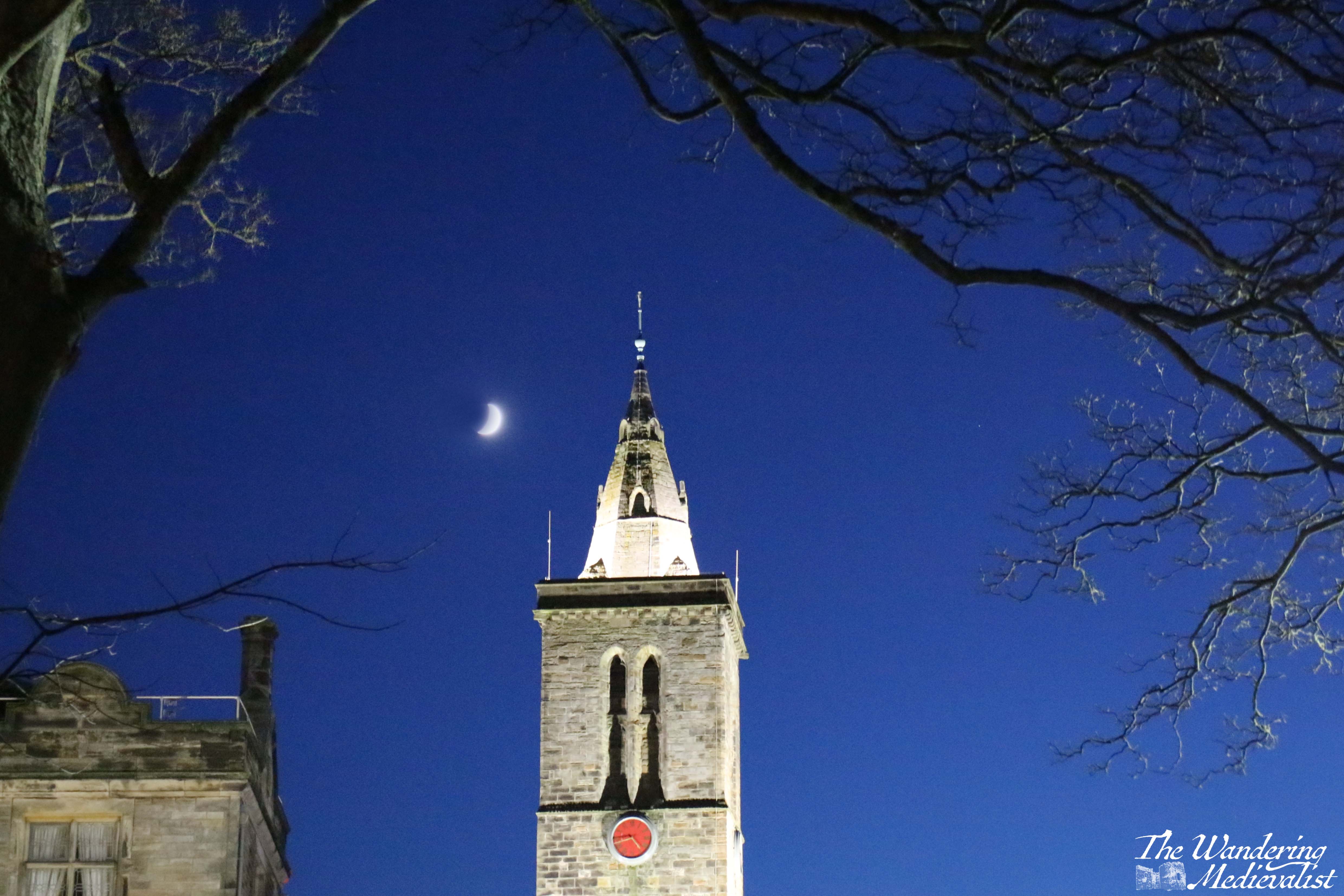
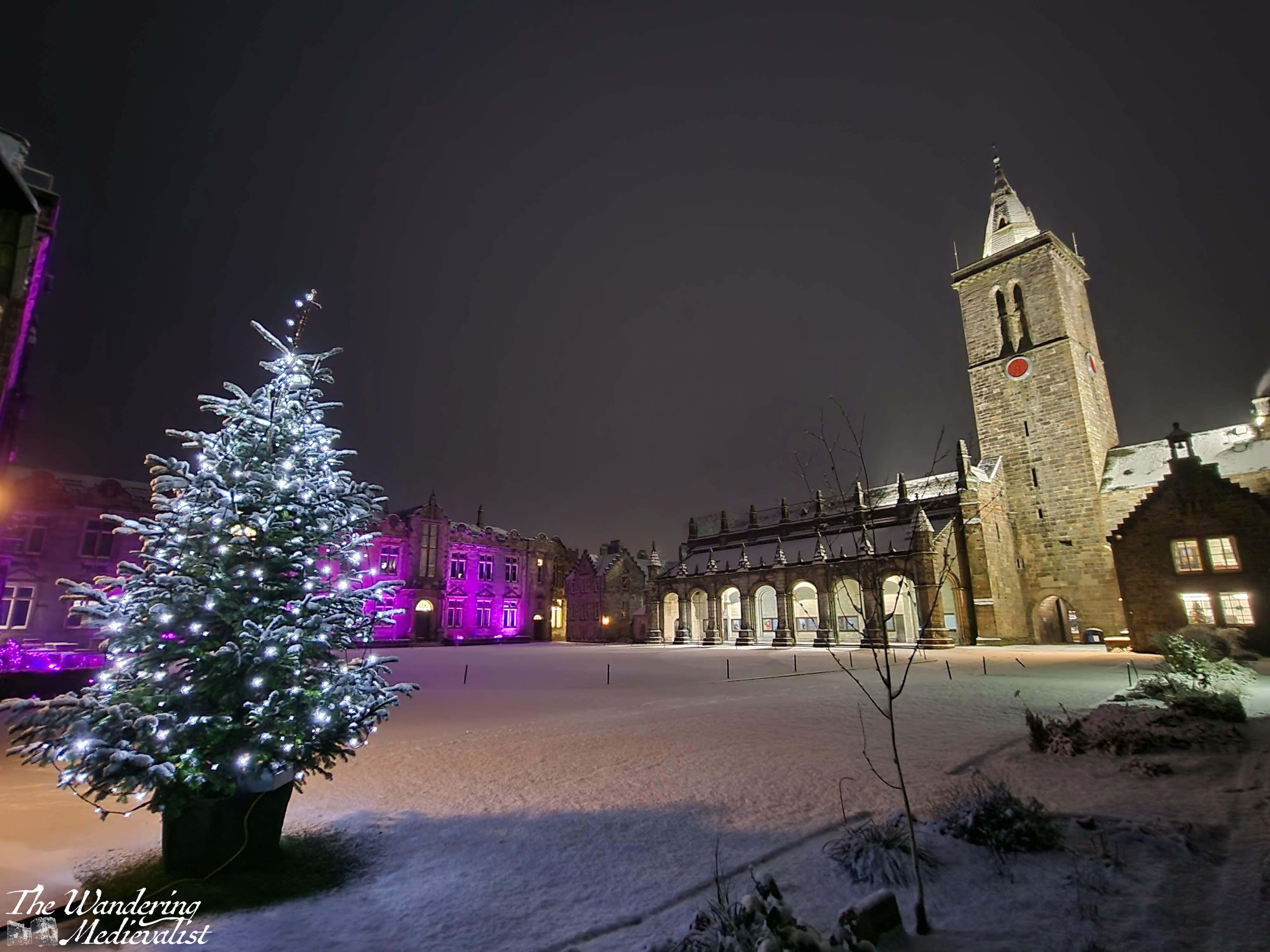
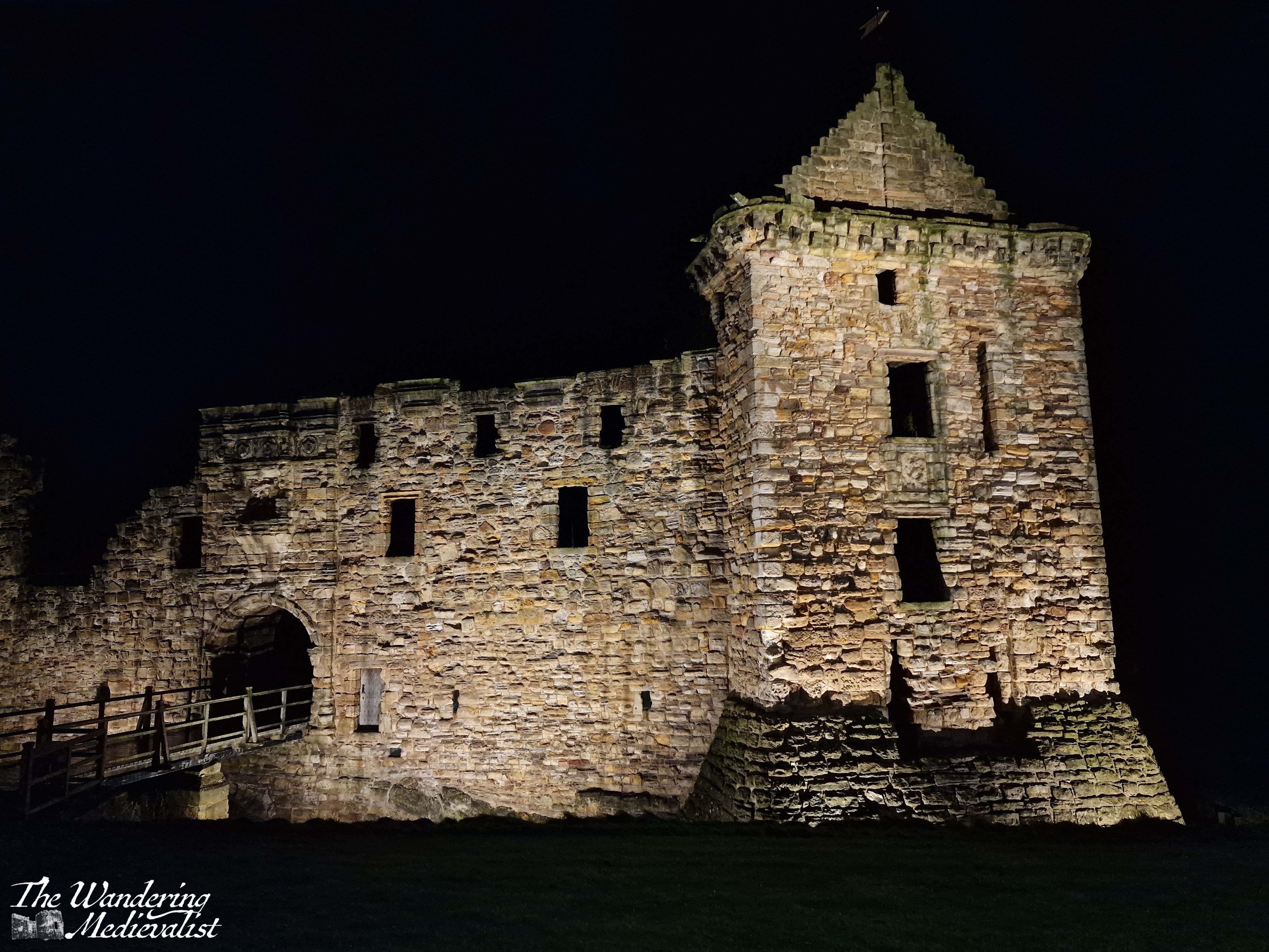
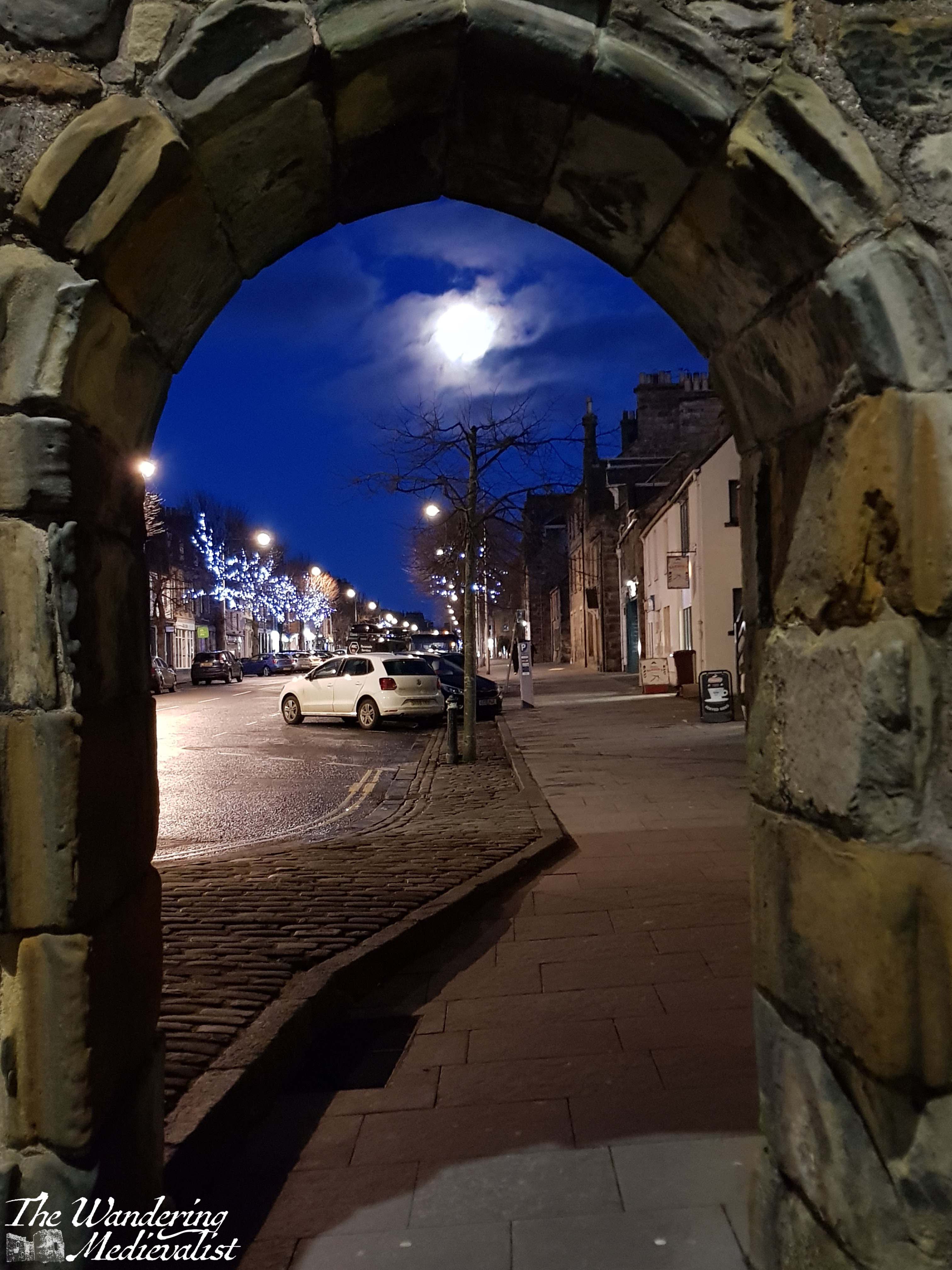
In St Andrews, the streets and buildings are illuminated not just by street lights but by displays specifically designed to accentuate the stunning nature of the architecture. In fact, in most towns and cities now there is always light after dark, ensuring that visitors – and photographers – can continue to enjoy the sights and get from A to B.
In recent years I have become increasingly fascinated by the moon and stars. For more than a year now I have been trying to really capture especially the stars, a feat much tricker than it may appear, and one that has left me with hundreds of shots of a mostly black sky. But I am learning with each attempt, and each night I stand in the cold and try to get it right.
Night can be a fascinating time to capture your favourite daytime spots – I hope you enjoy some of my efforts to do so!
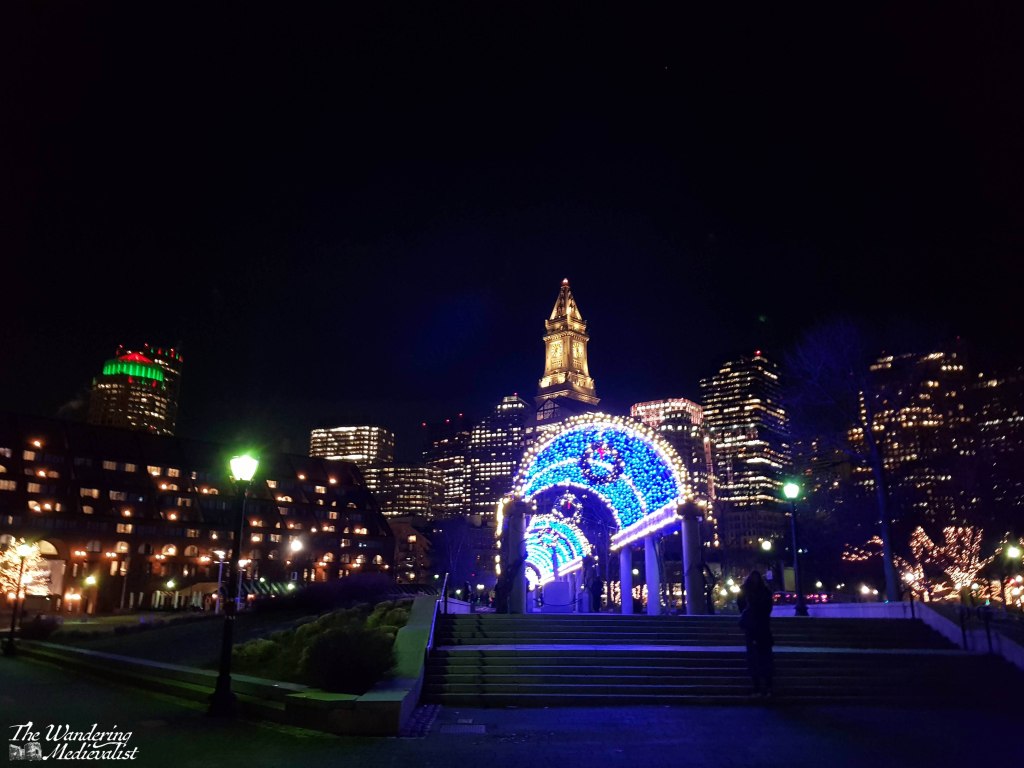
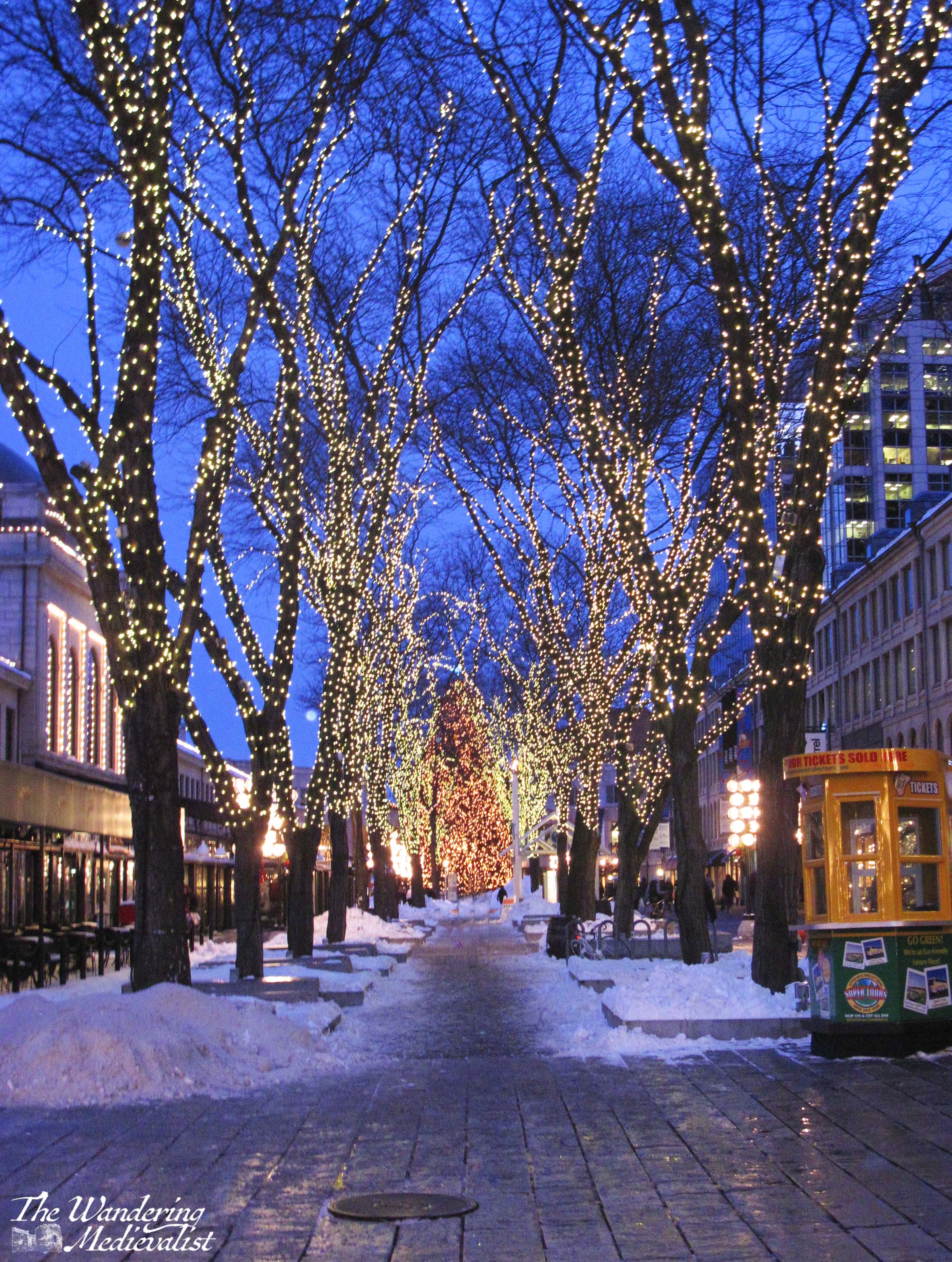
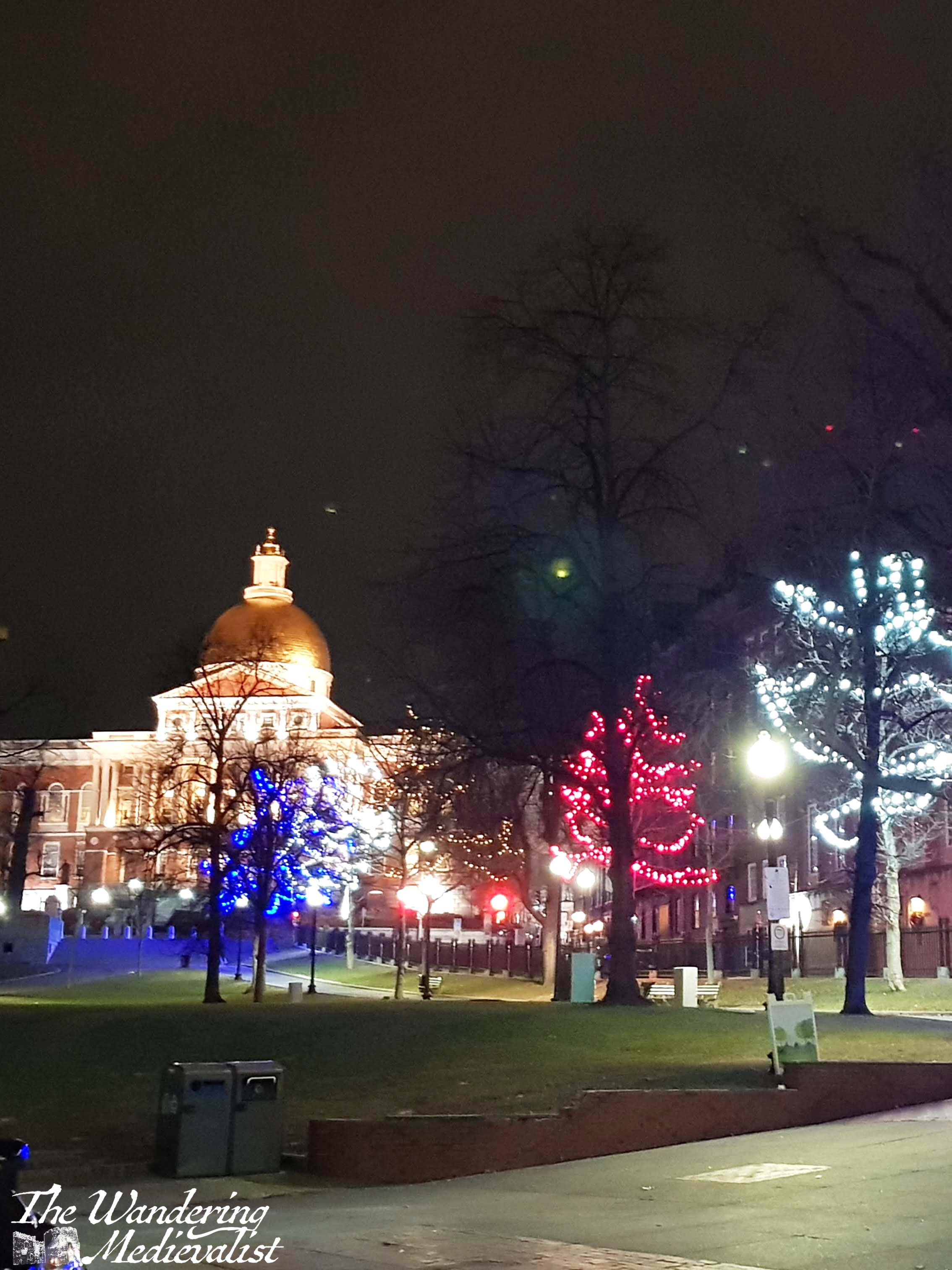
Boston, Massachusetts, USA 🇺🇸
There is a lot to love about Boston at night, though I particularly love the winter lights. When I was young we used to drive into the city every December to see the Nutcracker ballet, and I recall with utter clarity the wonder of driving past the Common to see the trees festooned with lights and every lamppost adorned with a Christmas decorations. The ‘Christmas’ nature has widened to encompass all holidays, and the lights are still stunning.
City view from Christopher Columbus Waterfront Park.
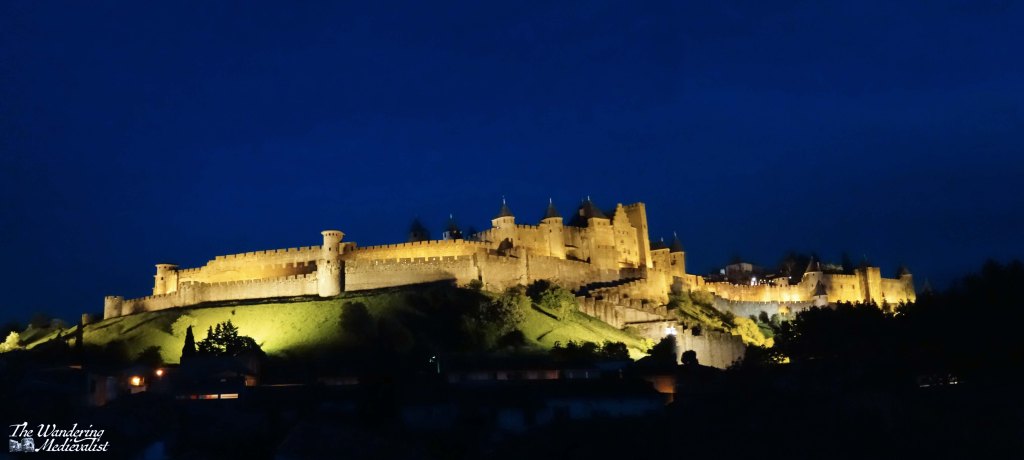
Carcassonne, France 🇫🇷
I consider myself so lucky to have been able to visit Carcassonne and to have found a hotel in the newer part of the city with a spectacular view of the medieval town. At night, it was almost more magical than during the day.
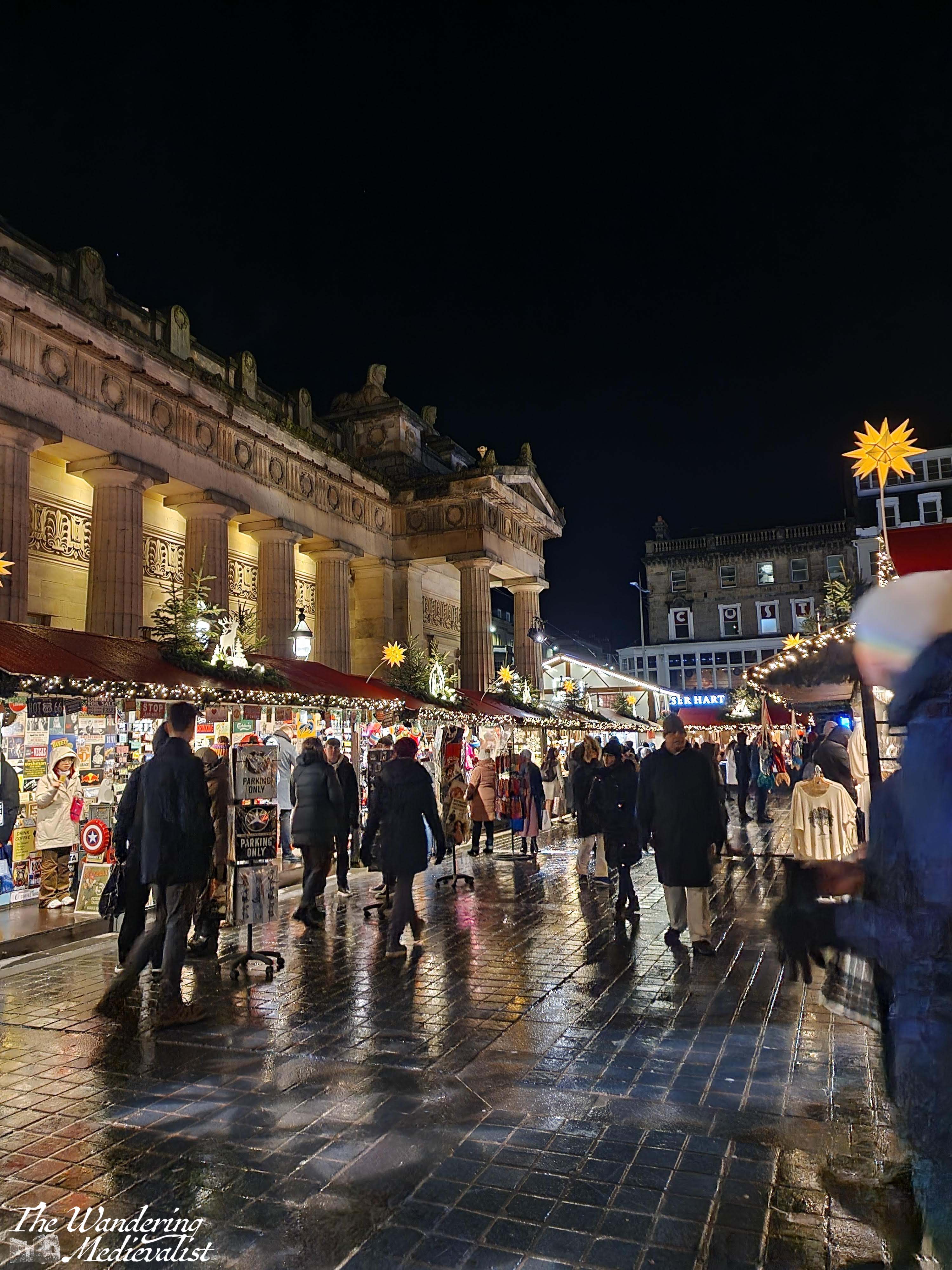
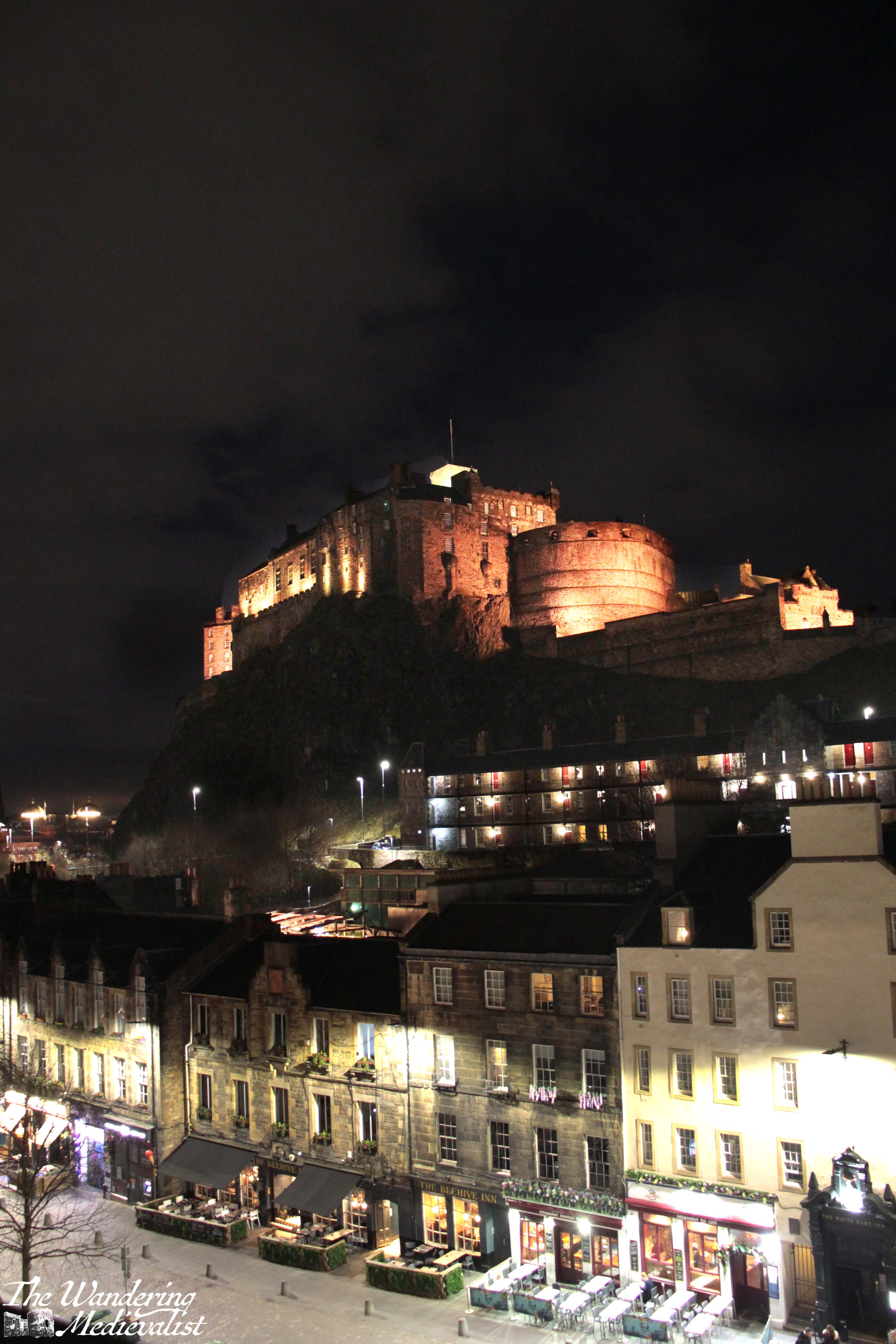
Edinburgh, Scotland 🏴
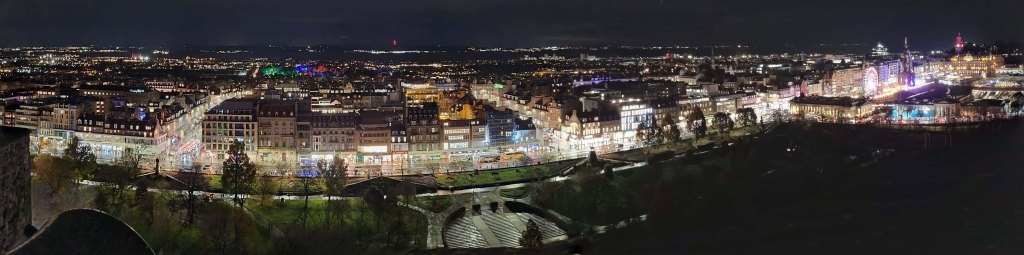
As anyone who has routinely read my blog is aware, Edinburgh is one of my favourite cities, second only to Boston. It is almost absurdly picturesque, both old town and new, and boasts some incredible Christmas decorations, particularly around the German Christmas market.
Panorama of Princes Street from the castle
Marblehead, Massachusetts, USA 🇺🇸
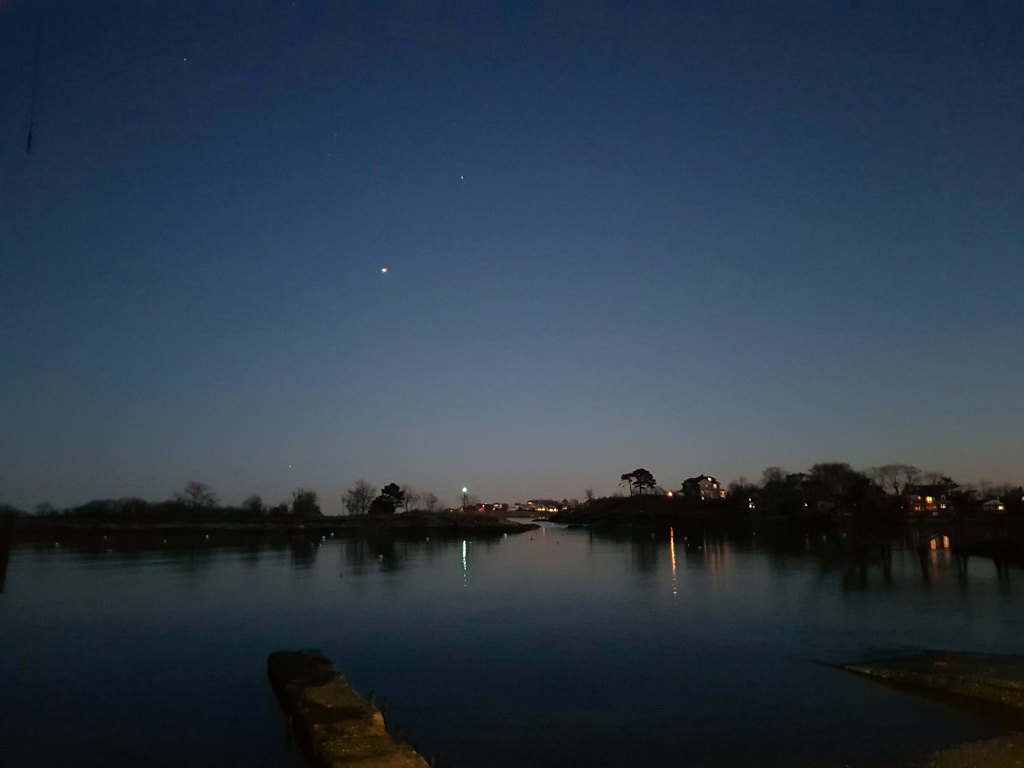
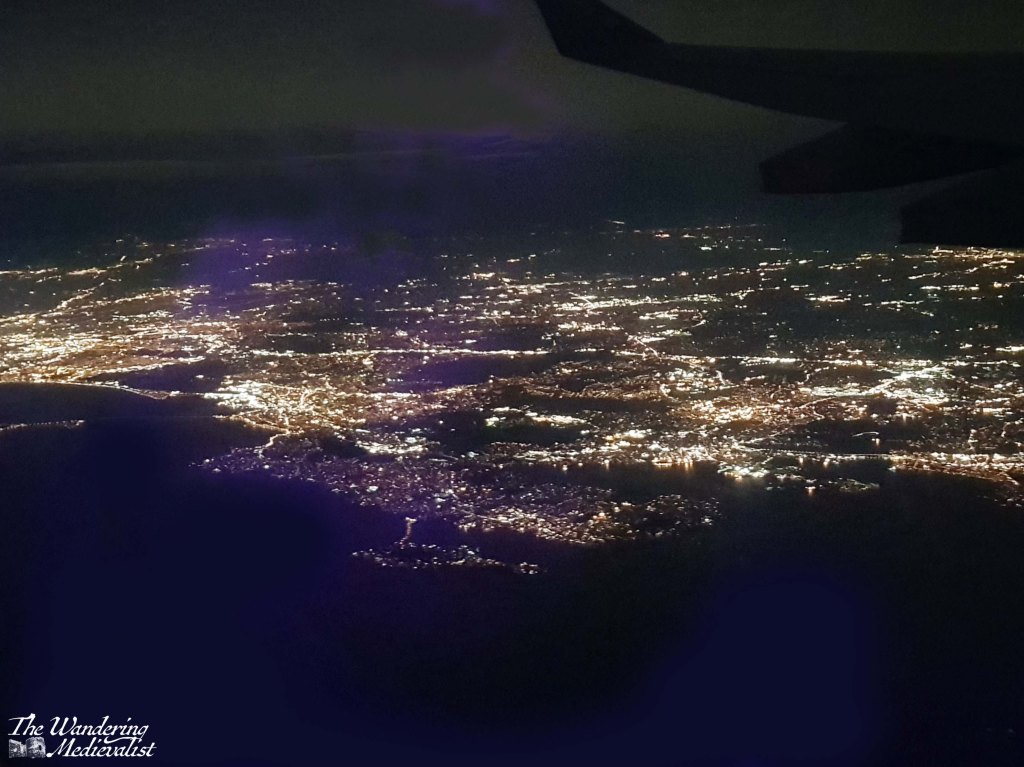
Whenever I visit home, I make an effort to walk around the town at least two or three times each trip, and an evening wander home from dinner or a drink with a friend is a great opportunity to capture the town at night. I am also inevitably either welcomed back or given a send-off by the Logan Airport flight path, which passes almost directly over Marblehead, allowing for some great sky shots – who needs a drone when you have Aer Lingus?
Little Harbor
Marblehead from an Aer Lingus flight
State Street
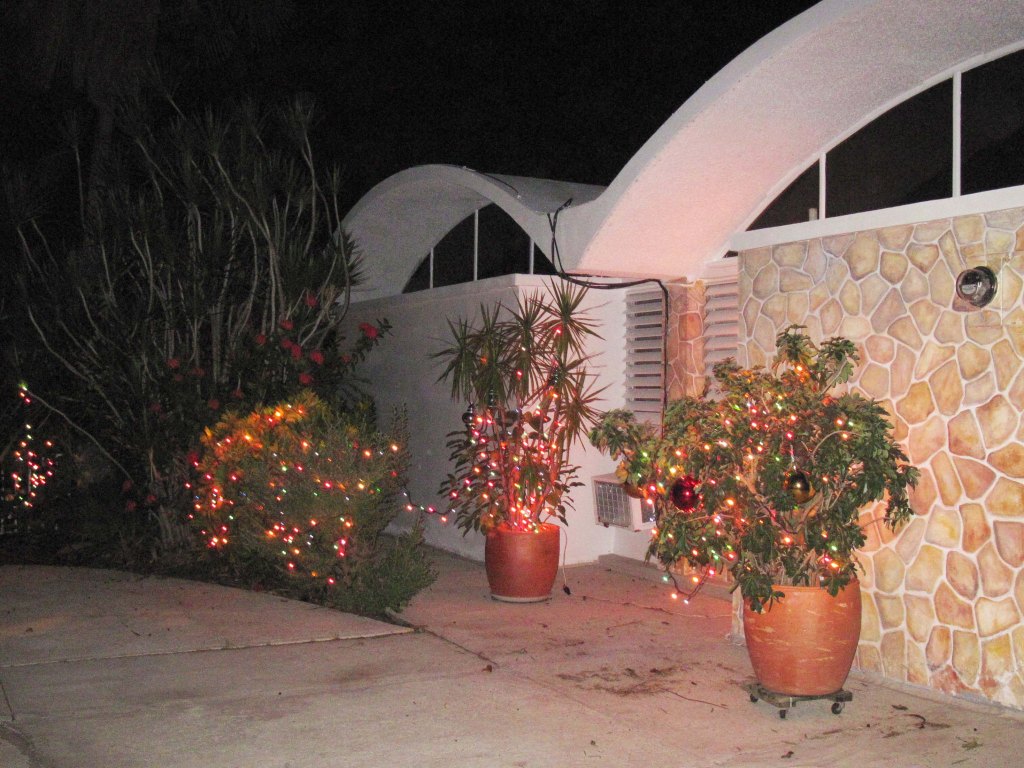
Puerto Rico 🇵🇷
Night in the Caribbean can be a very different place than anywhere else; it is seldom quiet, and I find very seldom as dark as anywhere else. Perhaps because there are often many people about, perhaps due to reflection of the moon and stars off of the water, or perhaps something to do with the warmth.
Ponce, Puerto Rico
Fajardo, Puerto Rico
St Andrews, Fife, Scotland 🏴
I have spent a great deal of time in St Andrews, after dark as well as before, and so I have hundreds of pictures of the town at night. These are just a few of my favourites.
The Moon at night 🌚
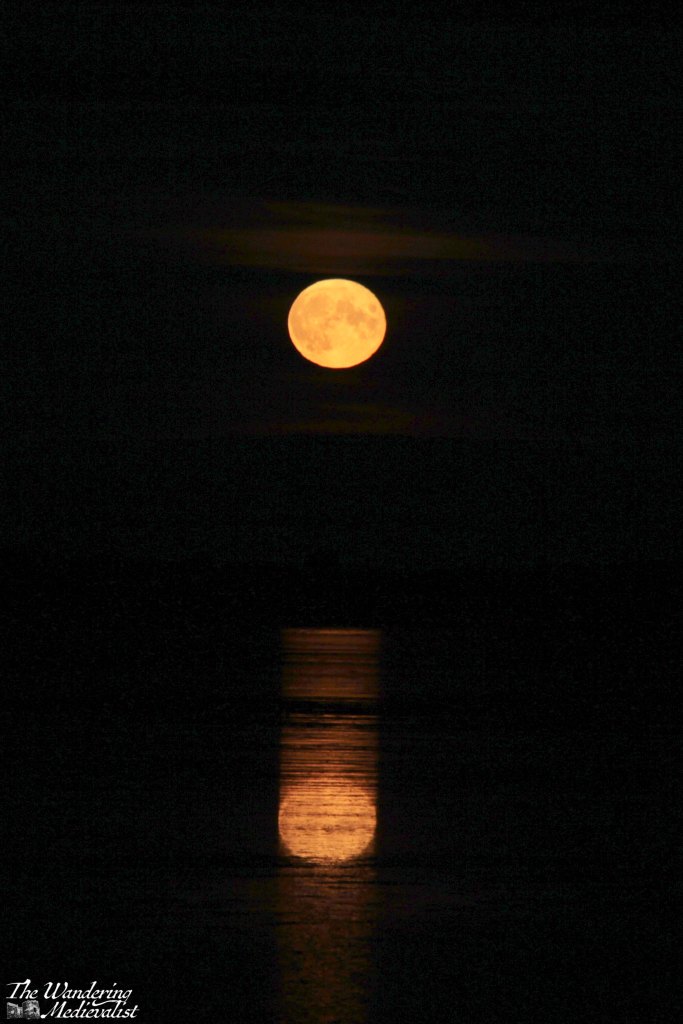
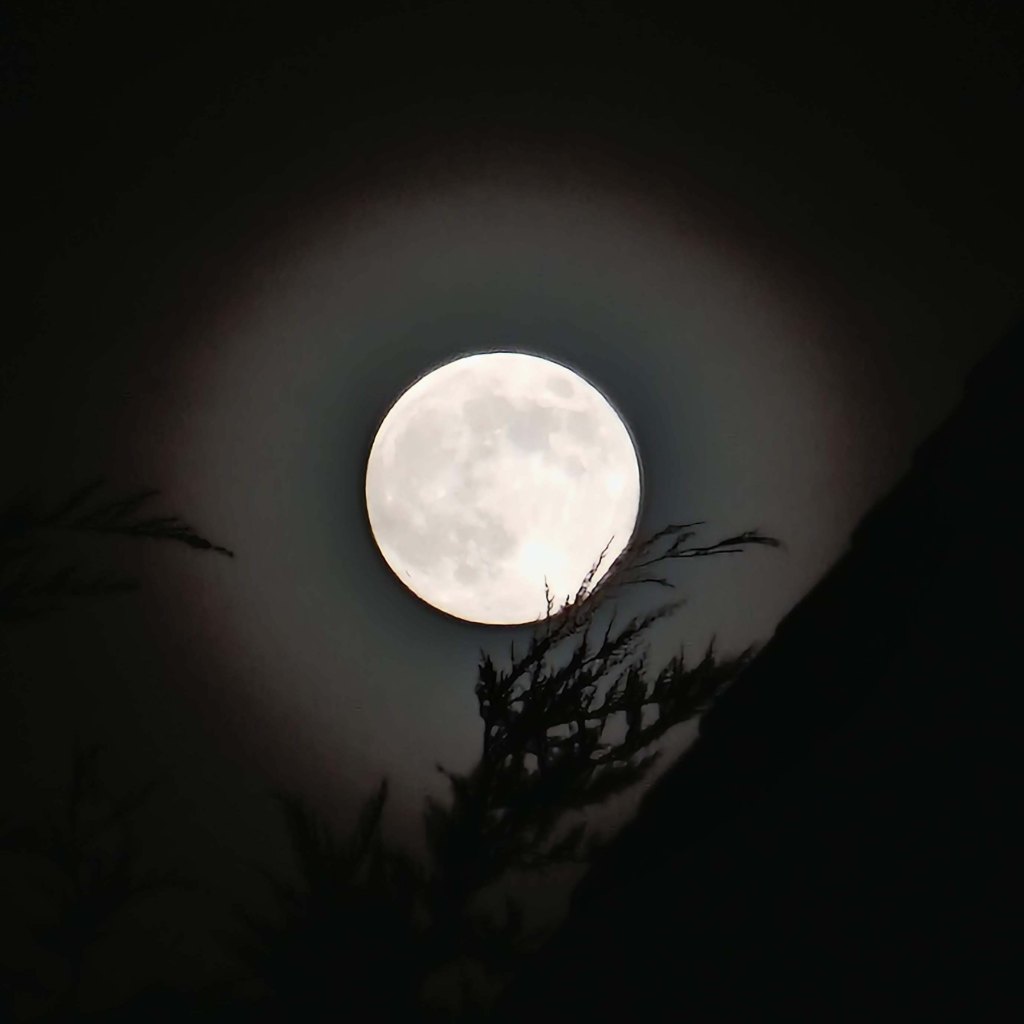
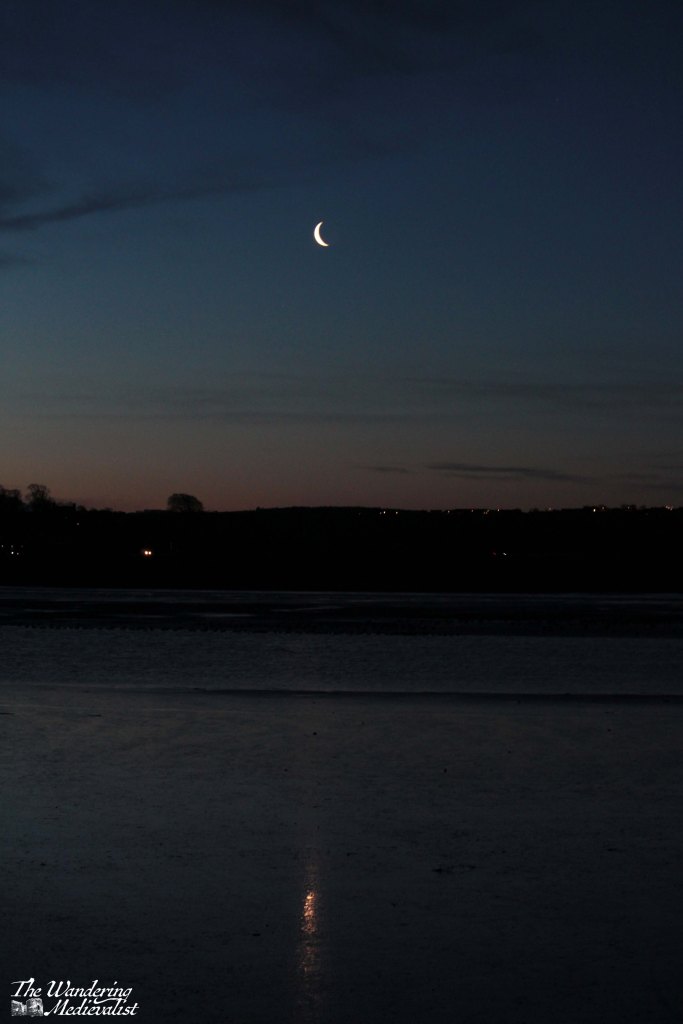
I defy anyone to take a walk at night during the full moon and not stop, just once, to wonder at it. I have become so obsessed with capturing the full moon that I even have it marked in my calendar. At this time of the year, near the equinox, the moon is often in the sky during the day and offers a perfect opportunity to capture it; but that is not the point of this post. Mankind has been fascinated with the moon for generations, even more so since we actually went there…I personally am continually surprised by how clear it can look even just to the naked eye.
And the stars… 🌌
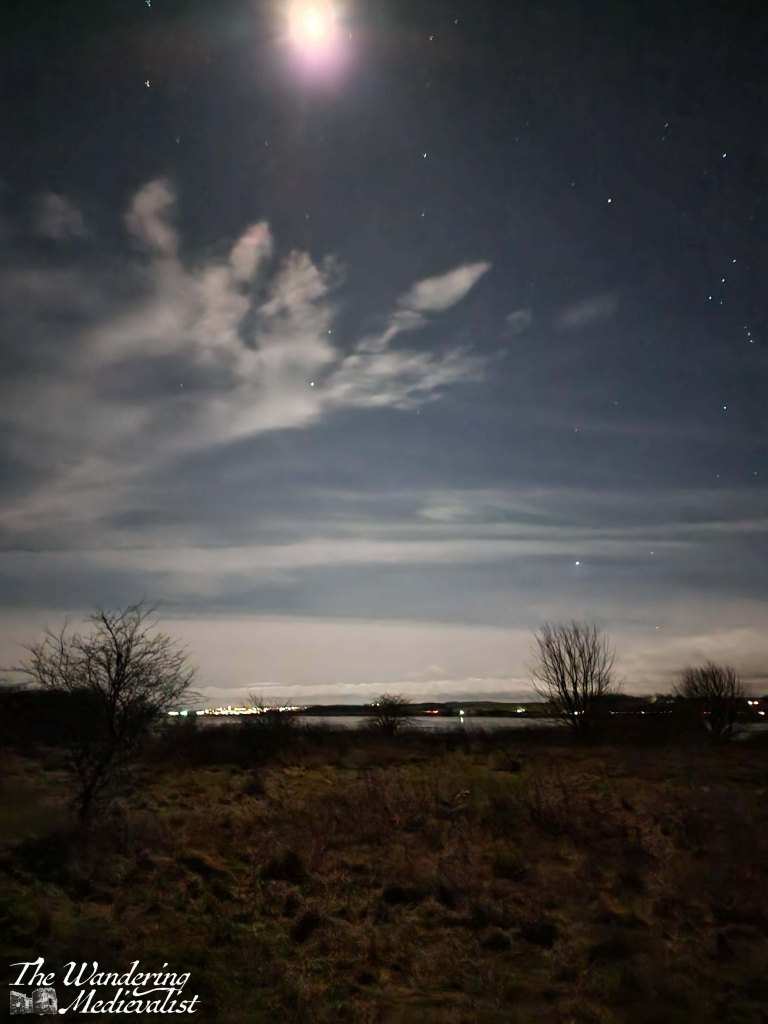
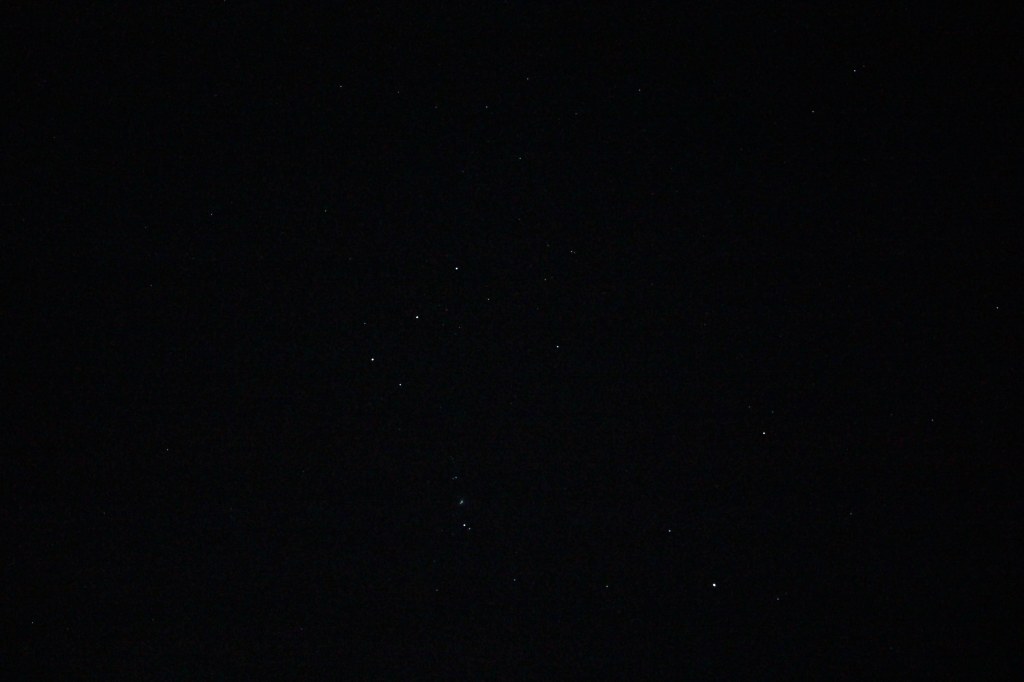
Taking clear, atmospheric photos of the stars requires a spot with as little light pollution as possible, a tripod, plenty of time to try different settings, and some knowledge about how to edit the products of your time. I’m getting there, though I’ve got a way to go to equal some of the spectacular professional shots one sees online.
This one was taken on my phone with a night setting, so feels a bit like cheating.
If you open this one up, you should just be able to make our the Orion.
The night sky in Skye – so little light pollution up north!
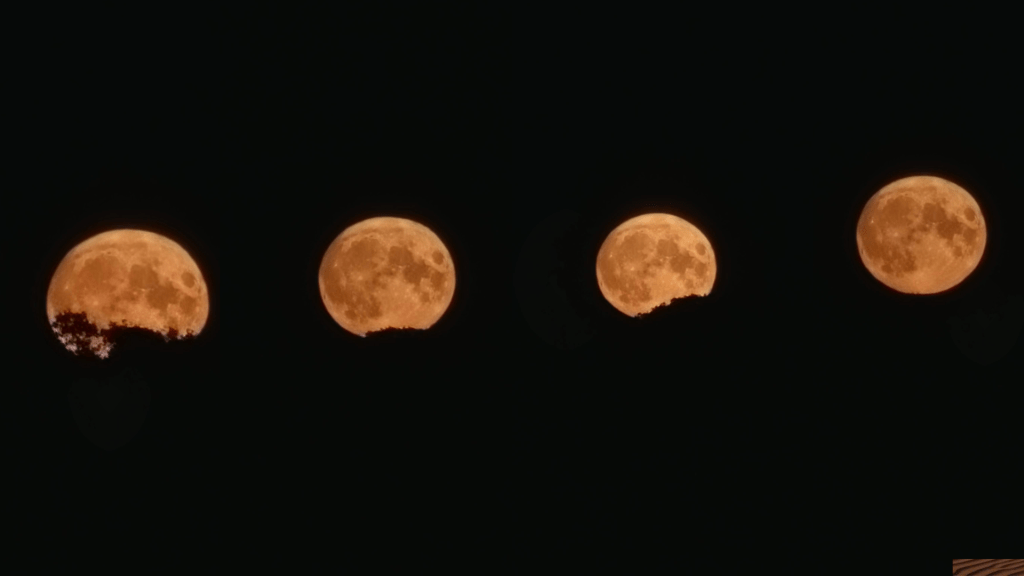
Finally, I’ll wrap up with a sequence of pictures I took one evening as the moon rose; I’ve mashed them all together, and I hope they provide even a touch of the awesome nature of the full moon.
Several years back, for reasons I cannot really recall, we decided to deviate from our traditional Lochaber-based holidays and try out the eastern side of the Highlands around Aviemore. Due to its popularity in winter sport season, there are plenty of places to stay and eat, and it is a slightly shorter drive.
On our first day we took an epic long walk around Loch Morlich in the rain, and so on the next day we opted for a slightly more gentle trek, starting at Loch an Eilein and heading almost due east towards the Cairngorm Club footbridge, about 4 miles round trip. There is quite generously-sized car park at Loch an Eilein which in and of itself has some lovely views, including a typical highland-style stone croft.
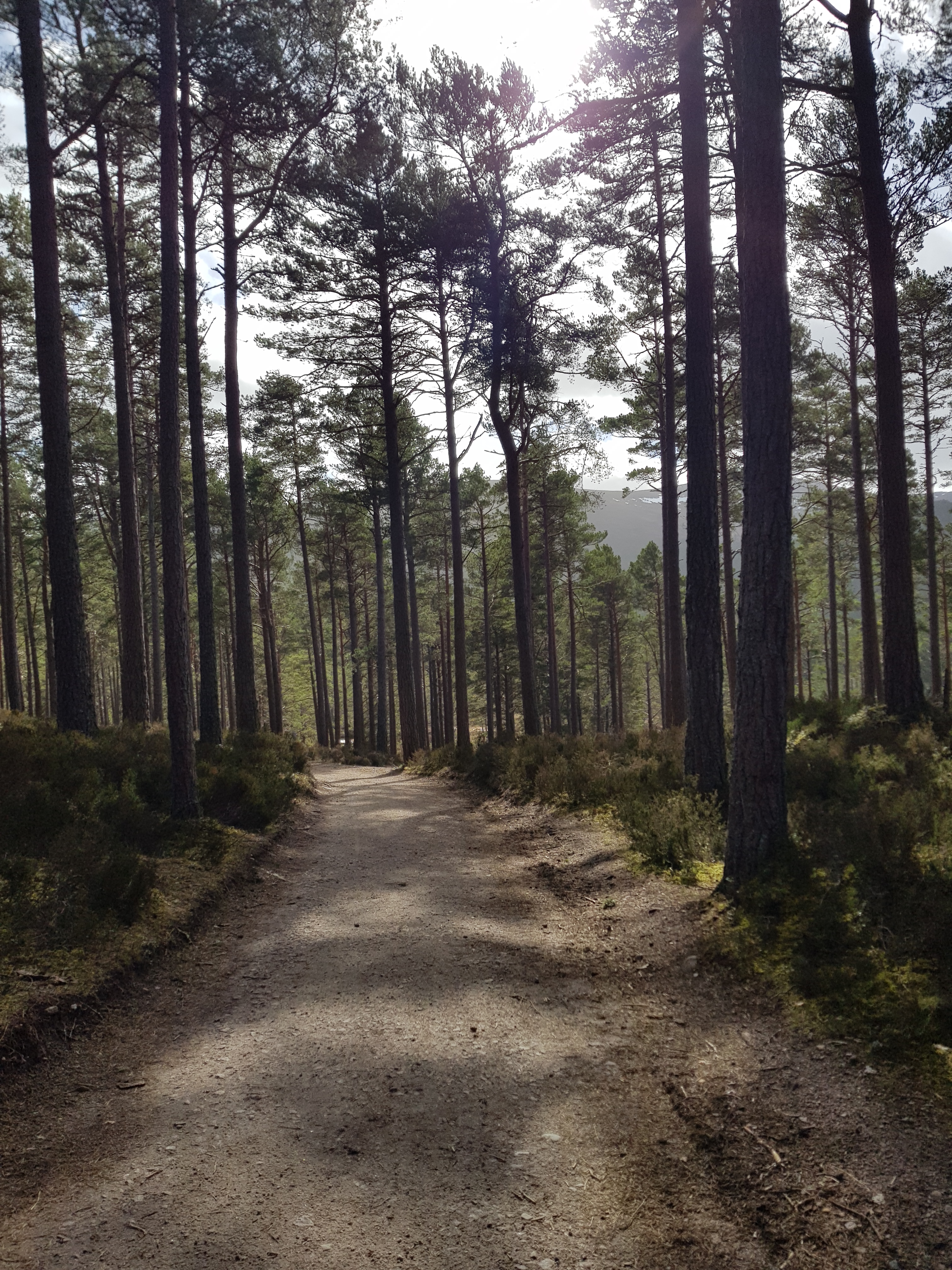
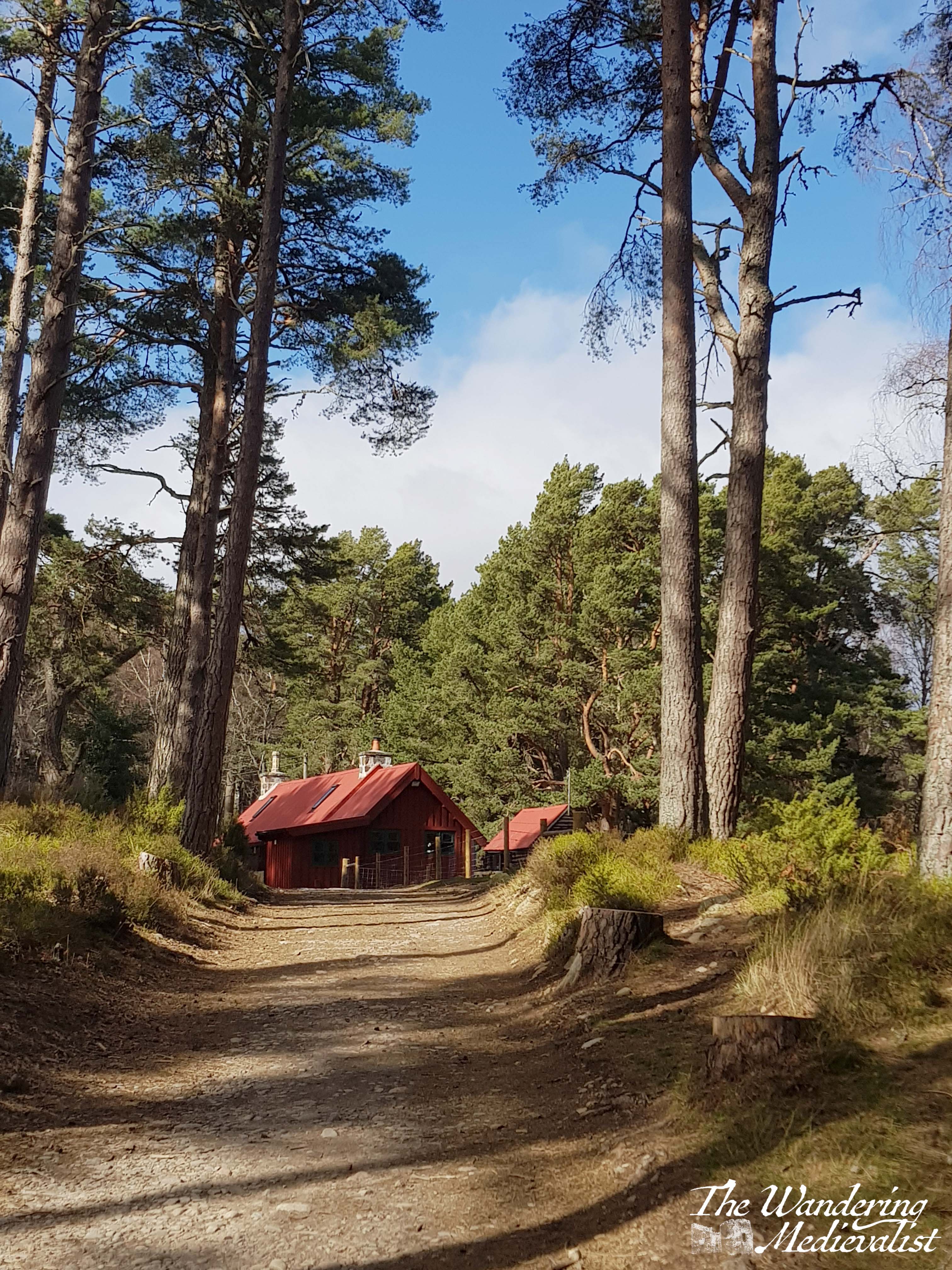
The paths in this area are very well-marked, and we started off along an access road, skirting the edge of the loch. At first, the route was surrounded by beautiful tall pines that allowed tempting glimpses of the water, as well as this stunning Bob Ross-style view of a small forest cottage.
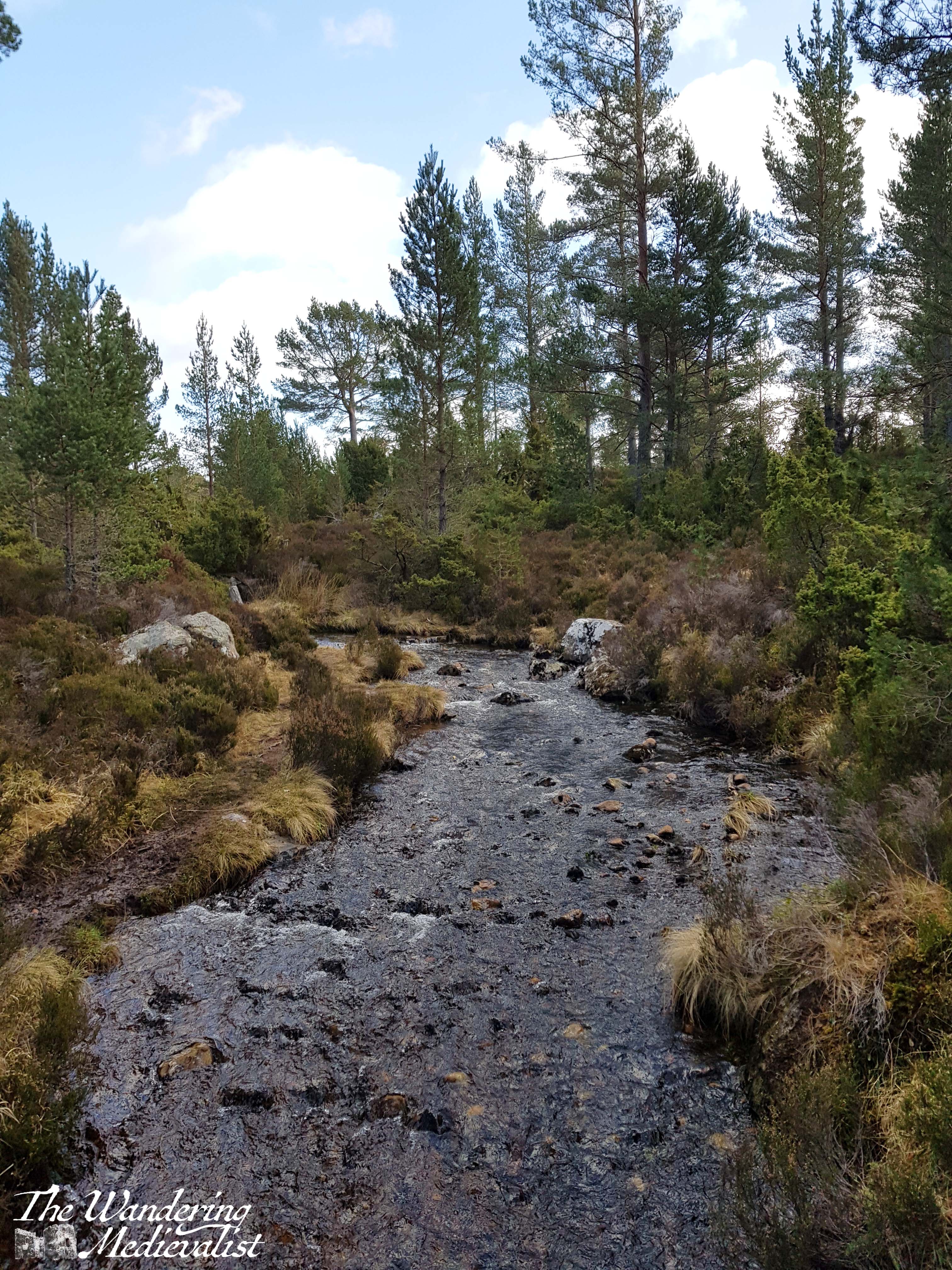
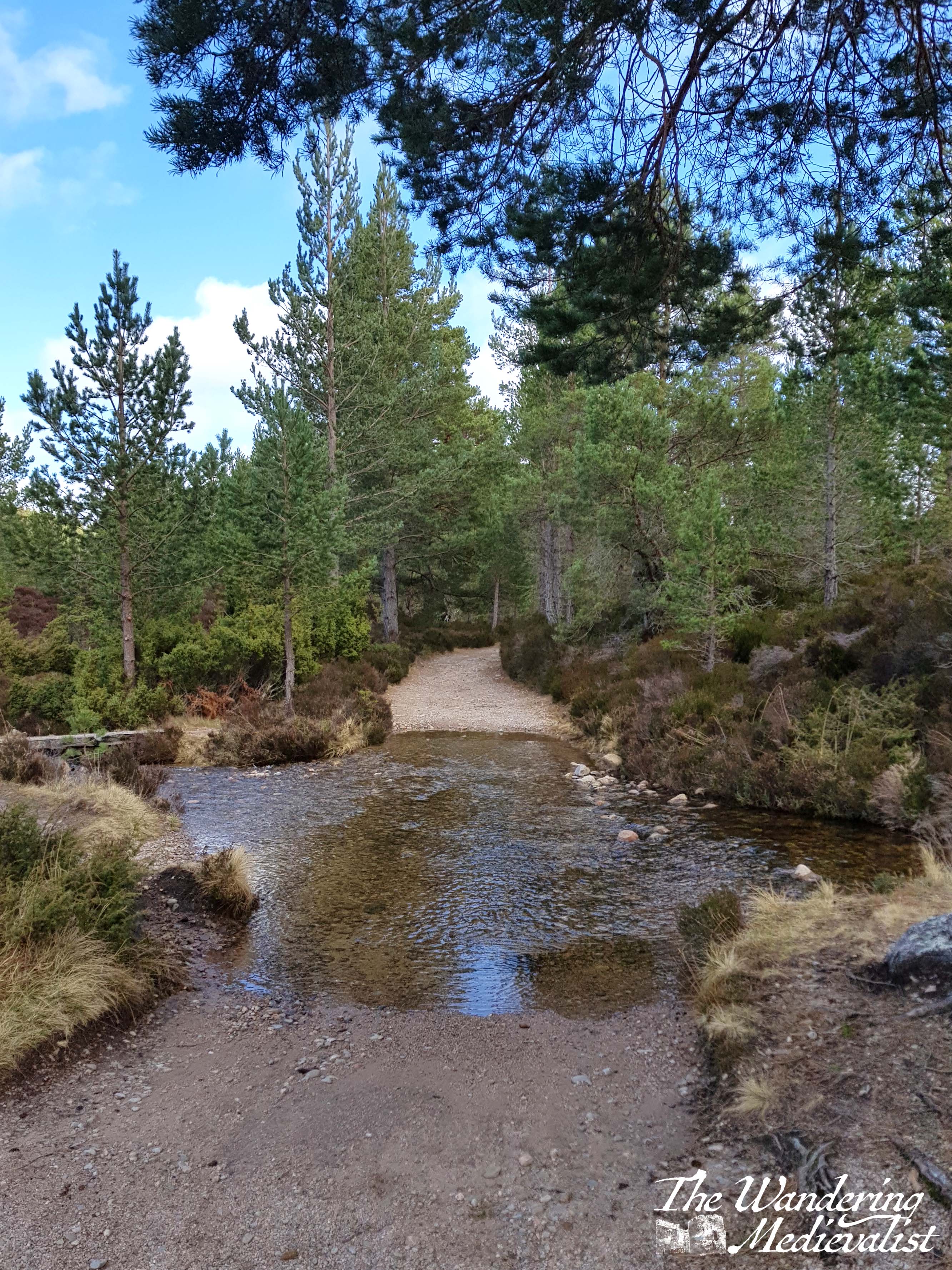
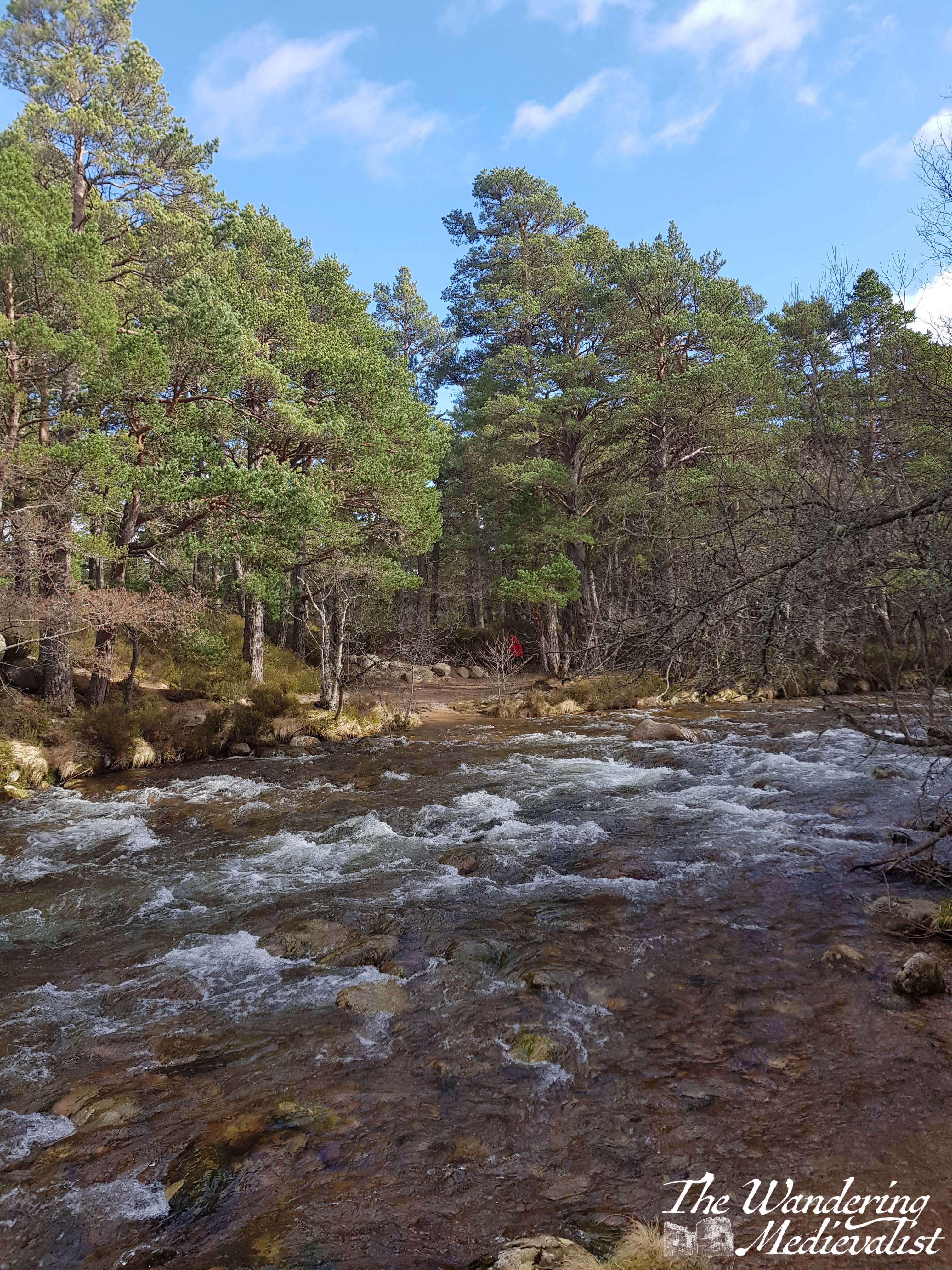
Before long, the path we wished to follow turned east away from the loch. We passed several burns and even crossed one before moving out of the trees and into a flat, more open area with brush on all sides. Much of the open area was quite boggy but the path itself was dry and, for the most part, flat and easy to follow (excepting of course the shallow ford below, which required a bit of careful manoeuvring.)
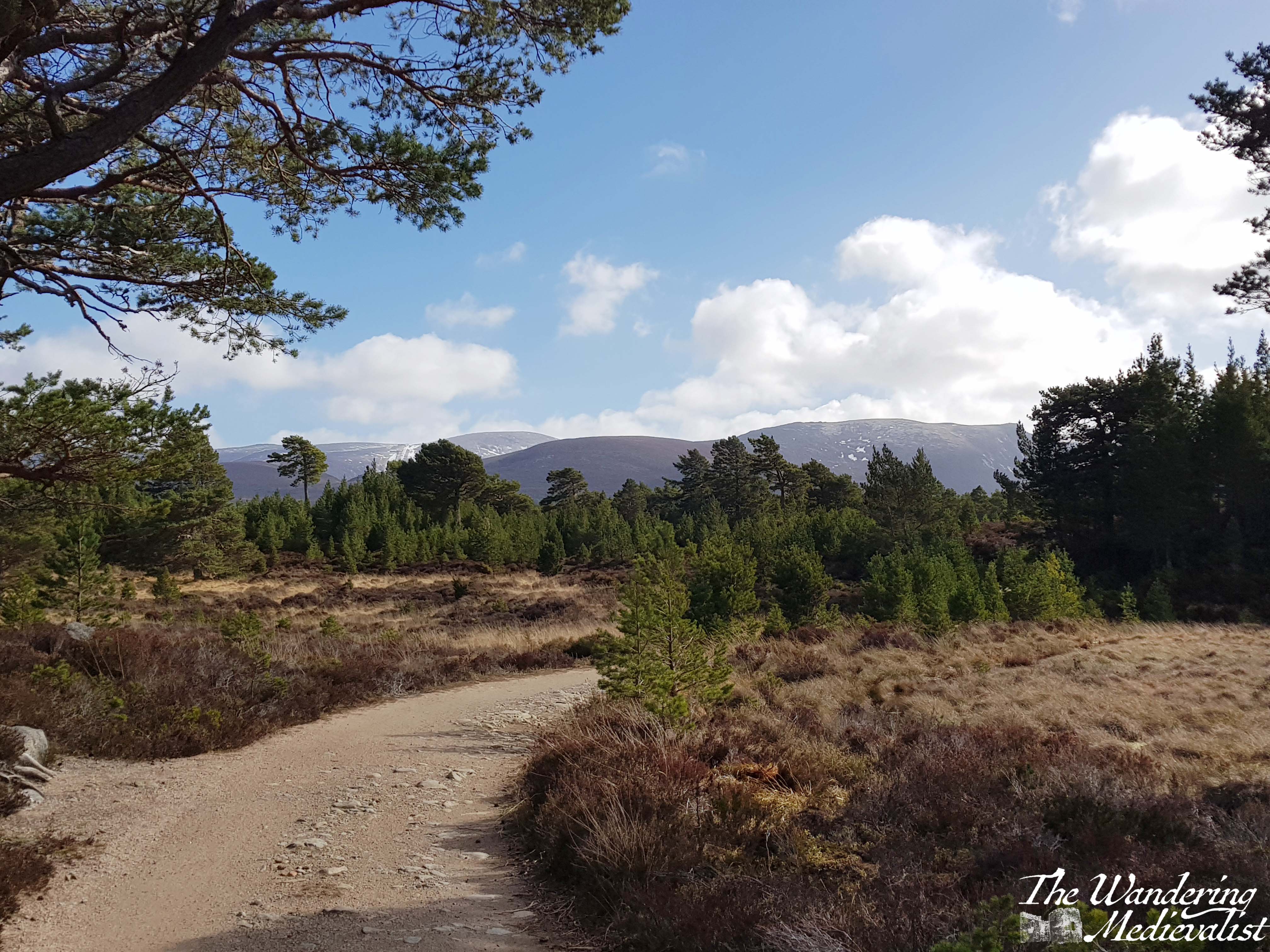
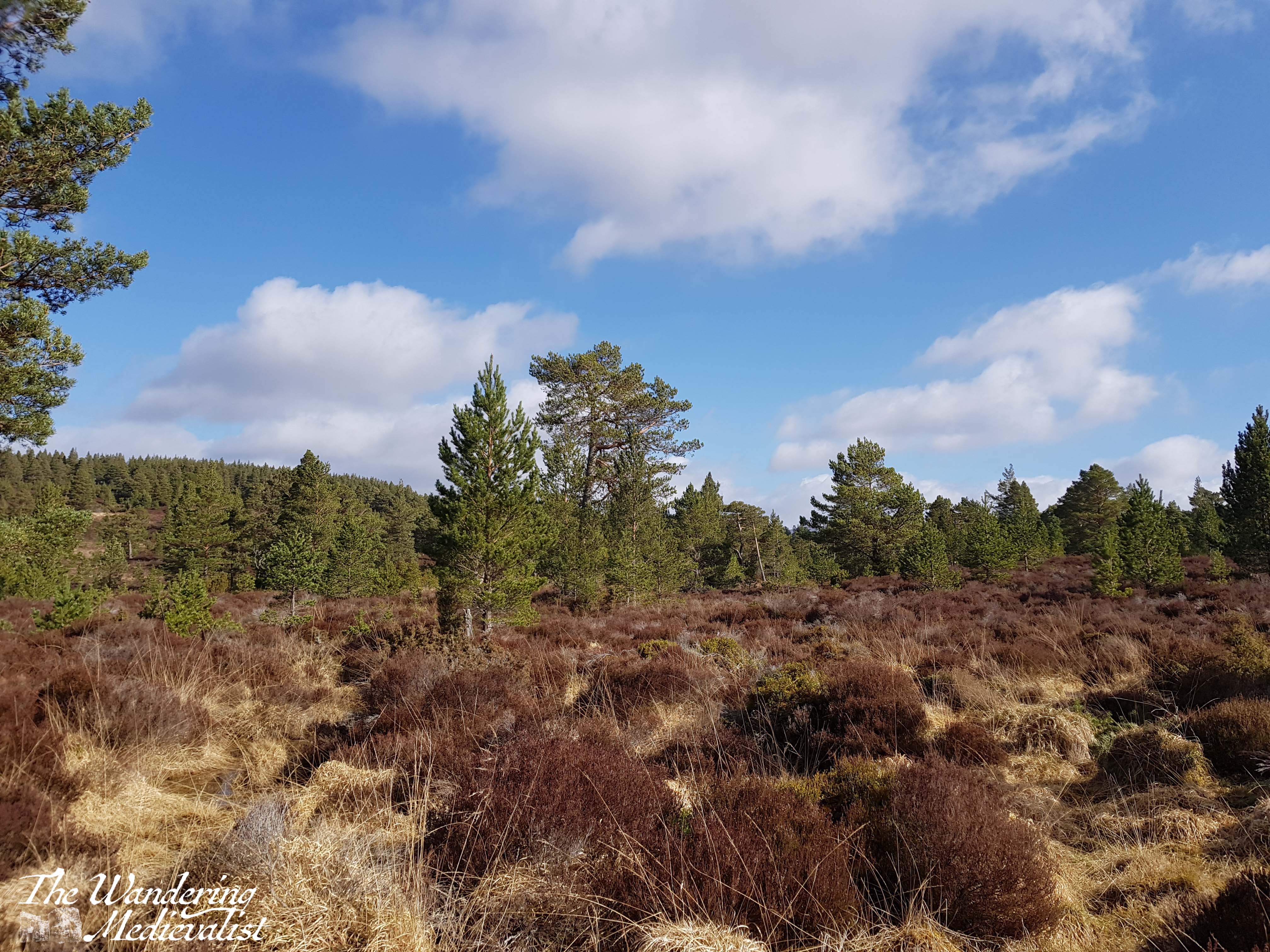
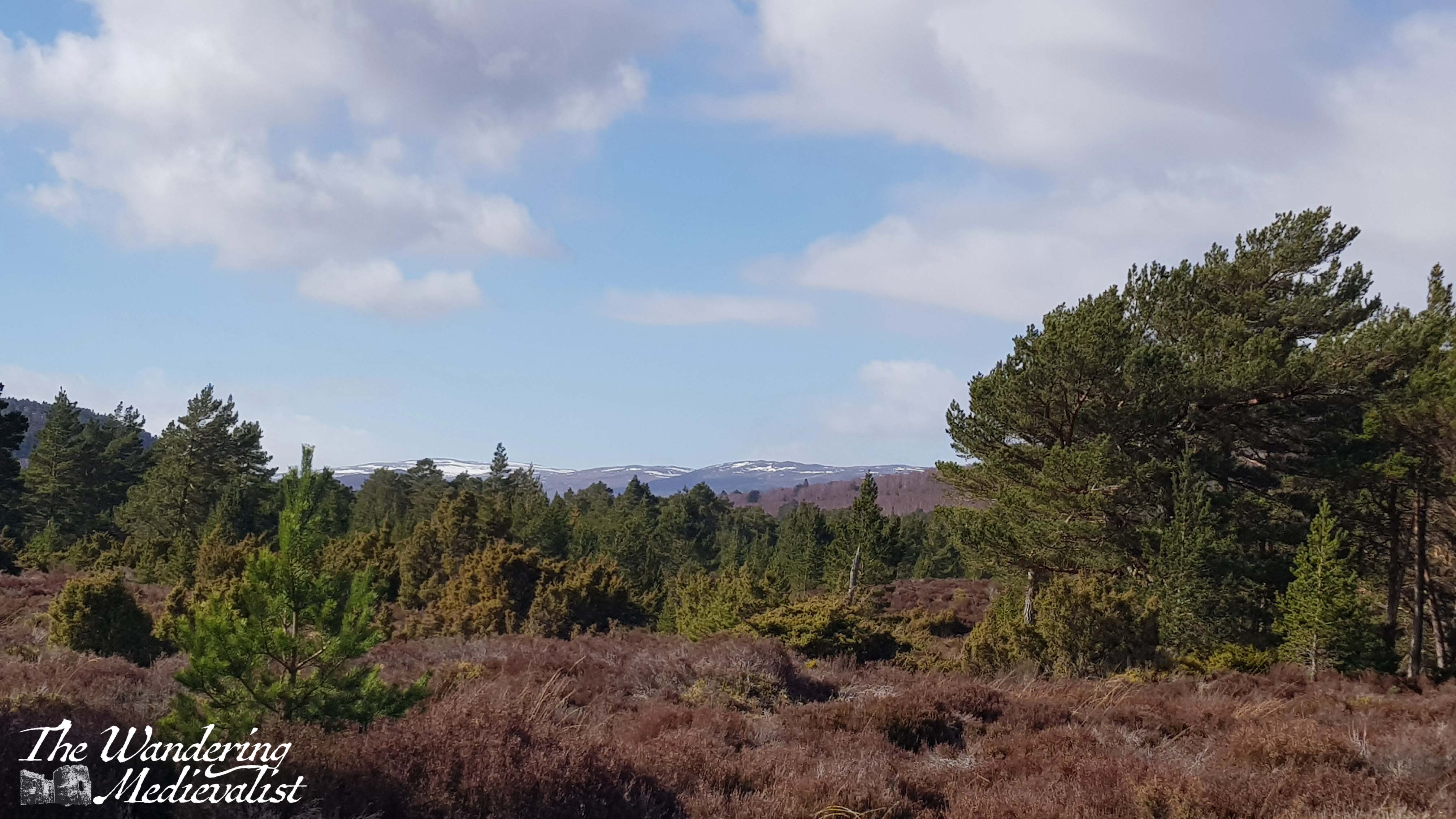
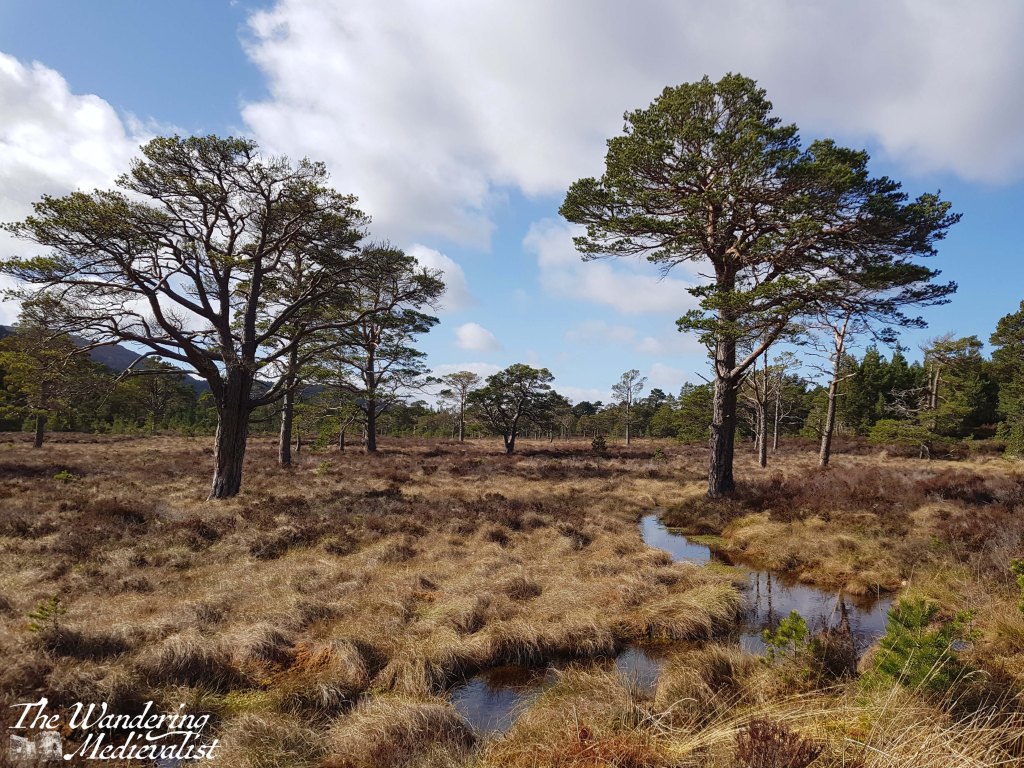
I quickly fell in love with this particular trail, which offered views of the mountains in the distance, but also stunning single or small groups of trees that stood out against the open space. There were lochans dotted amongst stands of trees, shining in the sunlight, and it felt like something out of Lord of the Rings or some other fantasy.
The walk was dampened only by the fact that we were both a bit stiff and sore from our intense hike the previous day, and I found myself easily exhausted (not in part due to a bout of food poisoning the night before). I am nothing if not stubborn, however, and so we continued on towards Am Beanaidh, the river that was our goal. We did have a few moments of worry that we had taken the wrong path – we had a good map, but as is not uncommon in the highlands there were routes not on the map that led close to where we wanted to go – but in time we re-entered the forest and began to hear the sounds of the river.
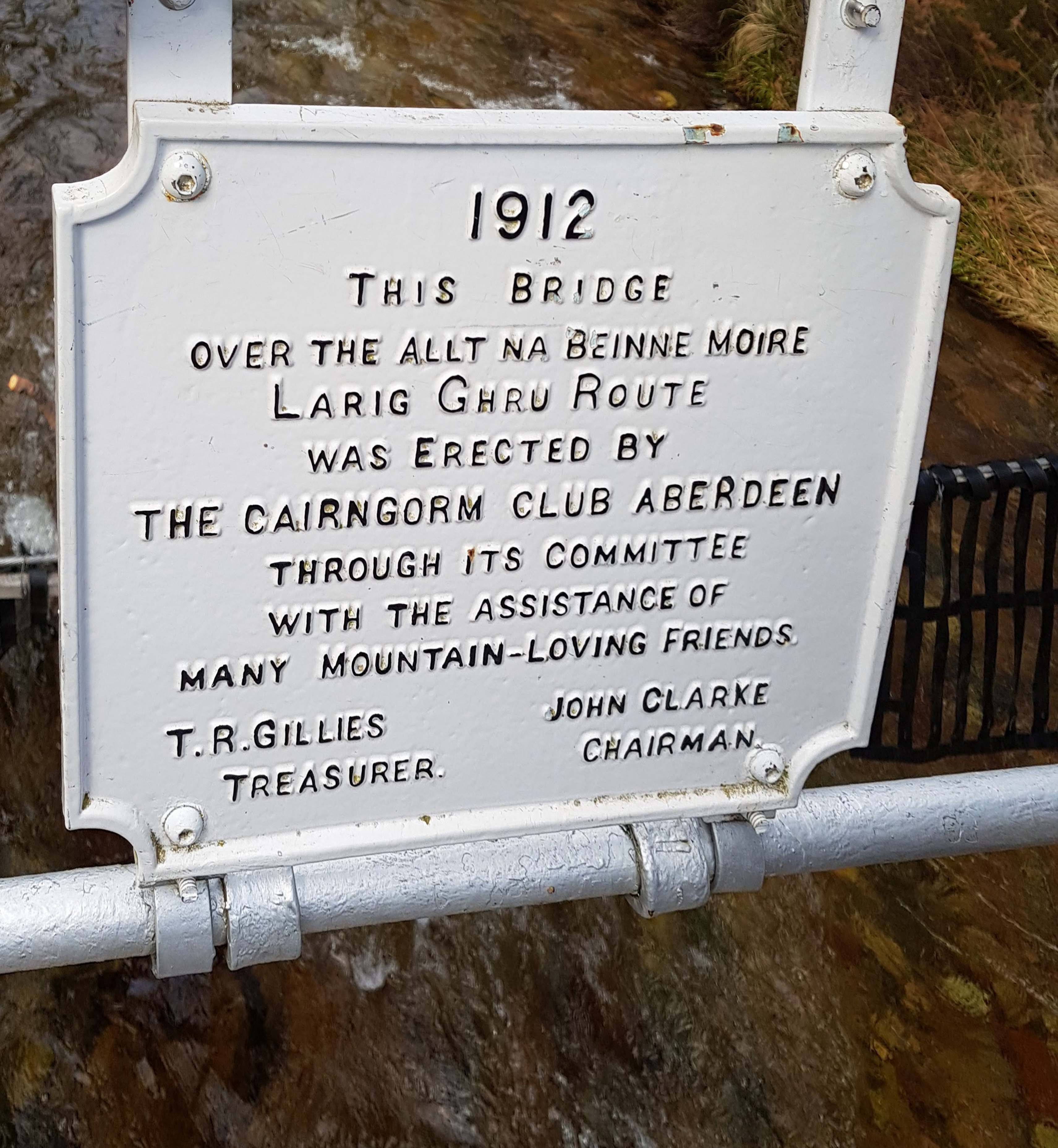
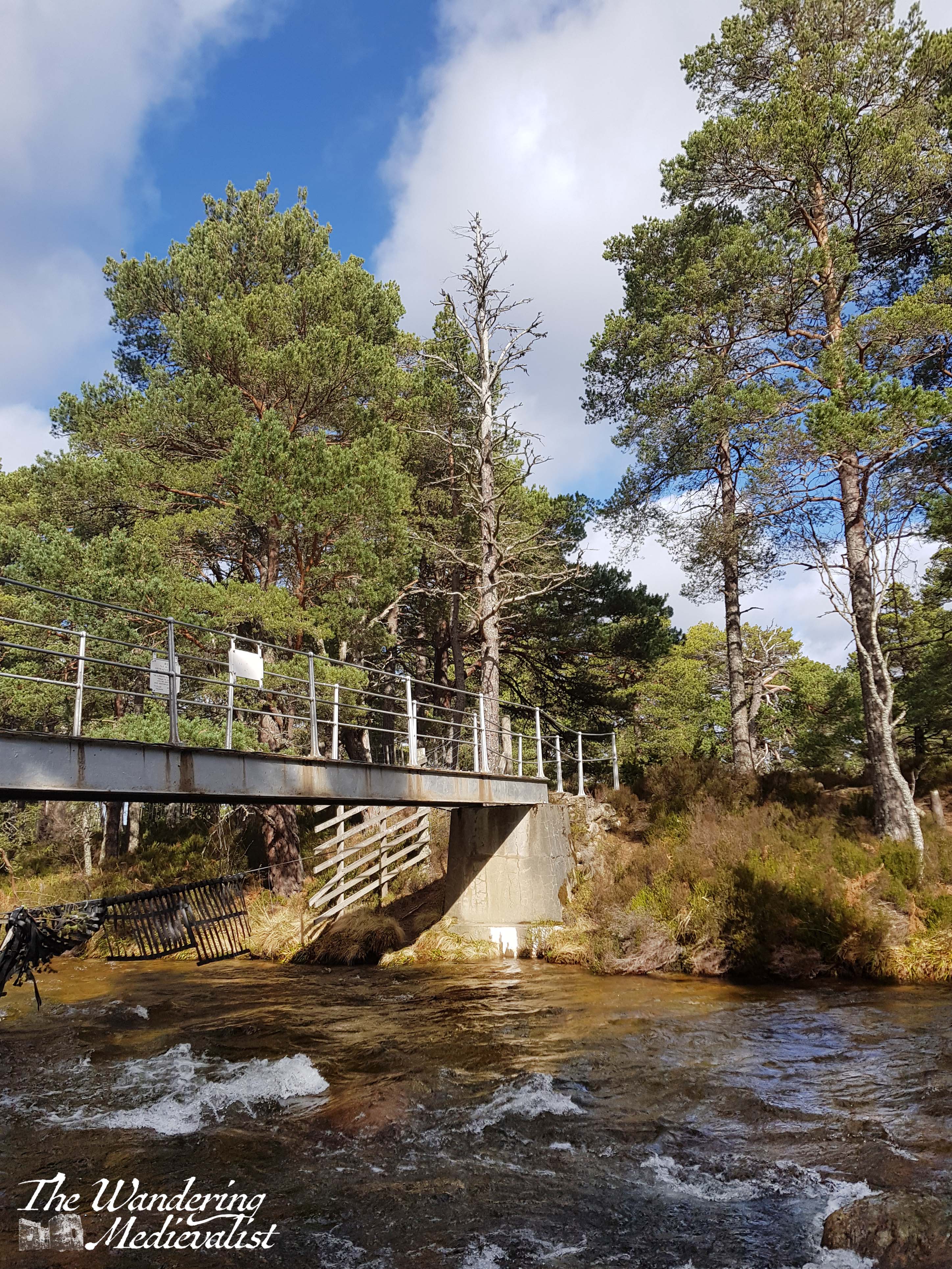
Our goal and our lunch spot for the day was the iron footbridge which spans the river and was constructed by the Cairngorm Club in 1912. It boasts several sturdy plaques memorialising the building of the bridge, and a good viewpoint to look up or down the river. It was the perfect stop to fuel up and take a few selfies to prove we had managed a hike that day.
Considering the dreadful weather we had the day before, we were so lucky to have mostly blue skies and a comfortable temperature, perfect for walking. This trail is flat for the most part, as well, with a few rises and falls but no strenuous climbs. It was absolutely the right choice for a morning walk before driving home in the afternoon, and it could be both shortened or lengthened quite easily by adding in an extra loop or simply crossing the bridge and/or following the path along the river.
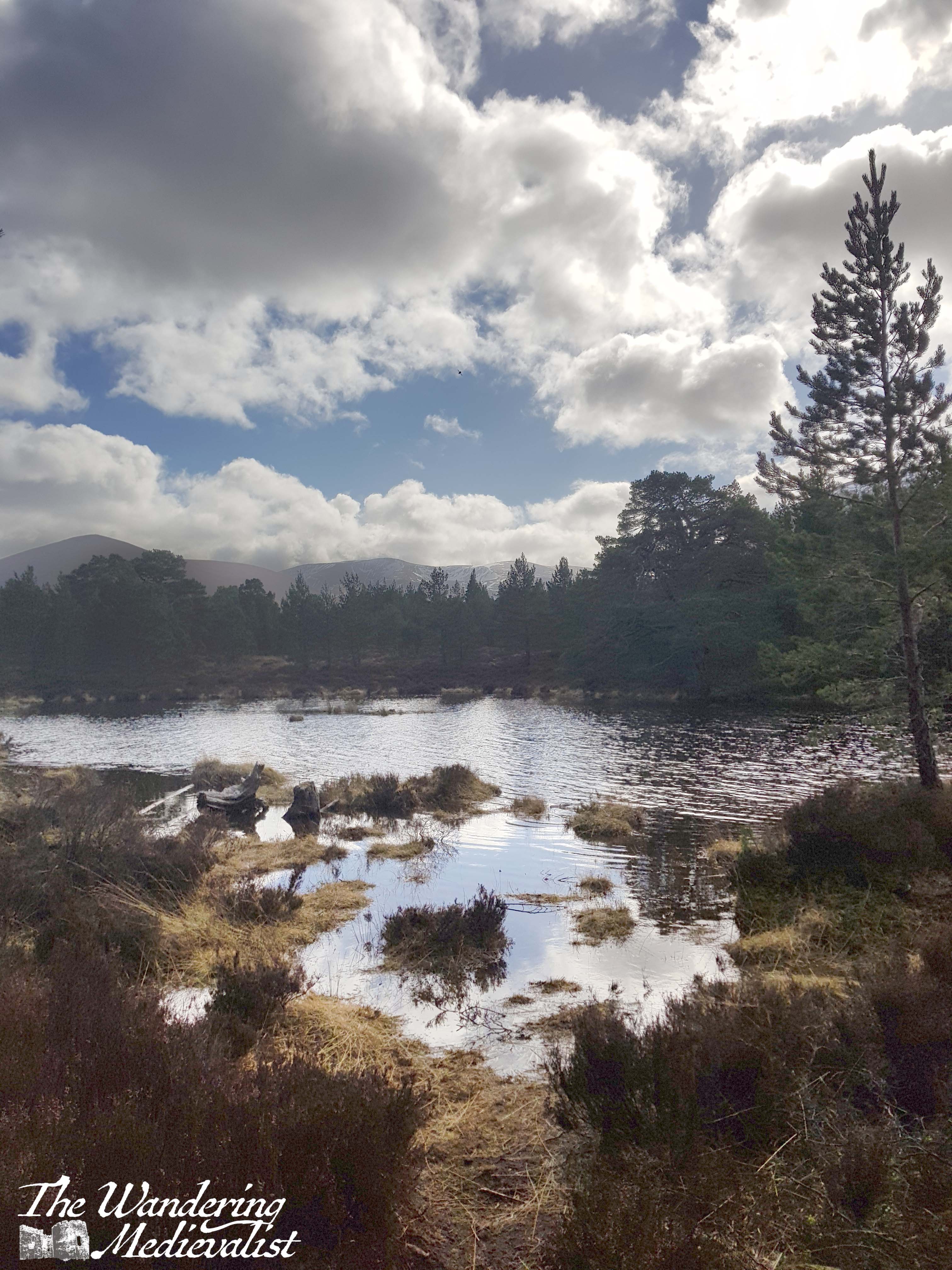
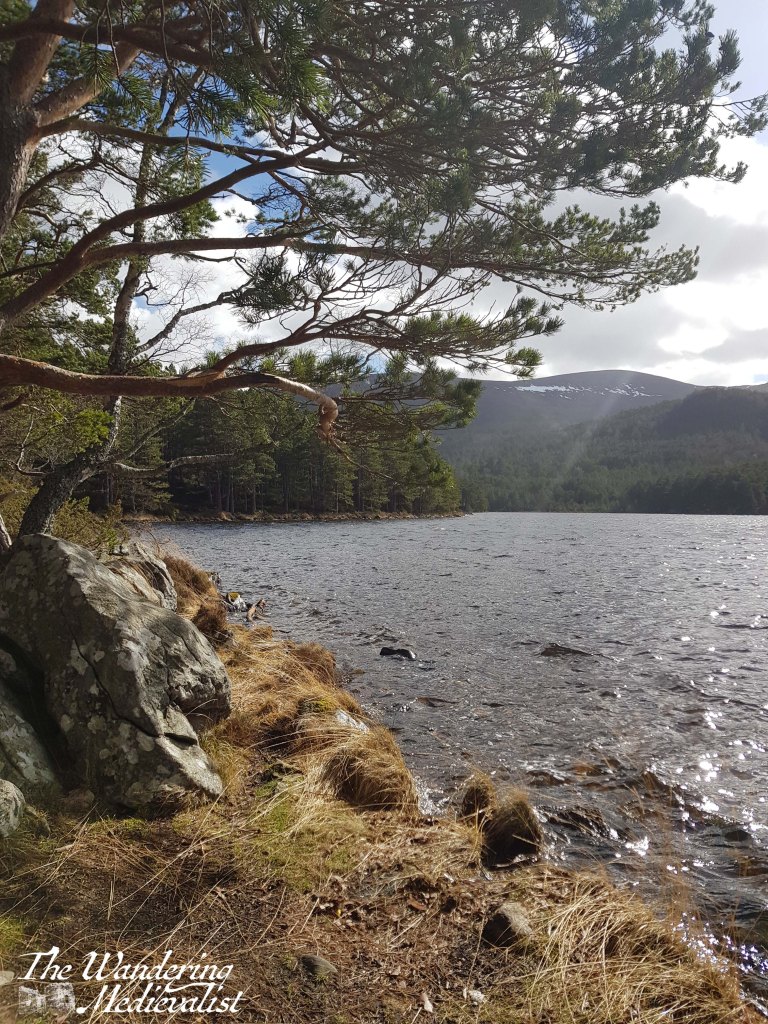
On our return, we took the time to follow one of the several side-trails down to the loch side, and I was lucky enough to take the below shot of sunlight glistening off the water. It remains one of my favourite shots, not in part because it reminds me so much of where we used to spend summers when I was young. The Aviemore area was not as evocative for me as the mountains further west, but there is no question that there are some beautiful trails and lochs.