
As I have written about before about my affection for the area around Aberfeldy and Kenmore, and so it will come as no surprise that, during an unexpected long weekend, we decided to book two nights at Moness Resort just above Aberfeldy. We didn’t plan much, but discovered the Dùn Hill walk as an option that looked ideal for our purposes – not too long, and in walking distance from our accommodation. Though the weather was a bit disappointing – overcast for the whole day – it was not actually wet, and so after a full Scottish breakfast (well almost full, I skipped the black pudding, but still a requirement when eating breakfast away from home), we headed out.
For those familiar with Aberfeldy, the Dùn Hill is above the Birks walk, and starts by heading up a farm track between some trees and a field full of sheep. ‘Up’ is a good word to use, as ‘up’ was very much the theme of the walk; while not particularly long – 3 miles round trip – this path is a pretty constant uphill, and at times quite steep. We had not intended on vigorous exercise (as the other half reminded me several times), but we pushed on in any case.
As with many walks we do in Scotland, we were using a page from Walkhighlands to guide us on the way, and while I generally find their route maps to be very useful, the instructions are on occasion a bit vague. Fortunately, there is really only one option for this walk.
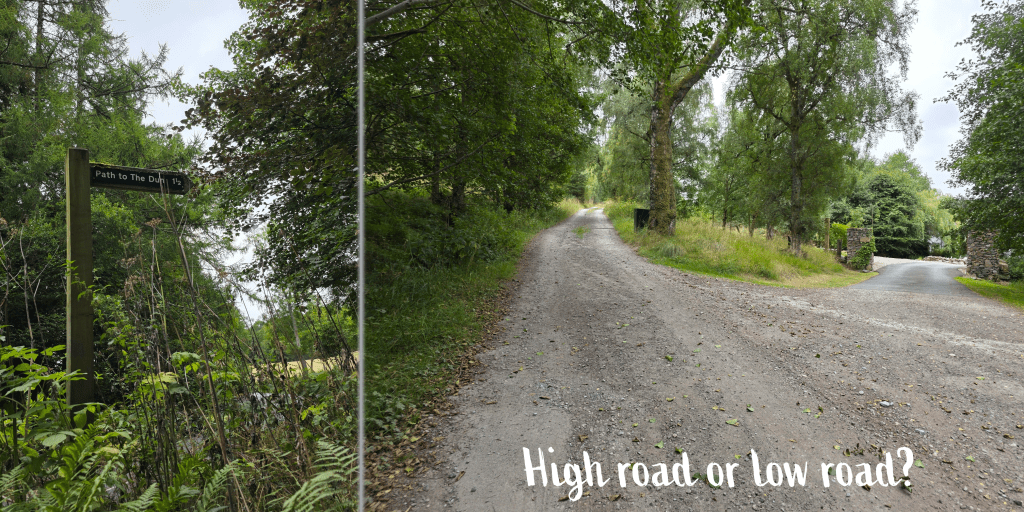
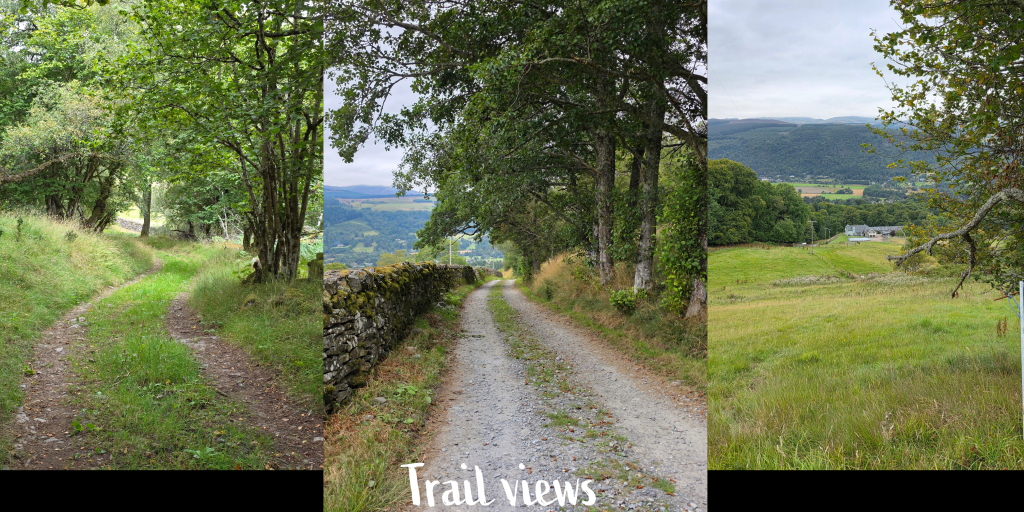
The road climbs steadily and winds around to the right in time, offering what appears to be a choice to be made between a higher and lower road. In fact, the low road is a private drive, leading to an impressive large house and outbuildings.
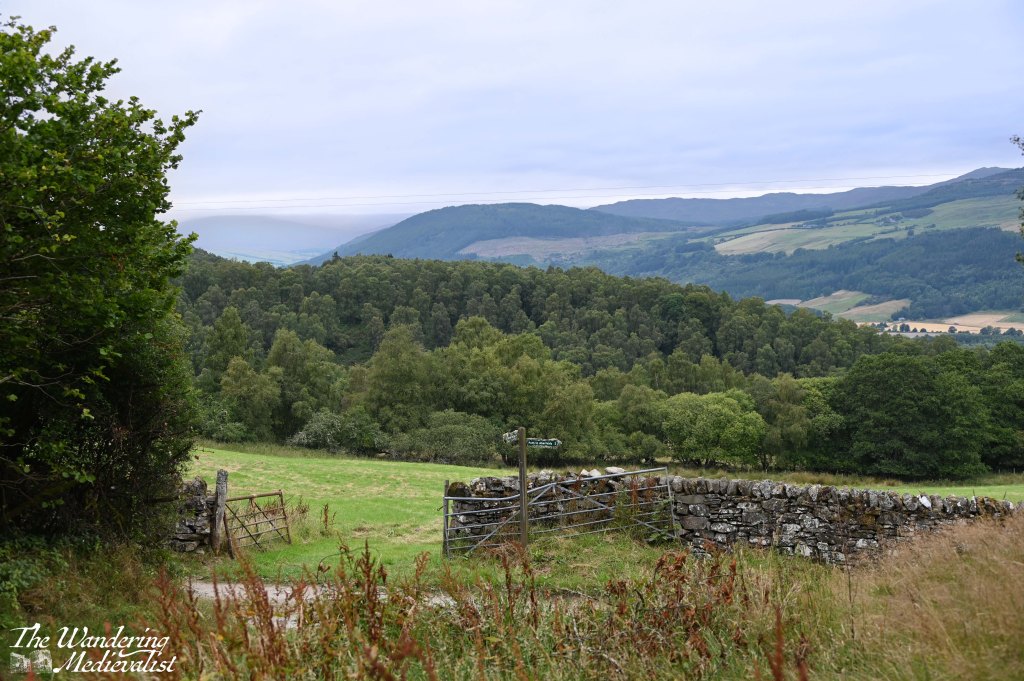
Passing this fork, the trail opens up so that the views over the fields and hills are visible – at least climbing quickly means the vistas are also fast to appear! Unfortunately our view was marred slightly by the weather, meaning that pictures do not tend to show the glory of the area.
Perhaps five minutes beyond the fork, walkers tired of a dirt road and having to look out for the infrequent traffic will be delighted to notice a sign pointing up the hill. This is roughly the half-way point of the walk.
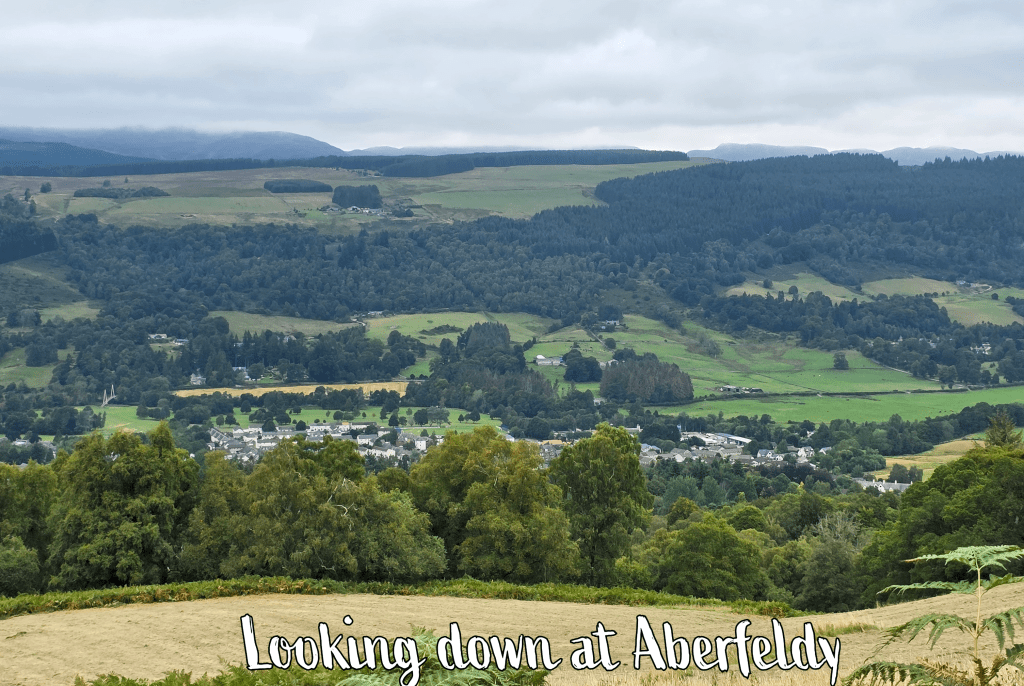
From here, the path becomes a bit more typical for mountain walking – alternately rocky, grassy, and climbing through fields and trees. In relatively little time, the shape of an abandoned white cottage appears, nestled amongst some trees and with a walled yard. Almost covered by the foliage, this house reminded me a touch of something Bob Ross would paint – an abandoned spot in the woods, mostly overgrown (see below). But with a great view over the town.
This was where we got a bit lost, as while our instructions said ‘go through a forest gate’, we could not immediately see the way to the gate. So, we thought perhaps it was a bit further along the meadow, and that is the way we headed.
It was uneven, with deep grass and rough to walk on, no markings or discernible gates in the distance. After a few minutes of trudging along, we realised that there was a dog walker behind us who could only have come through the gate we had seen. Clearly, we had gone the wrong way. While the view from the meadow was pleasant, it was not going to take us where we wanted to go.
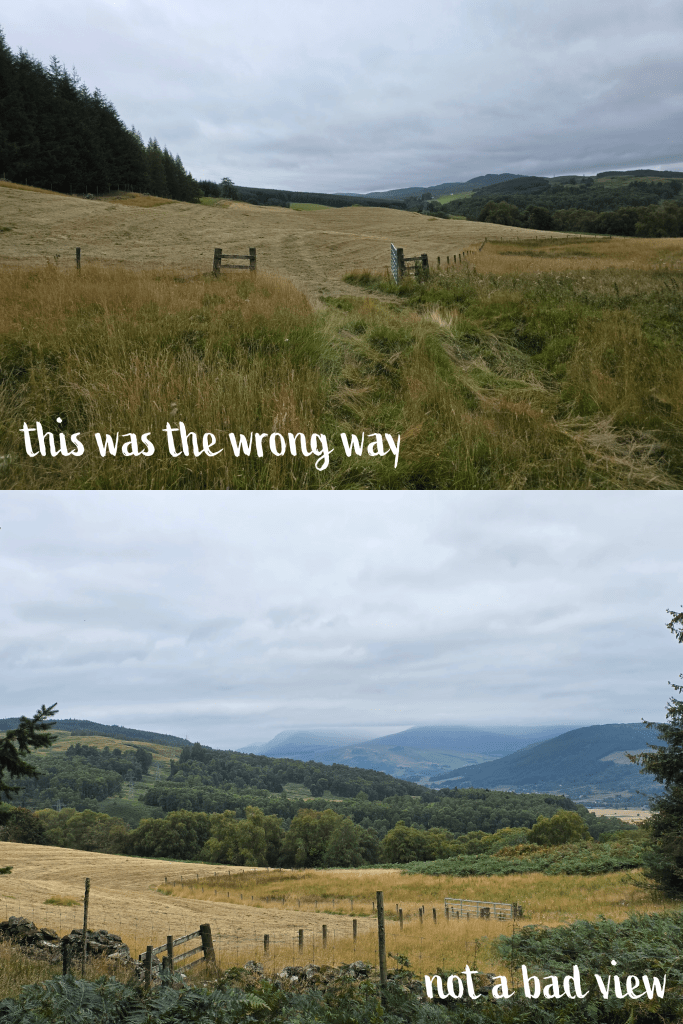
So, we retraced our steps and discovered, mostly covered by high weeds, a sign pointing towards the gate. The faintest remnants of a trail was evident, and so we bivouacked towards the gate, passed through and discovered a narrow forest path – clearly the correct way.
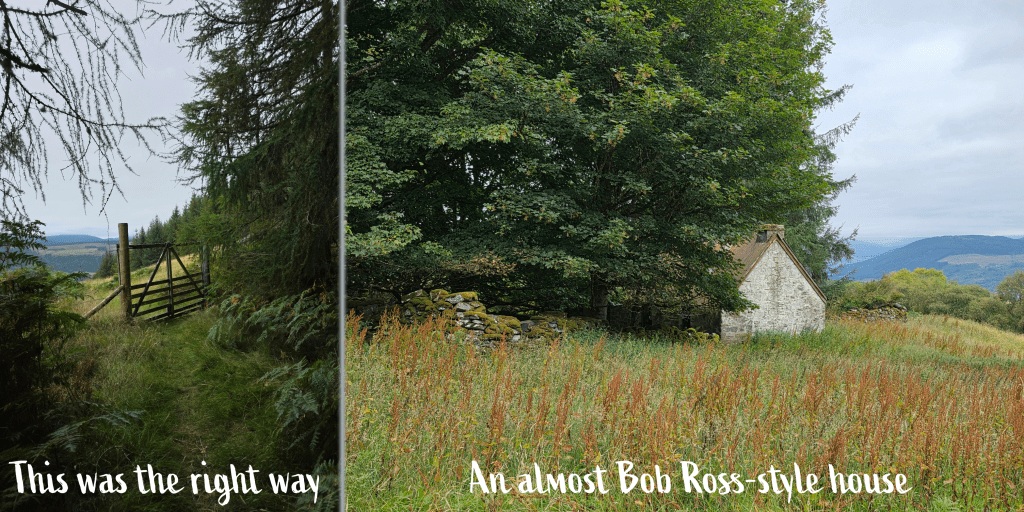
The forest path was pleasant, winding through pines and larch (I think?), and the dry summer plaguing Scotland was a touch less evident here. Yes, it has been a very dry summer – Fife is at near drought conditions as is a large portion of the UK. The gorgeous weather I have experienced while hiking the Fife Coastal Path was unfortunately not good for the overall health of the countryside. Rain is very much in need! Despite all stereotypes of Scotland…

This is the kind of hiking trail I love the most – well-kept and easy to follow, winding through forests that smell like the pine I used to play under when I was young. Occasionally there would be a break in the trees where a hillside meadow met the tree line, but we saw no one else and very little sign of civilisation for most of the remainder of the climb.
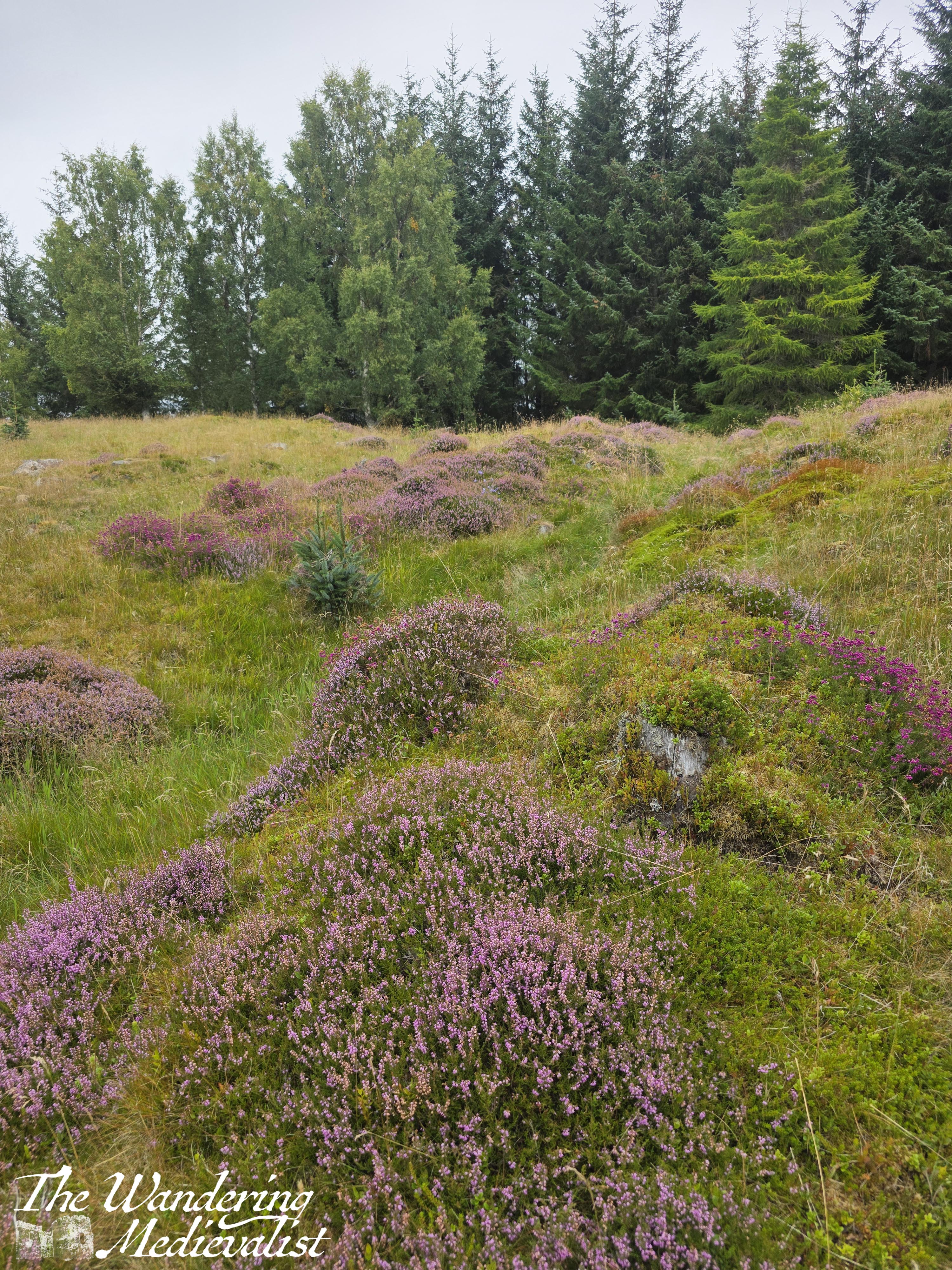
Then, suddenly, there were signs that up ahead the trees were thinning, and we reached the clearing at the top of the hill – wide open, grassy, with large patches of beautiful purple heather.

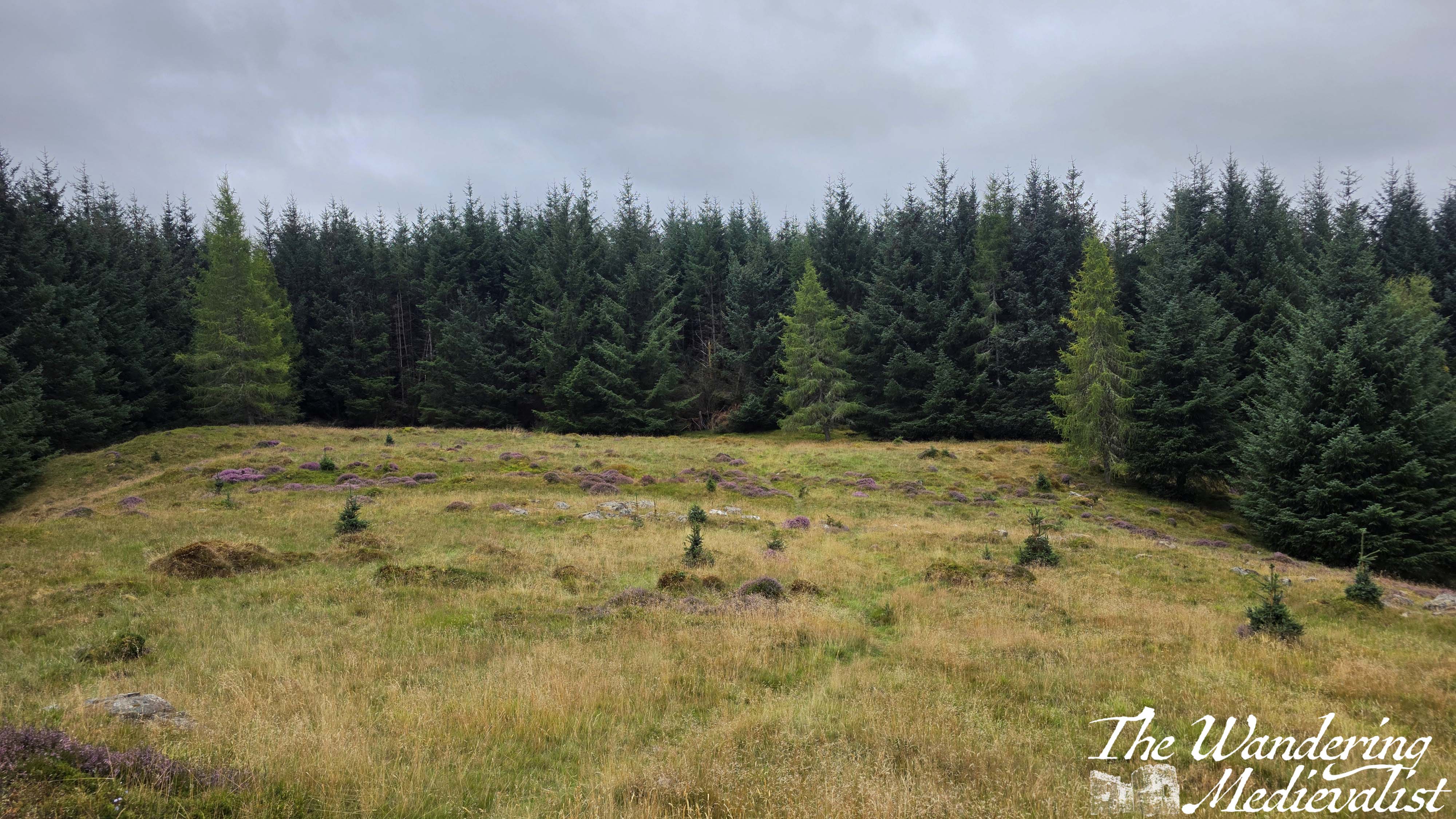
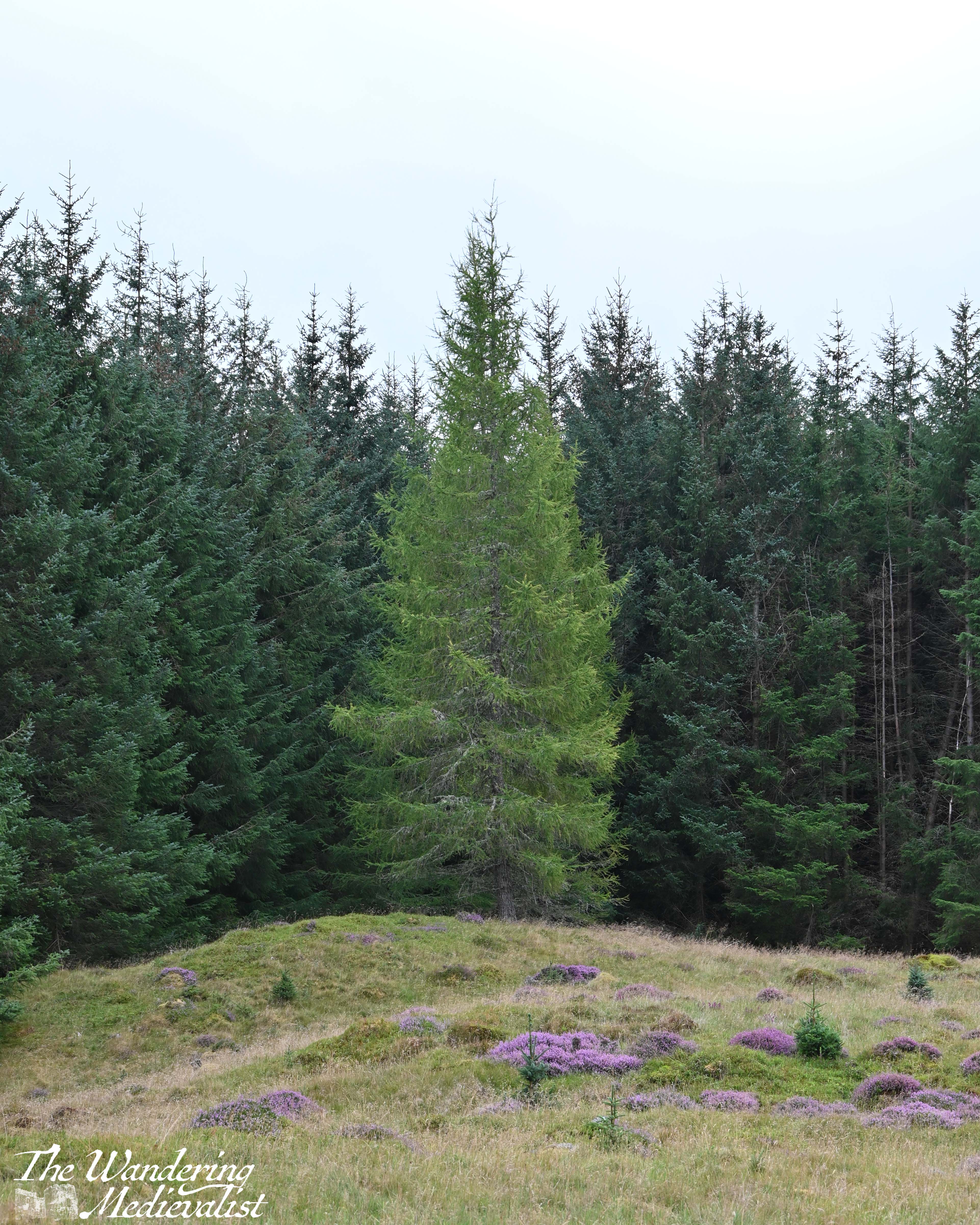
While it is not really visible to untrained eyes like ours, this clearing is the remnant of an Iron Age hill fort, the Dùn. Scientific equipment and archaeologists can identify the rings and gaps where entrances may have been, but for us it was just a lovely peaceful clearing where we could sit for a while, have a snack and some water, and enjoy the quiet. Well, quiet except for a sheep in a nearby field that was baa-ing with a gusto.
The views were unfortunately marred by the low cloud that made the distance hazy, but there was enough of a vista to make one imagine how impressive it could be on a clear, sunny day.

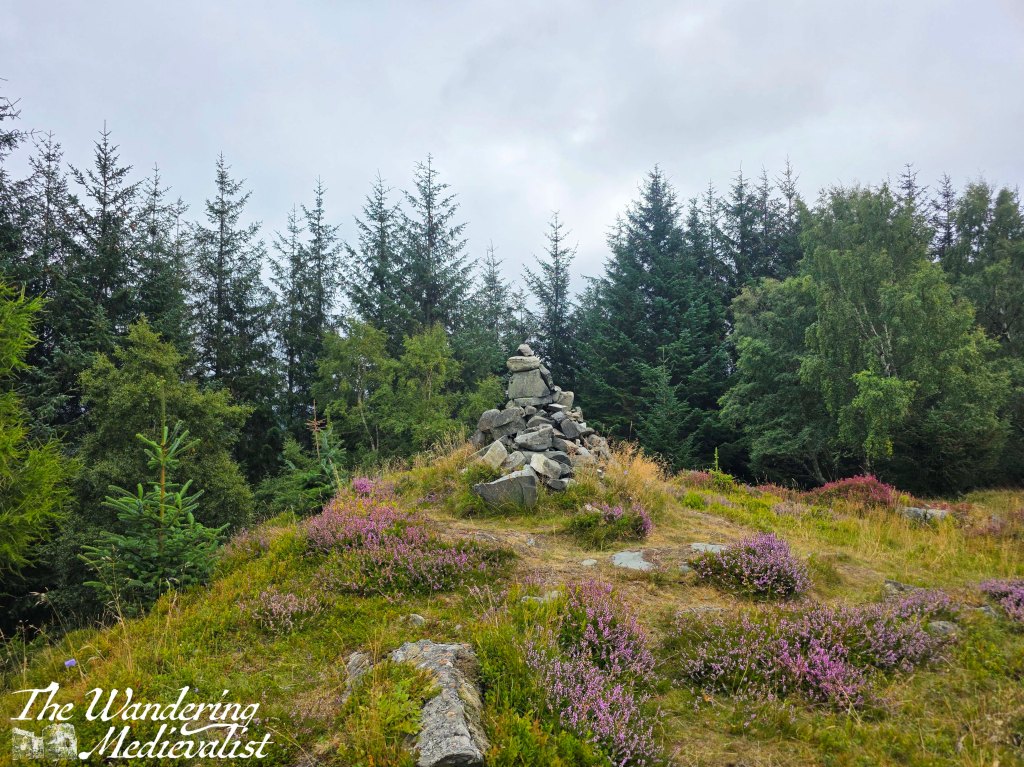
And of course, there is a rock cairn marking the top of the hill; I realise how fortunate we were to be hiking at a time when the heather was in bloom, as it really did add some spectacular colour to an otherwise mostly grey and green landscape. I could have sat quite happily for hours watching the bees, enjoying the many different shades of purple from a soft lavender to bright almost fluorescent magenta – I also found myself humming ‘Heather on the Hill’ from Brigadoon, and had it stuck in my head for hours after.
However, despite a hearty breakfast and a few hiking snacks, we hadn’t really provisioned ourselves for a long time away, and so we eventually headed back to the break in the trees and began the meander back down towards Aberfeldy. We have reached that age – as I am sure I have mentioned – where down can be harder than up, and this was definitely the case once we left the forest path and re-joined the road. Small pebbles and stones combined with dust made for a slippery descent, and almost as slow as the climb. But, we did enjoy the views a bit more heading down and I can see how this could be even more lovely with autumn colours.
While not a particularly long walk, like its sister walk at the Birks of Aberfeldy, the Dùn hill is unexpectedly steep and requires a bit more stamina than originally expected. One review of the walk did mention this, though one we did not read until later; as the other half pointed out, it is worth observing how far a walk ascends in height to make sure you are prepared for the climb. We weren’t, but we made up for it with an excellent dinner that evening at a relatively new place in Aberfeldy, the Inti lounge. Fortunately, we had reserved a table as it was packed by 6.30pm – food and drink all fantastic! In particular, the best whisky peppercorn sauce we had ever had (and this from the other half who is serious about his peppercorn sauce) and a delicious play on a traditional cocktail, the Highland Iced Tea, made with whisky and Irn Bru.
I would definitely be up for trying this walk again in better weather, but also forewarned about the climb. There are plenty of walks up mountains and hills in the area that are not quite so steep, and take a longer trail up that allow for a bit of flat along with the up. Nonetheless, this is a lovely peaceful walk in the woods and an equally serene, history-filled clearing at the top – and perfect if you are staying in Aberfeldy and do not want to drive!
 The Wandering Medievalist