
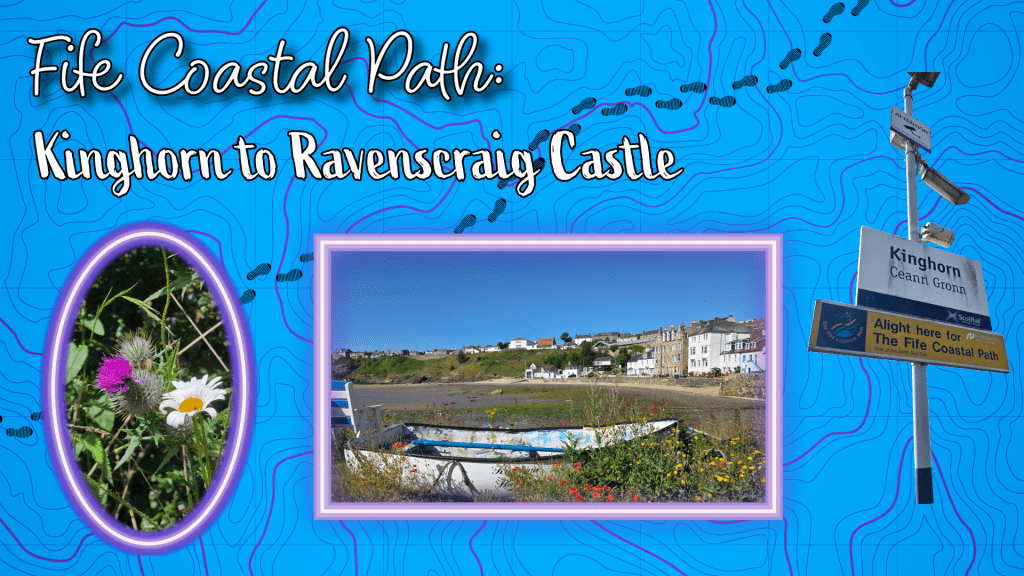
Scotland (and indeed the whole UK) was blessed last week with a stretch of sunny, hot weather that encouraged everyone to get outside. And then back inside, quickly, to get sun screen and water bottles. In England the temperatures hit the 30s (about 90°F), and in Scotland the high 20s which qualifies as a genuine heat wave.
I was eager to get back to my Coastal Path goal after several weeks of travel and then post-travel illness (I blame Charles de Gaulle airport, where I was re-routed after a flight delay), and this sunny spell was the perfect incentive to get out there. So, I chose a slightly shorter route than I had been doing in May, only 4 miles rather than 5, for while I’d kept up my walking during my travels, the cold/cough combo on my return meant I’d had two weeks for my stamina to unravel.
It was time, I decided, to tackle some of the south coast of Fife beyond the East Neuk, and so I planned the train trip to Kinghorn, where the rail station is almost immediately on the Coastal Path. Since the opening of the Leven Rail line, the trains from Edinburgh to Dundee no longer stop at these smaller stations, and so I was required to change trains in Kirkcaldy. Fortunately, the Leven train was only 5 minutes behind, so I was only slightly delayed; if coming from the Edinburgh direction, it would be easy to get on the direct Leven train.
The day was sunny and bright when I alighted in Kinghorn, which is a station I have always wanted to stop at due to the beautiful view from the train at this point. This section of the track is why I always encourage visitors to sit on the right-hand side of the train coming north.
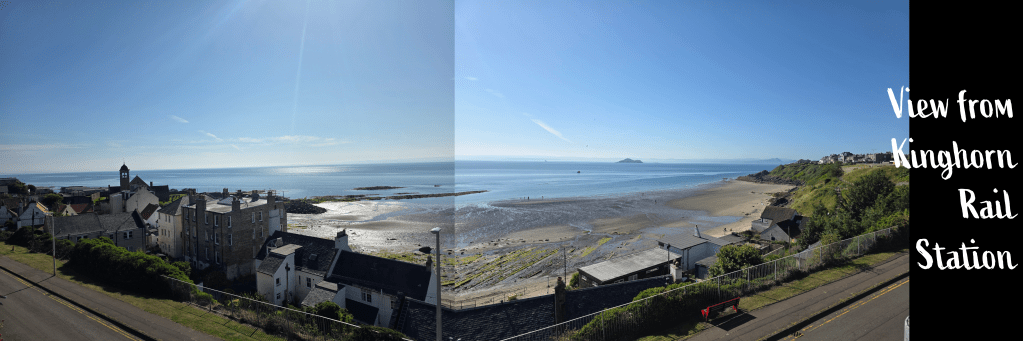
I paused to take a few pictures and hoped to use the facilities in the small station, but found them out of order. So, I headed down the steep hill towards the coastline and beach.

Kinghorn may not boast quite the same stunning nature as some of the East Neuk villages, but the beach is beautiful and there are regular views across the Firth of Forth towards Edinburgh. It was a clear day so that I could see the outline of Arthur’s seat and the coastal town of Leith clearly, while a gentle breeze kept the temperature comfortable and the bugs at bay.
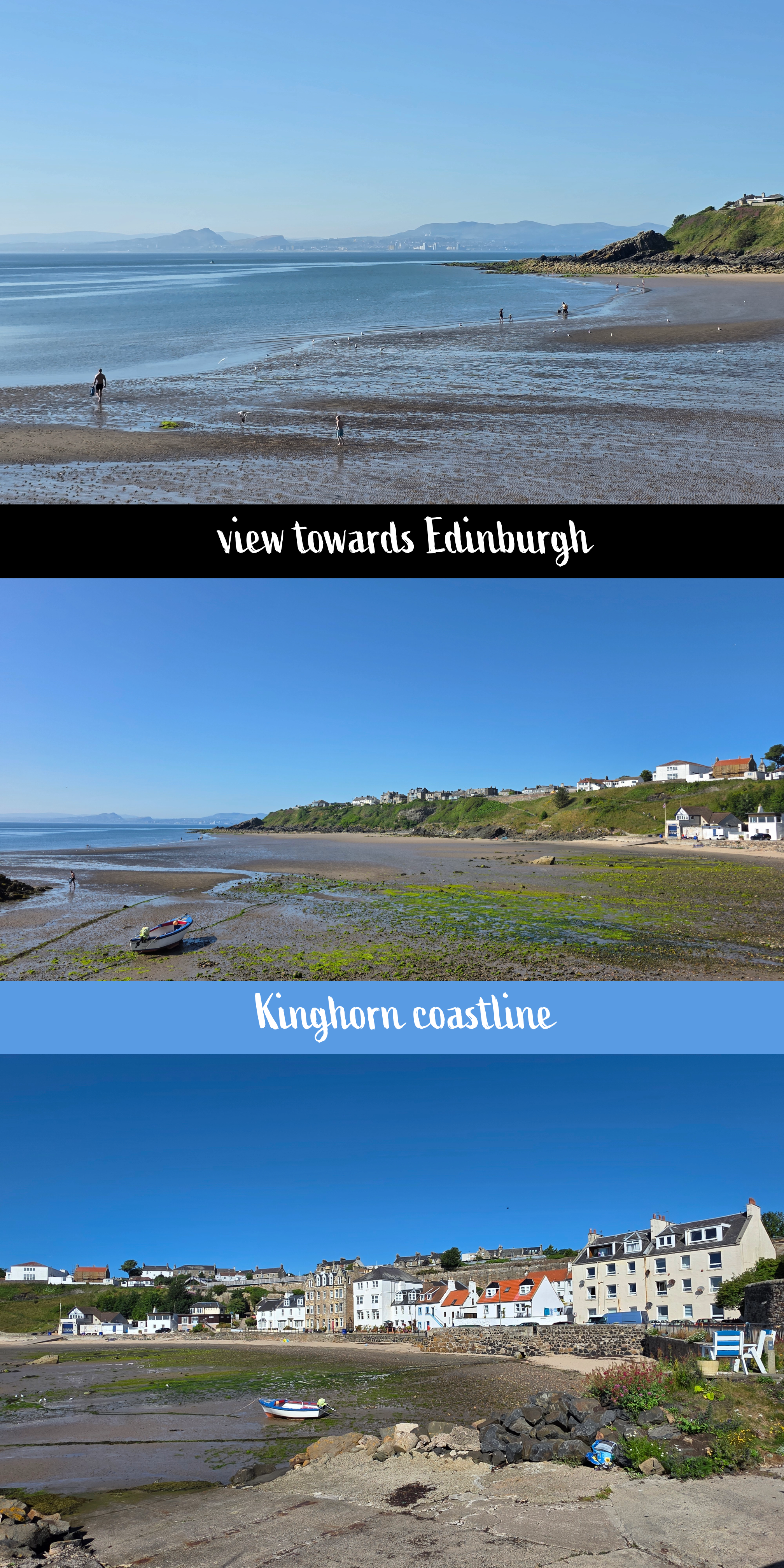
The path starts off along the coast then loops back up under the train track and through a fantastic pirate-themed play park.
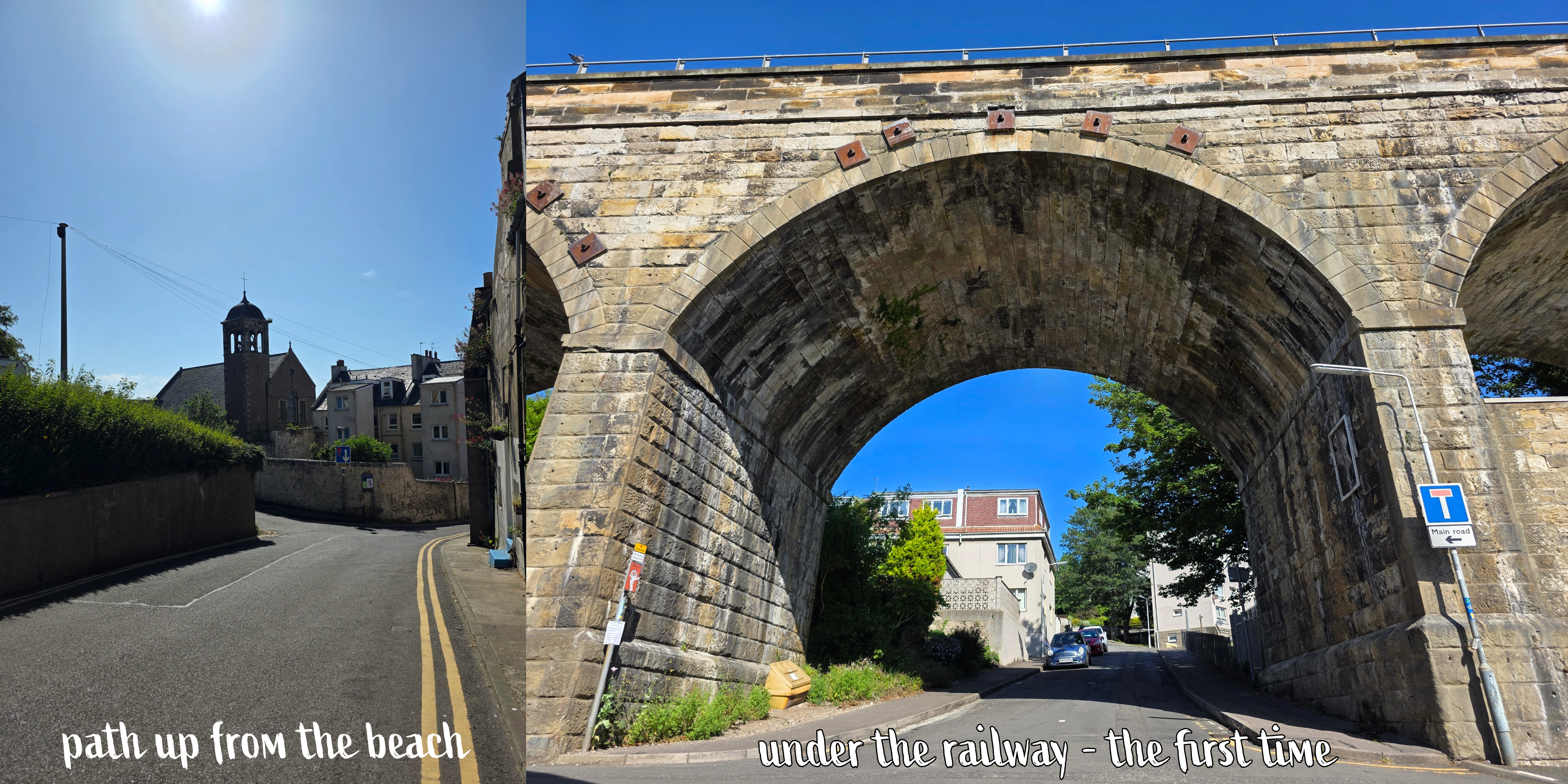
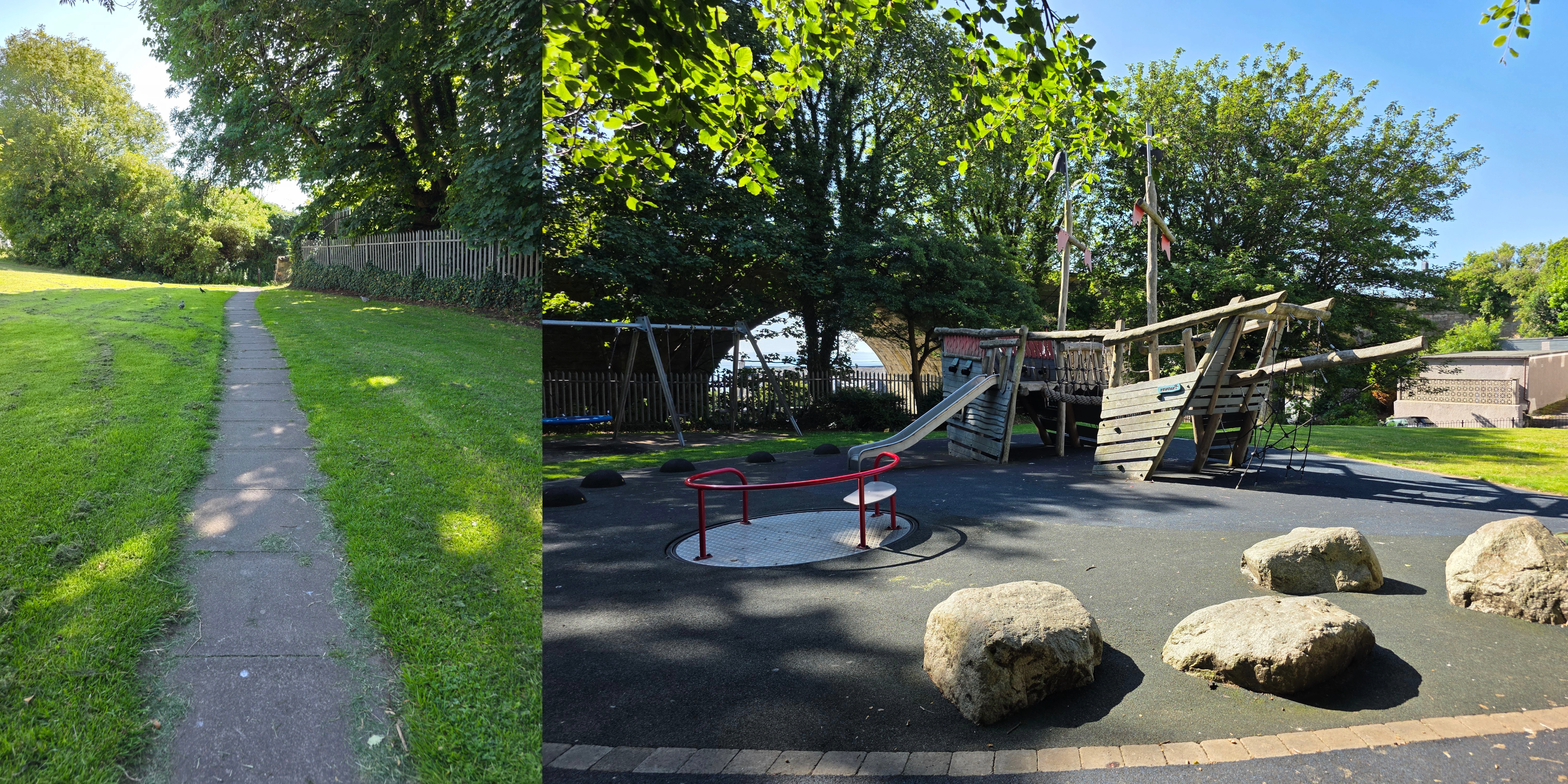
Beyond the park, the route passes once again under the rails, then turns left along the back side of a caravan park. This portion of the trail is quite narrow, stuck between the fence for the park and the fence for the train line, so keep a look out here for other walkers/runners and cyclists. I should say, I did not pass many people at the Kinghorn end of the trail, but as I approached Kirkcaldy there were more and more people using the path for a Saturday morning jog or stroll with the dog.
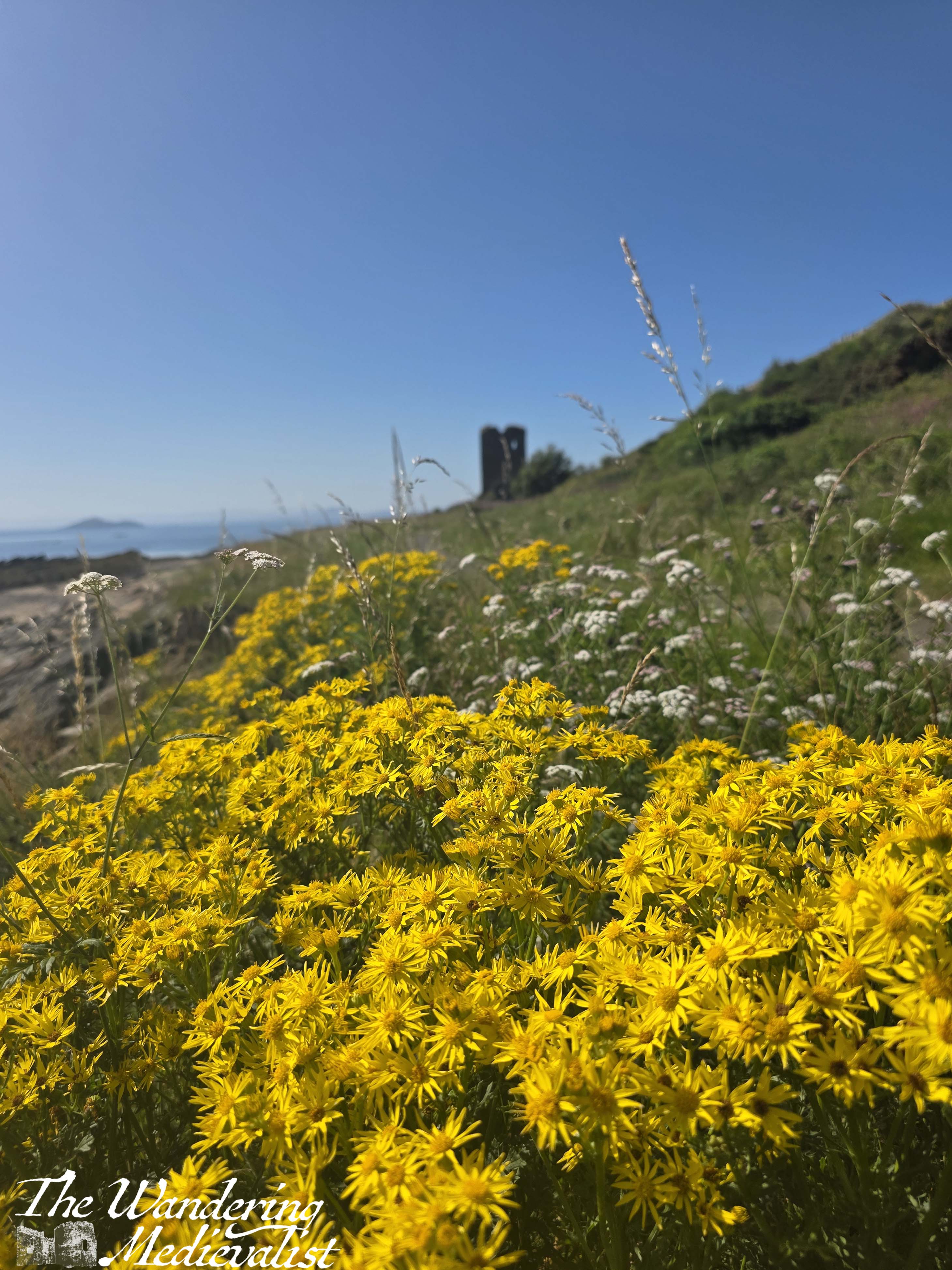
I mentioned above the rail track, and it’s worth pointing out that this is a relatively busy line, so don’t be alarmed by a sudden, speedy train interrupting your peaceful walk. And peaceful it is, gently rising and falling along with the coast, a similar feel to other sections of the walk with the rocky beach on one side and a grassy slope on the other, dotted with bushes, wild flowers and the occasional tree.
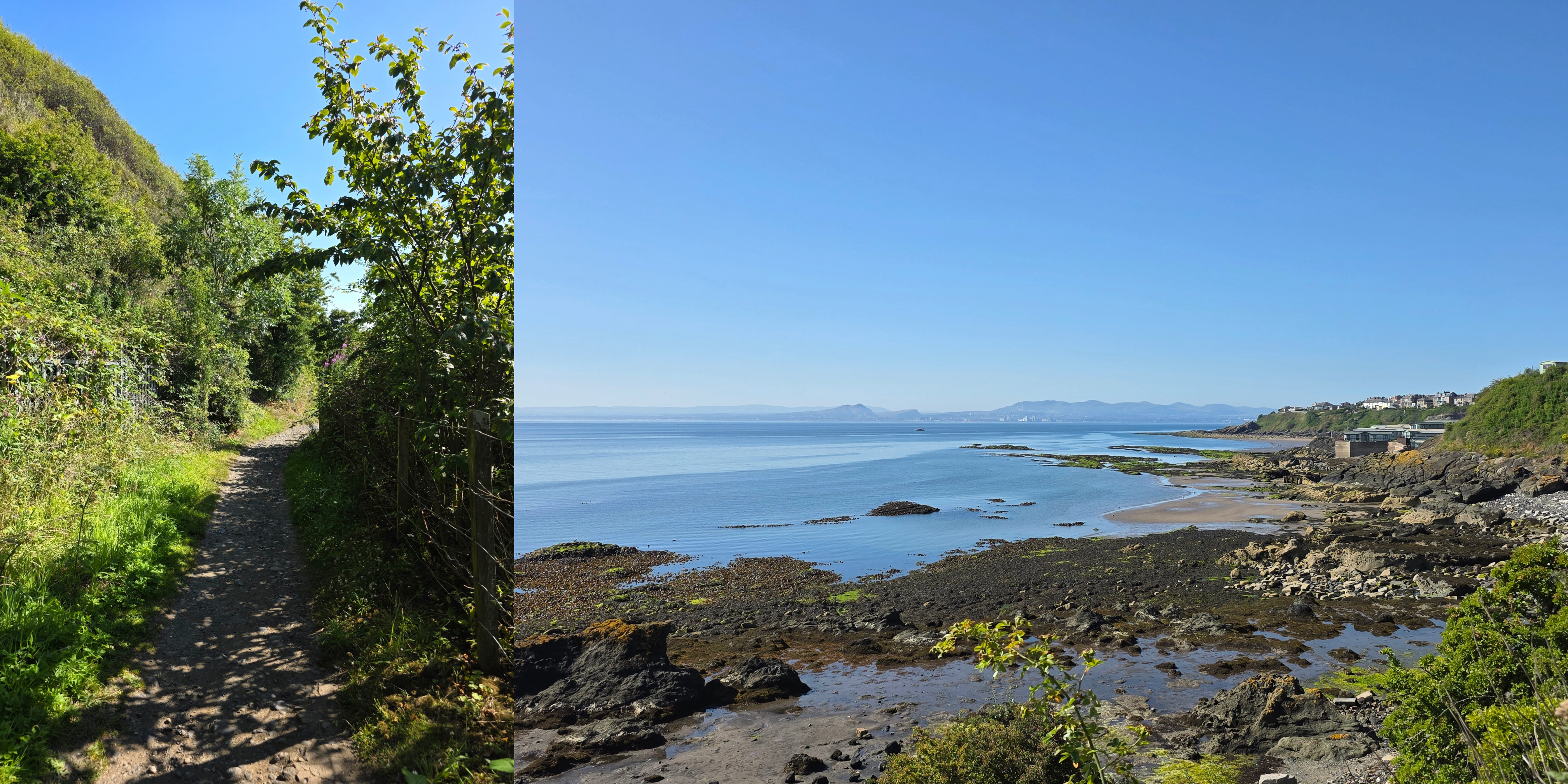
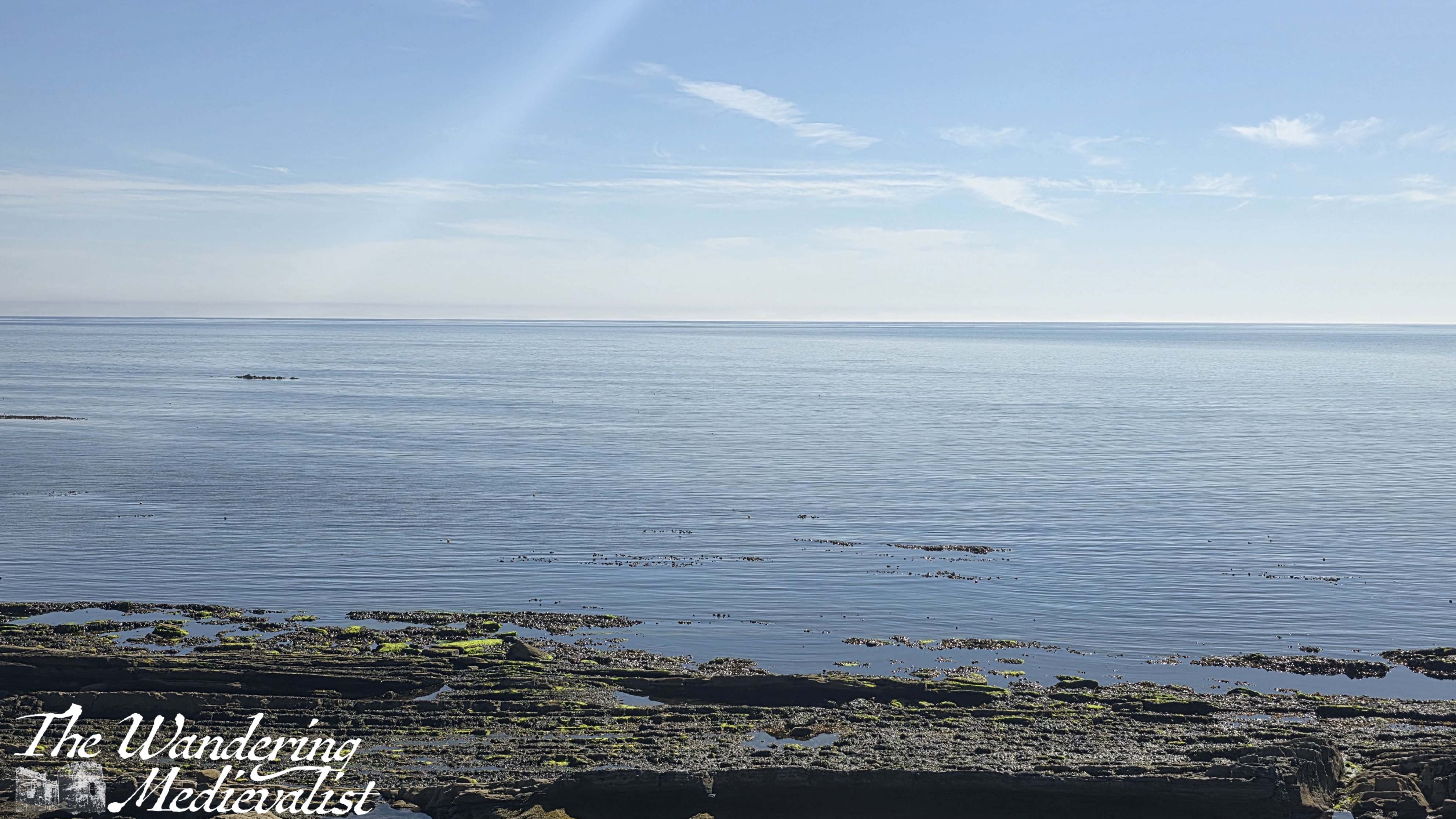

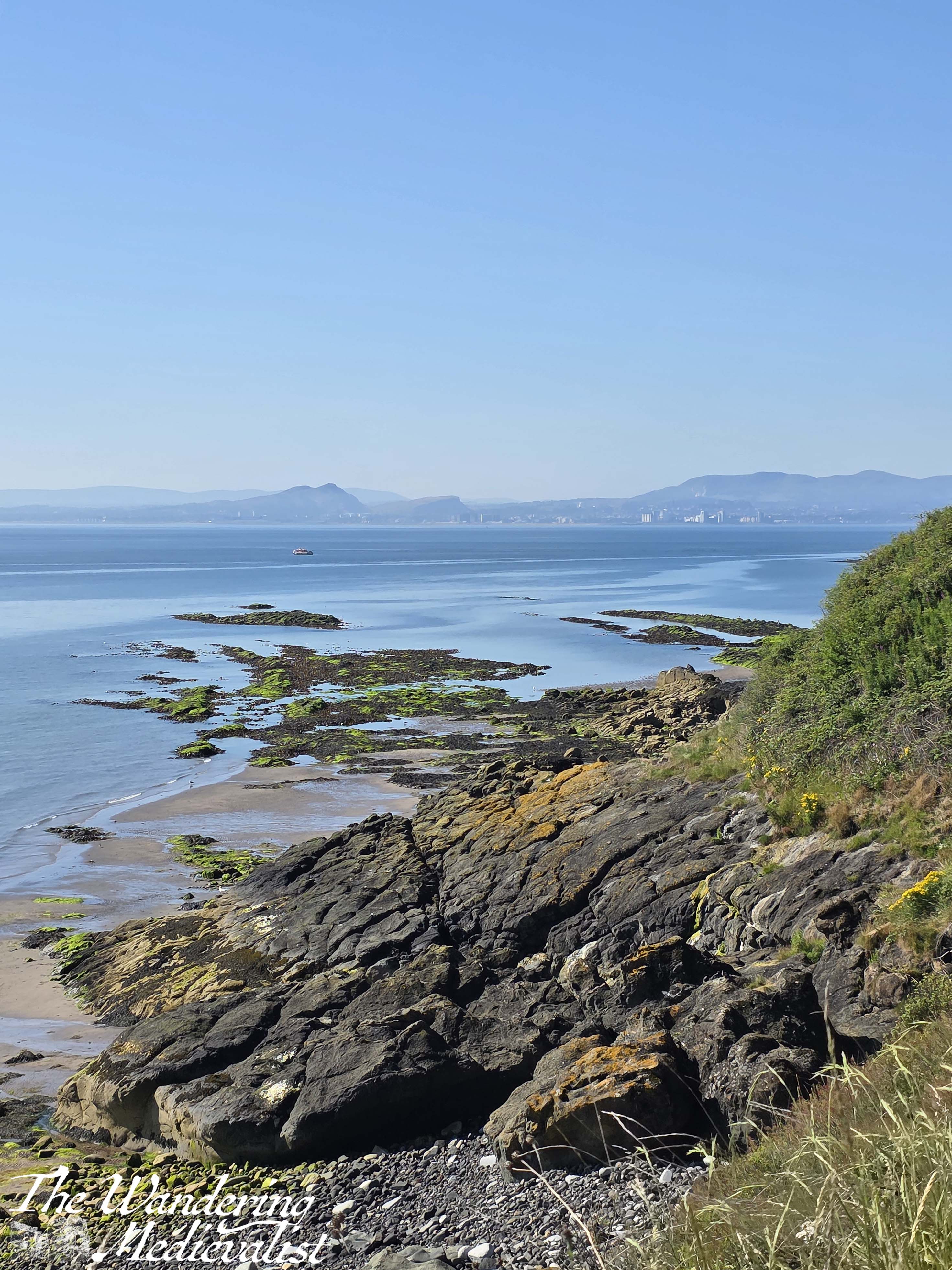
The ocean was incredibly still on the morning I walked, with only one or two fishing boats out; the gentle breeze I enjoyed was definitely not enough for sailing. It was difficult not to pause regularly to enjoy the view back to Edinburgh , and if my camera battery had not died 10 minutes in (my own fault for not checking it), there would be many more I am sure. Fortunately, my phone takes good pictures so I made up for the lack as best I could.
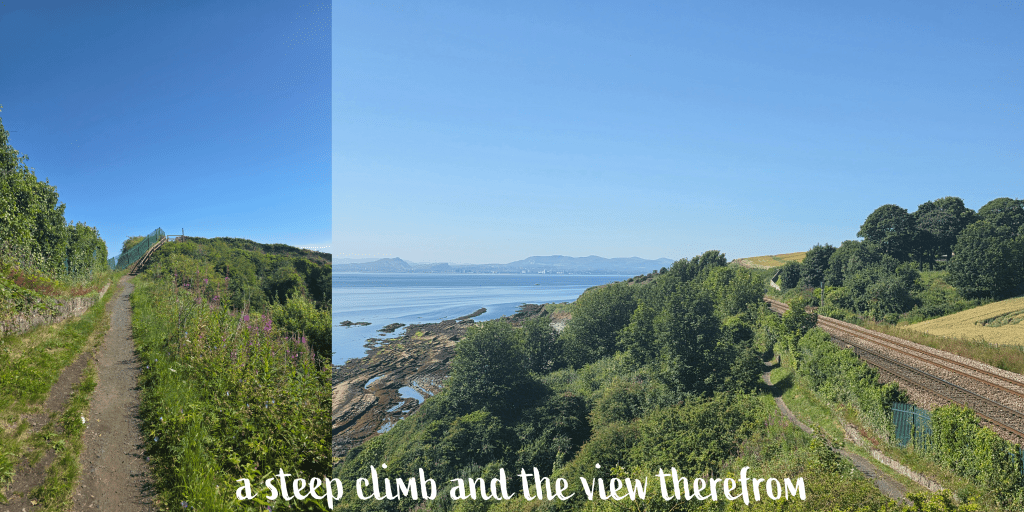
Gradually the path goes around a curve in the coast, and rises temporarily away from the beach on a sharp switch-back style path. The view from the top is even better, though it does not last long, with the trail gently descending over several stair cases. One advantage I noted of this portion of the path was that there was a fair amount of shade, relieving the heat of the sun for a short while. This is definitely not the case closer to Kirkcaldy.
Just over a mile out from Kinghorn, there is a steep climb up to the top of a hill, to a viewpoint at the top. This is one of the last really good views back towards Edinburgh and along the rail line, while ahead you can start to see the buildings of Kirkcaldy.
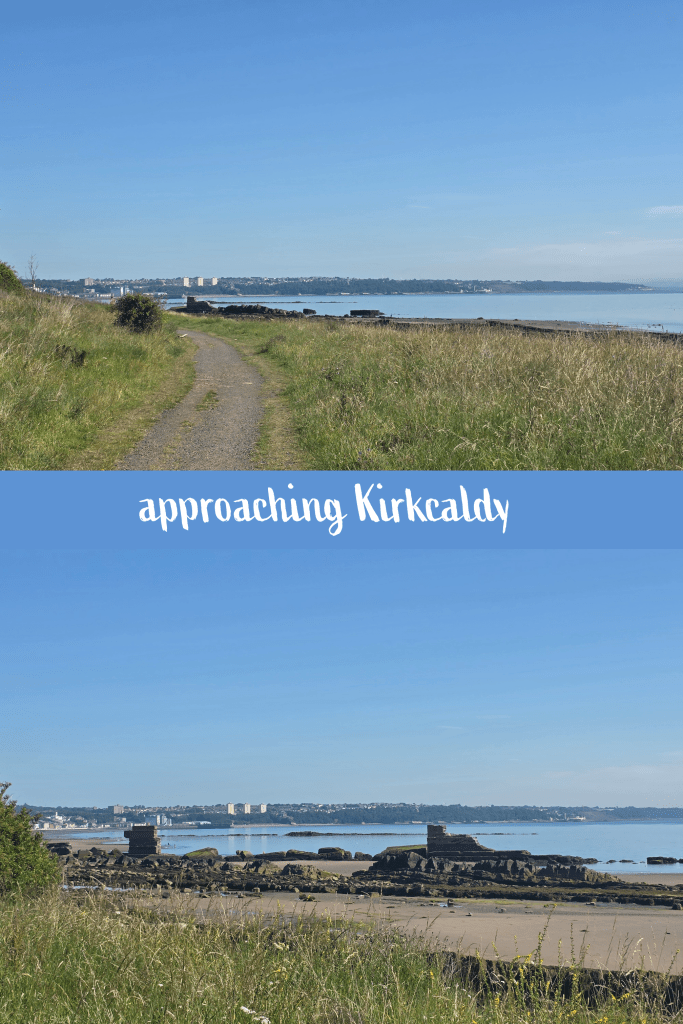
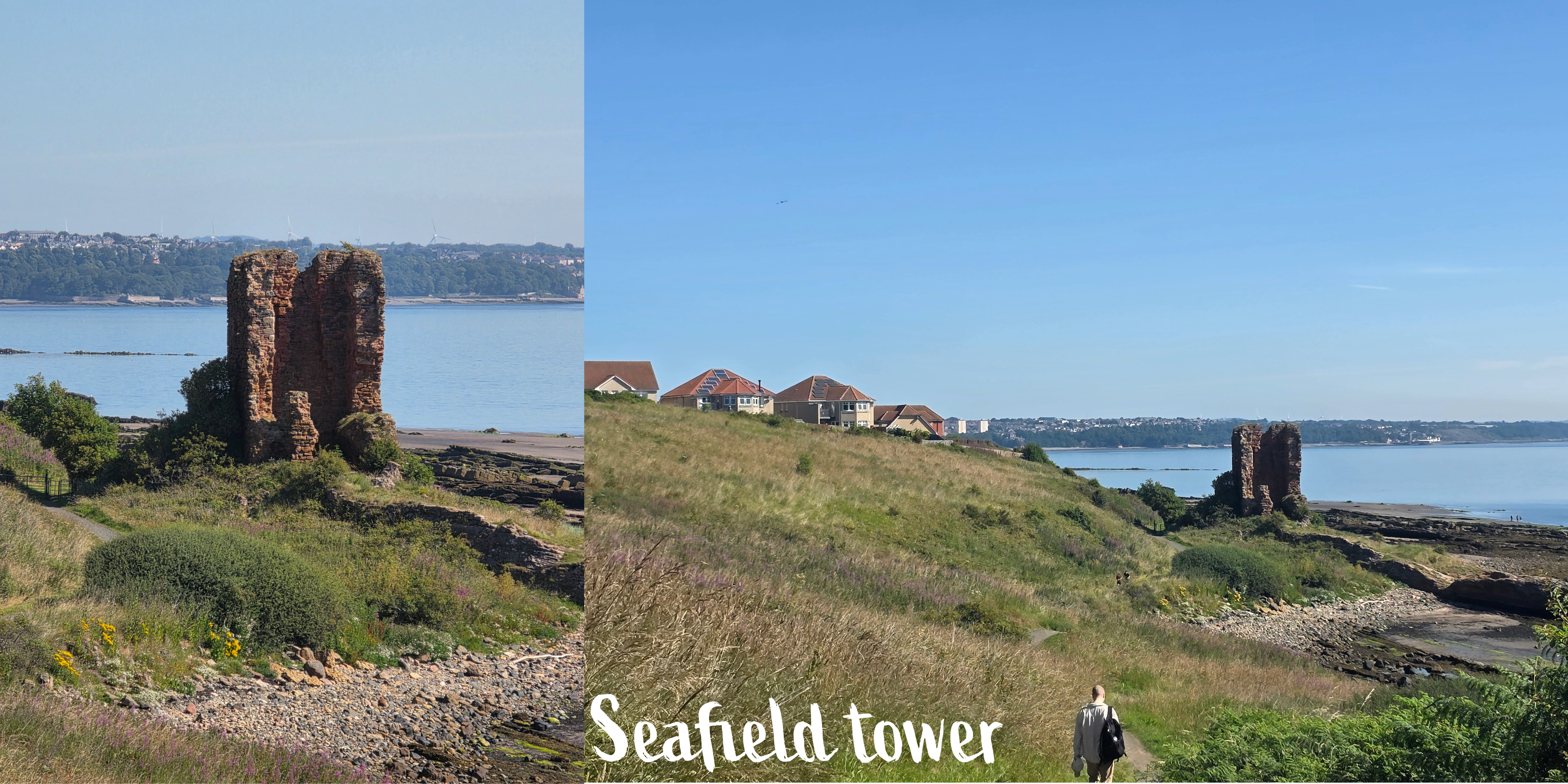
The path descends again towards the beach level, and around a corner the houses at the very edge of Kirkcaldy come into view, along with the ruined Seafield Tower.
Upon a bit of searching, I discovered later that this tower is all that remains of a late medieval (sixteenth-century) castle. It was sold to the Bishop of Glasgow in 1631 and after passing through several families was allowed to deteriorate to the state it is in today.
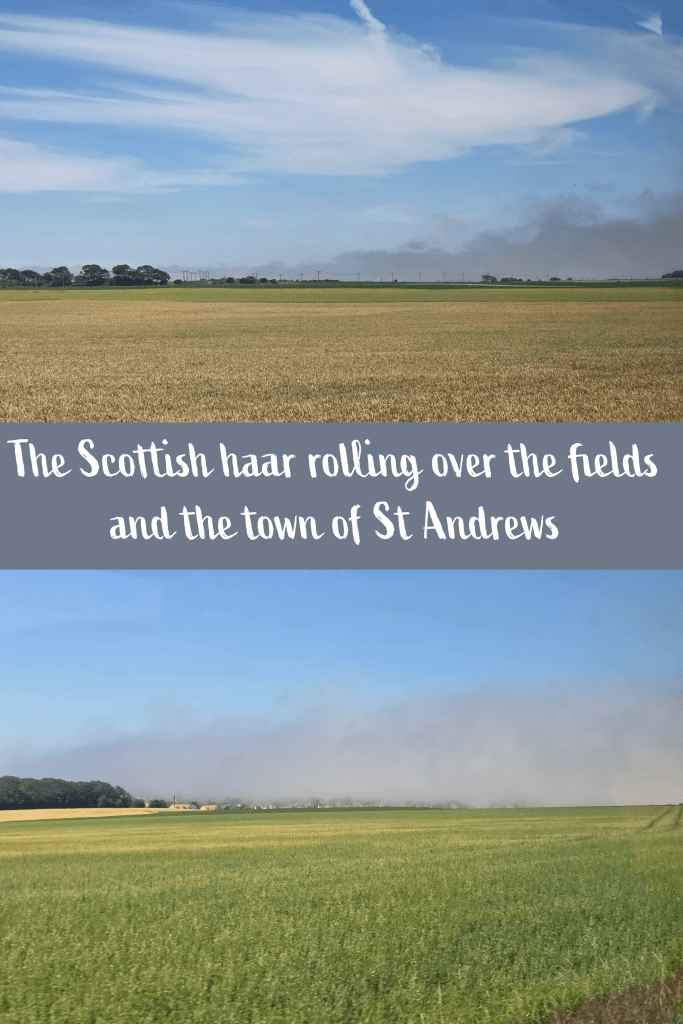
While the day was still clear and sunny, in the distance I could see that further north and east in Fife, the experience was not the same – instead, a thick haar (Scottish fog) was layered over the coastline from Elie around to Tayport.
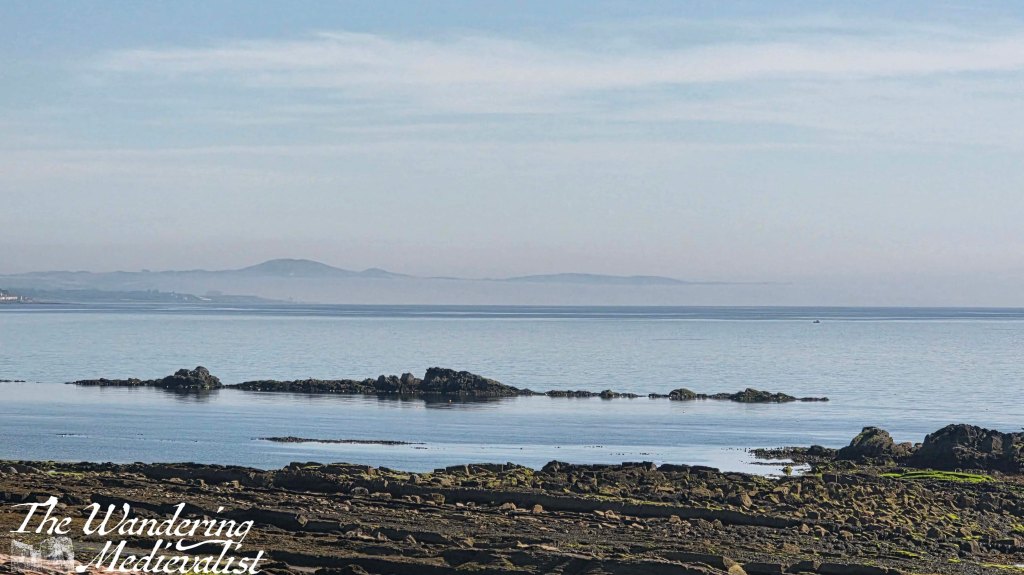
From where I stood, I could just see Largo Law rising above the clouds.
And here I’ll take a break for a short opinion poll – let me know your answer in the comments!
Would you rather be able to see the end of your walk, even if it is several miles away, or would you rather have no idea how much longer you have to go?
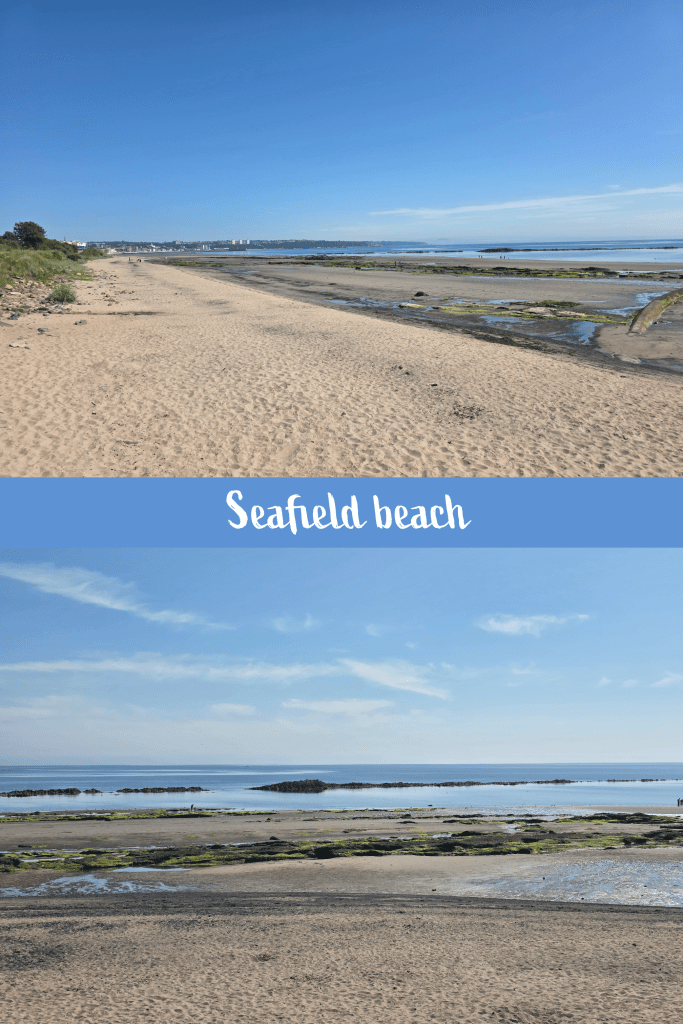
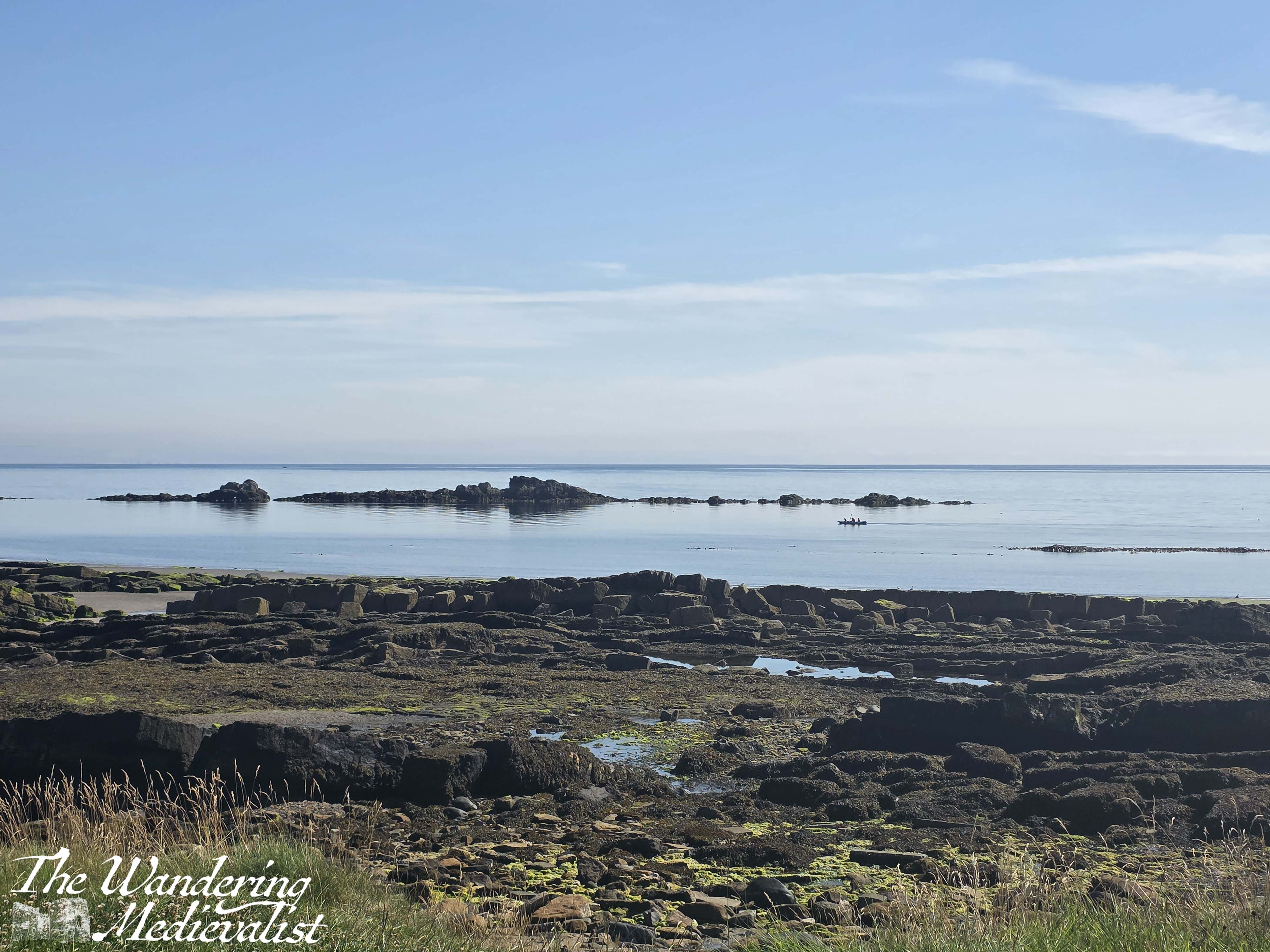
As I walked towards Kirkcaldy, I could see in the distance the faint outline of Ravenscraig Castle, and the much more prominent high-rises of the Ravenscraig flats, which I knew were my goal but still seemed a long way away. Fortunately, I was distracted by how lovely the beach and coast are. It was approaching low tide so there was an expanse of sand, interspersed with rocky outcroppings. The old sea wall is still present though large portions have been washed away, creating dramatic gaps through which to see the view. Above me on the top of the hill to the left were increasingly well-appointed houses, many with large balconies overlooking the ocean.
Once past the old sea wall, the path continues along the beach which is now completely sandy, and was already starting to become busier with poeple eager to enjoy the sun.
I found the coastal path to be less well sign-posted here, and eventually had to look up the proper route on my phone, as I walked along the grass at the edge of the beach, past the car park for Seafield beach. There is a large Morrisons here, and officially the coastal path leads up to the left and around the store and car park. This is a good spot to stop for a snack or cold drink, if you need it. There is also, I am relatively certain, a route that takes you between Morrisons and the beach – or you can walk on the beach of course – but I was doing my best to follow the ‘official’ trail that loops around and then follows the main road past a Lidl supermarket.
There is no need to cross the road – stay on the Morrisons side and follow the sidewalk (or pavement, for the Brits) around the edge of the car park – this is now the A921.
In short time, the road crosses a small burn – Tiel Burn – and here there are public restrooms should you need them. At this point, the path is not well-marked at all, but I determined that it made sense to swing to the right and follow the seawall at the edge of the beach, onto Kirkcaldy Esplanade.
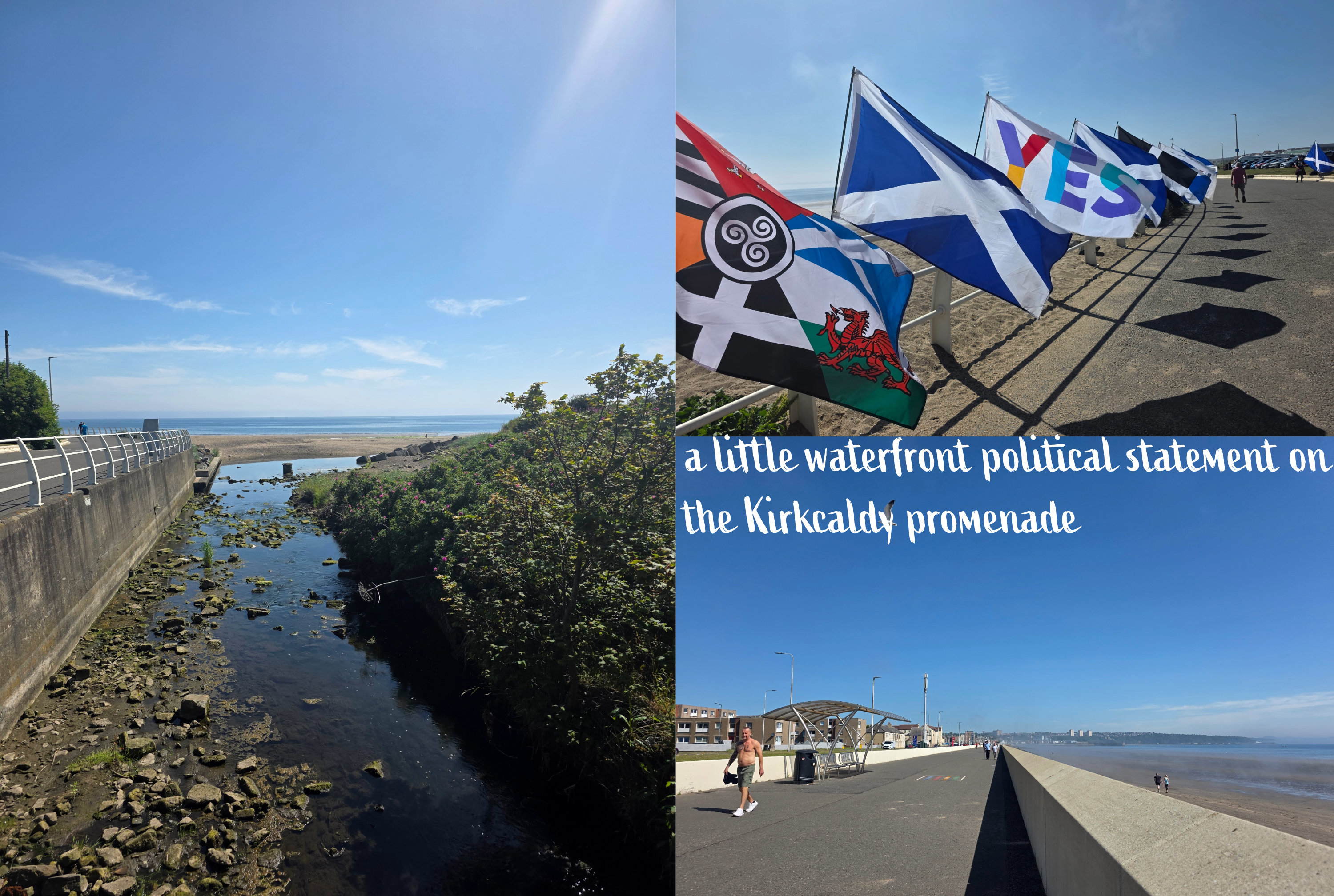
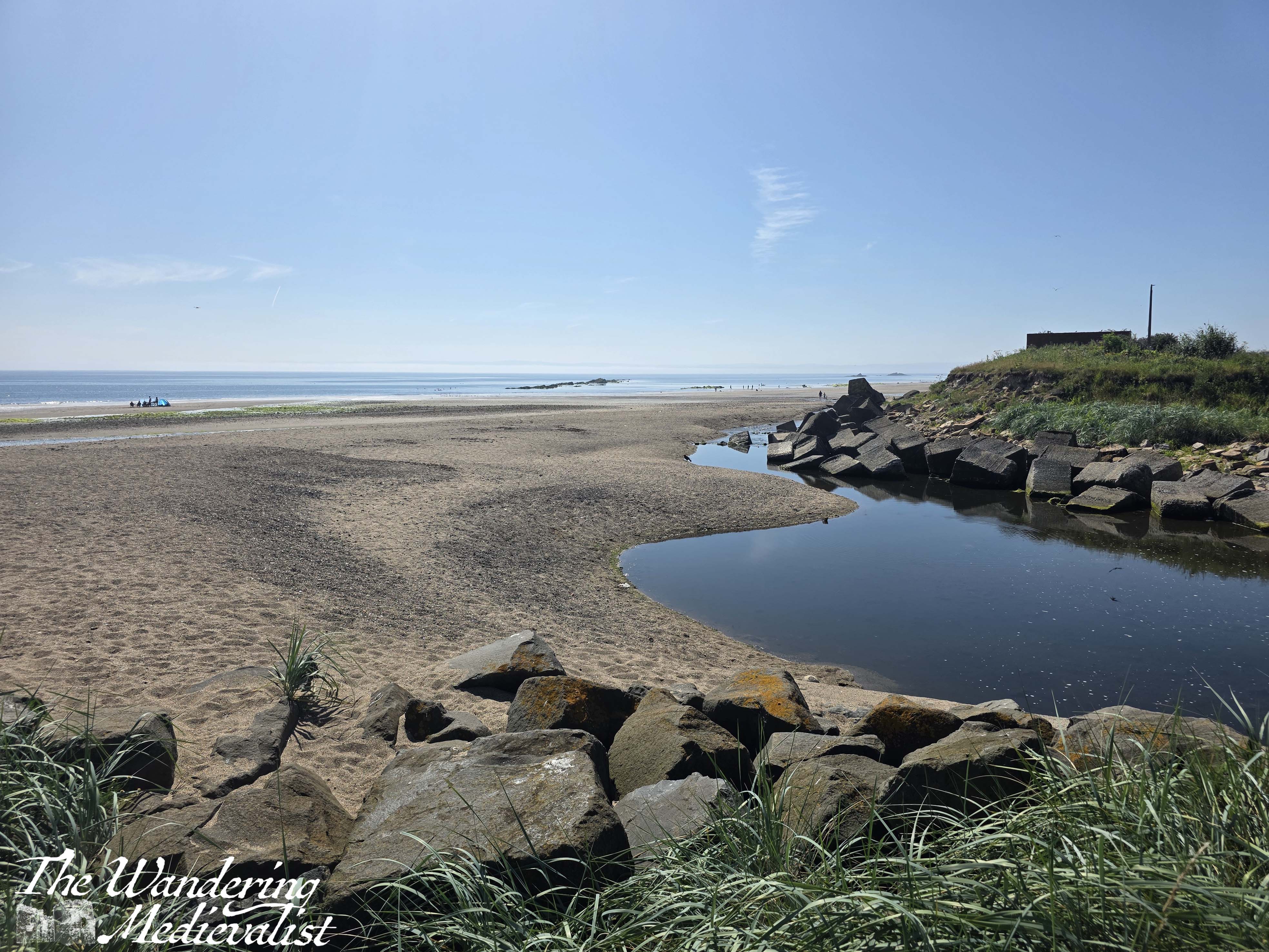
I admit to being really impressed with how well-kept the esplanade is, especially as it was first built just over 100 years ago. Stretching for just about a mile, it is wide pedestrian route with a relatively new seawall separating it from the sandy beach. There are periodic breaks in the wall for paths down to the beach, and very recent additions to the pavement in the form of games to entertain children. There was a world map, several hopscotch outlines, suggestions of places to run, hop and skip, and much more, all brightly painted in clear colours.
Beside the pedestrian area is the busy A921, and across the road a series of shops, parking areas, and some apartment blocks. As I walked along the coast, I began to notice wisps of mist blurring the view – while not a full-on haar, there were gentle clouds rising from the sand and hovering in the still air. While it did not come together into a total blockage of the sun, the mist was gathering more heavily, and as I reached the end of the esplanade, the sea wall at the far end of the beach was hard to see.

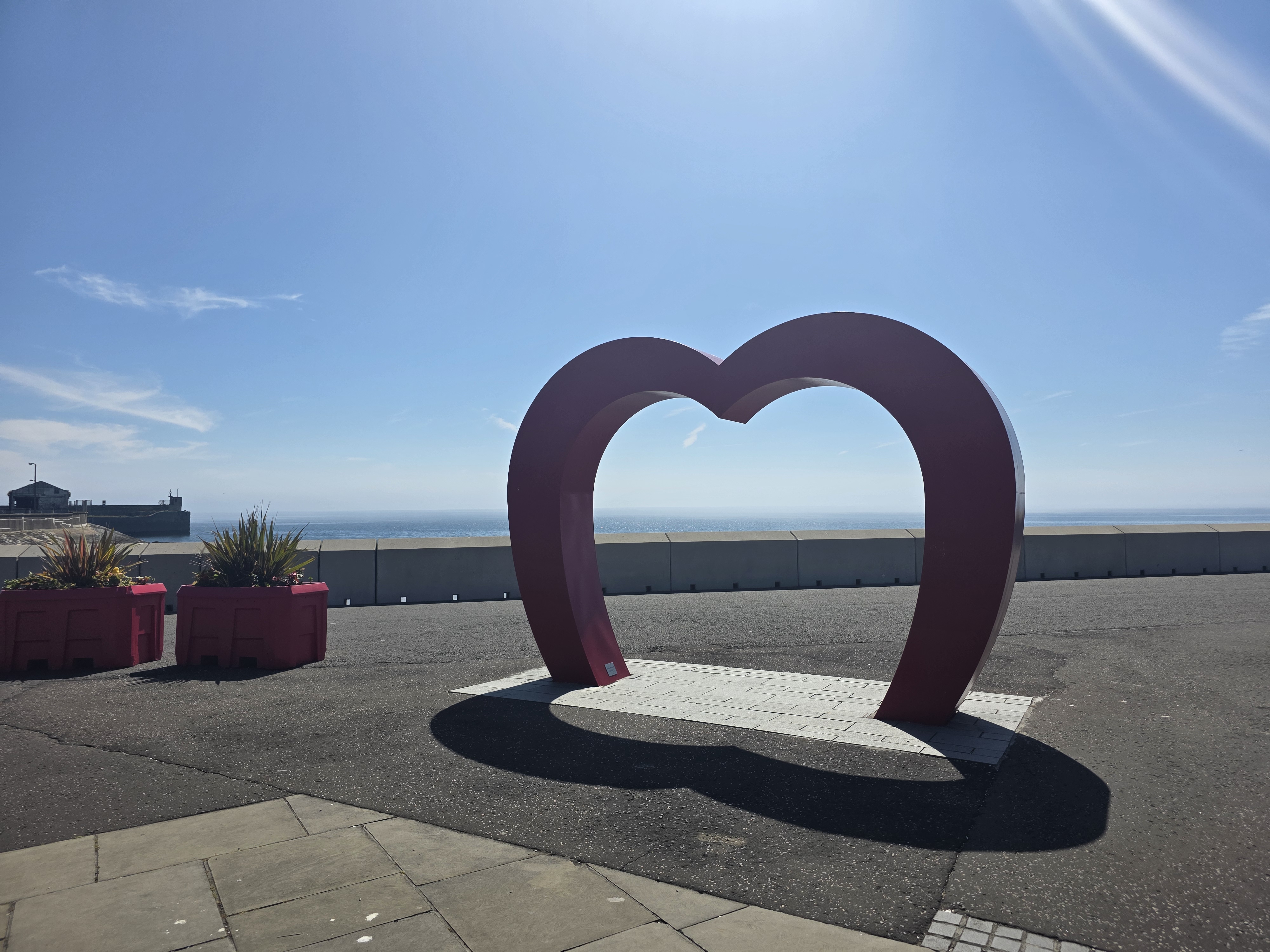
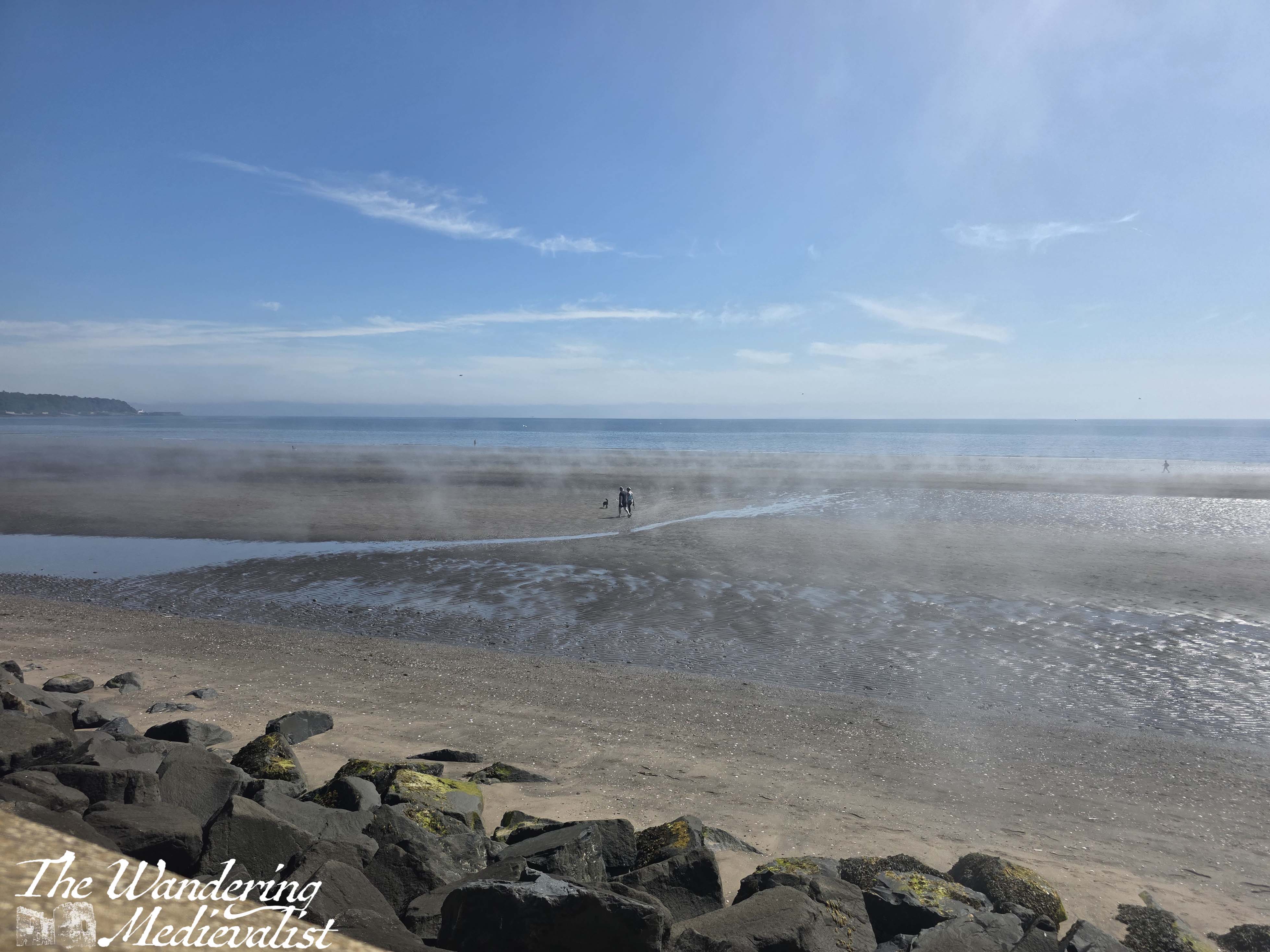
At the end of the esplanade is the Heart of Kirkcaldy, a famous art installation that is popular with selfie-takers, and here I started again seeing signs for the Coastal Path. Rather than following the coastline around to the right, the path crosses at the stoplight and heads straight along the A921. Here there is an odd mix of much older buildings on one side of the street – 17th and 18th century – and very new apartment blocks on the other, as all of Williamson’s Quay is much more modern accommodation.
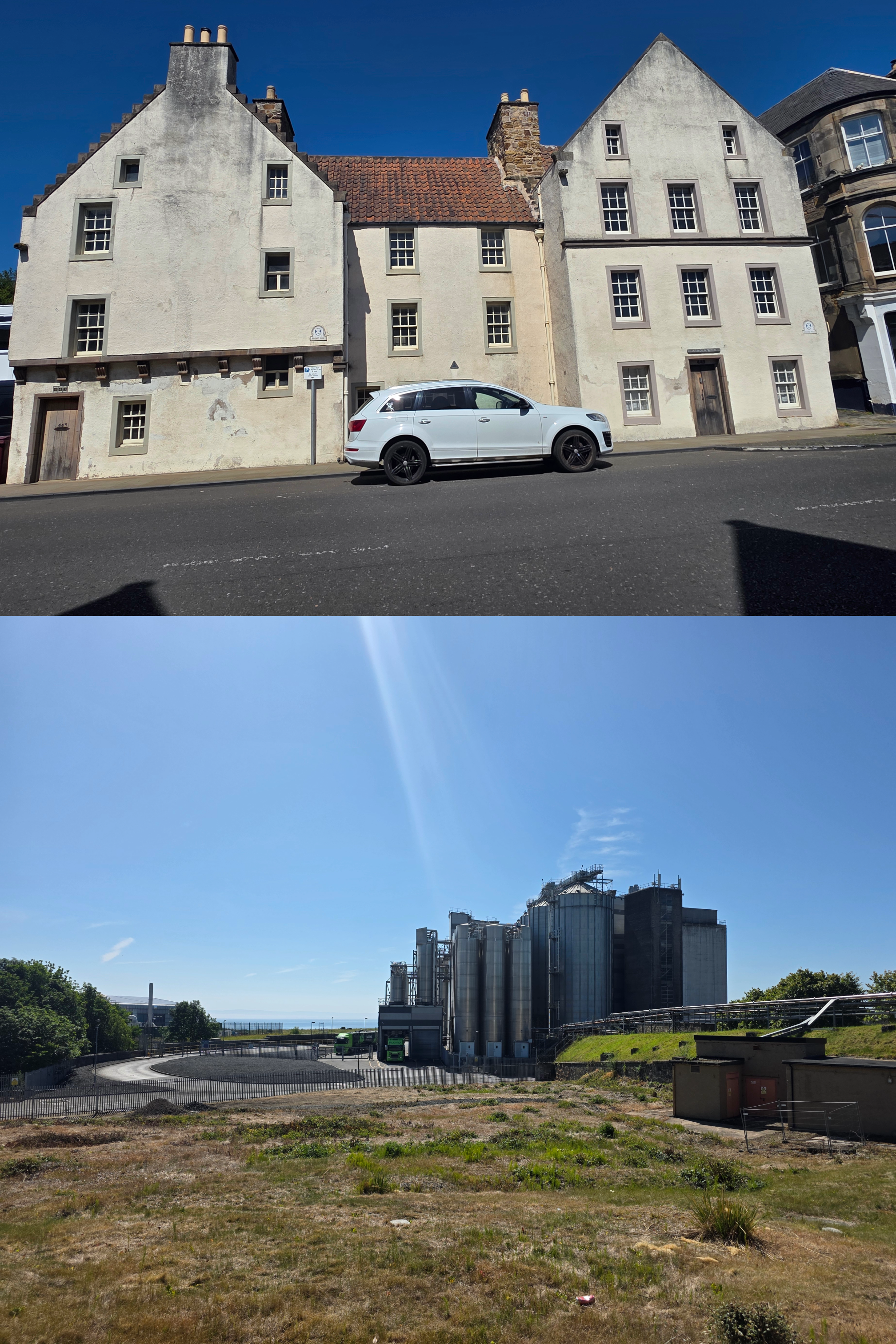

About five minutes later, there are two onward alternatives, marked by a pedestrian crossing. One is to continue straight up the hill ahead, along the road. The other is to take a right and then almost immediate left past the Carr’s Flour plant, and along the coast. I have to admit to getting this bit wrong, as the Coastal Path signs seemed to point directly into the factory grounds, and were a touch vague. So, I deviated from the path and went straight up the hill which is quite steep and a good long climb, especially after walking for about 4 miles.
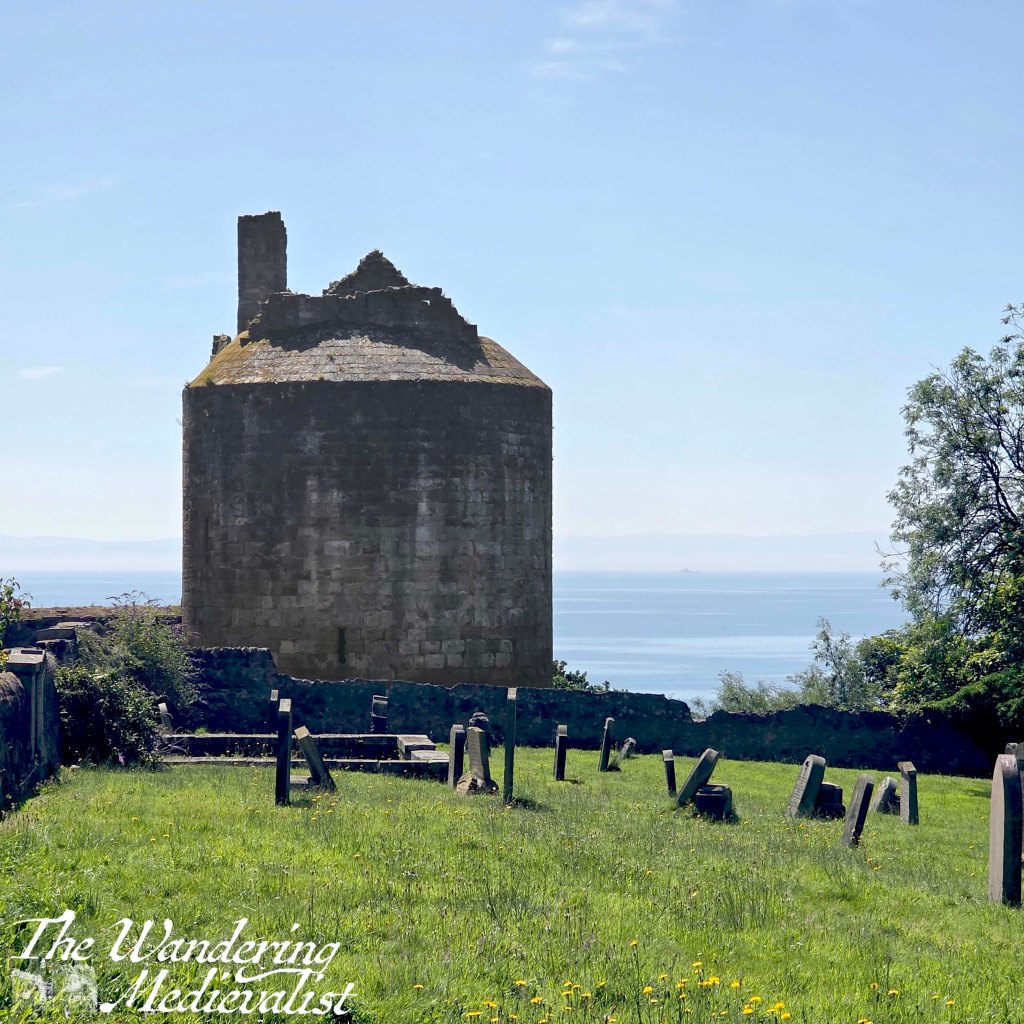
My goal for the end of this walk was Ravenscraig Castle, a mostly-ruined edifice at the edge of Ravenscraig park. I did just see it from the road, but realised as I planned my route to it that I had firstly lost the Fife Coastal Path but perhaps more importantly, was about to miss the only bus I could get in that hour. So, I took a quick picture from across the burial ground then legged it across the street to the bus shelter, where a kind woman assured me that the bus had not yet come.
On the rather long and winding bus trip back to St Andrews, I was able to see just how all-pervasive the hair had become in Fife, with heavy clouds of mist reaching over the land from the coast and settling into valleys.
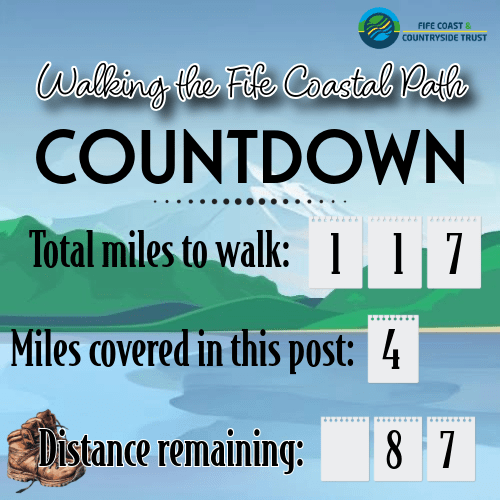
Observations on this section of the path are that the first section, which reminded me of many others with rocky beach and grassy slope, was a much shorter part of the 4 miles than I realised; instead, at least half of the walk ran through Kirkcaldy, both the along the beach and then the Esplanade. It’s a less nature-focussed walk, but the views are impressive and it was a good way to get back into my habit of waking on a Saturday and getting moving.
So, I shall soon have to repeat this section of the walk and actually visit Ravenscraig Castle, then make my way along the coast towards East Wemyss – who knows, perhaps next weekend?
 The Wandering Medievalist
2 responses to “Fife Coastal Path: Kinghorn to Ravenscraig, Kirkcaldy”
I’d rather not see the end of the journey at all!
LikeLiked by 1 person
I agree!
LikeLike