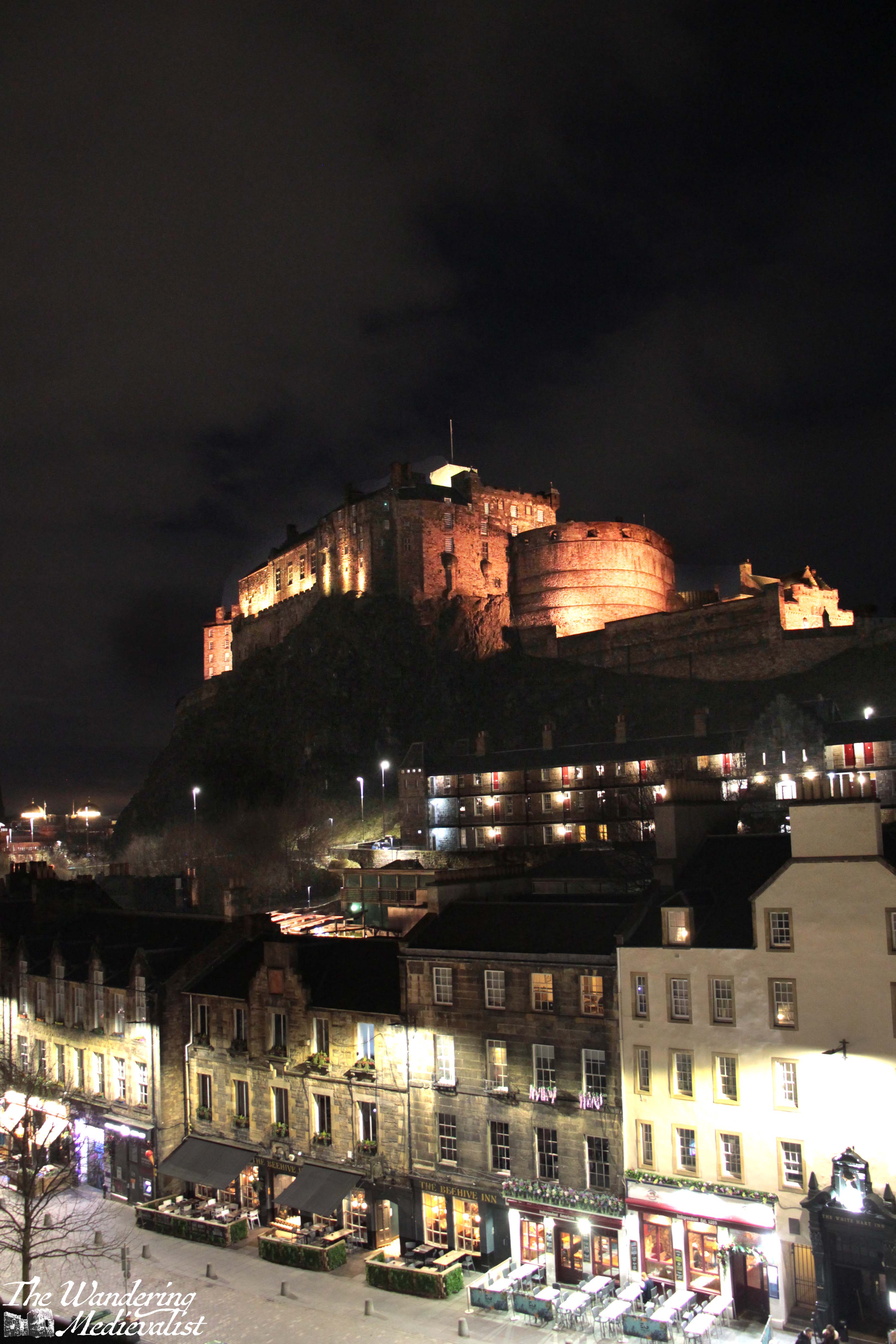
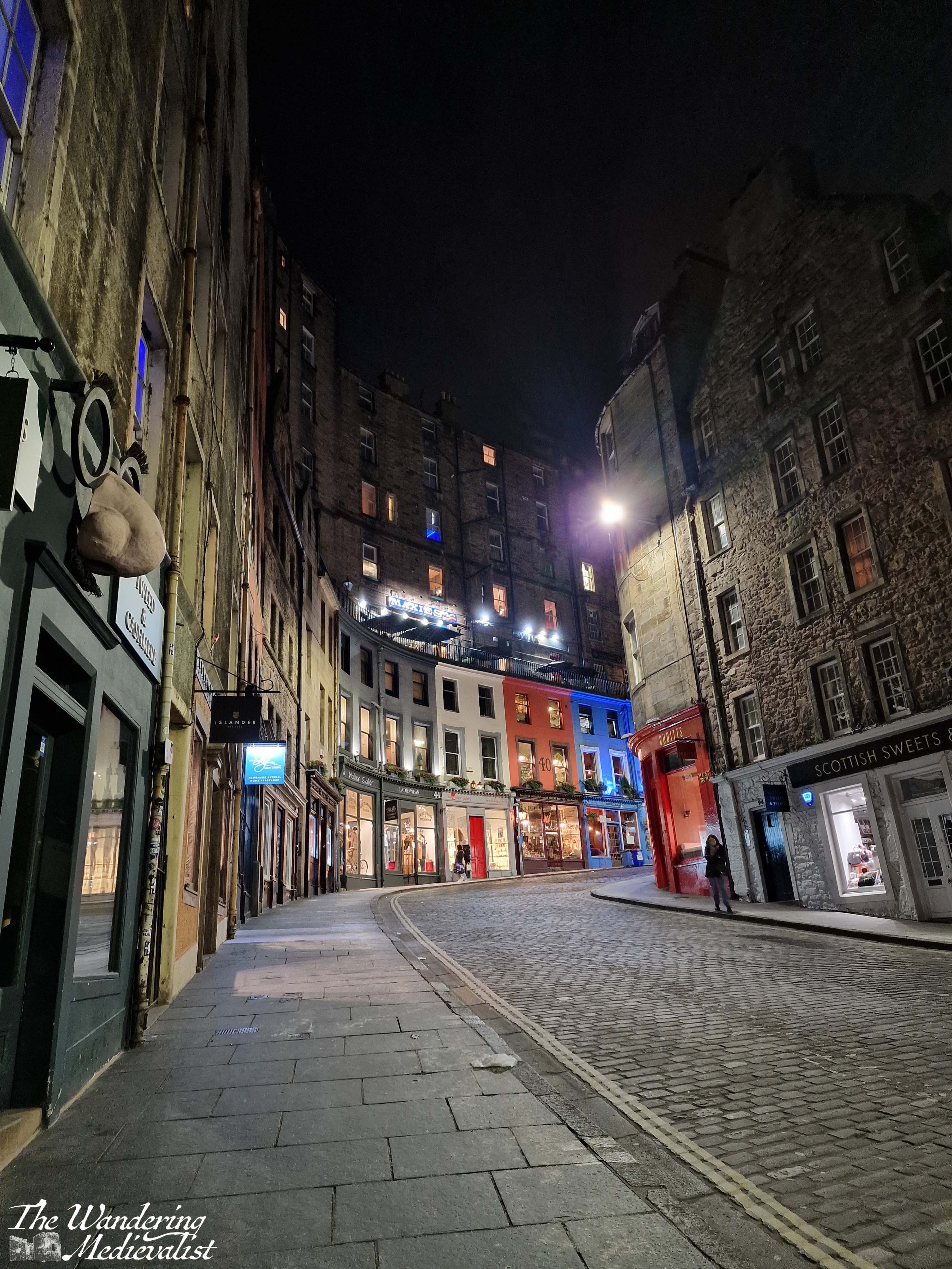
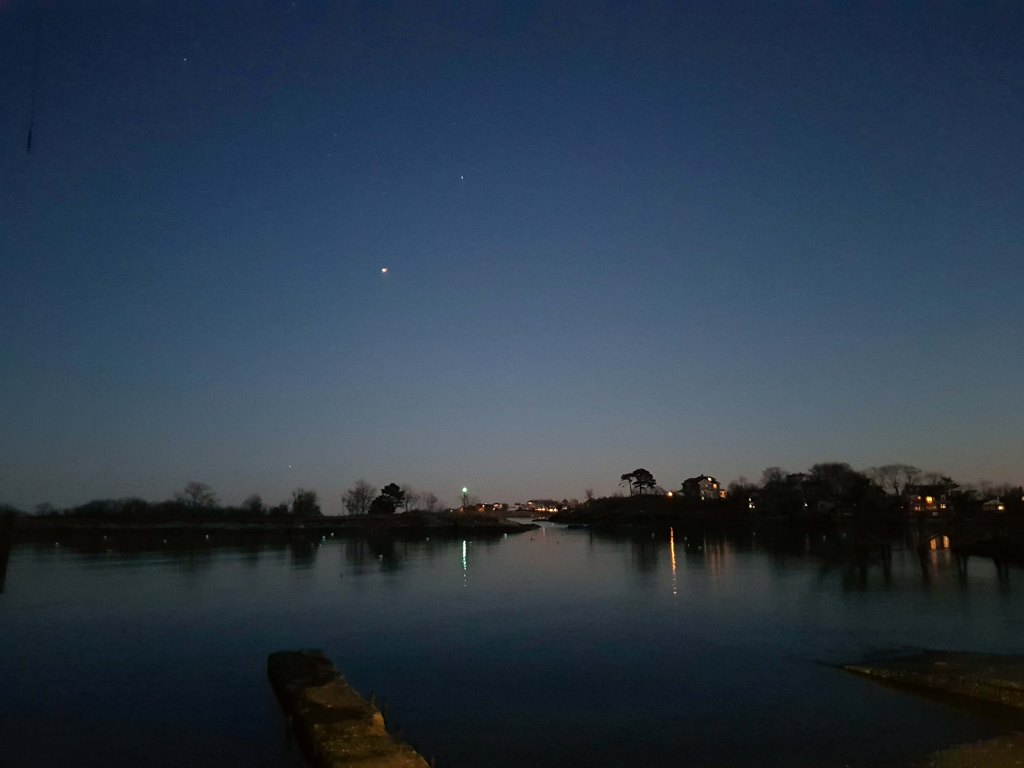
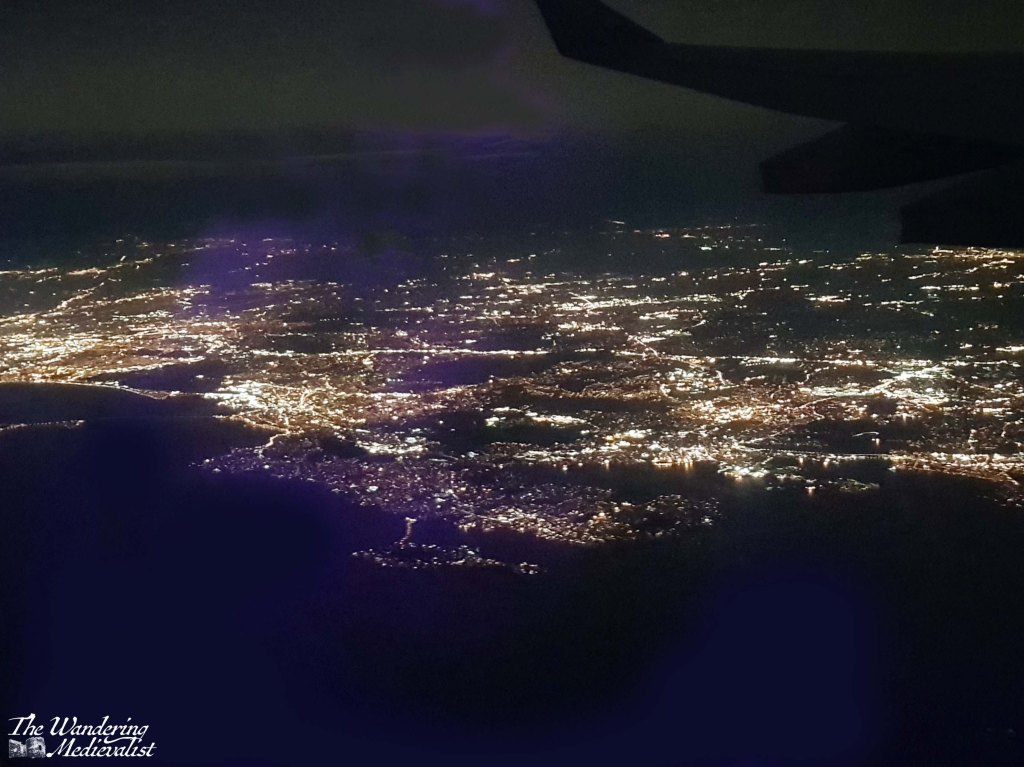
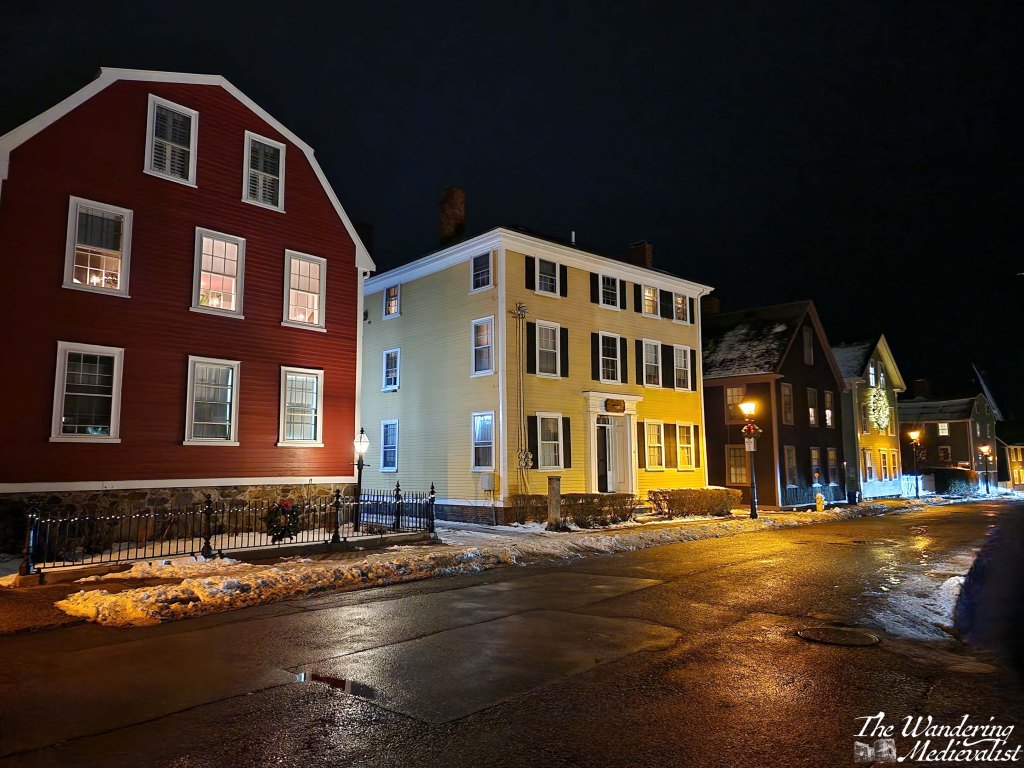
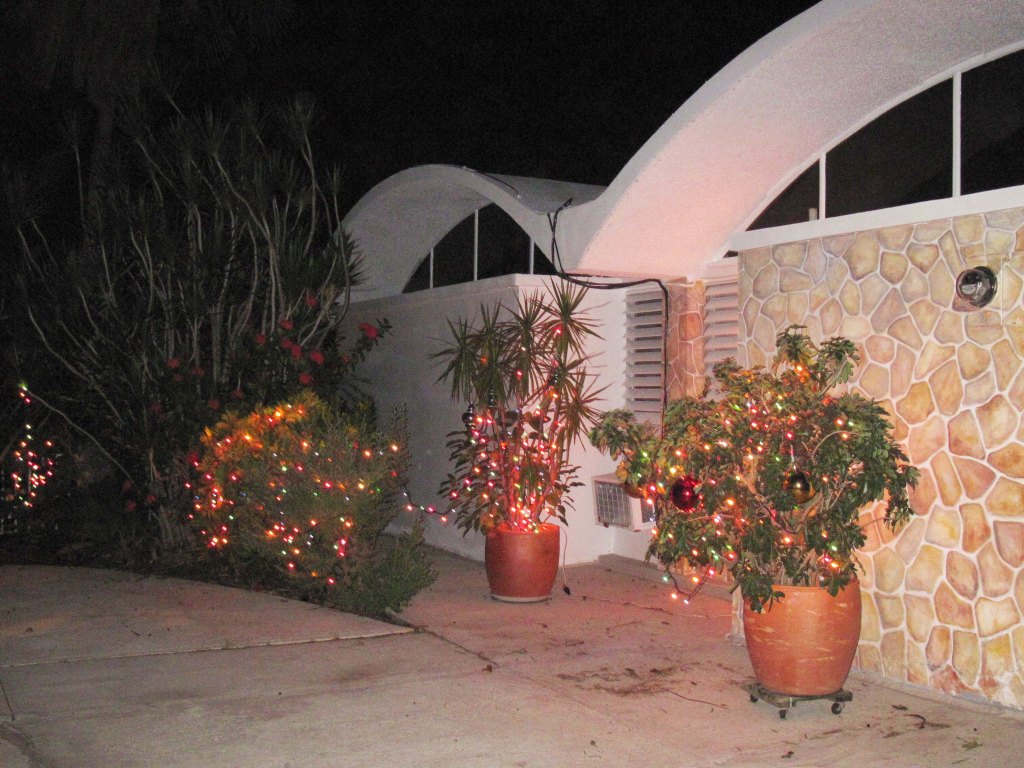
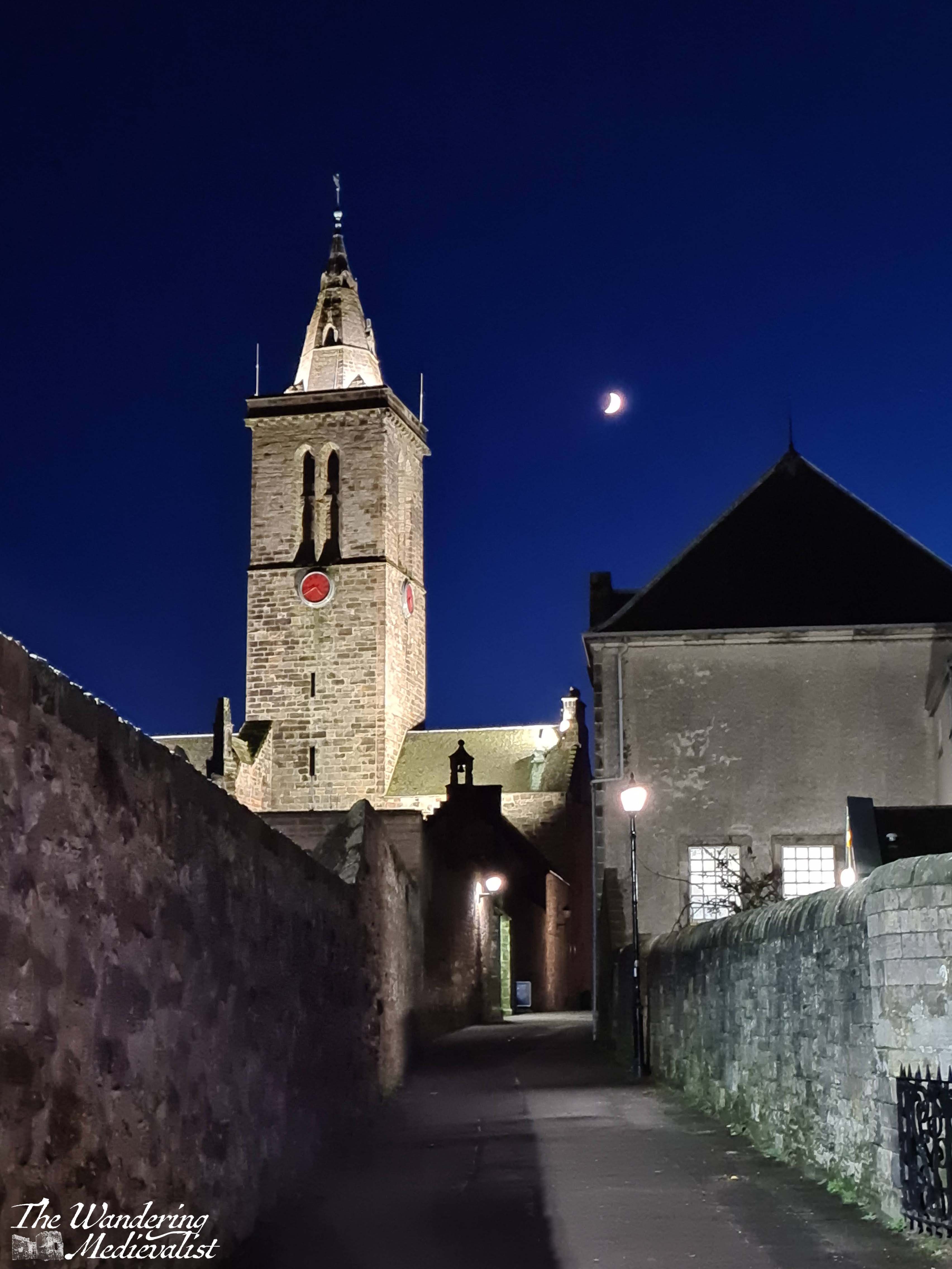
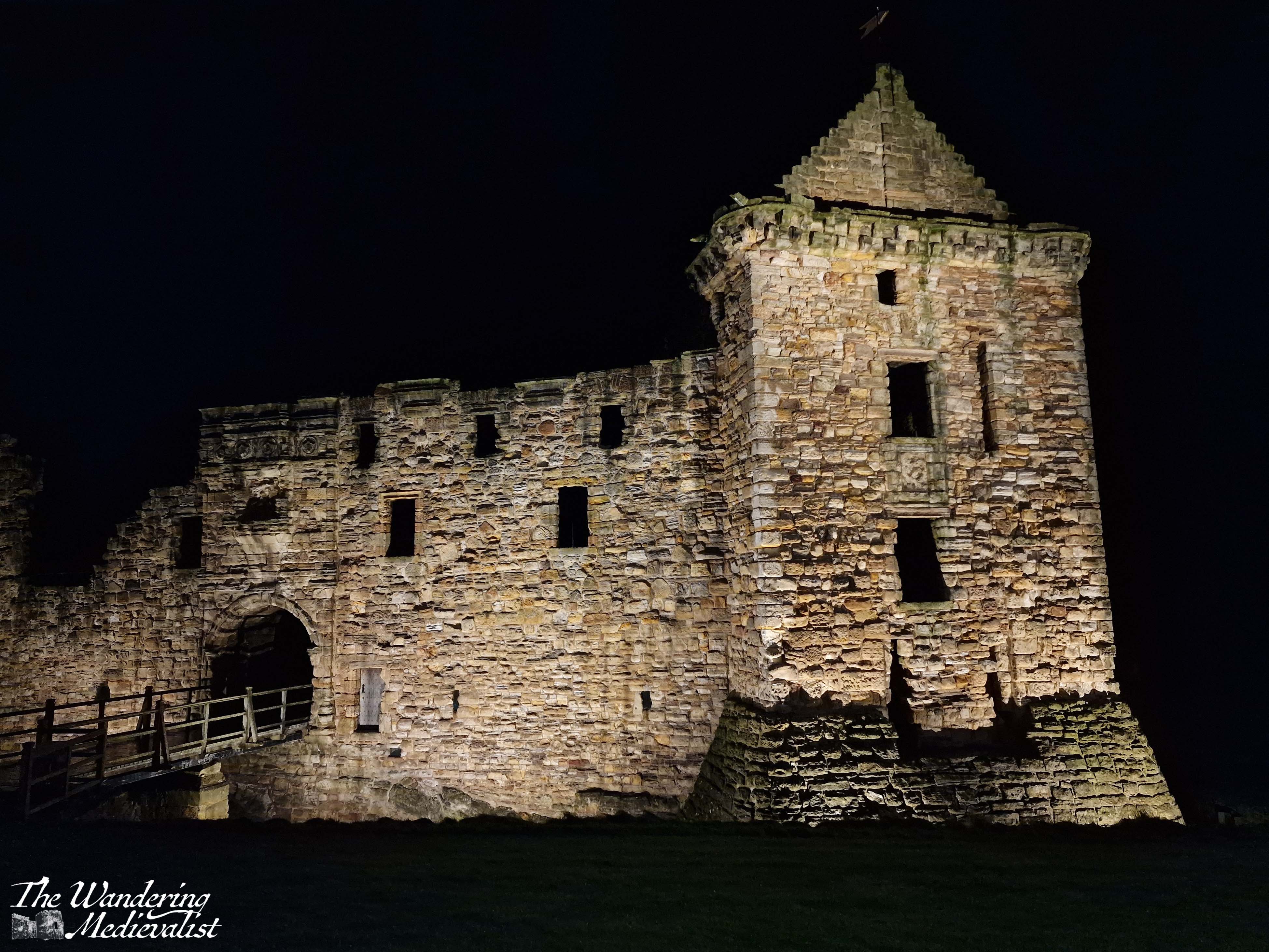
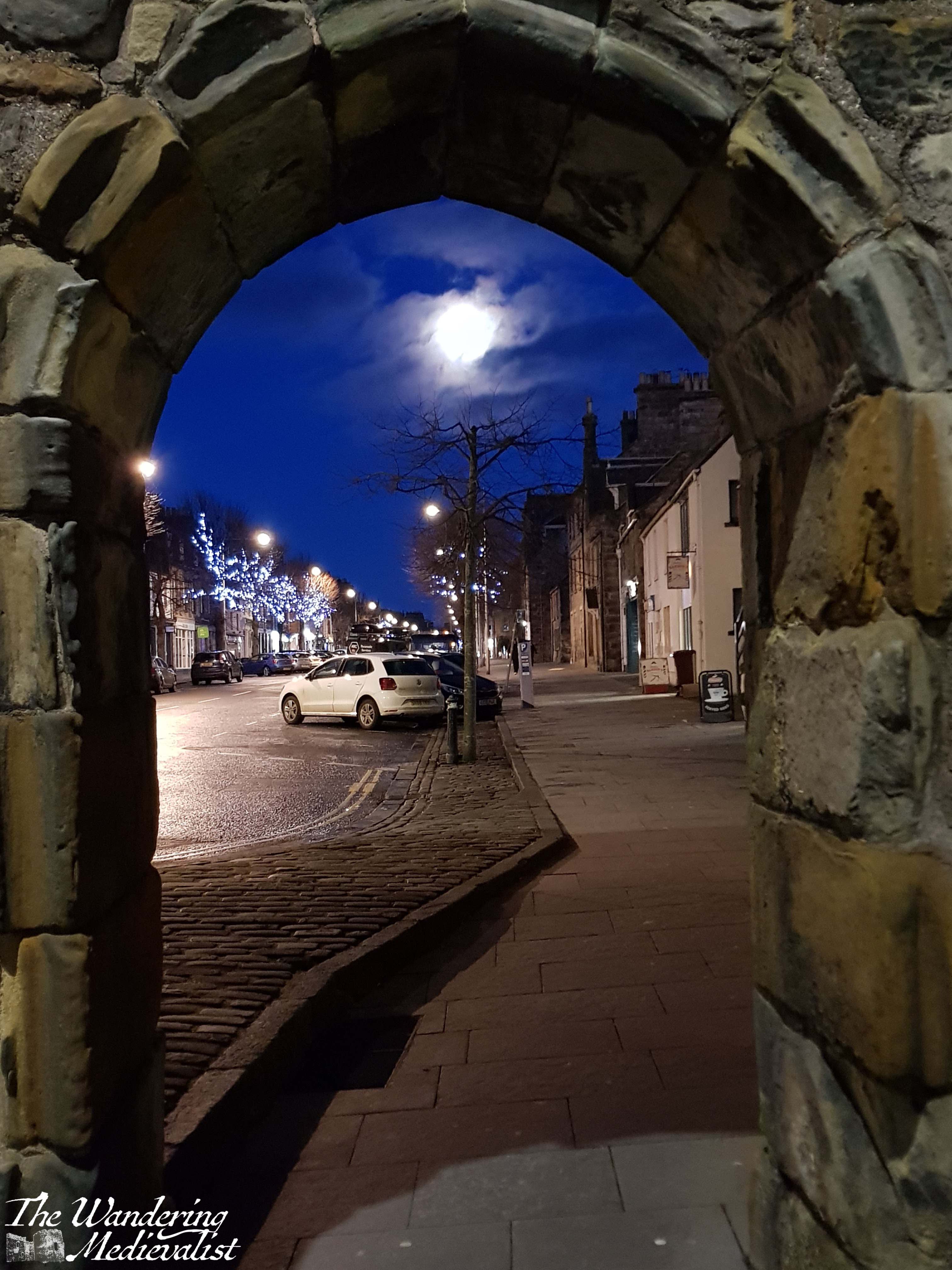
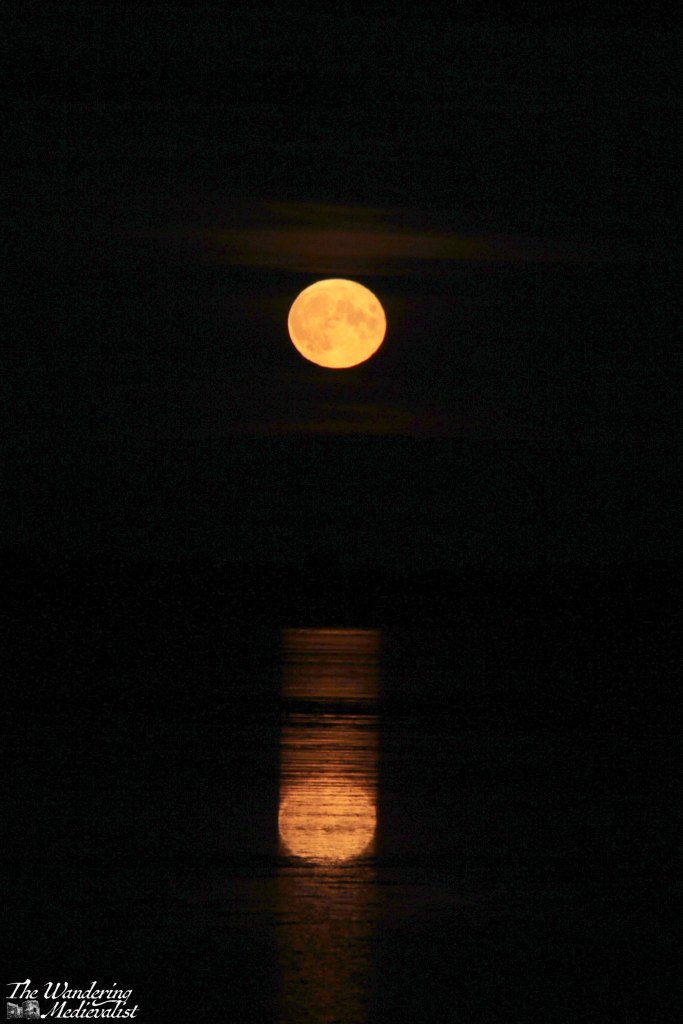
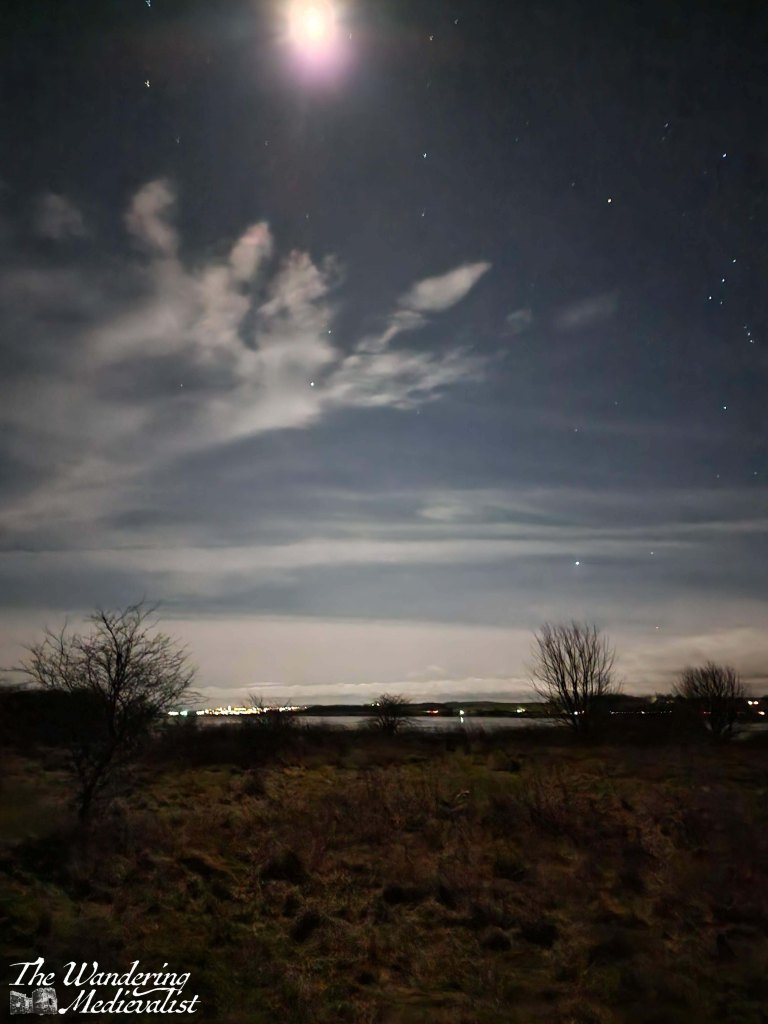
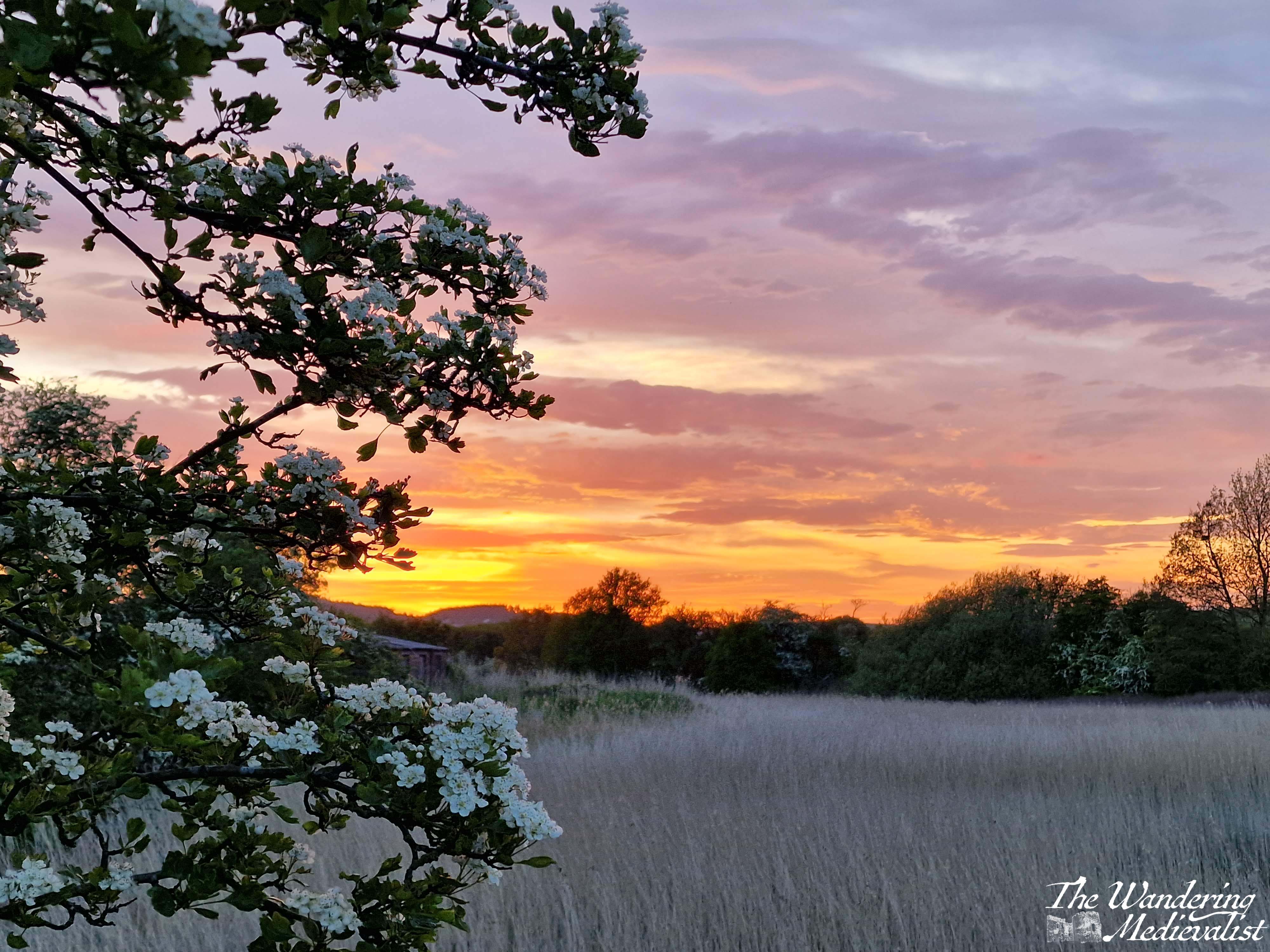
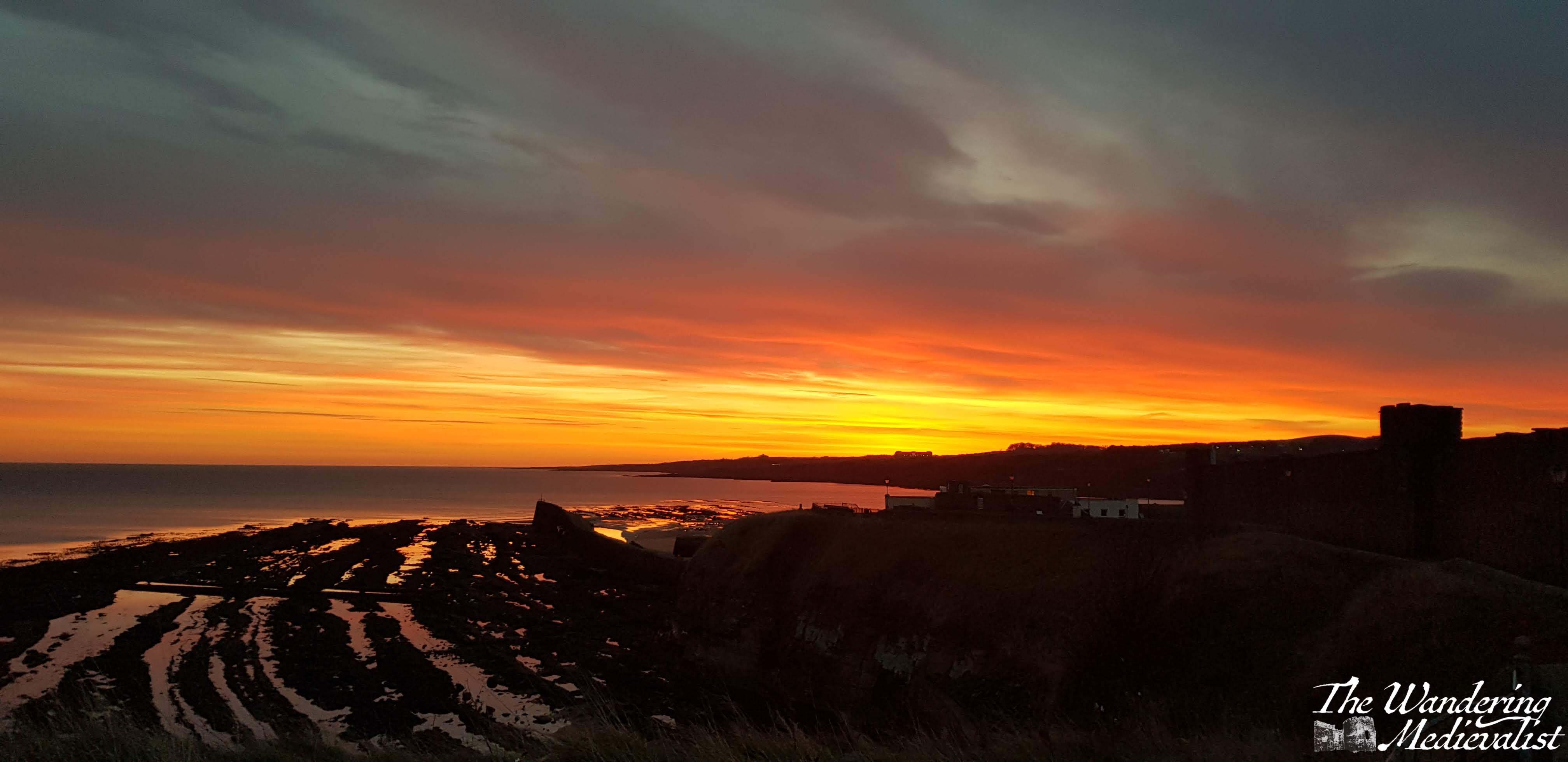
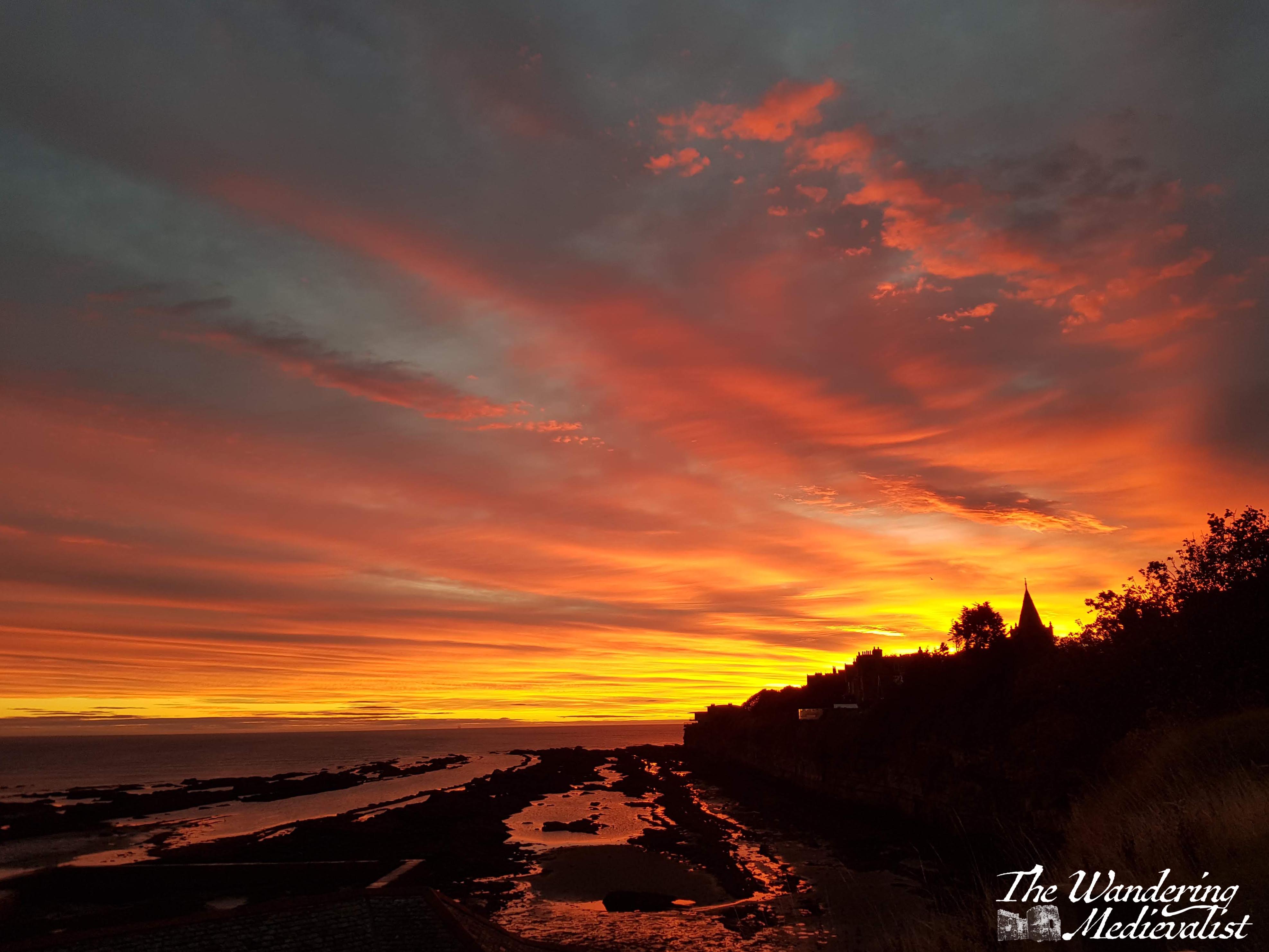
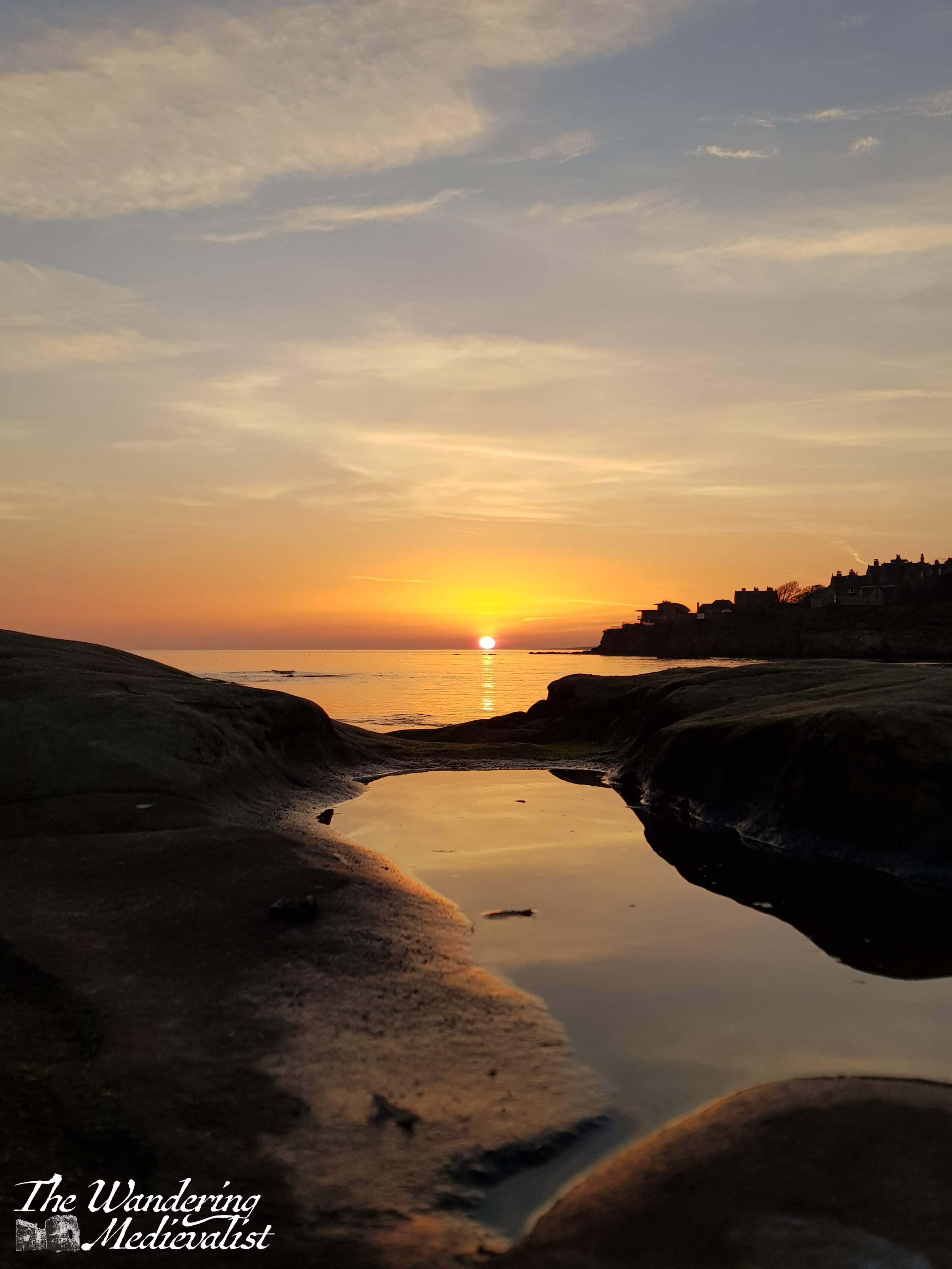
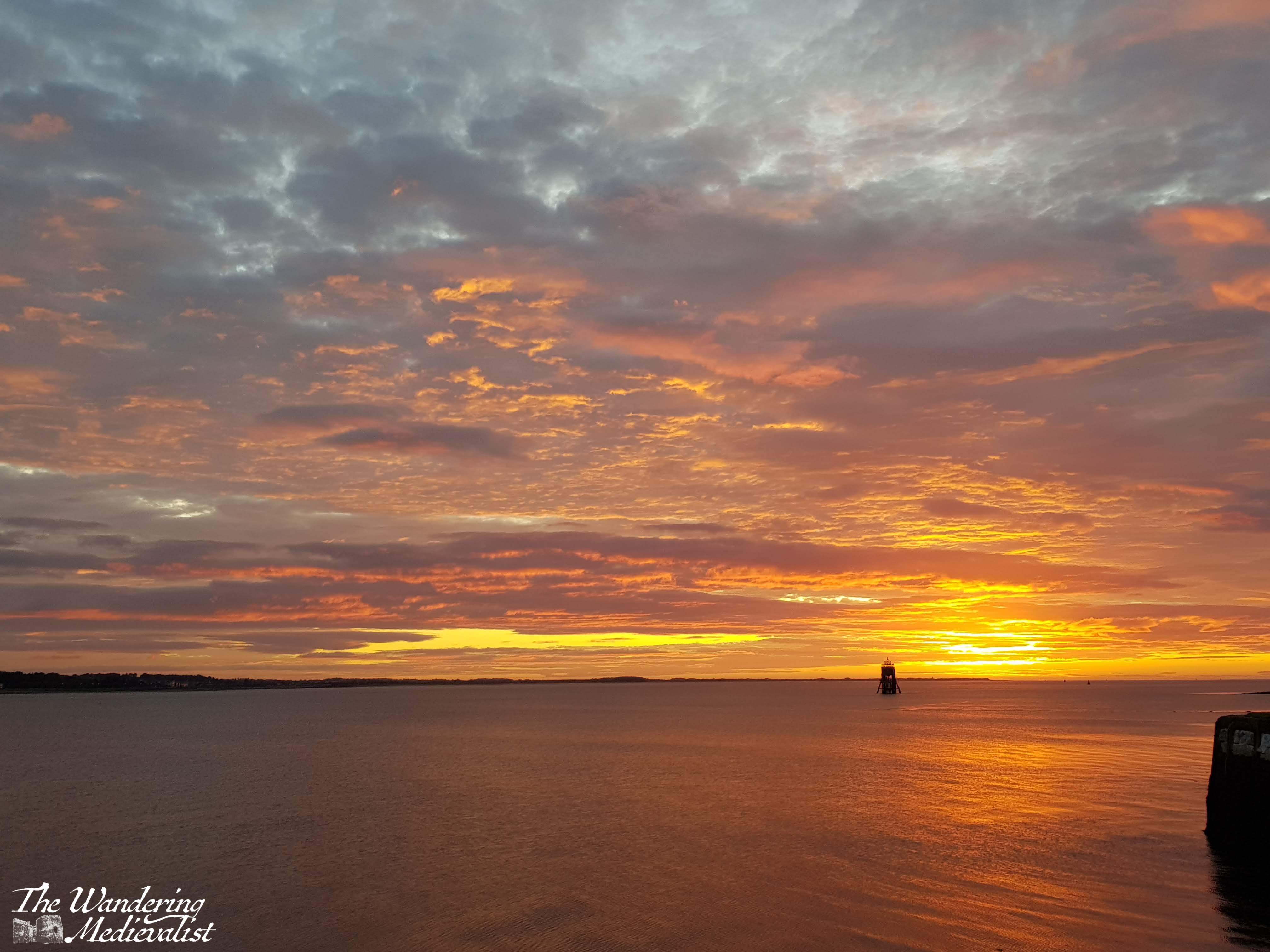
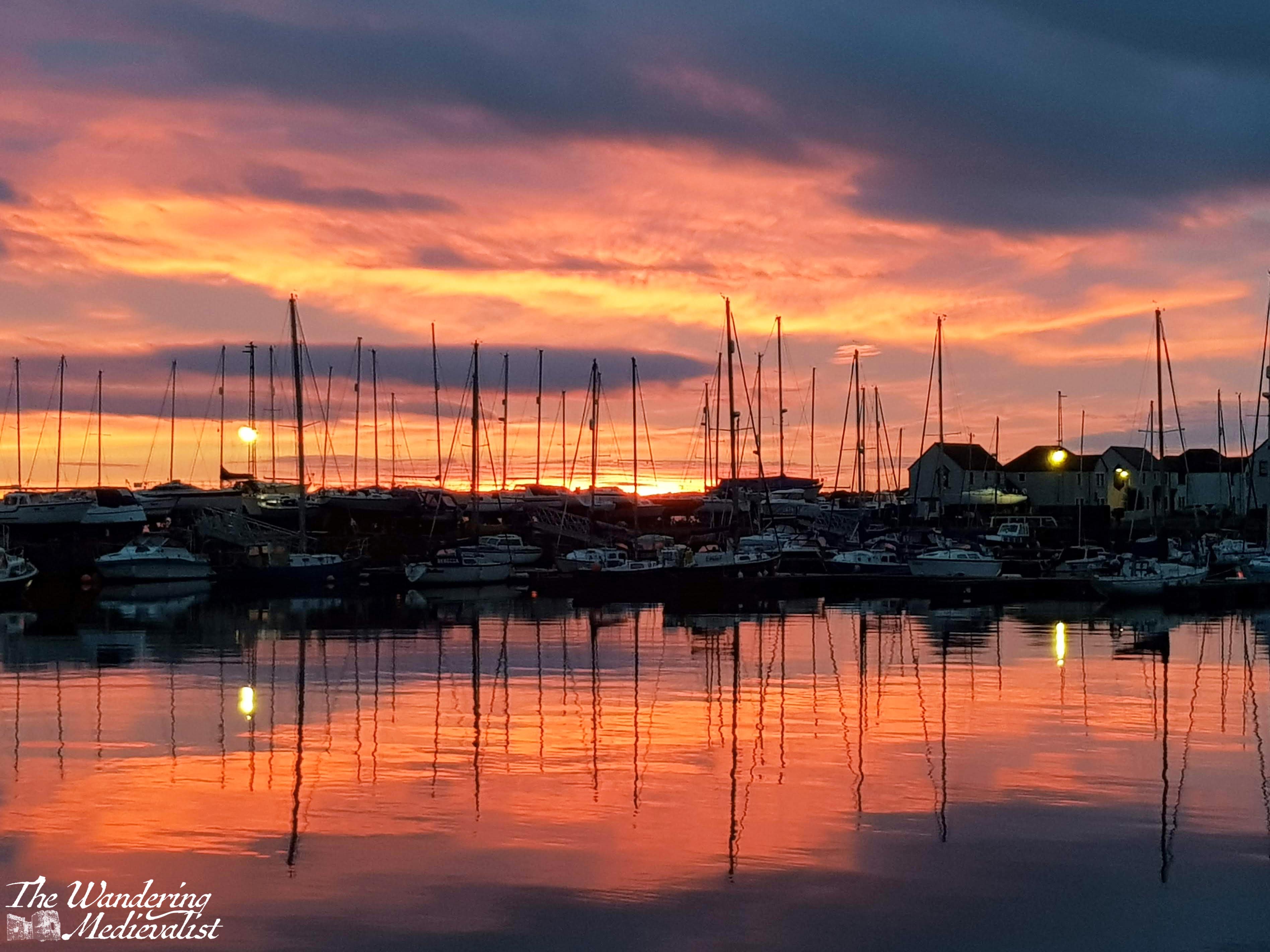
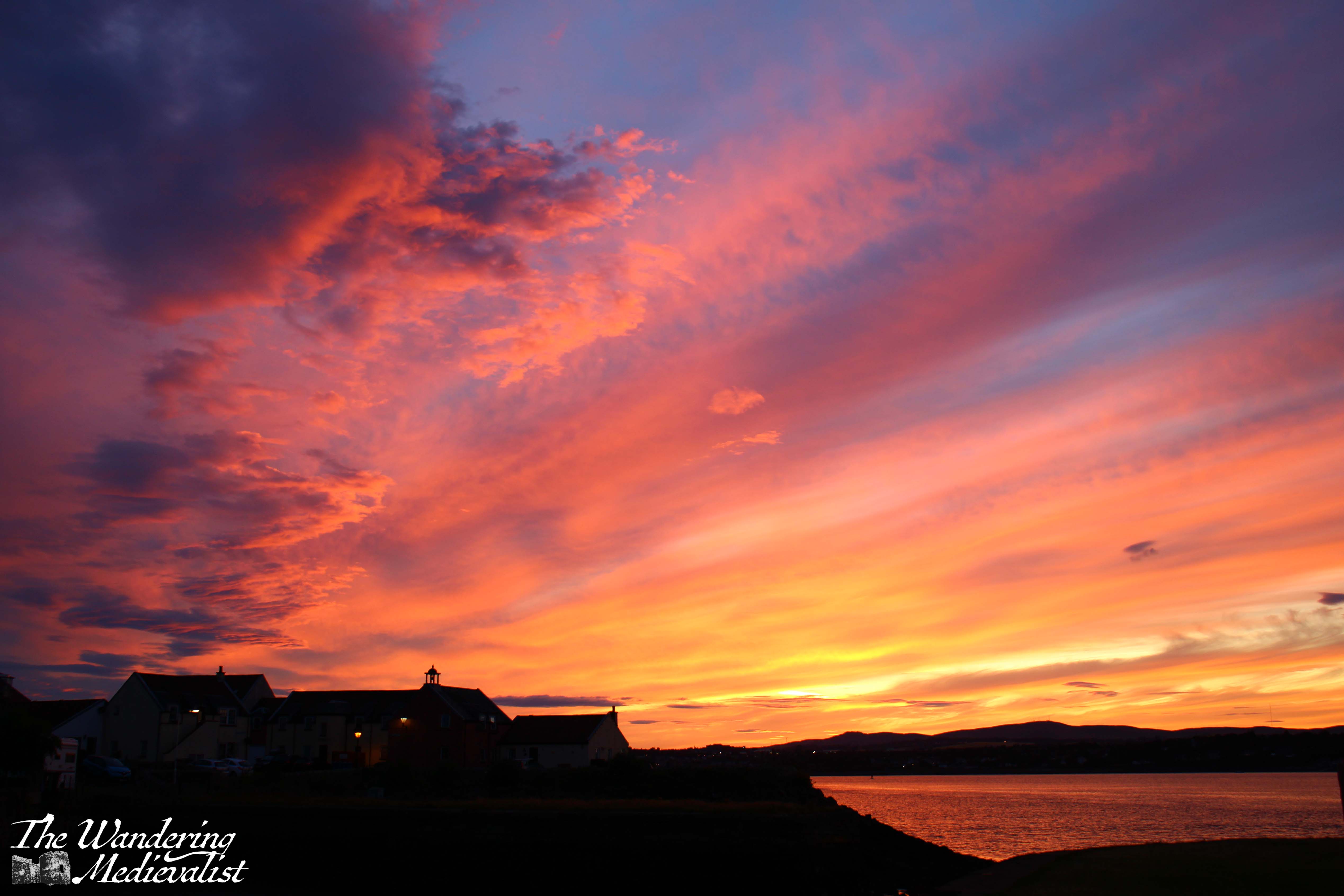
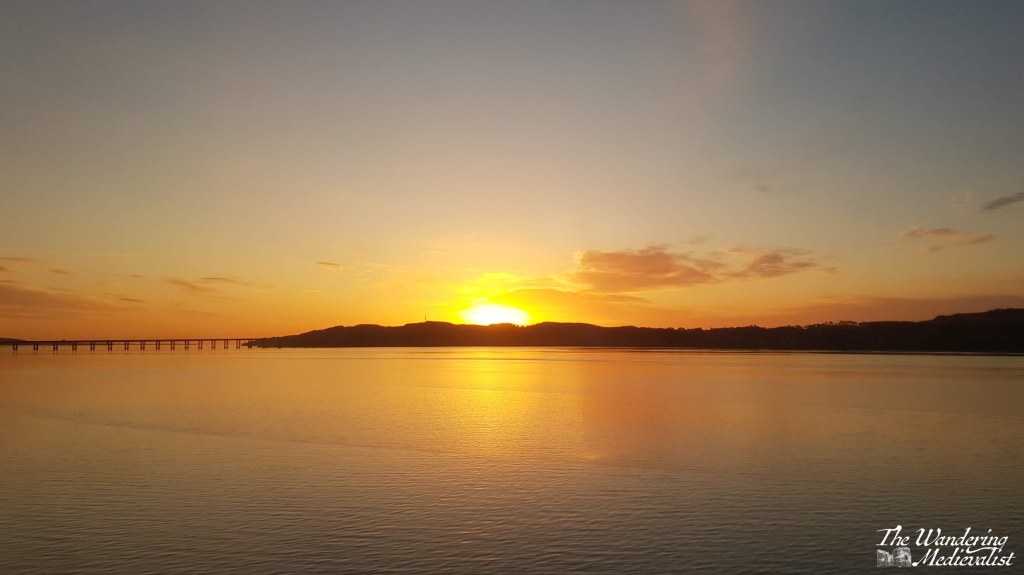
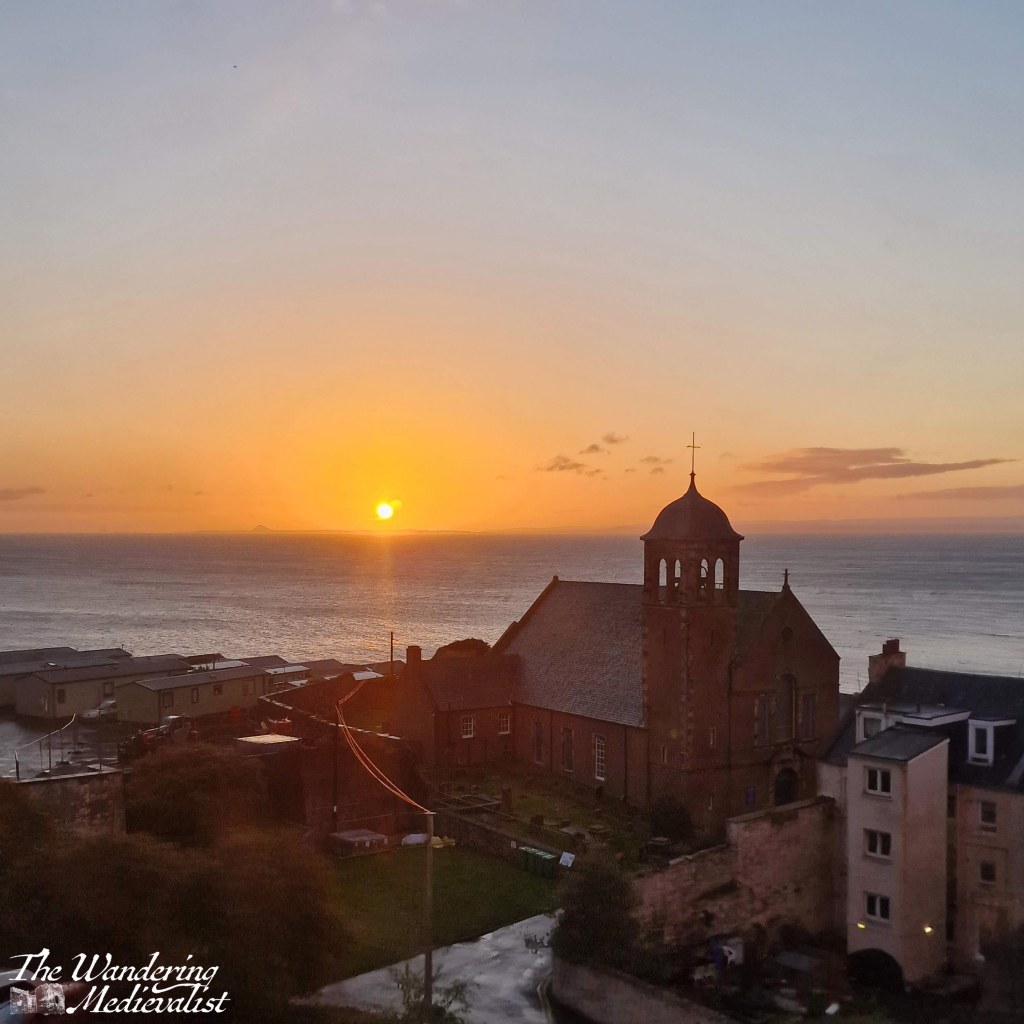
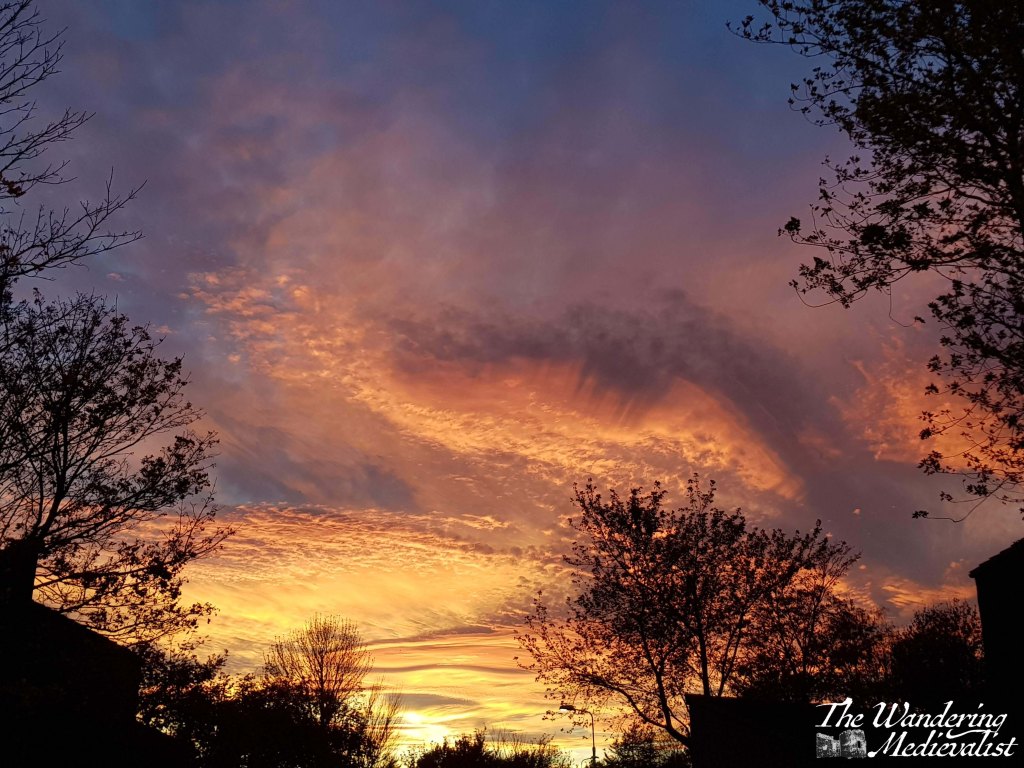
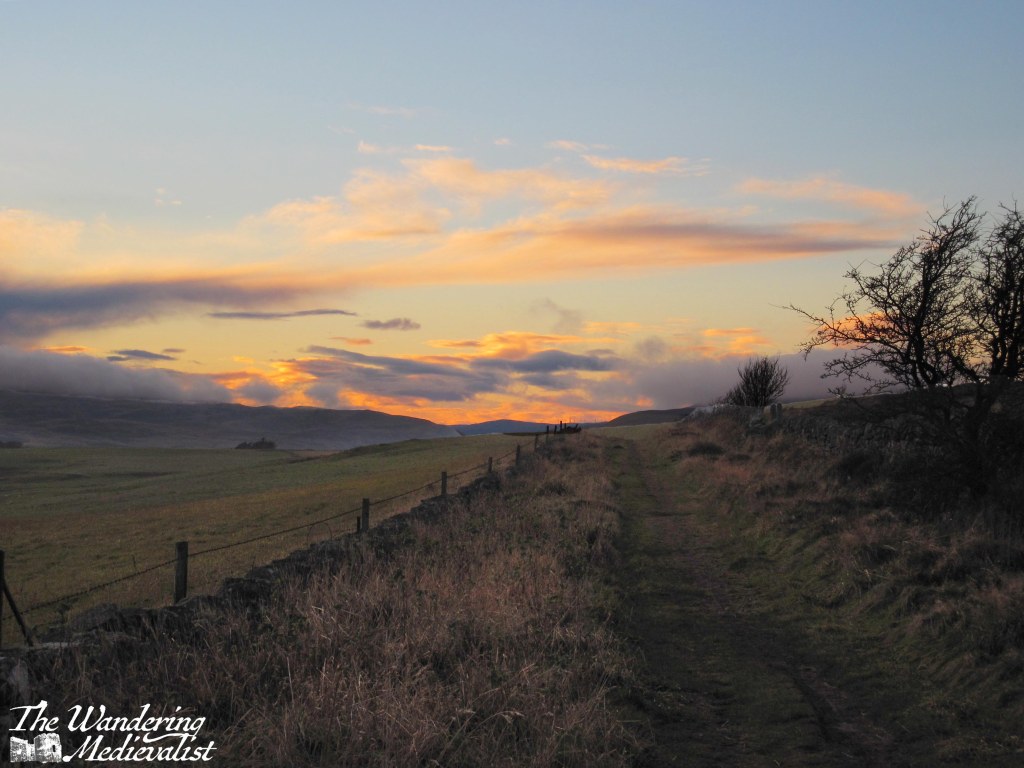
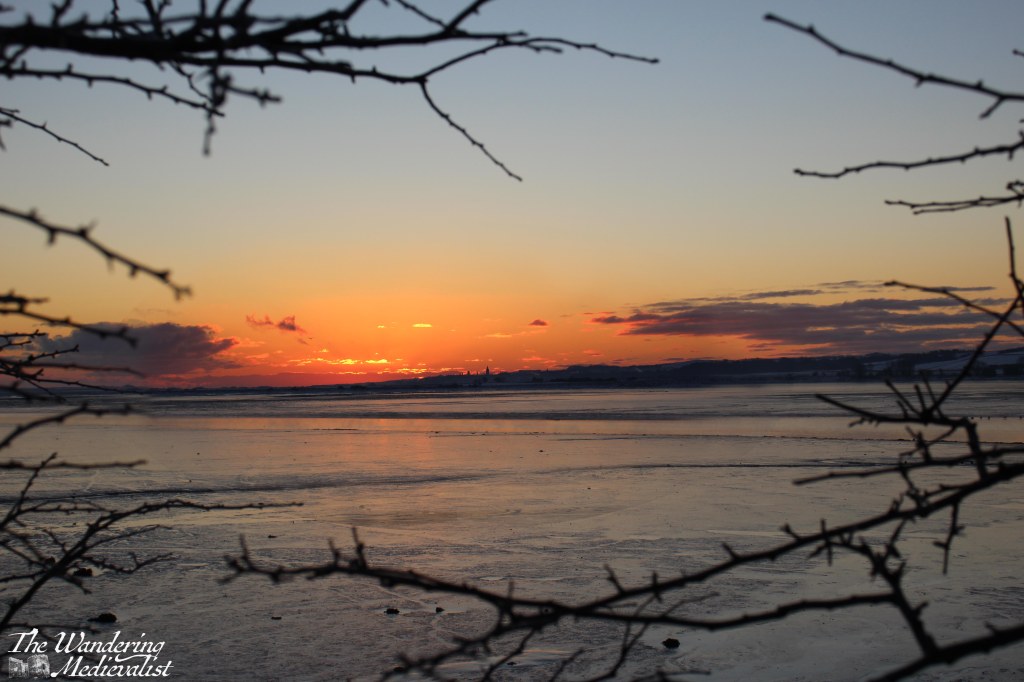
Throughout the many depressing months of lockdown, a morning or evening walk was often the time to which I clung to relax and refresh my mind. Few things helped more than stopping before a beautiful yellow-orange-red sky, catching a glimpse of some distant pink, or watching the sky fade into purples and dark blue. I have always loved getting up early to catch the start of the day.
The thing about sunrises and sunsets is that you can never really be sure when you’re going to get a good one. Some mornings or evenings you’ll be out there with your camera ready and the colours just won’t appear, and everything fizzles away. Then other days you’re walking or driving home from work or on the bus and suddenly colour appears in the sky that is just so spectacular it should have its own symphony. To a great extent it’s all about being lucky, being in the right place at the right time and then of course being ready to capture the colours if you can. Though there is also, of course, an element of persistence, going out whenever you can, and even trying to read the clouds. I by no means claim to be an expert at this. Some days the colour is earlier than you think, or later, or even in a part of the sky you did not expect. You can never predict it perfectly.
But once you do, and you get the pictures you want, it is always worth taking a few moments to just enjoy the peace, and the drama.
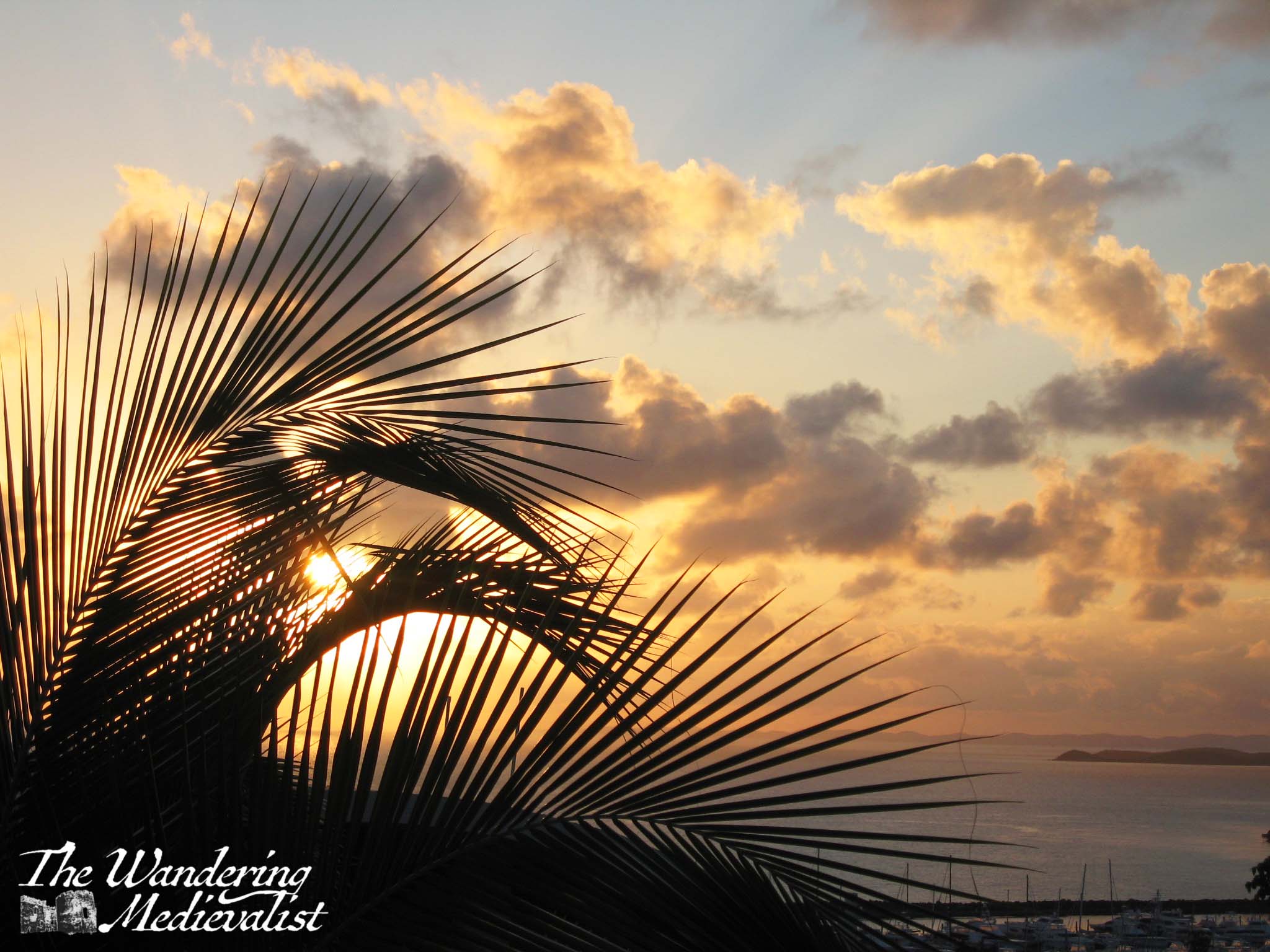
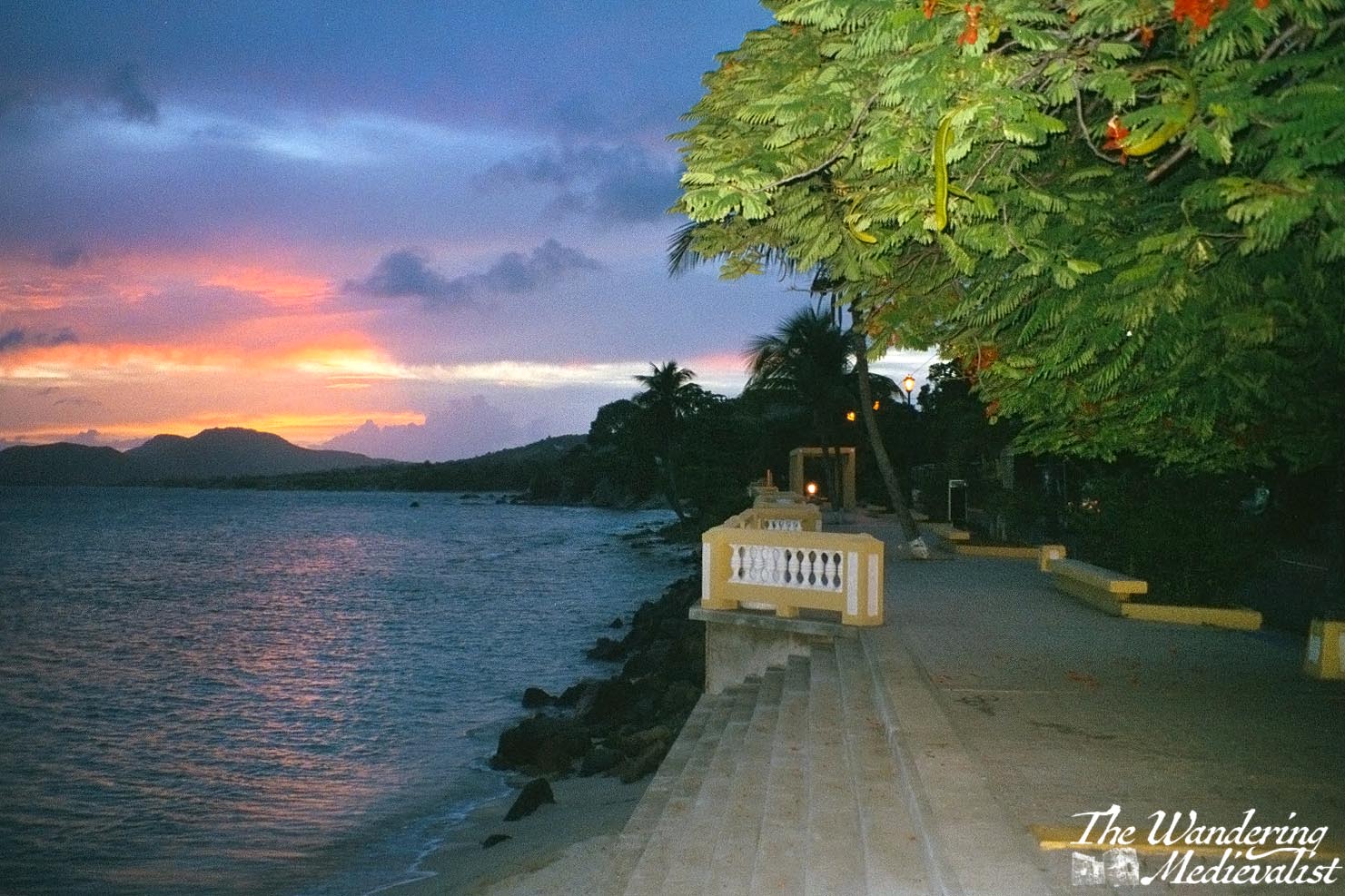
Fajardo and Vieques, Puerto Rico 🇵🇷
Caribbean sunsets and sunrises tend to be surprising – they are either spectacular and dramatic or sometimes a touch underwhelming. Dawn and dusk come with less speed than in other parts of the world, moving slow in the heat that never really fades even at night. I have been lucky enough to experience quite a few of both over the years, and I have developed a bit of a fascination with pictures of sunlight through palm leaves.
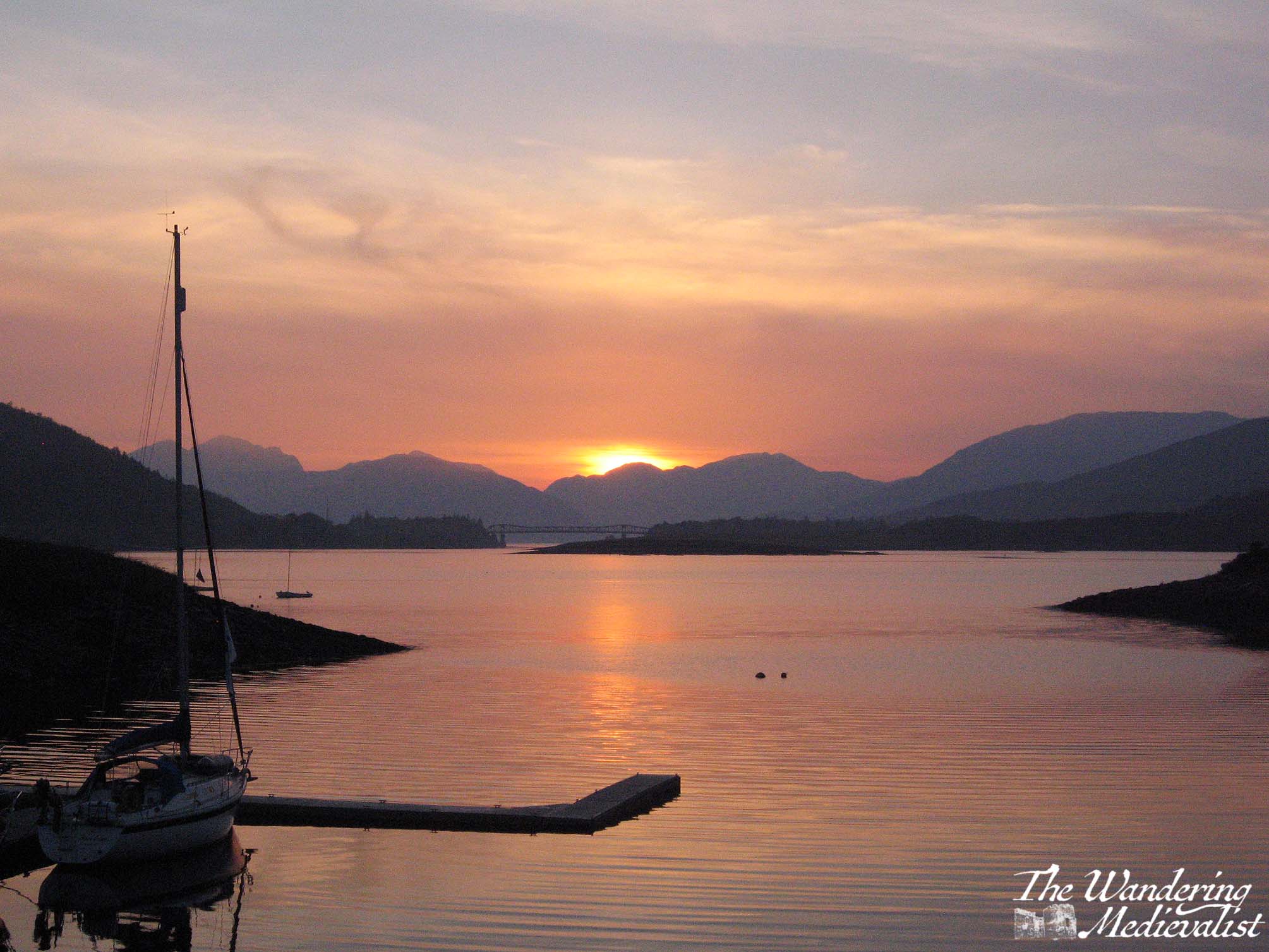
Glencoe, Scotland 🏴
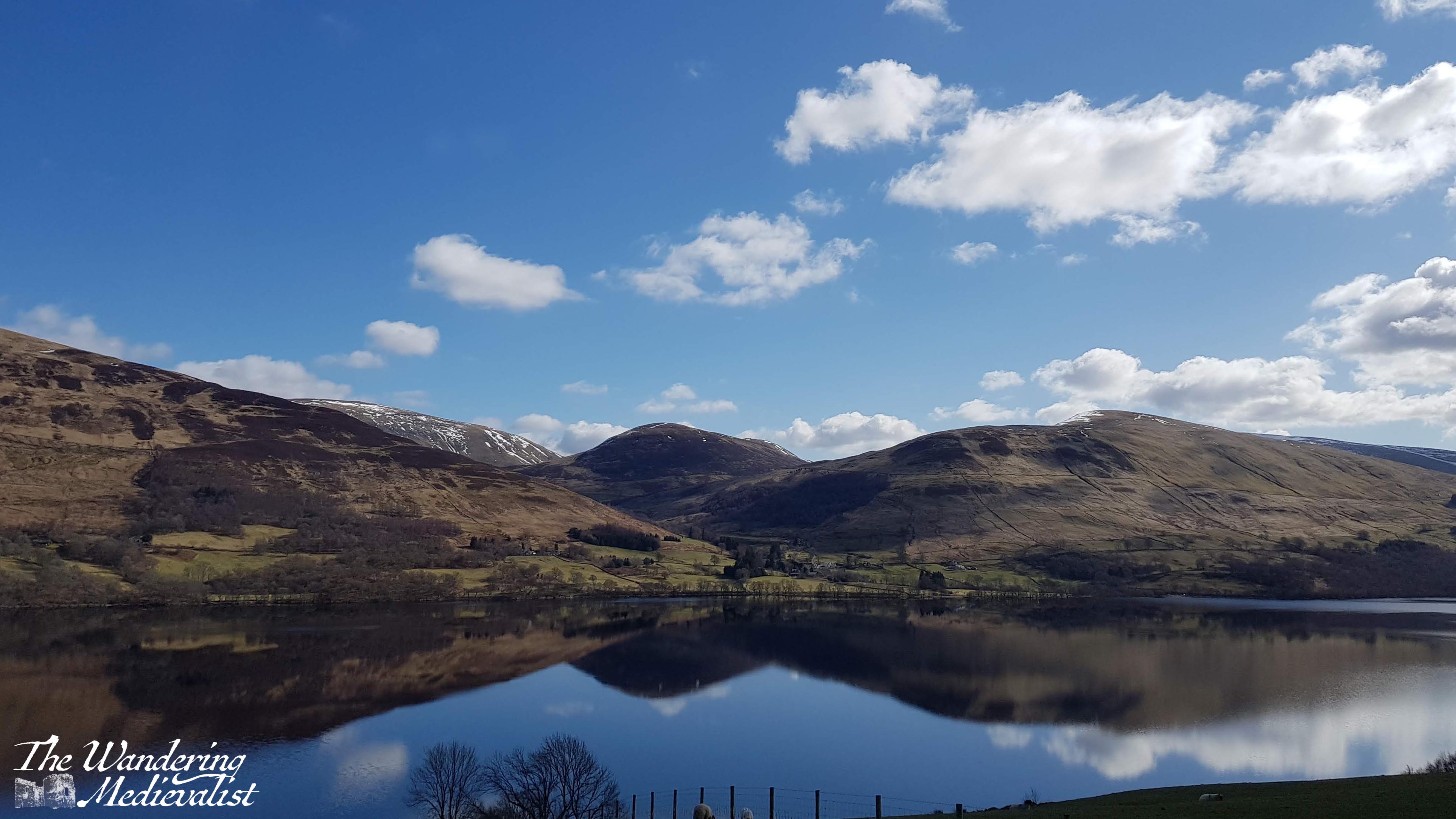
My favourite place in the Highlands, Fort William, is not overly well-situated for sunsets, as mountains block the sun well before it hits the horizon. A bit further south in Glencoe, however, Loch Leven runs almost due west and allowed for these stunning pictures one April evening.
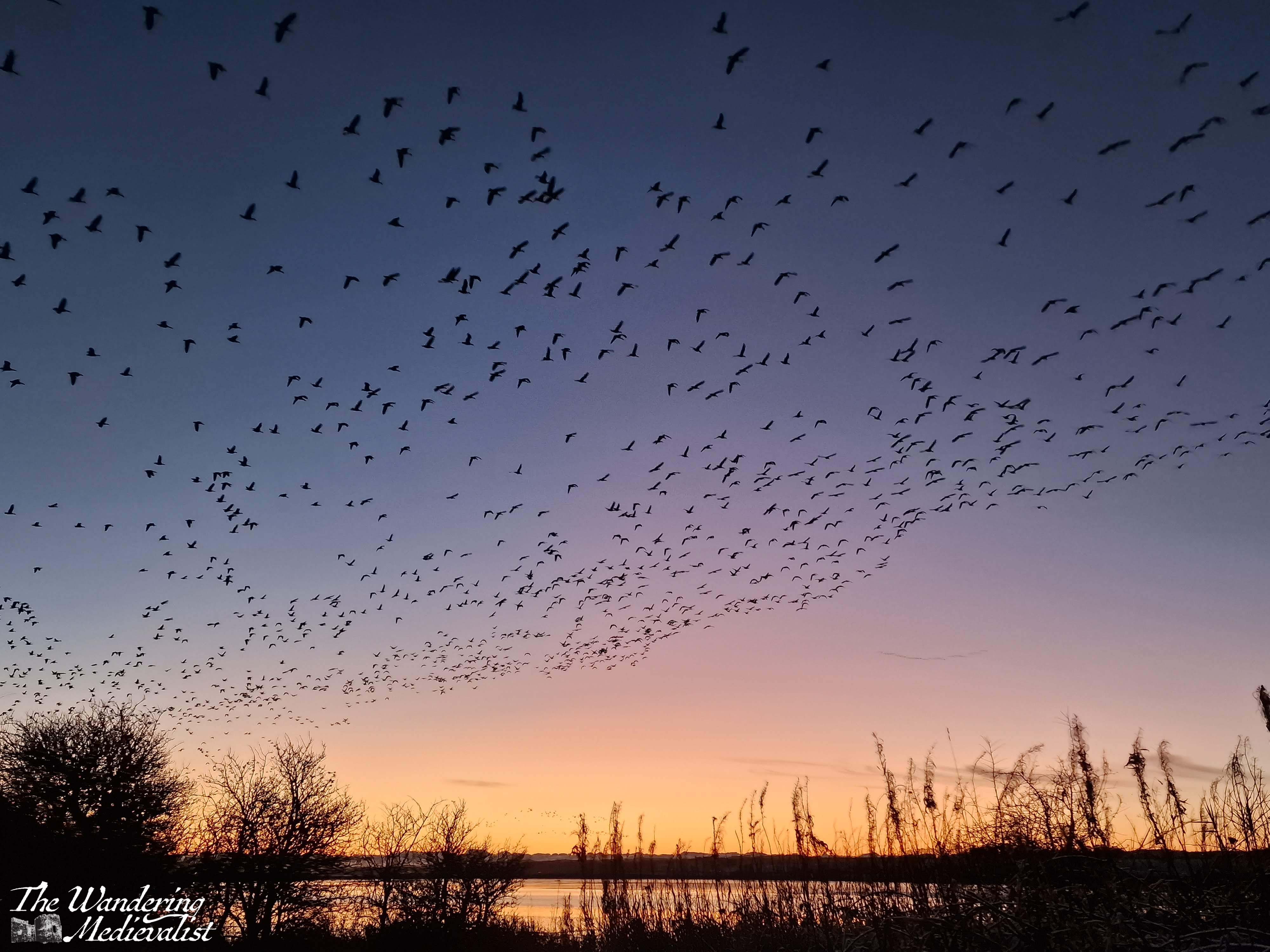
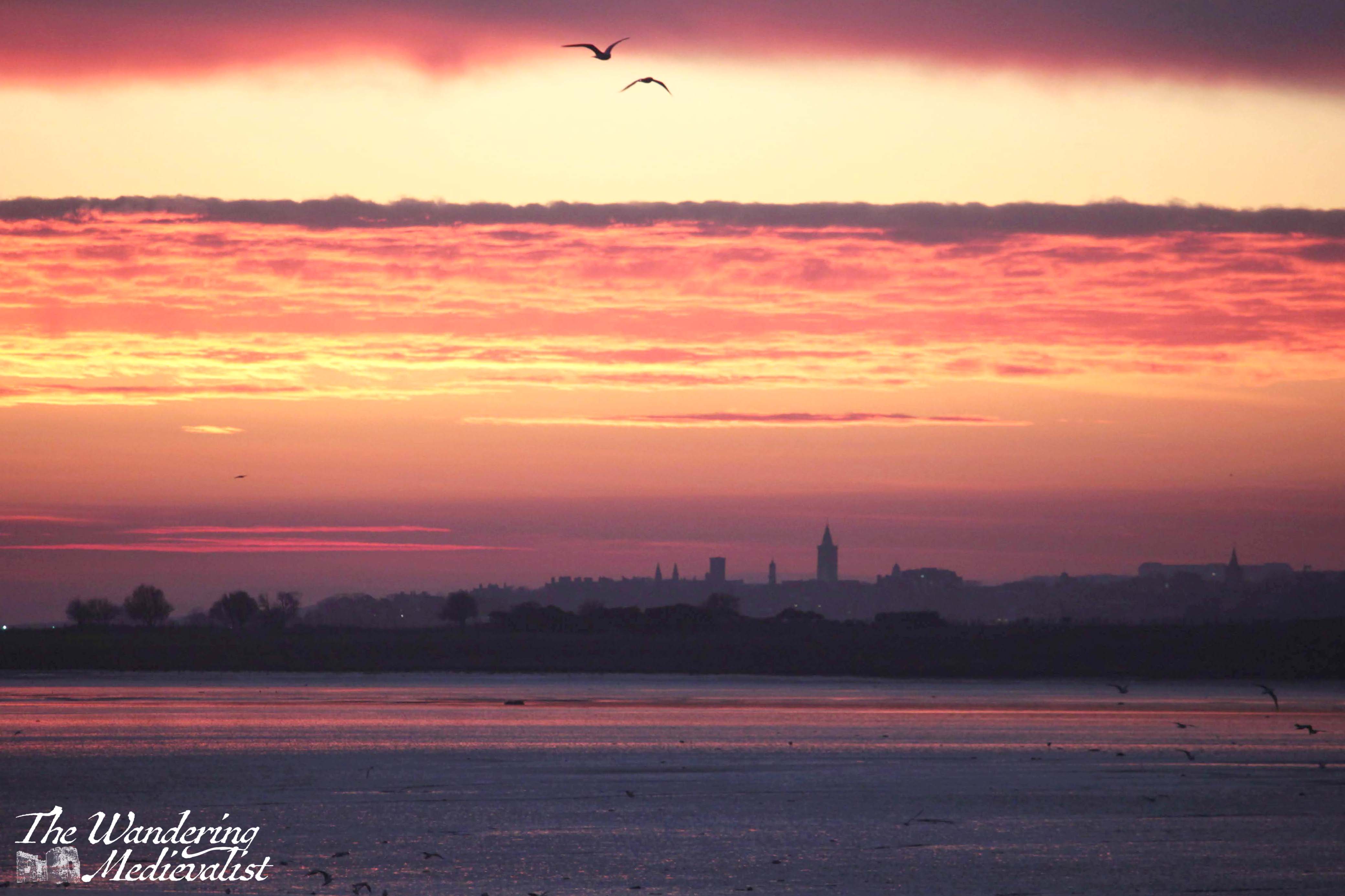
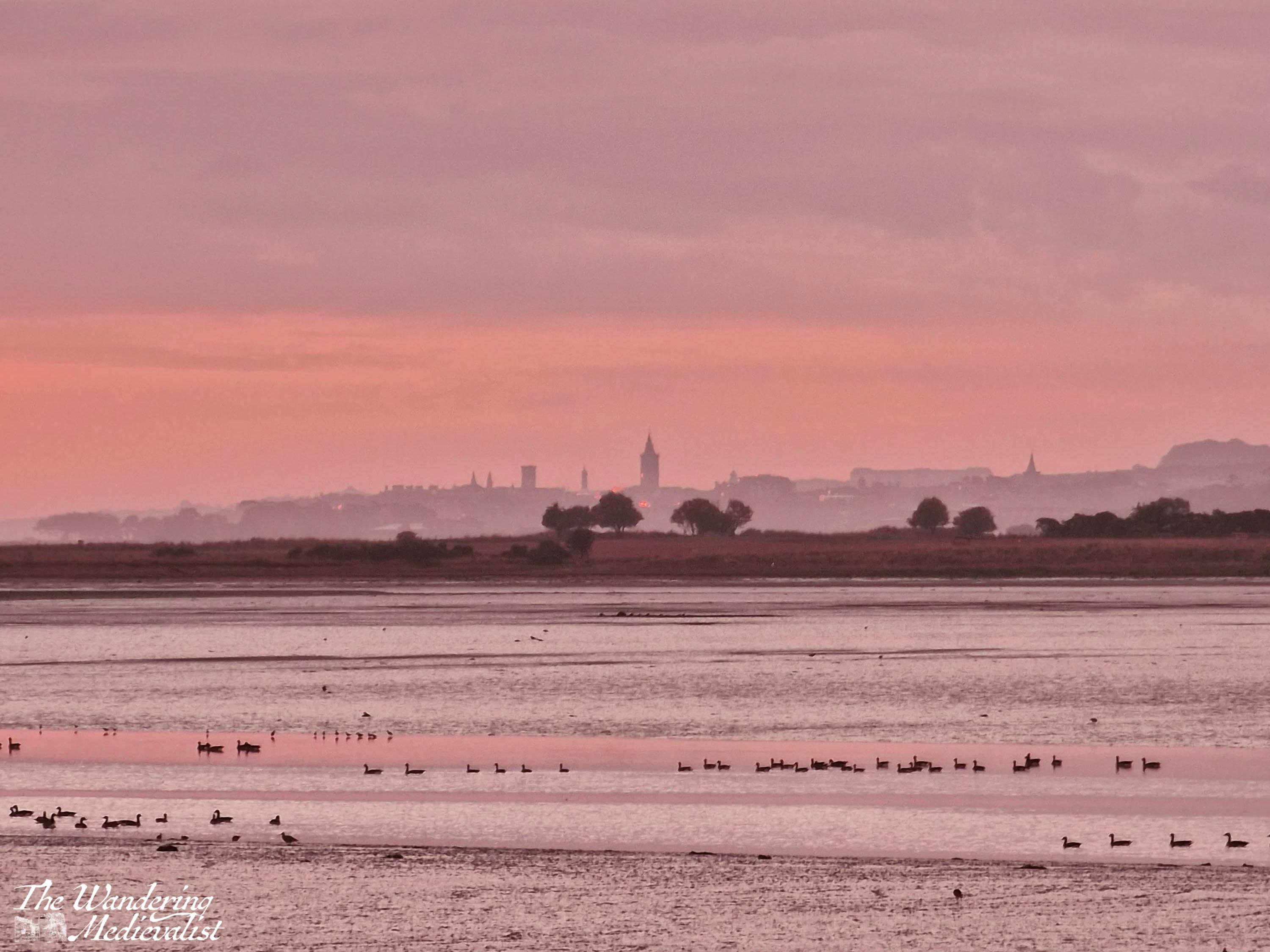
Guardbridge, Fife, Scotland 🏴
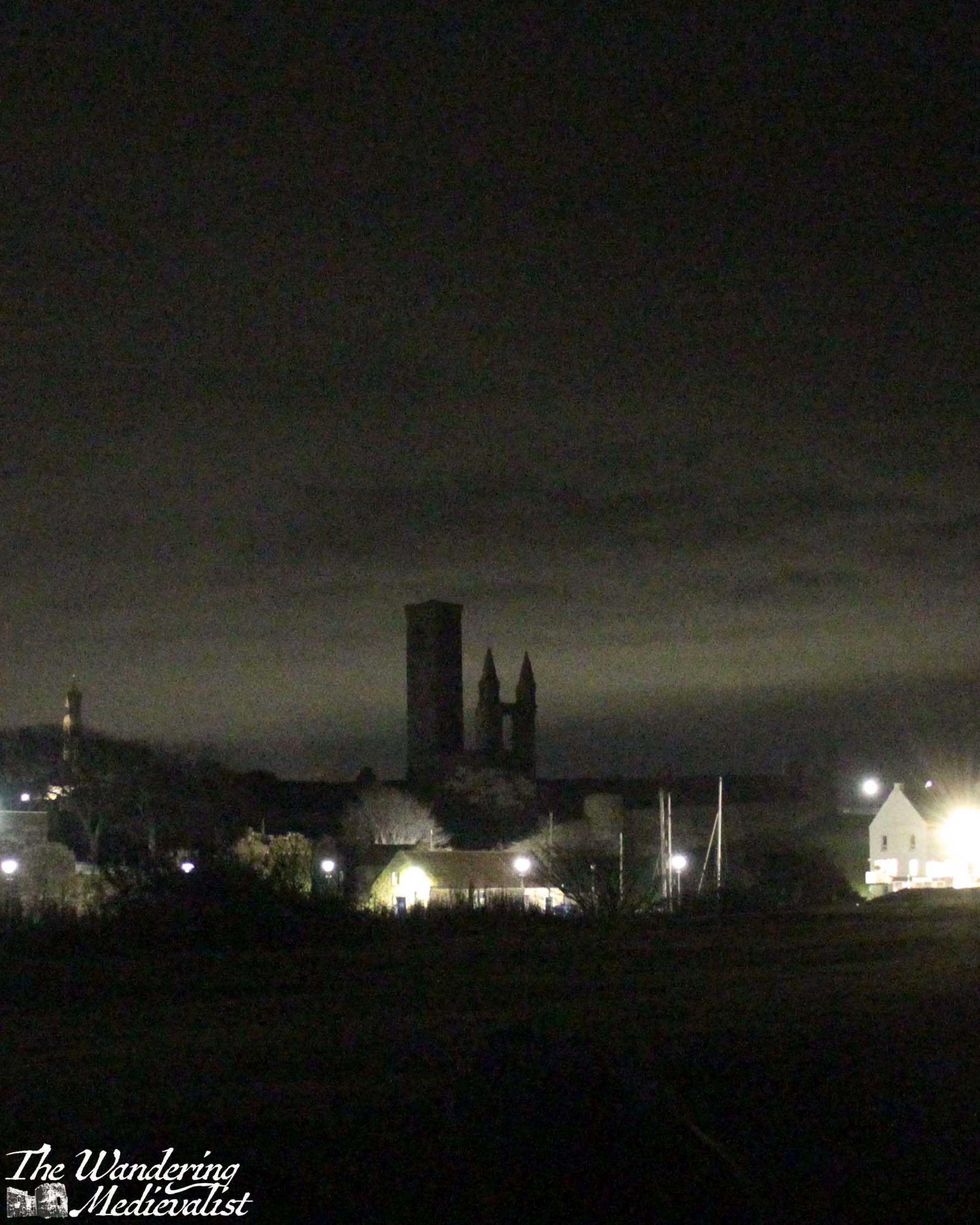
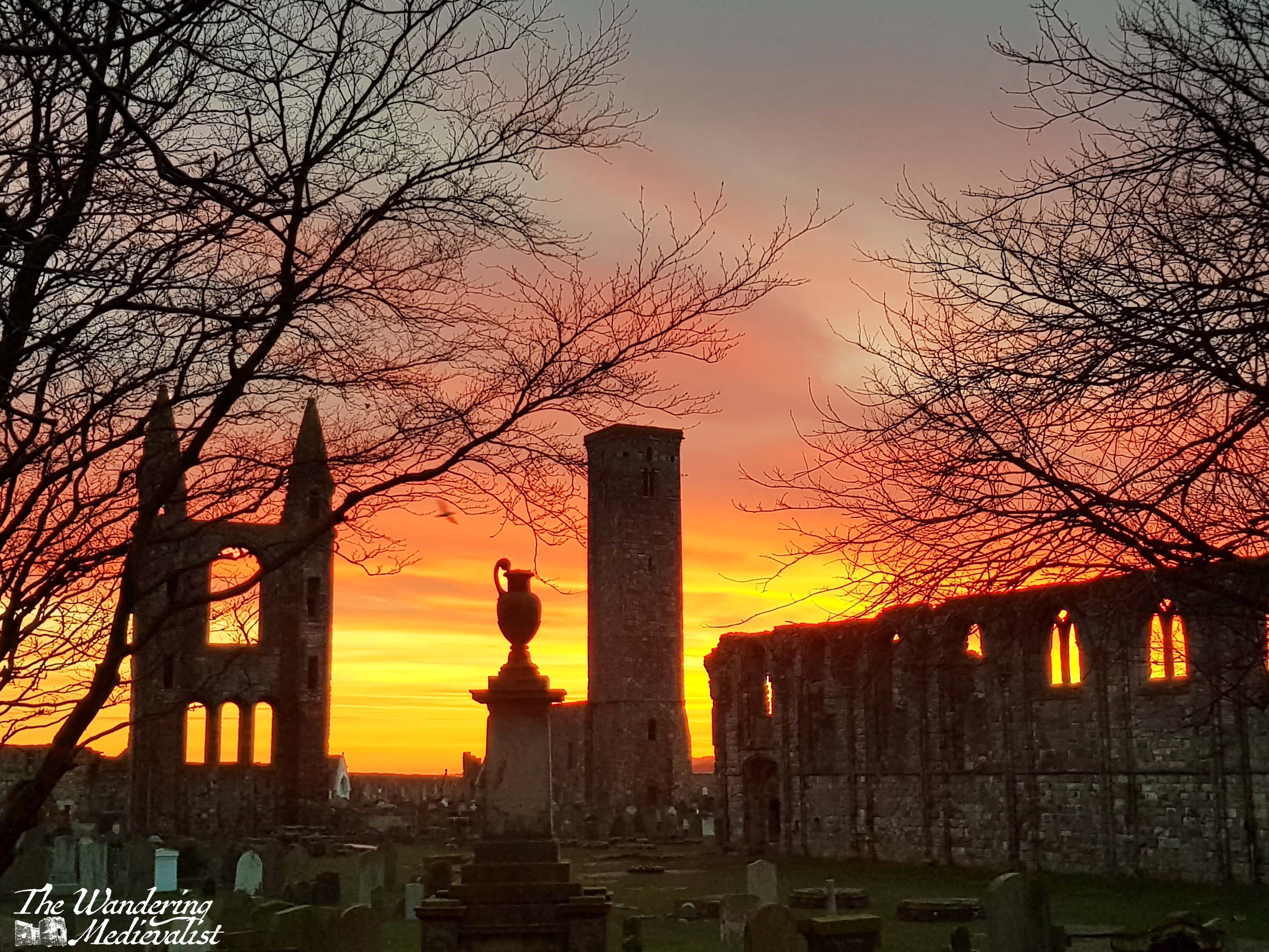
In 2021 as lockdown really took hold, I made it a point to go out for a walk every weekday morning before work, even in the rain and snow. My route included a breathtaking vista across the Eden Estuary towards St Andrews, where the church towers and cathedral ruins punctuate the skyline. Often flocks of birds and even local deer made cameos in these pictures, as well,
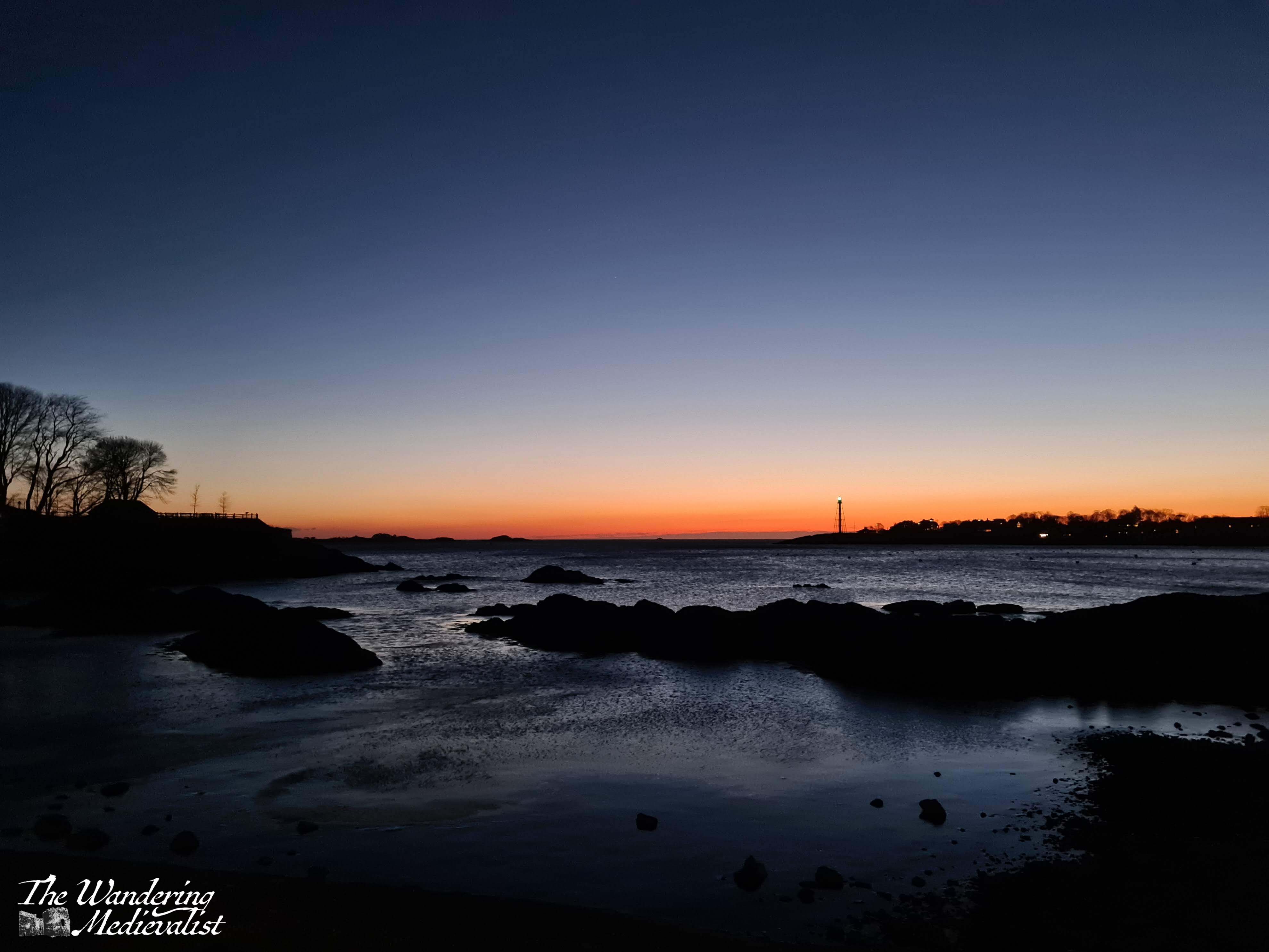
Marblehead, Massachusetts, USA 🇺🇸
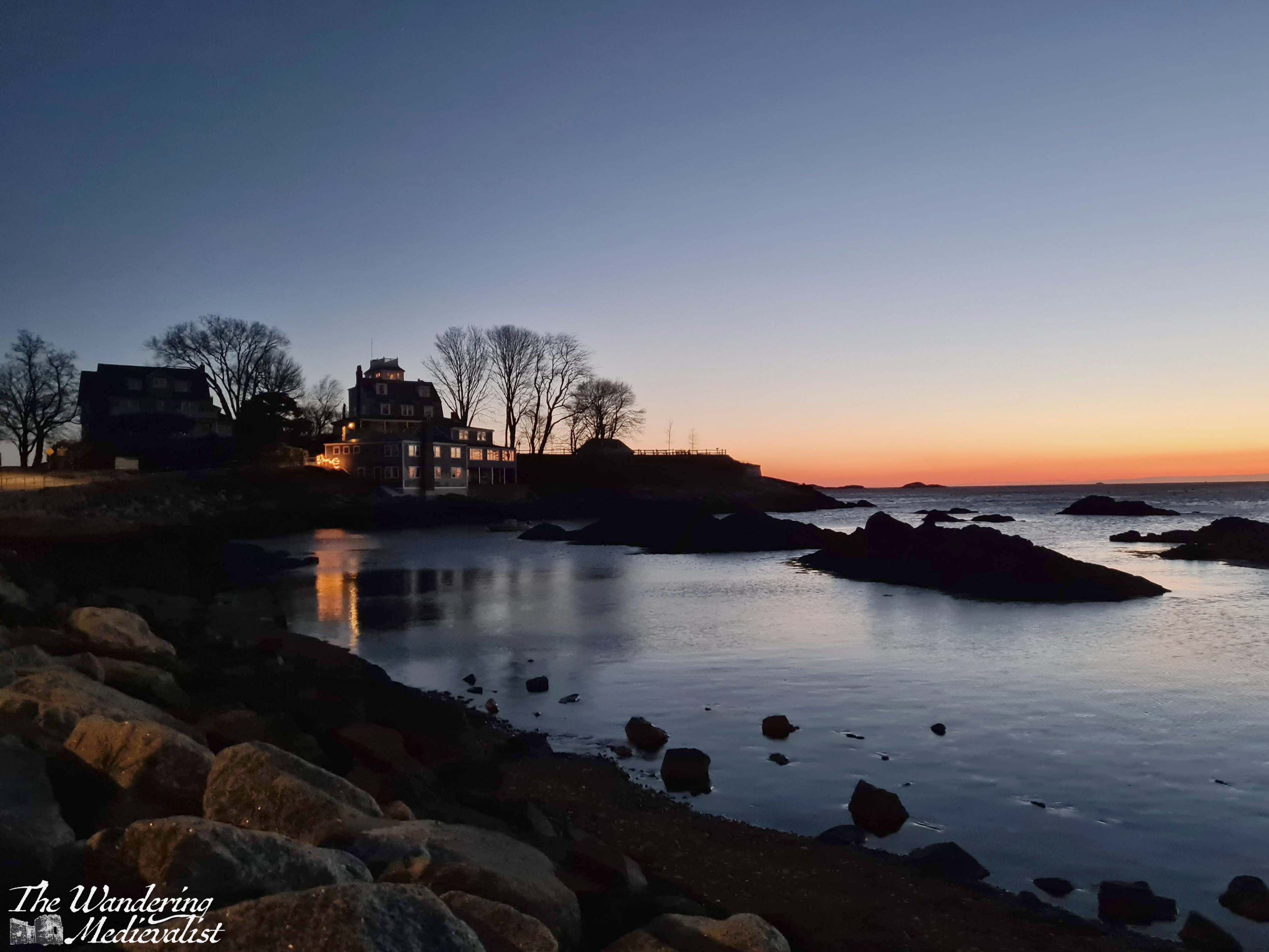
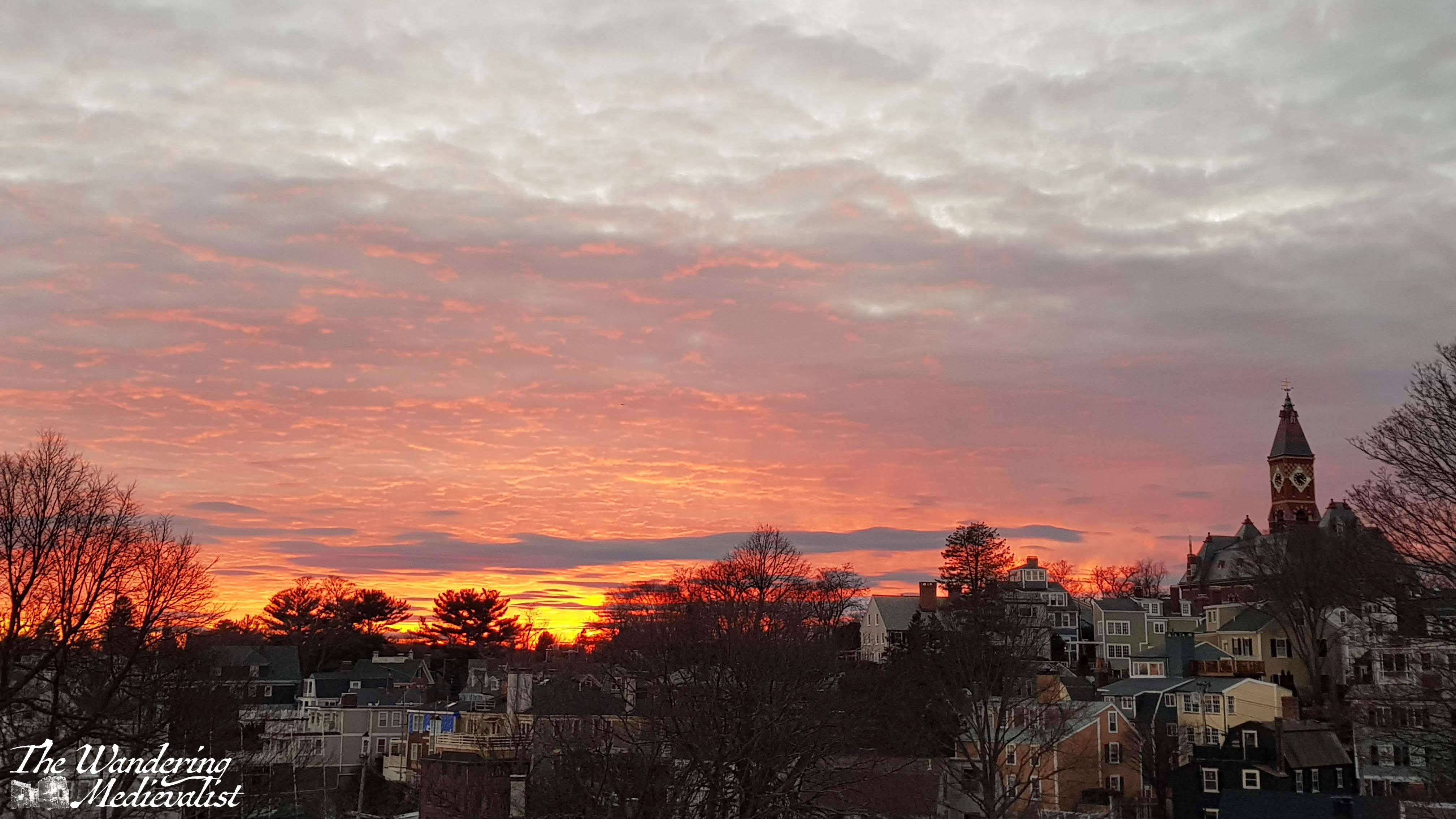
Marblehead is a perfect spot for colour at both ends of the day, with sun rising over the Neck or mouth of the harbour, and setting over the causeway and old town. In recent years, jet lag has allowed me to capture some gorgeous sunrises particularly in winter.
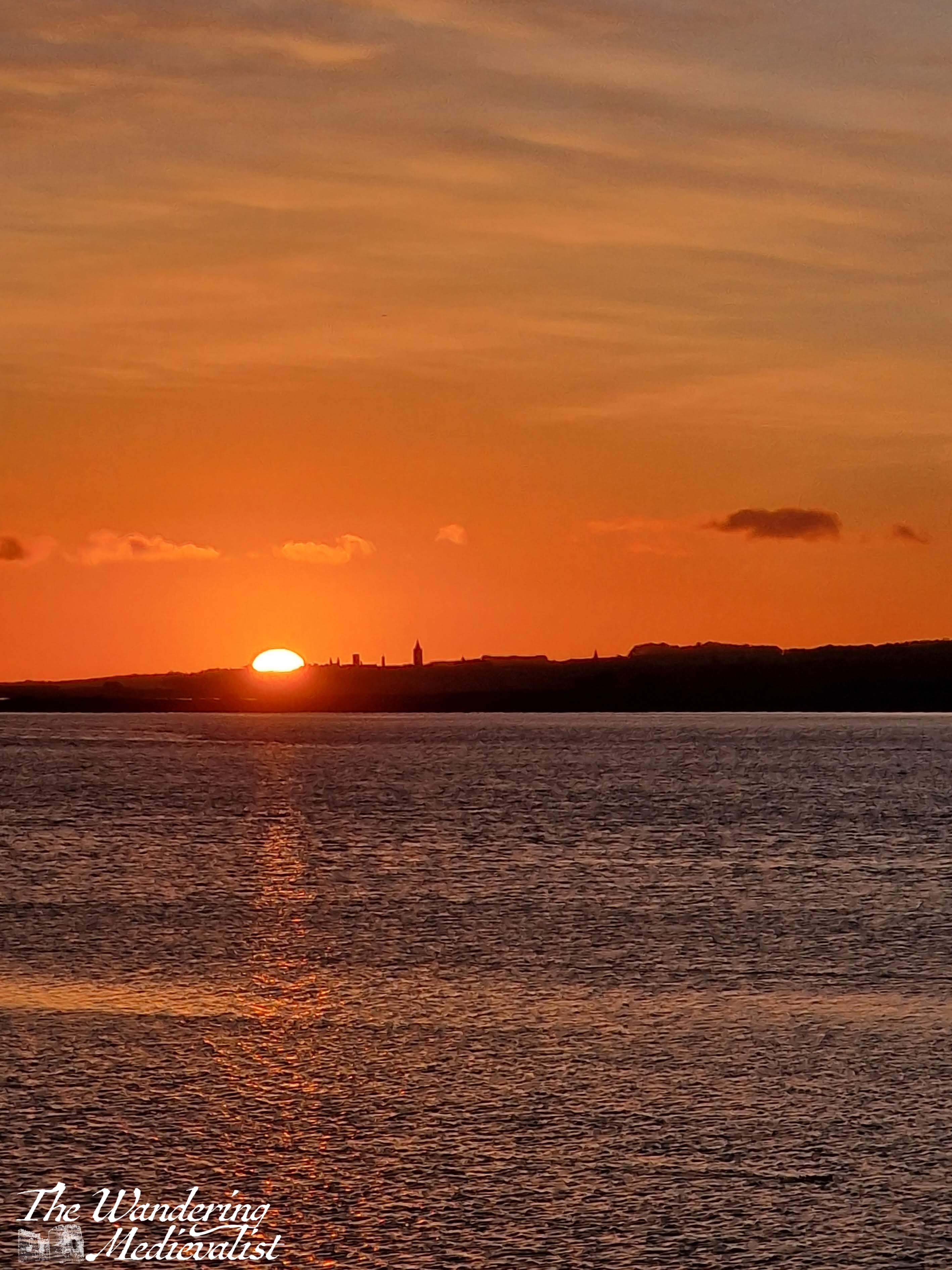
St Andrews, Fife, Scotland 🏴
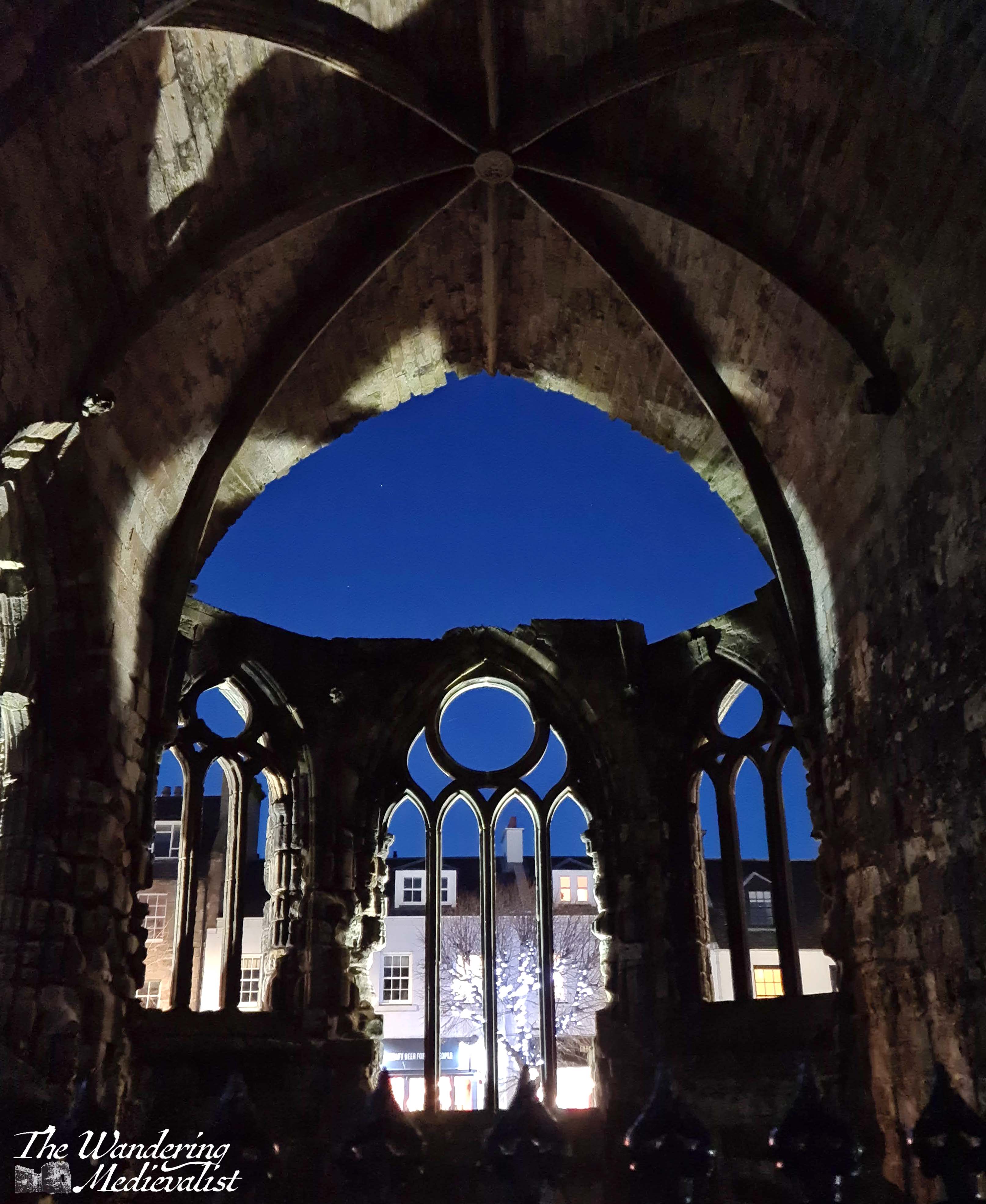
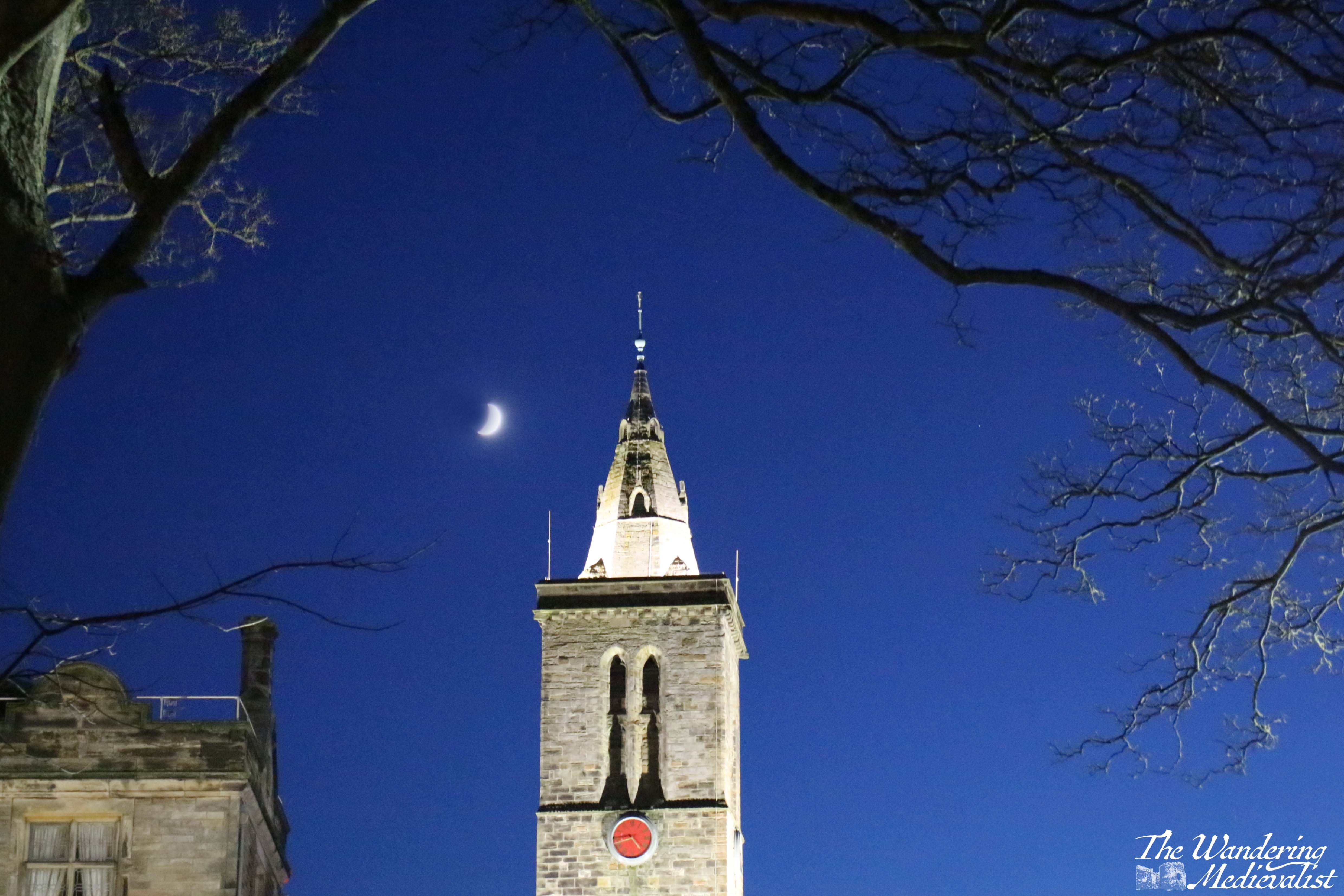
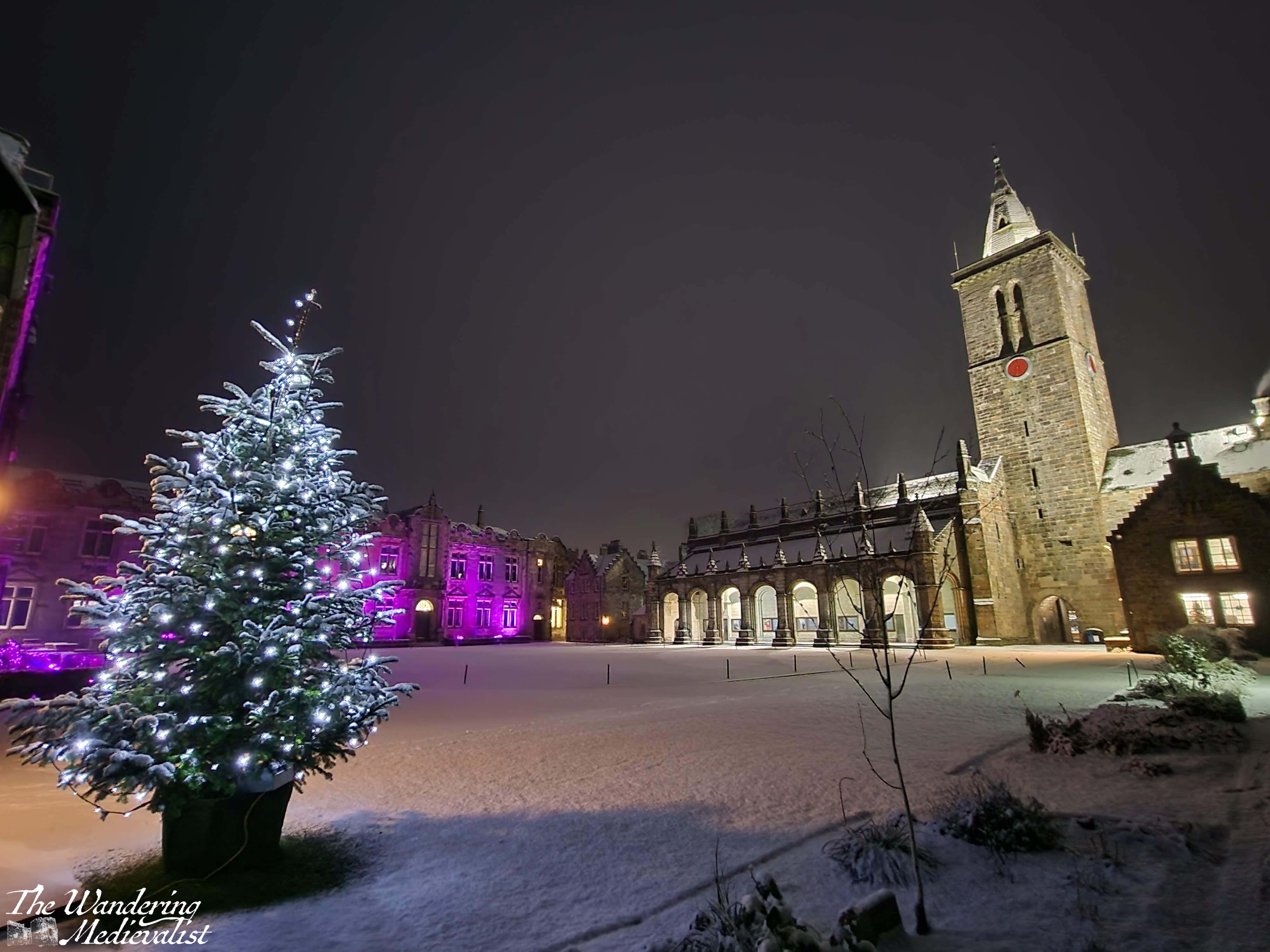
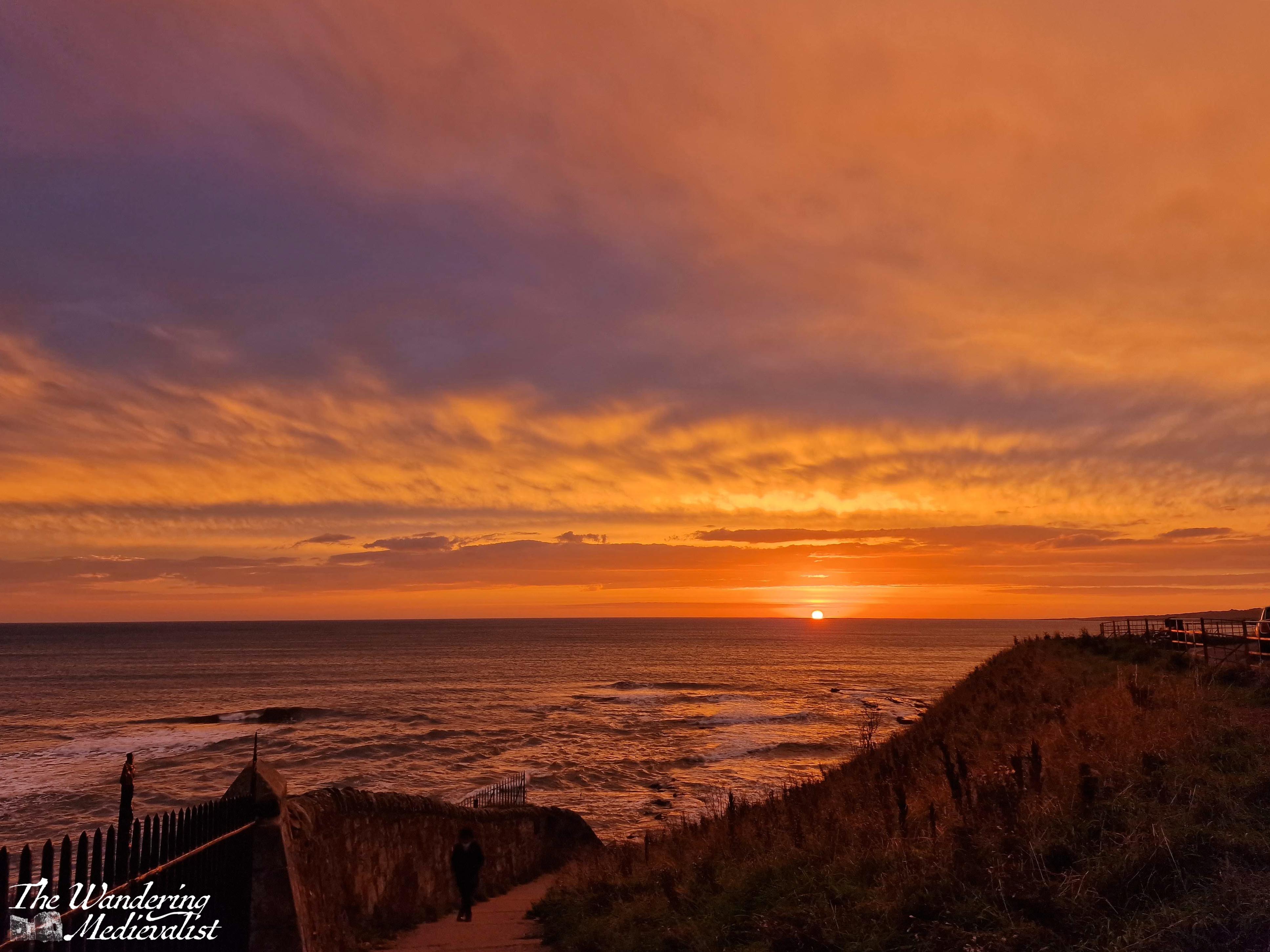
Top of the list of beautiful settings with castle and cathedral ruins, University buildings, wide beaches and dramatic coastline that sheds in layers into the sea, is St Andrews. I have no shortage of pictures of sunrise and sunset; here are a few of the best.
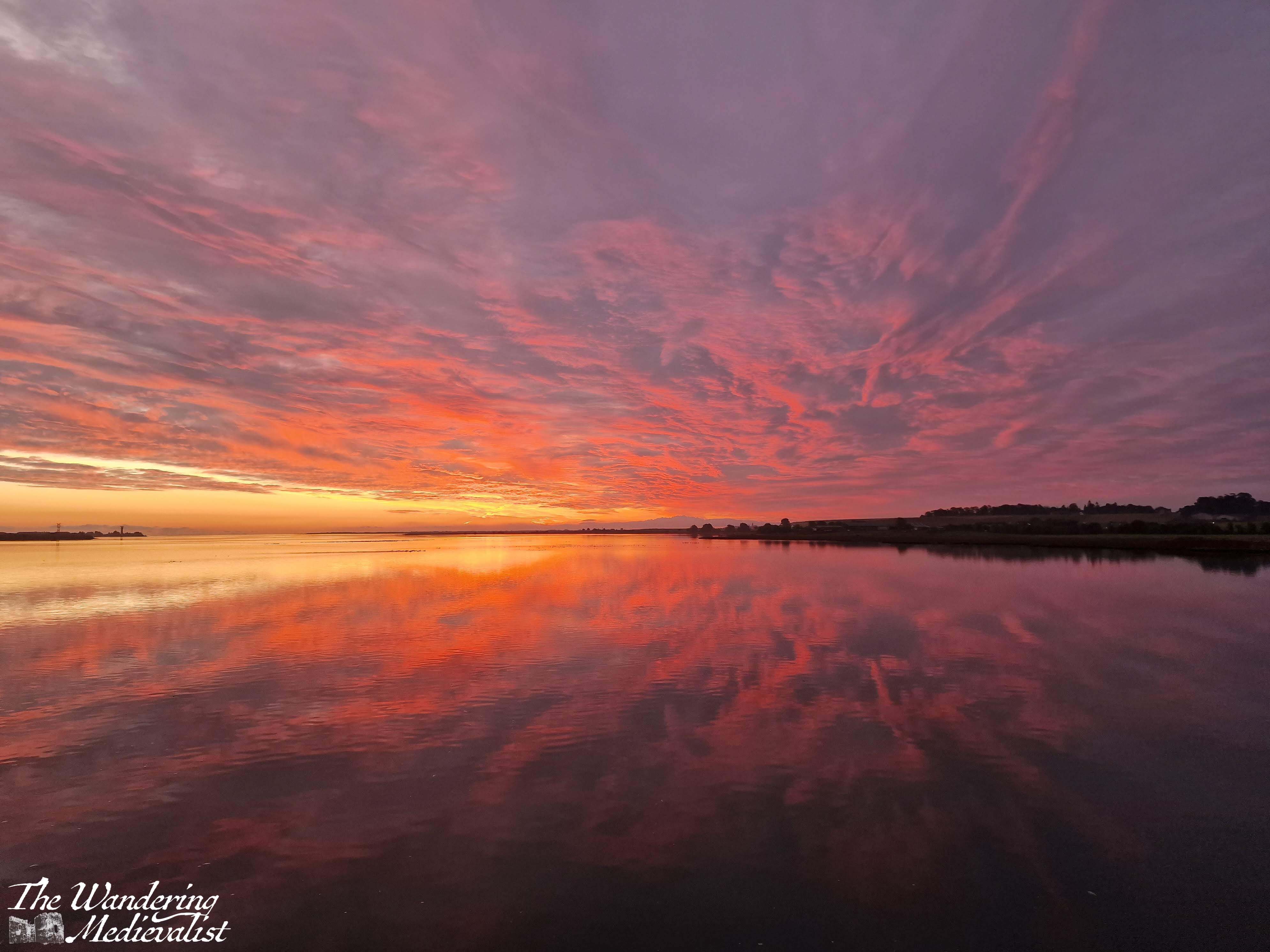
Tayport, Fife, Scotland 🏴
We did not live in Tayport for very long, and a good portion of the time we were in Covid lockdown, but we were fortunate enough to have a fantastic view from our kitchen. I was known on more than one occasion to throw a coat or sweatshirt on over my pyjamas to rush down to the harbour, to get these pictures across the Firth of Tay.
And a few more…
This sunrise lives in my mind as one of the last before lockdown started…taken from the Tay Rail Bridge in March 2020 as a colleague and I travelled to Edinburgh. Sunrise from the train to Edinburgh – I always sit on the left side of the train to enjoy the views across the Firth of Forth, particularly in the morning.Glenrothes sunset.
Sunset on the Isle of Skye.Sunset over the Charles River, Boston.Sunset on the Lomond Hills.
Finally, I’ll wrap up with one of my favourite views at one of my favourite times of day and year – icy sunrise over St Andrews.
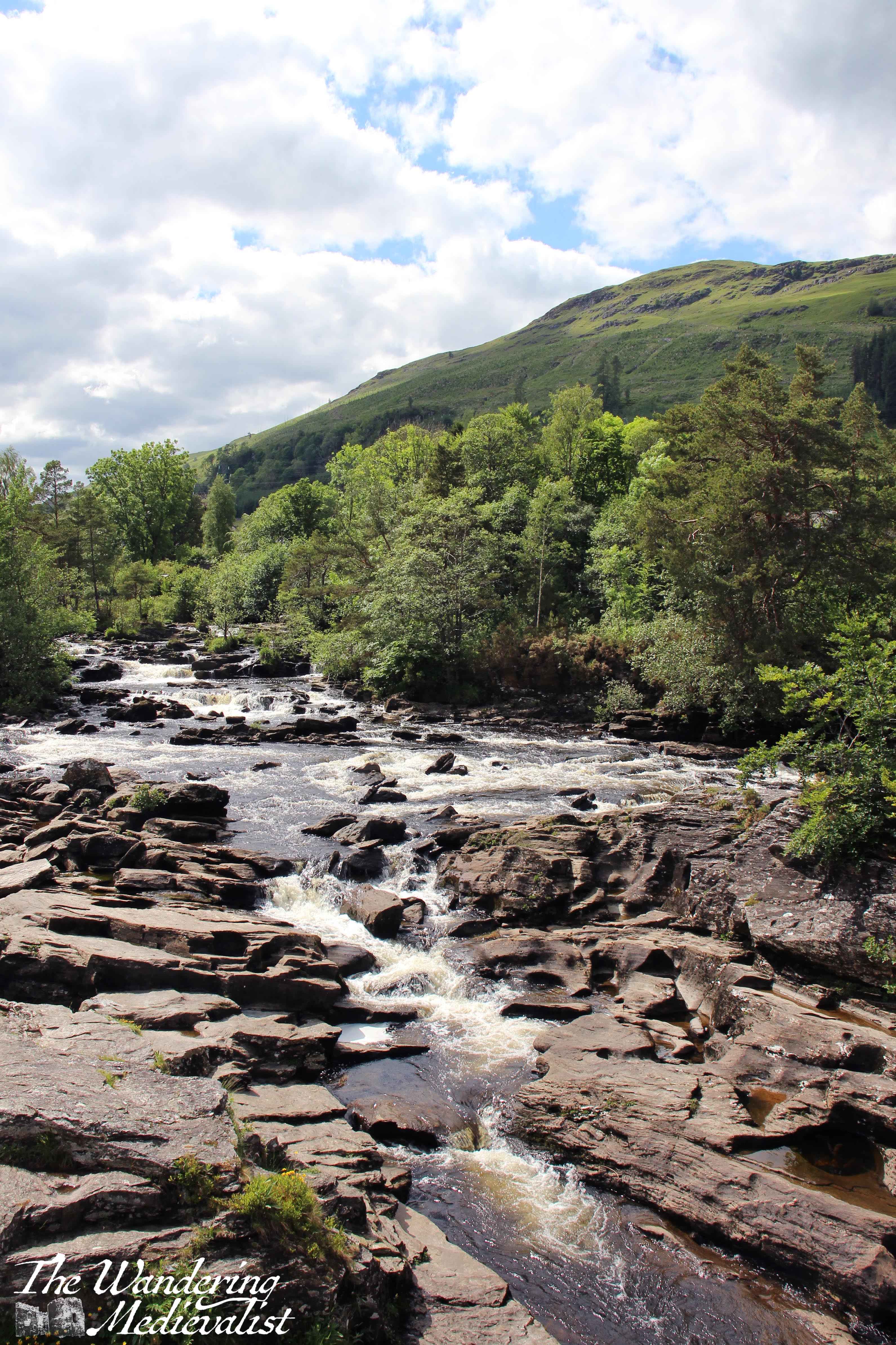
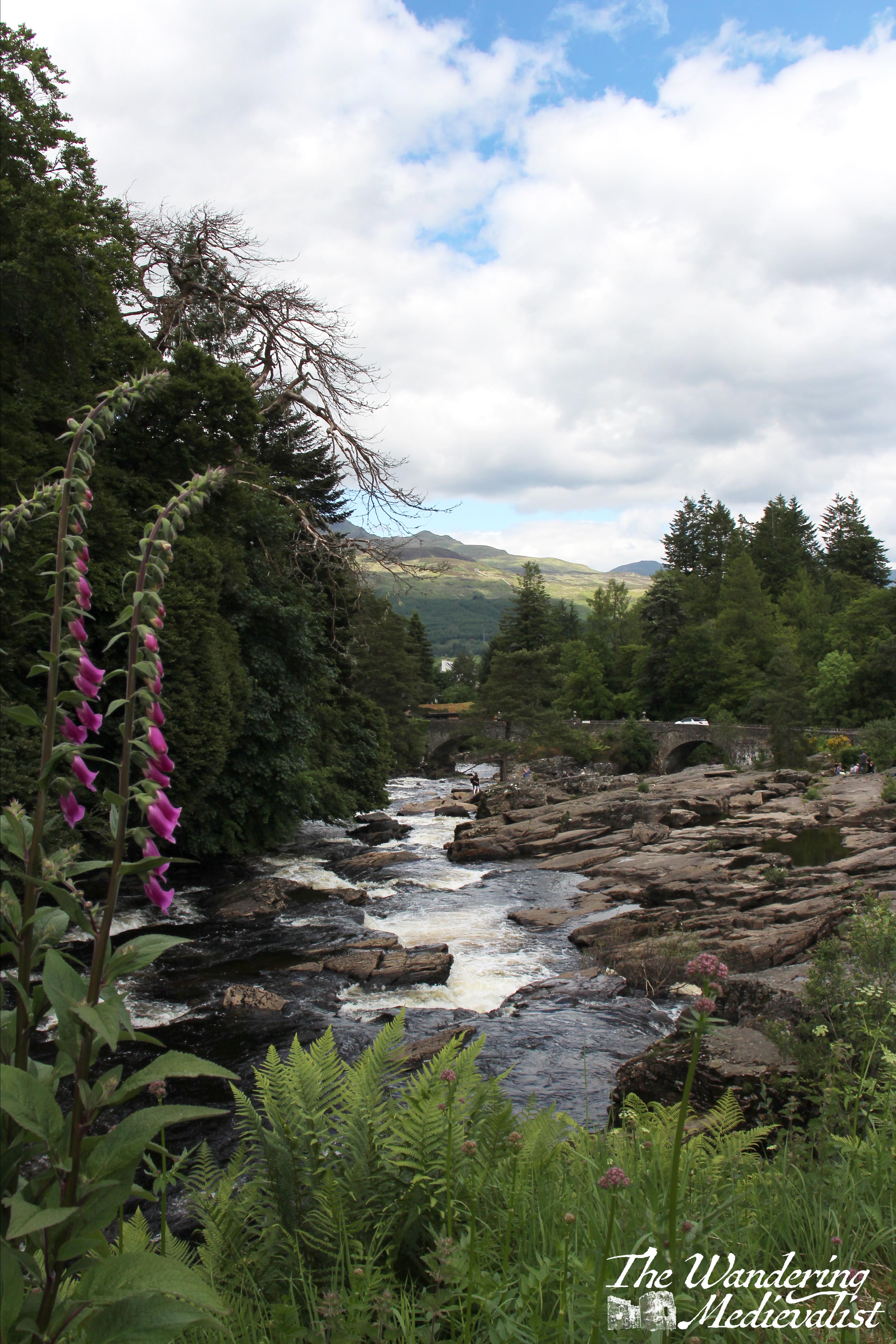
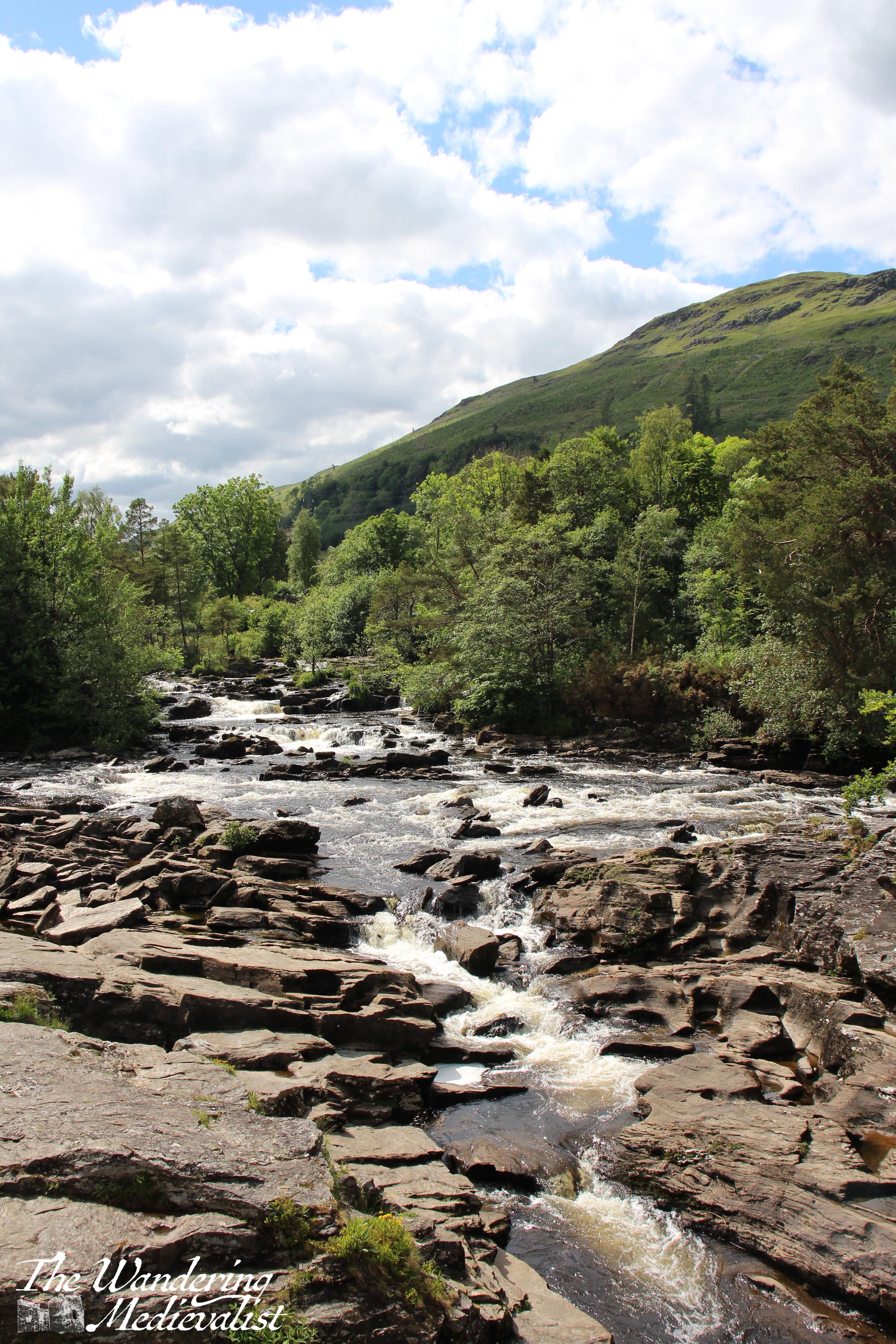
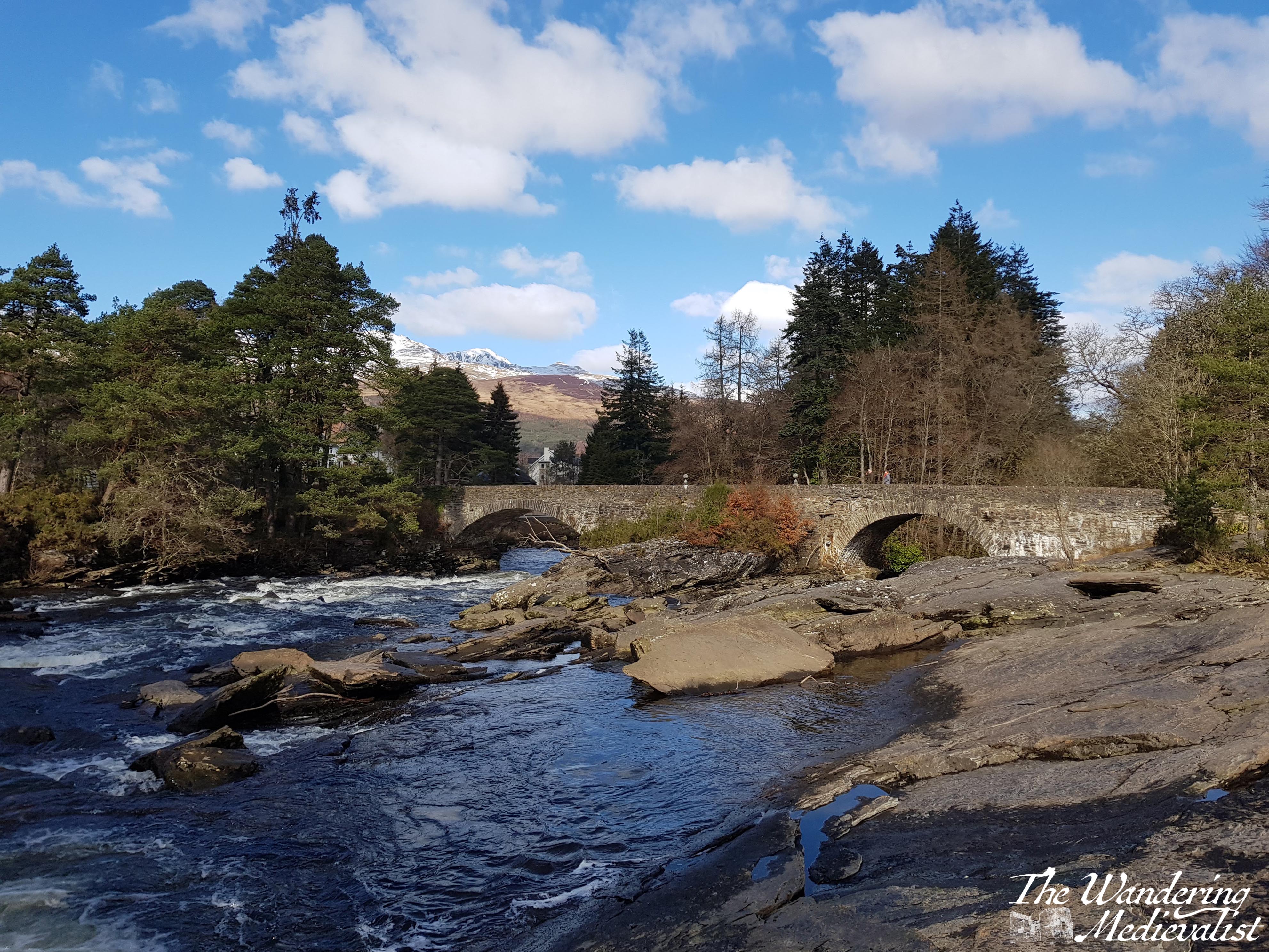
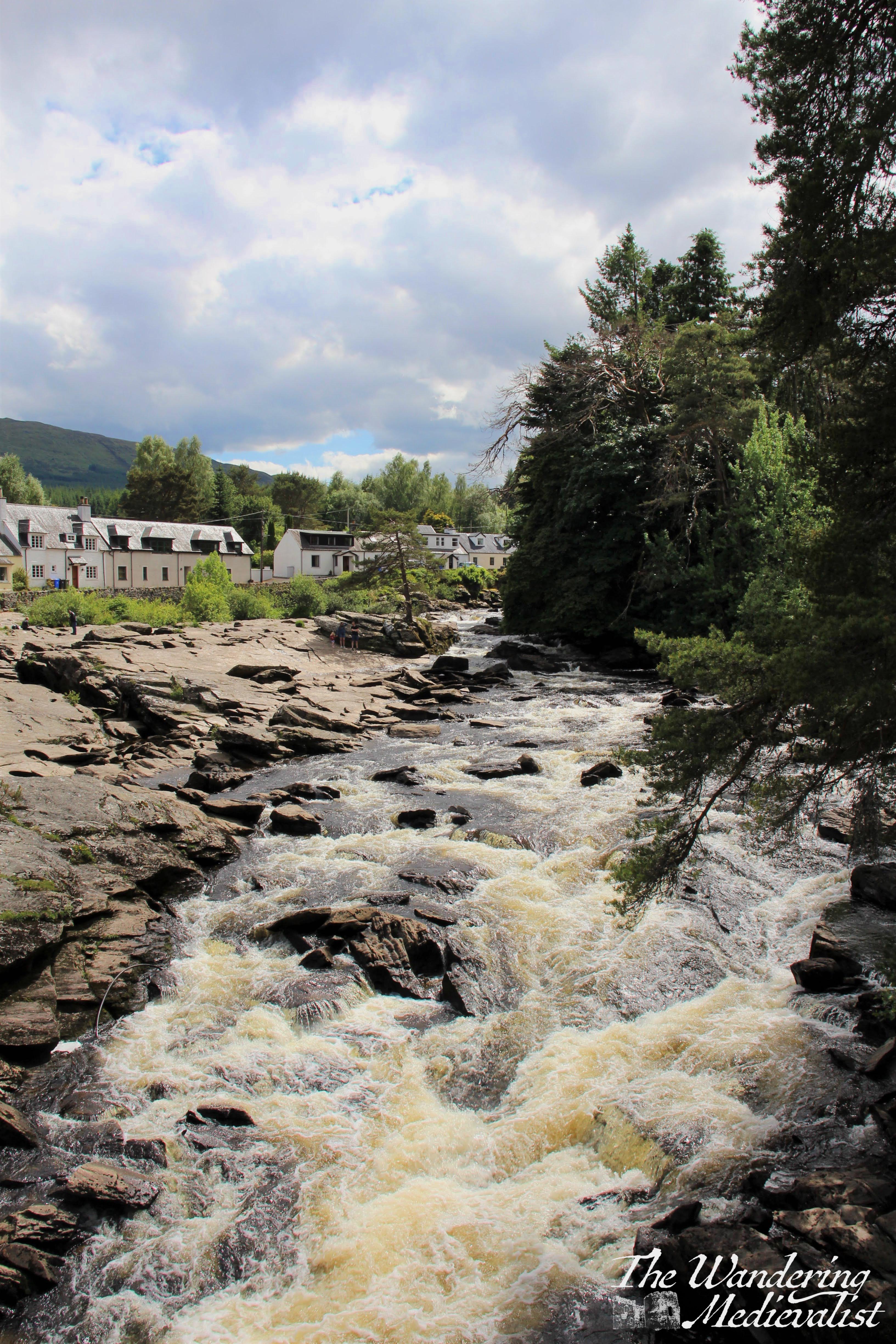
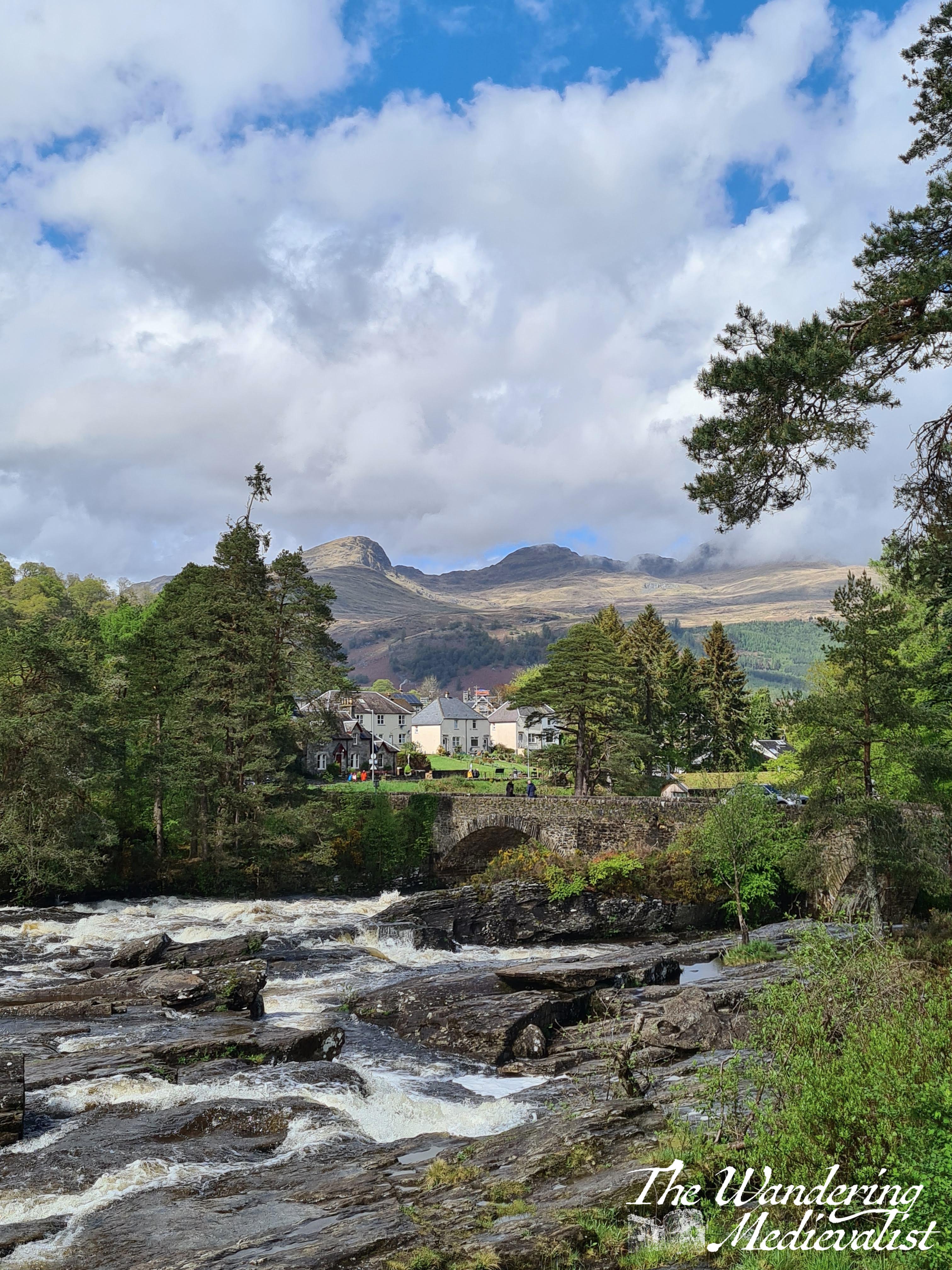
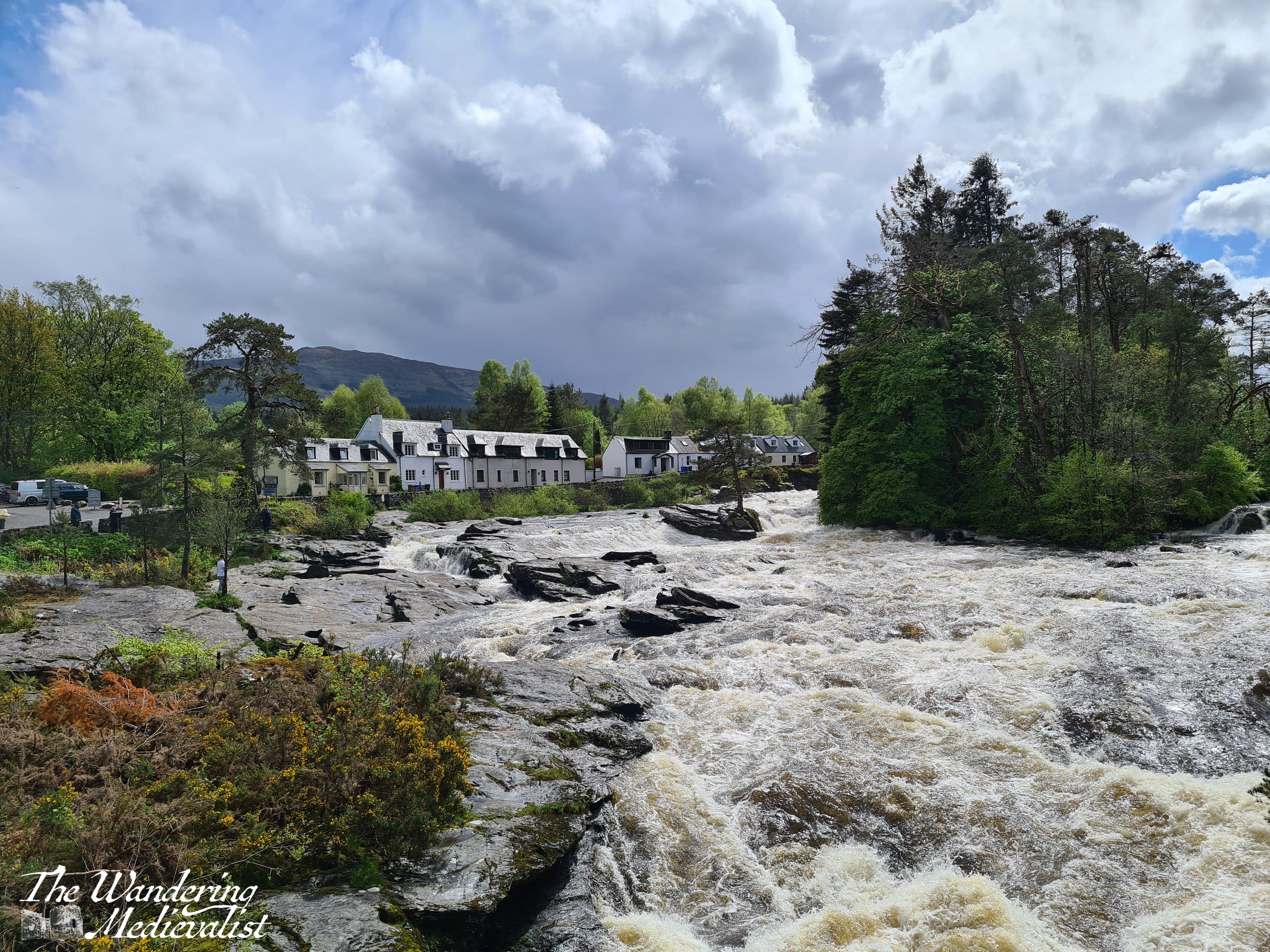
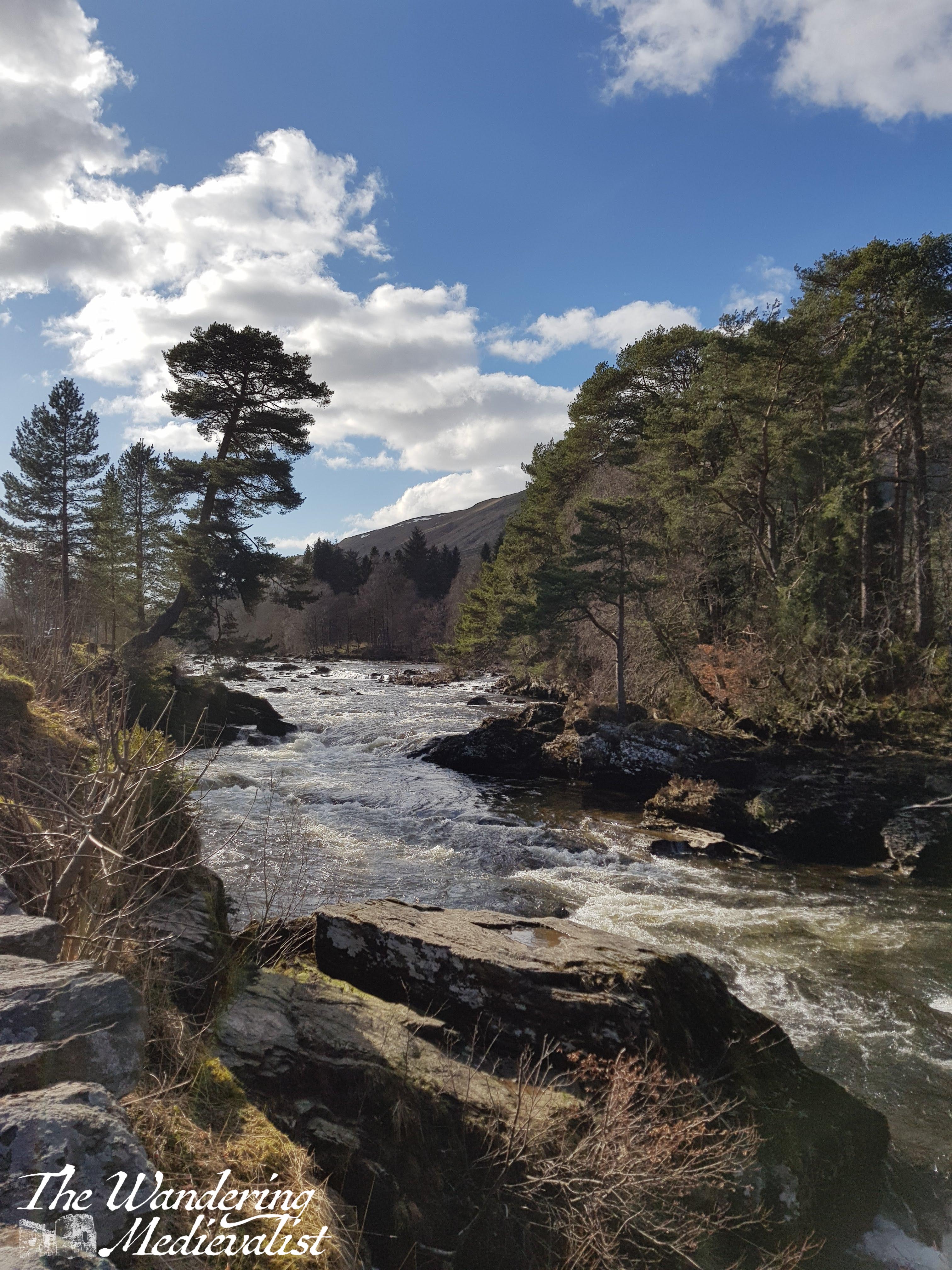
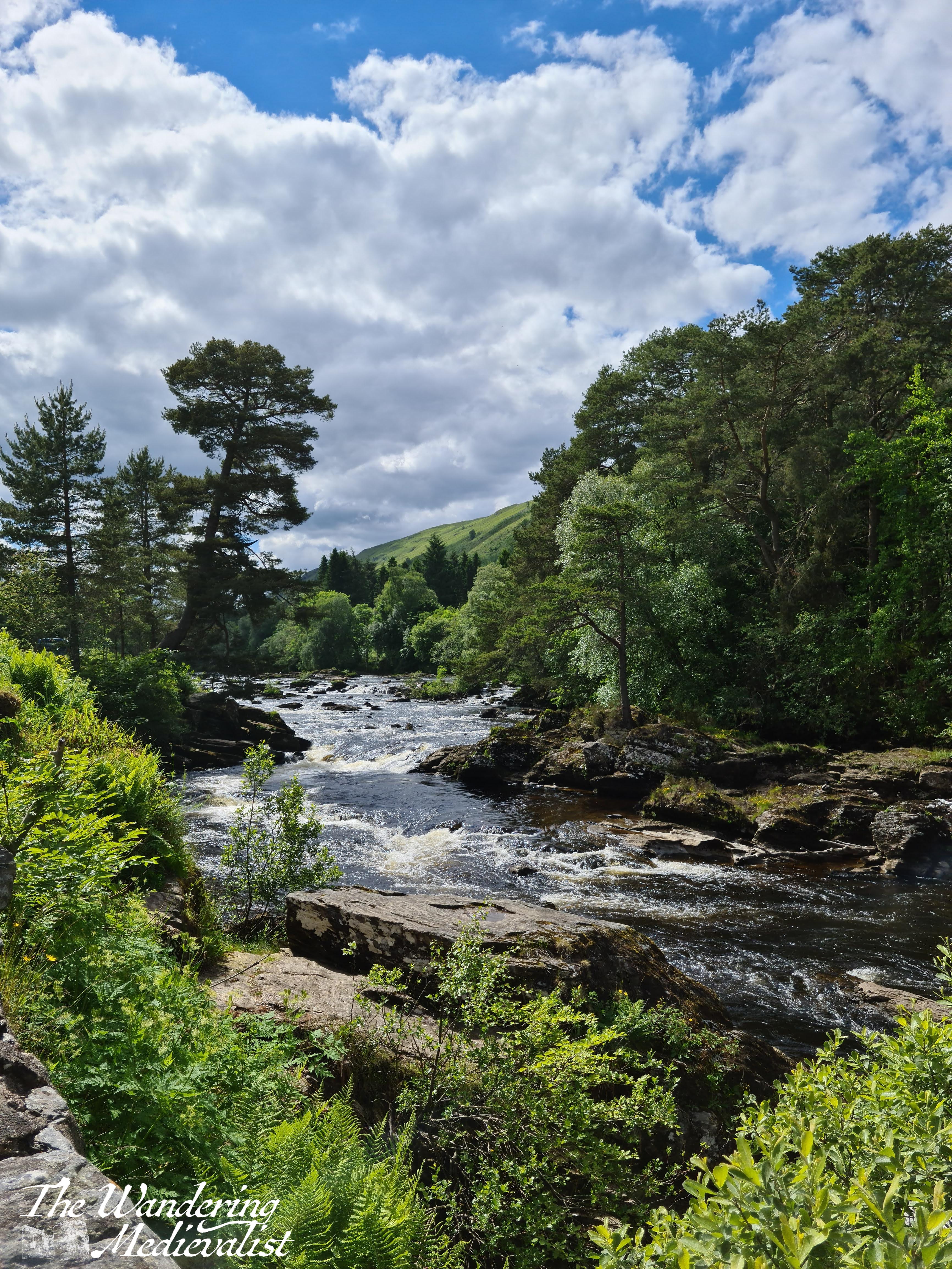
The Falls of Dochart is one of the most beautiful places in Scotland, and it is almost certainly one of the most photographed as well. This is not just due to its stunning nature, but to the its relative ease of access – it is only 2 hours from Edinburgh and 1.5 from Glasgow, simple to reach from the A85 that crosses Scotland from Oban to Perth.
I had a postcard from Dochart on my wall in high school and it was one of those places I always wanted to visit, but somehow continually missed. Until that is, our trip away in March 2020, before the lockdown began. As previously mentioned we were in Aberfeldy for a long weekend, and after a morning of hiking we decided to head down the loch for a drive.
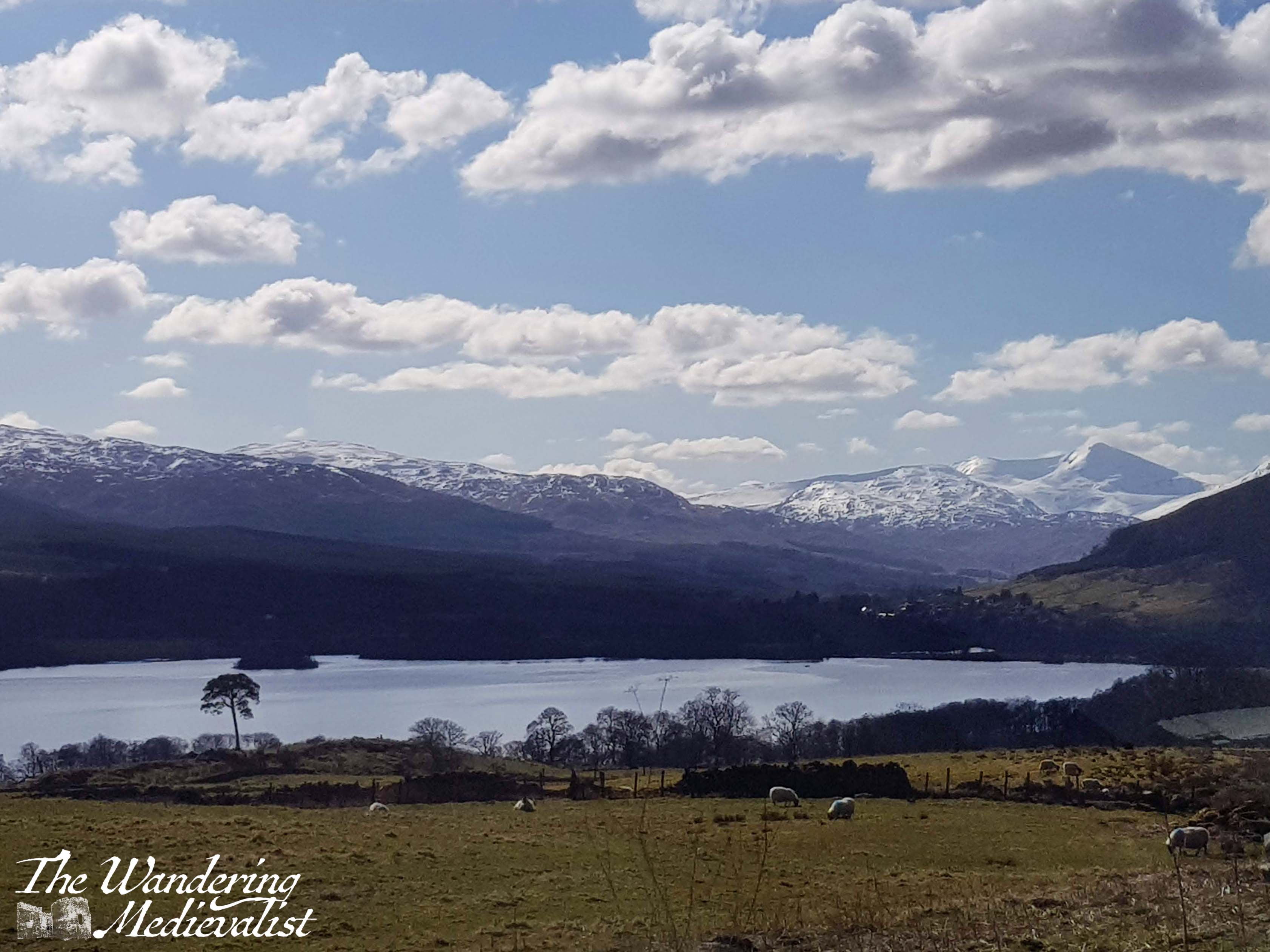
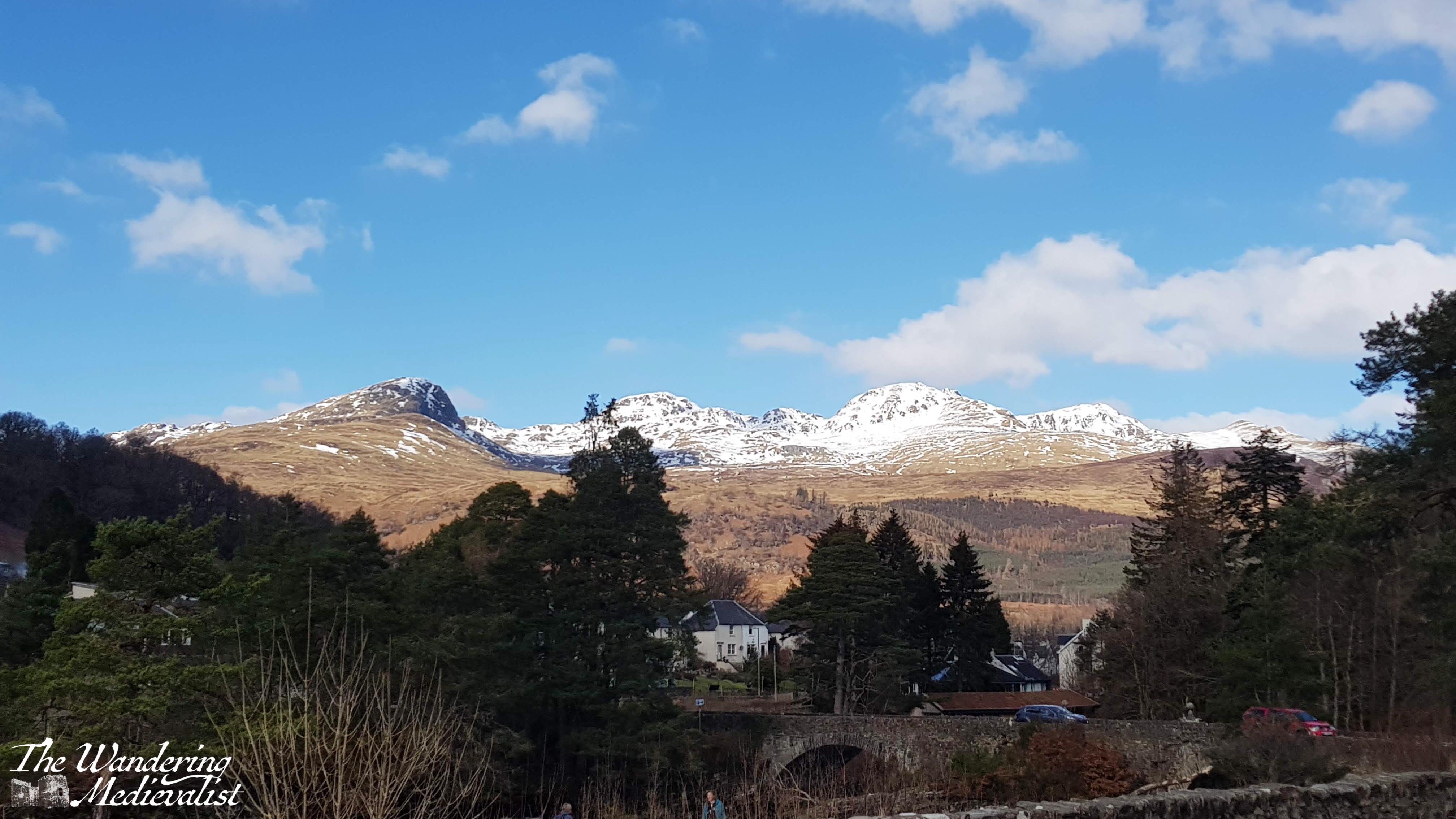
Starting in Kenmore, the drive is lovely – though narrow in places – passing underneath Ben Lawyers and providing gorgeous views across the far side of the loch, as well as the mountains at the far end. In March, both Ben Lawyers and the far mountains were capped with snow, stunning against the blue sky.
The road stays quite high on the hillside for most of the south-western end of the loch, then winds gradually down into the town of Killin, passing the town golf course on the left. One must traverse the town entirely in order to reach the falls, about two miles. It is possible to park somewhere in the town and walk to the Falls, and at busy times of year this may be advised or required. Killin has a some nice shops and cafes for refreshment, as well as Bridge End Mill, a small gift shop with plenty of Killin memorabilia.
Our visit, in mid-March, was before many crowds descended and so we drove across the narrow bridge – more on this shortly – and found a spot along the road on the river side. There is a decently long lay-by here where it is safe to park, but here as well as on the bridge it is important to be very aware of the road traffic which can be quite fast and quite large – coaches and lorries are regular users.
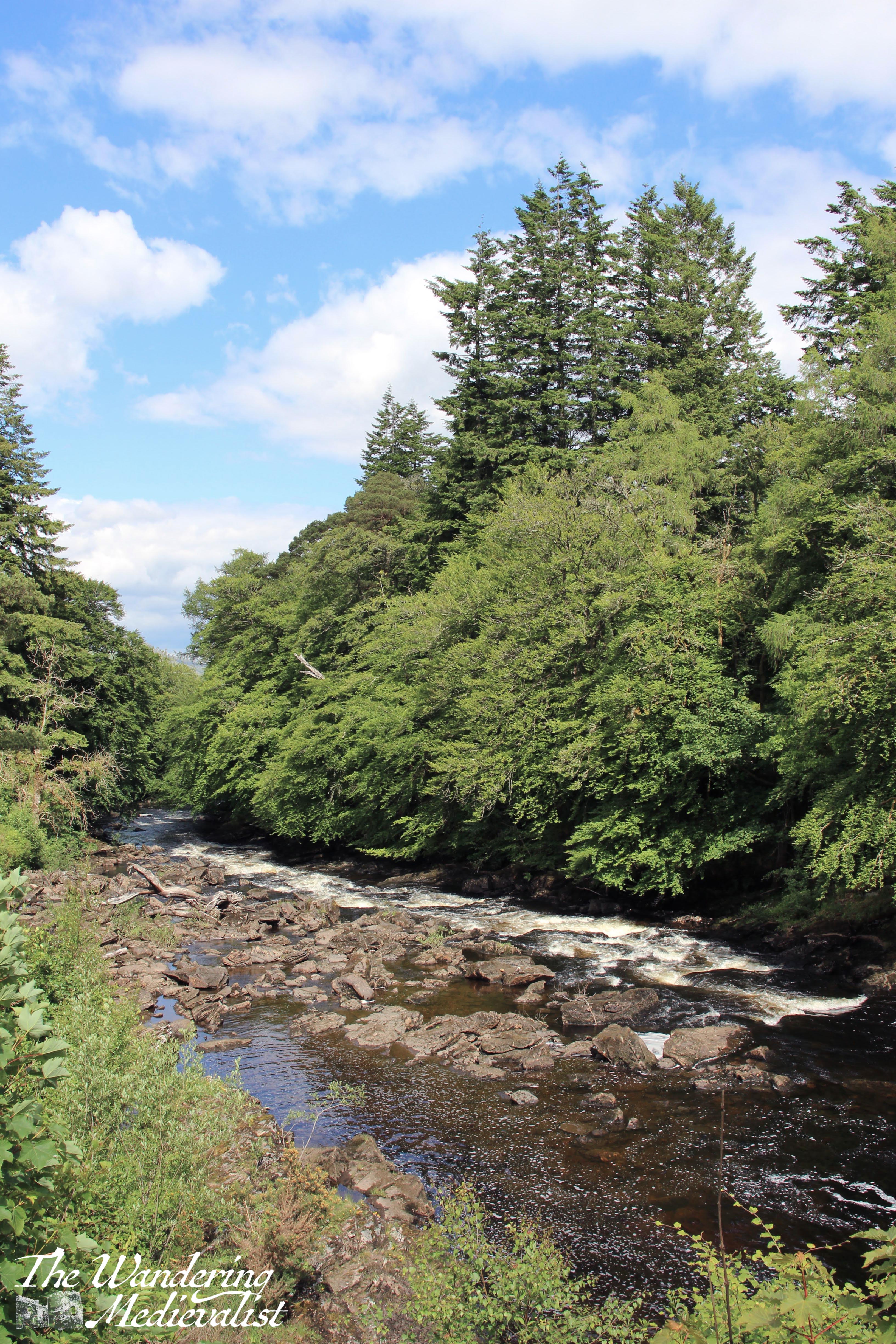
Once parked, it is time to head back towards the falls proper. Just before, or really more splitting the falls, is a wooded island, and there are some lovely views back up the river.
The bridge that spans the falls was originally built in 1760 but was washed away in a flood and re-built in 1831. Its size is indicative of a time well before cars, as it is so narrow that only one vehicle can traverse it at a time.
Closer to this bridge, it is not uncommon to find groups of people scampering over the rocks, and indeed when the water is low you can spend a good deal of time exploring. Sturdy shoes and confident feet are required.
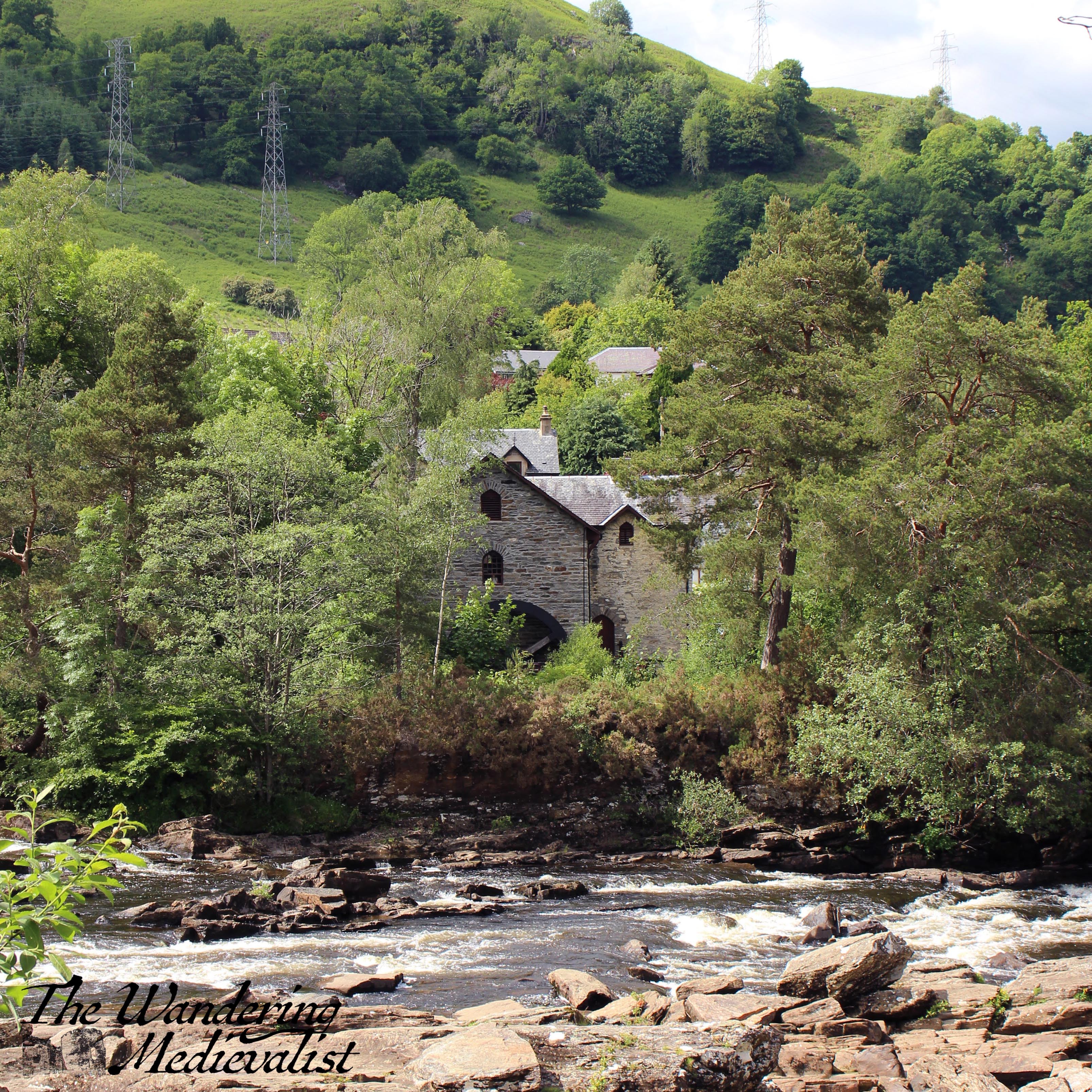
I was lucky enough to catch the falls without too many people in the way. On the far shore is St Fillian’s Mill, built just after the completion of the bridge. For some time in it operated as the Breadalbane Folklore Centre, though now appears to be closed.
Once you have explored the rocks, you will almost inevitably want to get a picture or two from the bridge, or perhaps wander towards the gift shop. To do so, you must cross. As mentioned above, the bridge is narrow and traffic is regular, so pedestrians need to be sensitive to the traffic patterns. There are a few places where an outcropping allows one or two people to get off the road safely, but in general the bridge should be traversed incredibly carefully, and as quickly as possible.
One sight worth exploring is the island formed by the river, Ennis Bhuidhe, which is the burial place of Clan MacNab. It has never been open during my visits, but may be now that pandemic restrictions are lifted.
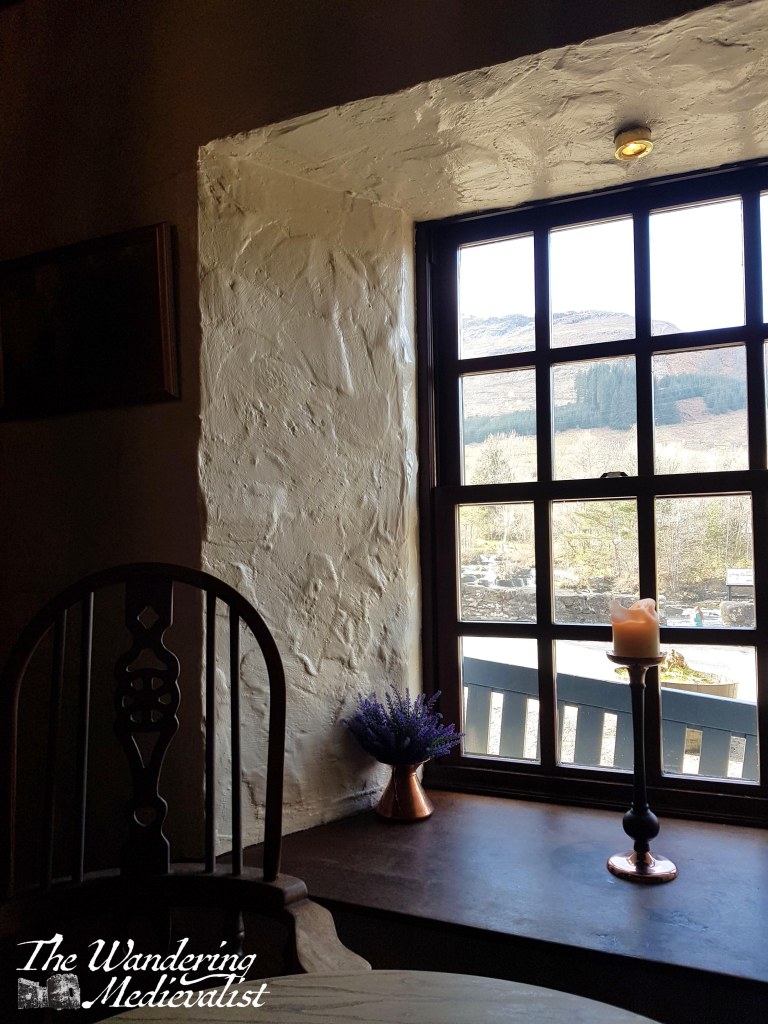
If you do not find yourself eager to take your life in your hands crossing the bridge, you can find excellent refreshment at the Falls of Dochart Inn. We stopped in to get a coffee and soda next to a roaring fire and beautiful timbered room that once housed the blacksmith.
In the summer they were selling coffee, cold drinks and the all-important ice cream. What I have not yet had time to do is explore the walks that I know lead from the Inn back into the woods and perhaps along the River Dochart towards where it feeds into Loch Tay. But even if you are not able to walk far, this is certainly a sight worth seeing.
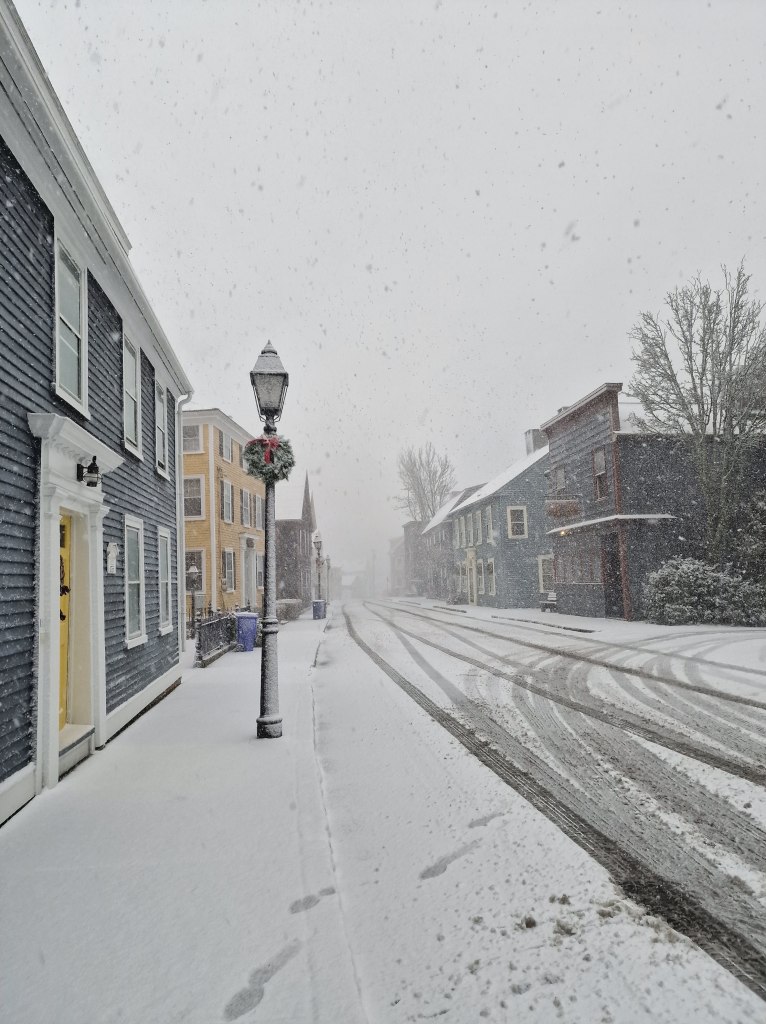
I realise that I quite recently wrote a post just about snow, but perhaps you will forgive me from focussing on the same topic again. On our recent trip back to the US, we were desperately hoping for a good snow storm to make our winter break feel real. New Hampshire usually comes through for us, but instead our first week or so was plagued with weather very similar to what we expect in Scotland – mild (for winter), wet and grey. But, as New Years Eve approached, we started to see predictions for a good storm the following weekend, one that would cover the whole of New England.
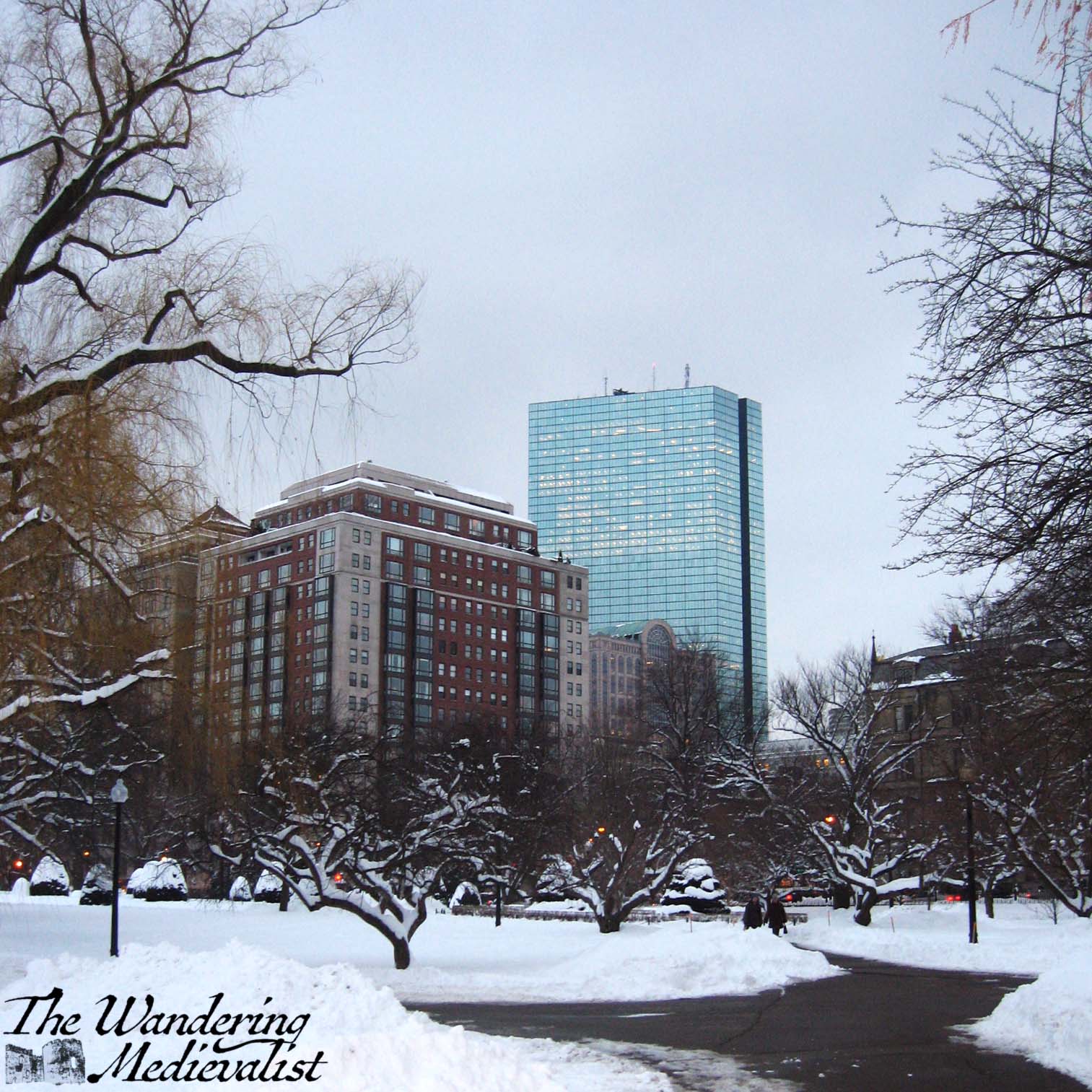
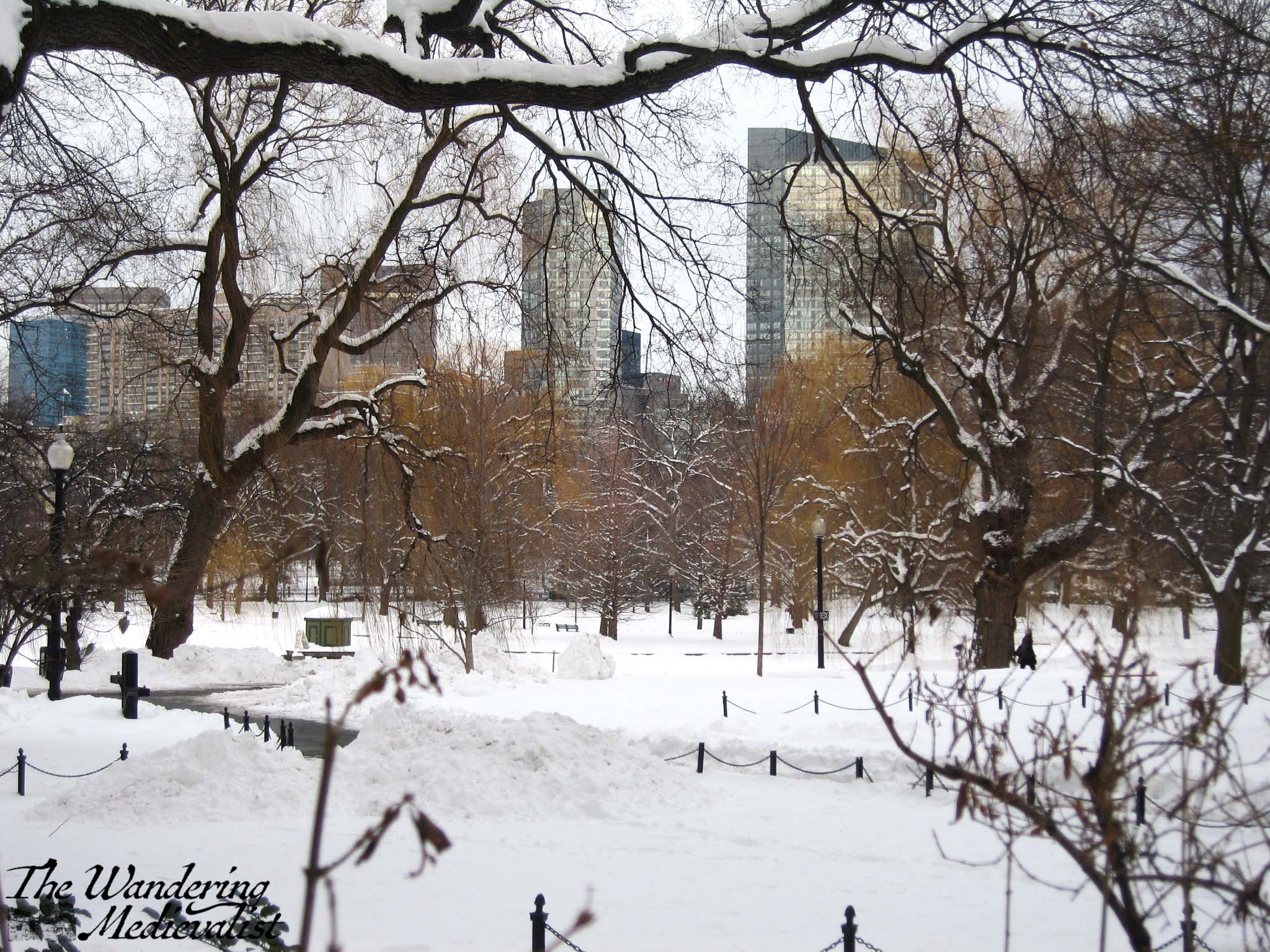
Saturday dawned, annoyingly, bright. As the day moved on, rain came in but the temperature stayed too high for any snow. On Saturday night, the streets were empty as people battened down the hatches and prepared for the storm. Even Sunday did not seem particularly positive, then not long after noon, the temperature dropped – rain turned to snow and after an hour or so began to accumulate. I was, to say the least, excited. As the afternoon went on, the storm continued steadily, with wind and huge flakes. By 3pm I could stand it no longer: I borrowed boots from my mother, wrapped up in my Boston winter coat (a black down thing so heavy I would never be able to wear in the UK) and ventured out into the storm. It was, in a word, perfect.
It was still snowing as we went to bed that night, and the following morning was incredibly clear. I got up early and went out to try to catch some of the morning light on the snow. Another perfect walk. I took so many pictures that I have had to turn them all into a movie…I hope you enjoy!
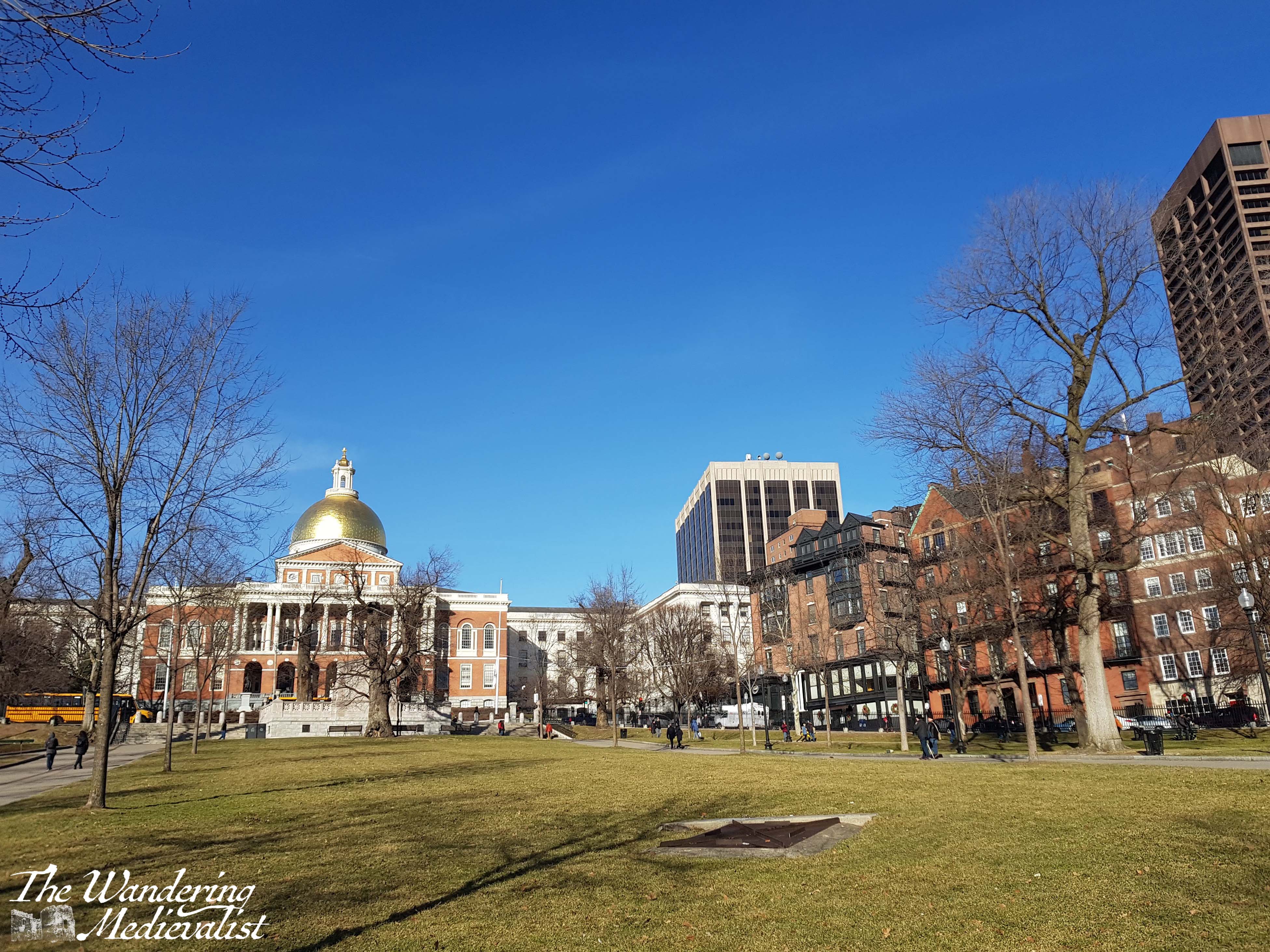
I am picking up my favourite walk through Boston at the corner of Boston Common across from the State House.
If you have chosen to visit the Shaw and 54th Memorial, my advice here is to follow the edge of the Common for a block or so and then cross Beacon Street when you find it convenient. You are spoiled for a view here – to your left is the Common, and to your right the start of the beautiful stately architecture that edges Beacon Hill, still one of the most desirable areas of the city.
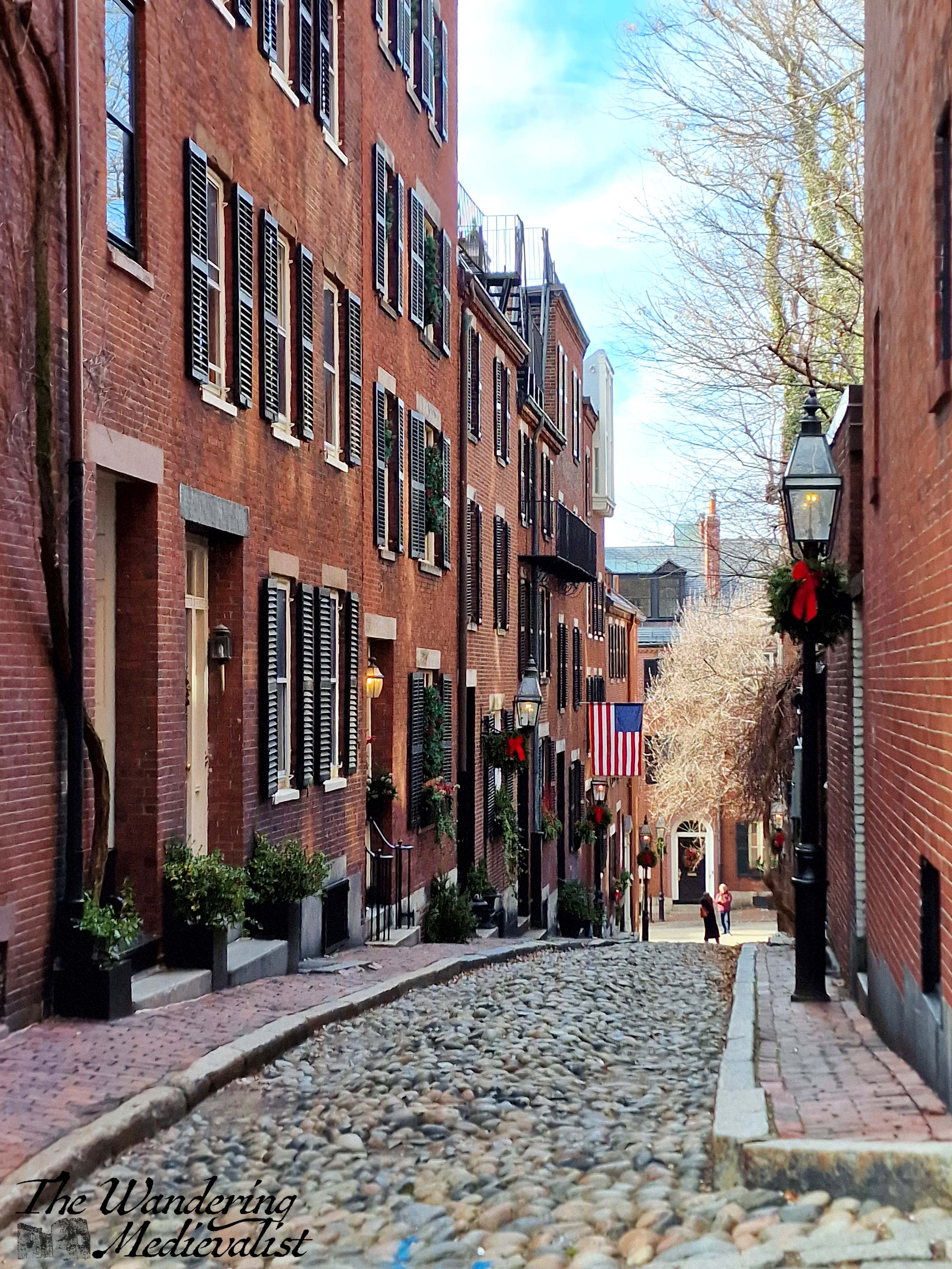
If you enjoy looking at older and expensive real estate, by all means choose either Walnut Street or Spruce Street to turn right and head up-hill. I would recommend continuing to Mt Vernon Street where you can get a glimpse of Louisburg Square, one of the most picturesque areas of the city that evokes parts of London. Head down Mt Vernon Street to the left/west, parallel to Beacon Street.
In no time at all, you will again reach Charles Street where you can turn left and follow it back towards the Common. There are some charming shops in this area to explore, if you have time. Also, the original Cheers bar is just a bit further along Beacon Street to the right, though remember that the interior of the bar itself does not look like it did on TV. The replica in Quincy Market closed in 2020.
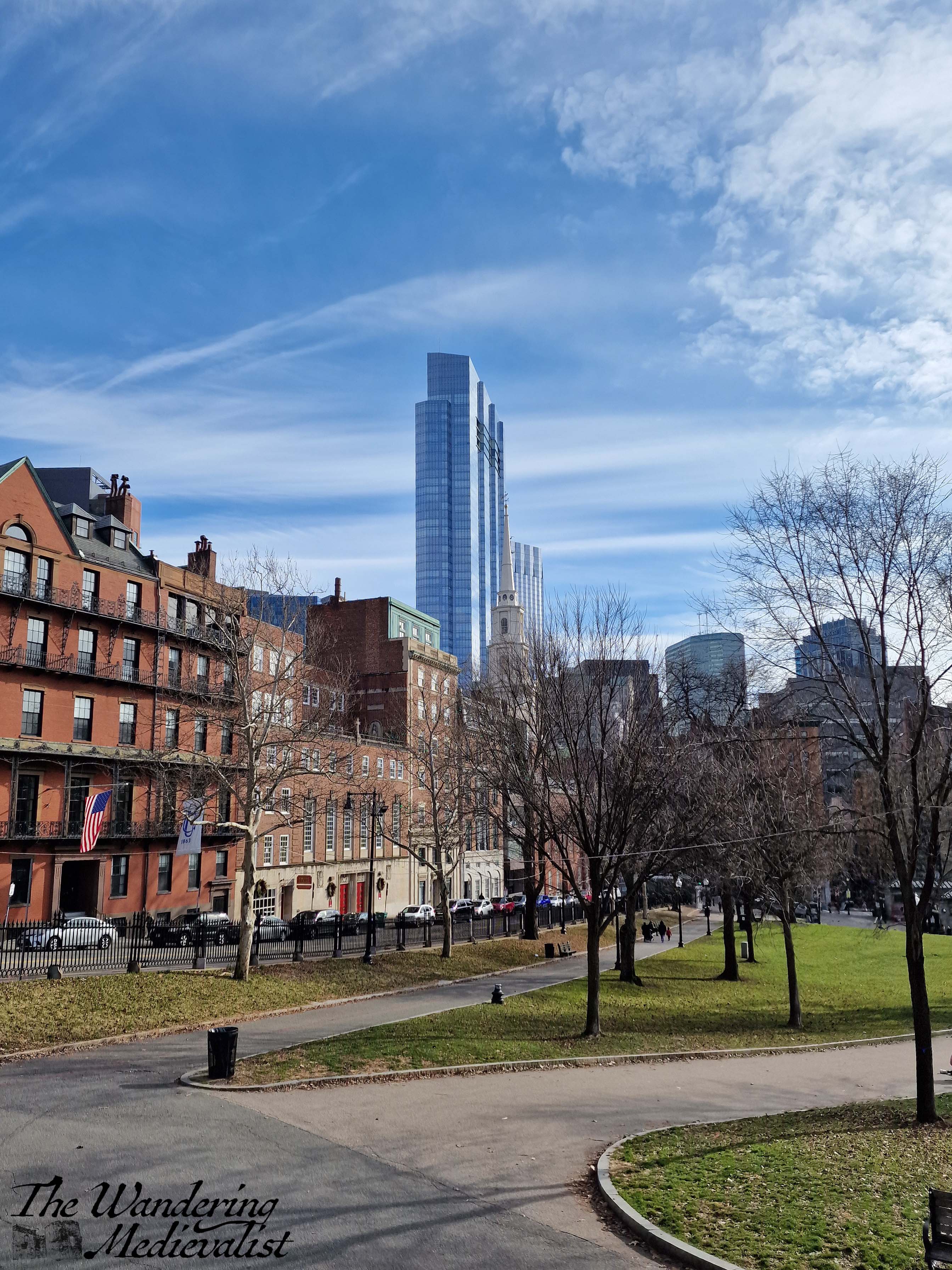
Crossing Beacon Street, you will find yourself with Boston Common on the left, and Boston Public Garden on your right. The land here was originally mudflat, and filled in to create the Garden – and much of the Back Bay – in the early 1800s. If you have any interest in the evolution of the land mass of Boston from peninsula to modern city, I highly recommend the book Mapping Boston.
Stop 5 – Make Way for Ducklings
Most Boston children, at some point I imagine, have read the famous book by Robert McCloskey, Make Way for Ducklings, a lovely story about two ducks looking for a place to raise their family. (Incidentally, McCloskey also wrote two of my other favourite children’s books, Blueberries for Sal and One Morning in Maine).
This book was the inspiration for one of the most famous statues – or series of statues, more accurately – in Boston, which are at various times of year dressed in Sports gear, Santa hats, and other such things.
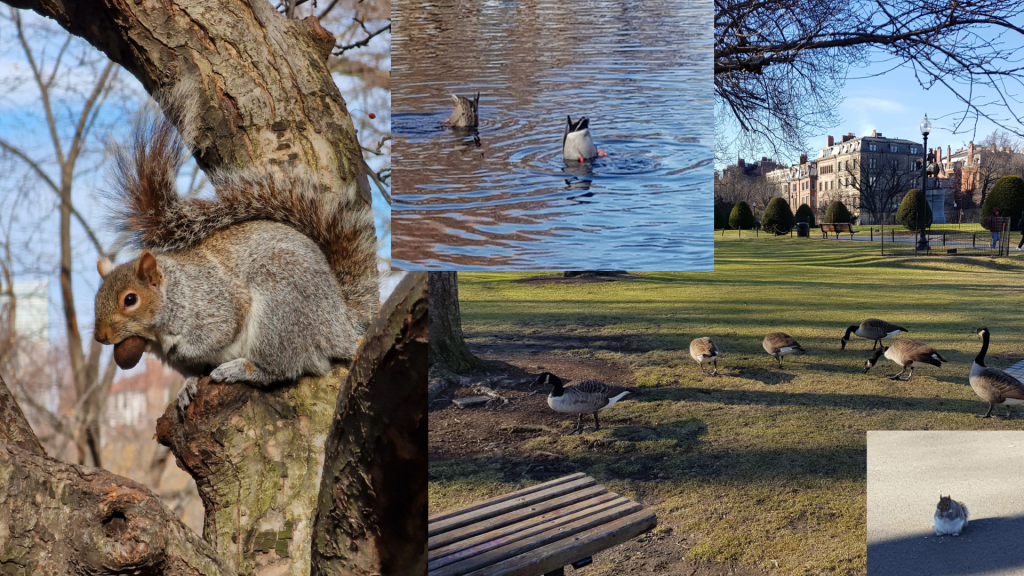
As you walk away from the ducklings and towards the bridge – resist the urge here to go around the end of the pond – you will almost inevitably meet well-fed geese, ducks and squirrels.
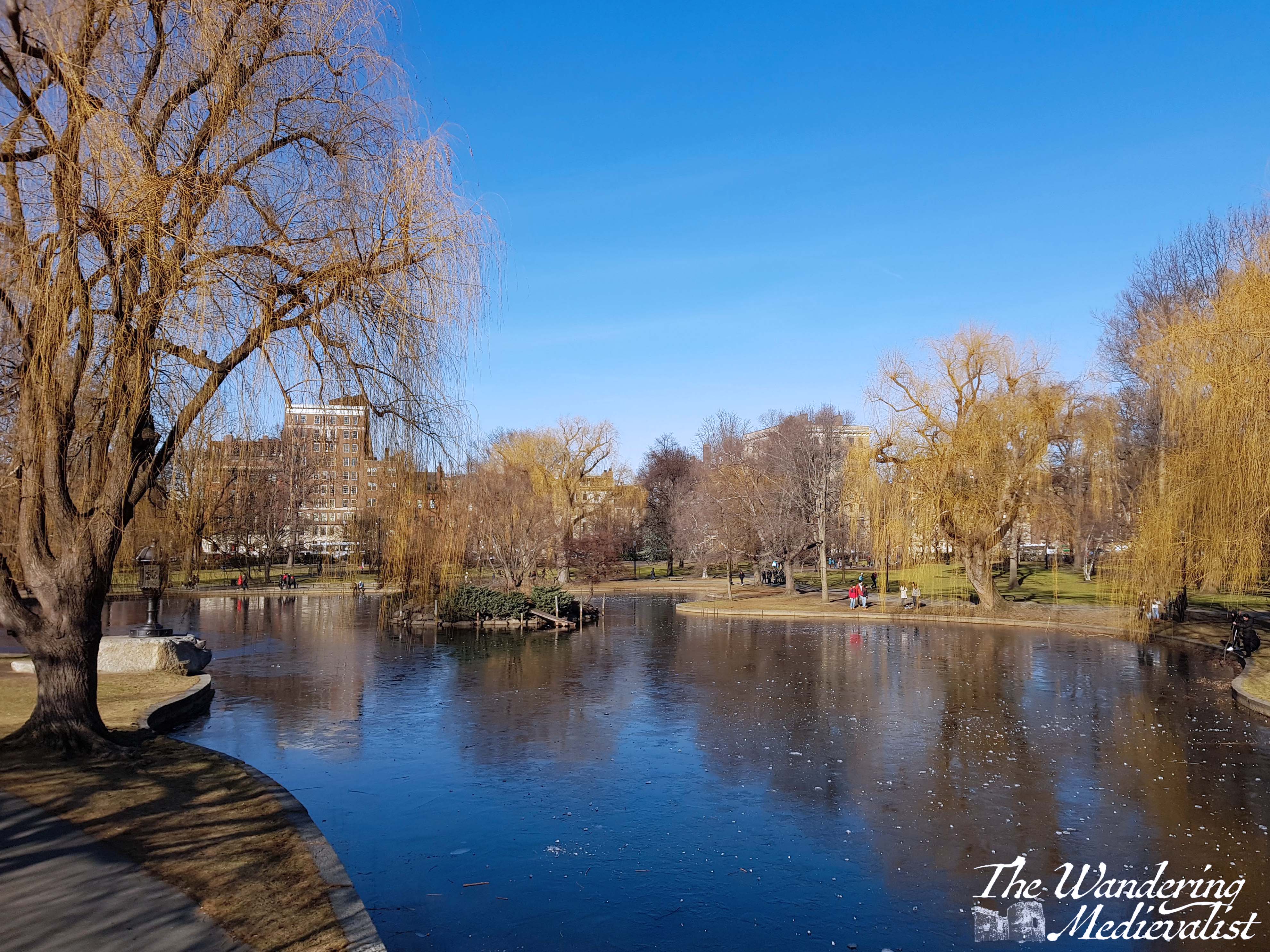
The path follows the edge of the water, allowing for excellent views across the pond where swans and swan boats busy the water in summer months.
Stop 6 – Swan Boats and Footbridge
In very little time, you will find yourself at the suspension foot-bridge that spans the pond, and from which there are excellent views of the Garden and city beyond.
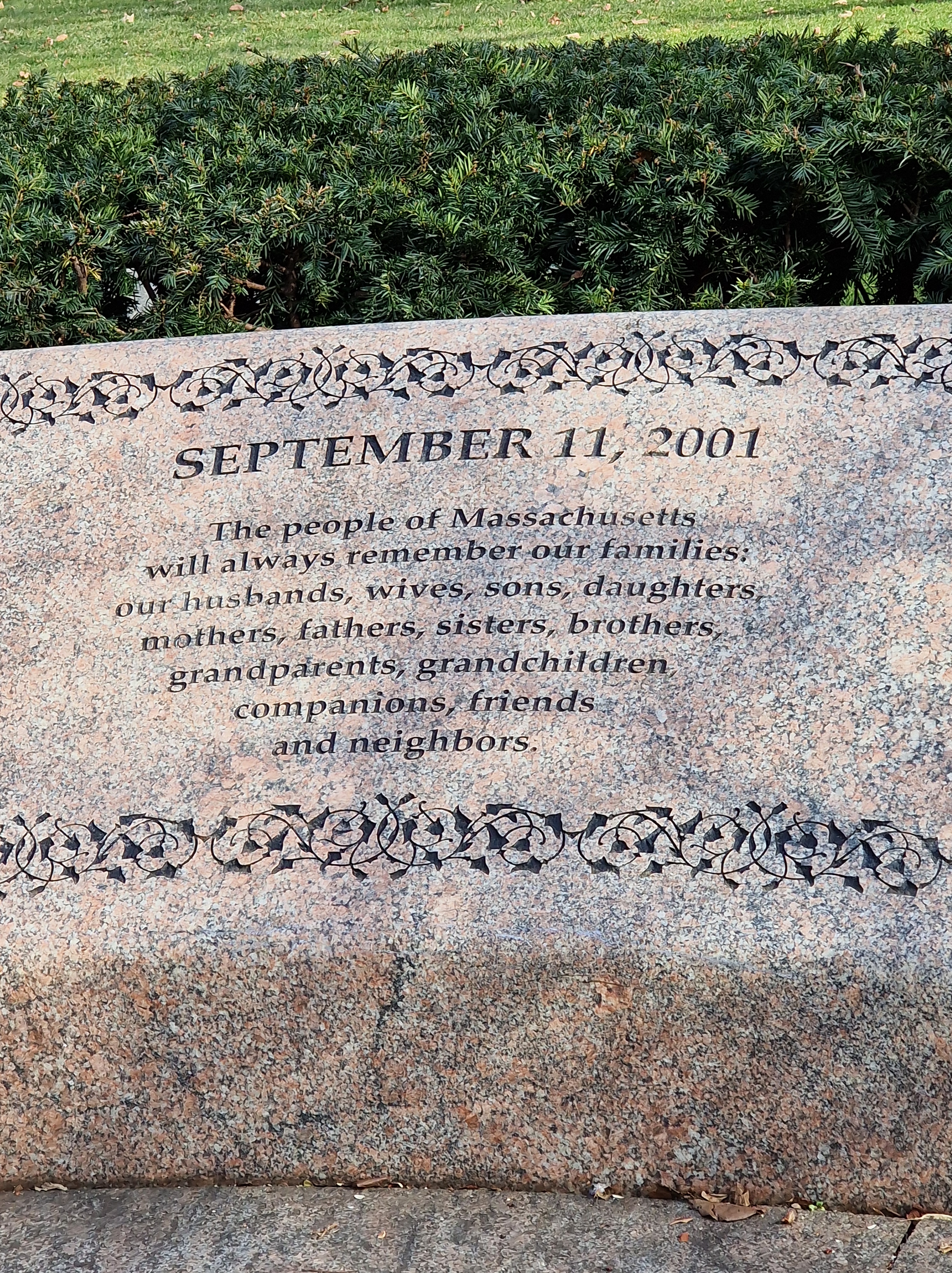
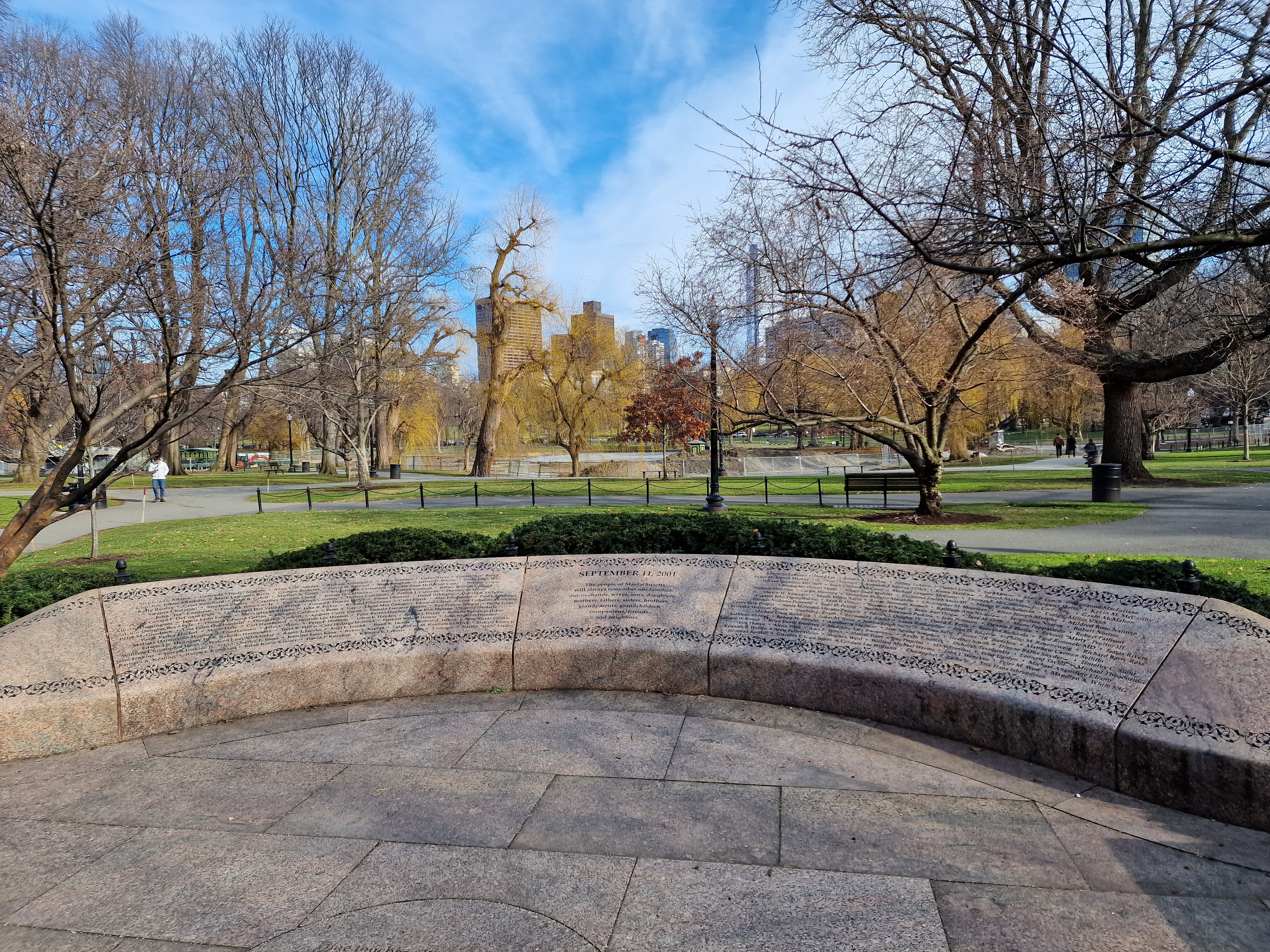
Cross the footbridge, and turn left to head towards the far corner of the Garden, where Boylston and Arlington Streets meet. Before leaving the park, you may wish to make a visit to the 9/11 Memorial and Garden of Remembrance. Two of the four planes that were hijacked that day left from Boston Logan Airport, and the memorial is a moving spot, listing the names of those lost from Massachusetts and New England.
Stop 7 – Arlington Street subway station
You can exit the Public Garden immediately next to the memorial, or continue to the corner. Either way, you will find yourself roughly in front of Arlington Street Church and with a final choice to make. I generally prefer to walk straight up Boylston Street towards Copley Square, but if you wish to do a bit of shopping you may prefer to detour one block over to Newbury Street. If you’re feeling like you’ve had enough exploration, you can always hop on the Green line at Arlington Station and take it back a few stops to return to Government Centre or Haymarket.
Though not as famous in Boston as Newbury Street, Boylston has plenty of shops and restaurants as well, and it’s only about two more blocks to reach the Trinity Church and Copley Square.
Stop 8 – Copley Square
The walk continues through the square and into the Westin, however before you reach that hotel you will pass several points of interest.
First, the church itself, constructed in the 1870s though the parish had existed for 150 years previous and suffered several fires.
Second (again a bit of a detour) if you continue up Boylston for about half a block, you will find the finish line of the Boston Marathon, painted in blue and yellow across the street. Immediately beyond is the memorial to the victims of the Marathon Bombing in 2013.
Third, the stunning Boston Public Library, which to my surprise was opened in the early 1970s but has the feel of a much older building. Inside are stunning murals and grand staircases, as well as one of the largest collections in the US.
It may seem a touch strange, but trust me when I say that to continue on this route, you enter the Copley Westin and go up the escalator. If you walk straight across and do not enter the hotel, there is a pedestrian bridge across the road into Copley Plaza proper. In the plaza are any number of high-end shopping choices such as Neiman Marcus, Jimmy Choo, Dior and Versace. Needless to say we did not shop here as teens, but there was a cinema at Copley as well, which I have discovered closed in the early 2000s.
If you continue straight through the plaza, you will find signs for the pedestrian bridge to the Prudential Center, for additional shopping and one of my high school friends’ favourite spots, California Pizza Kitchen.
The Pru, as it is sometimes known, is another stop on the Green line, and so you can also do this walk in reverse if you are so inclined. It is worth pointing out, however, that Copley is the last stop on the Green line before it splits into multiple branches, so picking up the subway there can be a bit faster.
And that is it! My favourite walk through the city – not particularly long or challenging, but passes some great spots and brings back plenty of memories. I am sure I will go into more detail about some areas of Boston in the future.
if you are in the city and want to try the route yourself, check out this route map:
Boston is, without doubt, my favourite city (though Edinburgh is a close second). I am incredibly biased of course; the feel of the city is part of the bias, but more poignant are the memories evoked almost everywhere I go.
When I was in high school, the city was our playground (to paraphrase Madonna). Almost every weekend we would hop on the Red line into town to roam Quincy Market, Copley Plaza, Harvard Square or Downtown Crossing. My favourite spot is Faneuil Hall, and in particular the Samuel Adams statue out front, which was our standard meeting place for years. I have spent hours there, as in my teenage years there were no cell phones (gasp!); if you were meeting someone, you just had to wait until they appeared or give up and go home.
The sense of freedom, of knowing I could go anywhere in the city, was one of the things that truly gave me confidence as as teenager. I prided myself on being able to walk from Marriot Long Wharf to the Prudential Centre without looking at a map – and that walk is the one described below, passing some of my favourite spots in the city.
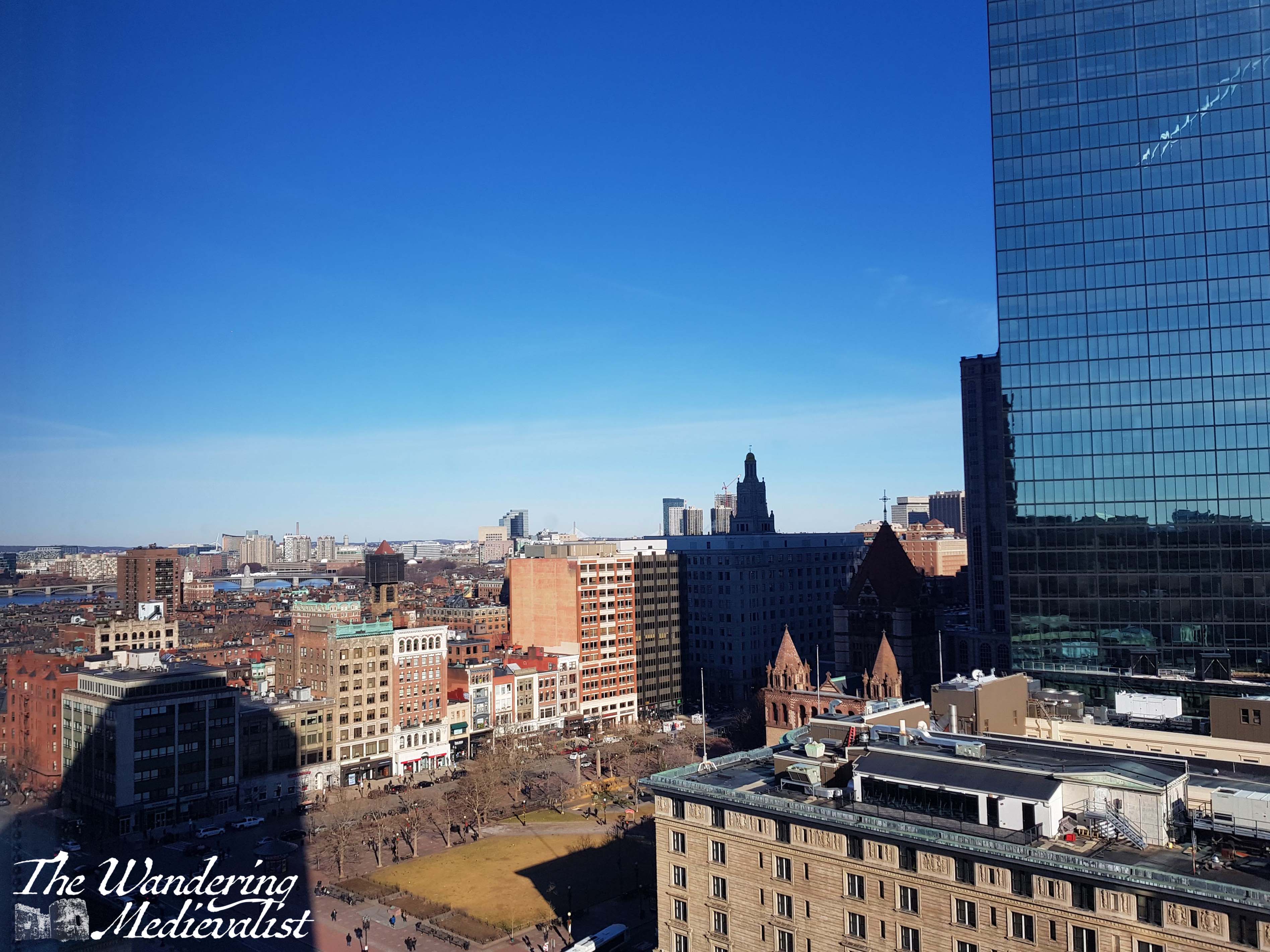
The first photo below, incidentally, was taken from the top of the Custom House – official title Marriott Vacation Club Pulse at Custom House – where we stayed for a recent significant birthday. We got a good deal, and it was a stunning location.
Start of the walk – Long Wharf
The walk starts just outside Marriott Long Wharf, in the park immediately adjacent: Christopher Columbus Waterfront Park. Ignoring the political mess of actually naming a park after Columbus, I would point out that the park is quite lovely and only steps from the Blue line stop at Aquarium.
If you have time, it is worth taking a detour to the end of Long Wharf past the former colonial-era counting house, to enjoy views across Boston Harbour towards the airport.
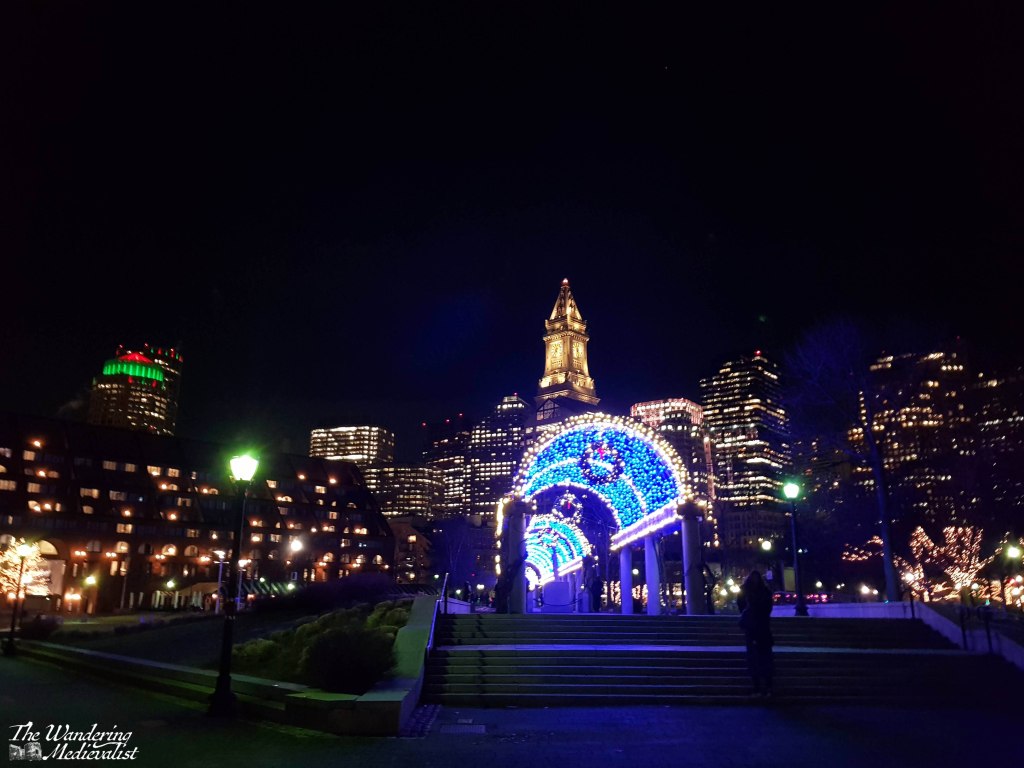
Below are views of the park at night in the winter, and then in the spring, as well as the view from Long Wharf back towards the Custom House.
From here, it is only a short walk across Atlantic Avenue to Quincy Market – word of advice, in Boston always use the crosswalk! Under the park area you traverse between the wharf and the market is of course the tunnel that was built during the infamous Big Dig, to take I93 from a raised highway to a sunken one. On my first few trips visiting Boston after the completion of the Big Dig in 2007, I found myself routinely discombobulated by the absence of the raised highway that had been there for as long as I could remember.
Stop 1 – Quincy Market and Faneuil Hall
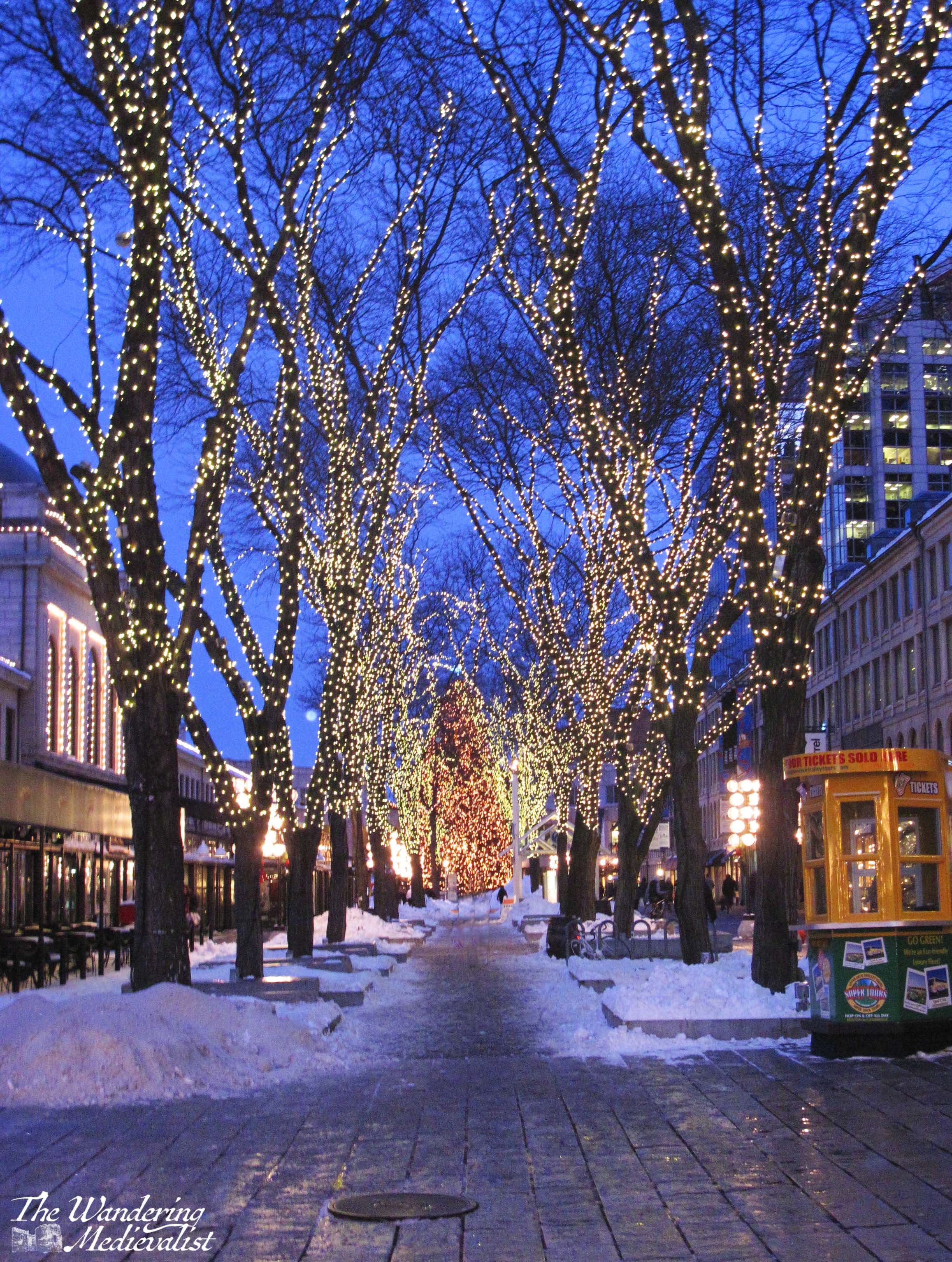
Once across Atlantic Avenue, you will hopefully find yourself immediately before a concrete and metal beam constructed covered walkway, that leads to the market. At Christmas time, there will be a gigantic tree immediately in front of you inside.
While it has become more and more a tourist trap over the years – despite the closure of the famous Cheers bar – Quincy Market is always worth at least a quick stop whenever I visit; I can’t help but love the Boston memorabilia peddled out of carts, and the long corridor of food stalls boasting everything from bagels, sandwiches and seafood to Asian and Mexican cuisine. Special shout-out to the North End Bakery, which has the best chocolate-peanut butter brownie.
I love Quincy Market at Christmas in particular, when everything is done up with lights and pine garlands or wreaths.
If you are hungry, by all means detour through the food hall, but if you’d rather keep your pace up, stay outside the long covered market and continue towards Faneuil Hall, the colonial brick building with golden dome just visible at the far end of the market. Opened in 1742, the hall was also a market (and still is, there are more Boston-themed stalls inside) and the spot of several speeches by figures such as Samuel Adams, the famous patriot. To my amusement, the statue of Samuel Adams that was our frequent meeting point has now been augmented by the opening of the Sam Adams Taproom, immediately beside.
Highly recommended, it has a great brewery feel with huge vats of beer just behind the bar and long tables with benches, and of course offers Sam Adams Brick Red, my favourite beer and only available in Boston.
From here, you can either start up the steps immediately across the street, or if you are in for a more historical tour, turn left and detour up past the Old State House.
Stop 2 -The Old State House or Government Centre
Route 1: The Old State House
History buffs may prefer this route past the Old State House – home of a museum as well as the State Street T station, intersection of the Blue and Orange lines.
Just outside the building is the location of the Boston Massacre in 1770, and this excellent plaque which I noticed throughout the city.
Unfortunately I managed to miss the plaque for the Freedom Trail, another great way to explore the city.
From the State House you can turn immediately left to go along Washington St to Downtown Crossing, but I recommend continuing up Court Street.
Route 2: Government Centre Cross Congress Street and head up the steps with Boston City Hall on your right (unfortunately frequently voted one of the ugliest buildings in the US).
This is also a great spot to see a Dunkin Donuts and Starbucks immediately next to one another – a Boston quirk. You are never far from a Dunkin.
Just outside the coffee shop of your choice is Government Centre, the T stop where the Green and Blue lines intersect, and the third-oldest subway station in Boston. As of January 2024, it is closed for renovation.
Which ever route you chose, your goal is Tremont Street; take a left to head towards Boston Common (roughly south-west).
Half a block along Tremont Street, you will find one of those Boston sights that reminds you the city is several hundred years’ old: a graveyard, nestled between the high-rise buildings. King’s Chapel Burying Ground is not particularly large but is the oldest graveyard in the city, founded 1630, and boasts some beautiful old gravestones. Burials include William Dawes, the second rider to Paul Revere on the infamous night in April 1775; Mary Chilton, a passenger on the Mayflower; and Elizabeth Pain, who may have been an inspiration for the character of Hester Prynne.
Continuing beyond King’s Chapel along Tremont Street, you will pass the famous Omni Parker House, home of the Boston Cream Pie. One night a few years back we did go in and order one – along with a cocktail – and it was as beautiful as on the sign.
Ahead of you, you will start to notice the trees and open area of Boston Common, and the covered entrance to Park Street station, one of the two oldest subway stations in Boston, and the intersection of the Red and Green lines. Before you reach the Common, you will pass Granary Burying Ground, the burial place of numerous patriots of the Revolutionary War including Samuel Adams, John Hancock, Thomas Paine and Crispus Attucks. Frustratingly it has been closed on my last two visits, for maintenance.
Stop 3 – Boston Common at Park Street
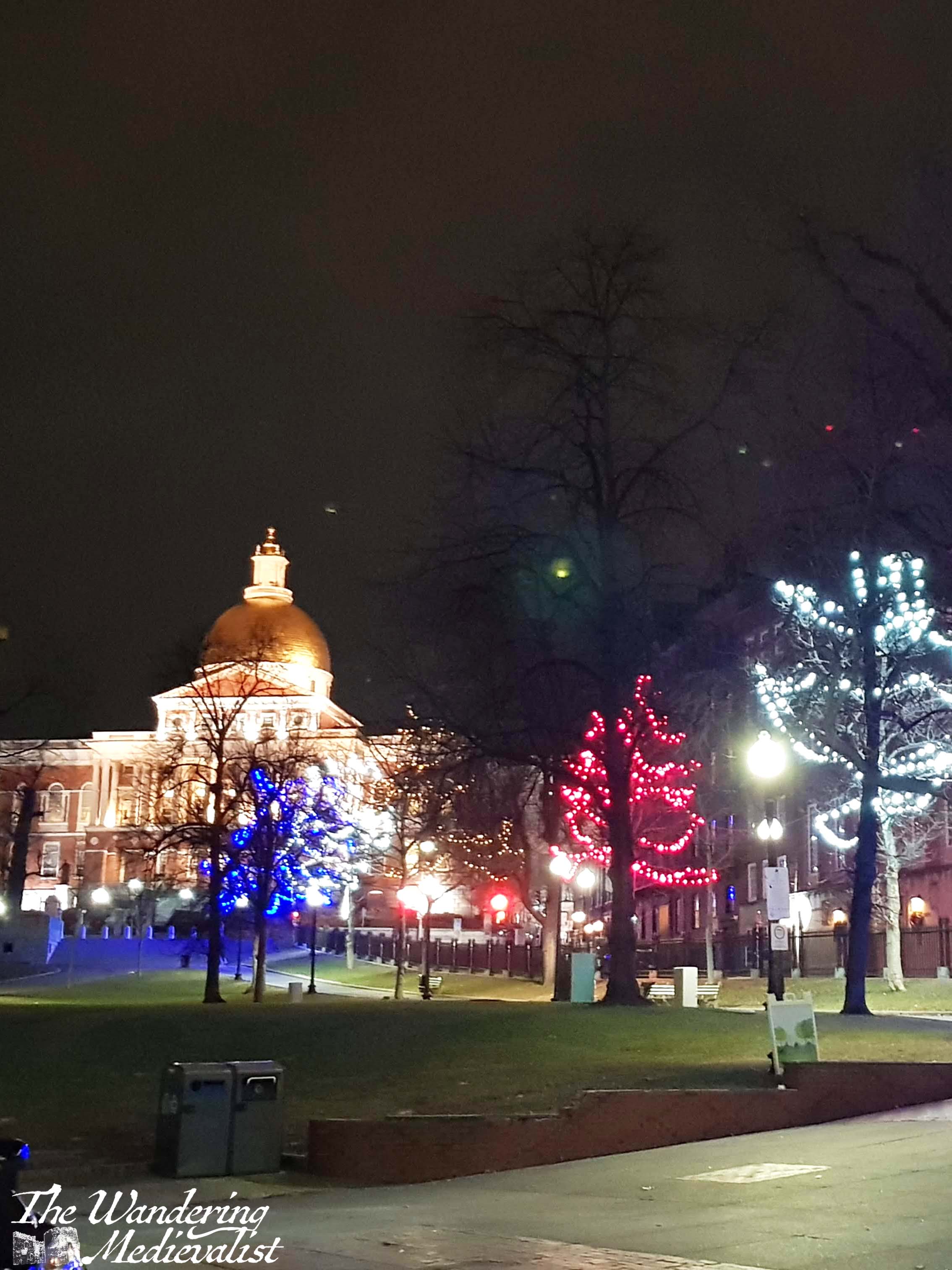
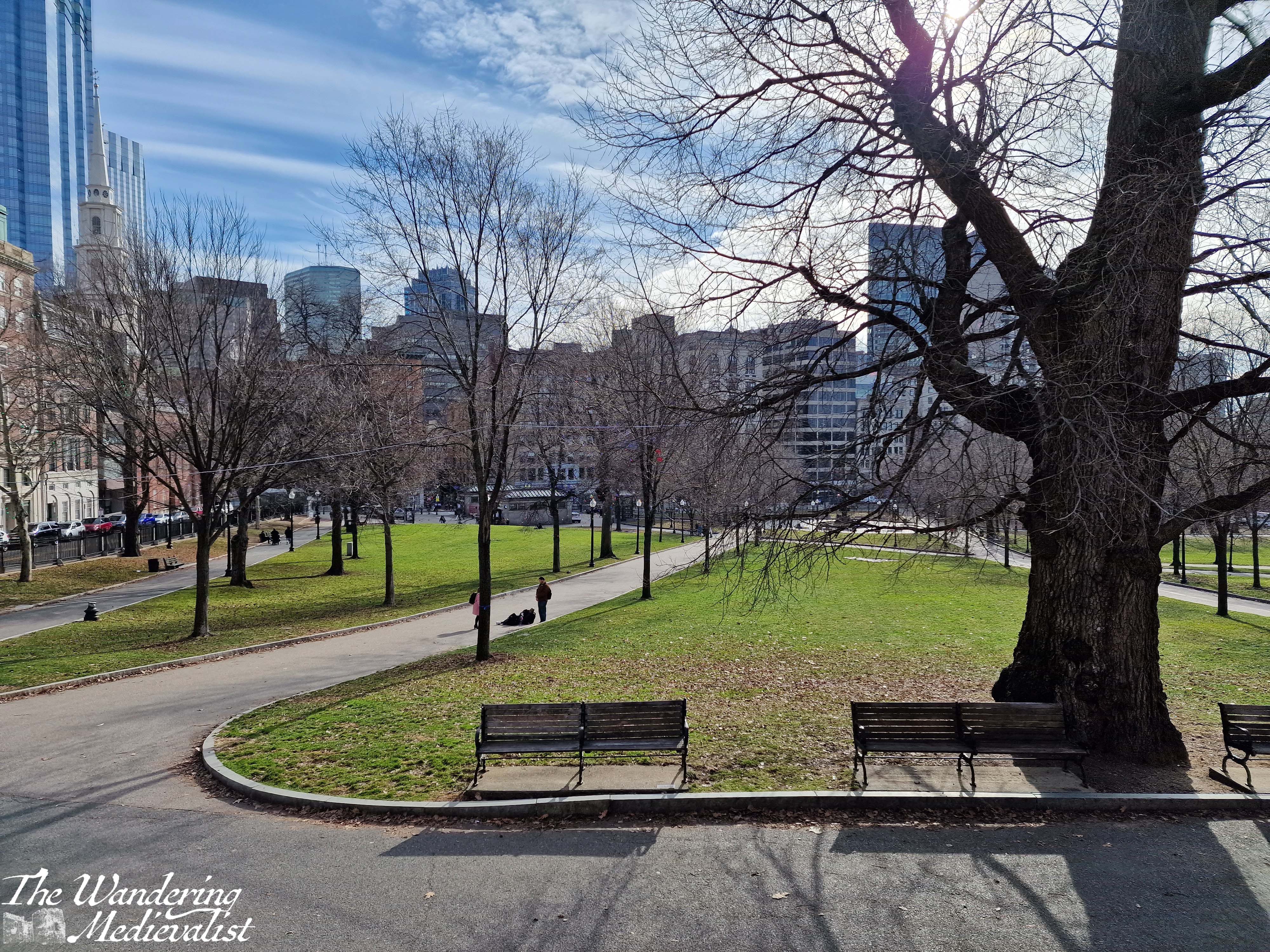
Immediately beyond the Park Street Church is Park Street Station and the entrance to Boston Common. I love looking at the Common on a map, as it somehow manages to have 5 (almost) right angled corners, due to curves in Boylston and Tremont Streets. The oldest city park in the US, the Common was used, as the name indicates, at various times for meetings, pasture, executions and military exercises. Now, it is an open park that is beautiful both when the trees are covered in leaves and when they are not, and it boasts several spots of interest including a bandstand, baseball field, and the Frog Pond where visitors can ice skate in the winter. Around the holidays, all the trees are covered in lights.
Really, there two routes are available again at this point. The first is to head immediately across the Common, following the numerous pathways until you reach the far side, where Charles Street separates the Common from the Public Garden.
The second option is to turn right and head up the gentle hill towards the gleaming gold roof of the Massachusetts State House, home of the State Legislature. Anyone who has watched the recent hit TV series The Last of Us may recognise this building.
Immediately across from the State House is the Robert Gould Shaw and 54th Regiment Memorial, commemorating one of the country’s first all-Black regiments during the Civil War (memorialised also in the movie Glory (1989), for better or worse).
I realised as I was writing that at this point I have really bitten off too much to fit into one post, and so if I have caught your interest, I will continue the walk in A walk through Boston – part 2! Coming soon…
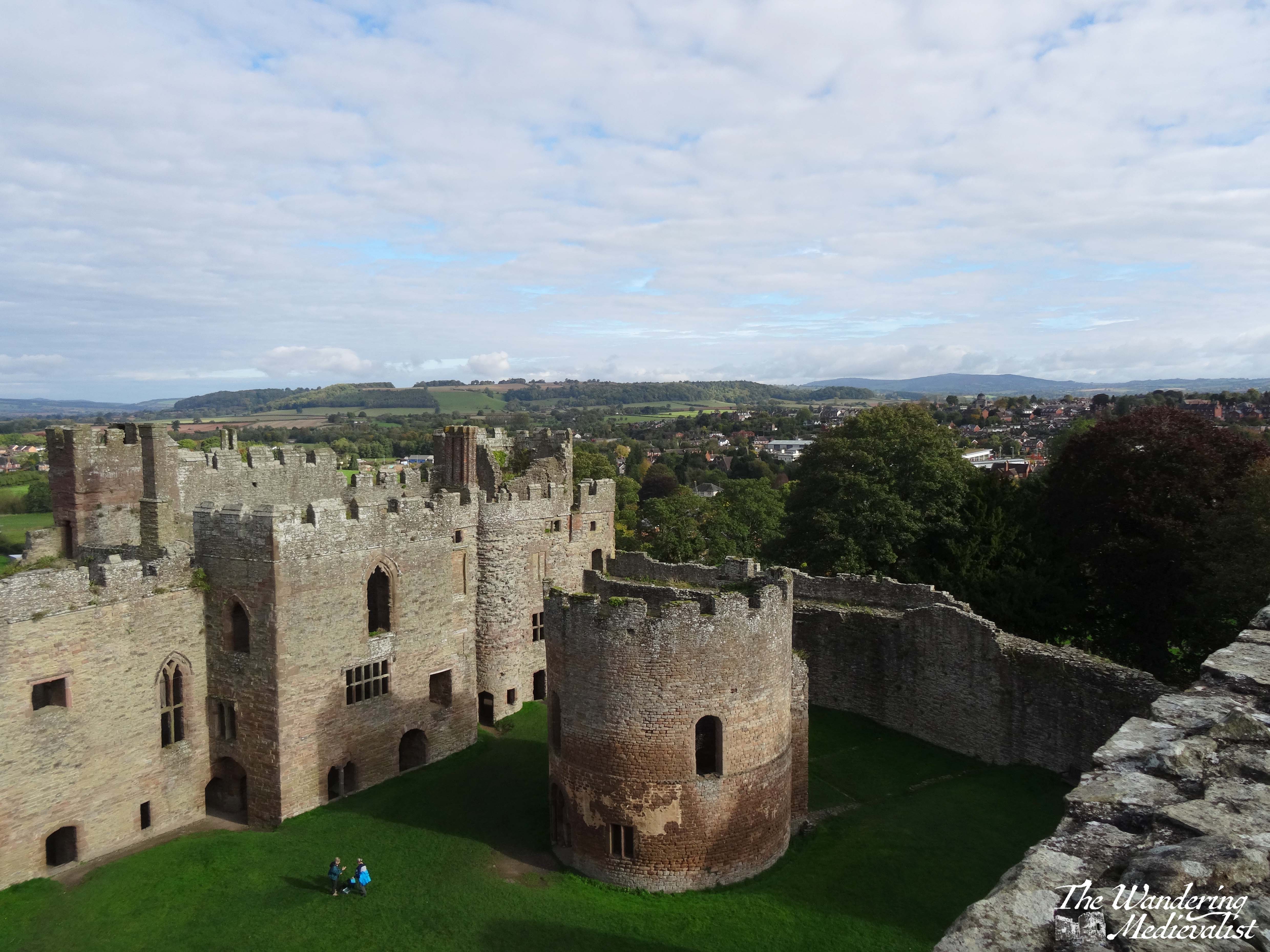
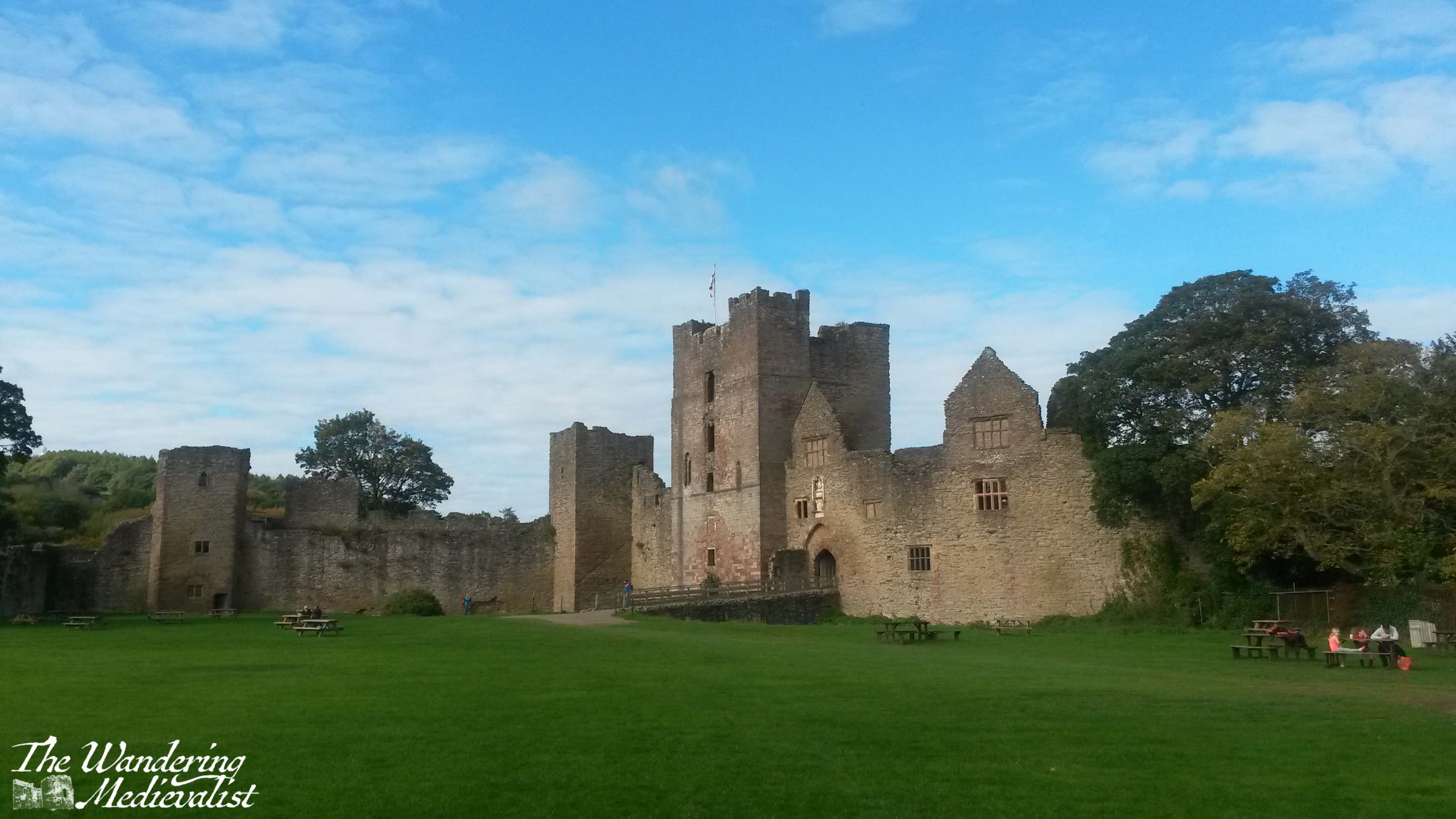
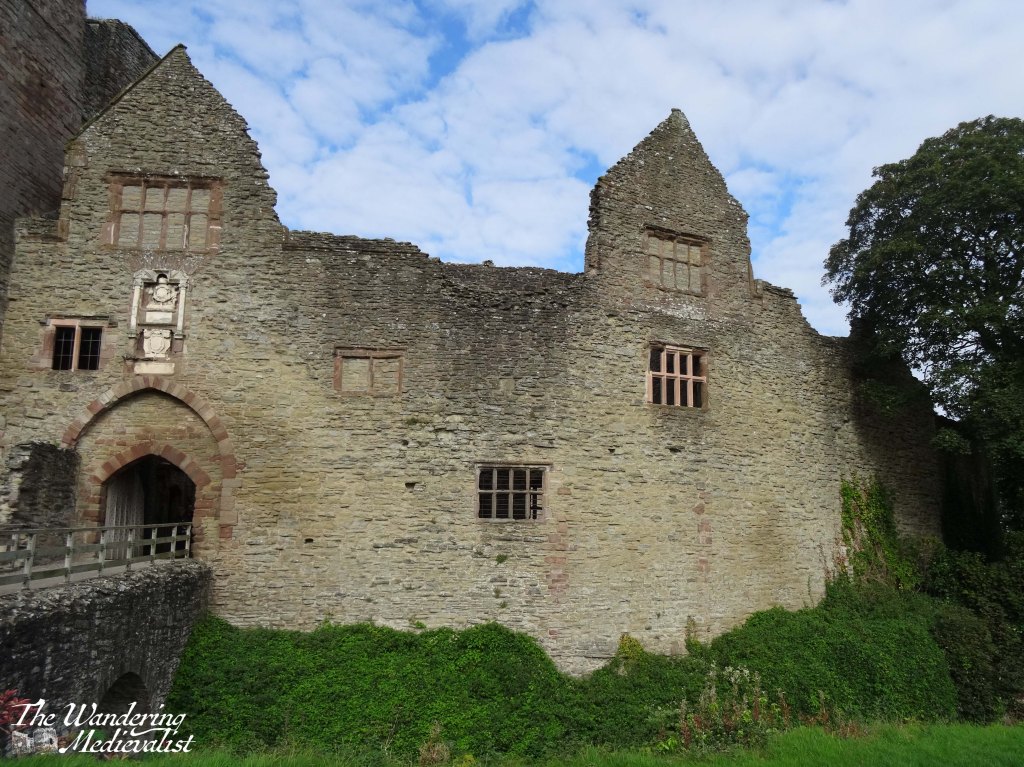
Our excursion to Elcho Castle was part of a late summer weekend during which we met a friend – and fellow medievalist – in Perth for lunch and decided to explore this heretofore unknown castle. I had identified it on one of my many castle maps of Scotland, and the Historic Scotland website confirmed it to be a well-preserved example of a late medieval Scottish tower-house. I note that as of writing, the castle is one of the many currently closed while masonry inspections are undertaken.
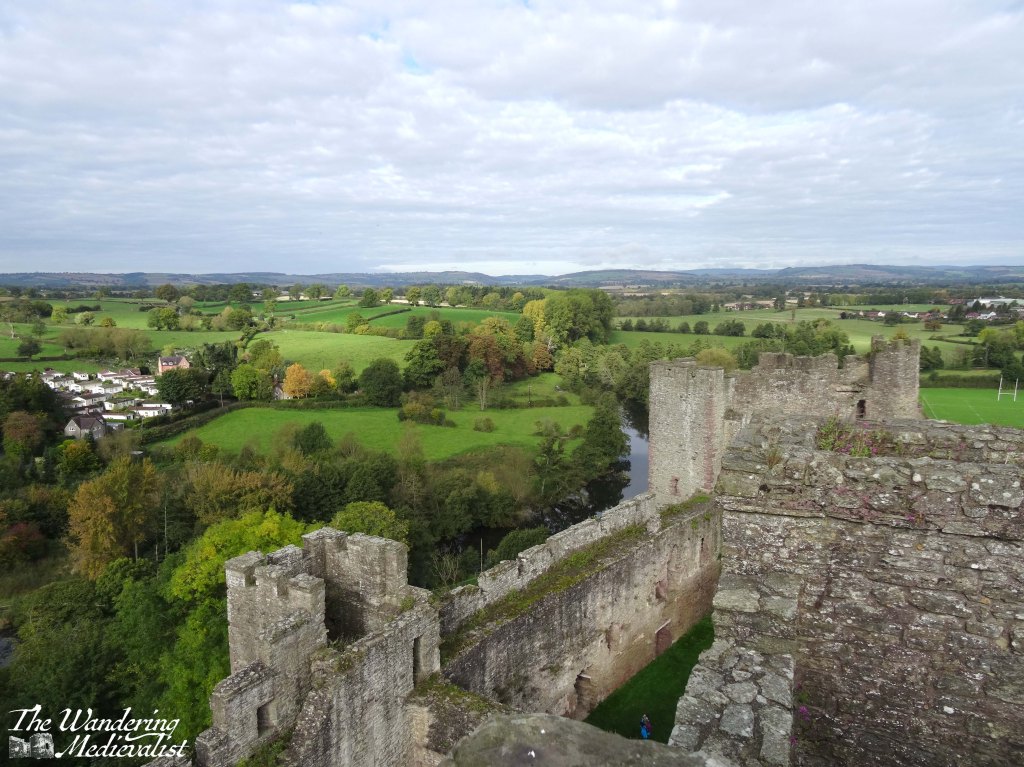
Only four miles from Perth, Elcho is accessed by narrow back roads that eventually lead to a small car park, the castle, and the nearby listed cottage. It was built by the family of Wemyss of that Ilk, around 1560, and is an interesting example of a comfortable country manor residence that was also defensive. It has both guest rooms and gun ports. As one can see from the view from the castle walls, it was happily situated beside the River Tay, amidst fields for crops and sheep, as well as an orchard. In the distance one can just make out the cliffs of Kinnoull Hill.
The view to the west is towards Perth, just out of sight beyond the rise, and to the east along the river in the direction of Dundee and Fife.
It is just about possible to walk around the outside of the castle, though the river side is well-treed and the view of the walls is obscured somewhat. There is evidence of a formerly walled courtyard and at the edge of the orchard are some well-placed picnic tables.
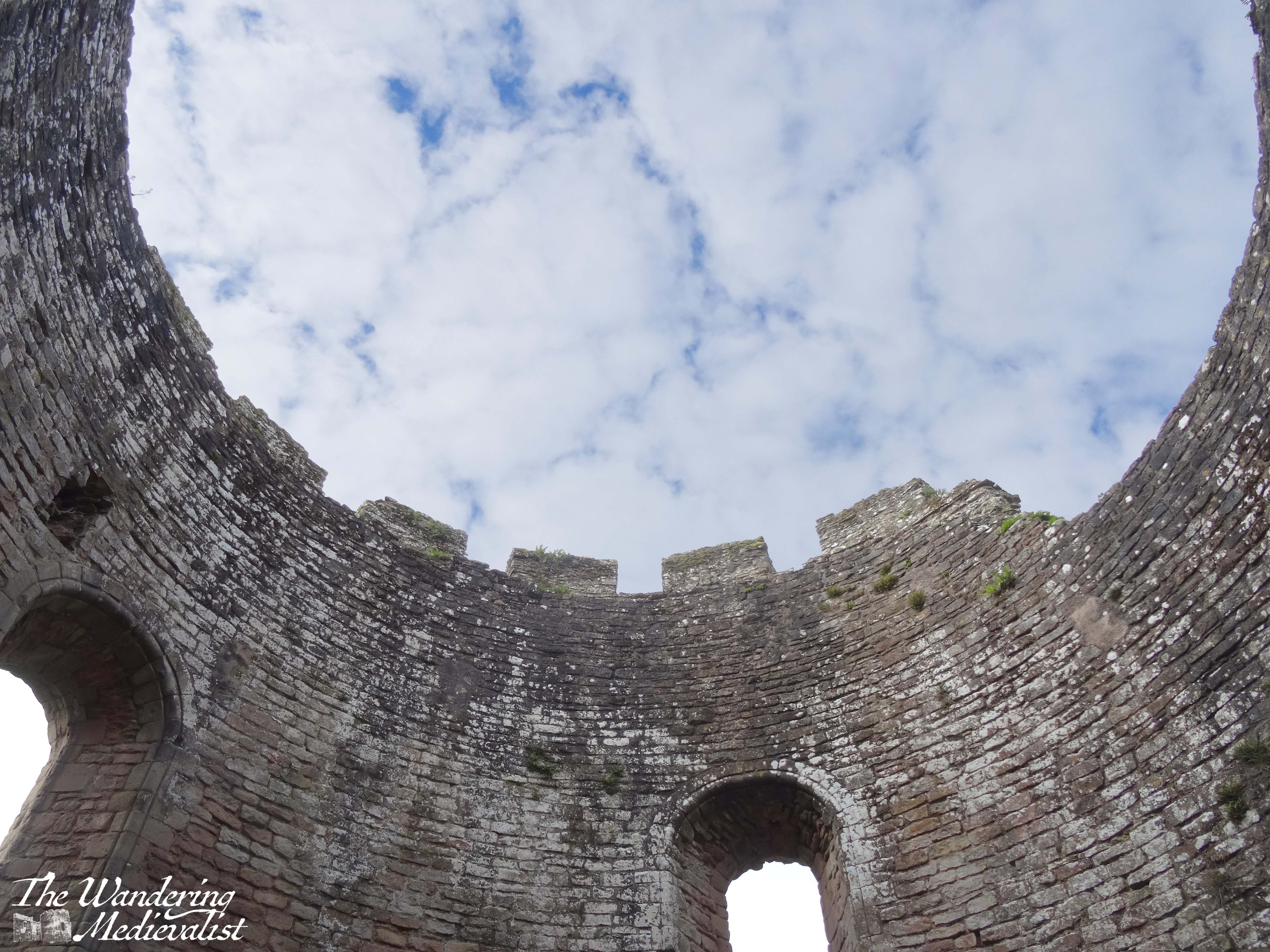
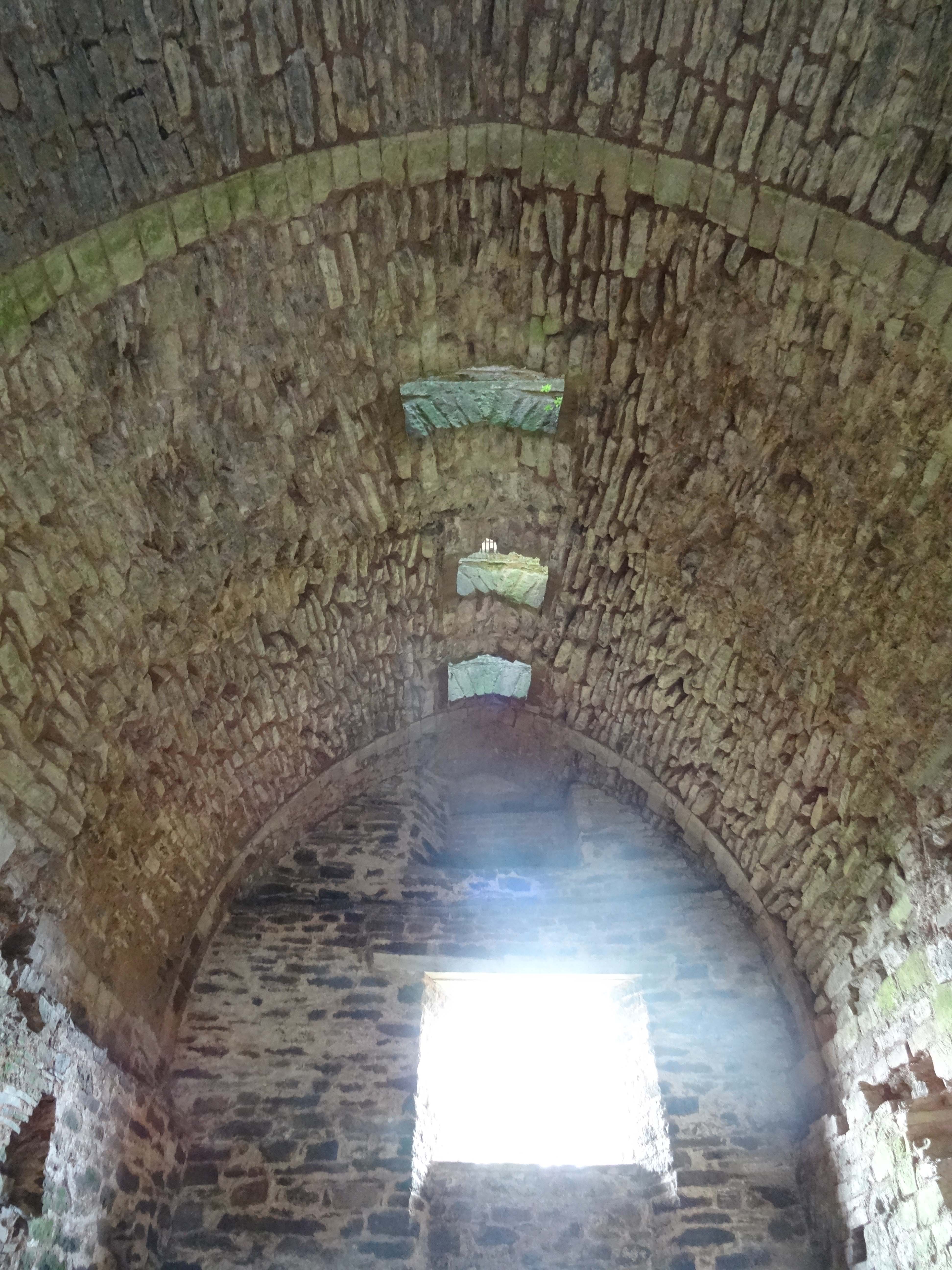
The true joy for a castle lover, though, comes inside, where the main hall, vaulted pantry and cellars, and numerous floors are all visible. Deep kitchen hearths and ovens can be explored, and there is a combination of restored rooms, but also open space where you can look up the walls to see where additional floors and fireplaces would have been.
And of course, one can climb to the top of the castle walls to see the views above, and examine the turrets and roof that was replaced in the 19th century.
It is quite easy to see, while wandering through these rooms and the nearby land, how this could be a comfortable spot to live. The surrounding fields are plentiful, the river is close by for fish and transport, and while the orchard is clearly young, one can imagine there may also have been one in the 16th century.
Also on the grounds is a well-preserved doocot (Scots for dovecote), surrounded by a small garden. This doocot would have provided valuable food for the castle through the winter months, both from the birds living within and their eggs.
We did not spend a great deal of time at Elcho but it was the perfect castle for an afternoon jaunt; photogenic and well cared-for, it also boasts a small gift shop which, to our delight, sold ice cream. We happily enjoyed our treat, which also kept the other half patient while I scurried around taking pictures of the castle exterior. Though it does not necessarily hold a dramatic place in history, Elcho is an excellent window into the past, demonstrating how comfortable life might be for a lord living in the late 1500s. It is also an excellent castle to explore, and once it has opened again I could see it as a good spot for children, with lots of rooms to get lost in. Furthermore, it is an easy day trip from Perth, Dundee or anywhere in Fife, the perfect spot for a picnic!
In no particular order, here are some of the books I have read and enjoyed this past year. There are many more I haven’t included, such as a few cheesy romance books I binge-read in early spring.
1.The Bookseller of Inverness, S.G. MacLean. I was pleasantly surprised by how much I enjoyed this foray into a period of history usually a touch too late for me. A fascinating book that is like a love song to Highland culture as it began to fade after Culloden. A solid mystery and compelling, with very vivid, real characters.
2.Oryx and Crake, Margaret Atwood. Very different from A Handmaid’s Tale and yet similar in the way it explores the darker sides of humanity and civilization. It starts a touch slowly but quickly picks up pace with a mixture of mystery – what has happened to the world we know and how has this man survived? – and fascination as the horror of what humankind is capable of is revealed.
3. The Last Days of Dogtown, Anita Diamant. The Red Tent is one of my favourite books, and my second foray into Diamant’s writing was not a disappointment. Part of the draw was its setting, not far from where I grew up in New England. Rather than a dramatic tale, this book is a series of poignant vignettes of lives that slowly weave together. Diamant’s writing is a pleasure to read and it is impossible not to care about her characters as they come together on the page.
4. The Lost Apothecary, Sarah Penner. This book was recommended to me by a friend who said they thought of me immediately upon reading; indeed I found Penner’s debut novel to be worthy of its awards. I love a good mystery and one that takes place in parallel time periods is even better!
5. Are you there God? It’s me, Margaret, Judy Blume. My inspiration for re-reading this book came both from the knowledge that a film was being made about it – and one of the actresses went to my high school – and from physically finding the book when cleaning out my mum’s basement. It was a fast read but reminded me why it remains so compelling – even in a very different time period, the characters, situations and emotions remain relevant and moving.
6. A Single Man, Christopher Isherwood. This book was selected by my work book club and I read it relatively quickly, trying to recall if I had seen the movie that came out several years ago. I was not sure what to expect but I found it to be moving and stunningly written – one of the most poignant and real depictions of grief and love that I have ever read.
7. Strongbow, Morgan Llywelyn. There was a time in my early teens when I did my best to read as many of Llywelyn’s books as I could, at least those based in the Middle Ages and earlier. As a medievalist, I found this easy read to be very enjoyable. It starkly lays out the shocking differences between the Normans and those they often conquered, and how that clash and mesh of societies could be challenging in many ways.
8. Avalon, Anya Seton. When I first became interested in the Middle Ages, it was recommended by a family friend that I read Anya Seton and I quickly became a fan. She has an effortless way of combining a powerful story and characters with historical accuracy or at least authenticity. Avalon is not, as one might think, an Arthurian story but instead takes place in 10th century England and follows two main characters: Rumon, a young French nobleman who joins the royal court and begins an affair with the Queen; and Merewyn, a Cornish girl who is captured by Vikings and taken first to Iceland and eventually to Greenland. It is a fascinating take on the many changes in society at the time, and the varying cultures of Anglo-Saxon Britain vs. the still-pagan Scandinavian Vikings. I enjoyed it much more than I expected upon a re-read.
9. House of Earth and Blood, Sarah J. Maas. I am very much not a fantasy person; this may sound odd coming from a medievalist, but I have always preferred stories in a more ‘real’ world, and with less of a fantasy element. This book is the exception – there are angels, demons, faeries, werewolves and more, yet they are less key to the story than the relationships and political dramas. Furthermore, the story takes place in a more or less modern world, and the main character is far from flawless (except perhaps in her sex appeal). Rather she is inherently flawed – stubborn, impulsive, at at the start of the story, frivolous. As the book goes on you learn more and more of her backstory and I became fully invested in her character as well as the agony and mystery of what happened to her best friend. And of course the slow burn of the main romantic relationship. I also read the sequel, House of Sky and Breath, and while I certainly enjoyed it, I felt it very much had a ‘middle book of a trilogy’ vibe in that so many things go wrong for the characters. Still, the continued unfolding of both mystery and love story make me excited for the third book, out in 2024.
10. The Sun is Also a Star, Nicola Yoon. I devoured this book in three days at the start of the year before going back to work. It was a lovely sweet romantic story but not sappy in the way a more trashy adult romance might be. Instead the two teenage main characters are believable, dry and witty, and both the author and characters are warring with the ideas of romantic fate vs. scientific practicality. In the end, fate wins out but in a very practical way. Highly recommended, just a good story. And also now a film, though I have not managed to see it yet.
My Amazon wish-list was well attended to by family for Christmas this year, so I have a high pile of new books to read, and I am also excited to retrieve from my mother’s house and read more Anya Seton, who I re-discovered this year. I am sure a post reviewing more of her works is due in the near future – her epic romance Katherine in particular. Airport travel necessitated picking up Ken Follett’s recent thriller, Never, which so far I am finding an easy, pleasant read, with enough mystery and intrigue to keep one pushing through the massive tome of 800+ pages.
It is that time of year wherein I find myself either indulging in multiple Christmas movies or rebelling and watching something as un-Christmasy as possible, like reruns of Criminal Minds or The Walking Dead. During my recent bout of Covid, I forced myself to try to watch some of the cheesy Christmas romantic films that blanket Netflix at this time of year. I started three and lasted no more than 5 minutes – all of them began in New York City at Christmas, showing stereotypical Christmas scenes of lights, decorations, Rockefeller Centre, etc. Often it was snowing, though I cannot imagine that there have actually been many white Christmases in NYC in the last twenty years – there certainly haven’t been many in Boston. All of the movies involved a plucky struggling career woman who got her big break in time for Christmas that just happened to involve a handsome fill-in-the-blank: blech. Just not my thing.
So, what kind of Christmas movies DO I like? I realise that my favourites really have to be divided into four categories: Rom-Com, Classics, versions of A Christmas Carol, and new Classics. There are also numerous movies designed specifically for children that I watched in the 80s and 90s such as Rudolph the Red-Nosed Reindeer (1964), How the Grinch Stole Christmas (the original 1966 cartoon!) and many more, but for the purposes of this post I will stick with films I have watched more recently, or more frequently.
Christmas Rom-Coms
There is a particular affection, particularly in the UK, for Love Actually. I can fully admit to enjoying this film once upon a time, and in particular during a rousing drinking game with friends. We added our own category of ‘drink when you feel sorry for Emma Thompson’…did not go particularly well though was great fun. However as time has passed, I have found myself struggling to enjoy some of the more toxic or chronologically unbelievable storylines, and instead I find that my favourite holiday rom-com has shifted.
The Holiday quickly became an almost anti-Love Actually for me. It is by no means a perfect film, but I love the relative lack of toxicity and the messaging that all of the four leads are struggling with their lives, with finding the strength and value in themselves, and that they find someone who loves them as they are.
Kate Winslet’s character in particular (and Jack Black’s too in fairness) embodies an emotional state in which so many women, and men too I am sure, have found themselves: desperately in love with the wrong person, and struggling to find her value when that person continually treats her poorly and takes advantage of her. I love that her story is a happy ending not necessarily because she finds love, but because she rediscovers her self-worth.
Plus, the movie is really pretty.
Classic Christmas Movies
There are so many classic Christmas movies out there, from Miracle on 34th Street to It’s a Wonderful Life. Only one film, though, takes me back to my childhood and a vague memory of being allowed, for the first time, to stay up and watch a movie with the adults. I was in my pyjamas, wrapped in a bathrobe and hiding in the corner of the couch, desperately hoping that everyone would forget I was there and should really be in bed. The adults were drinking eggnog (probably with a dose of bourbon in it) and we had our Christmas bowl of nuts and clementines ready for a snack.
1954’s White Christmas is absolutely the epitome of Christmas for me. From the first scene which always catches in my throat – an army camp during World War II, soldiers missing home – to the spectacular dance numbers, I was hooked on the film from early on. A relatively large chunk of the movie really has nothing to do with Christmas and is instead, really, a screwball rom-com in between the singing and dancing.
But the final number, when the characters come out dressed in stunning red outfits (I have always coveted Rosemary Clooney’s dress in particular), the whole audience sings along and the stage is raised to reveal a real snowy evening, never fails to bring a tear to my eye. Whether I am in Scotland or celebrating with my family in New England, the magic of a White Christmas cannot be beaten, and the movie really embodies that feeling of wonder and delight.
A Christmas Carol
For me, the story of Dickens’ A Christmas Carol is sacrosanct. My father used to read it to me every year, and his version of Scrooge’s voice is something I am sure I will never forget. In grade school for recitation day – in which we were all required to memorize a piece of writing to perform for the class – I chose one year to memorize the first three or four pages of Stave 1, and I remember most of it still, the richness of Dickens’ descriptive writing. The words are as evocative of Christmas to me as the Nutcracker suite, and we have had ornaments of some of the main characters on our tree for as long as I can remember.
What this means is that I take the story seriously. When I was young, I was a fan of Mickey’s Christmas Carol, a short and quick version of the tale that captures its essence but leaves out huge chunks. Wikipedia lists no fewer than 24 live-action versions of the story, plus another 11 or so animated options and numerous TV specials, so I cannot claim to have seen them all. But I have seen a play, and watched several films, the very best of which I feel is none other than 1992’s The Muppet Christmas Carol.
Not only have the screenwriters gone out of their way to use some of the original text, they have written some delightfully fun songs and ensured that the feel of Dickens’ London is as genuine as in any other version. While the Muppets invite children into the story, I know plenty of adults who enjoy this version as well, not in the least for Michael Caine’s Scrooge. He is clearly just loving the role and is perfect as both grumpy and joyful versions of the character.
New Christmas CLassics
I saw an article recently which claimed you could identify a person as a Millenial, Gen X or Gen Z depending upon which Christmas movie they loved the most. Generally, I find it difficult to identify my favourite anything – books, movies, music – as it is so dependent upon the mood I am in; Christmas films are the same. But there are two which stand out to me as movies I will always re-watch, sometimes not at Christmas at all, and which I never fail to enjoy. One is apocryphal to some, but I would argue that if a movie takes places at Christmas it can be categorized as a Christmas movie and recently, Disney+ agreed by putting it in the Christmas playlist.
Home Alone does not need to debate its place as a Christmas movie. As a child of the 1980s and 90s, I experienced the original phenomenon of this film (and indeed its star, Macaulay Culkin).
The story may be a touch absurd – what Christmas story isn’t – but the place it holds in cinema and in most children’s hearts is legendary.
Most kids of my generation, I would imagine, probably had at least fleeting thoughts about how they might defend their homes as Kevin did, and all of them I am sure had daydreams about what they would do if left home alone, even for half a day. Some of us had much more in-depth plans…
A movie I did not discover until later in life is the long-debated but now officially Christmas film, Die Hard.
I did not grow up in a household where such films would have been shown – certainly not when they came out – and so I was an adult before I first enjoyed the spectacle and true legendary nature of this film.
The quotes, the bad accents, the true appeal of a young Bruce Willis, the wonder of evil Alan Rickman, all make this film worth watching not just at the holidays but year-round. The same can be said for its sequel, Die Hard 2, though the later films 3 through whatever number they ended on were less iconic.
And finally, honourable mention to the 1977 television adaptation of Mikhail Baryshnikov’s The Nutcracker. The recording is relatively poor, the visuals blurry at times, but the music is exactly what it should be and the dancing is spectacular.
Christmas is not Christmas in my house without the Nutcracker (though my other half may wish it could be🎅)
I have had every intention of publishing this post almost every day for the past two weeks, but a combination of leaving work and a bout of Covid continued to set me back.
The Scottish Highlands are legendary for their stunning hills, lochs, and the hikes and paths that allow you to view them in a way you can only do by foot. Not long before the start of lockdown, we spent a weekend at a self-catered cottage in Aberfeldy, allowing us plenty of time to explore the surrounding hills. This walk, on Kenmore Hill above Loch Tay, was both stunning and a touch disastrous.
Why was the walk a touch disastrous? It started with the car park which, at the time we visited, was inaccessible without a 4×4 (I do have hopes that it has been re-done since then!). We ended up having to stow our car just off the road and the end of the drive up to the car park, but fortunately our car at the time was tiny and we managed relatively well.
From the edge of the road we walked up through the car park and almost immediately enjoyed splendid views back over the valley, particularly down towards Taymouth Castle and estate.
The sign in the car park offered three routes, and the one most clearly described by Walkhighlands was the red route; all three started in roughly the same place so we headed upwards, beginning a steady climb up the hill on a path that reminded me of a ski path without snow – rocky and lined with trees.
Eventually signs for the red path turned us right and we emerged from the trees, finding ourselves on a grassy area with a treeline on the ridge above and promises of views over the valley.
We were hampered a bit at this point by the fact that we had, the day before, done the Birks of Aberfeldy walk, which had been steeper and with more stairs than expected. The other half was suffering a bit with his knee from an old injury, and as we climbed up the hill towards the ridge – a relatively steep walk – he found it becoming more and more difficult.
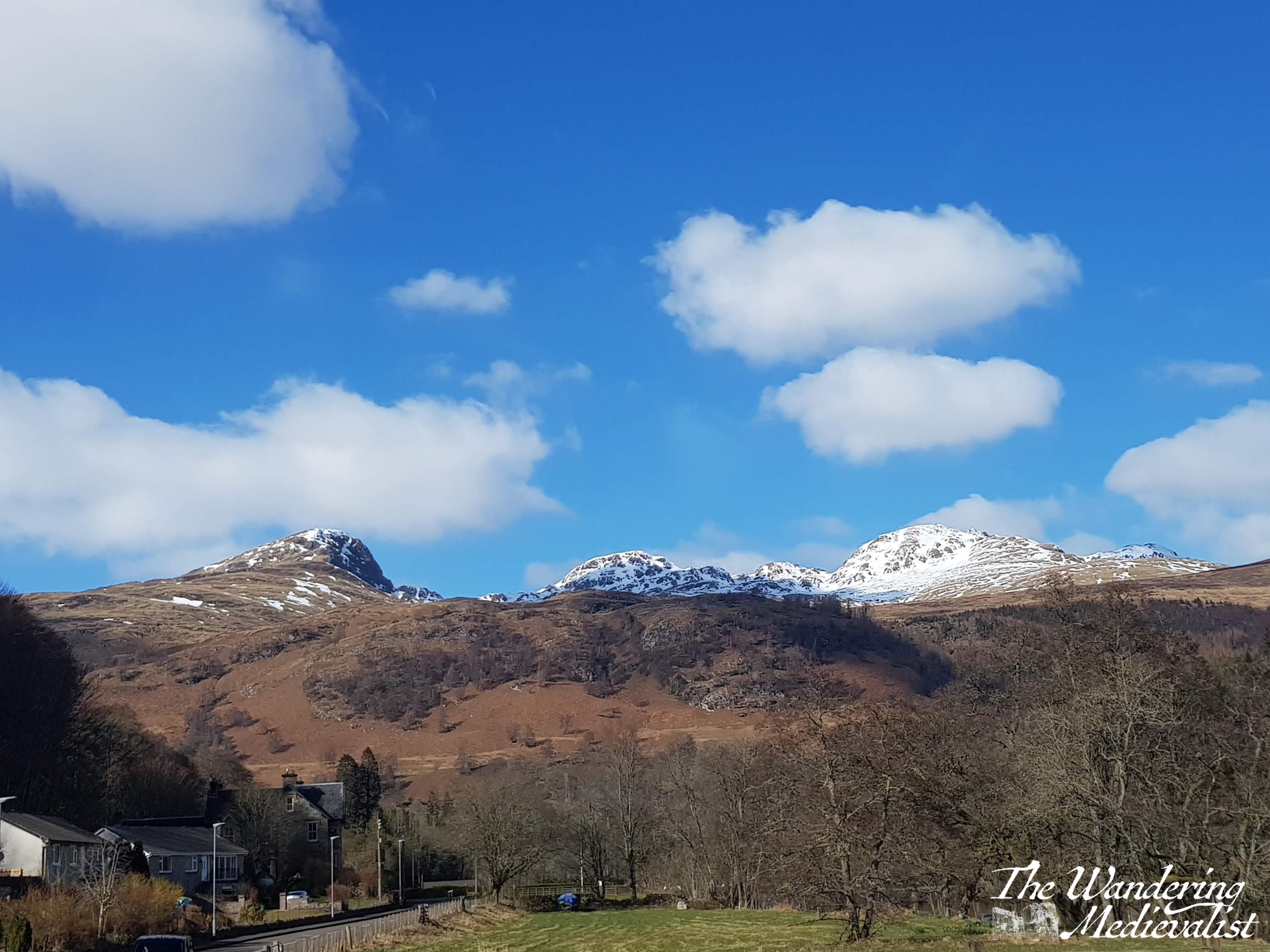
We reached the top of the ridge in time and the views were indeed spectacular – the snow-topped peaks in the distance stood out beautifully against the blue sky, and we planned to continue the red loop towards the final cairn, where I know you can see down towards the other end of Loch Tay.
The discovery that we had forgotten a knee brace meant that we really could not continue to potentially cause even more damage, and so we agreed to return to the blue loop, and follow it back to the car.
Here, of course, is where slight disaster struck. We did as planned, found the blue path and intended to allow a quick run up to the marked viewpoint. Instead, as we followed the blue markers and the gap in the trees, we gradually realised that we had not seen a marker in a while, and that any sign of a trail had vanished. Both of us are relatively experienced hill walkers who had been paying attention, and yet could not determine a place where we could have deviated from the trail; we had two versions of a map and the picture of the trail, but found ourselves completely lost. We back-tracked a bit, and still could not confidently identify a marker. Standing at one of the last clear points, we established where the path should be, and where the road was, and decided that as long as we headed down and towards the road, we would reach it eventually, as it loops around the hill.
What followed was a rather steep and haphazard descent through brush, heather, and the occasional small trickle of water. I would not normally condone leaving a trail like this as it can cause damage to the wildlife, but we really did not have much of an option. We decided the trail lost us as much as the other way around. It was similar to a hike I had once done with my father, when we realised a touch too late that the trail we were following was in fact a dry creek bed – on that day, like on Kenmore Hill, eventually common sense and perseverance (perhaps even stubbornness) won out and we found our way to a clearly marked path.
On Kenmore Hill, this ended up being the last loop of the red trail, though we still cannot work out we managed to get there. Relieved, we found our way back to the car park and our car, the beacon we had just made out from higher up. While it was certainly not the most comfortable climb, I have every intention of making my way back and completing the red loop at some point, as I have seen from other hikers that the views from the other side of the hill are spectacular. It also seems to be the perfect length of hike – about two hours, with enough climb to get some proper views and the heartrate up a touch. I also have hope that in the years since the pandemic, the path has been kept up and perhaps improved, though a peek at Google Maps indicates that the road to the car park may still be in questionable shape.
After our slightly chaotic hike, we decided to take a drive down the loch as it was a beautiful day, and below are a few of the pictures I took along the way; Loch Tay really is a beautiful spot and while the mountains are less dramatic than further north, they are no less impressive. We in fact drove all the way to Killin and stopped at an Inn by the Falls of Dochart – a post for another time.
I look forward to an opportunity to try to this hike again!
This Saturday, the east of Scotland woke to a snowstorm. In our area, it was the kind of storm that was steady but not terrible, and where the flakes varied between large and enormous, coating the ground in two to three inches of fluffy white. Often here when it snows, it starts to disappear almost right away, but it has been so cold that by late afternoon almost nothing had melted. So despite feeling a bit under the weather, I ventured out and five minutes later remembered why I did: a snowy day walk in crisp air is perhaps the happiest of my happy places. And so, rather than share with you my blog on another Highlands walk, I am instead sharing with you some of my favourite snowy pictures, mostly taken while on snowy day walks.
Snowmen in St Salvator’s Quad, St Andrews
Ben Nevis from Aonach Mòr
Edinburgh Castle from Princes Street
St Andrews Castle
Meadow in Lyme, NH
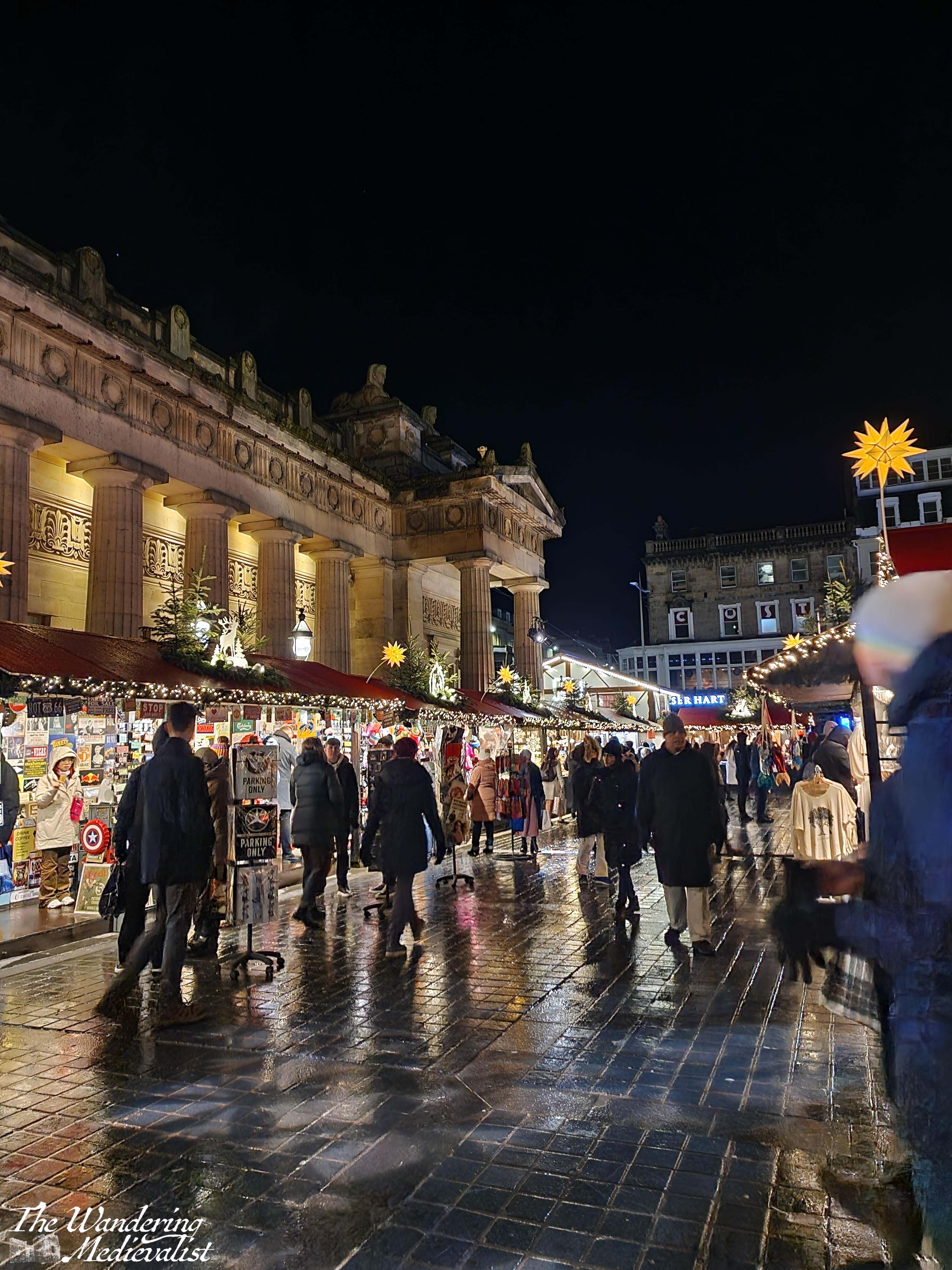
Edinburgh Christmas Market
Motray Walk, Guardbridge
Falls of Bruar
Market Street, St Andrews
Faneuil Hall, Boston
Presidential Range from the top of Mount Washington